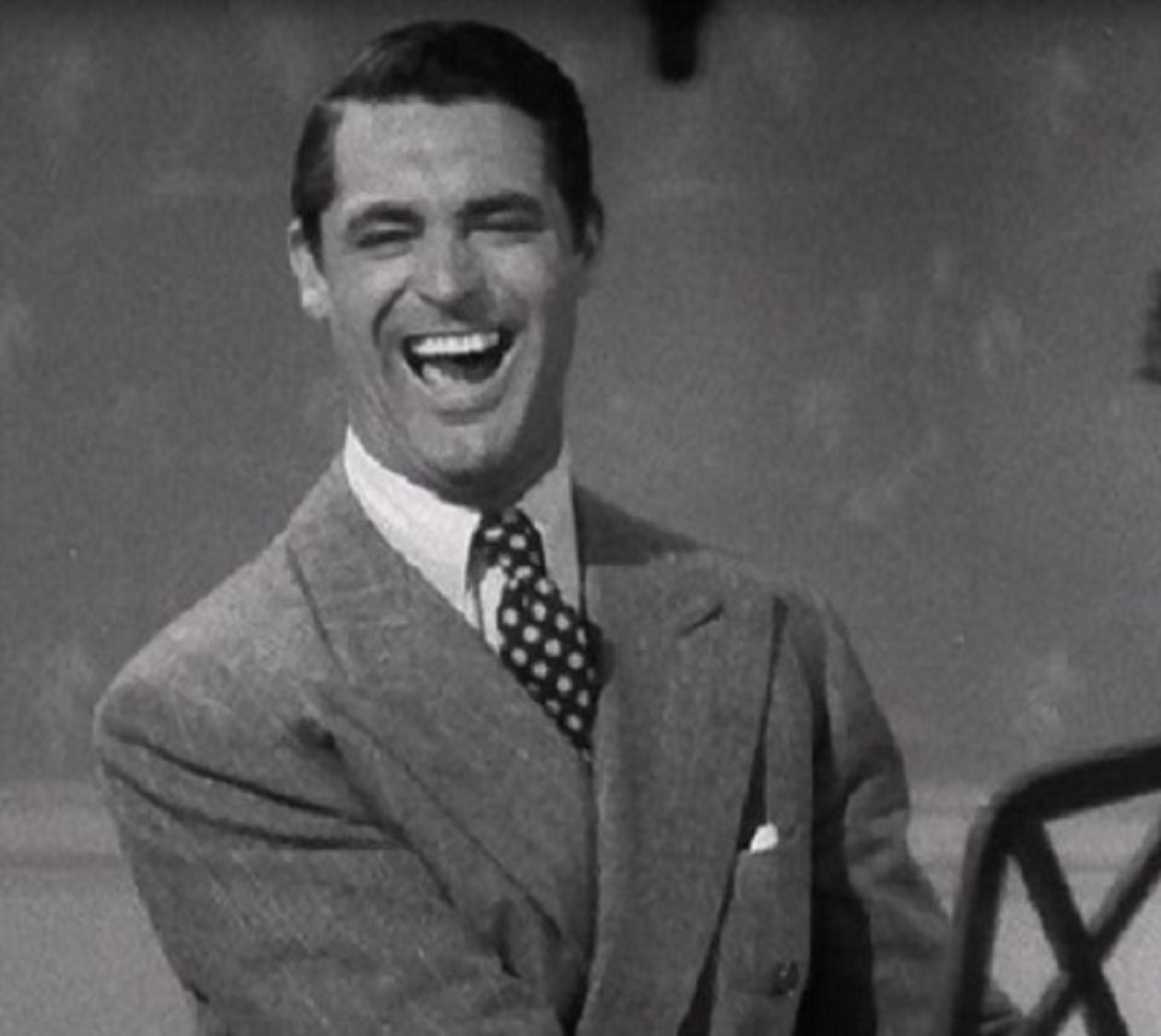
Fred and Ginger Fans, Watch La La Land
Sometimes when I’m watching Gene Kelly, I’ve had to resist my urge to reach through the screen and push him into one of the puddles he’s leaping around. I want to enjoy his joyful movements, his talent, but for me, the acting just kills it. His characters seem so smug, so sentimental, so cheesy, as if they were born to and continue to expect a cheering section. (Forgive me, Kelly fans. I can’t help it.)
Fred Astaire’s characters, in contrast, are cynical, world-weary, and as a result, often quite funny. Ginger Rogers, his most frequent sparring partner, is at her best when she’s delivering the snark too.
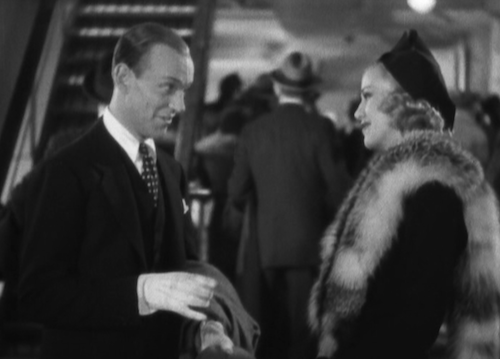
I’m willing to surrender to some sentimentality, but only if it’s tempered with some sarcasm; that’s why La La Land was an unexpectedly welcome surprise. Writer-director Damien Chazelle clearly gets that need for bite, and his own musician past is as evident here as it was in Whiplash. Thanks to him, my Ginger-and-Fred-loving peers will discover a bit of that magic they’ve missed in films since. Here’s how Chazelle pulls it off:
Witty Conversations
The plot is pretty simple: an aspiring jazz club owner and pianist, Sebastian (Gosling), and actress (Stone) fall in love and wrestle with the conflicts in their dreams and relationship. The previews are heavy on the cheesy side, but I should have trusted the actors, especially Gosling, whose flight to indies after The Notebook revealed the level of his aversion to saccharine.
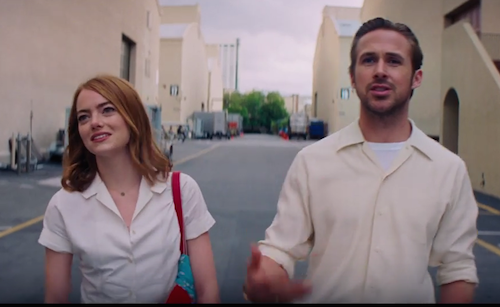
Emma Stone and Ryan Gosling excel at sarcastic banter. Their expressions are hilarious to witness. When Mia mocks Sebastian’s embarrassing keyboard gig by requesting an 80s abomination, I fell for the film, and for them. Astaire-Rogers films similarly begin with hostility: his character’s making a racket, tearing the heroine’s (Rogers’) dress, pretending to be Russian. Her characters’ (Rogers’) icy responses only begin to melt when the dancing brings the two together, and the self-protection their characters have constructed for themselves collapse.
Singing by Nonexpert Actors
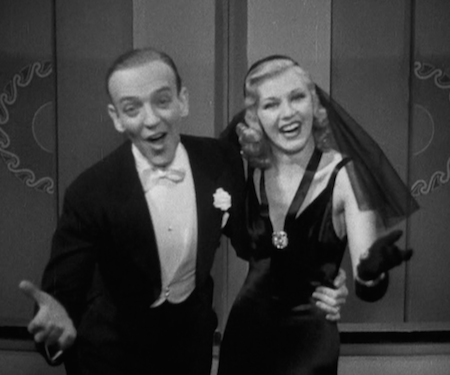
Astaire and Rogers weren’t gifted in the choral department, but they sang their own tunes anyway, and as a result, there’s an authenticity to the chemistry between them, and the move from (relative) realism to song is less jarring. If I were watching a Broadway musical, I’d expect some serious pipes. But in a film, amateurism can work. As with Astaire and Rogers, Stone’s and Gosling’s lack of expertise works to highlight their characters’ insecurities and the fragility of their new bond. Their lack of professional music cred also helps give the impression that this singing is natural, just a way to express something that regular conversation can’t quite capture.
Dancing as Foreplay
Stone and Gosling are far better dancers than singers, and as with Astaire-Rogers, the dancing numbers are when their defenses dissolve, and they begin to fall in love.
My favorite moment is actually when the uber handsome Gosling approaches an older couple and starts dancing with the wife. The husband’s outraged response is so funny, but what’s lovely is the moment after: when we see the couple in the background, dancing with one another.
Characters Inspiring Each Other
I love in Shall We Dance (1937) that Petrov (Astaire) feels his dancing is so inspired by Linda (Rogers) that he must have actresses in his musical all don images of her face.
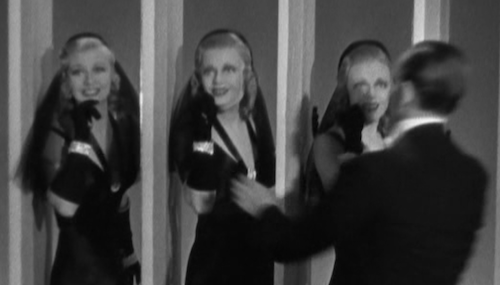
Petrov begins not with love, but professional admiration. And it’s fun to watch Mia (Stone) and Sebastian (Gosling) do the same: respect and promote one another’s art. As in Once, one of my favorite films of the past decade, the romance (or in Once‘s case, almost-romance) matters less than the impact the characters have on one another, the way they force one another to be honest about the decisions they’re making, the repercussions, and the inevitable conflicts an artistic life creates.
Talent
Astaire and Rogers are obviously finer dancers than their 2016 imitators. But Stone and Gosling are both fine actors, which Astaire was not.* Stone brings that effervescent charm she does to everything. She excels at mocking, as she has since Easy A. Her auditions for various terrible acting gigs are hilarious.
But it’s Gosling I couldn’t stop watching (and not just because of that ridiculously handsome face). Gosling’s timing, expressions, and posture deliver the humor, and the pathos of Sebastian’s unbending personality, his devotion to something others don’t love (jazz), is beautifully conveyed. Sebastian’s efforts to conceal his vulnerability are heartbreaking. A conversation late in the film when Mia calls him out on being a sellout is particularly tough to witness, as for Sebastian, giving in to some need for practicality demonstrates growth. Mia’s simply not been forced into the kind of compromises he has, and she doesn’t get what those decisions have cost him. I could see why Gosling–who has taken a long time to come around to big-budget films–was drawn to the role, and why the writer-director, a musician himself, knew just how to capture it. I don’t think it’s an accident that Sebastian is a far more developed character than is Mia.
Whimsy & Joy
What a pleasure it is, to watch actors with chemistry having fun with one another. It was always true for Astaire and Rogers, and is true for Stone and Gosling as well.
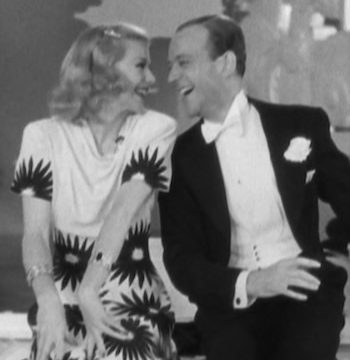
I didn’t find the music in La La Land that memorable, certainly not as strong as any of Astaire’s or Rogers’s outings. (Admittedly, that would be a bit unfair to expect, with Irving Berlin and the Gershwins at the helm.) Still, the enjoyment of singing, of dancing, of just playing around is there. At one point, in a surreal, An American in Paris kind of way, realism just leaves, and Mia and Sebastian act as if a departure from the rules of gravity is a natural result of their connection. In a way, it is. The moment conveys how art can transport a person away from reality, just as love can. That a director just over 30 can convey that sentiment so beautifully and lovingly–and with such humor–gives me excitement about whatever he’s cooking up next.
*Rogers, it could be argued, bests Stone in certain roles, but Gosling is a stronger actor than all of them.
