Cary Grant Won't Eat You

Classic movies for phobics

  • About
  • eBooks
  • Previous Blogathons
Classic movies for phobics

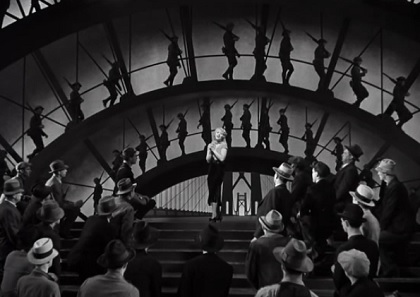
Ginger Rogers

The 8 Movie Characters I’d Bring to See Barbie

08/06/2023 by leah@carygrantwonteatyou.com 6 Comments

If I could bring any film characters with me to the Barbie movie, this crew would come along. We would shout, complain, and advise (quite loudly), and so an empty theater–and an earlier viewing by me–would be critical. But just try to imagine with me, how perfect this party would be….(Mild spoilers ahead.)

1: Megan (Melissa McCarthy) from Bridesmaids (2011)


This confident, hilarious, non-nonsense woman needs to give Barbie a pep talk. I did love Gloria (America Ferrera)’s speech, but Megan’s would be one for the ages.

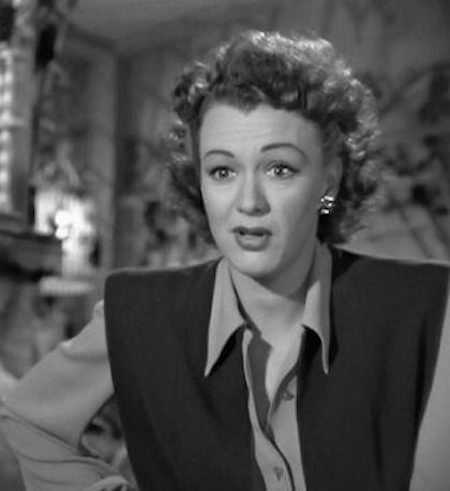
2: Ida (Eve Arden) from Mildred Pierce (1945)


What Megan can do with yelling and pounding, Ida can do with an eyebrow. Ida’s dry, blistering one liners about Ken’s power grab would be epic.

3: Oda Mae Brown (Whoopi Goldberg) from Ghost (1990)


I’ll be honest–this may be just because I want her to say, “Barbie, you in danger, girl,” when the doll puts on fluorescent rollerblading gear.

4: Tira (Mae West) from I’m No Angel (1933)


Tira’s running commentary on Ryan Gosling’s abs and what she’d do to his character on the beach would have everyone in the theater howling with laughter. I’d love to hear her tell Barbie to keep relishing that many Kens in her life. And how much I’d anticipate her reaction to the ending!

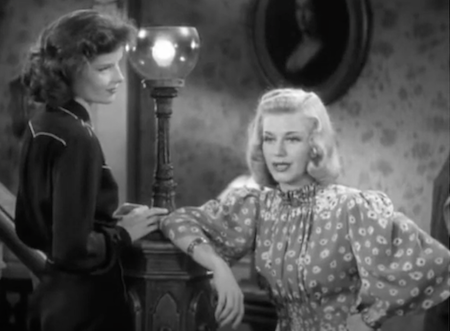
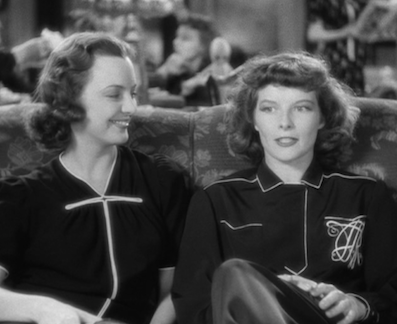
5 & 6: Stage Door (1937) Roommates Terry (Katharine Hepburn) & Jean (Ginger Rogers)


Obviously, I’d want the ENTIRE Footlights Club to accompany me, since there simply is no wittier all-female repartee on film (the famously catty The Women ensemble can’t compare). Don’t believe me? Lucille Ball is in the supporting cast. These sexual-harassment-fighting, badass feminists would be FABULOUS commentators, and I’m so sad I can’t follow their pop culture podcast right now.

7 & 8: Adam (Spencer Tracy) and Amanda (Katharine Hepburn) from Adam’s Rib (1949)


What could be better than to hear a brilliant couple with perfect dialogue critique the work of screenwriting couple Greta Gerwig and Noah Baumbach? And with the way Amanda just slays in arguing women’s rights in the courtroom, I long to hear what she’d say to those fools in the Mattel boardroom.

There you have it. My eight favorite Barbie movie companions. Who would yours be?

Share
Posted in: 1990-current films, Childfree, Comedies (film), Feminism, Humor, Uncategorized Tagged: Adam's Rib, Barbie movie, Eve Arden, feminism, Ginger Rogers, Katharine Hepburn, Mae West, Melissa McCarthy, Whoopi Goldberg

Sexual Predators in Film: Weinstein, 1937

11/10/2017 by leah@carygrantwonteatyou.com 8 Comments


All this talk of Harvey Weinstein and now Louis C.K. has me thinking about Stage Door (1937), that fascinating film featuring a dormitory of smart-talking women clamoring for parts on the stage, and suffering the sexist overtures of a very slimy producer along the way. The film was produced the same year the words “casting couch” were first published in Variety, according to Matthew Dessem. How the film got made is clear: it’s a feminist anthem against sexual predation, yes, but it’s carefully camouflaged as one of the funniest comedies of its era. Critics praised the witty, fabulous dialogue, ignoring or underplaying the blatant warning directed at female aspirants to stage or screen.

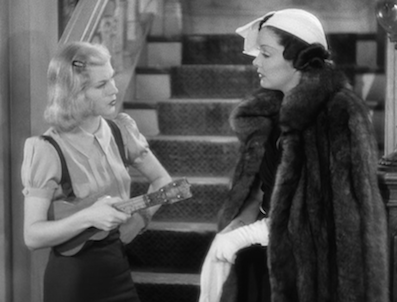
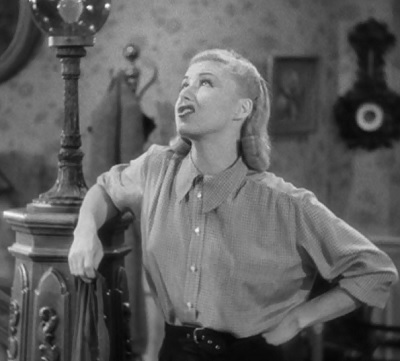
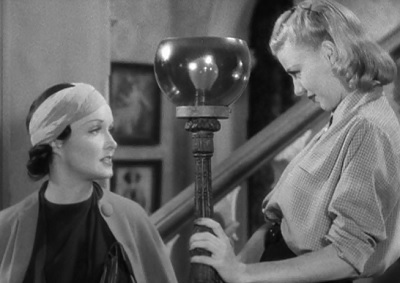
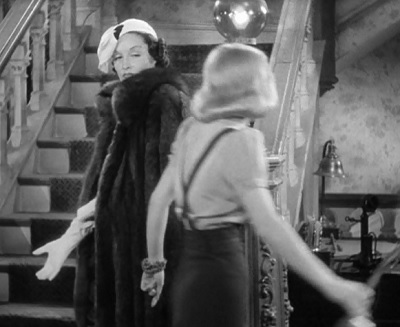
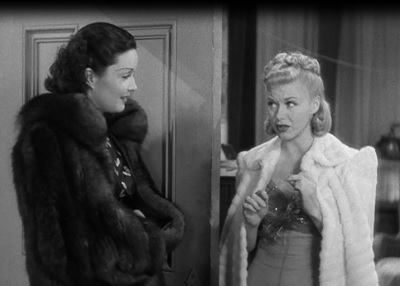
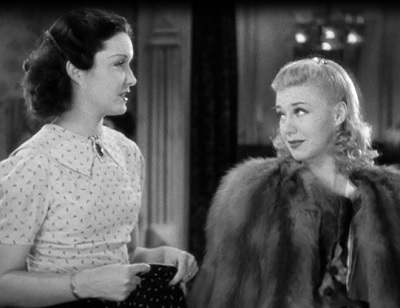
The story begins with Jean Maitland (Ginger Rogers) trying to oust roommate Linda Shaw (Gail Patrick). Jean’s a sarcastic gal from the wrong side of the tracks, too proud and ethical to give into seductions in exchange for parts or furs. Her roommate, however, is an opportunist, and has given up her reputation in exchange for gifts from her wealthy keeper, sables and sapphires she rubs in Jean’s face.


The two separate to achieve peace, but Jean isn’t long for a solitary room; enter her new roommate, heiress Terry (Katharine Hepburn), who wants to star on the stage too. She thinks her peers haven’t made it big yet because they lack ambition. Her slow recognition of her own privilege will become the axis around which the plot revolves. Initially mocked by the dorm residents who resent her for slumming, she does make one friend, Kay Hamilton (Andrea Leeds), the acknowledged talent of the bunch.


Sympathy and admiration for Kay will lead Terry to understand that her poverty-stricken companions aren’t slackers, but cynics battered by experience. They face obstacles she doesn’t, and have no safety net if they fall.

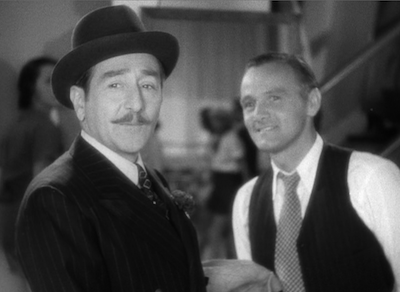
While Katharine Hepburn’s Terry is learning how the hungry half lives, Jean encounters Linda’s lover, Anthony Powell (Adolphe Menjou), who eyes her in an audition. The fact that finding prey is his goal in being a producer is clear, as when he says to a dancing school director, “I very likely won’t produce anything unless I can find an angel. You haven’t seen any flying around, have you?” After an uncomfortable amount of leering at a dancing pair, he asks about “the little blonde.” His pal obligingly offers the information, of course, and soon Jean has unwittingly taken a job given to her so that Powell has access to her charms. We can see in all of these moves a clear pattern: he’s after/has sex with the girl, she gets the role. Jean’s response when she sees Powell and Linda at the club where she’s been hired says everything:


Jean’s barbs at Powell (and at his choice of a mistress) have no effect.


But then Jean decides it’s time to teach her former roommate Linda a lesson, steal her guy. Jean doesn’t plan to have sex with him, but what’ll it hurt her to drink a little champagne, have a meal or two that isn’t stew?

But the bigger reason for dating an undesirable man is evident: If Jean doesn’t play nice, what happens to her job? Her dancing partner, Annie, suggests as much multiple times. When Jean complains about his creepiness, saying she needs a “tin overcoat” as protection, her partner responds, “You should be glad he looked at you at all.”  Jean doesn’t need her partner’s pestering; she knows full well that “…if I don’t go out with him, I’ll probably lose my job, and so will Ann, and I’ll be right back where I started from.”

Of course, Powell has plans of his own: ply Jean with alcohol, tell her a sob story about his life, talk about her name in lights and himself as the reason, and get what he wants. If she isn’t exactly sober enough to consent, what does he care? Creepily, his butler knows just how to disappear. As Linda warns her (to protect her meal ticket), the butler is “deaf,” so she “really won’t have to bother to scream for help.”

Luckily, Jean gets too sad-drunk on the first trip to his penthouse to make his “seduction” fun. He decides she isn’t worth the trouble, but she (too buzzed to catch the drift of their last talk) thinks she’s beginning to like the guy. The next night, when Terry is having an actual business meeting with him in the penthouse (as Weinstein’s actresses thought), Jean charges in.


Terry fakes drunkenness and sexiness to keep Jean away from the predator, and it works.


Jean realizes he’s as worthless, creepy, and unfaithful as she initially thought, and leaves. The audience is grateful for Jean’s escape, having seen the disaster Powell leaves in his wake: poor Linda has nothing but trinkets in exchange for sexual favors–gifts not even sizable enough to get her out of that dorm. (How thin is her arrogance!) We know how short Jean’s casting-couch career would be after her favors, given that roving eye. The actress in the story with true talent (Kay) who doesn’t succumb to (and apparently was never offered) the producer’s embraces is literally starving as he puts off her auditions for his dalliances, and will soon reach an even sadder fate.

I kept thinking of Terry when the Weinstein revelations came out, not just because she was brave in the story, but because she could be. Of course, Terry too is the object of male manipulation. The only reason she’s up for a part is her father’s secret meddling (He’s finagled her starring role so that she’ll fail and realize she should come home and marry a rich boy like a good little girl. Nice support, huh?) Although she does have a disgustingly condescending father, Terry is safe. That money gives her power of her own, and she can afford to confront the Anthony Powells of this world. It’s really the lesson of the Weinstein story, isn’t it? Predators go after those with no power, so those with it have to be the ones to stand up. And not just men, but female stars, the Meryl Streeps, who have status of their own and can be immune from predators’ hushing machinations. Several media outlets have justifiably called out the male actors and directors who did nothing about Weinstein, and the employees, like that pal in Stage Door, who abetted the behavior. But I’m disappointed too in the prominent women, those who weren’t personally affected, but could have done something…and didn’t. (Streep claims she didn’t know; even if she didn’t, others with star power did.)

At first I thought that the sexual predator storyline and feminist response to it were from Edna Ferber, a friend of Hepburn’s and the original play’s cowriter. Ferber may have been inspired by memories from childhood, I reasoned. According to Janet Burstein, Ferber learned about men’s less pleasant side in her youth, when everyday wants meant she “had to run a gauntlet of anti-Semitic abuse from adult male loungers, perched on the iron railing at the corner of Main Street, who spat, called her names, and mocked her in Yiddish accents.” That disgust on Jean’s face when she spots the way Powell looks at her? Yeah, that’s written by an author who knows. But the play Ferber cowrote was completely redone for the screen by Morrie Ryskind and Anthony Veiller. And according to some sources, the movie’s verisimilitude has less to do with the screenwriters than with Gregory La Cava, who sought the stories of and the funny dialogue of the women he directed, and encouraged improvisation. But then again, the stories of such men were everywhere, then and now, and needed no writer to reveal the behavior. Anyone watching and listening–as La Cava apparently did–could hear and expose them.

I hope one day this film–and La Cava–get more credit for the kind of heroic feminism we see so rarely on the screen or in life. Eighty years ago, this film exposed the terrible repercussions of sexual predation, and instead of suggesting that victims should be blamed for not standing up–as even current headlines do–put the responsibility squarely on the man at fault. More, it gave a path for correction, by showing who could do something to fight back, and revealing the privilege that might blind him/her to what was really going on. How many films in the decades since have done the same?

Share
Posted in: 1930s films, Comedies (film), Drama (film), Feminism Tagged: classic film, films about sexual predators, Ginger Rogers, Harvey Weinstein, Katharine Hepburn, Louis C.K., Stage Door, the casting couch

Fred and Ginger Fans, Watch La La Land

01/12/2017 by leah@carygrantwonteatyou.com 6 Comments

Sometimes when I’m watching Gene Kelly, I’ve had to resist my urge to reach through the screen and push him into one of the puddles he’s leaping around.  I want to enjoy his joyful movements, his talent, but for me, the acting just kills it. His characters seem so smug, so sentimental, so cheesy, as if they were born to and continue to expect a cheering section. (Forgive me, Kelly fans. I can’t help it.)

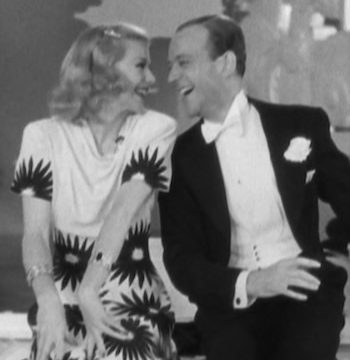
Fred Astaire’s characters, in contrast, are cynical, world-weary, and as a result, often quite funny. Ginger Rogers, his most frequent sparring partner, is at her best when she’s delivering the snark too.


I’m willing to surrender to some sentimentality, but only if it’s tempered with some sarcasm; that’s why La La Land was an unexpectedly welcome surprise. Writer-director Damien Chazelle clearly gets that need for bite, and his own musician past is as evident here as it was in Whiplash. Thanks to him, my Ginger-and-Fred-loving peers will discover a bit of that magic they’ve missed in films since. Here’s how Chazelle pulls it off:

Witty Conversations
The plot is pretty simple: an aspiring jazz club owner and pianist, Sebastian (Gosling), and actress (Stone) fall in love and wrestle with the conflicts in their dreams and relationship. The previews are heavy on the cheesy side, but I should have trusted the actors, especially Gosling, whose  flight to indies after The Notebook revealed the level of his aversion to saccharine.


Emma Stone and Ryan Gosling excel at sarcastic banter. Their expressions are hilarious to witness. When Mia mocks Sebastian’s embarrassing keyboard gig by requesting an 80s abomination, I fell for the film, and for them. Astaire-Rogers films similarly begin with hostility: his character’s making a racket, tearing the heroine’s (Rogers’) dress, pretending to be Russian. Her characters’ (Rogers’) icy responses only begin to melt when the dancing brings the two together, and the self-protection their characters have constructed for themselves collapse.

Singing by Nonexpert Actors


Astaire and Rogers weren’t gifted in the choral department, but they sang their own tunes anyway, and as a result, there’s an authenticity to the chemistry between them, and the move from (relative) realism to song is less jarring. If I were watching a Broadway musical, I’d expect some serious pipes. But in a film, amateurism can work. As with Astaire and Rogers, Stone’s and Gosling’s lack of expertise works to highlight their characters’ insecurities and the fragility of their new bond. Their lack of professional music cred also helps give the impression that this singing is natural, just a way to express something that regular conversation can’t quite capture.

Dancing as Foreplay
Stone and Gosling are far better dancers than singers, and as with Astaire-Rogers, the dancing numbers are when their defenses dissolve, and they begin to fall in love.

My favorite moment is actually when the uber handsome Gosling approaches an older couple and starts dancing with the wife. The husband’s outraged response is so funny, but what’s lovely is the moment after: when we see the couple in the background, dancing with one another.

Characters Inspiring Each Other
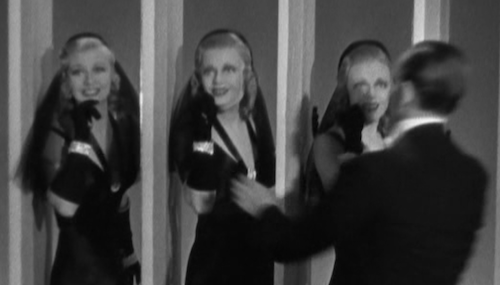
I love in Shall We Dance (1937) that Petrov (Astaire) feels his dancing is so inspired by Linda (Rogers) that he must have actresses in his musical all don images of her face.


Petrov begins not with love, but professional admiration. And it’s fun to watch Mia (Stone) and Sebastian (Gosling) do the same: respect and promote one another’s art. As in Once, one of my favorite films of the past decade, the romance (or in Once‘s case, almost-romance) matters less than the impact the characters have on one another, the way they force one another to be honest about the decisions they’re making, the repercussions, and the inevitable conflicts an artistic life creates.

Talent
Astaire and Rogers are obviously finer dancers than their 2016 imitators. But Stone and Gosling are both fine actors, which Astaire was not.* Stone brings that effervescent charm she does to everything. She excels at mocking, as she has since Easy A. Her auditions for various terrible acting gigs are hilarious.

But it’s Gosling I couldn’t stop watching (and not just because of that ridiculously handsome face). Gosling’s timing, expressions, and posture deliver the humor, and the pathos of Sebastian’s unbending personality, his devotion to something others don’t love (jazz), is beautifully conveyed. Sebastian’s efforts to conceal his vulnerability are heartbreaking. A conversation late in the film when Mia calls him out on being a sellout is particularly tough to witness, as for Sebastian, giving in to some need for practicality demonstrates growth. Mia’s simply not been forced into the kind of compromises he has, and she doesn’t get what those decisions have cost him. I could see why Gosling–who has taken a long time to come around to big-budget films–was drawn to the role, and why the writer-director, a musician himself, knew just how to capture it. I don’t think it’s an accident that Sebastian is a far more developed character than is Mia.

Whimsy & Joy
What a pleasure it is, to watch actors with chemistry having fun with one another. It was always true for Astaire and Rogers, and is true for Stone and Gosling as well.


I didn’t find the music in La La Land that memorable, certainly not as strong as any of Astaire’s or Rogers’s outings. (Admittedly, that would be a bit unfair to expect, with Irving Berlin and the Gershwins at the helm.) Still, the enjoyment of singing, of dancing, of just playing around is there. At one point, in a surreal, An American in Paris kind of way, realism just leaves, and Mia and Sebastian act as if a departure from the rules of gravity is a natural result of their connection. In a way, it is. The moment conveys how art can transport a person away from reality, just as love can. That a director just over 30 can convey that sentiment so beautifully and lovingly–and with such humor–gives me excitement about whatever he’s cooking up next.

*Rogers, it could be argued, bests Stone in certain roles, but Gosling is a stronger actor than all of them.

Share
Posted in: 1930s films, 1940s films, 1990-current films, Comedies (film), Musicals and dancing films, Romantic Comedies (film) Tagged: Damien Chazelle, dancing films, Emma Stone, Fred Astaire, Ginger Rogers, happy films, La La Land, musicals for nonmusical fans, Ryan Gosling

Fabulous Fights: Ginger Rogers & Gail Patrick in Stage Door (1937)

01/31/2015 by leah@carygrantwonteatyou.com 19 Comments

PatrickRogers-shove
This post is part of Backlots’ 4th Annual Dueling Divas Blogathon. Check out the other entries!

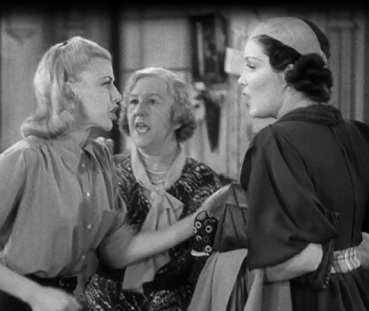
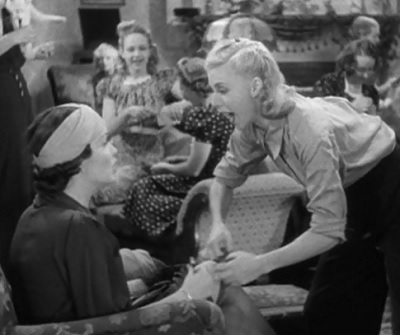
If you haven’t seen Jean (Ginger Rogers) squabble with Linda (Gail Patrick) in Stage Door, I envy you. It’s just such a pleasure. Three minutes into the movie, they are already at it: Jean thinks Linda has stolen her stockings—again—and she’ll forcibly remove them if she has to.

PatrickRogers-stockings-2
The two are roommates in the Footlights Club, a residence for aspiring stage performers, and their uncomfortably close quarters obviously are doing nothing for either’s temper. Linda denies the theft, calling Jean a “hoyden” and “guttersnipe.” Jean, sensitive to cracks about her class, says she’ll “slap [Linda’s] ears flat against the back of her head.” It takes the manager to prevent blows.

It’s the end of their relationship as roommates, but just the beginning of our enjoyment of their rivalry.

GingersRogersyellingupstairs
Jean particularly enjoys mocking Linda about her age and her lover, Anthony Powell (Adolphe Menjou).

“If you were a little more considerate of your elders,” Linda smirks to Jean, “maybe Mr. Powell would send his car for you someday….Course he would probably take one look at you and send you right back again. But then you’d have to expect that.”

“Oh, is that so?” Jean answers, imitating Linda’s superior tone.

“Do you know I think I could fix you up with Mr. Powell’s chauffeur?” Linda adds. “The chauffeur has a very nice car too.”

“Yes, but I understand that Mr. Powell’s chauffeur doesn’t go as far in his car as Mr. Powell does.”

“Even a chauffeur has to have an incentive,” says Linda.

“Well, you should know,” Jean snaps.

StageDoor-PatrickandRogers
Although she judges Linda for sleeping with Powell, Jean still envies her for the rich food and garb her actions afford her. “Say, I think it’s very unselfish for those little animals to give up their lives to keep other animals warm,” she says, admiring Linda’s furs.

GingerRogersGailPatrickcoat
“You know they’re very smart little animals,” Linda answers. “They never give up their lives for the wrong people.”

“Well,” says Jean, “you understand the rodent family much better than I do.”

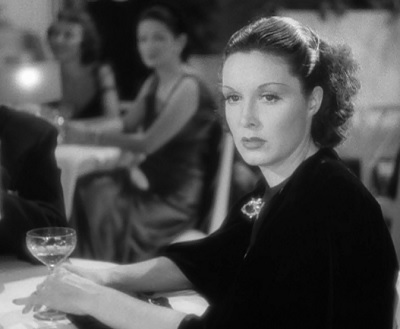
Unfortunately for Linda, Mr. Powell takes a liking to Jean, and hires her for a gig at his nightclub. Sitting next to her boyfriend, Linda realizes just whom he’s hired…

LindaSeesJean-GailPatrick
And Jean isn’t much happier to see her former roommate…

JeanseesLinda-GingerRogers
A few minutes later, Jean jabs at Linda with her cane, and the latter calls her “riffraff.”

Powell is curious about—but not put off by—Jean’s disinterest in him. “You don’t like me, do you?” he asks her.

“Oh, how could I help but like a man who takes his mother out to a nightclub,” coos Jean. “That was your mother you were sitting with?”

Jean decides to date him, even though he initially made her want to “run home and put on a tin overcoat.” How could she resist such revenge while getting a taste of the finer things in life?

AdviceGailPatrickGingerRogers
Linda tries to be philosophical about her lover’s betrayal, warning Jean it just better be temporary. “It’s one thing to borrow a friend’s friend,” she explains. “It’s another thing to hold him….”

Linda even gives her former roommate some advice, which, of course, is intended to poison their first date. “May I come in?” she begins, entering her room.

“Oh sure, I guess you’ll be safe,” Jean says, “the exterminators won’t be here till tomorrow.”

“How did they miss you on their last visit?” Linda quips.

StageDoor-GailPatrickGingerRogers
“Must be galling to you older women to lose your meal ticket to younger riffraff,” gloats Jean.

“Just a leave of absence, dearie,” explains Linda, “and in the meantime, I have my lovely sable coat and my star sapphire to keep me company.”

“It’s lovely, but I’m afraid you paid too much for it.”

The dialogue gives you a taste of these two together, but I can’t capture the chemistry, or the sparkling delivery—Ginger Rogers, with her snappy sarcasm, at her tough-gal best. Gail Patrick, with the flawless cool customer routine she perfected the year before in My Man Godfrey. The two together are magnetic.

The best part? There’s another rivalry in the film too—between Rogers and Katharine Hepburn, which is almost as fun.

For more dueling divas, check out the other entries in the blogathon!

Share
Posted in: 1930s films, Blogathons, Comedies (film), Feminism, Humor Tagged: Divas, fights, Gail Patrick, Ginger Rogers, Stage Door, women

The Depression Satire, Gold Diggers of 1933

01/11/2015 by leah@carygrantwonteatyou.com 6 Comments

GoldDiggersof1933
What does the term gold digger really mean, in the context of the Depression? Today we think of Kanye’s gold digger; buying gold and liposuction, maybe holding a lap dog and wearing furs; not a showgirl escaping destitution. For a musical, Gold Diggers of 1933 is surprisingly earnest, managing to both entertain and make us empathize with the plight of its subjects—and by extension, its audience. As a producer in the movie assures his performers, “I’ll make ’em laugh at you starving to death….”

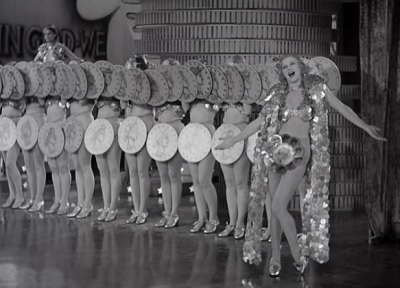
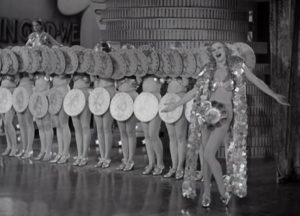
The film begins with showgirls performing in gold-coin bedecked, barely-there costumes. They’re singing the famous, “We’re in the Money,” led by Fay (Ginger Rogers).
WereintheMoney
We suspect there’s irony at play; after all, Fay sings a verse of it in Pig Latin.

Rogers's language play

Rogers’s language play

And of course, we’re right to be skeptical about those claims: before the song ends, the creditors bust in, close the show, and guarantee not a soul singing will be anything but broke.

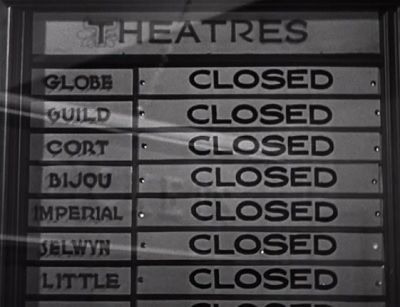
Clearly, this isn’t the slight film the title, or its greatly inferior sequel, might lead a modern viewer to expect. I was just reading about Girls, wondering if I could handle another season of Lena Dunham’s show about over-privileged, under-motivated friends in the city. I kept thinking of that show when the camera panned from the closed show to a small posting illustrating these singers’ (dissimilar) lack of options:

TheaterSign-GoldDiggers
The camera then turned to a letter beneath the flat door of three of the performers, a rent demand from their landlady.

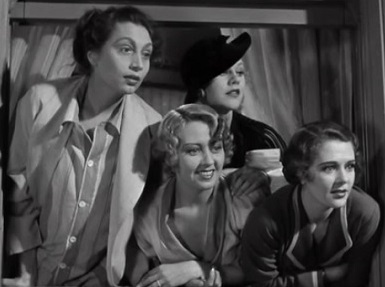
All three are sharing a bed. They wake up late, with nowhere to go. “Come on, let’s get up and look for work. I hate starving in bed,” gripes Polly (Ruby Keeler).

“Name me a better place to starve,” replies Trixie (Aline MacMahon). The famished roommates steal milk from the neighbors. Trixie reassures the others it’s okay because the milk company “stole it from a cow.”

I know that there’s a place for anyone’s woes; that life (and the films and shows depicting it) is not a comparison game. But the scene reminded me of why Girls so often, despite its cleverness, has left me flat. I’m just not very engaged by women without ambition or integrity. But women who can manage wit when they’re living on bread and snatched milk? Yes, please. Give me more.

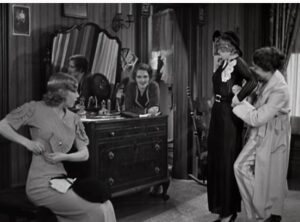
When Fay arrives to announce a new show, the women band together to give one of them—Carol (Joan Blondell)—a complete outfit to impress the producer. They’ve hocked too many stockings and dresses to do anything else.
DressingCarol-GoldDiggers
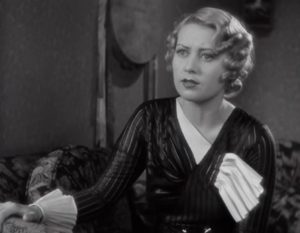
A tearful Carol calls to tell them it’s true that there’s work and that the producer, Barney (Ned Sparks), is on his way; however, he soon confesses he has no funds to start the musical. As eloquent as Carol’s response is to his trickery, her expression is even more so:
JoanBlondell-GoldDiggers
Luckily, the women’s singer-and-composer neighbor, Brad (Dick Powell) is available. He impresses Barney with his music, especially the tune which best fits the producer’s Depression theme. More importantly, Brad offers the money to put on the show.

(Just an early spoiler) Brad is secretly a member of a wealthy family, and his proud brother, Lawrence, is not pleased to see his sibling in a musical, and even less pleased the boy is in love with Polly (Keeler). Lawrence’s (Warren William’s) banker, Faneuil H. Peabody (Guy Kibbee), convinces his client all showgirls are gold diggers, and Lawrence therefore rushes to quash the romance.

The two men go to the girls’ apartment to pay off Polly, but mistake Carol for her. Enraged by their condescension, Trixie and Carol decide to pretend Carol is Polly and take the two haughty men for all they’re worth to teach them better manners (and teach us that the title of this film is as ironic as its opening song).

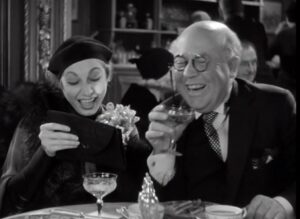
MacMahon as Trixie can occasionally grate, but Guy Kibbee is wonderful as the elderly, lascivious lawyer, the man whom Trixie feels is “the kind of man I’ve been looking for. Lots of money and no resistance.”
BankerandTrixie-Aline MacMahon
Trixie plans to marry the banker in spite of her lack of attraction for him (“You’re as light as a heifer,” she says when she dances with him). She just needs to fend off Kay (Rogers), who wants a meal ticket too.

Carol has no such plans. She’s just angry. The film wants us to understand that Kay and Trixie are just desperate—but understandable—exceptions to the rule. Most of the showgirls, far from being the “parasites” Lawrence assumes, are as ethical and proud as Carol and Polly are. Slowly, though, Carol, in spite of herself, begins to fall for the handsome snob.

The women’s antics are entertaining, especially when they fool the men into buying them pricey hats. But the men’s conviction they’re hanging out with these lovelies just to do Brad good is even funnier. Since this is a pre-Code film, there’s no dearth of skimpy clothing and sexual references. Lawrence soon passes out drunk after confessing love for Carol, and she and Trixie move him to their bed, knowing he’ll assume he’s had sex with faux-Polly and will be too compromised to object to Brad marrying the real one.

Sexual innuendo is evident throughout the musical numbers in the show, especially since this is a Busby Berkeley film. One of my favorite acts is about couples “Pettin’ in the Park.” When it rains, the women retreat to change, returning to their men in metal dresses.

Berkeleynumber-parkdressing
The men are frustrated and outraged they can’t access their partners’ bodies.

PowellandKeeler-PettinginthePark
Luckily for them, a peeping toddler (yes, you read that right) gives the star (Powell) a tool to break through his love’s (Keeler’s) metal, which he’ll presumably pass to the others.

But Berkeley doesn’t keep with this light tone for all of his numbers. The film ends with the Depression tune that Barney promised, with Carol singing, “Remember My Forgotten Man.”

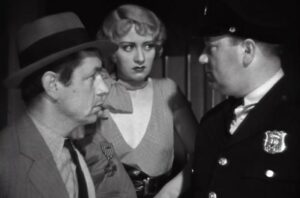
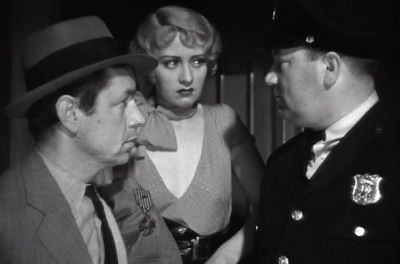
Alone on a street in seductive attire, she first talks, then sings, “Remember my forgotten man?/You put a rifle in his hand./You sent him far away./ You shouted, ‘Hip hooray,’ but look at him today.”
Showing the cop the homeless man a veteran

Carol defending a forgotten man

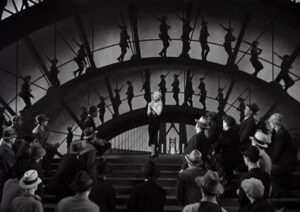
The song moves from one woman, to another, then builds into an anthem of men and women attacking the government for not doing more to help the veterans and farmers who’ve worked hard for their country, only to end homeless in breadlines, unable to support the women who love them.
ForgottenMan-GoldDiggers1933
Their women are left not only witnessing their men’s suffering, but with children to support as well as themselves–alone. Carol’s provocative attire and presence on the street are no accident, of course. There is one type of work she can get without her man.

The song is heartbreaking. How rare to find a movie, a musical, that captures the national plight like this, especially after such light fare. But of course, the song is also a reminder that there was nothing truly light about the whole film. Is Trixie a greedy gold digger for wanting a rich husband rather than starving as she waits for a show not to be canceled? The oldest and least attractive of the bunch, she knows she must beat Fay to the lawyer’s libido, or she’s probably headed for the streets. The relatively happy unions of these women don’t blind the audience to the fact that there are a lot of girls in that show, a lot of women without secretly-rich neighbor-lovers, without pliable elderly bankers, but with landlady’s notes waiting for them under the door.


Share
Posted in: 1930s films, Comedies (film), Romantic Comedies (film), TV & Pop Culture, Uncategorized Tagged: Busby Berkeley musical, Depression, Dick Powell, Ginger Rogers, Girls, Gold Diggers of 1933, Joan Blondell, Lena Dunham

The Film I Re-Watched Despite Missing a Quarter of It: The Major and the Minor (1942)

07/03/2014 by leah@carygrantwonteatyou.com Leave a Comment

MillandRogers
Those born in the age of streaming will never know the excitement of catching a favorite film on TV, running to get a tape on time to record it, and succeeding. With adept timing skills, one could even cut out the commercials. There were a few films I loved so much that I was willing to record them even if I had missed a significant portion of the start; What about Bob? was one of them. (40 minutes of a Bill Murray flick is still 40 minutes of Bill Murray.) But my favorite of those I only partially caught was Billy Wilder’s Hollywood directorial debut, The Major and the Minor. After a decade of watching the film from 25 minutes in due to a tardy discovery of it on TCM, and even tardier taping effort, I finally viewed the whole movie, and discovered it was even more charming than I’d thought.

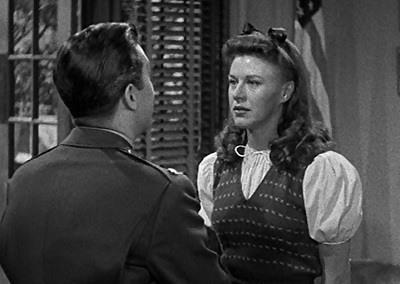
The film begins when Susan Applegate (Ginger Rogers), fed up with New York, tries to head home to Iowa, only to find the train fare back has increased and she can’t afford it. Faced with the prospect of more skirt chasing and job changing, Susan pretends she’s a kid to get the half-price fare instead.

Susan's reaction to client harassment (a part I missed!)

Susan’s reaction to client harassment (a part I missed!)

Since this is a Wilder film, you know her ruse will lead to trouble. The train conductors, suspicious of her maturity, keep trying to catch Susan—asking her birthdate, spying on her reading material, looking her up and down. Finally, they spot her during an inadvisable smoking break. She escapes being thrown off by running into the berth of Major Kirby (Ray Milland), an instructor for a military academy. Kirby believes her kid routine and lets her stay in his other bed, but when the train stops due to bridge trouble, his fiancé, Pamela (Rita Johnson), drives up to see him and catches Susan. More clear-sighted than her husband-to-be, Pamela assumes Susan an adult and heads back to the school to get him fired.

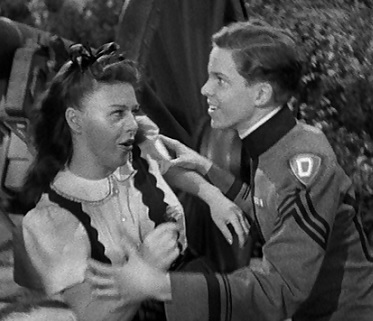
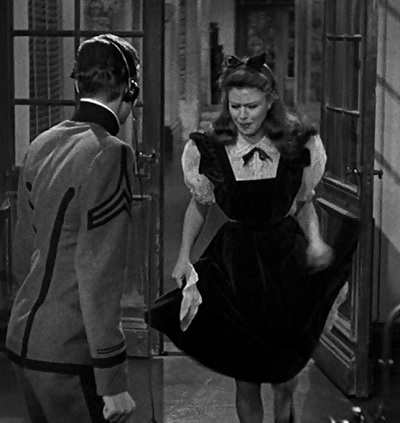
Of course, Kirby beseeches Susan to visit his academy (as Sue Sue, her alter ego) while the train is delayed to prove his innocence, and Susan, moved by his sweetness and guilty at what she’s caused, agrees. So now there’s a woman pretending to be a child at a military school full of boys who might question her age, but have no doubts whatsoever about her attractiveness. You can imagine the kind of scenarios that ensue.

Gingerandtheboys
In my favorite moment, Rogers uses her dancing skill to lure a cadet off the phone long enough to assist Kirby’s efforts to get back into active military service, plans Pamela has secretly been trying to derail.

Rogersflirting
Of course, there are some questions here. Already in her thirties, Rogers looks about as likely to pass for 12 as I would for a toddler. Her childish voice does indeed sound like “Baby Snookums,” as she later admits, making you wonder whether Susan has ever encountered an actual twelve-year-old; that voice has to be a good seven years off. At first, I just considered the choice of Rogers bad casting; a frailer woman with a delicate voice might have pulled off a more convincing pre-adolescent than an actress with such a deep timbre and womanly shape.
Susan (Rogers) at the left; Sue Sue, her 12-year-old attempt, at right

Susan (Rogers) at the left; Sue Sue, her 12-year-old attempt, at right

But like Barbara Stanwyck’s appalling British accent in The Lady Eve, you begin to view Rogers’ very implausibility as part of the humor.

Despite the audience’s likely doubts about this community being so taken in by a woman who does not look or talk like a twelve-year-old, the depiction of their wholesomeness is so consistent throughout the movie that you soon forget your skepticism. This is a community, after all, in which the school administration and Kirby’s fiancée plot to fire him for sleeping in the same berth with a full-grown woman, but react this way to finding out Susan is a child:

Pamelajoyous
Throughout the movie, writers Charles Brackett and Wilder sidestep the scarier possibilities suggested by an older man-kid relationship by making those possibilities beyond the imaginations of people at this school. Therefore, in spite of Milland’s attention to Sue Sue, he never comes across as threatening or creepy, as heroes in other films with similar stories have, such as 1999’s Never Been Kissed. In fact, Milland plays the part of an avuncular type so well that it took about four films more of his work for me to actually recognize that he was attractive at all (this in spite of the great range of his roles, including his Oscar-winning performance as an alcoholic on a binge, Wilder’s The Lost Weekend.)

Predictably, the only one to discover the truth about the imposter’s age is the same age herself: Pamela’s sister, Lucy (Diana Lynn). Lucy is a great character, a budding scientist whose knowledge of human maturation would have made her perceive Sue Sue’s act even if her clothing hadn’t given it away. The two quickly become allies in separating Kirby from the unlikable Pamela.

SueSueandLucy
Once over the shock of Rogers playing a child, you start to realize just how marvelous she is in the role. She’s so convincingly jaded by her New York disappointments, a cynicism that comes out in an impeccable delivery of the screenwriters’ marvelous lines. Her dawning love for Kirby is equally convincing. Just as Rogers is said to have persuaded all of America that Fred Astaire was a sexy catch, so here she persuades us all that there is nothing more lovable than a guy who is trying to help a kid adjust to the pangs of early adolescence.

Kirby and his "bum eye" beginning to see something of Susan, not Sue Sue

Kirby and his “bum eye” beginning to see something of Susan, not Sue Sue

I definitely missed a little of the plot by re-watching my taped version of this movie for so many years, but I wasn’t wrong about the film’s quality. Whether watching five minutes or a 100, you’ll enjoy it too.

Share
Posted in: 1940s films, Romantic Comedies (film) Tagged: Ginger Rogers, Never Been Kissed, Ray Milland, The Major and the Minor

Recent Posts

  • 100 Years Later, Still Scary: Dr. Caligari
  • Escaping Out of the Past (1947)
  • A Weeper for Those Who Love Jerks
  • Thank You, Academy, for Not Infuriating Me
  • Challengers (2024) Is a Bad Movie

Subscribe to Blog via Email

Enter your email address to subscribe to this blog and receive notifications of new posts by email.

Categories

  • 1920s films
  • 1930s films
  • 1940s films
  • 1950s films
  • 1960s films
  • 1970s films
  • 1980s films
  • 1990-current films
  • 2020s films
  • Action & Sports Films
  • Anti-Romance films
  • Blogathons
  • Childfree
  • Comedies (film)
  • Drama (film)
  • Feminism
  • Femme fatales
  • Film Noir/Crime/Thriller & Mystery
  • Gloriously Silly Scenes
  • Horror
  • Humor
  • Mae West Moments
  • Musicals and dancing films
  • Oscars
  • Random
  • Romance (films)
  • Romantic Comedies (film)
  • The Moment I Fell for
  • Turn My Sister into Classic Movie Fan
  • TV & Pop Culture
  • Uncategorized
Share
Classic Movie Blog Hub Member

Recent Comments

  • leah@carygrantwonteatyou.com on Meg Ryan’s Fate Foretold in Joe Versus the Volcano
  • Ryan on Meg Ryan’s Fate Foretold in Joe Versus the Volcano
  • leah@carygrantwonteatyou.com on 100 Years Later, Still Scary: Dr. Caligari
  • The Classic Movie Muse on 100 Years Later, Still Scary: Dr. Caligari
  • leah@carygrantwonteatyou.com on 100 Years Later, Still Scary: Dr. Caligari

Archives

  • November 2025
  • September 2025
  • May 2025
  • March 2025
  • January 2025
  • November 2024
  • August 2024
  • July 2024
  • May 2024
  • March 2024
  • February 2024
  • December 2023
  • November 2023
  • October 2023
  • September 2023
  • August 2023
  • July 2023
  • May 2023
  • April 2023
  • March 2023
  • January 2023
  • December 2022
  • November 2022
  • September 2022
  • July 2022
  • May 2022
  • April 2022
  • March 2022
  • February 2022
  • October 2021
  • September 2021
  • April 2021
  • March 2021
  • February 2021
  • December 2020
  • October 2020
  • September 2020
  • July 2020
  • May 2020
  • April 2020
  • March 2020
  • February 2020
  • December 2019
  • October 2019
  • September 2019
  • June 2019
  • May 2019
  • April 2019
  • February 2019
  • January 2019
  • November 2018
  • September 2018
  • July 2018
  • June 2018
  • May 2018
  • April 2018
  • March 2018
  • February 2018
  • January 2018
  • November 2017
  • September 2017
  • August 2017
  • July 2017
  • June 2017
  • May 2017
  • April 2017
  • March 2017
  • February 2017
  • January 2017
  • December 2016
  • November 2016
  • October 2016
  • August 2016
  • July 2016
  • June 2016
  • May 2016
  • April 2016
  • March 2016
  • February 2016
  • January 2016
  • December 2015
  • November 2015
  • October 2015
  • September 2015
  • August 2015
  • July 2015
  • June 2015
  • May 2015
  • April 2015
  • March 2015
  • February 2015
  • January 2015
  • December 2014
  • November 2014
  • October 2014
  • September 2014
  • August 2014
  • July 2014
  • June 2014
  • May 2014
  • April 2014
  • March 2014
  • February 2014
  • January 2014

Meta

  • Log in
  • Entries feed
  • Comments feed
  • WordPress.org

Copyright © 2025 Cary Grant Won't Eat You.

Church WordPress Theme by themehall.com