Cary Grant Won't Eat You

Classic movies for phobics

  • About
  • eBooks
  • Previous Blogathons
Classic movies for phobics

Gary Cooper

The Dark Humor of High Noon (1952)
06/12/2016 by leah@carygrantwonteatyou.com 6 Comments

HighNoon
**Contains spoilers**

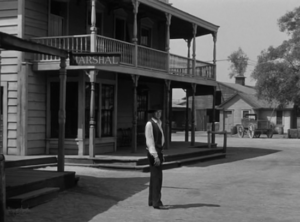
When I watched High Noon many years ago, I was struck by its pacing, its intensity, its seriousness. This time, I kept laughing. There’s something comic about watching Marshal Will Kane (Gary Cooper) aimlessly tread around the town, waiting for someone, anyone to assist him. I found myself curious (having forgotten most of the details) not whether he’d find aid, but just what methods of bailing on responsibility his fellow townspeople would employ.

The judge (Otto Kruger) is, of course, is my favorite. Having passed sentence on Frank Miller (Ian MacDonald), a killer who has now been freed and is headed to town for revenge, the judge opts for exiting pronto. He tells Kane, the marshal who caught Miller, to do the same. His advice is a cynical history lesson about how little one can rely on civilian ethics when danger is afoot–an account of Athenians who welcomed a tyrant they’d once banished, and watched as he executed their government; an incident much like one that recently occurred in a nearby town. The judge shares these accounts as he casually packs away his flag and scales of justice.
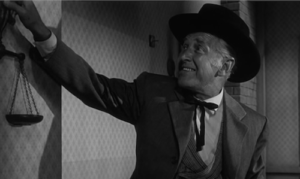
ScalesofJusticeOttoKruger
His assessment about the value of the people he’s leaving to the mercy of an outlaw is almost as breathtakingly cold as the clock speech in The Third Man: “This is just a dirty little village in the middle of nowhere. Nothing that happens here is really important. Now get out.” The former marshal (Lon Chaney, Jr.), Kane’s mentor, is likewise a ray of light: “People got to talk themselves into law and order..down deep, they don’t care. They just don’t care.” Poor Kane is asking for just a bit of support before he takes on a posse, and these are his cheerleaders.

Of course, it’s hard not to love Kane, even as you wonder whether there’s a better way to overcome Miller than the one he’s devised (i.e., shoot it out).
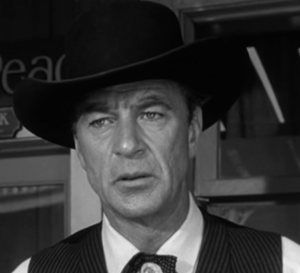
Cooper-HighNoon
“I’ve got lots to do,” Kane keeps saying as the minutes creep by. But really, he doesn’t. He has to warn Helen Ramirez (former lover to both him and Miller), ask for volunteer deputies, and write a brief will. But this is a small town, easily navigated, and these tasks are quickly accomplished. What he really has to do is busy himself to avoid dwelling on the cowardice of his companions and his own slim chances for survival if he stays in town until noon, when Miller is arriving.

While Ramirez (Katy Jurado) is the most interesting character, it’s clearly Kane’s new bride, Amy (Grace Kelly), who brings on the dark humor.
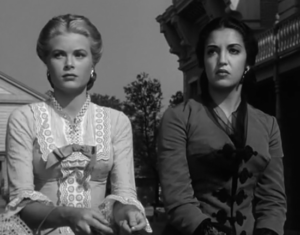
JuradoandKelly
First, there’s the fact that she’s just had the biggest bummer of a wedding day ever. Then there’s the small detail that she’s a Quaker who has married a marshal. I don’t think I have to tell you that she may not be the wisest of women. Sure, he’s retiring; the new marshal is arriving the next day, and the newlyweds are planning to leave town and to run a store elsewhere before they hear about Miller. But surely five minutes of Kane’s obdurate behavior during courtship would have enlightened Amy that this whole conversion business–of both faith and career–wasn’t going to work so well. (Admittedly, given the pickings we see of the townspeople during the film, she may still have made the best choice of a mate she could.) And of course, it’s quite amusing that a woman who has to overcome her beliefs–not dodge them–is the only helper Kane receives. No wonder Kane throws his star on the ground after besting Miller.

That the film would include such darkness isn’t surprising from a screenwriter (Carl Foreman) who had been blacklisted before High Noon even came out. What he was witnessing of former friends and those he must have once respected couldn’t have led to idealism. Apparently, John Wayne scorned the film as anti-American, and Rio Bravo is a reinterpretation, with more admirable townspeople. While I agree with the movie’s distance from Wayne’s optimism, I think Foreman’s (and the original story’s) cynicism goes much deeper than any individual country, any specific belief system. It’s a simple, sadly humorous morality tale about human nature: while there may be rare moments of heroism (like Kane’s), typically, when the going gets tough, the “tough” scatter.

Share
Posted in: 1950s films, Action & Sports Films, Drama (film), Humor Tagged: best Westerns, dark humor, Gary Cooper, Grace Kelly, High Noon, movie, review

Love It, Love It Not?: Waffling over Lubitsch’s Design for Living

06/13/2015 by leah@carygrantwonteatyou.com 2 Comments

DesignforLiving
I hoped to love Design for Living. After all, the director was Ernst Lubitsch, who had helmed such witty, cynical comedies about relationships, movies that usually feel as insightful and controversial now as they probably did back in the 20s and 30s. And many reviewers I respect had praised its humor and star.

But….

I found myself teetering back and forth throughout the film—This is wonderful! This is bad!—so, like a gal tearing apart a flower over a crush, I’m going to explain its effects the best way I can:

Love It #1: Subject Matter & Morality

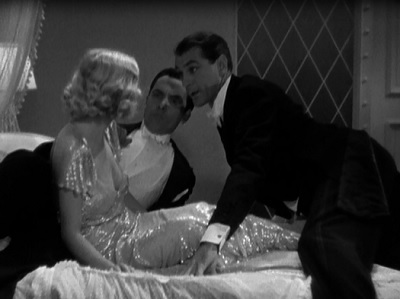
Gildasthreesome-DesignforLiving
Design for Living features a threesome—surely interesting coverage for a film of our time, much less in 1933. (An underrated film I watched in college, Threesome, got a lot of heat back in 1994 for its coverage, even though it was far less flip about the results of the tripling than Lubitsch’s.) I find stories about unusual relationships intriguing, and this is certainly one of them.

Knowing two roommates want her, Gilda tries to remain platonic with them. She attempts to preserve their friendship and guide their artistic successes (one is a playwright, the other a painter). Her catch phrase is “No sex.” Of course, she gives in to her own desire and theirs, repeatedly.

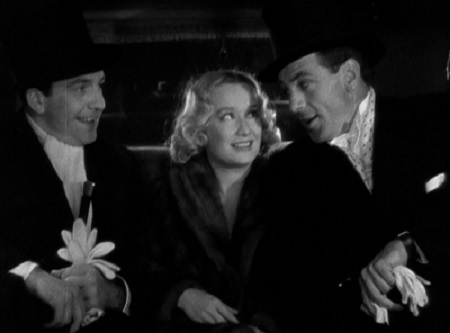
What’s interesting about the film is the utter lack of judgment about the heroine having sex with both men (in turn, rather than together), or later, wanting to leave her husband to resume the romance. Lubitsch’s touch is so incredibly light that we never blame Gilda (Miriam Hopkins) or her lovers, even though it would be easy to think of her actions, and theirs, as betrayal. Instead, we root for Gilda to stay with both men, as their happiness and hers seems most assured when their playful, sexually charged unit is intact.

Love It # 2: Its Opening
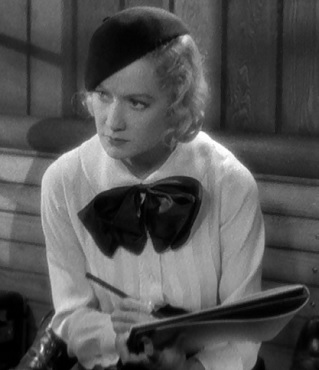
The plot begins with Gilda drawing a rather merciless caricature of two strangers in her train car, Tom (Fredric March) and George (Gary Cooper). Her humor and confidence are breathtaking. Her casual decision to put her legs up on their seat, her amused reaction to their annoyance at her picture, and their own exuberant attraction to her are a pleasure to watch. Although the development is almost too quick, their move from prickly insecurity to joy in each other’s company is funny, and such a convincing depiction of youthful spirits that it made me laugh.

Love It #3: Its Heroine
The film stars Miriam Hopkins, whom I’ve always thought I should like more than I do, which was confirmed by persuasive defenses of her work in a recent blogathon.

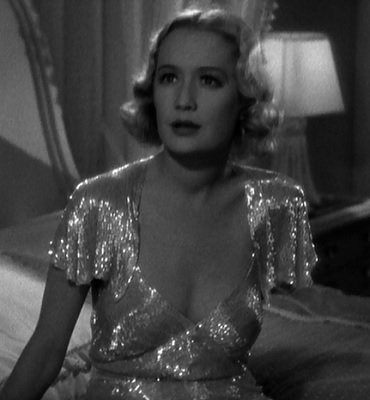
MiriamHopkinsDesignforLiving-2
Although she can be dramatic in the film, my usual objection to her, that theatricality suits Gilda’s personality. After all, Gilda imagines herself the driving force behind multiple men’s artistic successes—not to mention their sexual satisfaction. I love that Gilda has utter confidence in her own role as a lover and commercial artist, but quickly sets about fixing the two men’s wobbly self-esteem. Her defense of a woman’s need to try out men like hats is hilarious, and amazingly ahead of its time. Her assurance and energy made me a fan of hers throughout, and always curious what she’d do next.

But….here’s the thing: Despite my enjoyment of these aspects of the film, I didn’t laugh that much, and had to wonder why, which brings me to…

Love It Not #1: Gary Cooper
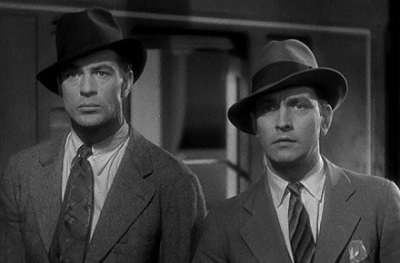
Oh Gary. He just wasn’t formed for comedy. While his gawky, unnatural goofiness in Ball of Fire seemed to capture his academic persona, the same portrayal here rings very false. He is not convincing as a painter, as a lover, or as a spirited friend. I just wanted to hide my eyes or send him to acting class every time he was on the screen.

Love It Not #2: Edward Everett Horton as Deus Ex Machina
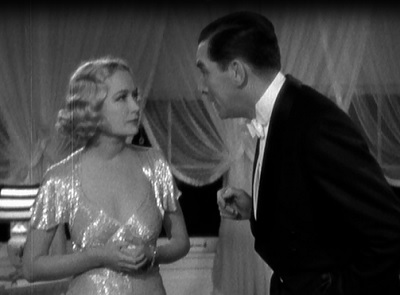
Whereas Cooper pains me in comedy, Horton delights me. But here, his role as Gilda’s boss and competing love interest was laughable—at best. The chemistry between Hopkins and Horton was so nonexistent that I felt like one of them was green screened in every time they were together.

HortonandHopkins

Threatened by...Horton?

Threatened by…Horton?

In addition, the mood between the three lovers is so light and Gilda’s own personality so ebullient that her desperate decision to throw herself at her boss to avoid Tom and George felt like the plot twist of a first-time playwright (which Noël Coward, the story’s creator, was not; apparently, the film barely resembled the play).

Speaking of poor playwrights….

Love It Not #3: These Three—Artists?
I can’t say I’m expecting realism in my comedies, but Hopkins’ drawing in the first few minutes of the story was so patently fake that it took my attention away from the film. (Why not an actress? Gilda definitely has that temperament.)

MiriamHopkins-DesignforLiving
But she’s Degas compared to Cooper, who may be the most unlikely painter ever to grace the screen, and Fredric March is not much more convincing as an author.

I get that a threesome seems Bohemian, and failed artistic aspirations are glamorous in the way poverty only can be in Hollywood portrayals, but come on. Making them artists felt like a cheap way for the writers and director to avoid the audience’s questioning of the characters’ behavior. (Those artists with their loose morals!) And the script is so thin that some truly adept performances were required. Unfortunately, not one of these casting choices fit the material fully. March reminded me so much of Gene Kelly that I could have believed in a little tap dancing. But he looked about as uncomfortable with that typewriter as Cooper did just being there.

In Conclusion….
So some loves, some nots. In the end, I’m glad I saw the film. The unabashed approval of this very untraditional relationship is breathtaking. There are some marvelous lines (my favorite, the “gentlemen’s agreement” to not hook up). The conclusion is a blast to watch. And Hopkins is riveting throughout. Just don’t expect that usual Lubitsch magic, and you’ll enjoy it.

Share
Posted in: 1930s films, Feminism, Romantic Comedies (film) Tagged: Design for Living, Ernst Lubitsch, Fredric March, Gary Cooper, Miriam Hopkins, Pre-Code, review, threesome

The Nerdiest Scene Ever: Encyclopedia Writers Trumping Gangsters in Ball of Fire

05/16/2015 by leah@carygrantwonteatyou.com 28 Comments

This post is part of the My Favorite Classic Movie Blogathon in celebration of National Classic Movie Day (May 16th). Click here to view the schedule listing all the great posts.

CoopervsDuryea
Nerd alert: I used to sit in the basement, reading my parents’ World Books for fun. I think it started with A Tale of Two Cities. A few hours into the encyclopedia set’s entries on The French Revolution, and Sydney Carton was forgotten.

Now, of course, my addiction is Wikipedia, despite my warning students away from it with Colbert. The other day I attended a Renaissance Faire featuring a pirate show (yes, I know how ridiculous that is), just after reading about Blackbeard in The Smithsonian. The combination led me on a Wikipedia binge on female pirates.

Thus it should be no surprise that a film about professors writing an encyclopedia (and their unexpected romantic interlude with a gangster’s moll) would thrill me. I’ve already explained why Ball of Fire should be viewed by all English majors. Today I’m advocating it for history buffs as well, particularly due to one scene starring the professors, two gangsters, The Sword of Damocles, and the mirrors of Archimedes.

**Spoiler alert.**

For those who’ve never seen the film, here’s the basic plot: Sugarpuss (Barbara Stanwyck), girlfriend to gangster Joe Lilac (Dana Andrews), hides out from the D.A. in the home of the encyclopedia writers, pretending she’s there to help with Professor Potts’s (Gary Cooper’s) entry on slang. Potts falls for and proposes to her, and she (to her great shock) falls for him too. But when her scheming is exposed, Potts lets her leave with Lilac, who needs her “I do” to prevent her from testifying about his crimes.

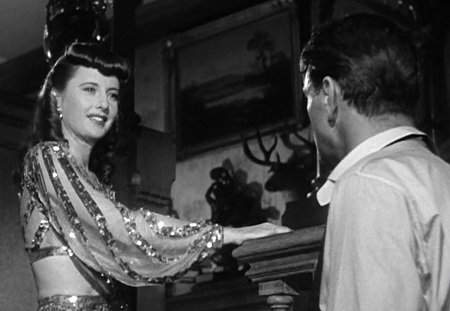
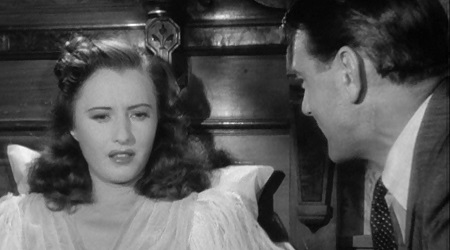
Sugarpuss knows she’s earned Potts’s disgust, but refuses to marry Lilac, instead explaining her love for the professor. She describes his poor kissing technique, his “giraffe” fashion, and other traits that have somehow inspired her love for him.

Sugarpuss-Stanwyck
“I’ll never see him again,” she tells Lilac, “but I’m not gonna marry you, not if you tie a ton of cement around my neck and throw me into the East River, like you did all the others.”

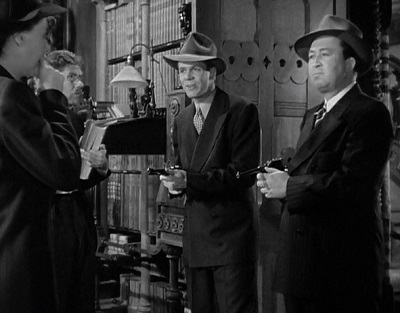
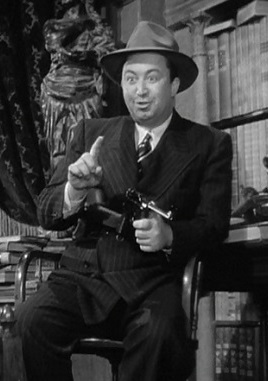
To force her, Lilac sends two of his henchmen, Pastrami (Dan Duryea) and Anderson (Ralph Peters), to take the professors hostage.

GangstersBallofFire
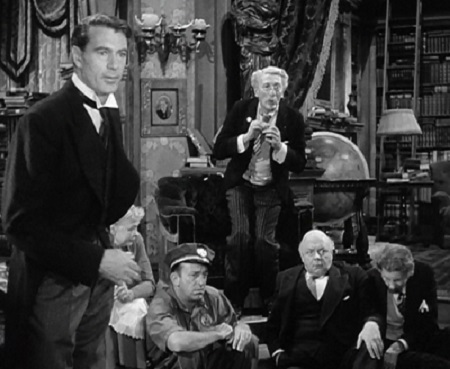
When Potts discovers how much Sugarpuss loves him, he wants to yodel he’s so happy. His fellow professors share in this enthusiasm, even holding down Pastrami’s gun. The gangster retorts,”Better look out, it’s gonna spit.”

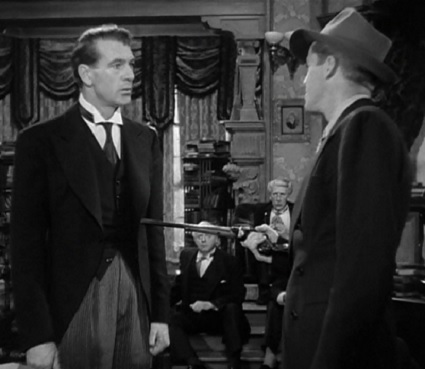
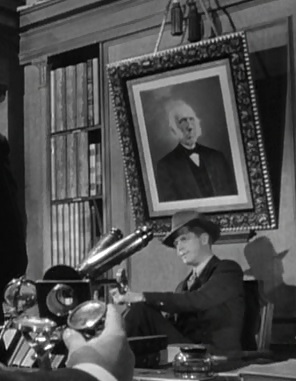
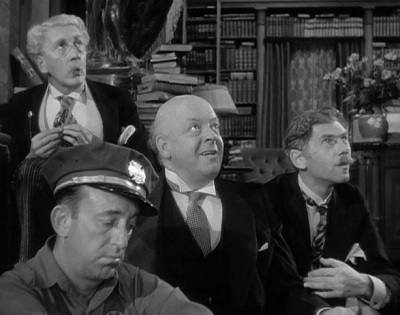
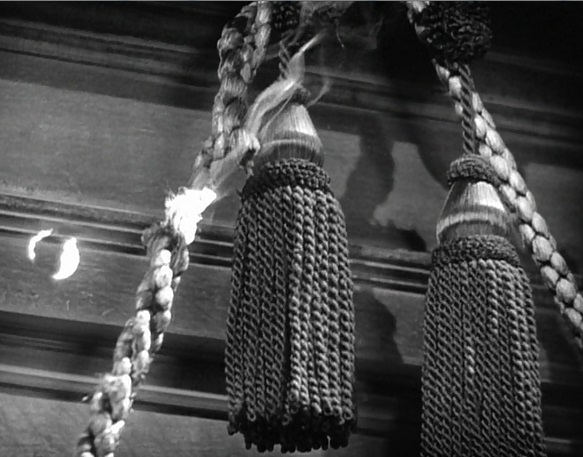
At this exciting juncture, their garbage man arrives with questions on a quiz, including one about the Sword of Damocles. Professor Jerome (Henry Travers–a.k.a., Clarence of It’s a Wonderful Life) explains the legend, realizing its pertinence to their situation: A sword is suspended above the head of Damocles by just a hair, just like the portrait above Pastrami.

SwordofDamoclesstrategy-BallofFire
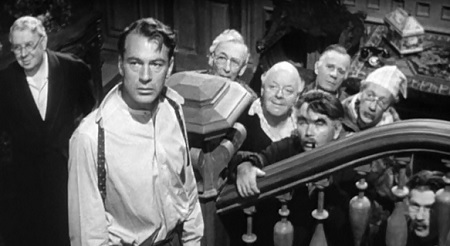
Jerome’s quick-witted colleagues soon catch the reason for his storytelling. Suddenly, they have a strategy–and perhaps as importantly, hope.

ProfessorsSeeDamoclesBallofFire
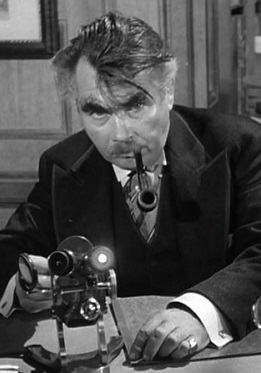
After Potts shares another story–Archimedes burning the Roman fleet with well-aimed mirrors–Professor Gurkakoff (Oscar Homolka) moves his microscope so that it’s catching the sunlight, and directs it at the rope above the portrait.

Oscar Homolka-BallofFire
Potts then notices that Anderson is pitched precariously on a high chair.

Ralph Peters-BallofFire
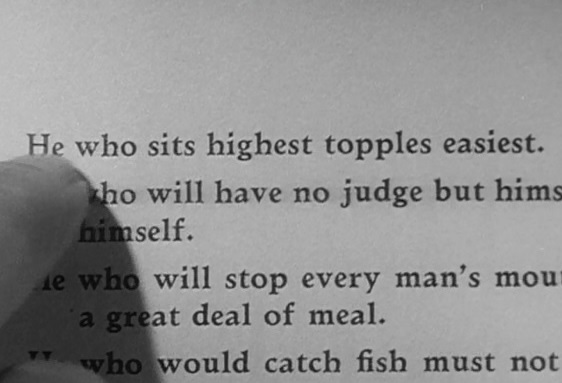
He therefore refers one of his colleagues to a passage that gives him a mission once Pastrami is handled.

Topples-BallofFire
The approach is working. Two of the professors have spotted a carpet they’re ready to pull to topple Anderson, and the fire is burning through the rope above the picture.

Reflectors-Archimedes-BallofFire
Now all the professors need to do is distract the criminals’ attention from the fire. Potts insults the gangsters in a pseudo-intellectual style, beginning a nonsensical speech with “Your inferiority is a question of the bony structure of your skulls.”

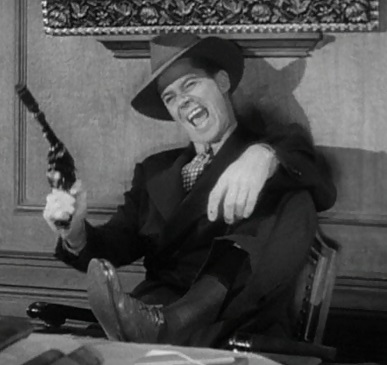
Anderson is unaware how truthfully he speaks when he complains, “This mixed-up talk is giving me a headache.” Pastrami argues that guns, not smarts, make the world go round, and proves it by shooting their globe.

Pastrami-Dan Duryea-BallofFire
While this gun play has the whole room worried, it’s Pastrami’s decision to leave his chair that leads to panic. Professor Oddly proposes that Pastrami shoot a dime out of his hand, but only if he returns to his seat. Realizing the risk he’s taking, poor Oddly switches to a quarter, then a 50-cent piece. The tension in the room has obviously reached quite a pitch.

ProfessorsFearful-BallofFire
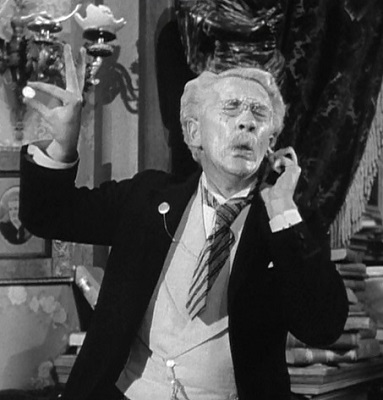
Oddly’s expression as he waits to lose his hand is priceless:

ProfOddlyRichardHaydn
Of course, Pastrami is knocked over first.

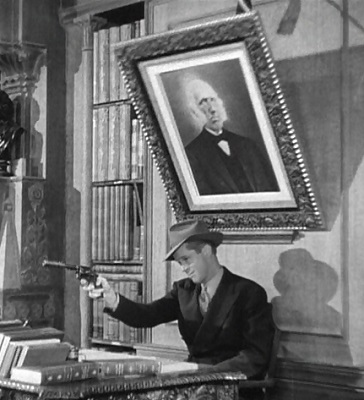
Portrait starts to fall.
And Anderson falls via the carpet move. Oddly faints–quite theatrically. And the professors rush off in a garbage truck to save Sugarpuss, with Potts studying boxing strategies to use against Lilac en route. With scenes as delightfully geeky and ridiculous as this one, it any wonder that this classic film remains my favorite?

Share
Posted in: 1940s films, Blogathons, Film Noir/Crime/Thriller & Mystery, Humor, Romantic Comedies (film) Tagged: Ball of Fire, Barbara Stanwyck, Colbert, enclopedia, films for English majors, films for history buffs, Gary Cooper

5 Reasons Why English Majors Will Love Ball of Fire

05/01/2014 by leah@carygrantwonteatyou.com 27 Comments

This entry is part of the Romantic Comedy blogathon cohosted by Backlots and Carole and Co.

In trying to get friends to give old movies a chance, I often start with Ball of Fire, mainly because I know many English majors/graduate students, few of whom predict what delights are waiting for them in this 1941 classic. Here are just five of the reasons why everyone who waxes poetic about Shakespeare or Austen needs to spend a little time with Gary Cooper and Barbara Stanwyck:

1. The Plot: A Mobster/Moll Romantic Comedy about Language

Professor Bertram Potts (Cooper), on the hunt for colorful subjects to aid him with his encyclopedia entry on slang, enlists a sexy torch singer, Sugarpuss O’Shea (Stanwyck).

O'Shea (Stanwyck) flirting with the professors

O’Shea (Stanwyck) flirting with Potts

Sound ridiculous? It is, wonderfully so.

In the “meet cute” moment, O’Shea has just learned that her mobster boyfriend (Dana Andrews) is in trouble with the law. Fearing the knock on her dressing room door is the DA with a subpoena, she’s hostile to Potts, and when she discovers his mission to study her, dismisses him:

O’Shea: “Shove in your clutch.”

Potts: “Exactly the kind of thing I want”….

O’Shea: “OK, scrow, scram, scraw.”

Potts: “A complete conjugation!”

The opening sequence of Potts’ investigation, in which we learn the sources of such terms as “slap happy” and discover just how old the term “jerk” must be, is equally amusing to those of us who delight in wordplay, as is the nerdy professor’s ignorance of such words as “boogie.”

And that’s just the first half hour.

2. A Clever Take on Snow White and the Seven Dwarves

Fables, folk tales, fairy tales. We English majors love to read them, interpret them, reinvent them. (Angela Carter’s dark The Bloody Chamber traumatized me in an introductory lit course.) Famed writing team Charles Brackett and Billy Wilder turn the tale on its head, making Snow White a seductress and the dwarves a team of innocent professors (six bachelors and a widower) who are writing an encyclopedia together, with Prince Potts acting as the eighth member.

O’Shea seeks shelter from the police at their house, claiming she needs to stay to help with Potts’ research. The proper Potts doesn’t understand why she needs a sleepover, but his elderly companions, used to only the “singularly uninspiring underpinnings” of their housekeeper, outweigh his objections. They have fallen for O’Shea, and their charming antics to gain her attention—wearing new outfits, making sure their pants get ironed, having her teach them the conga—make you wonder just how unfair it is that the prince is the one who wins Snow White’s affection.

Potts (Cooper) and the dwarves reacting to O'Shea's flirtation

Potts (Cooper) and the dwarves reacting to O’Shea

O’Shea has no plans to seduce Potts, but when things get “hotter” for her boyfriend and she’s told “to stay in the icebox like a good little salad,” she gives the impressionable Potts a kiss. And, as in the fairy tale, things escalate from there.

3. The Witty Dialogue/One Liners

What English major isn’t a sucker for good dialogue? With Wilder & Brackett as writers and Howard Hawks as the director, witty banter and frequent double entendres are a matter of course.

Early in the film, Miss Bragg, the housekeeper, badgers Professor Oddly for gobbling up the strawberry jam after writing an encyclopedia entry on strawberries. She then expresses horror at Professor Magenbruch’s studies.

“I’m just starting my article on sex, Miss Bragg,” he answers. “Any objections?”

“No,” she concedes. “I trust you have more control of yourself than Professor Oddly.”

And the one liners! Some favorites:

O’Shea: “Say, who decorated this place, the mug that shot Lincoln?”

Potts: “Make no mistake, I shall regret the absence of your keen mind; unfortunately, it is inseparable from an extremely disturbing body.”

O’Shea (describing her throat): “It’s as red as The Daily Worker and just as sore.”

Miss Bragg (speaking of O’Shea): “That is the kind of woman that makes whole civilizations topple!”

I always wonder why so many Gilmore Girls and Aaron Sorkin fans won’t give 30s and 40s comedies a try. Ball of Fire not only employs the banter they love so well, but avoids the trap of making EVERY character eloquent (a Sorkin flaw). The contrast between O’Shea’s wisecracking and Potts’ slow earnestness is one of the delights of the film, and given that Cooper typically played a Clint Eastwood type, his professorial wordiness is particularly amusing. As the Self-Styled Siren put it, “Who besides Billy Wilder would look at Gary Cooper, the most laconic speaker in Hollywood, and think, ‘Linguistics!’”

4. Wonderful Characters (and Performances)

With eight professors, a nightclub singer, a mobster and his minions, the DA and his team, and Potts’ other research subjects, a viewer would be unreasonable to expect much character development in any but the main players. Romantic comedies rarely get beyond stereotypes anyway. But most of the characters in Ball of Fire are unique and memorable, from the prim widower with the sexless interpretation of romance, to the genial Professor Magenbruch, who can’t stop thinking about his need to research for the sex entry. Even Joe Lilac’s two minions are funny in their villainy. And at the center of the film, we have Sugarpuss O’Shea, played by Stanwyck in an Oscar-nominated performance.

Stanwyck’s job as Snow White is to charm, and she takes to it naturally. She’s laid back and confident, and as cool as her companions are geeky. (I kept thinking of an Elizabeth Bennett landing in the middle of The Big Bang Theory.) Most of all, O’Shea’s a great deal of fun, whether leading her band in a quiet version of “Boogie” at the start of the story, or teaching the professors to conga. She doesn’t want to harm any of the professors with her deception, but she is so used to looking out for herself that their brand of vulnerability is foreign to her.

O’Shea too is soon smitten, so unfamiliar with sincerity that it floors her even as her comfort with her sexuality undoes her companions. Her guilt at duping such lovable men is palpable.

O'Shea, discovering Potts' love for her

O’Shea, discovering Potts’ love for her

Stanwyck lost the Oscar to Joan Fontaine in Suspicion that year. Fontaine’s was a strong performance, but I think Stanwyck’s dazzling turn should have guaranteed her win. Though some of the credit for her fully rounded performance definitely goes to the writers, Stanwyck is so believable in the midst of this crazy plot that she grounds the film. A once reluctant watcher of black and white flicks, I became a classic movie enthusiast and lifelong Stanwyck fan after watching this movie. I suspect I’m not the only one.

5. The Grammarian Winning the Girl?

English majors—especially males—don’t get a lot of cred in the romantic lead department, especially when up against mobsters like Joe Lilac.

Dana Andrews playing the suave Joe Lilac

Suave Lilac (Dana Andrews), Potts’ rival

At least women can get the “sexy librarian” rep. Occasionally, poets can win some attention in film (and I know such gifts helped my friends on Valentine’s Day). But grammarians? Teachers of the comma splice? Among an unglamorous profession, grammar professors are the nadir when it comes to sexy reps, right down there with nuclear physicists.

Potts, trying to box based on a book's lessons

Potts, trying to box based on a book’s lessons

“You see, this is the first time anybody moved in on my brain,” says O’Shea after entering Potts’ home, and you know when she later glows at the possibility of becoming “Mrs. Lilac” just how unlikely the brain is to triumph.

But slowly, Potts makes inroads. O’Shea even reads a grammar book in her spare time, and there’s a whole discussion about the repetitiveness of her phrase “on account of because” in the midst of a romantic interlude. Only Wilder and Brackett could not only make this scene romantic, but convincing. Due to the caliber of their writing and Stanwyck’s performance, we trust that this cynical nightclub singer really does get so flushed in company with “corny” Potts that she needs to take the movie’s equivalent of a cold shower (a towel to the neck).

And this triumph, my English major friends, is a rare treat to witness. Good luck finding a modern film so generous in its treatment of grammarians. When you find one, be sure to let me know. In the meantime, I’ll take another serving of Ball of Fire.

Check out the other romantic comedy entries in the blogathon!

Share
Posted in: 1940s films, Blogathons, Humor, Romantic Comedies (film) Tagged: Ball of Fire, Barbara Stanwyck, Dana Andrews, English majors, Gary Cooper

Recent Posts

  • 100 Years Later, Still Scary: Dr. Caligari
  • Escaping Out of the Past (1947)
  • A Weeper for Those Who Love Jerks
  • Thank You, Academy, for Not Infuriating Me
  • Challengers (2024) Is a Bad Movie

Subscribe to Blog via Email

Enter your email address to subscribe to this blog and receive notifications of new posts by email.

Categories

  • 1920s films
  • 1930s films
  • 1940s films
  • 1950s films
  • 1960s films
  • 1970s films
  • 1980s films
  • 1990-current films
  • 2020s films
  • Action & Sports Films
  • Anti-Romance films
  • Blogathons
  • Childfree
  • Comedies (film)
  • Drama (film)
  • Feminism
  • Femme fatales
  • Film Noir/Crime/Thriller & Mystery
  • Gloriously Silly Scenes
  • Horror
  • Humor
  • Mae West Moments
  • Musicals and dancing films
  • Oscars
  • Random
  • Romance (films)
  • Romantic Comedies (film)
  • The Moment I Fell for
  • Turn My Sister into Classic Movie Fan
  • TV & Pop Culture
  • Uncategorized
Share
Classic Movie Blog Hub Member

Recent Comments

  • leah@carygrantwonteatyou.com on Meg Ryan’s Fate Foretold in Joe Versus the Volcano
  • Ryan on Meg Ryan’s Fate Foretold in Joe Versus the Volcano
  • leah@carygrantwonteatyou.com on 100 Years Later, Still Scary: Dr. Caligari
  • The Classic Movie Muse on 100 Years Later, Still Scary: Dr. Caligari
  • leah@carygrantwonteatyou.com on 100 Years Later, Still Scary: Dr. Caligari

Archives

  • November 2025
  • September 2025
  • May 2025
  • March 2025
  • January 2025
  • November 2024
  • August 2024
  • July 2024
  • May 2024
  • March 2024
  • February 2024
  • December 2023
  • November 2023
  • October 2023
  • September 2023
  • August 2023
  • July 2023
  • May 2023
  • April 2023
  • March 2023
  • January 2023
  • December 2022
  • November 2022
  • September 2022
  • July 2022
  • May 2022
  • April 2022
  • March 2022
  • February 2022
  • October 2021
  • September 2021
  • April 2021
  • March 2021
  • February 2021
  • December 2020
  • October 2020
  • September 2020
  • July 2020
  • May 2020
  • April 2020
  • March 2020
  • February 2020
  • December 2019
  • October 2019
  • September 2019
  • June 2019
  • May 2019
  • April 2019
  • February 2019
  • January 2019
  • November 2018
  • September 2018
  • July 2018
  • June 2018
  • May 2018
  • April 2018
  • March 2018
  • February 2018
  • January 2018
  • November 2017
  • September 2017
  • August 2017
  • July 2017
  • June 2017
  • May 2017
  • April 2017
  • March 2017
  • February 2017
  • January 2017
  • December 2016
  • November 2016
  • October 2016
  • August 2016
  • July 2016
  • June 2016
  • May 2016
  • April 2016
  • March 2016
  • February 2016
  • January 2016
  • December 2015
  • November 2015
  • October 2015
  • September 2015
  • August 2015
  • July 2015
  • June 2015
  • May 2015
  • April 2015
  • March 2015
  • February 2015
  • January 2015
  • December 2014
  • November 2014
  • October 2014
  • September 2014
  • August 2014
  • July 2014
  • June 2014
  • May 2014
  • April 2014
  • March 2014
  • February 2014
  • January 2014

Meta

  • Log in
  • Entries feed
  • Comments feed
  • WordPress.org

Copyright © 2025 Cary Grant Won't Eat You.

Church WordPress Theme by themehall.com