Cary Grant Won't Eat You

Classic movies for phobics

  • About
  • eBooks
  • Previous Blogathons
Classic movies for phobics

femme fatale

The Misunderstood Femme Fatale of Detour
11/07/2022 by leah@carygrantwonteatyou.com 12 Comments
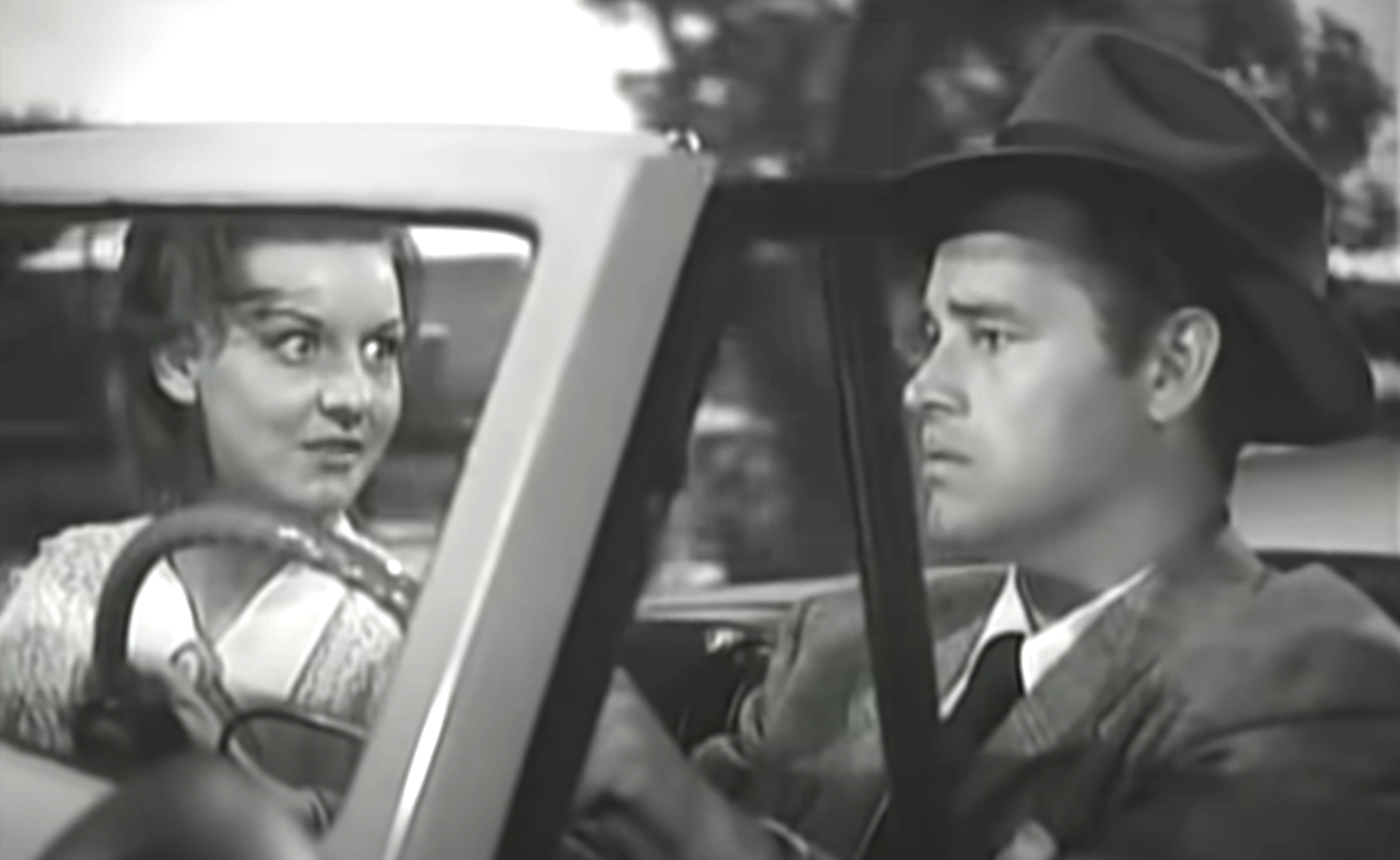
Ann Savage and Tom Neal in Detour (1945).


The common line on Detour (1945) is that it features one of the nastiest of femme fatales—a fascinating, feral creature. It’s true that Ann Savage as Vera is a powerhouse, and I can’t stop watching her. But is she really all that bad?

**Some plot reveals.***

So many reviewers skim over the incident that made Vera so raw in the first place. Yet to me, her reaction to that incident is what makes this B film worth watching. Can anyone honestly say they root for the sad-sack, self-pitying musician, Al Roberts (Tom Neal)?
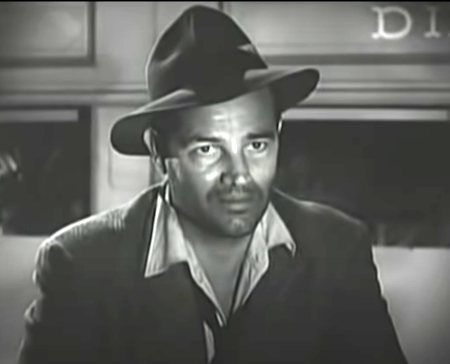
Tom Neal, the sad hero of Detour


What a dud this hero is. The movie is nothing until Vera enters the screen, and it’s nothing after she’s gone.

As far as her dangerousness, let’s review, shall we? Vera is a hitchhiker picked up by Charles Haskell Jr (Edmund MacDonald). We learn about her secondhand from Charles, who is complaining to his current passenger, Al, about the deep scratches on his hand. Charles says an “animal” inflicted the wounds on his body. “You know there ought to be a law against dames with claws,” he complains.

The reason for their disagreement is soon clear: “Give a lift to a tomato, you expect her to be nice, don’t you?….After all, what kind of dames thumb rides, Sunday school teachers?”

In other words, he thought she should be forced into sex with him because she must be that kind of girl. This dude felt entitled to rape her because she’s a hitchhiker. He assumes all men will agree with him (as Al does) that she’s nasty because she hurt him defending herself.

What’s intriguing—and unusual—about Detour for its time is that it gives voice to this assaulted woman. As soon as we meet Vera, we know she’s suffering from PTSD and doesn’t know how to manage her pain. Even Al, hardly an empath, says, “Man, she looked as if she’d just been thrown off the crummiest freight train in the world.”

Her angry words soon reveal that Charles is hardly the first man who has felt entitled to mistreat her: “I’ve been around,” she tells Al, looking at him intently, “and I know a wrong guy when I see one.”
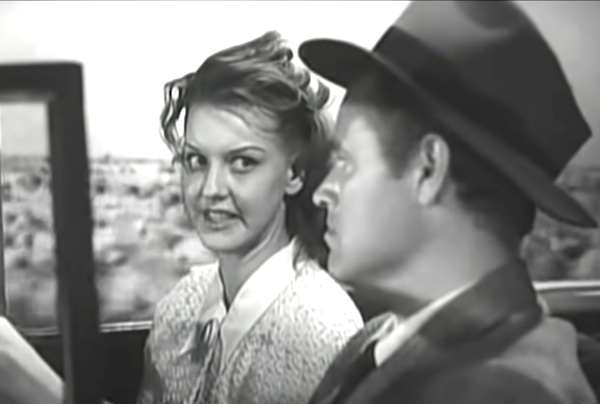
Ann Savage strikes out at Tom Neal in Detour.


That she lashes out at Al might be because of what she thinks he’s done—but it’s not the only reason.

Now Al is not the smartest dude, as Vera quickly realizes: “…You don’t have any brains.” He picks up a stranger right after he accidentally killed Charles and exchanged identities with him. If he were a smooth-talking liar, you could see him getting away with this move. If he were quick, you could see it too. But Al is not smooth. He is not quick. He is not smart. And he lies with all the skill of a toddler. He’s also unlucky because whom should he invite for a ride, but the only one who knows his identity is false? While many of his grievances are self imposed, it’s hard to argue with him that when it comes to encounters like his with Vera, fate was putting “out a foot to trip you.”

Vera’s instantly brutal to Al, whom she thinks killed her attacker. But she feels kinship with him too. She’s aiming for connection, an us-against-the-rich plan. She’s Bonnie and this idiot won’t be her Clyde. It pisses her off.
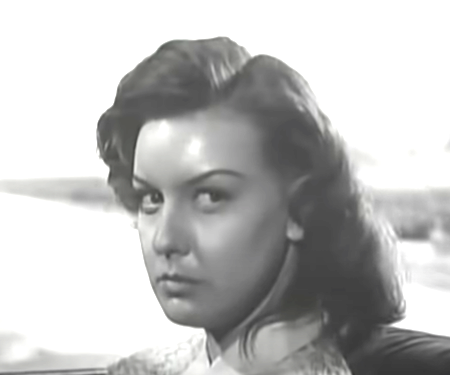
Ann Savage, the mistreated, angry heroine of Detour.


She wants him to recognize that they’re both presumed bad, that they don’t have a chance, so why not go for a con? Why not enjoy the advantages they have before everything goes to hell, as it certainly will, for people the deck is stacked against, like themselves? And when he won’t give in, she tries blackmail.

Her plan is not nice. She’s not nice. But I don’t find her nasty—even if some of her actions (and plans) are cruel. I find her tragic. She believes Charles’s wealth is part of what made him feel entitled to rape a poor girl, like her. She’s met a lot of men who act that way. Unfortunately, she didn’t find a man who could empathize with her suffering, or even enjoy a drink with her. She looked for something approximating an ally, and all she got was Al.

Oh Al. What a worthless character. He is a homme fatale BY ACCIDENT. He falls to pieces when a woman yells at him. He breaks into hives when he tries to sell a stolen car. Some theorize that he’s an unreliable narrator, deluding himself that he didn’t kill. Personally, I think he’s just deluded himself that his girlfriend wants him back. I don’t find Al’s psychology complex enough for any more sophisticated delusions.

But Vera? We lose her far too soon. If this film were the revenge fantasy this character deserves, she’d be living it up in Charles’s family mansion, smiling archly at the family as they bemoaned the loss of their heir.

“Oh yes,” she’d say, holding up champagne and affecting a snooty tone, “Wasn’t it a shame for Charles, all those women who did him wrong?”

This post is part of the Movies are Murder! blogathon hosted by the Classic Movie Blog Association (CMBA). Go check out all of the great entries.

Share
Posted in: 1940s films, Blogathons, Drama (film), Femme fatales, Film Noir/Crime/Thriller & Mystery Tagged: Ann Savage, Detour, femme fatale, homme fatale

The Femme Fatale Who Wasn’t: In a Lonely Place

04/16/2019 by leah@carygrantwonteatyou.com 25 Comments

spoilers ahead.

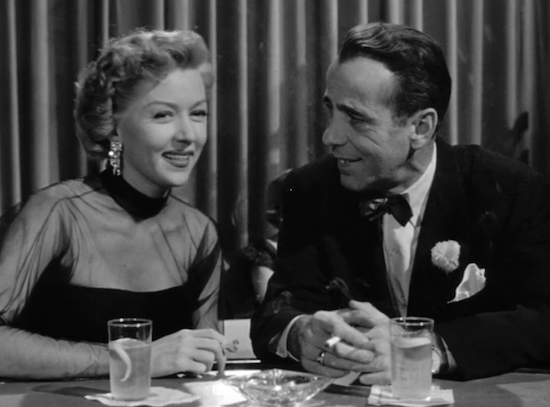
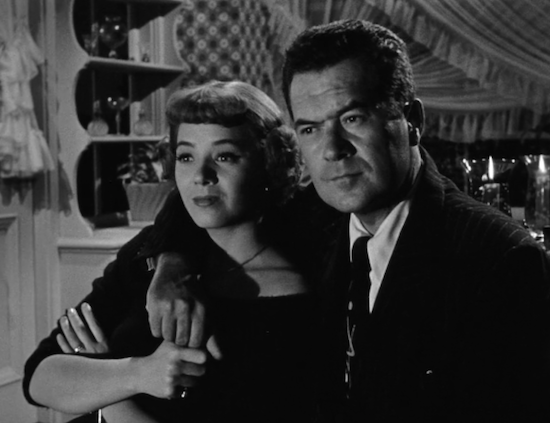
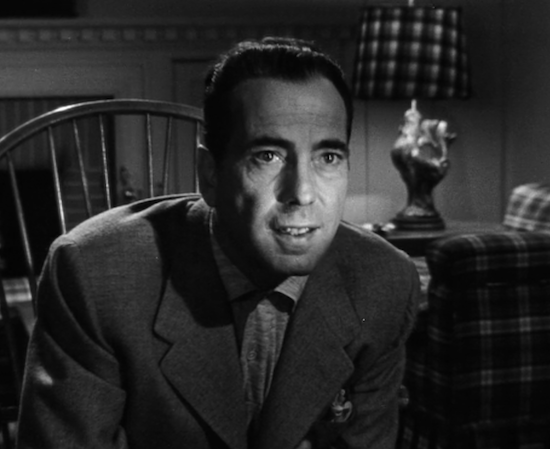
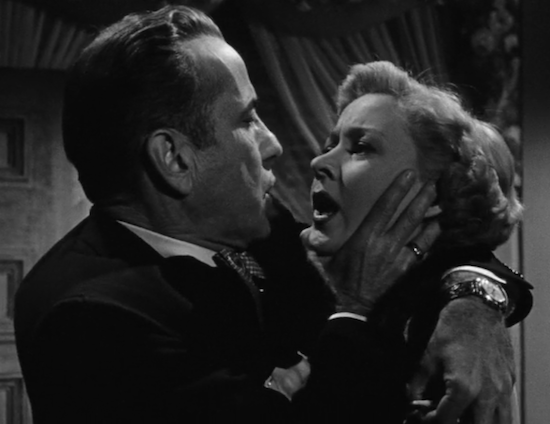
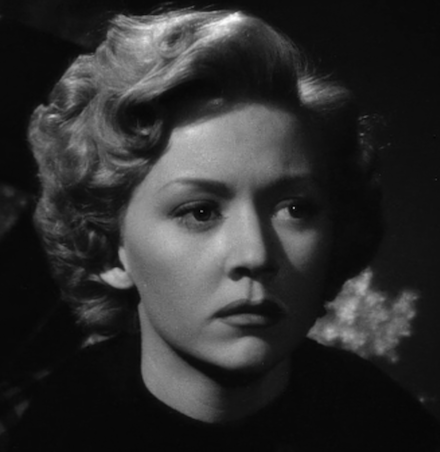
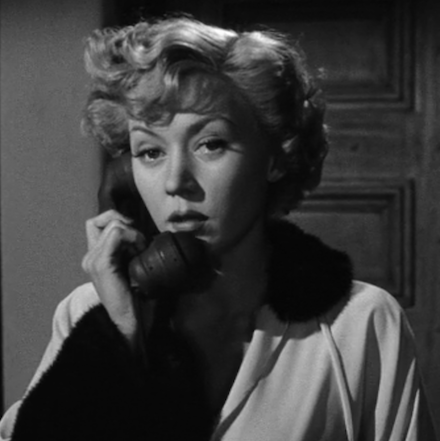
I was wowed by Nicholas Ray’s In a Lonely Place. The film, it seemed to me, was ahead of its time in its powerful portrayal of domestic abuse. On the surface, the film explores whether the hero, Dix (Humphrey Bogart), murdered an innocent woman. His girlfriend, Laurel (Gloria Grahame), begins their relationship in romantic euphoria.

But, as in Suspicion, Laurel begins to suspect he might have done it.

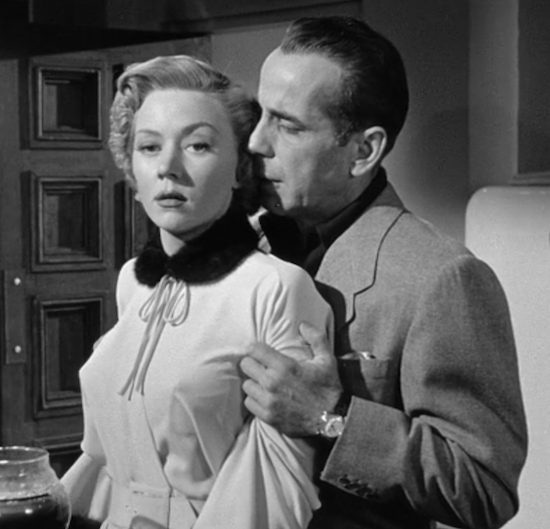
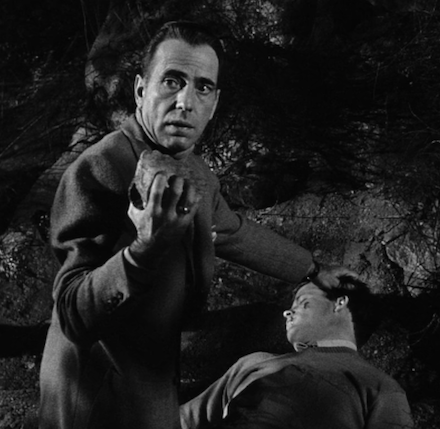
The did-he, didn’t-he soon becomes a “Don’t worry which, Lady. Run.” After all, Dix likes to act out murder scenarios and then mimics the same movements when smoking with Laurel. He won’t allow her to receive a phone call or prescription he doesn’t monitor. He keeps her economically dependent on him. He justifies beating people up and actually considers bashing heads in with rocks.

And just in case she has any doubts about how this is all going to end for her, his former girlfriend reported Dix for breaking her bones.

The story is cast from Laurel’s (Gloria Grahame’s) point of view, and haunts the viewer because Dix can be charming, can be loving, can be apologetic. He does come back with “armloads of gifts” after his scary behavior, not just for her, but for victims of his violence. He is sweet to an alcoholic ex-actor, shows more compassion for him than anyone else. The film sympathizes rather than judges Laurel for staying, reminding audiences that an abuser can be contrite and thus leave the woman who loves him off-balance, uncertain whether to trust he’s changed. And though Laurel’s friend cautions her against him, his friends urge her to stay, to understand, to give him a chance. Meanwhile, we get glimpses of his mind: he can only see unquestioning faith in him–which would be difficult, given his actions–as acceptable. After a near-homicide, he coins a line for a screenplay describing his love for Laurel: “I was born when she kissed me, I died when she left me, I lived a few weeks while she loved me.”

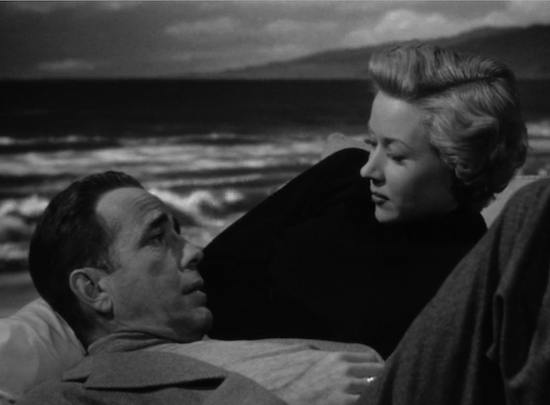
Personally, I found this line chilling. Yet the director, Nicholas Ray–who was experiencing stresses in his marriage to Grahame at the time–gives a romantic packaging to not just that line, but to the final scenes of the film. He seems to imply–even after Dix strangles Laurel and nearly kills her–that this all would have turned out well had there not been that whole did-he-murder-the-woman doubts. And more disturbing yet, both current and contemporary reviewers frequently characterize this toxic relationship movie as a “tragic love story,” and certainly many scenes in the movie would seem to back up that assumption.

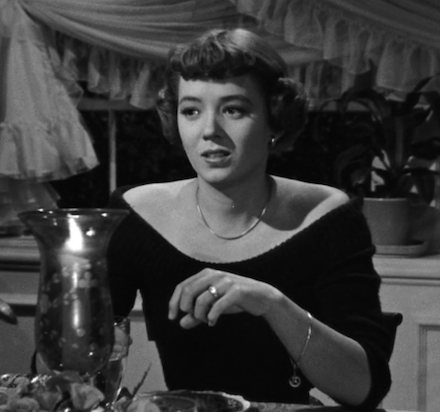
I turned to the source material to understand the confusion in tone, and was in for a shocker. Dorothy Hughes wrote In a Lonely Place as a kind of The Killer Inside Me of its time; we know from day 1 that Dix hates women, that he kills them regularly, that he thinks he’s justified because after he came back from the war, women saw through his hustling ways; they didn’t fall all over him, as they had when he was in uniform. His former Air Force friend is now a cop and has married a woman, Sylvia (Jeff Donnell), whom Dix distrusts and (we soon learn) underestimates.

She quickly sees through Dix’s veneer of humanity.

Dix hates her for it in the novel, and plots her death. Think of Dana Andrews in The Best Years of Our Lives, if on encountering his wife’s disappointment in him, he decided to go on a murderous vendetta against anyone who shared her gender.

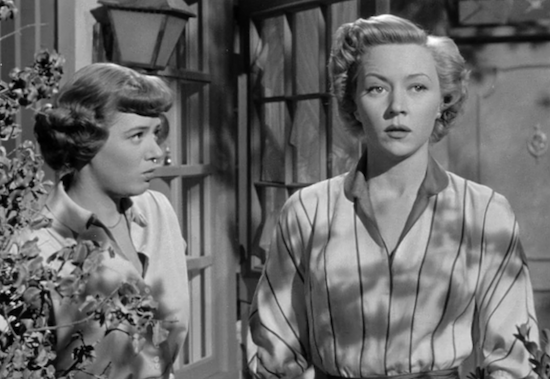
The best scenes in Ray’s film are moments that capture the stark feminism in the book, in which only the women see Dix for who he is, and only they can succeed in stopping him. In a sharply rendered scene in the film, Laurel and Sylvia are honest with one another: Laurel in her doubts about Dix’s character, Sylvia, in confirming (reluctantly) that Laurel should have them.

In the book, Dix’s demeaning treatment of women–especially Laurel–is accompanied by a conviction that Laurel is taunting him, trying to make him jealous, when she’s simply putting the brakes on a relationship that he’s taken too seriously, too quickly. As writer Megan Abbott so brilliantly put it: “After reading In a Lonely Place, you find yourself looking, with a newly gimlet eye, at every purported femme fatale, every claim of female malignancy and the burning need of noir heroes to snuff that malignancy out.”

In Dix’s eyes in the book and film, Laurel is a femme fatale. She gave her love, then she took it away–all because she didn’t trust him enough. But in our eyes, she’s just fallen for the wrong guy; calling a man you love a “madman” doesn’t usually suggest a relationship is headed for sunshine and rainbows. Whether Dix killed a woman or not, Laurel isn’t wrong to ask, “There is something strange about Dix, isn’t there?” after he bloodies a fellow driver to a pulp or “What can I say to him–I love you but I’m afraid of you?” when he looks at her in the scary fashion Bogart had mastered since The Petrified Forest.

At some point you gotta ask, Is any guy you’re relieved and surprised didn’t kill someone worth sticking around for?

I admire both the book and film because they make me look back at so many of the noir novels and movies I’ve admired, and ask that question Abbott challenges me to consider: Was this woman a femme fatale? Or was she just an independent woman who didn’t say yes?

This is part of the Classic Movie Blog Association’s Femme/Homme Fatales of Film Noir blogathon. Check out so many great entries here.


Share
Posted in: 1950s films, Anti-Romance films, Blogathons, Feminism, Femme fatales, Film Noir/Crime/Thriller & Mystery, Uncategorized Tagged: #meToo classic films, femme fatale, Gloria Grahame, homme fatale, Humphrey Bogart, In a Lonely Place

Recent Posts

  • 100 Years Later, Still Scary: Dr. Caligari
  • Escaping Out of the Past (1947)
  • A Weeper for Those Who Love Jerks
  • Thank You, Academy, for Not Infuriating Me
  • Challengers (2024) Is a Bad Movie

Subscribe to Blog via Email

Enter your email address to subscribe to this blog and receive notifications of new posts by email.

Categories

  • 1920s films
  • 1930s films
  • 1940s films
  • 1950s films
  • 1960s films
  • 1970s films
  • 1980s films
  • 1990-current films
  • 2020s films
  • Action & Sports Films
  • Anti-Romance films
  • Blogathons
  • Childfree
  • Comedies (film)
  • Drama (film)
  • Feminism
  • Femme fatales
  • Film Noir/Crime/Thriller & Mystery
  • Gloriously Silly Scenes
  • Horror
  • Humor
  • Mae West Moments
  • Musicals and dancing films
  • Oscars
  • Random
  • Romance (films)
  • Romantic Comedies (film)
  • The Moment I Fell for
  • Turn My Sister into Classic Movie Fan
  • TV & Pop Culture
  • Uncategorized
Share
Classic Movie Blog Hub Member

Recent Comments

  • leah@carygrantwonteatyou.com on Meg Ryan’s Fate Foretold in Joe Versus the Volcano
  • Ryan on Meg Ryan’s Fate Foretold in Joe Versus the Volcano
  • leah@carygrantwonteatyou.com on 100 Years Later, Still Scary: Dr. Caligari
  • The Classic Movie Muse on 100 Years Later, Still Scary: Dr. Caligari
  • leah@carygrantwonteatyou.com on 100 Years Later, Still Scary: Dr. Caligari

Archives

  • November 2025
  • September 2025
  • May 2025
  • March 2025
  • January 2025
  • November 2024
  • August 2024
  • July 2024
  • May 2024
  • March 2024
  • February 2024
  • December 2023
  • November 2023
  • October 2023
  • September 2023
  • August 2023
  • July 2023
  • May 2023
  • April 2023
  • March 2023
  • January 2023
  • December 2022
  • November 2022
  • September 2022
  • July 2022
  • May 2022
  • April 2022
  • March 2022
  • February 2022
  • October 2021
  • September 2021
  • April 2021
  • March 2021
  • February 2021
  • December 2020
  • October 2020
  • September 2020
  • July 2020
  • May 2020
  • April 2020
  • March 2020
  • February 2020
  • December 2019
  • October 2019
  • September 2019
  • June 2019
  • May 2019
  • April 2019
  • February 2019
  • January 2019
  • November 2018
  • September 2018
  • July 2018
  • June 2018
  • May 2018
  • April 2018
  • March 2018
  • February 2018
  • January 2018
  • November 2017
  • September 2017
  • August 2017
  • July 2017
  • June 2017
  • May 2017
  • April 2017
  • March 2017
  • February 2017
  • January 2017
  • December 2016
  • November 2016
  • October 2016
  • August 2016
  • July 2016
  • June 2016
  • May 2016
  • April 2016
  • March 2016
  • February 2016
  • January 2016
  • December 2015
  • November 2015
  • October 2015
  • September 2015
  • August 2015
  • July 2015
  • June 2015
  • May 2015
  • April 2015
  • March 2015
  • February 2015
  • January 2015
  • December 2014
  • November 2014
  • October 2014
  • September 2014
  • August 2014
  • July 2014
  • June 2014
  • May 2014
  • April 2014
  • March 2014
  • February 2014
  • January 2014

Meta

  • Log in
  • Entries feed
  • Comments feed
  • WordPress.org

Copyright © 2025 Cary Grant Won't Eat You.

Church WordPress Theme by themehall.com