Cary Grant Won't Eat You

Classic movies for phobics

  • About
  • eBooks
  • Previous Blogathons
Classic movies for phobics

feminism

Chatting about Leave Her to Heaven

07/11/2024 by leah@carygrantwonteatyou.com Leave a Comment

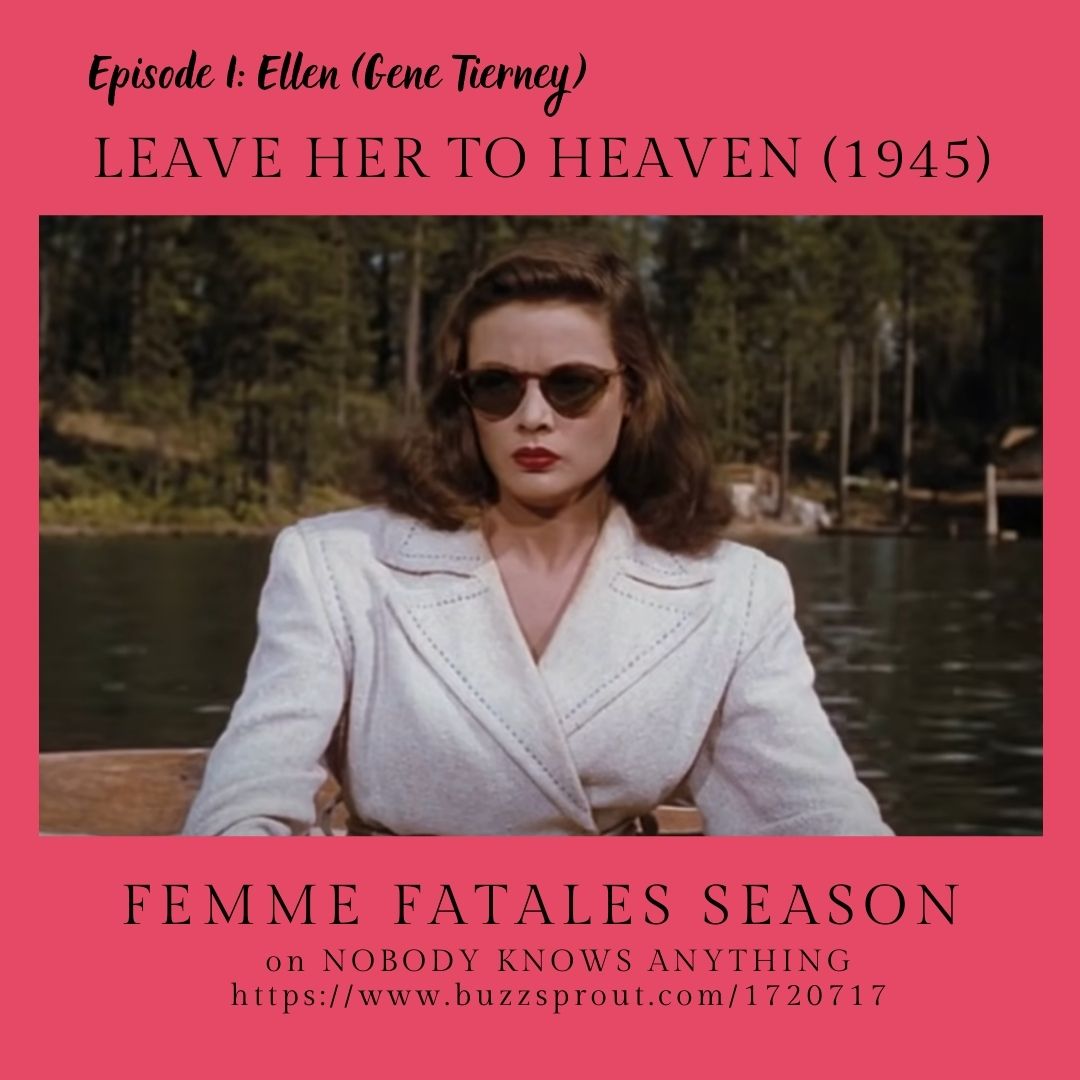
My new podcast season on femme fatales with Brian Wilkins and Michael Gutierrez releases today, and we begin with one of my favorite films, Leave Her to Heaven.

We chat about the strange canoe launch that begins the film, Tierney’s impossible beauty, the unfathomable hero–who wanted to marry this brilliant, fascinating beauty but never share her bed–and her troubling response to that marital issue. Join us here!

Share
Posted in: 1940s films, Feminism, Femme fatales, Film Noir/Crime/Thriller & Mystery Tagged: ahead-of-their-time films, feminism, femme fatales, Gene Tierney, Leave Her to Heaven, podcast

The 8 Movie Characters I’d Bring to See Barbie

08/06/2023 by leah@carygrantwonteatyou.com 6 Comments

If I could bring any film characters with me to the Barbie movie, this crew would come along. We would shout, complain, and advise (quite loudly), and so an empty theater–and an earlier viewing by me–would be critical. But just try to imagine with me, how perfect this party would be….(Mild spoilers ahead.)

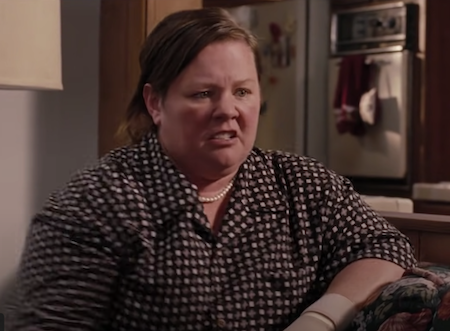
1: Megan (Melissa McCarthy) from Bridesmaids (2011)


This confident, hilarious, non-nonsense woman needs to give Barbie a pep talk. I did love Gloria (America Ferrera)’s speech, but Megan’s would be one for the ages.

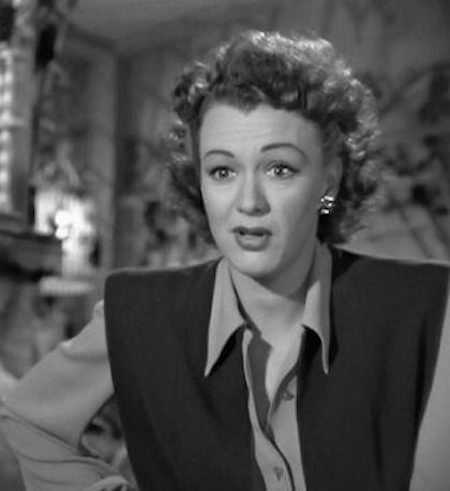
2: Ida (Eve Arden) from Mildred Pierce (1945)


What Megan can do with yelling and pounding, Ida can do with an eyebrow. Ida’s dry, blistering one liners about Ken’s power grab would be epic.

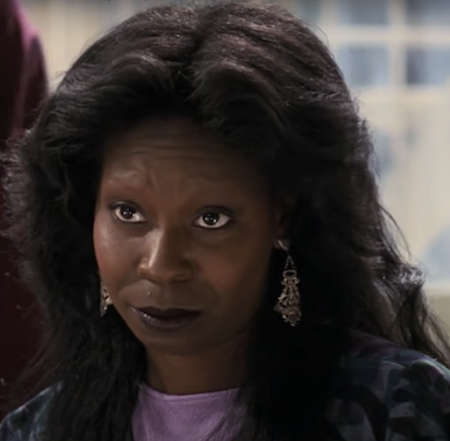
3: Oda Mae Brown (Whoopi Goldberg) from Ghost (1990)


I’ll be honest–this may be just because I want her to say, “Barbie, you in danger, girl,” when the doll puts on fluorescent rollerblading gear.

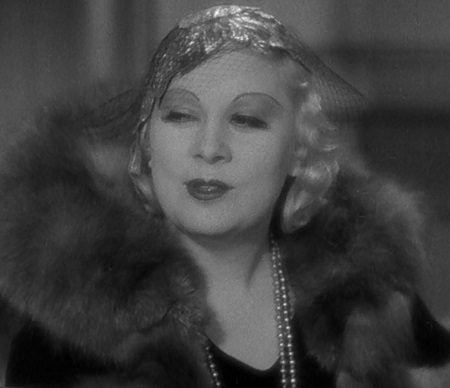
4: Tira (Mae West) from I’m No Angel (1933)


Tira’s running commentary on Ryan Gosling’s abs and what she’d do to his character on the beach would have everyone in the theater howling with laughter. I’d love to hear her tell Barbie to keep relishing that many Kens in her life. And how much I’d anticipate her reaction to the ending!

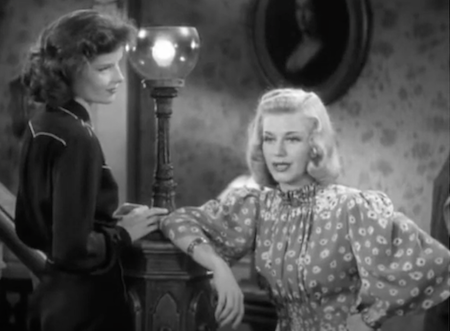
5 & 6: Stage Door (1937) Roommates Terry (Katharine Hepburn) & Jean (Ginger Rogers)


Obviously, I’d want the ENTIRE Footlights Club to accompany me, since there simply is no wittier all-female repartee on film (the famously catty The Women ensemble can’t compare). Don’t believe me? Lucille Ball is in the supporting cast. These sexual-harassment-fighting, badass feminists would be FABULOUS commentators, and I’m so sad I can’t follow their pop culture podcast right now.

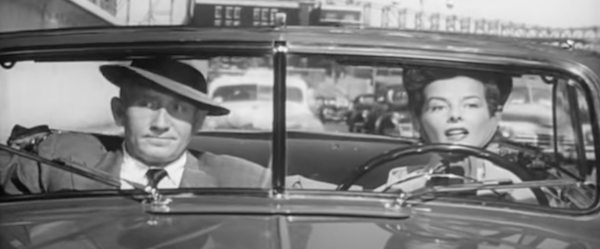
7 & 8: Adam (Spencer Tracy) and Amanda (Katharine Hepburn) from Adam’s Rib (1949)


What could be better than to hear a brilliant couple with perfect dialogue critique the work of screenwriting couple Greta Gerwig and Noah Baumbach? And with the way Amanda just slays in arguing women’s rights in the courtroom, I long to hear what she’d say to those fools in the Mattel boardroom.

There you have it. My eight favorite Barbie movie companions. Who would yours be?

Share
Posted in: 1990-current films, Childfree, Comedies (film), Feminism, Humor, Uncategorized Tagged: Adam's Rib, Barbie movie, Eve Arden, feminism, Ginger Rogers, Katharine Hepburn, Mae West, Melissa McCarthy, Whoopi Goldberg

“The Funnier Sex” with No Mae?

12/22/2022 by leah@carygrantwonteatyou.com 2 Comments

I just watched “The Funnier Sex,” an episode from CNN’s The History of Comedy. The segment features numerous current comediennes celebrating their groundbreaking predecessors. They highlight the sexism that marred their predecessor’s progress—especially that ridiculous view that women can’t be funny—and expressed how much harder it was for an attractive woman to also be considered funny. Lucille Ball—as usual—was singled out as the pretty woman who changed that for everyone.

Sigh.

Look, I love Lucy—we all do—and I get that most people’s sense of history is as developed as an ant’s. But are we going to ignore the vaudevillians entirely? Those women who used their sexiness to get away with cultural commentary? Who—like the standup artists who followed them—used live audience’s reactions to fine-tune their jokes, over and over again? You know, like STAND-UP COMICS??

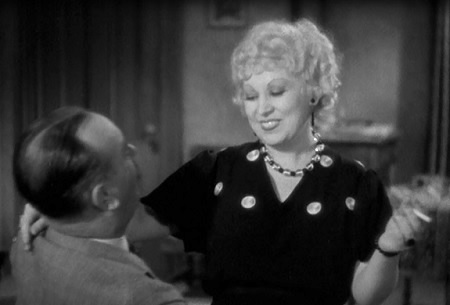
In other words, WHERE IS MAE WEST?

West was not, of course, the first female comedienne in America. But as someone who starred in vaudeville, broke out in film, made appearances on TV, and then produced a live Vegas show with Chippendale-like men, she was hardly an invisible influence on the comediennes who followed her. And her humor was MUCH more like that of the stand-up stars celebrated in the series than Lucy’s ever was—and far more risqué.

And Mae wrote her own material, managed to be a rom-com star into her 40s, and even saved a studio. Mae peddled and exploited her own attractiveness in her jokes. She was known as a bombshell, even if some of her snarky male contemporaries—and ours—use their own sexist views of curvy women’s bodies to question it.

Let’s review just one incident—on the smash second day of her play Sex in 1926, which she records in her autobiography, Goodness Had Nothing to Do with It: Only 85 people appeared for the first performance, disappointing the star and the manager, who blamed the scandalous title for ticket sales. But at the next day’s matinee, Mae observed lines of men from the naval base “two and three deep.” The house manager was scrambling for extra seats for his theater. “And you said it was a bad title,” noted Mae. And he replied, “I forgot about the sailors.”

Sound like a woman who wasn’t using her sex appeal for humor?

I understand that standup is not the same as vaudeville, but the latter was clearly a forerunner, certainly more than scripted TV.

Look, I enjoyed the episode from The History of Comedy. It featured some of my own heroes, including Joan Rivers and Rachel Bloom. But why, after all these years, are TV historians still ignoring the extraordinary impact of Mae West?

What other comedian wrote lines we still repeat 100 years later, such as one of the all-timers?:

“It’s not the men in my life that count, it’s the life in my men.”

I suspect I know the reason she’s bypassed—the same reason early groundbreakers are so often forgotten: Because the wave of female comediennes would take years to follow in her wake. Because she was so ahead of her time that she wasn’t even part of the same generation who would supposedly “change everything.”

But all the more reason to own her. All the more reason to celebrate her. All the more reason, CNN, to give the sexy, groundbreaking, hilarious woman her due.

Share
Posted in: Childfree, Humor, Mae West Moments Tagged: feminism, groundbreakers, Mae West, The Funnier Sex, The History of Comedy, women in stand-up

In Defense of Netflix: Jessica Jones & OITNB

08/18/2016 by leah@carygrantwonteatyou.com 10 Comments

I’ve been flirting with dumping Netflix for some time: That terrible customer service debacle a few years back. The fact that despite their extensive classic movie DVD library, their classic movie streaming choices are tired, and frequently movie-of-the-week bad. The prices I have to pay to watch two of my favorite current shows–Veep and The Americans–elsewhere.

But Netflix retains me with the television fare they DO have. Many of my beloved comedies still play there, including Psych (yes, I embrace my juvenile side) and It’s Always Sunny (which I would argue had the best satires on both gun control arguments and our treatment of the mentally ill in recent seasons). And then there are its foreign TV shows, which are fascinating and frequently feminist, as with Miss Fisher’s Murder Mysteries.

So do I stay, or do I go?

My flirtation ended last night. My loyalty is secured. Orange Is the New Black‘s season 4 finale was not only brilliant, but important. The final images from that and the penultimate show are lingering, as riveting stories do, helping me recognize nuances I missed on the first pass. I’m not sure whether Netflix execs are enlightened, or its creators masters of spin, but either way, I don’t care: Marvel’s Jessica Jones and OITNB had more to say about rape culture and racism, respectively, than almost anything else I’ve read or watched in the last few years.

Marvel’s Jessica Jones

JessicaJones
Let’s start with Jessica. The weird thing is that I watched the show at all. I have never bought a comic book. My 80s nostalgia for the Hulk and Wonder Woman notwithstanding, I have little interest in comics, graphic novels, anime, video games, or superhero stories.

I’d never heard of Jessica Jones, and wasn’t impressed by her dull name (this from a Williams, but I digress). The ads and reviews, however, kept saying noir, catnip to the classic movie fan, so yes, I gave it a try.

How to explain it? More eloquent voices have already chimed in on its influence, so I’ll just say that its portrayal of the aftermath of rape was devastating. The show captures the heroine (and victim’s) trauma and the insidious reactions of others around her to it: The lack of belief in what happened to her. The ignorant assumptions that a domestic violence victim can easily leave his/her abuser. The belief of the monstrous villain that she could love him. The wider society’s privileging of his viewpoint over hers. The terrifying use of smiling, and all it implies about how women are treated.

The intensity and darkness of the show are lightened by Jessica’s (Krysten Ritter’s) snarky sarcasm and wit. She is, indeed, like the noir private investigators before her.

Fascinatingly, the show uses enough of its superhero trappings (and is so suspenseful) that you don’t realize how thoroughly it’s portraying its message until you mull on it afterward. And how moving that message is: that the victim who fights for others like her is as superheroic as they come.

Orange Is the New Black, Season 4
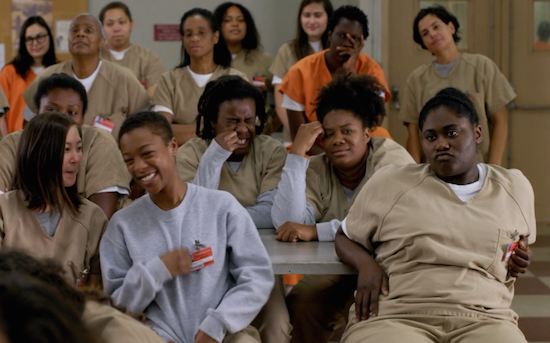
OITNB
The diverse cast alone is reason to watch: when else will you see women of so many shapes, sizes, colors, ethnicities in starring roles? Forget the main character, Piper. She’s just there as an introduction, and functions only to remind us that white privilege doesn’t die behind prison doors. By focusing on a minimum security prison, with inmates often there for foolish, momentary (and sadly frequently, bad romantic) choices, the show enables us to put ourselves in the women’s place. And once there, we are hooked on their stories, soon relating even to those who have committed grave crimes.

Previous seasons focus on other villains, but this season firmly placed the private prison system in its crosshairs, to devastating effect. People argue whether this show is a comedy or drama (when it’s of course both), but the drama definitely trumps this season, the comedy only there to relieve it. Jenji Kohan, the show’s creator, clearly wanted to indict the immorality of this privatization, and how it furthers the prejudice already inherent in the prison system. At first I thought the primary focus was on our criminalization of mental illness, and indeed, that is one of the saddest arcs of the season. But ultimately, the focus is on race: how it affects the corrections officers’ actions, how even well-meaning white prisoners (and by extension, the wider society) miss the significance of Black Lives Matter. I don’t think you can miss that significance after watching Season 4. Of course, you can’t fully feel the season’s impact if you haven’t fallen for the show and its characters over Seasons 1-3. But that just means you have more good material in front of you….

Are either of the shows perfect? No. But the flaws don’t take away from what they’re accomplishing in terms of messages and storytelling.

Of course, it’s possible Netflix will later lose its way. But while these are its choices for original programming, they’ve got me.


**Note: the Justice Dept. just said they’d end the use of private prisons.
Share
Posted in: Feminism, Film Noir/Crime/Thriller & Mystery, TV & Pop Culture, Uncategorized Tagged: Black Lives Matter, critiques, feminism, Jessica Jones, Marvel, Netflix original programming, OITNB, Orange Is the New Black, race, rape culture, review, Season 4, TV

Recent Posts

  • 100 Years Later, Still Scary: Dr. Caligari
  • Escaping Out of the Past (1947)
  • A Weeper for Those Who Love Jerks
  • Thank You, Academy, for Not Infuriating Me
  • Challengers (2024) Is a Bad Movie

Subscribe to Blog via Email

Enter your email address to subscribe to this blog and receive notifications of new posts by email.

Categories

  • 1920s films
  • 1930s films
  • 1940s films
  • 1950s films
  • 1960s films
  • 1970s films
  • 1980s films
  • 1990-current films
  • 2020s films
  • Action & Sports Films
  • Anti-Romance films
  • Blogathons
  • Childfree
  • Comedies (film)
  • Drama (film)
  • Feminism
  • Femme fatales
  • Film Noir/Crime/Thriller & Mystery
  • Gloriously Silly Scenes
  • Horror
  • Humor
  • Mae West Moments
  • Musicals and dancing films
  • Oscars
  • Random
  • Romance (films)
  • Romantic Comedies (film)
  • The Moment I Fell for
  • Turn My Sister into Classic Movie Fan
  • TV & Pop Culture
  • Uncategorized
Share
Classic Movie Blog Hub Member

Recent Comments

  • leah@carygrantwonteatyou.com on Meg Ryan’s Fate Foretold in Joe Versus the Volcano
  • Ryan on Meg Ryan’s Fate Foretold in Joe Versus the Volcano
  • leah@carygrantwonteatyou.com on 100 Years Later, Still Scary: Dr. Caligari
  • The Classic Movie Muse on 100 Years Later, Still Scary: Dr. Caligari
  • leah@carygrantwonteatyou.com on 100 Years Later, Still Scary: Dr. Caligari

Archives

  • November 2025
  • September 2025
  • May 2025
  • March 2025
  • January 2025
  • November 2024
  • August 2024
  • July 2024
  • May 2024
  • March 2024
  • February 2024
  • December 2023
  • November 2023
  • October 2023
  • September 2023
  • August 2023
  • July 2023
  • May 2023
  • April 2023
  • March 2023
  • January 2023
  • December 2022
  • November 2022
  • September 2022
  • July 2022
  • May 2022
  • April 2022
  • March 2022
  • February 2022
  • October 2021
  • September 2021
  • April 2021
  • March 2021
  • February 2021
  • December 2020
  • October 2020
  • September 2020
  • July 2020
  • May 2020
  • April 2020
  • March 2020
  • February 2020
  • December 2019
  • October 2019
  • September 2019
  • June 2019
  • May 2019
  • April 2019
  • February 2019
  • January 2019
  • November 2018
  • September 2018
  • July 2018
  • June 2018
  • May 2018
  • April 2018
  • March 2018
  • February 2018
  • January 2018
  • November 2017
  • September 2017
  • August 2017
  • July 2017
  • June 2017
  • May 2017
  • April 2017
  • March 2017
  • February 2017
  • January 2017
  • December 2016
  • November 2016
  • October 2016
  • August 2016
  • July 2016
  • June 2016
  • May 2016
  • April 2016
  • March 2016
  • February 2016
  • January 2016
  • December 2015
  • November 2015
  • October 2015
  • September 2015
  • August 2015
  • July 2015
  • June 2015
  • May 2015
  • April 2015
  • March 2015
  • February 2015
  • January 2015
  • December 2014
  • November 2014
  • October 2014
  • September 2014
  • August 2014
  • July 2014
  • June 2014
  • May 2014
  • April 2014
  • March 2014
  • February 2014
  • January 2014

Meta

  • Log in
  • Entries feed
  • Comments feed
  • WordPress.org

Copyright © 2025 Cary Grant Won't Eat You.

Church WordPress Theme by themehall.com