Cary Grant Won't Eat You

Classic movies for phobics

  • About
  • eBooks
  • Previous Blogathons
Classic movies for phobics

Daphne du Maurier

Rebecca Got a Bad Rep

06/29/2019 by leah@carygrantwonteatyou.com 8 Comments

**Spoilers abound**

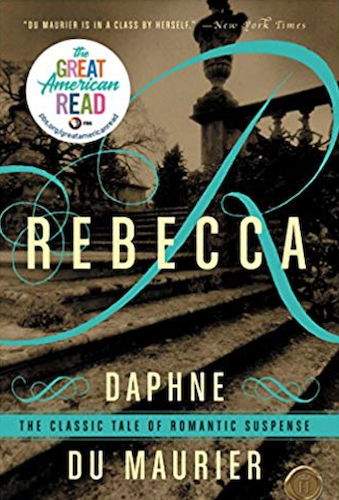
Of all the femme fatales on film and in print, Rebecca may top them all. The woman isn’t even alive at the start of the book or the Hitchcock film that resulted from it, yet the narrator of the story is so haunted by her husband’s previous wife (and Du Maurier is so skilled at freaking readers out) that Rebecca’s reputation as the evil femme fatale endures.

But when we look at Rebecca’s life a little closer, it’s hard to ignore just how much of our impressions of this woman are based on her former husband’s hatred and his second wife’s jealousy. Although I was totally with the narrator in fearing and loathing Rebecca on my first reading of Daphne Du Maurier’s classic gothic novel/thriller/mystery, my opinion of Rebecca has radically shifted in time, and the blame moved from her to the much more questionable Max de Winter.

Since the film sanitizes the hero due to the Production Code, I’m sticking with the book as I ask all of you Du Maurier lovers this question: Who is worse, Rebecca or her husband Max?

Let’s count it down trait by trait, shall we?

Behavior toward Friends & Acquaintances. Rebecca. Tries to suit others’ moods and appeal to their interests—this according to her detractor, Max. Everyone loves her, Maxim admits, including all of her employees. He claims she is fake, a backstabber. It’s easy to discount the tales of her insincerity altogether, given those blunt admissions to Max at the start of their marriage and his own dubious motives in smearing her. But we do hear Ben describing her cruelty toward him, a serious count against her.

Max: Rude to and arrogant toward: his sister, his brother-in-law, attorneys, party guests, servants, Mrs. Van Hopper, his second wife. He does seem to usually treat Frank well, and perhaps the dog. He expects to be thought above the law despite his suspicious actions and has no compunction about the boat maker’s profit losses thanks to his lies. Why? Presumably his class and status.

Personality Points: Rebecca 1; Max 0
Villain Points: Max 1; Rebecca 1

Social Skills. Max is the very definition of prim, spending his days abstaining from most people and food (while strangely expecting an untouched feast on a daily basis). And, there’s that slight issue with his temper and moods. Good company? I think not.

Rebecca’s style intimidates the narrator; she has garnered Manderley fame with her exquisite taste and the elegance, creativity, and humor she exhibits as a hostess. Even the “R” of her name is written with panache.

Personality Points: Rebecca: 1; Max: 0

Treatment of Spouse. Let’s admit from the start that these two are hardly an altruistic pair. A tight race!
Max: Wife 1. Marries Rebecca without loving her but planning to be faithful. Keeps the secret of her affairs, but for his own pride. Does tolerate her behavior within limits. (It was a different age.) Seemingly polite to her in public but based on his general actions (see above), I’m guessing she needed to find affection elsewhere. Wife 2. Marries the narrator because she’s chaste and has no relatives (Mrs. Van Hopper isn’t far wrong there). Shows little passion for her, most of that passion being extended to his house. Treats her like a daughter/servant/enemy, depending on the day. Marries her knowing that his limelight-averse spouse will be destroyed if his crime is revealed and the scandal rags come a-knocking while her protector is in jail. Exposes her to Mrs. Danvers, the suicide pusher.

Rebecca: Marries Max for his money and status, planning to cheat on him from the start and admitting as much. Seemingly has multiple affairs. Apparently enjoys some “unspeakable” behavior (though given prim Max’s ways, I’m guessing we’re not talking Roman orgies). May, if the love of Mrs. Danvers is any indication, indulge in affairs with women as well as men, which in this time period would have harmed her husband’s reputation. Shaming her husband with alcohol and drug consumption? Perhaps in private. Meanwhile, spends her days being delightful to all and making his treasured house the talk of the country.

I’m going to leave out Max’s crime for this one, as it deserves its own category. But in terms of behavior up to their final night together, Rebecca’s is worse since Max’s biggest fear is public shame, and she doesn’t seem to care much that he’s a bore and has no fidelity impulses/regard for his pride whatsoever. However, his behavior to his second wife is appalling.

Villain Points: Rebecca 1; Max 1

The Murder. Max shot his wife because she suggested she might be pregnant with another man’s baby. Max demonizes her, calling her not even “human,” to (a) justify his action, (b) keep his wife’s love, and (c) be considered a civilized member of society. The narrator, so pleased he didn’t ever love Rebecca, actually goes along with his version of events, even though he’s not exactly trustworthy because he’s a killer who murdered his last wife, idiot. RUN!!!!

Rebecca. Enjoys her husband’s distress at her infidelity and taunts him. He now says she wanted him to kill her (given her health). Kinda convenient, right?

Personality Points: Rebecca, 1—some considerable moxie revealed in this last fight; Max, 0. Villain Points: Max, a gazillion; Rebecca, 0.

And the Verdict Is….
Personality Points: Rebecca 3; Max 0
Villain Points: Max, a gazillion and 2; Rebecca, 1.

Like I said, Rebecca might not be an angel, but a femme fatale? Not so much. And is Max, the cold-blooded murderer and awful husband a homme fatale? You better believe it.

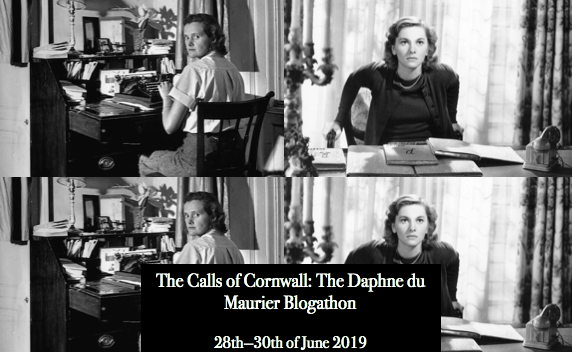
This post is part of the Calls of Cornwall blogathon by Pale Writer on Du Maurier’s work. Check out the other entries!
Share
Posted in: 1940s films, Blogathons, Feminism, Femme fatales, Film Noir/Crime/Thriller & Mystery, Humor, Romance (films), Uncategorized Tagged: Daphne du Maurier, femme fatales, Max de Winter, Rebecca, romances, thrillers, unfair reputation, unnamed narrator

Hitchcock Didn’t Get Jamaica Inn; Vince Gilligan Would

04/10/2016 by leah@carygrantwonteatyou.com 4 Comments

LaughtonandOHara-JamaicaInn2
**Warning: Some spoilers (though I don’t reveal the mastermind in the novel; Hitchcock alters the story enough for it still to be a mystery).

I just finished watching Breaking Bad, and was struck by the thematic similarities between it and Jamaica Inn, one of my favorite novels as a teen. Both involve major characters refusing to own the horrific nature of what they’ve set in motion, both include a slow-burning menace that frequently breaks into sudden violence, and both demonstrate the moral costs of greed–and the many innocent victims left in its wake.

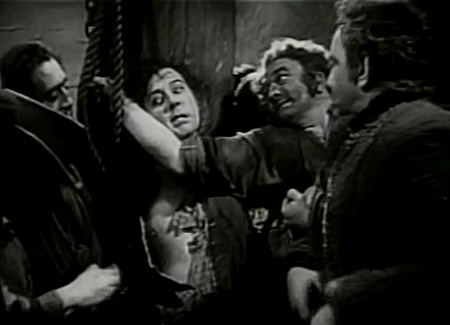
While Walter White is the leader of a meth empire, the villain of Jamaica Inn is the mastermind behind a group of wreckers, who lure ships with false lights and then kill everyone aboard to get the loot without hanging for their crimes. While Joss, the rough-talking inn owner, initially seems to be the head of the operation, we soon learn that there’s a much colder and smarter man working above him.

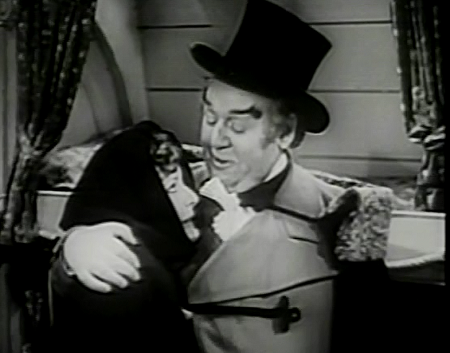
Joss (Leslie Banks)

Joss (Leslie Banks)

And though Joss has sympathetic qualities and weaknesses, the mastermind–whose identity we don’t learn until late in the story–cares for no one. Joss is terrified of him.

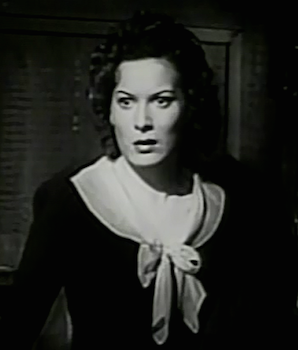
The heroine of the story is Mary (Maureen O’Hara in the film), who comes to Jamaica Inn completely unaware of the criminality of its keeper, her uncle.

MaureenOHara-JamaicaInn
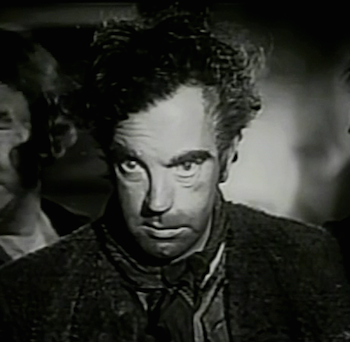
She soon discovers that something is off. The coachman doesn’t want to drop her off there. The inn doesn’t have any inhabitants besides the owners. The bar is full of shady characters.

Bar inhabitants

Bar inhabitants

There are odd noises at night. And then there’s her uncle’s warning: “There’ll be nights sometimes when you’ll hear wheels on the road…and those wheels will not pass on, but they’ll stop outside Jamaica Inn. And you’ll hear footsteps in the yard, and voices beneath your window. When that happens, you’ll stay in your bed, Mary Yellan, and cover your head with the blankets. Do you understand?”

Our fear as readers is slowly discovering what is going on. That mixture of unease and hope that things will improve keeps us engaged. And yet in the film adaptation, the director cuts that fear instantly by starting with the wreckers destroying a ship. Who, you ask, would make such a critical error? Ummm. Hitchcock?

Two of Alfred Hitchcock’s best known films–Rebecca and The Birds–originated in the writing of Daphne Du Maurier. In both cases, he displayed a sharp understanding of her intent, carefully reproducing the psychology of the narrator in the former and quietly building on the creepiness of the birds in the latter. That’s why his failure with Jamaica Inn (1939) is so baffling. The book is brilliant, the movie mediocre. The master of suspense completely botches the book’s beautifully crafted, slow-burning sense of menace with his timeline. He gives away Jamaica Inn’s mystery in the first scene. He reveals the mastermind (whose identity is uncovered late in the novel, when Mary mistakenly runs to him for help) within the first twenty-five minutes. As a result, I found the movie full of some nicely done set pieces, but very little suspense.

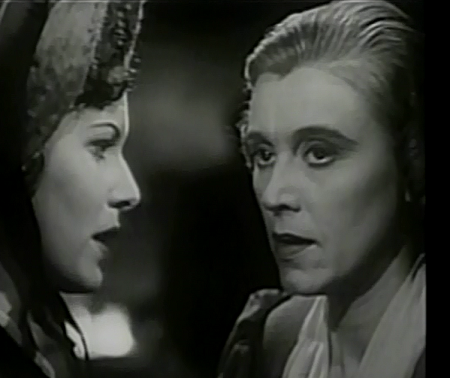
Similarly, Hitchcock just doesn’t get the characters. Jamaica Inn is terrifying because the characters feel powerless. Patience (Marie Ney) may love her husband, Joss (Leslie Banks), but it’s her fear that keeps her submissive to him–her fear of his violence toward her, of the violence he inflicts on others, and worst of all, of her moral corruption in enabling him.

Patience (Marie Ney)

Patience (Marie Ney)

She has become a flitting, barely there woman, purposely dwelling in a fantasy world to avoid facing what he and she have become. She can’t leave him because she’s been beaten down by psychological abuse. Mary (Maureen O’Hara) is terrified for her, must stay with her, because Patience’s utterly unable to act for herself. Basically, Patience is Season 5’s Skyler White without the will or resilience. The stand-by-her-man character Hitchcock has given her instead makes no sense (though Skyler White haters might have approved).

Even odder is the characterization of Mary. In the novel, she’s independent, sassy, and quick tempered, particularly when it comes to male arrogance and unwelcome handling. Yet there she is in the film, letting Sir Humphrey (Charles Laughton) paw her as he did his horse. She smiles; she claims he’s a gentleman. WHAT? Mary is no fan of the upper classes in the novel, nor is she easily charmed or manipulated.

Her enforced trip with the wreckers is terrifying in the book because she keeps witnessing–and is unable to prevent–the murders that enfold in front of her. What we witness in the novel is the annihilation of what was left of her innocence, and we feel how we do when we watch Breaking Bad‘s Jesse’s wrenching reactions to a child’s death. Yet in the movie version of Jamaica Inn, there Mary is, conveniently preventing the wreck, as if one woman could accomplish that when surrounded by men trying to force themselves on her. This is the work of a cheap action director, not a Hitchcock.

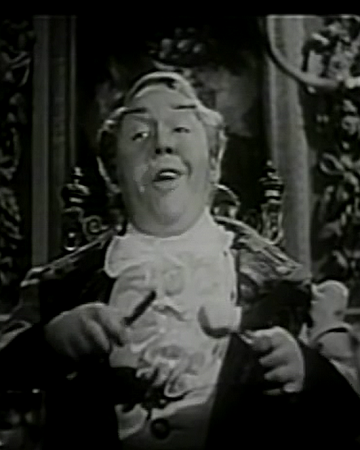
Clearly, the director got carried away by his desire to let Charles Laughton, a minor character in the book, dominate the film.

Eyebrows alone unforgivable

The eyebrows alone are unforgivable

Laughton also co-produced, so his elevation isn’t surprising. Because he is Laughton, mugging and having a field day with the material, the movie contains a number of funny moments, and a picturesque conclusion. Much can be forgiven, of course, since the film debuted O’Hara, gave us striking action scenes, and included understated humor (via the servants of Sir Humphrey). But so much is missed by turning this film into camp: that suspicion Mary feels when she hears but never sees a man alone in a room in the inn (the mastermind), or finds the rope hanging from a beam but can’t be certain it implies a hanging.

What a film it would have been with just a few glimpses into Patience’s fear, or her equally frightening resignation: “…if you came to guess but half of what I know, your hair would go grey, Mary, as mine has done, and you would tremble in your speech and weep by night, and all that lovely careless youth of yours would die, Mary, as mine has died.” Or for one scene like Mary’s eerie walk into her uncle’s house after an absence, when she sees the collapsed clock, hears the silence, and senses what’s happened. A fragment of fear, a suspicion, is so much more sinister than outright knowledge. Hitchcock knew this. As a New York Times reviewer wisely put it, “Having set his own standards, Alfred Hitchcock must be judged by them….” And by Hitchcock standards, Jamaica Inn is a failure. Too bad he chose such an excellent book to butcher. I see that just a few years ago, a miniseries attempted the story. I’m sure it’s better. But wouldn’t you like to see what Vince Gilligan could do with it?

This post is part of the Beyond the Covers blogathon, hosted by Speakeasy and Now Voyaging. Check out the wonderful entries here.

Share
Posted in: 1930s films, Drama (film), Film Noir/Crime/Thriller & Mystery, TV & Pop Culture Tagged: Alfred Hitchcock, bomb, Breaking Bad, Charles Laughton, Daphne du Maurier, Jamaica Inn, Maureen O'Hara, Skyler White, suspense film, Vince Gilligan

An Unabashedly Romantic Pirate Tale: Frenchman’s Creek (1944)

11/07/2015 by leah@carygrantwonteatyou.com 16 Comments

FrenchmansCreek-top

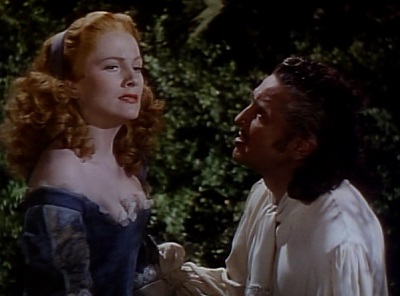
Daphne Du Maurier’s Frenchman’s Creek was my favorite romance as a kid, and when I found a copy of it in a bookstore in my twenties, became enthralled with it all over again. Du Maurier excelled at atmospheric suspense, and what girl wouldn’t love a period drama featuring a heroine running away from London society (and her dumb husband) with her kids to luxuriate in freedom and nature in Cornwall, and falling for a pirate as independent and daring as she? I hoped the movie would capture much, if not all, of the book’s magic–and it really does.

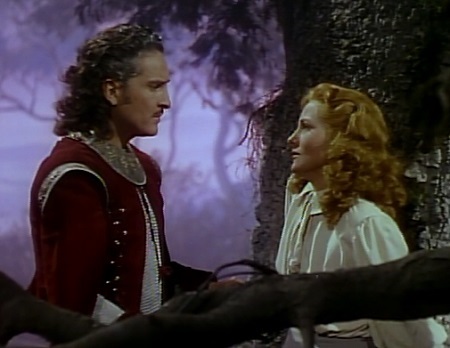
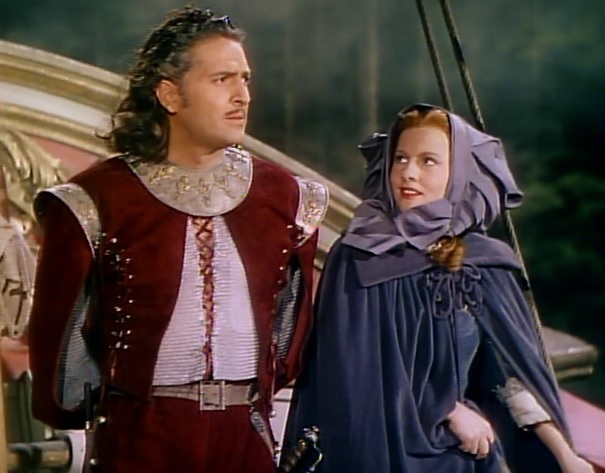
FrenchmansCreek-Arturo de CórdovaJoanFontaine
I know the story sounds like the clichést of clichés, an overimaginative girl’s fantasy. And of course, it is.

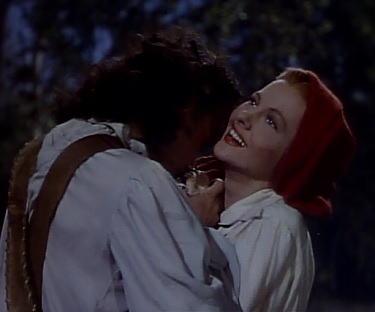
FrenchmansCreekFontaineinlove
But it’s more than that. A biographer claimed the story was based on the novelist’s own romance, and I always believed there was truth to it. There’s something authentic in the chemistry between the two characters, in their vulnerability with and to each other, and in both their passion for each other and acknowledgement that theirs shouldn’t be anything but a temporary affair. I feared the movie would follow the outlines but miss that authenticity, but it didn’t, largely because large portions of the dialogue are lifted straight from the book. The actors have some chemistry, too, which helps sell the romance.

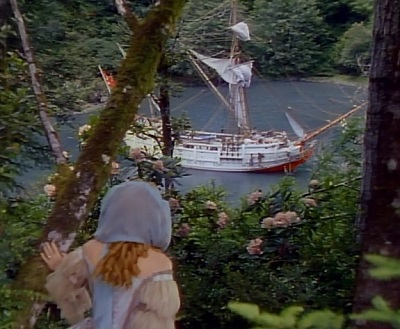
Even the beginning of the story is absorbing: The heroine’s flight from London, her discovery of a pirate’s ship as she ventures in the woods near her manor…

Frenchman's Creekboatspotted
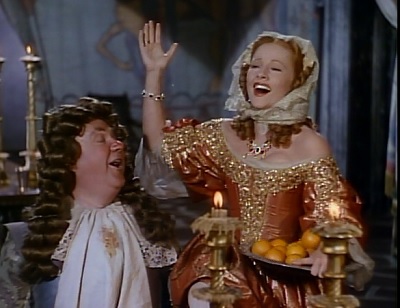
The story picks up speed and romance with her awkward midnight feast with the pirate, her joining into his theft of a countryman’s ship, her husband’s arrival, and her efforts to foil the hanging plot against her now-lover by attempting to flirt with her guests just long enough for the ship to escape.

FrenchmansCreek-flirting
Some of the suggestive lines do make it into the film, as when Jean, the pirate, notices the spread at dinner, but looks straight at his beautiful hostess as he says, “Is it wise of you to place all this temptation before a pirate?”

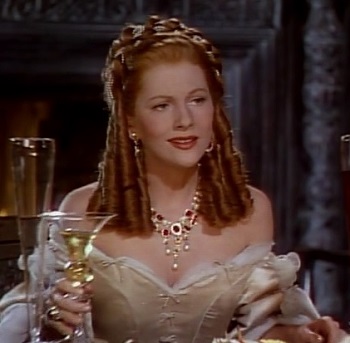
Joan Fontaine captures Dona; the spirited, smart heroine; even managing her voice.

FrenchmansCreek-JoanFontaine
All she really gets wrong is a tendency to pose now and then, and a lack of attention to Dona’s wit; Fontaine can be arch, but she misses the irritability with Cornish high society that was one of the character’s greatest charms. Fontaine plays Dona as a little too sweet, a little too filtered. The heroine is less interesting without her shocking double entendres, or the comic timing Fontaine never attempts (of course, this absence is partially the censors’ fault). But this is a book lover’s quibble; I doubt a viewer unacquainted with the novel would find fault with her character, as she’s still brash, proud, romantic, adventurous, intelligent–all the qualities we would hope for in a pirate-loving gal.

Arturo de Córdova’s ethnicity might make him a peculiar choice in a strictly French-versus-the-English tale. (Don’t you love that about Hollywood? Need a French dude? Any guy with an accent will do.)

FrenchmansCreekArturo de Córdova
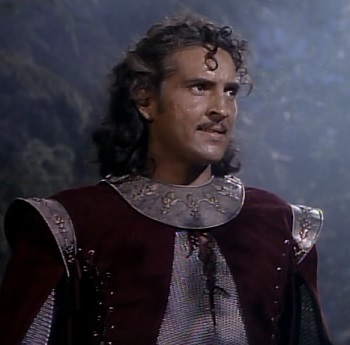
Overall, de Córdova manages the role with only slight piratey exaggeration. He catches the hero’s sense of humor, and an independence so extreme he hesitates to make any decisions for his love–probably a quality unique in pirate characterizations, but one that has always made him seem real to me. If not a pirate, surely this man would have been an obsessive in some political movement or another, unwilling to compromise his ideals.

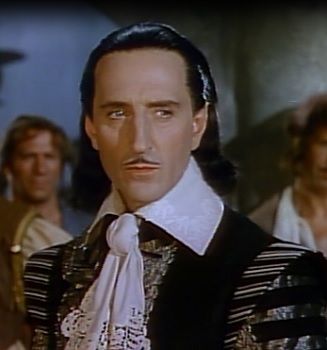
Cecil Kellaway as William, the matchmaking servant, is delightful, and Basil Rathbone as Lord Rockingham, Dona’s nemesis, is perfection.

FrenchmansCreekBasilRathbone
Any fan of Du Maurier’s work will enjoy time in her world again; lovers of romance will root for these two. Swordplay aficionados might crave more fencing time, but they’ll enjoy the devilry of Jean, his resemblance to their Errol Flynn favorites. Women can relish a strong-minded heroine who weighs her obligations against her passions, her annoyance with society, against her safety within it. (The lighting of the film accentuates her power of choice: he is shadowed, and she lit.)

Frenchman's Creekdilemna
Costume drama fans can drool over Fontaine’s lovely gowns. And any fans of a good yarn will wonder just how they missed this one before.

This post is part of Movies Silently’s wonderful Swashaton. Click here for more pirating adventures!

Share
Posted in: 1940s films, Action & Sports Films, Drama (film), Feminism, Romance (films) Tagged: classic, Daphne du Maurier, Frenchman's Creek, Joan Fontaine, pirate movies, Pirates of the Caribbean

For Gone Girl Fans, A Fascinating She-Did, She-Didn’t Thriller

10/06/2014 by leah@carygrantwonteatyou.com 2 Comments

I’ve been wanting to see Gone Girl, but the laryngitis-respiratory infection cocktail I’ve got right now means that I would be an object of fear and distraction to fellow film goers, so I had to settle for an alternative. What film, I wondered, might employ a similar ambiguity about whether or not a spouse is a murderer? What other film might tell a tale of an unhealthy romance that might or might not have sinister roots or results? The answer: Daphne Du Maurier’s My Cousin Rachel. The film, starring Olivia de Havilland and a very young Richard Burton, never reached the fame of The Birds or Rebecca, but has a similar eerie draw, and (for me at least) lingers longer than either.

Young Philip has been raised by his cousin, Ambrose (John Sutton), and the two are comfortable together in their picturesque Cornish town until Ambrose’s illness leads to their first separation—a trip to Italy. There, Ambrose discovers and falls for their distant cousin, Rachel. Before Philip can adjust to this change in his life, a more somber situation develops: Ambrose is nearing death, and blames his wife for it, claiming she’s trying to do him in. Is his condition the result of a brain tumor, or is it poison?

Femme fatale, yes, but is she a murderer?

Femme fatale, yes, but is she a murderer?

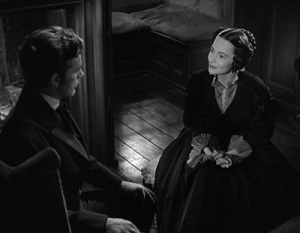
A heartbroken Philip (Burton) travels to Italy to uncover the mystery after his cousin’s death. Since all of the estate goes to him, not the wife, Philip might assume things are as innocent as those in Italy suggest, but the circumstances seem shady, and he’s ready to turn Rachel over to the hangman—that is, until he meets her.

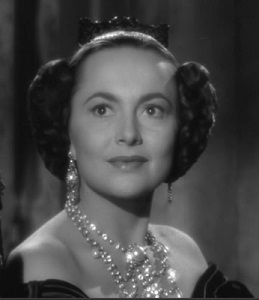
IntroMyCousinRachel
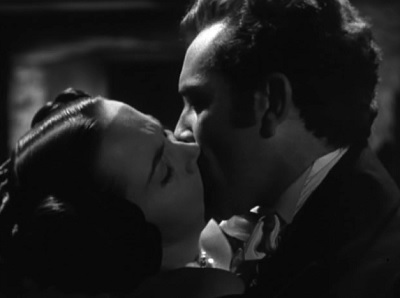
Of course, she’s charming, affectionate, worldly, and experienced, and within no time, is hosting gatherings at Philip’s place and then, well, what repressed English boy could resist this cougar?

KissingMyCousinRachel
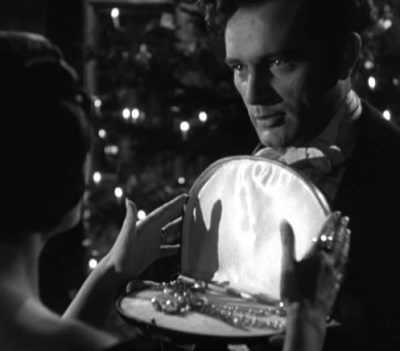
Before long, Philip’s giving her the family jewels from the vault—which aren’t his yet, as he doesn’t get the estate till he’s 25, his guardian reminds him.

GiftsMyCousinRachel
Also, a generous allowance he’s given Rachel? Yes, she’s overdrawing it—by a lot. Philip doesn’t worry. He’s in love! She deserves everything that’s his. He’ll just give his whole estate to her, announcing it Romeo-style on his birthday.

BalconyMyCousinRachel
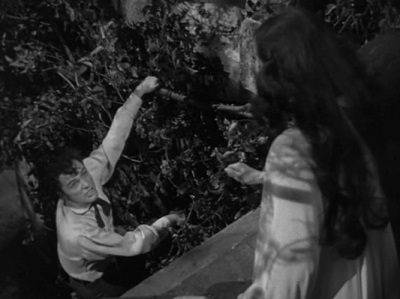
She, in thanks, gives him more than kisses. In Philip’s world, this means she’s going to be his wife. In Rachel’s? Not so much. Philip, whose stupidity and naiveté know no bounds, doesn’t take this well, even starts strangling her. She ends their romance, whether because of his actions, or because with the money, she has no motive to seduce him any longer.

Soon after, Philip falls dangerously ill and finds some seeds that may have been the cause of his brother’s illness—and his.

What happens next I won’t reveal, but let’s just say that the evidence for and against Rachel’s guilt about even out, leaving the viewer to wonder the whole film (and book).

This was my first viewing of the film, and it stays quite true to what I remember of the novel. But viewing it as an adult, I noticed some details I’d missed before. Yes, she may be a murderer, or she may not be, but even if she didn’t try to kill either lover, exactly how wrong and/or inadvisable is Rachel’s behavior? I have some advice for Rachel, which, of course, comes a tad bit late:

Some spoilers ahead—though not the ending.

Never Seduce Crazy
It’s not hard to miss just how big of a dolt this Philip is, so even if she weren’t after his money, seriously, is this someone you seduce? I mean, he’s cute and all, but he’s obsessive. This is a textbook case of a stalker-in-the-making if ever I saw one. Surely a woman as confident and assured as this one knows a case of insane puppy love when she sees it. I’ll alter one of my favorite Arrested Development lines– “Never promise crazy a baby”—to Never seduce crazy. I kept wanting to warn Rachel away: Don’t kiss this fool. He’ll be sending out your wedding invitations next.

Remember: Virginal Boys Don’t Understand Samantha Jones Ways
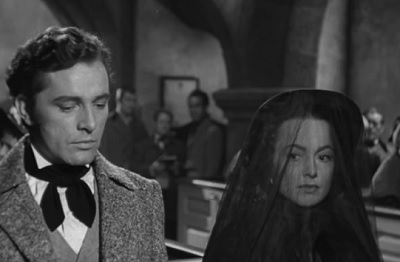
If Rachel just kinda forgot that those in repressed English villages don’t act like her cosmopolitan friends, shouldn’t that church moment when she arrived late have given her a clue?

ChurchRepressionMyCousinRachel
She’s so shocked Philip thinks they’re going to marry after they have sex, but would anyone in this community think otherwise? Remember when Samantha Jones hooked up with the inexperienced college boy on Sex and the City who shared her name?

Didn’t turn out so well, right? Filled up her answering machine with love-yous. Arrived at her door screaming through the peep-hole.

OtherSamJonesSexandCity
That’s Philip for you.

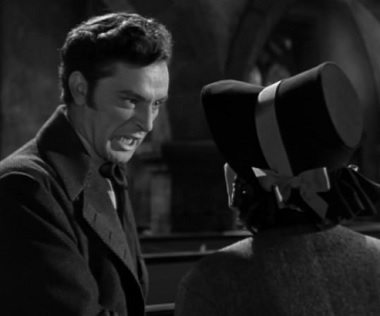
Don’t Marry the Guy Whose Regular Expression Looks Like This:

RichardBurtonfreakingout
Whatever her motives or knowledge, Rachel is absolutely right not to marry this dude. I can just see it: She tries to hang out with her friends, and he’s there, watching. She leaves the house and he’s hiring private detectives. This woman has lived on her own, experienced an unusual degree of freedom for a woman of her time, and he doesn’t even want her to return to Italy—ever. She may make some dumb mistakes, but Rachel is not that foolish.

Don’t Live with the Stalker after You Ditch Him
Why does Rachel remain in the house? Yes, I can understand for appearance’s sake, she might stay a little after the inheritance is given to her. But this is one angry guy. And, of course, dangerous as he fears she is, he’s the one going for the throat when he doesn’t get his way.

Strangling-MyCousinRachel
But….

Did she do it? Did she poison her husband?

She has suspicious ways. Rachel’s spendthrift tendencies, of course, are undeniable. This woman loves the money. Whether it’s to help her pal-maybe-lover back in Italy or not, she takes whatever anyone will give her with no regrets. It’s not hard to believe her gold-digger impulses brought her to England in the first place, and those motives seem sinister enough that she may have just killed for them.

Of course, it’s possible that she did love Ambrose, and wanted to meet his cousin. I’m not sure I buy that the one precludes the other. I don’t have to admire her greed, but I don’t have to believe that’s all there is to her either.

It’s the ambiguity I love about the film. Hopefully, Gone Girl is just as good (no spoilers on that, please!)

Share
Posted in: 1950s films, 1990-current films, Anti-Romance films, Femme fatales, Film Noir/Crime/Thriller & Mystery, TV & Pop Culture Tagged: Daphne du Maurier, Gone Girl, My Cousin Rachel, Olivia de Havilland, Richard Burton, Samantha Jones

Recent Posts

  • 100 Years Later, Still Scary: Dr. Caligari
  • Escaping Out of the Past (1947)
  • A Weeper for Those Who Love Jerks
  • Thank You, Academy, for Not Infuriating Me
  • Challengers (2024) Is a Bad Movie

Subscribe to Blog via Email

Enter your email address to subscribe to this blog and receive notifications of new posts by email.

Categories

  • 1920s films
  • 1930s films
  • 1940s films
  • 1950s films
  • 1960s films
  • 1970s films
  • 1980s films
  • 1990-current films
  • 2020s films
  • Action & Sports Films
  • Anti-Romance films
  • Blogathons
  • Childfree
  • Comedies (film)
  • Drama (film)
  • Feminism
  • Femme fatales
  • Film Noir/Crime/Thriller & Mystery
  • Gloriously Silly Scenes
  • Horror
  • Humor
  • Mae West Moments
  • Musicals and dancing films
  • Oscars
  • Random
  • Romance (films)
  • Romantic Comedies (film)
  • The Moment I Fell for
  • Turn My Sister into Classic Movie Fan
  • TV & Pop Culture
  • Uncategorized
Share
Classic Movie Blog Hub Member

Recent Comments

  • leah@carygrantwonteatyou.com on Meg Ryan’s Fate Foretold in Joe Versus the Volcano
  • Ryan on Meg Ryan’s Fate Foretold in Joe Versus the Volcano
  • leah@carygrantwonteatyou.com on 100 Years Later, Still Scary: Dr. Caligari
  • The Classic Movie Muse on 100 Years Later, Still Scary: Dr. Caligari
  • leah@carygrantwonteatyou.com on 100 Years Later, Still Scary: Dr. Caligari

Archives

  • November 2025
  • September 2025
  • May 2025
  • March 2025
  • January 2025
  • November 2024
  • August 2024
  • July 2024
  • May 2024
  • March 2024
  • February 2024
  • December 2023
  • November 2023
  • October 2023
  • September 2023
  • August 2023
  • July 2023
  • May 2023
  • April 2023
  • March 2023
  • January 2023
  • December 2022
  • November 2022
  • September 2022
  • July 2022
  • May 2022
  • April 2022
  • March 2022
  • February 2022
  • October 2021
  • September 2021
  • April 2021
  • March 2021
  • February 2021
  • December 2020
  • October 2020
  • September 2020
  • July 2020
  • May 2020
  • April 2020
  • March 2020
  • February 2020
  • December 2019
  • October 2019
  • September 2019
  • June 2019
  • May 2019
  • April 2019
  • February 2019
  • January 2019
  • November 2018
  • September 2018
  • July 2018
  • June 2018
  • May 2018
  • April 2018
  • March 2018
  • February 2018
  • January 2018
  • November 2017
  • September 2017
  • August 2017
  • July 2017
  • June 2017
  • May 2017
  • April 2017
  • March 2017
  • February 2017
  • January 2017
  • December 2016
  • November 2016
  • October 2016
  • August 2016
  • July 2016
  • June 2016
  • May 2016
  • April 2016
  • March 2016
  • February 2016
  • January 2016
  • December 2015
  • November 2015
  • October 2015
  • September 2015
  • August 2015
  • July 2015
  • June 2015
  • May 2015
  • April 2015
  • March 2015
  • February 2015
  • January 2015
  • December 2014
  • November 2014
  • October 2014
  • September 2014
  • August 2014
  • July 2014
  • June 2014
  • May 2014
  • April 2014
  • March 2014
  • February 2014
  • January 2014

Meta

  • Log in
  • Entries feed
  • Comments feed
  • WordPress.org

Copyright © 2025 Cary Grant Won't Eat You.

Church WordPress Theme by themehall.com