Mae West’s Lessons for Groundbreakers
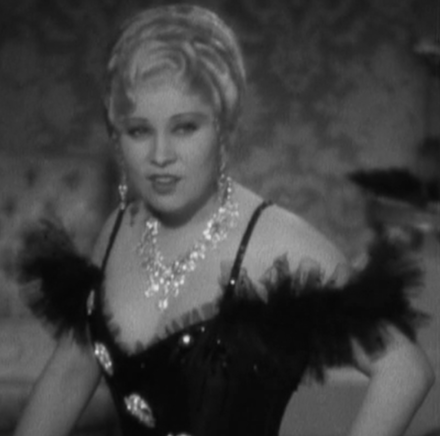
A woman approaches a building, greets men outside, enters. A common occurrence. But when that walk is Mae West’s, the arrival of Maudie into Night after Night is transgressive. West’s entrance into film guaranteed the influence she’d already built on the stage would reverberate far beyond the audiences lucky enough to catch her plays, and shockingly, her actions in front of and behind the camera are STILL groundbreaking. Here’s why:
- She Wrote Her Own Material
It’s no accident that the successful comic performers we see on film and TV now were frequently stand-up comedians. Interestingly, it would take the break-thru performances of these stand-up stars to start seeing funny, powerful women in film more frequently, women writing for themselves and other women. (Face it: Tina Fey would just be an anonymous character actress without that pen.)
Like the vaudevillian, Mae West, before them, these women honed their comedy chops through painful competitions with others. They found their voices through observing and picking up on others’ ideas as well as their own. West honed her persona in vaudeville, then began to write and frequently star in famous, scandalous plays (Sex, The Drag, Diamond Lil), even got thrown in jail on obscenity charges (an occasion she milked).
Men weren’t going to write parts for women like the one West crafted for herself. And we’re still talking about the need for more women to write for women. West could have told us that almost 100 years ago, if we’d only listened.
- She Busted through Sexual Stereotypes
Newspaper reporters describing West often make a key error, their own opinion of her attractiveness determining how they characterize her influence. If they consider her sexy, they emphasize her sensuality; if they don’t, they call her actions camp. Of course, her performances were both at once (seriously, have they never seen female impersonators—who, of course, adored her?) Either way, they are dismissive because, sigh, they still are just thinking of her as bombshell or not, rather than looking at her tremendous impact. The point is her sexual aggressiveness, despite being a woman; the point is that her plots didn’t end with her lost and alone for pursuing and being hounded by conquests. The point is that a woman could be sexy even if she wasn’t skinny, even if she was older than 35. Amy Schumer is trying to tell us that now.
- She Built Her Own Brand
The role of Maudie in Night after Night was initially a dull one, a sad ex-lover type, according to biographer Jill Watts. But Mae West wasn’t about to take on the part of a sad sack moping about her lost man. She didn’t have to. Paramount was hungry for her play, Diamond Lil, which would become the smash studio-saving hit She Done Him Wrong. So when she said nah, they listened. They threw more money at her AND gave her the script. And what she made of that little part changed movie history. West was in her late thirties by then, had spent a career in vaudeville honing her persona as a sexually powerful, wisecracking woman coveted by men. Part of that persona was costuming. Edith Head, wowed by West’s understanding of design, apparently thanked her for “all I know about sex, clotheswise” (153). Even the walk had been long established. According to Watts, “The infamous Westian gait…was a slow, strolling shimmy” (53). Guess what dance move West was advertised as perfecting?
Like the stand-up stars after her, she kept honing her favorite character, one who didn’t pay or suffer for her sexual transgressions, but relished them. West’s devotion to this role of hers was so consistent that it was hard to penetrate it enough to see the actress and writer behind it. But such consistency explains her success. Today we can see Martha Stewart, Madonna, and Beyoncé learning from this lesson of brand control. Beyoncé is now using that well-established female-power persona of hers to take on race. Without that persona in place, would “Formation” have had such impact?
- She Asserted Her Power
The old Hollywood studios made other women take the parts given to them. A good actress would have to agree to terrible parts if the studio needed to sell junk her name might help. And few women had the power to resist. West’s refusal to give into this system, or to the censors some argue that the movie studios actually courted, helped set the stage for Bette Davis’s and Olivia de Havilland’s later film-changing battles. Was West the first to balk at the studios? No. But she began to chip away at their power. And, of course, demanded high salaries too.
Few would argue that the censors diminished her post-Production Code films. But her fascinating efforts to subvert their influence, even within the films themselves, helped her defy the whole idea of artistic censorship. As she famously said, “It’s not what I do, but the way I do it. It’s not what I say, but the way I say it.”
- She Wrote Fantastic Lines—and Knew She Needed to State Them
When we talk about West, her film presence dominates the conversation. Of course. Few women then or since have been so riveting onscreen. But she would never have made it where she did without that gift for writing and the hard work she put into finessing her every line. We often say comedy doesn’t wear well with time. Too many films once considered funny can feel dated, their appeal no longer clear. Yet look on a list of famous quotes, and West’s name is one of the most frequent female appearances. Watch a West film and try not to laugh. West did what only the best comedy does: captured the truth of human nature. She got people, and had the wisdom to know what a difference that made.
I often think about Sylvester Stallone’s script for Rocky, how he refused—despite the risks—to let another, better-known actor take the now-famous role. He knew what he had, what it could mean. West knew not to cede control over her lines; she knew she would have the impact if she pronounced them—and she would get them right. We often celebrate writers-directors now, who have the same impulse to protect and own their material. But too few of us know the women who penned some of the best early material (including writer-directors). West must have known this too, and acted accordingly. Her larger-than-life performances guaranteed her writing legacy.
I wish West’s name were more frequently cited as an early example of script ownership. While her rebuke to censorship is justly famous (seriously, in how many ways was she a pioneer?), her talent–and embracing of that talent–should be just as well known, just as valued. She was many, many things, but personally, what I value her most for is her writing. Who, then or since, could write a killer line like Mae West’s? To celebrate West and not end with one of her lines is a mistake, so let’s go back to that entrance, to the hatcheck girl complimenting Maudie in Night after Night: “Goodness, what beautiful diamonds!” And Maudie’s (aka West’s) beautiful retort: “Goodness had nothing to do with it, dearie.”
This post is part of the Classic Movie Project blogathon. Aurora is featuring groundbreakers on her wonderful site, Once Upon a Screen. Check out posts on her site and on the sites of the other marvelous hosts, Movies Silently and Silver Screenings. Flicker Alley has been kind enough to sponsor the event.
For more of my Mae West love, see my Mae West Moments series.
