Cary Grant Won't Eat You

Classic movies for phobics

  • About
  • eBooks
  • Previous Blogathons
Classic movies for phobics

Charles Coburn

Happy Birthday to Classic Film’s Cupid, Charles Coburn

06/19/2017 by leah@carygrantwonteatyou.com 6 Comments


Today you need to embrace your love, ask out that crush, comfort your lovelorn friend, or play matchmaker yourself.

Why?

Because it’s Charles Coburn’s birthday. You know: the warm uncle/grandfather/parent type who plays the part of wing man, aiding couples in love. A Coburn character is the friend/relative you’ve always wanted, his cool common sense cutting through the neuroses, doubts, and faults that jeopardize a blooming love match or hinder an existing one. With such a friend, the couples always head to matrimony, or find new reasons to appreciate the spouses they have. So be a little kinder to those you love–or hope to love–today. In Coburn’s honor.

Share
Posted in: 1940s films, Random, Romantic Comedies (film) Tagged: best wingman in film, Charles Coburn, classic movie cupid, Heaven Can Wait, review, romantic sidekick, The More the Merrier, Together Again

What’s in a Name?: Together Again (1944)

05/17/2017 by leah@carygrantwonteatyou.com 20 Comments


I have a sophisticated theory about why the Irene Dunne vehicle Together Again (1944) is never on any best-of, favorites, or romantic comedy lists despite the many joys of viewing it: the title sucks.

And when I say it sucks, I mean it’s the WORST TITLE I CAN IMAGINE. It’s so forgettable that every time I think of it, I have to look up Dunne’s IMDB site to find it. I cannot for the life of me remember it at all. And I’m a fan of the film! What does that say?

The title isn’t mysterious, as in The Natural, an aptly named, but box-office-ignorant choice. It’s not annoying, as in Mr. Deeds Goes to Town. It’s just so impossibly blah and vague. Together Again. As in a remarriage? As in partners who re-team? As in peanut butter and jelly? WHAT does it mean? I’ve seen the film and any possible answer to that question is not a good one.

Of course, if I’d had my druthers, I would have named it this way: Charles Coburn, Matchmaker. Because any classic movie fan familiar with his work would run to see it then. But as I don’t have naming rights, I can just tell you this: Ignore the title; watch the film.

Why? I’ve posted a longwinded tribute to it, with comparisons to Veep, should you have time to kill. But here, I’ll give you the brief but essential rundown of why so many of you will love it:

  1. It’s Such a Feminist Flick. A female mayor, people. Who rips on men who belittle her. Who makes fun of romance, and yet (despite herself) is itching for it after her husband’s death. Her father-in-law (Coburn) keeps trying to sway her to take things easier, to find a new man and stop worshipping his son. Hooked yet?
  2. Irene Dunne. Oh she’s great. That odd, fluttery voice dishes out sarcasm with verve. Her on-point timing and ease of movement make her mesmerizing to hear and watch.
  3. The Romance. I’m not a big fan of Charles Boyer’s, but the two actors have chemistry together. And I’ve always been a fan of the straightlaced gal and bohemian/relaxed guy meet-cute, probably because I was such a nerd as a kid.Unnecessary Aside and Spoiler of Other Films: I prefer Boyer’s & Dunne’s Love Affair (1939) to the more beloved An Affair to Remember (1957) remake, partially because Boyer & Dunne are more in sync and believable as a couple than Kerr and Grant, despite the latter’s extreme charm in his film. But mainly because Deborah Kerr seems such an inert actress to me, making the tragedy that befalls her less moving than that of the highly energetic Dunne. I mean, ask yourself: Which actress can you imagine in a gym? I rest my case. (The fact that I’m more like Kerr, gym-devotion wise, doesn’t alter my point narratively speaking.)
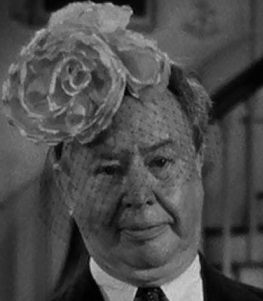
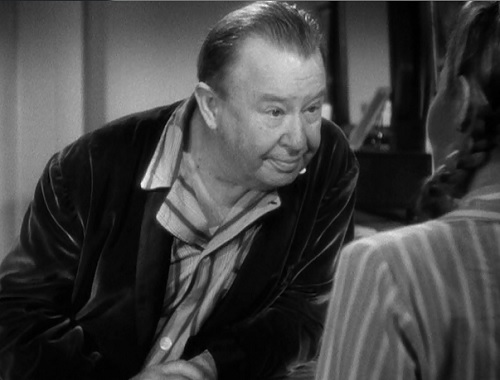
  4. Coburn-Dunne Magic. I love these two together. You could ditch the romance and just enjoy Dunne & Coburn sparring, and never miss a thing. These two are so witty, have such a great rhythm together. And his expression when he rips on her for a frivolous hat purchase is so good I’m going to have to post it again (I believe this is post 3):


Alas, the only reason I discovered this film at all is because it was paired with the more famous Theodora Goes Wild in a Netflix two-set; to my surprise, I was disappointed with the comparatively famous madcap film, and fell hard for Together Again. If only the smart folks who’d named the former had taken a crack at the latter.

This post is part of the Classic Movie Blog Association’s blogathon on Underseen and Underrated films. If you haven’t checked out the other entries yet, go see them now!


Share
Posted in: 1940s films, Comedies (film), Feminism, Humor, Romantic Comedies (film) Tagged: Charles Boyer, Charles Coburn, Irene Dunne, matchmaker films, underrated rom-coms

Falling for Charles Coburn, Matchmaker Extraordinaire

09/27/2015 by leah@carygrantwonteatyou.com 6 Comments

Coburnadvice
Has there ever been a Cupid more charming than Charles Coburn?

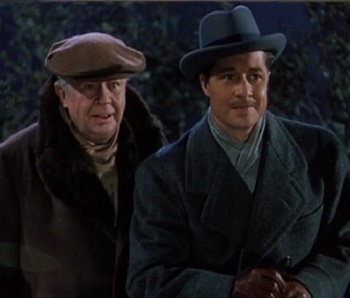
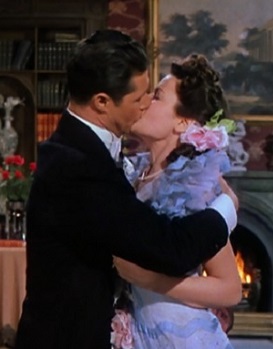
He smartens up the debonair Henry Van Cleve (Don Ameche), ensuring he doesn’t lose his lovely wife, Martha (Gene Tierney) in Heaven Can Wait (1943).

CharlesCoburnwithDonAmeche
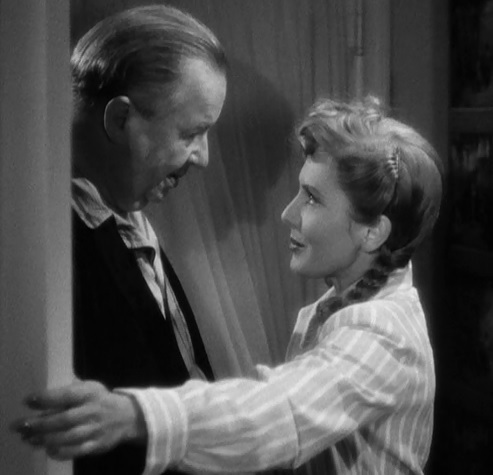
He pushes his widowed daughter-in-law (Irene Dunne) into frivolity and a new chance at love with sculptor George Corday (Charles Boyer) in Together Again (1944).


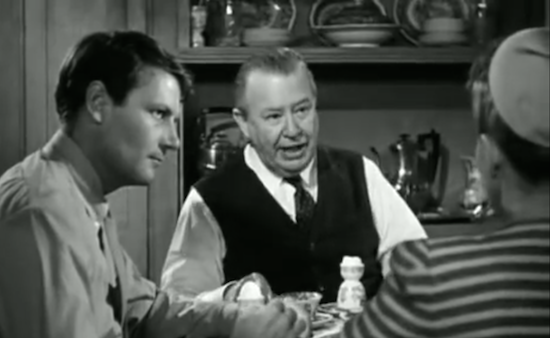
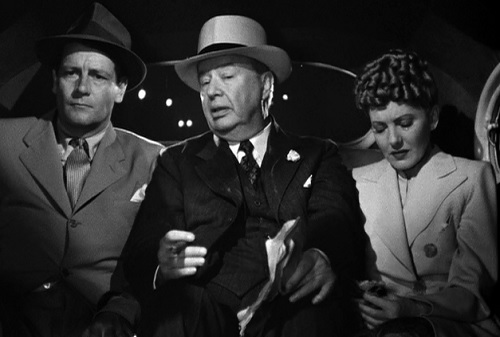
And in The More the Merrier (1943) he unites conservative Connie (Jean Arthur) and Joe (Joel McCrea), with machinations so wonderful and so amusing that they almost distract from his costars’ considerable chemistry.

McCreaCoburnArthur
There was a moment when I was watching him bustle around, trying to follow Connie’s morning schedule, that I realized I truly loved this man, was terribly envious of everyone encountering him. Connie may ultimately fall for Joe, but I think we all can see that those arrows have hit more than one target.

ArthurandCoburn
I defy anyone to spend time with someone this wise, this funny, this blunt–every time, in every film–and be able to resist him. No wonder he matches up so many couples, so many times. They fall for him first, and then even those most resistant to love begin to listen….

Share
Posted in: 1940s films, Comedies (film), Romantic Comedies (film), The Moment I Fell for Tagged: Charles Coburn, Heaven Can Wait (1943), The More the Merrier (1943), Together Again (1944)

Parenting Advice from Heaven Can Wait (1943)

03/26/2015 by leah@carygrantwonteatyou.com 2 Comments

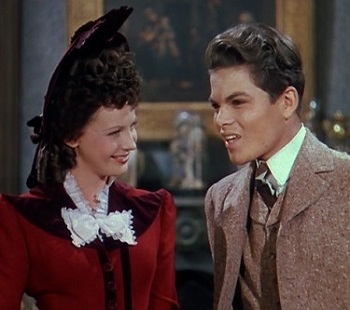
Ernst Lubitsch was known for his sexual farces. Heaven Can Wait is just one of his many movies spoofing marriage, and in the process illustrating a number of truths about what it means to say “I do.” But I was primarily engaged by the supporting characters in this film. Perhaps that’s why the parenting lessons Lubitsch liberally supplied struck me so much more this time than his marital wisdom. Here are a few lessons from the cynical director:

Expose Your Child to the Opposite Sex Early
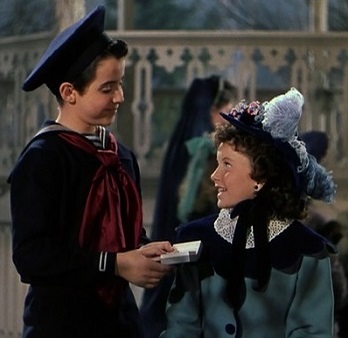
A boy who falls for the ladies in his pre-teens will learn ambition early. He’ll discover, according to Lubitsch and screenwriter Samson Raphaelson, that gifts earn him affection, and the greater the number of gifts, the greater the love. This early training will motivate him to make a name for himself—and, of course, earn the big bucks.

BeetlesHeavenCanWait
You can build on this valuable training by hiring a comely French tutor to teach him more than one new language when he reaches his teens.

frenchtutorHeavenCanWait
This hire will solidify his conviction that life is but a long seduction.

Spoil Your Child
You might fear giving your kid endless funds and no responsibilities. You might assume that he will become a hopeless waster, lying around and expecting others to cater to him. But if you’ve given him ambition via the ladies, you don’t need to fear. Indulge away.

DonAmeche-spoiled
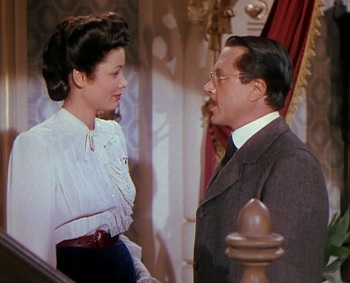
If you instead raise him with rules and standards, he’ll grow up to become such a prudish dullard that he’ll actually compare himself to a suit, admitting, as cousin Albert does, that he’s not “flashy” or of a “stylish cut” but “sewed together carefully.” In Ernst Lubitsch’s world, a man like Albert (Allyn Joslyn), who brags that his “lining is good,” is never going to win the affections of a woman as vivacious and beautiful as Martha (Gene Tierney). He’ll get this bored response to his heartfelt wooing instead:

SuitDescription-HeavenCanWait
And the wooing by his spoiled cousin? Yeah, that’s a bit more successful:

TierneyandAmeche
Do Not Outcast Your Kid—Unless You Like Your Spouse
In her day, Martha’s elopement may have led to quite a scandal, innocent as it may appear now. But her parents’ decision to boot her out for life means they spend their days fighting over who gets the comics first. You know your life has reached a sad pitch when you can become this inflamed over the plight of the Katzenjammer Kids:

PalletteandMain
Spare yourself the misery of too much alone time with your spouse. Forgive your kid.

Keep Your Own Dad Around; He’ll Be Needed
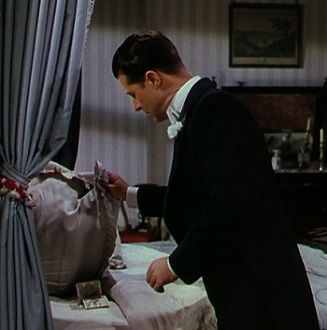
If you were raised in a more structured household, you may be a little innocent about the facts of life, such as what your son has been up to with the French tutor you hired. At 43, you may need your father to enlighten you that your son is both drunk and debauched.

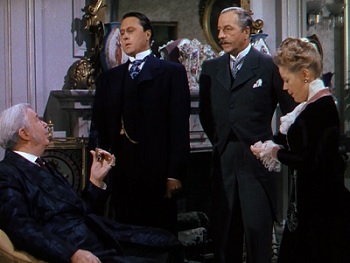
Coburnandfamily-HeavenCanWait
And when that son makes a wreck of his life after one too many dalliances, you may not be able to save his marriage for him (if you’re still around). But his wiser grandpa might just pull it off, especially if he’s hilarious and savvy and anything like Charles Coburn (who supplies at least 50 percent of the film’s best lines).

CharlesCoburnwithDonAmeche
And there you have it. Valuable advice for the worldly parent, courtesy of Lubitsch. I hope you were reading carefully. You may need it one day.

Share
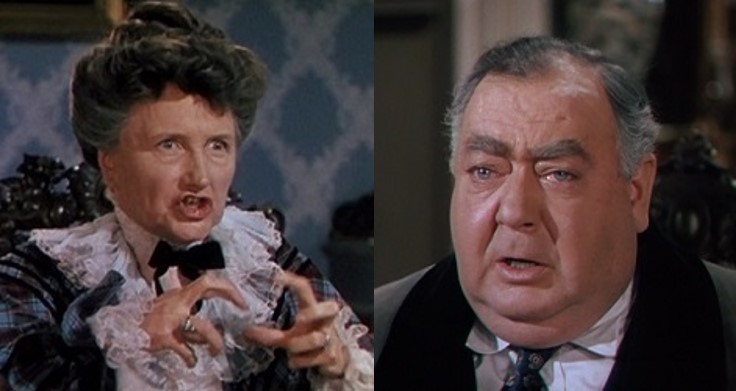
Posted in: 1940s films, Humor, Romantic Comedies (film) Tagged: Charles Coburn, Don Ameche, Ernst Lubitsch, Eugene Pallette, Gene Tierney, Heaven Can Wait, Marjorie Main

Veep & Together Again: Hollywood & Female Leadership

05/08/2014 by leah@carygrantwonteatyou.com 10 Comments

Sometimes the stars align, and you can convert hours of procrastination into productivity. At least, that’s what I’m telling myself about this week’s blog post, which is the result of a Veep marathon and viewing of two Irene Dunne films in a row. Call it a stretch or serendipity, but I keep observing similarities between the Julia Louis-Dreyfus-helmed TV show about a vice president and Together Again (1944), a film about a small-town mayor. Both keep returning to some of the same themes for humor, and both succeed.

Fairy Tale Romance? Not for Them
In Together Again, Irene Dunne (as Anne Crandall) plays a widow who takes over as mayor after her husband dies. The film begins with a shot of a statue created in her husband Jonathan’s honor. The unlikely Cupid of the film, Crandall’s father-in-law (Charles Coburn), is disgusted by this hero worship, which he considers against his son’s wishes. He tries to convince his daughter-in-law to find a man.

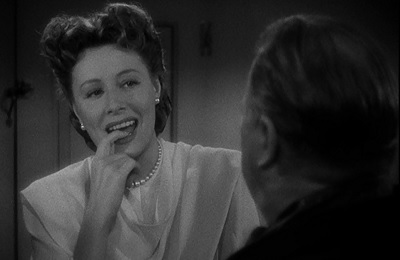
I can’t decide what’s more delightful: Crandall’s response, or her amusement in expressing it: “You can’t bear to see a woman living alone and liking it. No man can. Instinctively, it terrifies them. You’re a vanishing race and you know it. And the minute you lose your hold over us emotionally, wow. So naturally, your platform must be husbands are necessary. And they’re not really.”
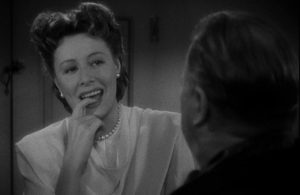
Crandall mocking her father-in-law

His rebuttal, refreshingly, is not that singlehood is wrong; he just believes the state is not for her: “You talk like a free soul, but you’re the most manacled creature I’ve ever seen…Everything you do, everything you say, everything you breathe is the way Jonathan did it, said it, and breathed it. Why don’t you stop living his life and live your own?”

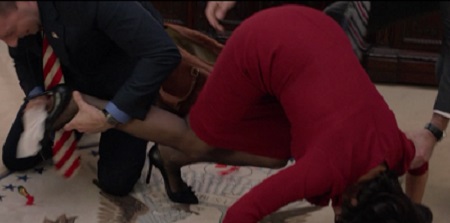
Veep’s heroine too is annoyed by others’ desire to fit her into a typical female role–in her case, as a happy wife and mother. At the start of Season 2, Julia Louis-Dreyfus attacks her former strategist (Gary Cole) for trying to force an image of the perfect family on her, which led to an uncomfortable river rafting trip with her daughter, her estranged husband, and his mistress. Their spat takes place in the Oval Office, and hilarity ensues when her lipstick marks up the sacred carpet.

Lipstick stain recovery effort

The Nonsense of Politics
Since Together Again is a romantic comedy, its primary interest, unlike Veep‘s, is not politics, but it has its moments, as in this great exchange between Randall and Mr. Witherspoon, who is in charge of the town’s sanitation and keeps leaving the south side blanketed in “a lot of old potato peelings.” His sorry excuses echo those that flood Veep:

Mr. Witherspoon: “It’s the manpower, your honor.”

Crandall: “Manpower, my eye. Use womanpower then.”

Mr. Witherspoon: “Women? To collect garbage?”

Crandall: “Why not? Women see more garbage in their lives than men do, don’t they? They might as well get paid for it.”

The scene highlights Randall’s power in the town. The joy of Veep, in contrast, is witnessing Meyer’s pathetic attempts to muster up the illusion of power she doesn’t have. And since we’re talking about D.C., the whole city is doing the same. After watching the jockeying for position among staffers, Congress members, and the administration, one wonders whether anything but ego is at stake for them. My favorite moment in the first season may be when the president’s lackey forbids the VP to adopt a dog because it’ll distract from the White House’s new pup: “Ma’am, you need to kill the dog. Not literally, but yeah, if it comes to it, yeah literally.”

Female Power: Is It All about the Hat?
Much of the plot of Together Again hinges on Crandall’s choice of a flirtatious hat over her usual professional attire when she goes to meet Corday (Charles Boyer), a sculptor in New York. The hat acts as a stand-in for the sexuality she’s been repressing as a widow. She’s bought it upon her father-in-law’s recommendation; he advised her when she departed their town to replace her functional one.

“When women starting wearing hats that look like hats,” he says, “they’re on the way out. At your age, you ought to be on the way in.”

When Corday sees her in it, he assumes her a model rather than the mayor. Of course, no powerful woman could wear something so becoming, right? She hides the hat—and the nightclub raid she later gets involved in because of it—as soon as she returns home. But the hat keeps turning up again. My favorite moment is when her father-in-law walks in wearing it.
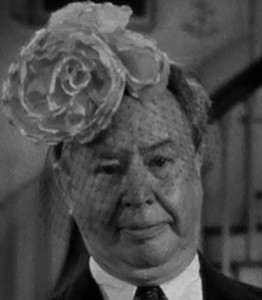
The father-in-law steals the show

Written seven decades later, HBO’s Veep focuses on a woman who is next in line to the president; it seems, on television at least, women have come a long way. But have they? Yes, the mayor of a tiny town is a far cry from the vice president of the United States, but perhaps not as far of a cry as we might wish. When Meyer asks why her presidential bid failed, her press secretary, Mike (Matt Walsh), responds, “You looked tired a lot and the hat….The hat hurt us. Your head looked weird in the hat; that’s all I’m gonna say.”

Convictions? What Convictions?
In Veep, it’s clear where Meyer’s convictions lie: she doesn’t have any. She puts an oil lobbyist on her clean jobs task force without hesitation. She tries to repress delight when a shipyard accident takes away her bad press. “Well, I think that worked out pretty good,” she says to her staff with a big smile.
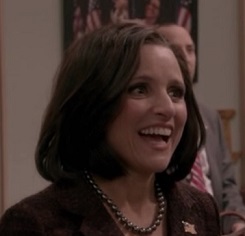
Meyer-repressingjoy
(Of course, she tries to take it back when she discovers there were fatalities.) Self-interest trumps her idealism every time, which makes her a blast to watch.

**Spoiler ahead**

While Crandall’s political beliefs are only briefly sketched, her devotion to her dead husband and to the town he once led clearly dictates her behavior. She seems to be a very moral woman, bound by duty. Curiously, though, she seems content to leave the town she’s worked so hard to serve in the hands of her unscrupulous rival once she decides (as we know she will) to go after Corday.

The More, the Merrier
It’s refreshing to find in Veep a female led-show so entirely unconcerned with romance. But while her romantic interludes are brief and mildly funny, Meyer’s interactions with her staffers are fantastic. As a long-time Arrested Development fan, I was pleased to see Tony Hale (aka Buster) in another meaty role, treating Meyer’s various failures with compliments and tea and going to ridiculous lengths to satisfy her needs, as when he draws her chief of staff from her father’s bedside: “Something has happened to the vice president. I know your dad is dying and I’m really, really sorry, Amy, but I think Dana took Selina’s lipstick. It’s the one thing Selina asked for, and I don’t have it, and it’s ruining her night.”

I’ve left out much of the plot of Together Again in this review. The romance is fine, and Boyer a convincing lead. But it’s the Coburn-Dunne chemistry that kept me watching, especially when late in the film the two start riffing on youths’ views of aging. Coburn makes such a perfect Cupid that I can’t wait to see him play it in The More the Merrier.

Of course, there are other films and shows that tackle this same political ground. Parks and Recreation takes on the small-town concerns Crandall struggles with and makes them fresh and hilarious. But I could see little of Leslie Knope in Crandall or Meyer. Knope worships her town; Crandall belittles hers. And Meyer looks like a Knope foe: world-weary, cynical, and always out for herself.

Crandall and Meyer are alike, even if Meyer is looser ethically than her predecessor: both are hyper-aware of their public images and frustrated with the bureaucracy politics brings, but nevertheless, they manage to survive politics’ worst ravages, and in Crandall’s case, even find love along the way. And neither can resist a good hat.


Meyer and her assistant (played by Tony Hale)


Share
Posted in: 1940s films, Comedies (film), Feminism, Romantic Comedies (film), TV & Pop Culture Tagged: Charles Coburn, female leaders, female vice president, Irene Dunne, Julia Louis-Dreyfus, Veep

Recent Posts

  • 100 Years Later, Still Scary: Dr. Caligari
  • Escaping Out of the Past (1947)
  • A Weeper for Those Who Love Jerks
  • Thank You, Academy, for Not Infuriating Me
  • Challengers (2024) Is a Bad Movie

Subscribe to Blog via Email

Enter your email address to subscribe to this blog and receive notifications of new posts by email.

Categories

  • 1920s films
  • 1930s films
  • 1940s films
  • 1950s films
  • 1960s films
  • 1970s films
  • 1980s films
  • 1990-current films
  • 2020s films
  • Action & Sports Films
  • Anti-Romance films
  • Blogathons
  • Childfree
  • Comedies (film)
  • Drama (film)
  • Feminism
  • Femme fatales
  • Film Noir/Crime/Thriller & Mystery
  • Gloriously Silly Scenes
  • Horror
  • Humor
  • Mae West Moments
  • Musicals and dancing films
  • Oscars
  • Random
  • Romance (films)
  • Romantic Comedies (film)
  • The Moment I Fell for
  • Turn My Sister into Classic Movie Fan
  • TV & Pop Culture
  • Uncategorized
Share
Classic Movie Blog Hub Member

Recent Comments

  • leah@carygrantwonteatyou.com on Meg Ryan’s Fate Foretold in Joe Versus the Volcano
  • Ryan on Meg Ryan’s Fate Foretold in Joe Versus the Volcano
  • leah@carygrantwonteatyou.com on 100 Years Later, Still Scary: Dr. Caligari
  • The Classic Movie Muse on 100 Years Later, Still Scary: Dr. Caligari
  • leah@carygrantwonteatyou.com on 100 Years Later, Still Scary: Dr. Caligari

Archives

  • November 2025
  • September 2025
  • May 2025
  • March 2025
  • January 2025
  • November 2024
  • August 2024
  • July 2024
  • May 2024
  • March 2024
  • February 2024
  • December 2023
  • November 2023
  • October 2023
  • September 2023
  • August 2023
  • July 2023
  • May 2023
  • April 2023
  • March 2023
  • January 2023
  • December 2022
  • November 2022
  • September 2022
  • July 2022
  • May 2022
  • April 2022
  • March 2022
  • February 2022
  • October 2021
  • September 2021
  • April 2021
  • March 2021
  • February 2021
  • December 2020
  • October 2020
  • September 2020
  • July 2020
  • May 2020
  • April 2020
  • March 2020
  • February 2020
  • December 2019
  • October 2019
  • September 2019
  • June 2019
  • May 2019
  • April 2019
  • February 2019
  • January 2019
  • November 2018
  • September 2018
  • July 2018
  • June 2018
  • May 2018
  • April 2018
  • March 2018
  • February 2018
  • January 2018
  • November 2017
  • September 2017
  • August 2017
  • July 2017
  • June 2017
  • May 2017
  • April 2017
  • March 2017
  • February 2017
  • January 2017
  • December 2016
  • November 2016
  • October 2016
  • August 2016
  • July 2016
  • June 2016
  • May 2016
  • April 2016
  • March 2016
  • February 2016
  • January 2016
  • December 2015
  • November 2015
  • October 2015
  • September 2015
  • August 2015
  • July 2015
  • June 2015
  • May 2015
  • April 2015
  • March 2015
  • February 2015
  • January 2015
  • December 2014
  • November 2014
  • October 2014
  • September 2014
  • August 2014
  • July 2014
  • June 2014
  • May 2014
  • April 2014
  • March 2014
  • February 2014
  • January 2014

Meta

  • Log in
  • Entries feed
  • Comments feed
  • WordPress.org

Copyright © 2025 Cary Grant Won't Eat You.

Church WordPress Theme by themehall.com