Cary Grant Won't Eat You

Classic movies for phobics

  • About
  • eBooks
  • Previous Blogathons
Classic movies for phobics

Barbara Stanwyck

The File on Thelma Jordan

10/06/2023 by leah@carygrantwonteatyou.com 2 Comments


The File on Thelma Jordan isn’t a noir of the same caliber as Barbara Stanwyck’s more famous films. It’s not Double Indemnity, or Sorry, Wrong Number or even The Strange Love of Martha Ivers. But with Stanwyck as a femme fatale, you know you’re going to enjoy yourself.

***Slight spoilers, but far fewer than in the trailer.

Of the 1,00000000 things I love about Stanwyck, one is how adult she always is. She doesn’t play twee or girly–even on the rare occasions she uses baby talk to get her way. She’s sensual and knowing, fiercely intelligent and wry. You can never discount her. And you know–even if you don’t admit it to yourself–that she has the upper hand–or will soon.

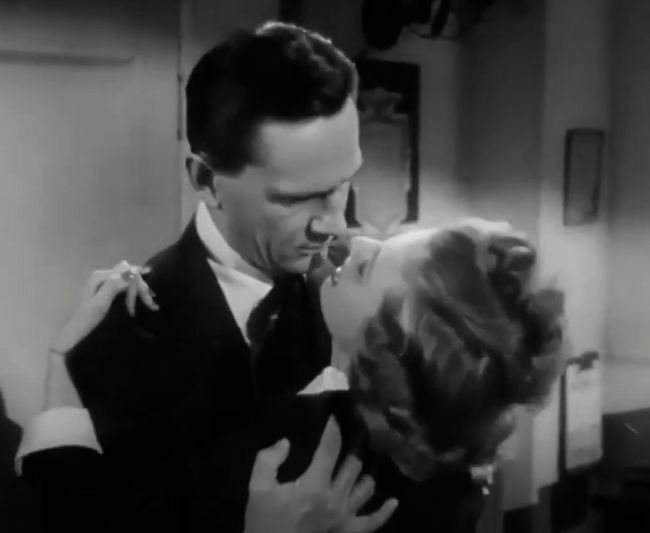
In The File on Thelma Jordan, she finds herself an easy fall guy, Assistant District Attorney Cleve (Wendell Corey). Cleve has a lot going for him: a loving family, a beautiful wife. But his wife is a daddy’s girl, and he doesn’t like that daddy. It doesn’t help that his father-in-law has all the wealth and power Cleve doesn’t–or that Cleve owes him.

That’s why Cleve drinks and feels sorry for himself, and he’s doing just that when Thelma (Stanwyck) happens upon him in his office while seeking his boss. She wants to report attempted burglaries to her wealthy Aunt Vera’s home, but instead agrees to get a drink with Cleve. She’s game, agreeing to be his buddy during his troubles. Of course, a sexy, sympathetic buddy is what every Cleve desires.


You can guess what happens: a secret affair, the aunt’s house being broken into, a murder. With Thelma, there’s no question of innocence. The question is HOW guilty is she? Did she commit the murder, did her shady ex, or did some third involved party? Whoever did it, poor Cleve is complicit, and ends up having to prosecute Thelma in a not-so-effective, likely-career-killing kind of way.

I don’t find Wendell Corey that appealing in the role, but there’s a sincerity to him; you believe this is a good, usually bright guy doing dumb things. Cleve is a smarter version of Henry Fonda in The Lady Eve. He’s not all that wary, but he’s intelligent enough to know he’s been had.

But of course, who cares about Corey, or anyone else in this film noir? This is Stanwyck’s show. And though the storytelling never rises to her abilities, every minute with her on the screen is a joy. Whether she’s acting as Cleve’s relaxed buddy, his maybe-smitten love, a wary defendant, or a hardbitten woman of the world, Thelma is riveting. Don’t miss her in action.

Share
Posted in: 1950s films, Femme fatales, Film Noir/Crime/Thriller & Mystery Tagged: Barbara Stanwyck, femme fatales, film noir, The File on Thelma Jordan, Wendell Corey

5 Reasons to Watch Christmas in Connecticut

12/12/2020 by leah@carygrantwonteatyou.com 4 Comments

I can’t be bothered to root for a romance between anyone and Dennis Morgan, the heartthrob of Christmas in Connecticut. He always strikes me as smug, and his acting is pretty basic.  His character in this famous xmas film doesn’t help: As Jefferson Jones, he’s entitled, dishonest, and smarmy—from promising an engagement to get steak, to seducing a married woman.

Not that Elizabeth Lane (Barbara Stanwyck) is a pinnacle of honesty. And she’s tempting Jefferson every step of the way. But were it for the romance, I would have ignored this perennial Christmas choice in favor of other films, especially for the far sweeter relationship between Stanwyck and Fred MacMurray in Remember the Night.

But this film gets serious props for all of its non-romantic elements, and that’s what keeps me coming back to it, year after year. In order of increasing importance, here’s why I love this film:

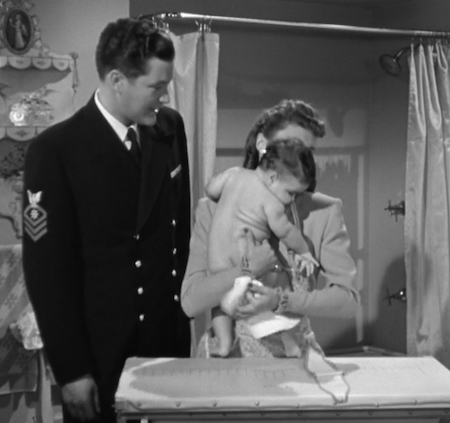
Reason 5: Elizabeth Lane’s (Barbara Stanwyck’s) hilarious ignorance about and disinterest in children. From not being able to remember the gender of her baby (calling the baby “it”), to her surprise that swallowing a big watch could be fatal, this woman takes on the men’s typical role when it comes to baby knowledge in romcoms—and it’s rare to see that even today.

I particularly love when she just throws the diaper after she puts it on wrong.

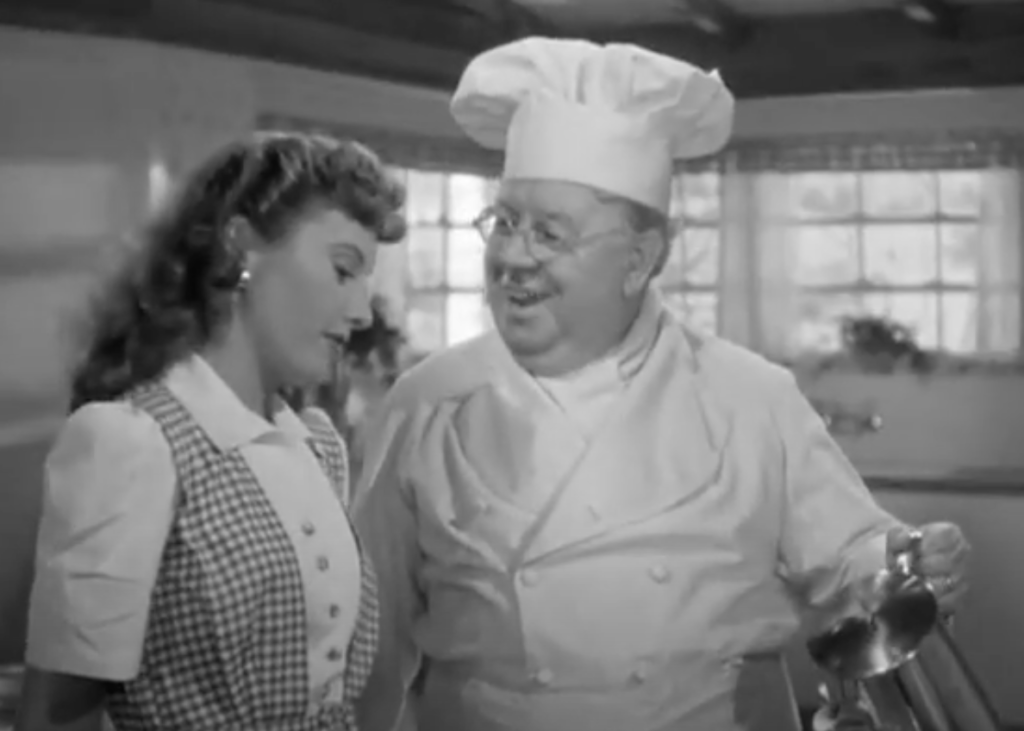
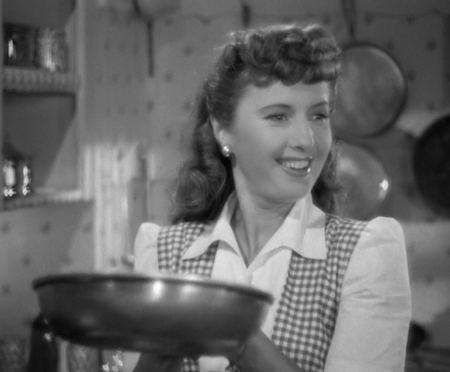
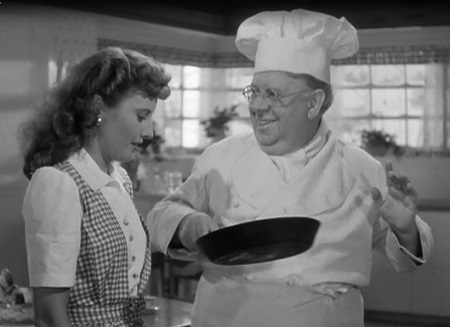
Reason 4: Watching Barbara Stanwyck flipping pancakes. The scene when Uncle Felix (S. Z. Sakall) is trying to teach Elizabeth to prepare pancakes is hilarious.

That pleased look when she unexpectedly succeeds at flipping her flapjack later on is so beloved that you’ll see it in almost any Stanwyck documentary.

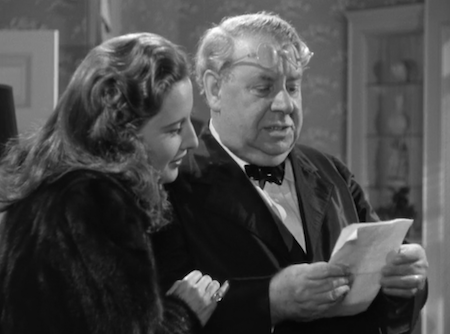
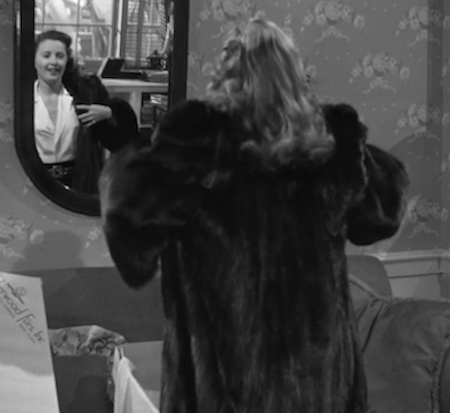
Reason 3: Elizabeth buying a fur coat for herself. Sure, I wish it weren’t fur, but her decision to buy a luxurious present for herself and not wait for a man to do so is the top reason this movie is well loved by my aunt, and I can see her point. Elizabeth is an accomplished writer and has earned the right to show off her successes, without waiting for anyone else to give her her due.

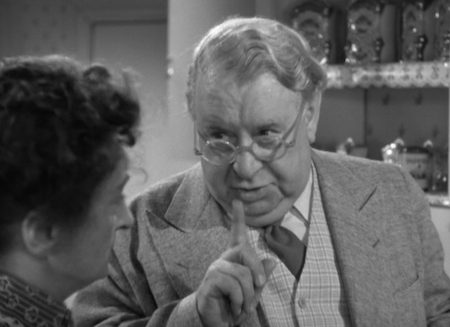
Reason 2: Uncle Felix, as played by Sakall (better known as Cuddles). I could listen to him say “catastrophe” all day long. What a joy this man is to watch, in every film. (I just wish I could track down his autobiography–still trying to get ahold of it!)

Reason 1: Barbara Stanwyck. Classic movie fans are obsessed with Stanwyck, but she’s often forgotten in the wider community–with the exception of this film. Since I think she was among the, if not the, most gifted film actresses ever, I’m so glad that at least one performance keeps her on people’s radar—even if they never realize her comic timing, charm, and talent are what make them want to keep watching this film again and again and again.

I hope you’ll watch this great film this Christmas—or for the first time if you haven’t yet. Just forget about the “rom” of the rom-com, and you’ll love it.

This is part of the Happy Holidays Blogathon! Check out the great entries here.

Share
Posted in: 1940s films, Blogathons, Childfree, Romantic Comedies (film), Uncategorized Tagged: Barbara Stanwyck, best Christmas films, best classic xmas movies, Cuddles, pancake scene

My Podcast Talk on True Stories Of Tinseltown

07/05/2018 by leah@carygrantwonteatyou.com Leave a Comment

It was a riot talking with Grace Collins of True Stories of Tinseltown about Stella Dallas, William Powell, The Blue Gardenia, and Brief Encounter. We had fun comparing loves and gripes about classic films, particularly our united dislike for the husband in Stella Dallas and the supposedly romantic male lead of Brief Encounter. You can find the podcast here. I hope you will also check out her other podcasts. The one on Mary Astor’s diary is especially brilliant! Thanks to Grace for being such a great host and for taking the time to listen to me rant:)

Share
Posted in: 1930s films, 1940s films, 1950s films, Anti-Romance films, Mae West Moments Tagged: Barbara Stanwyck, Blue Gardenia, Brief Encounter, John Boles, Stella Dallas, terrible husbands in film, terrible lovers in film, William Powell

Can Barbara Stanwyck Make Up for George Brent?

01/12/2018 by leah@carygrantwonteatyou.com 8 Comments


I find myself reserving certain films for future viewings when I love a star. Sometimes–as with Barbara Stanwyck–I try to watch her lesser films, putting off a great one so at least one is still waiting in reserve for me, like some wonderful present under the tree.

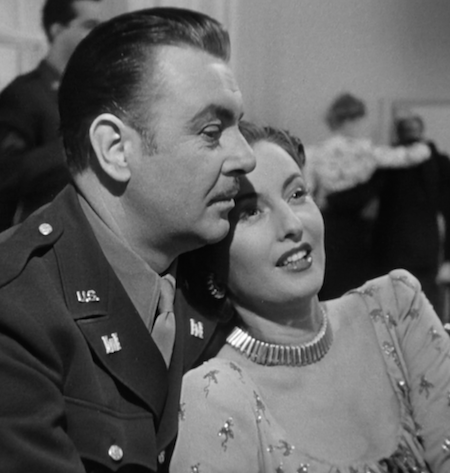
So I didn’t go into My Reputation (1946) with any illusions that it would be a masterpiece, but I thought I could enjoy a little Stanwyck magic. Alas, I neglected to look up her costar: George Brent, who somehow manages to be even duller and less charismatic onscreen than Herbert Marshall. Was his lethargy enough to destroy her energy? The answer: Yes. And no.

The premise is a simple one: Jessica Drummond (Stanwyck) has lost her husband after a long illness, and an attraction to army major Scott Landis (Brent) revives her spirit, but harms her reputation as a chaste, loyal widow.

You see the problem already, don’t you? Some serious miscasting is going on here. I can buy Brent as a restful, chill companion after say, a bad marriage to a philandering playboy. But Brent AS a playboy? Who REVIVES her? Ummmm. Exactly how old was her husband?

I don’t think I’m alone in finding Brent a sleep aid, and his looks don’t even provide eye candy that can dispel that impression. After a while, I simply stopped the film in boredom. Had anyone said, “That guy? Maybe you need some Vivarin, lady,” I would have been fine with Jessica’s choice of Landis, but it seems everyone in the film (even Eve Arden!) thinks he’s the dapper, fun lady’s man Brent may have been in real life, but sure wasn’t onscreen.

So….In his scenes with her? I’m falling asleep. And unlike in Baby Face (in which he’s slightly more tolerable), he’s on the screen a lot. Only when Jessica first enters his apartment; her every gesture displaying her discomfort, reserve, fearfulness, and lingering prudery; does Stanwyck command the screen enough to blot Brent’s presence out.

BUT when Brent’s not around, there’s interesting stuff going on, and Stanwyck nails it. Jessica’s boys’ anger at her replacing their dad is visceral.


The whole time you’ve been sympathizing with Jessica for wanting to get her groove on, as gossips and prudes (including her mother) tsk tsk at her. But then you realize that she’s told these boys nothing, has just invited Landis over for Christmas Eve, gone to fights with him, taken off on trips that last till the wee hours with him (apparently leaving the kids with the housekeeper), without so much as an “I’ll always love your dad” talk. True, it’s a different era, but a wee bit of explanation was required here, and never given. Jessica’s slow-burn realization of her screw-up is almost as riveting to watch as her takedown of a gossip queen earlier.

Most of the strong scenes, unfortunately, don’t even show up till about 30 minutes are left in the film. Way too much time is spent establishing Jessica’s already obvious infatuation, and giving her love the bedroom eyes. I’d suggest skipping around, enjoying some striking Stanwyck outfits, beautifully rendered lines, and wonderful chemistry with everyone but her leading man.

Share
Posted in: 1940s films, Drama (film), Romance (films) Tagged: Barbara Stanwyck, dull leading men, George Brent, My Reputation

Five Favorite Classic Movie Stars

05/16/2017 by leah@carygrantwonteatyou.com 26 Comments

To celebrate National Classic Movie Day, I’m joining Rick’s Five Stars blogathon by sharing some of my favorite classic movie stars. And though I can’t quite say they’re my favorites ALL of the time (of course, that shifts), they are always on my list. Since my favorite character actors deserve their own post, I’m focusing on those who frequently star in their vehicles. Here we go. In no particular order:

1: Barbara Stanwyck


Because her acting was superlative and ageless. Because she got her scenes in one take, her emotions so visceral you always feel immersed in her characters’ lives. Because her crews loved her. Because she could be funny,  dramatic, or both at once. She was marvelous.

2: Van Heflin


Because his acting was so natural. Because he didn’t demand attention or the starring role, but the authenticity of his acting and his easy confidence made him riveting anyway. Because he singlehandedly changed my mind about westerns with his understated performance in 3:10 to Yuma. Because he never got the credit he deserved, which somehow makes me love him more.

3: Cary Grant


Because he had the all-time best smirk. Because he could be sexy or goofy, usually both at once. Because his acrobatics were truly impressive. Because in spite of his unfailing glamour, his characters were always real. Because he knew how to share the screen with a canine. Because he was adept at self-creation. Because he gave me a name for my blog.

4: William Powell


Because I wouldn’t typically consider his looks attractive, but his personality onscreen was so assured and wonderful and silly that I find him sexy just the same. Because I want to befriend most of his characters, and am sad I can’t. Because I could listen to that voice all day. Because I’ll watch anything he’s in, just to fall for him again.

5: Mae West


Because she wrote her own lines and dictated her own role–onscreen and off. Because those lines were so well written that people know them almost 100 years later, without knowing where they’re from or who she was. Because she was combustible onscreen, and always hilarious. Because she was a feminist, whether she admitted it or not. Because she had impeccable timing. Because of that walk. Because her movies are utter joy. Because there will never be another like her.

Check out other bloggers’ favorites at Five Stars blogathon!

Share
Posted in: 1930s films, 1940s films, Blogathons, Drama (film), Feminism, Mae West Moments Tagged: Barbara Stanwyck, Cary Grant, favorite classic movie stars, lists, Mae West, Van Heflin, William Powell

A Classic Christmas Romance for Any Day

01/19/2016 by leah@carygrantwonteatyou.com 21 Comments

RemembertheNight
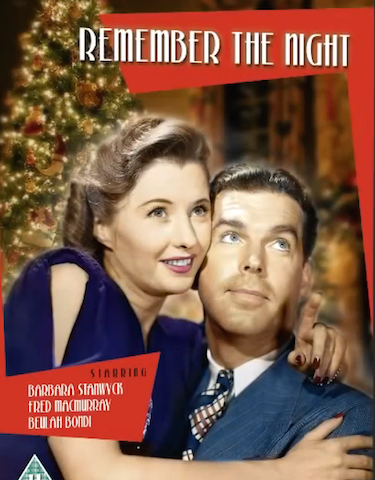
How do you create a Christmas film that is sentimental, without dripping it in eggnog? Especially when you’ve agreed to make it a romance between a shoplifter and her prosecutor, and set it in *gulp* Indiana, which is  peppered with cornpone clichés in every cinematic portrayal? Miraculously, Remember the Night (1940) not only steers through these dangers, but manages to be fresh, original, funny, even moving, thanks to four very wise decisions:

1. Trusting Screenwriter Preston Sturges

Tone is a tricky thing, and Sturges was a master at it. He knew how long he could get away with sentiment, when to cut it with humor.

In trouble for trespassing

Caught trespassing

He developed complex leads. John, the hero (Fred MacMurray), is introduced to us as a wised-up NYC DA. He comes across as jaded and unfeeling in his treatment of the repeat shoplifter (Barbara Stanwyck). Yet we can’t help but laugh at his humorous take on the defense attorney’s silly ruses to win the trial, and admire his own tricks to postpone it. His decision to later assist Lee reveals a soft side Sturges further develops when the character is home with his relatives.

The shoplifter, Lee, is played by Stanwyck. I know I don’t really need to say anything else (see below), but during the trial, expressions–hope, disillusionment, amusement, anger–move quickly over her face, revealing that her hard life hasn’t completely hardened her. When John, feeling guilty about her jail time over the holidays, springs her until the second trial, she (thanks to the dirty mind of his bondsman) ends up at his apartment. At first, she assumes the worst. But when she discovers the mistake, she starts to enjoy John’s company, and the two end up traveling home to Indiana for Christmas–he, to see his beloved family; she, to visit the mother she hasn’t seen since she ran away.

In other hands, the plot wouldn’t have worked; I wouldn’t have even watched it had someone else written it. I am tired of portrayals of my home state, which is typically drawn as either the embodiment of (a) homespun happiness or (b) hickville. But Sturges avoids the trap by giving us a variety of Hoosiers. Stanwyck and MacMurray are both streetwise, smart, and sophisticated. While John’s mother and aunt initially appear to be simple souls, neither is a stereotype. Sturges gives each insight, making the scenes with them far more complex than they initially appear, and allowing us to enjoy the sentimentality of a homey xmas when it comes. Similarly, the scene with Lee’s cold mother, which could have played as far too maudlin, is beautifully understated and short.

True, Sturges does have some missteps. He makes the servant/helper Willie a rube (Sterling Holloway). He’s even an aspiring yodeler. Seriously? I decided that Willie was OK because he canceled out John’s simpleminded African American butler in New York, Rufus (Fred Toones, one of Sturges’ stock players). (I’ll take cinematic classism over racism any day.)

As the director, Mitchell Leisen doesn’t get enough credit for the film’s quality (nor did he get enough credit for Easy Living or Midnight). I’m particularly impressed with his choices of which look to linger upon, which face to highlight, in which moment. But more importantly, the story’s pacing–one of its chief charms–is due to Leisen choosing to cut some of Sturges’ script, according to Ella Smith. Given that there’s a breeziness to many of Leisen’s comedies, it’s hard to argue pacing is all to his writers’ credit. Surely, too, it should be seen as an asset when a director trusts his writers, as Leisen surely did. According to Smith, he even agreed to keep the title, despite having no idea what it meant.

2. Selecting Talented Actresses as the Resident Hoosiers

BondiPatterson-1
Character actresses Beulah Bondi (John’s mom) and Elizabeth Patterson (his aunt) would win acclaim for The Waltons and I Love Lucy, respectively, later in their careers; it’s not hard to understand why. The two, familiar faces in a number of 30s and 40s hits, mesh so beautifully it’s hard to believe they aren’t really sisters. Watch Patterson’s reaction when she shares a dress from her past with Lee, or Bondi’s worry as she watches her son’s increasing attraction to the shoplifter he’s prosecuting.

3. Casting an Understated Actor as the Hero

MacMurrayRemembertheNight
MacMurray is good in everything. He and Stanwyck would, of course, pair up again for the landmark noir, Double Indemnity. But this is the performance that won me over. Watch the scene when he meets Lee’s mom, how gracefully, subtly he handles it. The brevity and tone of the scene, of course, help, but another actor would surely have overplayed his reactions. Instead, MacMurray’s smooth, simple words, with just a twinge of emphasis, say just what needs to be said: this mother is a monster, and Lee’s criminality is no longer mysterious. (Spielberg would have launched a huge, weepy score; thank you, Leisen, for not doing so.)

4. Choosing Stanwyck as the Star

StanwyckRemembertheNight
The soul of the story is Stanwyck’s. She has to sell the moral quandary: Will she give in to romance with John, knowing it will kill his career? We have to care about her, about her struggle. We have to root both for the couple’s happiness AND for morality winning the day. We have to sympathize as John’s occasional denseness hurts her feelings, and laugh at her quick bursts of anger when it does. We have to even let some realism in (how’s that for a rom-com shock?): acknowledge that love does not, in fact, conquer all; in fact, sometimes it’s very much in the way (at least temporarily). It’s quite a balancing act Stanwyck must play; if she gives him up, the movie could become soapy very easily. If she doesn’t, how could her performance come across as real; how could we continue to root for her? Other actresses might have missed the target, but not this one. Sentiment, comedy–the woman did it all, beautifully, and as naturally as any performer I’ve ever seen. Because of her, you will love the film, December 25th or July 2nd.

At the Golden Globes the other night, Tom Hanks mentioned Stanwyck’s name in his fantastic presentation of the Cecil B. DeMille Award. He explained that the winner, Denzel Washington, was one of an elite group of great actors who “demand” our attention, who can’t be duplicated. “The history of film,” he said, “includes a record of actors who accrue a grand status through a body of work where every role, every choice is worthy of our study. You cannot copy them. You can, at best, sort of emulate them….Now it’s odd how many of these immortals of the silver screen, of the firmament, need only one name to conjure the gestalt of their great artistry. In women, it’s names like Garbo, Hepburn, Stanwyck, Loren.”

The speech, of course, justified watching the rest of the show. I’m not always a fan of Hanks’ work (he’s far better in comedy than drama), but his wisdom is evident. So was Sturges’; in his third turn as a writer-director, his first with a female lead, he would cast Stanwyck as his Eve and make movie history. The Lady Eve so impressed us all that this quieter, earlier effort has been forgotten. It shouldn’t be.

This post is part of the Barbara Stanwyck blogathon, hosted by Crystal at In the Good Old Days of Classic Hollywood. Check out the fabulous entries on my favorite star at her site.

Share
Posted in: 1940s films, Humor, Romantic Comedies (film) Tagged: Barbara Stanwyck, classic Christmas movie, Fred MacMurray, Preston Sturges, Remember the Night, underrated films

The Nerdiest Scene Ever: Encyclopedia Writers Trumping Gangsters in Ball of Fire

05/16/2015 by leah@carygrantwonteatyou.com 28 Comments

This post is part of the My Favorite Classic Movie Blogathon in celebration of National Classic Movie Day (May 16th). Click here to view the schedule listing all the great posts.

CoopervsDuryea
Nerd alert: I used to sit in the basement, reading my parents’ World Books for fun. I think it started with A Tale of Two Cities. A few hours into the encyclopedia set’s entries on The French Revolution, and Sydney Carton was forgotten.

Now, of course, my addiction is Wikipedia, despite my warning students away from it with Colbert. The other day I attended a Renaissance Faire featuring a pirate show (yes, I know how ridiculous that is), just after reading about Blackbeard in The Smithsonian. The combination led me on a Wikipedia binge on female pirates.

Thus it should be no surprise that a film about professors writing an encyclopedia (and their unexpected romantic interlude with a gangster’s moll) would thrill me. I’ve already explained why Ball of Fire should be viewed by all English majors. Today I’m advocating it for history buffs as well, particularly due to one scene starring the professors, two gangsters, The Sword of Damocles, and the mirrors of Archimedes.

**Spoiler alert.**

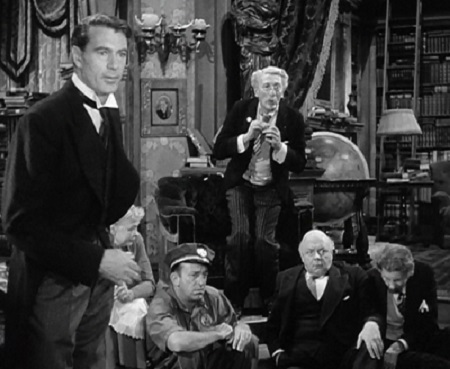
For those who’ve never seen the film, here’s the basic plot: Sugarpuss (Barbara Stanwyck), girlfriend to gangster Joe Lilac (Dana Andrews), hides out from the D.A. in the home of the encyclopedia writers, pretending she’s there to help with Professor Potts’s (Gary Cooper’s) entry on slang. Potts falls for and proposes to her, and she (to her great shock) falls for him too. But when her scheming is exposed, Potts lets her leave with Lilac, who needs her “I do” to prevent her from testifying about his crimes.

Sugarpuss knows she’s earned Potts’s disgust, but refuses to marry Lilac, instead explaining her love for the professor. She describes his poor kissing technique, his “giraffe” fashion, and other traits that have somehow inspired her love for him.

Sugarpuss-Stanwyck
“I’ll never see him again,” she tells Lilac, “but I’m not gonna marry you, not if you tie a ton of cement around my neck and throw me into the East River, like you did all the others.”

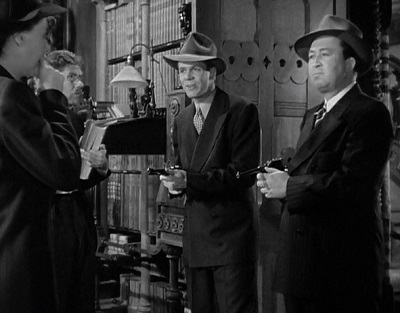
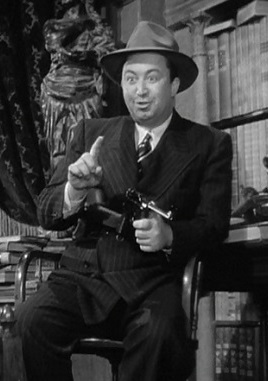
To force her, Lilac sends two of his henchmen, Pastrami (Dan Duryea) and Anderson (Ralph Peters), to take the professors hostage.

GangstersBallofFire
When Potts discovers how much Sugarpuss loves him, he wants to yodel he’s so happy. His fellow professors share in this enthusiasm, even holding down Pastrami’s gun. The gangster retorts,”Better look out, it’s gonna spit.”

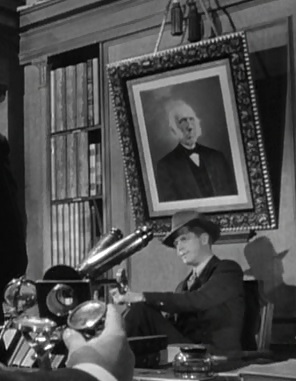
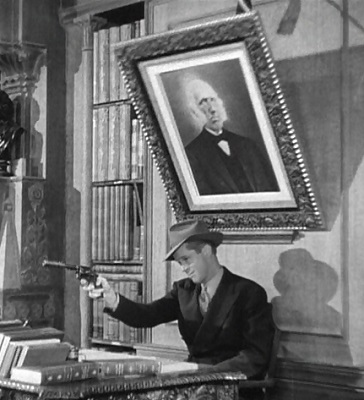
At this exciting juncture, their garbage man arrives with questions on a quiz, including one about the Sword of Damocles. Professor Jerome (Henry Travers–a.k.a., Clarence of It’s a Wonderful Life) explains the legend, realizing its pertinence to their situation: A sword is suspended above the head of Damocles by just a hair, just like the portrait above Pastrami.

SwordofDamoclesstrategy-BallofFire
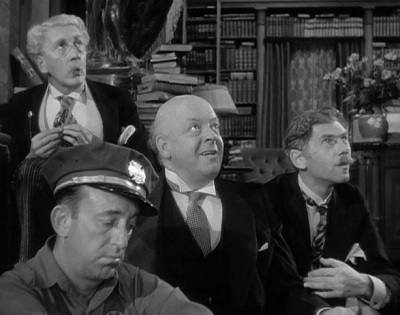
Jerome’s quick-witted colleagues soon catch the reason for his storytelling. Suddenly, they have a strategy–and perhaps as importantly, hope.

ProfessorsSeeDamoclesBallofFire
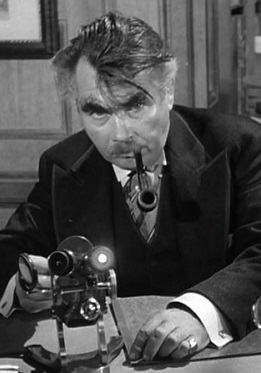
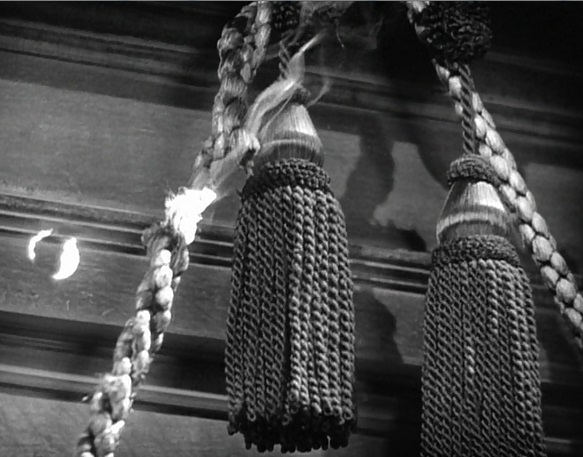
After Potts shares another story–Archimedes burning the Roman fleet with well-aimed mirrors–Professor Gurkakoff (Oscar Homolka) moves his microscope so that it’s catching the sunlight, and directs it at the rope above the portrait.

Oscar Homolka-BallofFire
Potts then notices that Anderson is pitched precariously on a high chair.

Ralph Peters-BallofFire
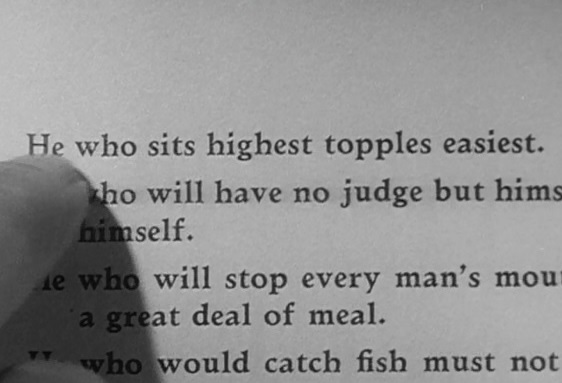
He therefore refers one of his colleagues to a passage that gives him a mission once Pastrami is handled.

Topples-BallofFire
The approach is working. Two of the professors have spotted a carpet they’re ready to pull to topple Anderson, and the fire is burning through the rope above the picture.

Reflectors-Archimedes-BallofFire
Now all the professors need to do is distract the criminals’ attention from the fire. Potts insults the gangsters in a pseudo-intellectual style, beginning a nonsensical speech with “Your inferiority is a question of the bony structure of your skulls.”

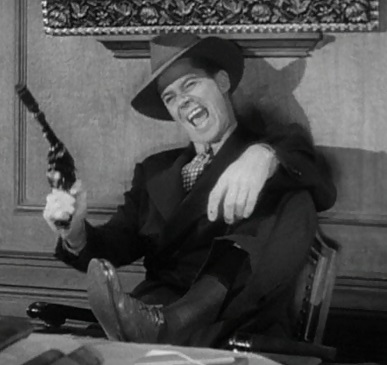
Anderson is unaware how truthfully he speaks when he complains, “This mixed-up talk is giving me a headache.” Pastrami argues that guns, not smarts, make the world go round, and proves it by shooting their globe.

Pastrami-Dan Duryea-BallofFire
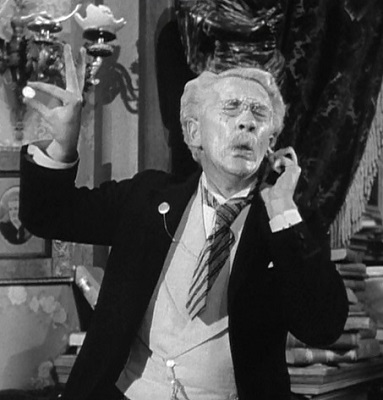
While this gun play has the whole room worried, it’s Pastrami’s decision to leave his chair that leads to panic. Professor Oddly proposes that Pastrami shoot a dime out of his hand, but only if he returns to his seat. Realizing the risk he’s taking, poor Oddly switches to a quarter, then a 50-cent piece. The tension in the room has obviously reached quite a pitch.

ProfessorsFearful-BallofFire
Oddly’s expression as he waits to lose his hand is priceless:

ProfOddlyRichardHaydn
Of course, Pastrami is knocked over first.

Portrait starts to fall.
And Anderson falls via the carpet move. Oddly faints–quite theatrically. And the professors rush off in a garbage truck to save Sugarpuss, with Potts studying boxing strategies to use against Lilac en route. With scenes as delightfully geeky and ridiculous as this one, it any wonder that this classic film remains my favorite?

Share
Posted in: 1940s films, Blogathons, Film Noir/Crime/Thriller & Mystery, Humor, Romantic Comedies (film) Tagged: Ball of Fire, Barbara Stanwyck, Colbert, enclopedia, films for English majors, films for history buffs, Gary Cooper

A Film Celebrating Bad Cooks: Christmas in Connecticut

12/13/2014 by leah@carygrantwonteatyou.com 2 Comments

Stanwyckcooking
I come from a long line of bad cooks. My mother was way ahead of her peers with the natural foods craze, but, like a new vegan, she never learned to substitute anything for the bacon grease she’d been raised with; everything she made was bland. When we visited my maternal grandmother’s, all of our cousins would drop by with food. I remember the day I discovered why, when I witnessed Grandmother putting mayonnaise in macaroni and cheese. My fraternal grandmother supposedly was a good baker before her illness set in, but the only real meal I remember from the Williams family recipes was courtesy of an in-law.

For some women, this deficiency would be a source of shame, but it wasn’t for my grandmother, who bragged about her recipes as she put ketchup in her ratatouille, knowing no one was bold enough to contradict her. As for my mom, she took Greek salad to every holiday potluck, shrugged at all the better fare, and returned to her studies afterward. Who cared about culinary proficiency, when she could be mastering Aristotle? I’ve followed my family’s example, neither worrying about my lack of ability, nor feeling an impulse to remedy it.

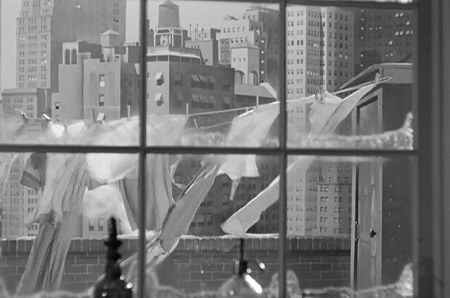
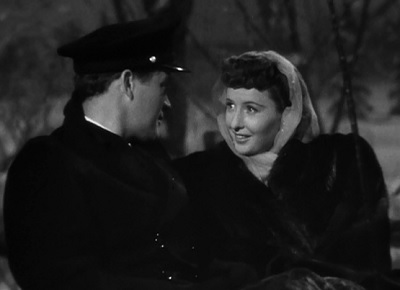
With these tendencies and antecedents, it’s perhaps unsurprising that one of the few domestic comedies I find relatable is Christmas in Connecticut (1945), starring Barbara Stanwyck as Elizabeth Lane, a food writer who can’t cook. The publisher of her magazine (Sydney Greenstreet) wants to please a hero who craves good eating and satisfy his own stomach in the bargain. He invites the sailor—and himself—to Christmas dinner at the columnist’s country home, forcing her to quickly accede to a friend’s proposal and thus be able to pretend owning the home—and baby—she’s been writing about for years instead of the actual tiny New York apartment she lives in as she spins stories about rocking chairs and fireplaces and pet cows.

A view Lane pretends to be “the broad front lawns of our farm, like a lovely picture postcard of wintry New England”

A view Lane pretends to be “the…front lawns of our farm”

The premise is absurd, of course, but with Stanywck as the faux-Martha Stewart, Greenstreet as the busybody, and S.Z. Sakall as Felix (the enterprising buddy whose recipes she’s been using for her articles), this film is a lot of fun. When Lane falls for the sailor (Dennis Morgan), she plots to avoid the promised marriage to her stuffy friend, John Sloan (Reginald Gardiner). She boldly flirts with the handsome hero, Jefferson Jones (Morgan), freed by his engagement and her own supposed marriage.

LaneFlirtingxmasConnect
Even more entertaining than their flirtation is the treatment of Lane’s poor cooking as she pretends to be Mrs. Sloan. When he hears Felix will be handling dinner, the publisher complains, “…I won’t feel quite the same as if you’d cooked it, Mrs. Sloan.”

“Believe me,” quips Felix, “you will feel much better.”

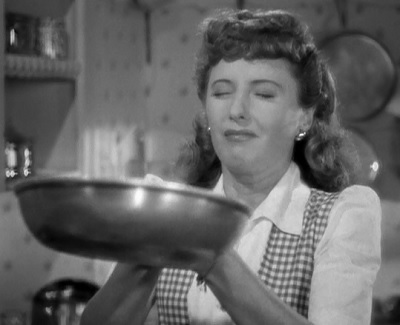
In a famous scene, Felix teaches Lane to flip a flapjack, which she’s described in great detail in her writing. Repeatedly, she screws up, hitting the ceiling with the batter.

Lane, viewing the pan like it’s a tarantula

Lane, viewing the pan like it’s a tarantula

While she dodges having to display her bad aim at first, she’s finally put on the spot, and her shocked face when she succeeds—by a sheer fluke—is priceless.

ElizabethLaneSuccess
**spoilers below, for anyone who still thinks it’s possible to spoil a predictable romantic comedy***

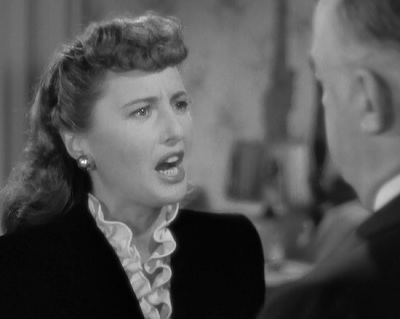
She may be a poor pancake maker, but Lane’s courage and quick wit are worth witnessing when she finally confronts her bullying publisher, who tries to convince her and her faux-husband Sloan that they should reproduce again for the good of the magazine’s circulation. Once he discovers the deception, the publisher urges her to marry the “bore” (Sloan) and proceed quickly to child bearing. Even though she’ll likely lose her job and a promised raise, Lane still decides to have her say: “Listen to me. I’m tired of being pushed around, tired of being told what to do, tired of writing your galldarned articles, tired of dancing to everybody else’s tune, tired of being told whom to marry. In short, I’m tired.”

StanwyckandGreenstreet
Of course, this exchange sets Lane up for becoming the housewife she’s been pretending to be, but in feminist fashion, it’s a choice, not a default—and quitting is in her case an act of liberation. I like to think of her using that big imagination to write the next great American novel while Jones, who already likes washing babies, tends to the children. (She knows what she’s doing, falling for this sensitive type.)

Surprisingly, the film is no more judgmental about her culinary failures than I would be. “Well, young man, I spose you know what you’re doing,” the publisher says to Jones once it’s clear the two are altar bound. “But I warn you, she can’t cook.”

Jones asks her if it’s true. “No, I can’t cook,” Lane admits, without a trace of embarrassment.

“She can’t cook,” Felix repeats. Then he adds for all of us who’ve fallen for her during the film, “But what a wife!”

Sakall

Share
Posted in: 1940s films, Feminism, Humor, Romantic Comedies (film), Uncategorized Tagged: bad cooking movies, Barbara Stanwyck, Christmas in Connecticut, Christmas movies, S.Z. Sakall, Sydney Greenstreet

The Moment I Fell for Van Heflin

09/23/2014 by leah@carygrantwonteatyou.com 13 Comments

Heflincurious
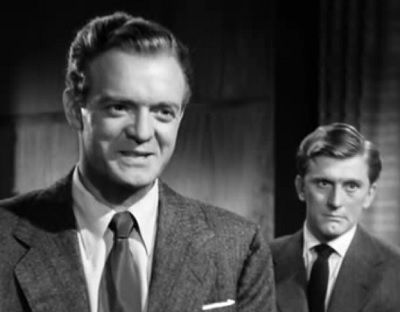
I didn’t know a thing about Van Heflin when I saw The Strange Love of Martha Ivers (1946). I picked the movie because of my love for Barbara Stanwyck, whom I assumed from the title would be the star of the film; I didn’t realize she wouldn’t appear until half an hour into it.

Stanwyck, the versatile actress

Stanwyck in The Strange Love of Martha Ivers

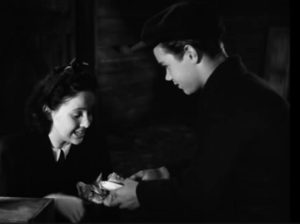
The story begins in 1928. Young Sam Masterson (Darryl Hickman) is trying to convince his crush, Martha Ivers (Janis Wilson), to run off to the circus with him. Sam is always evading the police thanks to Martha’s aunt (Judith Anderson), Mrs. Ivers, the wealthy woman who owns the town. Only if they run away can they be together. Unfortunately, their initial efforts are foiled by tattletale Walter, who likes Martha too.
YoungSamandMartha
Sam does run away, but just before Martha flees to join him, Mrs. Ivers beats her beloved cat to death, and Martha retaliates by striking her aunt with the same cane. We see Sam riding a train just as his crush is concealing the murder with the aid of her greedy tutor and Walter, his son.

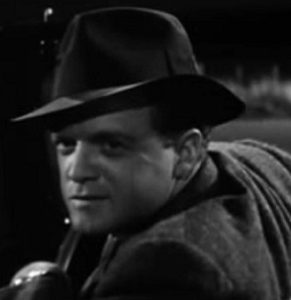
The film jumps to 1946. Sam has grown up to become an easygoing professional gambler (Van Heflin). In his car with a hitchhiking sailor, Sam catches sight of a “Welcome to Iverstown” sign.

“Well, whaddya know?” he says. “….Leave a place when you’re a kid, maybe seventeen, eighteen years ago, and you forget all about it, and all of a sudden you’re driving along and smacko, your own hometown up and hits you right in the face.”

He’s so surprised that he turns around to see the sign again and crashes his car.
Heflin-driving
Laughing at himself, he explains to his befuddled companion, “The road curved, but I didn’t.”

“Welcome to Iverstown,” he says to himself as he heads there for repairs. “Well, maybe this time, they mean it.”

I had expected to be disappointed by Stanwyck’s costar, as I usually am. Even actors good in other films come across as flat or artificial next to an actress this natural, and as downright stilted if unskilled to begin with (i.e., Herbert Marshall).

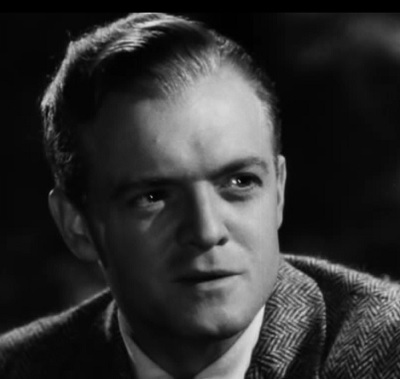
Captivated by the self-deprecation of Heflin’s character and his unexpectedly casual responses to conflicts, I soon forgot Stanwyck was even in the movie. I think I’d fallen for Van Heflin before he got out of the car.
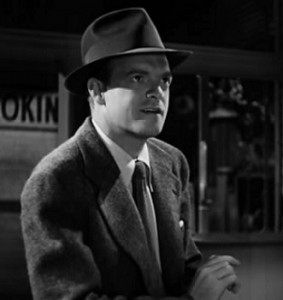
Discovering that “scared little boy” Walter is now a DA

Discovering that “scared little boy,” Walter, is now a DA

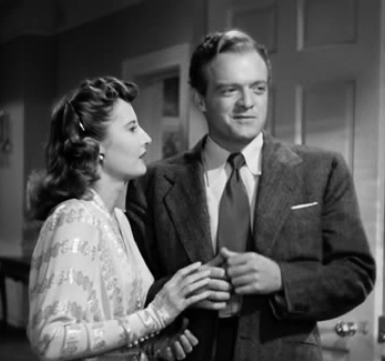
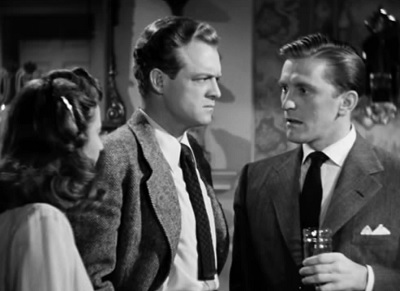
Heflin is an excellent foil for the scheming adult Martha (Stanwyck) and her alcoholic, tortured husband, Walter (Kirk Douglas). Sam’s relaxed, freewheeling persona acts as a kind of tonic to his tightly wound former love and a poison to her jealous and fearful husband, who assumes this childhood friend is back to blackmail them. Like Mrs. Ivers before him, Walter tries to drive Sam away. But Sam is no longer as powerless as he once was.

Heflin is every bit as comfortable in his role as Stanwyck is in hers, and the naturalness I would soon discover to be a hallmark of his acting works perfectly here, contrasting with the duplicitous couple’s double dealing. What makes Heflin so attractive as an actor is that same ease of movement Stanwyck possesses; it wasn’t surprising to discover this man spent much of his life as a sailor. Clearly, he finds his sea legs in every part quickly, and that comfort in his skin and in his environment is seductive to watch. By the time he meets Martha again, even the usually compelling Kirk Douglas is hopeless against him (Douglas plays an atypical part here, and is wonderful in it).
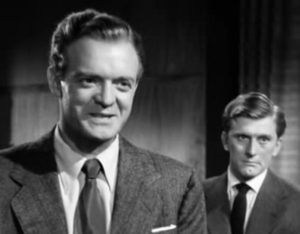
Seeing Martha again

Seeing Martha again

Heflin was not a traditionally attractive man, and famously remarked that “Louis B. Mayer once looked at me and said, ‘You will never get the girl at the end.’ So I worked on my acting.” Whatever he did worked: He’s so riveting to watch that I never questioned any woman Heflin won, even one as jaw-droppingly sexy as parolee Tony (Lizabeth Scott), who falls for Sam as he’s wandering around Iverstown.

Gorgeous Scott as Tony
Gorgeous Scott as Tony

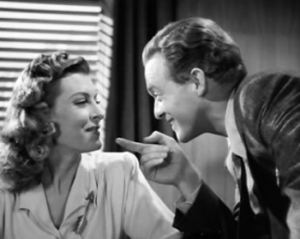
Flirting with Walter's secretary to get an appointment

Flirting with Walter’s secretary

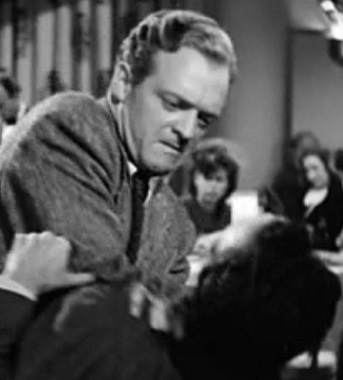
In fact, I’m more likely to question when Heflin doesn’t get the girl, as when Jean Arthur starts to fall for pretty-boy Alan Ladd in Shane over her tough husband (Heflin), or when Lana Turner prefers boring Richard Hart in Green Dolphin Street (to be fair, the character’s choices were just as baffling in the book). Even when Heflin plays a less courageous part than he usually does, as in 3:10 to Yuma, he’s always got some kind of hard, immovable core of strength to him. In The Strange Love of Martha Ivers, where I saw it first, this mental and physical strength appears when Walter starts to mess with him—and worse, with Tony.
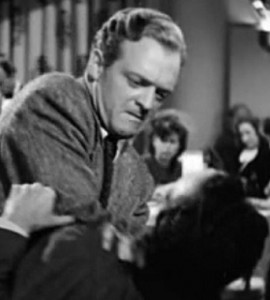
Fighting the detectives who stooge for Walter

Fighting Walter’s detectives

Yet Heflin is just as adept at playing kindness as brawn, as when Tony (Scott) betrays Sam out of weakness and then asks him to hit her because of it. Of course, he refuses to hurt her, but he does more than that: he shows compassion for her behavior. “The only thing you got coming, kid, is a break,” Sam says, the simplicity of his delivery conveying his conviction.

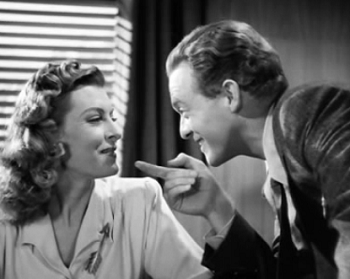
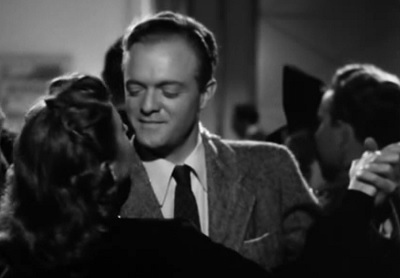
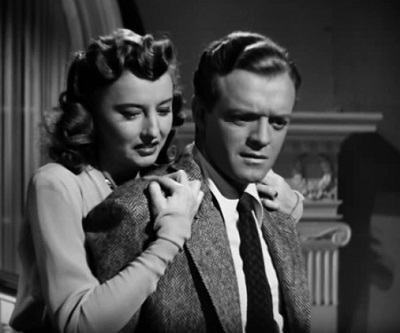
And it is a joy to see Heflin in scenes with Stanwyck. Sam suspects he’s in love with Martha, and even though the audience knows he should steer clear, it’s hard not to root for them, since it means more scenes with these two brilliant actors, and fewer with the less talented Scott.
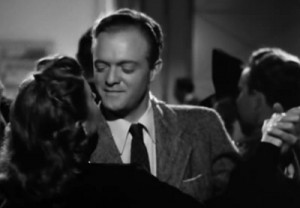
HeflinandStanwyckdance
The chemistry between the two is strong. It’s wonderful to witness Stanwyck unable to dominate an actor, to see in him an equal.
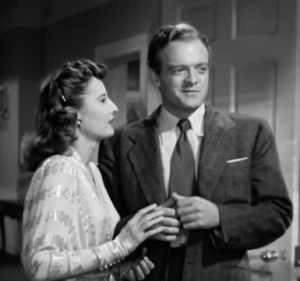
HeflinandStanwycktogether
Aware that she can’t manipulate Sam, Martha panics after she reveals her secret to him. Of course, Stanwyck conveys that fear in one look, as only she can:

MarthascaredStanwyck
And Heflin’s understated response portrays his excitement about her honesty, his understanding of her distress, and his disgust at what’s happened:

Heflin-discovery
Before long, of course, Sam must confront Walter about his feelings for Martha:

Three-HeflinDouglasStanwyck
And Martha must stop characterizing herself as a victim, instead seducing Sam with money, power, and lust:
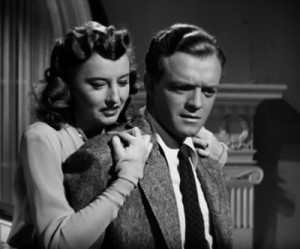
HeflinandStanwyck
The role of Sam Masterson requires that Van Heflin have a great deal of range—that he express assurance, wonder, sympathy, violence, love, anger, fear, revulsion. Heflin’s performance carries the film, and he plays each emotion so perfectly that you feel like you know this man, and wish him far away from his destructive former playmates. I won’t spoil what happens, as the movie is well worth viewing, with excellent acting, an intriguing story, and a great script. But be warned: Heflin’ll get to you, just as he did to me.

This is the fourth in a monthly series of The Moment I Fell for posts…Hope you’ll share some of the moments that drew you to your favorite actors and actresses….


Share
Posted in: 1940s films, Drama (film), Femme fatales, Film Noir/Crime/Thriller & Mystery, The Moment I Fell for Tagged: Barbara Stanwyck, The Strange Love of Martha Ivers, Van Heflin

She Got It Wrong: How Jennifer Jason Leigh Almost Ruined The Hudsucker Proxy

05/28/2014 by leah@carygrantwonteatyou.com 2 Comments

As a fan of classic 30s and 40s films, I delight in the movies that pay tribute to them, and no directors have been more glowing in their homages than the Coen brothers, with their nods to predecessors Preston Sturges, Howard Hawks, Frank Capra, and even Stuart Heisler. Their gloriously fun The Hudsucker Proxy was attacked for lacking “heart,” for being no more than a stylish imitation of favorite classic films.
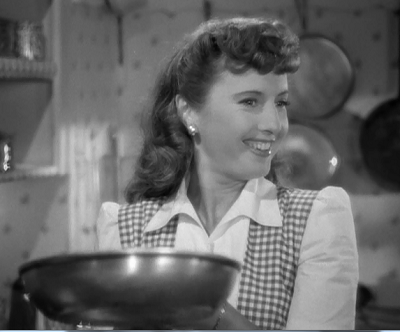
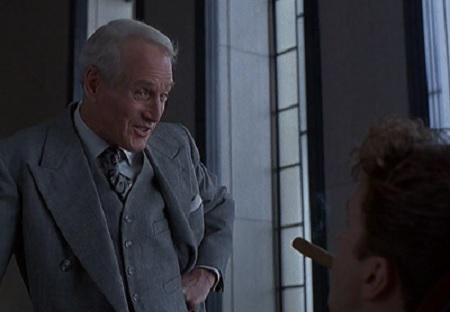
Sidney Mussburger conning Barnes (Robbins)

Sidney Mussburger (Paul Newman) conning Barnes (Robbins)

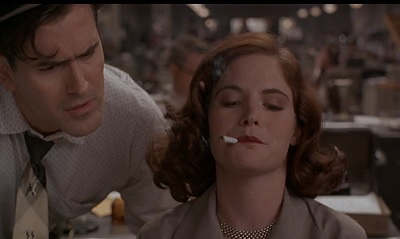
But critics praised Jennifer Jason Leigh’s performance as the typical classic film reporter, noting, as did Todd McCarthy in Variety, that she plays the role “with a Katharine Hepburn accent, Rosalind Russell’s rat-a-tat-tat speed in ‘His Girl Friday’ and Stanwyck attitude….” Occasionally, reviewers admitted that Leigh’s character, Amy Archer, wasn’t “quite right,” as McCarthy did, but they never attributed the film’s failure to the actress.

Leigh in full-on caricature mode

Leigh in full-on caricature mode

Yet to me, Leigh’s performance is the one thing that takes away from my enjoyment of this exuberant movie. Paul Newman is marvelous as the bad guy (Sidney Mussburger). Tim Robbins is terrific as the naïve Hoosier (Norville Barnes) who comes to work in the big city. His supposed stupidity makes those trying to lower Hudsucker’s stock prices quickly usher him into the presidency, yet his creativity manages to foil their plot. Archer (Leigh) plans to expose him as an idiot, much like Saunders (Jean Arthur) before her in Mr. Smith Goes to Washington.

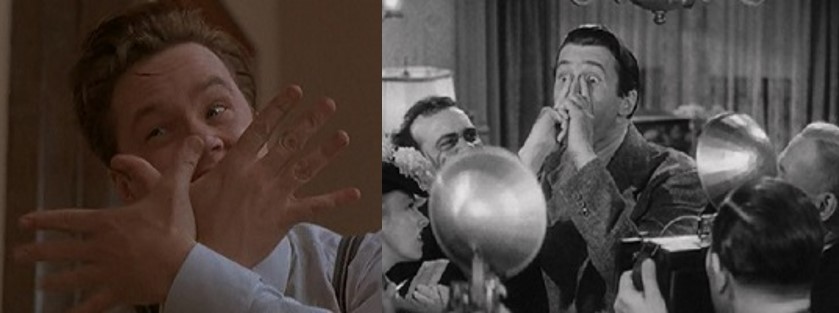
Barnes singing school song; Stewart showing a bird call

Barnes’ school song; Smith’s (Jimmy Stewart’s) bird call

But Archer’s later guilt at this character assassination and developing feelings for Barnes are utterly unconvincing, largely because her whole performance is.

One gets the feeling that Leigh only watched the films in which Stanwyck, Hepburn, and Russell were speaking at that “rat-a-tat-tat” clip and therefore missed the obvious: these actresses didn’t talk at such speeds in most of their films. They simply imagined themselves the kind of women who would be thrilled by breaking stories. Their words nearly run together not just due to the scripts, but because their characters are excited.

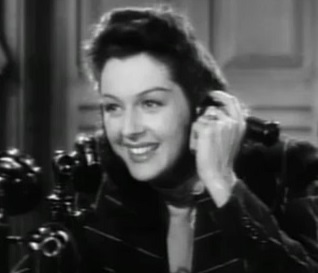
Russell sharing a great lead with editor and ex Walter Burns (Cary Grant)

Russell sharing a great lead

Leigh takes on the inflections and even some of the gestures of these actresses, but she becomes a mimicry of them rather than a believable character because the passion that infused the others’ performances is entirely absent in Leigh’s.

Stanwyck mid pitch

Stanwyck mid pitch

Hepburn, Russell, and Stanwyck come across as born reporters; their confidence makes them thrilling to watch: Hepburn’s assurance in mixing with dignitaries in Woman of the Year, Stanwyck’s daring plan to manipulate her employer in Meet John Doe, Russell’s masterful interview in His Girl Friday.

Hepburn flirting in her office after her male secretary ushers in her crush (Spencer Tracy)

Hepburn in control in her office

Archer, in contrast, is clearly aping rather than feeling confidence, and because Leigh plays her as shrewish rather than cynical, her quick transition into affection for Barnes merely looks like bad acting, which is surprising given the caliber of most of her work.

Archer falling for Barnes

Archer falling for Barnes

Admittedly, the Coens made Archer terribly insecure, a woman whose sole joy is one upping others with her Pulitzer. This was a serious mistake. How could the Coens, Hawks enthusiasts, have missed that the overlapping dialogue they’ve borrowed from His Girl Friday was not meant to be an affectation, as Archer’s is, but a reflection of the characters’ energy and enthusiasm? The film centers around Cary Grant’s excitement about being a newspaperman, and his various ploys to prevent Russell from leaving the business stem from his knowledge that she can’t resist it any more than he can.

The two films, in fact, have much in common: they’re all about the joy of the con—Barnes, in convincing the company he’s a fool (unwittingly), Walter Burns (Grant), in keeping others so occupied they miss his hilarious ruses. Both movies are a blast to watch. But The Hudsucker Proxy bombed at the box office, and I can’t help but blame Leigh, whose Archer is a drag to watch, and whose union with Barnes I rooted against. What does it matter if an actress nails the shell, if she loses the soul?

Share
Posted in: 1940s films, 1990-current films, Comedies (film), Romantic Comedies (film) Tagged: Barbara Stanwyck, Coen brothers, His Girl Friday, Jennifer Jason Leigh, Katharine Hepburn, Rosalind Russell, The Hudsucker Proxy
1 2 Next »

Recent Posts

  • 100 Years Later, Still Scary: Dr. Caligari
  • Escaping Out of the Past (1947)
  • A Weeper for Those Who Love Jerks
  • Thank You, Academy, for Not Infuriating Me
  • Challengers (2024) Is a Bad Movie

Subscribe to Blog via Email

Enter your email address to subscribe to this blog and receive notifications of new posts by email.

Categories

  • 1920s films
  • 1930s films
  • 1940s films
  • 1950s films
  • 1960s films
  • 1970s films
  • 1980s films
  • 1990-current films
  • 2020s films
  • Action & Sports Films
  • Anti-Romance films
  • Blogathons
  • Childfree
  • Comedies (film)
  • Drama (film)
  • Feminism
  • Femme fatales
  • Film Noir/Crime/Thriller & Mystery
  • Gloriously Silly Scenes
  • Horror
  • Humor
  • Mae West Moments
  • Musicals and dancing films
  • Oscars
  • Random
  • Romance (films)
  • Romantic Comedies (film)
  • The Moment I Fell for
  • Turn My Sister into Classic Movie Fan
  • TV & Pop Culture
  • Uncategorized
Share
Classic Movie Blog Hub Member

Recent Comments

  • leah@carygrantwonteatyou.com on Meg Ryan’s Fate Foretold in Joe Versus the Volcano
  • Ryan on Meg Ryan’s Fate Foretold in Joe Versus the Volcano
  • leah@carygrantwonteatyou.com on 100 Years Later, Still Scary: Dr. Caligari
  • The Classic Movie Muse on 100 Years Later, Still Scary: Dr. Caligari
  • leah@carygrantwonteatyou.com on 100 Years Later, Still Scary: Dr. Caligari

Archives

  • November 2025
  • September 2025
  • May 2025
  • March 2025
  • January 2025
  • November 2024
  • August 2024
  • July 2024
  • May 2024
  • March 2024
  • February 2024
  • December 2023
  • November 2023
  • October 2023
  • September 2023
  • August 2023
  • July 2023
  • May 2023
  • April 2023
  • March 2023
  • January 2023
  • December 2022
  • November 2022
  • September 2022
  • July 2022
  • May 2022
  • April 2022
  • March 2022
  • February 2022
  • October 2021
  • September 2021
  • April 2021
  • March 2021
  • February 2021
  • December 2020
  • October 2020
  • September 2020
  • July 2020
  • May 2020
  • April 2020
  • March 2020
  • February 2020
  • December 2019
  • October 2019
  • September 2019
  • June 2019
  • May 2019
  • April 2019
  • February 2019
  • January 2019
  • November 2018
  • September 2018
  • July 2018
  • June 2018
  • May 2018
  • April 2018
  • March 2018
  • February 2018
  • January 2018
  • November 2017
  • September 2017
  • August 2017
  • July 2017
  • June 2017
  • May 2017
  • April 2017
  • March 2017
  • February 2017
  • January 2017
  • December 2016
  • November 2016
  • October 2016
  • August 2016
  • July 2016
  • June 2016
  • May 2016
  • April 2016
  • March 2016
  • February 2016
  • January 2016
  • December 2015
  • November 2015
  • October 2015
  • September 2015
  • August 2015
  • July 2015
  • June 2015
  • May 2015
  • April 2015
  • March 2015
  • February 2015
  • January 2015
  • December 2014
  • November 2014
  • October 2014
  • September 2014
  • August 2014
  • July 2014
  • June 2014
  • May 2014
  • April 2014
  • March 2014
  • February 2014
  • January 2014

Meta

  • Log in
  • Entries feed
  • Comments feed
  • WordPress.org

Copyright © 2025 Cary Grant Won't Eat You.

Church WordPress Theme by themehall.com