Cary Grant Won't Eat You

Classic movies for phobics

  • About
  • eBooks
  • Previous Blogathons
Classic movies for phobics

Uncategorized

Fun Questions on Classic Film

07/12/2020 by leah@carygrantwonteatyou.com 15 Comments

I’m sorry, my readers, for being so tardy with my posts. I’m still recovering from an overloaded June. But while I was buried in projects, something very nice happened! Thank you, Brittaney of The Story Enthusiast, for honoring me with the Sunshine Blogger Award! It’s an award for those who inspire positivity and creativity in the blogging community, and I’m so grateful to her for considering me worthy of it.

Check out her creative, clever blog. Her answers to the questions she was asked alone show just why she deserved the Sunshine Blogger Award herself. I particularly like her unusual take on Carole Lombard in a recent post, which makes me want to check out some of that star’s dramatic films!

Those nominated for the Sunshine Blogger Award thank their nominator and link to his/her/their blog, answer the 11 questions their nominator asked, nominate up to 11 new blogs to receive the award and write them 11 new questions, notify nominees via comments on one of their posts, and list these rules and display the Sunshine Blogger Award logo in their post and/or on their blogs.

First of all, Brittaney of The Story Enthusiast, here are my answers to your great questions!

1. What British or International film would you recommend to a friend who has never seen one? The Red Shoes. It’s beautiful, haunting, and very weird. Can’t take your eyes off of it.

2. Which classic film director do you prefer and what is your favorite of their films? Preston Sturges, especially Lady Eve.

3. Which character actor or actress do you think would have made a great lead? Jack Carson. Charming, funny, handsome. Steals every scene he’s in.

4. What child actor do you believe should have had success as an adult but didn’t? Peggy Ann Garner. I adored the book A Tree Grows in Brooklyn, and she managed to make me love the film too—quite a feat.

5. What film do you love, but dislike the ending? Wait Until Dark. It’s about to end well, then that submissive moment. Doesn’t fit. Doesn’t work. Makes me angry.

6. Whose onscreen wardrobe do you covet and would like to claim for your own? In theory, Shanghai Lily (Marlene Dietrich) of Shanghai Express. Because I want the style and moxie to pull off feathers and sequins during the daytime, and on the most trivial of occasions. (I would have liked to see her Zoom sessions in quarantine.) In real life, I’m more of a jeans woman, but that wardrobe looks FUN.

7. Which original film do you think could be improved as a remake and who would you cast? The Mad Miss Manton. So much wasted opportunity there. A young woman and her socialite pals solving crimes? That could be so much funnier than the original. Find some comedic actresses who have some versality as writers/directors/producers/musicians so that they they can ad lib–say Issa Rae, Awkwafina, Abbi Jacobson. Add in Melissa McCarthy, Bette Midler, and Christine Baranski as their wiser elders. Rachel Bloom writes and directs, with bonkers feminist musical numbers. And as for the Henry Fonda character? Not sure he’s needed.

8. Which classic film actor or actress do you think would be successful in today’s film industry? William Powell. He’s an amazing smartass on film, and everyone would love following him on Twitter/Instagram.

9. What film trope do you never tire of seeing? The witty female sidekick. Especially if it’s Eve Arden.

10. If you could adapt a piece of classic literature that has not yet been made into a film, what book would you choose and who would you cast in the main roles? Evelina would be fabulous onscreen. Given Elle Fanning’s performance in The Great, I’d cast her, and maybe Nicolas Hault as Sir Clement because he’d have enough humor to make those speeches (which would be abridged) funny as well as annoying. Carol Kane would make a great Madame Duvall. Lord Orville? Maybe James Marsden, who could be adorably perfect.

11. Which of today’s modern actors or actresses do you think would have been successful in classic films and why? Christina Applegate would have rocked classic screwball comedies. She has the presence, the timing, the zaniness, and the dry humor. She even has the look.

For this award, I am nominating film (or sometimes-film) bloggers I admire who are fairly new to me/whom I haven’t given tributes to yet. Thank you for your great work! (If any of you nominees don’t have the time to complete this Sunshine Blogger Award post on your own blog, just know that I am a fan and wanted to give you a shout-out.)

Hollywood Genes
Dubsism
The Classic Movie Muse
Classic Film Observations & Obsessions
Old Hollywood Films
Make Mine Film Noir
Silver Screen Modes
That William Powell Site
A Small Press Life
Musings of a Classic Film Addict
Down These Mean Streets

Here are my questions for you:

  1. Which party you’ve seen on film would you want to join?
  2. Which cinematic character would be the WORST party guest?
  3. Which Hitchcock scene do you find the creepiest?
  4. Which film’s writing blows you away?
  5. What actor (past/present) does the best job throwing a (funny or serious) tantrum onscreen?
  6. Who is your favorite movie sidekick?
  7. What classic movie should become a TV series on Netflix/Hulu?
  8. Which of your go-to films is one others don’t appreciate?
  9. What is the best sports scene in a film?
  10. What’s the funniest scene on film?
  11. What’s your favorite (or one of your favorite) one liners/small bits of dialogue?

Thanks again, Brittaney of The Story Enthusiast!

Share
Posted in: Uncategorized Tagged: Recasting Classic Film Ideas, Story Enthusiast, Sunshine Blogger Award

New Mae West Documentary!

05/29/2020 by leah@carygrantwonteatyou.com 4 Comments

PBS produced a new documentary on my favorite movie wordsmith and feminist rebel, Mae West. Dirty Blonde is coming. Check out the preview to see the subjects talking about her (some welcome surprises), and to hear some of your favorite Mae West quips.

Mae West Documentary and Trailer

I can’t wait! Check it out on June 16 at 8/7c on PBS and on their site.

Share
Posted in: 1930s films, 1940s films, 1970s films, Childfree, Feminism, Humor, Mae West Moments, Uncategorized Tagged: Mae West documentaries

Top 3 Kirk Douglas Performances

02/05/2020 by leah@carygrantwonteatyou.com 6 Comments

Kirk Douglas lived a very long life, but it’s still shocking to learn of his death. He was so incredibly alive onscreen. There are few performers in Hollywood history as charismatic as Douglas. Since his effect on his viewers was physical in its impact, I want to focus on the three performances that shocked me with their force.

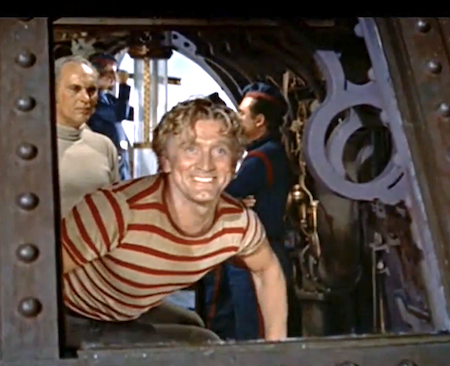
3. 20,000 Leagues Under the Sea. For some reason, I watched this in class as an adolescent. (What exactly was the purpose of that unit?) I wasn’t into classic films then, and was skeptical about the movie’s cheesy premise. But in the center of this silly, over-dramatic film leapt Kirk Douglas. Who IS this guy? I thought, shocked by the actor’s joyous energy, cockiness, and sheer confidence. It’s probably also the first time I realized a classic film star could be very sexy. It obviously wasn’t the last.

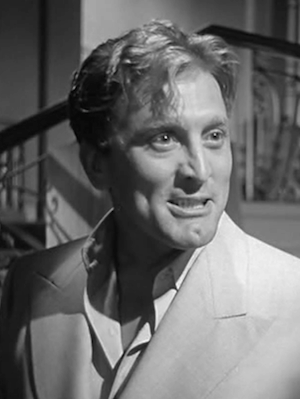
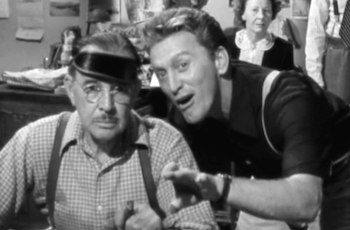
2. The Bad and the Beautiful. What a perfect casting decision, to have Douglas play the sadistic, yet gifted producer who lures others to bad fates because he cares more about his art than treating his cast humanely.

Observe the way his three victims lean in to hear his new film idea, despite his previous treatment of them.

Of course they would, with Douglas’s talent and magnetism at full wattage in the role. Even the nicest characters Douglas ever played had an edge, but in this part, Douglas revealed his skill in capturing the cruelty of a ruthless man.

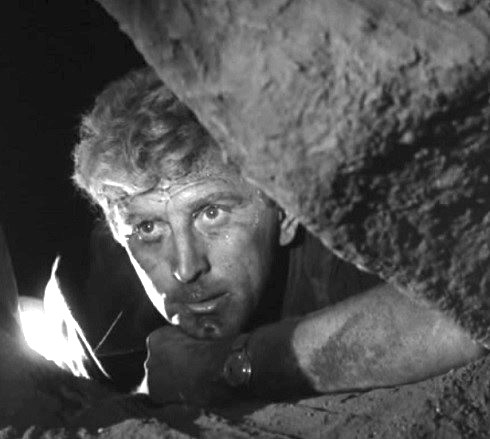
1. Ace in the Hole. What a brilliant performance as the reporter who risks a man’s life to get a big story! After watching Douglas in action, it was hard to get behind any other actor playing an ambitious reporter. Who else could show that flashing excitement about a story, that single-minded intent? And what other actor could be convincing enough to make audiences believe that one unscrupulous man could persuade a community of sensible people to make such a dangerous mistake?

Douglas owns this film. Thanks to his perfect performance, he gives Billy Wilder’s dark satire the resonance it deserved. The film is one of the greatest of its era, and is so eerily prescient it can be difficult to watch. It wouldn’t have had nearly the power it does with a different actor.

I know others would argue for Spartacus, another of his momentous roles, and certainly one that showcased Douglas’s impressive physicality. But these three were the roles that fixed me to the screen, unable to turn away.

I know there’s much more to say about the actor, particularly his part in ending the blacklist. But today I just want to say how grateful I am for his powerhouse presence onscreen. I always felt if I would just reach forward, he’d jump out to join me in my living room, that sexiest and most riveting of classic actors. No wonder it’s so hard to let him go.

Share
Posted in: 1950s films, Uncategorized Tagged: Ace in the Hole, best classic actors, Kirk Douglas, magnetic actors, The Bad and the Beautiful

The Gender Gap in Film

02/05/2020 by leah@carygrantwonteatyou.com Leave a Comment

Check out these two articles, both of which show the gap between awards for women and men in the Oscars over time in visual format.

“The Oscars’ 92-year gender gap, visualised”

“Maybe Those Are Just the Best Movies This Year”: #WhiteMan’s Oscar in Context.”

The Guardian‘s statistic about the lack of awards for female cinematographers was particularly illuminating.

In addition to showing what female-driven films could have been honored but weren’t over the years, Relatively Entertaining covers the diversity of voices in film, how we’ve regressed since a high point in the 40s in honoring women’s stories–even if told by men. The post also highlights how seldom black actresses are repeatedly honored for their work: “For that matter, it’s a strange quirk of Oscar that of the 35 times a black woman has received acting Oscar nomination, only three (Whoopi Goldberg, Viola Davis and Octavia Spencer) have been nominated more than once, and only Spencer has been nominated after winning her award.”

I wonder how long Academy voters could sustain the fiction that women’s films just haven’t been good enough yet to get awards after viewing the articles’ startling graphics. I wonder if the lack of repeat nominations for women (and women of color in particular) will finally bring home just how much has to change.

Share
Posted in: 1920s films, 1930s films, 1940s films, 1950s films, 1960s films, 1970s films, Feminism, Oscars, Uncategorized Tagged: black women and the Oscars, gender gap, representation in film

The Academy Loves Directors Who Play It Safe

02/03/2020 by leah@carygrantwonteatyou.com 2 Comments

I watched Marriage Story with excitement. I’ve been following Noah Baumbach’s career since Kicking and Screaming (1995), a hilarious movie about East Coast college men’s arrested development and how their romantic immaturity interferes with their happiness.

The déjà vu happened immediately: This new, supposedly innovative film was about a New Yorker’s arrested development and how his romantic immaturity interferes with his happiness.

Sigh.

Had I seen growth in the treatment of this subject matter, I wouldn’t have been so troubled, but the earlier film, though rough around the edges, was twice as entertaining and unique as Marriage Story, which felt like a weak combination of Baumbach’s old themes and Kramer versus Kramer. Yet the Academy awarded Baumbach for this water treading with a Best Picture nod. They then gave a Supporting Actress nom to Laura Dern for the worst caricature of a woman I’ve seen outside of an action flick in years, a Rush Limbaugh characterization of a female divorce lawyer if ever I saw one. That nod alone says a lot about Academy voters.

This worrying backward movement extended to The Irishman as well. Academy voters rewarded Martin Scorsese for returning to mob territory, even though he made no attempt to switch the perspective away from the mobsters, or to include one female character whose personality existed outside of men’s treatment of her. True, there are some changes—he replaced the flashy narrator of Goodfellas with a quiet, suffering cog, who supposedly played a pivotal role in Hoffa’s death in real life as well as in the film. Only he didn’t: his involvement in Hoffa’s death was a fabrication, which was the most interesting thing about him. What would cause a man to lie about such a thing, knowing his family would condemn him for it? THAT’s a topic for a movie! Instead the film presents his lie as true; the plot focuses on how the hero has gotten himself caught up in this miserable mob life, which is a story line expressed in a much more interesting way in Goodfellas.

Now let’s turn to Quentin Tarantino. His material is always imaginative, violent, unique. His films are exciting to watch, but typically, he treats his characters as paper dolls rather than humans. In Jackie Brown, he turned down his jets and humanized his middle-aged hero and heroine. He gave them regrets and nostalgia, which imbued that film with insight as well as style. For the adolescent Tarantino, that’s some serious growth. So why is anyone impressed with his depiction of Sharon Tate as a wide-eyed viewer of her own movies, a woman who loves nothing more than sexy dancing at the Playboy Mansion, who throws her hair flowing behind her before riding in an open-topped car?* Why, in a film about opportunity cut short, pretend that Tate’s real opportunity loss was that of continuing to be a schoolboy’s fantasy, and not a mature mother? Do we honestly find it good storytelling to continue to pretend that the sexual playground of the 60s was so very fun for the women who didn’t have the biological option of being so carefree?

I don’t know how we can expect male directors (let alone female, who have so few opportunities) to be innovative, to embrace perspectives beyond their own, when they’re rewarded with nominations for circling and re-circling the same tired subject matter and stereotyped characterizations while their finer, fresher films go unnoticed.

This year Clint Eastwood was the director with a real breakthrough. His career was founded on celebrating renegade men with authority. To have him suddenly turn the tables on that legacy in Richard Jewell was groundbreaking. What happens, he asks in the film, if the man who grew up revering lawmen as heroes is suddenly victimized by them? In other words, Jewell could have been, probably was, a fan of Dirty Harry—and that very love destroyed his life. For all this talk of the Oscars and male rage, the real-life Richard Jewell EARNED his rage, and yet his film, the most interesting exploration of white male anger this year, was left out of the running.

Usually, I dislike Eastwood’s films, finding his sexist heroes annoying and his overwrought storytelling verging on silly. But in Richard Jewell, Eastwood even toned down his considerable love for melodrama and sky-high messaging. The result is a brilliant, affecting, subtle film. (One scene—Kathy Bates sadly rubbing her Tupperware after a police warrant destroys it—is more affecting than almost every moment in the Oscar-nominated films; the diner scene beats them all.) This is what great filmmakers do: they surprise us with what they have to say about life, with technical and storytelling techniques that have some kind of direction or point beyond divorce sucks or mobsters’ lives are bad.

I enjoyed all of the Oscar-nominated films I’ve seen, but I’ve been disappointed in most of them as well. With this kind of talent, why play it so safe? Why not fully humanize Tate, as Tarantino did the fictional Jackie Brown? Greta Gerwig didn’t play it safe; she tampered with a beloved story and came up with something truer to Louisa May Alcott’s vision and intent than any previous cinematic version of Little Women. (If you don’t think that’s risky, you haven’t met any fans of classic novels.)

What if Scorsese had called into question his own legacy of celebrating violent men, as Eastwood did with lawmen? What a brilliant film The Irishman could have been!

Unfortunately, there’s an answer to why these directors didn’t make their films more innovative, nuanced, surprising—especially Scorsese. He knew his Academy too well. He anticipated what would happen to Gerwig, to Eastwood. (Only directors the Academy doesn’t know are allowed to take those types of chances.) So he put his head down and gave the voters what they wanted of him, same-old, same-old. And he got his nomination.

*I think we all know from Bridget Jones how well that turns out, but not in Tarantino’s world, where all sexy women can throw their hair back without any falling into their eyes.
Share
Posted in: 1990-current films, Oscars, Uncategorized Tagged: #whitemalerage, Clint Eastwood, Greta Gerwig, Martin Scorsese, Noah Baumbach, Oscars for playing it safe, Quentin Tarantino

Richard Jewell’s Awful Snub…and Other Golden Globe Gaffes

12/27/2019 by leah@carygrantwonteatyou.com 7 Comments


Richard Jewell is taking a hit at the box office, due in large part to an angry campaign by the Atlanta newspaper who employed reporter Kathy Scruggs, the real-life journalist in the film who broke the story that Jewell was a suspect in the Olympic bombing. I agree that besmirching a real person—in this case, suggesting that Scruggs traded sex for information—is unacceptable. But it’s hard not to see the hypocrisy here, as the paper who helped destroy Jewell’s life is besmirching a belated tribute to his character.

I watched this film with reluctance. I worried about supporting it after reading about its treatment of Scruggs. I dislike Clint Eastwood and most of the films he directs, which I find heavy handed and troubling in their messaging. But after all, this film was about Jewell, and I admired Eastwood’s choice to tell his story.

To my surprise, I barely noticed the reporter’s sex favor scene (which I would have assumed to be Hollywood exaggeration anyway, had I read nothing beforehand). I wish the reviews had focused instead on Scrugg’s quiet regret in the film when she discovers the impossibility of Jewell’s involvement in the bombing. The real-life Scruggs didn’t do anything that unusual: reporting that Jewell was a suspect before investigating the likelihood of his guilt or the bias of her source/s. She serves as a stand-in for any reporter rushing to get the story out; that rush carries with it significant risk to others, as any viewer of Absence of Malice (or really, anyone who has lived through the twentieth century) will remember.

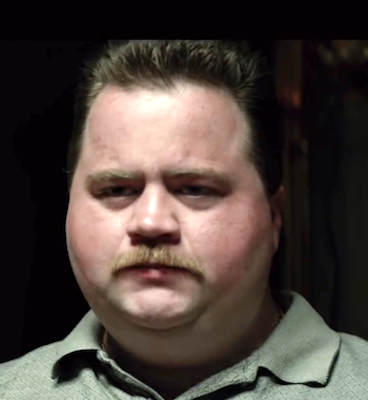
Used to Eastwood’s usual loud themes, I was struck by this movie’s quiet grace. It’s a rare film, one that relies on understated eloquence, realistic performances, and a stirring portrayal by Paul Walter Hauser. The film slowly reveals how Jewell’s admiration for authority helped contribute to his undoing. Hauser’s performance is nuanced, powerful, and ultimately heartbreaking. While at first, we viewers wonder if he’s simply a dupe, we soon discover he’s more self-aware than he seems, and the betrayal he feels at his idols treating him as a terrorist—even after they know better—is devastating. The way society (led by the media) went along with this faulty judgment—generalizing him as an overweight, friendless guy living with his mom, and therefore sketchy—didn’t even jibe with his real-life actions or social personality. I read a number of articles after watching the film and was struck by the accuracy of the movie’s characterizations and storytelling. The Scruggs sex claim (which apparently was also in the book that was the film’s source) was an anomaly in a film that otherwise hewed surprisingly close to the true events and characters, including Scrugg’s.

The skill of the man portraying Jewell isn’t being touted, any more than the film is. Why nominate someone who is playing an everyman, real-life hero with pitch-perfect realism and heart, when you can nominate folks playing popes or super-villains? Why pay attention to an actor who has played minor roles when you can celebrate the movie stars you always celebrate? He may have made an impression as an exceedingly dumb criminal in I, Tonya, but Hauser barely registered in Late Night, given the stereotypical nature of his role, and he lacks the glamour of the well-known figures who were nominated. So no one will say anything when you leave him off your nomination roster, right, HFPA? Sigh.

I would have given nods to Eastwood, the film, Hauser, Sam Rockwell (charming and very likable here), and the always-wonderful Kathy Bates, but only the latter has received any credit from the Hollywood Foreign Press Association. I could see the organization thinking the film too controversial and backing away from it, but that doesn’t explain all the nods for The Irishman, which is based on the confessions of a man whose claims have been universally condemned as false by mob authorities-–and by logic. I guess the nominators thought real-life mobsters and teamsters didn’t deserve fair treatment. Or that entertainment was a good value in a film, a bar The Irishman clearly failed to meet. (Only Al Pacino succeeded in stifling my snores during that tedious endurance test.) And it’s hard to believe an association who yet again nominated no female film directors had concerns about a faulty portrayal of a woman in Richard Jewell.

Alas, the Hollywood Foreign Press seems to be on a roll this year in dismissing creative content and good acting. There are the shut-outs of The Good Place and Schitt’s Creek and the group’s admiration for the bland The Kominsky Method. The gutting, visceral When They See Us and its director and largely unknown actors are ignored, but superstar Jennifer Lopez gets a nod. Killing Eve was very weak this year, but it and the star-laden Big Little Lies (which I couldn’t even get through this season) are up on their nomination lists, while Veep is ignored for its weakest season (which is still better than these shows’ best). At least Unbelievable is getting its due.

I hope that some of you will ignore the nominators’ seriously questionable taste and celebrity pandering, and watch Richard Jewell. After viewing it, I stayed in the theater’s tight seats as others filed out, taking it in. I kept thinking of another favorite film, Searching for Bobby Fischer, and how its subtle messages stayed with me for years to come. I kept pondering the dangers of small assumptions, and how pernicious they could become. I wondered what kind of faith could sustain what Jewell had gone through. I looked at my sister, another disliker of Eastwood’s, who was also failing to stir; she was as surprised and moved as I was. 

I don’t think these kinds of films often get much credit, even when they lack controversy. They’re not splashy enough. They don’t involve mob hits or distinctive villains; they don’t feature many actors who look like supermodels. But they stick to you, change you, sometimes make you wiser than you were before. I regret every minute I put into The Irishman. I am ready to watch Richard Jewell again and again, if only to bring others along.  

Share
Posted in: 1990-current films, Oscars, Uncategorized Tagged: Richard Jewell, snubs, The Irishman

Classic Film’s Damsels in Distress

10/28/2019 by leah@carygrantwonteatyou.com Leave a Comment

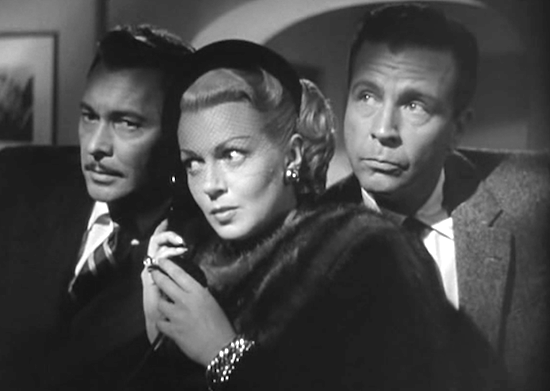
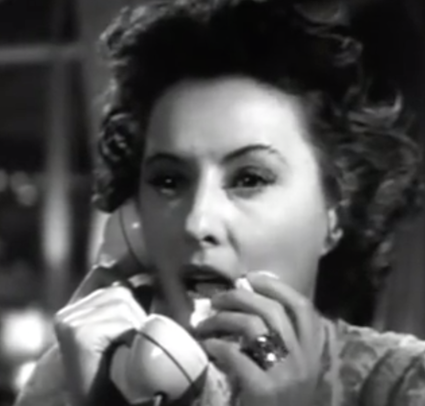
My friend Grace Collins of True Stories of Tinseltown and I chat about women in peril in classic films, including the riveting thriller Gaslight; the Barbara Stanwyck showcase Sorry, Wrong Number; and the tonally inconsistent, oddball Nazi-hunter film, The Stranger. And of course, the weeper, Waterloo Bridge. We had so much fun talking about heroines who are having no fun at all–especially Mary (Loretta Young in The Stranger), whose affection for her mate is truly baffling.

Check out the podcast on her site and on podbean.

Enjoy Grace’s other wonderful posts and podcasts on her sites or check out her Facebook page for more. Her summer series on famous blondes in film is fabulous, especially the one on Mae West.

Share
Posted in: 1930s films, 1940s films, Film Noir/Crime/Thriller & Mystery, Humor, Uncategorized Tagged: Waterloo Bridge; Sorry, Wrong Number; Gaslight; The Stranger

Rebecca Got a Bad Rep

06/29/2019 by leah@carygrantwonteatyou.com 8 Comments

**Spoilers abound**

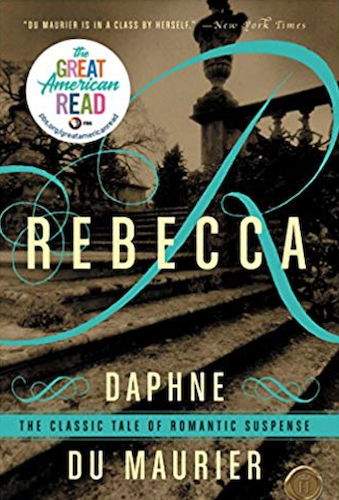
Of all the femme fatales on film and in print, Rebecca may top them all. The woman isn’t even alive at the start of the book or the Hitchcock film that resulted from it, yet the narrator of the story is so haunted by her husband’s previous wife (and Du Maurier is so skilled at freaking readers out) that Rebecca’s reputation as the evil femme fatale endures.

But when we look at Rebecca’s life a little closer, it’s hard to ignore just how much of our impressions of this woman are based on her former husband’s hatred and his second wife’s jealousy. Although I was totally with the narrator in fearing and loathing Rebecca on my first reading of Daphne Du Maurier’s classic gothic novel/thriller/mystery, my opinion of Rebecca has radically shifted in time, and the blame moved from her to the much more questionable Max de Winter.

Since the film sanitizes the hero due to the Production Code, I’m sticking with the book as I ask all of you Du Maurier lovers this question: Who is worse, Rebecca or her husband Max?

Let’s count it down trait by trait, shall we?

Behavior toward Friends & Acquaintances. Rebecca. Tries to suit others’ moods and appeal to their interests—this according to her detractor, Max. Everyone loves her, Maxim admits, including all of her employees. He claims she is fake, a backstabber. It’s easy to discount the tales of her insincerity altogether, given those blunt admissions to Max at the start of their marriage and his own dubious motives in smearing her. But we do hear Ben describing her cruelty toward him, a serious count against her.

Max: Rude to and arrogant toward: his sister, his brother-in-law, attorneys, party guests, servants, Mrs. Van Hopper, his second wife. He does seem to usually treat Frank well, and perhaps the dog. He expects to be thought above the law despite his suspicious actions and has no compunction about the boat maker’s profit losses thanks to his lies. Why? Presumably his class and status.

Personality Points: Rebecca 1; Max 0
Villain Points: Max 1; Rebecca 1

Social Skills. Max is the very definition of prim, spending his days abstaining from most people and food (while strangely expecting an untouched feast on a daily basis). And, there’s that slight issue with his temper and moods. Good company? I think not.

Rebecca’s style intimidates the narrator; she has garnered Manderley fame with her exquisite taste and the elegance, creativity, and humor she exhibits as a hostess. Even the “R” of her name is written with panache.

Personality Points: Rebecca: 1; Max: 0

Treatment of Spouse. Let’s admit from the start that these two are hardly an altruistic pair. A tight race!
Max: Wife 1. Marries Rebecca without loving her but planning to be faithful. Keeps the secret of her affairs, but for his own pride. Does tolerate her behavior within limits. (It was a different age.) Seemingly polite to her in public but based on his general actions (see above), I’m guessing she needed to find affection elsewhere. Wife 2. Marries the narrator because she’s chaste and has no relatives (Mrs. Van Hopper isn’t far wrong there). Shows little passion for her, most of that passion being extended to his house. Treats her like a daughter/servant/enemy, depending on the day. Marries her knowing that his limelight-averse spouse will be destroyed if his crime is revealed and the scandal rags come a-knocking while her protector is in jail. Exposes her to Mrs. Danvers, the suicide pusher.

Rebecca: Marries Max for his money and status, planning to cheat on him from the start and admitting as much. Seemingly has multiple affairs. Apparently enjoys some “unspeakable” behavior (though given prim Max’s ways, I’m guessing we’re not talking Roman orgies). May, if the love of Mrs. Danvers is any indication, indulge in affairs with women as well as men, which in this time period would have harmed her husband’s reputation. Shaming her husband with alcohol and drug consumption? Perhaps in private. Meanwhile, spends her days being delightful to all and making his treasured house the talk of the country.

I’m going to leave out Max’s crime for this one, as it deserves its own category. But in terms of behavior up to their final night together, Rebecca’s is worse since Max’s biggest fear is public shame, and she doesn’t seem to care much that he’s a bore and has no fidelity impulses/regard for his pride whatsoever. However, his behavior to his second wife is appalling.

Villain Points: Rebecca 1; Max 1

The Murder. Max shot his wife because she suggested she might be pregnant with another man’s baby. Max demonizes her, calling her not even “human,” to (a) justify his action, (b) keep his wife’s love, and (c) be considered a civilized member of society. The narrator, so pleased he didn’t ever love Rebecca, actually goes along with his version of events, even though he’s not exactly trustworthy because he’s a killer who murdered his last wife, idiot. RUN!!!!

Rebecca. Enjoys her husband’s distress at her infidelity and taunts him. He now says she wanted him to kill her (given her health). Kinda convenient, right?

Personality Points: Rebecca, 1—some considerable moxie revealed in this last fight; Max, 0. Villain Points: Max, a gazillion; Rebecca, 0.

And the Verdict Is….
Personality Points: Rebecca 3; Max 0
Villain Points: Max, a gazillion and 2; Rebecca, 1.

Like I said, Rebecca might not be an angel, but a femme fatale? Not so much. And is Max, the cold-blooded murderer and awful husband a homme fatale? You better believe it.

This post is part of the Calls of Cornwall blogathon by Pale Writer on Du Maurier’s work. Check out the other entries!

Share
Posted in: 1940s films, Blogathons, Feminism, Femme fatales, Film Noir/Crime/Thriller & Mystery, Humor, Romance (films), Uncategorized Tagged: Daphne du Maurier, femme fatales, Max de Winter, Rebecca, romances, thrillers, unfair reputation, unnamed narrator

Getting Nosy about Mae & Cary

06/06/2019 by leah@carygrantwonteatyou.com Leave a Comment

Grace Collins of True Stories of Tinseltown and I chat about two stars who created the personas that made them stars, and never let those personas slip. We’re not nosy about ALL Hollywood stars’ lives, but that kind of inventive commitment is worth talking about! As usual, the two of us had a lot of fun, and Grace is a great host. (I might get a bit too enthusiastic, but in my defense, I was then reading Goodness Had Nothing to Do with It.)

Check out the podcast here or here or here.

Enjoy Grace’s other wonderful posts and podcasts on her sites or check out her Facebook page for more.

Share
Posted in: 1930s films, 1940s films, 1950s films, 1960s films, 1970s films, Mae West Moments, Uncategorized Tagged: bios, Cary Grant, fan tributes, life stories, Mae West

Doris Day and the Reaction Shot

05/13/2019 by leah@carygrantwonteatyou.com 4 Comments

Today a man I know well surprised me, and I could tell I had one of those hilariously odd expressions on my face in response. When I heard a couple hours later that Doris Day had died, it seemed to me that I’d inadvertently paid tribute to that marvelous, strong, very funny woman. There will never be anyone who has a more entertaining or endearing response to male oddities than Doris Day. So today I want to say how lucky we are–among many, many gifts she gave us–for the hilarious reaction shots only she could deliver. Whether disdainful, amused, outraged–or best of all, all three–Day’s expression just nailed a sentiment….And so today, Doris, this feminist sends her heartfelt thank you. I couldn’t have said it better.

Share
Posted in: 1950s films, Comedies (film), Feminism, Humor, Musicals and dancing films, Uncategorized Tagged: death, Doris Day, tribute
« Previous 1 2 3 4 5 6 Next »

Recent Posts

  • 100 Years Later, Still Scary: Dr. Caligari
  • Escaping Out of the Past (1947)
  • A Weeper for Those Who Love Jerks
  • Thank You, Academy, for Not Infuriating Me
  • Challengers (2024) Is a Bad Movie

Subscribe to Blog via Email

Enter your email address to subscribe to this blog and receive notifications of new posts by email.

Categories

  • 1920s films
  • 1930s films
  • 1940s films
  • 1950s films
  • 1960s films
  • 1970s films
  • 1980s films
  • 1990-current films
  • 2020s films
  • Action & Sports Films
  • Anti-Romance films
  • Blogathons
  • Childfree
  • Comedies (film)
  • Drama (film)
  • Feminism
  • Femme fatales
  • Film Noir/Crime/Thriller & Mystery
  • Gloriously Silly Scenes
  • Horror
  • Humor
  • Mae West Moments
  • Musicals and dancing films
  • Oscars
  • Random
  • Romance (films)
  • Romantic Comedies (film)
  • The Moment I Fell for
  • Turn My Sister into Classic Movie Fan
  • TV & Pop Culture
  • Uncategorized
Share
Classic Movie Blog Hub Member

Recent Comments

  • leah@carygrantwonteatyou.com on Meg Ryan’s Fate Foretold in Joe Versus the Volcano
  • Ryan on Meg Ryan’s Fate Foretold in Joe Versus the Volcano
  • leah@carygrantwonteatyou.com on 100 Years Later, Still Scary: Dr. Caligari
  • The Classic Movie Muse on 100 Years Later, Still Scary: Dr. Caligari
  • leah@carygrantwonteatyou.com on 100 Years Later, Still Scary: Dr. Caligari

Archives

  • November 2025
  • September 2025
  • May 2025
  • March 2025
  • January 2025
  • November 2024
  • August 2024
  • July 2024
  • May 2024
  • March 2024
  • February 2024
  • December 2023
  • November 2023
  • October 2023
  • September 2023
  • August 2023
  • July 2023
  • May 2023
  • April 2023
  • March 2023
  • January 2023
  • December 2022
  • November 2022
  • September 2022
  • July 2022
  • May 2022
  • April 2022
  • March 2022
  • February 2022
  • October 2021
  • September 2021
  • April 2021
  • March 2021
  • February 2021
  • December 2020
  • October 2020
  • September 2020
  • July 2020
  • May 2020
  • April 2020
  • March 2020
  • February 2020
  • December 2019
  • October 2019
  • September 2019
  • June 2019
  • May 2019
  • April 2019
  • February 2019
  • January 2019
  • November 2018
  • September 2018
  • July 2018
  • June 2018
  • May 2018
  • April 2018
  • March 2018
  • February 2018
  • January 2018
  • November 2017
  • September 2017
  • August 2017
  • July 2017
  • June 2017
  • May 2017
  • April 2017
  • March 2017
  • February 2017
  • January 2017
  • December 2016
  • November 2016
  • October 2016
  • August 2016
  • July 2016
  • June 2016
  • May 2016
  • April 2016
  • March 2016
  • February 2016
  • January 2016
  • December 2015
  • November 2015
  • October 2015
  • September 2015
  • August 2015
  • July 2015
  • June 2015
  • May 2015
  • April 2015
  • March 2015
  • February 2015
  • January 2015
  • December 2014
  • November 2014
  • October 2014
  • September 2014
  • August 2014
  • July 2014
  • June 2014
  • May 2014
  • April 2014
  • March 2014
  • February 2014
  • January 2014

Meta

  • Log in
  • Entries feed
  • Comments feed
  • WordPress.org

Copyright © 2025 Cary Grant Won't Eat You.

Church WordPress Theme by themehall.com