Cary Grant Won't Eat You

Classic movies for phobics

  • About
  • eBooks
  • Previous Blogathons
Classic movies for phobics

TV & Pop Culture

3 Characters I’d Like to Celebrate St. Patrick’s with

03/12/2015 by leah@carygrantwonteatyou.com 2 Comments

The Hero of The Adventures of Robin Hood (1938)

ErrolFlynn-RobinHood
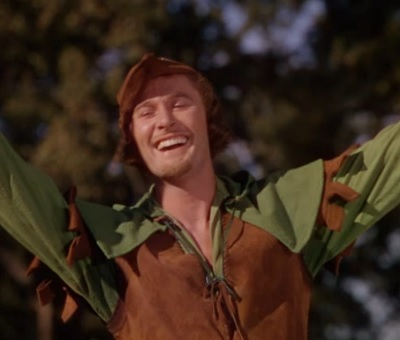
While watching Errol Flynn play Robin Hood, you get the feeling he knows how ridiculous he looks in those green tights. But instead of embarrassing, his outfit energizes him. You can almost hear him thinking, “Well, the manliness contest is lost. Let’s party!” The whole cast seems to share his giddiness, making this one of the most entertaining movies I’ve seen in some time. Who wouldn’t want to spend the green holiday with someone this easygoing and gorgeous?

(It’s easy to trace the film’s influence on an early favorite of mine, The Princess Bride, not to mention the parody Robin Hood: Men in Tights. Neither movie captures Flynn’s delirious enthusiasm, but that same sly humor is on full display in both, with Cary Elwes a worthy heir to his predecessor’s effortless style.)

The Heroine of Sadie Thompson (1928)

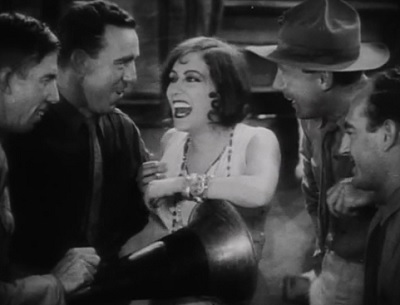
SadieThompson-Swansongroup
Sadie (Gloria Swanson) likes to pull pranks, tell dirty jokes, sing, dance, and most of all, laugh. The rarity of female attention partially explains the marines’ enthusiasm for her company in the story, but that’s not the only reason she attracts them. This woman is just so much fun. Like many supposedly “fallen women” in film, she has an easy camaraderie with others, is just as good a pal as a lover. And her confidence (until it’s shaken by the film’s villain) is breathtaking.

Nick & Nora Charles

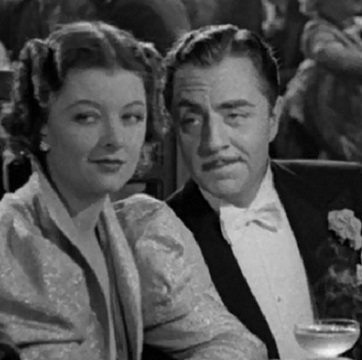
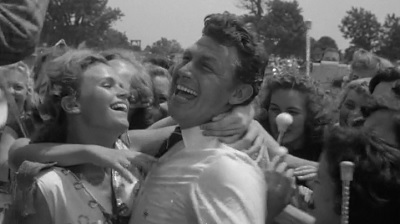
NickandNoraCharles-Partying
Nick Charles (William Powell) of The Thin Man series is the life of the party, without making any effort to be so.  He is cool, debonair, sarcastic, with just the right smidgen of childish to never take anything seriously but his partying. His wife Nora (Myrna Loy) is the perfect hostess. Obnoxious visitors entertain rather than annoy her. Party crashers are welcome. She calls room service to deliver “a flock of sandwiches” for her intoxicated guests, hands newcomers a drink before they’ve even gotten into the room. When asked if Nick is working a case, Nora responds, “Yes…A case of scotch. Pitch in and help him.”  Could any line sound more like St. Paddy’s Day than that?

Share
Posted in: 1920s films, 1930s films, 1940s films, Comedies (film), Drama (film), Humor, TV & Pop Culture Tagged: Carl Elwes, Errol Flynn, Nora Charles, Robin Hood, Sadie Thompson, St. Patrick's Day movies

4 Movies Downton Abbey’s Lady Mary Would Watch

03/01/2015 by leah@carygrantwonteatyou.com Leave a Comment

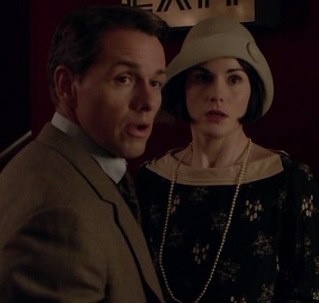
LadyMaryandCharlesBlake
It’s 1924 at Downton Abbey. We’ve just seen Lady Mary (Michelle Dockery) canoodling with one guy in a London theater (Charles Blake) to ward off another (Lord Gillingham) who had mistaken intimacy for love. Mary barely protested when forced to leave Beau Brummel early to disenchant Gillingham. But here are four films out that year that might have distracted the vixen from her flirtations, at least temporarily…

The Marriage Circle

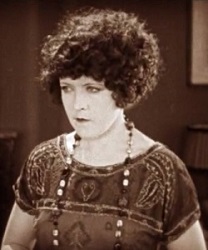
The MarriageCircle
Mizzi (Marie Prevost), a dissatisfied wife, plots to seduce her friend’s husband. And that’s just the beginning of the marital and extramarital scheming in Ernst Lubitsch’s classic comedy of manners. Mizzi could give Lady Mary tips on undermining her frenemy Mabel Lane Fox’s attractions. (The daring Lubitsch would obviously become Mary’s favorite director; two of my four are his films.)

Her Night of Romance

HerNightofRomance
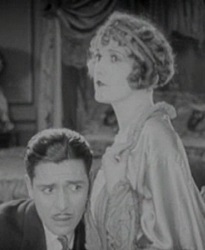
Dorothy (Constance Talmadge) winds up with a guy she barely knows (Ronald Colman) in her bedroom, and goes to extreme measures to protect her reputation. Sound familiar, Lady Mary?

Monsieur Beaucaire
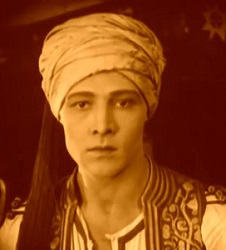
Mary likes the pretty boys, and she couldn’t have missed heartthrob Rudolph Valentino starring in The Sheik three years before.

RudolphValentino-TheSheik
With Valentino featured AND a character named Lady Mary, Monsieur Beaucaire would lure the Downton heroine to the theater, even though her namesake in the film has too much pride to hold onto the guy (I have no illusions Mary would recognize the similarities).

Forbidden Paradise
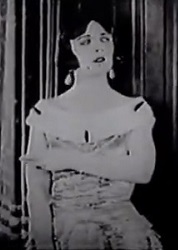
Lady Mary has been subjected to Russian refugees she doesn’t care to meet, but a powerful czarina in full control of her posse of lovers? That could give Mary some interest in international politics.

Pola Negri, in her best Lady Mary pose

Pola Negri, in a Lady Mary pose

Maybe the film would even grant Mary some insight into her grandma’s (the Dowager Countess’s) almost-fling. Here’s hoping.

There you have it. Four films with enough skin, calculation, and female triumph to please the headstrong Lady Mary, maybe even give her some ideas for next season…

Share
Posted in: 1920s films, Drama (film), Feminism, Humor, Romance (films), Romantic Comedies (film), TV & Pop Culture Tagged: 1924 films, Charles Blake kiss, Downton Abbey, Downton Season 6, Film, finale, Kemal Pamuk, Lady Mary

Why the John Goodman Oscar Snubs?

02/09/2015 by leah@carygrantwonteatyou.com 16 Comments

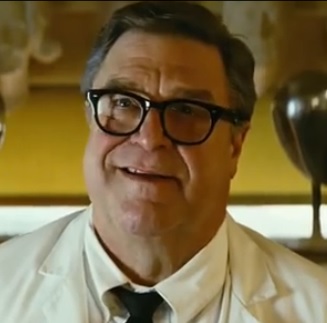
BigLebowski-Walter-Goodman
This post is part of the 31 Days of Oscar blogathon. I’m taking part in the Oscar Snubs segment, hosted by Once Upon a Screen! There are so many amazing posts. Check them out here. Also see Paula’s Cinema Club & Outspoken & Freckled for the other great Oscar topics.

I’m rarely puzzled by an actor failing to win an Oscar. The competition is steep, the Academy biases evident, and the campaigning too embarrassing for some well-respected professionals to attempt. But for an actor not to be nominated when he regularly appears in critically acclaimed movies (and presumably played a role in their success) is surprising. With over two decades of fine performances to his name, John Goodman has yet to receive a single Oscar nod.

He is a regular in Coen brothers’ films, and thus would presumably take on the shimmer of those critical darlings. How’s this for a partial list of acting credits?: Inside Llewyn Davis (2013), O Brother, Where Art Thou? (2000), The Big Lebowski (1998), The Hudsucker Proxy (1994) (voice only), Barton Fink (1991), and Raising Arizona (1987).

For two years in a row, Goodman acted in the Oscar-winning film: Argo (2012) and The Artist (2011). In 2011, in fact, he performed in two Oscar-nominated films, playing the doorman in Extremely Loud & Incredibly Close as well as the executive in The Artist. While his roles in the other two might not have been significant enough for Academy Award consideration, his performance in Argo certainly was.

John Goodman-Argo
Goodman won a Golden Globe for playing Dan Conner on Roseanne (1988-97) and an Emmy for his guest performance in Studio 60 on the Sunset Strip. He’s won other honors, including, of course, for comedy, but the most prestigious have been ensemble awards. His only Golden Globe-nominated film performance was for Barton Fink.

I have to ask: Why?

Is His Acting Not Good Enough?
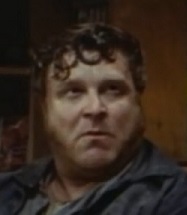
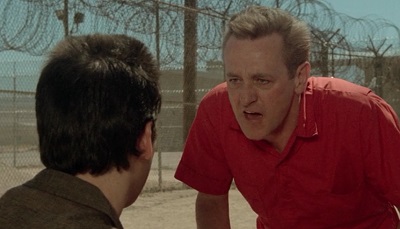
The easiest answer is that he’s simply not skilled enough to win. I guess that’s possible, even though I find it tough to believe any other actor could have so memorably captured Walter Sobchak in The Big Lebowski, or the oddest hotel guest ever in Barton Fink. Even in small roles his impact is felt. I can’t stop laughing when I think about his performance as an escaped convict in Raising Arizona, especially when he gets into his never-leave-a-man-behind diatribe.

RaisingArizona-Goodman-1
And with all of Hollywood to choose from, why would the gifted Coen brothers continue to cast Goodman if they didn’t find him talented? While the directing duo features the same actors in many of their films, I think only Joel Coen’s wife makes more showings than Goodman. (John Turturro, also beloved by the brothers, has been in four of their movies to Goodman’s six.)

Are His Roles Not Sufficiently Challenging?
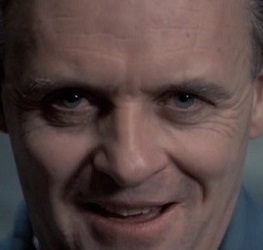
Goodman fits well into a number of stereotypical roles, especially the kind of good ol’ boy he plays in Alpha House. He clearly plays these with ease. But he enjoys eccentric characters too, as so many of his Coen brothers movies prove. The Academy seems to love larger-than-life characters. Anthony Hopkins and Daniel Day-Lewis have been honored for roles that bear no resemblance to actual human beings. Does anyone believe there was ever a man like those Day-Lewis played in Gangs of New York or There Will Be Blood? In what world is Hannibal Lecter anything but a caricature?

Lecter
Goodman’s oddball and sometimes sinister characters, in contrast, are typically very believable, especially Walter in The Big Lebowski. Is it easy to make a person who is comically bizarre come off as realistic?

RaisingArizona
I don’t think it is, nor do I believe the much-loved Day-Lewis has pulled off this feat nearly as often as Goodman has (admittedly, the latter’s role in O Brother also never gets beyond myth).

In terms of understated performances, which I typically think more deserving of honors, Goodman isn’t always given enough play time for the kind of nuanced and subtle acting we saw in Roseanne, and he doesn’t seem to demand meatier roles when he could. I’d like to see him attempt these types of parts more than he does. If only such understated roles were honored, Goodman being bypassed by the Academy would make sense given the number of his quirky parts. But that’s not the case. Oscars would otherwise never have been given to Day-Lewis for There Will Be Blood or Hopkins for The Silence of the Lambs.

Is It the Usual Reason—No Love for Comedians?
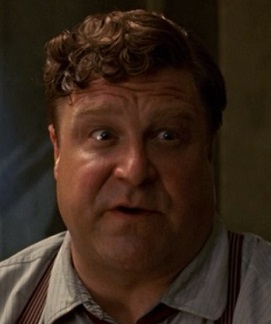
Those of you who’ve read my blog for a while know that I regularly take the Academy to task for their lack of appreciation for comedic performances and scripts (Harold Ramis, Steve Martin, Ralph Fiennes). While Goodman has often starred in dramas, even his more serious roles are usually punctuated with humor. And with a face as expressive as this one, why would he neglect the opportunity to make us laugh?

BartonFink-Goodman
The Academy’s dismissal of comedy could explain how often Goodman is never even discussed—much less chosen—when it comes to nominations.

Could It Be the TV Curse?
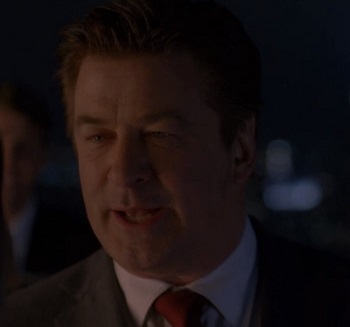
In the new golden age of TV, actors can move from big screen to television and back again without losing their star status—as long as that show is on cable. Network television still retains its low status. (Doubt me? Check out which shows win most Emmys for drama.) Whatever his other accomplishments, Goodman will always be known as Roseanne’s Dan Conner. He starred too long on a hit show—and performed too well—for it to be otherwise. While we see the rare exception—J.K. Simmons’s Oscar nomination this year, for example—most network television stars never get much credit once they turn to film. I can’t explain this trend nearly as fluently as Jack Donaghy (Alec Baldwin) does in 30 Rock.

Jackexplains30Rock
Jack is advising Tracy Jordan (Tracy Morgan) on how to tank his acting career. In the NBC TV show’s typical self-referential fashion, Baldwin is actually describing his own life:

“Do TV. No one will ever take you seriously again. Doesn’t matter how big a movie star you are, even if you have the kind of career where you walked away from a blockbuster franchise or worked with Meryl Streep or Anthony Hopkins. Made important movies about things like civil rights or Pearl Harbor. Stole films with supporting roles and then turned around and blew them away on Broadway. None of that will matter once you do television. You can win every award in sight, be the biggest thing on the small screen, and you’ll still get laughed out of the Vanity Fair Oscar party by Greg Kinnear….You wanted to hit rock bottom again? Go on network television.”

Could this trend explain Goodman’s snubs?

Is He Discounted Due to His Choices—and Costars?
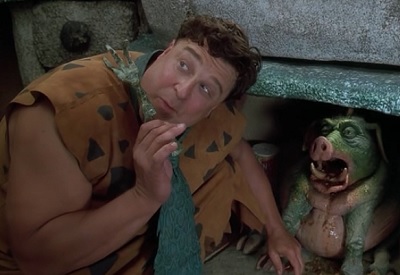
Perhaps no number of outstanding performances can make the Academy forget this role:

JohnGoodman-Flintstones
Or the fact that he starred with Roseanne Barr, who never has gained any traction outside of TV and unfortunately earned even a presidential slam thanks to this performance:

RoseanneBarr
That the show they shared was remarkably ahead of its time, wise and real in a way few sitcoms then or since have been, doesn’t seem to make any difference.

Of course, there’s no way to know for sure why the Academy passes on this lovable character actor. My belief? The omission maybe has a bit to do with the TV curse or his former costar. But mainly, he’s ignored for the same reason Jeff Bridges was for The Big Lebowski and for many other roles that preceded it: Goodman simply makes it look too easy.

Please check out the other 31 Days of Oscar entries! (I will, by the way, return to classic movie fare on Thursday:))

Share
Posted in: 1980s films, 1990-current films, Blogathons, Comedies (film), Drama (film), Oscars, TV & Pop Culture, Uncategorized Tagged: Argo, John Goodman, Oscars, Roseanne, snubs, The BIg Lebowski

The Depression Satire, Gold Diggers of 1933

01/11/2015 by leah@carygrantwonteatyou.com 6 Comments

GoldDiggersof1933
What does the term gold digger really mean, in the context of the Depression? Today we think of Kanye’s gold digger; buying gold and liposuction, maybe holding a lap dog and wearing furs; not a showgirl escaping destitution. For a musical, Gold Diggers of 1933 is surprisingly earnest, managing to both entertain and make us empathize with the plight of its subjects—and by extension, its audience. As a producer in the movie assures his performers, “I’ll make ’em laugh at you starving to death….”

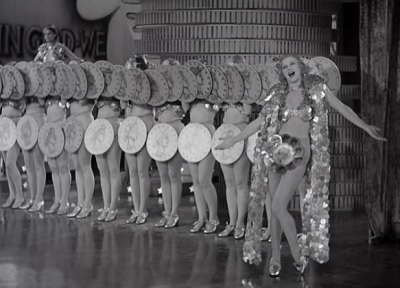
The film begins with showgirls performing in gold-coin bedecked, barely-there costumes. They’re singing the famous, “We’re in the Money,” led by Fay (Ginger Rogers).
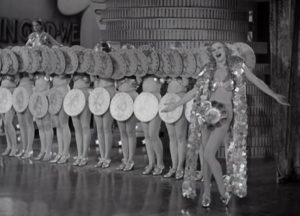
WereintheMoney
We suspect there’s irony at play; after all, Fay sings a verse of it in Pig Latin.
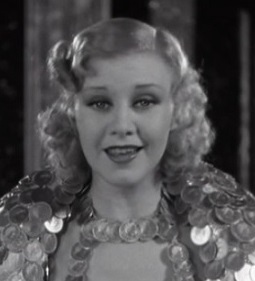
Rogers's language play

Rogers’s language play

And of course, we’re right to be skeptical about those claims: before the song ends, the creditors bust in, close the show, and guarantee not a soul singing will be anything but broke.

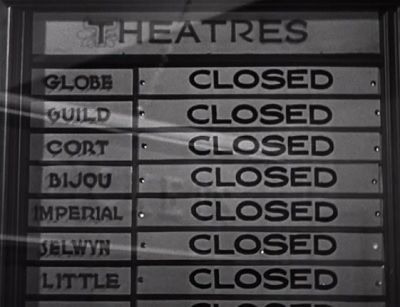
Clearly, this isn’t the slight film the title, or its greatly inferior sequel, might lead a modern viewer to expect. I was just reading about Girls, wondering if I could handle another season of Lena Dunham’s show about over-privileged, under-motivated friends in the city. I kept thinking of that show when the camera panned from the closed show to a small posting illustrating these singers’ (dissimilar) lack of options:

TheaterSign-GoldDiggers
The camera then turned to a letter beneath the flat door of three of the performers, a rent demand from their landlady.

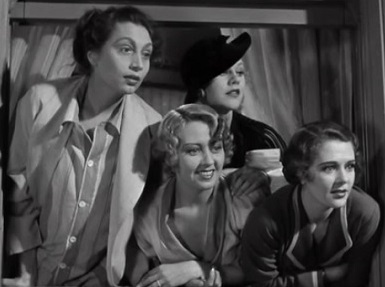
All three are sharing a bed. They wake up late, with nowhere to go. “Come on, let’s get up and look for work. I hate starving in bed,” gripes Polly (Ruby Keeler).

“Name me a better place to starve,” replies Trixie (Aline MacMahon). The famished roommates steal milk from the neighbors. Trixie reassures the others it’s okay because the milk company “stole it from a cow.”

I know that there’s a place for anyone’s woes; that life (and the films and shows depicting it) is not a comparison game. But the scene reminded me of why Girls so often, despite its cleverness, has left me flat. I’m just not very engaged by women without ambition or integrity. But women who can manage wit when they’re living on bread and snatched milk? Yes, please. Give me more.

When Fay arrives to announce a new show, the women band together to give one of them—Carol (Joan Blondell)—a complete outfit to impress the producer. They’ve hocked too many stockings and dresses to do anything else.
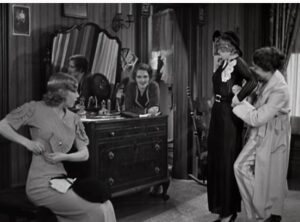
DressingCarol-GoldDiggers
A tearful Carol calls to tell them it’s true that there’s work and that the producer, Barney (Ned Sparks), is on his way; however, he soon confesses he has no funds to start the musical. As eloquent as Carol’s response is to his trickery, her expression is even more so:
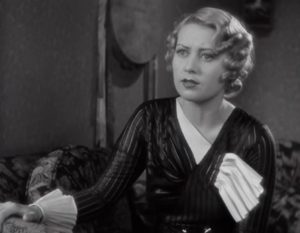
JoanBlondell-GoldDiggers
Luckily, the women’s singer-and-composer neighbor, Brad (Dick Powell) is available. He impresses Barney with his music, especially the tune which best fits the producer’s Depression theme. More importantly, Brad offers the money to put on the show.

(Just an early spoiler) Brad is secretly a member of a wealthy family, and his proud brother, Lawrence, is not pleased to see his sibling in a musical, and even less pleased the boy is in love with Polly (Keeler). Lawrence’s (Warren William’s) banker, Faneuil H. Peabody (Guy Kibbee), convinces his client all showgirls are gold diggers, and Lawrence therefore rushes to quash the romance.

The two men go to the girls’ apartment to pay off Polly, but mistake Carol for her. Enraged by their condescension, Trixie and Carol decide to pretend Carol is Polly and take the two haughty men for all they’re worth to teach them better manners (and teach us that the title of this film is as ironic as its opening song).

MacMahon as Trixie can occasionally grate, but Guy Kibbee is wonderful as the elderly, lascivious lawyer, the man whom Trixie feels is “the kind of man I’ve been looking for. Lots of money and no resistance.”
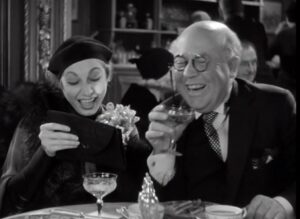
BankerandTrixie-Aline MacMahon
Trixie plans to marry the banker in spite of her lack of attraction for him (“You’re as light as a heifer,” she says when she dances with him). She just needs to fend off Kay (Rogers), who wants a meal ticket too.

Carol has no such plans. She’s just angry. The film wants us to understand that Kay and Trixie are just desperate—but understandable—exceptions to the rule. Most of the showgirls, far from being the “parasites” Lawrence assumes, are as ethical and proud as Carol and Polly are. Slowly, though, Carol, in spite of herself, begins to fall for the handsome snob.

The women’s antics are entertaining, especially when they fool the men into buying them pricey hats. But the men’s conviction they’re hanging out with these lovelies just to do Brad good is even funnier. Since this is a pre-Code film, there’s no dearth of skimpy clothing and sexual references. Lawrence soon passes out drunk after confessing love for Carol, and she and Trixie move him to their bed, knowing he’ll assume he’s had sex with faux-Polly and will be too compromised to object to Brad marrying the real one.

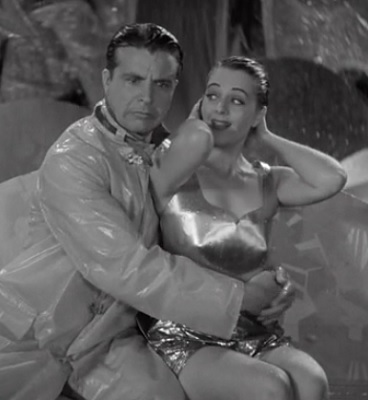
Sexual innuendo is evident throughout the musical numbers in the show, especially since this is a Busby Berkeley film. One of my favorite acts is about couples “Pettin’ in the Park.” When it rains, the women retreat to change, returning to their men in metal dresses.
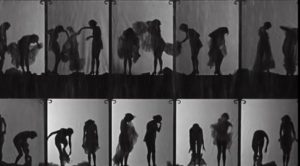
Berkeleynumber-parkdressing
The men are frustrated and outraged they can’t access their partners’ bodies.
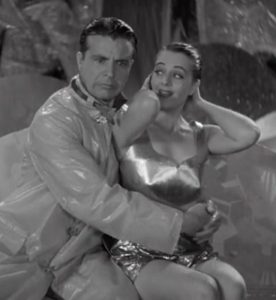
PowellandKeeler-PettinginthePark
Luckily for them, a peeping toddler (yes, you read that right) gives the star (Powell) a tool to break through his love’s (Keeler’s) metal, which he’ll presumably pass to the others.

But Berkeley doesn’t keep with this light tone for all of his numbers. The film ends with the Depression tune that Barney promised, with Carol singing, “Remember My Forgotten Man.”

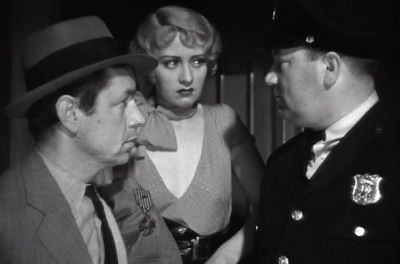
Alone on a street in seductive attire, she first talks, then sings, “Remember my forgotten man?/You put a rifle in his hand./You sent him far away./ You shouted, ‘Hip hooray,’ but look at him today.”
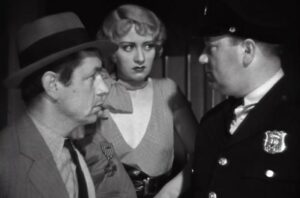
Showing the cop the homeless man a veteran

Carol defending a forgotten man

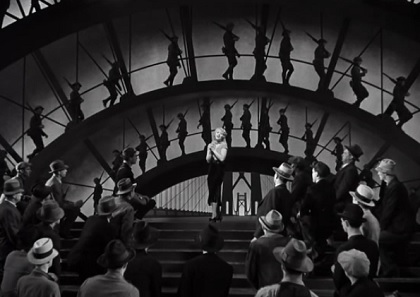
The song moves from one woman, to another, then builds into an anthem of men and women attacking the government for not doing more to help the veterans and farmers who’ve worked hard for their country, only to end homeless in breadlines, unable to support the women who love them.
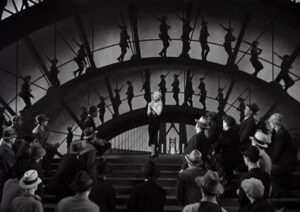
ForgottenMan-GoldDiggers1933
Their women are left not only witnessing their men’s suffering, but with children to support as well as themselves–alone. Carol’s provocative attire and presence on the street are no accident, of course. There is one type of work she can get without her man.

The song is heartbreaking. How rare to find a movie, a musical, that captures the national plight like this, especially after such light fare. But of course, the song is also a reminder that there was nothing truly light about the whole film. Is Trixie a greedy gold digger for wanting a rich husband rather than starving as she waits for a show not to be canceled? The oldest and least attractive of the bunch, she knows she must beat Fay to the lawyer’s libido, or she’s probably headed for the streets. The relatively happy unions of these women don’t blind the audience to the fact that there are a lot of girls in that show, a lot of women without secretly-rich neighbor-lovers, without pliable elderly bankers, but with landlady’s notes waiting for them under the door.
Share
Posted in: 1930s films, Comedies (film), Romantic Comedies (film), TV & Pop Culture, Uncategorized Tagged: Busby Berkeley musical, Depression, Dick Powell, Ginger Rogers, Girls, Gold Diggers of 1933, Joan Blondell, Lena Dunham

Please Keep the Hair: Keri Russell, Rita Hayworth, and Veronica Lake

12/07/2014 by leah@carygrantwonteatyou.com 4 Comments

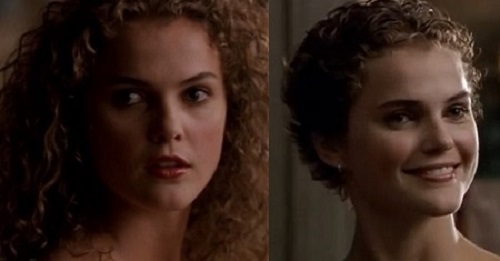
All the wig-switching in the KGB thriller The Americans has me thinking about hair. Of course, my musings must be rooted in the show’s star, Keri Russell, she of the infamous haircut that made Felicity stars everywhere wish her beautician Sweeney Todd.

FelicityShortandLongHair
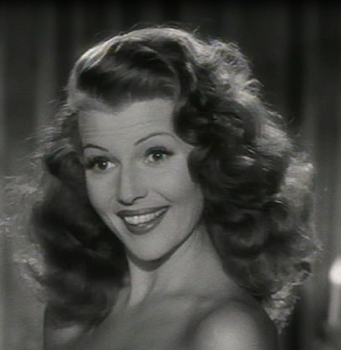
But Russell was not the only star blamed for tanking a production with her shorn tresses. I’m thinking, of course, of The Love Goddess herself, Rita Hayworth, who made not one, but two hairy decisions in that barber chair. After all, her fans had fallen for her after this famous hair-flip in Gilda (1946), later celebrated in The Shawshank Redemption (1994):

RitaHayworthHairFlip
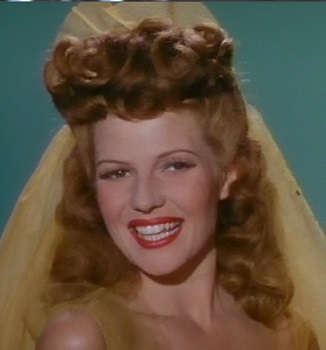
Audiences liked their WWII pinup just the way she was. But given that Hayworth’s former experiments at a stylist’s hands—a hairline move and a red dye job—had led to her fame to begin with, it’s not surprising she was willing to make a change to help her soon-to-be-ex Orson Welles with his noir, The Lady from Shanghai (1947). She changed the hue of her beloved hair, as seen in its usual glory in Cover Girl (1944):

RitaHayworthCoverGirl
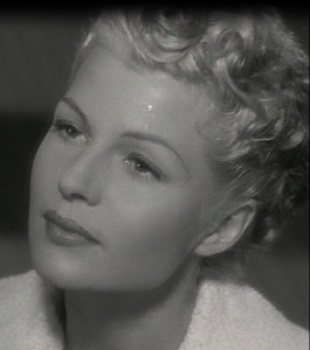
And she also, like Russell after her, chopped it off. The bizarre results: a platinum dye job was blamed for low ticket sales. (Brunettes everywhere, take note: it did happen once.)

RitaHayworthBlonde
It’s true that Hayworth looks better as a redhead, but the film still features one of her sexiest performances. Admittedly, this woman could probably have pulled off a mullet.

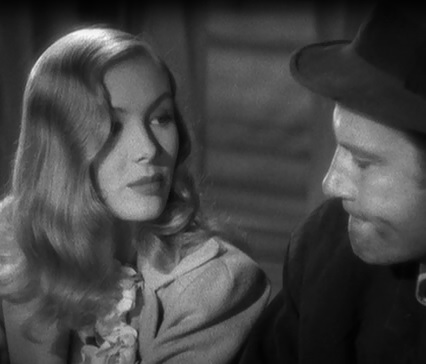
Of course, of all the hair-disaster stories, my favorite is Veronica Lake’s. She was known for that peek-a-boo, hair-in-front-of-eye sexy look models have been attempting since.

VeronicaLakeSullivan'sTravels
This hairstyle was so popular that it even reached spoof status. One of my favorite moments in The Major and the Minor (1942) is when a cadet mocks the girls at a nearby school: “May as well warn you, there’s an epidemic at Mrs. Shackleford’s school…[T]hey all think they’re Veronica Lake.” The film’s heroine (Ginger Rogers) tries to repress her smile when she sees what he means:

VeronicaLakeLookalikes
In a bizarre twist of fate, Lake undid the do in the interest of national public safety during WWII—all of those fool imitators getting their hair stuck in factories’ machinery. (Check out this staged photo warning her wannabes.). And—not surprisingly—Lake lost her star status soon after the change (though there were other, perhaps more likely reasons for her decline, as there were for the poor box office receipts of Hayworth’s film and lower ratings of Russell’s show).

I know more rational folks would claim that these outcries over hair are outrageous and silly, but having suffered the pains of fine, limp hair all my life, I do get a bit annoyed when a woman with a thick, luscious mane doesn’t appreciate what she has. Sure, if it’s too much for your delicate face, à la Audrey Hepburn, hack away. But if not, don’t pain all of us with wilted mops by throwing your riches away. Have a little pity. At least let us envy from afar.

Share
Posted in: 1940s films, Comedies (film), Drama (film), Film Noir/Crime/Thriller & Mystery, Humor, TV & Pop Culture Tagged: bad haircuts, Felicity, Keri Russell, Rita Hayworth, The Americans, The Lady from Shanghai, Veronica Lake hairdo

Is Something Rotten in Mayberry?: Andy Griffith, Bill Cosby, and Our Instinct to Idolize

11/29/2014 by leah@carygrantwonteatyou.com 4 Comments

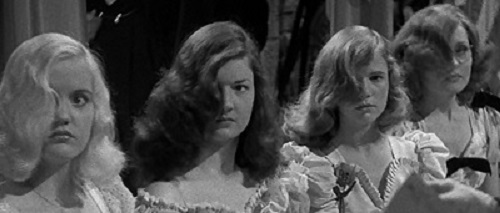
I’d heard that Andy Griffith’s performance in A Face in the Crowd (1957) was something to see. But years of believing him the representative of small-town wholesomeness made his first appearance in the film as the target of the law rather than the enforcer of it instantly off-putting. My first instinct was denial. “It must be a mistake,” I thought to myself when he began the movie in jail. “Andy’s innocent.”

RhodesDiscoveryFace-Griffith
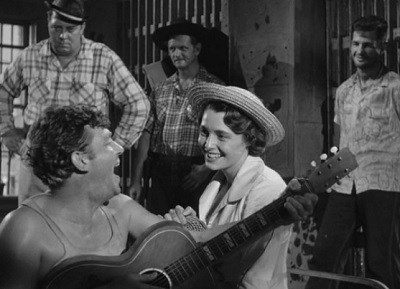
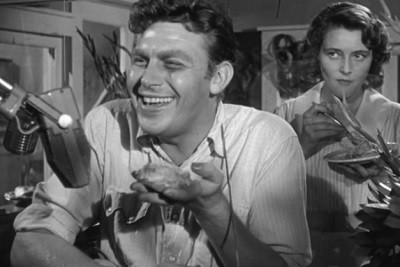
But innocent is one thing this character is not. At the start of the film, Larry ‘Lonesome’ Rhodes (Griffith) seems merely a ham, the kind of man who is a perfect subject for Marcia Jeffries’s (Patricia Neal’s) Arkansas radio program featuring interesting personalities. Most of all, this guy loves to laugh—and what a strong, compelling honk it is.

LonesomeRhodes-GriffithNeal
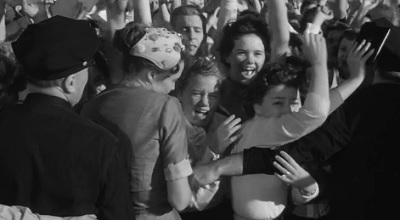
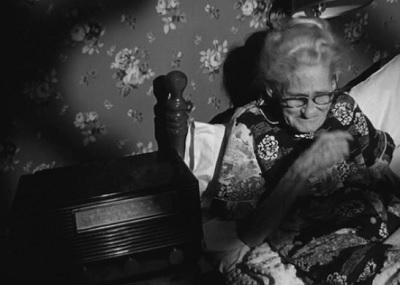
He sings, he jokes, he spins folksy tales about his relatives, like some undiscovered Will Rogers. And he gets people. He has little old ladies giggling over his good ol’ boy hijinks. He describes the pains of housekeeping, and we witness wives stopping to listen to him, hearing perhaps in his telling the first acknowledgement of their woes.

Listeners-Rhodes
But even from the start, we don’t picture Larry as ‘Lonesome,’ a representative of the little guy his radio listeners imagine. We watch the casual cruelty of Larry’s womanizing ways, his drinking, his avarice and disgust toward the fools he’s impressing. Most of all, we’re disturbed by his treatment of the smart, ambitious woman who discovered him, Marcia (Neal), who is so caught up in his charms and success that she puts up with—well, pretty much everything he does, including dropping her for teen baton twirler Betty Lou (Lee Remick).

Lonesome and Betty Lou

Lonesome and Betty Lou

Marcia escaping after discovering Larry's betrayal

Marcia escaping after witnessing Larry’s betrayal

Lonesome soon acquires a big—and enormously loyal—following, especially among women, and as he moves from local to national broadcasts, and from radio to TV, he uses that popularity to wield influence.

At first, he does so in funny ways, making jokes on his sponsors and others who annoy him, as when he convinces listeners to send mutts to a mayoral candidate’s house to test out his ability to lead.

SheriffDogs-FaceintheCrowd
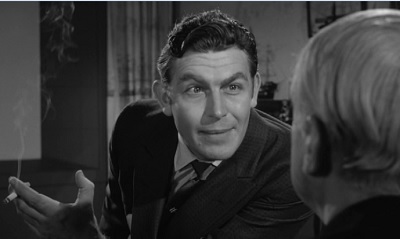
But as Lonesome’s numbers grow, and he begins to be courted by politicians eager to tap into his appeal, his ambition and power become menacing rather than funny.

GriffithasRhodes-ExplainingPower
Perhaps because I grew up watching others amused by Rush Limbaugh’s disturbing takes on feminism (feminazis), my trust in Griffith as Larry ‘Lonesome’ Rhodes soon eroded. I kept waiting for his behavior to worsen, but even so, the shock of his betrayals, his arrogance, and his corruption was difficult to experience. While he had other evil roles, Griffith was just so convincing as the loveable sheriff of Mayberry that I didn’t want to picture him in any other way.

I kept thinking of this performance of Griffith’s over the past couple weeks as the reports of Bill Cosby’s alleged crimes kept multiplying. Local radio personalities repeatedly played Cosby’s pudding commercials, creating eerie disjunctions between his fatherly role and the rape accusations. I realized then how wholeheartedly I’d believed Cosby was the character I’d admired in his famous show: a good man, a loving father, a feminist.

I don’t know if the allegations are true. I know it’s important not to jump to conclusions, even when the case against someone looks grim, perhaps especially then. I’ve read too many stories about innocent people destroyed by public opinion even when they were ultimately exonerated, have witnessed the ugly remains of false accusations firsthand. But whether or not these particular allegations are true, this story, and movies like A Face in the Crowd, are reminders to me of how often charm is mistaken for goodness, how closely and carefully we need to examine the figures we choose to revere.

Share
Posted in: 1950s films, Drama (film), TV & Pop Culture Tagged: A Face in the Crowd, allegations, Andy Griffith, Bill Cosby, Mayberry, role models

My Favorite Canadian: Michael J. Fox

10/09/2014 by leah@carygrantwonteatyou.com 16 Comments

This post is part of the O Canada Blogathon hosted by Ruth of Silver Screenings and Kristina of Speakeasy.

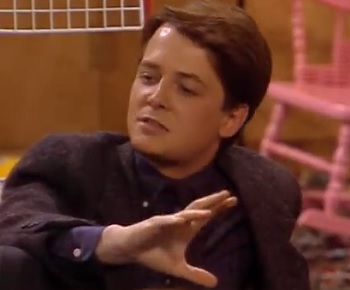
I remember being vaguely horrified when I discovered Michael J. Fox was Canadian. He was OURS. How could he possibly be anything other than American? His role as Alex P. Keaton was so iconic: the conservative, hippie-parent-horrifying, greed-is-good believing teen who embodied and parodied Reagan-era culture.  Although I’d rather hang out with his sister Mallory (Justine Bateman), I knew Family Ties revolved around Fox’s pitch-perfect, Emmy-winning performance as Alex.

Keaton (Fox) explaining the horror of taxes to preschoolers

Alex P. (Fox) explaining the horror of taxes to preschoolers

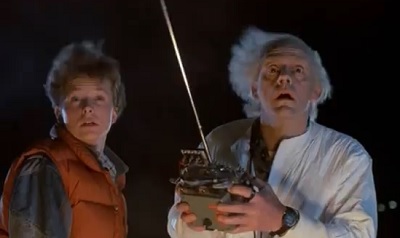
I was such a huge fan of Family Ties that when Fox followed the show with big-screen stardom in Back to the Future, what I felt was pride.

BacktotheFuture
No wonder then that in those years before I’d ever been out of my own country or met any Canadians, I felt so disappointed to lose any hold on him. I mean, I’d gone to see Doc Hollywood–in the theater. I’d suffered through The Secret of My Success for him. It wasn’t really a crush with me.  (Even if I ever had one, I think those suspenders in Back to the Future would have ruined it.)  I just admired him so much.  His gestures, expressions, movements–always so true, so uniquely his, and so damn funny. And oh, the lines. No one can deliver a line more effectively than Michael J. Fox. I could listen to him ask, “Are you telling me that you built a time machine… out of a DeLorean?” on repeat. No wonder the guy can’t seem to walk in front of a camera without being nominated for an award.

When Parkinson’s forced Fox to leave Spin City, his costars couldn’t stop crying long enough to finish his final episode. They didn’t know yet that he’d find a second career in his illness as a guest star, even as the headliner of his own show. And most of all, as the representative for the disease that had claimed him. They didn’t know he’d write a memoir. Call it Lucky Man. Tell other actors on Inside the Actor’s Studio suffering from the same afflictions that he had it easy, with his advantages, that they were those who had courage and guts; they were the ones he admired. That he’d remain tireless and fearless in his pursuit of a cure, and keep on wowing his countless fans.

It took a while, but I finally lost my dismay at Fox’s being Canadian. Instead, I now feel gratitude toward his homeland: for sharing this fine of an actor, this caliber of a human being with the rest of us. And now if you’ll excuse me, I need to re-watch Alex P. recommending amoral business principles to children.

Be sure to check out the other entries in the blogathon! And I promise to return to classic film next week. I just couldn’t resist celebrating Fox.

Share
Posted in: 1980s films, Blogathons, Humor, TV & Pop Culture Tagged: Alex P. Keaton, Back to the Future, Canadian, Family Ties, Michael J. Fox, Spin City

For Gone Girl Fans, A Fascinating She-Did, She-Didn’t Thriller

10/06/2014 by leah@carygrantwonteatyou.com 2 Comments

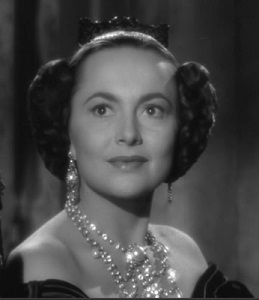
I’ve been wanting to see Gone Girl, but the laryngitis-respiratory infection cocktail I’ve got right now means that I would be an object of fear and distraction to fellow film goers, so I had to settle for an alternative. What film, I wondered, might employ a similar ambiguity about whether or not a spouse is a murderer? What other film might tell a tale of an unhealthy romance that might or might not have sinister roots or results? The answer: Daphne Du Maurier’s My Cousin Rachel. The film, starring Olivia de Havilland and a very young Richard Burton, never reached the fame of The Birds or Rebecca, but has a similar eerie draw, and (for me at least) lingers longer than either.

Young Philip has been raised by his cousin, Ambrose (John Sutton), and the two are comfortable together in their picturesque Cornish town until Ambrose’s illness leads to their first separation—a trip to Italy. There, Ambrose discovers and falls for their distant cousin, Rachel. Before Philip can adjust to this change in his life, a more somber situation develops: Ambrose is nearing death, and blames his wife for it, claiming she’s trying to do him in. Is his condition the result of a brain tumor, or is it poison?

Femme fatale, yes, but is she a murderer?

Femme fatale, yes, but is she a murderer?

A heartbroken Philip (Burton) travels to Italy to uncover the mystery after his cousin’s death. Since all of the estate goes to him, not the wife, Philip might assume things are as innocent as those in Italy suggest, but the circumstances seem shady, and he’s ready to turn Rachel over to the hangman—that is, until he meets her.

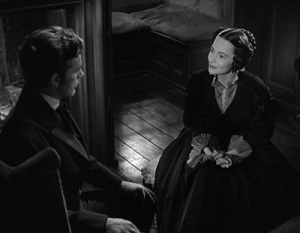
IntroMyCousinRachel
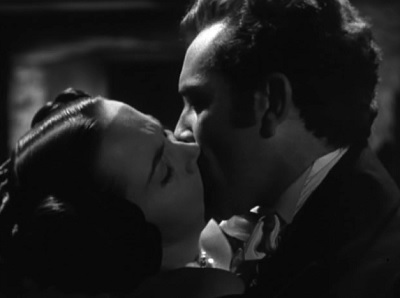
Of course, she’s charming, affectionate, worldly, and experienced, and within no time, is hosting gatherings at Philip’s place and then, well, what repressed English boy could resist this cougar?

KissingMyCousinRachel
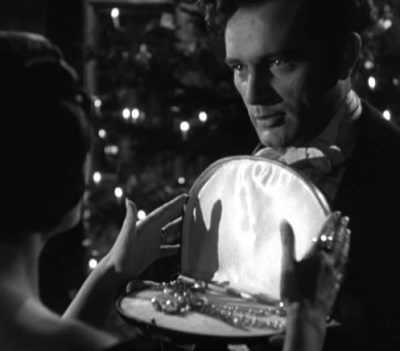
Before long, Philip’s giving her the family jewels from the vault—which aren’t his yet, as he doesn’t get the estate till he’s 25, his guardian reminds him.

GiftsMyCousinRachel
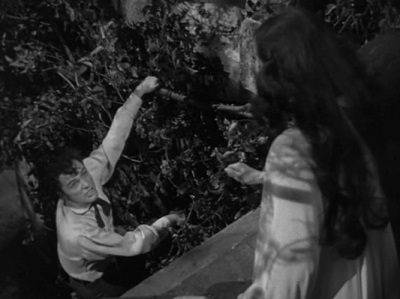
Also, a generous allowance he’s given Rachel? Yes, she’s overdrawing it—by a lot. Philip doesn’t worry. He’s in love! She deserves everything that’s his. He’ll just give his whole estate to her, announcing it Romeo-style on his birthday.

BalconyMyCousinRachel
She, in thanks, gives him more than kisses. In Philip’s world, this means she’s going to be his wife. In Rachel’s? Not so much. Philip, whose stupidity and naiveté know no bounds, doesn’t take this well, even starts strangling her. She ends their romance, whether because of his actions, or because with the money, she has no motive to seduce him any longer.

Soon after, Philip falls dangerously ill and finds some seeds that may have been the cause of his brother’s illness—and his.

What happens next I won’t reveal, but let’s just say that the evidence for and against Rachel’s guilt about even out, leaving the viewer to wonder the whole film (and book).

This was my first viewing of the film, and it stays quite true to what I remember of the novel. But viewing it as an adult, I noticed some details I’d missed before. Yes, she may be a murderer, or she may not be, but even if she didn’t try to kill either lover, exactly how wrong and/or inadvisable is Rachel’s behavior? I have some advice for Rachel, which, of course, comes a tad bit late:

Some spoilers ahead—though not the ending.

Never Seduce Crazy
It’s not hard to miss just how big of a dolt this Philip is, so even if she weren’t after his money, seriously, is this someone you seduce? I mean, he’s cute and all, but he’s obsessive. This is a textbook case of a stalker-in-the-making if ever I saw one. Surely a woman as confident and assured as this one knows a case of insane puppy love when she sees it. I’ll alter one of my favorite Arrested Development lines– “Never promise crazy a baby”—to Never seduce crazy. I kept wanting to warn Rachel away: Don’t kiss this fool. He’ll be sending out your wedding invitations next.

Remember: Virginal Boys Don’t Understand Samantha Jones Ways
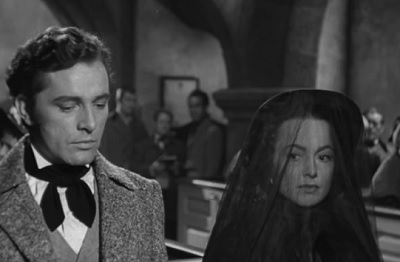
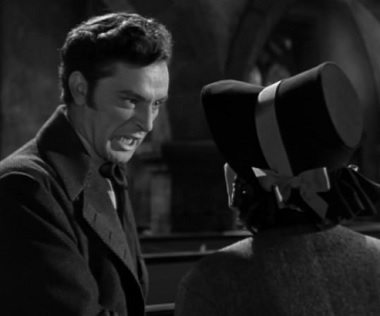
If Rachel just kinda forgot that those in repressed English villages don’t act like her cosmopolitan friends, shouldn’t that church moment when she arrived late have given her a clue?

ChurchRepressionMyCousinRachel
She’s so shocked Philip thinks they’re going to marry after they have sex, but would anyone in this community think otherwise? Remember when Samantha Jones hooked up with the inexperienced college boy on Sex and the City who shared her name?

Didn’t turn out so well, right? Filled up her answering machine with love-yous. Arrived at her door screaming through the peep-hole.

OtherSamJonesSexandCity
That’s Philip for you.

Don’t Marry the Guy Whose Regular Expression Looks Like This:

RichardBurtonfreakingout
Whatever her motives or knowledge, Rachel is absolutely right not to marry this dude. I can just see it: She tries to hang out with her friends, and he’s there, watching. She leaves the house and he’s hiring private detectives. This woman has lived on her own, experienced an unusual degree of freedom for a woman of her time, and he doesn’t even want her to return to Italy—ever. She may make some dumb mistakes, but Rachel is not that foolish.

Don’t Live with the Stalker after You Ditch Him
Why does Rachel remain in the house? Yes, I can understand for appearance’s sake, she might stay a little after the inheritance is given to her. But this is one angry guy. And, of course, dangerous as he fears she is, he’s the one going for the throat when he doesn’t get his way.

Strangling-MyCousinRachel
But….

Did she do it? Did she poison her husband?

She has suspicious ways. Rachel’s spendthrift tendencies, of course, are undeniable. This woman loves the money. Whether it’s to help her pal-maybe-lover back in Italy or not, she takes whatever anyone will give her with no regrets. It’s not hard to believe her gold-digger impulses brought her to England in the first place, and those motives seem sinister enough that she may have just killed for them.

Of course, it’s possible that she did love Ambrose, and wanted to meet his cousin. I’m not sure I buy that the one precludes the other. I don’t have to admire her greed, but I don’t have to believe that’s all there is to her either.

It’s the ambiguity I love about the film. Hopefully, Gone Girl is just as good (no spoilers on that, please!)

Share
Posted in: 1950s films, 1990-current films, Anti-Romance films, Femme fatales, Film Noir/Crime/Thriller & Mystery, TV & Pop Culture Tagged: Daphne du Maurier, Gone Girl, My Cousin Rachel, Olivia de Havilland, Richard Burton, Samantha Jones

Being a Princess Would Suck: Roman Holiday

09/18/2014 by leah@carygrantwonteatyou.com 6 Comments

Like most girls, I was born wanting to be a princess, though I preferred Belinda from The Practical Princess to helpless Cinderella. Unlike for many of my peers, this desire ended quite early for me. The wedding of Princess Di lasted far too long for my attention span, and what was up with that poofy dress and that decidedly not Barbie-like haircut?

Even had Diana worn the kind of clothes I preferred at six, I knew her kind of life wasn’t for me. For a shy kid who dodged from view, that much limelight looked terrifying and—even worse—dull.

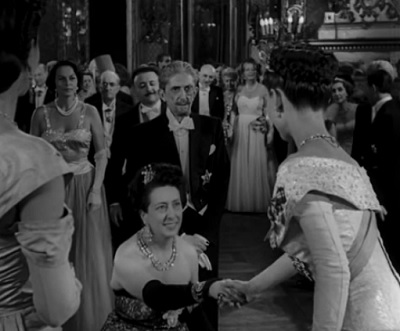
linesAudrey
It’s hard to ignore the tedium of official duties when you’re the daughter of a principal. “Are we going to be last AGAIN?” I used to whisper to my sisters at the high school concert’s or play’s conclusion as I shuttled between the mothers talking kids and fathers spinning funny stories and finally glared at that last soul who hadn’t noticed that my family and he had been the only ones there for the past hour.

Perhaps that’s why whenever Kate Middleton is shot in another gorgeous dress or chic hat, I always look past it to the caption, to see what tiresome event she wore it for. I like viewing the pretty dresses in princess films still today, but I’m far more interested in the conflicts the heroine has to endure.
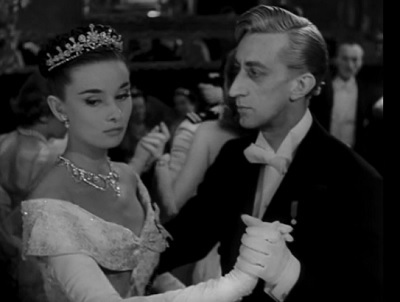
Audreydancing
In The Prince and Me, when Paige, Julia Stiles’s character, balks at the many rules of royalty, the queen claims jewels are compensations, and the camera rests on a feast of diamond and emerald. “Yeah,” I remember thinking when I saw it, “maybe for the first twenty minutes.” Because after enduring the 200th ribbon-cutting ceremony in honor of something I’d never heard of; choking through fussy, elaborate dinners while wearing Spanx; watching yet another stream of dull important people approaching me I’d have to pretend were interesting, like some sick replay of my worst date; I’d be handing that tiara to the gal next to me and high-tailing it to Vegas.

Perhaps that’s why Roman Holiday is my favorite of all princess films, a story about the glamour of everyday joys rather than balls, the excitement of the release from royalty. The film begins with Princess Ann (Audrey Hepburn) trying not to yawn through yet another official ceremony on her goodwill tour, and scandalously kicking off her tight heel, which her retinue quickly finds a way to conceal.

In response to her schedule for the next day, Ann rehearses her answers, her boredom coming through in every line: “Thank you, no thank you.” And which speech she’ll have to give, such as one of her regulars, “Youth and Progress.” Her frustration with all the routine soon leads to a nervous attack, a sedative, and her escape to play hooky in Rome, sans her identity or attendants. She meets handsome reporter Joe Bradley (Gregory Peck) as she wanders. He soon discovers her identity and plans for a scoop on the princess’s “holiday.” Oblivious to his discovery, she simply enjoys herself, and he, of course (this is Audrey Hepburn, after all) does too.

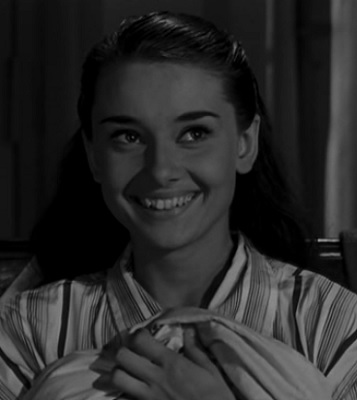
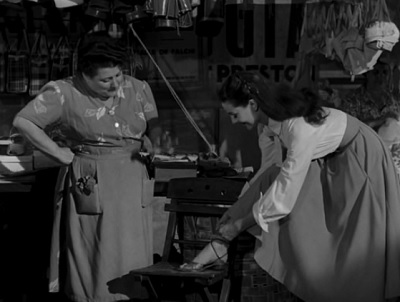
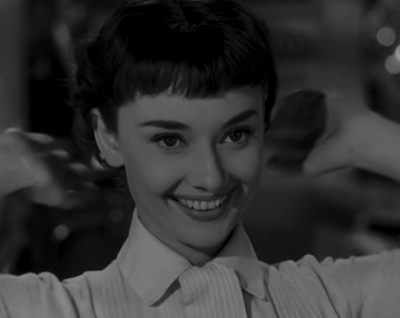
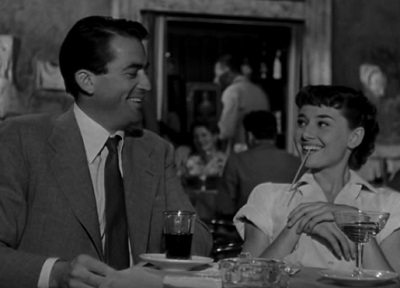
Everyday joys soon elevate the princess’s spirits from frustration to exuberance. Just look at that smile as she goes about the city…

Meeting a guy in nonofficial capacity...in PJs

Meeting a guy while in PJs

Shopping for sandals

Shopping for sandals

Getting a haircut

Getting a haircut

Drinking champaign for breakfast (Hepburn with Peck)

Drinking champaign for breakfast (Hepburn with Peck)

Trying what's forbidden... (with Peck and Eddie Albert as the adorable photographer)

Trying what’s forbidden (with Peck and Eddie Albert as the photographer)

Driving around....

Driving around….

Falling for a regular guy (if you can call Peck that)

Falling for a regular guy (if you can call Peck that)

Causing a ruckus

Causing a ruckus

Compared to such pleasures, what are designer gowns and crown jewels?

Share
Posted in: 1950s films, 1990-current films, Humor, Romantic Comedies (film), TV & Pop Culture Tagged: Audrey Hepburn, Gregory Peck, Kate Middleton, princess films, Roman Holiday, The Prince and Me

Say Anything Fan? Holiday (1938) Is the Classic Film for You

09/06/2014 by leah@carygrantwonteatyou.com 2 Comments

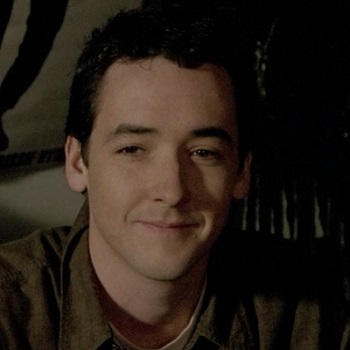
A hero who reveals his vulnerability, yet retains his pride; the kind of man devoted enough to lift a jukebox above his head blaring Peter Gabriel’s “In Your Eyes” to woo the girl who dumped him, yet still grounded enough to enjoy relaxing with his friends; a boy with few prospects who is seeking a “dare-to-be-great” situation.

Lloyd-Cusack
There’s a reason Say Anything (1989) and its hero, Lloyd Dobler (John Cusack), were nearly universally worshipped by every middle and high school girl I knew. Cusack quickly became the heartthrob of my generation, just as Cary Grant was to his. In Holiday, Grant played a role much like Cusack’s in Say Anything. That’s why if you’re a diehard lover of Lloyd Dobler, I think you should check out this 1938 film and see for yourself the many similarities:

Lightheartedness
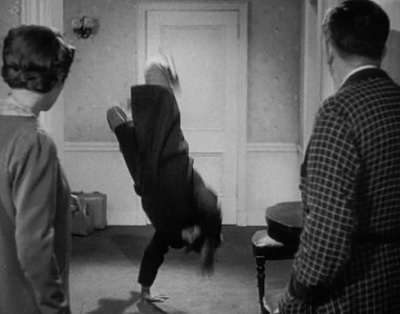
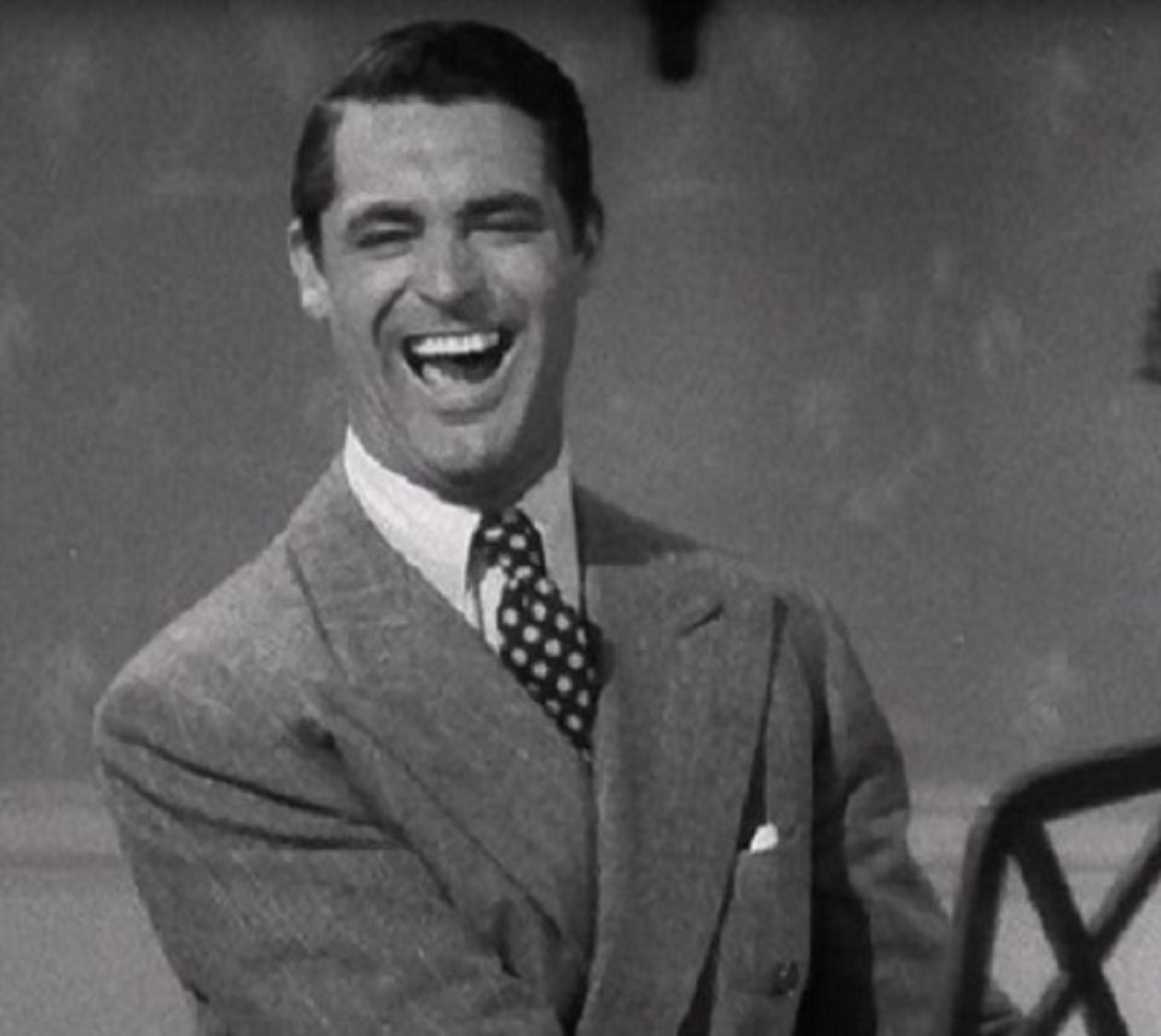
Those accustomed to seeing Grant’s suave persona on display in clips and photos might not realize how fun it is to witness him being the opposite—silly, playful, with that same uneasily expressed, coltish confidence in himself that makes Lloyd Dobler so appealing. In Holiday, Johnny (Grant) likes to do flips to cheer himself out of tough times or worries, just as Lloyd chides his sister for not being able to pull out of hers.

SolutiontoWorry-CaryGrant
Romancing the Daddy’s Girl—and Daddy Ain’t So Great
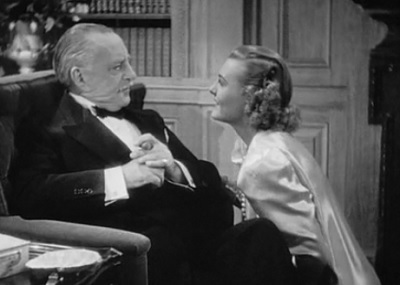
Both films feature heroines who are too close to fathers who don’t deserve such adulation. In Say Anything, Diane’s dad (John Mahoney) winds up being a crook; in Holiday, Julia’s (Henry Kolker) is so obsessed with money and status that he verges on caricature.

Johnny's fiancée and her father

Johnny’s fiancée and her father

Much of Holiday focuses on Johnny’s discovery that Julia (Doris Nolan) is much closer to her father’s character than he realized, just as Say Anything shows Diane (Ione Skye) slowly recognizing that her father is not the moral center of her universe. Luckily, we have both of Julia’s siblings, Linda (Katharine Hepburn) and Ned (Lew Ayres), mocking their dad the whole time in Holiday, which is way funnier than the whole Diane-Dad snooze fest.

Unconventional Ambitions
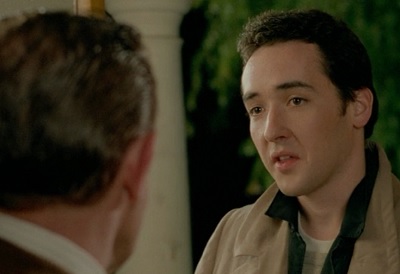
Both heroes have unpopular dreams. Lloyd’s is beautifully expressed when Diane’s dad opens the door and he tries to sell himself as a trustworthy date: “I’m an athlete, so I rarely drink. You heard of kickboxing, sport of the future?”*

DoblerSportoftheFuture
Lloyd responds to a question about his career plans with “Spend as much time as possible with Diane before she leaves” and proceeds to give an amusing description of his hopes: “Considering what’s waiting out there for me, I don’t want to sell anything, buy anything, or process anything as a career….So what I’ve been doing lately is kickboxing….”

Grant’s plan, captured in the film’s title, is to take a vacation from employment. He’s worked since the age of ten, and isn’t sure what he’s doing it for: “I want to know how I stand, where I fit in the picture, what it’s all gonna mean to me. I can’t find that out sitting behind some desk in an office, so as soon as I get enough money together, I’m going to knock off for a while….I want to save part of my life for myself….You know, retire young, work old, come back and work when I know what I’m working for, does that make sense to you?”

Johnny, like Lloyd, makes fun of the idea of needing familial or professional connections: “When I find myself in a position like this, I ask myself what would General Motors do? And then I do the opposite.”

And like Lloyd, Johnny thinks his love should be enough for Julia’s father: After offering a character reference, he adds, “I’m quite decent and fairly civilized. I love your daughter very much, which isn’t a bit hard. She seems to like me a lot too. And uh, well, that’s about all that can be said for me, except that I think we have a grand chance of being awfully happy.”

A Marvelous Support Network
Both men are backed by funny friends who provide much of the comic relief of their films. Edward Everett Horton plays a professor and Jean Dixon his wife, Susan; they are friends of Johnny’s who gravitate toward Linda rather than Johnny’s fiancée. When they arrive at the fussy engagement party for the couple, Susan says, “Don’t tell anyone, but I’ve got a run in my stocking.” “Good heavens, we’re ruined,” answers her husband. “Not a word of this to a soul,” he warns the butler.
GrantandHorton
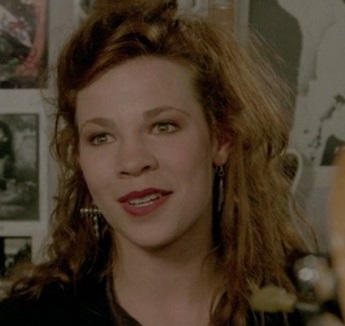
Among Lloyd’s many entertaining friends, Corey (Lili Taylor) is the obvious standout, with her 63 songs about her ex and classic line in response to Lloyd’s “…I’m a guy. I have pride”: “You’re not a guy…The world is full of guys. Be a man.”
LiliTaylor
In Johnny’s case, Julia proves to be remarkably dull, and soon is outshone by her supportive sister, Linda (Hepburn). Linda can be quite amusing, though at times she’s a bit melodramatic about the family woes.

GrantandHepburn-Holiday
In Say Anything, we’re stuck with Ione Skye as the romantic interest the whole film, with that terrible acting doing nothing for any of us. When Diane dumps Cusack, all the viewers may protest, but it was a relief not to hear Skye talk for a bit and listen to Lloyd’s friends instead.

Rising Above…
Both Johnny and Lloyd display a remarkable level of emotional maturity—Lloyd, in his continued efforts to unite Diane and her father once they become estranged in spite of the latter’s hostility toward him.

CusackandMahoney
And Johnny, in his attention to his fiancée’s needs and sensitivity to her family despite her father’s rudeness toward him.

GrantandKolker
After asking many not-so-subtle questions about Johnny’s connections, Julia’s father expresses zero interest in her suitor’s obvious resourcefulness, the loss of his mother, and his pride in who he is. Johnny freely discusses his background: his dad’s grocery ownership and debts, an alcoholic uncle, and his own work as a steel mill worker, garbage truck driver, and laundry worker while earning his degree at Harvard. While he isn’t exactly trying to provoke the father’s snobbery, he clearly is amused by it.

“Admirable,” the father says after hearing Johnny’s answers about his life, with no sincerity whatsoever.

“Anything else, sir?” Johnny finally asks.

“I beg your pardon?” the father replies.

“I should think you would,” snaps Linda.

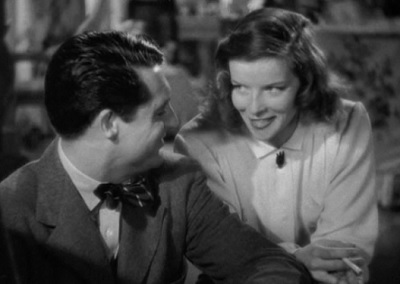
Luckily, fun-loving Linda is the one Johnny will eventually be falling for. If my description doesn’t win you, hopefully this image of the former acrobat (Grant) in action will.

acrobatCaryGrantKatharineHepburn
*When I mentioned this quote on kickboxing, my husband pointed out that Lloyd was one prescient guy given the success of UFC….

Share
Posted in: 1930s films, 1980s films, Comedies (film), Romantic Comedies (film), TV & Pop Culture Tagged: Cary Grant, Holiday, John Cusack, Lloyd Dobler, Say Anything
« Previous 1 2 3 4 5 6 Next »

Recent Posts

  • 100 Years Later, Still Scary: Dr. Caligari
  • Escaping Out of the Past (1947)
  • A Weeper for Those Who Love Jerks
  • Thank You, Academy, for Not Infuriating Me
  • Challengers (2024) Is a Bad Movie

Subscribe to Blog via Email

Enter your email address to subscribe to this blog and receive notifications of new posts by email.

Categories

  • 1920s films
  • 1930s films
  • 1940s films
  • 1950s films
  • 1960s films
  • 1970s films
  • 1980s films
  • 1990-current films
  • 2020s films
  • Action & Sports Films
  • Anti-Romance films
  • Blogathons
  • Childfree
  • Comedies (film)
  • Drama (film)
  • Feminism
  • Femme fatales
  • Film Noir/Crime/Thriller & Mystery
  • Gloriously Silly Scenes
  • Horror
  • Humor
  • Mae West Moments
  • Musicals and dancing films
  • Oscars
  • Random
  • Romance (films)
  • Romantic Comedies (film)
  • The Moment I Fell for
  • Turn My Sister into Classic Movie Fan
  • TV & Pop Culture
  • Uncategorized
Share
Classic Movie Blog Hub Member

Recent Comments

  • leah@carygrantwonteatyou.com on Meg Ryan’s Fate Foretold in Joe Versus the Volcano
  • Ryan on Meg Ryan’s Fate Foretold in Joe Versus the Volcano
  • leah@carygrantwonteatyou.com on 100 Years Later, Still Scary: Dr. Caligari
  • The Classic Movie Muse on 100 Years Later, Still Scary: Dr. Caligari
  • leah@carygrantwonteatyou.com on 100 Years Later, Still Scary: Dr. Caligari

Archives

  • November 2025
  • September 2025
  • May 2025
  • March 2025
  • January 2025
  • November 2024
  • August 2024
  • July 2024
  • May 2024
  • March 2024
  • February 2024
  • December 2023
  • November 2023
  • October 2023
  • September 2023
  • August 2023
  • July 2023
  • May 2023
  • April 2023
  • March 2023
  • January 2023
  • December 2022
  • November 2022
  • September 2022
  • July 2022
  • May 2022
  • April 2022
  • March 2022
  • February 2022
  • October 2021
  • September 2021
  • April 2021
  • March 2021
  • February 2021
  • December 2020
  • October 2020
  • September 2020
  • July 2020
  • May 2020
  • April 2020
  • March 2020
  • February 2020
  • December 2019
  • October 2019
  • September 2019
  • June 2019
  • May 2019
  • April 2019
  • February 2019
  • January 2019
  • November 2018
  • September 2018
  • July 2018
  • June 2018
  • May 2018
  • April 2018
  • March 2018
  • February 2018
  • January 2018
  • November 2017
  • September 2017
  • August 2017
  • July 2017
  • June 2017
  • May 2017
  • April 2017
  • March 2017
  • February 2017
  • January 2017
  • December 2016
  • November 2016
  • October 2016
  • August 2016
  • July 2016
  • June 2016
  • May 2016
  • April 2016
  • March 2016
  • February 2016
  • January 2016
  • December 2015
  • November 2015
  • October 2015
  • September 2015
  • August 2015
  • July 2015
  • June 2015
  • May 2015
  • April 2015
  • March 2015
  • February 2015
  • January 2015
  • December 2014
  • November 2014
  • October 2014
  • September 2014
  • August 2014
  • July 2014
  • June 2014
  • May 2014
  • April 2014
  • March 2014
  • February 2014
  • January 2014

Meta

  • Log in
  • Entries feed
  • Comments feed
  • WordPress.org

Copyright © 2025 Cary Grant Won't Eat You.

Church WordPress Theme by themehall.com