Cary Grant Won't Eat You

Classic movies for phobics

  • About
  • eBooks
  • Previous Blogathons
Classic movies for phobics

TV & Pop Culture

My Oscar Rant, Part 1: Snark

02/19/2024 by leah@carygrantwonteatyou.com 9 Comments


It’s that time again–my chance to rant about the films that shouldn’t have been nominated and moan about better films that weren’t. Next time, I’ll discuss Oscar nominees I loved or at least liked. But for this post, I’m going to embrace the snark.

Undeserving Nominations

Past Lives. If the little boy who used to chase me down after we raced on our big wheels and then kiss me were to re-enter my life 20 years later, would that have been a meaningful, maybe-romance? No. Neither was this.

Oppenheimer. This film has far less to say about our past than an episode of Drunk History. Here are the not-so-insightful themes I gleaned after three hours: dropping bombs leads to regret, and politicians are political. Calling a man a genius ten times in the first hour without showing a single scene of what made him so—or what made him charismatic, a leader or interesting—is not characterization. Jumping in time without reason is not artful; it’s confusing. Usually strong actors mimicking, but not inhabiting real-life characters is painful to watch (Robert Downey Jr. being the exception). Dismissing the reflective president who had to decide whether to drop the bomb in a five-minute, misleading scene is irresponsible. If this film wins, the producers better thank Barbie because that’s the only reason Academy voters viewed it. Give it a year, and none of them will remember watching it. Christopher Nolan is too talented to have created something this bad.

The Holdovers. Mediocre and an hour too long. Solid, but not standout acting? Yes. Occasional clever, funny moments? Yes. But generally lazy writing–a teacher who is a hard grader must be a jerk, all students hate their studies, a teacher has to be self-sacrificial to earn respect. Any of you heard all this nonsense before? Me too. Best moment: the kid barely thanks him. That scene was real and funny, capturing what it’s like to be a young, careless teen (tell me you don’t see your young self in that moment); I only wish there had been more moments like it.

Overlooked Gems & Performances

Air. The most entertaining film of the year. Perfect cast, great writing, smart editing. Every moment counted. Zero nominations. The lack of an editing nomination hurts most; three too-long movies are nominated for best editing. Academy voters apparently don’t appreciate the most difficult role of an editor: cutting.

Eileen. An eerie, truly original mystery. Strong performances from the two lead actresses, a memorable one from a supporting (always reliable) character actor and a brilliant one from a supporting actress. Great editing choices for the adaptation of the book, including some difficult cuts by the novel’s author and screenplay co-writer. Zero nominations.

Blackberry. Clever take on the difficulty of running a business with creative, nerdy types. Where is Glenn Howerton’s best supporting actor nomination, I ask you? He plays an amazing villain; his comic timing is unmatched, and his portrayal is nuanced, believable and always surprising. Oh, how much all those award-granting types underestimate anyone involved in It’s Always Sunny in Philadelphia….
,

Would Rather Pluck My Eyebrows than Watch

Maestro. I am done with movies more interested in artists’ romances than their work. (I’m looking at you, Walk the Line, Bohemian Rhapsody, Blonde.) John Carney, please direct a biopic so that I can again enjoy a film about an artist. Give me a Once (2007) or Begin Again (2013) based on a true story, please.

Poor Things. I can’t take this director anymore. My sister and I refer to his film The Lobster in verb form: Lobstering is when you recommend a film you can’t stand to someone as a joke. She lobstered me with The Judge (2014); I lobstered a mutual friend with The Shape of Water (2017). I didn’t despise The Lobster, as my sister did. The Favourite (2018) was alright (likely only because Nicholas Hoult excels in odd roles). But Yorgos Lanthimos has a knack for squandering a fascinating premise with meaningless grossness or weirdness, and Poor Things looks like he’s upped the ante on that trend. I’m out.

So there you have it. Stay tuned for next time, when I will be far less harsh, but no less opinionated.

Share
Posted in: Comedies (film), Drama (film), Oscars, TV & Pop Culture Tagged: Air, Blackberry, Glenn Howerton, Oppenheimer, Oscars, Overrated films, Past Lives, The Holdovers, underrated films

My Cat, Mae West, and Sextette

05/25/2023 by leah@carygrantwonteatyou.com Leave a Comment

Perhaps you’re choosing to honor your cat by naming her after Mae West. (And can there be a greater honor?) You can’t go with Mae. It’s too delicate.

And you can’t go with Mae West. Too hard to say when your cat is jumping on the counter.

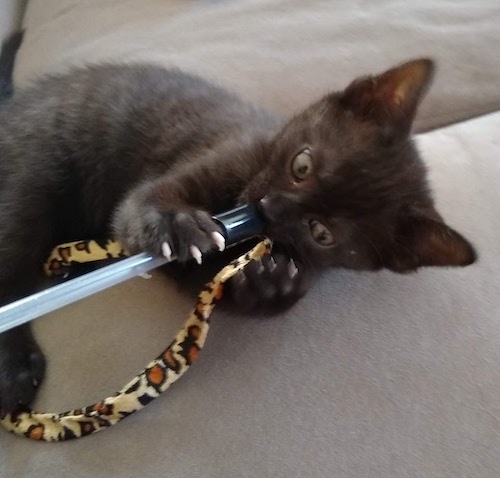
But you have to name her for Mae West: your feline is feisty, unrepentant, the center of her universe. So you scroll IMDB for Mae’s movie character names and land on Marlo from Sextette (1978). It has a ring to it, doesn’t it? You haven’t seen the film and don’t have time for it, so you watch a clip. Mae being Mae. It tracks. You name your little palm-sized kitty, and every time she flashes those bold eyes at her prey, you know you chose well.

Then, shortly after her third birthday, you watch Sextette, and think, “What have you done?”

Seriously, WHAT HAVE YOU DONE?

This is the hot mess to end all hot messes. When Ringo Star gives one of the best performances in the film, you know something is terribly, terribly wrong.

Who sees Mae West act and thinks, “You know a good person to cast in her picture? Dom DeLuise”? It’s so hard to watch a madcap, hijinks story with Mae performing her signature slow delivery like she’s in a different film. Then there are sudden, unnecessary musical sequences–and not unnecessary in a fun way, but in a do-we-have-to-do-this? way. And is Tony Curtis playing a Russian? And what the hell is Alice Cooper doing in this mix? The whole film is jarring and weird and utterly wrong.

The strange thing is, the critiques are wrong too. Sure, you heard it was bad–that’s true. But you also heard some sexist junk about how could this older woman be attractive to this young man (Timothy Dalton)? (As if 70-and 80-year-old men will ever stop presenting themselves as attractive to young women.) The age difference is extreme, and thinking of Mae West’s character as a global sex object in her mid-eighties might be a stretch, but here’s the delightful surprise: she is the ONLY sexy person in the film. She’s so confident and brash that you can’t take her eyes off of her, same as ever. And she’s the only one who looks like she’d know what she was doing in that bed.

The single male character who has ANY sex appeal in the film is one of Marlo’s ex-husbands, played by George Hamilton. Hamilton is acting as a—wait for it—gangster. (Because when you think gangster, you think, Where the Boys Are.) But unlike the virginal character played by Dalton, the histrionic Russian played by Tony Curtis, or the flashy director played by Ringo Star, George Hamilton seems like he might pause his movements long enough to actually have sex, which puts him a long stretch ahead of his competitors, sex appeal wise.

Mae manages to share several very funny one liners along the way, especially in a scene full of athletes who look like the hunks in her former shows. Too bad there’s so much noise and chaos around her that you can barely absorb them.

Sure, you despised the film. You really did. And yet….There was something poetic in it all. That George Raft was in the cast. That she didn’t take herself seriously in the film. That the plot–like all of her plots–was really no plot at all. That she refused to change one iota to the last.

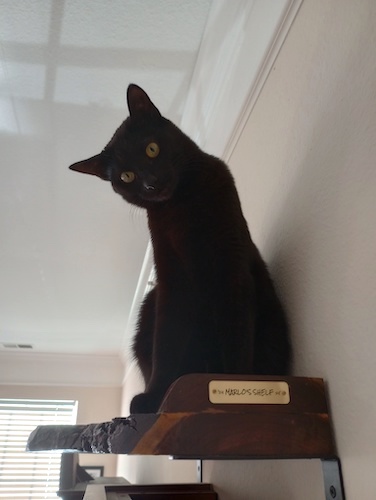
She just kept on being Mae. 70s film fashions? Why bother? She’s going to wear that full-length gown if she feels like it. She’s amusing and charming and delightful and so much fun. And just as sassy and unwilling to change as that cat peering at you from atop the shelf on your wall.

So maybe you made the right decision after all.

Share
Posted in: 1970s films, Feminism, Mae West Moments, Random, TV & Pop Culture Tagged: cats named for movie characters, George Hamilton, Mae West, Marlo, Ringo Star, sex symbols, Sextette, Timothy Dalton

Ray Milland & the Columbo Surge

05/15/2023 by leah@carygrantwonteatyou.com 12 Comments

I adore that Columbo is experiencing a renaissance with younger audiences. Gabrielle Sanchez attributes it to youth’s “clamor for more murder mysteries that skewer the rich.” Not hard to believe given the dominance of The White Lotus and Succession.

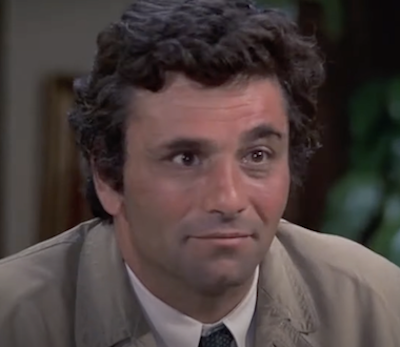
Columbo’s viewership had already been climbing steadily during quarantine, thanks to its soothing appeal. Then Rian Johnson embraced his own Columbo fandom with the Natasha-Lyonne helmed tribute series, Poker Face, this year, guaranteeing that his many young Knives Out fans would follow his wake back to the short man in the long raincoat the rest of us have been loving for decades. (I knew anyone who created Brick would be a classics fan.)

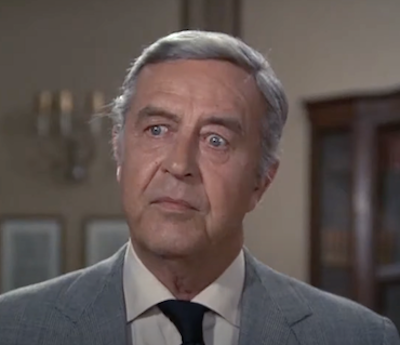
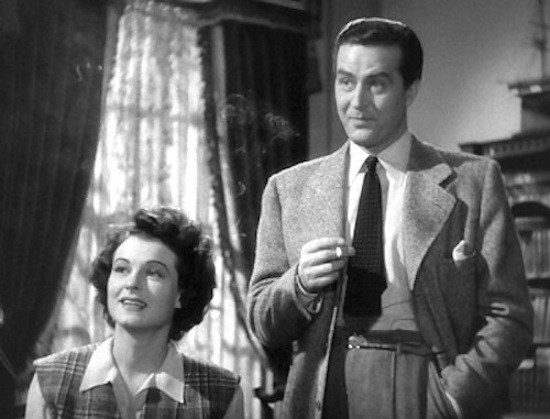
All of this fervor in turn brings new audiences to the classic movie stars we bloggers love, from Janet Leigh to Faye Dunaway to Myrna Loy to Celeste Holm. Even Don frickin Ameche (I’m a big fan of 1939’s Midnight). And of course, this fervor brings us to the suave, compelling Ray Milland, who appeared in two Columbo episodes—both early in the show’s run, when it was at its best.

I’ve often been curious about Milland. “The poor man’s Cary Grant” I read once in reference to him (though it might have been Melvyn Douglas). The dig was especially unfair since Milland was sometimes preferred to Grant: in the casting of Bringing Up Baby, for example. He was chosen over Grant for Dial M for Murder, due to salary or villain-casting worries. But the dig is fair in one sense: Grant was an icon everyone knows still today, and Milland?

“Who is that?” said my mother (echoing every other person I asked).

And yet, even those who don’t know Milland will catch a whiff of Grant. Close your eyes when watching a Ray Milland film, and for a minute, you’ll mistake the Welsh actor’s Mid-Atlantic accent for my favorite Bristol-born actor’s. Watch, for a moment, Milland move, and his easy grace and debonair expressions will trick your eyes too—as will his sharp wit and self-amusement.

And his slim build, height, dark hair, and air of confidence and wealth will throw you. As a Matinee and Mustache tumblr poster brilliantly put it, “Ray Milland looks like if Cary Grant and Jimmy Stewart had a son together after the Philadelphia Story.”

No wonder when The Awful Truth was remade as a musical in 1953, Milland was chosen to play Grant’s role.

But the Oscar-winning star of The Lost Weekend deserves to be remembered for more than just a Grant resemblance. I’ve never thought he ought to be appreciated as much for the good, but miserable-to-watch film that won him his greatest honor as for the comedies and dramas to which he leant such a light comic touch or thrilling suspense. I loved him in The Major and the Minor (1942) with Ginger Rogers, despite the issues with that subject matter. I loved him in The Uninvited, where he’s a charming, funny companion to sister Pamela (Ruth Hussey), grounding a gothic tale that otherwise would have gone too far off the rails.

And of course, I love him as the coldblooded plotter in Dial M for Murder. In fact, that film is one of my least favorite Hitchcocks but for his performance. The superiority and cool assurance he displays in that story make him an especially riveting villain. I particularly admire his character’s appraisal of the hitman’s situation, and how coolly he explains to the poor man that he simply has no choice but to kill his wife.

So it fits then, that in his Columbo appearances, Milland tries his hand at two different kinds of roles: in the second episode of season 1, he plays the beloved husband of the victim, displaying the charm and intelligence that made him such a draw to women in his movies.

And in the second episode of season 2, “The Greenhouse Jungle,” he’s a version of his scheming Dial M for Murder villain, killing his nephew after an audacious kidnapping plot.

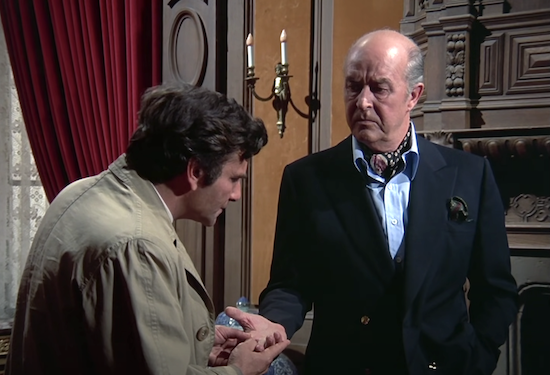
These episodes are such fun to watch. The first, “Death Lends a Hand,” features Robert Culp as the blackmailing private detective who accidentally kills the cheating wife of an influential newspaper owner, Arthur Kennicutt (Milland), after she refuses to give into his schemes. Columbo is a DELIGHT in this episode, playing his usual, I’m-harmless game in some of my favorite scenes. In an early moment, he not only walks into a closet instead of out a front door, but pretends to be a big believer in palmistry with a straight face. Wonderful. We get hints of Columbo’s rapscallion past. And throughout, Milland plays the grieving widower with a dignity that makes us feel for his loss. His growing appreciation for Columbo is subtly shown. The quick, almost impressionistic shots of the killing and cleanup are cleverly done. And Culp is at his irascible best.

“The Greenhouse Jungle” is a bit lengthy for me, with too many shots of cars driving, but the plot is fun to watch and the humor intense throughout thanks to an ambitious young police officer who thinks he’s outsmarting Columbo. In a wonderful scene, the young officer shows off expensive tech equipment he’s bought himself, and our favorite lieutenant quips that he must be a bachelor. I also enjoyed Columbo’s hilarious ploy of disarming Milland, an orchid aficionado, by asking that he repair his wife’s 90-percent-dead African violet. Milland has a blast playing a supercilious, judgmental, superior snob who thinks he’s come up with a genius plot. He is not as clever as the Dial M for Murder schemer, but thinks he is. Milland approaches, but doesn’t quite veer into, hamminess in the role, which makes him riveting. But my favorite aspect of both episodes is–not shockingly–Columbo’s insight and empathy.

In “Death Lends a Hand,” he shows such understanding for the man who had an affair with Kennicutt’s wife. He is surprisingly blunt with him, admitting his suspicions about the relationship right away, but also assuring him he’s not a suspect (and this time, he means it). The golf pro seems like such a nice guy, and it warms us to see Columbo treat him with so much understanding. The lieutenant is also adorably kind to the villain’s minion, right after fooling him to expose his boss.

In “The Greenhouse Jungle,” the wife of the victim is in an open relationship–which makes Milland’s character despise her and his nephew. But Columbo says he admires her for her honesty about who she is, and we believe him. It’s this lack of judgment and lack of the kind of he-man attitude toward women so familiar in other cop shows (then and now) that make Columbo always feel so modern and fresh and lovable.

And how lovely it is to see Ray Milland, an underrated actor in this day (if not in his), playing on a show that is all about the dangers of underestimating others.

This post is part of the Classic Movie Blog Association (CMBA)’s blogathon, Big Stars on the Small Screen: In Support of National Classic Movie Day! Definitely check out the other entries!

For fantastic Columbo episode breakdowns, go to Columbophile!

Share
Posted in: 1940s films, 1950s films, Blogathons, Comedies (film), Film Noir/Crime/Thriller & Mystery, TV & Pop Culture, Uncategorized Tagged: Columbo. Ray Milland, Peter Falk, Poker Face

In Praise of USA Up All Night

04/12/2022 by leah@carygrantwonteatyou.com 10 Comments

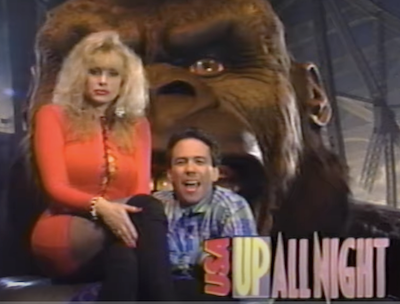
Today I felt a pang on hearing about Gilbert Gottfried’s death. Of course I found him annoying, but I also loved him. He–and Rhonda Shear–gave me USA Up All Night just when I needed it, a show that taught me valuable lessons that have stayed with me ever since. Here’s what I learned from that weekend stalwart, which, for the uninitiated, basically consisted of terrible, terrible movies playing from 11 pm /12 am till the wee hours on Fridays and Saturdays, with interludes of jokes, skits, and commentaries from the hosts.

  1. You Can Find Amusement in So Many Things. Camp was always appreciated in my family: my Uncle Ed’s running commentary on Slugs was a family reunion highlight. But in between those beloved family visits, I had Gottfried and Rhonda, poking fun of absurdly terrible B movies that no other channel would even play. Even Rhonda’s ridiculously perky enunciation of UP could make me laugh. To this day, I find enjoyment in so much pop culture that others don’t, and that’s partly thanks to USA Up All Night.
  2. Don’t Take Your Job Too Seriously. True, it’s hard to not laugh about your job when you’re commenting on Cheerleaders Beach Party. But Gottfried’s constant amusement (you could definitely see “This is my job?” in his expression) reminded me that every job doesn’t have to be a forever-career or vocation. Sometimes, you pay the bills doing something silly, and that’s OK. (And most of us do have absurd tasks even in the most serious of jobs.)
  3. Binging Movies Is Fun. Oh, you poor souls who didn’t learn this fact until Netflix. Gottfried and Rhonda (and the earlier host I never watched, Caroline Schlitt) taught us Gen Xers this back in the early 90s. Think of all the years of joy you missed!
  4. Embrace Your Awkward Self. Gottfried and Rhonda were never cool. They were goofy and absurd and nerdy and silly. But because they clearly didn’t care WHAT they were, they reminded me, an awkward teenage girl, that I didn’t have to be cool to have fun.
  5. Make Solitary Friday Nights an Occasion. In my twenties and early thirties, I moved states several times, each time alone. I was always either single or dating someone long distance, so Friday nights were rough on me. I hated the time it took to be moved from new friends’ weekday to their weekend rituals. To stave off the loneliness, I’d splurge on Fridays: wine, chocolate, good bread, and cheese. Maybe even takeout. I’d grab that remote and begin my movies, and all was right with the world. Sometimes, my preparations led to unhelpful comments by store clerks. (“Oooh-hoooh, honey, you’re having a romantic night tonight, huh?”) But in time, these Fridays became so peaceful and cathartic that I missed them when I had plans. (A bit of a foretaste of middle age, huh?) Would I have known to make an occasion of movie binging each Friday, without Gottfried and Rhonda’s example?
  6. You Never Know What Your Impact Will Be. I don’t think Gottfried could have anticipated that he’d be celebrated by a writer for USA Up All Night when he died thirty years later, do you? You just never know.

Share
Posted in: 1970s films, 1980s films, 1990-current films, Comedies (film), Humor, Random, TV & Pop Culture, Uncategorized Tagged: camp movies, Gilbert Gottfried, in memoriam, Rhonda Shear, USA Up All Night

Orphaning Carrie Killed And Just Like That

02/17/2022 by leah@carygrantwonteatyou.com Leave a Comment

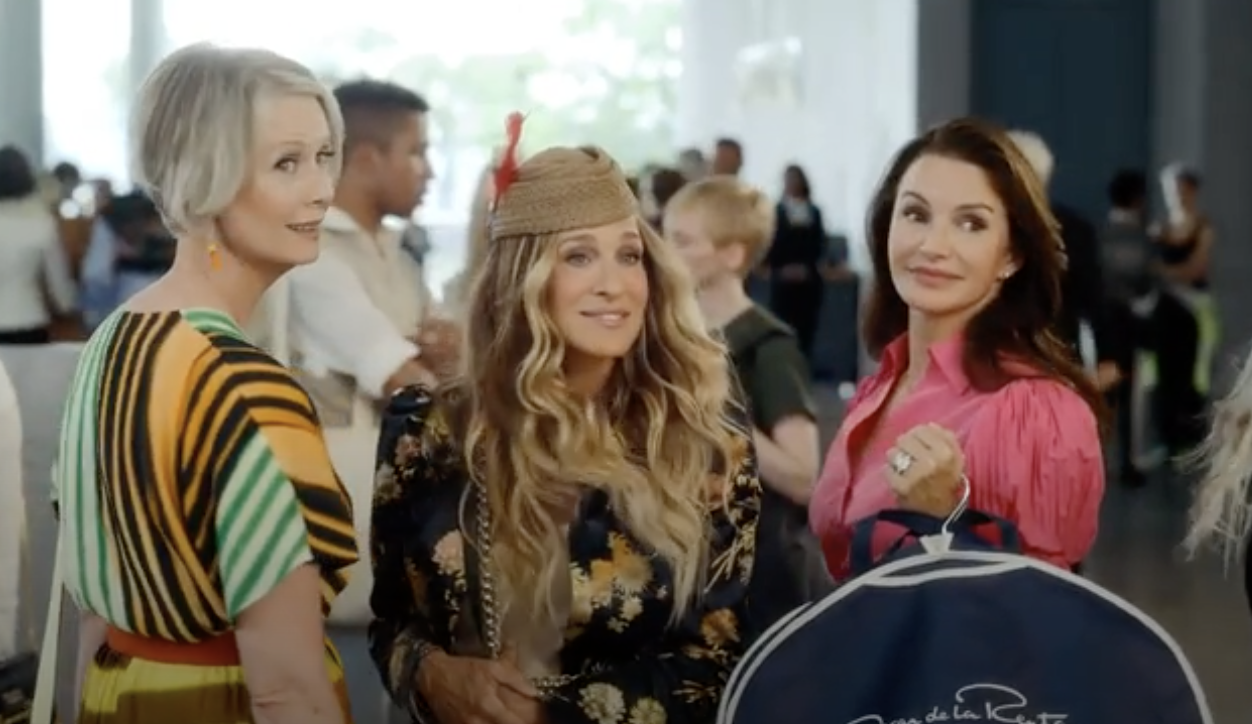
Sex and the City had this odd way of pretending its heroines were parentless. Sure, there was a reference or two, and that lovely episode about Miranda dealing with her mother’s death. But overall, the show just pretended the women had no moms or dads. For six seasons and two movies, the lack of parents enabled the show to stick with sunnier, lighter fare, favoring romance over family drama.

And then the reboot came, presenting the show’s writers with a conundrum: how do you talk about women in their fifties—especially childfree ones—without dealing with aging parents?

Unfortunately, the writers’ solution was to conflate the fifties and eighties, giving the ladies hip replacements and their husbands hearing issues and farmers’-market-forgetfulness. Even the elderly parents of the new characters are pressuring their kids to get married or use their time differently—in other words, things parents of 30-year-olds do.

And how grim these writers make aging seem! Look how much more measured—and funny—Grace and Frankie is in tackling the same ground—and for much older women.

What Carrie, Miranda, and Charlotte would really be doing if they were in their fifties is worrying about their parents’ minds, limbs, and ailments. And for those of us who have been living with the slow-burn terror that our parents will catch COVID—or grieving the loss of those who died of it—the fear of parental aging is what’s keeping us up (not partying neighbors or mysterious dinging sounds). That’s why the erasure of our worry from the experience of 50-year-old women is infuriating in a franchise that used to get us.

What important things this show could have covered about what single, childfree women face in their fifties! What if Carrie’s married siblings with children had expected her to move home to take care of their sick mother or father? How would she have dealt with that as a single woman whom they assumed had time they didn’t?

The parentless state of our heroines also killed so many avenues for humor, like mothers’ attempts to comfort their daughters’ PMS worsening with age by saying, “Don’t worry. You don’t have long to worry about that.” (Just my mom? OK, the cheese stands alone.) Or dads bluffly cheering daughters after bad Bumble dates by saying, “Aren’t you about ready for Our Time? That’s much better.”

Of course, those weren’t the only humorous avenues And Just Like That neglected. Exactly how much did your frugal friend invest in wrinkle cream once she spotted Zoom’s skill for highlighting neck skin sagging? What collection of ring lights has your single buddy amassed to ensure she looks young for those selfies of her breasts for Hinge dates?

And the thing is, your friends in their 50s will confess these acts openly to strangers. That’s one of the beauties of aging: you don’t care what others think. We are ALL Samantha now. I remember the joy of canceling plans for the first time because I didn’t feel like taking a shower. Or the admission that yes, I was watching Lifetime reruns on a Saturday night, or organizing my earrings instead of going to a party. How much I would have loved Carrie dropping by Miranda’s because the latter couldn’t tear herself away from a marathon binging of Tiger King! (An update on the rabbit episode. LOL.) Remember when Carrie struggled to get her friends together? Now THAT’s a struggle for your 50s.

A podcast for Carrie never made much sense to me either—not for a woman who loves being seen (especially not a 90s-era radio show masquerading as a podcast). What does our former sex columnist think of Love Is Blind? Or 90-Day Fiancé? What if she hosted some cheesy reality dating show, like Love Island? That could have been so funny, unlike Che’s humorless standup.

And what silly notions about being woke these AJLT writers have! Is this an after-school special from 1985? What women in their fifties are suddenly realizing they have no non-white friends? I know these characters aren’t as reflective as they could be, but I do believe they have eyes.

What would these women be facing? Well, these characters might be worrying about terminology they use when it comes to race, ethnicity, and gender. Miranda would not have blundered as much as she did in class. But I could see her using a term from five years ago. Or Charlotte, Carrie, or Miranda could be chided by BIPOC friends for a clueless privilege moment. If AJLT wanted to address race in a more organic way, why not have Lily recovering from the trauma of the racism she dealt with during COVID, or Charlotte appalled by other parents fighting critical race theory?

(About midway through the series, I began to wonder whether Michael Patrick King was paying us all back for calling Carrie an unlikeable narcissist by making Charlotte and Miranda so much worse. Why else reinvent history, and make Carrie suddenly the most tolerant and understanding of the bunch? You think Miranda should have been the star? he might have said. I’ll show you…..)

I was, of course, happy to see Miranda, who is played by a public-school advocate, re-inventing her life to do something she found meaningful. That’s what women in their 50s do: Try to find new purpose in their lives. But AJLT had her dump that idealism to play fangirl to a bad comic (how like Carrie that decision was). Che was a missed opportunity, of course. I would have liked Carrie recognizing in Che’s struggles some similarities between what she had dealt with in feeling isolated as a single woman. Their experiences would never be quite the same. But empathy is born of comparison. Carrie didn’t have to fully get it. But she could have begun….

I didn’t expect much of the reboot, I admit, despite my love for Sex and the City. The movies, after all, had already done damage. Samantha’s absence, I knew, would do more. Still, I didn’t expect to be this disappointed. I’m younger than these women, but they always echoed some measure of my experience—and some measure of my future.

Until now.

Parents couldn’t have saved And Just Like That entirely. But it would have been a start.

Share
Posted in: 1990-current films, Anti-Romance films, Childfree, Comedies (film), Feminism, Humor, Romantic Comedies (film), TV & Pop Culture Tagged: And Just Like That, childfree women, middle-aged women and TV, Sex and the City

The Dude Versus Hitchcock

02/13/2021 by leah@carygrantwonteatyou.com 4 Comments

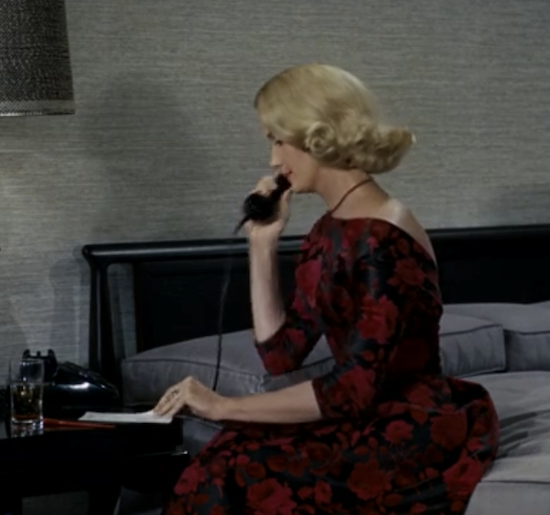
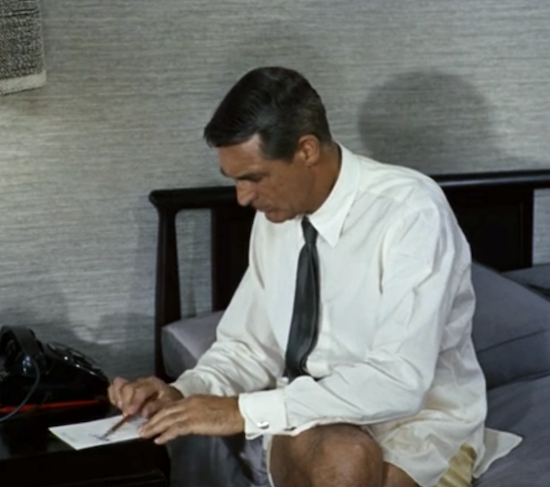
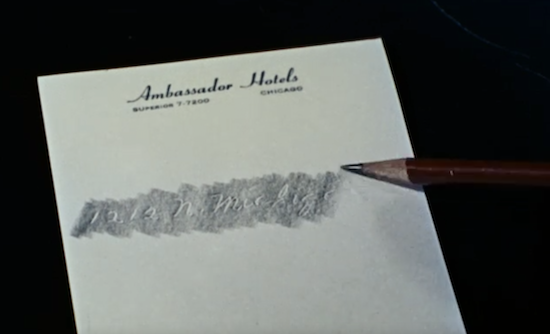
So the devious, sexy spy of North by Northwest, Eve Kendall (Eva Marie Saint), is trying to elude dupe Roger Thornhill (Cary Grant). She gets a secret call from her evil lover, Phillip Vandamm (James Mason), while she and Roger are together and writes down an address for their rendezvous.

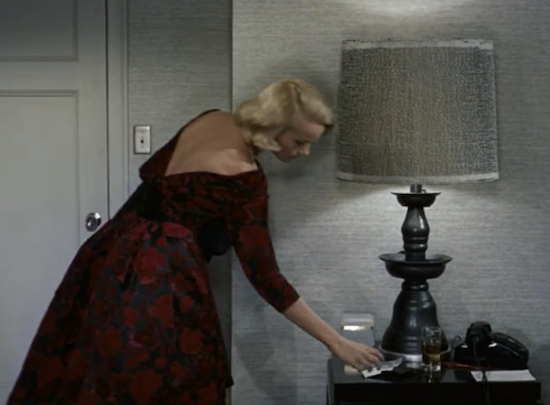
She carefully tears off the paper with the address, places it in her purse, and then—ready for this?—walks away without the notepad.

There’s that notepad, just a pencil trick away from exposing that address. Will she remember to bring it with her? Roger is watching!

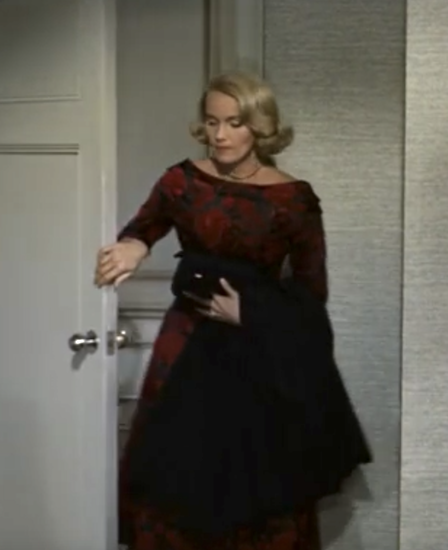
Alas. She walks away.

Will she remember before she sneaks away? Of course, right? It was just a momentary oversight, her wits clouded by the sexiness of her target, Roger.

We see her pick up several other things.

(Oh, that sly Hitchcock.)

Then she leaves the room, SANS NOTEPAD.

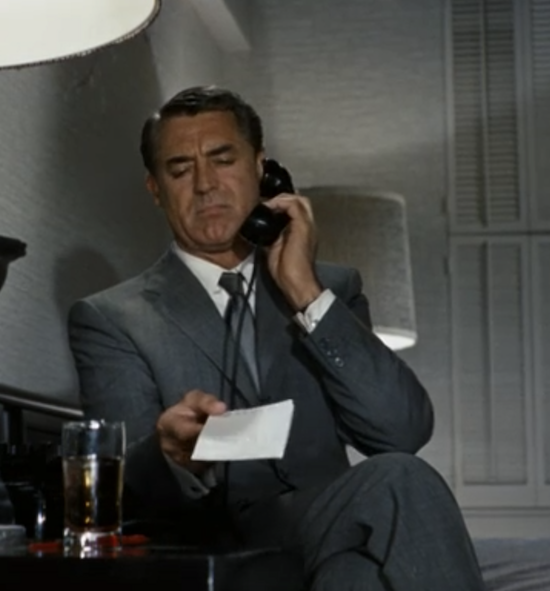
Roger, having watched five minutes of television/film in his life, of course knows the pencil trick. He holds the paper this way and that….(Why? What does he think he’ll see?)

Cary Grant holds notepad with clue, North by Northwest

He takes out his pencil. He does the trick pant-less (in a kind gesture of Hitchcock’s, who knows his female fans).

Cary Grant does the pencil trick with his clue.

There the address is. The super-secret address Eve was so anxious to hide.

Invisible address exposed thanks to pencil.

How long have you known this trick?  Were you six? Maybe seven? I’m pretty sure Encyclopedia Brown taught me. It’s the kind of spy craft a child can understand and appears in every detective/noir/suspense film or TV episode that assumes its audience is young/dumb/abysmally ignorant of pop culture. Frankly, I would have thought such a plot device beneath Hitchcock. But he never did like giving his heroines much credit, so of course, this spy who has supposedly fooled JAMES MASON must be outsmarted by a different man. Who has a background in….advertising. And lives with his mother.

Yes, our sexy spy was outfoxed by a trick that Micky Mouse might have taught me in the 80s, back when Disney was hawking his image on magic trick books, and I thought that a wand that lifted a playing card with a hidden piece of string was really something.

True, the pencil maneuver wasn’t QUITE as old of a trick when Hitchcock used it, but it wasn’t exactly fresh in 1959. (Though, as my friend points out, today it might become new again, with so few people using pencils.)

I used to roll my eyes when I saw this pencil-and-notepad trick, annoyed by the lazy writing. But now I laugh. Because the Coens offered a send-up of this trite scenario in their—appropriately enough—satire of/tribute to The Big Sleep, The Big Lebowski. The Dude tries to outsmart a villain using the pencil trick. His excitement is intense at his own cleverness. But alas for the Dude, the “secret” isn’t what he expected. If you are of delicate sensibility, I wouldn’t advise it, but if you don’t mind some crude humor, enjoy this film clip and Jeff Bridges’ brilliance in it. (Watch that loopy run of his! And his “just acting natural” look at the end!)

There are many, many jokes about detectives in The Big Lebowksi. One of the most evident is that unlike those brilliant sleuths who with scant clues manage to figure out everything, the Dude can’t figure out anything—the mystery, which people are manipulating him, where his rug is. And unlike the driven fictional detectives who will sacrifice anything for the job, the Dude is pathologically lazy, sharing with them only some loose sense of ethics, questionable associates, and a love for alcohol (but with the Dude, of course, it’s not a hardboiled choice like whisky, but instead White Russians).

Yes, the Dude is not a good detective, and would be an even worse spy. But guess what, Hitchcock?

Even the Dude knows the pencil trick.

Share
Posted in: 1950s films, 1990-current films, Drama (film), Femme fatales, Film Noir/Crime/Thriller & Mystery, Humor, TV & Pop Culture, Uncategorized Tagged: Hitchcock, noir, North by Northwest, pencil trick, The BIg Lebowski, The Dude

Advice to a Fritz Lang Heroine, after Too Much Crime TV

04/13/2018 by leah@carygrantwonteatyou.com 2 Comments

Oh honey. The reporters are telling you the police are closing in. Every black and white outfit has you jumping. You’re burning your dress in an incinerator in the backyard.

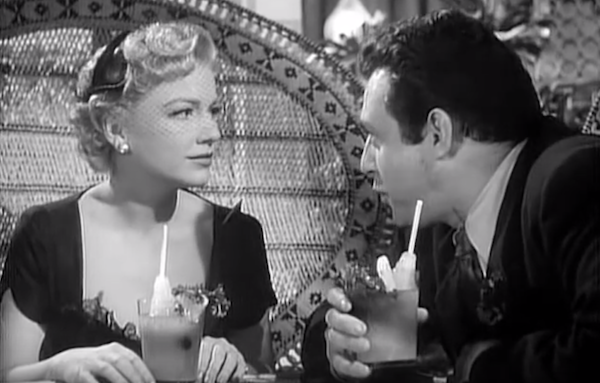
Let’s refresh why. The date is 1953. You, our heroine of The Blue Gardenia, are played by Anne Baxter. The actress, having shredded every scheming expression from three years before, is now you, the dewy fiancee of a soldier abroad who works at the phone company. As you celebrate your birthday on your own with his (absent) and hers (present) champagne, you take out your soldier’s glorious, cherished letter to find, SURPRISE: He’s fallen for a nurse.

What to do? Well, get drunk with the local cad who has just called to invite your roommate to a place called The Blue Gardenia.


Go to his place after he gets you drunk. After all, you’re too intoxicated to realize “blue gardenia” is a cheap pseudonym for “black dahlia” and therefore a sign of danger;  you’re too intoxicated to even realize there will be no “party” at his pad. (Have you seen no films? Raymond Burr is playing the cad! Run!) So of course, you get in a mess, have to fight off his  attempts to rape you by grabbing a poker, and then you black out to find him dead.

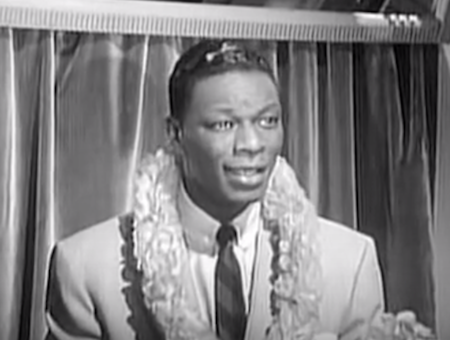
(Before we get to the rest of the plot, there’s a haunting moment in the bar when you had a chance to walk away. There’s handsome Nat King Cole singing “Blue Gardenia,” and somehow his soulful sincerity doesn’t start you sobbing OR walking away from the lying playboy before the mess starts? King’s notes sear through me, more than half a century later. How is it possible they leave you unmoved? But I digress.)


The question of the film–Did you murder the guy?–isn’t that interesting to me, as I’m not sure how anyone in this circumstance could be called a “murderess” anyway. It’s an accident IF it happened, and the need for self-defense evident. But the local crime beat reporter has you convinced your only salvation is to seek refuge in the protection of his newspaper’s arms. And he—the surely not self-interested sleaze reporter—will save you from the big bad police about to knock on your door.

What’s strange to the modern viewer, accustomed to far too much crime TV, true crime books, and novels galore, is that they have NOTHING on you, my friend. A dress. A shoe size. A hair color. Some thoughts about your mannerisms from a flower seller and waiter. All that they really have on you—besides a call to your house that wasn’t even for you (and won’t hurt your friend since she has an alibi)—is that you are a MESS. Calm down, friend. Call over your wisecracking friend, Crystal (Ann Southern); ask for help. Keep that reporter out of your thoughts; honey, heaven help you, he’s almost as gullible as you are proving to be. Instead, put on your Nancy Drew heels. This case is something even that black-and-white thinker could manage. Heck, Encyclopedia Brown would have it down in two minutes.

And then you won’t be dependent on sad sack double crossers who treat your friend like a whore because she was once married, who only like you IF you’re not someone who would defend yourself from an abusive attacker. Then you can solve the crime, put on Nat King Cole’s record, sing along as you mourn your lost love, and then dance your way back to happiness with your hilarious roommates.

Alas, it’s still 1953 for you, my friend. And so the final thoughts in the film are the new cad’s, who is soon to be your love. And all we can do is watch, and pity.

Share
Posted in: 1950s films, Anti-Romance films, TV & Pop Culture Tagged: Anne Baxter, film review, Fritz Lang, Nat King Cole, Raymond Burr, The Blue Gardenia

One Liberal’s 2018 Distraction Guide

01/04/2018 by leah@carygrantwonteatyou.com 6 Comments


I assume those of you horrified by 2017 headlines have been fighting back with the help of political action sites. But sometimes what you need is to reset your equilibrium just so that you can get through the day, and if that’s what you’re looking for, here are my current (admittedly often silly) survival routines. (Note: I don’t expect my suggestions to be yours, but maybe your disagreement about mine will lead to suggestions of your own, which I’d love to hear.) Here are mine:

Enjoy a Little Snark
Tom and Lorenzo are this fashion police duo who are hilariously harsh. As someone who hasn’t been knowledgeable about fashion since middle school, and never any good at it, I’m not sure why I find fashion critiques so funny. My shoes alone would give them years of fodder. But I love them anyway, and their TV reviews, which originally brought me to their site (Mad Men and Downton Abbey tributes/slams in particular), are always on point.

When I can’t find the sarcasm I need, I head over to someecards or bad reviews on Metacritic. Go to the most negative reviews, and try not to laugh, such as those giving 0% ratings for Collateral Beauty. How about this from the usually affable Peter Travers?: “The unholy mess that director David Frankel and screenwriter Allan Loeb have unleashed for the holidays strands an all-star cast…on a sinking ship that churns the waters from absurd to zombified with frequent stops at pretentious.”

Ask Friends/Family for a Cute Photo of the Day—Over Email
On terrible news days, I now demand, “Cute photos needed!” of my sister with young toddlers, and presto! They arrive. Seriously, what parents will say no to sharing how adorable their children are? On Facebook or Instagram, you need to wade through other things you should avoid, so stick with Old School, my friends: Email. If you’re not a fan of children, you will find friends and family equally willing to share cute pet snapshots. Get to it.

Celebrate a Pal for No Reason
My friend Kerry once stopped by my door with a package and a smile, and announced, “It’s Leah Appreciation Day!” I burst out laughing, as she knew I would. I can remember few times I was so amused and touched, and I made a mental note at the time: This is a fabulous idea. I can’t say I do it enough, or with the aplomb Kerry—a master of silly joy—has mastered, but it’s surprisingly recuperative on a day you’ve watched too much news to buy a dumb card or film for a pal, and announce how much you appreciate him/her with over-the-top fanfare. Birthdays you may feel pressure to get it right. Random days? It’s just fun.

Break Out Some Silly TV
I thought the Psych movie was a remarkably timely gift, but now Amazon has put all the episodes on Prime! Score!

Other light favorites (given Netflix’s recent trends of show ditching, these are only true as of Jan 2018):

Netflix:

  • Arrested Development
  • Schitt’s Creek
  • The Good Place
  • Master of None
  • The IT Crowd
  • Sirens
  • The Office (British & American)

Hulu:

  • 30 Rock
  • Parks and Recreation
  • Party Down

Amazon Prime:

  • Leverage (Prime, Season 1)
  • Head Case (with Alexandra Wentworth; pay only)
  • Psych, of course! (Prime)

Invest in Some Cinematic Feminism
It’s easy to just cry at the #MeToo movement; instead, seek inspiration. Check out some awesome blogathons to discover feminist icons of film. Check out the The Anti-Damsel Blogathon from 2015, as just one example. Commit to discovering the work of female filmmakers, as did Girls Do Film two years ago for her New Year’s resolution.

And if you haven’t yet encountered some of the fantastic feminist TV series out there, do so now. Here are a few from Netflix (The Handmaid’s Tale is obviously next for me):

  • Jessica Jones (a superhero who survived rape and combats her rapist and those he’s harming)
  • Miss Fisher’s Murder Mysteries (a woman in her 40s in 1920s Australia who is portrayed as both sexy and empowered)
  • Alias Grace (an intriguing fictionalization of a true-life 1840s murder, and the male treatment that may have contributed to it)
  • Crazy Ex-Girlfriend (a musical comedy that breaks boundaries in its portrayal of romance, feminism, and mental illness)

Tune out Everything But Your Pets
Guess who doesn’t know what’s going on out there? Guess who isn’t too blame? Too often I am watching TV or my computer while petting my cat, but when I give my high-spirited feline my full attention, there’s no low-grade stress accompanying my actions, and he’s more likely to cuddle and comfort. Also, he’s less angry.

View Silly YouTube Clips
My favorite clips are Key and Peele’s, and if you’ve experienced the brilliance of Get Out! or found yourself falling for Obama’s Anger Translator, Luther, during that White House Correspondents Dinner, you’ll know why I love this amazing comic duo. My personal favorite is the substitute teacher episode, but there are so many.

If you’re a fan of Issa Rae and her HBO hit, Insecure, you’ll love her earlier webisodes, The Misadventures of Awkward Black Girl. “The Hallway” (fewer than 6 minutes) may be my favorite illustration of social awkwardness ever. If all else fails, you’ve got cat videos.

Dust off Those Stamps
Lately, I’ve been getting cards and books in the mail, with thoughtful notes from friends and family. Maybe we’re just so Internet and texting crazy that we forget how wonderful it is to see something that’s NOT a bill or junk in that mailbox. For a while, I’ll forget this need, and stop sending anything, and when I do again, I remember, I love mail. So does everyone else. I believe this need is one of the unspoken reasons for the rise of Amazon. Too lazy for cards? Grumpy Cat postcards. 5 minutes.

Reread Favorite Books and Discover New Comic Ones
Jane Austen is restorative for me; in fact, she knows I’m stressed before I do. Usually, she’s my canary in a coal mine; when I have a strong desire to read her, I know I need to consider some serious downtime or therapy or re-examination of my existence. Lately, she’s just a news recovery mechanism, as have been my favorite mysteries. Walter Mosley’s insightful detective, Easy Rawlins, is on my bedside table now, right next to some new (not depressing) memoirs I can’t wait to read: Lindy West’s, Adrian Shirk’s, and Amy Tan’s.

Put that Phone Down at Night
You know you shouldn’t read news before you go to sleep. Put that phone far enough from your hands that you can’t access it if you’re sleepless. You can read the headlines and delve into those depressing articles in the morning, when work will soon take you away. Not at night, when you’ll dwell and toss and turn. There are even studies on how that glare keeps you up. Move the phone.

Go to a Ridiculous Festival/Museum/Parade
There’s a museum down the street from me that is just full of things hoarders have offloaded. Last time I visited, there was a room full of dolls. It was vaguely horrifying, with old Troll dolls and Cabbage Patches. Yeah, I was freaked out, but it was also magic. See a poutine or bacon festival in your area? Sure, it’s about as healthy as mainlining Crisco, but it’s one day: Go.

Set a New Friend/Family Ritual—and Keep to It
A weekly karaoke night? A Stranger Things viewing party? A regular football watching ritual at the bar? It doesn’t matter. We need company right now. Make sure you have it.

Listen to Awesome Podcasts
If you’re a classic movie fan and haven’t been listening to Karina Longworth’s You Must Remember This (Podcast), what are you waiting for? Her series on the blacklist alone is enough to enthrall, and there’s so much more. The Atlantic includes a long list of awesome podcasts for those with any and all interests.

Watch Depression-Era Comedies
This is a movie blog after all, and I’ve found both eerily prescient warnings and relief from stress in classic favorites. I know some of you classic movie doubters think we’ve evolved so much that there’s no way those almost a 100 years ago were like you. But during the Depression, people were watching some decadently clothed folks doing silly things, just like you are now. Fred Astaire and Ginger Rogers were wowing with their fancy footwork and quick barbs, and then easing their fans into a little romance. Mae West, pioneering screenwriter and star, was sashaying her way across the stage and then the screen, seducing men almost half her age with lines so funny we’re quoting them now. I highly recommend these two options as regular fare, and you can search through this site for much more, but if you’re smart, you’ll find the work of my peers at the Classic Movie Blog Association and discover new favorite film recs from those much more knowledgeable than I. It’s no accident that film comedies from the 30s are among the best ever made: They were needed.

Share
What strategies are helping you get through the news? Post here, or share with others. Let’s get by, as the Beatles have told us in my least favorite of their songs (but a wise one nonetheless), with a little help from one another.
Share
Posted in: 1920s films, 1930s films, Comedies (film), Humor, Random, TV & Pop Culture Tagged: #MeToo, distractions from politics, feminist films, liberal distraction guide, lightening your mood, silly classic films

Crushing on The Cutting Edge’s Doug

06/25/2017 by leah@carygrantwonteatyou.com 10 Comments


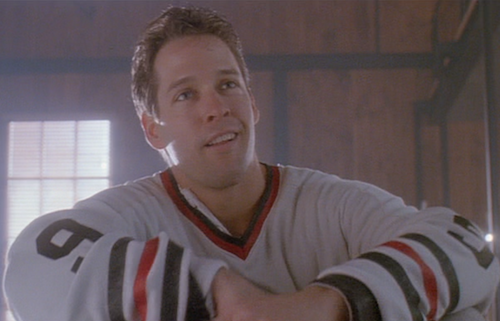
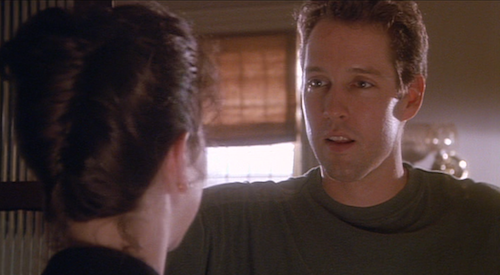
There’s a certain generation of women who still laugh when they hear “toe pick.”  Then they begin dreaming about a certain swoon-worthy character in the memorable scene when that line was first employed, and wonder why aren’t romantic leads like that now? Why can’t they all be like D.B. Sweeney’s Doug Dorsey: athletic, virile, funny, easygoing, ambitious, and more emotionally open than those traits might suggest?

The Cutting Edge (1992) never received the credit it deserved, but I hear the occasional reference to it in films and TV episodes, echoing the devoted following it obtained then and still now for its engaging sports narrative, its funny tone, and the sizzling chemistry between Sweeney and Moira Kelly.

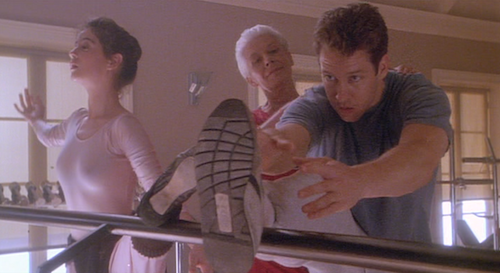
In the story, Doug’s dreams of hockey stardom have been destroyed by an injury to his eye at the Olympics. Kate Moseley’s (Kelly’s) Olympic dreams have been dashed by a particularly ugly drop by her figure skating partner. The next Olympics is coming up, and no one wants to partner with the notoriously chilly Kate. Meanwhile, Doug has lost his scholarship and any chance at even a minor league hockey career. Then one day, Kate’s coach approaches Doug with some figure skates, and despite his (and her) hilariously expressed doubts, an unlikely professional pairing begins to form. Before long, Doug starts to realize he has feelings for her, and she, in spite of her engagement to another, begins to realize she is attracted to him too.

There are many differences between the two characters: he’s a stereotypical guy in many ways, and she’s a reserved, uptight, very wealthy and very feminine woman.


But you see the attraction too, especially their hyper-competitiveness and dedication. What I love so much about their union is that BOTH of them grow due to the influence of the other. It’s not just the punishment of the type A personality woman we so often see (though Kate is definitely–and deservedly–taken down a peg or two). (Actually, their dynamic is so similar to the one in It Happened One Night that I wrote about it in one of my earliest blog posts.)

My own love for Doug Dorsey was quite fervent. He was EVERYTHING I wanted in a partner in my late teens: Smart, relaxed, charismatic with an incredibly sexy smile. Confident but open, willing to admit mistakes. Promiscuous when he wasn’t in love, but when he was, not willing to go for Kate if she was still engaged or had too much to drink. Proud but mature enough to leave the pride behind when he had to. Ultimately willing to prioritize her even above his dreams. And, of course, there was his tolerance of her heinous (but enthusiastic) dance skills, which bore a strong resemblance to mine. His ability to throw a paper wad into a trashcan and make it. His skill with the cutting line, and reluctance to read Great Expectations (close to my least favorite book at the time).

My love for Doug Dorsey led me to seek D.B. Sweeney’s other work over the years, and believe me, it hasn’t been easy: Eight Men Out, a Leverage episode. Why his fully embodied, sensual, funny performance didn’t lead to stardom, I don’t know. But although he and I have aged, my opinion of Sweeney’s character hasn’t. What I realize now is that he was also what a teen’s heartthrob character so rarely is: an adult (with, admittedly, some rough edges). That’s why I can still enjoy the film now, when other teen loves have lost their allure. And besides all that? The Cutting Edge is such a fun sports film (another favorite genre of mine), and it’s full of comedy, especially when Doug confesses he’s become a figure skater to his working class, uber-masculine brother (and hometown).

When I heard Font and Frock & Silver Screenings were hosting a Reel Infatuation blogathon celebrating character crushes, I thought of others: obviously Nick of The Thin Man, Cary Grant’s hilarious The Awful Truth husband. But suddenly, D. B. Sweeney popped in my head, reminding me of Doug and the long-ago, but never-dead crush, and I figured some of the rest of you hadn’t had the joy of encountering him yet, and others would love the reminder. Hope if you haven’t seen the film yet, you’ll soon enjoy toe picks as much as I do.


For others’ wonderful posts on their film crushes, click here.

Share
Posted in: 1990-current films, Action & Sports Films, Comedies (film), Romantic Comedies (film), TV & Pop Culture, Uncategorized Tagged: best 90s romcoms, best chemistry romantic comedies, D.B. Sweeney, figure skating movies, Moira Kelly, The Cutting Edge

Why I Was Happy to See So Many Teen Boys at Wonder Woman

06/12/2017 by leah@carygrantwonteatyou.com 6 Comments


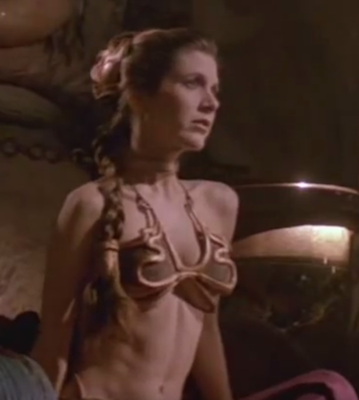
When I was a kid, boys fantasized about Carrie Fisher as Princess Leia, half-naked and chained to Jabba the Hutt. While I might flinch at the fact that the slave scene was the peak of adolescent fantasy, I was always happy that my male peers were lusting after a woman who was tough, a warrior, a hero in her own right, someone who ultimately triumphed over her attacker.


It’s been disappointing in the years since, to not only have so few such women in film to idolize myself, but that the objects of male fantasy have so rarely been strong: too many female heroines, even in DC Comics and Marvel franchises, have assisted rather than truly partnered with or exceeded male peers. And for every strong woman, there have been so many Mary Janes and Lois Lanes waiting for heroes to save them, their strengths always inferior to those of their men.

And then there was Wonder Woman. How I admired Lynda Carter as a kid: her stunning beauty, her awesome metal accessories, her spin, that cheesy music that accompanied her. But most of all, I loved that Wonder Woman stood on her own, was stronger than men, and that her power never subtracted from her sensuality. In fact, her superhuman skills ADDED to her sexiness. She didn’t even seem like much of an athlete till the special effects kicked in. (That running style, my friends, for all their similar fashion sense, was not Flo Jo’s.) For the feminine, klutzy girl I was, that was an important message: you can be strong AND girly.


When I read Slate author Christina Cauterucci’s objections to the seductive clothing of new Wonder Woman Gal Gadot, my first reaction was to defend: What about the need for sales, how essential it was for this film to succeed to set the stage for other female leading-franchises? But I think director Patty Jenkins was doing more than bowing to necessity; she was building her own feminist messages: Hey, young men. Strong women are hot. And if they’re stronger than you, charging down the battlefield without you, that’s EVEN HOTTER. Hey, young women, your strengths will make you desirable. Fight to retain and build them.

My friend and I at the movie theater, both born in the 70s, began by enjoying the funny, entertaining, empowering film, and ended it by laughing about the groups of young men we spotted in the rows behind us when the lights went up. “A whole island of hot women?” my friend said. “No wonder they’re here.”

But that’s just it: Gadot’s and her fellow Amazons’ sexiness got male teens through the door.


It’s hard to imagine that our country would be quite where it is today, so backward with women’s rights, if more adolescent boys had fantasized about such powerful women. It’s hard to believe we’d be where we are had more women grown up believing that power and desirability don’t have to compete.

At least we have her our heroine now. Thank you, Patty Jenkins. Keep ’em coming.

Share
Posted in: 1990-current films, Action & Sports Films, Drama (film), Feminism, TV & Pop Culture Tagged: Gal Gadot, Lynda Carter, Princess Leia, sex appeal and feminism, teen boys attending Wonder Woman, teen boys fantasies, Wonder Woman
1 2 3 4 5 6 Next »

Recent Posts

  • 100 Years Later, Still Scary: Dr. Caligari
  • Escaping Out of the Past (1947)
  • A Weeper for Those Who Love Jerks
  • Thank You, Academy, for Not Infuriating Me
  • Challengers (2024) Is a Bad Movie

Subscribe to Blog via Email

Enter your email address to subscribe to this blog and receive notifications of new posts by email.

Categories

  • 1920s films
  • 1930s films
  • 1940s films
  • 1950s films
  • 1960s films
  • 1970s films
  • 1980s films
  • 1990-current films
  • 2020s films
  • Action & Sports Films
  • Anti-Romance films
  • Blogathons
  • Childfree
  • Comedies (film)
  • Drama (film)
  • Feminism
  • Femme fatales
  • Film Noir/Crime/Thriller & Mystery
  • Gloriously Silly Scenes
  • Horror
  • Humor
  • Mae West Moments
  • Musicals and dancing films
  • Oscars
  • Random
  • Romance (films)
  • Romantic Comedies (film)
  • The Moment I Fell for
  • Turn My Sister into Classic Movie Fan
  • TV & Pop Culture
  • Uncategorized
Share
Classic Movie Blog Hub Member

Recent Comments

  • leah@carygrantwonteatyou.com on Meg Ryan’s Fate Foretold in Joe Versus the Volcano
  • Ryan on Meg Ryan’s Fate Foretold in Joe Versus the Volcano
  • leah@carygrantwonteatyou.com on 100 Years Later, Still Scary: Dr. Caligari
  • The Classic Movie Muse on 100 Years Later, Still Scary: Dr. Caligari
  • leah@carygrantwonteatyou.com on 100 Years Later, Still Scary: Dr. Caligari

Archives

  • November 2025
  • September 2025
  • May 2025
  • March 2025
  • January 2025
  • November 2024
  • August 2024
  • July 2024
  • May 2024
  • March 2024
  • February 2024
  • December 2023
  • November 2023
  • October 2023
  • September 2023
  • August 2023
  • July 2023
  • May 2023
  • April 2023
  • March 2023
  • January 2023
  • December 2022
  • November 2022
  • September 2022
  • July 2022
  • May 2022
  • April 2022
  • March 2022
  • February 2022
  • October 2021
  • September 2021
  • April 2021
  • March 2021
  • February 2021
  • December 2020
  • October 2020
  • September 2020
  • July 2020
  • May 2020
  • April 2020
  • March 2020
  • February 2020
  • December 2019
  • October 2019
  • September 2019
  • June 2019
  • May 2019
  • April 2019
  • February 2019
  • January 2019
  • November 2018
  • September 2018
  • July 2018
  • June 2018
  • May 2018
  • April 2018
  • March 2018
  • February 2018
  • January 2018
  • November 2017
  • September 2017
  • August 2017
  • July 2017
  • June 2017
  • May 2017
  • April 2017
  • March 2017
  • February 2017
  • January 2017
  • December 2016
  • November 2016
  • October 2016
  • August 2016
  • July 2016
  • June 2016
  • May 2016
  • April 2016
  • March 2016
  • February 2016
  • January 2016
  • December 2015
  • November 2015
  • October 2015
  • September 2015
  • August 2015
  • July 2015
  • June 2015
  • May 2015
  • April 2015
  • March 2015
  • February 2015
  • January 2015
  • December 2014
  • November 2014
  • October 2014
  • September 2014
  • August 2014
  • July 2014
  • June 2014
  • May 2014
  • April 2014
  • March 2014
  • February 2014
  • January 2014

Meta

  • Log in
  • Entries feed
  • Comments feed
  • WordPress.org

Copyright © 2025 Cary Grant Won't Eat You.

Church WordPress Theme by themehall.com