Cary Grant Won't Eat You

Classic movies for phobics

  • About
  • eBooks
  • Previous Blogathons
Classic movies for phobics

Romantic Comedies (film)

The Film I Re-Watched Despite Missing a Quarter of It: The Major and the Minor (1942)

07/03/2014 by leah@carygrantwonteatyou.com Leave a Comment

MillandRogers
Those born in the age of streaming will never know the excitement of catching a favorite film on TV, running to get a tape on time to record it, and succeeding. With adept timing skills, one could even cut out the commercials. There were a few films I loved so much that I was willing to record them even if I had missed a significant portion of the start; What about Bob? was one of them. (40 minutes of a Bill Murray flick is still 40 minutes of Bill Murray.) But my favorite of those I only partially caught was Billy Wilder’s Hollywood directorial debut, The Major and the Minor. After a decade of watching the film from 25 minutes in due to a tardy discovery of it on TCM, and even tardier taping effort, I finally viewed the whole movie, and discovered it was even more charming than I’d thought.

The film begins when Susan Applegate (Ginger Rogers), fed up with New York, tries to head home to Iowa, only to find the train fare back has increased and she can’t afford it. Faced with the prospect of more skirt chasing and job changing, Susan pretends she’s a kid to get the half-price fare instead.

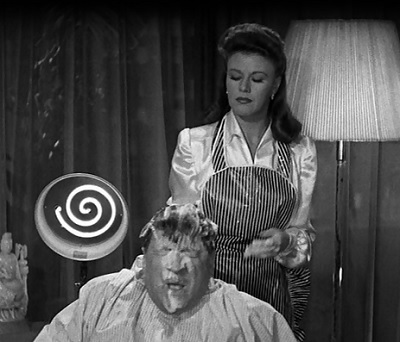
Susan's reaction to client harassment (a part I missed!)

Susan’s reaction to client harassment (a part I missed!)

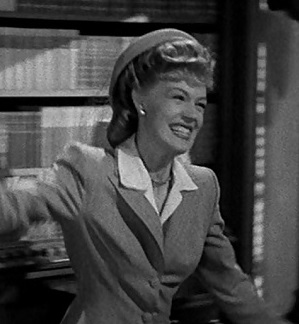
Since this is a Wilder film, you know her ruse will lead to trouble. The train conductors, suspicious of her maturity, keep trying to catch Susan—asking her birthdate, spying on her reading material, looking her up and down. Finally, they spot her during an inadvisable smoking break. She escapes being thrown off by running into the berth of Major Kirby (Ray Milland), an instructor for a military academy. Kirby believes her kid routine and lets her stay in his other bed, but when the train stops due to bridge trouble, his fiancé, Pamela (Rita Johnson), drives up to see him and catches Susan. More clear-sighted than her husband-to-be, Pamela assumes Susan an adult and heads back to the school to get him fired.

Of course, Kirby beseeches Susan to visit his academy (as Sue Sue, her alter ego) while the train is delayed to prove his innocence, and Susan, moved by his sweetness and guilty at what she’s caused, agrees. So now there’s a woman pretending to be a child at a military school full of boys who might question her age, but have no doubts whatsoever about her attractiveness. You can imagine the kind of scenarios that ensue.

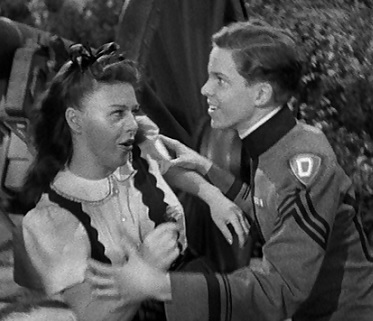
Gingerandtheboys
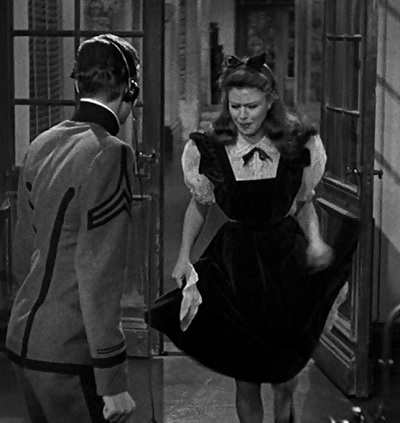
In my favorite moment, Rogers uses her dancing skill to lure a cadet off the phone long enough to assist Kirby’s efforts to get back into active military service, plans Pamela has secretly been trying to derail.

Rogersflirting
Of course, there are some questions here. Already in her thirties, Rogers looks about as likely to pass for 12 as I would for a toddler. Her childish voice does indeed sound like “Baby Snookums,” as she later admits, making you wonder whether Susan has ever encountered an actual twelve-year-old; that voice has to be a good seven years off. At first, I just considered the choice of Rogers bad casting; a frailer woman with a delicate voice might have pulled off a more convincing pre-adolescent than an actress with such a deep timbre and womanly shape.

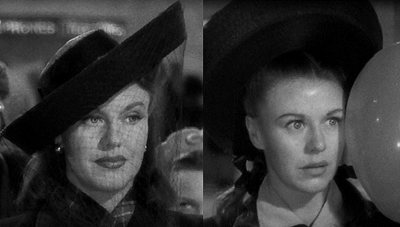
Susan (Rogers) at the left; Sue Sue, her 12-year-old attempt, at right

Susan (Rogers) at the left; Sue Sue, her 12-year-old attempt, at right

But like Barbara Stanwyck’s appalling British accent in The Lady Eve, you begin to view Rogers’ very implausibility as part of the humor.

Despite the audience’s likely doubts about this community being so taken in by a woman who does not look or talk like a twelve-year-old, the depiction of their wholesomeness is so consistent throughout the movie that you soon forget your skepticism. This is a community, after all, in which the school administration and Kirby’s fiancée plot to fire him for sleeping in the same berth with a full-grown woman, but react this way to finding out Susan is a child:

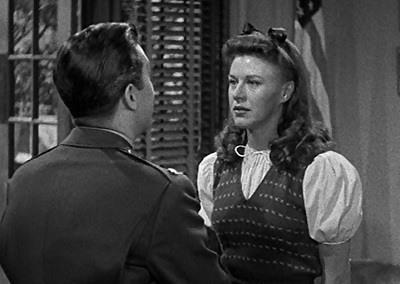
Pamelajoyous
Throughout the movie, writers Charles Brackett and Wilder sidestep the scarier possibilities suggested by an older man-kid relationship by making those possibilities beyond the imaginations of people at this school. Therefore, in spite of Milland’s attention to Sue Sue, he never comes across as threatening or creepy, as heroes in other films with similar stories have, such as 1999’s Never Been Kissed. In fact, Milland plays the part of an avuncular type so well that it took about four films more of his work for me to actually recognize that he was attractive at all (this in spite of the great range of his roles, including his Oscar-winning performance as an alcoholic on a binge, Wilder’s The Lost Weekend.)

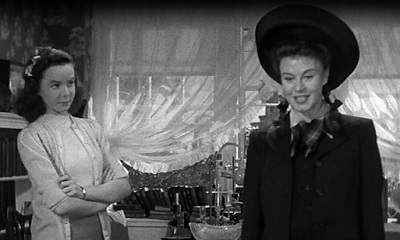
Predictably, the only one to discover the truth about the imposter’s age is the same age herself: Pamela’s sister, Lucy (Diana Lynn). Lucy is a great character, a budding scientist whose knowledge of human maturation would have made her perceive Sue Sue’s act even if her clothing hadn’t given it away. The two quickly become allies in separating Kirby from the unlikable Pamela.

SueSueandLucy
Once over the shock of Rogers playing a child, you start to realize just how marvelous she is in the role. She’s so convincingly jaded by her New York disappointments, a cynicism that comes out in an impeccable delivery of the screenwriters’ marvelous lines. Her dawning love for Kirby is equally convincing. Just as Rogers is said to have persuaded all of America that Fred Astaire was a sexy catch, so here she persuades us all that there is nothing more lovable than a guy who is trying to help a kid adjust to the pangs of early adolescence.

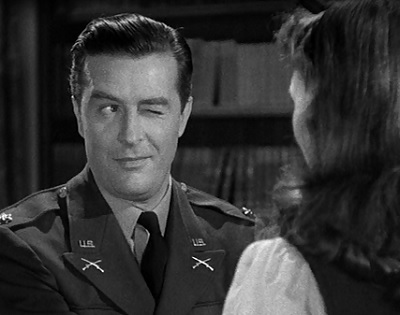
Kirby and his "bum eye" beginning to see something of Susan, not Sue Sue

Kirby and his “bum eye” beginning to see something of Susan, not Sue Sue

I definitely missed a little of the plot by re-watching my taped version of this movie for so many years, but I wasn’t wrong about the film’s quality. Whether watching five minutes or a 100, you’ll enjoy it too.

Share
Posted in: 1940s films, Romantic Comedies (film) Tagged: Ginger Rogers, Never Been Kissed, Ray Milland, The Major and the Minor

The Delightful Raunchiness of Mae West

06/05/2014 by leah@carygrantwonteatyou.com Leave a Comment

MaeWestwveil
I knew from Complicated Women, TCM’s documentary on films before the production code, that early movies challenged men’s ownership of women’s bodies, minds, and souls. Many of these pre-code movies (1929-34) were so shockingly liberal in content that they make today’s look prudish by comparison (nudity in a Tarzan movie, anyone?) After the code, of course, sexuality and feminist portrayals of women were both toned down to please potential censors. But Mae West, who wrote and starred in her films, managed to sidestep this “sanitation” to an extent because she was so gifted at double entendres.

I’d heard of West, of course, knew a couple famous sayings, thought of her vaguely as ahead of her time. But to know of West and to watch her? Not the same. Mae West’s pre- and post-code films were in their own plane, and not only because of her undeniable sensuality and eagerness to express it. And “ahead of her time” is a gross understatement in West’s case. The play she wrote that got her thrown in jail on morals charges in 1927? Titled Sex. Madonna would be attacked for giving a book that title almost seventy years later.

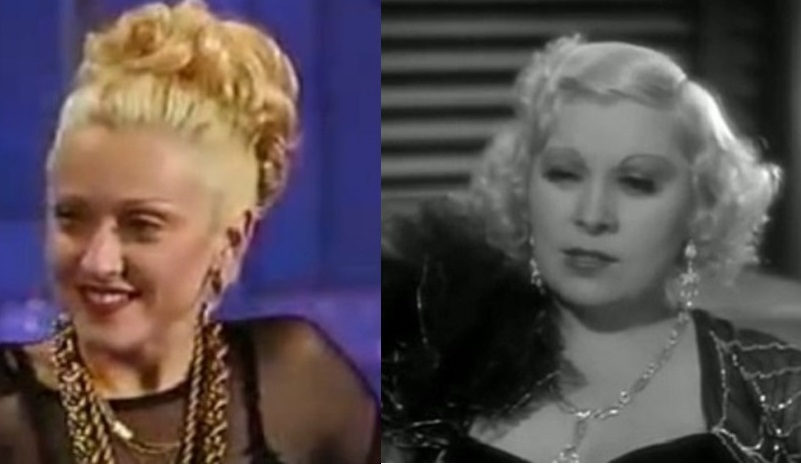
Pioneers Madonna (in ‘92) and Mae West

Pioneers Madonna (in ‘92) and Mae West

And West’s next play? Drag (as in queen), which the vice folks managed to squash entirely. Luckily, we can still watch West on screen. Here are just four reasons why you will embrace this voluptuous rebel:

1. Half of the suggestive one liners you know originated with her.

Her famous “Why don’t you come up sometime, see me?” seduction. (Note how overwhelmed Grant looks!)

Her famous “Why don’t you come up sometime, see me?” seduction. (Note how overwhelmed Cary Grant looks!)

This is just a small sampling of lines written and delivered by West (mostly from her films):

  • “When I’m good, I’m very good, but when I’m bad, I’m better.”
  • “It takes two to get one in trouble.”
  • “Is that a pistol in your pocket, or are you just happy to see me?”
  • “A hard man is good to find.”
  • “When I’m caught between two evils, I generally like to take the one I never tried.”
  • “When women go wrong, men go right after them.”

It’s not just the cleverness of West’s expressions that make her movies so entertaining; it’s the sheer number of them she manages to squeeze in. She Done Him Wrong (1933), which is just over an hour,has more funny lines in a few minutes than most current rom-coms in their bloated two-hour running times.

2. You need to see a woman born in the 1890s shimmying like West does.

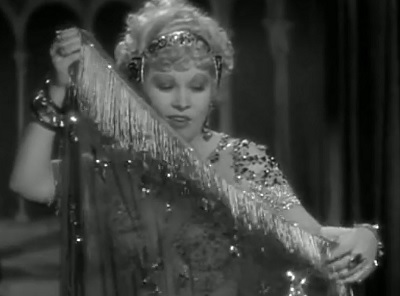
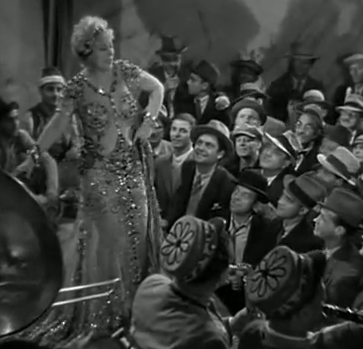
West in I'm No Angel

West in I’m No Angel

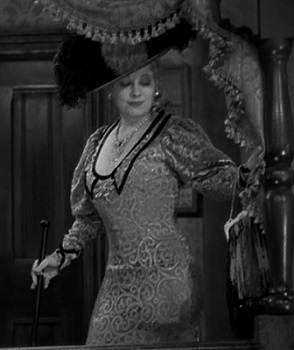
She’s dancing, she’s walking—it doesn’t matter. You have never seen a woman strut like this one.

3. 1930s Hollywood actually portrayed young men smitten—in droves—by a 40ish woman

Mae West’s films are irrefutable proof that everything does not improve with time, including Hollywood’s treatment of women past the age of 30. Today we are delighted to see the occasional rom-com with a 40-year-old woman; that’s when West got started. And being who she was, West was never content with just one man in her thrall.

Men who've caught sight of Lou (West) in She Done Him Wrong

Men who’ve caught sight of Lou (West) in She Done Him Wrong

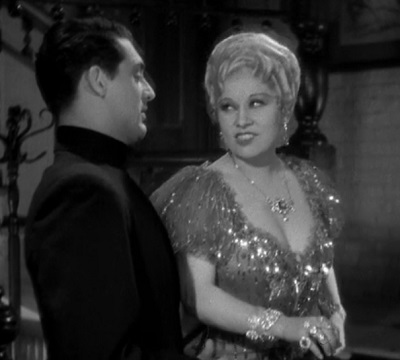
3Lou (West) eyeing a conquest, whom she refers to as “And you, Mr. Mmhmmm?”

Lou (West) eyeing a conquest, whom she refers to as “And you, Mr. Mmhmmm?”

4. Her films are wonderfully ludicrous.
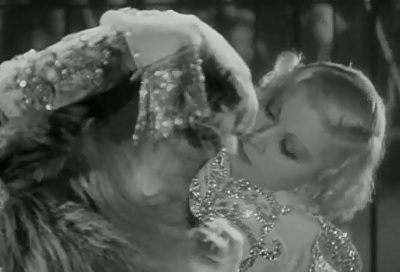
My favorite plot: A woman makes a living as a lion tamer, which men find so attractive they start sending her diamonds (I’m No Angel). The court scene near the close of the film is even more breathtaking. West annihilates the lawyers and slays the judge and jury with her smarts and that amazing walk. Is this whole film absurd? Absolutely. Is it hilarious? Oh yes.

The lion’s-mouth seduction

The lion’s-mouth seduction

Luckily, you can find a plot almost as ridiculous (and funny) in She Done Him Wrong, which is on Netflix streaming right now. What are you waiting for?

Share
Posted in: Feminism, Humor, Mae West Moments, Romantic Comedies (film) Tagged: Cary Grant, Madonna, Mae West, Pre-code films, sexuality

She Got It Wrong: How Jennifer Jason Leigh Almost Ruined The Hudsucker Proxy

05/28/2014 by leah@carygrantwonteatyou.com 2 Comments

As a fan of classic 30s and 40s films, I delight in the movies that pay tribute to them, and no directors have been more glowing in their homages than the Coen brothers, with their nods to predecessors Preston Sturges, Howard Hawks, Frank Capra, and even Stuart Heisler. Their gloriously fun The Hudsucker Proxy was attacked for lacking “heart,” for being no more than a stylish imitation of favorite classic films.

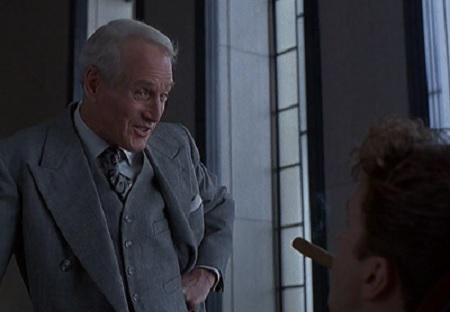
Sidney Mussburger conning Barnes (Robbins)

Sidney Mussburger (Paul Newman) conning Barnes (Robbins)

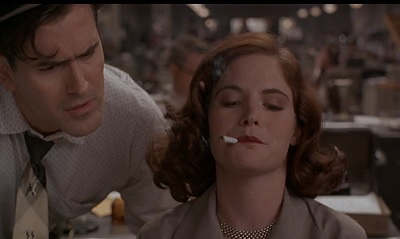
But critics praised Jennifer Jason Leigh’s performance as the typical classic film reporter, noting, as did Todd McCarthy in Variety, that she plays the role “with a Katharine Hepburn accent, Rosalind Russell’s rat-a-tat-tat speed in ‘His Girl Friday’ and Stanwyck attitude….” Occasionally, reviewers admitted that Leigh’s character, Amy Archer, wasn’t “quite right,” as McCarthy did, but they never attributed the film’s failure to the actress.

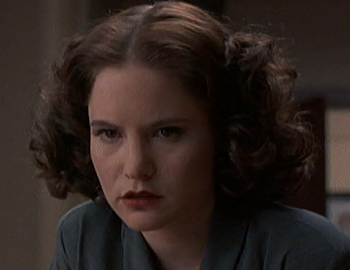
Leigh in full-on caricature mode

Leigh in full-on caricature mode

Yet to me, Leigh’s performance is the one thing that takes away from my enjoyment of this exuberant movie. Paul Newman is marvelous as the bad guy (Sidney Mussburger). Tim Robbins is terrific as the naïve Hoosier (Norville Barnes) who comes to work in the big city. His supposed stupidity makes those trying to lower Hudsucker’s stock prices quickly usher him into the presidency, yet his creativity manages to foil their plot. Archer (Leigh) plans to expose him as an idiot, much like Saunders (Jean Arthur) before her in Mr. Smith Goes to Washington.

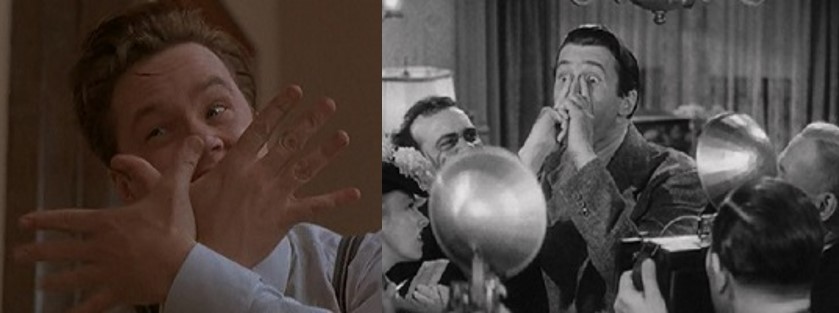
Barnes singing school song; Stewart showing a bird call

Barnes’ school song; Smith’s (Jimmy Stewart’s) bird call

But Archer’s later guilt at this character assassination and developing feelings for Barnes are utterly unconvincing, largely because her whole performance is.

One gets the feeling that Leigh only watched the films in which Stanwyck, Hepburn, and Russell were speaking at that “rat-a-tat-tat” clip and therefore missed the obvious: these actresses didn’t talk at such speeds in most of their films. They simply imagined themselves the kind of women who would be thrilled by breaking stories. Their words nearly run together not just due to the scripts, but because their characters are excited.

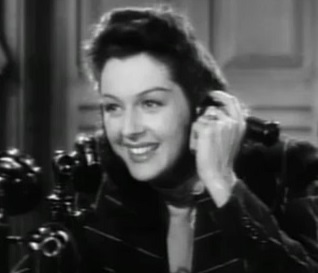
Russell sharing a great lead with editor and ex Walter Burns (Cary Grant)

Russell sharing a great lead

Leigh takes on the inflections and even some of the gestures of these actresses, but she becomes a mimicry of them rather than a believable character because the passion that infused the others’ performances is entirely absent in Leigh’s.

Stanwyck mid pitch

Stanwyck mid pitch

Hepburn, Russell, and Stanwyck come across as born reporters; their confidence makes them thrilling to watch: Hepburn’s assurance in mixing with dignitaries in Woman of the Year, Stanwyck’s daring plan to manipulate her employer in Meet John Doe, Russell’s masterful interview in His Girl Friday.

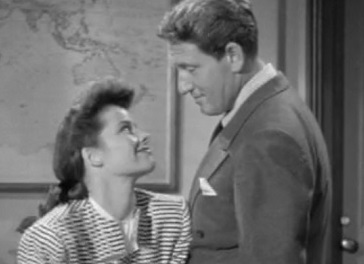
Hepburn flirting in her office after her male secretary ushers in her crush (Spencer Tracy)

Hepburn in control in her office

Archer, in contrast, is clearly aping rather than feeling confidence, and because Leigh plays her as shrewish rather than cynical, her quick transition into affection for Barnes merely looks like bad acting, which is surprising given the caliber of most of her work.

Archer falling for Barnes

Archer falling for Barnes

Admittedly, the Coens made Archer terribly insecure, a woman whose sole joy is one upping others with her Pulitzer. This was a serious mistake. How could the Coens, Hawks enthusiasts, have missed that the overlapping dialogue they’ve borrowed from His Girl Friday was not meant to be an affectation, as Archer’s is, but a reflection of the characters’ energy and enthusiasm? The film centers around Cary Grant’s excitement about being a newspaperman, and his various ploys to prevent Russell from leaving the business stem from his knowledge that she can’t resist it any more than he can.

The two films, in fact, have much in common: they’re all about the joy of the con—Barnes, in convincing the company he’s a fool (unwittingly), Walter Burns (Grant), in keeping others so occupied they miss his hilarious ruses. Both movies are a blast to watch. But The Hudsucker Proxy bombed at the box office, and I can’t help but blame Leigh, whose Archer is a drag to watch, and whose union with Barnes I rooted against. What does it matter if an actress nails the shell, if she loses the soul?

Share
Posted in: 1940s films, 1990-current films, Comedies (film), Romantic Comedies (film) Tagged: Barbara Stanwyck, Coen brothers, His Girl Friday, Jennifer Jason Leigh, Katharine Hepburn, Rosalind Russell, The Hudsucker Proxy

Veep & Together Again: Hollywood & Female Leadership

05/08/2014 by leah@carygrantwonteatyou.com 10 Comments

Sometimes the stars align, and you can convert hours of procrastination into productivity. At least, that’s what I’m telling myself about this week’s blog post, which is the result of a Veep marathon and viewing of two Irene Dunne films in a row. Call it a stretch or serendipity, but I keep observing similarities between the Julia Louis-Dreyfus-helmed TV show about a vice president and Together Again (1944), a film about a small-town mayor. Both keep returning to some of the same themes for humor, and both succeed.

Fairy Tale Romance? Not for Them
In Together Again, Irene Dunne (as Anne Crandall) plays a widow who takes over as mayor after her husband dies. The film begins with a shot of a statue created in her husband Jonathan’s honor. The unlikely Cupid of the film, Crandall’s father-in-law (Charles Coburn), is disgusted by this hero worship, which he considers against his son’s wishes. He tries to convince his daughter-in-law to find a man.

I can’t decide what’s more delightful: Crandall’s response, or her amusement in expressing it: “You can’t bear to see a woman living alone and liking it. No man can. Instinctively, it terrifies them. You’re a vanishing race and you know it. And the minute you lose your hold over us emotionally, wow. So naturally, your platform must be husbands are necessary. And they’re not really.”

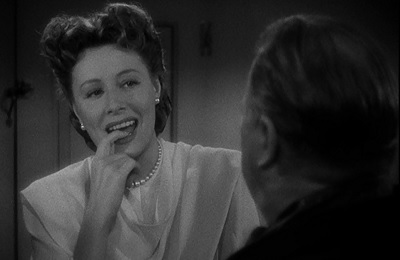
Crandall mocking her father-in-law

His rebuttal, refreshingly, is not that singlehood is wrong; he just believes the state is not for her: “You talk like a free soul, but you’re the most manacled creature I’ve ever seen…Everything you do, everything you say, everything you breathe is the way Jonathan did it, said it, and breathed it. Why don’t you stop living his life and live your own?”

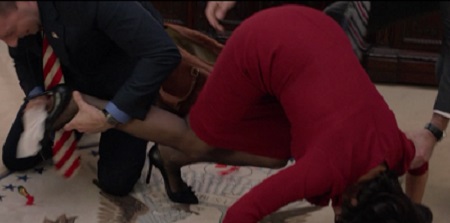
Veep’s heroine too is annoyed by others’ desire to fit her into a typical female role–in her case, as a happy wife and mother. At the start of Season 2, Julia Louis-Dreyfus attacks her former strategist (Gary Cole) for trying to force an image of the perfect family on her, which led to an uncomfortable river rafting trip with her daughter, her estranged husband, and his mistress. Their spat takes place in the Oval Office, and hilarity ensues when her lipstick marks up the sacred carpet.

Lipstick stain recovery effort

The Nonsense of Politics
Since Together Again is a romantic comedy, its primary interest, unlike Veep‘s, is not politics, but it has its moments, as in this great exchange between Randall and Mr. Witherspoon, who is in charge of the town’s sanitation and keeps leaving the south side blanketed in “a lot of old potato peelings.” His sorry excuses echo those that flood Veep:

Mr. Witherspoon: “It’s the manpower, your honor.”

Crandall: “Manpower, my eye. Use womanpower then.”

Mr. Witherspoon: “Women? To collect garbage?”

Crandall: “Why not? Women see more garbage in their lives than men do, don’t they? They might as well get paid for it.”

The scene highlights Randall’s power in the town. The joy of Veep, in contrast, is witnessing Meyer’s pathetic attempts to muster up the illusion of power she doesn’t have. And since we’re talking about D.C., the whole city is doing the same. After watching the jockeying for position among staffers, Congress members, and the administration, one wonders whether anything but ego is at stake for them. My favorite moment in the first season may be when the president’s lackey forbids the VP to adopt a dog because it’ll distract from the White House’s new pup: “Ma’am, you need to kill the dog. Not literally, but yeah, if it comes to it, yeah literally.”

Female Power: Is It All about the Hat?
Much of the plot of Together Again hinges on Crandall’s choice of a flirtatious hat over her usual professional attire when she goes to meet Corday (Charles Boyer), a sculptor in New York. The hat acts as a stand-in for the sexuality she’s been repressing as a widow. She’s bought it upon her father-in-law’s recommendation; he advised her when she departed their town to replace her functional one.

“When women starting wearing hats that look like hats,” he says, “they’re on the way out. At your age, you ought to be on the way in.”

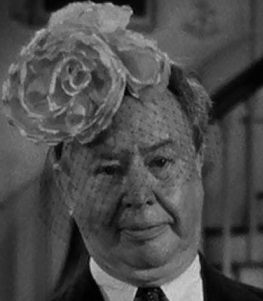
When Corday sees her in it, he assumes her a model rather than the mayor. Of course, no powerful woman could wear something so becoming, right? She hides the hat—and the nightclub raid she later gets involved in because of it—as soon as she returns home. But the hat keeps turning up again. My favorite moment is when her father-in-law walks in wearing it.

The father-in-law steals the show

Written seven decades later, HBO’s Veep focuses on a woman who is next in line to the president; it seems, on television at least, women have come a long way. But have they? Yes, the mayor of a tiny town is a far cry from the vice president of the United States, but perhaps not as far of a cry as we might wish. When Meyer asks why her presidential bid failed, her press secretary, Mike (Matt Walsh), responds, “You looked tired a lot and the hat….The hat hurt us. Your head looked weird in the hat; that’s all I’m gonna say.”

Convictions? What Convictions?
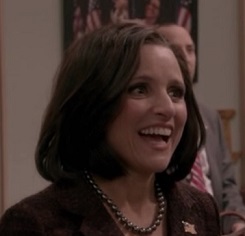
In Veep, it’s clear where Meyer’s convictions lie: she doesn’t have any. She puts an oil lobbyist on her clean jobs task force without hesitation. She tries to repress delight when a shipyard accident takes away her bad press. “Well, I think that worked out pretty good,” she says to her staff with a big smile.

Meyer-repressingjoy
(Of course, she tries to take it back when she discovers there were fatalities.) Self-interest trumps her idealism every time, which makes her a blast to watch.

**Spoiler ahead**

While Crandall’s political beliefs are only briefly sketched, her devotion to her dead husband and to the town he once led clearly dictates her behavior. She seems to be a very moral woman, bound by duty. Curiously, though, she seems content to leave the town she’s worked so hard to serve in the hands of her unscrupulous rival once she decides (as we know she will) to go after Corday.

The More, the Merrier
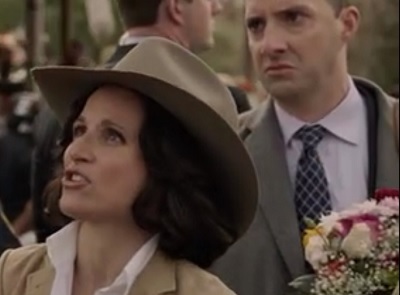
It’s refreshing to find in Veep a female led-show so entirely unconcerned with romance. But while her romantic interludes are brief and mildly funny, Meyer’s interactions with her staffers are fantastic. As a long-time Arrested Development fan, I was pleased to see Tony Hale (aka Buster) in another meaty role, treating Meyer’s various failures with compliments and tea and going to ridiculous lengths to satisfy her needs, as when he draws her chief of staff from her father’s bedside: “Something has happened to the vice president. I know your dad is dying and I’m really, really sorry, Amy, but I think Dana took Selina’s lipstick. It’s the one thing Selina asked for, and I don’t have it, and it’s ruining her night.”

I’ve left out much of the plot of Together Again in this review. The romance is fine, and Boyer a convincing lead. But it’s the Coburn-Dunne chemistry that kept me watching, especially when late in the film the two start riffing on youths’ views of aging. Coburn makes such a perfect Cupid that I can’t wait to see him play it in The More the Merrier.

Of course, there are other films and shows that tackle this same political ground. Parks and Recreation takes on the small-town concerns Crandall struggles with and makes them fresh and hilarious. But I could see little of Leslie Knope in Crandall or Meyer. Knope worships her town; Crandall belittles hers. And Meyer looks like a Knope foe: world-weary, cynical, and always out for herself.

Crandall and Meyer are alike, even if Meyer is looser ethically than her predecessor: both are hyper-aware of their public images and frustrated with the bureaucracy politics brings, but nevertheless, they manage to survive politics’ worst ravages, and in Crandall’s case, even find love along the way. And neither can resist a good hat.

Meyer and her assistant (played by Tony Hale)


Share
Posted in: 1940s films, Comedies (film), Feminism, Romantic Comedies (film), TV & Pop Culture Tagged: Charles Coburn, female leaders, female vice president, Irene Dunne, Julia Louis-Dreyfus, Veep

5 Reasons Why English Majors Will Love Ball of Fire

05/01/2014 by leah@carygrantwonteatyou.com 27 Comments

This entry is part of the Romantic Comedy blogathon cohosted by Backlots and Carole and Co.

In trying to get friends to give old movies a chance, I often start with Ball of Fire, mainly because I know many English majors/graduate students, few of whom predict what delights are waiting for them in this 1941 classic. Here are just five of the reasons why everyone who waxes poetic about Shakespeare or Austen needs to spend a little time with Gary Cooper and Barbara Stanwyck:

1. The Plot: A Mobster/Moll Romantic Comedy about Language

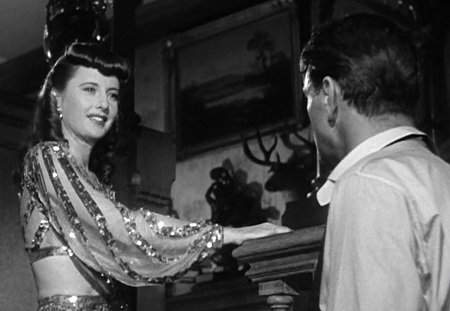
Professor Bertram Potts (Cooper), on the hunt for colorful subjects to aid him with his encyclopedia entry on slang, enlists a sexy torch singer, Sugarpuss O’Shea (Stanwyck).

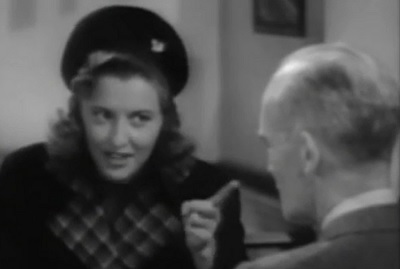
O'Shea (Stanwyck) flirting with the professors

O’Shea (Stanwyck) flirting with Potts

Sound ridiculous? It is, wonderfully so.

In the “meet cute” moment, O’Shea has just learned that her mobster boyfriend (Dana Andrews) is in trouble with the law. Fearing the knock on her dressing room door is the DA with a subpoena, she’s hostile to Potts, and when she discovers his mission to study her, dismisses him:

O’Shea: “Shove in your clutch.”

Potts: “Exactly the kind of thing I want”….

O’Shea: “OK, scrow, scram, scraw.”

Potts: “A complete conjugation!”

The opening sequence of Potts’ investigation, in which we learn the sources of such terms as “slap happy” and discover just how old the term “jerk” must be, is equally amusing to those of us who delight in wordplay, as is the nerdy professor’s ignorance of such words as “boogie.”

And that’s just the first half hour.

2. A Clever Take on Snow White and the Seven Dwarves

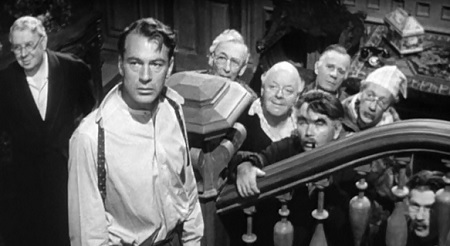
Fables, folk tales, fairy tales. We English majors love to read them, interpret them, reinvent them. (Angela Carter’s dark The Bloody Chamber traumatized me in an introductory lit course.) Famed writing team Charles Brackett and Billy Wilder turn the tale on its head, making Snow White a seductress and the dwarves a team of innocent professors (six bachelors and a widower) who are writing an encyclopedia together, with Prince Potts acting as the eighth member.

O’Shea seeks shelter from the police at their house, claiming she needs to stay to help with Potts’ research. The proper Potts doesn’t understand why she needs a sleepover, but his elderly companions, used to only the “singularly uninspiring underpinnings” of their housekeeper, outweigh his objections. They have fallen for O’Shea, and their charming antics to gain her attention—wearing new outfits, making sure their pants get ironed, having her teach them the conga—make you wonder just how unfair it is that the prince is the one who wins Snow White’s affection.

Potts (Cooper) and the dwarves reacting to O'Shea's flirtation

Potts (Cooper) and the dwarves reacting to O’Shea

O’Shea has no plans to seduce Potts, but when things get “hotter” for her boyfriend and she’s told “to stay in the icebox like a good little salad,” she gives the impressionable Potts a kiss. And, as in the fairy tale, things escalate from there.

3. The Witty Dialogue/One Liners

What English major isn’t a sucker for good dialogue? With Wilder & Brackett as writers and Howard Hawks as the director, witty banter and frequent double entendres are a matter of course.

Early in the film, Miss Bragg, the housekeeper, badgers Professor Oddly for gobbling up the strawberry jam after writing an encyclopedia entry on strawberries. She then expresses horror at Professor Magenbruch’s studies.

“I’m just starting my article on sex, Miss Bragg,” he answers. “Any objections?”

“No,” she concedes. “I trust you have more control of yourself than Professor Oddly.”

And the one liners! Some favorites:
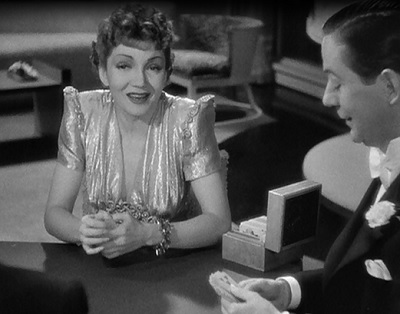
O’Shea: “Say, who decorated this place, the mug that shot Lincoln?”

Potts: “Make no mistake, I shall regret the absence of your keen mind; unfortunately, it is inseparable from an extremely disturbing body.”

O’Shea (describing her throat): “It’s as red as The Daily Worker and just as sore.”

Miss Bragg (speaking of O’Shea): “That is the kind of woman that makes whole civilizations topple!”

I always wonder why so many Gilmore Girls and Aaron Sorkin fans won’t give 30s and 40s comedies a try. Ball of Fire not only employs the banter they love so well, but avoids the trap of making EVERY character eloquent (a Sorkin flaw). The contrast between O’Shea’s wisecracking and Potts’ slow earnestness is one of the delights of the film, and given that Cooper typically played a Clint Eastwood type, his professorial wordiness is particularly amusing. As the Self-Styled Siren put it, “Who besides Billy Wilder would look at Gary Cooper, the most laconic speaker in Hollywood, and think, ‘Linguistics!’”

4. Wonderful Characters (and Performances)

With eight professors, a nightclub singer, a mobster and his minions, the DA and his team, and Potts’ other research subjects, a viewer would be unreasonable to expect much character development in any but the main players. Romantic comedies rarely get beyond stereotypes anyway. But most of the characters in Ball of Fire are unique and memorable, from the prim widower with the sexless interpretation of romance, to the genial Professor Magenbruch, who can’t stop thinking about his need to research for the sex entry. Even Joe Lilac’s two minions are funny in their villainy. And at the center of the film, we have Sugarpuss O’Shea, played by Stanwyck in an Oscar-nominated performance.

Stanwyck’s job as Snow White is to charm, and she takes to it naturally. She’s laid back and confident, and as cool as her companions are geeky. (I kept thinking of an Elizabeth Bennett landing in the middle of The Big Bang Theory.) Most of all, O’Shea’s a great deal of fun, whether leading her band in a quiet version of “Boogie” at the start of the story, or teaching the professors to conga. She doesn’t want to harm any of the professors with her deception, but she is so used to looking out for herself that their brand of vulnerability is foreign to her.

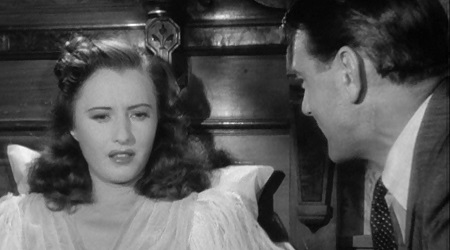
O’Shea too is soon smitten, so unfamiliar with sincerity that it floors her even as her comfort with her sexuality undoes her companions. Her guilt at duping such lovable men is palpable.

O'Shea, discovering Potts' love for her

O’Shea, discovering Potts’ love for her

Stanwyck lost the Oscar to Joan Fontaine in Suspicion that year. Fontaine’s was a strong performance, but I think Stanwyck’s dazzling turn should have guaranteed her win. Though some of the credit for her fully rounded performance definitely goes to the writers, Stanwyck is so believable in the midst of this crazy plot that she grounds the film. A once reluctant watcher of black and white flicks, I became a classic movie enthusiast and lifelong Stanwyck fan after watching this movie. I suspect I’m not the only one.

5. The Grammarian Winning the Girl?

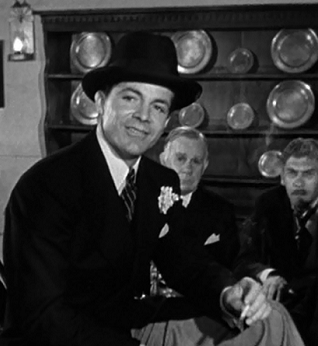
English majors—especially males—don’t get a lot of cred in the romantic lead department, especially when up against mobsters like Joe Lilac.

Dana Andrews playing the suave Joe Lilac

Suave Lilac (Dana Andrews), Potts’ rival

At least women can get the “sexy librarian” rep. Occasionally, poets can win some attention in film (and I know such gifts helped my friends on Valentine’s Day). But grammarians? Teachers of the comma splice? Among an unglamorous profession, grammar professors are the nadir when it comes to sexy reps, right down there with nuclear physicists.

Potts, trying to box based on a book's lessons

Potts, trying to box based on a book’s lessons

“You see, this is the first time anybody moved in on my brain,” says O’Shea after entering Potts’ home, and you know when she later glows at the possibility of becoming “Mrs. Lilac” just how unlikely the brain is to triumph.

But slowly, Potts makes inroads. O’Shea even reads a grammar book in her spare time, and there’s a whole discussion about the repetitiveness of her phrase “on account of because” in the midst of a romantic interlude. Only Wilder and Brackett could not only make this scene romantic, but convincing. Due to the caliber of their writing and Stanwyck’s performance, we trust that this cynical nightclub singer really does get so flushed in company with “corny” Potts that she needs to take the movie’s equivalent of a cold shower (a towel to the neck).

And this triumph, my English major friends, is a rare treat to witness. Good luck finding a modern film so generous in its treatment of grammarians. When you find one, be sure to let me know. In the meantime, I’ll take another serving of Ball of Fire.

Check out the other romantic comedy entries in the blogathon!
Share
Posted in: 1940s films, Blogathons, Humor, Romantic Comedies (film) Tagged: Ball of Fire, Barbara Stanwyck, Dana Andrews, English majors, Gary Cooper

How to Crash a Party, Claudette Colbert Style

04/03/2014 by leah@carygrantwonteatyou.com 4 Comments

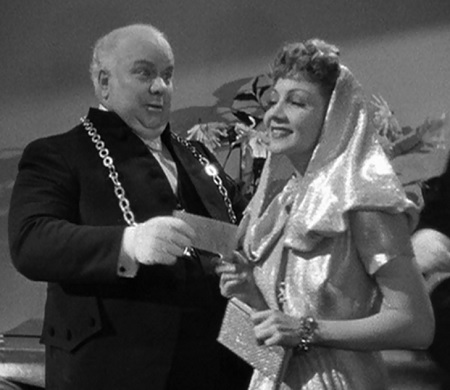
Want to crash a party, but not sure how? Mimic Eve Peabody (Claudette Colbert) in Midnight.

Enter with Attitude
You don’t have an invite? So what. A pawn ticket will do. Who looks at a piece of paper when a woman is sufficiently glamorous?

ClaudetteColbertcrashing
Draw Attention to Yourself
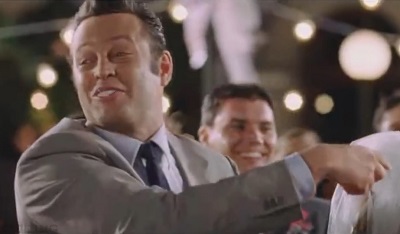
You might think you’d be safer slipping into the background, but who will question your presence if you’re as much fun as this guy?

VaughnWeddingCrashers
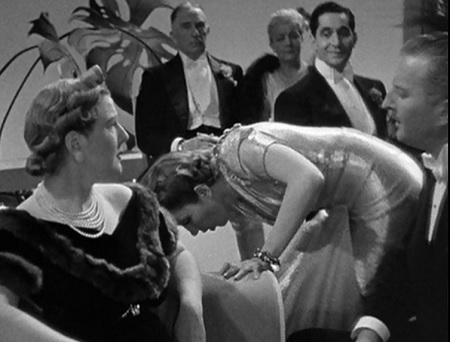
And who will kick you out if, Jennifer Lawrence-style, you make not one, but two ungraceful attempts to find seating, ensuring that other guests will not be the sole klutzes and/or drunken fools of the evening?

trippingClaudetteColbert
Relax
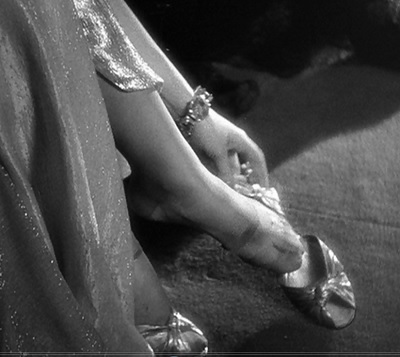
You’re in the door, so let the nerves go. After all, what’s to fear? Being caught could be amusing. Settle into some cushions, smile, kick off those high-heeled shoes.

shoes
Be a Generous Guest
Make sure you’re the kind of guest the host/hostess wants back. Buy gifts for the couples whose receptions you crash, like a guy from my high school did. Lead the chicken dance, cut the cake, make balloon animals. (In other words, channel Vince Vaughn in Wedding Crashers.) Join the bridge game when a mysterious man asks you, especially if he has a good line, as he does when meeting Eve: “You look charming, you look bored, you look as though you wouldn’t trump your partner’s ace.”

cardsClaudette
Play it right, and you could end the night like this:

Colbertcharming

Share
Posted in: 1930s films, Humor, Romantic Comedies (film) Tagged: Claudette Colbert, how to, party crashing, Vince Vaughn

Sherlock Holmes Meets Paris Hilton: The Mad Miss Manton (1938)

03/16/2014 by leah@carygrantwonteatyou.com 12 Comments

This post is part of Movies Silently’s Sleuthathon. Check out other entries on her site!

Imagine pitching this story idea: a Paris Hilton type with a pack of tiny dogs solves a crime New York cops can’t. It sounds like a Beyond Balderdash card, doesn’t it? That couldn’t possibly be a real movie plot. Luckily for us, it is. The Mad Miss Manton stars Henry Fonda and Barbara Stanwyck, but as you might guess, it’s not of the same caliber as their later pairing.  The mystery is ridiculous, the plot convoluted, and the character development all over the place. But who cares? Just let the film be what it wants to be: crazy fun.

The Mad Miss Manton

The Mad Miss Manton

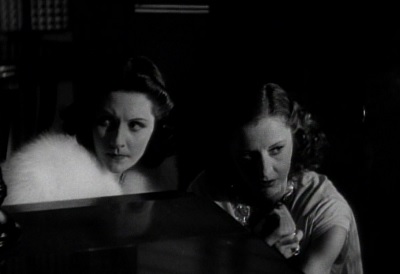
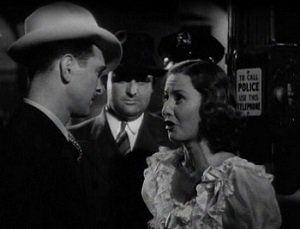
Melsa Manton is a society girl known for “pranks” she claims are in the name of charity. She and her bevy of like-minded friends are suspected of constant mischief, and when Manton finds a body that disappears before help arrives, the police and newspaper editor Peter Ames (Henry Fonda) cry foul. Manton sets out to solve the crime to redeem the reputation of her crew, and along the way, Ames falls in love with her. As you might expect, this loopy story leads to some sticky problems for the filmmakers, but never fear: Philip Epstein is the primary writer, so some of those problems end up being hysterical to watch, including….

The Heroine with the Vanishing Trait—and Pets
Barbara Stanwyck is my favorite actress. She can portray a character who is terrified (Sorry, Wrong Number), sinister (The Strange Love of Martha Ivers), funny (Ball of Fire), or heartbroken (Stella Dallas). But there’s one thing this tough Brooklyn-born actress could not do, and that’s act like a flake. The problem is, without that trait, the beginning of the film is incomprehensible, even in screwball land. You simply can’t buy this woman with a bunch of precious dogs, prancing around the city on pranks or building mansions for her pooches, as Paris Hilton did.

To make the “madness” of Manton plausible, you would need an actress who could play naïve, who could be as trusting as Carole Lombard’s character in My Man Godfrey or Goldie Hawn’s in Seems Like Old Times. Only an actress like that could have pulled off a heroine who is not lacking in intelligence, but is lacking in cynicism. At first, therefore, I thought Stanwyck miscast.

Clearly, I underestimated the audacity of Epstein and his uncredited cowriters as they developed Wilson Collison’s story. Fewer than 10 minutes into the film, Epstein conveniently erases the airhead tendencies that he created in the opening scenes. Now, it seems, Manton is simply misunderstood (forget the film’s title). From the moment she’s on the case, Stanwyck is in familiar territory, fast-acting and thinking, with the assurance she’ll bring to her reporters in Meet John Doe and Christmas in Connecticut.  To illustrate this change in Manton’s character, the screenwriters eliminate all of her dogs. Poof! No Fifis in her apartment. No Fidos tracking her along her crime-solving path.

The dogs in one of their last appearances

The dogs in one of their last appearances

I think I fell for this movie when they vanished. It reminded me of the kind of bravado later soap opera writers would emulate in developing their narratives, with conveniently erased back stories and children growing up at Chia Pet speed.

A Bewildering Plot
The Mad Miss Manton is only 80 minutes long, yet I could have sworn it ended twice before it actually did. I felt a little like I used to reading Agatha Christie novels, when she conveniently left out information I needed to solve the crime myself. Who are all these suspects? Why do some of them appear on the screen for a few minutes, then reappear twenty minutes later, without my understanding anything new about them? There are multiple crime scenes, attempts on Manton’s life, ranting scenes by the police lieutenant, a hospital visit, an effort to lure in the killer, and much clue following. And, of course, multiple clips of the suspects that are meant to be illuminating/mysterious. But every time the chaos begins to overwhelm viewers, Manton’s friends rush in and save the film, which brings me to….

An Amazing Crew
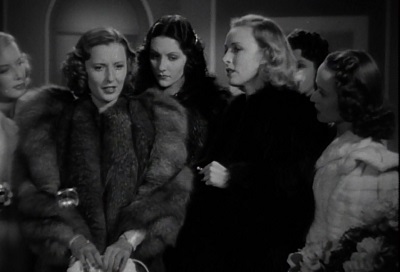
I love the “Park Avenue pranksters,” the group of women whose help Manton enlists to solve the crime. My favorite is Pat (Whitney Bourne), who keeps stopping to snack at the crime scenes, à la Shawn Spencer.

Who can beat a troop of friends, armed with flashlights and ermine, creeping through the window of a house the cops have inconveniently locked?

“I found a blood stain,” says one woman, perching on the floor.

“Oh, how can it be blood? It’s blue,” replies Manton.

“Maybe they shot Mrs. Astor,” retorts her friend.

Manton and her "pranksters"

Manton and her “pranksters”

Most of these accomplices are clever, and all are fun and fabulous company. They seem to live an endless string of parties and sleepovers. Unlike Blair Waldorf’s Gossip Girl minions, however, these women are sweet-natured without sacrificing their blistering wit, as when they mock their ringleader for starting to like Ames:

“You know psychiatrists say hate’s just a step away from love,” says one.

“Yeah, but it’s the lull in between that drives you crazy,” replies another.

The film suffers every time the crew leaves the screen.

Distracting Minor Characters
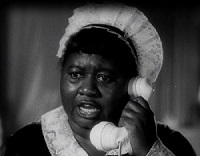
I did not feel the same delight in encountering Manton’s maid, Hilda (Hattie McDaniel). While her sassy replies to her employer are sometimes amusing, it’s difficult to view McDaniel in a maid costume without picturing Mammy from Gone with the Wind, the part she’d win an Oscar for a year later. While this is not the type of servile performance the actress would later be asked to defend, the role is not as progressive (and therefore her part less funny) than we might have hoped.

Hilda (Hattie McDaniel)

Hilda (Hattie McDaniel)

The police lieutenant (Sam Levene) sometimes distracts from the story as well. Like one of the suspects (Penny Singleton), Levene is stolen straight from After the Thin Man (which tells you how seriously the director, Leigh Jason, and his writers take the crime itself).

Unfortunately, Levene can’t turn off the beleaguered, badgering tone he used in the earlier film. While his attitude toward Manton initially adds to the humor, his grumbling soon becomes tiresome. Nick Charles could be just as withholding with clues as Manton, but never was treated with such disrespect. Wouldn’t the lieutenant’s opinion of her alter when he discovered her sleuthing skills, even with their class and gender differences?

The lieutenant (Levene) dismissing Manton

The lieutenant (Levene) dismissing Manton

Henry Fonda in Screwball Mode
The only actor who surprised me in this film was Henry Fonda. I’ll admit that I’ve never been a fan; I’d usually rather see someone else in his place: John Garfield in The Grapes of Wrath, Joel McCrea in The Lady Eve.  But Fonda is exuberant in The Mad Miss Manton, so at home with the one liners and silly antics that I kept checking the credits to make sure it was the same man. (Interestingly, Fonda himself disliked the part.) He’s surprisingly confident and attractive as Peter Ames, the editor in love with Manton, and it’s hilarious to watch him trying to romance her, while admitting that he’s enough of a pragmatist to appreciate that she’s rolling in it.

Manton (Stanwyck) and Ames (Fonda)

Ames (Fonda) and Manton (Stanwyck)

The relationship begins in hostility. He’s written an editorial dismissing Manton’s supposedly nonexistent body discovery as one of her group’s “escapades.” She slaps him with her hand and a libel suit on their first meeting. Of course, they start to fall in love from there.

The two take turns outwitting one another in His Girl Friday style (though at a less frantic pace). After Manton agrees to pretend they’re engaged to dupe a suspect, Ames comes to her apartment with champagne to celebrate. “Well, if I want to marry a fortune hunter,” she answers, “I can go to Europe and marry a professional one.”

“I’m determined to make you happy if I have to drag your name through the breach-of-promise courts to do it,” he answers.

It’s startling how suggestive the film is. The two are in her bedroom as she smokes in her nightgown and he gets flustered. She ties him up regularly, and once she even takes off his pants. The love/hate battle between them is exhilarating, and while much of the credit goes to Stanwyck, for once she has an equal sparring partner in Fonda.

As you can tell from my review, this is a far from perfect film. But I would encourage you to embrace it just the same: the disappearing dogs, the ever-changing heroine, the unlikely romance, the bizarre crew, even the occasional joke about communism.  It’s a bit “mad,” but it’s a lot of fun.

Share
Posted in: 1930s films, Blogathons, Film Noir/Crime/Thriller & Mystery, Romantic Comedies (film) Tagged: Barbara Stanwyck, blogathon, Henry Fonda, Paris Hilton, screwball comedy, The Madd Miss Manton

The Death of the Marital Rom-Com: Where Have All the Toppers Gone?

03/10/2014 by leah@carygrantwonteatyou.com 6 Comments

When is the last time you watched a rom-com about a married couple? Aside from the occasional indie and rare mainstream flick, Hollywood seems to have retired this subject matter, despite the success of TV shows such as Mad about You, Everybody Loves Raymond, and The King of Queens.

Yet I came up with this list of famous 30s and 40s rom-coms about married couples in just two minutes:

Married: Topper, Mr. Blandings Builds His Dream House, My Favorite Wife, and I Was a Male War Bride
Separated/Divorced: The Awful Truth, The Philadelphia Story, and His Girl Friday.

Those familiar with these titles might notice that these are just some of the marital rom-coms starring Cary Grant. In comparison, I came up with three mainstream marital rom-coms in the past three decades altogether—with help.

Even if married couples in 2014 are more likely to attend animated flicks with their kids, as my husband theorized, that doesn’t explain what Hollywood is producing for those without kids. And I’m not buying that we’re all boring enough to only like films about ourselves. We don’t all cook meth in our basements or fight to the death in dystopian universes. We don’t watch The Walking Dead or Game of Thrones because they remind us of barbeques with our buddies. I discovered most of my favorite marital rom-coms when single. Is it possible that Hollywood thinks singles’ imaginations fertile enough to envision shooting webs out of their wrists or being born in Middle Earth, but not to conceive of being married?

Whatever the reasoning for the endangerment of the marital rom-com, the result is unfortunate: there’s a sameness to romantic comedies now that simply didn’t exist in the 30s or 40s. While there are only so many ways we can meet and fall in love, there is an infinite variety of methods for teasing, imitating, and torturing those we know well.

One of Cary Grant’s best marital rom-coms is The Awful Truth (1937), a film my friend Tonya introduced me to many years ago that I’ve been recommending ever since.  Grant’s and costar Irene Dunne’s impeccable timing and believable performances make this one of the funniest screwball comedies I’ve ever seen.

Dunne and Grant dazzling in The Awful Truth

Dunne and Grant dazzling in The Awful Truth

In the film, Jerry (Grant) and Lucy (Dunne) suspect one another of infidelity. Lucy decides to trust Jerry, anticipating Elvis’s famous song about suspicion in explaining her reasoning. Jerry, however, can’t trust her, and the two divorce. But since they’re both still in love, they can’t help sabotaging one another’s new relationships.

I have so many favorite moments from this film. One is when Jerry plays a song for his dog (during his custodial pet visit) to annoy Lucy as she’s meeting her new fiancé’s mom. In another Jerry pays the orchestra conductor to re-play a song just to watch his wife trip as her fiancé tries to lead her in a rambunctious dance.

Jerry appreciating the dance moves of Lucy's fiancé

Jerry appreciating the dance moves of Lucy’s fiancé

And there’s the scene when Lucy, aware of Jerry’s pride, shows up at his fiancée’s house pretending to be his wasted sister.

Lucy humiliating Jerry

Lucy humiliating Jerry

She begins the visit by demanding a drink and ends by performing a Marilyn Monroe-over-grate move for Jerry’s soon-to-be in-laws (years before that famous siren’s).

But perhaps the scene I enjoy most is when Jerry gushes about how much his hard-partying wife will appreciate Oklahoma, where her fiancé lives:

“Lucy, you lucky girl,” Jerry says. “No more running around the night spots. No more prowling around in New York shops. I shall think of you every time a new show opens and say to myself, she’s well out of it….”

“I know I’ll enjoy Oklahoma City,” Lucy replies stiffly.

“But of course,” he answers, “and if it should get dull, you can always go over to Tulsa for the weekend.”

Contrast these scenes with those in 1997 rom-com My Best Friend’s Wedding, technically a film of the single-gal variety, but adopting some situations from the marital rom-com. Yes, Rupert Everett is glorious in it, and Cameron Diaz and Julia Roberts are effective rivals.

Diaz confronting Roberts in My Best Friend's Wedding

Diaz confronting Roberts in My Best Friend’s Wedding

But the message is appalling: you’ll lose the guy if you’re dedicated to your profession and unwilling to ditch your education/career for his. No matter, therefore, how funny some of Roberts’ antics seem, I can’t laugh at the antiquated, offensive cliché of the desperate single woman, as the film asks me to do. But I do laugh at the partners in The Awful Truth, both so anxious to get each other back that they’re willing to forgo pride to do so. Due to his unreasonable suspicions, Jerry looks like more of a buffoon than Lucy, but neither comes out of the experience unscathed. (Of course, since Lucy trusts Jerry, we don’t know whether he just likes his space, or has cheated and the filmmakers have given him a pass for sexist reasons.)

The Awful Truth is just one of many delightful 30s marital rom-coms. There are so many more. Until current Hollywood producers come to their senses and resuscitate the subgenre, you’ll be stuck with the half-attempts at marital rom-coms like My Best Friend’s Wedding, in which the humor is only at the woman’s expense. (Forget viewing films about long-term relationships between unmarried couples–an even rarer subgenre.) So give some classic marital comedies a try. You’ll be glad you did.

Incidentally, next Sunday and Monday (March 16 and 17th), I’ll be participating in a classic detective blogathon hosted by Movies Silently. Please check out my entry in this Sleuthathon at my blog next week. I’ll be reviewing The Mad Miss Manton (1938), featuring Barbara Stanwyck as a Sherlock Holmes-Paris Hilton hybrid. And be sure to view the entries of my much more knowledgeable blogging peers!

detective-blogathon-thin-man-small

Share
Posted in: 1930s films, 1990-current films, Comedies (film), Humor, Romantic Comedies (film) Tagged: Cary Grant, Irene Dunne, Julia Roberts, My Best Friend's Wedding

No Oscar Love for Harold Ramis: The Academy, as Humorless as Ever

02/27/2014 by leah@carygrantwonteatyou.com 6 Comments

Harold Ramis, whom President Obama labeled “one of America’s greatest satirists,” died this week shortly before this Sunday’s Oscars. His list of co-writing credits is astonishing: Animal House, Stripes, Caddyshack, Ghostbusters, Groundhog Day. He also directed the latter, Caddyshack, and Vacation. I’m sure the Academy will clap enthusiastically this weekend when his face appears in the “In Memoriam” tribute, but they won’t express what they should: regret. Ramis never won an Oscar; in fact, he was never even nominated.

Harold Ramis: won A BAFTA, but no Oscar

Harold Ramis: won A BAFTA, but no Oscar

In the years the Academy snubbed Ramis, comedies did make appearances in the original screenplay category, including Private Benjamin, Splash, Beverly Hills Cop, Sleepless in Seattle, and Dave.  But many of the nominations were of grim films you didn’t know then, much less now. The following were the original screenplay winners the years Ramis could have been nominated:

Coming Home (Animal House), Melvin and Howard (Caddyshack), Places in the Heart (Ghostbusters), and The Piano (Groundhog Day).

Most Oscar nominees for original screenplay are not bad movies; the Academy saves their embarrassing choices for the best film category (Crash, anyone?) But have these screenplay winners stood the test of time? Have they influenced you—or anyone you know—in any way?

Here’s a test for you:

  • Can you quote from it?

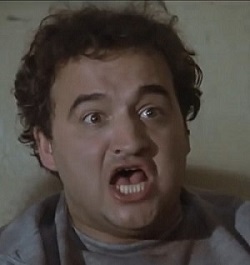
Belushitoga

  • Do you adopt cultural affectations from it (perhaps Roman)?
  • Have you sung along with it?
  • Does it give you more understanding for the weak kid or the outsider, perhaps make you feel more comfortable challenging authority? (See this great Ramis bio.)

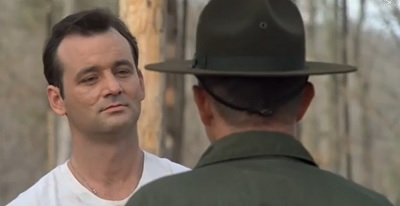
Stripes

  • Does it bring back childhood memories that make you grin, maybe your best Halloween costume ever?

Ghostbusters

  • Have you lost count of how many times you’ve seen it?
  • Do you (be honest) feel tempted to dance with a certain character’s nemesis during the closing scene?

gopherCaddyshack

Of course, the Academy—and critics in general—have long shown more appreciation for drama than comedy, failing to see in it the far subtler, and often more trenchant and artful cultural critique it can provide. In 1941, Preston Sturges, a writer/director who, like Ramis, was fond of what’s often dismissed as “adolescent” humor, wrote an entire film addressing the greater appreciation given to drama, Sullivan’s Travels. But unlike with the usual Oscar winners, this time, the case for comedies is much more persuasive.

It begins with a scene between a director (Sullivan, played by Joel McCrea) and his bosses (Mr. LeBrand and Mr. Hadrian). Sullivan has decided to write a serious film, which his bosses fear will be less profitable than his usual comedies. Why not do a sequel to your Ants in Your Plants of 1939 instead? they ask him. His movies are inspiring, they tell him. They don’t, as Hadrian puts it, “stink with messages.”

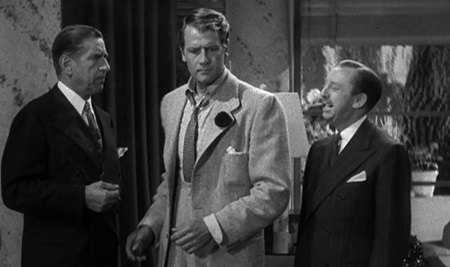
Sullivan (Joel McCrea in the middle) with his bosses

Mr. LeBland, Sullivan (Joel McCrea) and Mr. Hadrian

Sullivan tries to argue them into supporting his new effort, showing them a scene from his O Brother, Where Art Thou? (yes, Coen fans, that’s where they got it)

Sullivan: “You see the symbolism of it?….It teaches a lesson, a moral lesson, it has social significance.”

Hadrian: “Who wants to see that kind of stuff? It gives me the creeps.”

….

Sullivan:  “I want this picture to be a commentary on modern conditions, stark realism, the problems that confront the average man.”

LeBrand: “But with a little sex.”

….

Hadrian: “How about a nice musical?”

Sullivan: “How can you talk about musicals in a time like this, with the world committing suicide, with corpses piling up in the streets?…..”

Hadrian: “Maybe they’d like to forget that.”

After Hadrian convinces Sullivan he’s too inexperienced with suffering to direct movies about it, the latter decides to go on a quest to learn about poverty firsthand. A despondent LeBrand barks at his assistant, “Get me a copy of that O Brother, Where Art Thou? I guess I’ll have to read it now. Make that two copies.  Why should I suffer alone?”

By the end of the movie, Sullivan agrees with his bosses that he should keep directing comedies. He discovers that his movies, silly as they may be, have something to offer that dramas never will: “There’s a lot to be said for making people laugh. Did you know that’s all some people have?”

In fact, Sturges begins the movie with a dedication that could have been written for Ramis: “To the memory of those who made us laugh….in all times and in all nations, whose efforts have lightened our burden a little….” Not a bad epitaph, from one comedic genius to another.

Incidentally, Sullivan’s Travels (1941) ranked on the AFI’s top 100. But you guessed it: Not a single Oscar nomination.

Share
Posted in: 1980s films, 1990-current films, Comedies (film), Humor, Oscars, Romantic Comedies (film), TV & Pop Culture Tagged: Academy Awards, Animal House, Bill Murray, Caddyshack, Ghostbusters, Groundhog Day, Harold Ramis, Preston Sturges, Sullivan's Travels, The Oscars

Like The Cutting Edge? Watch It Happened One Night.

01/17/2014 by leah@carygrantwonteatyou.com 5 Comments
Kelly & Sweeney in The Cutting Edge.

Kelly & Sweeney in The Cutting Edge.

D.B. Sweeney, Moira Kelly, toe picks? If you haven’t seen this film, and you love romantic comedies from the 90s, hit your head against the wall for letting others jeer you out of it. A hunky (yes, I said it) hockey player, a snotty ice skating star, a try for the Olympics, and unbeatable chemistry.

More recent attempts at this genre of cutting-down-the-ice-cold girl have raised my feminist hackles. See: Sarah Jessica Parker post Sex and the City or Katherine Heigl and Jennifer Aniston in nearly anything. But if done well, these romantic comedies are about both characters coming to terms with their egos, and no one is more fun to watch wrestling with his own than Clark Gable, who was hunky himself in those pre-Gone with the Wind days.

Sweeney & Gable

Sweeney & Gable

Compare:

The Cutting Edge: D.B. Sweeney finally gains his mojo around Kelly, showing off his hockey skills. Remember? And she slams him in the face with a puck for it.

It Happened One Night: Gable’s destitute reporter tries to gain pride around Claudette Colbert‘s heiress, even showing her how to dunk her donut properly in coffee.

Gable’s dunking lesson in It Happened One Night

Gable’s dunking lesson in It Happened One Night

The most famous scene is when Gable gives her an enthusiastic demonstration of how to hitch a ride, with no results. “Do you mind if I try?” she asks, and lazily walks over, raises her skirt, and flags a car with one lovely leg. Watch Gable’s expression afterward, the mingled shame, annoyance, and desire for Colbert explaining for you why a million women swooned for him. And guess what? That’s not the best scene. Not by a long shot.

Share
Posted in: 1930s films, 1990-current films, Action & Sports Films, Romantic Comedies (film), TV & Pop Culture Tagged: Clark Gable, Claudette Colbert, D.B. Sweeney, It Happened One Night, Moira Kelly, The Cutting Edge
« Previous 1 2 3 4 5 6 7

Recent Posts

  • 100 Years Later, Still Scary: Dr. Caligari
  • Escaping Out of the Past (1947)
  • A Weeper for Those Who Love Jerks
  • Thank You, Academy, for Not Infuriating Me
  • Challengers (2024) Is a Bad Movie

Subscribe to Blog via Email

Enter your email address to subscribe to this blog and receive notifications of new posts by email.

Categories

  • 1920s films
  • 1930s films
  • 1940s films
  • 1950s films
  • 1960s films
  • 1970s films
  • 1980s films
  • 1990-current films
  • 2020s films
  • Action & Sports Films
  • Anti-Romance films
  • Blogathons
  • Childfree
  • Comedies (film)
  • Drama (film)
  • Feminism
  • Femme fatales
  • Film Noir/Crime/Thriller & Mystery
  • Gloriously Silly Scenes
  • Horror
  • Humor
  • Mae West Moments
  • Musicals and dancing films
  • Oscars
  • Random
  • Romance (films)
  • Romantic Comedies (film)
  • The Moment I Fell for
  • Turn My Sister into Classic Movie Fan
  • TV & Pop Culture
  • Uncategorized
Share
Classic Movie Blog Hub Member

Recent Comments

  • leah@carygrantwonteatyou.com on Meg Ryan’s Fate Foretold in Joe Versus the Volcano
  • Ryan on Meg Ryan’s Fate Foretold in Joe Versus the Volcano
  • leah@carygrantwonteatyou.com on 100 Years Later, Still Scary: Dr. Caligari
  • The Classic Movie Muse on 100 Years Later, Still Scary: Dr. Caligari
  • leah@carygrantwonteatyou.com on 100 Years Later, Still Scary: Dr. Caligari

Archives

  • November 2025
  • September 2025
  • May 2025
  • March 2025
  • January 2025
  • November 2024
  • August 2024
  • July 2024
  • May 2024
  • March 2024
  • February 2024
  • December 2023
  • November 2023
  • October 2023
  • September 2023
  • August 2023
  • July 2023
  • May 2023
  • April 2023
  • March 2023
  • January 2023
  • December 2022
  • November 2022
  • September 2022
  • July 2022
  • May 2022
  • April 2022
  • March 2022
  • February 2022
  • October 2021
  • September 2021
  • April 2021
  • March 2021
  • February 2021
  • December 2020
  • October 2020
  • September 2020
  • July 2020
  • May 2020
  • April 2020
  • March 2020
  • February 2020
  • December 2019
  • October 2019
  • September 2019
  • June 2019
  • May 2019
  • April 2019
  • February 2019
  • January 2019
  • November 2018
  • September 2018
  • July 2018
  • June 2018
  • May 2018
  • April 2018
  • March 2018
  • February 2018
  • January 2018
  • November 2017
  • September 2017
  • August 2017
  • July 2017
  • June 2017
  • May 2017
  • April 2017
  • March 2017
  • February 2017
  • January 2017
  • December 2016
  • November 2016
  • October 2016
  • August 2016
  • July 2016
  • June 2016
  • May 2016
  • April 2016
  • March 2016
  • February 2016
  • January 2016
  • December 2015
  • November 2015
  • October 2015
  • September 2015
  • August 2015
  • July 2015
  • June 2015
  • May 2015
  • April 2015
  • March 2015
  • February 2015
  • January 2015
  • December 2014
  • November 2014
  • October 2014
  • September 2014
  • August 2014
  • July 2014
  • June 2014
  • May 2014
  • April 2014
  • March 2014
  • February 2014
  • January 2014

Meta

  • Log in
  • Entries feed
  • Comments feed
  • WordPress.org

Copyright © 2025 Cary Grant Won't Eat You.

Church WordPress Theme by themehall.com