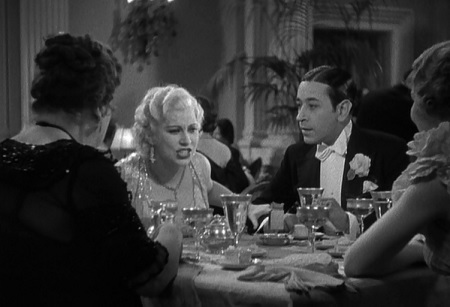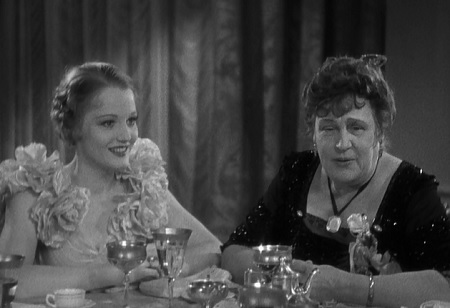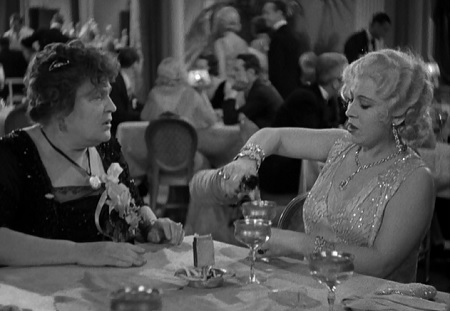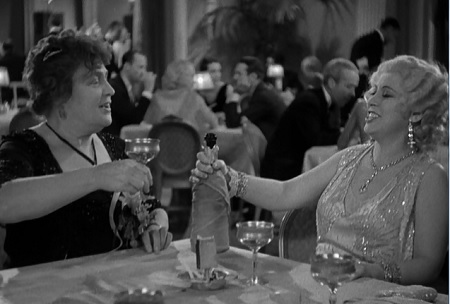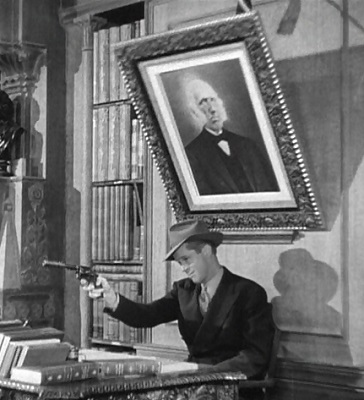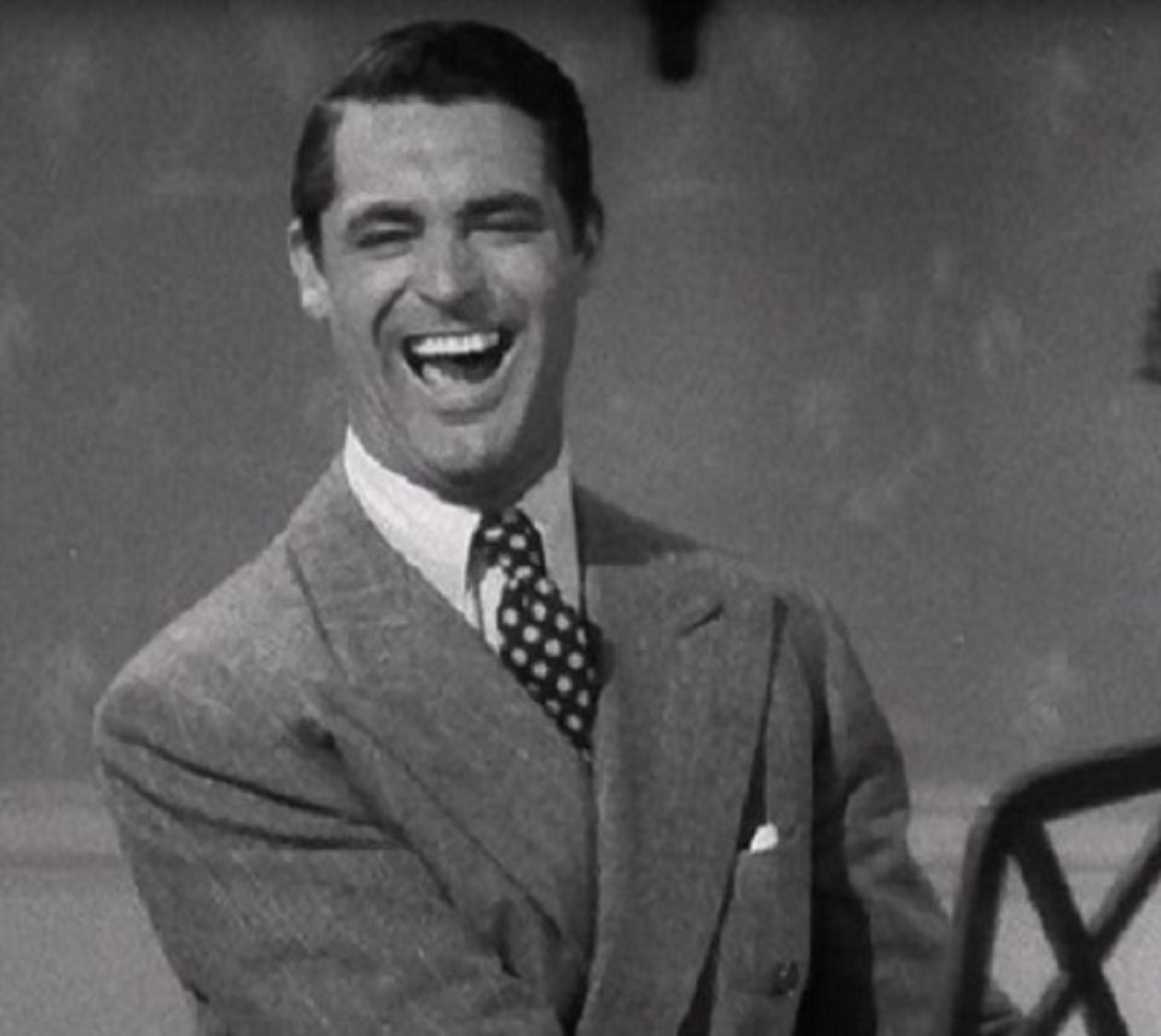
Cary Grant Won't Eat You

Classic movies for phobics

  • About
  • eBooks
  • Previous Blogathons
Classic movies for phobics

Romantic Comedies (film)

Female’s Heroine: 1933’s Amy (of Trainwreck), Samantha Jones, or Don Draper?

08/27/2015 by leah@carygrantwonteatyou.com 4 Comments

RuthChattertonFemalefilm
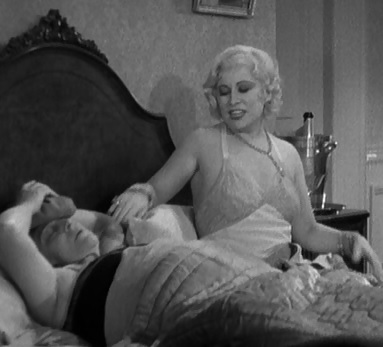
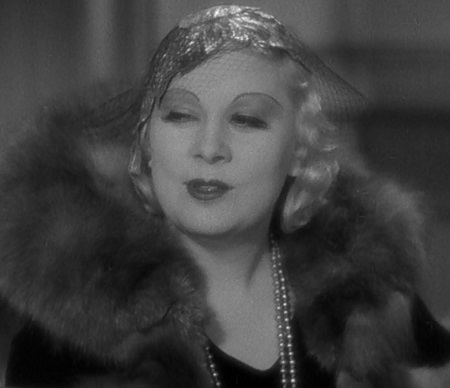
Given its plot synopsis, I expected Female to be shocking: a promiscuous executive casually sleeps with men until she finds the right guy. But I didn’t expect to gasp at its daring. A few of the heroine’s typical comments:

Falling in love: “To me, a woman in love is a pathetic spectacle. She’s either so miserable that she wants to die, or she’s so happy you want to die.”

Marriage: “No thanks, not me. You know a long time ago I decided to travel the same open road that men travel, so I treat men exactly the way they’ve always treated women.”

Husbands: “Of course, I know for some women, men are a household necessity. Myself, I’d rather have a canary.”

Then there’s a typical night. She…

1. Spots a handsome employee, feigns interest in his ideas, and asks him to come over to her house that night to discuss them.

2. Discourages business talk with flirtation, as when she says, “Are you naturally enthusiastic?” to a new hire, throwing a pillow onto a plush rug with a suggestive look.

RuthChattertonflirting2
3. Orders vodka from her butler, who informs the rest of the staff of the Catherine the Great custom: serving it to soldiers “to fortify their courage.”

4. Exercises with vigor the next morning, clearly energized by the tryst, and comes up with new ideas for the business.

5. Rejects the romantic overtures of her one-night stand, annoyed by his flowers, then offers him a bonus as a kiss-off. She doesn’t want to deal with the moodiness of emotional men at work. (Women, how many times have films suggested this about us?)

At first, I thought the movie would be like Trainwreck, as Alison (Ruth Chatterton) certainly displays the same level of disinterest in building a romance with her one-night stands and blows off a guy after he calls her “ethereal” and otherwise indicates their lack of sexual heat:

Annoyed by his flowery (nonsexual) language
Amy and Alison have an impressive list of conquests, and not only express disinterest in matrimony and kids for themselves, but for others, as when Alison can’t be bothered to remember her friend’s husband’s name, or how many kids she has–much like Amy’s (Amy Schumer’s) scene at her sister’s shower. Both heroines are funny and mostly likable, as when Alison worries about her chauffeur, who has taken a punch in her honor: “Now listen, Puggy, things people say about me don’t bother me,” she says with a lovely smile. “Thanks just the same.”

But in terms of power–and what they do with it–there’s no comparison. After one-night stands fueled by liquor, Amy, hungover, struggles to get through the day.

AmySchumerTrainwreck
Alison, in contrast, looks alert, pretty, and pleased with herself, and does a brilliant job at work afterward. The word “trainwreck” is about as far from Alison Drake as a term can be.

Like her more direct heir, Samantha Jones, Alison practically bristles with authority and confidence, but unlike Samantha, she has a whole auto factory full of employees.

RuthChatterton-businessFemale
One criticism of Sex & the City was that it never took the work as seriously as the characters’ personal lives, which made it less feminist than it could have been. Here, the heroine has no chance for tight friendships, but finds her work thrilling: “Oh, but I love it: the battling, the excitement; I don’t think I could do without it now.” I soon found myself as interested in the business–such as her decision to go with automatic transmission–as in the flings, not something I expected to experience with a romantic comedy.

Like Samantha, Alison wants to sleeps with her hot employees–only in Alison’s case, she does. (Samantha waits to fires hers first).

SamanthaJonesandrudeassistant
In fact, Alison has sex with so many of them that there are a flood of bonuses on the company payroll, like some kind of stud fee. Her leer at a new designer is as hilarious to witness as Samantha’s undressing looks. And as with Samantha, her vulnerabilities are evident–in her case, a fear that men are angling for her money rather than her personality or body (either would be fine).

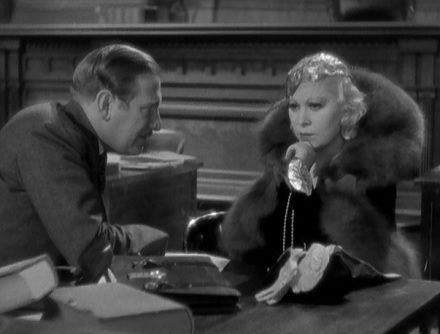
While it’s easy to admire Alison’s moxie, she’s guilty of sexual harassment throughout the story, as when her secretary shows her too much affection after their affair, and she transfers him to Montreal. Promptly afterward, this lovesick conquest watches the latest one-night stand leave her office and calls, “I’ll see you in Montreal.” When Alison falls for Jim (George Brent), mainly because he’s hard to get, his anger at her regular nightly ploy earns our admiration; he won’t sleep with her to keep his job, he retorts.

GeorgeBrentFemale
While she initially decides to fire Jim’s secretary, assuming the two are involved, and then plans to overload her with work, she quickly reconsiders, deciding not to be petty. While she’s still in murky moral territory due to her liaisons with subordinates, she doesn’t reach full anti-villain status, since she won’t fire someone for turning her down or stealing her guy. Still, it’s hard to forget that shady transfer…and how much she reminds us of Don Draper with his secretaries on Mad Men.

I stopped the film multiple times as the end neared, fearful about whatever sexist cliché it was headed for. This character was simply too complex, and Chatterton too wonderful in the role, for me to watch some reductive conclusion.

RuthChattertoninFemale
I was right to be scared (though I feared it would be worse). Oddly, Jim, till then annoying in spite of his rebellion, demonstrated unexpected feminist leanings near the close. Too bad the screenwriters and director chickened out and tacked on totally unbelievable concluding lines.

Despite its shock value and fascinating lead, the film hasn’t reached the popularity or accessibility today it deserves. I could only locate it in DVD form on Netflix, and went for the free month trial of streaming with Warner Archive instead. Go to the effort; it’s worth it.

Share
Posted in: 1930s films, 1990-current films, Anti-Romance films, Comedies (film), Feminism, Romantic Comedies (film), TV & Pop Culture Tagged: ahead of its time, Amy Schumer, Female (1933), Mad Men sexism, promiscuous women, Ruth Chatterton, Samantha Jones, Trainwreck

Pretending to Be Contagious: 2 Comic Scenes

08/02/2015 by leah@carygrantwonteatyou.com Leave a Comment

In one of my favorite scenes from The Thin Man series, Nick Charles pretends his wife is contagious for laughs. It made me think of outbreaks, and how they’ve been used to panic audiences—or amuse them. Somehow funny scenes so often result from mocking our greatest fears. So on the lovely actress’s birthday, here’s that scene—and another like it from many decades later—when the characters mess with the crowds around them for very different reasons.

Eliminating Suitors: Nora in Another Thin Man (1939)
Nora’s (Myrna Loy’s) considerable sex appeal is a joke in many of The Thin Man movies. Ex-cons can’t believe someone so desirable could be Nick’s wife instead of his mistress. Men follow her and hit on her constantly. Just look at her.

MyrnaLoy-AnotherThinMan
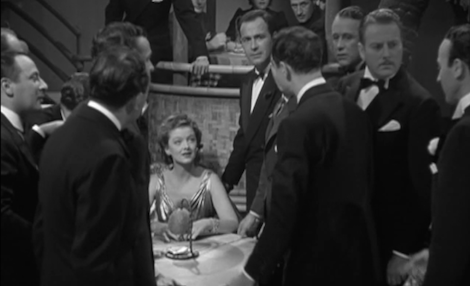
Who wouldn’t? When Nick (William Powell) seeks his wife in Another Thin Man, he finds a crowd of men vying for her attention.

NoraCharlesCrowd
To clear them away quickly, he begins, “Now Mommy, you know better than to come to a place like this your first day out of bed. What if the health officers find out? They’ll put you right back in quarantine.”

At first, her expression suggests she may be annoyed by his ploy. But her response tells us otherwise: “I won’t stay in quarantine. I don’t care who catches it.”

The two are instantly alone. Whether this routine is a regular gag with them (it seems so practiced) or just a function of their quick-wittedness, the couple delivers it—as they do everything—beautifully.

Cracking Themselves Up: Sam & Carl in Ghost (1990)
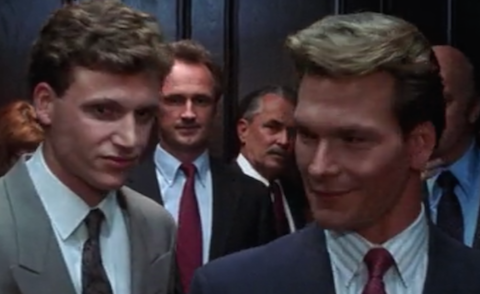
We witness a smirk from Sam (Patrick Swayze) as soon as he and his friend Carl (Tony Goldwyn) enter the elevator of their business in Ghost. We know therefore whatever follows is a gag of some kind. Clearly, there’s some level of improvisation to their conversation, with each trying to outwit each other, and out-gross-out their unlucky audience.

Swayze-GhostElevatorScene
Carl starts coughing.

Sam: “How you feeling? What did the doctor say?”

Carl: “He ummm said that it was contagious. That it was really—”

Sam: “No.”

Yeah. “Yeah. He said that I shouldn’t even be coming in today.”

Sam: “What about the rash?”

Carl: “The rash?”

Sam: “Mmhm.”

Carl: “The rash is ummm also incredibly contagious. He said that…will…spreading.”

Of course, it gets even grosser from there…and the two act like 10-year-old boys instead of grown men in enjoying their little joke.

I  think I enjoy silly scenes like these because I know I would be far more likely to be the one decamping than the one making the joke. I would be the butt of the ploy, and can’t help but smile at how easily these characters would play me.

Share
Posted in: 1930s films, 1990-current films, Romantic Comedies (film) Tagged: contagious, Ghost, movies outbreaks, Myrna Loy, Nick and Nora Charles, Patrick Swayze, The Thin Man

Mae West Quote of the Month: No Evidence

07/23/2015 by leah@carygrantwonteatyou.com 2 Comments

MaeWestSheDoneHimWrong
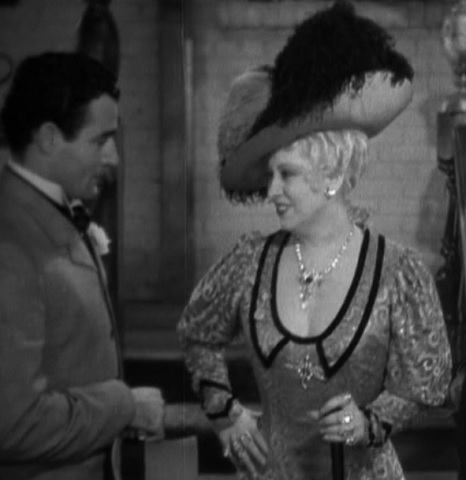
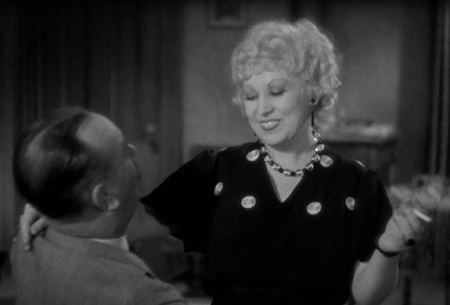
Lady Lou (Mae West) is the heroine of She Done Him Wrong (1933), the hilarious Oscar-nominated, pre-Code movie based on West’s play, Diamond Lil. The film opens in a Bowery bar in the Gay Nineties. Many of the customers are discussing Lou’s attractions, thanks to a new nude portrait of her on the wall.

Lou rides up in a carriage, with women staring at her disapprovingly, and men staring at her very approvingly.

She enters the bar with the customary West strut, and is quickly introduced to Serge (Gilbert Roland) by her boyfriend, Gus. She reflects on Serge’s good manners in kissing her hand and smiles at him alluringly, as West is wont to do.

“I’m delighted,” Serge (Gilbert Roland) says. “I have heard so much about you.”

“Yeah,” Lou quips, “but you can’t prove it.”

If that line can’t get you through the day smiling, no worries. Just watch five minutes more of the film.

Share
Posted in: 1930s films, Comedies (film), Feminism, Mae West Moments, Romantic Comedies (film) Tagged: Diamond Lil, Lady Lou, Mae West, Pre-Code

Satirizing Consumerism: Easy Living

07/19/2015 by leah@carygrantwonteatyou.com 4 Comments

I’ve never liked shows like Lifestyles of the Rich and Famous. I’m uninterested in what Paris Hilton spent on a dog palace, am only slightly amused by what Sony Bono paid to fly his hat. I’ve never understood the point. Am I to envy? To condemn? I’m as prone to consumerism as the next American, but it’s easy to watch The Queen of Versailles and think, I would never expect a rental car company to supply a driver. What entitlement! Now where is that amazing silver necklace on Etsy…

I know my part in America’s deploring—and dangerous—overconsumption is something I should ponder, but these stories so rarely implicate average Americans, or say anything interesting about the culture most of us rarely question.

That’s why I like Easy Living (1937), an airy comedy about a girl just scraping by who—due to a series of misadventures—is mistaken for a banker’s mistress, and flooded with offers of well, everything, in return for just a tip or two about whether steel is up or down this week. What this fictional movie supplies that other shows and documentaries lack is a perspective on capitalism run stupid I rarely see, but have experienced: befuddlement.

JeanArthurhitbycoat
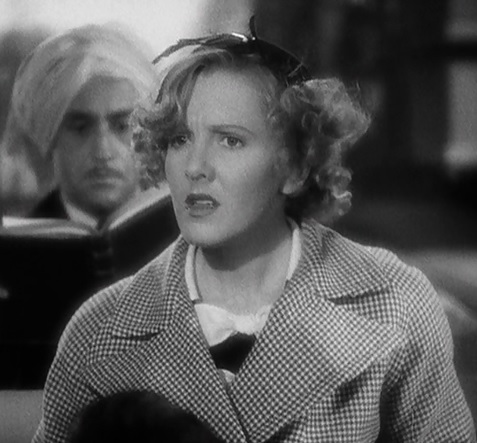
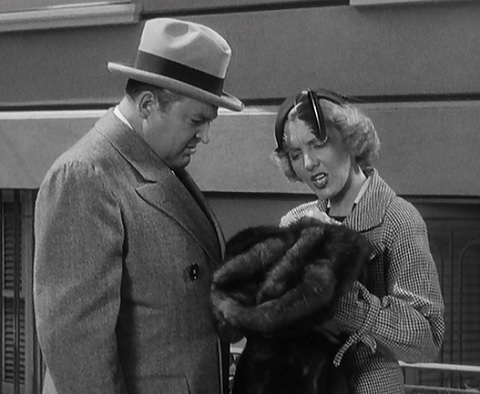
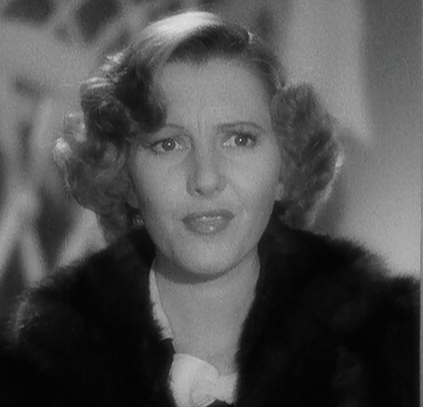
Our heroine, Mary Smith (Jean Arthur), enters the film on a streetcar. A sable coat suddenly lands on her head. Does she try to discover its origins? Does she ponder the nature of serendipity, or “kismet,” as her religious fellow passenger does? No. It ruined her hat, she can’t afford to replace it, and now she has to be late for work to help the idiot who threw it.

She approaches the banker (Edward Arnold) responsible for the coat’s airborne condition.

ArthurandArnold-EasyLiving
Moved by her innocence, he gives it to her, and a new hat besides. She takes the gifts as payback and benevolence, rather than as signs of sexual interest. Unfortunately, her stuffy employer doesn’t share this interpretation. He fires her for immorality.

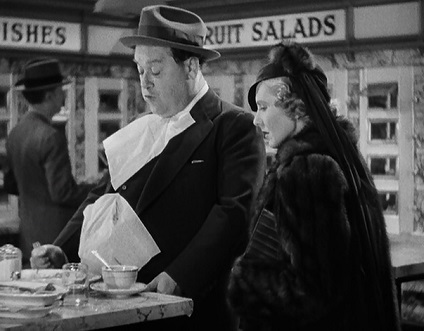
Soon afterward, she befriends John Ball, Jr., the banker’s son (Ray Milland), after he steals a meal for her. Accompanied by her new knight-in-disguise, she starts getting offers from those who, like her employer, consider her a strumpet, but are glad she is. A hotel proprietor (Luis Alberni) offers her a room, hoping to extend his loan with her benefactor. She takes it, with no idea why it’s been offered. Her increasing confusion as questions and freebies fly her way is hilarious to witness.

The film is a pleasure for many reasons, Jean Arthur first among them. As a satire of consumerism, it’s incisive and often dark despite its frothiness, as these three scenes reveal:

1: The Coat
The banker, J.B. Ball (Arnold), begins the day disgruntled. He grumbles over his hearty breakfast, fights with his son (Ray Milland) over an expensive foreign car, then discovers this bill from his wife (Mary Nash):

bill-Sable
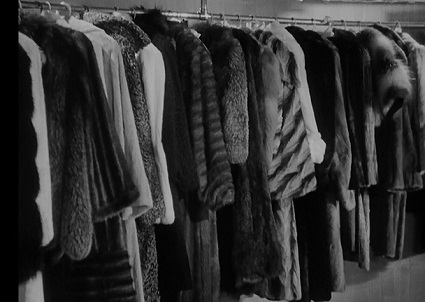
He storms into her room, demanding why she needs such a luxury, especially with a closet like this:
furcoats
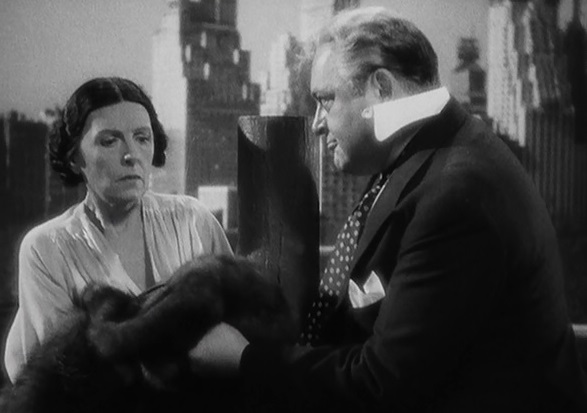
She defends herself, claiming her other furs are out of fashion, that she doesn’t have so many, and then she runs away with the sable, impeding his race after her. The fight ends with some rooftop wrestling.

coatfightNashArnold
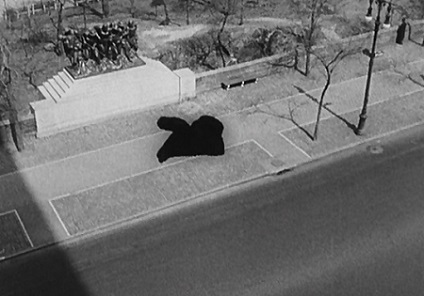
And one big toss:

flyingcoat
The rich banker, complaining of his family’s extravagance, tosses out a fortune like a tissue. (I wish I could claim the rest of us never show such hypocrisy, even if less flamboyantly/expensively expressed…)

2: The Automat
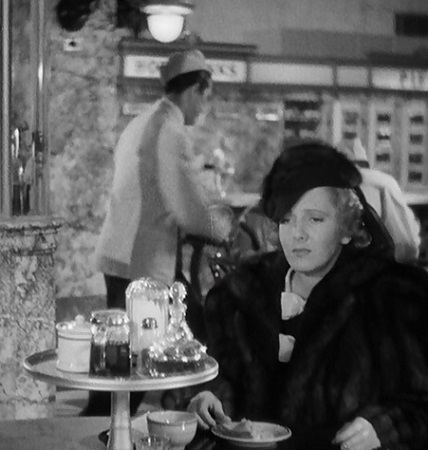
Mary doesn’t have enough money for a decent dinner, but enough appetite to envy those who do:

ArthurasMarySmith-hungry
She’s at an automat, a kind of vending machine restaurant with windows of entries. When the banker’s son (Milland), who is working there, suggests in a misplaced effort at flirtation that she have the meat pie, she retorts, “If you can suggest where to get the nine nickels, I might take your suggestion; otherwise, don’t go around putting ideas in people’s mouths.”

When he offers to spring a door so that she can steal one, she at first resists. But as she attempts to eat her humble meal, she reconsiders.

miserable
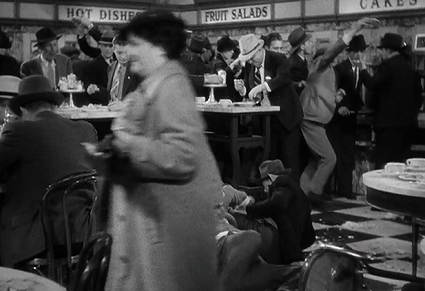
Of course, she breaks down, and of course, a security guard catches Junior, who promptly starts a fight that leads to a free-for-all at the automat the two barely escape.

automatgonewild-EasyLiving
This simple portrayal of the hunger an underfed woman feels as everyone around her overconsumes was a bit too on point to be funny. It did give me a fun flashback of when a vending machine in college went haywire, and I made out. But it also reminded me of when I returned from a visit to Ghana, and was overcome by the excessive options in my grocery store.

The Room
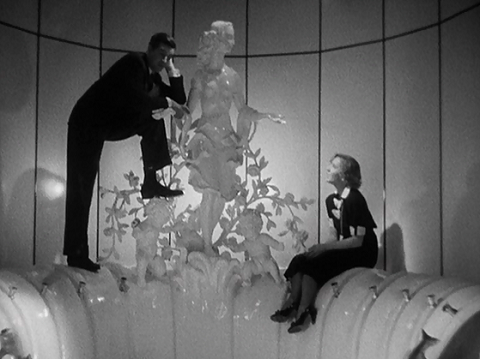
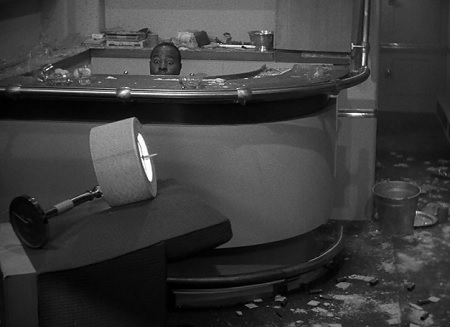
Lifestyles of the Rich and Famous couldn’t possibly capture the luxuriousness of a hotel run by Mr. Louis Louis (Alberni). When he displays a suite for Mary, he can’t even remember its layout, though he does remember to attack the competition’s inferior claims. What other Imperial Suite could boast 5 reception areas, and this monstrosity for a bathtub?

bathtubdisplayEasyLiving
Mary is not impressed by such affectations. She is–quite frankly–confused why anyone would want such nonsense.

JeanArthurconfused
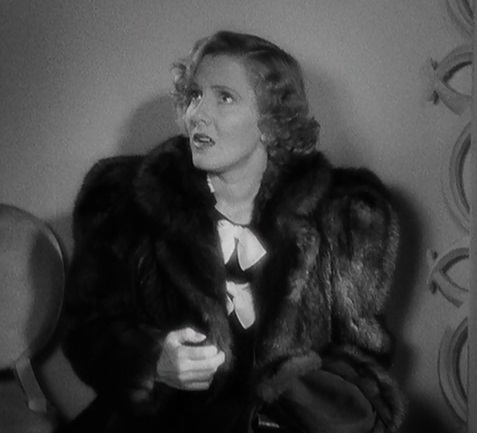
Once alone, she’s even a bit frightened.

scaredJeanArthur
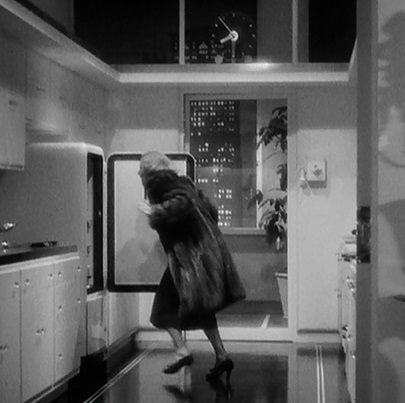
She doesn’t know what to do with any of it, until she remembers one feature in this new suite of hers, and finally feels what Mr. Louis Louis wanted her to feel. She tears across the room, running past all the silk and marble and chandeliers to one thing that she considers worthy of attention: the fridge.

fridge
Only to find it empty.

As a satire of luxury, it’s hard to imagine any scene harsher than this one. Trust writer Vera Caspary (of Laura fame), who penned the story, and screenwriting genius Preston Sturges to lacerate us with their black humor. Even though the critique is cloaked in pratfalls and silliness, it’s still there for us to see. Maybe all these years later, the lesson will actually penetrate our own product-loving minds….at least until the holidays.

Share
Posted in: 1930s films, Romantic Comedies (film) Tagged: capitalism, consumerism, Easy Living, Jean Arthur, Lifestyles of the Rich and Famous, Preston Sturges, satire, The Queen of Versailles, Vera Caspary

A Cinematic Argument for Gun Control: The Ale & Quail Club

07/05/2015 by leah@carygrantwonteatyou.com Leave a Comment

Ale&QuailClub-PalmBeachStory
The Palm Beach Story (1942), Preston Sturges’ rom-com about love & money, features many screwball moments. But few would deny that the screwiest are with the trigger-happy Ale & Quail Club. I have heard many arguments over the years claiming we need tighter governance over gun ownership. But none have been more compelling than simply watching this hunting club in action.

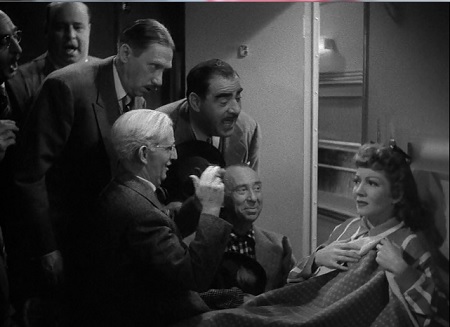
Near the start of the film, Gerry (Claudette Colbert) is leaving her husband, Tom (Joel McCrea). Believing her extravagance is holding him back, she seeks a rich lover to–wait for it–help his business. She dodges Tom at the train station, and convinces a group of millionaires (the Ale & Quail Club) to buy her a ticket to Palm Beach. What she doesn’t know is just what kind of group she’s joined.

They dance with her; they sing to her, their intoxication becoming more evident by the moment. They serenade her with “Sweet Adeline,” to her evident annoyance:

ReactiontoSerenadeClaudetteColbert
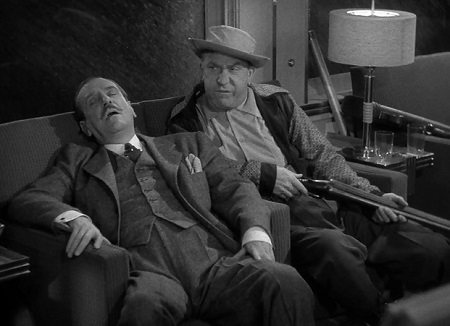
But not just hers. Two of the hunting club’s members haven’t joined the singing–one (William Demarest) because he detests such unmanly behavior, the other (Jack Norton) because his drunkenness has reached the pass-out point.

SweetAdelinereactionDemarestGordon
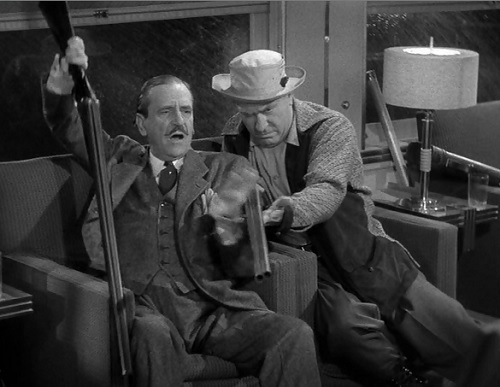
Demarest asks their private car’s steward, George (Ernest Anderson), to throw up crackers, and pretends to shoot them, saying, “Bang bang.”

BangBangDemarestGordon
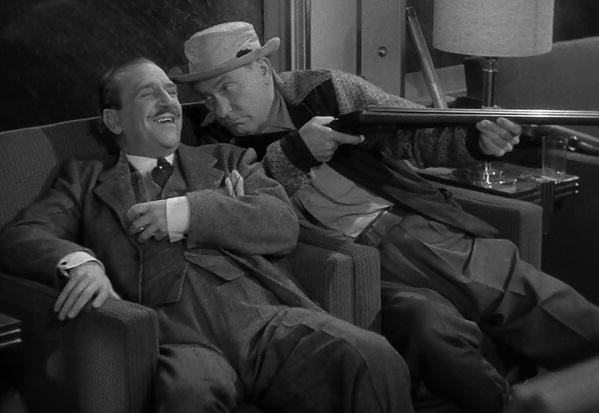
Naturally, his companion (Gordon) claims he’s missed, and the two make a $50 bet about who can make the best shot. Gordon, too drunk to be handling weapons, shatters the window.

firstcasualtywindow
Demarest is shocked, and Gordon proud of his accomplishment.

ShockatSuccessDemarestandGordon
He claims the win.

JackGordonproudofwindowshot
“Wait a minute,” says Demarest. “you’re using real shells.”

“Well, what did you think I was using,” Gordon answers, “bird seed?”

At this point, we might expect Demarest to cry foul. Instead, he loads his own weapon, and chaos ensues as they shoot up the car, with George ducking for safety. The singers in the other room, instead of trying to stop their friends, rush to join the party, calling, “Crap shooting.”

After they’ve completely busted up the car, one member realizes that Gerry, who was almost taken out when she checked to see what was happening, has disappeared.

she'sgone
Demarest suggests a posse.

PoseeledbyDemarest
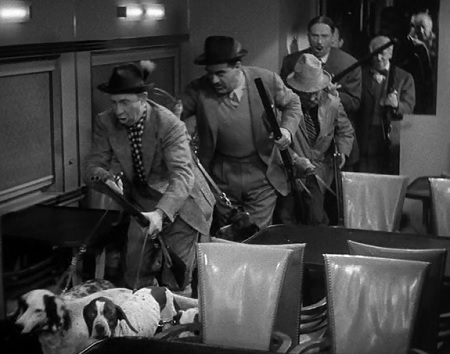
Gordon says they need their dogs, so the club gathers the canines from the other car, singing, “A Hunting We Will Go” as they stalk Gerry.

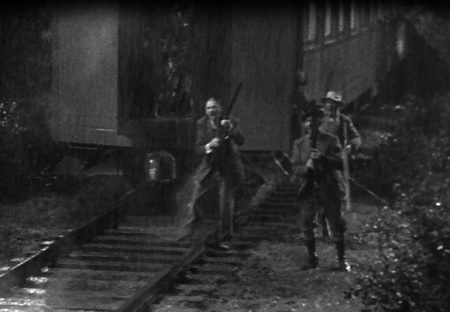
HuntingPartyAle&Quail
After they terrify multiple guests, the club is forced to return to their car. Naturally, they sing some more before the conductors discover what’s become of the car–and George.

George-PalmBeachStory
In our last view of the group, they try to protest their private car being disconnected from the train–with their weapons still in hand.

AleandQuailLastScene
If you haven’t seen it, this ridiculous scenario is, as you can imagine, hilarious. You’ll quickly remember all those Dick Cheney hunting jokes, perhaps the funny Parks and Recreation hunting trip.

But it’s also a terrifying scenario if you shift the light a little: a posse of men chasing after a woman, one black man hiding from the white men threatening him, loaded guns everywhere, a train full of potential victims, and not one person among the group sober. You will laugh–as I did–to see these goofy men, and their strange notion of partying. But you may also find yourself thinking, “You know, some of these guys would have failed a good background check….”

Share
Posted in: 1940s films, Comedies (film), Romantic Comedies (film) Tagged: Dick Cheney hunting jokes, Jack Gordon, Parks and Recreation hunting trip, Preston Sturges, Second Amendment, The Palm Beach Story, William Demarest

Mae West as a Deadpan Plaintiff in I’m No Angel

06/26/2015 by leah@carygrantwonteatyou.com 11 Comments

I'mNoAngel-CourtroomScene
This post is part of the The “…And Scene!” Blogathon. Check out the other entries here.
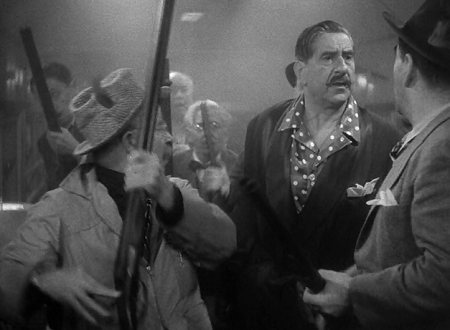
There are very few scenes in film as funny as when Mae West is talking about the number of men in her life, or, as she famously put it after the courtroom scene in I’m No Angel, the much more important amount of “life in your men.”

I’m a sucker for courtroom scenes in general, but most are thrilling, dramatic. I admit that a few are funny–From the Hip, Seems Like Old Times–but there’s nothing like Mae West on a roll, and every second of the courtroom scene of this glorious pre-Code wonder is the actress (and writer) at her best.

Tira, a circus performer, is suing her wealthy fiancé (Cary Grant) for breach of promise. He broke off their wedding because he saw another man in her place while she was out, not knowing it was a set-up by her boss, who didn’t want to lose her successful act to matrimony.

Unsurprisingly, the defense attorney immediately tries to besmirch Tira’s reputation, suggesting she gets around, that she has a “colorful past.”

In another movie, we might expect shame, embarrassment, hostility at such an attack. But this isn’t just any movie.

“Well, I gotta admit, I’ve been the love interest in more than one guy’s life,” Tira agrees. “I don’t see what my past has got to do with my present.”

“We shall show that to the satisfaction of the court, I believe,” the attorney primly responds. “Nevertheless, the fact remains that you’ve been on friendly terms with several men.”

“Alright, I’m the sweetheart of Sigma Psi. So what?”

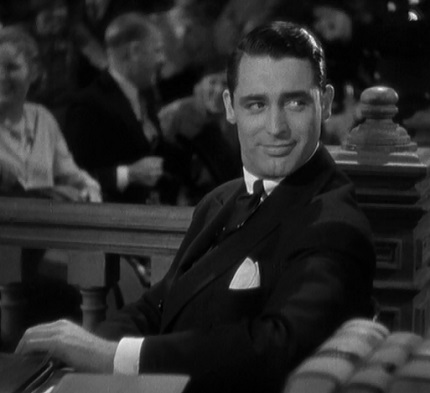
The audience in the courtroom aren’t the only ones laughing at her quip. Even the defendant can’t resist.

CaryGrantI'mNoAngel
When she’s scolded by the judge for not answering the question, she coos at him in response. (He will later take her on a date.)

MaeWest-judge
The attorney presses on, undeterred, referencing a bunch of (obviously married) men by name, asking if she knows them.

“I do recall their faces,” she answers, “but them ain’t the names they gave me.”

Appalled, her own lawyer asks for a recess and chides her for admitting to such an active dating life.

Tira is unrepentant: “Why shouldn’t I know guys? I’ve been around. I travel from coast to coast. A dame like me can’t make trips like that without meeting some of the male population.”

He explains that she can’t win the case. She considers her options.

MaeWest-court-strategy
And then asks if she can question witnesses herself.

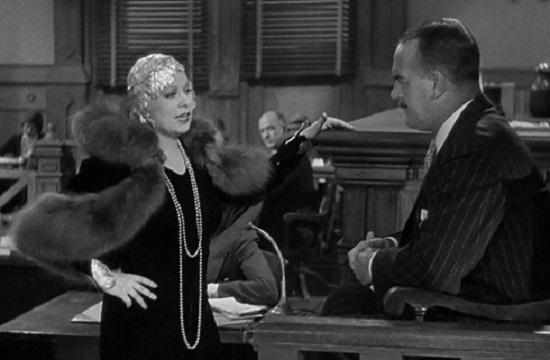
It’s at this point that West really hits her stride–literally. Because she gets to walk up and down past the jury box, practicing her famous strut repeatedly, flirting with everyone in the courtroom.

She treats her accusers with disdain, slamming their efforts to make her look bad, and saying, “OK, I’m through with you,” after she completes her questioning. Between witnesses, she asks the jury, “How ‘m I doin, hmmmmnnnn?”

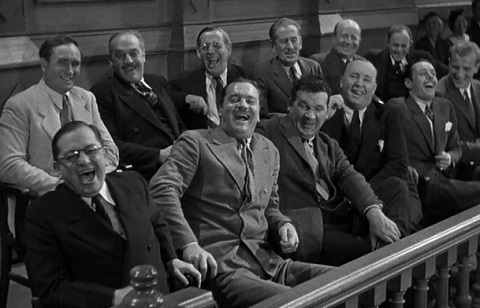
For once, jury duty has proven to be a blessing. Just look at their reactions to her performance:

I'mNoAngel-jury
As Tira concludes, her lover (Cary Grant) can’t handle it anymore and admits defeat. He’s fallen more in love with her than ever, as we have. Who cares if she’s the sweetheart of Sigma Psi? She’s Mae West, idiot. Catch her while you can. Case closed.

Share
Posted in: 1930s films, Blogathons, Mae West Moments, Romantic Comedies (film), Uncategorized Tagged: best courtroom scenes, Cary Grant, I'm No Angel, Mae West, Pre-Code

Love It, Love It Not?: Waffling over Lubitsch’s Design for Living

06/13/2015 by leah@carygrantwonteatyou.com 2 Comments

DesignforLiving
I hoped to love Design for Living. After all, the director was Ernst Lubitsch, who had helmed such witty, cynical comedies about relationships, movies that usually feel as insightful and controversial now as they probably did back in the 20s and 30s. And many reviewers I respect had praised its humor and star.

But….

I found myself teetering back and forth throughout the film—This is wonderful! This is bad!—so, like a gal tearing apart a flower over a crush, I’m going to explain its effects the best way I can:

Love It #1: Subject Matter & Morality

Gildasthreesome-DesignforLiving
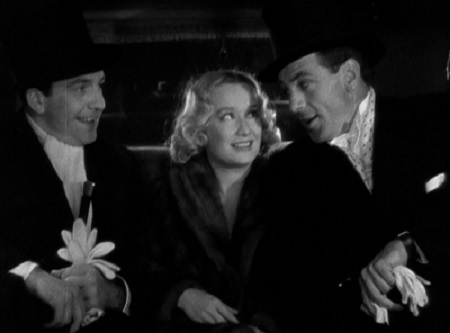
Design for Living features a threesome—surely interesting coverage for a film of our time, much less in 1933. (An underrated film I watched in college, Threesome, got a lot of heat back in 1994 for its coverage, even though it was far less flip about the results of the tripling than Lubitsch’s.) I find stories about unusual relationships intriguing, and this is certainly one of them.

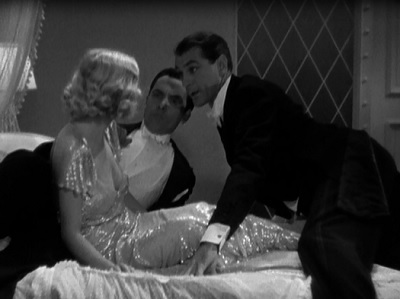
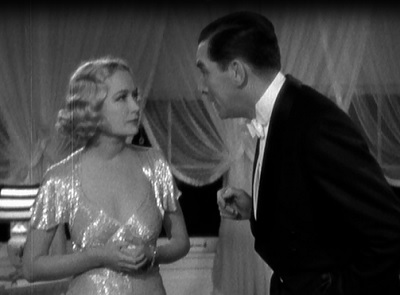
Knowing two roommates want her, Gilda tries to remain platonic with them. She attempts to preserve their friendship and guide their artistic successes (one is a playwright, the other a painter). Her catch phrase is “No sex.” Of course, she gives in to her own desire and theirs, repeatedly.

What’s interesting about the film is the utter lack of judgment about the heroine having sex with both men (in turn, rather than together), or later, wanting to leave her husband to resume the romance. Lubitsch’s touch is so incredibly light that we never blame Gilda (Miriam Hopkins) or her lovers, even though it would be easy to think of her actions, and theirs, as betrayal. Instead, we root for Gilda to stay with both men, as their happiness and hers seems most assured when their playful, sexually charged unit is intact.

Love It # 2: Its Opening
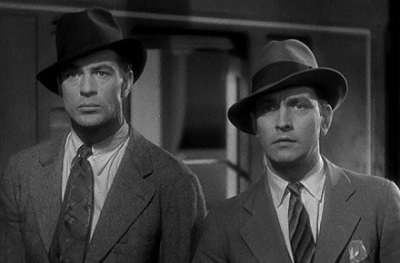
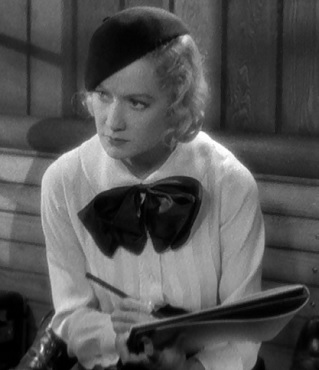
The plot begins with Gilda drawing a rather merciless caricature of two strangers in her train car, Tom (Fredric March) and George (Gary Cooper). Her humor and confidence are breathtaking. Her casual decision to put her legs up on their seat, her amused reaction to their annoyance at her picture, and their own exuberant attraction to her are a pleasure to watch. Although the development is almost too quick, their move from prickly insecurity to joy in each other’s company is funny, and such a convincing depiction of youthful spirits that it made me laugh.

Love It #3: Its Heroine
The film stars Miriam Hopkins, whom I’ve always thought I should like more than I do, which was confirmed by persuasive defenses of her work in a recent blogathon.

MiriamHopkinsDesignforLiving-2
Although she can be dramatic in the film, my usual objection to her, that theatricality suits Gilda’s personality. After all, Gilda imagines herself the driving force behind multiple men’s artistic successes—not to mention their sexual satisfaction. I love that Gilda has utter confidence in her own role as a lover and commercial artist, but quickly sets about fixing the two men’s wobbly self-esteem. Her defense of a woman’s need to try out men like hats is hilarious, and amazingly ahead of its time. Her assurance and energy made me a fan of hers throughout, and always curious what she’d do next.

But….here’s the thing: Despite my enjoyment of these aspects of the film, I didn’t laugh that much, and had to wonder why, which brings me to…

Love It Not #1: Gary Cooper
Oh Gary. He just wasn’t formed for comedy. While his gawky, unnatural goofiness in Ball of Fire seemed to capture his academic persona, the same portrayal here rings very false. He is not convincing as a painter, as a lover, or as a spirited friend. I just wanted to hide my eyes or send him to acting class every time he was on the screen.

Love It Not #2: Edward Everett Horton as Deus Ex Machina
Whereas Cooper pains me in comedy, Horton delights me. But here, his role as Gilda’s boss and competing love interest was laughable—at best. The chemistry between Hopkins and Horton was so nonexistent that I felt like one of them was green screened in every time they were together.

HortonandHopkins

Threatened by...Horton?

Threatened by…Horton?

In addition, the mood between the three lovers is so light and Gilda’s own personality so ebullient that her desperate decision to throw herself at her boss to avoid Tom and George felt like the plot twist of a first-time playwright (which Noël Coward, the story’s creator, was not; apparently, the film barely resembled the play).

Speaking of poor playwrights….

Love It Not #3: These Three—Artists?
I can’t say I’m expecting realism in my comedies, but Hopkins’ drawing in the first few minutes of the story was so patently fake that it took my attention away from the film. (Why not an actress? Gilda definitely has that temperament.)

MiriamHopkins-DesignforLiving
But she’s Degas compared to Cooper, who may be the most unlikely painter ever to grace the screen, and Fredric March is not much more convincing as an author.

I get that a threesome seems Bohemian, and failed artistic aspirations are glamorous in the way poverty only can be in Hollywood portrayals, but come on. Making them artists felt like a cheap way for the writers and director to avoid the audience’s questioning of the characters’ behavior. (Those artists with their loose morals!) And the script is so thin that some truly adept performances were required. Unfortunately, not one of these casting choices fit the material fully. March reminded me so much of Gene Kelly that I could have believed in a little tap dancing. But he looked about as uncomfortable with that typewriter as Cooper did just being there.
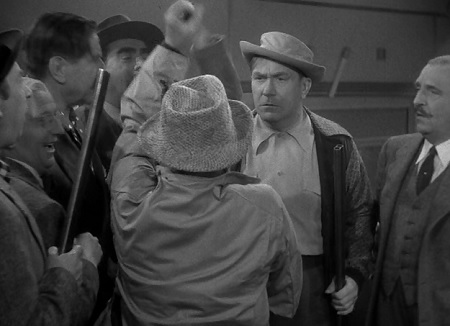
In Conclusion….
So some loves, some nots. In the end, I’m glad I saw the film. The unabashed approval of this very untraditional relationship is breathtaking. There are some marvelous lines (my favorite, the “gentlemen’s agreement” to not hook up). The conclusion is a blast to watch. And Hopkins is riveting throughout. Just don’t expect that usual Lubitsch magic, and you’ll enjoy it.

Share
Posted in: 1930s films, Feminism, Romantic Comedies (film) Tagged: Design for Living, Ernst Lubitsch, Fredric March, Gary Cooper, Miriam Hopkins, Pre-Code, review, threesome

My Own “Awakener”: Mae West’s Writing

06/04/2015 by leah@carygrantwonteatyou.com 2 Comments

MaeWest-Awakener
As I was reading the bios of Kate Bolick’s awakeners in Spinster, writers whose independence had inspired her own, I inevitably began to consider my own awakeners. Which literary women had encouraged me to live by my own definition of womanhood?

I came up with many answers, but soon one figure nudged the others out: No costar could ever prevent being upstaged by Mae West. My brain was no different: what other woman could share my consciousness once the shimmying, voluptuous, smart-talking, smart-writing dame arrived?

Others might think of her as an actress first, but for me, it’s the writing that dominates. I grew up worshipping one-liners from Dave Barry and Jane Austen. How I love a quip that’s not only hilarious, but timeless, that captures something of human nature that’s real and honest. And West, well, we all know she had a way with the lines.

And what a pioneer she was! Her play, brazenly titled Sex, produced in 1926. Her arrival on the screen at 38, with an insistence on writing her own dialogue that ensured her place in movie history. And most of all, a sense of humor so unmatched that her words have become part of the American vernacular—whether all of us realize it or not.

I suspect Bolick never fell for West’s language, for if she had, she would have had no need for five writers to inspire her; one would have been more than sufficient. So in honor of Bolick, whose book celebrating singlehood I enjoyed, I will share two of my favorite West comments on matrimony for my monthly Mae West celebration:

First, the famous quip:

“Marriage is a fine institution, but I’m not ready for an institution.”

And second, that marvelous rejoinder from I’m No Angel:

Man: “I don’t suppose you believe in marriage, do you?”
Tira (West) “Only as a last resort.”

What I love is that a male character saying these words onscreen now would get big laughs—not to mention a female. (Of course, no one else could say them with the kind of oomph West did; she ignites the screen while current bombshells play with matches.)

And West not only says the words, she means them; she was every bit as unconventional as they imply. Of course, I know not to confuse fictional characters with their authors. Luckily, West gave me permission, stating about her racy creation, Diamond Lil, who bears a strong resemblance to Tira: “I’m her and she’s me and we’re each other.”

Like Bolick’s awakeners, West did have an encounter with matrimony, but since she was underage, denied cohabiting with the guy, and didn’t even admit to the union until it was discovered, I think we can agree that its impact on her was as negligible as she claims. (And of course, there’s also the accordion player from her vaudeville days some claim she married; she left him too.)

Which leaves us with her writing.

It would be easy to interpret West as simply of her time, as the pre-Code era certainly had some loose moral guidelines. But she acted the same AFTER the Code. Some might also suggest she was provocative for the sake of being rebellious. Or—perhaps even more dangerously—that she was condemning others’ choices in favor of her own. I’ve never thought of her that way, perhaps since her heroines are friendly with other women in her films, and only snarky when they oppose or judge her. And with a delivery that friendly and relaxed, who could take offense?

What West demands for each of her heroines is simply what we all should: the right to be who she is without regard to others’ morals and traditions. To be an individual, with all that implies.

As for West herself? Well, she never got to that last resort, instead cozying up with Paul Novak, a muscle-bound (and decades younger) man from her Vegas act. But it wasn’t a fling. The romance lasted until her death 26 years later; he’d never let her change her will in his favor, not wanting to think about her death. Early in their relationship, when Jayne Mansfield suggested she’d rescued Mickey Hargitay, another of West’s Chippendale-like chorus, from her employer, Novak responded by punching Mr. Universe.

West’s reaction was perfect: she implied they were at war over her affections. Kind of like her films–all the men longing just for her, she casually dating them all. Leave it to West to joke about her famous lack of monogamy while other women were pining for it. Leave it to her to confront a scandal with laughter, as she confronted everything.

I haven’t lived or loved like West. Who could? But oh, how her moxie inspires me.

Share
Posted in: 1930s films, 1940s films, Comedies (film), Feminism, Mae West Moments, Romantic Comedies (film) Tagged: awakener, Kate Bolick, Mae West, marriage, single, Spinster

The Nerdiest Scene Ever: Encyclopedia Writers Trumping Gangsters in Ball of Fire

05/16/2015 by leah@carygrantwonteatyou.com 28 Comments

This post is part of the My Favorite Classic Movie Blogathon in celebration of National Classic Movie Day (May 16th). Click here to view the schedule listing all the great posts.

CoopervsDuryea
Nerd alert: I used to sit in the basement, reading my parents’ World Books for fun. I think it started with A Tale of Two Cities. A few hours into the encyclopedia set’s entries on The French Revolution, and Sydney Carton was forgotten.

Now, of course, my addiction is Wikipedia, despite my warning students away from it with Colbert. The other day I attended a Renaissance Faire featuring a pirate show (yes, I know how ridiculous that is), just after reading about Blackbeard in The Smithsonian. The combination led me on a Wikipedia binge on female pirates.

Thus it should be no surprise that a film about professors writing an encyclopedia (and their unexpected romantic interlude with a gangster’s moll) would thrill me. I’ve already explained why Ball of Fire should be viewed by all English majors. Today I’m advocating it for history buffs as well, particularly due to one scene starring the professors, two gangsters, The Sword of Damocles, and the mirrors of Archimedes.

**Spoiler alert.**

For those who’ve never seen the film, here’s the basic plot: Sugarpuss (Barbara Stanwyck), girlfriend to gangster Joe Lilac (Dana Andrews), hides out from the D.A. in the home of the encyclopedia writers, pretending she’s there to help with Professor Potts’s (Gary Cooper’s) entry on slang. Potts falls for and proposes to her, and she (to her great shock) falls for him too. But when her scheming is exposed, Potts lets her leave with Lilac, who needs her “I do” to prevent her from testifying about his crimes.

Sugarpuss knows she’s earned Potts’s disgust, but refuses to marry Lilac, instead explaining her love for the professor. She describes his poor kissing technique, his “giraffe” fashion, and other traits that have somehow inspired her love for him.

Sugarpuss-Stanwyck
“I’ll never see him again,” she tells Lilac, “but I’m not gonna marry you, not if you tie a ton of cement around my neck and throw me into the East River, like you did all the others.”

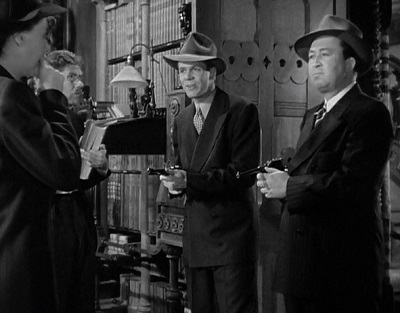
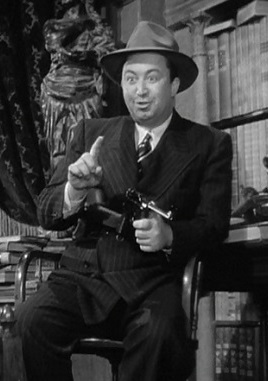
To force her, Lilac sends two of his henchmen, Pastrami (Dan Duryea) and Anderson (Ralph Peters), to take the professors hostage.

GangstersBallofFire
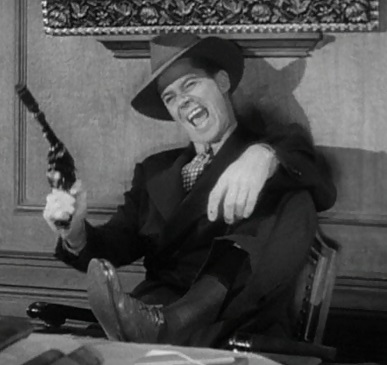
When Potts discovers how much Sugarpuss loves him, he wants to yodel he’s so happy. His fellow professors share in this enthusiasm, even holding down Pastrami’s gun. The gangster retorts,”Better look out, it’s gonna spit.”

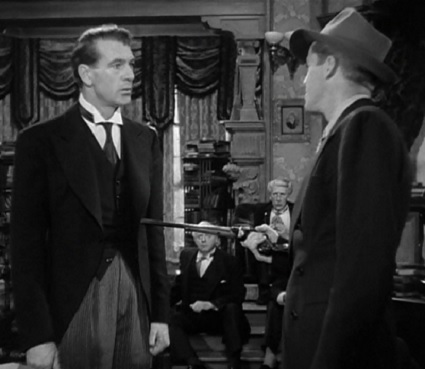
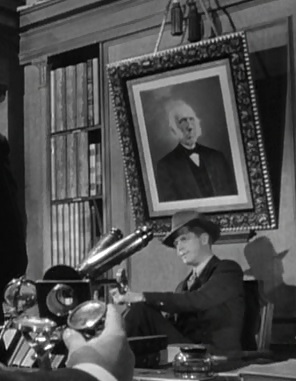
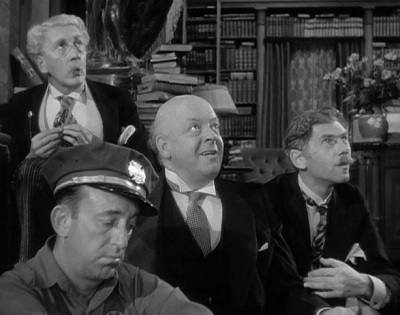
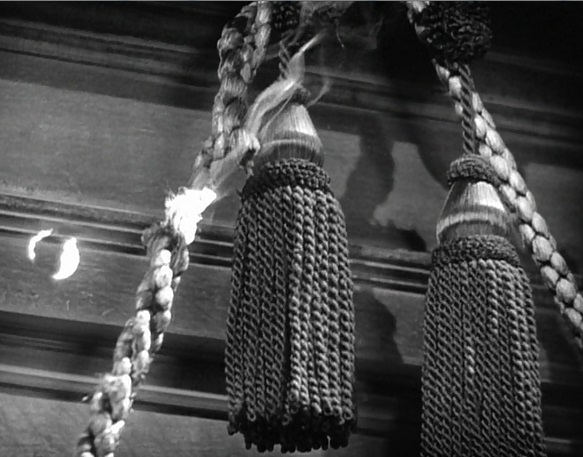
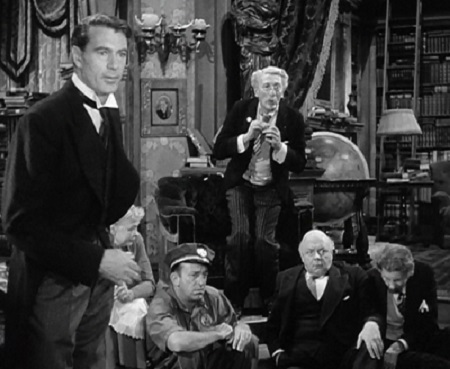
At this exciting juncture, their garbage man arrives with questions on a quiz, including one about the Sword of Damocles. Professor Jerome (Henry Travers–a.k.a., Clarence of It’s a Wonderful Life) explains the legend, realizing its pertinence to their situation: A sword is suspended above the head of Damocles by just a hair, just like the portrait above Pastrami.

SwordofDamoclesstrategy-BallofFire
Jerome’s quick-witted colleagues soon catch the reason for his storytelling. Suddenly, they have a strategy–and perhaps as importantly, hope.

ProfessorsSeeDamoclesBallofFire
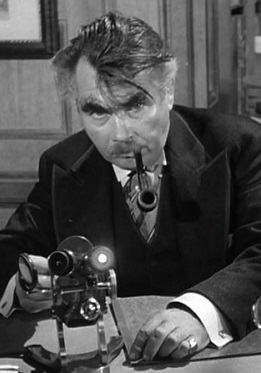
After Potts shares another story–Archimedes burning the Roman fleet with well-aimed mirrors–Professor Gurkakoff (Oscar Homolka) moves his microscope so that it’s catching the sunlight, and directs it at the rope above the portrait.

Oscar Homolka-BallofFire
Potts then notices that Anderson is pitched precariously on a high chair.

Ralph Peters-BallofFire
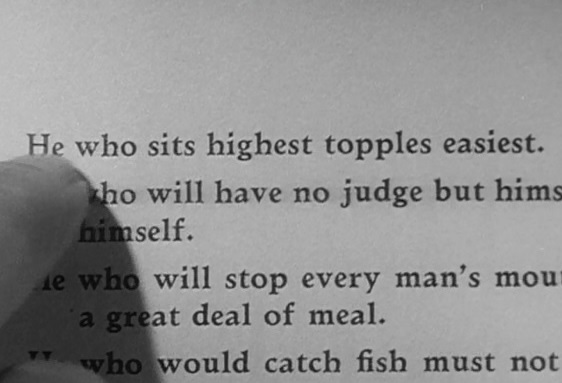
He therefore refers one of his colleagues to a passage that gives him a mission once Pastrami is handled.

Topples-BallofFire
The approach is working. Two of the professors have spotted a carpet they’re ready to pull to topple Anderson, and the fire is burning through the rope above the picture.
Reflectors-Archimedes-BallofFire
Now all the professors need to do is distract the criminals’ attention from the fire. Potts insults the gangsters in a pseudo-intellectual style, beginning a nonsensical speech with “Your inferiority is a question of the bony structure of your skulls.”
Anderson is unaware how truthfully he speaks when he complains, “This mixed-up talk is giving me a headache.” Pastrami argues that guns, not smarts, make the world go round, and proves it by shooting their globe.
Pastrami-Dan Duryea-BallofFire
While this gun play has the whole room worried, it’s Pastrami’s decision to leave his chair that leads to panic. Professor Oddly proposes that Pastrami shoot a dime out of his hand, but only if he returns to his seat. Realizing the risk he’s taking, poor Oddly switches to a quarter, then a 50-cent piece. The tension in the room has obviously reached quite a pitch.

ProfessorsFearful-BallofFire
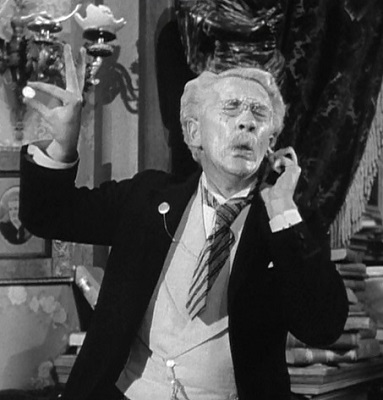
Oddly’s expression as he waits to lose his hand is priceless:

ProfOddlyRichardHaydn
Of course, Pastrami is knocked over first.

Portrait starts to fall.
And Anderson falls via the carpet move. Oddly faints–quite theatrically. And the professors rush off in a garbage truck to save Sugarpuss, with Potts studying boxing strategies to use against Lilac en route. With scenes as delightfully geeky and ridiculous as this one, it any wonder that this classic film remains my favorite?

Share
Posted in: 1940s films, Blogathons, Film Noir/Crime/Thriller & Mystery, Humor, Romantic Comedies (film) Tagged: Ball of Fire, Barbara Stanwyck, Colbert, enclopedia, films for English majors, films for history buffs, Gary Cooper

The Hottest Woman around in Her 40s: Mae West’s Age-Defying Career

05/06/2015 by leah@carygrantwonteatyou.com Leave a Comment

SchumerFeyArquetteDreyfus
Amy Schumer’s hilarious skit about discrimination against middle-aged women in Hollywood has me wondering about Mae West. It’s true that modern films imply that women aren’t attractive enough past their 40s to be worthy of sex onscreen. But Mae West starred in Sextette in 1978; the film cast her as the object of all men’s desires in her eighties. While the movie was a box office failure, the simple fact is that no such film would be made today.

West’s role was hardly surprising, given that she was in her late 30s when her film career as a seductress began. She was, in addition, penning all of her own lines, and usually the whole screenplay. While many (Schumer among them) question why women haven’t made more progress in entertainment, few express the more disturbing possibility:  Have we backtracked?

Mae West was a pioneer, it’s true. But pioneers are usually followed by those who accomplish more. The frontrunner’s courageous example and more hospitable times and environments usually lead to at least some progress. Maybe we all should be examining West, to figure out what this extraordinary writer/actress got right, what she still has to teach us. And why not? Who doesn’t want a regular dose of West?

Since her host of brilliant one liners overpowers me, I’ll highlight just one each month to savor it properly, starting with this bit from My Little Chickadee, co-written by West and W.C. Fields (the following scene is obviously of her creation).

MaeWestchalkboardMyLittleChickadee
The town’s school teacher has fainted after dealing with a class of “unruly” boys. Newcomer Flower Belle (West) has taken over the class for the day, and is attracting all of the hormonal adolescents (in her late 40s, I might add). She checks out the teacher’s lessons on the chalkboard. “I am a good boy,” she reads slowly. “I am a good man. I am a good girl.” She turns to the students: “What is this?” she asks. “Propaganda?”

Share
Posted in: 1930s films, 1940s films, Feminism, Humor, Mae West Moments, Romantic Comedies (film), TV & Pop Culture Tagged: ageism, Amy Schumer, Hollywood, Julia Louis-Dreyfus, Mae West, Patricia Arquette, sexism, Tina Fey
« Previous 1 2 3 4 5 6 7 Next »

Recent Posts

  • 100 Years Later, Still Scary: Dr. Caligari
  • Escaping Out of the Past (1947)
  • A Weeper for Those Who Love Jerks
  • Thank You, Academy, for Not Infuriating Me
  • Challengers (2024) Is a Bad Movie

Subscribe to Blog via Email

Enter your email address to subscribe to this blog and receive notifications of new posts by email.

Categories

  • 1920s films
  • 1930s films
  • 1940s films
  • 1950s films
  • 1960s films
  • 1970s films
  • 1980s films
  • 1990-current films
  • 2020s films
  • Action & Sports Films
  • Anti-Romance films
  • Blogathons
  • Childfree
  • Comedies (film)
  • Drama (film)
  • Feminism
  • Femme fatales
  • Film Noir/Crime/Thriller & Mystery
  • Gloriously Silly Scenes
  • Horror
  • Humor
  • Mae West Moments
  • Musicals and dancing films
  • Oscars
  • Random
  • Romance (films)
  • Romantic Comedies (film)
  • The Moment I Fell for
  • Turn My Sister into Classic Movie Fan
  • TV & Pop Culture
  • Uncategorized
Share
Classic Movie Blog Hub Member

Recent Comments

  • leah@carygrantwonteatyou.com on Meg Ryan’s Fate Foretold in Joe Versus the Volcano
  • Ryan on Meg Ryan’s Fate Foretold in Joe Versus the Volcano
  • leah@carygrantwonteatyou.com on 100 Years Later, Still Scary: Dr. Caligari
  • The Classic Movie Muse on 100 Years Later, Still Scary: Dr. Caligari
  • leah@carygrantwonteatyou.com on 100 Years Later, Still Scary: Dr. Caligari

Archives

  • November 2025
  • September 2025
  • May 2025
  • March 2025
  • January 2025
  • November 2024
  • August 2024
  • July 2024
  • May 2024
  • March 2024
  • February 2024
  • December 2023
  • November 2023
  • October 2023
  • September 2023
  • August 2023
  • July 2023
  • May 2023
  • April 2023
  • March 2023
  • January 2023
  • December 2022
  • November 2022
  • September 2022
  • July 2022
  • May 2022
  • April 2022
  • March 2022
  • February 2022
  • October 2021
  • September 2021
  • April 2021
  • March 2021
  • February 2021
  • December 2020
  • October 2020
  • September 2020
  • July 2020
  • May 2020
  • April 2020
  • March 2020
  • February 2020
  • December 2019
  • October 2019
  • September 2019
  • June 2019
  • May 2019
  • April 2019
  • February 2019
  • January 2019
  • November 2018
  • September 2018
  • July 2018
  • June 2018
  • May 2018
  • April 2018
  • March 2018
  • February 2018
  • January 2018
  • November 2017
  • September 2017
  • August 2017
  • July 2017
  • June 2017
  • May 2017
  • April 2017
  • March 2017
  • February 2017
  • January 2017
  • December 2016
  • November 2016
  • October 2016
  • August 2016
  • July 2016
  • June 2016
  • May 2016
  • April 2016
  • March 2016
  • February 2016
  • January 2016
  • December 2015
  • November 2015
  • October 2015
  • September 2015
  • August 2015
  • July 2015
  • June 2015
  • May 2015
  • April 2015
  • March 2015
  • February 2015
  • January 2015
  • December 2014
  • November 2014
  • October 2014
  • September 2014
  • August 2014
  • July 2014
  • June 2014
  • May 2014
  • April 2014
  • March 2014
  • February 2014
  • January 2014

Meta

  • Log in
  • Entries feed
  • Comments feed
  • WordPress.org

Copyright © 2025 Cary Grant Won't Eat You.

Church WordPress Theme by themehall.com