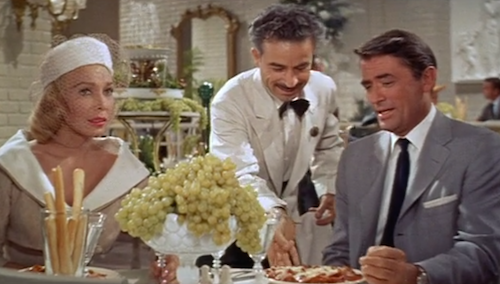
Cary Grant Won't Eat You

Classic movies for phobics

  • About
  • eBooks
  • Previous Blogathons
Classic movies for phobics

Romantic Comedies (film)

Crushing on The Cutting Edge’s Doug

06/25/2017 by leah@carygrantwonteatyou.com 10 Comments


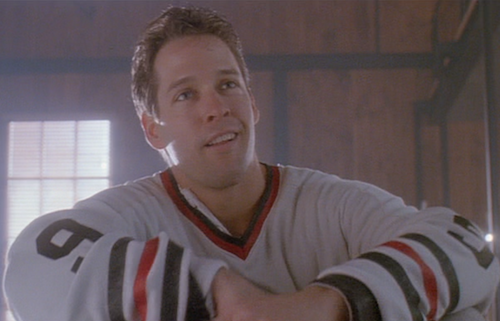
There’s a certain generation of women who still laugh when they hear “toe pick.”  Then they begin dreaming about a certain swoon-worthy character in the memorable scene when that line was first employed, and wonder why aren’t romantic leads like that now? Why can’t they all be like D.B. Sweeney’s Doug Dorsey: athletic, virile, funny, easygoing, ambitious, and more emotionally open than those traits might suggest?

The Cutting Edge (1992) never received the credit it deserved, but I hear the occasional reference to it in films and TV episodes, echoing the devoted following it obtained then and still now for its engaging sports narrative, its funny tone, and the sizzling chemistry between Sweeney and Moira Kelly.

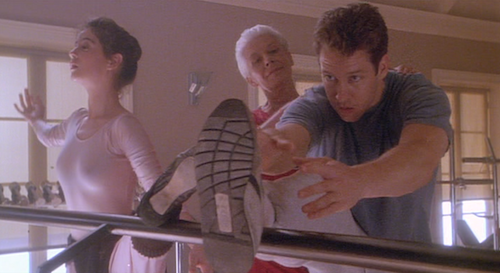
In the story, Doug’s dreams of hockey stardom have been destroyed by an injury to his eye at the Olympics. Kate Moseley’s (Kelly’s) Olympic dreams have been dashed by a particularly ugly drop by her figure skating partner. The next Olympics is coming up, and no one wants to partner with the notoriously chilly Kate. Meanwhile, Doug has lost his scholarship and any chance at even a minor league hockey career. Then one day, Kate’s coach approaches Doug with some figure skates, and despite his (and her) hilariously expressed doubts, an unlikely professional pairing begins to form. Before long, Doug starts to realize he has feelings for her, and she, in spite of her engagement to another, begins to realize she is attracted to him too.

There are many differences between the two characters: he’s a stereotypical guy in many ways, and she’s a reserved, uptight, very wealthy and very feminine woman.


But you see the attraction too, especially their hyper-competitiveness and dedication. What I love so much about their union is that BOTH of them grow due to the influence of the other. It’s not just the punishment of the type A personality woman we so often see (though Kate is definitely–and deservedly–taken down a peg or two). (Actually, their dynamic is so similar to the one in It Happened One Night that I wrote about it in one of my earliest blog posts.)

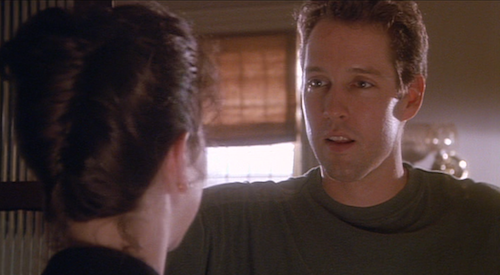
My own love for Doug Dorsey was quite fervent. He was EVERYTHING I wanted in a partner in my late teens: Smart, relaxed, charismatic with an incredibly sexy smile. Confident but open, willing to admit mistakes. Promiscuous when he wasn’t in love, but when he was, not willing to go for Kate if she was still engaged or had too much to drink. Proud but mature enough to leave the pride behind when he had to. Ultimately willing to prioritize her even above his dreams. And, of course, there was his tolerance of her heinous (but enthusiastic) dance skills, which bore a strong resemblance to mine. His ability to throw a paper wad into a trashcan and make it. His skill with the cutting line, and reluctance to read Great Expectations (close to my least favorite book at the time).

My love for Doug Dorsey led me to seek D.B. Sweeney’s other work over the years, and believe me, it hasn’t been easy: Eight Men Out, a Leverage episode. Why his fully embodied, sensual, funny performance didn’t lead to stardom, I don’t know. But although he and I have aged, my opinion of Sweeney’s character hasn’t. What I realize now is that he was also what a teen’s heartthrob character so rarely is: an adult (with, admittedly, some rough edges). That’s why I can still enjoy the film now, when other teen loves have lost their allure. And besides all that? The Cutting Edge is such a fun sports film (another favorite genre of mine), and it’s full of comedy, especially when Doug confesses he’s become a figure skater to his working class, uber-masculine brother (and hometown).

When I heard Font and Frock & Silver Screenings were hosting a Reel Infatuation blogathon celebrating character crushes, I thought of others: obviously Nick of The Thin Man, Cary Grant’s hilarious The Awful Truth husband. But suddenly, D. B. Sweeney popped in my head, reminding me of Doug and the long-ago, but never-dead crush, and I figured some of the rest of you hadn’t had the joy of encountering him yet, and others would love the reminder. Hope if you haven’t seen the film yet, you’ll soon enjoy toe picks as much as I do.


For others’ wonderful posts on their film crushes, click here.

Share
Posted in: 1990-current films, Action & Sports Films, Comedies (film), Romantic Comedies (film), TV & Pop Culture, Uncategorized Tagged: best 90s romcoms, best chemistry romantic comedies, D.B. Sweeney, figure skating movies, Moira Kelly, The Cutting Edge

Happy Birthday to Classic Film’s Cupid, Charles Coburn

06/19/2017 by leah@carygrantwonteatyou.com 6 Comments


Today you need to embrace your love, ask out that crush, comfort your lovelorn friend, or play matchmaker yourself.

Why?

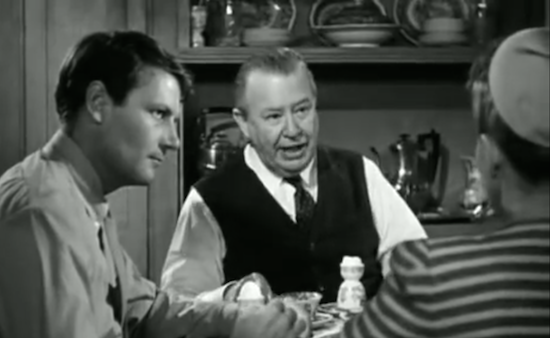
Because it’s Charles Coburn’s birthday. You know: the warm uncle/grandfather/parent type who plays the part of wing man, aiding couples in love. A Coburn character is the friend/relative you’ve always wanted, his cool common sense cutting through the neuroses, doubts, and faults that jeopardize a blooming love match or hinder an existing one. With such a friend, the couples always head to matrimony, or find new reasons to appreciate the spouses they have. So be a little kinder to those you love–or hope to love–today. In Coburn’s honor.

Share
Posted in: 1940s films, Random, Romantic Comedies (film) Tagged: best wingman in film, Charles Coburn, classic movie cupid, Heaven Can Wait, review, romantic sidekick, The More the Merrier, Together Again

What’s in a Name?: Together Again (1944)

05/17/2017 by leah@carygrantwonteatyou.com 20 Comments


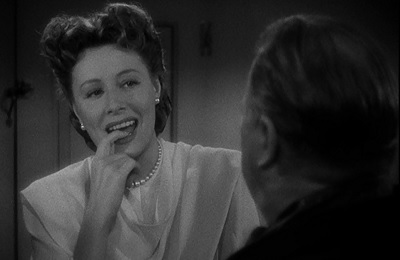
I have a sophisticated theory about why the Irene Dunne vehicle Together Again (1944) is never on any best-of, favorites, or romantic comedy lists despite the many joys of viewing it: the title sucks.

And when I say it sucks, I mean it’s the WORST TITLE I CAN IMAGINE. It’s so forgettable that every time I think of it, I have to look up Dunne’s IMDB site to find it. I cannot for the life of me remember it at all. And I’m a fan of the film! What does that say?

The title isn’t mysterious, as in The Natural, an aptly named, but box-office-ignorant choice. It’s not annoying, as in Mr. Deeds Goes to Town. It’s just so impossibly blah and vague. Together Again. As in a remarriage? As in partners who re-team? As in peanut butter and jelly? WHAT does it mean? I’ve seen the film and any possible answer to that question is not a good one.

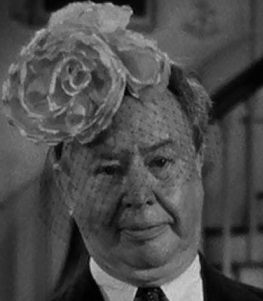
Of course, if I’d had my druthers, I would have named it this way: Charles Coburn, Matchmaker. Because any classic movie fan familiar with his work would run to see it then. But as I don’t have naming rights, I can just tell you this: Ignore the title; watch the film.

Why? I’ve posted a longwinded tribute to it, with comparisons to Veep, should you have time to kill. But here, I’ll give you the brief but essential rundown of why so many of you will love it:

  1. It’s Such a Feminist Flick. A female mayor, people. Who rips on men who belittle her. Who makes fun of romance, and yet (despite herself) is itching for it after her husband’s death. Her father-in-law (Coburn) keeps trying to sway her to take things easier, to find a new man and stop worshipping his son. Hooked yet?
  2. Irene Dunne. Oh she’s great. That odd, fluttery voice dishes out sarcasm with verve. Her on-point timing and ease of movement make her mesmerizing to hear and watch.
  3. The Romance. I’m not a big fan of Charles Boyer’s, but the two actors have chemistry together. And I’ve always been a fan of the straightlaced gal and bohemian/relaxed guy meet-cute, probably because I was such a nerd as a kid.Unnecessary Aside and Spoiler of Other Films: I prefer Boyer’s & Dunne’s Love Affair (1939) to the more beloved An Affair to Remember (1957) remake, partially because Boyer & Dunne are more in sync and believable as a couple than Kerr and Grant, despite the latter’s extreme charm in his film. But mainly because Deborah Kerr seems such an inert actress to me, making the tragedy that befalls her less moving than that of the highly energetic Dunne. I mean, ask yourself: Which actress can you imagine in a gym? I rest my case. (The fact that I’m more like Kerr, gym-devotion wise, doesn’t alter my point narratively speaking.)
  4. Coburn-Dunne Magic. I love these two together. You could ditch the romance and just enjoy Dunne & Coburn sparring, and never miss a thing. These two are so witty, have such a great rhythm together. And his expression when he rips on her for a frivolous hat purchase is so good I’m going to have to post it again (I believe this is post 3):


Alas, the only reason I discovered this film at all is because it was paired with the more famous Theodora Goes Wild in a Netflix two-set; to my surprise, I was disappointed with the comparatively famous madcap film, and fell hard for Together Again. If only the smart folks who’d named the former had taken a crack at the latter.

This post is part of the Classic Movie Blog Association’s blogathon on Underseen and Underrated films. If you haven’t checked out the other entries yet, go see them now!


Share
Posted in: 1940s films, Comedies (film), Feminism, Humor, Romantic Comedies (film) Tagged: Charles Boyer, Charles Coburn, Irene Dunne, matchmaker films, underrated rom-coms

Fred and Ginger Fans, Watch La La Land

01/12/2017 by leah@carygrantwonteatyou.com 6 Comments

Sometimes when I’m watching Gene Kelly, I’ve had to resist my urge to reach through the screen and push him into one of the puddles he’s leaping around.  I want to enjoy his joyful movements, his talent, but for me, the acting just kills it. His characters seem so smug, so sentimental, so cheesy, as if they were born to and continue to expect a cheering section. (Forgive me, Kelly fans. I can’t help it.)

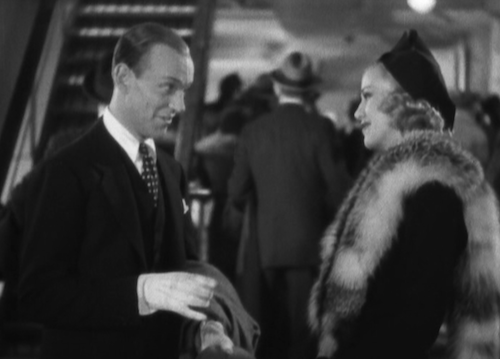
Fred Astaire’s characters, in contrast, are cynical, world-weary, and as a result, often quite funny. Ginger Rogers, his most frequent sparring partner, is at her best when she’s delivering the snark too.


I’m willing to surrender to some sentimentality, but only if it’s tempered with some sarcasm; that’s why La La Land was an unexpectedly welcome surprise. Writer-director Damien Chazelle clearly gets that need for bite, and his own musician past is as evident here as it was in Whiplash. Thanks to him, my Ginger-and-Fred-loving peers will discover a bit of that magic they’ve missed in films since. Here’s how Chazelle pulls it off:

Witty Conversations
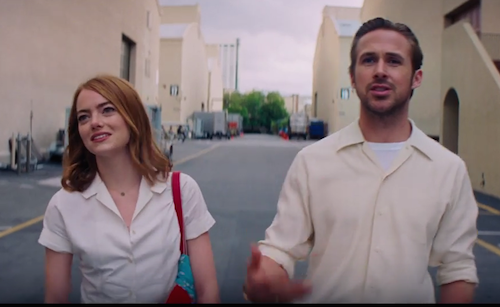
The plot is pretty simple: an aspiring jazz club owner and pianist, Sebastian (Gosling), and actress (Stone) fall in love and wrestle with the conflicts in their dreams and relationship. The previews are heavy on the cheesy side, but I should have trusted the actors, especially Gosling, whose  flight to indies after The Notebook revealed the level of his aversion to saccharine.


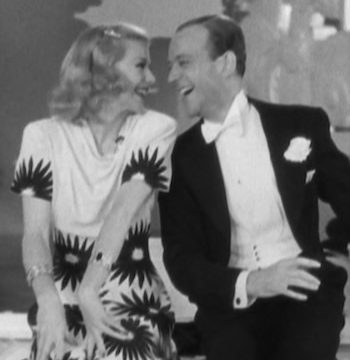
Emma Stone and Ryan Gosling excel at sarcastic banter. Their expressions are hilarious to witness. When Mia mocks Sebastian’s embarrassing keyboard gig by requesting an 80s abomination, I fell for the film, and for them. Astaire-Rogers films similarly begin with hostility: his character’s making a racket, tearing the heroine’s (Rogers’) dress, pretending to be Russian. Her characters’ (Rogers’) icy responses only begin to melt when the dancing brings the two together, and the self-protection their characters have constructed for themselves collapse.

Singing by Nonexpert Actors


Astaire and Rogers weren’t gifted in the choral department, but they sang their own tunes anyway, and as a result, there’s an authenticity to the chemistry between them, and the move from (relative) realism to song is less jarring. If I were watching a Broadway musical, I’d expect some serious pipes. But in a film, amateurism can work. As with Astaire and Rogers, Stone’s and Gosling’s lack of expertise works to highlight their characters’ insecurities and the fragility of their new bond. Their lack of professional music cred also helps give the impression that this singing is natural, just a way to express something that regular conversation can’t quite capture.

Dancing as Foreplay
Stone and Gosling are far better dancers than singers, and as with Astaire-Rogers, the dancing numbers are when their defenses dissolve, and they begin to fall in love.

My favorite moment is actually when the uber handsome Gosling approaches an older couple and starts dancing with the wife. The husband’s outraged response is so funny, but what’s lovely is the moment after: when we see the couple in the background, dancing with one another.

Characters Inspiring Each Other
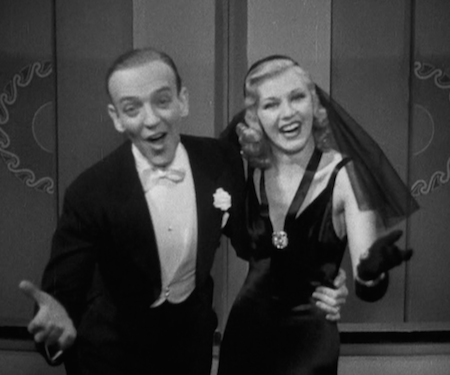
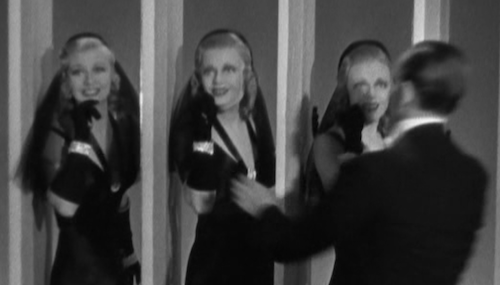
I love in Shall We Dance (1937) that Petrov (Astaire) feels his dancing is so inspired by Linda (Rogers) that he must have actresses in his musical all don images of her face.


Petrov begins not with love, but professional admiration. And it’s fun to watch Mia (Stone) and Sebastian (Gosling) do the same: respect and promote one another’s art. As in Once, one of my favorite films of the past decade, the romance (or in Once‘s case, almost-romance) matters less than the impact the characters have on one another, the way they force one another to be honest about the decisions they’re making, the repercussions, and the inevitable conflicts an artistic life creates.

Talent
Astaire and Rogers are obviously finer dancers than their 2016 imitators. But Stone and Gosling are both fine actors, which Astaire was not.* Stone brings that effervescent charm she does to everything. She excels at mocking, as she has since Easy A. Her auditions for various terrible acting gigs are hilarious.

But it’s Gosling I couldn’t stop watching (and not just because of that ridiculously handsome face). Gosling’s timing, expressions, and posture deliver the humor, and the pathos of Sebastian’s unbending personality, his devotion to something others don’t love (jazz), is beautifully conveyed. Sebastian’s efforts to conceal his vulnerability are heartbreaking. A conversation late in the film when Mia calls him out on being a sellout is particularly tough to witness, as for Sebastian, giving in to some need for practicality demonstrates growth. Mia’s simply not been forced into the kind of compromises he has, and she doesn’t get what those decisions have cost him. I could see why Gosling–who has taken a long time to come around to big-budget films–was drawn to the role, and why the writer-director, a musician himself, knew just how to capture it. I don’t think it’s an accident that Sebastian is a far more developed character than is Mia.

Whimsy & Joy
What a pleasure it is, to watch actors with chemistry having fun with one another. It was always true for Astaire and Rogers, and is true for Stone and Gosling as well.


I didn’t find the music in La La Land that memorable, certainly not as strong as any of Astaire’s or Rogers’s outings. (Admittedly, that would be a bit unfair to expect, with Irving Berlin and the Gershwins at the helm.) Still, the enjoyment of singing, of dancing, of just playing around is there. At one point, in a surreal, An American in Paris kind of way, realism just leaves, and Mia and Sebastian act as if a departure from the rules of gravity is a natural result of their connection. In a way, it is. The moment conveys how art can transport a person away from reality, just as love can. That a director just over 30 can convey that sentiment so beautifully and lovingly–and with such humor–gives me excitement about whatever he’s cooking up next.

*Rogers, it could be argued, bests Stone in certain roles, but Gosling is a stronger actor than all of them.

Share
Posted in: 1930s films, 1940s films, 1990-current films, Comedies (film), Musicals and dancing films, Romantic Comedies (film) Tagged: Damien Chazelle, dancing films, Emma Stone, Fred Astaire, Ginger Rogers, happy films, La La Land, musicals for nonmusical fans, Ryan Gosling

The Odd Stew of Designing Woman

12/16/2016 by leah@carygrantwonteatyou.com 14 Comments


It’s surprising the screenplay for Designing Woman (1957) won George Wells an Oscar, given its strange stew of marital conflict, mob threats, brain damage, fashion, and acrobatic fight moves. But there is a cleverness to it, and some insights about marriage one doesn’t usually get in a comedy. So while not exactly an amazingly tasty stew, it’s curious enough in flavor to keep you watching, and the fourth-wall-breaking format leads to moments of humor throughout, especially through the thoughts of the ex-girlfriend.

Of course, being a fan of complex heroines, I hoped Designing Woman would have a double meaning, that Lauren Bacall’s fashion designer bride had sneaky moves up her perfectly tailored sleeves. Alas, no such luck. Marilla (Bacall) is a sophisticated businesswoman, but traditional when it comes to her sports reporter husband, Mike (Gregory Peck). The two have married after a very short affair, and much of the story hinges around his utterly unnecessary concealment of a former flame, Lori (Dolores Gray), and Marilla’s anxiety about it. The couple is so prickly over this conflict that they endanger Mike’s life as he hides from the mob. (Mike, it seems, is more truthful in reporting than in life, and has ticked off a boxing fixer with mob ties.)

So here are my thoughts on the memorable moments of this Vincente Minnelli-helmed comedy: the flavorful additions, the questionable spices, the discordant ingredient that nearly destroys the whole, and a wonderful final pinch of flavor.

The Flavorful Moments
Confession to the Ex
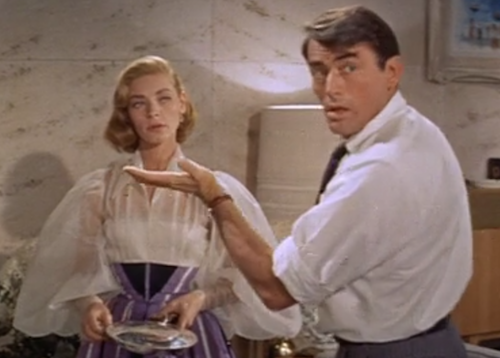
Mike’s former girlfriend, Lori (Dolores Gray), adds wonderful comedy to the plot, which has gotten a little too sweet in the opening meet-cute aftermath. Mike keeps not getting around to breaking his marriage to her, and she, sharing her reflections with us, reveals, “He was so pathetic I had to help him out.” She generously delivers the breakup news, and then adds a jab he completely misses: “I’d have probably done the same thing myself if I’d found the right man.”

After she relieves him from hurting her feelings, she observes him to be as “grateful as a Saint Bernard.” Her initial euphoria over her own maturity and strength soon dissolves: “But then I made a mistake. I asked him to tell me about her, and he made a bigger mistake, he told me.”


Rolling her eyes, she listens: “I heard all about her eyes, and her hair and her figure….I heard all about her fine sense of humor, and her clothes, and the cute way she had of tilting her head when she laughed….After a while I knew her like a sister.” And of course, she gets a thoroughly justified revenge with a strategic placement of his ravioli plate.

Party Scenes
The movie highlights the divisions between this high-class business leader and her working-class husband in various ways, most successfully with their apartments: his small and messy; hers refined, large, and including what he calls an “outside flunky.” Before he’s had time to look around his new place, all her friends arrive and rush her, barely registering his presence as he tries to excuse the embarrassingly short pants he’s wearing (his own being smeared with ravioli). Even when he leaves the room to change and returns, her distracted friends ignore him. And she is oblivious to his annoyance and embarrassment as she dons and then leaves behind his handsome form. The scene is perfectly orchestrated to reveal his disconnection and loneliness, and the way she’s suddenly made him feel alienated and extraneous in his own home and marriage.

In the aftermath, she’s dismissive of her career to soothe his ego, the embodiment of a bride worried about losing her new man. Luckily, she’s humbled herself enough to ease his insecurity (sigh, at least she doesn’t give up the career). The later party scene, with her rehearsal and his poker game colliding, is so cacophonous it’s actually hard to watch, but perfectly captures just how unalike their work lives are. Both of them are occasionally petty and jealous as they try to navigate in one another’s worlds, and yet come back together through their feelings for one another. The movie never suggests this union will be easy, and there’s something refreshing about that, and–unlike many romantic comedies–very honest.

The Fight Scene
The hilarious antics of the final fight scene make for good comedy. It’s well orchestrated, especially a brilliant final touch (see below). In a favorite moment, Mike observes that his wife doesn’t know how to help, as she can’t identify who is on Mike’s side, and who is not. I loved this reflection, as it echoes my reaction to every bad action sequence I’ve seen in the past decade. I so often can’t tell characters apart once the fists or legs start flying.

The Rotten
I don’t expect PC treatment of subject matter in my 50s films, but usually, I can cringe a bit at unfortunate touches and move on. Unfortunately, much of the comedy of Designing Woman hinges around making fun of a former boxer’s brain damage. Yes, you read that correctly. Maxie (Mickey Shaughnessy) is tasked with protecting Mike from the mob, but can never quite figure out what town he’s in, or what it is he’s supposed to do. Mike is by turns exasperated with him and condescending toward him. Marilla’s not much better, and sometimes worse. Mickey Shaughnessy’s performance is, unfortunately, often convincing, making his character’s brain damage poignant when the actor’s going for funny. The only way to enjoy this comedy is to block out whenever he’s on the screen, which is often.

The Brilliant Final Touch
Early in the film, in a typical bro kind of way, Mike objects to the effeminate dancing style of Marilla’s friend and colleague, musical director Randy (Jack Cole). You can just hear the homophobic chains in Mike’s mind churning as he watches those fluid, flamboyant movements, even before he imitates him to Marilla. But when the mob is beating up Mike and his friends, Randy appears and starts taking out half of them with his dance moves. I haven’t seen dance fighting this fun since Kevin Bacon’s in Footloose.

https://carygrantwonteatyou.com/wp-content/uploads/2016/12/DesigningWomanClips.mp4

It’s in this moment of brilliance that you know Minnelli’s at the helm, and you’re so glad. I only wish we’d  seen more such flourishes of his style because I could watch that clip over and over again. There, as elsewhere, I was more interested in the musical Marilla was designing for, than the marriage she was trying to save. The problem is, I think Minnelli was too. Luckily, there’s enough of the lovely costumes (and how Bacall wears them), enough of the self-absorption of those running the musical (who find the mob fight merely distracting) to intrigue and entertain. And of course, you can always rewatch Randy….

Hope you’ll enjoy the many other contributions to this Minnelli blogathon hosted by the marvelous Michaela of Love Letters to Old Hollywood.

Share
Posted in: 1950s films, Comedies (film), Musicals and dancing films, Romantic Comedies (film) Tagged: Designing Woman, Gregory Peck, Lauren Bacall, review, Vincente Minnelli films

Meg Ryan’s Fate Foretold in Joe Versus the Volcano

10/01/2016 by leah@carygrantwonteatyou.com 17 Comments

megryanjoevsvolcano
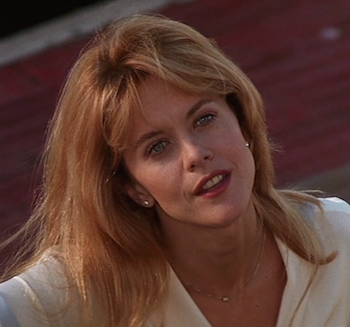
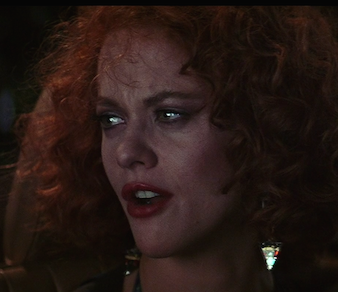
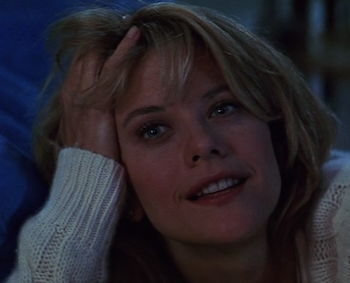
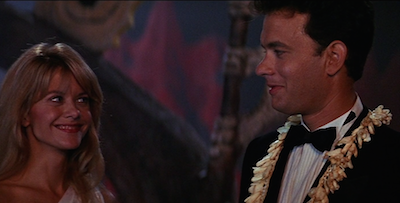
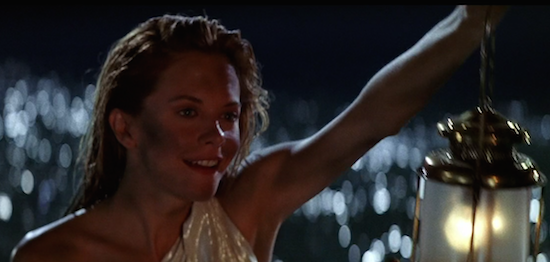
Meg Ryan has had a peculiar career: America’s darling after When Harry Met Sally (1989), she has struggled to avoid typecasting as the perky cute girl ever since, and largely failed, settling for a saccharine portrayal in Sleepless in Seattle (1993), and veering into downright parody of her persona in the remakes You’ve Got Mail (1998) and The Women (2008), with brief moments of authenticity (When a Man Loves a Woman) in between. While some of the blame must rest with Ryan, it’s clear that Hollywood producers failed to recognize (or thought audiences would) the depth in When Harry Met Sally, instead plying the poor actress with cane sugar ever since. That’s why it’s so fascinating to peer earlier into Ryan’s career, when the exploration of character was (at least partially) her own to make. Joe Versus the Volcano (1990) is particularly fascinating since she plays three roles, which curiously foretell her fate.

The plot is strange, so I’ll just begin with the basics: Joe’s (Tom Hanks’) fears–especially for his health–keep him mired in a dreadful job, until a dire prognosis unexpectedly snaps him out of depression and leads him on a journey to an island where an odd fate awaits him. He goes on a date with coworker DeDe (Ryan) before he departs, then meets half-sisters Angelica (Ryan) and Patricia (Ryan) on his journey. Attracted to all three (he keeps saying they look familiar), Hanks falls for only one, Patricia, who captains the boat to his destination, and plays a part in what awaits him there.

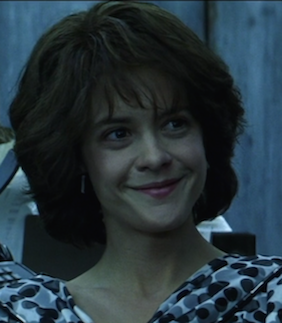
In DeDe, Ryan channels Easy Living‘s (1937) Mary Smith (Jean Arthur). Naïve and sweet and just a little lost, DeDe disperses–at least a little–the heavy gloom of the office, where she and Joe suffocate under fluorescent lighting and the repetitive yelling of their boss (Dan Hedaya, in a darkly funny turn).

megryan-dede-joevsvolcano
When Joe quits the job and asks DeDe out, it’s an act of salvation, and you can’t help but laugh at her startled, perky response to finding the dead weight in her office come to vivid life. Like Arthur, Ryan performs this role with relish and charm, with a chirpy voice that doesn’t quite grate in the small time we’re listening to it. Much more time spent with this character would start to wear audiences thin (as Arthur does for me–uncharacteristically–in Easy Living).

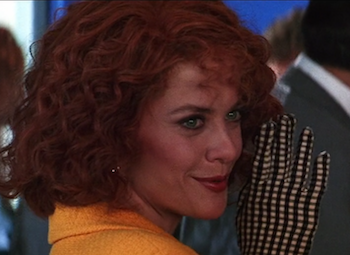
Next Joe encounters oddball Angelica (Ryan), who calls herself a flibbertigibbet.

megryanangelica-joevsvolcano
We viewers soon question her characterization, realizing that this woman has no idea who she is. She’s donned a pretentious, flat delivery and tired expressions culled from movies in her LA home. Her clothes likewise seem costumish, as does her carefully stylish smoking. She’s a combination of affectations she’s adopted, none of which can delay for long the depression and fragility just beyond her careful poise. If DeDe recalls the cute head bobbing and springy step Ryan deployed too consciously by the point of You’ve Got Mail, Angelica conveys her pain at the impersonation, her relief at capturing her fuller self in movies such as When a Man Loves a Woman.

megryanangelicajoevsvolcano-crying
And of course, in Patricia, Joe’s last Ryan encounter, we find our heroine. Healthy besides being “soul sick” for taking her father’s money, Patricia is smart and strong and brave, our Jean (Barbara Stanwyck) of The Lady Eve (1941). Like Jean, she’s an “adventuress on the high seas” and wise enough to guide Joe on the final steps of his self-discovery.

megryan-patricia-joevsvolcano
This is the Ryan we love: cute, yes, but only in moments of glee; she’s bold and womanly and fun, yet vulnerable and flawed. It’s the type of role Ryan excelled at. While the two other parts feel like conscious acts (and should be, as the roles are archetypes rather than fully sketched-out characters), this last she fully embodies. And we see the Stanwyck type of performer she could have consistently been, had When Harry not doomed her to full-on cuteness.

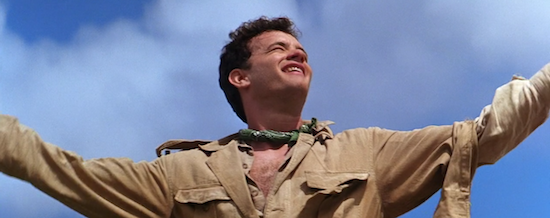
As for the film itself, what to say? It’s about redemption and faith, journeys physical and spiritual, but is most remembered for orange soda and hypochondria jokes.

tomhanksjoevsvolcano
The fact is, Joe versus the Volcano (1990) is an odd duck of a film. Its uneven tone and quirky storytelling won it both mockery and box office failure, and a trail of cult devotees ever since. Frank Capra and Preston Sturges fans will adore it, especially those who admire those directors’ darker-tinged fare, Sullivan’s Travels (1941) and Meet John Doe (1941) and The Miracle Woman (1931). But snooty film types will scoff (tellingly, Roger Ebert loved it); they’ll say it’s silly. And they’re right–it is silly. Fundamentally so.

joevsvolcanoisland
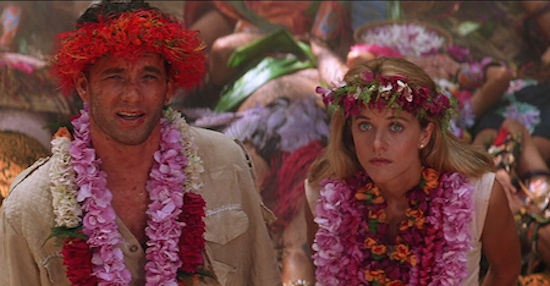
But, as one devotee pointed out, you need to remember that the writer/director is John Patrick Shanley, who also helmed and wrote Doubt (2008) and penned Moonstruck (1987); this guy may be consumed with issues of faith and hope, but he also loves distracting diatribes about fake hands voiced by Nicholas Cage. If you’re not open to that kind of genre blending, you’ll hate the movie. But if you agree with me that Shanley’s work has a peculiar beauty and insight, you’ll find yourself riveted and laughing, admiring Tom Hanks’ finest performance, and one of the funniest portrayals of both fashion (thanks to Ossie Davis) and workplace culture in any medium. It’s even romantic, with the two leads’ chemistry revealing what a better script and direction could have made of You’ve Got Mail.

megryantomhanksjoevsvolcano|
And the soundtrack is so unbelievably fun and fitting that you won’t ever hear one of those songs again without picturing the story.

For me, this movie was life altering. I watched it first in the theater, and couldn’t stop laughing at the opening scene of work drudgery. But no one else was laughing. Surprised, I turned to my buddy, Carrie, and saw that she was enjoying it too. We called our sicknesses after that “brain clouds” (you have to see the film), and the movie represented for me that wonderful thing between friends: a joke you get that others don’t, a bond you share that others don’t understand. Something that in snobby moments makes you feel special, and in more enlightened ones makes you appreciative. I was in high school then, still finding my way, and it was lovely to find through Joe a compatriot in Carrie, to realize that quirkiness need not be isolating, that it can be, in fact, a source of joy. My loud laughter in silent theaters has been a constant ever since.

I’ve been watching the film again today for my entry in the wonderful Dual Roles blogathon, hosted by Christina Wehner and Silver Screenings. (Check out great entries here!) And as I view the movie, I find myself hoping, like Joe: I hope Ryan stops stalling on DeDe and Angelica, and instead gets her Patricia back, gives us in future performances that authenticity that was so wholly hers at the start. She should watch the film again, remember that Joe, like her, lost his way for years, and found it again. Maybe if she watches it she’ll rediscover that energy and spirit and realness that charmed us all, and are still hers to reclaim.

megryan-wonderfuljoevsvolcano

Share
Posted in: 1980s films, 1990-current films, Blogathons, Comedies (film), Feminism, Romantic Comedies (film) Tagged: America's sweetheart, Film, flops, Hollywood typecasting, Joe versus the Volcano, Meg Ryan, roles

Happy Films: You Were Never Lovelier (1942)

05/22/2016 by leah@carygrantwonteatyou.com 12 Comments

YouWereNeverLovelier
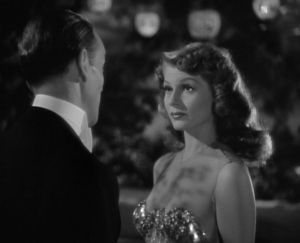
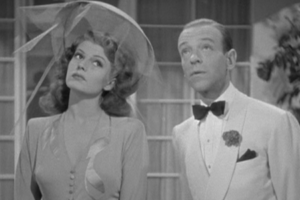
When asked to pick a film that I’d equate with ice cream for a sweet-inspired blogathon, I recalled the Rita Hayworth-Fred Astaire confection, You Were Never Lovelier. The plot is so silly: a sexist father, Eduardo Acuña (Adolphe Menjou), creates an imaginary secret admirer for his daughter, Maria (Rita Hayworth). He thinks he can handpick her suitor and pretend the boy is writing the love notes he himself is penning. But Maria mistakes a dancer, Robert (Fred Astaire), for her admirer, and much confusion ensues. It’s hard to explain why a story like this could win over its audience, especially since Maria is ridiculously susceptible, Robert directionless, and the film’s portrayal of Argentinians fantastical. And yet….What’s the primary feeling while watching? Utter delight. Try to watch it without grinning, rewinding, and pressing play again.

Why, you might ask?

Well, here’s our hero, Robert (Fred Astaire), dancing on a desk to protest Acuña’s refusal to consider him for his nightclub:

https://carygrantwonteatyou.com/wp-content/uploads/2016/05/AstaireYouWereNeverLovelier-sc.mp4

There’s the very funny meet cute between Robert and Maria, an encounter that doesn’t go well thanks to some snarky remarks by the former, who doesn’t know who she is.

MeetCute-YouWereNeverLovelier
And there’s the heavenly dancing. Within one scene Rita Hayworth and Fred Astaire make you forget the implausibility of the story because these are two of the most expressive dancers ever. From their first dance in, you’re entranced by their characters’ romance. How could you not be convinced, after watching them together?

https://carygrantwonteatyou.com/wp-content/uploads/2016/05/RitaandFred.mp4

The sweet, Oscar-nominated score is lovely, and the songs are catchy. “I’m Old-Fashioned” always makes me smile. Listen to Ella Fitzgerald’s version, or even better, watch a much longer clip than I’ve posted here at TCM, with Hayworth lip syncing it (sung by Nan Wynn) to Astaire’s Robert.

And that’s just one scene. I envy all of you who haven’t seen this film. You’re in for a treat.

This post is part of the Classic Movie Ice Cream Social, hosted by Fritzi of Movies Silently: a celebration of those movies and recipes that make us smile.

Share
Posted in: 1940s films, Blogathons, Comedies (film), Musicals and dancing films, Romantic Comedies (film) Tagged: best dancing movies, classic film, feel-good film, Fred Astaire, musicals, Rita Hayworth, You Were Never Lovelier

Top 4 Lazy Evening Films on Netflix

05/01/2016 by leah@carygrantwonteatyou.com 2 Comments

So you feel like doing nothing tonight, just want a film to make you smile? Here are four movies now on Netflix that I dare you to watch without grinning.

4. Bowfinger (1999)
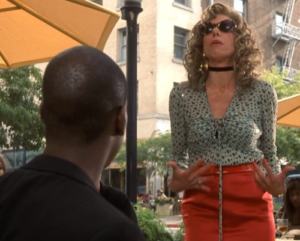
Steve Martin, a conniving producer/con man down on his luck, forces paranoid action megastar Kit Ramsey (Eddie Murphy) into his film by stalking him and shooting his scenes without his knowledge. You in yet? Written by Steve Martin. Now?:)

Favorite moment: Carol (the amazing Christine Baranksi), who doesn’t know Kit is being manipulated, begins her scene with him by ambushing him at a restaurant, ranting about soybeans and aliens.

BaranskiMurphy-Bowfinger
Bowfinger is not a comedy classic, but it’s a pointed satire on Hollywood—so silly and so fun.

3. Charade (1963)

HepburnGrant-Charade
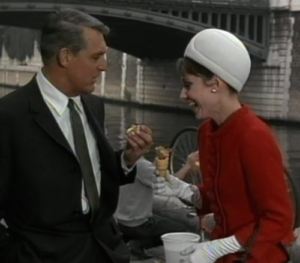
Cary Grant, Audrey Hepburn, and Walter Matthau (1963) star in this lighthearted romance/thriller. Basically, you feel no worry for Regina (Hepburn), despite the danger she’s in, and will give only cursory attention to the mystery itself, despite its fascinating twists and turns. Instead, you’ll just enjoy the cleverness of the script and watching Hepburn and Grant having a blast together.

2. Money Pit (1986)

MoneyPit-HanksLong
This updated version of Mr. Blandings Builds His Dream House (1948) is hilarious whether or not you’ve ever been foolish enough to build a house. With Tom Hanks at his broadest, comedic best, and Shelley Long before her ego got too big for her. I know everyone else will claim the original better (Loy, the paint scene!), but Philip Bosco and Maureen Stapleton are so funny in it, and Hanks in hysterics makes me giggle every single time.

1. Begin Again (2013)

BeginAgain-RuffaloKnightley
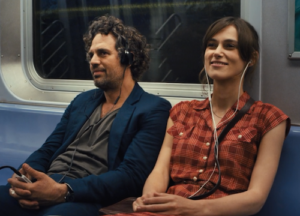
Not as brilliant as Once, but writer/director John Carney manages again to craft a story that’s moving and sweet and joyful without ever veering into sentimentality–or even romance. A celebration of music and collaboration as cures for what ails us, with charming performances by Keira Knightley and Mark Ruffalo. Quick warning: If you don’t want the fragile, soulful tunes in your head for the rest of the week, don’t watch.

Share
Posted in: 1960s films, 1990-current films, Comedies (film), Romantic Comedies (film), TV & Pop Culture Tagged: Begin Again, Bowfinger, Charade, Money Pit

Schoolboy Fantasies: The Mannequin in Film

03/26/2016 by leah@carygrantwonteatyou.com 2 Comments

Pygmalionfilms-WalkerGardner
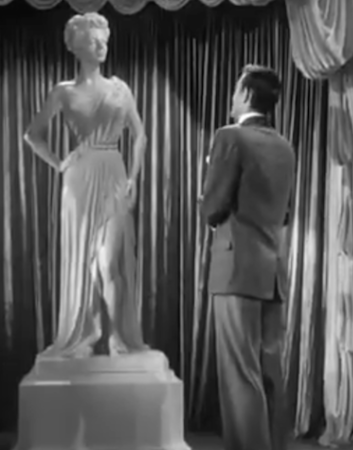
One Touch of Venus
(1948) is a combination of myth and the classic Pygmalion tale: What if a window dresser kissed a statue of the love goddess, and instead of getting institutionalized, became an object of the suddenly warm-bodied immortal’s affection?

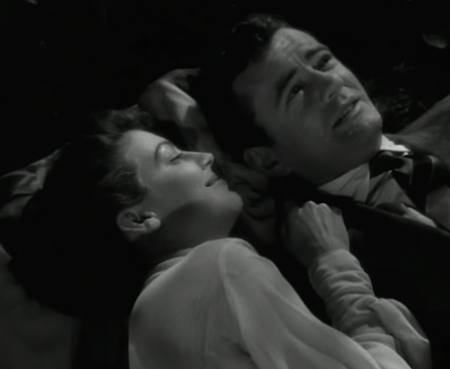
RobertWalkerAvaGardner
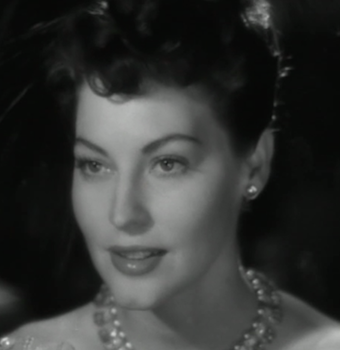
The execution of the film is as silly as the premise; the movie (a musical in its previous version) can’t decide what it wants to be, and a rom-com with a few singing interludes doesn’t quite cut it, nor can its star (Ava Gardner) figure out what form her acting should take (statue-like? goddess-like? human like?) (I suspect this is the film Beckinsale watched before The Aviator.)

But in spite of its unevenness, there’s something strangely fascinating about the film, something very meta in its casting, for example. Just a few years later Gardner would pose for a strikingly similar statue by a different artist in The Barefoot Contessa (1954), as if to confirm just how otherworldly her beauty was.

AvaGardner-Venus
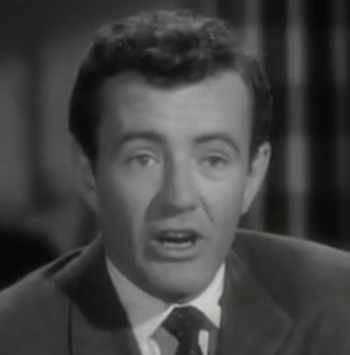
Her gorgeousness is contrasted to Eddie’s (Robert Walker’s) awkwardness. His character (unlike the versatile actor himself) has very little charisma, wit, wealth, or personality to recommend him.

RobertWalker-Venus
She’s attainable,
boys, the casting director might as well have called out. Even this geeky window dresser can get her.

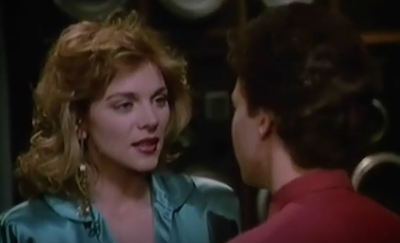
What’s odd is how frequently this statue story gets played out in film, and how similar the casting is in each case. The closest versions in terms of character dynamics came out in the 80s, Mannequin (1987) and Weird Science (1985). In each version, the unattainable beauty is not only attracted to an awkward, boyish goof, but pursues him: Venus chases Eddie when he flees, just as the mannequin-come-to-life Emmy (Kim Cattrall) seduces awkward store employee Andrew McCarthy in Mannequin (1987).

Cattrall-McCarthy-Mannequin
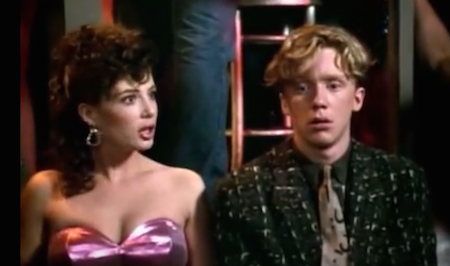
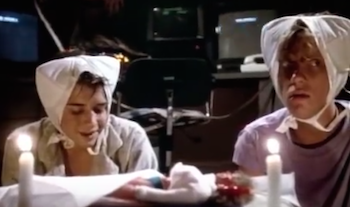
Lisa (supermodel Kelly LeBrock) pouts at the abandonment of her creators, socially awkward Gary (Anthony Michael Hall) and Wyatt (Ilan Mitchell-Smith), in Weird Science (1985). 

Beauty & the geek

Beauty & the geek

Sex objects?

Sex objects?

It is, in other words, a very transparent stick-it-to-the-cheerleader-who-snubbed-me schoolboy fantasy, and its pervasiveness in film culture is a testament to the power of denial.

What elevates One Touch of Venus beyond unintentional camp is the presence of Eve Arden as the smart-talking secretary of the store owner (Tom Conway) who bought the statue. Her responses to the absurdity of Venus’s (and by extension, Gardner’s) beauty are hilarious: her reaction to the siren’s tiny shoes, to the impact of her presence on the male body, to the inevitable comparisons a gal must draw to her own form after encountering the goddess’s.

ArdenandConway
I also enjoyed the occasional winks to the audience, as when Eddie tries to make sense of Venus’s presence, and Gardner coos, “Now don’t ask a lot of questions, you’ll only get confused.” Or when he asks about former lovers Venus has converted to animal or inanimate form, then decides he doesn’t care: “You can turn me into a fire hydrant or a mountain goat if you want to, it’s worth it.” Such moments point to the funny parody this film could have been, with just a touch more consistency of style–and a lot less romance.

Share
Posted in: 1940s films, 1990-current films, Comedies (film), Romantic Comedies (film), TV & Pop Culture Tagged: Anthony Michael Hall, Ava Gardner, Film, Kelly LeBrock, Kim Cattrall, Mannequin, One Touch of Venus, Pygmalion, Robert Walker, sex object, teenage fantasy, Weird Science

Big Fish: A Kettle of Oscar Snubs

02/13/2016 by leah@carygrantwonteatyou.com 4 Comments

EdwardandgiantBigFish
Director Tim Burton’s beautiful Big Fish was shut out of all Oscar nominations in 2004 but for original score (which it didn’t win). The director’s work is often dismissed as creative, but too weird, or lovely, but lacking in feeling. The same critiques, by the way, the Coen brothers and Wes Anderson hear often. Yet in Big Fish, Burton vividly renders the elusive, big-hearted whimsy of Daniel Wallace’s book, telling a father-son story that is sad, wise, and funny all at once.

Let’s discuss the many nominations it should have received, starting with the most egregious omission:

Best Actor in a Supporting Role

AlbertFinneyBigFish
Billy Crudup, not Albert Finney, is the star of the film. Will (Crudup) resents his father, Edward (Finney), for always traveling away from home while he was a kid, even suspects he had a second family. The yarn-telling skills that endear others to Edward annoy his son, who considers his father a liar. “You’re like Santa Claus and the Easter bunny combined,” Will says, “just as charming and just as fake.” The two haven’t spoken in several years, until Edward’s final illness draws his son home to resolve their issues. Edward prickles at his son’s anger: “I’ve been nothing but myself since the day I was born, and if you can’t see that, it’s your failing, not mine.”

Finney’s performance is magical. There’s no other word for it. How much personality and spirit he’s able to convey, even though he spends most of the film in bed! And Ewan McGregor exudes his usual charm, as he captures Edward as a youth, full of outsized ambition and enthusiasm. Burton lets us see Edward’s young adulthood not through the actual events, but through the imaginative way he recounts them: the boy spits out of his mother’s body like a cannonball when born, he sees his death in a witch’s eye, saves his town from a giant. When Edward leaves home and travels down a forsaken road, he spots a sign: Warning: Jumping Spiders. Edward’s description of this obstacle illustrates both the amusing cadence of his language, and his indomitable spirit: “Now there comes a point when a reasonable man will swallow his pride and admit that he’s made a terrible mistake,” narrates McGregor. “The truth is, I was never a reasonable man.”

In 2004’s Academy Awards, the supporting actors were Benicio Del Toro (21 Grams), Alec Baldwin (The Cooler), Djimon Hounsou (In America), Ken Watanabe (The Last Samurai), and Tim Robbins (Mystic River). I admire all of these actors, and have seen all but 21 Grams. I’d put Finney over them all, and Ewan McGregor (also supporting) over most. Baldwin was very good, but it’s not his most nuanced performance. Hounsou played a very one-dimensional role (as he typically does despite his skills), and I barely recall either Ken Watanabe’s or Tim Robbins’ performances.

But Finney’s? I’ve never been able to get it out of my head. As Edward, he is haunting and lovable, resentful and stubborn and inexpressibly sweet.

Had he been mistakenly chosen for a Best Actor nomination, Finney still should have been in the list, which included Sean Penn (Mystic River), Jude Law (Cold Mountain), Ben Kingsley (House of Sand and Fog), Bill Murray (Lost in Translation), and Johnny Depp (Pirates of the Caribbean). I would have been torn between him and Murray as deserving of the win.

By the way, Jessica Lange plays Edward’s wife. She wasn’t in the film enough to earn a nomination, I suspect, but what an impact she makes in her few lovely moments, capturing the endurance of the love affair that is at the root of 90 percent of his stories. (No wonder she doesn’t share her son’s anger.) Here are the sweethearts in a tub together, fully clothed:

LangeandFinney

Best Director, Best Picture
Nominees, Best Picture: The Lord of the Rings: The Return of the King (winner), Lost in Translation, Master and Commander: The Far Side of the World, Mystic River, and Seabiscuit.

Nominees, Best Director: Winner Peter Jackson (The Lord of the Rings: The Return of the King), Fernando Meirelles (City of God), Sofia Coppola (Lost in Translation), Peter Weir (Master and Commander), and Clint Eastwood (Mystic River)

Jackson and his film probably deserved the win among those nominees, as the weight of translating Tolkien to film was so daunting that the man deserved a medal simply for attempting it, much less succeeding. And Meirelles created one of the most riveting and best edited films I’ve ever seen. It must be the foreign language that knocked it out of best-pic contention, to the Academy’s shame (as it definitely deserved the win).

But I do quibble with the other best picture and director nominees. Lost in Translation was a creative film, but without Bill Murray at the helm, would have been forgettable. The unspeakably dull Master and Commander proved to me once and for all that male voters dominate the Academy. If “chick flicks” can’t be nominated, why do I have to put up with something that’s one step up from a video game? Seabiscuit was a winning story, but a bit too saccharine, and Mystic River, like everything Eastwood does, was overwrought and completely lacking in subtlety.

It’s hard to imagine many of the voters bothered to watch Big Fish, as surely it outranks Seabiscuit in sentiment, and manages to say something meaningful about the power of story, its capacity to help us not only overcome obstacles, but survive loss. Surely storytellers—i.e., those involved in film—would have gravitated to such a theme?

Best Writing, Adapted Screenplay
Nominees: The Lord of the Rings: The Return of the King (Fran Walsh, Philippa Boyens, Peter Jackson, winners), American Splendor (Shari Springer Berman, Robert Pulcini), City of God (Bráulio Mantovani), Mystic River (Brian Helgeland), and Seabiscuit (Gary Ross)

This category was tough in 2004, but it’s clear that few voters read the novel, understood the challenge of translating it to film. Unlike Seabiscuit, for example, this was not a traditional narrative. It’s a recursive, poetic recounting of moments. It’s even divided into fragments rather than chapters. The book intentionally circles, the author explaining in interviews that myth does as well. And in truth, so do our lives: so many moments in our existence recall others. Our bodies may decline in a chronological fashion, but our minds, our experiences, don’t work that way at all. As the film’s script explains, “Fate has a way of circling back on a man, and taking him by surprise.”

The scene of Edward’s death, for example, is repeated multiple times throughout the book, each version telling readers something different. John August distilled the story, threaded enough of the moments together to form a comprehensible narrative, and yet retained the recursive, fanciful spirit of the original. His achievement, quite simply, is a triumph. And though I would leave those first three films on the list, I think Mystic River or Seabiscuit should have been bumped to include August’s work.

Best Art Direction-Set Decoration; Best Cinematography
I’ll confess that I feel in deepest water when I discuss the visuals of a film. I don’t think, however, that many would dispute that the enchantment of Big Fish is largely a result of its execution of Burton’s vision; it’s rare that I am so enthralled by what I see that I long to take a snapshot of every moment. I’m curious why this film wasn’t considered worthy of awards based on artistic merit, if nothing else for the images’ perfect cohesiveness with the storytelling. Edward complains that his son doesn’t tell stories well, that he gives “all of the facts, none of the flavor.” That certainly cannot be said of the art direction of this film. In parting, I’ll just leave you with a few of my favorite visuals:

JennycrushBigFish

Timestandingstill-BigFish

carintreeBigFish

daffodilsBigFish
This post is part of The 31 Days of Oscar blogathon, hosted by Aurora of Once Upon a Screen (@CitizenScreen), Kellee (@IrishJayHawk66) of Outspoken & Freckled, and Paula (@Paula_Guthat) of Paula’s Cinema Club. Visit their sites for all of the wonderful entries. Kellee is hosting the snubs.

Share
Posted in: 1990-current films, Blogathons, Comedies (film), Drama (film), Humor, Oscars, Romance (films), Romantic Comedies (film) Tagged: Albert Finney, Big Fish, Daniel Wallace, Ewan McGregor, John August, Oscar snubs, Tim Burton
« Previous 1 2 3 4 5 6 7 Next »

Recent Posts

  • 100 Years Later, Still Scary: Dr. Caligari
  • Escaping Out of the Past (1947)
  • A Weeper for Those Who Love Jerks
  • Thank You, Academy, for Not Infuriating Me
  • Challengers (2024) Is a Bad Movie

Subscribe to Blog via Email

Enter your email address to subscribe to this blog and receive notifications of new posts by email.

Categories

  • 1920s films
  • 1930s films
  • 1940s films
  • 1950s films
  • 1960s films
  • 1970s films
  • 1980s films
  • 1990-current films
  • 2020s films
  • Action & Sports Films
  • Anti-Romance films
  • Blogathons
  • Childfree
  • Comedies (film)
  • Drama (film)
  • Feminism
  • Femme fatales
  • Film Noir/Crime/Thriller & Mystery
  • Gloriously Silly Scenes
  • Horror
  • Humor
  • Mae West Moments
  • Musicals and dancing films
  • Oscars
  • Random
  • Romance (films)
  • Romantic Comedies (film)
  • The Moment I Fell for
  • Turn My Sister into Classic Movie Fan
  • TV & Pop Culture
  • Uncategorized
Share
Classic Movie Blog Hub Member

Recent Comments

  • leah@carygrantwonteatyou.com on Meg Ryan’s Fate Foretold in Joe Versus the Volcano
  • Ryan on Meg Ryan’s Fate Foretold in Joe Versus the Volcano
  • leah@carygrantwonteatyou.com on 100 Years Later, Still Scary: Dr. Caligari
  • The Classic Movie Muse on 100 Years Later, Still Scary: Dr. Caligari
  • leah@carygrantwonteatyou.com on 100 Years Later, Still Scary: Dr. Caligari

Archives

  • November 2025
  • September 2025
  • May 2025
  • March 2025
  • January 2025
  • November 2024
  • August 2024
  • July 2024
  • May 2024
  • March 2024
  • February 2024
  • December 2023
  • November 2023
  • October 2023
  • September 2023
  • August 2023
  • July 2023
  • May 2023
  • April 2023
  • March 2023
  • January 2023
  • December 2022
  • November 2022
  • September 2022
  • July 2022
  • May 2022
  • April 2022
  • March 2022
  • February 2022
  • October 2021
  • September 2021
  • April 2021
  • March 2021
  • February 2021
  • December 2020
  • October 2020
  • September 2020
  • July 2020
  • May 2020
  • April 2020
  • March 2020
  • February 2020
  • December 2019
  • October 2019
  • September 2019
  • June 2019
  • May 2019
  • April 2019
  • February 2019
  • January 2019
  • November 2018
  • September 2018
  • July 2018
  • June 2018
  • May 2018
  • April 2018
  • March 2018
  • February 2018
  • January 2018
  • November 2017
  • September 2017
  • August 2017
  • July 2017
  • June 2017
  • May 2017
  • April 2017
  • March 2017
  • February 2017
  • January 2017
  • December 2016
  • November 2016
  • October 2016
  • August 2016
  • July 2016
  • June 2016
  • May 2016
  • April 2016
  • March 2016
  • February 2016
  • January 2016
  • December 2015
  • November 2015
  • October 2015
  • September 2015
  • August 2015
  • July 2015
  • June 2015
  • May 2015
  • April 2015
  • March 2015
  • February 2015
  • January 2015
  • December 2014
  • November 2014
  • October 2014
  • September 2014
  • August 2014
  • July 2014
  • June 2014
  • May 2014
  • April 2014
  • March 2014
  • February 2014
  • January 2014

Meta

  • Log in
  • Entries feed
  • Comments feed
  • WordPress.org

Copyright © 2025 Cary Grant Won't Eat You.

Church WordPress Theme by themehall.com