Cary Grant Won't Eat You

Classic movies for phobics

  • About
  • eBooks
  • Previous Blogathons
Classic movies for phobics

Oscars

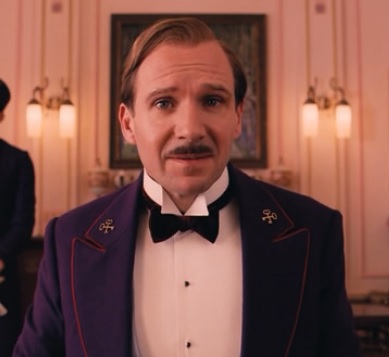
The Oscar Snub No One Is Talking about: Ralph Fiennes in The Grand Budapest Hotel
01/22/2015 by leah@carygrantwonteatyou.com 4 Comments

MGustave-GrandBudapest-Fiennes
I know everyone is busy discussing the Selma Oscar snubs and Jennifer Aniston’s supposed one. The former film I haven’t seen yet, and Cake I won’t. Only when I scrolled through long lists of snubs would I find Ralph Fiennes, as if the omission of his name were insignificant, perhaps expected. Sigh. Of course it was. He’s in a comedy.

Ralph Fiennes is best known for his dramas; he was nominated for The English Patient and Schindler’s List. Harry Potter fans know him as Lord Voldemort. He can alternate between a terrifying serial killer (The Red Dragon, Schindler’s List, In Bruges), and a fragile intellectual (Quiz Show). That’s just the beginning of his impressive range. And in The Grand Budapest Hotel, he proves that he can be hilarious.

Well-respected comedic actors are honored by the Academy when they turn to drama: Bill Murray, Bette Midler, Cary Grant. But with few exceptions (Tommy Lee Jones in The Fugitive, for example), the process doesn’t go the other way. Where are Christopher Walken’s nominations for becoming one of the funniest men in film? How is it possible Gene Hackman didn’t get a nod for The Royal Tenenbaums? And if the Academy is considering nominating actresses merely for being willing to appear unattractive, what of Tilda Swinton’s hysterical showing in The Grand Budapest Hotel, surely the least vain performance I’ve seen in years?
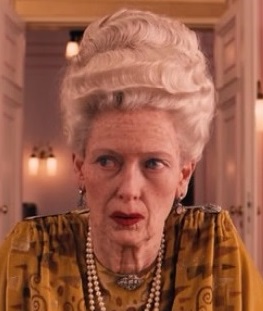
TildaSwintonGrandBudapest
If it were so easy to switch from drama to comedy, I doubt one of—if not the—finest actresses of her generation, Meryl Streep (19 Oscar nominations and counting), would have struggled so much with it. Everyone may now recall when she had mastered comedy in The Devil Wears Prada, but it took her years.
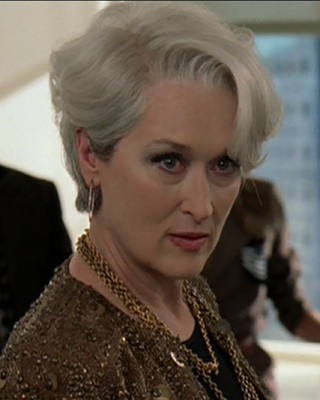
The Devil Wears Prada

The Devil Wears Prada

Anyone remember She-Devil? Death Becomes Her? In Postcards from the Edge Streep was so bad I couldn’t even make it through the film. Her bravery is one of the things I value most about her: she let herself stink up the screen in order to improve her craft, not something many women with her dramatic chops would have braved. I suspect she pairs those two devil movies in her mind, appreciating how far she’s come.

She-Devil

She-Devil

And yet I’m to think Fiennes’s laugh-out-loud funny performance was easy?

Fiennes was getting early buzz for The Grand Budapest Hotel. Back in the spring, I thought he was a lock for a nomination. He could have been considered for Best Supporting Actor, given his role; technically, he wasn’t the star. Ethan Hawke was nominated; Ralph Fiennes wasn’t. Repeat that to yourself without laughing—or crying.
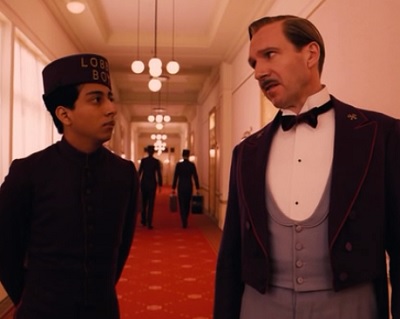
TheGrandBudapest-GustaveandZero
I admit that this is a tough year in the Best Actor category, but The Grand Budapest Hotel is tied for Birdman with nine nominations, and Fiennes carried his film from start to finish. Could I imagine another star in the others I’ve seen so far (4/8)? Yes. In The Grand Budapest Hotel? Absolutely not.

As M. Gustave, Fiennes is funny, original, moving. I have seen no other film this year that drew me in like this one, no other actor or actress who affected me more. Watch Fiennes’s quick transitions from elegance to crassness and see if you can stop yourself from laughing. Observe those nuances in his gestures, voice, and expressions that make Gustave’s mood changes from rage to tenderness convincing—and all in mere seconds (that’s all you get in a Wes Anderson film). When else have you seen a character simultaneously this funny and this heartbreaking, thanks to the actor playing him?
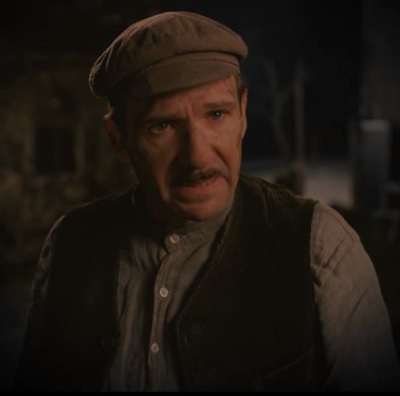
MGustave-GrandBudapest-Fiennes-1
If you haven’t watched the movie yet, do yourself a favor and rent it now. And if The Grand Budapest Hotel wins, tell me, in a movie riddled with big names, which actor helped the gifted Wes Anderson finally pull it off.

Share
Posted in: 1990-current films, Comedies (film), Oscars Tagged: Christopher Walken, Gene Hackman, Oscar snubs, Ralph Fiennes, The Grand Budapest Hotel, Wes Anderson

Three Hypocritical Oscar Moments

03/05/2014 by leah@carygrantwonteatyou.com Leave a Comment

1. Ellen Insulting Her Wife’s Arrested Development Costar
I don’t know about you, but if my wife had been flayed in the press for her plastic surgery, I would avoid digs like the one Ellen gave Liza Minnelli at Sunday’s Oscars.

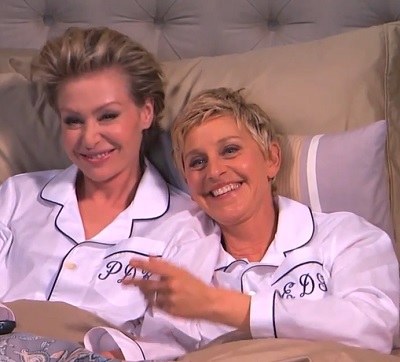
Perhaps pre-spat?

Kimmel’s Spoof Oscars Night: Perhaps Pre-Spat?

While Portia de Rossi didn’t seem offended, it’s hard to believe a woman who has written a book about the suffering she endured to look perfect would approve. I would have expected this kind of behavior from Seth MacFarlane, not from the usually affable Ellen. Talk about marital insensitivity.

2. Oscar Commentators Praising “Not Looking Old” and “Growing Old Gracefully” Simultaneously
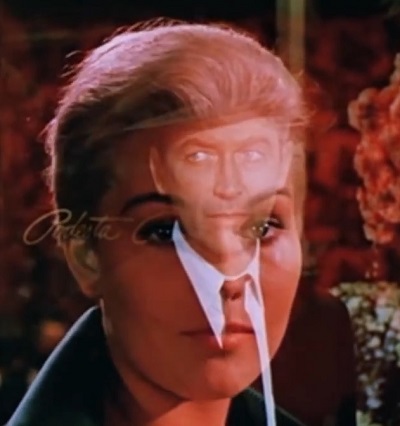
The online attacks on Vertigo (1958) star and Oscar presenter Kim Novak for her looks were appalling, especially since this is a woman who left Hollywood at the peak of her fame and lived privately for decades because she couldn’t take the objectification she experienced as a bombshell in Tinseltown. She’s been lured back into the limelight in her eighties, and look how she’s treated. Because for what would we judge a woman who starred in the film now ranked best of all time but her looks?

Vertigo

Vertigo

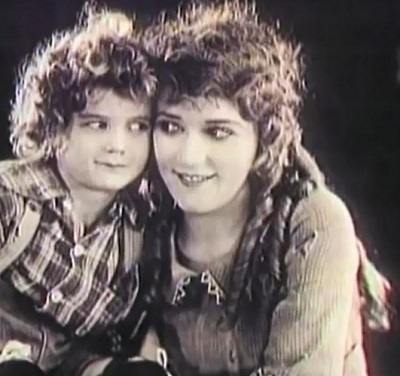
Chicago columnist Mike Royko wrote that 1976 Oscar viewers were outraged about seeing silent film star Mary Pickford (who had “grown old gracefully”) on their screens because they wanted to remember her cute and pretty, like this:

Mary Pickford (right)

Mary Pickford (right)

Royko didn’t understand why people preferred “facial skin stretched out like a drumhead.” “They cheer the illusion of Zsa Zsa,” he wrote, “but they flinch at the reality of Mary Pickford.” In 2014 an elderly woman can’t get away with natural aging or plastic surgery unless her surgeon is some kind of Houdini. Novak had the right idea originally—just get out.

3. Bestowing Honor by Awarding on the DL
Do you feel honored for a lifetime of achievement if the Academy deems the moment you’re given the statue not exciting enough for the big night? I was reminded of host Chris Rock’s reaction in 2005 when the technical awards were given in the aisle and sometimes en masse instead of individually onstage: “Next they’re gonna give the Oscars in the parking lot. It’ll be like a drive-through Oscar lane. You get an Oscar and a McFlurry and keep on moving.”

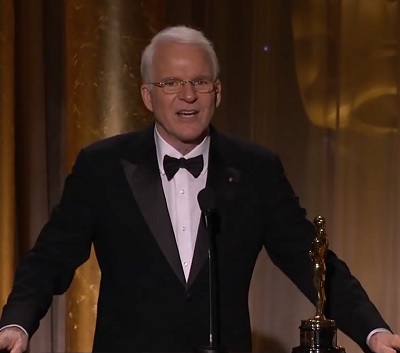
I found the choice to separate the honorary and competitive awards especially disturbing given that the former are so often given to those the Academy considers unworthy of notice for years and belatedly realizes they unjustifiably snubbed; such as one of this year’s honorees, Steve Martin, and Cary Grant (yes, the only classic film star many people can name).

Steve Martin, honored at separate event

Steve Martin, honored at separate event

Unsurprisingly, honorary Oscars are frequently awarded to those who mainly appear in/write/direct comedies, so I thought Jim Carrey’s jokes and Bill Murray’s shout-out to Harold Ramis were timely reminders that comedians receive no credit unless they appear in dramas—and usually not then—until the Academy’s honoree-may-be-near-death-oops awards, honors that now aren’t even bestowed on the night itself. Classy.

What bothered you most about this year’s Oscars?

Share
Posted in: 1990-current films, Humor, Oscars, Uncategorized Tagged: Ellen, Honorary Oscars, Kim Novak, Liza Minnelli, Mike Royko, Oscars, Portia de Rossi, Steve Martin, Vertigo

No Oscar Love for Harold Ramis: The Academy, as Humorless as Ever

02/27/2014 by leah@carygrantwonteatyou.com 6 Comments

Harold Ramis, whom President Obama labeled “one of America’s greatest satirists,” died this week shortly before this Sunday’s Oscars. His list of co-writing credits is astonishing: Animal House, Stripes, Caddyshack, Ghostbusters, Groundhog Day. He also directed the latter, Caddyshack, and Vacation. I’m sure the Academy will clap enthusiastically this weekend when his face appears in the “In Memoriam” tribute, but they won’t express what they should: regret. Ramis never won an Oscar; in fact, he was never even nominated.

Harold Ramis: won A BAFTA, but no Oscar

Harold Ramis: won A BAFTA, but no Oscar

In the years the Academy snubbed Ramis, comedies did make appearances in the original screenplay category, including Private Benjamin, Splash, Beverly Hills Cop, Sleepless in Seattle, and Dave.  But many of the nominations were of grim films you didn’t know then, much less now. The following were the original screenplay winners the years Ramis could have been nominated:

Coming Home (Animal House), Melvin and Howard (Caddyshack), Places in the Heart (Ghostbusters), and The Piano (Groundhog Day).

Most Oscar nominees for original screenplay are not bad movies; the Academy saves their embarrassing choices for the best film category (Crash, anyone?) But have these screenplay winners stood the test of time? Have they influenced you—or anyone you know—in any way?

Here’s a test for you:

  • Can you quote from it?

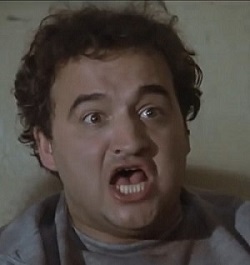
Belushitoga

  • Do you adopt cultural affectations from it (perhaps Roman)?
  • Have you sung along with it?
  • Does it give you more understanding for the weak kid or the outsider, perhaps make you feel more comfortable challenging authority? (See this great Ramis bio.)

Stripes

  • Does it bring back childhood memories that make you grin, maybe your best Halloween costume ever?

Ghostbusters

  • Have you lost count of how many times you’ve seen it?
  • Do you (be honest) feel tempted to dance with a certain character’s nemesis during the closing scene?

gopherCaddyshack

Of course, the Academy—and critics in general—have long shown more appreciation for drama than comedy, failing to see in it the far subtler, and often more trenchant and artful cultural critique it can provide. In 1941, Preston Sturges, a writer/director who, like Ramis, was fond of what’s often dismissed as “adolescent” humor, wrote an entire film addressing the greater appreciation given to drama, Sullivan’s Travels. But unlike with the usual Oscar winners, this time, the case for comedies is much more persuasive.

It begins with a scene between a director (Sullivan, played by Joel McCrea) and his bosses (Mr. LeBrand and Mr. Hadrian). Sullivan has decided to write a serious film, which his bosses fear will be less profitable than his usual comedies. Why not do a sequel to your Ants in Your Plants of 1939 instead? they ask him. His movies are inspiring, they tell him. They don’t, as Hadrian puts it, “stink with messages.”

Sullivan (Joel McCrea in the middle) with his bosses

Mr. LeBland, Sullivan (Joel McCrea) and Mr. Hadrian

Sullivan tries to argue them into supporting his new effort, showing them a scene from his O Brother, Where Art Thou? (yes, Coen fans, that’s where they got it)

Sullivan: “You see the symbolism of it?….It teaches a lesson, a moral lesson, it has social significance.”

Hadrian: “Who wants to see that kind of stuff? It gives me the creeps.”

….

Sullivan:  “I want this picture to be a commentary on modern conditions, stark realism, the problems that confront the average man.”

LeBrand: “But with a little sex.”

….

Hadrian: “How about a nice musical?”

Sullivan: “How can you talk about musicals in a time like this, with the world committing suicide, with corpses piling up in the streets?…..”

Hadrian: “Maybe they’d like to forget that.”

After Hadrian convinces Sullivan he’s too inexperienced with suffering to direct movies about it, the latter decides to go on a quest to learn about poverty firsthand. A despondent LeBrand barks at his assistant, “Get me a copy of that O Brother, Where Art Thou? I guess I’ll have to read it now. Make that two copies.  Why should I suffer alone?”

By the end of the movie, Sullivan agrees with his bosses that he should keep directing comedies. He discovers that his movies, silly as they may be, have something to offer that dramas never will: “There’s a lot to be said for making people laugh. Did you know that’s all some people have?”

In fact, Sturges begins the movie with a dedication that could have been written for Ramis: “To the memory of those who made us laugh….in all times and in all nations, whose efforts have lightened our burden a little….” Not a bad epitaph, from one comedic genius to another.

Incidentally, Sullivan’s Travels (1941) ranked on the AFI’s top 100. But you guessed it: Not a single Oscar nomination.

Share
Posted in: 1980s films, 1990-current films, Comedies (film), Humor, Oscars, Romantic Comedies (film), TV & Pop Culture Tagged: Academy Awards, Animal House, Bill Murray, Caddyshack, Ghostbusters, Groundhog Day, Harold Ramis, Preston Sturges, Sullivan's Travels, The Oscars
« Previous 1 2 3 4

Recent Posts

  • Say Anything Is The Sure Thing’s Lame Younger Brother
  • Wallace Got an Oscar
  • Oscar Noms 2025: Gems & Duds
  • 100 Years Later, Still Scary: Dr. Caligari
  • Escaping Out of the Past (1947)

Subscribe to Blog via Email

Enter your email address to subscribe to this blog and receive notifications of new posts by email.

Categories

  • 1920s films
  • 1930s films
  • 1940s films
  • 1950s films
  • 1960s films
  • 1970s films
  • 1980s films
  • 1990-current films
  • 2020s films
  • Action & Sports Films
  • Anti-Romance films
  • Blogathons
  • Childfree
  • Comedies (film)
  • Drama (film)
  • Feminism
  • Femme fatales
  • Film Noir/Crime/Thriller & Mystery
  • Gloriously Silly Scenes
  • Horror
  • Humor
  • Mae West Moments
  • Musicals and dancing films
  • Oscars
  • Random
  • Romance (films)
  • Romantic Comedies (film)
  • The Moment I Fell for
  • Turn My Sister into Classic Movie Fan
  • TV & Pop Culture
  • Uncategorized
Share
Classic Movie Blog Hub Member

Recent Comments

  • leah@carygrantwonteatyou.com on Say Anything Is The Sure Thing’s Lame Younger Brother
  • Dominique Revue on Say Anything Is The Sure Thing’s Lame Younger Brother
  • leah@carygrantwonteatyou.com on Oscar Noms 2025: Gems & Duds
  • leah@carygrantwonteatyou.com on Oscar Noms 2025: Gems & Duds
  • willkaiser on Oscar Noms 2025: Gems & Duds

Archives

  • March 2026
  • November 2025
  • September 2025
  • May 2025
  • March 2025
  • January 2025
  • November 2024
  • August 2024
  • July 2024
  • May 2024
  • March 2024
  • February 2024
  • December 2023
  • November 2023
  • October 2023
  • September 2023
  • August 2023
  • July 2023
  • May 2023
  • April 2023
  • March 2023
  • January 2023
  • December 2022
  • November 2022
  • September 2022
  • July 2022
  • May 2022
  • April 2022
  • March 2022
  • February 2022
  • October 2021
  • September 2021
  • April 2021
  • March 2021
  • February 2021
  • December 2020
  • October 2020
  • September 2020
  • July 2020
  • May 2020
  • April 2020
  • March 2020
  • February 2020
  • December 2019
  • October 2019
  • September 2019
  • June 2019
  • May 2019
  • April 2019
  • February 2019
  • January 2019
  • November 2018
  • September 2018
  • July 2018
  • June 2018
  • May 2018
  • April 2018
  • March 2018
  • February 2018
  • January 2018
  • November 2017
  • September 2017
  • August 2017
  • July 2017
  • June 2017
  • May 2017
  • April 2017
  • March 2017
  • February 2017
  • January 2017
  • December 2016
  • November 2016
  • October 2016
  • August 2016
  • July 2016
  • June 2016
  • May 2016
  • April 2016
  • March 2016
  • February 2016
  • January 2016
  • December 2015
  • November 2015
  • October 2015
  • September 2015
  • August 2015
  • July 2015
  • June 2015
  • May 2015
  • April 2015
  • March 2015
  • February 2015
  • January 2015
  • December 2014
  • November 2014
  • October 2014
  • September 2014
  • August 2014
  • July 2014
  • June 2014
  • May 2014
  • April 2014
  • March 2014
  • February 2014
  • January 2014

Meta

  • Log in
  • Entries feed
  • Comments feed
  • WordPress.org

Copyright © 2026 Cary Grant Won't Eat You.

Church WordPress Theme by themehall.com