Cary Grant Won't Eat You

Classic movies for phobics

  • About
  • eBooks
  • Previous Blogathons
Classic movies for phobics

Oscars

SHOCKER: The Oscar Ceremony Was Good

02/29/2016 by leah@carygrantwonteatyou.com Leave a Comment

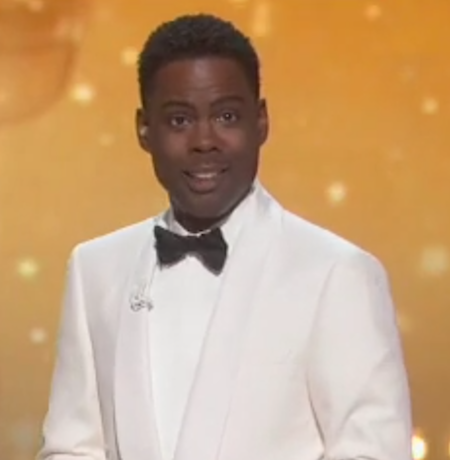
For the first time in at least a decade, I actually thought the Oscars were entertaining and even well planned. That there were some smart tweaks–the order change (with more exciting awards earlier), the ticker-tape names at the bottom so that the speeches were less listy and long winded. And of course, the main reason the Academy nailed it this year is this guy:

ChrisRock
How did he do it? He took the controversy over the Oscars being too white, and not only did a hilarious commentary on just how true that concern was, but managed to slam the self-serving among the protesters (i.e., Jada), and–in a moment of brilliance–helped explain why people are able to think their acts aren’t racist, when they are:

“…is Hollywood racist? Is it ‘burning cross racist’? No. Is it ‘fetch me some lemonade racist’? No….Hollywood is ‘sorority racist.’ It’s like, we like you Rhonda, but you’re not a Kappa.”

He didn’t let up throughout, his interview of Compton moviegoers was perfection, and Tracy Morgan’s Danish girl is something I’ll re-watch again and again. And that Girl Scout cookie joke was a nice riff on Ellen’s pizza trick.

And then there’s the fact that Spotlight won, when we all feared The Revenant would. DiCaprio’s long-deserved win (“About time!” screamed someone behind me). And, of course, his predictably classy speech. The tribute to Star Wars composer John Williams, and Jacob Tremblay’s adorable response to it.

There was the moving Lady Gaga performance with other rape survivors backing her up, and the Biden reminder that our culture is part of the problem.

Socially relevant, entertaining, and–for the Oscars–fast paced. My own proof? This is my third year watching it in a theater with others. The first year, I left early. The second, I was one of the few holdouts (of an initially crowded theater) by the snoozing end. This year? All but a few of the crowded theater were still there, clapping and smiling and having a blast. That’s how it should be.

Share
Posted in: Oscars Tagged: Chris Rock, Oscars

5 Ways for the Oscars Not to Suck

02/27/2016 by leah@carygrantwonteatyou.com 9 Comments

While I have my favorites among this year’s nominees, my most fervent wish is for the ceremony itself. I don’t expect anything so lavish as entertainment. I just really, really hope that for once the ceremony doesn’t vie with a tractor pull for most boring event of the year. I can’t have a repeat of 2011, when my main source of joy (and a critic’s too) was the Kraft mac & cheese commercial.

So here, in no particular order, are my wishes:

  1. Chris Rock Has a Blast with Trump Jokes. There’s some precedent here. When he last hosted, Rock roasted President George W. Bush by comparing nonexistent WMDs to a toxic tank tops war between the Gap and Banana Republic. This outspoken comic has it in him to alleviate the Oscars’  tedium. Do it, Rock. I beg of you. (His advance jabs at the whiteness of the show give me hope.)
  2.  Nominated Songs’ Performances Are Cut. We don’t watch the whole movies, right? And this ain’t the Grammys, people. Medleys are sufficient. For every bright spot, like last year’s “Glory,” we have years of suffering through songs so lacking in rhythm they may as well be coming from a dying jack-in-the-box.
  3. The In Memoriam Isn’t Insulting. Should a tribute be seen as an opportunity to snub those you consider unworthy? Are we watching Mean Girls? If not, refrain from the snobbery, Academy. Go for more faces. They’re only on the screen a second anyway. Oh, and give those classic stars more love!
  4. Everyone Lays Off the Wrinkles and the Botox. Your demographic ain’t the millennials, Academy. We middle aged and elderly folks love the stars who’ve gotten past their pimples. The classic fans among us even want to see those few luminaries left to us. Kirk Douglas is still alive. So is Kim Novak. Who cares if your ageism has turned them plastic, if they don’t stun like they did in 1978? Neither do the rest of us.
  5. The Academy Learns to Trim. I realize this is the vainest among my hopes, as Hollywood, despite those awards to be presented Sunday, has lost the art of the edit. But let’s review why some cutting makes sense, Academy:
    1. Very few actors can riff. Do you still not get this after all your hosting blunders? They can’t. Ask poor Neil Patrick Harris. Ask Anne Hathaway. Let’s give actors fewer opportunities to do so.
    2. Song-and-dance numbers aren’t your expertise. Leave those to the Tony Awards, I beg of you.
    3. We need our sleep. Since you are still reaching parents with young kids, and the retired. Since you are broadcasting to those of us stressed about Monday morning meetings. A little thoughtfulness about our energy levels would be appreciated.
    4. We don’t need to wooed into loving film. Montages, clips, and performances about appreciating movies aren’t for us, remember? We’re the fools still watching!! In spite of your bloating of movie times. In spite of the lack of diversity of race or gender in front of and behind the camera. We’re even watching this wretched monstrosity of a show, out of masochism and nostalgia and an entirely unjustified hope you will change. We still love you, Hollywood. That’s how damn much we love film. So nix the reminders, and let the show go on.
Share
Posted in: Oscars, Random Tagged: Chris Rock, mistakes, Oscar ceremony, Oscar night, tips for improving

Big Fish: A Kettle of Oscar Snubs

02/13/2016 by leah@carygrantwonteatyou.com 4 Comments

EdwardandgiantBigFish
Director Tim Burton’s beautiful Big Fish was shut out of all Oscar nominations in 2004 but for original score (which it didn’t win). The director’s work is often dismissed as creative, but too weird, or lovely, but lacking in feeling. The same critiques, by the way, the Coen brothers and Wes Anderson hear often. Yet in Big Fish, Burton vividly renders the elusive, big-hearted whimsy of Daniel Wallace’s book, telling a father-son story that is sad, wise, and funny all at once.

Let’s discuss the many nominations it should have received, starting with the most egregious omission:

Best Actor in a Supporting Role
AlbertFinneyBigFish
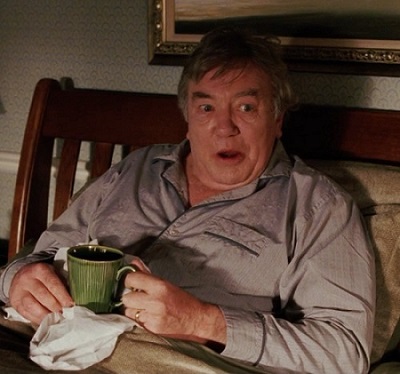
Billy Crudup, not Albert Finney, is the star of the film. Will (Crudup) resents his father, Edward (Finney), for always traveling away from home while he was a kid, even suspects he had a second family. The yarn-telling skills that endear others to Edward annoy his son, who considers his father a liar. “You’re like Santa Claus and the Easter bunny combined,” Will says, “just as charming and just as fake.” The two haven’t spoken in several years, until Edward’s final illness draws his son home to resolve their issues. Edward prickles at his son’s anger: “I’ve been nothing but myself since the day I was born, and if you can’t see that, it’s your failing, not mine.”

Finney’s performance is magical. There’s no other word for it. How much personality and spirit he’s able to convey, even though he spends most of the film in bed! And Ewan McGregor exudes his usual charm, as he captures Edward as a youth, full of outsized ambition and enthusiasm. Burton lets us see Edward’s young adulthood not through the actual events, but through the imaginative way he recounts them: the boy spits out of his mother’s body like a cannonball when born, he sees his death in a witch’s eye, saves his town from a giant. When Edward leaves home and travels down a forsaken road, he spots a sign: Warning: Jumping Spiders. Edward’s description of this obstacle illustrates both the amusing cadence of his language, and his indomitable spirit: “Now there comes a point when a reasonable man will swallow his pride and admit that he’s made a terrible mistake,” narrates McGregor. “The truth is, I was never a reasonable man.”

In 2004’s Academy Awards, the supporting actors were Benicio Del Toro (21 Grams), Alec Baldwin (The Cooler), Djimon Hounsou (In America), Ken Watanabe (The Last Samurai), and Tim Robbins (Mystic River). I admire all of these actors, and have seen all but 21 Grams. I’d put Finney over them all, and Ewan McGregor (also supporting) over most. Baldwin was very good, but it’s not his most nuanced performance. Hounsou played a very one-dimensional role (as he typically does despite his skills), and I barely recall either Ken Watanabe’s or Tim Robbins’ performances.

But Finney’s? I’ve never been able to get it out of my head. As Edward, he is haunting and lovable, resentful and stubborn and inexpressibly sweet.

Had he been mistakenly chosen for a Best Actor nomination, Finney still should have been in the list, which included Sean Penn (Mystic River), Jude Law (Cold Mountain), Ben Kingsley (House of Sand and Fog), Bill Murray (Lost in Translation), and Johnny Depp (Pirates of the Caribbean). I would have been torn between him and Murray as deserving of the win.

By the way, Jessica Lange plays Edward’s wife. She wasn’t in the film enough to earn a nomination, I suspect, but what an impact she makes in her few lovely moments, capturing the endurance of the love affair that is at the root of 90 percent of his stories. (No wonder she doesn’t share her son’s anger.) Here are the sweethearts in a tub together, fully clothed:
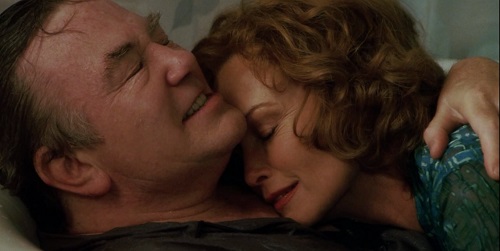
LangeandFinney

Best Director, Best Picture
Nominees, Best Picture: The Lord of the Rings: The Return of the King (winner), Lost in Translation, Master and Commander: The Far Side of the World, Mystic River, and Seabiscuit.

Nominees, Best Director: Winner Peter Jackson (The Lord of the Rings: The Return of the King), Fernando Meirelles (City of God), Sofia Coppola (Lost in Translation), Peter Weir (Master and Commander), and Clint Eastwood (Mystic River)

Jackson and his film probably deserved the win among those nominees, as the weight of translating Tolkien to film was so daunting that the man deserved a medal simply for attempting it, much less succeeding. And Meirelles created one of the most riveting and best edited films I’ve ever seen. It must be the foreign language that knocked it out of best-pic contention, to the Academy’s shame (as it definitely deserved the win).

But I do quibble with the other best picture and director nominees. Lost in Translation was a creative film, but without Bill Murray at the helm, would have been forgettable. The unspeakably dull Master and Commander proved to me once and for all that male voters dominate the Academy. If “chick flicks” can’t be nominated, why do I have to put up with something that’s one step up from a video game? Seabiscuit was a winning story, but a bit too saccharine, and Mystic River, like everything Eastwood does, was overwrought and completely lacking in subtlety.

It’s hard to imagine many of the voters bothered to watch Big Fish, as surely it outranks Seabiscuit in sentiment, and manages to say something meaningful about the power of story, its capacity to help us not only overcome obstacles, but survive loss. Surely storytellers—i.e., those involved in film—would have gravitated to such a theme?

Best Writing, Adapted Screenplay
Nominees: The Lord of the Rings: The Return of the King (Fran Walsh, Philippa Boyens, Peter Jackson, winners), American Splendor (Shari Springer Berman, Robert Pulcini), City of God (Bráulio Mantovani), Mystic River (Brian Helgeland), and Seabiscuit (Gary Ross)

This category was tough in 2004, but it’s clear that few voters read the novel, understood the challenge of translating it to film. Unlike Seabiscuit, for example, this was not a traditional narrative. It’s a recursive, poetic recounting of moments. It’s even divided into fragments rather than chapters. The book intentionally circles, the author explaining in interviews that myth does as well. And in truth, so do our lives: so many moments in our existence recall others. Our bodies may decline in a chronological fashion, but our minds, our experiences, don’t work that way at all. As the film’s script explains, “Fate has a way of circling back on a man, and taking him by surprise.”

The scene of Edward’s death, for example, is repeated multiple times throughout the book, each version telling readers something different. John August distilled the story, threaded enough of the moments together to form a comprehensible narrative, and yet retained the recursive, fanciful spirit of the original. His achievement, quite simply, is a triumph. And though I would leave those first three films on the list, I think Mystic River or Seabiscuit should have been bumped to include August’s work.

Best Art Direction-Set Decoration; Best Cinematography
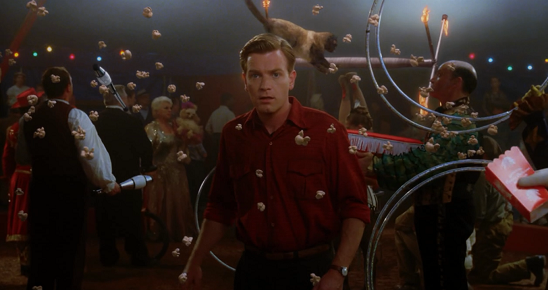
I’ll confess that I feel in deepest water when I discuss the visuals of a film. I don’t think, however, that many would dispute that the enchantment of Big Fish is largely a result of its execution of Burton’s vision; it’s rare that I am so enthralled by what I see that I long to take a snapshot of every moment. I’m curious why this film wasn’t considered worthy of awards based on artistic merit, if nothing else for the images’ perfect cohesiveness with the storytelling. Edward complains that his son doesn’t tell stories well, that he gives “all of the facts, none of the flavor.” That certainly cannot be said of the art direction of this film. In parting, I’ll just leave you with a few of my favorite visuals:

JennycrushBigFish

Timestandingstill-BigFish

carintreeBigFish

daffodilsBigFish
This post is part of The 31 Days of Oscar blogathon, hosted by Aurora of Once Upon a Screen (@CitizenScreen), Kellee (@IrishJayHawk66) of Outspoken & Freckled, and Paula (@Paula_Guthat) of Paula’s Cinema Club. Visit their sites for all of the wonderful entries. Kellee is hosting the snubs.
Share
Posted in: 1990-current films, Blogathons, Comedies (film), Drama (film), Humor, Oscars, Romance (films), Romantic Comedies (film) Tagged: Albert Finney, Big Fish, Daniel Wallace, Ewan McGregor, John August, Oscar snubs, Tim Burton

A Plea to the Academy: Consider East Coast Bed Times

02/24/2015 by leah@carygrantwonteatyou.com 2 Comments

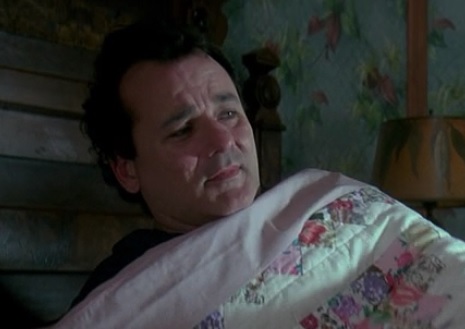
BillMurrayalarmGroundhogDay-x
I have read a number of suggestions for improving the Oscars broadcast, but one solution I rarely hear would increase your viewership instantly: Move the ceremony at least an hour and a half earlier.

I realize that this is a Hollywood event, that it’s meant to be at night. But after all, the broadcast is on a Sunday. Why not play it Super Bowl style, and start early? I made it through the end of the broadcast, but two days later, both my energy and work are still suffering from it. And these symptoms cause me—a lifelong fan—to wonder whether I’ll watch again.

Think I’m alone? Sunday evening I joined a theater’s viewing party. The attendees were movie nuts who shouted out answers to trivia, even correctly naming Marlon Brando’s 1973 stand-in. Dressed in suits and floor-length gowns and rhinestones, they were bubbly and thrilled to be in the company of their fellow enthusiasts. About 11:30 p.m., when my friend, a mother of two young kids, reluctantly left, I observed who remained. The initially packed theater was nearly empty, with only a few partiers and a group of those past retirement age left. The majority of my middle-aged and younger peers had departed.

And these are your fans.

When my alarm woke me less than five hours into sleep the next morning and I tried to assemble my wits, I started to wonder why my demographic— the working members of your East Coast viewership—isn’t considered more. I hear so much about attracting new viewers. I’d like to hear more concern about retaining those you have. Longtime enthusiasts around me have already stopped watching. They have meetings and children and can’t afford to kill a week’s productivity by staying up till midnight on a Sunday. It wasn’t easy for them to make time for those eight movies—if they did—to begin with.

Your greatest potential for growth has never been a better host or smarter orchestration; it always has been the influence of Oscar lovers. We watch because our parents did, our aunts, our grandmothers and grandfathers. We watch because our friends host parties, and enthusiasm for film has always been contagious. We watch because we love the Oscars, in spite of our frequent desire to modify both the show and nominees. This year, I did my part, increasing your numbers by luring a busy mom to the theater, knowing she’d like the show—and the late hour—more than my sleep-loving husband had. She primped for a week, sent me excited messages and texts in the days before. But as 10:30 approached with so much of the ceremony yet to go, I witnessed her energy wane and started to wonder if I had sold her a bad product. And what’s the chance her kids will ever get addicted, even when they’re a bit older, with bed times before the show has even begun?

Of course, there are ways you can shorten the ceremony as well: Trim down the hoopla to focus on the awards. Only hire improv specialists (i.e., comedians) as hosts; they can quip rather than relying on lengthy scripted gags. Cut all musical performances but the intro. (Short clips before the best song is awarded are sufficient; yes, this year’s rousing “Glory” performance was exceptional, but usually, the songs are filler.) Kill the refresher clips on the best film nominees; a snippet is insufficient for those who haven’t seen them, and redundant for those who have. Move up the Best Actor and Actress awards to refresh energy at the halfway point. But even with no other changes at all, an earlier start time would help East Coasters make it to the finale, and thus be motivated to watch the show.

Of course, to reach a wider audience, it’s important that you reassess a bias against sci-fi and fantasy, to which my students (your target youth demographic) attributed their disinterest in the broadcast. The lack of representation for any but historical minority-focused films among nominees each year, and so few female-driven ones, is obviously an issue of deeper, and terribly important concern. But as you’re resolving these weightier issues, I beg of you, if you want to keep East Coasters watching, let us get some sleep.

Share
Posted in: Oscars Tagged: East Coast bed times, Film, improving, length of ceremony, Oscar viewership, Oscars

The Debt Actresses Owe William Somerset Maugham: from Gloria Swanson to Annette Bening

02/19/2015 by leah@carygrantwonteatyou.com 8 Comments

SomersetMaughamActresses
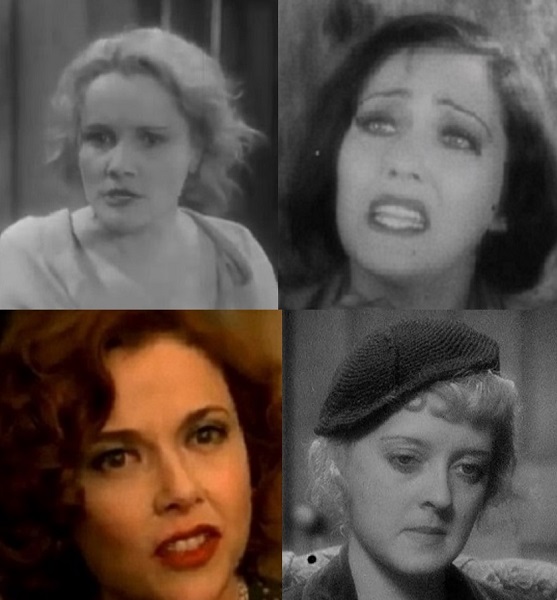
I’ve read many glowing tributes to the stars of The Letter, Being Julia, Of Human Bondage, and Sadie Thompson over the years. While I’ve never questioned the talents of these actresses, I have always credited much of their brilliance in these parts to William Somerset Maugham. Their strengths are on display largely because of the characters he created in his stories, plays, and novels: women so complex, morally conflicted, modern, and real that 130 years after his birth, Annette Bening was Oscar nominated for playing one of them.

And she’s not alone. Before I get into the reasons, let’s start with the data. Here’s a list of Oscar nods to women in his films; if I’ve missed any, please let me know. It’s quite possible. The number of his film credits, and of stars listed in those movies, is astonishing. Here we go:

Academy Award Nominations for Actress in a Leading Role:

  • Gloria Swanson: Sadie Thompson (1928), based on the short story, “Rain”
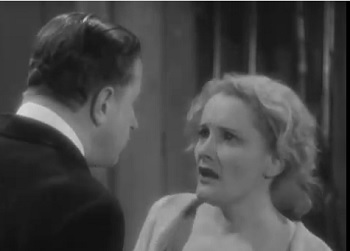
  • Jeanne Eagels (first posthumous nomination), The Letter (1929), based on the short story and play. (She also made her name in the play version of “Rain.”)
  • Bette Davis, two nods: Of Human Bondage (1934; by write-in vote), based on the novel, and The Letter (1940)
  • Annette Bening, Being Julia (2004), based on the novel Theatre.

Other notable female roles include Gene Tierney’s in the Oscar-nominated The Razor’s Edge (a novel), Greta Garbo’s and Naomi Watts’s in The Painted Veil (a novel), and Madeleine Carroll’s in Alfred Hitchcock’s Secret Agent, based on Ashenden, a collection of stories.

Even fine actresses need a vehicle, and in the last fifteen years, one of the few amazing leading roles I’ve seen for a woman over the age of 30—Bening’s—was written by Maugham in 1937. I wasn’t surprised. He specialized in complex characters making immoral decisions: They cheat on and leave spouses and children, prostitute themselves, admit to irreligious or cruel behavior without guilt, contribute to or directly cause the death of others. Since Maugham resists moral judgments, his women are free to react to the traumas they’ve created rather than simply being punished for them. No wonder they’re so fascinating to watch on the screen.

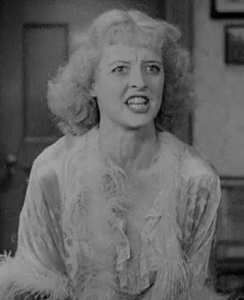
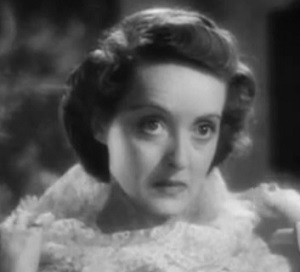
In fact, Maugham is as likely to admire as condemn. As his (seemingly autobiographical) narrator in The Razor’s Edge explains, “My dear, I’m a very immoral person….When I’m really fond of anyone, though I deplore his wrongdoing it doesn’t make me less fond of him.” Thus the attention given to selfish characters such as Mildred in Of Human Bondage. Certainly, her character would have been less nuanced—giving Davis less to work with—had Maugham not empathized with Mildred and therefore made her traits and actions so interesting and believable.

DavisOfHumanBondage
Davis is Davis, but it took a number of roles before she reached this breakout one.

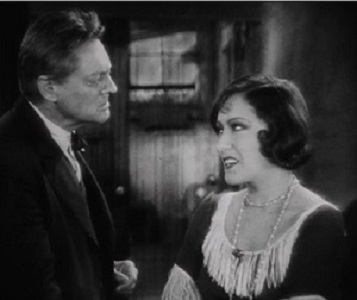
Maugham frequently explored the contrasts between how men and women seek to appear and who they are. While he may be gentle on others’ immoral actions, he can be scathing about their hypocritical ones. Sadie Thompson is a prostitute, but it’s the reformer trying to condemn her, unwilling to admit his own sexual appetite, whom we are led to despise. Sadie, gradually moved by the reformer, ultimately learns to appreciate her own values over his—an unexpected ending for the type of character who is usually just a one-note in a film. Swanson, not surprisingly, captures the flair, passion, and contradictions of this woman.

SwansonSadieThomson
In Being Julia, we root for the heroine in spite of (or even because of) her extramarital affair with a younger man because we enjoy her confidence. Despite her vanity and delusions, she owns and even enjoys most of her flaws. The surprises in her behavior are quite funny, and Bening takes full advantage of the humor.

Bening-BeingJulia
How wonderful is it, how gloriously human, that in the midst of her midlife crisis, Julia is obsessed with breaking her diet? How much do we love that she wants to savor her victory over a younger wannabe actress in solitude, since it’s a private triumph? What a feminist scene it is when she does, and how interesting that a man created it so very long ago. Curious to see how much the film differed from the source material, I reread Theatre, only to find it was even closer to the movie than I’d remembered: the dialogue, the focus, the character, the morality, even the final scene—all the same.

And Leslie in The Letter? Most authors would have focused on the murder and the passion leading up to it. It would have been a fairly typical noir, with an unremarkable femme fatale. But Maugham again proved to have a deeper interest in human nature than his peers, wondering not just about the crime itself, but Leslie’s efforts to conceal it, to retain that image she wants to present to the world. She is an interesting character because of her willingness to reside in her own lies, a trait that Maugham, with his typical regard for truth, seems to find more blameworthy than the murder. Thanks to his interest in motives, Davis and Eagels were granted a woman of enormous complexity to work with, which contributed to each’s stunning performance.

Eagels-TheLetter

Davis-TheLetter
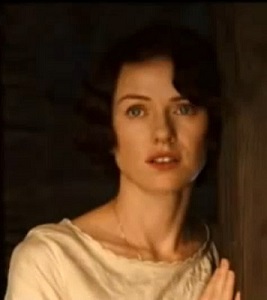
Of his roles that have yet to win actresses Oscar nods, I find Kitty in The Painted Veil the most intriguing. Kitty’s husband Walter catches her cheating, and forces her to travel with him to a cholera-infested region of China as punishment. He offers her an out if her lover will marry her, knowing it won’t happen. Rejected by the man she loves and facing a death sentence from the one she doesn’t, Kitty spends much of her time alone, reflecting on her actions as Walter heals patients—quite a departure from her youth as a superficial beauty. She learns to admire Walter’s generosity, even as she pities the love for her that has turned to hatred. She wants to forgive him, and for him to do the same for her, but she can’t bring herself to love him.

Watts-PaintedVeil
What did Hollywood do with this story (Garbo’s and Watts’s versions)? Turned it into a love story. We’re meant to root for a reconciliation between the two, whether they both survive cholera or not. I don’t know about you, but once a guy tried to kill me via a deadly epidemic, I can’t imagine thinking, “Yeah, but I cheated on him; we’re cool now.” These plot alterations might have helped with commercial viability, but the result was to diminish realism and a powerful female part.

Kitty’s disappointment in herself for continuing to desire her vain, worthless lover is an essential part of the story. In the book we see enough of her life beyond the epidemic to discover that her enhanced self-awareness doesn’t lead to moral behavior. The self-deprecation and compassion she develops as a result of her failures are intriguing to witness. While Watts captured Kitty’s vulnerability beautifully, I suspect had the screenwriter more faithfully rendered the character’s complexity, he would have netted Watts the Oscar nomination, as with so many women in Maugham’s roles before her.

Maugham’s skill with character development is often attributed to his history: he stuttered in his childhood and struggled with his homosexuality. Did feeling like an outsider and being morally out of favor in his time contribute to his empathy for others? Probably. He gives another possibility, crediting his early medical training for giving him access to “life in the raw,” saying the work enabled him to see “pretty well every emotion of which man is capable.” While I suspect both of these reasons are relevant, I’ve always preferred to take as autobiographical his narrator’s confession in The Moon and Sixpence: “the fear of not being able to carry it through effectively has always made me shy of assuming the moral attitude.” Ultimately, perhaps in spite of himself, Maugham is amused by human behavior, in all of its foolish and ugly iterations, and therefore captivated by it. No wonder, with an author who claims he is “more likely to shrug his shoulders than to condemn,” that four of the women in his films have been nominated for Oscars, one twice. Let’s hope other gifted actresses take note, and give his excellent stories another run.

Share
Posted in: 1920s films, 1930s films, 1940s films, 1990-current films, Comedies (film), Drama (film), Feminism, Oscars Tagged: Being Julia, Bette Davis, great roles for women, Oscar nods, Sadie Thompson, The Letter, The Painted Veil, William Somerset Maugham

Why the John Goodman Oscar Snubs?

02/09/2015 by leah@carygrantwonteatyou.com 16 Comments

BigLebowski-Walter-Goodman
This post is part of the 31 Days of Oscar blogathon. I’m taking part in the Oscar Snubs segment, hosted by Once Upon a Screen! There are so many amazing posts. Check them out here. Also see Paula’s Cinema Club & Outspoken & Freckled for the other great Oscar topics.

I’m rarely puzzled by an actor failing to win an Oscar. The competition is steep, the Academy biases evident, and the campaigning too embarrassing for some well-respected professionals to attempt. But for an actor not to be nominated when he regularly appears in critically acclaimed movies (and presumably played a role in their success) is surprising. With over two decades of fine performances to his name, John Goodman has yet to receive a single Oscar nod.

He is a regular in Coen brothers’ films, and thus would presumably take on the shimmer of those critical darlings. How’s this for a partial list of acting credits?: Inside Llewyn Davis (2013), O Brother, Where Art Thou? (2000), The Big Lebowski (1998), The Hudsucker Proxy (1994) (voice only), Barton Fink (1991), and Raising Arizona (1987).

For two years in a row, Goodman acted in the Oscar-winning film: Argo (2012) and The Artist (2011). In 2011, in fact, he performed in two Oscar-nominated films, playing the doorman in Extremely Loud & Incredibly Close as well as the executive in The Artist. While his roles in the other two might not have been significant enough for Academy Award consideration, his performance in Argo certainly was.

John Goodman-Argo
Goodman won a Golden Globe for playing Dan Conner on Roseanne (1988-97) and an Emmy for his guest performance in Studio 60 on the Sunset Strip. He’s won other honors, including, of course, for comedy, but the most prestigious have been ensemble awards. His only Golden Globe-nominated film performance was for Barton Fink.

I have to ask: Why?

Is His Acting Not Good Enough?
The easiest answer is that he’s simply not skilled enough to win. I guess that’s possible, even though I find it tough to believe any other actor could have so memorably captured Walter Sobchak in The Big Lebowski, or the oddest hotel guest ever in Barton Fink. Even in small roles his impact is felt. I can’t stop laughing when I think about his performance as an escaped convict in Raising Arizona, especially when he gets into his never-leave-a-man-behind diatribe.

RaisingArizona-Goodman-1
And with all of Hollywood to choose from, why would the gifted Coen brothers continue to cast Goodman if they didn’t find him talented? While the directing duo features the same actors in many of their films, I think only Joel Coen’s wife makes more showings than Goodman. (John Turturro, also beloved by the brothers, has been in four of their movies to Goodman’s six.)

Are His Roles Not Sufficiently Challenging?
Goodman fits well into a number of stereotypical roles, especially the kind of good ol’ boy he plays in Alpha House. He clearly plays these with ease. But he enjoys eccentric characters too, as so many of his Coen brothers movies prove. The Academy seems to love larger-than-life characters. Anthony Hopkins and Daniel Day-Lewis have been honored for roles that bear no resemblance to actual human beings. Does anyone believe there was ever a man like those Day-Lewis played in Gangs of New York or There Will Be Blood? In what world is Hannibal Lecter anything but a caricature?

Lecter
Goodman’s oddball and sometimes sinister characters, in contrast, are typically very believable, especially Walter in The Big Lebowski. Is it easy to make a person who is comically bizarre come off as realistic?

RaisingArizona
I don’t think it is, nor do I believe the much-loved Day-Lewis has pulled off this feat nearly as often as Goodman has (admittedly, the latter’s role in O Brother also never gets beyond myth).

In terms of understated performances, which I typically think more deserving of honors, Goodman isn’t always given enough play time for the kind of nuanced and subtle acting we saw in Roseanne, and he doesn’t seem to demand meatier roles when he could. I’d like to see him attempt these types of parts more than he does. If only such understated roles were honored, Goodman being bypassed by the Academy would make sense given the number of his quirky parts. But that’s not the case. Oscars would otherwise never have been given to Day-Lewis for There Will Be Blood or Hopkins for The Silence of the Lambs.

Is It the Usual Reason—No Love for Comedians?
Those of you who’ve read my blog for a while know that I regularly take the Academy to task for their lack of appreciation for comedic performances and scripts (Harold Ramis, Steve Martin, Ralph Fiennes). While Goodman has often starred in dramas, even his more serious roles are usually punctuated with humor. And with a face as expressive as this one, why would he neglect the opportunity to make us laugh?

BartonFink-Goodman
The Academy’s dismissal of comedy could explain how often Goodman is never even discussed—much less chosen—when it comes to nominations.

Could It Be the TV Curse?
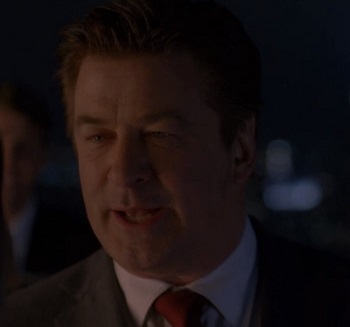
In the new golden age of TV, actors can move from big screen to television and back again without losing their star status—as long as that show is on cable. Network television still retains its low status. (Doubt me? Check out which shows win most Emmys for drama.) Whatever his other accomplishments, Goodman will always be known as Roseanne’s Dan Conner. He starred too long on a hit show—and performed too well—for it to be otherwise. While we see the rare exception—J.K. Simmons’s Oscar nomination this year, for example—most network television stars never get much credit once they turn to film. I can’t explain this trend nearly as fluently as Jack Donaghy (Alec Baldwin) does in 30 Rock.

Jackexplains30Rock
Jack is advising Tracy Jordan (Tracy Morgan) on how to tank his acting career. In the NBC TV show’s typical self-referential fashion, Baldwin is actually describing his own life:

“Do TV. No one will ever take you seriously again. Doesn’t matter how big a movie star you are, even if you have the kind of career where you walked away from a blockbuster franchise or worked with Meryl Streep or Anthony Hopkins. Made important movies about things like civil rights or Pearl Harbor. Stole films with supporting roles and then turned around and blew them away on Broadway. None of that will matter once you do television. You can win every award in sight, be the biggest thing on the small screen, and you’ll still get laughed out of the Vanity Fair Oscar party by Greg Kinnear….You wanted to hit rock bottom again? Go on network television.”

Could this trend explain Goodman’s snubs?

Is He Discounted Due to His Choices—and Costars?
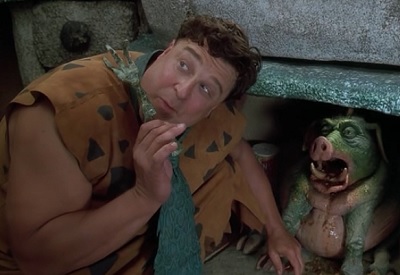
Perhaps no number of outstanding performances can make the Academy forget this role:

JohnGoodman-Flintstones
Or the fact that he starred with Roseanne Barr, who never has gained any traction outside of TV and unfortunately earned even a presidential slam thanks to this performance:

RoseanneBarr
That the show they shared was remarkably ahead of its time, wise and real in a way few sitcoms then or since have been, doesn’t seem to make any difference.

Of course, there’s no way to know for sure why the Academy passes on this lovable character actor. My belief? The omission maybe has a bit to do with the TV curse or his former costar. But mainly, he’s ignored for the same reason Jeff Bridges was for The Big Lebowski and for many other roles that preceded it: Goodman simply makes it look too easy.

Please check out the other 31 Days of Oscar entries! (I will, by the way, return to classic movie fare on Thursday:))

Share
Posted in: 1980s films, 1990-current films, Blogathons, Comedies (film), Drama (film), Oscars, TV & Pop Culture, Uncategorized Tagged: Argo, John Goodman, Oscars, Roseanne, snubs, The BIg Lebowski

Worth Watching Before the Oscars or Not? Quick Reviews of Six Nominees

02/04/2015 by leah@carygrantwonteatyou.com 14 Comments

With little more than two weeks left before the Oscars, is it worth it to view all eight? Even for those of us who think this was a great year for movies, eight by Feb. 22nd may be pushing it. To help you decide, I’m including short reviews for the nominees I’ve seen so far (two left to go).

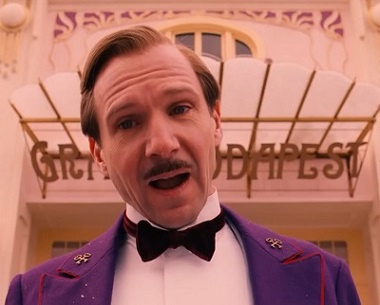
The Grand Budapest Hotel

Ralph FiennesGBudapest
Review:
Loved it. Funny, charming, even moving. Wes Anderson draws you into his impeccably created world. My vote for the Oscar of those I’ve viewed.

Pros: Originality, great acting, artistry, entertainment

Cons: Can be too quirky for some; everyone won’t find it funny.

Boyhood

Boyhood
Review:
Hated it. Watched it during a blizzard and preferred scraping off my car.

Pros: Ambition; you have to hand it to Richard Linklater for trying on something of this scale.

Cons: Gimmicky choices, mediocre acting, dull script. Very long, with supposedly subtle insights that are generic rather than thought provoking. I’m Dazed and Confused about why most of the scenes were worth depicting, and why the film is garnering so much praise given its lack of character development.

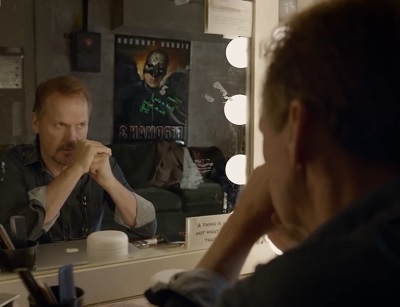
Birdman or (The Unexpected Virtue of Ignorance)

Birdman
Review:
Clever, whimsical, with impressive editing. I was engaged the whole time, and never knew what would happen next.

Pros: Strong acting, convincing portrayal of theater life, originality, wonderful transitions

Cons: The touches of magical realism can be off-putting to some. May require an interest in theater, especially backstage drama.

Whiplash

SimmonsTeller-Whiplash
Review:
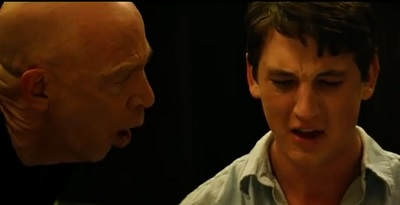
Riveting. Intense. Captures the high stakes of a competitive music program and asks interesting questions about how far a teacher can push a talented kid. (Obviously, few to none would support how far this teacher goes, but the question is still an intriguing and relevant one.)

Pros: Acting: J.K. Simmons is brilliant, and newcomer Miles Teller gives an effective, understated performance. A beautifully paced, streamlined film.

Cons: Stressful to watch. Possibly limited in terms of whom it reaches; may require an interest in the arts, teaching.

American Sniper

AmericanSniper
Review:
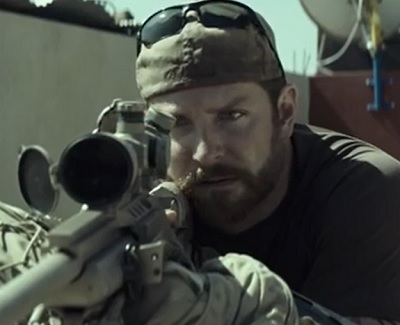
Intense, with an impressive performance by Bradley Cooper. I have some issues with the film’s accuracy and politics. I typically dislike Clint Eastwood films, but thought this a fitting choice for him (close to a Western in its values, characterization). Overall, I thought it a good film despite all of my reservations about its message.

Pros: Much stronger than most biopics, with poignant, subtle depictions of Chris Kyle’s suffering—and by extension, that of other veterans. Draws viewers into the conflict zones, causing us to experience fear, stress, and moral confusion.

Cons: Some repetitiveness in the portrayal of his tours. A lack of nuance in many respects: Some demonization of the Iraqis (carefully chosen bad guys—even a long-term sniper rival). A one-note development of his family. Careful avoidance of the rationale for American presence there. Not a single portrayal of a wrong target hit (unbelievable with all of those kills). Glorification of a controversial figure. Why didn’t Eastwood, given the issue with Kyle’s fabrications in the memoir this film is based on, not to mention the director’s own inventions, just loosely base the movie on Kyle’s story? The tribute to veterans is heartfelt and moving, but the glamorization of this particular Navy Seal and lack of doubt about the justice of our involvement are concerning. War is never as clear-cut as Eastwood would like it to be.

The Imitation Game

ImitationGameCumberbatch
Review:
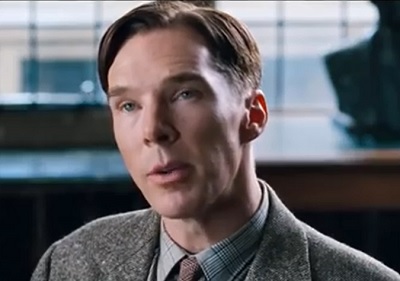
Fascinating story. Surprisingly quick paced given the subject matter. Poignant portrayal of the loneliness of a genius (Alan Turing) in a time period in which his homosexuality and socially awkward nature were poorly understood. The kind of biopic that makes you Internet research as soon as you get home.

Pros: Fine acting from Benedict Cumberbatch—so far, I’d give the Oscar to him or Cooper. Just a good movie altogether. The one I would recommend to the broadest audience; I can imagine few who would dislike it. There have been some objections to the film’s biographical accuracy, but unlike in American Sniper, the complexity of the portrayal makes it clear that Turing was not easily pinned down, that all of this story has not been told.

Cons: The story of Turing stuck to me afterward, but the movie hasn’t as much as I thought it would. I would have changed the proportions a bit, as Turing’s suffering due to his sexuality is given emphasis but not fully developed until near the end of the film.

There you have it! My highly opinionated reviews….Feel free to disagree with me.

Share
Posted in: 1990-current films, Drama (film), Humor, Oscars Tagged: American Sniper, Birdman, Boyhood, deserves Oscar, The Grand Budapest Hotel, The Imitation Game, Whiplash

The Oscar Snub No One Is Talking about: Ralph Fiennes in The Grand Budapest Hotel

01/22/2015 by leah@carygrantwonteatyou.com 4 Comments

MGustave-GrandBudapest-Fiennes
I know everyone is busy discussing the Selma Oscar snubs and Jennifer Aniston’s supposed one. The former film I haven’t seen yet, and Cake I won’t. Only when I scrolled through long lists of snubs would I find Ralph Fiennes, as if the omission of his name were insignificant, perhaps expected. Sigh. Of course it was. He’s in a comedy.

Ralph Fiennes is best known for his dramas; he was nominated for The English Patient and Schindler’s List. Harry Potter fans know him as Lord Voldemort. He can alternate between a terrifying serial killer (The Red Dragon, Schindler’s List, In Bruges), and a fragile intellectual (Quiz Show). That’s just the beginning of his impressive range. And in The Grand Budapest Hotel, he proves that he can be hilarious.

Well-respected comedic actors are honored by the Academy when they turn to drama: Bill Murray, Bette Midler, Cary Grant. But with few exceptions (Tommy Lee Jones in The Fugitive, for example), the process doesn’t go the other way. Where are Christopher Walken’s nominations for becoming one of the funniest men in film? How is it possible Gene Hackman didn’t get a nod for The Royal Tenenbaums? And if the Academy is considering nominating actresses merely for being willing to appear unattractive, what of Tilda Swinton’s hysterical showing in The Grand Budapest Hotel, surely the least vain performance I’ve seen in years?

TildaSwintonGrandBudapest
If it were so easy to switch from drama to comedy, I doubt one of—if not the—finest actresses of her generation, Meryl Streep (19 Oscar nominations and counting), would have struggled so much with it. Everyone may now recall when she had mastered comedy in The Devil Wears Prada, but it took her years.

The Devil Wears Prada

The Devil Wears Prada

Anyone remember She-Devil? Death Becomes Her? In Postcards from the Edge Streep was so bad I couldn’t even make it through the film. Her bravery is one of the things I value most about her: she let herself stink up the screen in order to improve her craft, not something many women with her dramatic chops would have braved. I suspect she pairs those two devil movies in her mind, appreciating how far she’s come.

She-Devil

She-Devil

And yet I’m to think Fiennes’s laugh-out-loud funny performance was easy?

Fiennes was getting early buzz for The Grand Budapest Hotel. Back in the spring, I thought he was a lock for a nomination. He could have been considered for Best Supporting Actor, given his role; technically, he wasn’t the star. Ethan Hawke was nominated; Ralph Fiennes wasn’t. Repeat that to yourself without laughing—or crying.

TheGrandBudapest-GustaveandZero
I admit that this is a tough year in the Best Actor category, but The Grand Budapest Hotel is tied for Birdman with nine nominations, and Fiennes carried his film from start to finish. Could I imagine another star in the others I’ve seen so far (4/8)? Yes. In The Grand Budapest Hotel? Absolutely not.

As M. Gustave, Fiennes is funny, original, moving. I have seen no other film this year that drew me in like this one, no other actor or actress who affected me more. Watch Fiennes’s quick transitions from elegance to crassness and see if you can stop yourself from laughing. Observe those nuances in his gestures, voice, and expressions that make Gustave’s mood changes from rage to tenderness convincing—and all in mere seconds (that’s all you get in a Wes Anderson film). When else have you seen a character simultaneously this funny and this heartbreaking, thanks to the actor playing him?

MGustave-GrandBudapest-Fiennes-1
If you haven’t watched the movie yet, do yourself a favor and rent it now. And if The Grand Budapest Hotel wins, tell me, in a movie riddled with big names, which actor helped the gifted Wes Anderson finally pull it off.

Share
Posted in: 1990-current films, Comedies (film), Oscars Tagged: Christopher Walken, Gene Hackman, Oscar snubs, Ralph Fiennes, The Grand Budapest Hotel, Wes Anderson

Three Hypocritical Oscar Moments

03/05/2014 by leah@carygrantwonteatyou.com Leave a Comment

1. Ellen Insulting Her Wife’s Arrested Development Costar
I don’t know about you, but if my wife had been flayed in the press for her plastic surgery, I would avoid digs like the one Ellen gave Liza Minnelli at Sunday’s Oscars.

Perhaps pre-spat?

Kimmel’s Spoof Oscars Night: Perhaps Pre-Spat?

While Portia de Rossi didn’t seem offended, it’s hard to believe a woman who has written a book about the suffering she endured to look perfect would approve. I would have expected this kind of behavior from Seth MacFarlane, not from the usually affable Ellen. Talk about marital insensitivity.

2. Oscar Commentators Praising “Not Looking Old” and “Growing Old Gracefully” Simultaneously
The online attacks on Vertigo (1958) star and Oscar presenter Kim Novak for her looks were appalling, especially since this is a woman who left Hollywood at the peak of her fame and lived privately for decades because she couldn’t take the objectification she experienced as a bombshell in Tinseltown. She’s been lured back into the limelight in her eighties, and look how she’s treated. Because for what would we judge a woman who starred in the film now ranked best of all time but her looks?

Vertigo

Vertigo

Chicago columnist Mike Royko wrote that 1976 Oscar viewers were outraged about seeing silent film star Mary Pickford (who had “grown old gracefully”) on their screens because they wanted to remember her cute and pretty, like this:

Mary Pickford (right)

Mary Pickford (right)

Royko didn’t understand why people preferred “facial skin stretched out like a drumhead.” “They cheer the illusion of Zsa Zsa,” he wrote, “but they flinch at the reality of Mary Pickford.” In 2014 an elderly woman can’t get away with natural aging or plastic surgery unless her surgeon is some kind of Houdini. Novak had the right idea originally—just get out.

3. Bestowing Honor by Awarding on the DL
Do you feel honored for a lifetime of achievement if the Academy deems the moment you’re given the statue not exciting enough for the big night? I was reminded of host Chris Rock’s reaction in 2005 when the technical awards were given in the aisle and sometimes en masse instead of individually onstage: “Next they’re gonna give the Oscars in the parking lot. It’ll be like a drive-through Oscar lane. You get an Oscar and a McFlurry and keep on moving.”

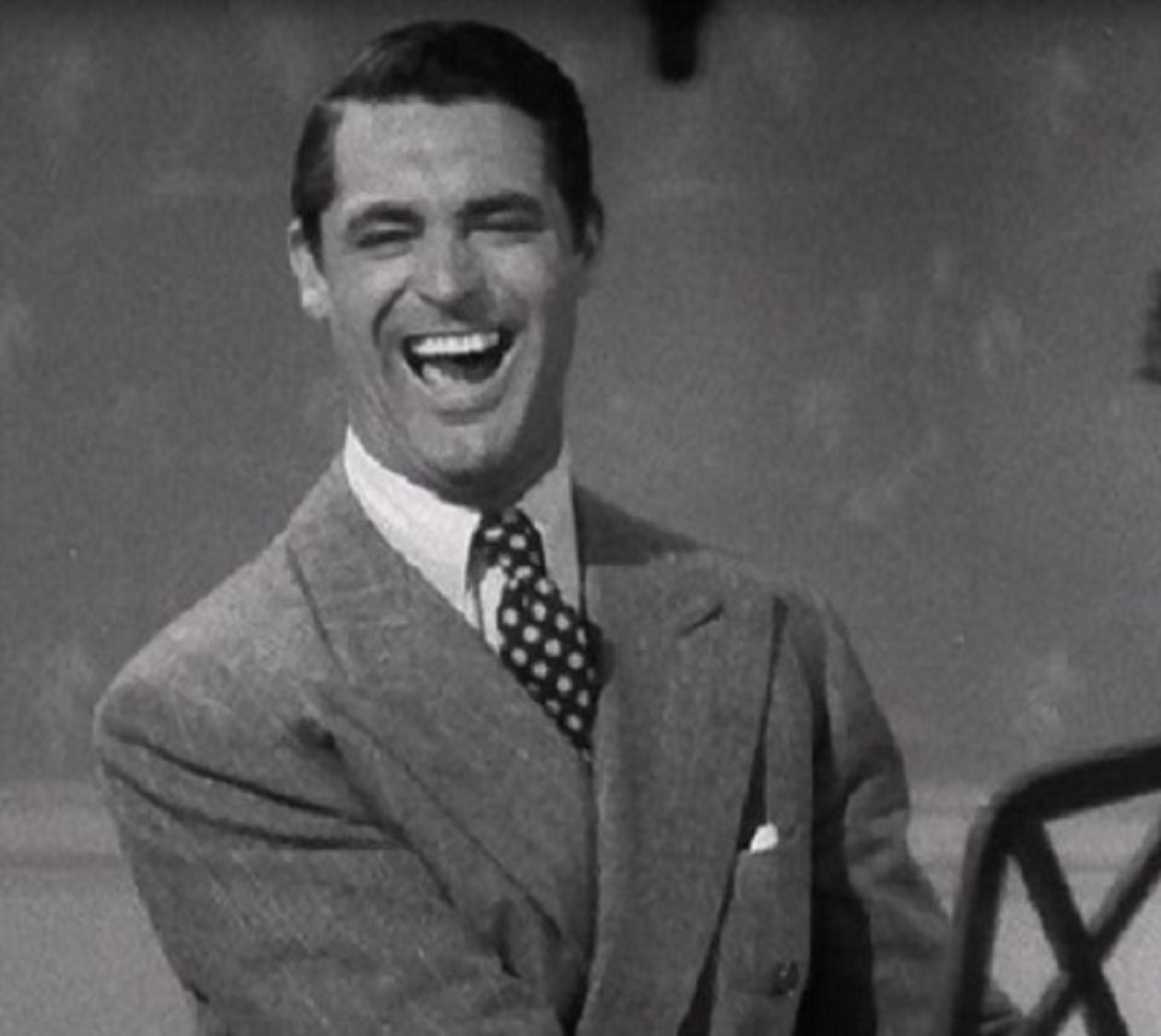
I found the choice to separate the honorary and competitive awards especially disturbing given that the former are so often given to those the Academy considers unworthy of notice for years and belatedly realizes they unjustifiably snubbed; such as one of this year’s honorees, Steve Martin, and Cary Grant (yes, the only classic film star many people can name).

Steve Martin, honored at separate event

Steve Martin, honored at separate event

Unsurprisingly, honorary Oscars are frequently awarded to those who mainly appear in/write/direct comedies, so I thought Jim Carrey’s jokes and Bill Murray’s shout-out to Harold Ramis were timely reminders that comedians receive no credit unless they appear in dramas—and usually not then—until the Academy’s honoree-may-be-near-death-oops awards, honors that now aren’t even bestowed on the night itself. Classy.

What bothered you most about this year’s Oscars?

Share
Posted in: 1990-current films, Humor, Oscars, Uncategorized Tagged: Ellen, Honorary Oscars, Kim Novak, Liza Minnelli, Mike Royko, Oscars, Portia de Rossi, Steve Martin, Vertigo

No Oscar Love for Harold Ramis: The Academy, as Humorless as Ever

02/27/2014 by leah@carygrantwonteatyou.com 6 Comments

Harold Ramis, whom President Obama labeled “one of America’s greatest satirists,” died this week shortly before this Sunday’s Oscars. His list of co-writing credits is astonishing: Animal House, Stripes, Caddyshack, Ghostbusters, Groundhog Day. He also directed the latter, Caddyshack, and Vacation. I’m sure the Academy will clap enthusiastically this weekend when his face appears in the “In Memoriam” tribute, but they won’t express what they should: regret. Ramis never won an Oscar; in fact, he was never even nominated.

Harold Ramis: won A BAFTA, but no Oscar

Harold Ramis: won A BAFTA, but no Oscar

In the years the Academy snubbed Ramis, comedies did make appearances in the original screenplay category, including Private Benjamin, Splash, Beverly Hills Cop, Sleepless in Seattle, and Dave.  But many of the nominations were of grim films you didn’t know then, much less now. The following were the original screenplay winners the years Ramis could have been nominated:

Coming Home (Animal House), Melvin and Howard (Caddyshack), Places in the Heart (Ghostbusters), and The Piano (Groundhog Day).

Most Oscar nominees for original screenplay are not bad movies; the Academy saves their embarrassing choices for the best film category (Crash, anyone?) But have these screenplay winners stood the test of time? Have they influenced you—or anyone you know—in any way?

Here’s a test for you:

  • Can you quote from it?

Belushitoga

  • Do you adopt cultural affectations from it (perhaps Roman)?
  • Have you sung along with it?
  • Does it give you more understanding for the weak kid or the outsider, perhaps make you feel more comfortable challenging authority? (See this great Ramis bio.)

Stripes

  • Does it bring back childhood memories that make you grin, maybe your best Halloween costume ever?

Ghostbusters

  • Have you lost count of how many times you’ve seen it?
  • Do you (be honest) feel tempted to dance with a certain character’s nemesis during the closing scene?

gopherCaddyshack

Of course, the Academy—and critics in general—have long shown more appreciation for drama than comedy, failing to see in it the far subtler, and often more trenchant and artful cultural critique it can provide. In 1941, Preston Sturges, a writer/director who, like Ramis, was fond of what’s often dismissed as “adolescent” humor, wrote an entire film addressing the greater appreciation given to drama, Sullivan’s Travels. But unlike with the usual Oscar winners, this time, the case for comedies is much more persuasive.

It begins with a scene between a director (Sullivan, played by Joel McCrea) and his bosses (Mr. LeBrand and Mr. Hadrian). Sullivan has decided to write a serious film, which his bosses fear will be less profitable than his usual comedies. Why not do a sequel to your Ants in Your Plants of 1939 instead? they ask him. His movies are inspiring, they tell him. They don’t, as Hadrian puts it, “stink with messages.”

Sullivan (Joel McCrea in the middle) with his bosses

Mr. LeBland, Sullivan (Joel McCrea) and Mr. Hadrian

Sullivan tries to argue them into supporting his new effort, showing them a scene from his O Brother, Where Art Thou? (yes, Coen fans, that’s where they got it)

Sullivan: “You see the symbolism of it?….It teaches a lesson, a moral lesson, it has social significance.”

Hadrian: “Who wants to see that kind of stuff? It gives me the creeps.”

….

Sullivan:  “I want this picture to be a commentary on modern conditions, stark realism, the problems that confront the average man.”

LeBrand: “But with a little sex.”

….

Hadrian: “How about a nice musical?”

Sullivan: “How can you talk about musicals in a time like this, with the world committing suicide, with corpses piling up in the streets?…..”

Hadrian: “Maybe they’d like to forget that.”

After Hadrian convinces Sullivan he’s too inexperienced with suffering to direct movies about it, the latter decides to go on a quest to learn about poverty firsthand. A despondent LeBrand barks at his assistant, “Get me a copy of that O Brother, Where Art Thou? I guess I’ll have to read it now. Make that two copies.  Why should I suffer alone?”

By the end of the movie, Sullivan agrees with his bosses that he should keep directing comedies. He discovers that his movies, silly as they may be, have something to offer that dramas never will: “There’s a lot to be said for making people laugh. Did you know that’s all some people have?”

In fact, Sturges begins the movie with a dedication that could have been written for Ramis: “To the memory of those who made us laugh….in all times and in all nations, whose efforts have lightened our burden a little….” Not a bad epitaph, from one comedic genius to another.

Incidentally, Sullivan’s Travels (1941) ranked on the AFI’s top 100. But you guessed it: Not a single Oscar nomination.

Share
Posted in: 1980s films, 1990-current films, Comedies (film), Humor, Oscars, Romantic Comedies (film), TV & Pop Culture Tagged: Academy Awards, Animal House, Bill Murray, Caddyshack, Ghostbusters, Groundhog Day, Harold Ramis, Preston Sturges, Sullivan's Travels, The Oscars
« Previous 1 2 3

Recent Posts

  • 100 Years Later, Still Scary: Dr. Caligari
  • Escaping Out of the Past (1947)
  • A Weeper for Those Who Love Jerks
  • Thank You, Academy, for Not Infuriating Me
  • Challengers (2024) Is a Bad Movie

Subscribe to Blog via Email

Enter your email address to subscribe to this blog and receive notifications of new posts by email.

Categories

  • 1920s films
  • 1930s films
  • 1940s films
  • 1950s films
  • 1960s films
  • 1970s films
  • 1980s films
  • 1990-current films
  • 2020s films
  • Action & Sports Films
  • Anti-Romance films
  • Blogathons
  • Childfree
  • Comedies (film)
  • Drama (film)
  • Feminism
  • Femme fatales
  • Film Noir/Crime/Thriller & Mystery
  • Gloriously Silly Scenes
  • Horror
  • Humor
  • Mae West Moments
  • Musicals and dancing films
  • Oscars
  • Random
  • Romance (films)
  • Romantic Comedies (film)
  • The Moment I Fell for
  • Turn My Sister into Classic Movie Fan
  • TV & Pop Culture
  • Uncategorized
Share
Classic Movie Blog Hub Member

Recent Comments

  • leah@carygrantwonteatyou.com on Meg Ryan’s Fate Foretold in Joe Versus the Volcano
  • Ryan on Meg Ryan’s Fate Foretold in Joe Versus the Volcano
  • leah@carygrantwonteatyou.com on 100 Years Later, Still Scary: Dr. Caligari
  • The Classic Movie Muse on 100 Years Later, Still Scary: Dr. Caligari
  • leah@carygrantwonteatyou.com on 100 Years Later, Still Scary: Dr. Caligari

Archives

  • November 2025
  • September 2025
  • May 2025
  • March 2025
  • January 2025
  • November 2024
  • August 2024
  • July 2024
  • May 2024
  • March 2024
  • February 2024
  • December 2023
  • November 2023
  • October 2023
  • September 2023
  • August 2023
  • July 2023
  • May 2023
  • April 2023
  • March 2023
  • January 2023
  • December 2022
  • November 2022
  • September 2022
  • July 2022
  • May 2022
  • April 2022
  • March 2022
  • February 2022
  • October 2021
  • September 2021
  • April 2021
  • March 2021
  • February 2021
  • December 2020
  • October 2020
  • September 2020
  • July 2020
  • May 2020
  • April 2020
  • March 2020
  • February 2020
  • December 2019
  • October 2019
  • September 2019
  • June 2019
  • May 2019
  • April 2019
  • February 2019
  • January 2019
  • November 2018
  • September 2018
  • July 2018
  • June 2018
  • May 2018
  • April 2018
  • March 2018
  • February 2018
  • January 2018
  • November 2017
  • September 2017
  • August 2017
  • July 2017
  • June 2017
  • May 2017
  • April 2017
  • March 2017
  • February 2017
  • January 2017
  • December 2016
  • November 2016
  • October 2016
  • August 2016
  • July 2016
  • June 2016
  • May 2016
  • April 2016
  • March 2016
  • February 2016
  • January 2016
  • December 2015
  • November 2015
  • October 2015
  • September 2015
  • August 2015
  • July 2015
  • June 2015
  • May 2015
  • April 2015
  • March 2015
  • February 2015
  • January 2015
  • December 2014
  • November 2014
  • October 2014
  • September 2014
  • August 2014
  • July 2014
  • June 2014
  • May 2014
  • April 2014
  • March 2014
  • February 2014
  • January 2014

Meta

  • Log in
  • Entries feed
  • Comments feed
  • WordPress.org

Copyright © 2025 Cary Grant Won't Eat You.

Church WordPress Theme by themehall.com