Cary Grant Won't Eat You

Classic movies for phobics

  • About
  • eBooks
  • Previous Blogathons
Classic movies for phobics

Musicals and dancing films

The Stunning Talent in Stormy Weather (1943)

08/13/2023 by leah@carygrantwonteatyou.com 2 Comments


How ridiculous is the amount of talent in Stormy Weather (1943)?

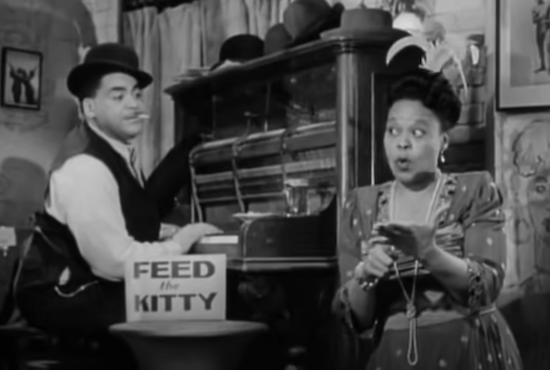
You’ve got Fats Waller and Ada Brown performing “That Ain’t Right,” a scene that obviously inspired Aretha Franklin’s “Think” in The Blues Brothers (1980).


My favorite lines in a hilarious call and response song about his greed for her money are Ada’s: “I took you to a nightclub. I bought you pink champagne. You rode home in a taxi while I caught that subway train, that ain’t right.” His responses include admissions that she’s correct; he does just want her money.

And as if that weren’t enough of a cameo, jazz legend Waller follows it up with a rousing “Ain’t Misbehavin.'”

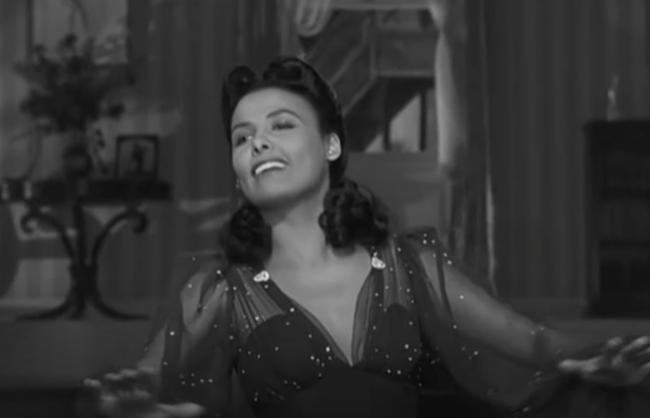
The movie stars the dazzling Bill “Bojangles” Robinson, perhaps best known now for his tap sequences with Shirley Temple. Lena Horne costars. Her performance of “Stormy Weather” is only slightly lovelier than her duet with Robinson of “I Can’t Give You Anything but Love.” She’s at the top of her game, and he’s in the late stages of his career, but his magnetism and skill are still impossible to ignore.

And then there’s the dance sequence during “Stormy Weather” by Katherine Dunham and her troop, which is both mesmerizing and marked by a degree of smoking sensuality I can’t believe made it past the censors. (Seriously, how did anyone miss those gyrations?)

Cab Calloway is his usual charismatic, velvet-voiced self, especially in the exhilarating “The Jumpin’ Jive” (years before he’d charm Gen Xers with the rendition of his hit “Minnie the Moocher” in The Blues Brothers).

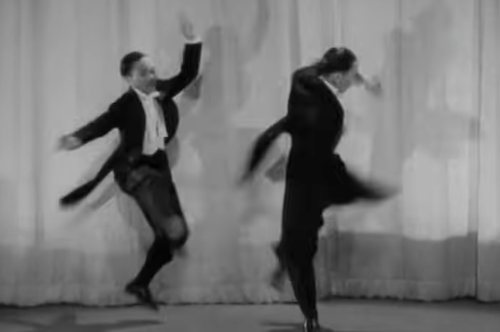
And then of course, we have the coup de grâce during “The Jumpin’ Jive”: the Nicholas brothers’ awe-inducing dance number, which Fred Astaire called the best dance performance on film.


Fayard and Harold Nicholas would wow such luminaries as George Balanchine, Gene Kelly, and Mikhail Baryshnikov. Their students would include Michael and Janet Jackson. (If you get a chance, watch fan Gregory Hines’s befuddled description of their impossible dance sequence in Stormy Weather. You can understand. Can two humans DO that???)

Sadly, it’s easy to guess why Stormy Weather is so chockfull of those at the top of their field: there were so few leading roles for black musicians, actors, and dancers in the 1940s. You can imagine why casting directors would stack that film and the other 1943 all-black musical, Cabin in the Sky, with all the big names they could get.

But that knowledge doesn’t stop you from experiencing shock the whole way through: At the flood of famous people you’ve heard of showing up on the screen. At music and performances that are far too good for a Hollywood musical. And by dancing that would have you in tears if you weren’t so busy smiling. The Nicholas brothers’ breathtaking grace and athleticism are nothing short of miraculous. And watching geniuses fully enjoy their art with that level of exuberance?

Try not to rewind and watch it again.

Share
Posted in: 1940s films, Musicals and dancing films Tagged: Ada Brown, best dance sequences, best musicals, Bill Robinson, Cab Calloway, Fats Waller, Fayard and Harold Nicholas, Lena Horne, Nicholas brothers, Stormy Weather (1943)

Doris Day and the Reaction Shot

05/13/2019 by leah@carygrantwonteatyou.com 4 Comments

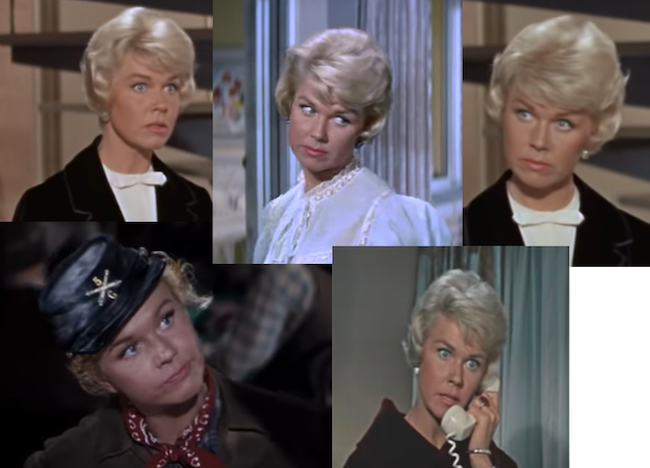
Today a man I know well surprised me, and I could tell I had one of those hilariously odd expressions on my face in response. When I heard a couple hours later that Doris Day had died, it seemed to me that I’d inadvertently paid tribute to that marvelous, strong, very funny woman. There will never be anyone who has a more entertaining or endearing response to male oddities than Doris Day. So today I want to say how lucky we are–among many, many gifts she gave us–for the hilarious reaction shots only she could deliver. Whether disdainful, amused, outraged–or best of all, all three–Day’s expression just nailed a sentiment….And so today, Doris, this feminist sends her heartfelt thank you. I couldn’t have said it better.

Share
Posted in: 1950s films, Comedies (film), Feminism, Humor, Musicals and dancing films, Uncategorized Tagged: death, Doris Day, tribute

Dancing Lady: A Film that Subsists on Chemistry Alone

05/27/2018 by leah@carygrantwonteatyou.com 4 Comments


Let’s consider the reasons Joan Crawford is a terrible choice to star in Dancing Lady (1933), one of those films about an aspiring hoofer, Janie, who is willing to do anything but trade sexual favors to get on the stage, and who is so talented she actually makes it.

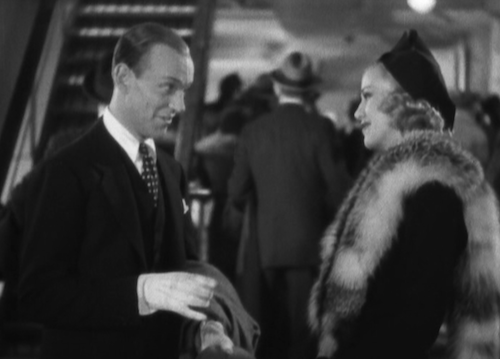
1. So talented at dancing? Look, I know about Crawford’s Charleston wins and what they did for her career. But Janie (Crawford) is supposed to be talented enough to impress a stage manager, Patch (Clark Gable), whose job is working with dancers. Any woman FRED ASTAIRE can’t make look talented ain’t anything special in the footwork department, my friends. Astaire looks flat-out bored in this film, and it’s not just because those wannabe Busby Berkeley numbers are unwatchable.

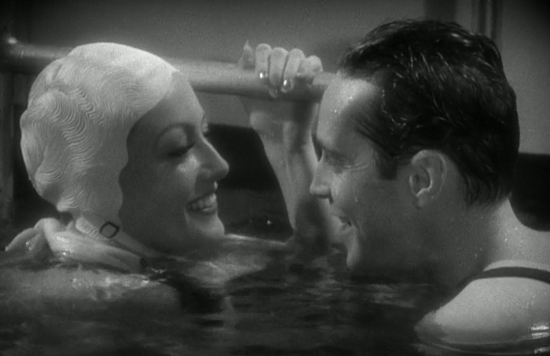
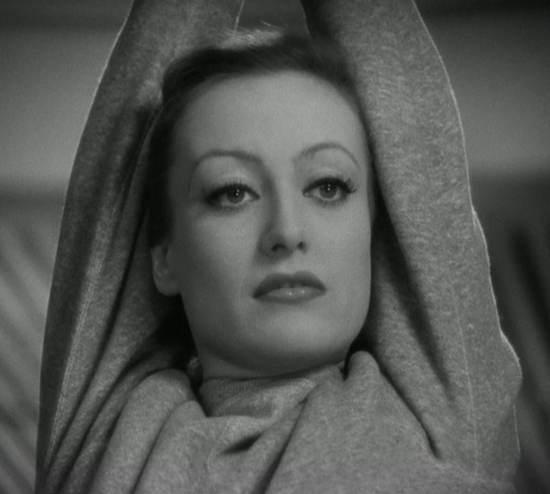
2. Torn between a man and her career? The film’s plot is pretty basic: Tod, a playboy (Franchot Tone), gives Janie an in with a show put on by Patch in hopes she’ll grant him sexual favors. Janie denies him because she wants to be a star. Check out those sexy glances when Crawford flirts with her future husband (Tone), and ask yourself: Wouldn’t this woman just go ahead and take both?


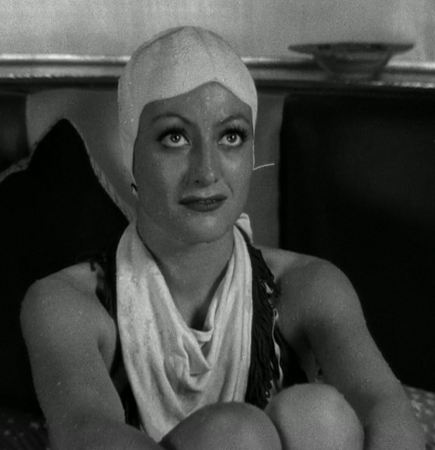
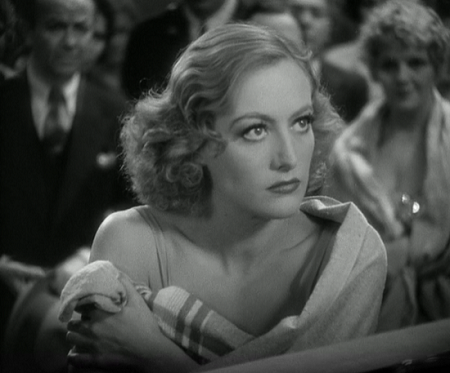
Aurora of Once Upon a Screen had it right when she wrote about a different dancing film, “Crawford had heat with most everybody it seems in the early 1930s. She seems to flirt with the typewriter in this movie….” Admittedly, with those looks, Crawford appears sexy all the time, especially when she’s angry. Check out her eyes when a judge demeans her ambitions:


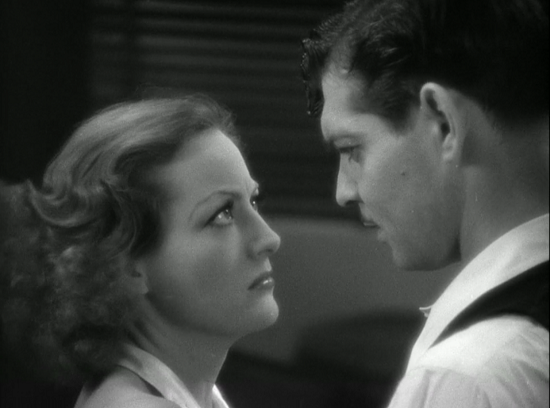
Luckily, Crawford wasn’t cast as Janie because her role–or for that matter, the plot–makes sense. She was cast to make eyes at her frequent real-life lover, Clark Gable, the stage manager pining for her. MGM had already witnessed their chemistry in their three films together before this one (not to mention had to deal with their off-screen behavior), and knew the money was in exploiting it.

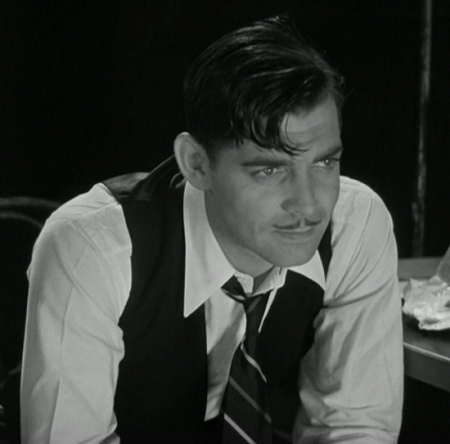
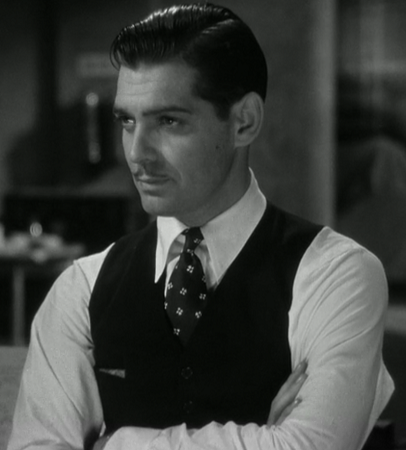
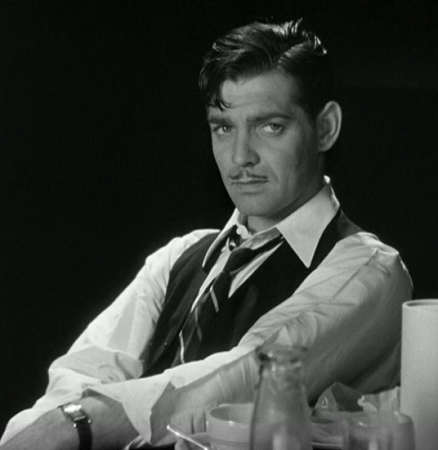
Because Patch (Gable) thinks Janie’s gonna take up the playboy’s offer, we get many scenes of him brooding. And seriously, who is a more sensual brooder than Clark Gable?


And like his co-star, Gable looks–if possible–even sexier when he’s angry.


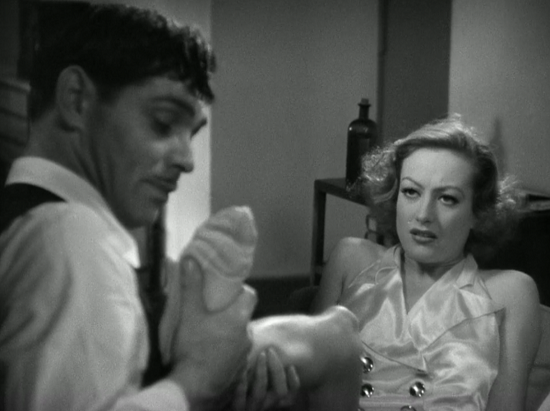
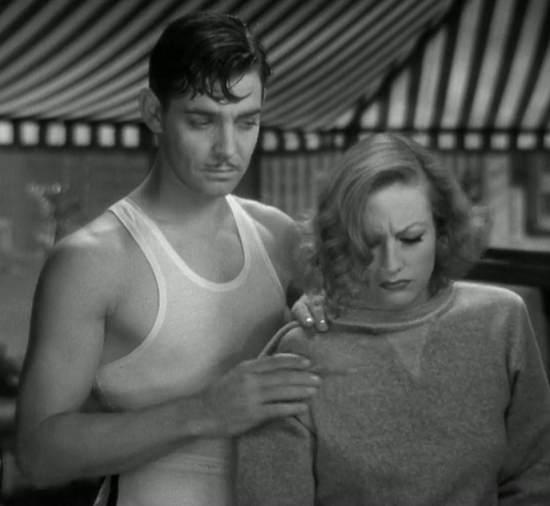
After fewer than 5 minutes of dancing practice, Janie usually has a cramp, twists her ankle, etc. Of course this kind of injury-prone behavior would make her too big of a risk to helm a musical, but the screenwriters know where their bread is buttered: not with logic, that’s for sure. Instead, with scenes of Gable massaging Crawford’s muscles.


And then you get these stares of Crawford’s at Gable, and you realize those swimming scenes with Tone are kid stuff compared to the smoke she’s emitting at Gable. Makes you wonder why Tone even bothered to show up for the film.


If you’re looking for a good dancing movie, do yourself a favor and look elsewhere, or do what I do: walk away during the numbers. But if you want to see two ridiculously hot actors burning the screen into cinders, enjoy. And just for your viewing enjoyment, I’m going to give you a final shot of Gable brooding.


You’re welcome.

Share
Posted in: 1930s films, Musicals and dancing films, Romance (films) Tagged: best onscreen chemistry, Clark Gable, dancing films, early Fred Astaire films, Franchot Tone, Gable and Crawford films, Joan Crawford, onscreen chemistry

Center Stage: Acting Misfire, Dancing Fun

08/05/2017 by leah@carygrantwonteatyou.com 3 Comments


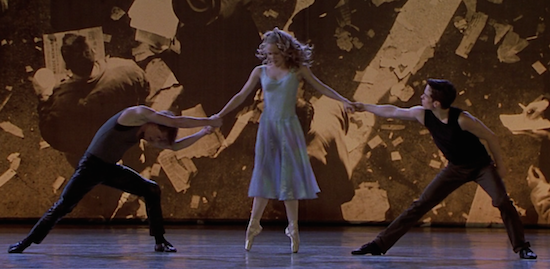
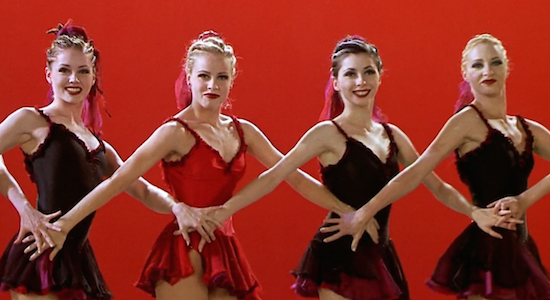
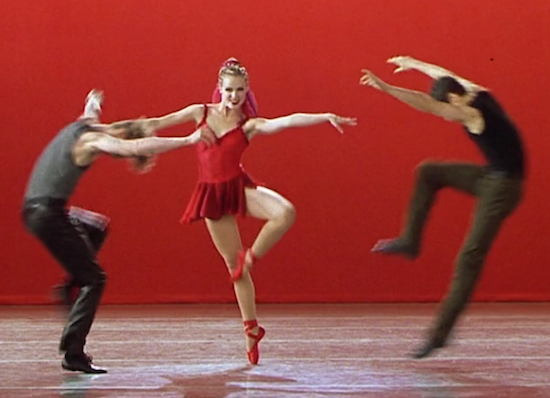
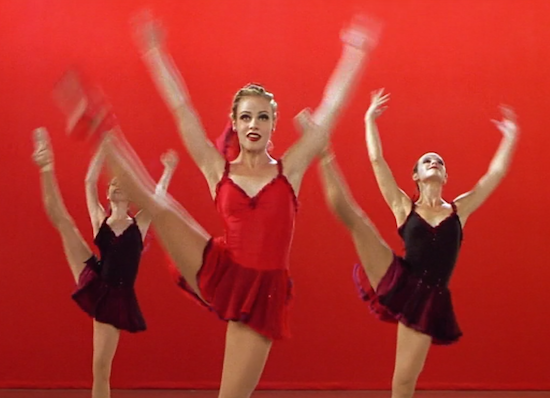
Center Stage is a blast: great dancing from real ballerinas, including a final performance I watch on repeat. A love triangle. And Donna Murphy and Peter Gallagher convincingly running the ballet company. We are rooting for heroine Jody (Amanda Schull), whose technique, feet, and turnout don’t measure up to those of her classmates,’ who have also won scholarships from the American Ballet Academy. But she’s an expressive dancer, and so dedicated. Will she make it, get kicked out, or get no show time in the final workshop, killing her chances for a ballet career? The actress who plays Jody was apparently handpicked from the San Francisco Ballet since she had the exact issues that she’s corrected for in the story, and while at best a decent actress, she convincingly plays up the vulnerability that makes you stay on her side.


The film is a fun watch. But make no mistake: I’m not saying this movie is good, not at all. The dialogue and some of the side plots are comically trite. You have to tune all that out, and focus on:

The Dancing
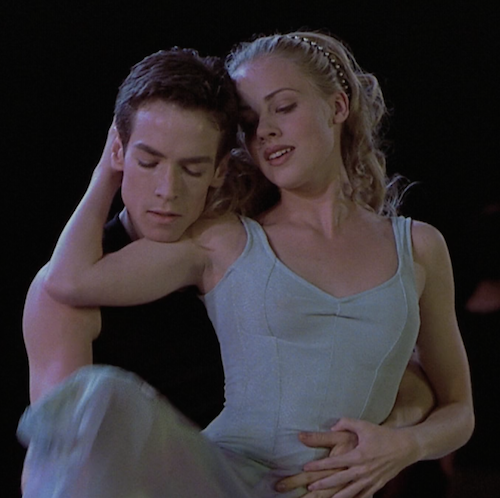
As Jody is trying to find her way in the academy, sweet fellow dancer Charlie (Sascha Radetsky) flirts with her, but she is drawn to the star of the company, aspiring choreographer Cooper (Ethan Stiefel). Cooper and she have a brief affair, which means something to her and nothing to him. Although it’s hard to imagine anyone mistaking Cooper’s shady selfish soul for anything like boyfriend material, she’s so clearly inexperienced you feel for her.

Luckily, this plot is just a set-up for the mesmerizing dance that ends the film, and Charlie and Cooper; played by American Ballet Theater’s soon-to-be-soloist Sascha Radetsky and then principal dancer, Ethan Stiefel, respectively; are beautiful in motion, even when their acting is stiff (Radetsky) or laughable (Stiefel). And given its progeny (choreographed by slimy Cooper), the narrative of the final dance is remarkably feminist as well: a woman torn by two overly grasping men discards both to fight for her own space.


You can see even from these scenes why I try to forget the….

Acting Dilemma
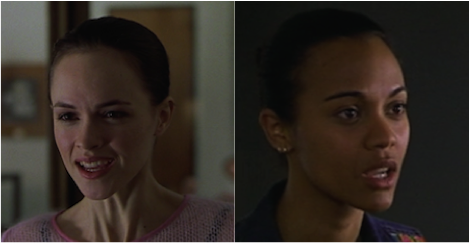
It’s the question of every dancing film, of course: cast actors, or cast dancers? With the former, you’ll need stand-ins for the harder dance moves; with the latter, you risk weak acting destroying the movie. That’s why Center Stage is such a curious film: there’s a mixture of dancers and actors, but inexpert as the dancer-actors are, the full-time actors are worse at acting than the dancers. Much worse. Zoë Saldana and Susan May Pratt were the “real” actors chosen to play Jody’s fellow dancers and friends/frenemies at the academy, and both excel at histrionics. As with Flashdance before it, Center Stage gives an unexpected answer to the actor/dancer dilemma: Why not choose someone who can’t do either?


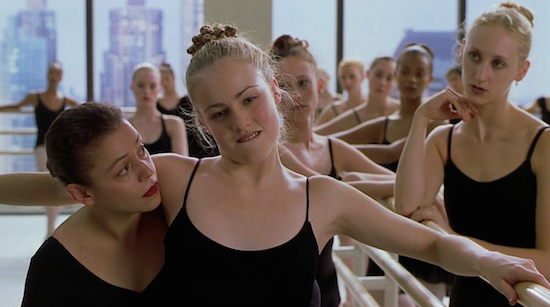
While Saldana can at least move, Pratt displays a level of physical awkwardness that makes her casting baffling. Take this screen shot of the actress, who was presumably cast to lure in fans of 10 Things I Hate about You. Her character, Maureen, is supposed to have the best technique of anyone in the academy. Having spent seven years of my life in ballet studios, I remember what grace looks like, and believe me, it never looks like this:


In fact, this pose is remarkably reminiscent of my own awkward 19-year-own self, who was put into dancing as a kid to overcome a lack of coordination. Not exactly future prima ballerina material, my friends.

Saldana is at least fun to watch, even when she overplays her lines, but oh Pratt. Every scene is painful, and I tend to just fast forward through her parts (though the script is largely at fault too, her delivery is abominable). Luckily, the acting in the film is comic rather than annoying overall, and occasionally decent. And really, who cares? This is a dancing film, with great final performances, convincing practices, and a wonderful dance class at the Broadway Dance Studio in between. When Schull’s dancing, she’s a different actress than the passable one she is in the rest of film–lovely, riveting, fun. And given the choice between even good acting from poor dancers and some weak performances from people who can move? Give me the good dancers, every time.


This post is part of the En Pointe: The Ballet Blogathon, hosted by two marvelous sites: Christina Wehner‘s and Michaela’s of Love Letters to Old Hollywood. (As a sidenote to fellow Hoosier Michaela, Schull studied ballet at Indiana University.) Check out the other blogathon entries here!

Share
Posted in: 1990-current films, Comedies (film), Drama (film), Humor, Musicals and dancing films, Romance (films), Romantic Comedies (film) Tagged: Amanda Schull, ballet films, Center Stage, lovable camp dance films

Fred and Ginger Fans, Watch La La Land

01/12/2017 by leah@carygrantwonteatyou.com 6 Comments

Sometimes when I’m watching Gene Kelly, I’ve had to resist my urge to reach through the screen and push him into one of the puddles he’s leaping around.  I want to enjoy his joyful movements, his talent, but for me, the acting just kills it. His characters seem so smug, so sentimental, so cheesy, as if they were born to and continue to expect a cheering section. (Forgive me, Kelly fans. I can’t help it.)

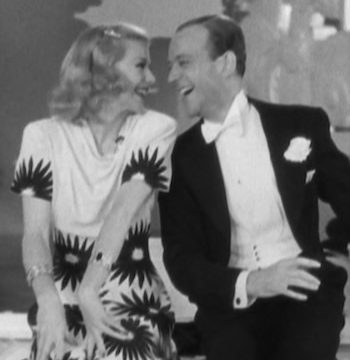
Fred Astaire’s characters, in contrast, are cynical, world-weary, and as a result, often quite funny. Ginger Rogers, his most frequent sparring partner, is at her best when she’s delivering the snark too.


I’m willing to surrender to some sentimentality, but only if it’s tempered with some sarcasm; that’s why La La Land was an unexpectedly welcome surprise. Writer-director Damien Chazelle clearly gets that need for bite, and his own musician past is as evident here as it was in Whiplash. Thanks to him, my Ginger-and-Fred-loving peers will discover a bit of that magic they’ve missed in films since. Here’s how Chazelle pulls it off:

Witty Conversations
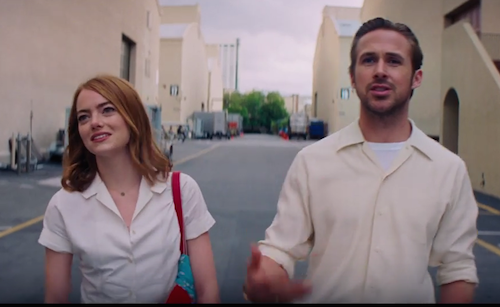
The plot is pretty simple: an aspiring jazz club owner and pianist, Sebastian (Gosling), and actress (Stone) fall in love and wrestle with the conflicts in their dreams and relationship. The previews are heavy on the cheesy side, but I should have trusted the actors, especially Gosling, whose  flight to indies after The Notebook revealed the level of his aversion to saccharine.


Emma Stone and Ryan Gosling excel at sarcastic banter. Their expressions are hilarious to witness. When Mia mocks Sebastian’s embarrassing keyboard gig by requesting an 80s abomination, I fell for the film, and for them. Astaire-Rogers films similarly begin with hostility: his character’s making a racket, tearing the heroine’s (Rogers’) dress, pretending to be Russian. Her characters’ (Rogers’) icy responses only begin to melt when the dancing brings the two together, and the self-protection their characters have constructed for themselves collapse.

Singing by Nonexpert Actors


Astaire and Rogers weren’t gifted in the choral department, but they sang their own tunes anyway, and as a result, there’s an authenticity to the chemistry between them, and the move from (relative) realism to song is less jarring. If I were watching a Broadway musical, I’d expect some serious pipes. But in a film, amateurism can work. As with Astaire and Rogers, Stone’s and Gosling’s lack of expertise works to highlight their characters’ insecurities and the fragility of their new bond. Their lack of professional music cred also helps give the impression that this singing is natural, just a way to express something that regular conversation can’t quite capture.

Dancing as Foreplay
Stone and Gosling are far better dancers than singers, and as with Astaire-Rogers, the dancing numbers are when their defenses dissolve, and they begin to fall in love.

My favorite moment is actually when the uber handsome Gosling approaches an older couple and starts dancing with the wife. The husband’s outraged response is so funny, but what’s lovely is the moment after: when we see the couple in the background, dancing with one another.

Characters Inspiring Each Other
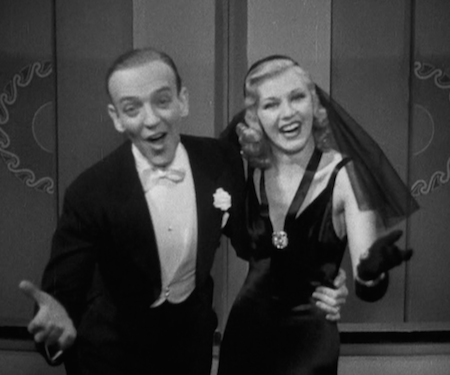
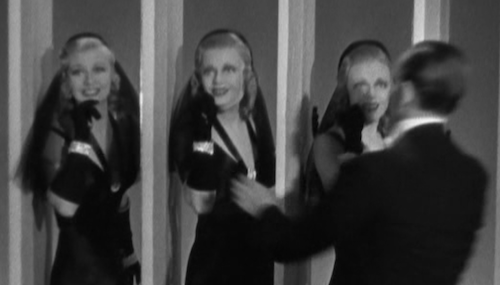
I love in Shall We Dance (1937) that Petrov (Astaire) feels his dancing is so inspired by Linda (Rogers) that he must have actresses in his musical all don images of her face.


Petrov begins not with love, but professional admiration. And it’s fun to watch Mia (Stone) and Sebastian (Gosling) do the same: respect and promote one another’s art. As in Once, one of my favorite films of the past decade, the romance (or in Once‘s case, almost-romance) matters less than the impact the characters have on one another, the way they force one another to be honest about the decisions they’re making, the repercussions, and the inevitable conflicts an artistic life creates.

Talent
Astaire and Rogers are obviously finer dancers than their 2016 imitators. But Stone and Gosling are both fine actors, which Astaire was not.* Stone brings that effervescent charm she does to everything. She excels at mocking, as she has since Easy A. Her auditions for various terrible acting gigs are hilarious.

But it’s Gosling I couldn’t stop watching (and not just because of that ridiculously handsome face). Gosling’s timing, expressions, and posture deliver the humor, and the pathos of Sebastian’s unbending personality, his devotion to something others don’t love (jazz), is beautifully conveyed. Sebastian’s efforts to conceal his vulnerability are heartbreaking. A conversation late in the film when Mia calls him out on being a sellout is particularly tough to witness, as for Sebastian, giving in to some need for practicality demonstrates growth. Mia’s simply not been forced into the kind of compromises he has, and she doesn’t get what those decisions have cost him. I could see why Gosling–who has taken a long time to come around to big-budget films–was drawn to the role, and why the writer-director, a musician himself, knew just how to capture it. I don’t think it’s an accident that Sebastian is a far more developed character than is Mia.

Whimsy & Joy
What a pleasure it is, to watch actors with chemistry having fun with one another. It was always true for Astaire and Rogers, and is true for Stone and Gosling as well.


I didn’t find the music in La La Land that memorable, certainly not as strong as any of Astaire’s or Rogers’s outings. (Admittedly, that would be a bit unfair to expect, with Irving Berlin and the Gershwins at the helm.) Still, the enjoyment of singing, of dancing, of just playing around is there. At one point, in a surreal, An American in Paris kind of way, realism just leaves, and Mia and Sebastian act as if a departure from the rules of gravity is a natural result of their connection. In a way, it is. The moment conveys how art can transport a person away from reality, just as love can. That a director just over 30 can convey that sentiment so beautifully and lovingly–and with such humor–gives me excitement about whatever he’s cooking up next.

*Rogers, it could be argued, bests Stone in certain roles, but Gosling is a stronger actor than all of them.

Share
Posted in: 1930s films, 1940s films, 1990-current films, Comedies (film), Musicals and dancing films, Romantic Comedies (film) Tagged: Damien Chazelle, dancing films, Emma Stone, Fred Astaire, Ginger Rogers, happy films, La La Land, musicals for nonmusical fans, Ryan Gosling

The Odd Stew of Designing Woman

12/16/2016 by leah@carygrantwonteatyou.com 14 Comments


It’s surprising the screenplay for Designing Woman (1957) won George Wells an Oscar, given its strange stew of marital conflict, mob threats, brain damage, fashion, and acrobatic fight moves. But there is a cleverness to it, and some insights about marriage one doesn’t usually get in a comedy. So while not exactly an amazingly tasty stew, it’s curious enough in flavor to keep you watching, and the fourth-wall-breaking format leads to moments of humor throughout, especially through the thoughts of the ex-girlfriend.

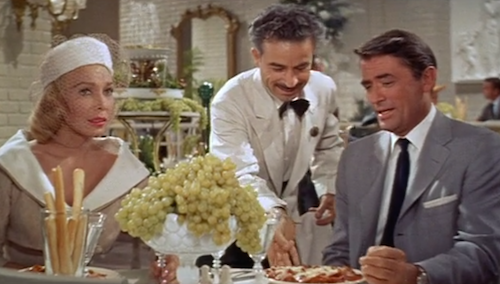
Of course, being a fan of complex heroines, I hoped Designing Woman would have a double meaning, that Lauren Bacall’s fashion designer bride had sneaky moves up her perfectly tailored sleeves. Alas, no such luck. Marilla (Bacall) is a sophisticated businesswoman, but traditional when it comes to her sports reporter husband, Mike (Gregory Peck). The two have married after a very short affair, and much of the story hinges around his utterly unnecessary concealment of a former flame, Lori (Dolores Gray), and Marilla’s anxiety about it. The couple is so prickly over this conflict that they endanger Mike’s life as he hides from the mob. (Mike, it seems, is more truthful in reporting than in life, and has ticked off a boxing fixer with mob ties.)

So here are my thoughts on the memorable moments of this Vincente Minnelli-helmed comedy: the flavorful additions, the questionable spices, the discordant ingredient that nearly destroys the whole, and a wonderful final pinch of flavor.

The Flavorful Moments
Confession to the Ex
Mike’s former girlfriend, Lori (Dolores Gray), adds wonderful comedy to the plot, which has gotten a little too sweet in the opening meet-cute aftermath. Mike keeps not getting around to breaking his marriage to her, and she, sharing her reflections with us, reveals, “He was so pathetic I had to help him out.” She generously delivers the breakup news, and then adds a jab he completely misses: “I’d have probably done the same thing myself if I’d found the right man.”

After she relieves him from hurting her feelings, she observes him to be as “grateful as a Saint Bernard.” Her initial euphoria over her own maturity and strength soon dissolves: “But then I made a mistake. I asked him to tell me about her, and he made a bigger mistake, he told me.”


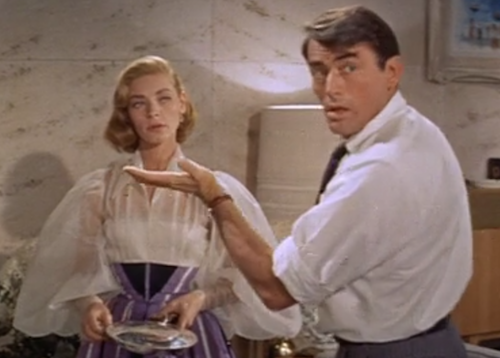
Rolling her eyes, she listens: “I heard all about her eyes, and her hair and her figure….I heard all about her fine sense of humor, and her clothes, and the cute way she had of tilting her head when she laughed….After a while I knew her like a sister.” And of course, she gets a thoroughly justified revenge with a strategic placement of his ravioli plate.

Party Scenes
The movie highlights the divisions between this high-class business leader and her working-class husband in various ways, most successfully with their apartments: his small and messy; hers refined, large, and including what he calls an “outside flunky.” Before he’s had time to look around his new place, all her friends arrive and rush her, barely registering his presence as he tries to excuse the embarrassingly short pants he’s wearing (his own being smeared with ravioli). Even when he leaves the room to change and returns, her distracted friends ignore him. And she is oblivious to his annoyance and embarrassment as she dons and then leaves behind his handsome form. The scene is perfectly orchestrated to reveal his disconnection and loneliness, and the way she’s suddenly made him feel alienated and extraneous in his own home and marriage.

In the aftermath, she’s dismissive of her career to soothe his ego, the embodiment of a bride worried about losing her new man. Luckily, she’s humbled herself enough to ease his insecurity (sigh, at least she doesn’t give up the career). The later party scene, with her rehearsal and his poker game colliding, is so cacophonous it’s actually hard to watch, but perfectly captures just how unalike their work lives are. Both of them are occasionally petty and jealous as they try to navigate in one another’s worlds, and yet come back together through their feelings for one another. The movie never suggests this union will be easy, and there’s something refreshing about that, and–unlike many romantic comedies–very honest.

The Fight Scene
The hilarious antics of the final fight scene make for good comedy. It’s well orchestrated, especially a brilliant final touch (see below). In a favorite moment, Mike observes that his wife doesn’t know how to help, as she can’t identify who is on Mike’s side, and who is not. I loved this reflection, as it echoes my reaction to every bad action sequence I’ve seen in the past decade. I so often can’t tell characters apart once the fists or legs start flying.

The Rotten
I don’t expect PC treatment of subject matter in my 50s films, but usually, I can cringe a bit at unfortunate touches and move on. Unfortunately, much of the comedy of Designing Woman hinges around making fun of a former boxer’s brain damage. Yes, you read that correctly. Maxie (Mickey Shaughnessy) is tasked with protecting Mike from the mob, but can never quite figure out what town he’s in, or what it is he’s supposed to do. Mike is by turns exasperated with him and condescending toward him. Marilla’s not much better, and sometimes worse. Mickey Shaughnessy’s performance is, unfortunately, often convincing, making his character’s brain damage poignant when the actor’s going for funny. The only way to enjoy this comedy is to block out whenever he’s on the screen, which is often.

The Brilliant Final Touch
Early in the film, in a typical bro kind of way, Mike objects to the effeminate dancing style of Marilla’s friend and colleague, musical director Randy (Jack Cole). You can just hear the homophobic chains in Mike’s mind churning as he watches those fluid, flamboyant movements, even before he imitates him to Marilla. But when the mob is beating up Mike and his friends, Randy appears and starts taking out half of them with his dance moves. I haven’t seen dance fighting this fun since Kevin Bacon’s in Footloose.

https://carygrantwonteatyou.com/wp-content/uploads/2016/12/DesigningWomanClips.mp4

It’s in this moment of brilliance that you know Minnelli’s at the helm, and you’re so glad. I only wish we’d  seen more such flourishes of his style because I could watch that clip over and over again. There, as elsewhere, I was more interested in the musical Marilla was designing for, than the marriage she was trying to save. The problem is, I think Minnelli was too. Luckily, there’s enough of the lovely costumes (and how Bacall wears them), enough of the self-absorption of those running the musical (who find the mob fight merely distracting) to intrigue and entertain. And of course, you can always rewatch Randy….

Hope you’ll enjoy the many other contributions to this Minnelli blogathon hosted by the marvelous Michaela of Love Letters to Old Hollywood.

Share
Posted in: 1950s films, Comedies (film), Musicals and dancing films, Romantic Comedies (film) Tagged: Designing Woman, Gregory Peck, Lauren Bacall, review, Vincente Minnelli films

Happy Films: You Were Never Lovelier (1942)

05/22/2016 by leah@carygrantwonteatyou.com 12 Comments

YouWereNeverLovelier
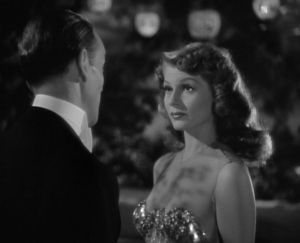
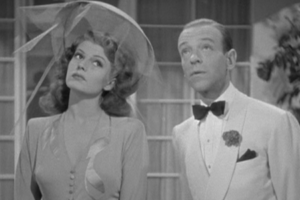
When asked to pick a film that I’d equate with ice cream for a sweet-inspired blogathon, I recalled the Rita Hayworth-Fred Astaire confection, You Were Never Lovelier. The plot is so silly: a sexist father, Eduardo Acuña (Adolphe Menjou), creates an imaginary secret admirer for his daughter, Maria (Rita Hayworth). He thinks he can handpick her suitor and pretend the boy is writing the love notes he himself is penning. But Maria mistakes a dancer, Robert (Fred Astaire), for her admirer, and much confusion ensues. It’s hard to explain why a story like this could win over its audience, especially since Maria is ridiculously susceptible, Robert directionless, and the film’s portrayal of Argentinians fantastical. And yet….What’s the primary feeling while watching? Utter delight. Try to watch it without grinning, rewinding, and pressing play again.

Why, you might ask?

Well, here’s our hero, Robert (Fred Astaire), dancing on a desk to protest Acuña’s refusal to consider him for his nightclub:

https://carygrantwonteatyou.com/wp-content/uploads/2016/05/AstaireYouWereNeverLovelier-sc.mp4

There’s the very funny meet cute between Robert and Maria, an encounter that doesn’t go well thanks to some snarky remarks by the former, who doesn’t know who she is.

MeetCute-YouWereNeverLovelier
And there’s the heavenly dancing. Within one scene Rita Hayworth and Fred Astaire make you forget the implausibility of the story because these are two of the most expressive dancers ever. From their first dance in, you’re entranced by their characters’ romance. How could you not be convinced, after watching them together?

https://carygrantwonteatyou.com/wp-content/uploads/2016/05/RitaandFred.mp4

The sweet, Oscar-nominated score is lovely, and the songs are catchy. “I’m Old-Fashioned” always makes me smile. Listen to Ella Fitzgerald’s version, or even better, watch a much longer clip than I’ve posted here at TCM, with Hayworth lip syncing it (sung by Nan Wynn) to Astaire’s Robert.

And that’s just one scene. I envy all of you who haven’t seen this film. You’re in for a treat.

This post is part of the Classic Movie Ice Cream Social, hosted by Fritzi of Movies Silently: a celebration of those movies and recipes that make us smile.

Share
Posted in: 1940s films, Blogathons, Comedies (film), Musicals and dancing films, Romantic Comedies (film) Tagged: best dancing movies, classic film, feel-good film, Fred Astaire, musicals, Rita Hayworth, You Were Never Lovelier

The Red Shoes, Pied Piper to Aspiring Ballerinas

08/03/2014 by leah@carygrantwonteatyou.com 14 Comments

This post is part of A Shroud of Thoughts’ The British Invaders Blogathon. Check out all the great entries! 
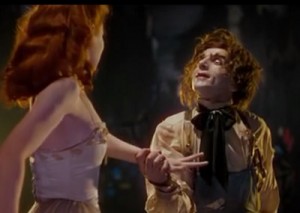
Vickyandshoemaker
Why did this film about the terrible choices a woman must make for her art inspire generations of ballerinas? Every little girl raised on Hans Christian Anderson knows that Karen, the red shoe-shod girl, doesn’t fare well: as punishment for her vanity in choosing red shoes for her confirmation (and similar sins), Karen can’t stop the shoes from dancing, can’t take them off, can’t go to church, can’t even prevent her detached legs from dancing when they’re cut off and replaced with wooden ones. Only when she truly feels remorse does she find peace—in death.

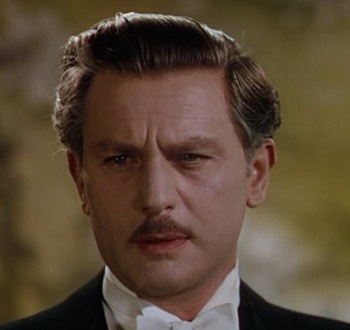
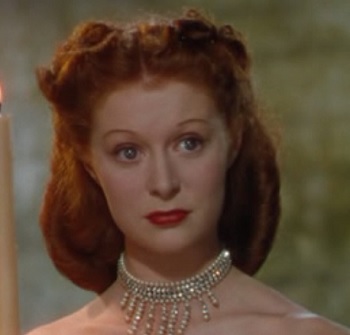
Surely then, a film about these shoes won’t bode well for the heroine, Vicky Page (Moira Shearer), as indeed, proves to be the case. The aspiring ballerina’s fierce impresario, Boris Lermontov (Anton Walbrook), expects unwavering commitment to dance. Vicky arrests his attention and is allowed into his troupe mainly because she seems to possess it:

“Why do you want to dance?” Lermontov asks when he meets her.
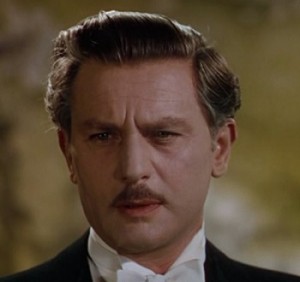
WhyDanceLermontov
“Why do you want to live?” Vicky answers.
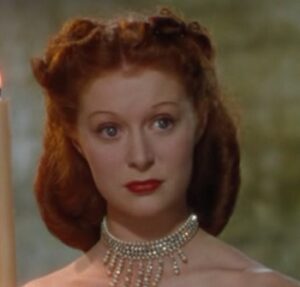
VickyWhyDance
“I don’t know exactly why, but I must,” he admits.

“That’s my answer too,” Vicky answers.

His prima ballerina’s nuptials lead the fiery director to boot her out, and usher Vicky in. He’s not interested in any dancer “imbecile enough to get married.” “You cannot have it both ways,” he explains to his choreographer. “A dancer who relies upon the doubtful comforts of human love will never be a great dancer, never.” Vicky is soon in training for Lermontov’s new ballet, which is based on the Hans Christian Anderson tale, with a company skeptical about her abilities and self-doubt growing under everyone’s exacting standards.

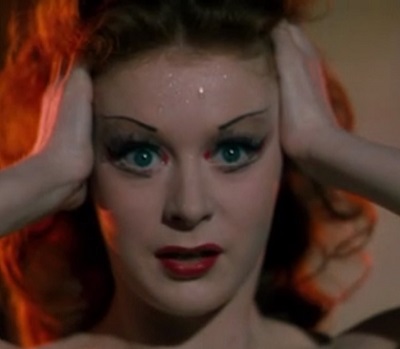
She relaxes when The Red Shoes becomes a spectacular smash, but conflict soon arises in the form of the ballet’s young composer, Julian Craster (Marius Goring), who has fallen for Vicky, and she for him. At this point, we viewers are still happy: she’s gotten her role, as has Julian, whom we’re also rooting for; she’s a hit, as is he; they’re in love, and have earned the respect and affection of the rest of the troupe. But then Lermontov finds out, and she has to choose: greatness with him, or mediocrity with Julian (only minor roles, minor ballets for her). And like every woman before her, this choice between love and ambition will not be an easy one, and she will be tortured either way.
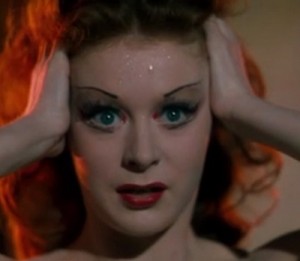
VickytorturedRedShoes
Why then, did this tragic film result in so many enthusiastic young ballerinas? I have a few theories on that, having been in ballet from ages 5-12 myself, and seen this movie when I was gobbling up Noel Streatfeild’s Ballet Shoes series.

For Young Girls, It Wouldn’t Have Been a Tough Choice
Julian is a likeable guy (for most of the film). He’s ambitious, cocky, devoted to his art, smart. He stands up for himself when he’s cheated; he’s supportive, sweet, and appreciative of Vicky as an artist, as he demonstrates during their loveliest moment together, when he envisions a time when a child will ask him as an old man where he was most happy, and he’ll answer this moment with Vicky: “‘What?’ [the girl] will say. ‘Do you mean the famous dancer?’ I will nod. ‘Yes, my dear, I do….We were, I remember, very much in love.’”

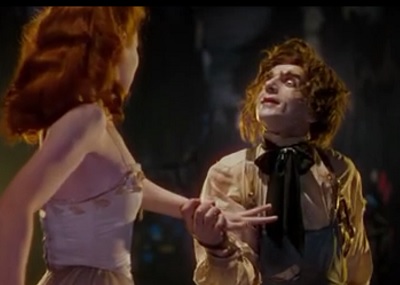
But let’s be frank here: Aside from the romantic streak, these are the types of traits women long on the dating scene may appreciate, but are not the type to win over pre-pubescent girls. This is not the kind of face girls’ dreams are made of:

JulianTheRedShoes
Without the conflict, no tragedy. And after all, even those girls who dream of perfect love and great achievement know a ballerina’s career is short. Their gossiping friends in the dance company will tell them so (if they’ve made it that far). And if they’re still beginning, well, they will learn as much after a day with some dance flicks: The Turning Point, Center Stage. Is it so impossible for the young dreamer to think she’ll simply fall in love later, as the actress (Moira Shearer) herself did in her mid-twenties after her greatest dancing successes?

The Caliber of the Dancing
The pet peeve of dancing enthusiasts is when films substitute allegedly good actors for good dancers—because Jennifer Beals, my friends, sure did have acting chops. Perhaps I would understand this choice if any of the actors and actresses selected were talented.

Take, for example, Center Stage (2000), which played it both ways, inserting a few actors among real-life ballet dancers to elevate the film’s quality. While the result is good dancing, but an array of poor acting performances, the worst among the bunch are Zoe Saldana and Susan May Pratt, who were chosen for their supposed dramatic skills; the latter can’t even manage graceful walking. People, no dancer has ever regretted watching a Fred Astaire film, and the man was at best a passable actor. No dancer says, “I would have enjoyed that movie if he could act,” even if an occasional person among the general audience does.

The Red Shoes, like the Rogers-Astaire films before it, did something more than highlight amateur beginners. It featured world-renowned ballet dancers and choreographers. Léonide Massine, who plays the choreographer (Ljubov) in the film, was a choreographer of nearly the status as George Balanchine. He created and acted the part of the shoemaker in the ballet. The replaced prima ballerina, Boronskaja (Ludmilla Tcherina), was in real life a prima ballerina in France.

And Moira Shearer? She danced for both Balanchine and Massine as a principal in the Sadler’s Wells (later the Royal Ballet), along with, you guessed it, that little-known ballerina Margot Fonteyn, whose costar in the company choreographed and played the male lead in the ballet within the film, Robert Helpmann.
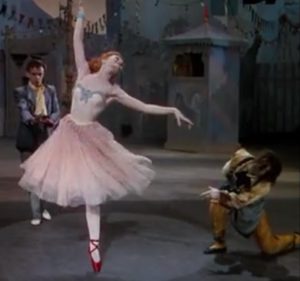
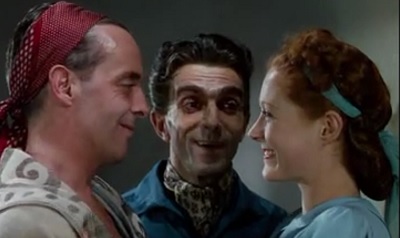
Helpmann, Shearer, and Massine.

Helpmann, Shearer, and Massine

Choosing such ballet luminaries didn’t hurt directors/writers Emeric Pressburger and Michael Powell’s movie; they were even lucky enough to find in these stars acting skills as well (which we rather expect in our greatest ballet dancers).

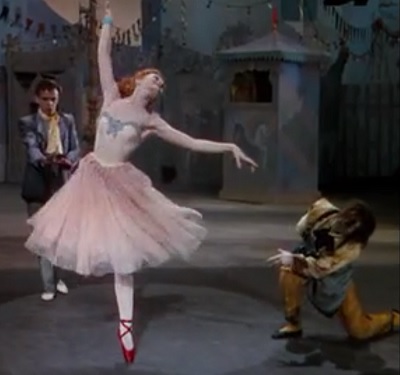
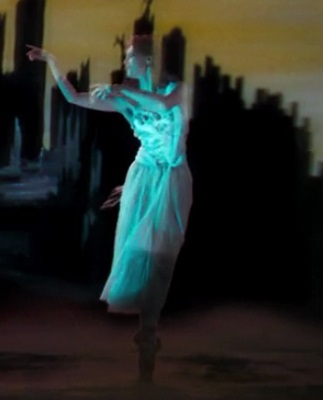
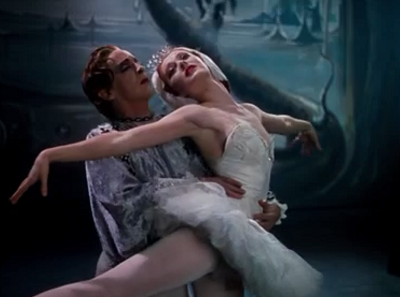
The Red Shoes’ most famous ballet itself is stunning, surreal, inventive and truly impossible to put into words, capturing the darkness of the fairy tale and all of its creepy, moralistic, vaguely misogynistic undertones, and giving Shearer the chance to demonstrate just why she was considered by some to be Fonteyn’s equal. It probably didn’t hurt that the film was scored by the Royal Philharmonic Orchestra.

The Realism
The movie is known for its surreal use of color and special effects and for a riveting performance by Walbrook as Lermontov.
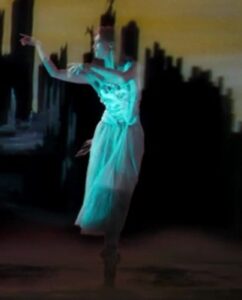
surrealTheRedShoes
It’s recognized now as ridiculously ahead of its time; one shivers to think what an American studio would have done with the same material in 1948: the starlets they would have chosen, the bizarre beauty they would have stamped out.

But by any standards, this film captures ballet as it is lived as well: the punishing practices, the demand for perfection, the colorful personalities, the scary choreographers and directors. I didn’t even make it into the company in my school, but I was terrified of the man who was our head. I’ll never forget his sharp eyes on me when I missed a move in The Nutcracker, nor his poise, which was every bit as still and intimidating as Lermontov’s. And this was a director of a small company in a minor city.
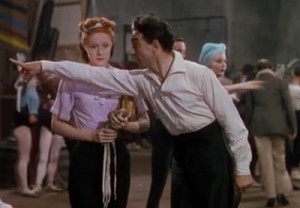
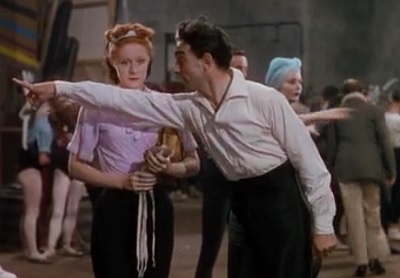
Vicky (Shearer) rebuffed by Ljubov (Massine), Vicky's (Shearer's) movie and real-life choreographer.

Vicky (Shearer) rebuffed by Ljubov (Massine)

The film, however, captures more than the tribulations of a dancer’s life. It conveys too the joy of the right move, of building toward something creative together, of earning not just the admiration of a crowd, but of those whose judgment you know to value.
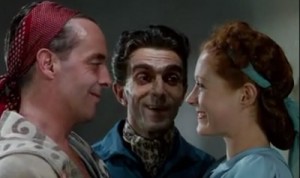
Vicky (Shearer) with her fellow lead (Helpmann) and choreographer (Massine); all three were involved with Sadler's Wells ballets.

Colleagues in film and on the stage: Helpmann, Massine, and Shearer

And it portrays the thrill of those impossibly lovely gestures, pirouettes, and leaps too, which no other experience can quite replicate.

Shearer believed the film injured her classical dance career because critics assumed she was riding on her fame from it rather than technical talent. If that’s true, I want to thank her for the sacrifice (admittedly too late). For it meant many young aspiring ballerinas like me, who would never go very far in dance, would understand in watching and re-watching The Red Shoes just what had made those hours in the studio worth it for us. Yes, it was literally a pain to practice (I feel a cramp in the arch of my foot just remembering those pointe shoes). And it hurt even more when it was time to let ballet go. But look! Just watch Vicky.
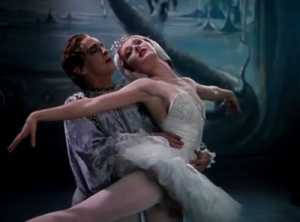
VickydancingTheRedShoes
Why wouldn’t you want to be a part of that, even for a little while?
Share
Posted in: 1940s films, Blogathons, Drama (film), Musicals and dancing films, Romance (films) Tagged: ballet, dancing, Moira Shearer, The Red Shoes, tragedy

Recent Posts

  • 100 Years Later, Still Scary: Dr. Caligari
  • Escaping Out of the Past (1947)
  • A Weeper for Those Who Love Jerks
  • Thank You, Academy, for Not Infuriating Me
  • Challengers (2024) Is a Bad Movie

Subscribe to Blog via Email

Enter your email address to subscribe to this blog and receive notifications of new posts by email.

Categories

  • 1920s films
  • 1930s films
  • 1940s films
  • 1950s films
  • 1960s films
  • 1970s films
  • 1980s films
  • 1990-current films
  • 2020s films
  • Action & Sports Films
  • Anti-Romance films
  • Blogathons
  • Childfree
  • Comedies (film)
  • Drama (film)
  • Feminism
  • Femme fatales
  • Film Noir/Crime/Thriller & Mystery
  • Gloriously Silly Scenes
  • Horror
  • Humor
  • Mae West Moments
  • Musicals and dancing films
  • Oscars
  • Random
  • Romance (films)
  • Romantic Comedies (film)
  • The Moment I Fell for
  • Turn My Sister into Classic Movie Fan
  • TV & Pop Culture
  • Uncategorized
Share
Classic Movie Blog Hub Member

Recent Comments

  • leah@carygrantwonteatyou.com on Meg Ryan’s Fate Foretold in Joe Versus the Volcano
  • Ryan on Meg Ryan’s Fate Foretold in Joe Versus the Volcano
  • leah@carygrantwonteatyou.com on 100 Years Later, Still Scary: Dr. Caligari
  • The Classic Movie Muse on 100 Years Later, Still Scary: Dr. Caligari
  • leah@carygrantwonteatyou.com on 100 Years Later, Still Scary: Dr. Caligari

Archives

  • November 2025
  • September 2025
  • May 2025
  • March 2025
  • January 2025
  • November 2024
  • August 2024
  • July 2024
  • May 2024
  • March 2024
  • February 2024
  • December 2023
  • November 2023
  • October 2023
  • September 2023
  • August 2023
  • July 2023
  • May 2023
  • April 2023
  • March 2023
  • January 2023
  • December 2022
  • November 2022
  • September 2022
  • July 2022
  • May 2022
  • April 2022
  • March 2022
  • February 2022
  • October 2021
  • September 2021
  • April 2021
  • March 2021
  • February 2021
  • December 2020
  • October 2020
  • September 2020
  • July 2020
  • May 2020
  • April 2020
  • March 2020
  • February 2020
  • December 2019
  • October 2019
  • September 2019
  • June 2019
  • May 2019
  • April 2019
  • February 2019
  • January 2019
  • November 2018
  • September 2018
  • July 2018
  • June 2018
  • May 2018
  • April 2018
  • March 2018
  • February 2018
  • January 2018
  • November 2017
  • September 2017
  • August 2017
  • July 2017
  • June 2017
  • May 2017
  • April 2017
  • March 2017
  • February 2017
  • January 2017
  • December 2016
  • November 2016
  • October 2016
  • August 2016
  • July 2016
  • June 2016
  • May 2016
  • April 2016
  • March 2016
  • February 2016
  • January 2016
  • December 2015
  • November 2015
  • October 2015
  • September 2015
  • August 2015
  • July 2015
  • June 2015
  • May 2015
  • April 2015
  • March 2015
  • February 2015
  • January 2015
  • December 2014
  • November 2014
  • October 2014
  • September 2014
  • August 2014
  • July 2014
  • June 2014
  • May 2014
  • April 2014
  • March 2014
  • February 2014
  • January 2014

Meta

  • Log in
  • Entries feed
  • Comments feed
  • WordPress.org

Copyright © 2025 Cary Grant Won't Eat You.

Church WordPress Theme by themehall.com