Cary Grant Won't Eat You

Classic movies for phobics

  • About
  • eBooks
  • Previous Blogathons
Classic movies for phobics

Mae West Moments

Mae West’s Dating Advice: the 3 Fs

10/11/2015 by leah@carygrantwonteatyou.com 2 Comments

MaeWestgivesadvice
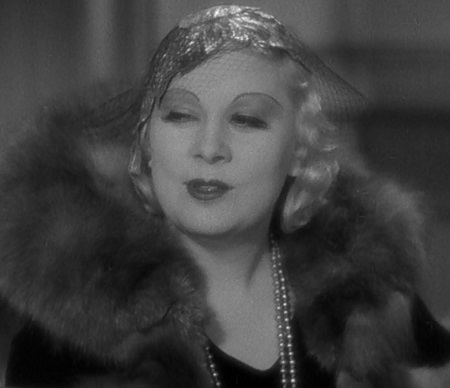
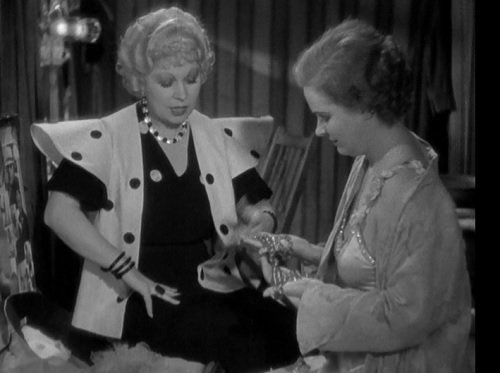
When advising friends about men, Mae West’s characters, of course, never hold back. As Tira in I’m No Angel, West keeps her suggestions pithy: “Never let one man worry your mind. Find him, fool him, and forget him.”

For more monthly Mae West favorites, click here.

Share
Posted in: 1930s films, Mae West Moments, Romantic Comedies (film) Tagged: dating advice, Mae West

Mae West Schools the Teacher

09/06/2015 by leah@carygrantwonteatyou.com 4 Comments

WestandtheTeacherNightafterNight
A prim school teacher & Mae West. Almost a century later, this coupling seems inspired. But in 1932, nobody knew that. West was a vaudevillian, not a movie star. Her role as Maudie, an ex of the lead, Joe Anton (George Raft), was a minor part in her first film, Night after Night. She didn’t even enter the picture until a half hour in.

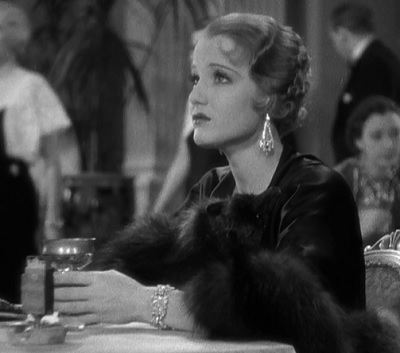
The script of the movie is bland, the story plodding. Joe, the owner of a mansion-turned-speakeasy, is fascinated by Jerry Healy (Constance Cummings), the mysterious beauty who shows up at his place every night unattended. He discovers that her family owned his mansion before the market crash.

ConstanceCummings-NightafterNight
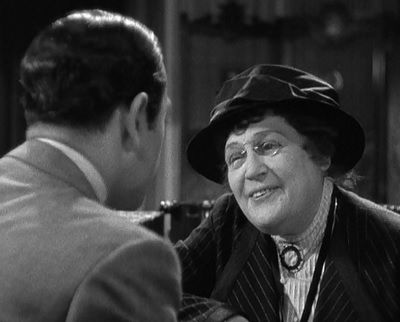
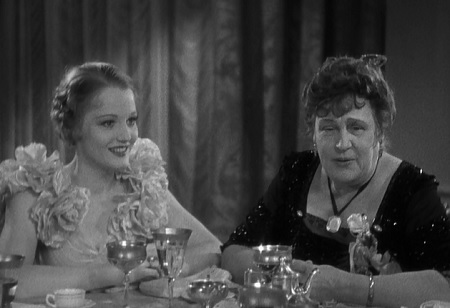
Joe has been dissatisfied lately, aspiring to a classier existence. He’s even hired a tutor, Miss Mabel Jellyman (Alison Skipworth), to improve his elocution, grammar and knowledge of current events–the type of lady who gets prissy when he uses words such as “got.”

Speakeasy owner & tutor
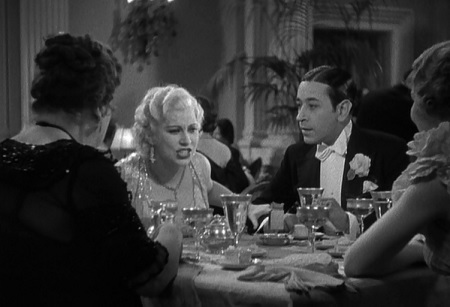
He thinks Jerry will lead him to a better life, but he needs the tutor’s help to win her. He invites Jerry for dinner at the speakeasy, and begs Jellyman to come along. The tutor is thrilled at the chance to hang out in a speakeasy and have some fun, but what a drag to be on such a date! Joe’s attempts at sophistication are painful, the conversation stilted. Everyone at the table is bored and uncomfortable.

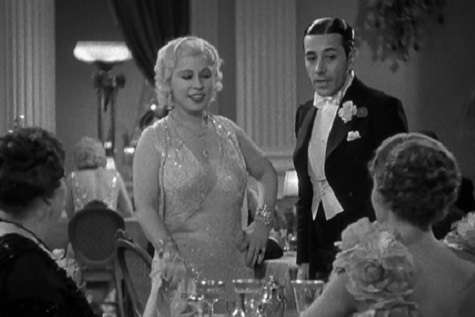
Then Maudie (West) enters the room.

MaudiesarrivalNightafterNight-WestRaft
Within five minutes, she has decimated Joe’s fragile rep, having laughed about his love for the ladies, drunkenness, and a jail visit in quick succession.

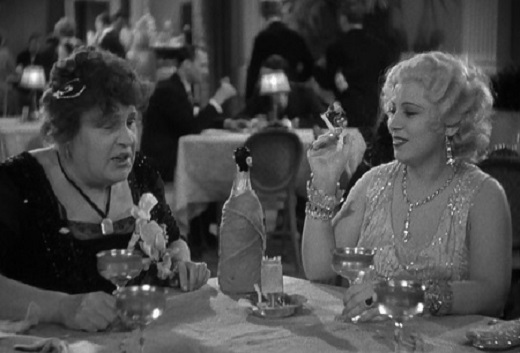
WestasMaudieNightafterNight
“Oh Joe,” she concludes, “it’s just life to see you,” echoing our impressions of her arrival. She has completely redeemed his date (and the existence of the film). Finally, Jerry is enjoying herself.

JerryandJellyman-NightafterNight
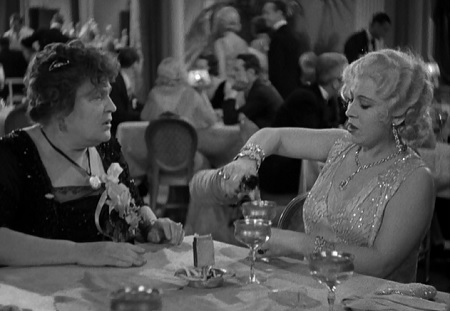
But clueless Joe urges Jerry to leave with him to tour the house. Jellyman, soon drunk thanks to Maudie’s generosity with the bottle, protests when Joe offers a cab before leaving them. “I don’t want to go home,” she complains. She turns to Maudie, “He said I didn’t have to.”

“Yeah, we’re gonna make a night of it,” Maudie agrees. “You go ahead,” she tells Joe, “we gotta talk it over.”

“Maudie and I have a great deal in common,” Jellyman explains to Joe.

“You said it, baby,” agrees the partying blonde, without a trace of irony.

Once they’re alone, Jellyman asks anxiously, “Maudie, do you believe in love at first sight?”

“I don’t know, but it saves an awful lot of time,” she quips.

Jellyman protests when Maudie refills her class, to which our heroine responds, “Now listen, Mabel, if you’re gonna be Broadway, you gotta learn to take it, and you may as well break in the act right now.”

MaudieandJellyman-MaeWest
“I say, this night will read great in your diary,” she adds.

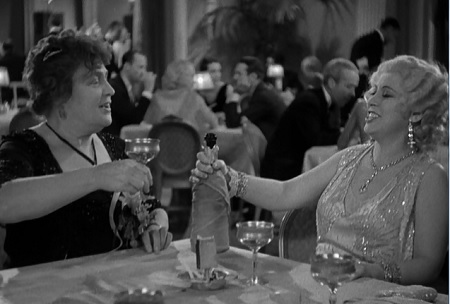
“You said it, baby,” Jellyman agrees, her education from Maudie having advanced dramatically in minutes.

WestenjoyingteacherNightafterNight
“Maudie, do you really think I could get rid of my inhibitions?” Jellyman asks.

“Why sure,” Maudie tells her, “I’ve got an old trunk you can put them in.”

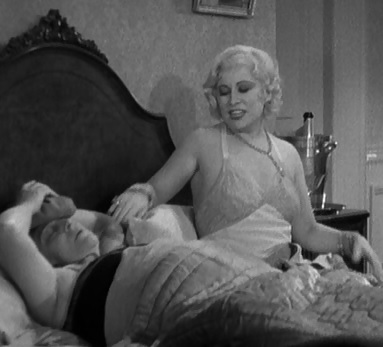
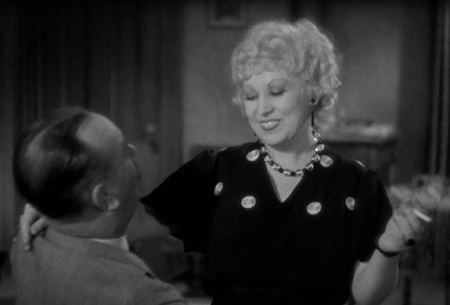
The next time we see the two of them, they’re in bed together at Joe’s after a bender. It does the heart good to witness them:

WestandSkipman
West only agreed to play the part of Maudie if she could write her own scenes. Thank goodness she did. Supposedly, Raft later claimed West “stole everything but the cameras.” What he didn’t say is that none of us would have wanted to see the film at all, had she not.

For more of my monthly West posts, click here.

Share
Posted in: 1930s films, Comedies (film), Feminism, Mae West Moments, Romantic Comedies (film) Tagged: Mae West, Night after Night

Mae West Quote of the Month: No Evidence

07/23/2015 by leah@carygrantwonteatyou.com 2 Comments

MaeWestSheDoneHimWrong
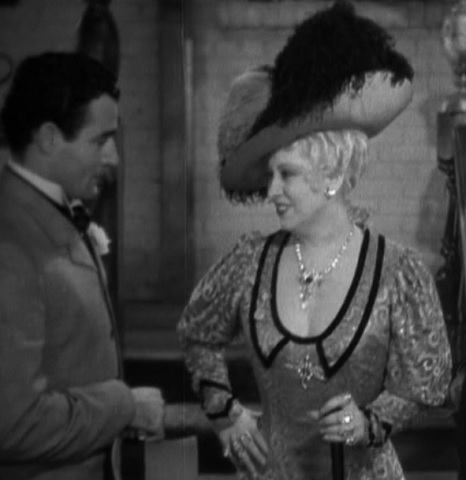
Lady Lou (Mae West) is the heroine of She Done Him Wrong (1933), the hilarious Oscar-nominated, pre-Code movie based on West’s play, Diamond Lil. The film opens in a Bowery bar in the Gay Nineties. Many of the customers are discussing Lou’s attractions, thanks to a new nude portrait of her on the wall.

Lou rides up in a carriage, with women staring at her disapprovingly, and men staring at her very approvingly.

She enters the bar with the customary West strut, and is quickly introduced to Serge (Gilbert Roland) by her boyfriend, Gus. She reflects on Serge’s good manners in kissing her hand and smiles at him alluringly, as West is wont to do.

“I’m delighted,” Serge (Gilbert Roland) says. “I have heard so much about you.”

“Yeah,” Lou quips, “but you can’t prove it.”

If that line can’t get you through the day smiling, no worries. Just watch five minutes more of the film.

Share
Posted in: 1930s films, Comedies (film), Feminism, Mae West Moments, Romantic Comedies (film) Tagged: Diamond Lil, Lady Lou, Mae West, Pre-Code

Mae West as a Deadpan Plaintiff in I’m No Angel

06/26/2015 by leah@carygrantwonteatyou.com 11 Comments

I'mNoAngel-CourtroomScene
This post is part of the The “…And Scene!” Blogathon. Check out the other entries here.

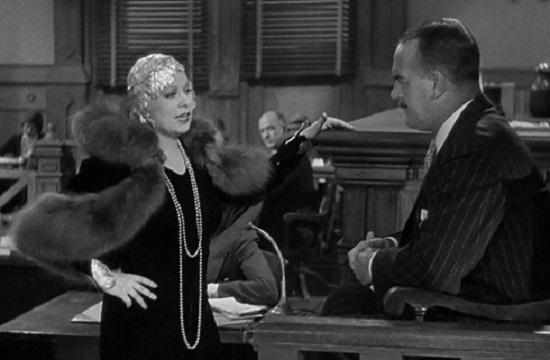
There are very few scenes in film as funny as when Mae West is talking about the number of men in her life, or, as she famously put it after the courtroom scene in I’m No Angel, the much more important amount of “life in your men.”

I’m a sucker for courtroom scenes in general, but most are thrilling, dramatic. I admit that a few are funny–From the Hip, Seems Like Old Times–but there’s nothing like Mae West on a roll, and every second of the courtroom scene of this glorious pre-Code wonder is the actress (and writer) at her best.

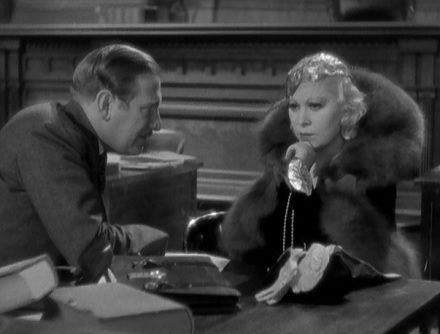
Tira, a circus performer, is suing her wealthy fiancé (Cary Grant) for breach of promise. He broke off their wedding because he saw another man in her place while she was out, not knowing it was a set-up by her boss, who didn’t want to lose her successful act to matrimony.

Unsurprisingly, the defense attorney immediately tries to besmirch Tira’s reputation, suggesting she gets around, that she has a “colorful past.”

In another movie, we might expect shame, embarrassment, hostility at such an attack. But this isn’t just any movie.

“Well, I gotta admit, I’ve been the love interest in more than one guy’s life,” Tira agrees. “I don’t see what my past has got to do with my present.”

“We shall show that to the satisfaction of the court, I believe,” the attorney primly responds. “Nevertheless, the fact remains that you’ve been on friendly terms with several men.”

“Alright, I’m the sweetheart of Sigma Psi. So what?”

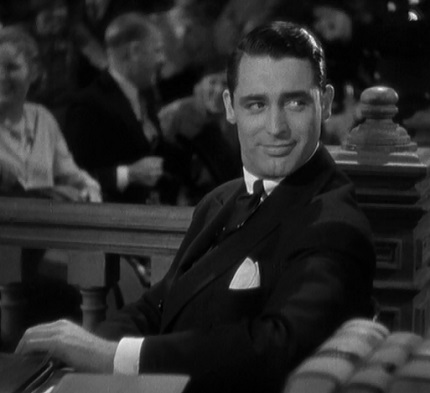
The audience in the courtroom aren’t the only ones laughing at her quip. Even the defendant can’t resist.

CaryGrantI'mNoAngel
When she’s scolded by the judge for not answering the question, she coos at him in response. (He will later take her on a date.)

MaeWest-judge
The attorney presses on, undeterred, referencing a bunch of (obviously married) men by name, asking if she knows them.

“I do recall their faces,” she answers, “but them ain’t the names they gave me.”

Appalled, her own lawyer asks for a recess and chides her for admitting to such an active dating life.

Tira is unrepentant: “Why shouldn’t I know guys? I’ve been around. I travel from coast to coast. A dame like me can’t make trips like that without meeting some of the male population.”

He explains that she can’t win the case. She considers her options.

MaeWest-court-strategy
And then asks if she can question witnesses herself.

It’s at this point that West really hits her stride–literally. Because she gets to walk up and down past the jury box, practicing her famous strut repeatedly, flirting with everyone in the courtroom.

She treats her accusers with disdain, slamming their efforts to make her look bad, and saying, “OK, I’m through with you,” after she completes her questioning. Between witnesses, she asks the jury, “How ‘m I doin, hmmmmnnnn?”

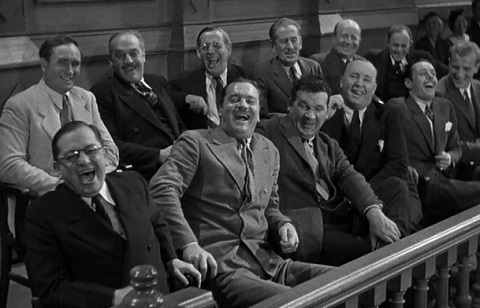
For once, jury duty has proven to be a blessing. Just look at their reactions to her performance:

I'mNoAngel-jury
As Tira concludes, her lover (Cary Grant) can’t handle it anymore and admits defeat. He’s fallen more in love with her than ever, as we have. Who cares if she’s the sweetheart of Sigma Psi? She’s Mae West, idiot. Catch her while you can. Case closed.

Share
Posted in: 1930s films, Blogathons, Mae West Moments, Romantic Comedies (film), Uncategorized Tagged: best courtroom scenes, Cary Grant, I'm No Angel, Mae West, Pre-Code

My Own “Awakener”: Mae West’s Writing

06/04/2015 by leah@carygrantwonteatyou.com 2 Comments

MaeWest-Awakener
As I was reading the bios of Kate Bolick’s awakeners in Spinster, writers whose independence had inspired her own, I inevitably began to consider my own awakeners. Which literary women had encouraged me to live by my own definition of womanhood?

I came up with many answers, but soon one figure nudged the others out: No costar could ever prevent being upstaged by Mae West. My brain was no different: what other woman could share my consciousness once the shimmying, voluptuous, smart-talking, smart-writing dame arrived?

Others might think of her as an actress first, but for me, it’s the writing that dominates. I grew up worshipping one-liners from Dave Barry and Jane Austen. How I love a quip that’s not only hilarious, but timeless, that captures something of human nature that’s real and honest. And West, well, we all know she had a way with the lines.

And what a pioneer she was! Her play, brazenly titled Sex, produced in 1926. Her arrival on the screen at 38, with an insistence on writing her own dialogue that ensured her place in movie history. And most of all, a sense of humor so unmatched that her words have become part of the American vernacular—whether all of us realize it or not.

I suspect Bolick never fell for West’s language, for if she had, she would have had no need for five writers to inspire her; one would have been more than sufficient. So in honor of Bolick, whose book celebrating singlehood I enjoyed, I will share two of my favorite West comments on matrimony for my monthly Mae West celebration:

First, the famous quip:

“Marriage is a fine institution, but I’m not ready for an institution.”

And second, that marvelous rejoinder from I’m No Angel:

Man: “I don’t suppose you believe in marriage, do you?”
Tira (West) “Only as a last resort.”

What I love is that a male character saying these words onscreen now would get big laughs—not to mention a female. (Of course, no one else could say them with the kind of oomph West did; she ignites the screen while current bombshells play with matches.)

And West not only says the words, she means them; she was every bit as unconventional as they imply. Of course, I know not to confuse fictional characters with their authors. Luckily, West gave me permission, stating about her racy creation, Diamond Lil, who bears a strong resemblance to Tira: “I’m her and she’s me and we’re each other.”

Like Bolick’s awakeners, West did have an encounter with matrimony, but since she was underage, denied cohabiting with the guy, and didn’t even admit to the union until it was discovered, I think we can agree that its impact on her was as negligible as she claims. (And of course, there’s also the accordion player from her vaudeville days some claim she married; she left him too.)

Which leaves us with her writing.

It would be easy to interpret West as simply of her time, as the pre-Code era certainly had some loose moral guidelines. But she acted the same AFTER the Code. Some might also suggest she was provocative for the sake of being rebellious. Or—perhaps even more dangerously—that she was condemning others’ choices in favor of her own. I’ve never thought of her that way, perhaps since her heroines are friendly with other women in her films, and only snarky when they oppose or judge her. And with a delivery that friendly and relaxed, who could take offense?

What West demands for each of her heroines is simply what we all should: the right to be who she is without regard to others’ morals and traditions. To be an individual, with all that implies.

As for West herself? Well, she never got to that last resort, instead cozying up with Paul Novak, a muscle-bound (and decades younger) man from her Vegas act. But it wasn’t a fling. The romance lasted until her death 26 years later; he’d never let her change her will in his favor, not wanting to think about her death. Early in their relationship, when Jayne Mansfield suggested she’d rescued Mickey Hargitay, another of West’s Chippendale-like chorus, from her employer, Novak responded by punching Mr. Universe.

West’s reaction was perfect: she implied they were at war over her affections. Kind of like her films–all the men longing just for her, she casually dating them all. Leave it to West to joke about her famous lack of monogamy while other women were pining for it. Leave it to her to confront a scandal with laughter, as she confronted everything.

I haven’t lived or loved like West. Who could? But oh, how her moxie inspires me.

Share
Posted in: 1930s films, 1940s films, Comedies (film), Feminism, Mae West Moments, Romantic Comedies (film) Tagged: awakener, Kate Bolick, Mae West, marriage, single, Spinster

The Hottest Woman around in Her 40s: Mae West’s Age-Defying Career

05/06/2015 by leah@carygrantwonteatyou.com Leave a Comment

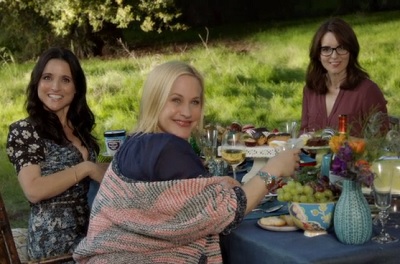
SchumerFeyArquetteDreyfus
Amy Schumer’s hilarious skit about discrimination against middle-aged women in Hollywood has me wondering about Mae West. It’s true that modern films imply that women aren’t attractive enough past their 40s to be worthy of sex onscreen. But Mae West starred in Sextette in 1978; the film cast her as the object of all men’s desires in her eighties. While the movie was a box office failure, the simple fact is that no such film would be made today.

West’s role was hardly surprising, given that she was in her late 30s when her film career as a seductress began. She was, in addition, penning all of her own lines, and usually the whole screenplay. While many (Schumer among them) question why women haven’t made more progress in entertainment, few express the more disturbing possibility:  Have we backtracked?

Mae West was a pioneer, it’s true. But pioneers are usually followed by those who accomplish more. The frontrunner’s courageous example and more hospitable times and environments usually lead to at least some progress. Maybe we all should be examining West, to figure out what this extraordinary writer/actress got right, what she still has to teach us. And why not? Who doesn’t want a regular dose of West?

Since her host of brilliant one liners overpowers me, I’ll highlight just one each month to savor it properly, starting with this bit from My Little Chickadee, co-written by West and W.C. Fields (the following scene is obviously of her creation).

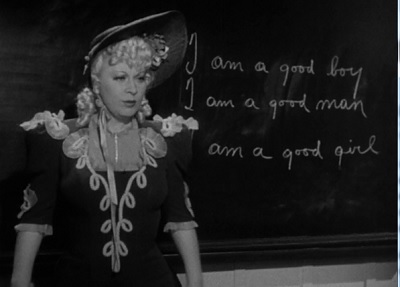
MaeWestchalkboardMyLittleChickadee
The town’s school teacher has fainted after dealing with a class of “unruly” boys. Newcomer Flower Belle (West) has taken over the class for the day, and is attracting all of the hormonal adolescents (in her late 40s, I might add). She checks out the teacher’s lessons on the chalkboard. “I am a good boy,” she reads slowly. “I am a good man. I am a good girl.” She turns to the students: “What is this?” she asks. “Propaganda?”

Share
Posted in: 1930s films, 1940s films, Feminism, Humor, Mae West Moments, Romantic Comedies (film), TV & Pop Culture Tagged: ageism, Amy Schumer, Hollywood, Julia Louis-Dreyfus, Mae West, Patricia Arquette, sexism, Tina Fey

Go West Young Man: Mae West’s Censorship Satire

04/30/2015 by leah@carygrantwonteatyou.com 10 Comments

This post is part of The Fabulous Films of the 30s blogathon hosted by the Classic Movie Blog Association. Click here to see the many wonderful entries! For an eBook collection of blogathon entries, click eBook on the menu above.
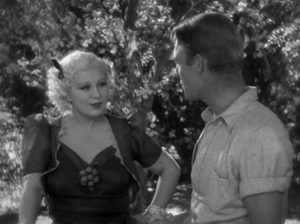
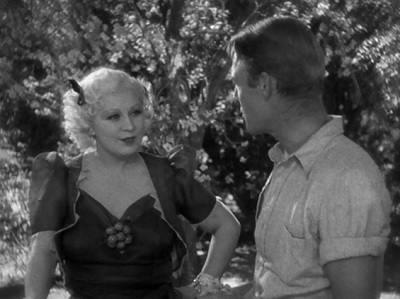
MaeWestandRandolphScott-GoWest
It’s easy to dismiss Go West Young Man (1936) as an inferior Mae West film. It doesn’t contain her best double entendres, and features much less screen time with her than in earlier pictures. The actress didn’t even originate the story; she adapted it from Lawrence Riley’s hit play, Personal Appearance. How could the film measure up to its hilarious predecessors, which West developed to highlight her own sexuality?

It doesn’t, but that’s part of the point—and the fun. The panning of Hollywood in the play must have appealed to West. But I think she saw something else in the story too: by converting the play to film, she could mock the Production Code itself. After all, West’s raunchy scripts and uninhibited performances from the early 30s have been cited as reasons for the Code’s enforcement. She must have laughed to discover the following opportunities to satirize her nemesis:

The Opening
We begin the story at a premiere of actress Mavis Arden’s (West’s) film, Drifting Lady. The camera darts back and forth between the screen and the crowd in the theater viewing it. All of the men in Drifting Lady are pining for Mavis’s character, a nightclub singer with multiple lovers.

Mavis plays the role in a comfortable, bawdy style, and then abruptly regrets her cheating ways and loses her man. An artificial chill settles over Drifting Lady when she does. This would never happen in a pre-Code West film, we viewers remind ourselves. West is supposed to get all of the guys, and celebrate every sexual conquest with a one liner.

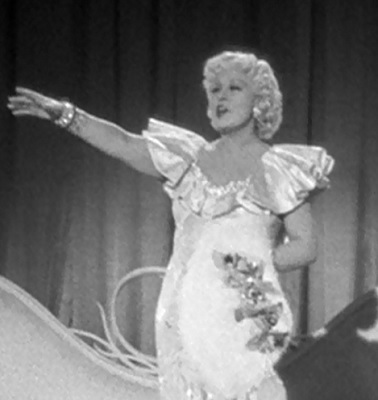
Mavis’s acting has been natural (or at least, natural for West) up to this point. But when her lover is about to depart, the star holds out her arm in a stagey gesture and sputters sentimental bilge about April and blue skies and fond memories.
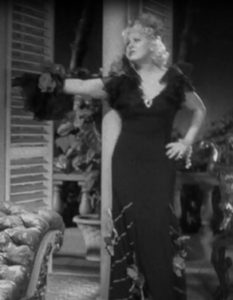
MaeWest-DriftingLadyGoWest
The actress adopts the same stagey line and tone when she talks to the crowd after her film.
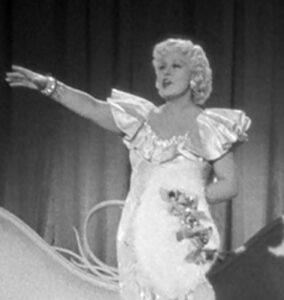
MaeWest-UnnaturalSpeechGoWest
She claims to be an “unaffected girl,” not the siren she plays in film. She then proceeds to share peculiar details about her life. Even if we hadn’t noticed Mavis’s fake tone, her press agent, Morgan (Warren William), rolling his eyes in the background would confirm our suspicions: she’s exactly like the character in the film. The studio might try to make her seem pristine, but we know she’s far from it. Don’t blame me, West’s deliberate hamming reminds us. This censorship nonsense isn’t my call.

Blaming the Studio
After Mavis leaves the stage, Morgan selects a few token men to greet her, all of them homely. When a spectator challenges the lack of handsome men, we learn that Mavis isn’t allowed to marry for five years, with Morgan acting as her watchdog. “Why make the job tough for her?” he adds.

We suddenly understand that strange speech after the film, when Mavis not only felt the need to pronounce her purity, but kept repeating her producer’s and studio’s names, AK of Superfine Pictures, Incorporated. She wasn’t sharing her everyday life with her audience; she was spelling out the terms of her contract. Clearly, this scene ridicules the studios’ tight control over stars’ personal lives. But it does much more: It satirizes limitations on believable behavior onscreen thanks to the Production Code. West, who had attracted censors from the start of her film career, must have relished each “incorporated” she uttered.

Marriage as a Substitute for Sex
West could no longer pen scenes of women seducing men without repercussions. In Go West Yong Man, she resolves this problem by referencing marriage when she means sex. By following the letter, but not the spirit of the Code, West emphasizes the ludicrous nature of censorship.
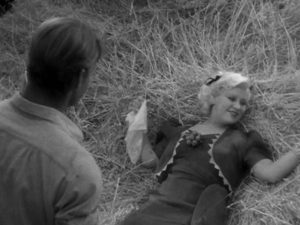
MaeWest-Rollinhay
The plot of the film is fairly simple. Morgan foils any romance Mavis attempts. (My favorite brush off: “We handle Ms. Arden’s admirers alphabetically; I’m just now getting into the Bs.”) She’s planning to join a former lover, a politician, after her film premiere. Morgan invites the press to her date, causing the lover to panic and giving Mavis the chance to express her true nature.

“Have you any particular platform?” the press asks her.

“The one I ain’t done,” she quips.

She soon departs, with the two planning to meet again in Harrisburg. En route, her car breaks down, and Mavis is stuck in a rural boardinghouse with her assistant and Morgan until it’s repaired. The delay annoys her until she spots a handsome young mechanic (Randolph Scott). Her suggestive look at his body and enthusiasm about his “sinewy muscles” say it all: We’re not talking about marriage, folks.

The Supporting Players
William is brilliant as Morgan. A New York Times reviewer described him as “the only player who has ever come close to stealing a picture from Mae West.” But he’s not alone. The boardinghouse proprietor is played by Alice Brady, and while the actress’s comedic chops aren’t fully exploited, the talents of those who play her employee Gladys (Isabel Jewell) and Aunt Kate (Elizabeth Patterson) are. The latter is an aging single woman, who makes knowing remarks about Mavis’s sexual attraction (i.e., “It”), her public relations, and her shade of hair, a color that did not appear in daylight in Aunt Kate’s youth.
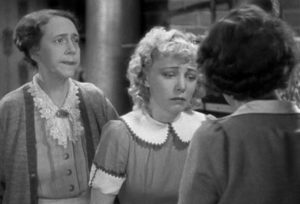
Patterson, Jewell, and Brady

Patterson, Jewell, and Brady

Gladys, an aspiring actress, attempts to impress Morgan by mimicking Marlene Dietrich. Morgan’s dismayed reactions are hilarious.
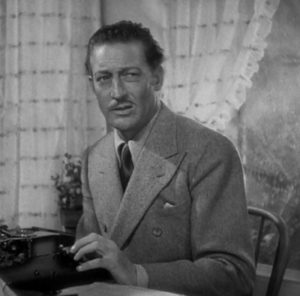
WarrenWilliamReaction-GoWest
While her Dietrich attempt flops, Gladys’s imitation of Mae West’s walk is something to behold. As the innocent in the film, Gladys illustrates the futility of censoring West’s words when that body does so much of the talking.

Unfortunately, the one black character in the film is a fool, or appears to be at first. Halfway through the movie, I became convinced he had just been smoking a lot of weed. It may be wishful thinking on my part, but could it be another snide jab at the censors, who would be unlikely to examine such a minor role closely?

Scenes with Mr. Oblivious
The funniest moments in the Go West Young Man are when Mavis tries to seduce the handsome mechanic, who completely misreads her blatant moves on him.
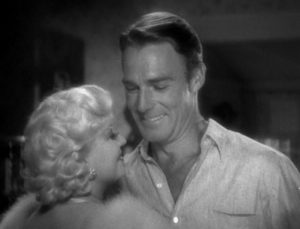
RandolphScott-MaeWest
Busy displaying his invention, he misses the meaning of such subtle lines as these:

  • “Modesty never gets you anything, I know.”
  • “I’d just love to see your model.”
  • “I can’t tell you the number of men I’ve helped to realize themselves.”

It’s amusing to see West’s attractions fail, given how many times we’ve seen the opposite. But what’s even funnier is to witness the man’s obtuseness. Clearly, he’s a surrogate for the censors, who must be fooling themselves (or be quite naïve) to misunderstand the meaning of West’s every look, every line.

Go West Young Man undermines the notion that sex can be discouraged by rules. The film may not have been one of West’s triumphs in terms of box office or critical acclaim, but it is a riveting look at a writer’s reactions to early Hollywood’s rule-bound universe.

Of course, the title makes little sense, referring to a famous historical line the film doesn’t address. I like to think of it as a reference to the star herself, with just one preposition (and comma) missing: “Go for West, young stud. You won’t regret it.”
Share
Posted in: 1930s films, Mae West Moments, Uncategorized Tagged: after pre-Code, censorship, satire

The Delightful Raunchiness of Mae West

06/05/2014 by leah@carygrantwonteatyou.com Leave a Comment

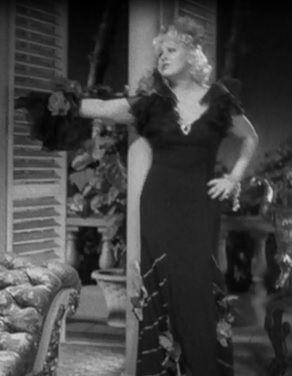
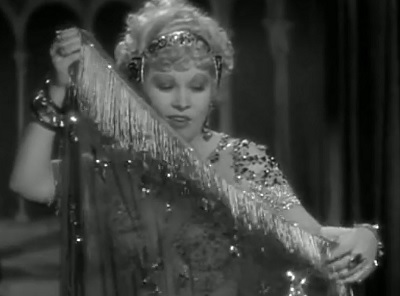
MaeWestwveil
I knew from Complicated Women, TCM’s documentary on films before the production code, that early movies challenged men’s ownership of women’s bodies, minds, and souls. Many of these pre-code movies (1929-34) were so shockingly liberal in content that they make today’s look prudish by comparison (nudity in a Tarzan movie, anyone?) After the code, of course, sexuality and feminist portrayals of women were both toned down to please potential censors. But Mae West, who wrote and starred in her films, managed to sidestep this “sanitation” to an extent because she was so gifted at double entendres.

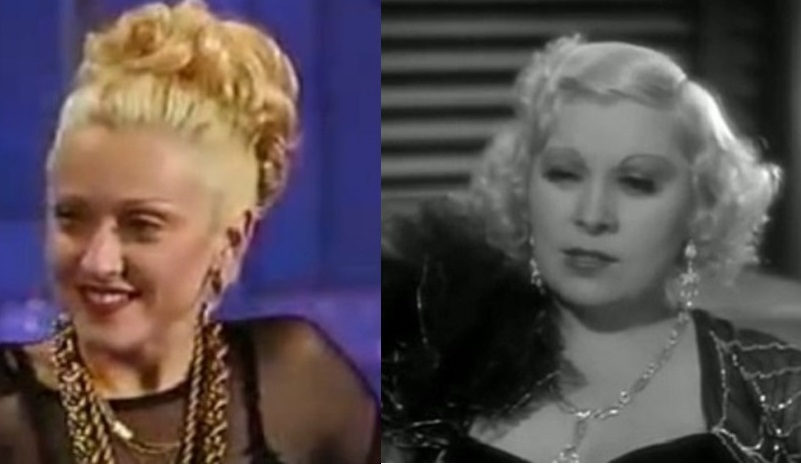
I’d heard of West, of course, knew a couple famous sayings, thought of her vaguely as ahead of her time. But to know of West and to watch her? Not the same. Mae West’s pre- and post-code films were in their own plane, and not only because of her undeniable sensuality and eagerness to express it. And “ahead of her time” is a gross understatement in West’s case. The play she wrote that got her thrown in jail on morals charges in 1927? Titled Sex. Madonna would be attacked for giving a book that title almost seventy years later.

Pioneers Madonna (in ‘92) and Mae West

Pioneers Madonna (in ‘92) and Mae West

And West’s next play? Drag (as in queen), which the vice folks managed to squash entirely. Luckily, we can still watch West on screen. Here are just four reasons why you will embrace this voluptuous rebel:

1. Half of the suggestive one liners you know originated with her.

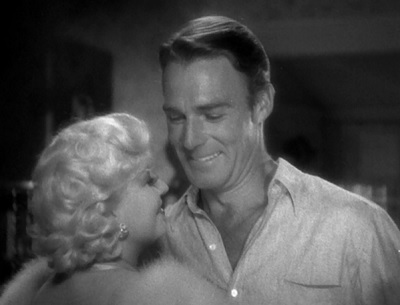
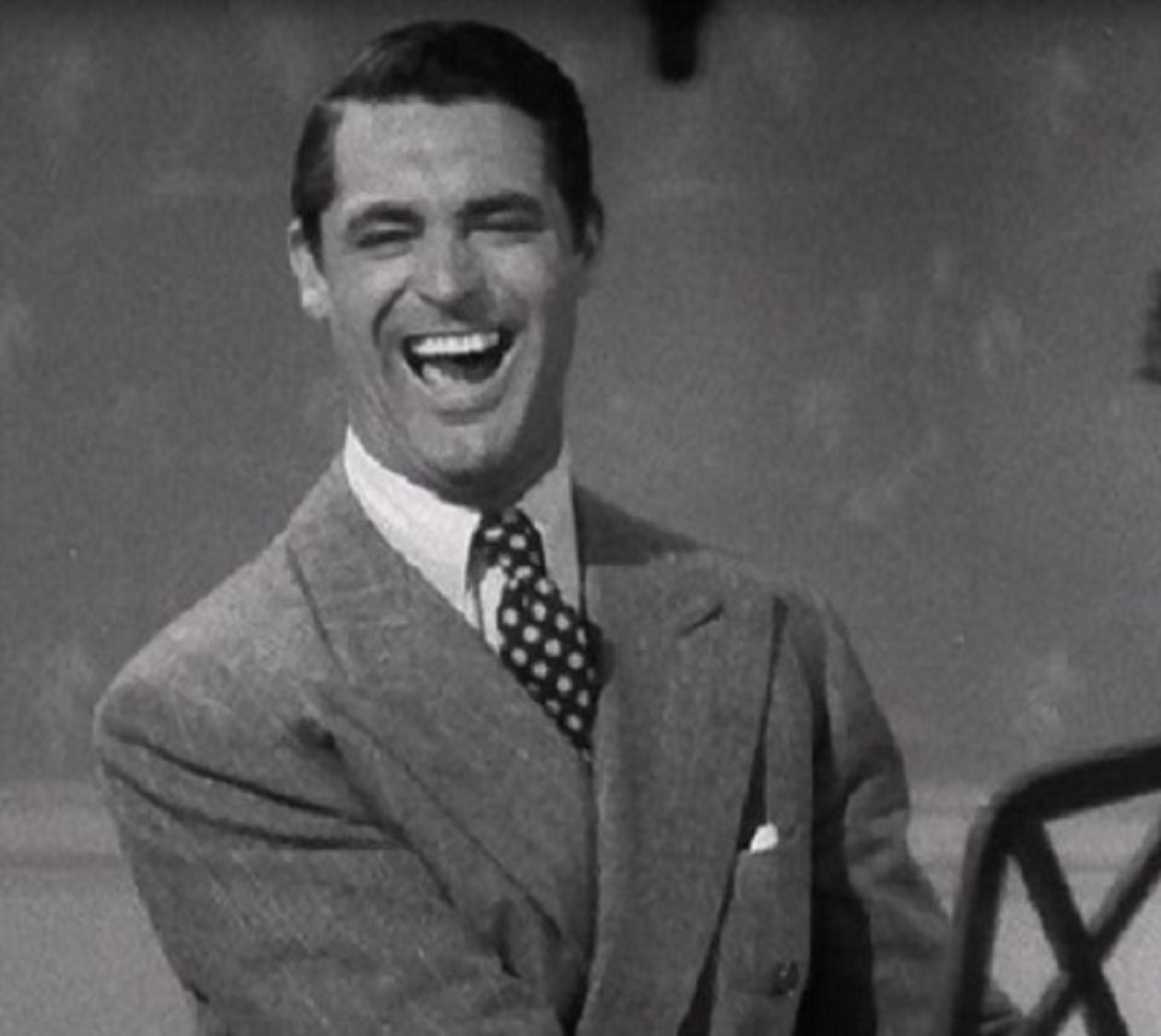
Her famous “Why don’t you come up sometime, see me?” seduction. (Note how overwhelmed Grant looks!)

Her famous “Why don’t you come up sometime, see me?” seduction. (Note how overwhelmed Cary Grant looks!)

This is just a small sampling of lines written and delivered by West (mostly from her films):

  • “When I’m good, I’m very good, but when I’m bad, I’m better.”
  • “It takes two to get one in trouble.”
  • “Is that a pistol in your pocket, or are you just happy to see me?”
  • “A hard man is good to find.”
  • “When I’m caught between two evils, I generally like to take the one I never tried.”
  • “When women go wrong, men go right after them.”

It’s not just the cleverness of West’s expressions that make her movies so entertaining; it’s the sheer number of them she manages to squeeze in. She Done Him Wrong (1933), which is just over an hour,has more funny lines in a few minutes than most current rom-coms in their bloated two-hour running times.

2. You need to see a woman born in the 1890s shimmying like West does.

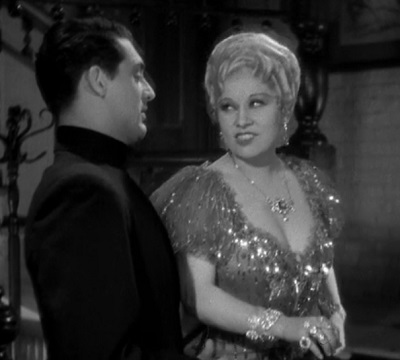
West in I'm No Angel

West in I’m No Angel

She’s dancing, she’s walking—it doesn’t matter. You have never seen a woman strut like this one.

3. 1930s Hollywood actually portrayed young men smitten—in droves—by a 40ish woman

Mae West’s films are irrefutable proof that everything does not improve with time, including Hollywood’s treatment of women past the age of 30. Today we are delighted to see the occasional rom-com with a 40-year-old woman; that’s when West got started. And being who she was, West was never content with just one man in her thrall.

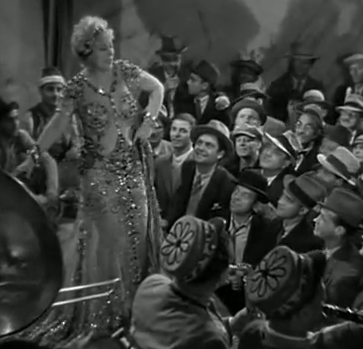
Men who've caught sight of Lou (West) in She Done Him Wrong

Men who’ve caught sight of Lou (West) in She Done Him Wrong

3Lou (West) eyeing a conquest, whom she refers to as “And you, Mr. Mmhmmm?”

Lou (West) eyeing a conquest, whom she refers to as “And you, Mr. Mmhmmm?”

4. Her films are wonderfully ludicrous.
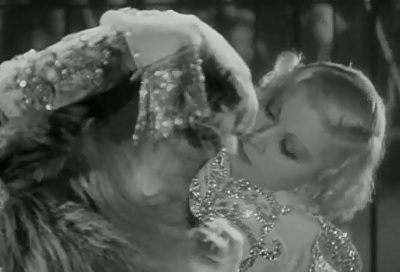
My favorite plot: A woman makes a living as a lion tamer, which men find so attractive they start sending her diamonds (I’m No Angel). The court scene near the close of the film is even more breathtaking. West annihilates the lawyers and slays the judge and jury with her smarts and that amazing walk. Is this whole film absurd? Absolutely. Is it hilarious? Oh yes.

The lion’s-mouth seduction

The lion’s-mouth seduction

Luckily, you can find a plot almost as ridiculous (and funny) in She Done Him Wrong, which is on Netflix streaming right now. What are you waiting for?

Share
Posted in: Feminism, Humor, Mae West Moments, Romantic Comedies (film) Tagged: Cary Grant, Madonna, Mae West, Pre-code films, sexuality
« Previous 1 2 3

Recent Posts

  • 100 Years Later, Still Scary: Dr. Caligari
  • Escaping Out of the Past (1947)
  • A Weeper for Those Who Love Jerks
  • Thank You, Academy, for Not Infuriating Me
  • Challengers (2024) Is a Bad Movie

Subscribe to Blog via Email

Enter your email address to subscribe to this blog and receive notifications of new posts by email.

Categories

  • 1920s films
  • 1930s films
  • 1940s films
  • 1950s films
  • 1960s films
  • 1970s films
  • 1980s films
  • 1990-current films
  • 2020s films
  • Action & Sports Films
  • Anti-Romance films
  • Blogathons
  • Childfree
  • Comedies (film)
  • Drama (film)
  • Feminism
  • Femme fatales
  • Film Noir/Crime/Thriller & Mystery
  • Gloriously Silly Scenes
  • Horror
  • Humor
  • Mae West Moments
  • Musicals and dancing films
  • Oscars
  • Random
  • Romance (films)
  • Romantic Comedies (film)
  • The Moment I Fell for
  • Turn My Sister into Classic Movie Fan
  • TV & Pop Culture
  • Uncategorized
Share
Classic Movie Blog Hub Member

Recent Comments

  • leah@carygrantwonteatyou.com on Meg Ryan’s Fate Foretold in Joe Versus the Volcano
  • Ryan on Meg Ryan’s Fate Foretold in Joe Versus the Volcano
  • leah@carygrantwonteatyou.com on 100 Years Later, Still Scary: Dr. Caligari
  • The Classic Movie Muse on 100 Years Later, Still Scary: Dr. Caligari
  • leah@carygrantwonteatyou.com on 100 Years Later, Still Scary: Dr. Caligari

Archives

  • November 2025
  • September 2025
  • May 2025
  • March 2025
  • January 2025
  • November 2024
  • August 2024
  • July 2024
  • May 2024
  • March 2024
  • February 2024
  • December 2023
  • November 2023
  • October 2023
  • September 2023
  • August 2023
  • July 2023
  • May 2023
  • April 2023
  • March 2023
  • January 2023
  • December 2022
  • November 2022
  • September 2022
  • July 2022
  • May 2022
  • April 2022
  • March 2022
  • February 2022
  • October 2021
  • September 2021
  • April 2021
  • March 2021
  • February 2021
  • December 2020
  • October 2020
  • September 2020
  • July 2020
  • May 2020
  • April 2020
  • March 2020
  • February 2020
  • December 2019
  • October 2019
  • September 2019
  • June 2019
  • May 2019
  • April 2019
  • February 2019
  • January 2019
  • November 2018
  • September 2018
  • July 2018
  • June 2018
  • May 2018
  • April 2018
  • March 2018
  • February 2018
  • January 2018
  • November 2017
  • September 2017
  • August 2017
  • July 2017
  • June 2017
  • May 2017
  • April 2017
  • March 2017
  • February 2017
  • January 2017
  • December 2016
  • November 2016
  • October 2016
  • August 2016
  • July 2016
  • June 2016
  • May 2016
  • April 2016
  • March 2016
  • February 2016
  • January 2016
  • December 2015
  • November 2015
  • October 2015
  • September 2015
  • August 2015
  • July 2015
  • June 2015
  • May 2015
  • April 2015
  • March 2015
  • February 2015
  • January 2015
  • December 2014
  • November 2014
  • October 2014
  • September 2014
  • August 2014
  • July 2014
  • June 2014
  • May 2014
  • April 2014
  • March 2014
  • February 2014
  • January 2014

Meta

  • Log in
  • Entries feed
  • Comments feed
  • WordPress.org

Copyright © 2025 Cary Grant Won't Eat You.

Church WordPress Theme by themehall.com