Cary Grant Won't Eat You

Classic movies for phobics

  • About
  • eBooks
  • Previous Blogathons
Classic movies for phobics

Mae West Moments

My Cat, Mae West, and Sextette

05/25/2023 by leah@carygrantwonteatyou.com Leave a Comment

Perhaps you’re choosing to honor your cat by naming her after Mae West. (And can there be a greater honor?) You can’t go with Mae. It’s too delicate.

And you can’t go with Mae West. Too hard to say when your cat is jumping on the counter.

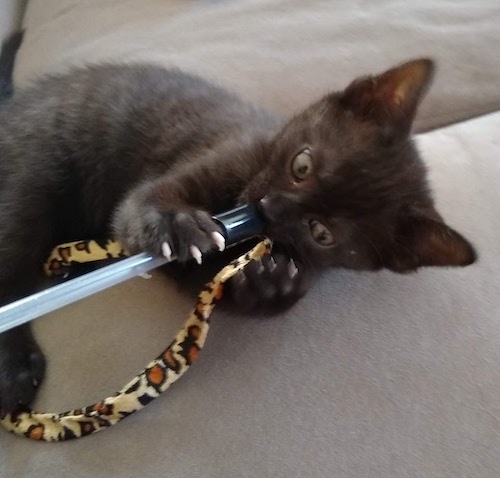
But you have to name her for Mae West: your feline is feisty, unrepentant, the center of her universe. So you scroll IMDB for Mae’s movie character names and land on Marlo from Sextette (1978). It has a ring to it, doesn’t it? You haven’t seen the film and don’t have time for it, so you watch a clip. Mae being Mae. It tracks. You name your little palm-sized kitty, and every time she flashes those bold eyes at her prey, you know you chose well.

Then, shortly after her third birthday, you watch Sextette, and think, “What have you done?”

Seriously, WHAT HAVE YOU DONE?

This is the hot mess to end all hot messes. When Ringo Star gives one of the best performances in the film, you know something is terribly, terribly wrong.

Who sees Mae West act and thinks, “You know a good person to cast in her picture? Dom DeLuise”? It’s so hard to watch a madcap, hijinks story with Mae performing her signature slow delivery like she’s in a different film. Then there are sudden, unnecessary musical sequences–and not unnecessary in a fun way, but in a do-we-have-to-do-this? way. And is Tony Curtis playing a Russian? And what the hell is Alice Cooper doing in this mix? The whole film is jarring and weird and utterly wrong.

The strange thing is, the critiques are wrong too. Sure, you heard it was bad–that’s true. But you also heard some sexist junk about how could this older woman be attractive to this young man (Timothy Dalton)? (As if 70-and 80-year-old men will ever stop presenting themselves as attractive to young women.) The age difference is extreme, and thinking of Mae West’s character as a global sex object in her mid-eighties might be a stretch, but here’s the delightful surprise: she is the ONLY sexy person in the film. She’s so confident and brash that you can’t take her eyes off of her, same as ever. And she’s the only one who looks like she’d know what she was doing in that bed.

The single male character who has ANY sex appeal in the film is one of Marlo’s ex-husbands, played by George Hamilton. Hamilton is acting as a—wait for it—gangster. (Because when you think gangster, you think, Where the Boys Are.) But unlike the virginal character played by Dalton, the histrionic Russian played by Tony Curtis, or the flashy director played by Ringo Star, George Hamilton seems like he might pause his movements long enough to actually have sex, which puts him a long stretch ahead of his competitors, sex appeal wise.

Mae manages to share several very funny one liners along the way, especially in a scene full of athletes who look like the hunks in her former shows. Too bad there’s so much noise and chaos around her that you can barely absorb them.

Sure, you despised the film. You really did. And yet….There was something poetic in it all. That George Raft was in the cast. That she didn’t take herself seriously in the film. That the plot–like all of her plots–was really no plot at all. That she refused to change one iota to the last.

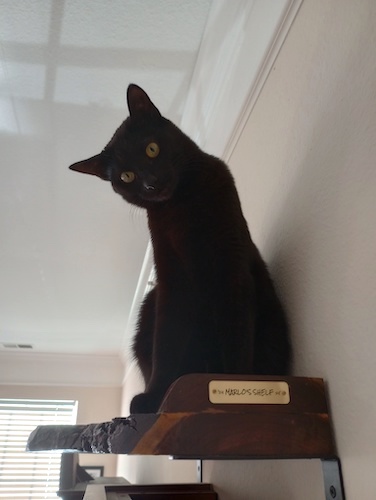
She just kept on being Mae. 70s film fashions? Why bother? She’s going to wear that full-length gown if she feels like it. She’s amusing and charming and delightful and so much fun. And just as sassy and unwilling to change as that cat peering at you from atop the shelf on your wall.

So maybe you made the right decision after all.

Share
Posted in: 1970s films, Feminism, Mae West Moments, Random, TV & Pop Culture Tagged: cats named for movie characters, George Hamilton, Mae West, Marlo, Ringo Star, sex symbols, Sextette, Timothy Dalton

“The Funnier Sex” with No Mae?

12/22/2022 by leah@carygrantwonteatyou.com 2 Comments

I just watched “The Funnier Sex,” an episode from CNN’s The History of Comedy. The segment features numerous current comediennes celebrating their groundbreaking predecessors. They highlight the sexism that marred their predecessor’s progress—especially that ridiculous view that women can’t be funny—and expressed how much harder it was for an attractive woman to also be considered funny. Lucille Ball—as usual—was singled out as the pretty woman who changed that for everyone.

Sigh.

Look, I love Lucy—we all do—and I get that most people’s sense of history is as developed as an ant’s. But are we going to ignore the vaudevillians entirely? Those women who used their sexiness to get away with cultural commentary? Who—like the standup artists who followed them—used live audience’s reactions to fine-tune their jokes, over and over again? You know, like STAND-UP COMICS??

In other words, WHERE IS MAE WEST?

West was not, of course, the first female comedienne in America. But as someone who starred in vaudeville, broke out in film, made appearances on TV, and then produced a live Vegas show with Chippendale-like men, she was hardly an invisible influence on the comediennes who followed her. And her humor was MUCH more like that of the stand-up stars celebrated in the series than Lucy’s ever was—and far more risqué.

And Mae wrote her own material, managed to be a rom-com star into her 40s, and even saved a studio. Mae peddled and exploited her own attractiveness in her jokes. She was known as a bombshell, even if some of her snarky male contemporaries—and ours—use their own sexist views of curvy women’s bodies to question it.

Let’s review just one incident—on the smash second day of her play Sex in 1926, which she records in her autobiography, Goodness Had Nothing to Do with It: Only 85 people appeared for the first performance, disappointing the star and the manager, who blamed the scandalous title for ticket sales. But at the next day’s matinee, Mae observed lines of men from the naval base “two and three deep.” The house manager was scrambling for extra seats for his theater. “And you said it was a bad title,” noted Mae. And he replied, “I forgot about the sailors.”

Sound like a woman who wasn’t using her sex appeal for humor?

I understand that standup is not the same as vaudeville, but the latter was clearly a forerunner, certainly more than scripted TV.

Look, I enjoyed the episode from The History of Comedy. It featured some of my own heroes, including Joan Rivers and Rachel Bloom. But why, after all these years, are TV historians still ignoring the extraordinary impact of Mae West?

What other comedian wrote lines we still repeat 100 years later, such as one of the all-timers?:

“It’s not the men in my life that count, it’s the life in my men.”

I suspect I know the reason she’s bypassed—the same reason early groundbreakers are so often forgotten: Because the wave of female comediennes would take years to follow in her wake. Because she was so ahead of her time that she wasn’t even part of the same generation who would supposedly “change everything.”

But all the more reason to own her. All the more reason to celebrate her. All the more reason, CNN, to give the sexy, groundbreaking, hilarious woman her due.

Share
Posted in: Childfree, Humor, Mae West Moments Tagged: feminism, groundbreakers, Mae West, The Funnier Sex, The History of Comedy, women in stand-up

New Mae West Documentary!

05/29/2020 by leah@carygrantwonteatyou.com 4 Comments

PBS produced a new documentary on my favorite movie wordsmith and feminist rebel, Mae West. Dirty Blonde is coming. Check out the preview to see the subjects talking about her (some welcome surprises), and to hear some of your favorite Mae West quips.

Mae West Documentary and Trailer

I can’t wait! Check it out on June 16 at 8/7c on PBS and on their site.

Share
Posted in: 1930s films, 1940s films, 1970s films, Childfree, Feminism, Humor, Mae West Moments, Uncategorized Tagged: Mae West documentaries

Classic Movies with Awesomely Silly Plots

05/25/2020 by leah@carygrantwonteatyou.com 16 Comments
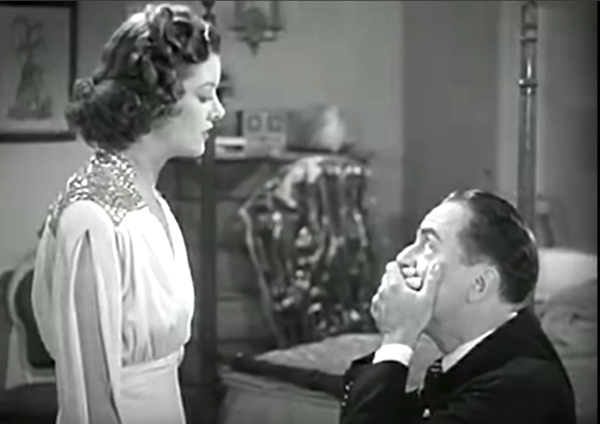
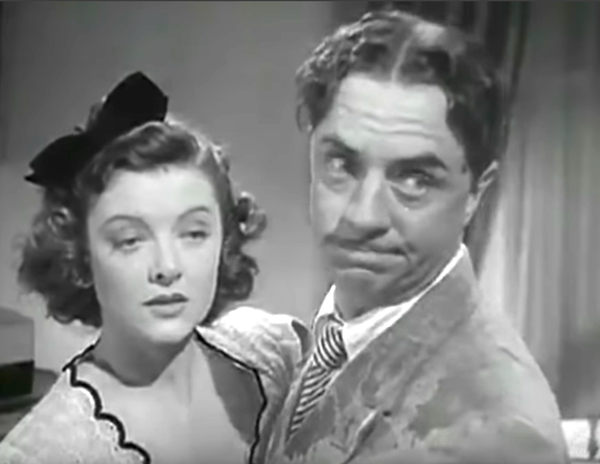
Picture of Myrna Loy and William Powell in I Love You Again

It’s not unusual to find a film with a strikingly ridiculous plot. I spent many Friday nights as a teen watching USA Up All Night (hosted by Gilbert Godfrey). How I loved taking in gloriously dumb films, hour after hour.

But to find movies with such plots that are genuinely good? That’s a whole other level of enjoyment. Now add 80 years or so, and the film is STILL GOOD, STILL FUNNY? That’s a comedic masterpiece.

Last Tuesday I wrote a post on feel-good silly films, and rated them according to their degree of silliness. (In a homage to Spinal Tap, I let the ratings go to eleven rather than ten.) So today, I’m going to list five films with plots so absurd they deserve that 11 silliness quotient fully. And not coincidentally, these films are a blast to watch. In no particular order:

The Palm Beach Story (1942)

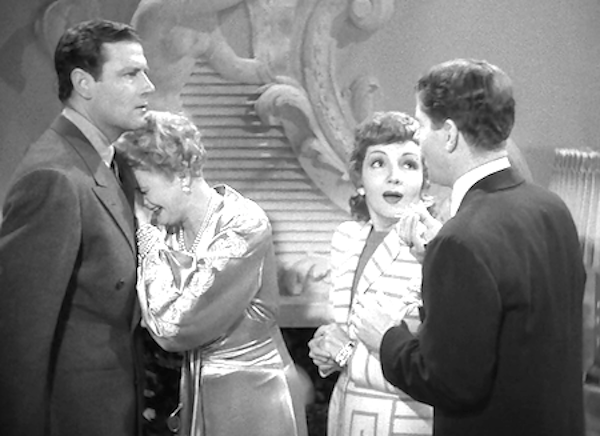
PIcture of Joel McCrea, Mary Astor, Claudette Colbert, and "Rudy" Vallée, The Palm Beach Story

A woman (Claudette Colbert) leaves her broke husband (Joel McCrea) so that she can marry a millionaire and use his money to fund her original husband’s brilliant project. She heads to Palm Beach to find such a millionaire, aided by a “wiener king ” and trigger-happy hunters. The writer/director is Preston Sturges, so you know you’re in for a treat.

Easy Living (1937)

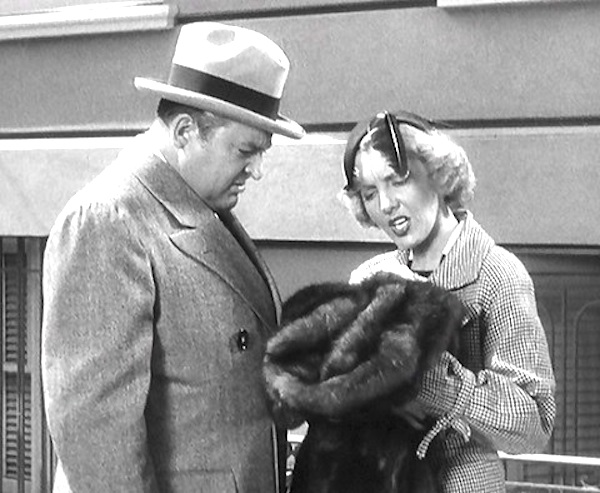
Edward Arnold and Jean Arthur in Easy Living

A banker (Edward Arnold) in a fight with his extravagant wife (Mary Nash) throws her fur coat off the roof of their home. The coat hits the hat of a bus passenger (Jean Arthur). The banker’s attempts to compensate the passenger destroy her reputation, but do aid her income. If you need a teaser to be convinced, check out the banker’s and passenger’s hilarious fight about loan interest.

Arsenic and Old Lace (1944)

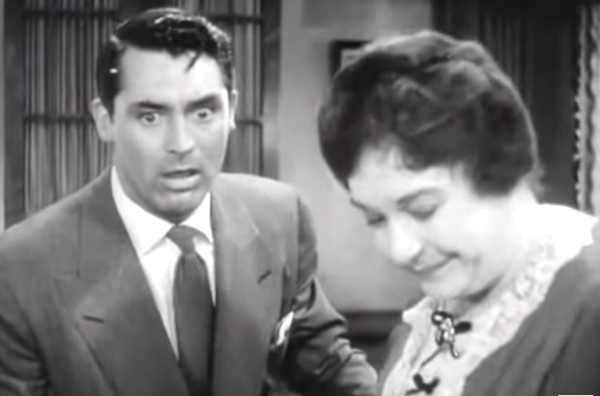
Cary Grant and Josephine Hull in Arsenic and Old Lace

Mortimer (Cary Grant) has always known his cousin (John Alexander) is a bit off. After all, his cousin thinks and acts like Teddy Roosevelt, building his canal. But in visiting his beloved aunts (Josephine Hull and Jean Adair), Mortimer discovers they have some issues as well: they’re serial killers murdering lonely old men. “Teddy” assumes the dead bodies are yellow fever victims and takes them in stride. But Mortimer begins to fear for his DNA. A screwball classic.

I’m No Angel (1933)

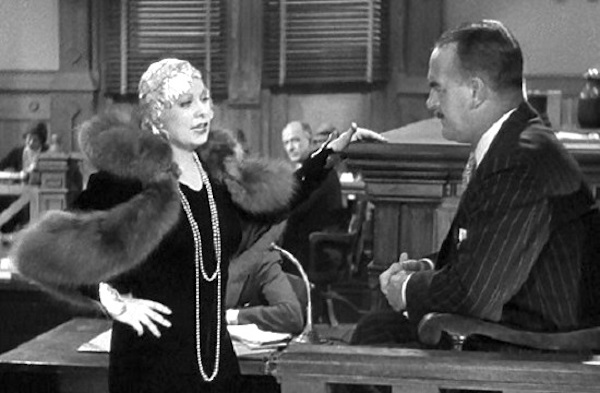
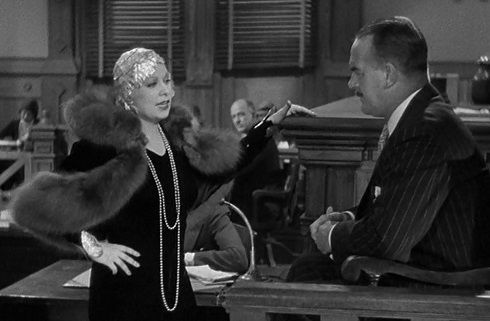
Mae West, courtroom scene, I'm No Angel

A lion tamer (Mae West) becomes the talk of high society, even winning a classy lover who plans to marry her (Cary Grant). The circus fears losing her income, so they convince the lover that their star is cheating on him. When her lover leaves her, the tamer sues him for breach of promise. She acts as her own lawyer, spending 90 percent of the trial strutting and seducing the jury in what may be the funniest courtroom scene ever.

I Love You Again (1940)

William Powell and Myrna Loy in I Love You Again

A man (William Powell) gets hit on the head and becomes an old self he’s forgotten, a swindler, instead of the upright prude he now is. He decides to live the prude’s life as he looks for a score and becomes intrigued by the uptight man’s wife (Myrna Loy), whom the swindler version of himself never met. She, sick of his stodgy ways and unaware of his change, wants to divorce him. The question is, will the man’s wife fall in love with his older self? I feel dizzy just explaining this amnesia plot, but it’s The Thin Man’s Loy and Powell team, so what’s not to love?

There you have it. Five ridiculous plots. Five ridiculously fun movies. And I haven’t even scratched the surface of this topic! Anyone who wants to share their favorite silly plot, please do so in the comments!

Share
Posted in: 1930s films, 1940s films, Comedies (film), Humor, Mae West Moments, Romantic Comedies (film) Tagged: Cary Grant, Claudette Colbert, Easy Living, I Love You Again, I'm No Angel, Jean Arthur, Mae West, Powell and Loy, Preston Sturges, screwball classics, silly classics, The Palm Beach Story

Classic Feel-Good Movies for Shut-Ins

03/19/2020 by leah@carygrantwonteatyou.com 8 Comments

So you’re shut in and feeling glum. Watching the news isn’t good for your blood pressure. So put away those updates for few hours, cut off that cable news, and melt into these classics. They’ll make you smile.

The More the Merrier. You know what’s interesting to watch when you’re feeling isolated? A film about a city being overcrowded. Makes you appreciate the (comparative) quiet and helps you see what enterprising (OK, a bit pushy!) folks do when they’re in a tough spot. More importantly, this is THE most romantic film ever, and so funny. If Jean Arthur and Joel McCrea’s chemistry doesn’t get to you, nothing will. Bonus: Charles Coburn, in his best cupid role (of many).

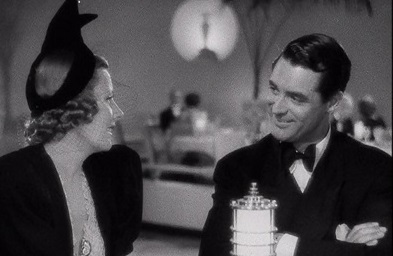
The Awful Truth. The title of my blog may clue you in that I’m a fan of Cary Grant’s. This film shows why. His perfect comic timing is matched in this outing by Irene Dunne’s. They’re marvelous together.

They’ve mastered that banter you want to hear in every rom-com. They play two smart, sophisticated adults who just need to wake up to what’s good for them. And it costars Skippy, the most gifted dog actor of all time (you may recognize him as Asta).

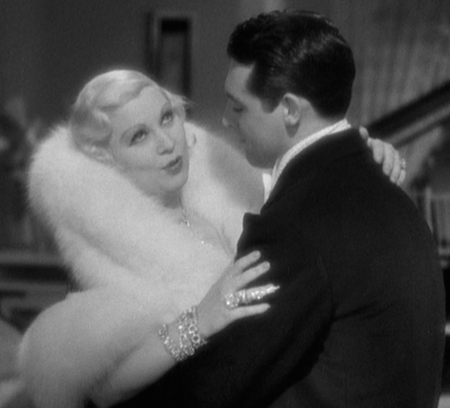
Mae West Films. Do I really need to specify a movie? I’m No Angel is my favorite. Her earliest hits are pure gold, with more good lines in 20 minutes than you’ll find in modern films in 200. And how she delivers them! Before the censors got to her, she was on fire.

But even afterward, her ingenuity in sliding in those double entendres makes up for the less witty later scripts. And in case you’re not yet a Mae West lover, don’t forget that she also wrote these scripts and had the moxie to demand—and get—a higher salary than a studio head.

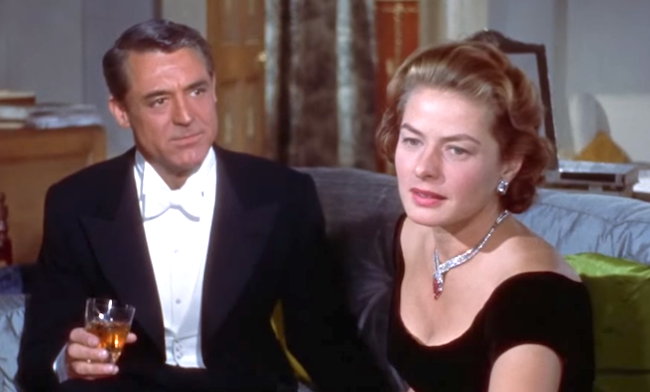
Indiscreet. A friend recently recommended this treasure. A reteaming of good friends Cary Grant and Ingrid Bergman (after the toxic romance/suspense masterpiece, Notorious).

It’s totally Bergman’s show: Just watch her commanding performance once her character gets mad and turns conniving! And there’s a classic dance sequence with Grant’s moves on full display—fantastic. As a special bonus for readers, here’s a heartwarming post about their friendship that will made you sniffle (with joy) from Sister Celluloid.

Jean Harlow Films. It doesn’t matter if everyone around her is acting out shrill caricatures (Bombshell), she still rises so far above her material that you don’t care about the rest of them at all. I watched The Girl from Missouri recently, which is a delight.  I can’t stomach Red Dust (too offensive). But skip the rest of the movie and watch her—or catch clips on YouTube. View her at her conniving best in Red-Headed Woman.

Watch her outshine the star-studded cast in Libeled Lady as an outraged bride to be. Harlow’s funny and lovable and you just want to spend your life watching her in a huff.

I’ll be back with updated recs. Hang in there, everyone. Stay safe. Spread the joy you can.

Share
Posted in: 1930s films, 1940s films, 1950s films, Mae West Moments Tagged: Indiscreet, Jean Harlow films, Skippy the dog, The Awful Truth, The More the Merrier (1943)

Getting Nosy about Mae & Cary

06/06/2019 by leah@carygrantwonteatyou.com Leave a Comment

Grace Collins of True Stories of Tinseltown and I chat about two stars who created the personas that made them stars, and never let those personas slip. We’re not nosy about ALL Hollywood stars’ lives, but that kind of inventive commitment is worth talking about! As usual, the two of us had a lot of fun, and Grace is a great host. (I might get a bit too enthusiastic, but in my defense, I was then reading Goodness Had Nothing to Do with It.)

Check out the podcast here or here or here.

Enjoy Grace’s other wonderful posts and podcasts on her sites or check out her Facebook page for more.

Share
Posted in: 1930s films, 1940s films, 1950s films, 1960s films, 1970s films, Mae West Moments, Uncategorized Tagged: bios, Cary Grant, fan tributes, life stories, Mae West

ILL, How Do I Love Thee?: A Classic Movie Fan’s Tribute

02/23/2019 by leah@carygrantwonteatyou.com 4 Comments

For years I’ve been grumbling, waiting for streaming access to classics I hear about from other blogs: Letter from an Unknown Woman, The Great Lie, A Foreign Affair. Without a Netflix DVD cache or TCM, the classic movie fan is left with few options, and my brief affair with the Warner Archive had given me little love. Then it occurred to me, like a (clichéd) beacon of light in the night: YOU HAVE ACCESS TO INTERLIBRARY LOAN.

How do I love thee, ILL? Let me count the ways.

  1. You don’t tarry. Within a week, all three films were at my library’s front desk. The student helping me didn’t notice my bated breath or strong desire to do the worm in celebration. Used to her fellow students’ desperate and grumpy research requests, she was unaware of the yummy chocolate cake she was handing over to me. Her loss.
  2. You have so much to offer. Greedy after receiving all three films, I thought I’d dare for my elusive, longed-for white whale of a book. I’d just emailed Grace Collins of True Stories of Tinseltown about our upcoming podcast chat on Mae West and Cary Grant when my long-stamped-out desire resurfaced: Goodness Had Nothing to Do with It. I needed it–obviously–for research. Amazon was charging boatloads of cash for Mae’s autobiography, but was it possible I could get my hands on it for free? YES!!!
  3. You give me so MANY moments to savor. Here is one of hundreds of funny interchanges from Mae’s bio: She’s just put on opening night for her first play in New London, CT in 1926. The house manager is grumbling about the ticket purchases: “The title’s scaring them away. Nobody in this town will buy tickets for a show with the title SEX….We don’t talk about sex hereabouts, and we don’t put it on signs.” Only 85 people show for the first performance, and Mae is feeling blue that the first play she wrote and starred in looks like a bomb. But at the next day’s matinee, she sees lines of men from the naval base “two and three deep,” and the manager is scrambling for extra seats for his theater. “And you said it was a bad title,” observes Mae. And he replies, “I forgot about the sailors.”
  4. You let me savor each moment. On Monday morning, I’d been reading my usual dose of terrifying headlines on CNN. I was feeling blue, and knew I had to banish that mood if I had any chance of cheering my 9 am students, who had been staring at me for days with a peculiar type of hostility they’d developed from years of New England winters—the “how-dare-you-deny-me-another-snow-day, woman” look I knew so well. Naturally, I looked to Mae for mood elevation, and found her defense against the newspaper baron, William Randolph Hearst, who–in the midst of delivering his own era’s brand of terrifying headlines–had written this, “Is it not time Congress did something about Mae West?” Thanks to my generous love, ILL, I got to read Mae’s response: “All I have ever wanted to do is entertain people, make them laugh so hard they forget they’d like to cry.” Such an important reminder to me about the need for humor, dear Mae; you bolstered me the rest of the week. And by Friday? I was enjoying Jean Arthur’s and Marlene Dietrich’s charismatic performances in The Foreign Affair. Oh ILL, how I love thee…..

Share
Posted in: 1930s films, 1940s films, Comedies (film), Drama (film), Humor, Mae West Moments Tagged: A Foreign Affair, classic film, Goodness Had Nothing to Do with It, ILL, Letter from an Unknown Woman, libraries, Mae West, The Great Lie

New Year’s Aspirations, Inspired by Classic Stars

01/08/2019 by leah@carygrantwonteatyou.com 6 Comments

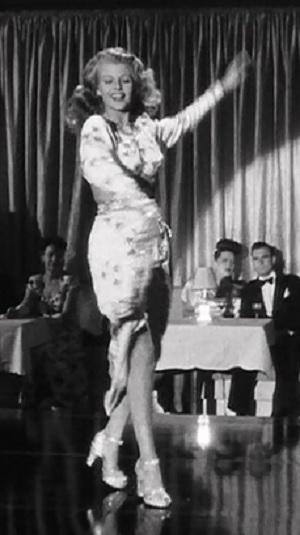
This year, I want to dance with even half the joy of Rita Hayworth…

act a hundredth as boldly as Mae West on her weakest day…

enjoy foolishness as much as William Powell…

and live with the intensity of Barbara Stanwyck.

What a fabulous year it will be if I do.

Share
Posted in: 1930s films, 1940s films, Humor, Mae West Moments Tagged: Classic Movie Stars, New Year's Resolutions

Mae West as the Outlaw: My Little Chickadee

11/17/2018 by leah@carygrantwonteatyou.com 11 Comments


When asked what outlaw I wanted to feature for the Classic Movie Blog Association’s Outlaws blogathon, I immediately thought of Mae West’s character in My LIttle Chickadee. I know Mae West’s siren ways and bumpy pairing with W.C. Fields are more frequently associated with the film, but it’s hard to miss how West’s Flower Bell Lee flouts the law–not to mention convention–in this 1940s flick. And of course, being co-written by West, the film includes plenty of hilarious one liners and shimmying.

The story begins with Flower Bell (West) traveling by stagecoach to visit (and presumably settle with) her aunt and uncle in a Western town. She’s buffing her nails as the male passengers gawk and an accompanying woman, Mrs. Gideon (played by Margaret Hamilton, of witchy Wizard of Oz Fame), looks on disapprovingly.
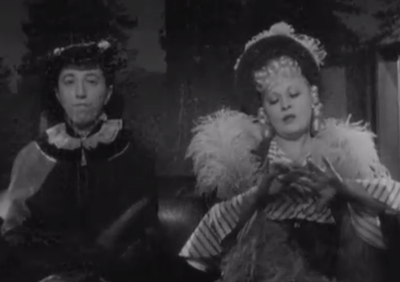

Suddenly, a masked robber stops the coach to rob it of its gold. The rest of the passengers race out of the coach with their arms up. Flower Bell just sits there, sure it has nothing to do with her, and more interested in her nails.
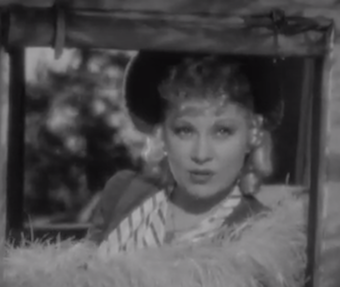

The “Masked Bandit” (as he’ll later be called) threatens to kill the others if she doesn’t budge, so she reluctantly does. She doesn’t mind being “held up” she informs the masked bandit, but doesn’t like to be inconvenienced. And thus the delightful double entendres begin.

Of course the bandit notices Flower Bell’s beauty and abducts her. He returns her to her new town outskirts soon after, but clearly, she enjoyed her time away. He comes to visit her in her room at night, Romeo style, and kisses her while still hiding his identity. Unfortunately, her former stagecoach companion, Mrs. Gideon, spies the two in Flower Bell’s bedroom, and informs the town. Flower Bell is forced to defend her actions in court and identify the marauder. She refuses to tell anyone a thing, and gets kicked out of her new town, told she has to stay away till she’s married and respectable. The inflamed Mrs. Gideon also spreads the word to the ladies of the nearby town where Flower Bell is going, Greasewood City, saying Flower Bell won’t even be allowed to get off the train. But Flower Bell doesn’t care, as she makes clear with her parting words to the judge, when he asks if she’s trying to show contempt for his court: “I was doin’ my best to hide it.”

Since this is West, we audience members know she will not only get off the train, but have all of the townsmen in her thrall as well. And that happens. But first she has to fight off Indians attacking the train. Again, she’s buffing her nails, and when arrows almost hit her, she slowly pulls them out of the side of the rail car, rolling her eyes as she does so. Why must these pesky outlaws get in the way of her manicure?
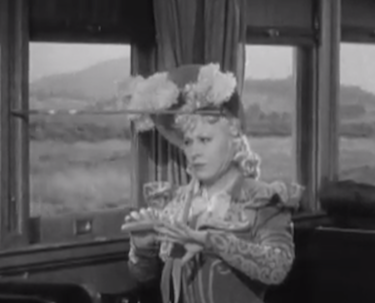

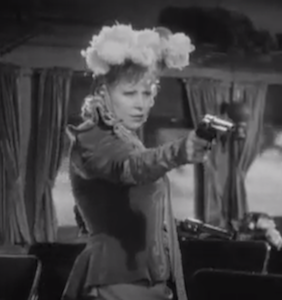
But when a fellow passenger dies, she takes up his two guns, shoots a bunch of Indians with obvious relish, saying she’s dispensed them in a “shower of feathers.” She’s angry because they’ve dared to “intimidate” her (sounds like a typical outlaw response, huh?) Flower Bell’s nonchalance and bravery are hilarious to witness in this strange scene. Even as we viewers flinch at the Indian stereotyping, we know that Flower Bell doesn’t care about race (more on that later). She just doesn’t like any bother, and agrees to be a hero–but only if she must.
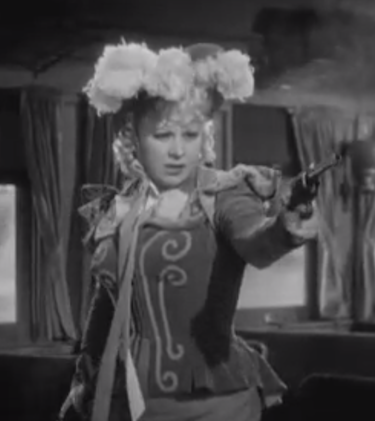

Meanwhile, a flirtatious passenger, Twillie (W.C. Fields), has been cozying up to her, and since she sees he has a bag of money, she doesn’t mind, and flirts right back.
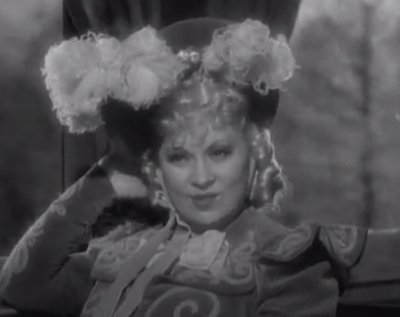

He too plays his part in fending off the Indians, but mainly that part is yelling at them for assaulting a private car and bumbling in Fields’s typical physical-comedy way. Twillie has no problem with Indians; his best friend/servant/gambling partner is one (their strange interaction, and the film’s odd combination of racist terms and stereotypes and yet ahead-of-its-time treatment deserves a post of its own).

But even though Twillie doesn’t mind Indians attacking OTHER trains, he does object to being annoyed, much like Flower Bell, though he’s far less accomplished than she in fighting back. Once the danger has passed, the two get closer, as his marriage proposal gives Flower Bell a way to exit the train in peace. She soon ropes another gambling friend on the train into acting as minister. That friend uneasily performs the marital vows. Flower Bell has no intention of sleeping with Twillie, only using him to get a free room and the blameless rep she needs to keep seeing her outlaw and whomever else she pleases. Even Mrs. Gideon, again a fellow passenger, smiles her approval.

Once in Greasewood’s best shady saloon/hotel, a number of antics ensue as Flower Bell keeps Twillie out of her room while helping him with his gambling and lies. When he brags that he saved the train, she lets him take the credit. The town makes him the sheriff, but as the last few have died within months, this honor has more to do with Badger (Joe Calleia), the unscrupulous bar/hotel owner, wanting Flower Bell widowed than any conviction that Twillie has guts. Flower Bell then proceeds to flirt with the muckraking local reporter, even acting as a teacher to help him out in a classic West scene.

Flower Bell enjoys the reporter’s idealism and Badger’s dangerousness, and it’s very unclear which man (if either) will get her in the end. Meanwhile, the Masked Bandit continues his courting, and Twillie, finding out his “wife” likes a man in costume, pretends he’s the bandit himself. Naturally, she discovers the fraud, but can’t save him from the town posse, who is now convinced he’s the villain. Well, she can’t save him at first. Just as she defended him when he lied and cheated gambling, Flower Bell comes to his aid again. She claims he’s no bandit, and after getting put in jail for defending him and her own shady associations, she busts out and saves the day, without giving away her lover.

Of course, we find out who the bandit is, and there are no surprises there. The fact that the bandit’s accent makes it clear he’s Latino (even if the actor isn’t) doesn’t bother West’s Flower Bell. She may be portraying a woman from the last century, but West doesn’t even bother to defend interracial romance in the film, which clearly condones it. The fact that Flower Bell repeatedly breaks the law—in harboring the bandit, in escaping from jail, etc.–never gives the heroine (or her creator) a moment’s worry. In fact, Flower Bell takes the bandit’s gold with pleasure as a reward for her kisses, and encourages the town (when he leaves a bundle of goodies for them) to do the same.

But the transgressive nature of this film goes so much further. The female lead is the hero, the brave town leader and both defender against and abettor of outlaws. W.C. Fields at points seems to be in his own movie (and from what we know of how little the two got along, and how much they wrote their own parts, he basically was). But in all of their interactions, she bests him with no more effort than pushing back a cuticle. Her character’s name highlights her extreme femininity, which clearly doesn’t stop her from having mad skills with guns or enough bravery to face TWO towns full of people eager to attack her. Flower Bell does everything without a trace of fear; in fact, she performs dangerous acts with BOREDOM, proving, lest any males doubt it, that Mae West will always be the biggest, baddest outlaw of them all.

Check out all the fun outlaw entries at the Classic Movie Blog Association’s site.
Share
Posted in: 1940s films, Childfree, Comedies (film), Feminism, Mae West Moments, Romantic Comedies (film) Tagged: feminist films, Mae West, My Little Chickadee (1940), W.C. Fields

My Podcast Talk on True Stories Of Tinseltown

07/05/2018 by leah@carygrantwonteatyou.com Leave a Comment

It was a riot talking with Grace Collins of True Stories of Tinseltown about Stella Dallas, William Powell, The Blue Gardenia, and Brief Encounter. We had fun comparing loves and gripes about classic films, particularly our united dislike for the husband in Stella Dallas and the supposedly romantic male lead of Brief Encounter. You can find the podcast here. I hope you will also check out her other podcasts. The one on Mary Astor’s diary is especially brilliant! Thanks to Grace for being such a great host and for taking the time to listen to me rant:)

Share
Posted in: 1930s films, 1940s films, 1950s films, Anti-Romance films, Mae West Moments Tagged: Barbara Stanwyck, Blue Gardenia, Brief Encounter, John Boles, Stella Dallas, terrible husbands in film, terrible lovers in film, William Powell
1 2 3 Next »

Recent Posts

  • 100 Years Later, Still Scary: Dr. Caligari
  • Escaping Out of the Past (1947)
  • A Weeper for Those Who Love Jerks
  • Thank You, Academy, for Not Infuriating Me
  • Challengers (2024) Is a Bad Movie

Subscribe to Blog via Email

Enter your email address to subscribe to this blog and receive notifications of new posts by email.

Categories

  • 1920s films
  • 1930s films
  • 1940s films
  • 1950s films
  • 1960s films
  • 1970s films
  • 1980s films
  • 1990-current films
  • 2020s films
  • Action & Sports Films
  • Anti-Romance films
  • Blogathons
  • Childfree
  • Comedies (film)
  • Drama (film)
  • Feminism
  • Femme fatales
  • Film Noir/Crime/Thriller & Mystery
  • Gloriously Silly Scenes
  • Horror
  • Humor
  • Mae West Moments
  • Musicals and dancing films
  • Oscars
  • Random
  • Romance (films)
  • Romantic Comedies (film)
  • The Moment I Fell for
  • Turn My Sister into Classic Movie Fan
  • TV & Pop Culture
  • Uncategorized
Share
Classic Movie Blog Hub Member

Recent Comments

  • leah@carygrantwonteatyou.com on Meg Ryan’s Fate Foretold in Joe Versus the Volcano
  • Ryan on Meg Ryan’s Fate Foretold in Joe Versus the Volcano
  • leah@carygrantwonteatyou.com on 100 Years Later, Still Scary: Dr. Caligari
  • The Classic Movie Muse on 100 Years Later, Still Scary: Dr. Caligari
  • leah@carygrantwonteatyou.com on 100 Years Later, Still Scary: Dr. Caligari

Archives

  • November 2025
  • September 2025
  • May 2025
  • March 2025
  • January 2025
  • November 2024
  • August 2024
  • July 2024
  • May 2024
  • March 2024
  • February 2024
  • December 2023
  • November 2023
  • October 2023
  • September 2023
  • August 2023
  • July 2023
  • May 2023
  • April 2023
  • March 2023
  • January 2023
  • December 2022
  • November 2022
  • September 2022
  • July 2022
  • May 2022
  • April 2022
  • March 2022
  • February 2022
  • October 2021
  • September 2021
  • April 2021
  • March 2021
  • February 2021
  • December 2020
  • October 2020
  • September 2020
  • July 2020
  • May 2020
  • April 2020
  • March 2020
  • February 2020
  • December 2019
  • October 2019
  • September 2019
  • June 2019
  • May 2019
  • April 2019
  • February 2019
  • January 2019
  • November 2018
  • September 2018
  • July 2018
  • June 2018
  • May 2018
  • April 2018
  • March 2018
  • February 2018
  • January 2018
  • November 2017
  • September 2017
  • August 2017
  • July 2017
  • June 2017
  • May 2017
  • April 2017
  • March 2017
  • February 2017
  • January 2017
  • December 2016
  • November 2016
  • October 2016
  • August 2016
  • July 2016
  • June 2016
  • May 2016
  • April 2016
  • March 2016
  • February 2016
  • January 2016
  • December 2015
  • November 2015
  • October 2015
  • September 2015
  • August 2015
  • July 2015
  • June 2015
  • May 2015
  • April 2015
  • March 2015
  • February 2015
  • January 2015
  • December 2014
  • November 2014
  • October 2014
  • September 2014
  • August 2014
  • July 2014
  • June 2014
  • May 2014
  • April 2014
  • March 2014
  • February 2014
  • January 2014

Meta

  • Log in
  • Entries feed
  • Comments feed
  • WordPress.org

Copyright © 2025 Cary Grant Won't Eat You.

Church WordPress Theme by themehall.com