Cary Grant Won't Eat You

Classic movies for phobics

  • About
  • eBooks
  • Previous Blogathons
Classic movies for phobics

Femme fatales

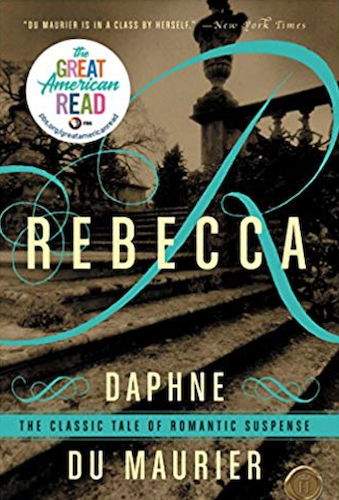
Rebecca Got a Bad Rep

06/29/2019 by leah@carygrantwonteatyou.com 8 Comments

**Spoilers abound**

Of all the femme fatales on film and in print, Rebecca may top them all. The woman isn’t even alive at the start of the book or the Hitchcock film that resulted from it, yet the narrator of the story is so haunted by her husband’s previous wife (and Du Maurier is so skilled at freaking readers out) that Rebecca’s reputation as the evil femme fatale endures.

But when we look at Rebecca’s life a little closer, it’s hard to ignore just how much of our impressions of this woman are based on her former husband’s hatred and his second wife’s jealousy. Although I was totally with the narrator in fearing and loathing Rebecca on my first reading of Daphne Du Maurier’s classic gothic novel/thriller/mystery, my opinion of Rebecca has radically shifted in time, and the blame moved from her to the much more questionable Max de Winter.

Since the film sanitizes the hero due to the Production Code, I’m sticking with the book as I ask all of you Du Maurier lovers this question: Who is worse, Rebecca or her husband Max?

Let’s count it down trait by trait, shall we?

Behavior toward Friends & Acquaintances. Rebecca. Tries to suit others’ moods and appeal to their interests—this according to her detractor, Max. Everyone loves her, Maxim admits, including all of her employees. He claims she is fake, a backstabber. It’s easy to discount the tales of her insincerity altogether, given those blunt admissions to Max at the start of their marriage and his own dubious motives in smearing her. But we do hear Ben describing her cruelty toward him, a serious count against her.

Max: Rude to and arrogant toward: his sister, his brother-in-law, attorneys, party guests, servants, Mrs. Van Hopper, his second wife. He does seem to usually treat Frank well, and perhaps the dog. He expects to be thought above the law despite his suspicious actions and has no compunction about the boat maker’s profit losses thanks to his lies. Why? Presumably his class and status.

Personality Points: Rebecca 1; Max 0
Villain Points: Max 1; Rebecca 1

Social Skills. Max is the very definition of prim, spending his days abstaining from most people and food (while strangely expecting an untouched feast on a daily basis). And, there’s that slight issue with his temper and moods. Good company? I think not.

Rebecca’s style intimidates the narrator; she has garnered Manderley fame with her exquisite taste and the elegance, creativity, and humor she exhibits as a hostess. Even the “R” of her name is written with panache.

Personality Points: Rebecca: 1; Max: 0

Treatment of Spouse. Let’s admit from the start that these two are hardly an altruistic pair. A tight race!
Max: Wife 1. Marries Rebecca without loving her but planning to be faithful. Keeps the secret of her affairs, but for his own pride. Does tolerate her behavior within limits. (It was a different age.) Seemingly polite to her in public but based on his general actions (see above), I’m guessing she needed to find affection elsewhere. Wife 2. Marries the narrator because she’s chaste and has no relatives (Mrs. Van Hopper isn’t far wrong there). Shows little passion for her, most of that passion being extended to his house. Treats her like a daughter/servant/enemy, depending on the day. Marries her knowing that his limelight-averse spouse will be destroyed if his crime is revealed and the scandal rags come a-knocking while her protector is in jail. Exposes her to Mrs. Danvers, the suicide pusher.

Rebecca: Marries Max for his money and status, planning to cheat on him from the start and admitting as much. Seemingly has multiple affairs. Apparently enjoys some “unspeakable” behavior (though given prim Max’s ways, I’m guessing we’re not talking Roman orgies). May, if the love of Mrs. Danvers is any indication, indulge in affairs with women as well as men, which in this time period would have harmed her husband’s reputation. Shaming her husband with alcohol and drug consumption? Perhaps in private. Meanwhile, spends her days being delightful to all and making his treasured house the talk of the country.

I’m going to leave out Max’s crime for this one, as it deserves its own category. But in terms of behavior up to their final night together, Rebecca’s is worse since Max’s biggest fear is public shame, and she doesn’t seem to care much that he’s a bore and has no fidelity impulses/regard for his pride whatsoever. However, his behavior to his second wife is appalling.

Villain Points: Rebecca 1; Max 1

The Murder. Max shot his wife because she suggested she might be pregnant with another man’s baby. Max demonizes her, calling her not even “human,” to (a) justify his action, (b) keep his wife’s love, and (c) be considered a civilized member of society. The narrator, so pleased he didn’t ever love Rebecca, actually goes along with his version of events, even though he’s not exactly trustworthy because he’s a killer who murdered his last wife, idiot. RUN!!!!

Rebecca. Enjoys her husband’s distress at her infidelity and taunts him. He now says she wanted him to kill her (given her health). Kinda convenient, right?

Personality Points: Rebecca, 1—some considerable moxie revealed in this last fight; Max, 0. Villain Points: Max, a gazillion; Rebecca, 0.

And the Verdict Is….
Personality Points: Rebecca 3; Max 0
Villain Points: Max, a gazillion and 2; Rebecca, 1.

Like I said, Rebecca might not be an angel, but a femme fatale? Not so much. And is Max, the cold-blooded murderer and awful husband a homme fatale? You better believe it.

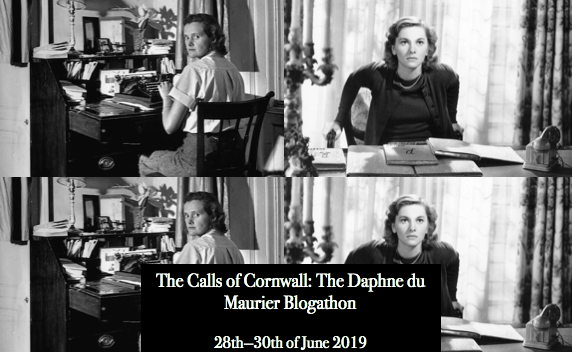
This post is part of the Calls of Cornwall blogathon by Pale Writer on Du Maurier’s work. Check out the other entries!
Share
Posted in: 1940s films, Blogathons, Feminism, Femme fatales, Film Noir/Crime/Thriller & Mystery, Humor, Romance (films), Uncategorized Tagged: Daphne du Maurier, femme fatales, Max de Winter, Rebecca, romances, thrillers, unfair reputation, unnamed narrator

The Femme Fatale Who Wasn’t: In a Lonely Place

04/16/2019 by leah@carygrantwonteatyou.com 25 Comments

spoilers ahead.

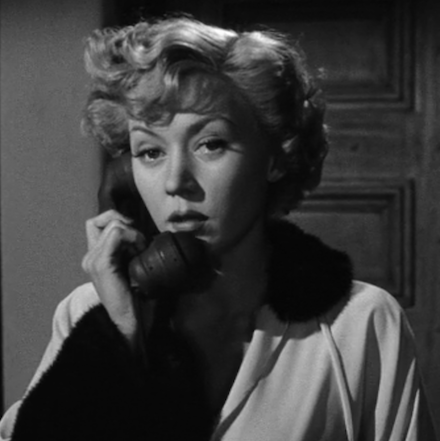
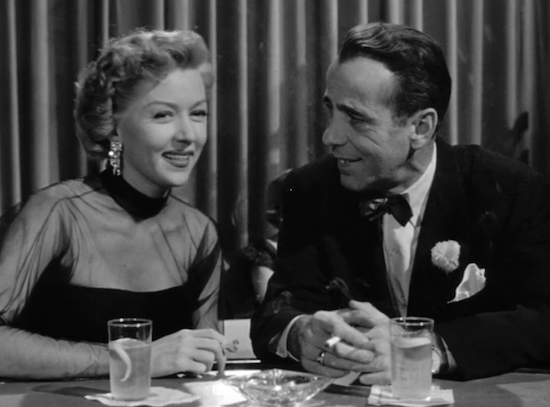
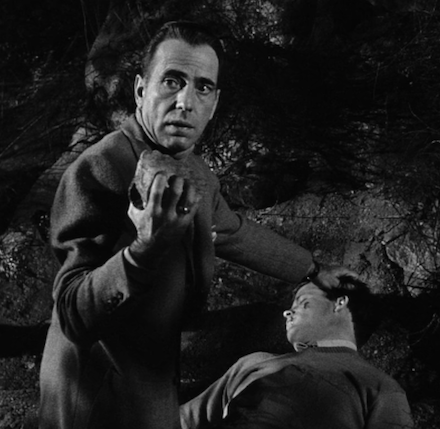
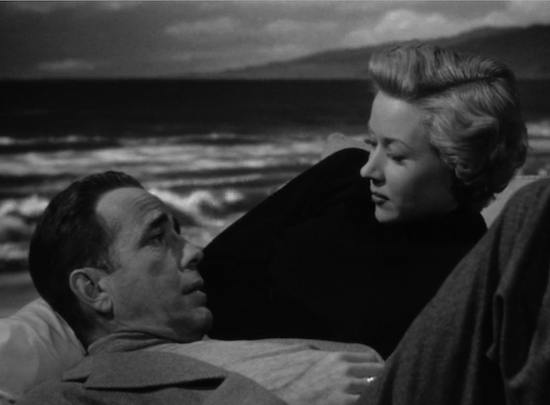
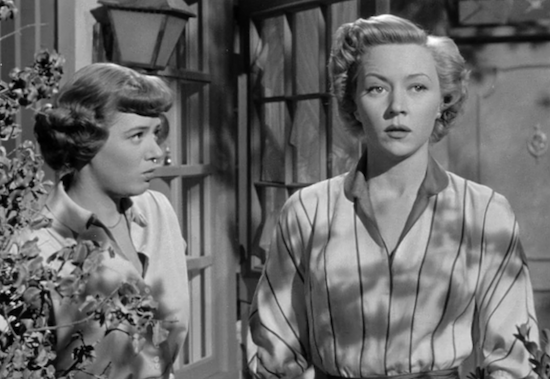
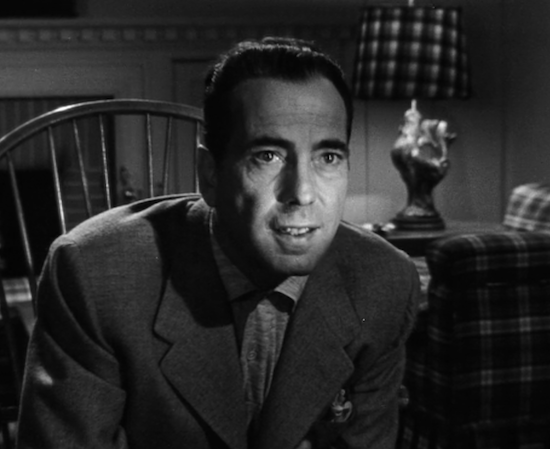
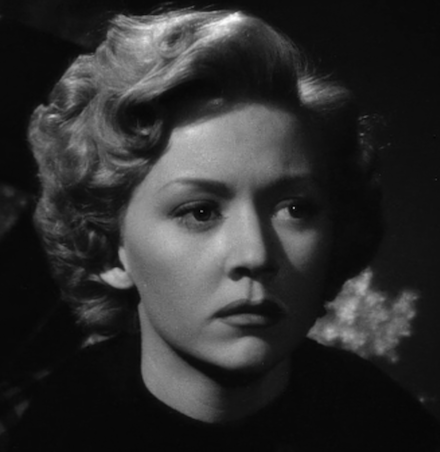
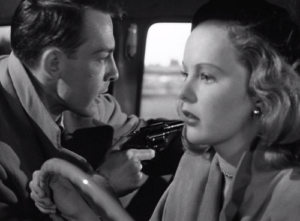
I was wowed by Nicholas Ray’s In a Lonely Place. The film, it seemed to me, was ahead of its time in its powerful portrayal of domestic abuse. On the surface, the film explores whether the hero, Dix (Humphrey Bogart), murdered an innocent woman. His girlfriend, Laurel (Gloria Grahame), begins their relationship in romantic euphoria.

But, as in Suspicion, Laurel begins to suspect he might have done it.

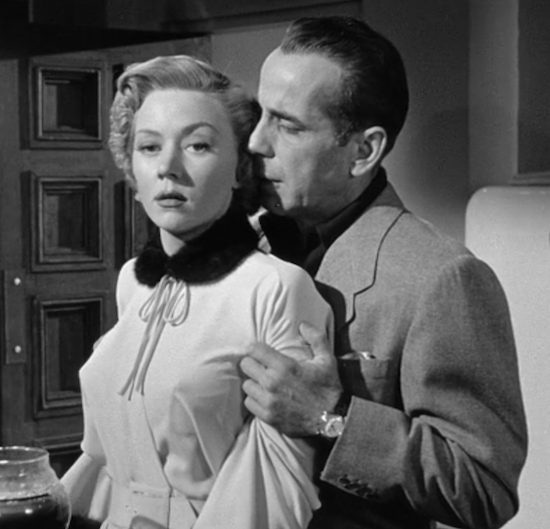
The did-he, didn’t-he soon becomes a “Don’t worry which, Lady. Run.” After all, Dix likes to act out murder scenarios and then mimics the same movements when smoking with Laurel. He won’t allow her to receive a phone call or prescription he doesn’t monitor. He keeps her economically dependent on him. He justifies beating people up and actually considers bashing heads in with rocks.

And just in case she has any doubts about how this is all going to end for her, his former girlfriend reported Dix for breaking her bones.

The story is cast from Laurel’s (Gloria Grahame’s) point of view, and haunts the viewer because Dix can be charming, can be loving, can be apologetic. He does come back with “armloads of gifts” after his scary behavior, not just for her, but for victims of his violence. He is sweet to an alcoholic ex-actor, shows more compassion for him than anyone else. The film sympathizes rather than judges Laurel for staying, reminding audiences that an abuser can be contrite and thus leave the woman who loves him off-balance, uncertain whether to trust he’s changed. And though Laurel’s friend cautions her against him, his friends urge her to stay, to understand, to give him a chance. Meanwhile, we get glimpses of his mind: he can only see unquestioning faith in him–which would be difficult, given his actions–as acceptable. After a near-homicide, he coins a line for a screenplay describing his love for Laurel: “I was born when she kissed me, I died when she left me, I lived a few weeks while she loved me.”

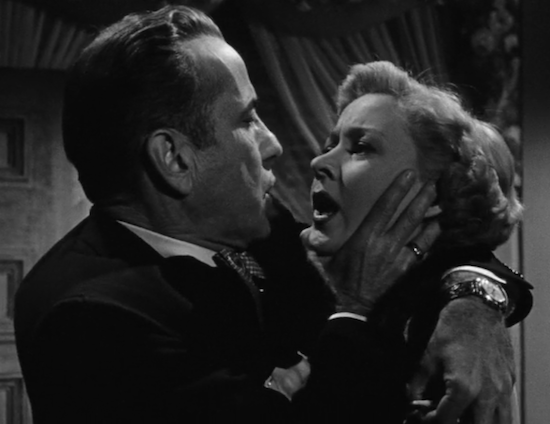
Personally, I found this line chilling. Yet the director, Nicholas Ray–who was experiencing stresses in his marriage to Grahame at the time–gives a romantic packaging to not just that line, but to the final scenes of the film. He seems to imply–even after Dix strangles Laurel and nearly kills her–that this all would have turned out well had there not been that whole did-he-murder-the-woman doubts. And more disturbing yet, both current and contemporary reviewers frequently characterize this toxic relationship movie as a “tragic love story,” and certainly many scenes in the movie would seem to back up that assumption.

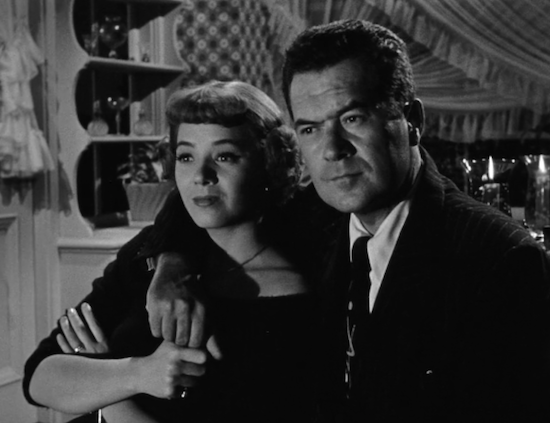
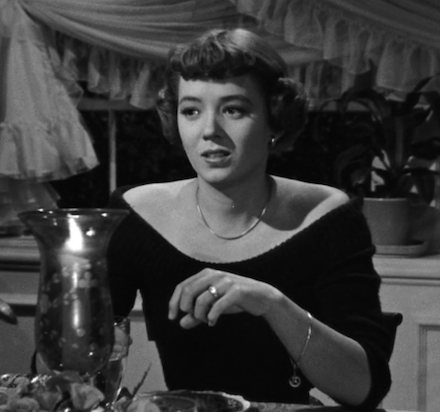
I turned to the source material to understand the confusion in tone, and was in for a shocker. Dorothy Hughes wrote In a Lonely Place as a kind of The Killer Inside Me of its time; we know from day 1 that Dix hates women, that he kills them regularly, that he thinks he’s justified because after he came back from the war, women saw through his hustling ways; they didn’t fall all over him, as they had when he was in uniform. His former Air Force friend is now a cop and has married a woman, Sylvia (Jeff Donnell), whom Dix distrusts and (we soon learn) underestimates.

She quickly sees through Dix’s veneer of humanity.

Dix hates her for it in the novel, and plots her death. Think of Dana Andrews in The Best Years of Our Lives, if on encountering his wife’s disappointment in him, he decided to go on a murderous vendetta against anyone who shared her gender.

The best scenes in Ray’s film are moments that capture the stark feminism in the book, in which only the women see Dix for who he is, and only they can succeed in stopping him. In a sharply rendered scene in the film, Laurel and Sylvia are honest with one another: Laurel in her doubts about Dix’s character, Sylvia, in confirming (reluctantly) that Laurel should have them.

In the book, Dix’s demeaning treatment of women–especially Laurel–is accompanied by a conviction that Laurel is taunting him, trying to make him jealous, when she’s simply putting the brakes on a relationship that he’s taken too seriously, too quickly. As writer Megan Abbott so brilliantly put it: “After reading In a Lonely Place, you find yourself looking, with a newly gimlet eye, at every purported femme fatale, every claim of female malignancy and the burning need of noir heroes to snuff that malignancy out.”

In Dix’s eyes in the book and film, Laurel is a femme fatale. She gave her love, then she took it away–all because she didn’t trust him enough. But in our eyes, she’s just fallen for the wrong guy; calling a man you love a “madman” doesn’t usually suggest a relationship is headed for sunshine and rainbows. Whether Dix killed a woman or not, Laurel isn’t wrong to ask, “There is something strange about Dix, isn’t there?” after he bloodies a fellow driver to a pulp or “What can I say to him–I love you but I’m afraid of you?” when he looks at her in the scary fashion Bogart had mastered since The Petrified Forest.

At some point you gotta ask, Is any guy you’re relieved and surprised didn’t kill someone worth sticking around for?

I admire both the book and film because they make me look back at so many of the noir novels and movies I’ve admired, and ask that question Abbott challenges me to consider: Was this woman a femme fatale? Or was she just an independent woman who didn’t say yes?

This is part of the Classic Movie Blog Association’s Femme/Homme Fatales of Film Noir blogathon. Check out so many great entries here.


Share
Posted in: 1950s films, Anti-Romance films, Blogathons, Feminism, Femme fatales, Film Noir/Crime/Thriller & Mystery, Uncategorized Tagged: #meToo classic films, femme fatale, Gloria Grahame, homme fatale, Humphrey Bogart, In a Lonely Place

The Klutziest Bonnie & Clyde Ever: Gun Crazy (1950)

06/06/2016 by leah@carygrantwonteatyou.com Leave a Comment

GunCrazy
**Only very minor, preliminary spoilers here**

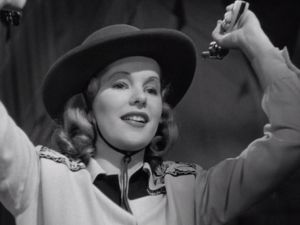
Gun Crazy begins with a boy getting caught for stealing a gun because he trips. The kid, Barton Tare, has a mysterious attraction to guns he can neither explain nor control. Others try to defend him, given that he has no desire to harm and isn’t a good thief. But he’s sent to reform school anyway, and after that and a bout in the army, the young man returns home and falls for a carnival sharpshooter, Annie Laurie Starr (Peggy Cummins). The two are both skilled in their expertise with weaponry and in their seduction of one another (clearly what brings them together), but their limbs just go haywire in all other contexts. When they turn to crime to satisfy Laurie’s lust for excitement and cash, the two can’t stop themselves from tripping, falling, and dropping the payroll.

The chief delight of this famous noir is Laurie’s ruthlessness; she’s one of the most fascinating femme fatales; the whole movie, you’re just waiting to see if her attraction to her now-husband, Bart (John Dall), will trump her self-interest.

LaurieGunCrazy
Bart’s a little screwy (as when he brings a gun to school as a kid and refuses to give it to teacher or superintendent). But there’s an aw-shucks, Jimmy-Stewartist innocence to his love for his wife, making her single-mindedness and easy manipulation of him both sinister and completely believable. When the going gets tough, you know Bart will save Laurie. What you don’t know is whether Laurie will lose a nail to save him.

Their gun skills, of course, make them a dangerous pair when they start to rob. But in peak moments, the pair keep FALLING, making you wonder how many capers they could have actually pulled off. Call me cynical, but I think some grace might help in a getaway. This lack of finesse might dissatisfy viewers looking for slick criminals in action, but being anything but nimble myself, I found their lack of coordination endearing–an unexpected trait that made me worry for their chances, and realize that I’ve seen this trait in cinematic bank robbers too seldom. Far too many action stars have amazing reflexes without Jason Bourne’s training; more of us stumble in real life, as the Darwin Awards and local news so often prove. I know I’m not alone in loving the pratfallers, even in a noir. (Usually, only minor characters make such silly mistakes.)

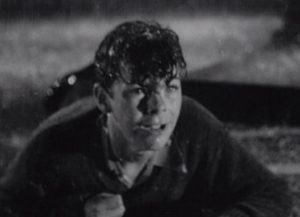
Of course, there’s a lot more to recommend the movie: its stylishness, the costumes of Cummins (clearly an inspiration for Faye Dunaway’s in Bonnie and Clyde), the many artfully composed shots. But its lack of predictability (thanks to screenwriters, blacklisted Dalton Trumbo and MacKinlay Kantor) is what kept me watching and wondering. I expected some hairy getaways, but not the twists I got. I expected a dastardly female, but couldn’t predict her moves. And I certainly didn’t expect–but loved–all the great moments like this, Bart’s first tripping incident, which led to all the rest:

Bartsfirstfall-GunCrazy

Share
Posted in: 1950s films, Anti-Romance films, Drama (film), Femme fatales, Film Noir/Crime/Thriller & Mystery, Romance (films) Tagged: best femme fatales, Claire Underwood, Dalton Trumbo blacklisted, film noir, films glorifying crime, Gun Crazy, John Dall, Peggy Cummins

Remaking Hitchcock

04/23/2016 by leah@carygrantwonteatyou.com 4 Comments

This week I’ve been lucky enough to convince author Michael Gutierrez into guest posting. Check out his wonderful book, The Trench Angel (which deserves cinematic treatment of its own).

Back in the early 90s, during a time when there were a spate of remakes of classic films, my grandfather posited: “Why don’t they just redo shitty movies?”

He was right, in a sense. Remaking the greats because you think they’ll appeal to a modern audience is usually a lost cause. His Girl Friday will always be better than Switching Channels, even if you add modern stars like Burt Reynolds (the 80s loved a good mustache). But “shitty movies” are often shitty for several fundamental, inalterable reasons, be it bad acting, poor production values, or, most likely, a terrible story idea. These are films that can’t be saved. Take Showgirls: you can blame star Elizabeth Berkley’s humorless performance or director Paul Verhoeven’s lack of visual dexterity, but the film would probably still blow even if you gave the camera to Scorsese and put Meryl Streep in pasties.

Yet, there’s a middle ground: remake mediocre films, movies that just missed being great for one or two specific, easily discernible reasons. It’s been done before, most recently with Ocean’s Eleven. The original Rat pack vehicle was poorly paced and weighed down by a lazy script, bad jokes, and half-in-the-bag performances. Enter George Clooney and Steven Soderbergh and you’ve got a remake that trumps the original.

Case in point is Alfred Hitchcock, a man who made plenty of just-misses. For every Rear Window or North by Northwest, you’ve got a handful of Suspicions. Hitchcock, himself, had no issue with remakes, re-doing The Man Who Knew Too Much twenty years after his original version. While many of his lesser films should be left alone (I’m looking at you Stage Fright), a few of his other movies were nearly great, but suffered under the weight of one or two specific flaws.

Here are three that Hollywood should re-do and I’ll even give them a hand by telling them how to do it.

Foreign Correspondent (1940)
The Story: American reporter Huntley Haverstock (Joel McCrea) is sent to Europe to dig up a story on the continent’s impeding war. While there, he finds himself caught up in a sinister international conspiracy, falls in love with the chief villain’s daughter (Laraine Day), while palling around in the Netherlands with fellow reporter Scott ffolliett (George Sanders).

The Good: There’s a great cat and mouse chase through a field of Dutch windmills and some fantastic Sanders scenes where he binge-eats the scenery.

The Problem: The romance between McCrea and Day has all the sexual charisma of an arranged marriage. In addition, Sanders steals the film. Even Hitchcock seems to realize he cast the wrong star, and pretty much turns over the last third of the film to the charming Englishman. Finally, the end transforms into a piece of pro-war propaganda, trying to convince America to join the fight against the Nazis. It made sense at the time, but now it dates the film.

The Solution: Cast Ryan Gosling and Marion Cotillard. Besides being capable performers, they’re both so pretty to look at. Plus, you could actually shoot the film in Amsterdam. Why aren’t there more films in Amsterdam?

The Lady Vanishes (1938)
The Story: Young European Iris Henderson (Margaret Lockwood) is travelling home via railway to get married. On the trip she befriends Miss Froy (Dame May Whitty), who suddenly disappears in transit, though the train has made no stops. Henderson and fellow passenger Gilbert Redman (Michael Redgrave) investigate, only to find themselves caught up in a sinister international conspiracy.

The Good: It’s a great set-up with some tense scenes, red herrings, and a bouncy tone. Plus, you’re on a train and trains are awesome.

The Problem: Lockwood doesn’t come across as someone willing to challenge a waiter, let alone a cabal of killers. It should have been Myrna Loy or Katharine Hepburn. Redgrave’s fine, but Cary Grant would have been better. There are also some really hokey special effects where the train looks like a child’s model set and Hitchcock spends too much time setting up the story and gives away the villain too quickly.

The Solution: I know they re-did this film with Jodie Foster as Flightplan, and I’ve heard it isn’t bad, but I can’t watch movies set on airplanes without a heavy, accompanying dose of Xanax, so let’s keep it on the train because trains are, as you know, awesome and put in Reese Witherspoon and Ethan Hawke. Give the characters some age and gravitas. Or if they won’t do it, Cotillard and Gosling will do.

The 39 Steps (1935)
The Story: Robert Hannay (Robert Donat) finds himself caught up in a sinister international conspiracy. There’s a lot of running through fake Scottish moors, an evil dude with half a finger missing, and Madeleine Carroll going full Stockholm Syndrome on Donat after he kidnaps her.

The Good: It sounds bad, but it isn’t. Seriously. It’s just not great. Even if the moor scenes were filmed on a sound stage, the running is fun and the scene at the end in the Palladium when Mr. Memory reveals the secrets of the 39 Steps organization is brilliant.

The Problem: How many memorable movies have you seen with Donat or Carroll? There’s a reason. Hitchcock once famously referred to actors as “cattle” and he must have gotten these two off the slaughterhouse floor. At times, you’re rooting for 39 Steps to kill Donat, while Carroll’s quick turn from kidnap victim to doting lover is super uncomfortable.

The Solution: Keep the missing finger, film on real Scottish moors, and bring in Charlize Theron and Tom Hardy. A Mad Max reunion. Unlike Donat, Hardy looks like he could actually land a punch and Theron seems like she’d take a little more convincing to fall in love with her kidnapper than a charming smile. Or, hell, just cast Gosling and Cotillard. That should work.

by Michael Gutierrez

Share
Posted in: 1930s films, 1940s films, 1990-current films, Femme fatales, Film Noir/Crime/Thriller & Mystery, Random Tagged: Alfred Hitchcock, remakes

For Gone Girl Fans, A Fascinating She-Did, She-Didn’t Thriller

10/06/2014 by leah@carygrantwonteatyou.com 2 Comments

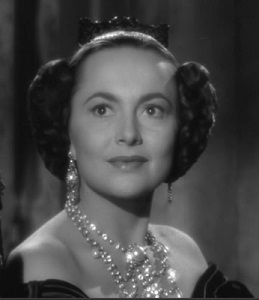
I’ve been wanting to see Gone Girl, but the laryngitis-respiratory infection cocktail I’ve got right now means that I would be an object of fear and distraction to fellow film goers, so I had to settle for an alternative. What film, I wondered, might employ a similar ambiguity about whether or not a spouse is a murderer? What other film might tell a tale of an unhealthy romance that might or might not have sinister roots or results? The answer: Daphne Du Maurier’s My Cousin Rachel. The film, starring Olivia de Havilland and a very young Richard Burton, never reached the fame of The Birds or Rebecca, but has a similar eerie draw, and (for me at least) lingers longer than either.

Young Philip has been raised by his cousin, Ambrose (John Sutton), and the two are comfortable together in their picturesque Cornish town until Ambrose’s illness leads to their first separation—a trip to Italy. There, Ambrose discovers and falls for their distant cousin, Rachel. Before Philip can adjust to this change in his life, a more somber situation develops: Ambrose is nearing death, and blames his wife for it, claiming she’s trying to do him in. Is his condition the result of a brain tumor, or is it poison?

Femme fatale, yes, but is she a murderer?

Femme fatale, yes, but is she a murderer?

A heartbroken Philip (Burton) travels to Italy to uncover the mystery after his cousin’s death. Since all of the estate goes to him, not the wife, Philip might assume things are as innocent as those in Italy suggest, but the circumstances seem shady, and he’s ready to turn Rachel over to the hangman—that is, until he meets her.

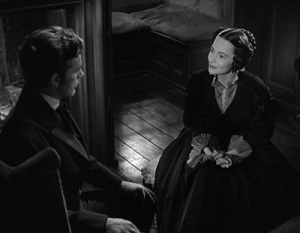
IntroMyCousinRachel
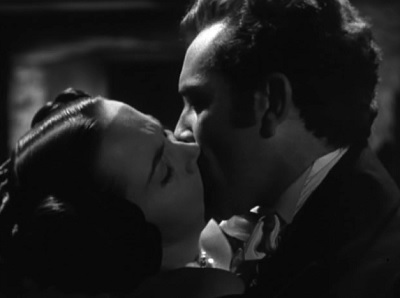
Of course, she’s charming, affectionate, worldly, and experienced, and within no time, is hosting gatherings at Philip’s place and then, well, what repressed English boy could resist this cougar?

KissingMyCousinRachel
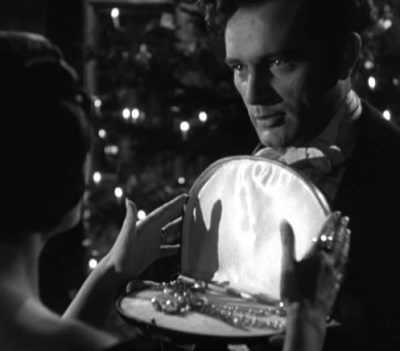
Before long, Philip’s giving her the family jewels from the vault—which aren’t his yet, as he doesn’t get the estate till he’s 25, his guardian reminds him.

GiftsMyCousinRachel
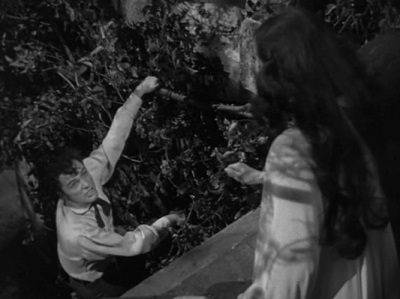
Also, a generous allowance he’s given Rachel? Yes, she’s overdrawing it—by a lot. Philip doesn’t worry. He’s in love! She deserves everything that’s his. He’ll just give his whole estate to her, announcing it Romeo-style on his birthday.

BalconyMyCousinRachel
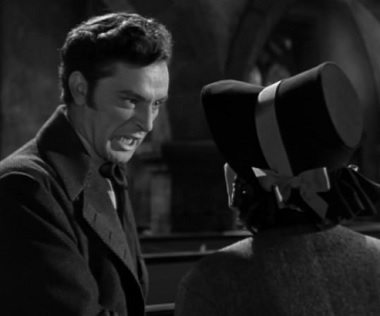
She, in thanks, gives him more than kisses. In Philip’s world, this means she’s going to be his wife. In Rachel’s? Not so much. Philip, whose stupidity and naiveté know no bounds, doesn’t take this well, even starts strangling her. She ends their romance, whether because of his actions, or because with the money, she has no motive to seduce him any longer.

Soon after, Philip falls dangerously ill and finds some seeds that may have been the cause of his brother’s illness—and his.

What happens next I won’t reveal, but let’s just say that the evidence for and against Rachel’s guilt about even out, leaving the viewer to wonder the whole film (and book).

This was my first viewing of the film, and it stays quite true to what I remember of the novel. But viewing it as an adult, I noticed some details I’d missed before. Yes, she may be a murderer, or she may not be, but even if she didn’t try to kill either lover, exactly how wrong and/or inadvisable is Rachel’s behavior? I have some advice for Rachel, which, of course, comes a tad bit late:

Some spoilers ahead—though not the ending.

Never Seduce Crazy
It’s not hard to miss just how big of a dolt this Philip is, so even if she weren’t after his money, seriously, is this someone you seduce? I mean, he’s cute and all, but he’s obsessive. This is a textbook case of a stalker-in-the-making if ever I saw one. Surely a woman as confident and assured as this one knows a case of insane puppy love when she sees it. I’ll alter one of my favorite Arrested Development lines– “Never promise crazy a baby”—to Never seduce crazy. I kept wanting to warn Rachel away: Don’t kiss this fool. He’ll be sending out your wedding invitations next.

Remember: Virginal Boys Don’t Understand Samantha Jones Ways
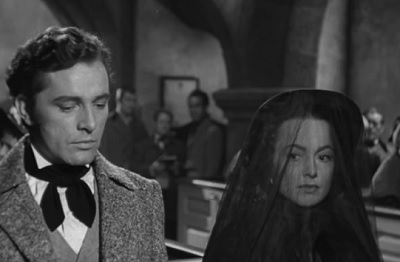
If Rachel just kinda forgot that those in repressed English villages don’t act like her cosmopolitan friends, shouldn’t that church moment when she arrived late have given her a clue?

ChurchRepressionMyCousinRachel
She’s so shocked Philip thinks they’re going to marry after they have sex, but would anyone in this community think otherwise? Remember when Samantha Jones hooked up with the inexperienced college boy on Sex and the City who shared her name?

Didn’t turn out so well, right? Filled up her answering machine with love-yous. Arrived at her door screaming through the peep-hole.

OtherSamJonesSexandCity
That’s Philip for you.

Don’t Marry the Guy Whose Regular Expression Looks Like This:

RichardBurtonfreakingout
Whatever her motives or knowledge, Rachel is absolutely right not to marry this dude. I can just see it: She tries to hang out with her friends, and he’s there, watching. She leaves the house and he’s hiring private detectives. This woman has lived on her own, experienced an unusual degree of freedom for a woman of her time, and he doesn’t even want her to return to Italy—ever. She may make some dumb mistakes, but Rachel is not that foolish.

Don’t Live with the Stalker after You Ditch Him
Why does Rachel remain in the house? Yes, I can understand for appearance’s sake, she might stay a little after the inheritance is given to her. But this is one angry guy. And, of course, dangerous as he fears she is, he’s the one going for the throat when he doesn’t get his way.

Strangling-MyCousinRachel
But….

Did she do it? Did she poison her husband?

She has suspicious ways. Rachel’s spendthrift tendencies, of course, are undeniable. This woman loves the money. Whether it’s to help her pal-maybe-lover back in Italy or not, she takes whatever anyone will give her with no regrets. It’s not hard to believe her gold-digger impulses brought her to England in the first place, and those motives seem sinister enough that she may have just killed for them.

Of course, it’s possible that she did love Ambrose, and wanted to meet his cousin. I’m not sure I buy that the one precludes the other. I don’t have to admire her greed, but I don’t have to believe that’s all there is to her either.

It’s the ambiguity I love about the film. Hopefully, Gone Girl is just as good (no spoilers on that, please!)

Share
Posted in: 1950s films, 1990-current films, Anti-Romance films, Femme fatales, Film Noir/Crime/Thriller & Mystery, TV & Pop Culture Tagged: Daphne du Maurier, Gone Girl, My Cousin Rachel, Olivia de Havilland, Richard Burton, Samantha Jones

The Moment I Fell for Van Heflin

09/23/2014 by leah@carygrantwonteatyou.com 13 Comments

Heflincurious
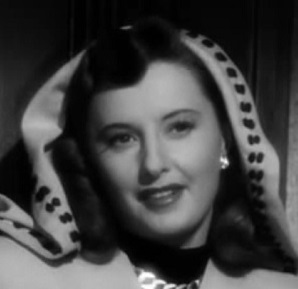
I didn’t know a thing about Van Heflin when I saw The Strange Love of Martha Ivers (1946). I picked the movie because of my love for Barbara Stanwyck, whom I assumed from the title would be the star of the film; I didn’t realize she wouldn’t appear until half an hour into it.

Stanwyck, the versatile actress

Stanwyck in The Strange Love of Martha Ivers

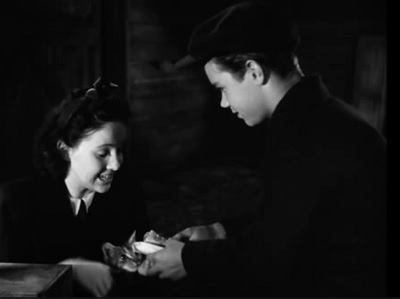
The story begins in 1928. Young Sam Masterson (Darryl Hickman) is trying to convince his crush, Martha Ivers (Janis Wilson), to run off to the circus with him. Sam is always evading the police thanks to Martha’s aunt (Judith Anderson), Mrs. Ivers, the wealthy woman who owns the town. Only if they run away can they be together. Unfortunately, their initial efforts are foiled by tattletale Walter, who likes Martha too.

YoungSamandMartha
Sam does run away, but just before Martha flees to join him, Mrs. Ivers beats her beloved cat to death, and Martha retaliates by striking her aunt with the same cane. We see Sam riding a train just as his crush is concealing the murder with the aid of her greedy tutor and Walter, his son.

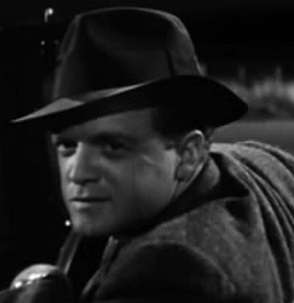
The film jumps to 1946. Sam has grown up to become an easygoing professional gambler (Van Heflin). In his car with a hitchhiking sailor, Sam catches sight of a “Welcome to Iverstown” sign.

“Well, whaddya know?” he says. “….Leave a place when you’re a kid, maybe seventeen, eighteen years ago, and you forget all about it, and all of a sudden you’re driving along and smacko, your own hometown up and hits you right in the face.”

He’s so surprised that he turns around to see the sign again and crashes his car.

Heflin-driving
Laughing at himself, he explains to his befuddled companion, “The road curved, but I didn’t.”

“Welcome to Iverstown,” he says to himself as he heads there for repairs. “Well, maybe this time, they mean it.”

I had expected to be disappointed by Stanwyck’s costar, as I usually am. Even actors good in other films come across as flat or artificial next to an actress this natural, and as downright stilted if unskilled to begin with (i.e., Herbert Marshall).

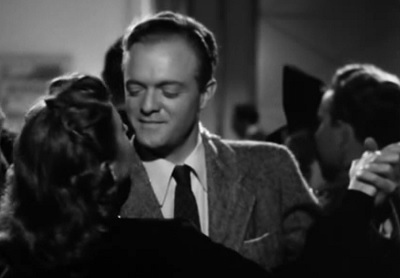
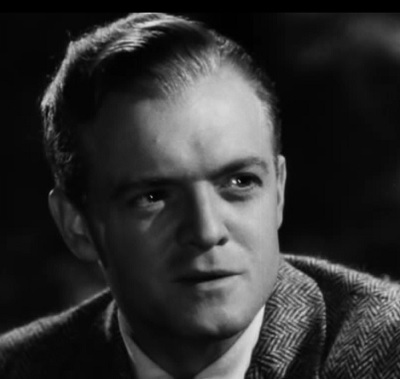
Captivated by the self-deprecation of Heflin’s character and his unexpectedly casual responses to conflicts, I soon forgot Stanwyck was even in the movie. I think I’d fallen for Van Heflin before he got out of the car.

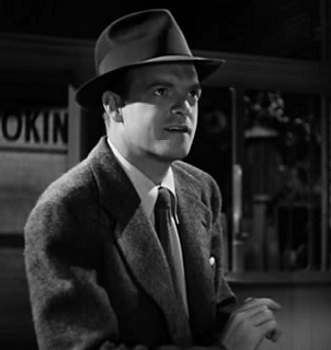
Discovering that “scared little boy” Walter is now a DA

Discovering that “scared little boy,” Walter, is now a DA

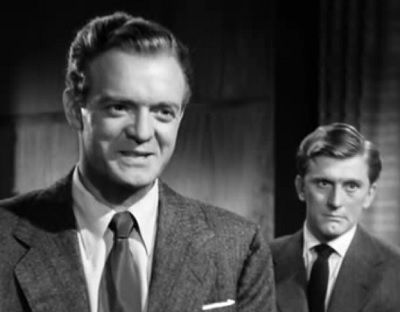
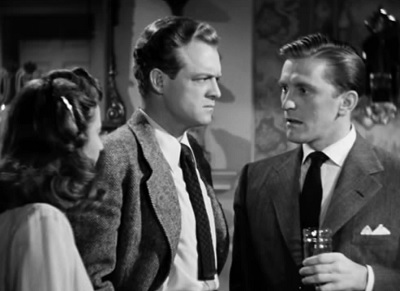
Heflin is an excellent foil for the scheming adult Martha (Stanwyck) and her alcoholic, tortured husband, Walter (Kirk Douglas). Sam’s relaxed, freewheeling persona acts as a kind of tonic to his tightly wound former love and a poison to her jealous and fearful husband, who assumes this childhood friend is back to blackmail them. Like Mrs. Ivers before him, Walter tries to drive Sam away. But Sam is no longer as powerless as he once was.

Heflin is every bit as comfortable in his role as Stanwyck is in hers, and the naturalness I would soon discover to be a hallmark of his acting works perfectly here, contrasting with the duplicitous couple’s double dealing. What makes Heflin so attractive as an actor is that same ease of movement Stanwyck possesses; it wasn’t surprising to discover this man spent much of his life as a sailor. Clearly, he finds his sea legs in every part quickly, and that comfort in his skin and in his environment is seductive to watch. By the time he meets Martha again, even the usually compelling Kirk Douglas is hopeless against him (Douglas plays an atypical part here, and is wonderful in it).

Seeing Martha again

Seeing Martha again

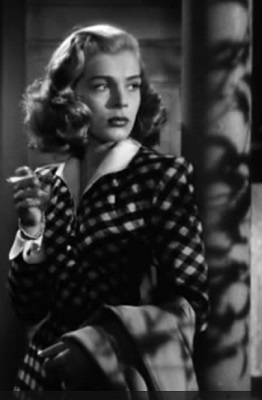
Heflin was not a traditionally attractive man, and famously remarked that “Louis B. Mayer once looked at me and said, ‘You will never get the girl at the end.’ So I worked on my acting.” Whatever he did worked: He’s so riveting to watch that I never questioned any woman Heflin won, even one as jaw-droppingly sexy as parolee Tony (Lizabeth Scott), who falls for Sam as he’s wandering around Iverstown.

Gorgeous Scott as Tony

Gorgeous Scott as Tony

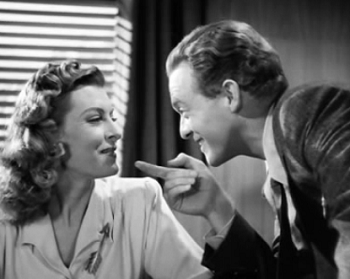
Flirting with Walter's secretary to get an appointment

Flirting with Walter’s secretary

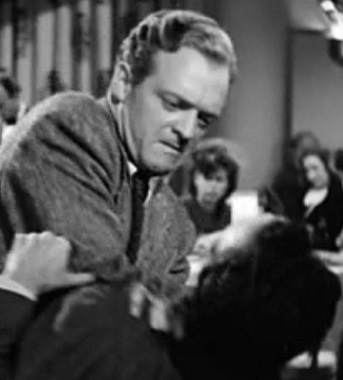
In fact, I’m more likely to question when Heflin doesn’t get the girl, as when Jean Arthur starts to fall for pretty-boy Alan Ladd in Shane over her tough husband (Heflin), or when Lana Turner prefers boring Richard Hart in Green Dolphin Street (to be fair, the character’s choices were just as baffling in the book). Even when Heflin plays a less courageous part than he usually does, as in 3:10 to Yuma, he’s always got some kind of hard, immovable core of strength to him. In The Strange Love of Martha Ivers, where I saw it first, this mental and physical strength appears when Walter starts to mess with him—and worse, with Tony.

Fighting the detectives who stooge for Walter

Fighting Walter’s detectives

Yet Heflin is just as adept at playing kindness as brawn, as when Tony (Scott) betrays Sam out of weakness and then asks him to hit her because of it. Of course, he refuses to hurt her, but he does more than that: he shows compassion for her behavior. “The only thing you got coming, kid, is a break,” Sam says, the simplicity of his delivery conveying his conviction.

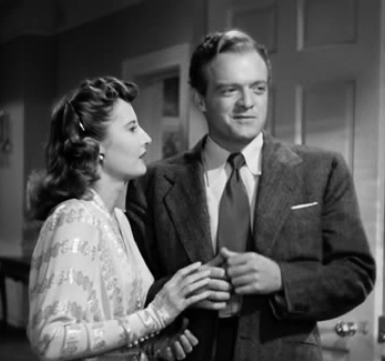
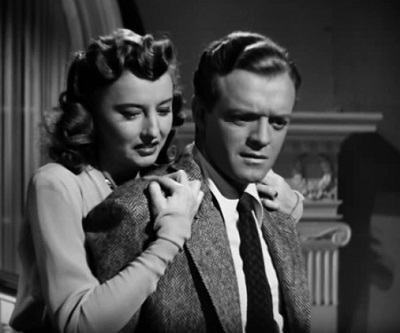
And it is a joy to see Heflin in scenes with Stanwyck. Sam suspects he’s in love with Martha, and even though the audience knows he should steer clear, it’s hard not to root for them, since it means more scenes with these two brilliant actors, and fewer with the less talented Scott.

HeflinandStanwyckdance
The chemistry between the two is strong. It’s wonderful to witness Stanwyck unable to dominate an actor, to see in him an equal.

HeflinandStanwycktogether
Aware that she can’t manipulate Sam, Martha panics after she reveals her secret to him. Of course, Stanwyck conveys that fear in one look, as only she can:

MarthascaredStanwyck
And Heflin’s understated response portrays his excitement about her honesty, his understanding of her distress, and his disgust at what’s happened:

Heflin-discovery
Before long, of course, Sam must confront Walter about his feelings for Martha:

Three-HeflinDouglasStanwyck
And Martha must stop characterizing herself as a victim, instead seducing Sam with money, power, and lust:

HeflinandStanwyck
The role of Sam Masterson requires that Van Heflin have a great deal of range—that he express assurance, wonder, sympathy, violence, love, anger, fear, revulsion. Heflin’s performance carries the film, and he plays each emotion so perfectly that you feel like you know this man, and wish him far away from his destructive former playmates. I won’t spoil what happens, as the movie is well worth viewing, with excellent acting, an intriguing story, and a great script. But be warned: Heflin’ll get to you, just as he did to me.

This is the fourth in a monthly series of The Moment I Fell for posts…Hope you’ll share some of the moments that drew you to your favorite actors and actresses….

Share
Posted in: 1940s films, Drama (film), Femme fatales, Film Noir/Crime/Thriller & Mystery, The Moment I Fell for Tagged: Barbara Stanwyck, The Strange Love of Martha Ivers, Van Heflin

Ruined by Romance: Drive (2011) and The Hustler (1961)

08/07/2014 by leah@carygrantwonteatyou.com 4 Comments

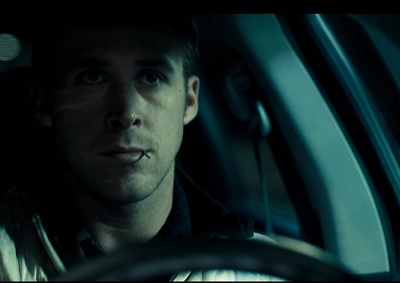
I was excited when Drive came out: finally, I thought, a new Bourne. An action flick with intelligence and fine acting, starring a man who had bypassed romantic leads after The Notebook to refine his skills in indies. And the promo! It looked exciting and moody, with the kind of premise that meant my car enthusiast husband and I would be carrying the popcorn to our seats with equal enthusiasm.

GoslinginDrive
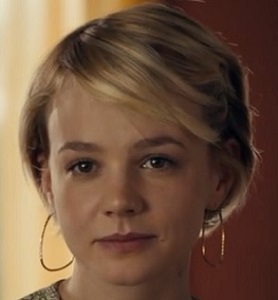
Of course I had neglected to consider the amazing skills of this woman, who would later manage to portray one of the most self-centered characters in American fiction as a victim:

Mulligan as a vulnerable waif—again

Mulligan as a vulnerable waif—again

So instead of racing cars, instead of truly exploring the depths of his character’s moral confusion and darkness, Ryan Gosling gets to spend most of the film destroying his life for a mother (Carey Mulligan) who is (a) hopelessly fragile (b) already married and (c) unutterably dull.

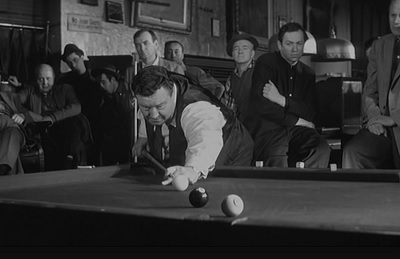
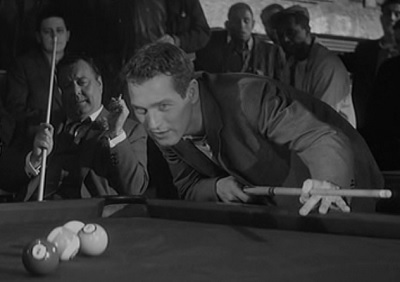
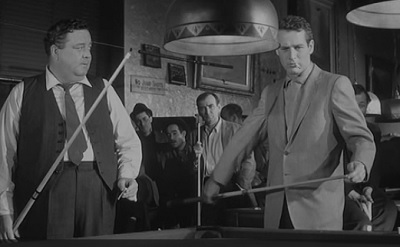
I wouldn’t say that The Hustler (1961) was ruined as completely as Drive was by a bad romance, but I was more appalled by its mistakes. Because this is a film I’d thought to be a classic, with George C. Scott as the money man and the brilliant Jackie Gleason playing Minnesota Fats, the reigning master of pool.

FatsinActionTheHustler
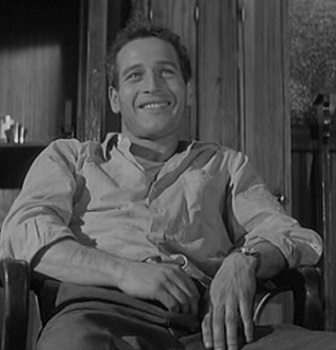
The master’s challenger is cocky young upstart Fast Eddie (Paul Newman), who struggles with confidence in spite of his successes hustling on the road. (Yes, the same character from The Color of Money).

FastEddieTheHustler
Imagine my surprise then to find that after the wonderful battle between Fats and Eddie ends with the latter deflated and broke, pool disappears for a long stretch of the film, to be replaced by a romance as inadvisable as it is boring to watch.

EddieandSarahTheHustler
Sarah (Piper Laurie) is a more interesting character than Mulligan’s Irene. She is depressed, moody, and drunk most of the time, but she is also compassionate and prickly with pride, and though I might have asked for more range and nuance from Laurie, others disagreed; she received an Oscar nomination for the role.

But whatever you think of Laurie’s performance, the romance itself is based on co-dependence. The two drink and have sex, and that’s about it; she even starts to write a story about their supposed depravity. When money-man Bert (Scott) accuses Newman of being a talented loser, the audience has to agree. It’s understandable that Eddie would align himself with Bert to lift up his career, even that he’d bring Sarah with him on the road since she can’t handle being left alone for a week (or more likely, doesn’t trust him to return). Sure, we know Bert is a bad guy, but Eddie isn’t exactly full of either options or patience.

Sarah losing her way at the Derby

Sarah with Bert (Scott), her nemesis

But to link Newman’s increased character and confidence to his remorse at his treatment of Sarah? Really? Eddie didn’t seem to mind leaving his long-time buddy and manager, Charlie (Myron McCormick), in the lurch.

Charlie (Myron McCormick) trying to win Eddie back

Charlie (McCormick) appealing to Eddie

His treatment of Charlie is far worse than his neglect of Sarah. The problem isn’t what Eddie did during his travels with Sarah and Bert; the problem is whom he chose to do it to: you don’t get involved with someone this fragile unless you’re in it for good, especially with a predator like Bert in your company. What Eddie should have done is drive the poor woman straight to rehab, not to the Derby.

Are you bored yet? Yeah, me too. I didn’t sign up for a movie about a doomed love affair—and if I had, I could have found a far better one than this. Here’s what I wanted to see, and finally did at the end of the film:

EddieandFats
Note the vulnerability on Fats’ face as Eddie begins a streak:

EddieonstreakTheHustler
Or his insistence that Eddie stop getting distracted and focus on the game, the defeat on his face clearly showing that he’s sold himself to Bert too:

FatsadviceTheHustler
Watch Bert’s celebration of his power over both men:

BerttauntingTheHustler
And most of all, witness the beautiful pool shots throughout–while you can get them. For a film called The Hustler, I didn’t get to see much hustling. Luckily, I did get to see this: Fats dressing up to rejuvenate himself during a losing streak:

GleasondressedupasFats
I could watch the pool passages in the film again and again and again.

Why do Hollywood films always use romance as a replacement for self-struggle? I haven’t read Walter Tevis’s novel, which may have managed the matter better, but the best films I know about competition don’t rely on gimmicky stand-ins as substitutes for the practice scenes (with pool!) they should have included. Even if a love affair is involved, it’s one that forces the hero/heroine to confront weaknesses. And it’s Bert—not Sarah—who tells Eddie the truth in The Hustler. If anything, I would think remorse would lead Eddie right back to the aimless life he and Sarah had been leading.

Did I enjoy the film? Yes. Would I fast forward through the Laurie-Newman scenes next time? Oh yes. Do I think at the end of the day The Cutting Edge was more convincing? Absolutely.

Share
Posted in: 1960s films, 1990-current films, Action & Sports Films, Femme fatales, Romance (films) Tagged: Carey Mulligan, Drive, Jackie Gleason, Paul Newman, Piper Laurie, Ryan Gosling, The Hustler

The Moment I Fell for Jean Harlow

07/16/2014 by leah@carygrantwonteatyou.com 8 Comments

Jean Harlow
I’ll admit that I didn’t get the appeal of Jean Harlow initially. I originally saw her in a portion of the film Bombshell, and thought it dull and her annoying. I couldn’t understand why she was a sex symbol, the Marilyn Monroe of the 30s.  It took a lackluster movie in which she was riveting to change my mind.

Red-Headed Woman (1932) is one of those pre-code films in which a loose woman doesn’t pay the penalty for her behavior. Harlow is Lil (also known as Red), a secretary who seduces her married boss, Bill Legendre Jr. (Chester Morris), to make her way up in the world. His wife, Irene (Leila Hyams), is given the tired you-should-have-forgiven-him-instead-of-leaving-him-the-prey-of-that-hussy argument when she divorces him. Usually, this argument infuriates me, but in this case, I had some sympathy for it: Bill is such a sucker that it’s hard not to pity him. How could he succeed in business when he falls so easily for a woman’s wiles? (In today’s corporate world, he’d be bankrupt in a week.)

After the divorce, Lil (Harlow) marries Bill and then trades him in for a richer model, just as she dropped her bootlegger boyfriend at the start of the film to pursue Bill. It’s this single-minded self-interest that makes Lil such a wonderful anti-heroine, and Harlow so good at playing her. The actress is just so hilarious when conveying a conniving mind in action.

The story begins with Lil’s bold plan to go over to Bill’s house in a revealing outfit while his wife is away. She’s pretending to help with his dictation, but obviously planning on sex.

First, she gussies herself up in readiness for her scheme.

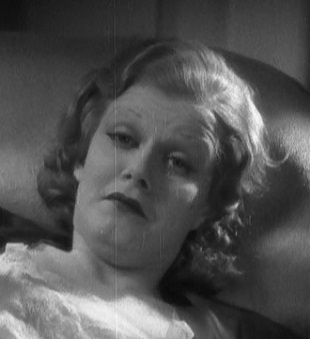
Harlowgettingready
Her pal, Sally (Una Merkel), is so convinced the plot will fail that she says she’ll wait outside Bill’s door for Lil; the first sign that Lil’s plans have succeeded is when we see Sally still outside in the dark, uncomfortably rising from her seat.

Lil has many seduction methods at her disposal, all of which she needs, since her boss is in love with his wife. Something about the transparency of her attempts, and lack of any hesitation, cracked me up so much that Harlow had won me just a minute into this routine, long before her Lil got to Bill.

Lil tries some pouting…

Harlowpouting
Shows a little leg….

harlowshowingleg
Sobs a bit…

Harlowfakesobs
Pretends she will take his initial rebuffs in stride…

Harlowandhersap
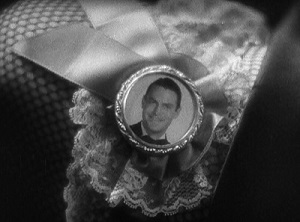
Feigns a longstanding affection for him, even going so far as to pin a photo of him to her garter (Her words when she was planning this ruse: “Well, it’ll get me more there than it will hanging on the wall”).

Harlowleg
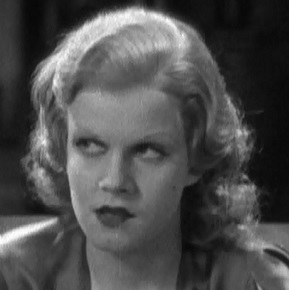
Reveals her scheming ways when he’s not looking…

Harlowscheming
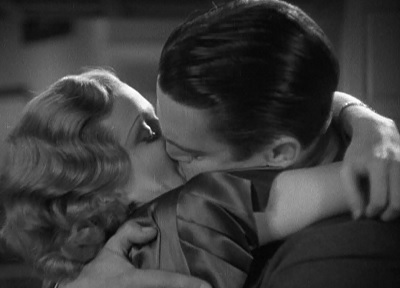
And finally, in just going for the direct approach, gets what she wants:

Harlowsuccess
Throughout the film, Harlow repeats a cycle of the techniques in Lil’s repertoire: baby talk, tears, denials, lies, threats, kisses. The character’s faux sweet veneer is so easily discarded for her brassy, true self; as in other Harlow roles; and it’s so much fun to watch the transition. Who wouldn’t want to see this shift again, and again, and again, especially in much finer films, with better-written parts? (My favorite may be the put-upon fiancée in Libeled Lady—I could watch Harlow marching toward jilter Spencer Tracy in that wedding dress all day long.)

As for the sex symbol status I didn’t understand? Ummm, I don’t know what to say for myself there. It’s about as hard to miss Harlow’s blazing sensuality as this predecessor’s. All you have to do is watch her posing, walking, or smiling for a few minutes, and you understand. There’s a reason Lil is confident she’ll win Bill and every other man she encounters. She just never seems to understand why her irresistibility doesn’t translate into success at the country club, a naiveté Harlow would repeat in other film roles as well–as if other wives would want her anywhere near their husbands.

As for Lil, once she decides Bill, the country club, and the town are too small for her, she moves on to richer grounds, ultimately hooking an old French sugar daddy.

Harolwclosefilm
She’s won a trophy for her thoroughbred, is flooded by admirers, and is still holding onto her young lover in full view of her meal ticket at the movie’s close. Of course. How else could this film possibly end?

This is the third in a monthly series of The Moment I Fell for posts…Hope you’ll share some of your favorites!
Share
Posted in: 1930s films, Feminism, Femme fatales, Romantic Comedies (film), The Moment I Fell for Tagged: Jean Harlow

Unhealthy Obsessions: Laura and Her

02/06/2014 by leah@carygrantwonteatyou.com 6 Comments

Her (2013) starts with an unoriginal premise: guy falls for an inappropriate thing, his society doesn’t judge him for it, and the audience is left to (a) reconsider their understanding of relationships and/or (b) fear a future in which falling for an operating system is acceptable.  (Substitute an android or doll for the operating system and you’ll find you’ve seen this film before.)

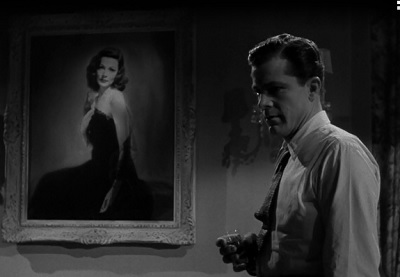
Her asks that you support this odd love, but the only time that has worked for me is with Laura (1944), in which detective Mark McPherson (Dana Andrews) becomes so enamored by others’ descriptions of and a portrait of a murder victim that he can barely function. The trick of the film is that it seduces the audience so completely that we cease to find this love creepy at all, something that never happened to me in the 126 minutes of Her.

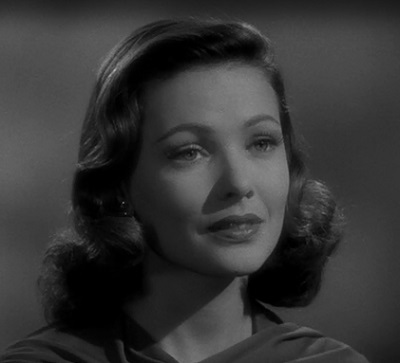
Both Her and Laura benefit from the wise casting of their heroines. Scarlett Johansson’s voice is so sexy and Gene Tierney’s face so perfect that the audience’s first reaction is Of course! Who wouldn’t fall for her?
LauraTierney

It’s in the development of the hero that Laura succeeds and Her stumbles. There’s nothing wrong with Joaquin Phoenix’s open, touching performance. But the level of Theodore’s (Phoenix’s) romanticism is so extreme (he actually FEELS every word of the cheesy cards he writes for a living) and his enjoyment of his world so intense that you can’t help thinking this guy would fall for a Milk Dud.  We might like Theodore, but how could we possibly relate to him?

McPherson, on the other hand, is guarded in Laura, a much more common condition for those who’ve been burned by past relationships, as Her’s Theodore has been. When asked whether he’s ever been in love, McPherson quips, “A doll in Washington Heights once got a fox fur outta me.” As his passion for the murder victim, Laura (Tierney), increases, McPherson resists and denies it, trying to keep his professionalism intact. The audience can therefore empathize with his struggle, especially since some types of police work can demand obsession (mystery writer James Ellroy once claimed Laura was a favorite film of cops he knew).

DanaAndrews

Almost as problematic as the characterization of Her’s Theodore are the impressionistic scenes critics are applauding. Are they beautiful? Yes. But their lengthiness gave me too much time to think: Why would someone so outgoing primarily socialize with video games? Am I meant to believe people like those awful cards he writes? WHO SMILES THIS MUCH? Laura, at 88 minutes total, fits in the detective’s love AND the solution to the whodunit. It speeds along with such rapidity that the audience forgets that McPherson’s love is just as, if not more, disturbing than the affections of Laura’s former admirers.

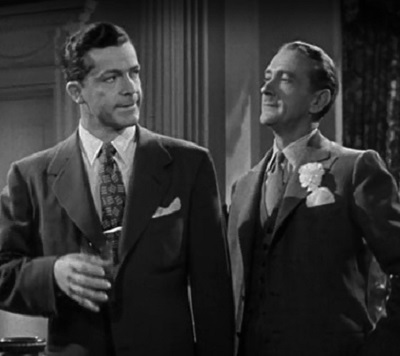
It’s in depicting these former admirers/suspects that Laura really excels, especially with cynical Waldo Lydecker (Clifton Webb), whose one-liners keep the audience alternately laughing and cringing, often at the hero’s expense: “You’d better watch out, McPherson, or you’ll end up in a psychiatric ward. I don’t think they’ve ever had a patient who fell in love with a corpse.” Jonze’s film desperately needs a Lydecker, as its cloying mood soon becomes monotonous, and Amy Adams does nothing but bolster her friend’s feelings for the operating system. (Does Spike Jonze require screenwriter Charles Kaufman to avoid taking himself too seriously? Where is the light touch of Being John Malkovich?)

AndrewsandWebb

As it drifts along in its dreamy way, Her demands that you continue to contemplate its hero’s unhealthy love. Laura simply expects you to accept its. As a result, I felt drained by Her and intrigued by Laura. Unless you want sugar shock, I suggest you stick with the older film too.

Random thoughts:

The high-waisted pants on men have pained me in Laura and other 40s films. Could future fashion designers be so cruel as to bring back such an unflattering style and combine it with melon shades, as we see in Her? And if not, why did Jonze make me suffer through it? It takes a lot to make this man look unattractive:

JoaquinPhoenixJ

But Jonze certainly succeeded.

Vincent Price (the murder victim’s former fiancé) is such a wimp in Laura that it’s shocking to realize he scared whole generations of moviegoers and Michael Jackson fans.

VincentPrice

Apparently, fans of Philip Seymour Hoffman, Phoenix’s costar in The Master, also noticed Her’s dire need for sarcasm and did a fake promo for the film with Hoffman’s voice instead of Johansson’s. Listening to it was one of the few joys possible after hearing about Hoffman’s death (not PG rated, for you parents out there).

What are your thoughts on Laura and Her? (Please avoid bringing up anything in the second half of Laura, as I’d like to avoid spoilers.)

Share
Posted in: 1940s films, Drama (film), Femme fatales, Film Noir/Crime/Thriller & Mystery, Romance (films) Tagged: Gene Tierney, Her, Joaquin Phoenix, Laura, Vincent Price, Waldo Lydecker
« Previous 1 2

Recent Posts

  • 100 Years Later, Still Scary: Dr. Caligari
  • Escaping Out of the Past (1947)
  • A Weeper for Those Who Love Jerks
  • Thank You, Academy, for Not Infuriating Me
  • Challengers (2024) Is a Bad Movie

Subscribe to Blog via Email

Enter your email address to subscribe to this blog and receive notifications of new posts by email.

Categories

  • 1920s films
  • 1930s films
  • 1940s films
  • 1950s films
  • 1960s films
  • 1970s films
  • 1980s films
  • 1990-current films
  • 2020s films
  • Action & Sports Films
  • Anti-Romance films
  • Blogathons
  • Childfree
  • Comedies (film)
  • Drama (film)
  • Feminism
  • Femme fatales
  • Film Noir/Crime/Thriller & Mystery
  • Gloriously Silly Scenes
  • Horror
  • Humor
  • Mae West Moments
  • Musicals and dancing films
  • Oscars
  • Random
  • Romance (films)
  • Romantic Comedies (film)
  • The Moment I Fell for
  • Turn My Sister into Classic Movie Fan
  • TV & Pop Culture
  • Uncategorized
Share
Classic Movie Blog Hub Member

Recent Comments

  • leah@carygrantwonteatyou.com on Meg Ryan’s Fate Foretold in Joe Versus the Volcano
  • Ryan on Meg Ryan’s Fate Foretold in Joe Versus the Volcano
  • leah@carygrantwonteatyou.com on 100 Years Later, Still Scary: Dr. Caligari
  • The Classic Movie Muse on 100 Years Later, Still Scary: Dr. Caligari
  • leah@carygrantwonteatyou.com on 100 Years Later, Still Scary: Dr. Caligari

Archives

  • November 2025
  • September 2025
  • May 2025
  • March 2025
  • January 2025
  • November 2024
  • August 2024
  • July 2024
  • May 2024
  • March 2024
  • February 2024
  • December 2023
  • November 2023
  • October 2023
  • September 2023
  • August 2023
  • July 2023
  • May 2023
  • April 2023
  • March 2023
  • January 2023
  • December 2022
  • November 2022
  • September 2022
  • July 2022
  • May 2022
  • April 2022
  • March 2022
  • February 2022
  • October 2021
  • September 2021
  • April 2021
  • March 2021
  • February 2021
  • December 2020
  • October 2020
  • September 2020
  • July 2020
  • May 2020
  • April 2020
  • March 2020
  • February 2020
  • December 2019
  • October 2019
  • September 2019
  • June 2019
  • May 2019
  • April 2019
  • February 2019
  • January 2019
  • November 2018
  • September 2018
  • July 2018
  • June 2018
  • May 2018
  • April 2018
  • March 2018
  • February 2018
  • January 2018
  • November 2017
  • September 2017
  • August 2017
  • July 2017
  • June 2017
  • May 2017
  • April 2017
  • March 2017
  • February 2017
  • January 2017
  • December 2016
  • November 2016
  • October 2016
  • August 2016
  • July 2016
  • June 2016
  • May 2016
  • April 2016
  • March 2016
  • February 2016
  • January 2016
  • December 2015
  • November 2015
  • October 2015
  • September 2015
  • August 2015
  • July 2015
  • June 2015
  • May 2015
  • April 2015
  • March 2015
  • February 2015
  • January 2015
  • December 2014
  • November 2014
  • October 2014
  • September 2014
  • August 2014
  • July 2014
  • June 2014
  • May 2014
  • April 2014
  • March 2014
  • February 2014
  • January 2014

Meta

  • Log in
  • Entries feed
  • Comments feed
  • WordPress.org

Copyright © 2025 Cary Grant Won't Eat You.

Church WordPress Theme by themehall.com