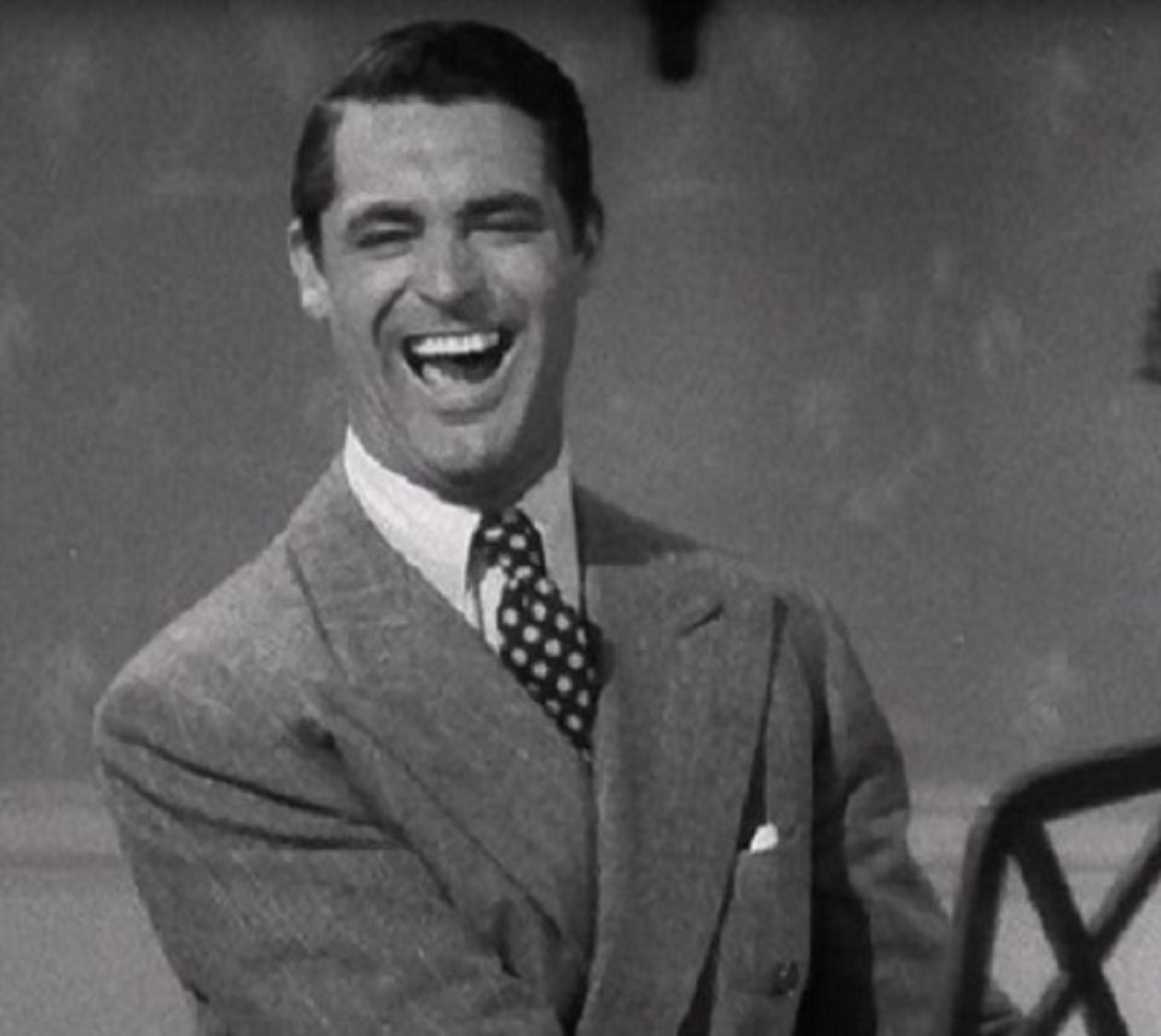
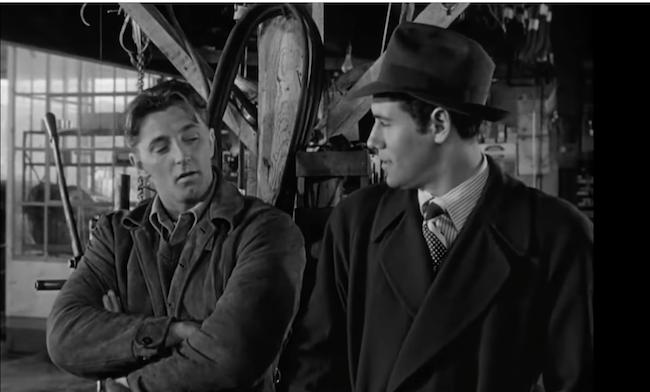
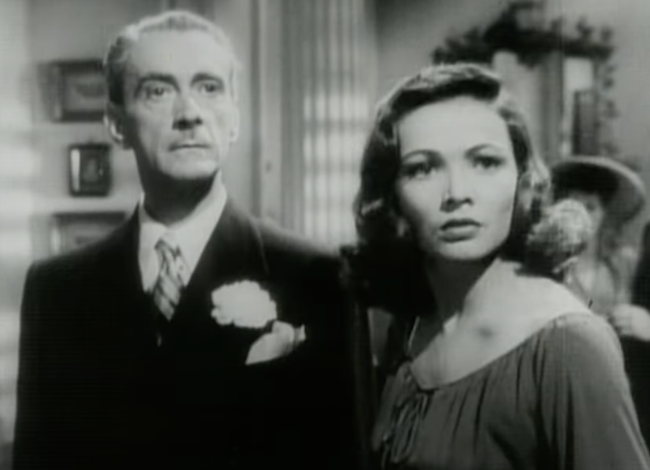
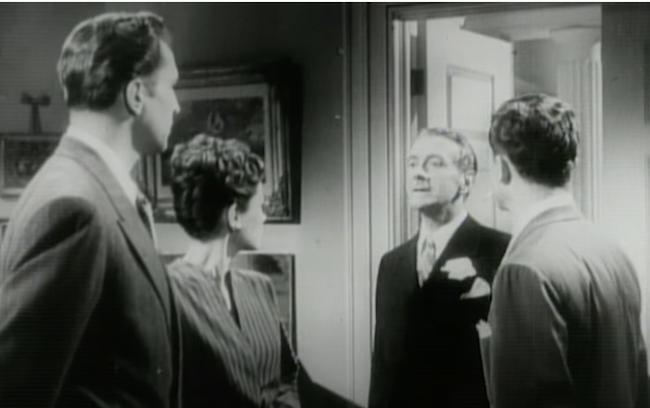
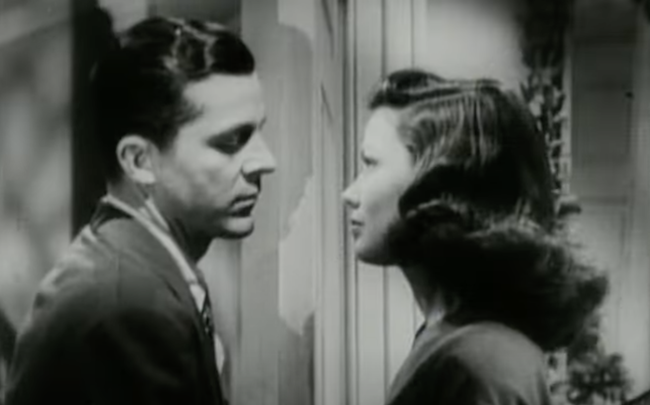
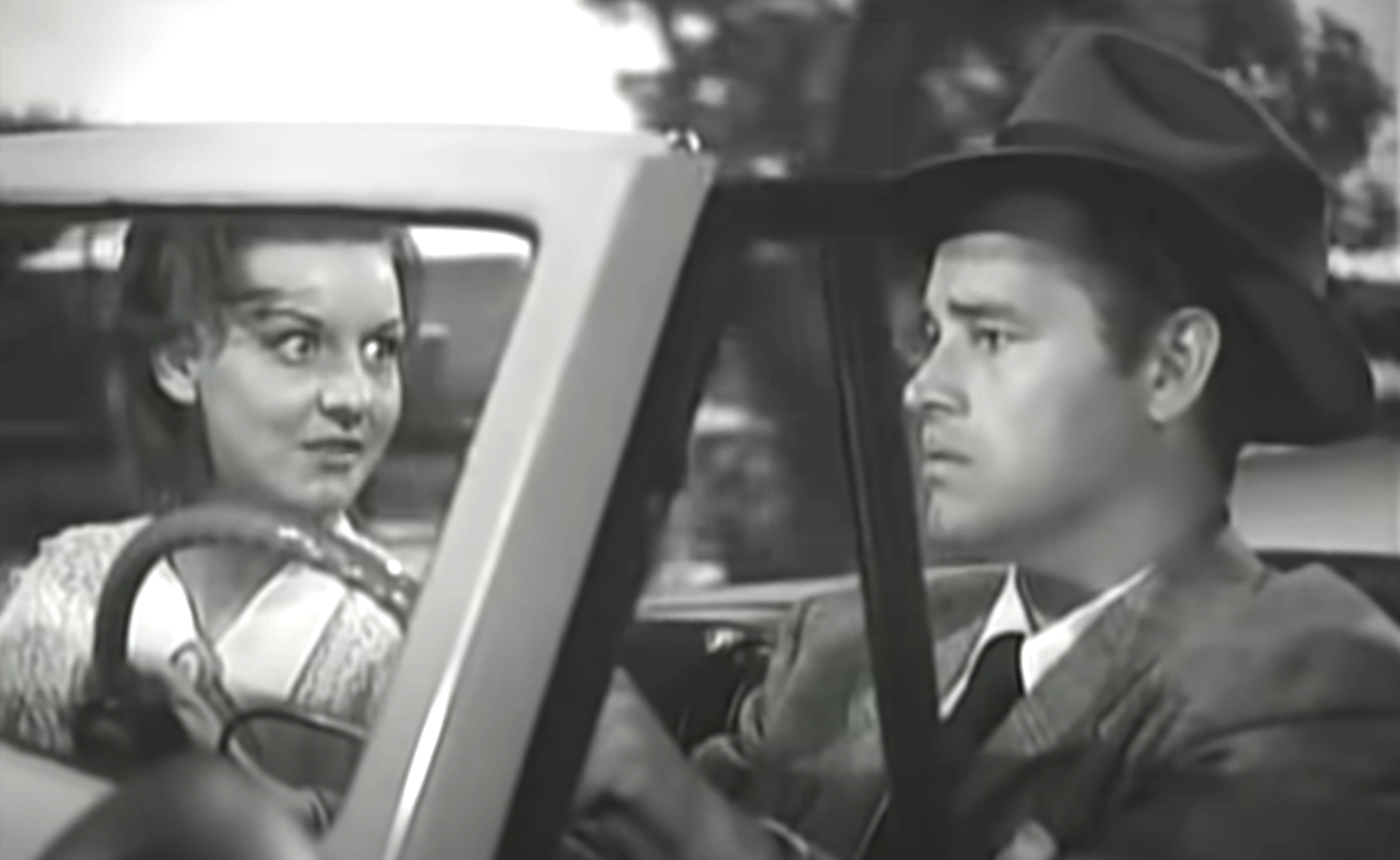
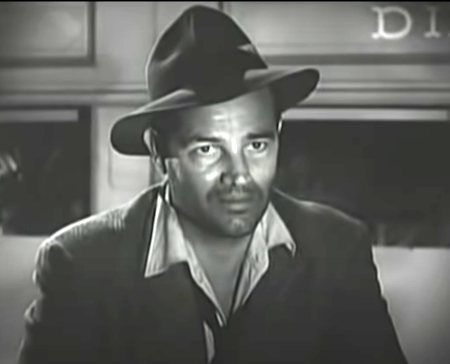
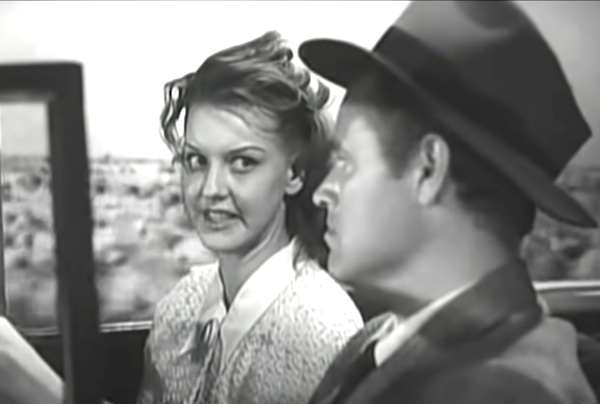
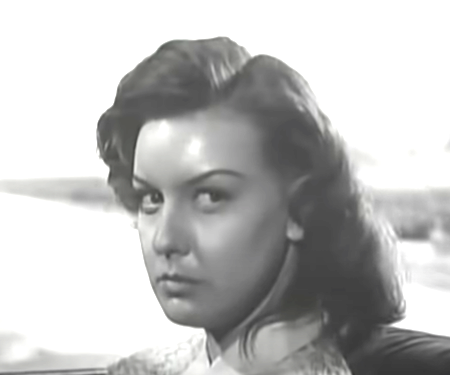
Oh Jeff, I get why you fell for Kathie (Jane Greer). That sexy voice, her air of mystery, those all-white get-ups, vacation drinks, and her nonchalant response to your chase. You really had no hope, did you? Especially once she started toweling you off from the rain.
Yeah, you were a goner, my friend. That was a given.
But I give you credit. You saw her shoot your former partner and realized too much siren for me. You viewed her clearly after that. When your new, sweeter lady love defended her by saying, “She can’t be all bad. No one is,” you (justifiably) answered, “She comes the closest.”
You are right that you were a chump, falling for a homicidal moll’s lies, but honey, in the world of noir suckers, you are Albert Einstein. You learned. You improved your life and your dating judgment (a lot of us don’t make it that far).
Problem is, my friend, you need to work on your shadiness. The detective career is not one in which fisticuffs save you from a bent former partner. You don’t have to kill, but you must learn some trickery and bluffing. To be honest, I’m not sure how you’ve remained above ground this long. I might not approve of Kathie’s answer, but I understand why she thought your self-defense inadequate.
You said it yourself when Ann’s wannabe boyfriend threatened, “I was going to kill you.” You quipped, “Who isn’t?” In those two words, you captured the gumshoe life, in which craftiness and sketchiness are survival requisites.
Luckily, you do have a key asset, Jeff. You are a planner. I need you to remember that neither Whit, nor Kathie, nor any of the henchmen involved have this basic quality. They live on spur-of-the-moment, unerringly bad decision making.
Let’s take your nemesis, Whit. He hired you, a ridiculously attractive man with sleepy eyes and a sultry voice, to retrieve his already traitorous girlfriend. (As my sister says, “That’s like sending Cindy Crawford to get your boyfriend.”)
You soon discovered she was a viper, didn’t you? Whit did too. She’d already nearly killed him. So what did he do when he discovered all the additional murderous shenanigans she’d been up to? He forced this woman into a corner, thinking what? She’d say, “Okay, honey. Off to jail I go”?
I know he looked like he was intelligent, Jeff. But he really wasn’t. And his surviving buddies are even dumber. They just outnumbered you with this tax killing plot. They didn’t — in any way — outsmart you.
Why then, Jeff, after some unlucky moves and bad timing, have you let the fatalism get to you? When Kathie said, “Let’s get out of here” after killing Whit, what did you mean by asking, “There’s someplace left to go?”
Of course there is, Jeff! You surely can double-cross a sociopath with no impulse control. This is no Phyllis Dietrichson, my friend. She’s not going to out-connive you. And do you honestly have a problem setting her up for the three killings she is either solely or jointly responsible for? Is calling the police so that you and she will die in a shootout a more ethical plan? Do you think any of the henchmen left care enough about Whit’s honor or have brains enough between them to hunt you down?
I know you think you can’t escape your past — that once you get into bed (in your case, literally) with evil, you don’t have a shot unless you go full-scale monstrous yourself and outsmart them all, Red Harvest (or its imitator, Miller’s Crossing)-style. And you’re too good of a person to go that route.
But do you need to? Most of your enemies are dead. Your fate is not as determined as you think. Your odds are far better than Kathie’s were in her gambling efforts in Acapulco. Her fingerprints are all over that home, and angel face or not, she is a gun-loving gangster’s moll (in a terribly sexist age), which doesn’t make for the best defense.
I know this is the noir way, Jeff: You must play the man defeated. You must see killing her (even indirectly) as the only escape from her wiles and the only protection for the woman and friend you love. I get it, Jeff. It makes for a good movie.
But you said it yourself, Jeff: “There’s a way to lose more slowly.”
And in this case, you actually had a chance to win.
Laura is a curious film. I always think of it as the male gaze on steroids, as we know so little of the heroine apart from the versions we get from the men who surround her: the portrait artist, the boyfriend, the best friend and the cop. All are obsessed with her, and all want their version of the murdered heroine to supersede the others.’
That’s why I chose the film for A Haunting Blogathon: In the Afterlife, hosted by the Classic Movie Blog Association. Crime writer James Ellroy once said something about Laura being the ultimate film for cops, and I think he’s right: the victim you only learn of from diaries, from photos, from others’ words. You never quite know who she was.
Surely, it would be easy for those driven to solve a homicide (especially one that remains out of reach) to become possessive about what they know and haunted by what they don’t. (Ellroy, whose mother was murdered, explores his own haunting in My Dark Places, a fascinating read, as is the book that inspired him: Joseph Wambaugh’s true-crime masterpiece, TheOnion Field.)
It’s not hard to imagine becoming enamored with and fascinated by a victim who looks like Gene Tierney. In this particular story, however, the hauntings turn from reasonable to pathological.
What I love about the film is that the versions of Laura these men (and one woman) tell don’t quite add up. Her housekeeper, Bessie (Dorothy Adams), describes Laura as the sweetest lady on earth, and certainly Gene Tierney’s perfect face and that sentimental theme song seem to confirm those impressions.
But would such an angel be best friends with Waldo Lydecker, enjoying his poisonous remarks about her admirer and fellow party guests, as we see her do (in his version of her story, of course)?
Is she really a woman who, as fiancé Shelby Carpenter (Vincent Price) claims, will indulge any visitor, day or night? He has treated his bride-to-be like a doormat. Since he wants to continue to do so, this tenderhearted version of Laura is convenient for him. But Laura does, in fact, dump him, and despite occasional remarks seems little affected by the poor woman (cheater or not) who got killed in her doorway. Not exactly the heart-on-her-sleeve, always-forgiving softie he takes her for.
Of course, Lydecker isn’t wrong in accusing Det. Lt. Mark McPherson (Dana Andrews), Laura’s most recent admirer, of being a creep. McPherson wants to buy a portrait of her when she’s dead and becomes instantly possessive of her after she returns to life.
Who instantly hits on a stranger (worse than that, assumes she’s already his) while she’s still in shock?
Even if she is vulnerable enough to think she’s in love too, it would be wise and kind to wait–I dunno–48 hours? He also chooses for the moment of his wooing a party during which the following things are happening to his new love:
Her fiancé has basically just said to her, “Yeah, I know you killed my lover, and that’s cool,” after inviting said lover into Laura’s home and into her clothes during the latter’s wedding week.
Someone has just been murdered in Laura’s home, and this cop/admirer has invited people over to it for a gathering before she’d had time to sage it, obsessively clean it, or call a real estate agent to put it on the market.
Her aunt, Ann Treadwell (Judith Anderson), has confessed–casually, I might add–that she’s toyed with murdering Laura herself.
And oh yeah, our heroine is still in grave danger from the best friend who tried to off her.
Our infatuated cop follows up this uproariously fun party by pretending he’s arresting her, ruining her reputation in front of her friends, because he can’t control his feelings without taking her into the police station. Ummm, what?
McPherson is right that Laura has surrounded herself by “dopes”–if by dopes he means a heartless group of friends and lovers, with some sociopathy in the mix. He’s just wrong not to include himself in the description. Andrews is quite handsome and feigns calm (with his trusty toy), so it’s easy to think of this detective as the hero in the beginning, but that impression soon wanes.
Right after returning home and shocking Bessie, Laura says gently, “I’m not a ghost, really,” and then jokes, “Have you ever heard a ghost ask for eggs?” But her claims ring hollow. Though she’s physically in the room, I would argue Laura still is a ghost through no fault of her own. Real/imagined impressions of her haunt her admirers and herself.
Actual men are also looming in her life, refusing to let her be who she wants to be, love whom she wants to love, or take five minutes to recover from life-altering trauma. And then there’s the method her best friend chose to kill her with: buckshot (interesting that Waldo doesn’t even reconsider that method during his second attempt). It’s not bad enough he wants to kill her. He wants to obliterate her.
If I were Laura’s true friend (or her therapist), I’d say, “Hey, honey. It time to hightail it out of town. A transfer overseas would be ideal. Also, you may want to keep that phone number unlisted.”
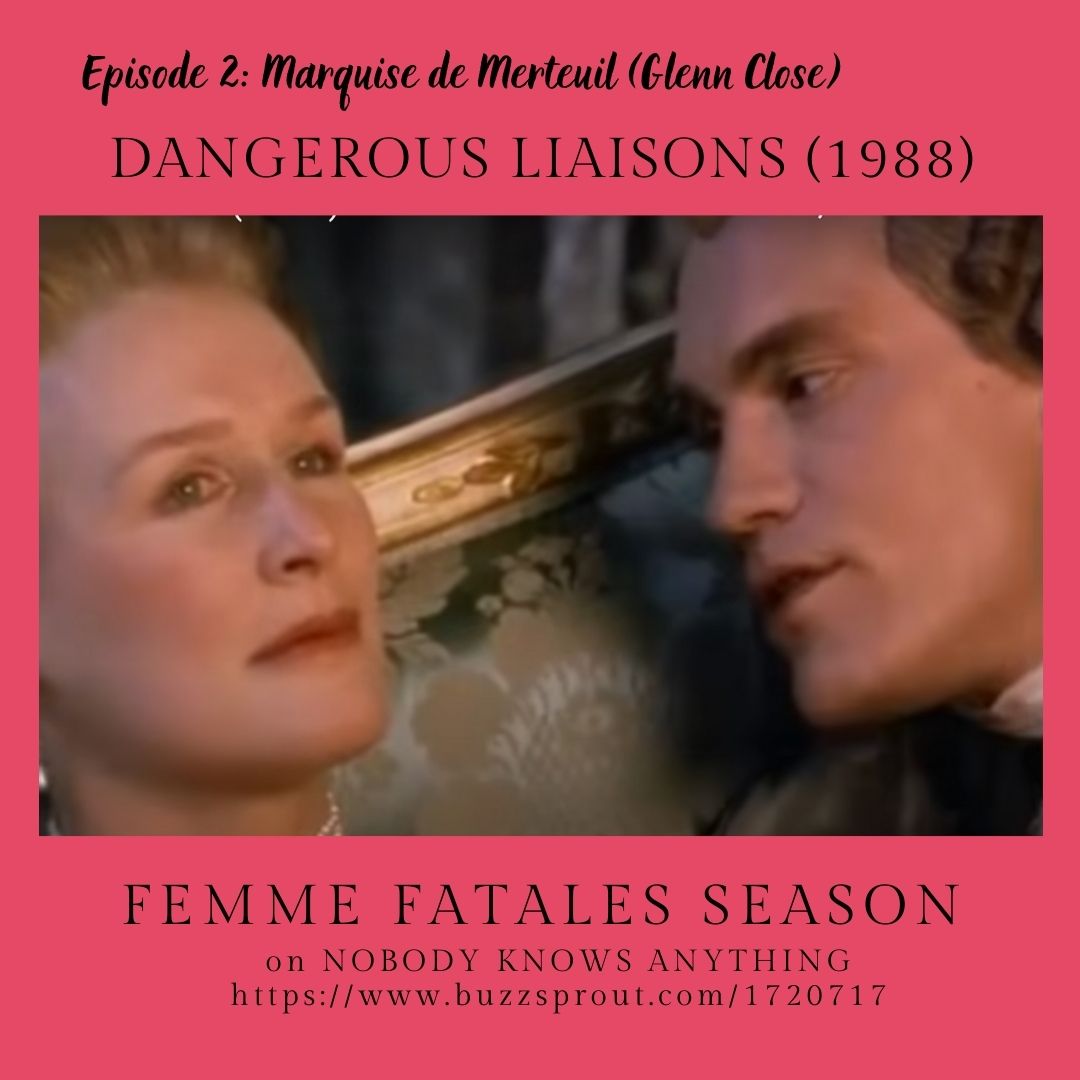
Episode 2 of the femme fatales season of Nobody Knows Anything is up!! Dangerous Liaisons, a film that pits the dueling wits of Glenn Close and John Malkovitch against each other in a fight over love and power . . . . and also, Keanu Reeves is there, being strangely perfect in eighteenth-century dress. We ask this critical question: Can the femme fatale ever win? (Just why Close didn’t get the Oscar for this is a big mystery.)
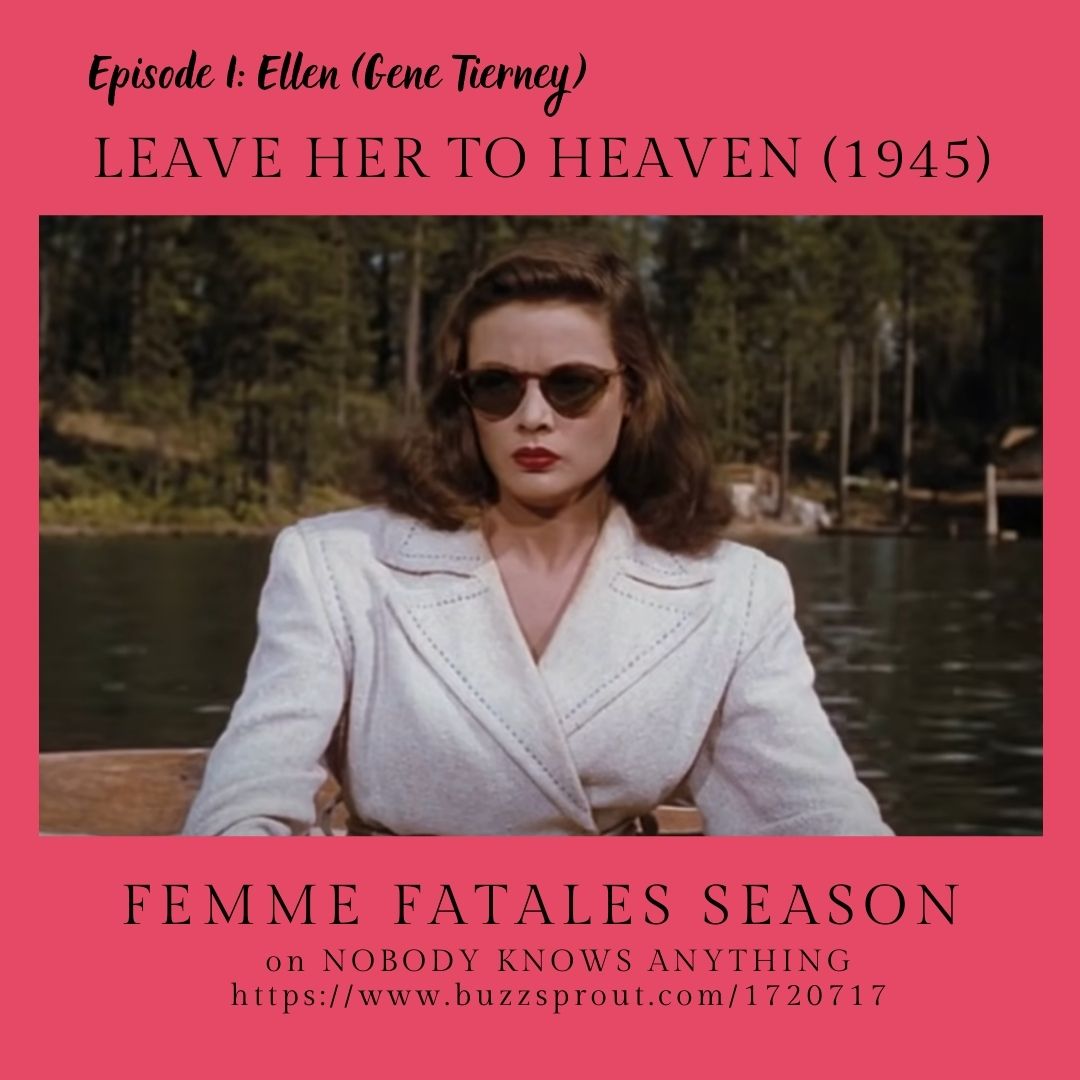
My new podcast season on femme fatales with Brian Wilkins and Michael Gutierrez releases today, and we begin with one of my favorite films, Leave Her to Heaven.
We chat about the strange canoe launch that begins the film, Tierney’s impossible beauty, the unfathomable hero–who wanted to marry this brilliant, fascinating beauty but never share her bed–and her troubling response to that marital issue. Join us here!
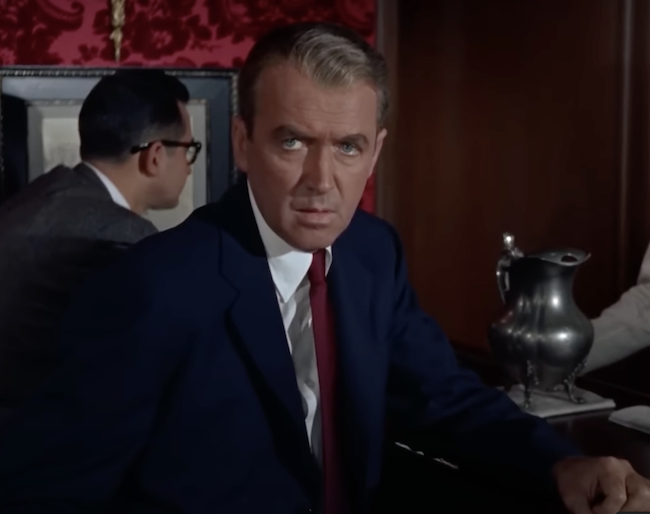
I love a good casting against type. That’s why Scottie in Vertigo is so disarming: It’s creepy to find America’s aw-shucks sweetheart, Jimmy Stewart, playing a villain.
Of course, not all of Stewart’s parts are sugary; he was a murderer in The Thin Man series. He was a professor with disturbing philosophical beliefs in Rope. But Stewart plays innocence beautifully and so memorably—as in his iconic performance in Mr. Smith Goes to Washington, or in his role opposite an imagined rabbit in Harvey. It’s in these parts—and as the lovely George Bailey in It’s a Wonderful Life—that Stewart makes the most enduring impression on viewers.
That’s why when Scottie begins to act unhinged in Vertigo, the audience gives him the benefit of the doubt, and can understand why his loves do too.
He’s just in grief, we think. It must be awful to blame yourself for your coworker’s death.
He’s just experiencing PTSD.
I know he must be a good guy…He’s George Bailey!
Scottie seems to be a good guy at first. He’s a charming, funny friend to Midge (Barbara Bel Geddes), who secretly loves him. He’s willing to help desperate college friend, Gavin (Tom Helmore). Gavin claims his wife, Madeleine, is possessed by a sad ghost and employs Scottie to trail and protect her from self-harm.
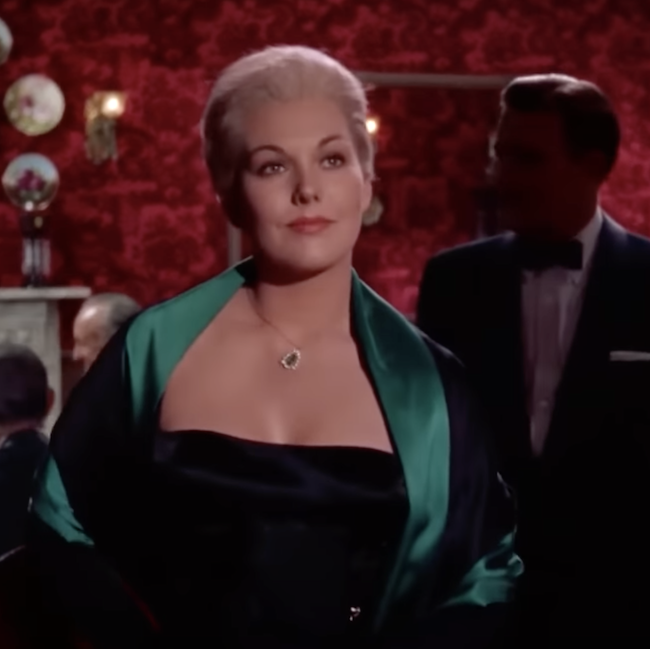
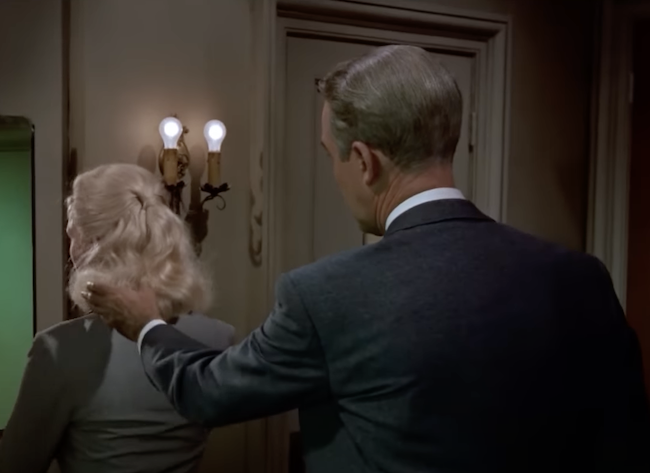
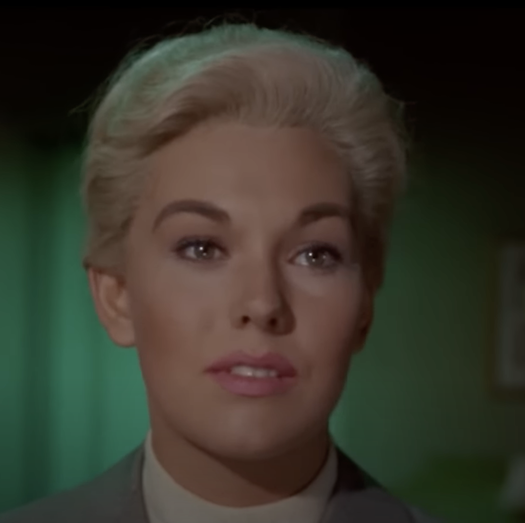
But right away, Scottie’s actions are suspect. He falls for Gavin’s wife. I mean, it’s hard to blame him. Look at her entrance:
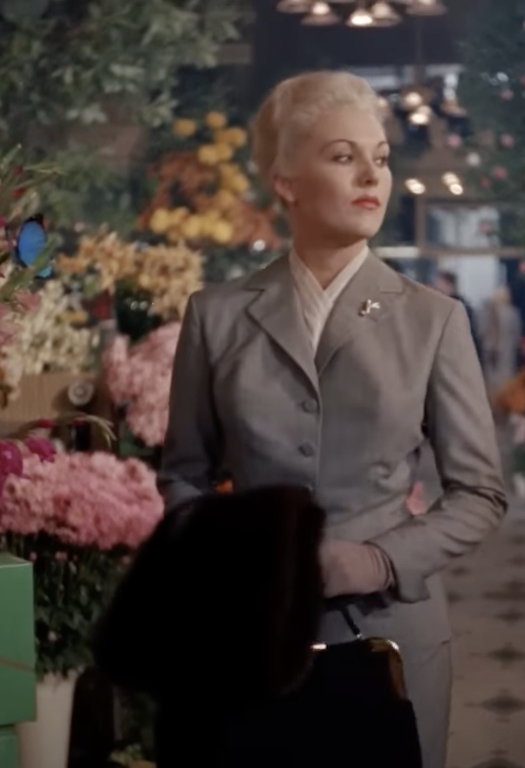
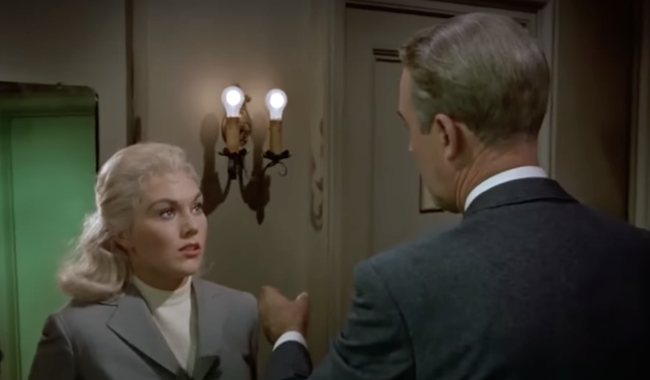
She somehow looks even better in a rather drab grey suit:
Still, Scottie didn’t have to act on his attraction. He breaches friendship and professional ethics by hitting on Madeleine. Knowing—as we viewers do by the end—that Gavin planned it that way doesn’t change anything.
For a brief moment, Scottie and Madeleine seem to enjoy each other’s company, but the happiness is short lived.
Soon, things go terribly wrong for Scottie. Madeleine leads Scottie to a tower. His vertigo prevents him from following her, and he thinks he sees her leap to her death. What he really sees is the real Madeleine (whom he never met) thrown from a tower, while fake Madeleine, whom he’s been trailing (Novak), hides until he leaves.
Once Scottie loses fake-Madeleine to supposed suicide, we’ve forgiven him for any bad behavior. After all, look at his despair!
It’s what he does with that despair that makes Scottie a villain.
First, he follows a strange woman, Judy, to her apartment door.
Let’s start there. Stalking a woman because she looks like your lost love is deranged. Her hostile response to his knock is valid—even if she weren’t the fake Madeleine we know her to be.
Of course, Judy is hardly innocent. She was involved in a murder plot that ruined Scottie’s life. Despite her complicity, we feel for her. She’s so remorseful and almost as self-destructive as pretend Madeleine: who after such a perfect crime falls for her own mark? (Gavin would have killed her had he thought her capable of it.)
And Scottie? Had Scottie believed Judy guilty, his cruel behavior toward her would be somewhat justified. But Scottie believes her innocent. He’s an emotionally abusive boyfriend who feels ZERO guilt for expecting irrational sacrifices from his lover.
His next disturbing act post-stalking is to force Judy to wear the same grey suit as his dead love. When Judy realizes what he’s doing, she protests.
His justification for distressing her is jaw-droppingly awful: “Judy, Judy, it can’t make that much difference to you…. Judy, do this for me.”
I admit. I laughed aloud when I heard these words this time around. Can’t make any difference to YOU, what you wear? Yeah, nothing personal there.
“I don’t like it,” she says of the suit he offers her.
“We’ll take it,” he responds to the saleswoman.
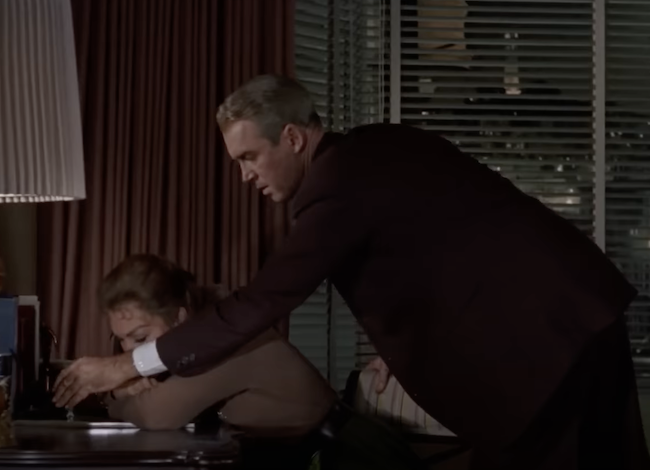
Judy responds by laying her head on a desk in misery. Scottie’s answer? Ply her with liquor.
She asks why he’s terrorizing her and threatens to leave but fears he wouldn’t let her. Sadly, she wouldn’t leave anyway: she wants to remain with her abuser.
This is when we wish Judy’s friends from an earlier scene would return.
RUN, HONEY. RUN!!!!!!
Scottie then says his last few days with her (and yes, he starts on this nonsense just DAYS after they get together) are the first happy ones in a year.
She says that’s only because she reminds him of his dead love. What, besides that, does he like about her?
He replies, “It’s you too. There’s something in you that…” He starts to touch her, then WALKS AWAY without finishing the thought. Because she’s right: he only likes her for her resemblance to Madeleine.
“You don’t even want to touch me,” she says.
“Yes, yes I do.”
Let it be said that there’s no evidence to back his words.
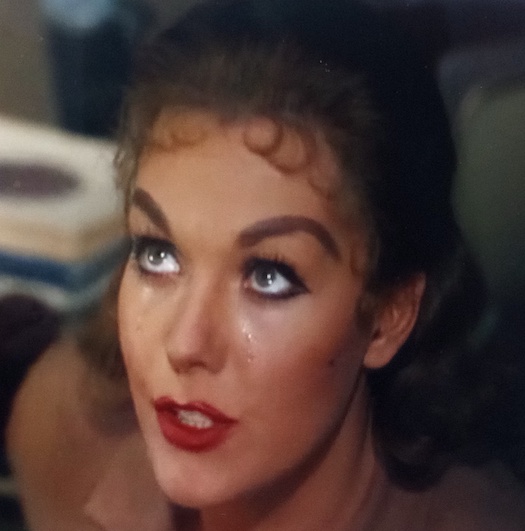
“Couldn’t you like me, just me, the way I am?” Judy cries.
Now this is some heartbreaking stuff. But it gets worse:
“When we first started out,” Judy says, “it was so good, w-we had fun. And then you started in on the clothes, well, I’ll wear the darn clothes, if you want me too, if, if you’ll just, just like me.”
What is his response to this pathetic concession?
“The color of your hair.”
Because of course, he wants to change her brown hair into Madeleine’s blonde locks too.
“Oh no!” she says and walks away.
“Judy, please, it can’t matter to you.”
Again, as a woman, I must say, the color of one’s hair is QUITE PERSONAL.
But Judy is now ignoring red flags as tall as the sequoias she visited with him (while acting as Madeleine): “If…If I let you change me, will that do it? If I do what you tell me, will you love me?”
“Yes, yes,” he says.
“Then I’ll do it. I don’t care anymore about me.”
Her sad words don’t worry him, or even make him feel remorse. Because she caved to his senseless demands, he is finally affectionate, nuzzling her, “Here, go on, let’s sit by the fire,” and he takes out a cushion for her.
And so Judy makes the full transformation into his lost love for him.
We hear the elevator after the full makeover, watch her move toward him. She enters the room without a word, hesitant. She’s afraid. She puts her purse down.
“Well?” she says, turning toward him.
It’s clear that Judy is expressing one tiny rebellion, one last trace of self-respect. She comes back with her hair down, not up, like Madeleine’s. In every other way, she’s the dead woman’s twin.
“It should be back from your face and pinned at the neck,” says Scottie, “I told her [the beautician] that, I told you that.”
Wow.
“We tried it. It just didn’t seem to suit me,” she says, combing her hair nervously.
He grabs her hair.
She turns to face him.
“Please, Judy,” he begs.
She walks in other room, fixes it for him.
He sees her in fog as she somnolently walks toward him. She half-smiles, then smiles fully as she sees his tears.
Being the toxic man he is, he gives her a REAL kiss. After all, she’s now actually BECOME his dead love for him. Because that’s healthy.
In the next scene, we see them playful and flirty with each other—an echo of the earlier conversation with Midge, but with heat.
“Hello, my love. Like me?” She smiles and then spins for him in a pretty dress, her air and voice confident, easygoing—the tone of a well-loved woman. This is the first genuine smile we’ve seen from Kim Novak in the film. (Scary, right?)
“Mmmm,” he responds.
“Is that the best you can do?”
“Come here.”
“Oh no, you’ll muss me.”
“Well, that’s what I had in mind. Now come here.”
He then spots Madeleine’s necklace on her neck and knows Judy’s guilt. He says cryptically, “One final thing I have to do, and then I’ll be free of the past.”
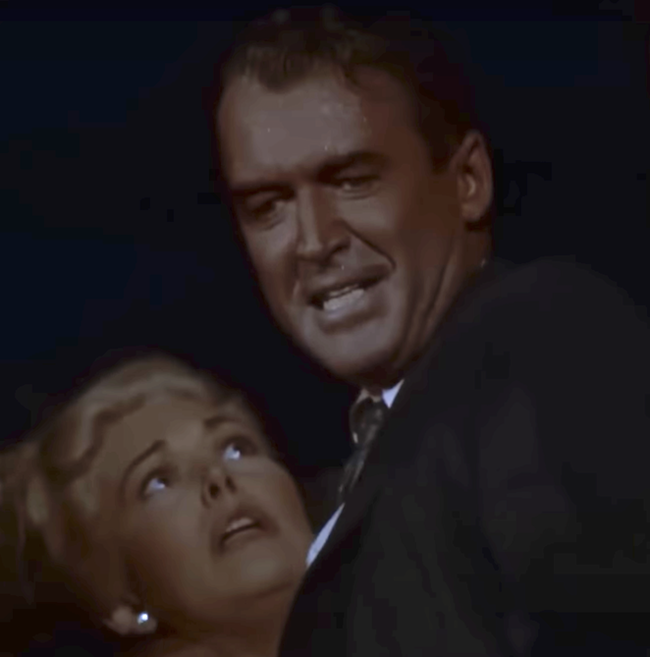
Scottie drives Judy to Madeleine’s supposed suicide tower. He forces her up the stairs and through the trap door.
Then he attacks and half-strangles her, saying, “He [Gavin] made you over, didn’t he? He made you over just like I made you over, only better. Not only the clothes and the hair, but the looks and the manner and the words and those beautiful, phony trances….Did he train you, did he rehearse you, did he tell you exactly what to do, what to say? You were a very apt pupil too, weren’t you?”
It’s easy to read these words on multiple levels. Yes, he’s angry she deceived him and furious she’s taken advantage of his affliction. But he’s also angry that she’s had a former lover, Gavin. And he’s angry that Gavin was a better Geppetto than he was.
Scottie’s physical actions are brutal now that he knows what Judy’s done, but those actions are just an escalation of earlier ones.
Note how many times he pins Judy’s arms throughout this story, how many times he forces her from behind—whether it is to wear the clothes he wants, or to go up to a tower where her death awaits. Observe how many times she looks fearful, hesitant, unsure of herself. She is a victim of his cruelty, just as he has been a victim of the murderous plot.
Jimmy Stewart’s Scottie is the definition of a boyfriend who should make a woman run. If he doesn’t give you the heebie-jeebies in Vertigo, you’re just not paying attention.
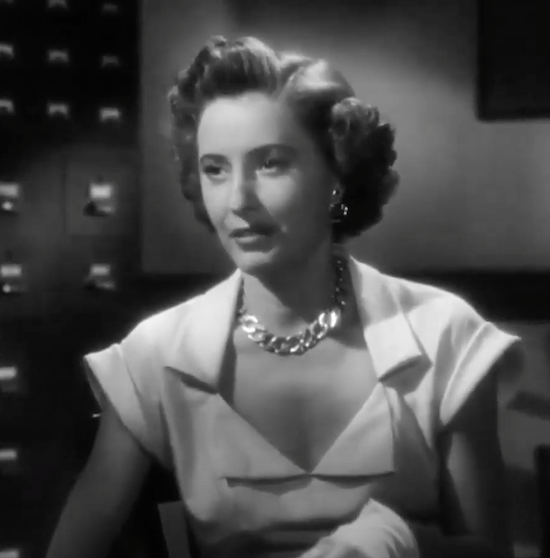
The File on Thelma Jordan isn’t a noir of the same caliber as Barbara Stanwyck’s more famous films. It’s not Double Indemnity, or Sorry, Wrong Number or even The Strange Love of Martha Ivers. But with Stanwyck as a femme fatale, you know you’re going to enjoy yourself.
***Slight spoilers, but far fewer than in the trailer.
Of the 1,00000000 things I love about Stanwyck, one is how adult she always is. She doesn’t play twee or girly–even on the rare occasions she uses baby talk to get her way. She’s sensual and knowing, fiercely intelligent and wry. You can never discount her. And you know–even if you don’t admit it to yourself–that she has the upper hand–or will soon.
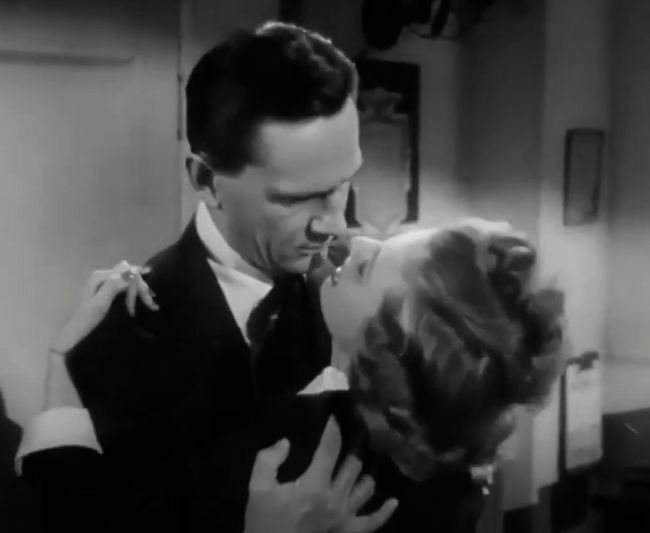
In The File on Thelma Jordan, she finds herself an easy fall guy, Assistant District Attorney Cleve (Wendell Corey). Cleve has a lot going for him: a loving family, a beautiful wife. But his wife is a daddy’s girl, and he doesn’t like that daddy. It doesn’t help that his father-in-law has all the wealth and power Cleve doesn’t–or that Cleve owes him.
That’s why Cleve drinks and feels sorry for himself, and he’s doing just that when Thelma (Stanwyck) happens upon him in his office while seeking his boss. She wants to report attempted burglaries to her wealthy Aunt Vera’s home, but instead agrees to get a drink with Cleve. She’s game, agreeing to be his buddy during his troubles. Of course, a sexy, sympathetic buddy is what every Cleve desires.
You can guess what happens: a secret affair, the aunt’s house being broken into, a murder. With Thelma, there’s no question of innocence. The question is HOW guilty is she? Did she commit the murder, did her shady ex, or did some third involved party? Whoever did it, poor Cleve is complicit, and ends up having to prosecute Thelma in a not-so-effective, likely-career-killing kind of way.
I don’t find Wendell Corey that appealing in the role, but there’s a sincerity to him; you believe this is a good, usually bright guy doing dumb things. Cleve is a smarter version of Henry Fonda in The Lady Eve. He’s not all that wary, but he’s intelligent enough to know he’s been had.
But of course, who cares about Corey, or anyone else in this film noir? This is Stanwyck’s show. And though the storytelling never rises to her abilities, every minute with her on the screen is a joy. Whether she’s acting as Cleve’s relaxed buddy, his maybe-smitten love, a wary defendant, or a hardbitten woman of the world, Thelma is riveting. Don’t miss her in action.
The common line on Detour (1945) is that it features one of the nastiest of femme fatales—a fascinating, feral creature. It’s true that Ann Savage as Vera is a powerhouse, and I can’t stop watching her. But is she really all that bad?
**Some plot reveals.***
So many reviewers skim over the incident that made Vera so raw in the first place. Yet to me, her reaction to that incident is what makes this B film worth watching. Can anyone honestly say they root for the sad-sack, self-pitying musician, Al Roberts (Tom Neal)?
What a dud this hero is. The movie is nothing until Vera enters the screen, and it’s nothing after she’s gone.
As far as her dangerousness, let’s review, shall we? Vera is a hitchhiker picked up by Charles Haskell Jr (Edmund MacDonald). We learn about her secondhand from Charles, who is complaining to his current passenger, Al, about the deep scratches on his hand. Charles says an “animal” inflicted the wounds on his body. “You know there ought to be a law against dames with claws,” he complains.
The reason for their disagreement is soon clear: “Give a lift to a tomato, you expect her to be nice, don’t you?….After all, what kind of dames thumb rides, Sunday school teachers?”
In other words, he thought she should be forced into sex with him because she must be that kind of girl. This dude felt entitled to rape her because she’s a hitchhiker. He assumes all men will agree with him (as Al does) that she’s nasty because she hurt him defending herself.
What’s intriguing—and unusual—about Detour for its time is that it gives voice to this assaulted woman. As soon as we meet Vera, we know she’s suffering from PTSD and doesn’t know how to manage her pain. Even Al, hardly an empath, says, “Man, she looked as if she’d just been thrown off the crummiest freight train in the world.”
Her angry words soon reveal that Charles is hardly the first man who has felt entitled to mistreat her: “I’ve been around,” she tells Al, looking at him intently, “and I know a wrong guy when I see one.”
That she lashes out at Al might be because of what she thinks he’s done—but it’s not the only reason.
Now Al is not the smartest dude, as Vera quickly realizes: “…You don’t have any brains.” He picks up a stranger right after he accidentally killed Charles and exchanged identities with him. If he were a smooth-talking liar, you could see him getting away with this move. If he were quick, you could see it too. But Al is not smooth. He is not quick. He is not smart. And he lies with all the skill of a toddler. He’s also unlucky because whom should he invite for a ride, but the only one who knows his identity is false? While many of his grievances are self imposed, it’s hard to argue with him that when it comes to encounters like his with Vera, fate was putting “out a foot to trip you.”
Vera’s instantly brutal to Al, whom she thinks killed her attacker. But she feels kinship with him too. She’s aiming for connection, an us-against-the-rich plan. She’s Bonnie and this idiot won’t be her Clyde. It pisses her off.
She wants him to recognize that they’re both presumed bad, that they don’t have a chance, so why not go for a con? Why not enjoy the advantages they have before everything goes to hell, as it certainly will, for people the deck is stacked against, like themselves? And when he won’t give in, she tries blackmail.
Her plan is not nice. She’s not nice. But I don’t find her nasty—even if some of her actions (and plans) are cruel. I find her tragic. She believes Charles’s wealth is part of what made him feel entitled to rape a poor girl, like her. She’s met a lot of men who act that way. Unfortunately, she didn’t find a man who could empathize with her suffering, or even enjoy a drink with her. She looked for something approximating an ally, and all she got was Al.
Oh Al. What a worthless character. He is a homme fatale BY ACCIDENT. He falls to pieces when a woman yells at him. He breaks into hives when he tries to sell a stolen car. Some theorize that he’s an unreliable narrator, deluding himself that he didn’t kill. Personally, I think he’s just deluded himself that his girlfriend wants him back. I don’t find Al’s psychology complex enough for any more sophisticated delusions.
But Vera? We lose her far too soon. If this film were the revenge fantasy this character deserves, she’d be living it up in Charles’s family mansion, smiling archly at the family as they bemoaned the loss of their heir.
“Oh yes,” she’d say, holding up champagne and affecting a snooty tone, “Wasn’t it a shame for Charles, all those women who did him wrong?”
This post is part of the Movies are Murder! blogathon hosted by the Classic Movie Blog Association (CMBA). Go check out all of thegreat entries.
Yes, this movie is a mess: confusing dialogue, incomprehensible character development, choppy plot development, and some truly unfortunate music choices. But there are three good reasons to still watch Jean Renoir’s curious noir, my choice for the Classic Movie Blog Association Fun in the Sun! blogathon
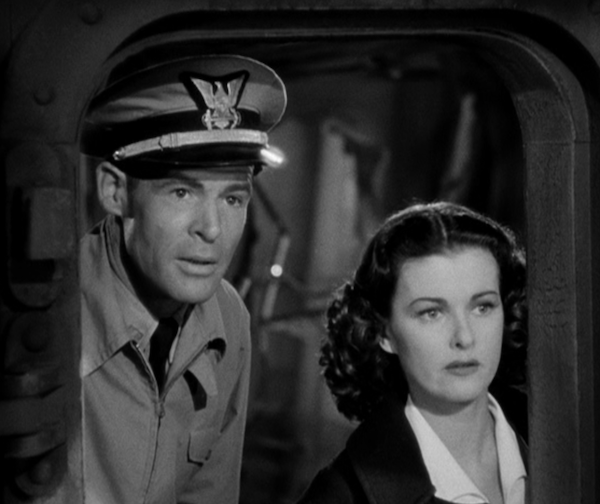
Robert Ryan’s performance as Scott. Can any man in noir perform intensity as well as Robert Ryan? I never feel any attraction or liking for Ryan’s characters in any film, but he certainly gets under my skin. Who better to play a Coast Guardsman with PTSD than Ryan? Scott is also impulsive, erratic, and passionate—and fully realized thanks to Ryan.
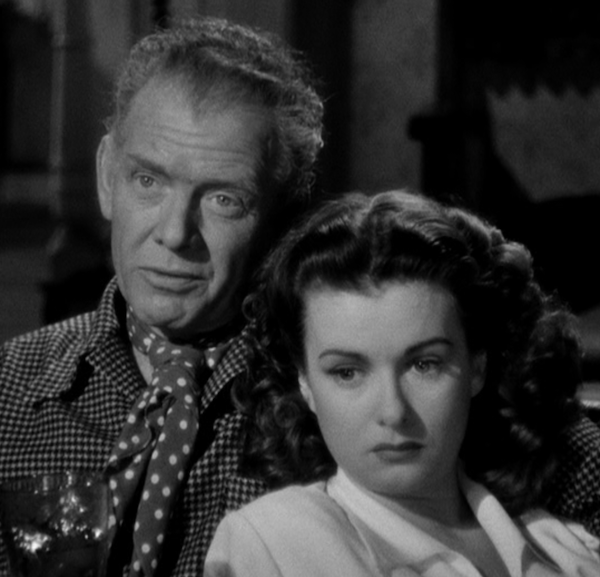
The complexity–and unpredictability–of the “love” triangle. Scott falls for Peggy (Joan Bennett), a woman collecting firewood next to an old shipwreck, because she’s haunted, like he is. It doesn’t hurt that Peggy looks like Joan Bennett. Unfortunately for Scott, Peggy is married to an artist, Tod (Charles Bickford), who is, if possible, even more intense than Scott. We learn soon that Peggy accidentally blinded Tod in a drunken squabble. Her husband is so awful–abusive and violent and creepy–that we understand her fling with Scott and desire to escape with him. But things aren’t quite what they seem. There is something still between Peggy and Tod, mysterious as that connection might be to viewers. It’s not exactly love; it’s not exactly hate. It may just be toxicity–but there’s something there all the same. How will it all turn out? The film keeps us guessing.
Jean Renoir. It’s odd to watch a film by such a famed director that is such an odd misfire. The story is that an advance viewing was a disaster for Renoir, and he was forced to make cuts and edits that didn’t serve the story. While that butchering IS clear, his original goal isn’t. But that’s what makes the film so intriguing. What did he want to say about these three tortured people, especially the original couple? What are we to make of how it starts, and how it ends? Why did he feel traditional noir tropes wouldn’t serve him, and yet set out to write (with Frank Davis) a noir anyway? And why choose this story to adapt? It’s hard to say, but the guesswork will keep you watching.
This review is part of the blogathon held by the Classic Movie Blog association, Fun in the Sun! Check out the excellent entries there, which are also mainly much happier viewings than this grim tale!
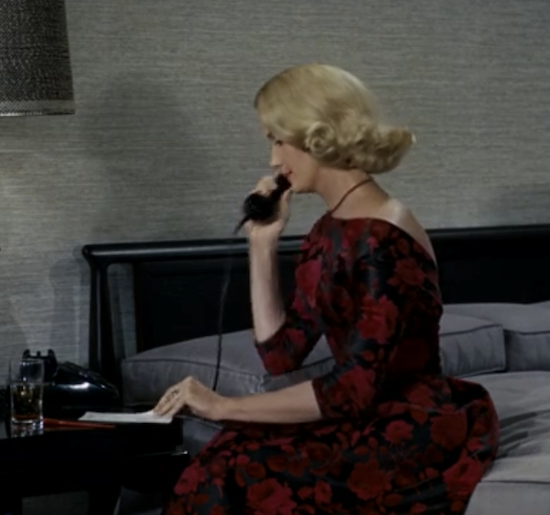
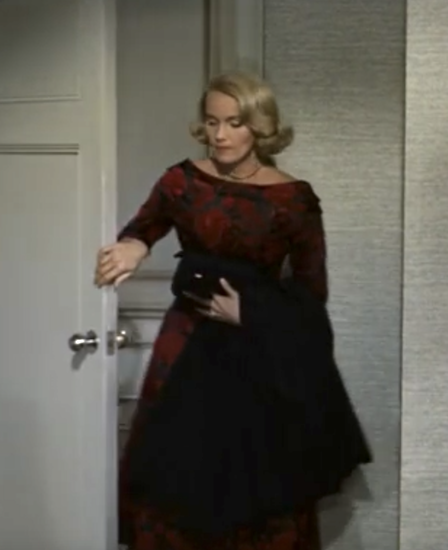
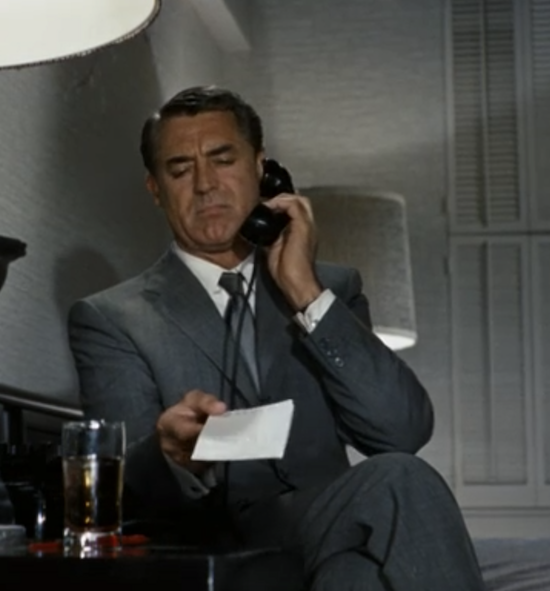
So the devious, sexy spy of North by Northwest, Eve Kendall (Eva Marie Saint), is trying to elude dupe Roger Thornhill (Cary Grant). She gets a secret call from her evil lover, Phillip Vandamm (James Mason), while she and Roger are together and writes down an address for their rendezvous.
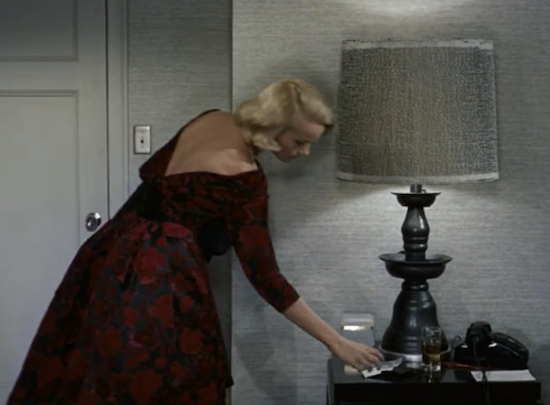
She carefully tears off the paper with the address, places it in her purse, and then—ready for this?—walks away without the notepad.
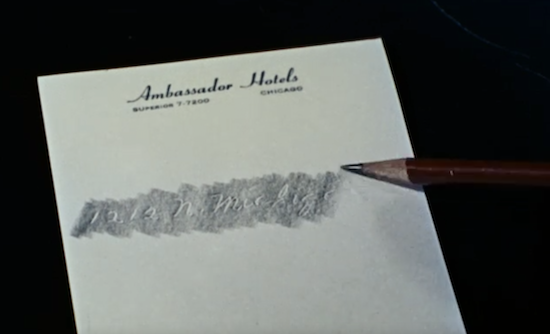
There’s that notepad, just a pencil trick away from exposing that address. Will she remember to bring it with her? Roger is watching!
Alas. She walks away.
Will she remember before she sneaks away? Of course, right? It was just a momentary oversight, her wits clouded by the sexiness of her target, Roger.
We see her pick up several other things.
(Oh, that sly Hitchcock.)
Then she leaves the room, SANS NOTEPAD.
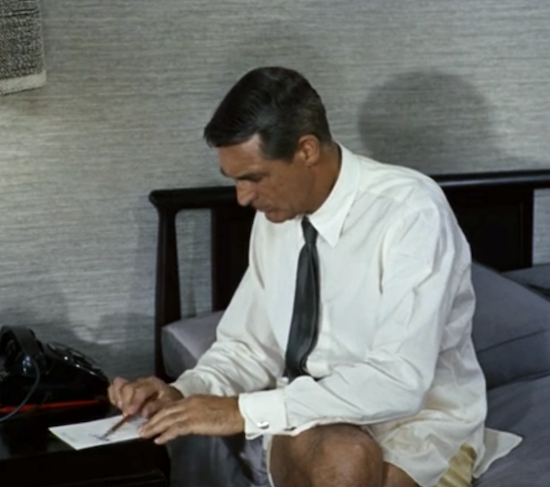
Roger, having watched five minutes of television/film in his life, of course knows the pencil trick. He holds the paper this way and that….(Why? What does he think he’ll see?)
He takes out his pencil. He does the trick pant-less (in a kind gesture of Hitchcock’s, who knows his female fans).
There the address is. The super-secret address Eve was so anxious to hide.
How long have you known this trick? Were you six? Maybe seven? I’m pretty sure Encyclopedia Brown taught me. It’s the kind of spy craft a child can understand and appears in every detective/noir/suspense film or TV episode that assumes its audience is young/dumb/abysmally ignorant of pop culture. Frankly, I would have thought such a plot device beneath Hitchcock. But he never did like giving his heroines much credit, so of course, this spy who has supposedly fooled JAMES MASON must be outsmarted by a different man. Who has a background in….advertising. And lives with his mother.
Yes, our sexy spy was outfoxed by a trick that Micky Mouse might have taught me in the 80s, back when Disney was hawking his image on magic trick books, and I thought that a wand that lifted a playing card with a hidden piece of string was really something.
True, the pencil maneuver wasn’t QUITE as old of a trick when Hitchcock used it, but it wasn’t exactly fresh in 1959. (Though, as my friend points out, today it might become new again, with so few people using pencils.)
I used to roll my eyes when I saw this pencil-and-notepad trick, annoyed by the lazy writing. But now I laugh. Because the Coens offered a send-up of this trite scenario in their—appropriately enough—satire of/tribute to TheBig Sleep, The Big Lebowski. The Dude tries to outsmart a villain using the pencil trick. His excitement is intense at his own cleverness. But alas for the Dude, the “secret” isn’t what he expected. If you are of delicate sensibility, I wouldn’t advise it, but if you don’t mind some crude humor, enjoy this film clip and Jeff Bridges’ brilliance in it. (Watch that loopy run of his! And his “just acting natural” look at the end!)
There are many, many jokes about detectives in The Big Lebowksi. One of the most evident is that unlike those brilliant sleuths who with scant clues manage to figure out everything, the Dude can’t figure out anything—the mystery, which people are manipulating him, where his rug is. And unlike the driven fictional detectives who will sacrifice anything for the job, the Dude is pathologically lazy, sharing with them only some loose sense of ethics, questionable associates, and a love for alcohol (but with the Dude, of course, it’s not a hardboiled choice like whisky, but instead White Russians).
Yes, the Dude is not a good detective, and would be an even worse spy. But guess what, Hitchcock?
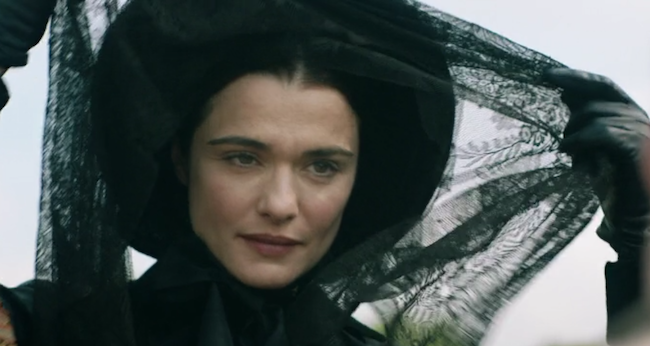
I had hopes for My Cousin Rachel (2017). I don’t know why. I’d already discovered–despite my enjoyment of the 50s version–that the book wouldn’t translate well to film without a big overhaul. I guess I hoped a director smart enough to cast Rachel Weisz in the key role would know to make such changes. (She had added complexity to Definitely, Maybe for crying out loud. Who better to take on the mysterious, unreadable Rachel?) But within minutes, it was evident this director of slight rom-coms lacked the imagination to even equal the previous film’s quality. The 2017 take is incomprehensible, just short of laughably bad. I had flashbacks of Season 3 of Bloodline. What the ksljfkjslkfj! is even going on?
***Mild spoilers–I won’t give away the end. Here’s the plot: a sheltered young man, Philip, is taught to hate women by his cousin/foster father Ambrose. He discovers his cousin has fallen in love with and married a woman while abroad in Italy. Philip’s jealous, angry, anxious. Then he receives strange letters indicating Ambrose is afraid of his wife and quite ill. On arriving in Italy to save his beloved cousin, Philip discovers him dead, with shady characters delivering the news.
Back home in England, he vows revenge on the widow, just on time for her arrival for a visit. The story takes off from there, as Philip falls for the widow and acts completely besotted right away.
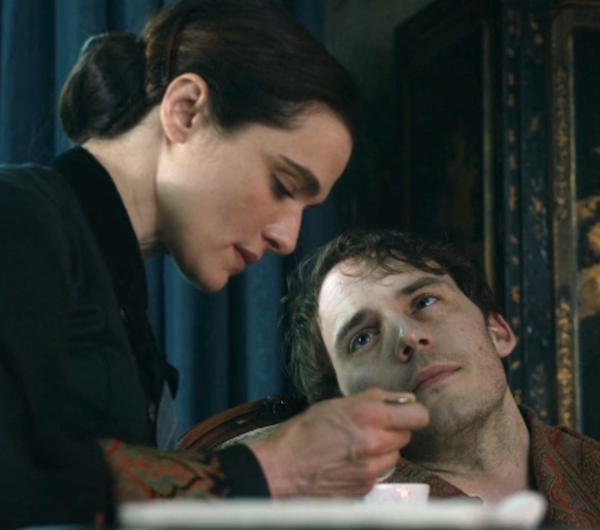
Unfortunately, he can’t determine whether Ambrose died of a brain tumor (making his suspicions delusions) or by his wife’s hand. Is the widow just mercenary in this visit, trying to get her late husband’s estate by wooing Philip? Or is she an independent woman who means well but is reluctant to yoke herself to a silly boy who can’t distinguish between sex and marriage? And regardless of which she is, is that dreaded tea she’s making poisonous? And when he’s ill, will she help Philip get well, or attempt to slowly kill him off?
The lure of the book is the constant back and forth of the reader’s (and Philip’s) suspicions about whether she’s a killer. The did-she, didn’t she is brilliantly developed by Du Maurier. Philip, the narrator, is, by any definition, a dupe. Suspecting Rachel as he does, offering her all of his worldly possessions because she smiles at him isn’t exactly a bright move. What redeems the narrator for the reader is that he’s telling this story AFTER THE FACT, and we understand he’s not quite so foolhardy now. We also get inside his head, understanding why he trusts when he does. We also know more of the sheltered background that explains (as it turns out) his dangerous lack of experience with women. How else could we understand his dogged pursuit of a woman who is not attracted to him?
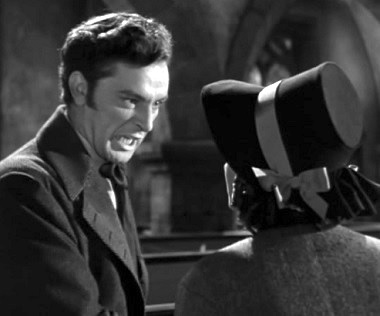
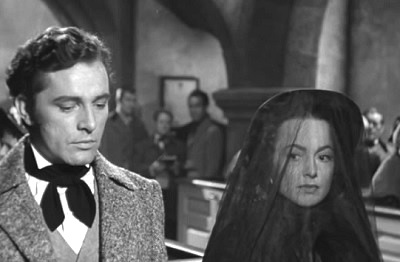
Without this context, the narrator comes across on film as not only unlikable, but unhinged. In the 1952 version, he acts like a dangerous stalker after Rachel stops allowing his seductions.
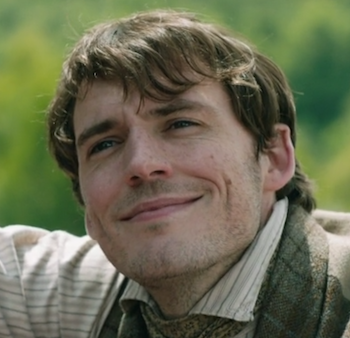
Luckily, the role is played with such relish by Richard Burton that you enjoy it even as you know the book’s intent has been completely overthrown. (Philip HAS to be the enemy, with behavior like this.) In the 2017 version, far less ably played by Sam Claflin, Philip is so pathological in his pursuit of Rachel that you see her possible poisoning of him as an act of self-defense. How else can she ensure he won’t kill her, he’s so obsessed? That attack on her throat is just the beginning!
With this upending of villain roles, the did-she, didn’t-she becomes, “Who cares what you did, lady. RUN!!” I don’t have a problem with changing a book’s focus, but as it turns out, that uncertainty about Rachel was also the narrative’s greatest appeal. Without it, we’re stuck watching an unlikable dupe turn into a psycho, which isn’t interesting viewing. I also don’t think voiceover from Philip would have worked; the story needs more nuance and he’s not intelligent enough to provide it.
As I see it, the only way of salvaging the story on film was to change the lead. What about his godfather’s daughter, who likes Philip for some unaccountable reason? We’d see Rachel’s behavior more clearly from her eyes; she may be biased, but she’s perceptive. Again, no need for voiceover, but she’d notice different details, like Rachel’s manipulative ways. (Though let’s stop the anachronisms, please, 2017 version; I can’t see this young lady frankly talking about homosexuality with Philip.) Or what about the godfather as the lead? He’s protective and smart.
Or you could go full-tilt into unreliable narrator mode, and make Rachel–the most interesting character–the lead. She could be like the riveting James Cain narrator in The Cocktail Waitress. With Rachel, I wouldn’t even mind a bit of voiceover.
It’s funny that the 2017 version completely dropped the notion that Rachel was foreign in her ways—and yet that foreignness helps explain her greater independence, her unknowability to Philip, and her tenuous status in the community (who, like Philip, are a bit entrenched in their xenophobia and rigid biases).
And it also helps show her confusion. She’s lived a cosmopolitan life in Italy, and Philip’s (and his community’s) rigid morals about sexuality don’t make sense to her. With more of her character unfiltered through Philip’s perspective, we viewers might come to understand her better.
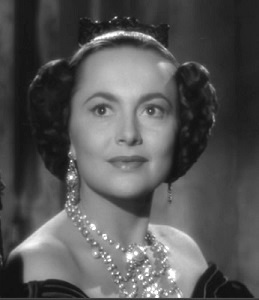
As it is, the 1952 version is entertaining at least. The 2017 version, alas, is not, with Claflin making even histrionics dull to watch. Only some pretty cinematography redeems it at all. The 2017 version adds a dumb ending and strips away much of the questioning of Rachel’s motives. Rachel seems delicate rather than arch at all times and her character is so terribly underdeveloped that Weisz–for once–is tedious to watch. View the 1952 version for Burton’s high drama and Olivia de Havilland’s riveting confidence as Rachel. But if you love the book, be prepared for disappointment: your beloved psychological thriller is now a crush-gone-bad procedural.