Cary Grant Won't Eat You

Classic movies for phobics

  • About
  • eBooks
  • Previous Blogathons
Classic movies for phobics

Drama (film)

The Spirit of St. Louis (1957): Enthralling & Infuriating

10/23/2015 by leah@carygrantwonteatyou.com 10 Comments

Lindberghtakeofffilm2
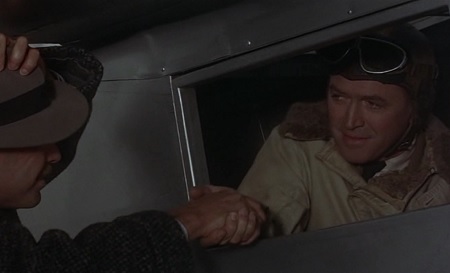
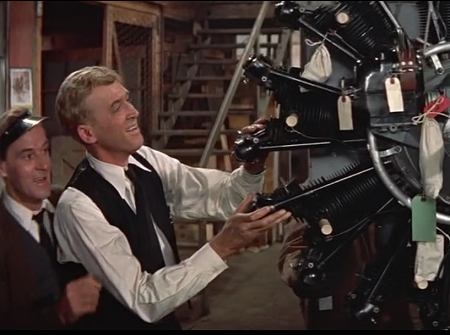
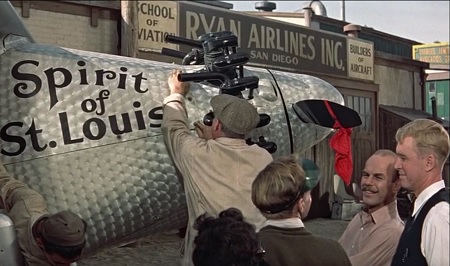
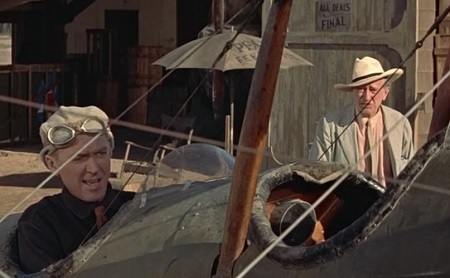
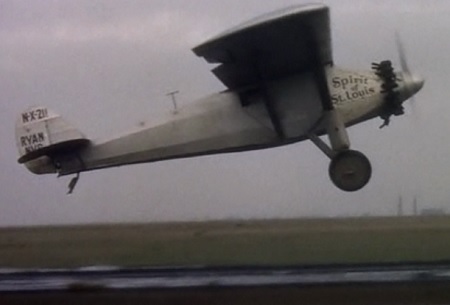
The first half of The Spirit of St. Louis, Billy Wilder’s ode to Charles Lindbergh, is engrossing. It’s even that rarest of traits in a biopic: fairly accurate. The scenes of his airmail days capture the impossible bravery of America’s early pilots and the primitive conditions under which they flew. Wilder conveys each stage of Lindbergh’s struggle beautifully: The search for funding and a plane for the epic NY-Paris flight, the near-universal doubts about his fitness for the attempt, the rush of finally finding a team to build that plane, as eager to prove themselves as he was.

RyanAirlines4
Until just after that terrifying take-off, I couldn’t believe the film hadn’t earned more praise than it had.

SpiritofStLouis6
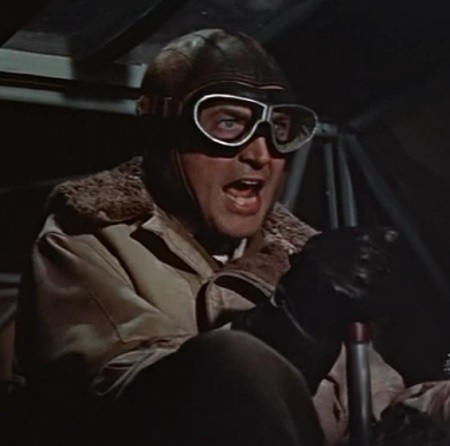
That’s why the clunky transition into the flight–Lindbergh (Jimmy Stewart) gabbing with a fly–shocked me enough to stop the film, ponder what had gone wrong.

Lindbergh-anttalkfilm2
It wasn’t the cheesiness of the fly talk; after all, Raymond Chandler had managed to make a similar conversation in The Little Sister downright poetic. It was that everything about the first twenty minutes of the famous flight confirmed my fears: Wilder would definitely fail to make 30+ hours of sleep deprivation interesting, and his attempts to do so would not only grossly misrepresent his subject’s character, but Lindbergh’s whole purpose for making the journey.

Given, Wilder had quite an obstacle: How do you convey hours of reflection without awkward voiceovers? How do you enlighten viewers about the brilliant, reserved, limelight-averse, notoriously elusive Lindy with so little narrative space? That’s why Stewart was chosen, I thought. Wilder must have hoped the actor’s folksy geniality would while away the minutes, make us forget that the star was twice Lindy’s age, and about 100 times as charming. (If you doubt this comparison, check out Bill Bryson’s hilarious depiction of Lindbergh’s social awkwardness in One Summer: America, 1927.) The autobiography on which the film was based illuminates just how much Wilder miscalculated, and just how his still very worth viewing first half could have been redeemed in the second.

The Flashbacks

SpirtofStLouisflashbacks
The Pulitzer Prize-winning book moves from flight to memory throughout, as the film does, but the latter’s flashbacks have a homespun, aw-shucks feel to them, with Lindbergh as a kind of lovable oaf who survives only due to luck. In one flashback, he buys a plane he can’t fly, utterly unconcerned about his lack of skill. The scene plays for comic relief, but painfully reinforces everything that Lindbergh stood against: recklessness.

Lindbergh was daring, yes, but cautious and calculating. When the flashbacks begin to appear in the book, he uses them not to illustrate character or give the reader a lovable feeling toward him. No, they explain his success. Here’s a moment of danger, and here’s the experience that prepared him for it: earlier escapes, his training as an instructor, his previous discoveries of flaws with his planes. His whole mission was to disprove that air travel was suicidal daredevilry because otherwise why pave runways? Why install lights for landings? Why allot money for research and development?

When Stewart actually pored half the canteen of water on his face—twice! —I nearly shouted at the screen. The real man was apportioning his own water in dribbles. Had anyone involved with the writing of the film read the book? “Lucky” Lindy put more thought into one move above or below the clouds than the writers did into his entire characterization. (Wendell Mayes co-wrote the screenplay with Wilder, and Charles Lederer was given adapting credit.)

Was Lindbergh lucky? Of course. But that isn’t the primary reason he succeeded. His competitors for the NY-Paris flight–those few who survived–were hundreds of miles off course, with safety features and luxuries he lacked. Lindbergh landed on his intended airfield early based on dead reckoning—no radio, no sextant, no help. How disappointing that the filmmakers would buy the “Lucky Lindy” headlines, and miss the far more interesting man.

The Moments of Danger

JimmyStewartLindberghscared
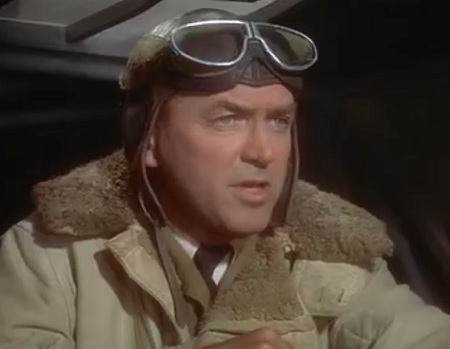
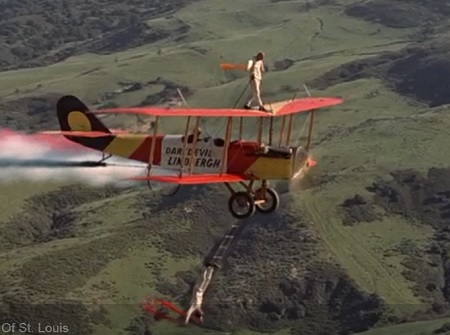
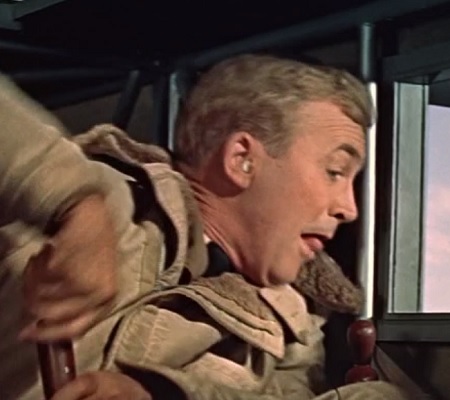
Lindbergh almost died innumerable times on that flight across the ocean, but Jimmy Stewart’s wide-eyed panic in no way captures Lindbergh’s icy calm. Interestingly, the pilot forced himself to calculate how to handle various frightening scenarios not out of panic, but to stay awake. He discovered that pleasant thoughts soothed, and thus led him to sleep. Plans to land on Arctic waters kept him alert—and alive. If Lindbergh really were as shot through with anxiety as the film implies, how could he have been a professional parachuter, as he was at the start of his career? A wing walker? (Tellingly, Lindbergh even dismisses the dangers of this part of his history, analyzing how safe both jobs could be with the right team.)

Lindberghaswingwalker

Oh, Jimmy…
I love Jimmy Stewart. Maybe if it were just the age, or the accent, or the personality. But it was everything: The talking aloud. The boisterous shouts. There’s a deafening, tone-deaf, overacting feel to nearly every word in the second half of the film.

JimmyStewartoveractingLindbergh
Lindbergh was not Jefferson Smith or George Bailey. Effusiveness, goofiness—how widely these traits miss the quiet, introspective, highly scientific man that Lindbergh apparently was. I suspect this hamming was under protest: Stewart’s own distinguished flying record in WWII suggests he was far too acquainted with pilots to misstep this badly without directorial intervention.

Perhaps I wouldn’t have been so disappointed in the depiction of the flight, had the film not been so brilliant in the first half. But I kept thinking about what could have been: What if the film had ended at takeoff? Why try to put onscreen so much of a reflective book? Like The Great Gatsby, another notoriously hard to film text, the ideas are paramount here: Lindbergh’s meditations about God, about power, about nature and loss and risk.

Michael Powell and Emeric Pressburger could have attempted an arty take on Lindbergh’s thinking. But Wilder, the storytelling genius, should have stuck to action, and let us end with that lovely image that he conveyed so perfectly: of Lindbergh weighing the current against forecasted weather, his chance to beat the competitors versus his sleeplessness, the muddiness of the airfield versus its length, and then deciding to go, and with a few laconic words to the panicked faces around him, pushing off into the sky.

SpiritofStLouisTakeoff-film
This post is part of the Classic Movie Blog Association’s fall blogathon. Go here for fantastic entries on films highlighting planes, trains, and automobiles. You can also find an eBook version of the blogathon with many of the group’s entries, including mine, at Smashwords (for free) or Amazon for. 99. All funds for the latter go to the National Film Preservation Foundation.

Share
Posted in: 1950s films, Action & Sports Films, Blogathons, Drama (film) Tagged: Billy Wilder, Charles Lindbergh, Film, Jimmy Stewart, Ryan Airlines, Spirit of St. Louis

Top 10 Characters in Teaching Films & Shows

08/20/2015 by leah@carygrantwonteatyou.com 2 Comments

As the school year begins, I’ll be returning again to my favorite educational films–some inspiring, some hilarious. Here are the characters and performances I consider award worthy.

THE TEACHERS: 5 BEST CHARACTERS

5. Mr. Shoop in Summer School (1987)

HarmonSummerSchool
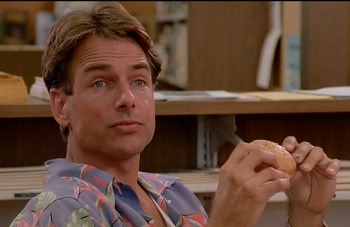
Gym teacher Mr. Shoop (Mark Harmon) plans to vacation in Hawaii with his girlfriend for the summer, but when the English teacher wins the lottery and immediately quits, Shoop’s forced to teach remedial English. He is the most likable of the teachers I’ve chosen, easygoing and even tempered, good natured even when tried. Ultimately, his slacker ways convert into effort in the classroom, and because he relates to and has no illusions about his students’ disinterest, he’s able to reach them. Most importantly, he has rational expectations of them, and celebrates progress rather than any specific target, as any good teacher should (and would be able to, would the system allow it). Plus, the film is hilarious, and Harmon is so attractive in it.

4. Elizabeth Halsey in Bad Teacher (2011)

Halsey-Diaz-BadTeacher
Cameron Diaz doesn’t always reach her comic potential, but when she does, as with Elizabeth Halsey (Cameron Diaz) in Bad Teacher, she’s something to watch. The montage of her avoidance of crying students and celebrating teachers makes me laugh every time, as does her unabashedly sexy school car wash and cruel honesty in speaking with her class and grading their work. She is a terrible teacher, but her narcissism and bluntness make her a very, very funny one.

3. Teachers in Ferris Bueller’s Day Off (1986) & Peanuts

BenSteinFerrisBueller
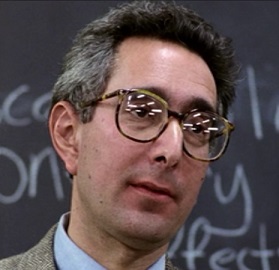
If pressed, I’d prefer Peanuts‘ gibberish teacher to Ben Stein’s gloriously boring one, but the two are closely tied. Obviously, both types are accurate portrayals of how instructors come across to students. I love how Stein has given upon class participation, simply saying, “anyone, anyone?” then answering himself. But Peanuts’ teacher may get the edge because I have this same reaction ANY time I encounter something I don’t understand. My car is being fixed, I’m listening to explanations of the U.S. debt, and I hear that waa-waa-waa of Peanuts’ comically confusing instructor.

2. Prez in The Wire (2006)

PrezandStudentsTheWire
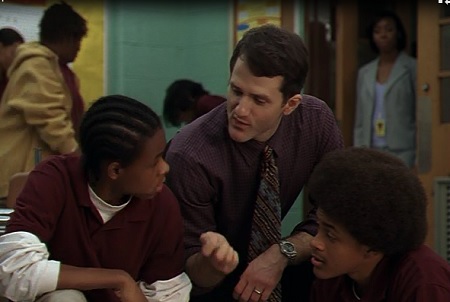
Season 4 of The Wire features the Baltimore school system, with former cop Roland Pryzbylewski, known as Prez (Jim True-Frost), teaching the students from neighborhoods he formerly policed. As a result, he knows what his students are up against, though he isn’t prepared for the challenge of teaching them. I’ve never seen a more accurate depiction of teaching in a difficult district. Prez’s use of gambling odds as an example to finally reach some of his students in the episode “Unto Others” is remarkably telling about their priorities–and squandered potential. We can only wish that those who had more influence in the system were as wise and compassionate as Prez.

1. Sir in To Sir, with Love (1967)

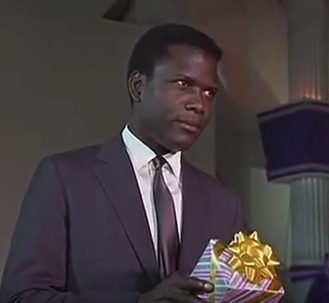
SidneyPoitierToSirwithLove
Sir’s (Sidney Poitier) school district in England is characterized as very challenging, even if it looks less so to us in 2015. We see him constantly thwarted, and frequently angry. His race becomes one more thing students have against him. His decision to throw out the lesson plan and begin anew is what any good teacher would do if it were allowed–the problem, of course, is that you only want good teachers doing so.

What I love about Sir is that he’s a reluctant instructor, only there because he can’t get a job in his field, and slowly, these rebellious kids win him over. He is a very flawed character, even socially awkward, and thus very real. Poitier deserved an Oscar for the performance. The theme song makes me tear up every time. And the film has such a lovely, perfect, subtle ending. The movie is inspiring without ever losing track of reality (as most teacher-centric films do).

THE STUDENTS: TOP 5 PORTRAYALS

5. Spicoli in Fast Times at Ridgemont High (1982)

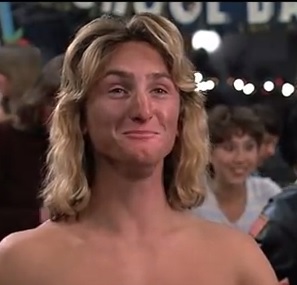
Spicoli
Spicoli (Sean Penn), the ultimate surfer dude. I don’t think this character requires any explanation (most would expect to see him as #1). While there is a shadow of this stoner in Amy Heckerling’s Clueless (1995), it’s in her earlier film, Fast Times, that she captured an iconic form of the type, mainly due to Cameron Crowe’s script. Spicoli’s (Sean Penn’s) battles with his teacher, Mr. Hand (who deserves an honorable mention in the list above), are perfect.

Bagel tucked in jeans, shirtless, Spicoli makes us laugh before he says a word. Penn gives him an awkward gait; a spacey expression; long, wordless pauses; and an inability to detect sarcasm. As a result, he is as lovable as he is annoying. Penn turned the surfer dude into comedy gold, and actors have been imitating him ever since.

4. The Frustrated/Bored of Ferris Bueller’s Day Off & Peanuts

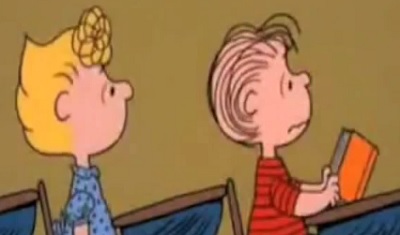
There’s really no need to pinpoint an individual in the mass of disinterested students who are ignoring Ben Stein’s flat delivery of “Bueller?” as he calls the roll. The Peanuts characters’ confusion at their instructors’ seeming gibberish are similarly funny, though Charlie Brown’s panic is particularly funny. What’s unavoidably true is just how typical both the boredom and confusion are in any classroom, though hopefully with occasional relief! Beautifully rendered in both cases through the facial expressions of the students as the teacher drones on.

Peanutsstudents

Buellerstudent1

Buellerstudent2

Buellerstudent3

3. The Intellectuals of Better Off Dead (1985)

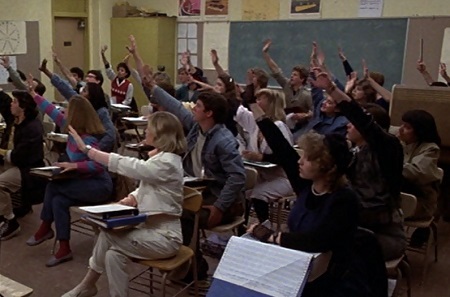
BetterOffDeadClass
Most films portray the majority of students as inattentive and uninterested. This film subverts our expectations, with a class enthralled by comically difficult subject matter. They’re so enthusiastic that they groan when they have to leave the classroom, comforted only when their math teacher reassures them: “I’ll see you all tomorrow. Just remember to memorize pages 39 to 110 for tomorrow’s lesson.” It’s so obviously a teacher’s dream of what students would be like after watching too many inspiring education films that it always cracks me up. Lane (John Cusack), in contrast with his peers’ binders of work, takes out one sheet of paper with “Do homework” stuck together with gum. In this case, the slacker is the unpopular one. It’s a mistake not to watch the whole film, but at least catch this scene.

2. The Kids of The Wire, Season 4
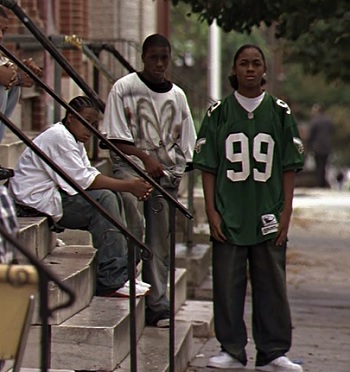
I find it hard to write about the students in this season, as they’re far too real: Dukie (Jermaine Crawford), Randy (Maestro Harrell), Namond (Julito McCullum) and Michael (Tristan Wilds) struggle with the lure of selling drugs on the corner in Baltimore, with authority figures often encouraging or passively accepting their abandonment of education.

Watching Michael's confrontation with a drug dealer.

Watching Michael’s confrontation with a drug dealer.

It’s the most vivid and compelling portrayal I’ve ever seen of the weight so many students bear with them when they enter the classroom. The Wire, unlike 90 percent of cinematic portrayals of teaching, sees that the wider culture and systemic problems of the educational system are far greater forces than one teacher with a great idea (which Prez does have) can combat. Haunting.

1. Chainsaw & Dave of Summer School

ChainsawDave-SummerSchool
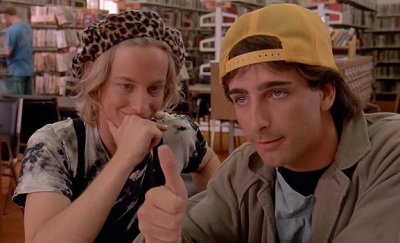
All the students in Mr. Shoop’s (Harmon’s) class are distinctive. Their plan–to exchange bribes for trying in school–is diabolical and hilarious in itself. And with characters like these–the awful driver Mr. Shoop has to train, the kid who spent the summer in the bathroom, etc.–who can stop laughing? The most memorable students are obviously Dave (Gary Riley) and Chainsaw (Dean Cameron), the wannabee special-effects guys. Who comes up with such unique characters for a silly film like this one? The tension breaker of and “I don’t know anything” dream of Chainsaw’s before the big test are my favorite depictions of academic stress in any film, book, or story. (I should, though, give an honorable mention to John Travolta’s Barbarino in Welcome Back, Kotter.) Inspired by Chainsaw, I used to suggest to friends a university-wide tension breaker when I was an undergrad.

As the school year begins, I’ll be returning to these favorites to combat moments of frustration and refresh my love for teaching. I hope some of you will do the same.

Share
Posted in: 1960s films, 1980s films, 1990-current films, Comedies (film), Drama (film), TV & Pop Culture Tagged: Bad Teacher, best, Better Off Dead, Cameron Diaz, Ferris Bueller, Mark Harmon early films, Mr. Hand, Sidney Poitier, Summer School, Teaching films, The Wire, To Sir with Love

Mad Men Meets Sex and the City: The Best of Everything

06/28/2015 by leah@carygrantwonteatyou.com 16 Comments

Baker-BestofEverything
This post is part of the Modern Era portion of the Classic Movie History Project Blogathon, sponsored by Aurora of Once Upon A Screen, Ruth of Silver Screenings and Fritzi of Movies, Silently. Previous days are covered here: Silent Era and Golden Age. Thanks to Flicker Alley for sponsoring and promoting this event.

Ever since Mad Men ended, I’ve been wondering about Peggy’s real-life equivalents, from the woman who coined “A Diamond Is Forever,” to those who paid a far greater cost for their romantic missteps than Peggy did. I’ve been curious about ’50s and ’60s movie versions of the career girl as well. Films covered single women in the city from the silent era on, but naturally, I viewed the movie based on the book Don Draper was reading at the start of the show, Rona Jaffe’s The Best of Everything.

Jaffe is an interesting figure in herself; her characters are based on her own experience in publishing, and her friends within it. She earnestly explained to Hugh Hefner (what a choice!) that her goal in writing the book was to normalize and destigmatize the experience of those girls who felt ashamed and alone in their mistakes: their dalliances with married men, the children they bore (or didn’t) as a result.

The controversial film version (1959) quickly lands us in the center of the action in a publishing company, and I was instantly hooked by the drama: the boss (Brian Aherne) who casually pinches his workers’ rears, the secretaries trying to balance social lives and unreasonable work demands, the crowded shared apartments and crammed lunch spots. (The film is given props for fashion, and deserves it. It’s a visual feast throughout.) Right away, we get a sense of what women had to put up with just to get paid, and not well.

First day on the job

First day on the job

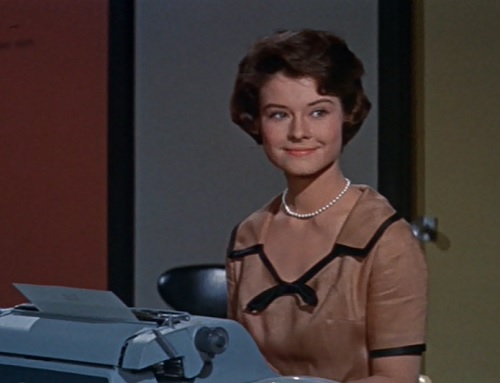
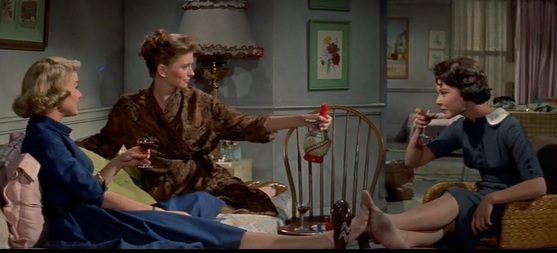
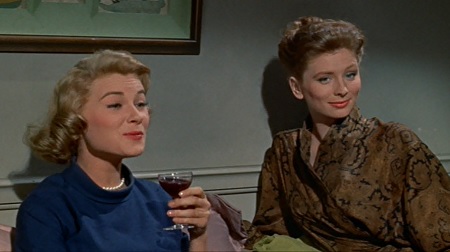
Newcomer to  the city Caroline (Hope Lange) rooms with coworkers Gregg (supermodel Suzy Parker) and April (Diane Baker) in a miniscule apartment, and the three instantly become tight friends despite having little in common: Gregg is the adventurous bombshell/aspiring actress, April the innocent, and Caroline, the sophisticate who is trying out work until her fiancé returns to the U.S. and marries her.

Single roommates in the city

Single roommates celebrating

Caroline and Gregg talk about lovers with April

Caroline and Gregg talk about lovers with April

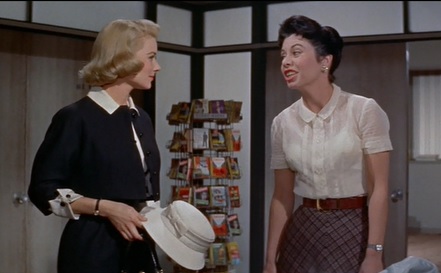
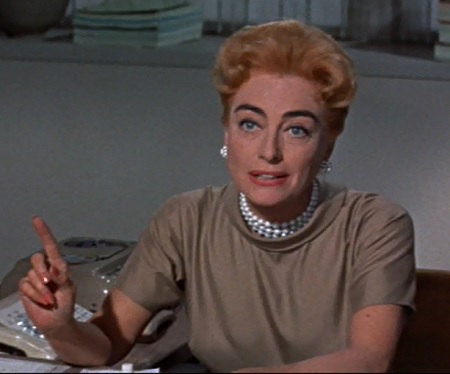
The three unite in hatred of Amanda Farrow, the harsh editor who has chosen success over marriage, and scorns the secretaries who didn’t have to go through as much as she did to advance.

JoanCrawford-Farrow
She has a smidgen of Miranda Priestly of The Devil Wears Prada in her, but there’s pathos and empathy to Farrow too. She may fail to support her many secretaries’ ambitions, but she tries to save them from her romantic fate, from awful men. And The Best of Everything is full of them.

The Sex and the City ladies might have faced a lot of freaks, but at least they had some personality; the men of The Best of Everything are as interchangeable as the vice presidents in American Psycho. A recent play of the book even used cardboard cutouts of men to emphasize the point.

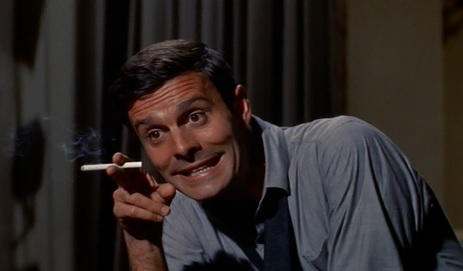
What’s puzzling is what these interesting women see in these duds. Effervescent April (Baker) falls for a guy who is so obviously a sleaze he might as well be wearing a signboard to announce it. Hope’s fiancé announces he’s married a rich girl instead of her—over the phone—and then expects her to sleep with him afterward. And get this: dazzling Gregg (Parker) falls so hard for a director (Louis Jourdan) that she goes into a crazy, stalking tailspin when he dumps her. (Yes, nothing inspires sexual obsession so much as heartthrob Gigi‘s Gaston. What??)

JourdanBestofEverything
Since the men are so patently lacking in any redeeming qualities but sleep inducement, the film’s attention to them rather than the workplace and roommate dynamics is disappointing, as the latter, when they’re the focus, are well developed and fascinating. Caroline advances quickly to the rung above secretary (a reader), but is accused by an alcoholic friend, Mike (Stephen Boyd), of faux ambition, just to avoid her romantic life (by the way, this is the love interest we’re rooting for).

Ambitions attacked

Ambitions attacked

Yet between the romantic interludes (and their sad repercussions) are intriguing signs of the second wave of feminism to come: Farrow (Crawford) leaves the marriage she impulsively makes with an old flame, returning to work, and we have the sense that she’s better for it. Caroline is promoted again. Abortion is presented as the fault of men who are careless with the hearts (and bodies) of naïve women—not the deserved end for loose ones. Female solidarity* prevails throughout, as when one of our heroines slaps a faithless boyfriend of the other. (*In one brief, funny exception, the secretaries all try to pass off work on one another.) The workplace even has moments of startling modernity, as with the hilariously painful bonding “picnic,” with its forced fun and workers getting drunk in self-defense. There’s enough worth watching in the film, in short, to get viewers through the unearned suds of these worthless romances.

Single women have fled to New York for all kinds of reasons, in all kinds of ages: post-Civil War belles, without men or funds; rural women leaving farms for factories; aspiring starlets, hoping for a berth at the glamour-girl dorm, The Barbizon Hotel (an upscale Footlights Club, a la Stage Door). These women certainly didn’t find the “best of everything.” But they still managed to live out enough of the excitement of the big city to keep other women coming, to keep dreamers hankering for if not the best of everything, the thrill of aspiring for it.

Share
Posted in: 1950s films, Blogathons, Drama (film), Feminism, Romance (films) Tagged: city, Joan Crawford, Mad Men, Sex and the City, single girls

The Nicholas Cage Syndrome: Is Taste More Crucial than Talent?

04/24/2015 by leah@carygrantwonteatyou.com 6 Comments

KeiraKnightleyADangerous
I was outraged by the choice of Keira Knightley to play Elizabeth Bennett in Pride and Prejudice. “That woman,” I complained to my sister Rachel, “is known for her toned midriff, not her acting talent.” Although Knightley did a passable job in a decent film adaptation, I considered her subsequent Oscar nod an affront.

Rachel agreed with my assessment of the actress’s mediocrity, even if I couldn’t follow through with my plan to avoid her films. The problem was, Knightley kept selecting intriguing feminist roles, not the cheesy romantic leads her looks surely could have garnered her. The groundbreaking historical women she brought to life on the screen in The Duchess and A Dangerous Method led me to hours of fascinating research.

And then this year, an Oscar nod again, this time for an interesting biopic, The Imitation Game. When I grumbled about her second nomination, my sister disagreed. “I’ve changed my mind about her. Watch Begin Again. Two great films in one year. She has such good taste.”

And there it was, the trait so often ignored when we talk about acting: taste. Sometimes; as with Meryl Streep, Philip Seymour Hoffman, and Cary Grant; we get both: good films and incredible talent. But so often, we can’t select a movie based on the cast and assume we’ll enjoy it. Why? Because so many skilled performers have Nicholas Cage judgment.

Cage Syndrome: Good actor who stars only in trash

The Cage Syndrome: A good actor who repeatedly stars in trash.

Recall Halle Berry, still gilded from her Oscar win, choosing a bad Bond flick and Catwoman to cement her legacy. Or the previously reliable Morgan Freeman. His films since The Shawshank Redemption make me feel like a comet has crashed into my brain.

Is it possible that taste is more important than talent? I’m not saying that judgment trumps skill if the acting is bad enough to spoil the film. (I’m looking at you, Andie MacDowell.) But if the actor or actress is decent, might good taste matter more?

Let’s take another example: an actress even less versatile and skilled than Keira Knightley (who is admittedly rising in my estimation). Katie Holmes is better known for being the ex of Tom Cruise than for her acting. Her performances are largely forgettable, but her films are not. Even during her Dawson’s Creek years, Holmes displayed remarkable discrimination in her choices. The following are my favorites of her credits (the first and fifth I rewatch often):

  • Thank You for Smoking
  • Batman Begins
  • Pieces of April
  • The Gift
  • Wonder Boys
  • Go

KatieHolmes-ThankYouSmoking
By rarely starring and choosing movies that feature fine performers, Holmes has ensured I don’t need to rely on her skill to enjoy her films. Her mere presence in Woman in Gold is making me reconsider it despite lukewarm reviews. I trust her taste to impress as much as I trust Cage’s to disappoint. (I vowed during Snake Eyes never to watch his films again. Alas, I caved, remembering Raising Arizona, and even let my husband bring home Drive Angry, which did, in fact, make me angry.)

Of course, it’s hard to place the same kind of trust in the taste of classic film performers. Since studios held such tight reign over their stars, performers’ ability to select was limited. But now and then, you can, as in the interesting case of Norma Shearer.

NormaShearerDivorcee1
She (conveniently) married the production head of MGM, therefore ensuring her pick of roles (to the envy of Joan Crawford, who must have enjoyed taking her husband away in The Women).

I’m not a big fan of Shearer’s acting, which I usually find too theatrical. That said, I always enjoy her films, even staid period dramas such as Marie Antoinette and antifeminist flicks such as The Women. But it’s her fight to play liberated women in the pre-Code era that makes me trust her judgment. A woman who would go to a photographer for sexy shots just so she’d be considered for parts like that of Jerry in The Divorcee? That’s an actress I can trust. And in pre-Code films, she relaxes the affectations and easy tears that occasionally mar her pictures. Shearer is never on my list of favorite film actresses, but just writing these words has made me long to see The Divorcee again.

Are there stars whose films you go to see in spite of the mediocrity of their acting? Which talented stars’ movies do you avoid due to the Cage syndrome? And what is up with Sandra Bullock’s love for Razzie-caliber roles?

Share
Posted in: 1980s films, 1990-current films, Comedies (film), Drama (film), Feminism, Humor, TV & Pop Culture Tagged: bad acting, good taste, Katie Holmes, Keira Knightley, Nicholas Cage, Norma Shearer, Sandra Bullock, syndrome

Bette Davis & Sibling Bonds: The Sisters (1938)

04/09/2015 by leah@carygrantwonteatyou.com 4 Comments

TheSisters-1938
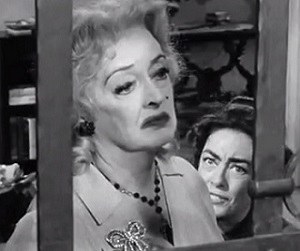
April 10th is National Siblings Day. If the holiday makes you cranky about being an only child, watch Whatever Happened to Baby Jane? That should cure you of longing for a sister.

WhateverHappenedtoBabyJane
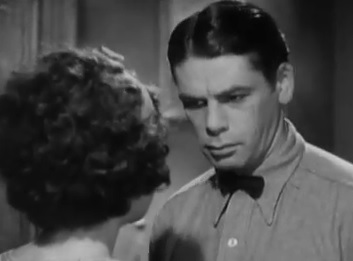
Or spend some time with the creepy antihero of Scarface (1932). You’ll never want a brother again.

Scarface
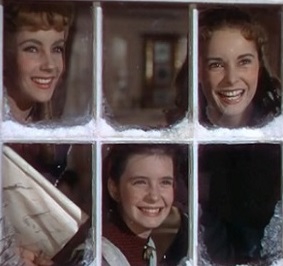
But if you insist on the delight of being a sibling, there’s always the classic sisterly bonding tale, Little Women. The March sisters will satisfy all your sentimental cravings.

LittleWomen
And if you want a more adult version of sisterly unity, check out The Sisters, a period drama set in 1904 in Silver Bow, Montana. Grace, Helen, and Louise Elliott all marry and experience varying degrees of unhappiness as a result. But the bond between them holds firm even when sorrow, tragedy, and distance separate them.

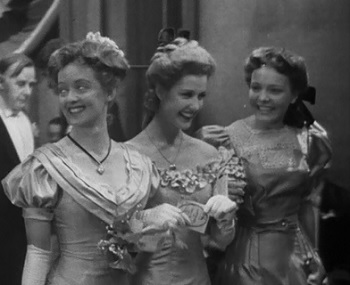
The story begins at a ball celebrating Teddy Roosevelt’s inauguration, where the three girls are in high demand.

Louise, Helen, and Grace

Louise, Helen, and Grace

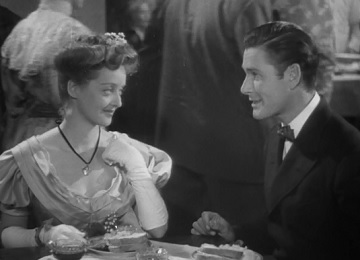
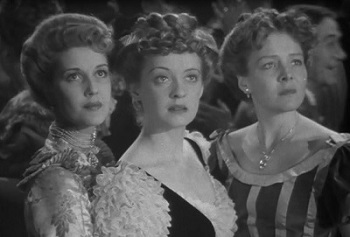
Helen (Anita Louise) is the loveliest, Grace (Jane Bryan) the steadiest, and Louise (Bette Davis) the most confident. Louise is on the verge of engagement to a banker’s son, Tom (Dick Foran), until she encounters Frank (Errol Flynn), a flashy visiting newspaper reporter.

BetteDavisandErrolFlynn
He has few prospects, and her parents don’t like him. He talks too much about freedom and drinking. But she’s in love, so she elopes with him to San Francisco. Her sisters, who seem to have a sixth sense about one another’s movements, anticipate her actions, and say goodbye before she can sneak away.

While Louise is busy grasping at contentment in San Francisco with her increasingly worthless husband, Grace marries Louise’s ex, Tom, and has a son. Meanwhile, Helen cozies up to her long-time admirer, Sam (Alan Hale), who is twice her age but can give her a life of glamour away from Silver Bow. At first, only Louise’s life is turning sour, with her mother adding the word “poor” to her name whenever she says it. Frank, a heavy drinker, avoids home and complains about his lack of freedom and talent, which makes him a general joy to be around. Finally, Louise gets a job so that they can pay the bills, giving him yet another reason to feel sorry for himself. Just before the famous 1906 earthquake, he flirts with the idea of leaving her.

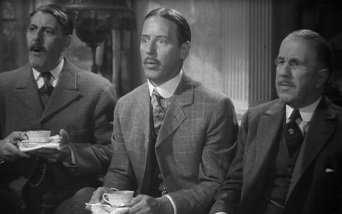
Helen, predictably, is faithless to her husband, whose health proves precarious. And when Grace discovers her husband isn’t as loyal as she thought, her sisters rush home to help her, scaring a group of philandering husbands into aiding their cause: outcasting the woman who seduced him.

MenConfrontedbySiblings
I won’t reveal what happens to each of their marriages, or the ending that promises happiness the audience has no reason to trust. I will say the movie is engrossing throughout, with comic relief from their parents (character actors Henry Travers and Beulah Bondi), convincing chemistry between Flynn and Davis, and lovely dresses by Orry George Kelly.

But what most intrigued me about the film occurred in the final minutes. Grace and Helen both sense that Louise is in need during the final inaugural ball of the film (this time for Taft), and each leaves her man to seek her. Together, the three sisters hold one another in a final, empowering image, their expressions declaring that whatever others will do—or won’t—these three will fiercely protect one another. And that is an image that will be on my mind on National Siblings Day.

BetteDavisandTheSisters

Share
Posted in: 1930s films, Drama (film), Romance (films), Uncategorized Tagged: Bette Davis, Errol Flynn, movies, National Siblings Day, sibling movies, Sisters

Edward G. Robinson and My Cat

03/19/2015 by leah@carygrantwonteatyou.com Leave a Comment

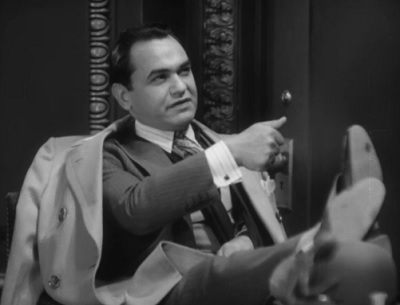
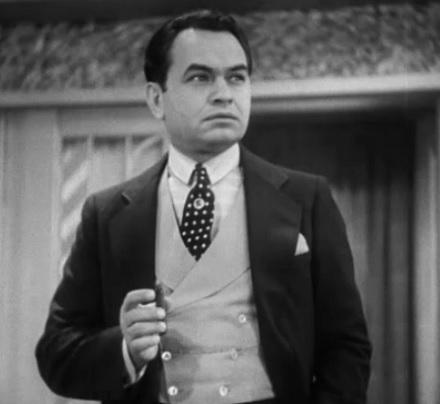
RicoandEdwardGRobinson
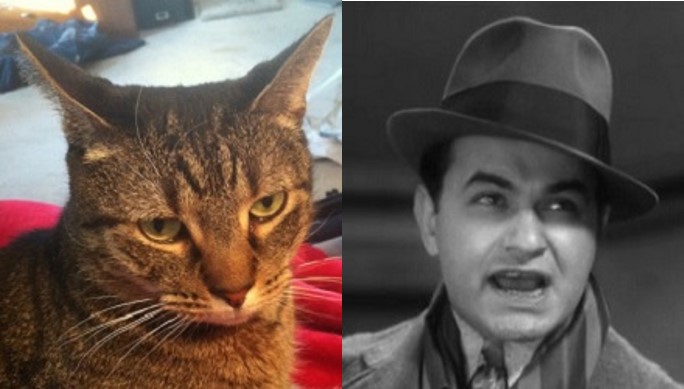
“Suave,” the receptionist at my vet’s office said the other day, reacting to my cat’s name. “Sorry,” she added quickly. “I couldn’t resist.” I laughed, having forgotten that Gerardo’s infamous 1990 song is the first association most people have with the name Rico. My cat does share some traits with the character described by that one-hit wonder, but “suave?” Not so much.

My husband and I had seen Little Caesar a few months before adopting our cat. We’d wavered over a name, and then started noticing some familiar traits. Like our cat’s ego, which seemed to be vastly disproportionate to his size.

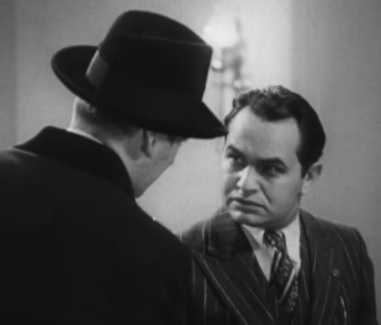
A head so big they'd need a "special sized noose" for him.

Cops say they’ll need a “special noose” to fit his “swelled head.”

We discovered that our newcomer wasn’t exactly sane, and that he felt entitled to what wasn’t his. He wanted our food as well as his own, and jumped up on the counter to paw some while we were eating it. That’s when we realized his actions reminded us of something, and that something was Edward G. Robinson’s breakout role.

CoolCaesar-EdwardGRobinson
Increasing acquaintance with my cat’s past and behavior has proven that those traits are just the beginning of his resemblance to Edward G. Robinson’s antihero. He was returned once to the shelter because he couldn’t handle associating with other dominant male cats. Sound familiar, Edward G. Robinson fans?

LittleCaesarangry
And then there’s his survival instinct. My cat is scrappy. He was discovered outside a dumpster in a New England winter he somehow survived. As if to prove his history, he has knocked over the trash can so many times seeking leftovers that we’re considering the metal tamper-proof kind others purchase to keep out collies and labs. And if a jalapeno potato chip, a piece of broccoli is dropped, he devours it before we can retrieve it. Rico never takes anything for granted, assumes he has to fight for everything he gets. Just like Little Caesar.

And like Robinson’s character, my cat is always voracious (despite a now hefty belly). Little Caesar hungered to be part of the “big time.” He begins the film envying Diamond Pete Montana, a successful gangster, not a nobody like himself, ripping off gas stations. “Money’s alright,” he says to his partner, who admits he’d quit crime if he had enough, “but it ain’t everything. Yeah, be somebody. Look hard at a bunch of guys and know that they’ll do anything you tell them.” He even expresses his longing with a butter knife.

LittleCaesar
As Little Caesar begins to rise, he can’t help eying others’ pins, diamond rings…

Of course when you think of Robinson, you can’t forget that voice, and how much he liked to use it. My cat too has a great desire for self-expression, and sees no reason to ever cease meowing. Maybe that’s why my husband and I started referring to him as “the Rico,” recalling Robinson’s famous line when he talks of himself in third person: “Is this the end of Rico?”

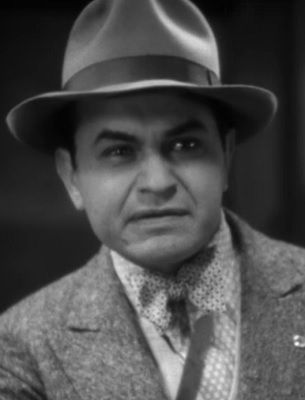
I think one of the reasons Robinson’s role made his career is because in spite of all of his criminal acts in the film, in spite of his arrogance, there’s something haunting and sympathetic about Little Caesar’s need to prove himself, to be envied.

RobinsoninmirrorLittleCaesar
He is in so many ways the embodiment of the American Dream filtered through a shaky understanding. He’s hardly the first—in fiction or real life—to be destroyed by his belief in it. Because he’s played by Edward G. Robinson, we are enthralled by Rico even as we condemn his actions. And in spite of everything, his loyalty to his best pal is always there, even when he most wants to lose it.

Perhaps Little Caesar’s real tragedy is that he was born into the wrong species. In feline form, the ambition, ego, hunger would all be endearing. We’d smile, hug, and pet him for those characteristics, and acknowledge his superiority without any need for proof. After all, it was the thirst for that recognition that inspired Little Caesar’s crimes. Poor man. He should have been a cat.

RecliningRico

Share
Posted in: 1930s films, 1940s films, Drama (film), Film Noir/Crime/Thriller & Mystery, Humor, Uncategorized Tagged: cat, Edward G. Robinson, Little Caesar, movies, Rico

3 Characters I’d Like to Celebrate St. Patrick’s with

03/12/2015 by leah@carygrantwonteatyou.com 2 Comments

The Hero of The Adventures of Robin Hood (1938)

ErrolFlynn-RobinHood
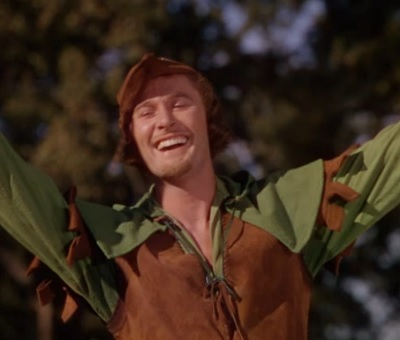
While watching Errol Flynn play Robin Hood, you get the feeling he knows how ridiculous he looks in those green tights. But instead of embarrassing, his outfit energizes him. You can almost hear him thinking, “Well, the manliness contest is lost. Let’s party!” The whole cast seems to share his giddiness, making this one of the most entertaining movies I’ve seen in some time. Who wouldn’t want to spend the green holiday with someone this easygoing and gorgeous?

(It’s easy to trace the film’s influence on an early favorite of mine, The Princess Bride, not to mention the parody Robin Hood: Men in Tights. Neither movie captures Flynn’s delirious enthusiasm, but that same sly humor is on full display in both, with Cary Elwes a worthy heir to his predecessor’s effortless style.)

The Heroine of Sadie Thompson (1928)

SadieThompson-Swansongroup
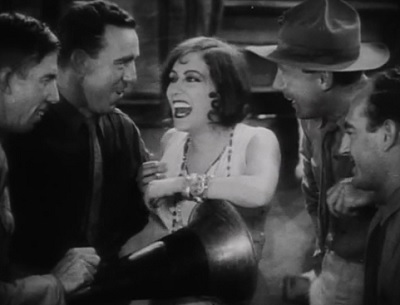
Sadie (Gloria Swanson) likes to pull pranks, tell dirty jokes, sing, dance, and most of all, laugh. The rarity of female attention partially explains the marines’ enthusiasm for her company in the story, but that’s not the only reason she attracts them. This woman is just so much fun. Like many supposedly “fallen women” in film, she has an easy camaraderie with others, is just as good a pal as a lover. And her confidence (until it’s shaken by the film’s villain) is breathtaking.

Nick & Nora Charles

NickandNoraCharles-Partying
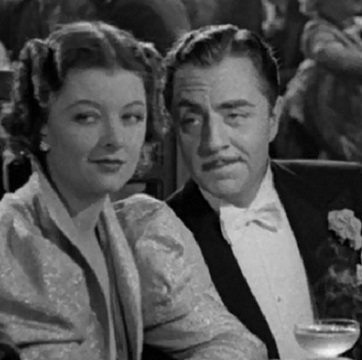
Nick Charles (William Powell) of The Thin Man series is the life of the party, without making any effort to be so.  He is cool, debonair, sarcastic, with just the right smidgen of childish to never take anything seriously but his partying. His wife Nora (Myrna Loy) is the perfect hostess. Obnoxious visitors entertain rather than annoy her. Party crashers are welcome. She calls room service to deliver “a flock of sandwiches” for her intoxicated guests, hands newcomers a drink before they’ve even gotten into the room. When asked if Nick is working a case, Nora responds, “Yes…A case of scotch. Pitch in and help him.”  Could any line sound more like St. Paddy’s Day than that?

Share
Posted in: 1920s films, 1930s films, 1940s films, Comedies (film), Drama (film), Humor, TV & Pop Culture Tagged: Carl Elwes, Errol Flynn, Nora Charles, Robin Hood, Sadie Thompson, St. Patrick's Day movies

The Artist at Play: Man with a Movie Camera (1929)

03/09/2015 by leah@carygrantwonteatyou.com 14 Comments

This post is part of the blogathon hosted by Movies Silently and sponsored by Flicker Alley. Thanks to both for such a great event! Click here to see the wonderful entries of the other participants:

Camera-Man2
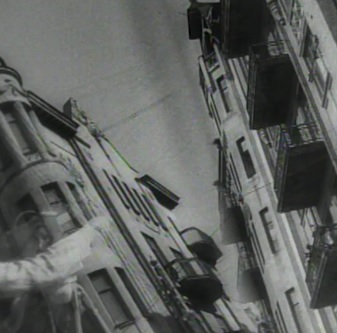
Wizardry. It’s the word that jumps at you while viewing Man with a Movie Camera, the celebrated documentary depicting 24 hours in a Russian city. Unlike the famous magician of Oz, director Dziga Vertov invites his viewers to experience all that his camera—and by extension, all that film—can do. Announcing at the start of his movie that there will be no scenarios, intertitles, or actors, Vertov set out to separate the genre from its roots in theater. The result could have been a movie so meta it became unwatchable to any but film scholars; after all, the director even demonstrates how he obtains shots, even exhibits the film editing process. But this masterpiece is not only revolutionary; it’s also engrossing. Here are just a few reasons why:

It’s a Bird…It’s a Plane…It’s Vertov Behind the Camera
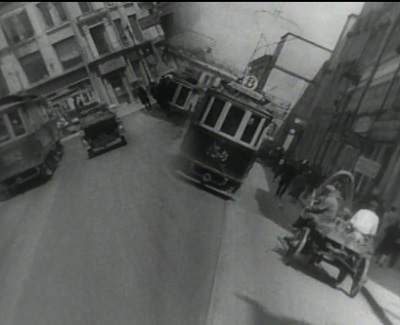
There’s a dizzying speed to the film, images flashing by at such a clip that some contemporary viewers and critics protested. Predictably, some of this speed captures industry, as when the director hurries an assembly line production to Tasmanian Devil haste to capture its unremitting flow. The director thrills at images of transportation, with clips of trains, buses, motorcycles, often with himself in dangerous positions to capture the motion. The thrilling score—I watched the Alloy version—underscores the frantic mood.

Vertov occasionally slows his pace, even stopping to profile still shots, the film editing process, and those same shots in action in a particularly lovely tribute to the power of moving images.

StillShots
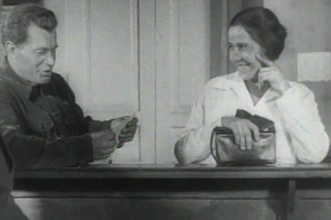
But it’s in rapidity that Vertov reveals his mastery of form and meaning. He even underscores the brevity of life in a short sequence. We see a couple getting a marriage license.

MarriageCertificate
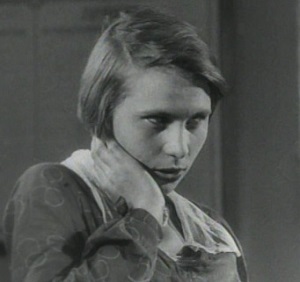
Directly after, another couple is signing divorce papers; the director zooms in on the estranged wife’s grim expression.

Divorce
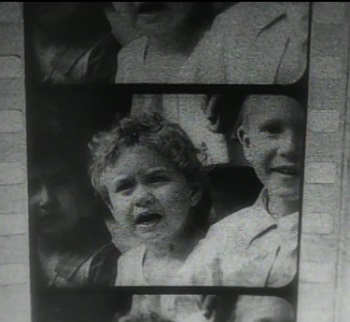
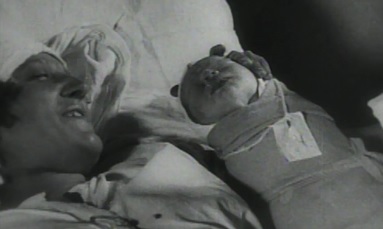
A mourner appears in a cemetery. A funeral passes our eyes. A baby is being born.

Baby
The director moves back and forth between the scenes to reinforce the connections. This circle of life takes a total of three minutes.

Loss
Realism…with Mannequins

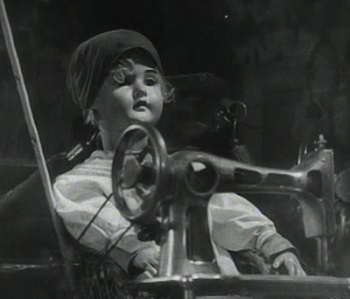
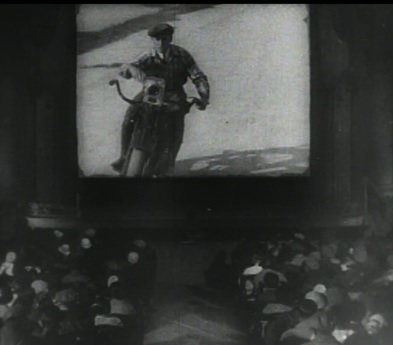
The film begins in a movie theater, priming the audience for a show. We see a Russian city, morning beginning. A woman sleeps in her room; a child does the same on a bench where he’s spent the night. There are scenes you expect next: the bustle of a city beginning, the drudgery of work. And some of those scenes, you get, and each is powerful, particularly portrayals of the mines. But it’s the surprises that keep you watching. Why does the director dwell on creepy shots like this one?

CreepyMannequin2
What’s the obsession with washing scenes? (What number of shaving, tooth brushing, and hair cleansing rituals were shot over the years he made this movie to end up with so many in the final product?)

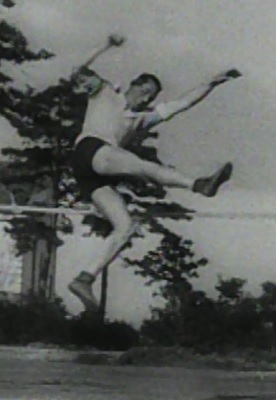
Documentaries can be gloomy, and for a director who attacked fiction and took so seriously his aims to capture truth, Vertov has a surprisingly light touch. You’re struck by the artist’s obsession with grace, revealed through a montage of pole vaulters, high jumpers, dancers, and basketball players.

HighJumper
He revels in a kid’s magic show, in women’s bodies at the beach. He attempted an international art form through his completely novel take on a documentary, achieving the realeast of real. And he delivers: You can’t help but feel fascinated by similarities evident between Russian culture and ours, between 1929 and today.

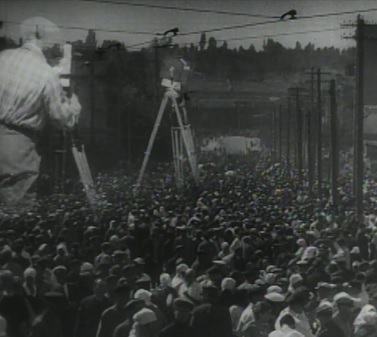
But like this pioneer’s artistic descendants, practitioners of cinéma vérité and literary journalism, Vertov believed revealing subjectivity was part of delivering truth. He not only affects his subjects by the intrusion of his camera, but our perception of them by which shots he includes, and which he doesn’t. As essayist Joan Didion would explain many decades later, “However dutifully we record what we see around us, the common denominator of all we see is always, transparently, shamelessly, the implacable ‘I.’”

CameraManAbove
Part of the delight of Man with a Movie Camera is watching subjects’ reactions to his (then novel) camera: the woman who blocks her face with a purse to avoid it, the tiny girl who can’t keep her eyes away.

But the director’s vision is so unique and his quirkiness so evident throughout that you never forget that another artist would have chosen other faces, other moments, would have startled his subjects in other ways, and for other reasons.

Look, Mom! No Hands!

The highly touted innovations with camera work in the film are remarkable in and of themselves. (Who knew so many of these techniques were used so early?) They also serve a purpose, not only illustrating Vertov’s sense of time dissolving, but recapturing for modern audiences the thrill of being at the beginning of a new art form.

Camera-Man
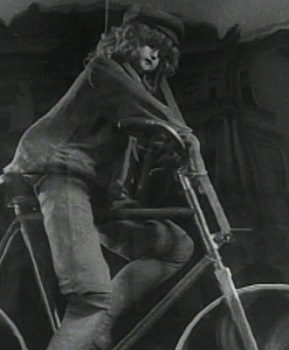
They made me think of the Impressionists, freed from the tyranny of having to capture exactly what they saw. The scenes featuring the filmmaker at work are so amusing. Here’s the photographer riding on a moving car! Watch him risk his life to portray that train! I kept thinking of a little kid showing off on his bike, holding his hands aloft for the first time. And just as I thought it, I saw this image:

Motorcycle
Because the director’s having fun, so are we.

CreepyMannequin
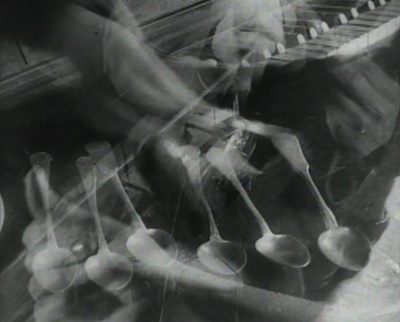
Because the action is exhilarating, we are giddy. Who but a kid-like grown up could have come up with an animated movie camera in action, or with this delightfully silly image?

Camera-Man4
Surely, Vertov would be leading the creative team at Pixar today.

Sight and Sound rated this movie eighth, and gave it the honor of best documentary of all time. I am not surprised by either ranking given the vision and experimentation of this film. But that’s not why I’m glad that I’ve seen it. What an experience, to witness so much of life covered, in so little time, and so beautifully. What a joy it is, to a witness the work of a genius with a sense of fun.

Thanks to Kimberly Bastin at Flicker Alley for a screener of the film!

Share
Posted in: 1920s films, Blogathons, Comedies (film), Drama (film), Uncategorized Tagged: Man with a Movie Camera, Sight and Sound bests, silent film, Vertov

4 Movies Downton Abbey’s Lady Mary Would Watch

03/01/2015 by leah@carygrantwonteatyou.com Leave a Comment

LadyMaryandCharlesBlake
It’s 1924 at Downton Abbey. We’ve just seen Lady Mary (Michelle Dockery) canoodling with one guy in a London theater (Charles Blake) to ward off another (Lord Gillingham) who had mistaken intimacy for love. Mary barely protested when forced to leave Beau Brummel early to disenchant Gillingham. But here are four films out that year that might have distracted the vixen from her flirtations, at least temporarily…

The Marriage Circle

The MarriageCircle
Mizzi (Marie Prevost), a dissatisfied wife, plots to seduce her friend’s husband. And that’s just the beginning of the marital and extramarital scheming in Ernst Lubitsch’s classic comedy of manners. Mizzi could give Lady Mary tips on undermining her frenemy Mabel Lane Fox’s attractions. (The daring Lubitsch would obviously become Mary’s favorite director; two of my four are his films.)

Her Night of Romance

HerNightofRomance
Dorothy (Constance Talmadge) winds up with a guy she barely knows (Ronald Colman) in her bedroom, and goes to extreme measures to protect her reputation. Sound familiar, Lady Mary?

Monsieur Beaucaire
Mary likes the pretty boys, and she couldn’t have missed heartthrob Rudolph Valentino starring in The Sheik three years before.

RudolphValentino-TheSheik
With Valentino featured AND a character named Lady Mary, Monsieur Beaucaire would lure the Downton heroine to the theater, even though her namesake in the film has too much pride to hold onto the guy (I have no illusions Mary would recognize the similarities).

Forbidden Paradise
Lady Mary has been subjected to Russian refugees she doesn’t care to meet, but a powerful czarina in full control of her posse of lovers? That could give Mary some interest in international politics.

Pola Negri, in her best Lady Mary pose

Pola Negri, in a Lady Mary pose

Maybe the film would even grant Mary some insight into her grandma’s (the Dowager Countess’s) almost-fling. Here’s hoping.

There you have it. Four films with enough skin, calculation, and female triumph to please the headstrong Lady Mary, maybe even give her some ideas for next season…

Share
Posted in: 1920s films, Drama (film), Feminism, Humor, Romance (films), Romantic Comedies (film), TV & Pop Culture Tagged: 1924 films, Charles Blake kiss, Downton Abbey, Downton Season 6, Film, finale, Kemal Pamuk, Lady Mary

The Debt Actresses Owe William Somerset Maugham: from Gloria Swanson to Annette Bening

02/19/2015 by leah@carygrantwonteatyou.com 8 Comments

SomersetMaughamActresses
I’ve read many glowing tributes to the stars of The Letter, Being Julia, Of Human Bondage, and Sadie Thompson over the years. While I’ve never questioned the talents of these actresses, I have always credited much of their brilliance in these parts to William Somerset Maugham. Their strengths are on display largely because of the characters he created in his stories, plays, and novels: women so complex, morally conflicted, modern, and real that 130 years after his birth, Annette Bening was Oscar nominated for playing one of them.

And she’s not alone. Before I get into the reasons, let’s start with the data. Here’s a list of Oscar nods to women in his films; if I’ve missed any, please let me know. It’s quite possible. The number of his film credits, and of stars listed in those movies, is astonishing. Here we go:

Academy Award Nominations for Actress in a Leading Role:

  • Gloria Swanson: Sadie Thompson (1928), based on the short story, “Rain”
  • Jeanne Eagels (first posthumous nomination), The Letter (1929), based on the short story and play. (She also made her name in the play version of “Rain.”)
  • Bette Davis, two nods: Of Human Bondage (1934; by write-in vote), based on the novel, and The Letter (1940)
  • Annette Bening, Being Julia (2004), based on the novel Theatre.

Other notable female roles include Gene Tierney’s in the Oscar-nominated The Razor’s Edge (a novel), Greta Garbo’s and Naomi Watts’s in The Painted Veil (a novel), and Madeleine Carroll’s in Alfred Hitchcock’s Secret Agent, based on Ashenden, a collection of stories.

Even fine actresses need a vehicle, and in the last fifteen years, one of the few amazing leading roles I’ve seen for a woman over the age of 30—Bening’s—was written by Maugham in 1937. I wasn’t surprised. He specialized in complex characters making immoral decisions: They cheat on and leave spouses and children, prostitute themselves, admit to irreligious or cruel behavior without guilt, contribute to or directly cause the death of others. Since Maugham resists moral judgments, his women are free to react to the traumas they’ve created rather than simply being punished for them. No wonder they’re so fascinating to watch on the screen.

In fact, Maugham is as likely to admire as condemn. As his (seemingly autobiographical) narrator in The Razor’s Edge explains, “My dear, I’m a very immoral person….When I’m really fond of anyone, though I deplore his wrongdoing it doesn’t make me less fond of him.” Thus the attention given to selfish characters such as Mildred in Of Human Bondage. Certainly, her character would have been less nuanced—giving Davis less to work with—had Maugham not empathized with Mildred and therefore made her traits and actions so interesting and believable.

DavisOfHumanBondage
Davis is Davis, but it took a number of roles before she reached this breakout one.

Maugham frequently explored the contrasts between how men and women seek to appear and who they are. While he may be gentle on others’ immoral actions, he can be scathing about their hypocritical ones. Sadie Thompson is a prostitute, but it’s the reformer trying to condemn her, unwilling to admit his own sexual appetite, whom we are led to despise. Sadie, gradually moved by the reformer, ultimately learns to appreciate her own values over his—an unexpected ending for the type of character who is usually just a one-note in a film. Swanson, not surprisingly, captures the flair, passion, and contradictions of this woman.

SwansonSadieThomson
In Being Julia, we root for the heroine in spite of (or even because of) her extramarital affair with a younger man because we enjoy her confidence. Despite her vanity and delusions, she owns and even enjoys most of her flaws. The surprises in her behavior are quite funny, and Bening takes full advantage of the humor.

Bening-BeingJulia
How wonderful is it, how gloriously human, that in the midst of her midlife crisis, Julia is obsessed with breaking her diet? How much do we love that she wants to savor her victory over a younger wannabe actress in solitude, since it’s a private triumph? What a feminist scene it is when she does, and how interesting that a man created it so very long ago. Curious to see how much the film differed from the source material, I reread Theatre, only to find it was even closer to the movie than I’d remembered: the dialogue, the focus, the character, the morality, even the final scene—all the same.

And Leslie in The Letter? Most authors would have focused on the murder and the passion leading up to it. It would have been a fairly typical noir, with an unremarkable femme fatale. But Maugham again proved to have a deeper interest in human nature than his peers, wondering not just about the crime itself, but Leslie’s efforts to conceal it, to retain that image she wants to present to the world. She is an interesting character because of her willingness to reside in her own lies, a trait that Maugham, with his typical regard for truth, seems to find more blameworthy than the murder. Thanks to his interest in motives, Davis and Eagels were granted a woman of enormous complexity to work with, which contributed to each’s stunning performance.

Eagels-TheLetter

Davis-TheLetter
Of his roles that have yet to win actresses Oscar nods, I find Kitty in The Painted Veil the most intriguing. Kitty’s husband Walter catches her cheating, and forces her to travel with him to a cholera-infested region of China as punishment. He offers her an out if her lover will marry her, knowing it won’t happen. Rejected by the man she loves and facing a death sentence from the one she doesn’t, Kitty spends much of her time alone, reflecting on her actions as Walter heals patients—quite a departure from her youth as a superficial beauty. She learns to admire Walter’s generosity, even as she pities the love for her that has turned to hatred. She wants to forgive him, and for him to do the same for her, but she can’t bring herself to love him.

Watts-PaintedVeil
What did Hollywood do with this story (Garbo’s and Watts’s versions)? Turned it into a love story. We’re meant to root for a reconciliation between the two, whether they both survive cholera or not. I don’t know about you, but once a guy tried to kill me via a deadly epidemic, I can’t imagine thinking, “Yeah, but I cheated on him; we’re cool now.” These plot alterations might have helped with commercial viability, but the result was to diminish realism and a powerful female part.

Kitty’s disappointment in herself for continuing to desire her vain, worthless lover is an essential part of the story. In the book we see enough of her life beyond the epidemic to discover that her enhanced self-awareness doesn’t lead to moral behavior. The self-deprecation and compassion she develops as a result of her failures are intriguing to witness. While Watts captured Kitty’s vulnerability beautifully, I suspect had the screenwriter more faithfully rendered the character’s complexity, he would have netted Watts the Oscar nomination, as with so many women in Maugham’s roles before her.

Maugham’s skill with character development is often attributed to his history: he stuttered in his childhood and struggled with his homosexuality. Did feeling like an outsider and being morally out of favor in his time contribute to his empathy for others? Probably. He gives another possibility, crediting his early medical training for giving him access to “life in the raw,” saying the work enabled him to see “pretty well every emotion of which man is capable.” While I suspect both of these reasons are relevant, I’ve always preferred to take as autobiographical his narrator’s confession in The Moon and Sixpence: “the fear of not being able to carry it through effectively has always made me shy of assuming the moral attitude.” Ultimately, perhaps in spite of himself, Maugham is amused by human behavior, in all of its foolish and ugly iterations, and therefore captivated by it. No wonder, with an author who claims he is “more likely to shrug his shoulders than to condemn,” that four of the women in his films have been nominated for Oscars, one twice. Let’s hope other gifted actresses take note, and give his excellent stories another run.

Share
Posted in: 1920s films, 1930s films, 1940s films, 1990-current films, Comedies (film), Drama (film), Feminism, Oscars Tagged: Being Julia, Bette Davis, great roles for women, Oscar nods, Sadie Thompson, The Letter, The Painted Veil, William Somerset Maugham
« Previous 1 2 3 4 5 6 7 8 9 10 Next »

Recent Posts

  • 100 Years Later, Still Scary: Dr. Caligari
  • Escaping Out of the Past (1947)
  • A Weeper for Those Who Love Jerks
  • Thank You, Academy, for Not Infuriating Me
  • Challengers (2024) Is a Bad Movie

Subscribe to Blog via Email

Enter your email address to subscribe to this blog and receive notifications of new posts by email.

Categories

  • 1920s films
  • 1930s films
  • 1940s films
  • 1950s films
  • 1960s films
  • 1970s films
  • 1980s films
  • 1990-current films
  • 2020s films
  • Action & Sports Films
  • Anti-Romance films
  • Blogathons
  • Childfree
  • Comedies (film)
  • Drama (film)
  • Feminism
  • Femme fatales
  • Film Noir/Crime/Thriller & Mystery
  • Gloriously Silly Scenes
  • Horror
  • Humor
  • Mae West Moments
  • Musicals and dancing films
  • Oscars
  • Random
  • Romance (films)
  • Romantic Comedies (film)
  • The Moment I Fell for
  • Turn My Sister into Classic Movie Fan
  • TV & Pop Culture
  • Uncategorized
Share
Classic Movie Blog Hub Member

Recent Comments

  • leah@carygrantwonteatyou.com on Meg Ryan’s Fate Foretold in Joe Versus the Volcano
  • Ryan on Meg Ryan’s Fate Foretold in Joe Versus the Volcano
  • leah@carygrantwonteatyou.com on 100 Years Later, Still Scary: Dr. Caligari
  • The Classic Movie Muse on 100 Years Later, Still Scary: Dr. Caligari
  • leah@carygrantwonteatyou.com on 100 Years Later, Still Scary: Dr. Caligari

Archives

  • November 2025
  • September 2025
  • May 2025
  • March 2025
  • January 2025
  • November 2024
  • August 2024
  • July 2024
  • May 2024
  • March 2024
  • February 2024
  • December 2023
  • November 2023
  • October 2023
  • September 2023
  • August 2023
  • July 2023
  • May 2023
  • April 2023
  • March 2023
  • January 2023
  • December 2022
  • November 2022
  • September 2022
  • July 2022
  • May 2022
  • April 2022
  • March 2022
  • February 2022
  • October 2021
  • September 2021
  • April 2021
  • March 2021
  • February 2021
  • December 2020
  • October 2020
  • September 2020
  • July 2020
  • May 2020
  • April 2020
  • March 2020
  • February 2020
  • December 2019
  • October 2019
  • September 2019
  • June 2019
  • May 2019
  • April 2019
  • February 2019
  • January 2019
  • November 2018
  • September 2018
  • July 2018
  • June 2018
  • May 2018
  • April 2018
  • March 2018
  • February 2018
  • January 2018
  • November 2017
  • September 2017
  • August 2017
  • July 2017
  • June 2017
  • May 2017
  • April 2017
  • March 2017
  • February 2017
  • January 2017
  • December 2016
  • November 2016
  • October 2016
  • August 2016
  • July 2016
  • June 2016
  • May 2016
  • April 2016
  • March 2016
  • February 2016
  • January 2016
  • December 2015
  • November 2015
  • October 2015
  • September 2015
  • August 2015
  • July 2015
  • June 2015
  • May 2015
  • April 2015
  • March 2015
  • February 2015
  • January 2015
  • December 2014
  • November 2014
  • October 2014
  • September 2014
  • August 2014
  • July 2014
  • June 2014
  • May 2014
  • April 2014
  • March 2014
  • February 2014
  • January 2014

Meta

  • Log in
  • Entries feed
  • Comments feed
  • WordPress.org

Copyright © 2025 Cary Grant Won't Eat You.

Church WordPress Theme by themehall.com