Cary Grant Won't Eat You

Classic movies for phobics

  • About
  • eBooks
  • Previous Blogathons
Classic movies for phobics

Drama (film)

Comic Relief: A Simple Favor & Can You Ever Forgive Me?

09/29/2018 by leah@carygrantwonteatyou.com Leave a Comment

Need comic respite? I’m happy to report that two new dramedies featuring strong women are even better than you’ve heard.

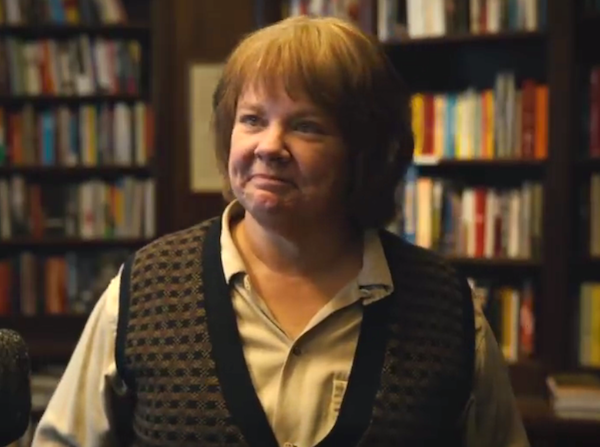
Can You Ever Forgive Me?, starring national treasure Melissa McCarthy, is based on the memoir of real-life writer Lee Israel, who became a con artist to pay the vet bills (out in wide release on Oct. 19th). Unable to get anyone to care about the subject of her new biography, Fanny Brice, much less her dwindling finances, Israel turns to stealing letters of famous movie stars and writers, and soon begins penning fake ones herself. Classic movie lovers and bibliophiles will sympathize with her alienation from those who don’t spend their days reading Noël Coward and Dorothy Parker. (And you’ll enjoy a line about Louise Brooks, a nod to classic movie fans.)

Appreciators of one-liners will ask themselves why they haven’t bought Israel’s memoir yet: this woman could WRITE. There’s a reason she was successful at mimicking Parker and Coward. Brought to caustic life by Melissa McCarthy, Israel is sympathetic even at her darkest and lowest. Despite the depth of her despair and loneliness, she is relentlessly funny in the film. Israel and her similarly lost companion (and later conspirator), Jack Hock (Richard Grant), engage in so much snarky, on-point banter that you wish the two could have had an Algonquin Round Table of their own.


These two boozy companions are simply joyful company for anyone who doesn’t mind a bit of darkness in their humor. And McCarthy deserves the awards buzz she’s getting for a riveting performance.

McCarthy’s frequent director Paul Feig has a film of his own out this month. Feig, who has a George Cukor flair for creating great vehicles for female stars, is at it again. The only question is whether Blake Lively or Anna Kendrick gets a meatier, more complex part in A Simple Favor, a story that is tonally closer to the light cynicism of Young Adult (2011) or the campiness of Serial Mom (1994) than to the darkness of Gillian Flynn’s Gone Girl (2014), to which it’s being compared. I’m hearing references to Double Indemnity from classic movie fans due to the film’s humor. Beat the Devil (1953) is more like it. Though A Simple Favor is a bit more controlled than that messy Truman Capote delight, there’s a bit of Mrs. Gwendolen Chelm (Jennifer Jones) in both of these heroines.

Feig; the director of Bridesmaids, The Heat, Spy, and Ghostbusters (the reboot); is so open about preferring female leads and so appreciative of their comedic skills that it’s unsurprising to see both stars so funny and magnetic in his film. Their profane banter is hilarious, and the casual cruelty, self-interest, and denial of these particular frenemies are a blast to watch. I won’t spoil the surprise of what becomes of Emily (Lively), whose disappearance spurs mommy blogger Stephanie (Kendrick) into amateur detective/life-stalker mode.

There are some seriously batty plot developments that seem more like old-school soap operas than big screen fare (again, like Beat the Devil). But anyone paying attention knows plausibility is not the point. Just sit back and enjoy this dark comedy fun. (And don’t miss the recent titles and commentary on Stephanie’s bizarrely eclectic blog.) Those of us who have been following Feig since his brilliant creation, Freaks and Geeks, will be glad to see his first female lead, Linda Cardellini, in a scene-chewing, funny bit part. Let’s hope the films to follow these two this fall are half as fun.

Share
Posted in: 1940s films, 1950s films, 1990-current films, Anti-Romance films, Drama (film), Film Noir/Crime/Thriller & Mystery, Humor Tagged: A Simple Favor, Anna Kendrick, Blake Lively, Can You Ever Forgive Me?, film review, for Beat the Devil fans, George Cukor, Louise Brooks, Melissa McCarthy, noir, Paul Feig, strong female leads

Women Who Love Too Much in Film

09/09/2018 by leah@carygrantwonteatyou.com 2 Comments

I had another fun talk with Grace Collins of True Stories of Tinseltown! We chatted about women who love too much–from Tierney’s character in Leave Her to Heaven to Irene Dunne’s in Back Street (1932 version). Grace is a wonderful host and we had so much to say, especially about the dreadful narcissists John Boles liked to play, and how Bette Davis could really be a post of her own on this topic.

Clearly, this is a subject that needs much, much more discussion! Check it out here:

And definitely check out Grace’s other posts and other podcasts. She’s so witty and so knowledgeable about so many things!

https://www.inyourfacewithdonnieandgrace.com/news

http://www.truestoriesoftinseltown.com/

Share
Posted in: 1930s films, Anti-Romance films, Comedies (film), Drama (film), Romance (films) Tagged: Back Street (1932), bad romances in film, Bette Davis, Gene Tierney, Gilda, Grace, Irene Dunne, John Boles, Leave Her to Heaven, Mildred Pierce, Now Voyager, Rita Hayworth, rom-coms, The Women, True Stories of Tinseltown podcast

Two Critics Pan Hitchcock’s Torn Curtain

07/06/2018 by leah@carygrantwonteatyou.com 16 Comments


Friends and fellow film buffs: Brian Wilkins and Mike Gutierrez have written wonderful guest posts here at Cary Grant Won’t Eat You—Brian, on fighting in Sword and Sandals films, and Mike, on his ideal casting for Hitchcock remakes. Today they’re joining the second annual Alfred Hitchcock blogathon to consider what the famous director could have been thinking with Torn Curtain (1966).

B: This all started because I had a memory of a movie where a drunken Paul Newman, at the Nobel Ceremony in Stockholm, chats up beautiful blondes and a physicist who may or may not be trying to defect to East Germany. So when Torn Curtain was still available, I texted Mike and said we should grab it.

There’s only one problem.

Torn Curtain is a Paul Newman and Julie Andrews vehicle, about a conference in Copenhagen that ends in a physicist possibly defecting to East Germany. And it’s not the movie I remembered. That movie is The Prize directed by Mark Robson. This was Torn Curtain, and as Mike put it…

M: Torn Curtain is a deeply stupid movie.

And it shouldn’t be.

It’s 1966.  Newman and Andrews are two of the biggest stars in the world. It’s true that Hitchcock was winding down by then, but he’d only done The Birds three years earlier. The three of them coming together for some Cold War intrigue sounds like a sure-fire hit, or at least a fun two hours. But that’s not what happened. And, frankly, I’m not sure what happened during the film.

Newman is “defecting,” but no one believes that for a minute. Andrews is his doting girlfriend who follows him to East Germany and decides to stay with him–betraying her country for a guy who has been lying to her. The East German secret police announce themselves as the “secret police,” which doesn’t seem like something the secret police should do. It’s not clear if Newman is working with the US government or is going completely rogue, but somehow he has ties to the resistance even though he’s just a scientist.

I could keep going–the plot is inane, the characters inconsistent, and Newman and Andrews seemed to have lost their charms on the flight to Berlin–but you get the point. So, Brian, what do you see as the reason this movie went off the rails?

B: They squeezed all the fun out of the movie. In every single case where you could find a joke or a bit of dash, they threw a lead blanket on it. I’m mostly blaming the writer.

But here’s the thing: I didn’t think it was humanly possible to have zero chemistry with Paul Newman. I’m pretty sure even inanimate objects have chemistry with Paul Newman. Even his crutch in Cat on a Hot Tin Roof looks into being leaned on. Julie Andrews looks like he started every take by mansplaining parliamentary procedure.

M: Do you think they took out the fun or had no intention of making a fun movie? I’m thinking the writer considered this his grand epic about a deadly serious topic and wanted to make a bold statement about love and patriotism and the threat of the Soviets; that he believed it was high art, Oscar-bait.

And tonally, it keeps shifting from a romance to faux-intrigue to, well, we should probably talk about how Paul Newman and some farmer’s wife re-imagined Sylvia Plath’s death on the Stasi officer. That scene manages the incredible trick of being both disturbing and boring.

B: Let me do some research <looks at Wikipedia for 2 minutes>…oh, shit, this was a hot mess. Hitchcock shopped the idea to Nabokov, who turned it down (genius) then gave the script to Brian Moore (shortlisted 3 three times for the Booker prize) who really should have known better. Moore complained Hitch had no sense of characters. Hitchcock complained Moore wasn’t funny. So Hitchcock thought he was making North by Northwest and Moore thought he was writing…a boring version of The Spy Who Came in From the Cold?

But to the murder. Listen, I hate to get all professional about this, but there are a million things to murder someone with in a kitchen other than a gas stove. It’s almost like the house frau in question was like, “Do you know how hard it is to get Stasi brains out of a cast iron pan? I just seasoned it!”

M: I just spent five minutes re-imagining this film as if Nabokov wrote it. Then I started imagining if he’d written The Sound of Music. “No, you cannot sing the Nazi’s away, Julie Andrews. No.” I digress.

B: Rolling pin. Cleaning chemicals. Towel garrote. Meat hammer. Fork.

M: Ice pick?

B: Only if he’s a real Communist (yes, that’s a Trotsky joke, David Ives fans).

M: This was one of the big set pieces, the one that shows us that Newman isn’t just a dainty scientist but a badass with a Ph.D. Now, you’re married to a scientist–who I’m certain would have used a paring knife—

B: Correct. Or poison.

M: …and you’ve met scores of scientists in your life: is there anything about Newman’s character that seems the least bit authentic? Or, a better question, what do you think Newman thought he was supposed to be? He’s never been so charmless. He has that great, knowing smirk in everything he does. What movie did he think he was in?

B:  I think Newman read the character as a boring CIA agent the whole time. His character “starts in Washington” and ends with a “teaching position.” He’s just a physicist who couldn’t actually cut it, but as a bureaucrat briefing real spies on what to steal, he’s sort of useful. And I think Paul Newman would hate that man intensely. I’m guessing he needed to fund some sort of charity for kids with horrific cancer. Seriously, that man is a sexy, sexy saint.

M: I’m not sure the first Mrs. Paul Newman would agree. There is a voodoo doll of Joanne Woodward out there floating in the aether.

B: I started wondering if Joanne Woodward would be better casting than Julie Andrews, but, honestly, I don’t think anyone could have chewing gum and twined a performance from this script. Is there any trace of Hitchcock at all with the escape scene?

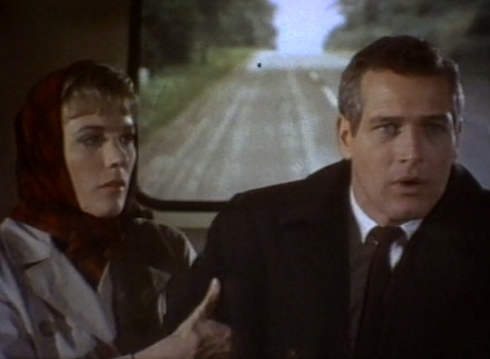
M: Sure. It’s an elaborate set piece–a bus chase before sneaking onto a ship–that’s supposed to be Hitchcock’s version of how he’d escape past the Berlin Wall. But it feels like a knock-off version of a Hitchcock climax, sort of like how 2 Days in the Valley ripped off Tarantino. The problem is that Andrews and Newman are passive characters in the escape. They’re sitting on a bus driven by someone else, and then shuffled onto a boat where they are shoved into baskets to sit in their own filth for days (weeks?) while someone else pilots the ship. Passive. It’s like Hitchcock forgot what made for great Hitchcock.

B: I never even thought of how this would be Hitchcock’s personal fantasy of how to get away: “Well, I’m certainly not going to run. And riding a motorcycle sounds sweaty. Perhaps I could just drift peacefully into freedom?”

M: Here’s the thing: Cary Grant kills a dude and saves the girl in North by Northwest.

Paul Newman sits in the back of the bus and hopes no one hurts him.

B: I think this film needs more dynamite, there, Butch. I tried to think of something I liked about this film but I’m coming up as empty as a housefrau looking for a murder weapon in a gun closet.

M: Yeah, I’ve got nothing. In the end, I found myself rooting for the Stasi.

B: Well, thank you for your patience, kind readers. I hope you’ve enjoyed being warned off what has to be in my top 5 worst movies of all time. See The Prize instead for all your Paul Newman Cold War-related hijinks. And …oh! Bear Island with Julie Andrews. It’s got the UN, it’s set off the coast of Norway, and there’s a possibly gold-filled U-Boat.

M: That sounds awesome. I’ve never seen it. Let me do some research <looks at Wikipedia for 2 minutes>…. You did it again: You got Julie Andrews confused with Vanessa Redgrave.

B: That’s more telling about my fantasy life than I would like. MEA CULPA!

Check out the other posts in Maddy Loves Her Classic Film‘s The Second Annual Alfred Hitchcock Blogathon, including her post on Rebecca!

Share
Posted in: 1960s films, Drama (film), Film Noir/Crime/Thriller & Mystery, Humor Tagged: Alfred Hitchcock, Paul Newman and Julie Andrews, Torn Curtain, What was he thinking films, worst films by good directors

Spielberg Needs a Better Editor–or These Classic Films

01/14/2018 by leah@carygrantwonteatyou.com 16 Comments


I just watched The Post, and as usual with a Steven Spielberg film, I was thoroughly enjoying it, hoping, “Maybe he’s avoided it this time!” And then WHAM! There it is: The schmaltzy, on-the-nose scenes and/or musical selections that undo the magic he has so skillfully woven. And so again, I must wonder, Why?

All creators have worst instincts: tendencies to overdramatize, to underdramatize, to love terrible actresses only because they’re icy blondes. If they’re wise, they find a collaborator or editor to curb their worst impulses. If they’re not, they double down, find others who encourage or exaggerate those impulses. Spielberg clearly thinks his work needs no counter-voice (like his similar editing-averse peer, Martin Scorsese), and as a result, we get scenes in The Post like Meryl Streep walking down the stairs with young women gazing at her in admiration, and a Supreme Court judgment read aloud dramatically. And then Spielberg gets folks like me, a lowly blog reviewer in a $7 matinee, grumbling to herself, “Come on, Steven. This is not Lifetime. Cut it out.” Which is not to say that I disliked The Post. That’s the problem. I love Spielberg’s work. I just wish he’d stop ruining it.

Here’s what I wish Spielberg would watch for inspiration:

The “Win One for the Gipper” Speech from Knute Rockne All American
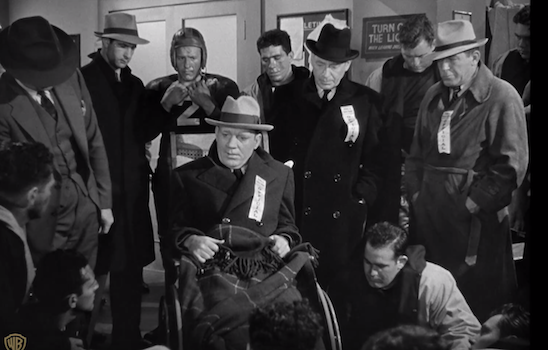

Rockne’s invocation of a previous player’s (George Gipp’s) dying wish to rev up his team would seem, on the surface, hopelessly manipulative. Onscreen at least, it’s anything but. Because it’s a highly charged moment, I was expecting some annoying inspirational music (I’m looking at you, Steven. Amistad’s ruined-by-treacle potential still haunts me.) Instead, the scene is quiet, with only background noise from the game. Pat O’Brien delivers the deathbed wish (that a losing Notre Dame team will go against the odds and pull out a win) as an obligation. He’s fulfilling a promise, nothing more. His voice is quiet; his face reserved, somber. As a result, the moment seems authentic. He’s delivered his sad charge, and it’s up to the players to make what they will of it, to win or not. The scene is, as a result of these decisions, deeply moving. And inspirational.

It’s an elementary writing practice: heightened moments require understatement. Why then must we viewers be subjected to John Williams overplaying the score in every dramatic Spielberg scene? (I don’t doubt Williams’s talent, but he too likes melodrama, doubling the bad impulse.*) Why show us a row of young women fawning over Graham instead of a single smile of a single person? I don’t get it. Nor should Steven.

Meet John Doe & Mr. Smith Goes to Washington
Critics often reference Spielberg’s emulations of/similarities to Frank Capra. I see what they mean. There’s an optimism to Capra’s work, a hope in government and humanity, that is echoed in Spielberg’s films. And in the Capra movie I dislike most, You Can’t Take It With You, I see the same lack of subtlety and complexity Spielberg is sometimes prone to. But there’s a darkness and cynicism to Capra’s work that enriches and tempers his idealism, which is beautifully rendered in Meet John Doe and even in It’s a Wonderful Life. In Capra’s best work, the hero/heroine is compromised.

Take the newspaper story, Meet John Doe. Ann Mitchell (Barbara Stanwyck) fabricates a story about a disillusioned everyman, John Doe, and then leads the campaign to lionize a man who agrees to play the part (Gary Cooper). She plies the man to give speeches repeating her father’s wholesome maxims about humanity. Her idealism–and desire to influence her society with it–blind her to how little control she’ll have over the outcome of this experiment, and the life she’s risking with her carelessness. Note that Joe, the innocent here, is NOT the hero. Why? Because he’s not as interesting to watch or as human a character as Ann.

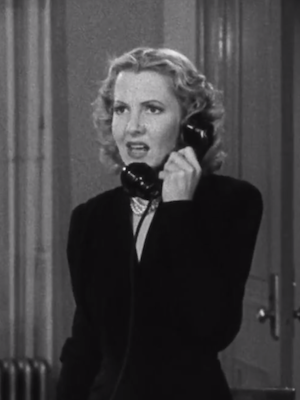
Consider Mr. Smith Goes to Washington. Jefferson Smith (Jimmy Stewart) may be the focus of the film, but Saunders (Jean Arthur); the wised up, cynical DC staffer; is our lens on the story, a woman who is complicit in a culture that destroys naive idealists like Jefferson.

Spotlight understood this necessity for compromised heroes. It derived its energy from the guilt The Boston Globe reporters felt about the coverup of priests’ sexual crimes. Obviously, the paper was not responsible for the child abuse, but they felt they fell short in their watchdog duties by not connecting the dots/seeing the extent of the issue earlier. Without this guilt, the movie would just be bad priests versus noble reporters, the kind of simplistic storytelling we expect out of Superman, not Oscar winners.

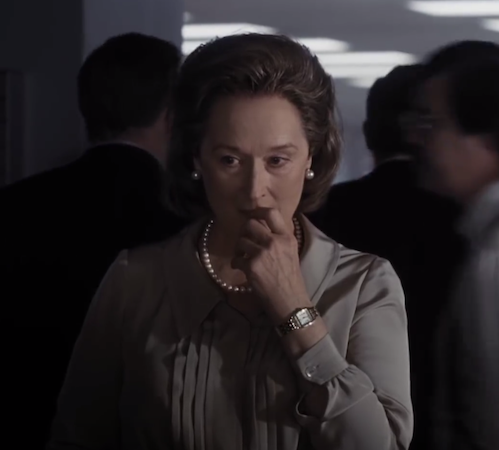
Unfortunately, The Post includes no such complexity. While we see that Katherine Graham (Meryl Streep) worries about losing her paper and betraying a friend should she publish the Pentagon Papers, we don’t care about her kids/her family’s legacy/the other stories that might never get told without her paper if it folds. Nixon and his White House are portrayed in comically bad terms, which obviously resonates with those of us who feel the White House is in similar peril now. But we’re talking film making. And while in life there are clear right-versus-wrong conflicts, they don’t make for good cinema. If we at least got what it cost her just to carry on with that paper in the face of her husband’s loss, we’d understand more of Graham’s potential sacrifice. But Spielberg relies on Meryl Streep to deliver too much of this import, and a few throwaway lines don’t cut it.

Perhaps there IS no way to tell this specific story without it appearing so black and white, or at least it seems so in 2018. But I think the key was to let us see more of Graham’s history or even guilt–even if that guilt was considering NOT publishing, however briefly. By acting as if all of her concerns weigh on her equally (the revenue of the publication, her friendship with McNamara, her family’s legacy, soldiers in Vietnam dying), Spielberg may play up the drama of the decision, but he cheapens her thought process, doesn’t allow us to see the struggle against self-interest and rationalization. We therefore see her as more of cypher, and her decision as waffling and random.

That said, it’s a tribute to Spielberg that he still makes the film–and her–so fun to watch. But with a little more Capra viewing, maybe he’d make his heroes and heroines just a little less glowing, just a little more like the rest of us: rusty people, with great potential for more.

The Ending of Casablanca
Typically, Spielberg has a beautiful ending about a half hour before the actual conclusion of his movies, and instead of stopping there, he just keeps going. The peak excitement in The Post is in the decision to print, not in the aftermath, so why does the film continue? A few lines on the screen would have worked better. (Although the VERY end of The Post is too on point, I do appreciate the humor.)

I wish Spielberg would rewatch Casablanca: The hero says his final words; the heroine expresses hers.
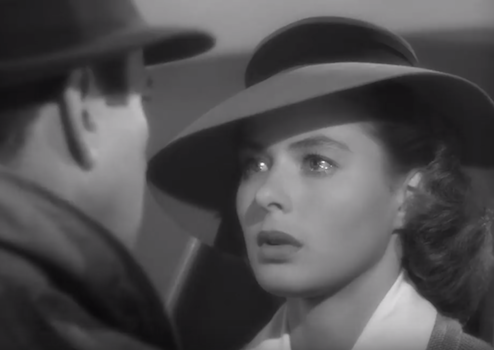

The heroine gets on the plane, it takes off, and the hero gets a funny final line. Done. Bows are unnecessary.

Why can’t Spielberg trust his viewers to get it, as director Michael Curtiz did? Why must Spielberg underline, add exclamation points? I don’t need extreme subtlety, but I don’t need words across the sky either.

The Post is still so good–fascinating, rousing, entertaining, a great history lesson, beautifully acted. I loved both Tom Hanks and Meryl Streep in it. I wanted to dwell longer in this world, wanted more time with Ben Bradlee (Hanks) in particular. I loved the mechanics of the press, the feel of the newsroom. The film is a pleasure to watch, and so meaningful in its message. Yes, it’s good. But with Spielberg at the helm, with a harsher red pen, it could have been so much more.

The Color Purple
Before I conclude, there is one final film I’d like Spielberg to view, if I got my wish.
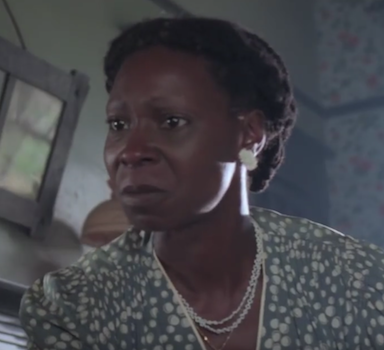

The Color Purple is perfect. No false notes. All complexity (even the bad guy has some heart, and redemption). No extra half hour of cheesiness. (And talk about #MeToo!) Please, Steven. Watch it. See what you got right when you directed it. Replicate.

*I should say that The Post is an unusually restrained film for Spielberg music-wise, for which I’m grateful.
Share
Posted in: 1930s films, 1940s films, 1980s films, 1990-current films, Drama (film), Oscars Tagged: Casablanca, Knute Rockne: All American, Meet John Doe, Meryl Streep, Mr. Smith Goes to Washington, newspaper movies, potential Oscar nominees, The Post, Tom Hanks

Can Barbara Stanwyck Make Up for George Brent?

01/12/2018 by leah@carygrantwonteatyou.com 8 Comments


I find myself reserving certain films for future viewings when I love a star. Sometimes–as with Barbara Stanwyck–I try to watch her lesser films, putting off a great one so at least one is still waiting in reserve for me, like some wonderful present under the tree.

So I didn’t go into My Reputation (1946) with any illusions that it would be a masterpiece, but I thought I could enjoy a little Stanwyck magic. Alas, I neglected to look up her costar: George Brent, who somehow manages to be even duller and less charismatic onscreen than Herbert Marshall. Was his lethargy enough to destroy her energy? The answer: Yes. And no.

The premise is a simple one: Jessica Drummond (Stanwyck) has lost her husband after a long illness, and an attraction to army major Scott Landis (Brent) revives her spirit, but harms her reputation as a chaste, loyal widow.

You see the problem already, don’t you? Some serious miscasting is going on here. I can buy Brent as a restful, chill companion after say, a bad marriage to a philandering playboy. But Brent AS a playboy? Who REVIVES her? Ummmm. Exactly how old was her husband?

I don’t think I’m alone in finding Brent a sleep aid, and his looks don’t even provide eye candy that can dispel that impression. After a while, I simply stopped the film in boredom. Had anyone said, “That guy? Maybe you need some Vivarin, lady,” I would have been fine with Jessica’s choice of Landis, but it seems everyone in the film (even Eve Arden!) thinks he’s the dapper, fun lady’s man Brent may have been in real life, but sure wasn’t onscreen.

So….In his scenes with her? I’m falling asleep. And unlike in Baby Face (in which he’s slightly more tolerable), he’s on the screen a lot. Only when Jessica first enters his apartment; her every gesture displaying her discomfort, reserve, fearfulness, and lingering prudery; does Stanwyck command the screen enough to blot Brent’s presence out.

BUT when Brent’s not around, there’s interesting stuff going on, and Stanwyck nails it. Jessica’s boys’ anger at her replacing their dad is visceral.


The whole time you’ve been sympathizing with Jessica for wanting to get her groove on, as gossips and prudes (including her mother) tsk tsk at her. But then you realize that she’s told these boys nothing, has just invited Landis over for Christmas Eve, gone to fights with him, taken off on trips that last till the wee hours with him (apparently leaving the kids with the housekeeper), without so much as an “I’ll always love your dad” talk. True, it’s a different era, but a wee bit of explanation was required here, and never given. Jessica’s slow-burn realization of her screw-up is almost as riveting to watch as her takedown of a gossip queen earlier.

Most of the strong scenes, unfortunately, don’t even show up till about 30 minutes are left in the film. Way too much time is spent establishing Jessica’s already obvious infatuation, and giving her love the bedroom eyes. I’d suggest skipping around, enjoying some striking Stanwyck outfits, beautifully rendered lines, and wonderful chemistry with everyone but her leading man.

Share
Posted in: 1940s films, Drama (film), Romance (films) Tagged: Barbara Stanwyck, dull leading men, George Brent, My Reputation

Sexual Predators in Film: Weinstein, 1937

11/10/2017 by leah@carygrantwonteatyou.com 8 Comments


All this talk of Harvey Weinstein and now Louis C.K. has me thinking about Stage Door (1937), that fascinating film featuring a dormitory of smart-talking women clamoring for parts on the stage, and suffering the sexist overtures of a very slimy producer along the way. The film was produced the same year the words “casting couch” were first published in Variety, according to Matthew Dessem. How the film got made is clear: it’s a feminist anthem against sexual predation, yes, but it’s carefully camouflaged as one of the funniest comedies of its era. Critics praised the witty, fabulous dialogue, ignoring or underplaying the blatant warning directed at female aspirants to stage or screen.

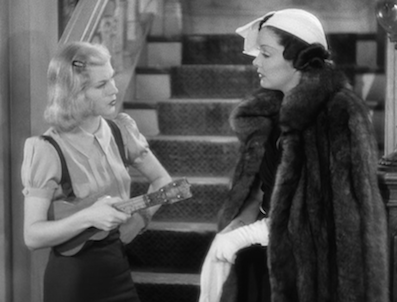
The story begins with Jean Maitland (Ginger Rogers) trying to oust roommate Linda Shaw (Gail Patrick). Jean’s a sarcastic gal from the wrong side of the tracks, too proud and ethical to give into seductions in exchange for parts or furs. Her roommate, however, is an opportunist, and has given up her reputation in exchange for gifts from her wealthy keeper, sables and sapphires she rubs in Jean’s face.


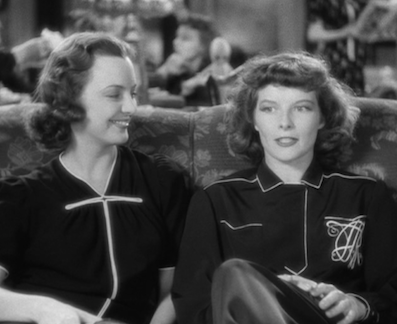
The two separate to achieve peace, but Jean isn’t long for a solitary room; enter her new roommate, heiress Terry (Katharine Hepburn), who wants to star on the stage too. She thinks her peers haven’t made it big yet because they lack ambition. Her slow recognition of her own privilege will become the axis around which the plot revolves. Initially mocked by the dorm residents who resent her for slumming, she does make one friend, Kay Hamilton (Andrea Leeds), the acknowledged talent of the bunch.


Sympathy and admiration for Kay will lead Terry to understand that her poverty-stricken companions aren’t slackers, but cynics battered by experience. They face obstacles she doesn’t, and have no safety net if they fall.

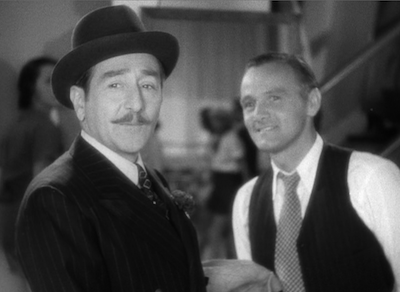
While Katharine Hepburn’s Terry is learning how the hungry half lives, Jean encounters Linda’s lover, Anthony Powell (Adolphe Menjou), who eyes her in an audition. The fact that finding prey is his goal in being a producer is clear, as when he says to a dancing school director, “I very likely won’t produce anything unless I can find an angel. You haven’t seen any flying around, have you?” After an uncomfortable amount of leering at a dancing pair, he asks about “the little blonde.” His pal obligingly offers the information, of course, and soon Jean has unwittingly taken a job given to her so that Powell has access to her charms. We can see in all of these moves a clear pattern: he’s after/has sex with the girl, she gets the role. Jean’s response when she sees Powell and Linda at the club where she’s been hired says everything:


Jean’s barbs at Powell (and at his choice of a mistress) have no effect.


But then Jean decides it’s time to teach her former roommate Linda a lesson, steal her guy. Jean doesn’t plan to have sex with him, but what’ll it hurt her to drink a little champagne, have a meal or two that isn’t stew?

But the bigger reason for dating an undesirable man is evident: If Jean doesn’t play nice, what happens to her job? Her dancing partner, Annie, suggests as much multiple times. When Jean complains about his creepiness, saying she needs a “tin overcoat” as protection, her partner responds, “You should be glad he looked at you at all.”  Jean doesn’t need her partner’s pestering; she knows full well that “…if I don’t go out with him, I’ll probably lose my job, and so will Ann, and I’ll be right back where I started from.”

Of course, Powell has plans of his own: ply Jean with alcohol, tell her a sob story about his life, talk about her name in lights and himself as the reason, and get what he wants. If she isn’t exactly sober enough to consent, what does he care? Creepily, his butler knows just how to disappear. As Linda warns her (to protect her meal ticket), the butler is “deaf,” so she “really won’t have to bother to scream for help.”

Luckily, Jean gets too sad-drunk on the first trip to his penthouse to make his “seduction” fun. He decides she isn’t worth the trouble, but she (too buzzed to catch the drift of their last talk) thinks she’s beginning to like the guy. The next night, when Terry is having an actual business meeting with him in the penthouse (as Weinstein’s actresses thought), Jean charges in.


Terry fakes drunkenness and sexiness to keep Jean away from the predator, and it works.


Jean realizes he’s as worthless, creepy, and unfaithful as she initially thought, and leaves. The audience is grateful for Jean’s escape, having seen the disaster Powell leaves in his wake: poor Linda has nothing but trinkets in exchange for sexual favors–gifts not even sizable enough to get her out of that dorm. (How thin is her arrogance!) We know how short Jean’s casting-couch career would be after her favors, given that roving eye. The actress in the story with true talent (Kay) who doesn’t succumb to (and apparently was never offered) the producer’s embraces is literally starving as he puts off her auditions for his dalliances, and will soon reach an even sadder fate.

I kept thinking of Terry when the Weinstein revelations came out, not just because she was brave in the story, but because she could be. Of course, Terry too is the object of male manipulation. The only reason she’s up for a part is her father’s secret meddling (He’s finagled her starring role so that she’ll fail and realize she should come home and marry a rich boy like a good little girl. Nice support, huh?) Although she does have a disgustingly condescending father, Terry is safe. That money gives her power of her own, and she can afford to confront the Anthony Powells of this world. It’s really the lesson of the Weinstein story, isn’t it? Predators go after those with no power, so those with it have to be the ones to stand up. And not just men, but female stars, the Meryl Streeps, who have status of their own and can be immune from predators’ hushing machinations. Several media outlets have justifiably called out the male actors and directors who did nothing about Weinstein, and the employees, like that pal in Stage Door, who abetted the behavior. But I’m disappointed too in the prominent women, those who weren’t personally affected, but could have done something…and didn’t. (Streep claims she didn’t know; even if she didn’t, others with star power did.)

At first I thought that the sexual predator storyline and feminist response to it were from Edna Ferber, a friend of Hepburn’s and the original play’s cowriter. Ferber may have been inspired by memories from childhood, I reasoned. According to Janet Burstein, Ferber learned about men’s less pleasant side in her youth, when everyday wants meant she “had to run a gauntlet of anti-Semitic abuse from adult male loungers, perched on the iron railing at the corner of Main Street, who spat, called her names, and mocked her in Yiddish accents.” That disgust on Jean’s face when she spots the way Powell looks at her? Yeah, that’s written by an author who knows. But the play Ferber cowrote was completely redone for the screen by Morrie Ryskind and Anthony Veiller. And according to some sources, the movie’s verisimilitude has less to do with the screenwriters than with Gregory La Cava, who sought the stories of and the funny dialogue of the women he directed, and encouraged improvisation. But then again, the stories of such men were everywhere, then and now, and needed no writer to reveal the behavior. Anyone watching and listening–as La Cava apparently did–could hear and expose them.

I hope one day this film–and La Cava–get more credit for the kind of heroic feminism we see so rarely on the screen or in life. Eighty years ago, this film exposed the terrible repercussions of sexual predation, and instead of suggesting that victims should be blamed for not standing up–as even current headlines do–put the responsibility squarely on the man at fault. More, it gave a path for correction, by showing who could do something to fight back, and revealing the privilege that might blind him/her to what was really going on. How many films in the decades since have done the same?

Share
Posted in: 1930s films, Comedies (film), Drama (film), Feminism Tagged: classic film, films about sexual predators, Ginger Rogers, Harvey Weinstein, Katharine Hepburn, Louis C.K., Stage Door, the casting couch

Center Stage: Acting Misfire, Dancing Fun

08/05/2017 by leah@carygrantwonteatyou.com 3 Comments


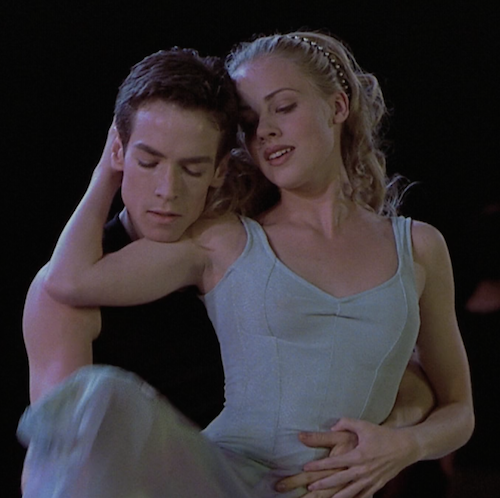
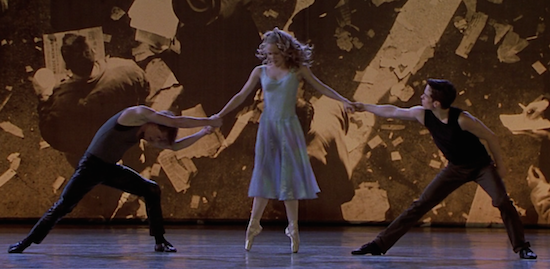
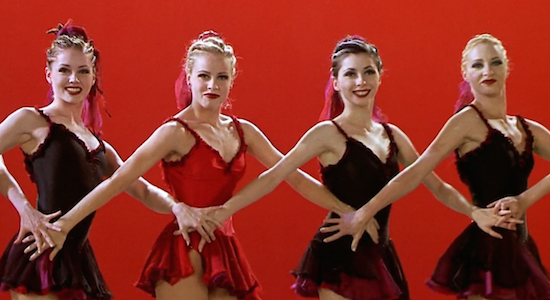
Center Stage is a blast: great dancing from real ballerinas, including a final performance I watch on repeat. A love triangle. And Donna Murphy and Peter Gallagher convincingly running the ballet company. We are rooting for heroine Jody (Amanda Schull), whose technique, feet, and turnout don’t measure up to those of her classmates,’ who have also won scholarships from the American Ballet Academy. But she’s an expressive dancer, and so dedicated. Will she make it, get kicked out, or get no show time in the final workshop, killing her chances for a ballet career? The actress who plays Jody was apparently handpicked from the San Francisco Ballet since she had the exact issues that she’s corrected for in the story, and while at best a decent actress, she convincingly plays up the vulnerability that makes you stay on her side.


The film is a fun watch. But make no mistake: I’m not saying this movie is good, not at all. The dialogue and some of the side plots are comically trite. You have to tune all that out, and focus on:

The Dancing
As Jody is trying to find her way in the academy, sweet fellow dancer Charlie (Sascha Radetsky) flirts with her, but she is drawn to the star of the company, aspiring choreographer Cooper (Ethan Stiefel). Cooper and she have a brief affair, which means something to her and nothing to him. Although it’s hard to imagine anyone mistaking Cooper’s shady selfish soul for anything like boyfriend material, she’s so clearly inexperienced you feel for her.

Luckily, this plot is just a set-up for the mesmerizing dance that ends the film, and Charlie and Cooper; played by American Ballet Theater’s soon-to-be-soloist Sascha Radetsky and then principal dancer, Ethan Stiefel, respectively; are beautiful in motion, even when their acting is stiff (Radetsky) or laughable (Stiefel). And given its progeny (choreographed by slimy Cooper), the narrative of the final dance is remarkably feminist as well: a woman torn by two overly grasping men discards both to fight for her own space.


You can see even from these scenes why I try to forget the….

Acting Dilemma
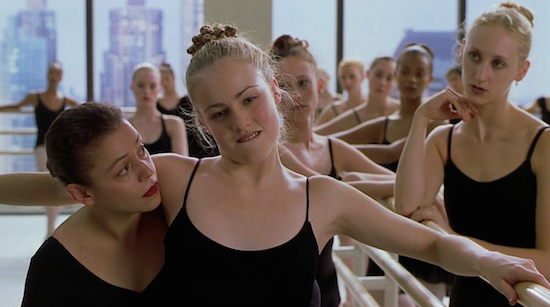
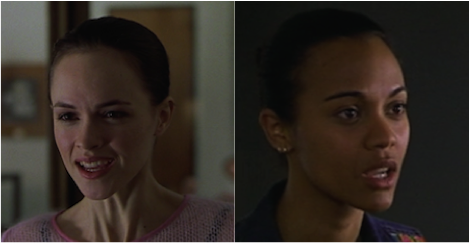
It’s the question of every dancing film, of course: cast actors, or cast dancers? With the former, you’ll need stand-ins for the harder dance moves; with the latter, you risk weak acting destroying the movie. That’s why Center Stage is such a curious film: there’s a mixture of dancers and actors, but inexpert as the dancer-actors are, the full-time actors are worse at acting than the dancers. Much worse. Zoë Saldana and Susan May Pratt were the “real” actors chosen to play Jody’s fellow dancers and friends/frenemies at the academy, and both excel at histrionics. As with Flashdance before it, Center Stage gives an unexpected answer to the actor/dancer dilemma: Why not choose someone who can’t do either?


While Saldana can at least move, Pratt displays a level of physical awkwardness that makes her casting baffling. Take this screen shot of the actress, who was presumably cast to lure in fans of 10 Things I Hate about You. Her character, Maureen, is supposed to have the best technique of anyone in the academy. Having spent seven years of my life in ballet studios, I remember what grace looks like, and believe me, it never looks like this:


In fact, this pose is remarkably reminiscent of my own awkward 19-year-own self, who was put into dancing as a kid to overcome a lack of coordination. Not exactly future prima ballerina material, my friends.

Saldana is at least fun to watch, even when she overplays her lines, but oh Pratt. Every scene is painful, and I tend to just fast forward through her parts (though the script is largely at fault too, her delivery is abominable). Luckily, the acting in the film is comic rather than annoying overall, and occasionally decent. And really, who cares? This is a dancing film, with great final performances, convincing practices, and a wonderful dance class at the Broadway Dance Studio in between. When Schull’s dancing, she’s a different actress than the passable one she is in the rest of film–lovely, riveting, fun. And given the choice between even good acting from poor dancers and some weak performances from people who can move? Give me the good dancers, every time.


This post is part of the En Pointe: The Ballet Blogathon, hosted by two marvelous sites: Christina Wehner‘s and Michaela’s of Love Letters to Old Hollywood. (As a sidenote to fellow Hoosier Michaela, Schull studied ballet at Indiana University.) Check out the other blogathon entries here!

Share
Posted in: 1990-current films, Comedies (film), Drama (film), Humor, Musicals and dancing films, Romance (films), Romantic Comedies (film) Tagged: Amanda Schull, ballet films, Center Stage, lovable camp dance films

Why I Was Happy to See So Many Teen Boys at Wonder Woman

06/12/2017 by leah@carygrantwonteatyou.com 6 Comments


When I was a kid, boys fantasized about Carrie Fisher as Princess Leia, half-naked and chained to Jabba the Hutt. While I might flinch at the fact that the slave scene was the peak of adolescent fantasy, I was always happy that my male peers were lusting after a woman who was tough, a warrior, a hero in her own right, someone who ultimately triumphed over her attacker.


It’s been disappointing in the years since, to not only have so few such women in film to idolize myself, but that the objects of male fantasy have so rarely been strong: too many female heroines, even in DC Comics and Marvel franchises, have assisted rather than truly partnered with or exceeded male peers. And for every strong woman, there have been so many Mary Janes and Lois Lanes waiting for heroes to save them, their strengths always inferior to those of their men.

And then there was Wonder Woman. How I admired Lynda Carter as a kid: her stunning beauty, her awesome metal accessories, her spin, that cheesy music that accompanied her. But most of all, I loved that Wonder Woman stood on her own, was stronger than men, and that her power never subtracted from her sensuality. In fact, her superhuman skills ADDED to her sexiness. She didn’t even seem like much of an athlete till the special effects kicked in. (That running style, my friends, for all their similar fashion sense, was not Flo Jo’s.) For the feminine, klutzy girl I was, that was an important message: you can be strong AND girly.


When I read Slate author Christina Cauterucci’s objections to the seductive clothing of new Wonder Woman Gal Gadot, my first reaction was to defend: What about the need for sales, how essential it was for this film to succeed to set the stage for other female leading-franchises? But I think director Patty Jenkins was doing more than bowing to necessity; she was building her own feminist messages: Hey, young men. Strong women are hot. And if they’re stronger than you, charging down the battlefield without you, that’s EVEN HOTTER. Hey, young women, your strengths will make you desirable. Fight to retain and build them.

My friend and I at the movie theater, both born in the 70s, began by enjoying the funny, entertaining, empowering film, and ended it by laughing about the groups of young men we spotted in the rows behind us when the lights went up. “A whole island of hot women?” my friend said. “No wonder they’re here.”

But that’s just it: Gadot’s and her fellow Amazons’ sexiness got male teens through the door.


It’s hard to imagine that our country would be quite where it is today, so backward with women’s rights, if more adolescent boys had fantasized about such powerful women. It’s hard to believe we’d be where we are had more women grown up believing that power and desirability don’t have to compete.

At least we have her our heroine now. Thank you, Patty Jenkins. Keep ’em coming.

Share
Posted in: 1990-current films, Action & Sports Films, Drama (film), Feminism, TV & Pop Culture Tagged: Gal Gadot, Lynda Carter, Princess Leia, sex appeal and feminism, teen boys attending Wonder Woman, teen boys fantasies, Wonder Woman

Five Favorite Classic Movie Stars

05/16/2017 by leah@carygrantwonteatyou.com 26 Comments

To celebrate National Classic Movie Day, I’m joining Rick’s Five Stars blogathon by sharing some of my favorite classic movie stars. And though I can’t quite say they’re my favorites ALL of the time (of course, that shifts), they are always on my list. Since my favorite character actors deserve their own post, I’m focusing on those who frequently star in their vehicles. Here we go. In no particular order:

1: Barbara Stanwyck


Because her acting was superlative and ageless. Because she got her scenes in one take, her emotions so visceral you always feel immersed in her characters’ lives. Because her crews loved her. Because she could be funny,  dramatic, or both at once. She was marvelous.

2: Van Heflin


Because his acting was so natural. Because he didn’t demand attention or the starring role, but the authenticity of his acting and his easy confidence made him riveting anyway. Because he singlehandedly changed my mind about westerns with his understated performance in 3:10 to Yuma. Because he never got the credit he deserved, which somehow makes me love him more.

3: Cary Grant


Because he had the all-time best smirk. Because he could be sexy or goofy, usually both at once. Because his acrobatics were truly impressive. Because in spite of his unfailing glamour, his characters were always real. Because he knew how to share the screen with a canine. Because he was adept at self-creation. Because he gave me a name for my blog.

4: William Powell


Because I wouldn’t typically consider his looks attractive, but his personality onscreen was so assured and wonderful and silly that I find him sexy just the same. Because I want to befriend most of his characters, and am sad I can’t. Because I could listen to that voice all day. Because I’ll watch anything he’s in, just to fall for him again.

5: Mae West


Because she wrote her own lines and dictated her own role–onscreen and off. Because those lines were so well written that people know them almost 100 years later, without knowing where they’re from or who she was. Because she was combustible onscreen, and always hilarious. Because she was a feminist, whether she admitted it or not. Because she had impeccable timing. Because of that walk. Because her movies are utter joy. Because there will never be another like her.

Check out other bloggers’ favorites at Five Stars blogathon!

Share
Posted in: 1930s films, 1940s films, Blogathons, Drama (film), Feminism, Mae West Moments Tagged: Barbara Stanwyck, Cary Grant, favorite classic movie stars, lists, Mae West, Van Heflin, William Powell

Stella Dallas’s Everyday Villain: The Husband

04/29/2017 by leah@carygrantwonteatyou.com 18 Comments


When most people think of villains, they’re envisioning cloven hoofs and murderous intents. Stephen Dallas (John Boles), the husband of self-sacrificial mother, Stella Dallas (1937), would be unlikely to appear on any list of classic villains. Some might even consider him a nice guy—if they weren’t paying attention.

But on my latest viewing of the tearjerker, I wasn’t struck, as I usually am, by Stella’s modernity and her society’s desire to punish her for it. No, this time I kept observing just how completely AWFUL this man is, and how with a less monstrous husband, Stella (Barbara Stanywck) would have spent her middle age in daughter Laurel’s (Anne Shirley’s) sweet company, instead of off on her lonely, destitute own. Let’s review just how villainous this creep is:

  1. Ummm, Child Support?

Sure, Stephen splurges on his daughter, but only when she’s with him. When Stella and Laurel are on their own, their homespun clothing and Stella’s frequent repairs to it make evident they’re just scrimping by on the arrears of his salary, despite the fact that Stella and he never divorced.


Meanwhile, he’s living it up in fine clothes with his wealthy girlfriend in New York, with his daughter only looking smart when she’s with him.


When Stella decides to experience the high life for a weekend, it’s not just her daughter’s embarrassment at her gauche behavior that’s crushing. It’s that she doesn’t get to enjoy the one time she gets something from her still-married-to-her husband. Watch her satisfaction as she takes care of herself after years of only spending money on her daughter:


And it’s all going to end with her shame, and her loss.

  1. He Wants to Change His Wife’s Character, But Thinks His Own Stuffy Self Perfect

Maybe going dancing right after childbirth was pushing it, but Stella’s efforts to enjoy herself afterward stem from her love for company and music and fun. Stephen; acting disgusted by the lack of refinement of others, but really stung with jealousy; can’t keep himself from looking down on those who entertain his wife.


The fact that he makes zero effort to amuse her himself doesn’t seem to cross his mind; apparently, his tedious business acquaintances are the only company he’ll allow his wife. Instead, he wants to correct her manners, her clothes, her wording. “I’ll take my usual lecture,” she says when she returns from the brief dance he allows her.  As she rightly points out, he could use some correction himself. Surely, everyday kindness is good etiquette, right spoilsport? As she points out after he starts condescending to her (saying she needs to correct herself, “adapt” in order to be someone), apparently treatment she’s been enduring since their marriage: “How would it be for you to do a little adapting for a change? I don’t see you giving up anything.”

  1. He Invites His Daughter to Stay with Him & His Mistress

Dressed up in finery and wealth or not, Helen Morrison (Barbara O’Neil) is romancing a married man. Her little boys being around may be intended to make her overtures to adulterer Stephen more palatable, but I found it creepy. And how about the surprise of springing the mistress on his daughter, saying where they were going was a secret, but this place (her home) was “the most beautiful place in the world,” and letting his daughter just take the invitation as a nice time with a nice lady?


Laurel’s utter obliviousness to the inappropriateness of the arrangement just makes her seem naïve, and her gushing about it to her mother afterward unbelievably (if unintentionally) cruel. I’ll admit to some puzzlement here; I don’t know what Stephen and Stella’s arrangement was, and of course I know straying husbands didn’t suffer the societal wrath a woman’s betrayal would cause. But why exactly are we to believe the surrounding society is cool with Helen’s actions, thinks her refined and classy? It’s a mystery to me. Even if her wealth is enough to make her survive the gossip, gossip there surely would be–much more than for Stella after some itching powder jokes! Are Stella and Stephen officially separated? Stella doesn’t seem to act as if they are. Regardless, springing a girlfriend and her kids on a visiting daughter is sketchy at best.

  1. He Steals His Daughter away at Christmas

Stephen shows up for a surprise Christmas visit to lure his daughter away with an hour’s notice, leaving Stella alone. He has a second of compassion for his wife, even admits he’s selfish.


But then his nemesis Ed (Alan Hale) shows up, and he’s too pissed to be kind anymore, assuming Stella is hooking up with him. Cause Stephen isn’t, I dunno, living with his mistress or anything himself, which is where he’s taking his daughter for the holidays, as he unashamedly admits to his wife. Wow.

  1. He Doesn’t Dissuade Stella from Giving Up Her Daughter

Laurel may be more refined in dress and manners than her mother, but she’s got a beating heart, unlike her lizard father. And sooner or later, the smugness of this beyond boring classy family she’s marrying into (and seriously, is it possible for these people to be more clichéd and dull?) is going to get to someone who was reared in a very different way. She’ll need her mom then to rip on their airs, and where will that mom be? Gone. Because Stella’s husband has so crushed his wife’s self-esteem over the years, evaluating her for her lack of fashion knowledge and proper deportment rather than for the more important qualities of love and empathy. (Her decision not to move to NYC with this jerk is the only thing that enabled her to retain her self-worth.)

The fact that only his new woman even gets Stella’s stupid lie to conceal her self-sacrificial motives says so much about his small-minded soul. I think psychologists would agree abandonment ain’t exactly for the good of a kid, even an adult one, and Stephen ought to know Laurel well enough to recognize how well Stella’s raised her. But why would we expect that? Or that he’d care? He’s got a pretty daughter on his arm. Why should he bother figuring out what makes her happy, much less spare an once of sympathy for his long-suffering ex-wife?


A villain, plain and simple.

For great posts on villains, check out entries in the Great Villain blogathon, hosted by Ruth of Silver Screenings, Karen of Shadows & Satin and Kristina of Speakeasy.

Share
Posted in: 1930s films, Anti-Romance films, Blogathons, Drama (film) Tagged: bad husbands in film, Barbara Stanywck, movie review, Stella Dallas
« Previous 1 2 3 4 5 6 7 8 9 10 Next »

Recent Posts

  • 100 Years Later, Still Scary: Dr. Caligari
  • Escaping Out of the Past (1947)
  • A Weeper for Those Who Love Jerks
  • Thank You, Academy, for Not Infuriating Me
  • Challengers (2024) Is a Bad Movie

Subscribe to Blog via Email

Enter your email address to subscribe to this blog and receive notifications of new posts by email.

Categories

  • 1920s films
  • 1930s films
  • 1940s films
  • 1950s films
  • 1960s films
  • 1970s films
  • 1980s films
  • 1990-current films
  • 2020s films
  • Action & Sports Films
  • Anti-Romance films
  • Blogathons
  • Childfree
  • Comedies (film)
  • Drama (film)
  • Feminism
  • Femme fatales
  • Film Noir/Crime/Thriller & Mystery
  • Gloriously Silly Scenes
  • Horror
  • Humor
  • Mae West Moments
  • Musicals and dancing films
  • Oscars
  • Random
  • Romance (films)
  • Romantic Comedies (film)
  • The Moment I Fell for
  • Turn My Sister into Classic Movie Fan
  • TV & Pop Culture
  • Uncategorized
Share
Classic Movie Blog Hub Member

Recent Comments

  • leah@carygrantwonteatyou.com on Meg Ryan’s Fate Foretold in Joe Versus the Volcano
  • Ryan on Meg Ryan’s Fate Foretold in Joe Versus the Volcano
  • leah@carygrantwonteatyou.com on 100 Years Later, Still Scary: Dr. Caligari
  • The Classic Movie Muse on 100 Years Later, Still Scary: Dr. Caligari
  • leah@carygrantwonteatyou.com on 100 Years Later, Still Scary: Dr. Caligari

Archives

  • November 2025
  • September 2025
  • May 2025
  • March 2025
  • January 2025
  • November 2024
  • August 2024
  • July 2024
  • May 2024
  • March 2024
  • February 2024
  • December 2023
  • November 2023
  • October 2023
  • September 2023
  • August 2023
  • July 2023
  • May 2023
  • April 2023
  • March 2023
  • January 2023
  • December 2022
  • November 2022
  • September 2022
  • July 2022
  • May 2022
  • April 2022
  • March 2022
  • February 2022
  • October 2021
  • September 2021
  • April 2021
  • March 2021
  • February 2021
  • December 2020
  • October 2020
  • September 2020
  • July 2020
  • May 2020
  • April 2020
  • March 2020
  • February 2020
  • December 2019
  • October 2019
  • September 2019
  • June 2019
  • May 2019
  • April 2019
  • February 2019
  • January 2019
  • November 2018
  • September 2018
  • July 2018
  • June 2018
  • May 2018
  • April 2018
  • March 2018
  • February 2018
  • January 2018
  • November 2017
  • September 2017
  • August 2017
  • July 2017
  • June 2017
  • May 2017
  • April 2017
  • March 2017
  • February 2017
  • January 2017
  • December 2016
  • November 2016
  • October 2016
  • August 2016
  • July 2016
  • June 2016
  • May 2016
  • April 2016
  • March 2016
  • February 2016
  • January 2016
  • December 2015
  • November 2015
  • October 2015
  • September 2015
  • August 2015
  • July 2015
  • June 2015
  • May 2015
  • April 2015
  • March 2015
  • February 2015
  • January 2015
  • December 2014
  • November 2014
  • October 2014
  • September 2014
  • August 2014
  • July 2014
  • June 2014
  • May 2014
  • April 2014
  • March 2014
  • February 2014
  • January 2014

Meta

  • Log in
  • Entries feed
  • Comments feed
  • WordPress.org

Copyright © 2025 Cary Grant Won't Eat You.

Church WordPress Theme by themehall.com