Cary Grant Won't Eat You

Classic movies for phobics

  • About
  • eBooks
  • Previous Blogathons
Classic movies for phobics

Childfree

The 8 Movie Characters I’d Bring to See Barbie

08/06/2023 by leah@carygrantwonteatyou.com 6 Comments

If I could bring any film characters with me to the Barbie movie, this crew would come along. We would shout, complain, and advise (quite loudly), and so an empty theater–and an earlier viewing by me–would be critical. But just try to imagine with me, how perfect this party would be….(Mild spoilers ahead.)

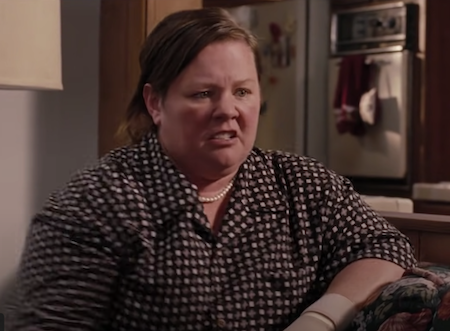
1: Megan (Melissa McCarthy) from Bridesmaids (2011)


This confident, hilarious, non-nonsense woman needs to give Barbie a pep talk. I did love Gloria (America Ferrera)’s speech, but Megan’s would be one for the ages.

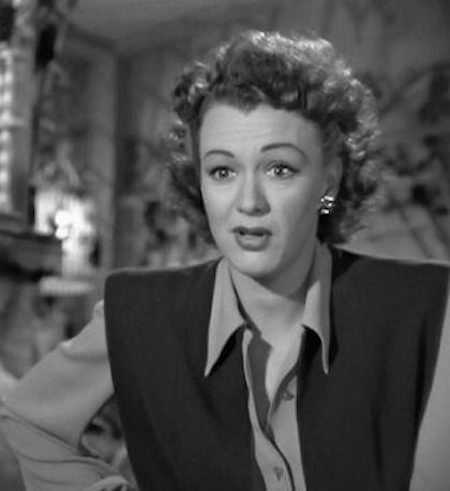
2: Ida (Eve Arden) from Mildred Pierce (1945)


What Megan can do with yelling and pounding, Ida can do with an eyebrow. Ida’s dry, blistering one liners about Ken’s power grab would be epic.

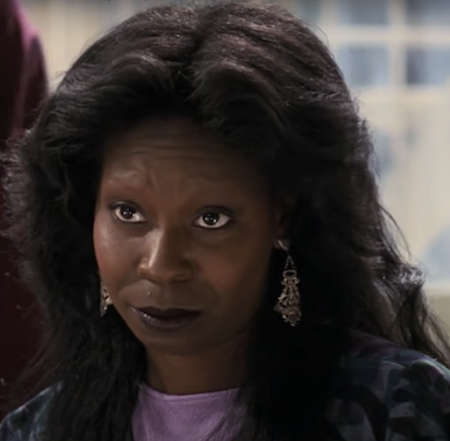
3: Oda Mae Brown (Whoopi Goldberg) from Ghost (1990)


I’ll be honest–this may be just because I want her to say, “Barbie, you in danger, girl,” when the doll puts on fluorescent rollerblading gear.

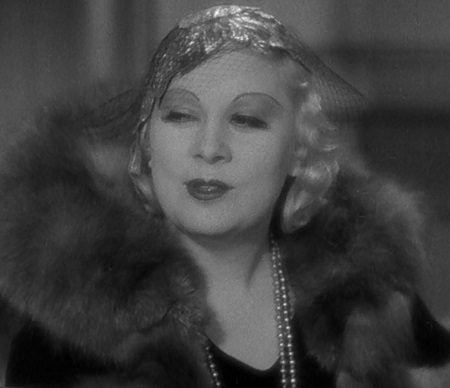
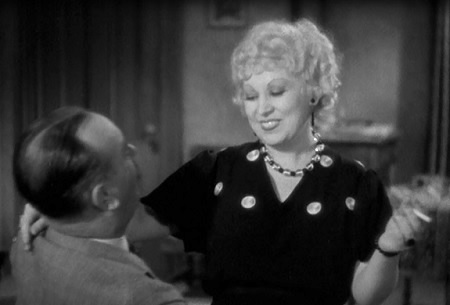
4: Tira (Mae West) from I’m No Angel (1933)


Tira’s running commentary on Ryan Gosling’s abs and what she’d do to his character on the beach would have everyone in the theater howling with laughter. I’d love to hear her tell Barbie to keep relishing that many Kens in her life. And how much I’d anticipate her reaction to the ending!

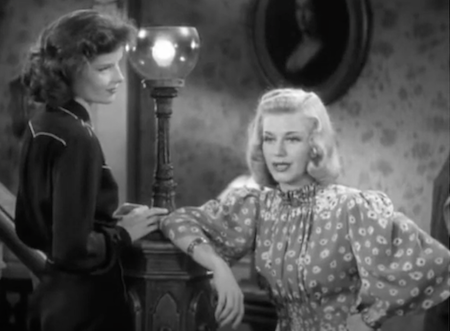
5 & 6: Stage Door (1937) Roommates Terry (Katharine Hepburn) & Jean (Ginger Rogers)


Obviously, I’d want the ENTIRE Footlights Club to accompany me, since there simply is no wittier all-female repartee on film (the famously catty The Women ensemble can’t compare). Don’t believe me? Lucille Ball is in the supporting cast. These sexual-harassment-fighting, badass feminists would be FABULOUS commentators, and I’m so sad I can’t follow their pop culture podcast right now.

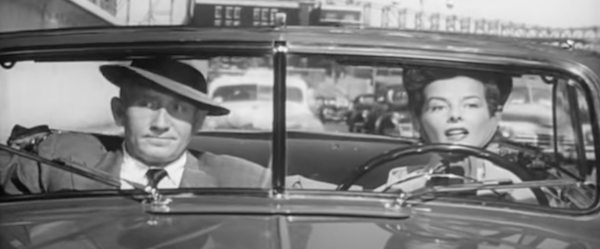
7 & 8: Adam (Spencer Tracy) and Amanda (Katharine Hepburn) from Adam’s Rib (1949)


What could be better than to hear a brilliant couple with perfect dialogue critique the work of screenwriting couple Greta Gerwig and Noah Baumbach? And with the way Amanda just slays in arguing women’s rights in the courtroom, I long to hear what she’d say to those fools in the Mattel boardroom.

There you have it. My eight favorite Barbie movie companions. Who would yours be?

Share
Posted in: 1990-current films, Childfree, Comedies (film), Feminism, Humor, Uncategorized Tagged: Adam's Rib, Barbie movie, Eve Arden, feminism, Ginger Rogers, Katharine Hepburn, Mae West, Melissa McCarthy, Whoopi Goldberg

“The Funnier Sex” with No Mae?

12/22/2022 by leah@carygrantwonteatyou.com 2 Comments

I just watched “The Funnier Sex,” an episode from CNN’s The History of Comedy. The segment features numerous current comediennes celebrating their groundbreaking predecessors. They highlight the sexism that marred their predecessor’s progress—especially that ridiculous view that women can’t be funny—and expressed how much harder it was for an attractive woman to also be considered funny. Lucille Ball—as usual—was singled out as the pretty woman who changed that for everyone.

Sigh.

Look, I love Lucy—we all do—and I get that most people’s sense of history is as developed as an ant’s. But are we going to ignore the vaudevillians entirely? Those women who used their sexiness to get away with cultural commentary? Who—like the standup artists who followed them—used live audience’s reactions to fine-tune their jokes, over and over again? You know, like STAND-UP COMICS??

In other words, WHERE IS MAE WEST?

West was not, of course, the first female comedienne in America. But as someone who starred in vaudeville, broke out in film, made appearances on TV, and then produced a live Vegas show with Chippendale-like men, she was hardly an invisible influence on the comediennes who followed her. And her humor was MUCH more like that of the stand-up stars celebrated in the series than Lucy’s ever was—and far more risqué.

And Mae wrote her own material, managed to be a rom-com star into her 40s, and even saved a studio. Mae peddled and exploited her own attractiveness in her jokes. She was known as a bombshell, even if some of her snarky male contemporaries—and ours—use their own sexist views of curvy women’s bodies to question it.

Let’s review just one incident—on the smash second day of her play Sex in 1926, which she records in her autobiography, Goodness Had Nothing to Do with It: Only 85 people appeared for the first performance, disappointing the star and the manager, who blamed the scandalous title for ticket sales. But at the next day’s matinee, Mae observed lines of men from the naval base “two and three deep.” The house manager was scrambling for extra seats for his theater. “And you said it was a bad title,” noted Mae. And he replied, “I forgot about the sailors.”

Sound like a woman who wasn’t using her sex appeal for humor?

I understand that standup is not the same as vaudeville, but the latter was clearly a forerunner, certainly more than scripted TV.

Look, I enjoyed the episode from The History of Comedy. It featured some of my own heroes, including Joan Rivers and Rachel Bloom. But why, after all these years, are TV historians still ignoring the extraordinary impact of Mae West?

What other comedian wrote lines we still repeat 100 years later, such as one of the all-timers?:

“It’s not the men in my life that count, it’s the life in my men.”

I suspect I know the reason she’s bypassed—the same reason early groundbreakers are so often forgotten: Because the wave of female comediennes would take years to follow in her wake. Because she was so ahead of her time that she wasn’t even part of the same generation who would supposedly “change everything.”

But all the more reason to own her. All the more reason to celebrate her. All the more reason, CNN, to give the sexy, groundbreaking, hilarious woman her due.

Share
Posted in: Childfree, Humor, Mae West Moments Tagged: feminism, groundbreakers, Mae West, The Funnier Sex, The History of Comedy, women in stand-up

Orphaning Carrie Killed And Just Like That

02/17/2022 by leah@carygrantwonteatyou.com Leave a Comment

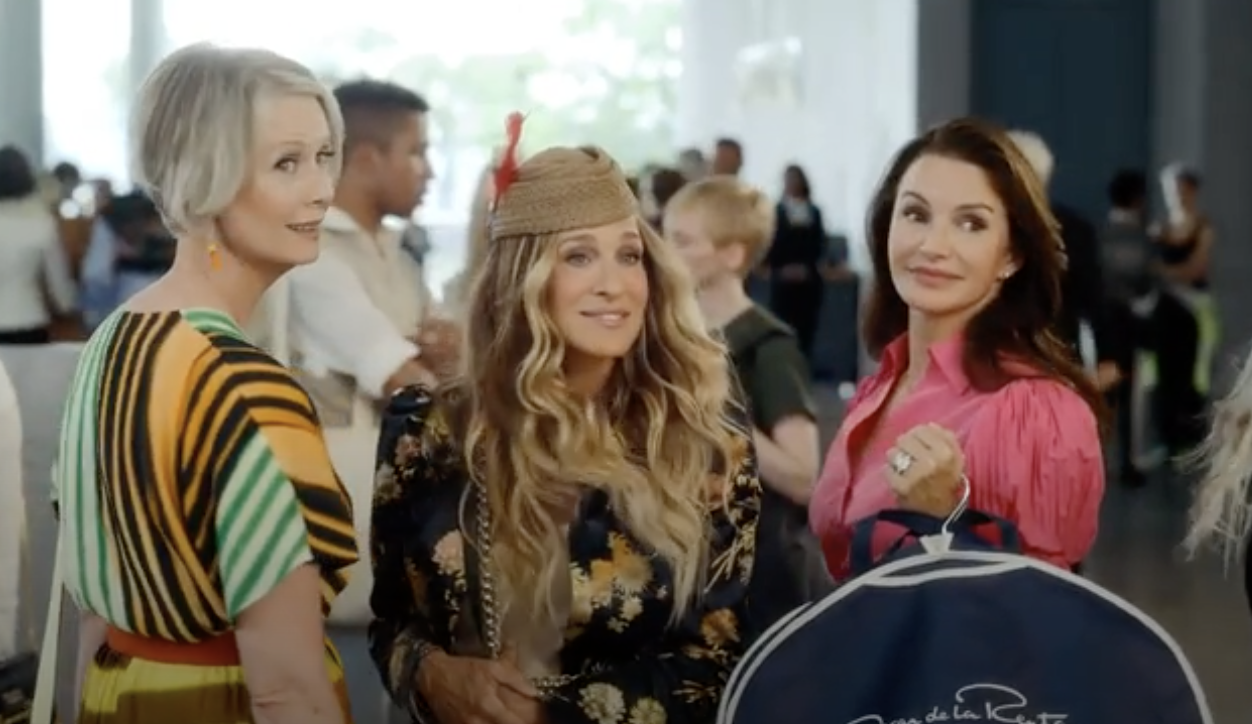
Sex and the City had this odd way of pretending its heroines were parentless. Sure, there was a reference or two, and that lovely episode about Miranda dealing with her mother’s death. But overall, the show just pretended the women had no moms or dads. For six seasons and two movies, the lack of parents enabled the show to stick with sunnier, lighter fare, favoring romance over family drama.

And then the reboot came, presenting the show’s writers with a conundrum: how do you talk about women in their fifties—especially childfree ones—without dealing with aging parents?

Unfortunately, the writers’ solution was to conflate the fifties and eighties, giving the ladies hip replacements and their husbands hearing issues and farmers’-market-forgetfulness. Even the elderly parents of the new characters are pressuring their kids to get married or use their time differently—in other words, things parents of 30-year-olds do.

And how grim these writers make aging seem! Look how much more measured—and funny—Grace and Frankie is in tackling the same ground—and for much older women.

What Carrie, Miranda, and Charlotte would really be doing if they were in their fifties is worrying about their parents’ minds, limbs, and ailments. And for those of us who have been living with the slow-burn terror that our parents will catch COVID—or grieving the loss of those who died of it—the fear of parental aging is what’s keeping us up (not partying neighbors or mysterious dinging sounds). That’s why the erasure of our worry from the experience of 50-year-old women is infuriating in a franchise that used to get us.

What important things this show could have covered about what single, childfree women face in their fifties! What if Carrie’s married siblings with children had expected her to move home to take care of their sick mother or father? How would she have dealt with that as a single woman whom they assumed had time they didn’t?

The parentless state of our heroines also killed so many avenues for humor, like mothers’ attempts to comfort their daughters’ PMS worsening with age by saying, “Don’t worry. You don’t have long to worry about that.” (Just my mom? OK, the cheese stands alone.) Or dads bluffly cheering daughters after bad Bumble dates by saying, “Aren’t you about ready for Our Time? That’s much better.”

Of course, those weren’t the only humorous avenues And Just Like That neglected. Exactly how much did your frugal friend invest in wrinkle cream once she spotted Zoom’s skill for highlighting neck skin sagging? What collection of ring lights has your single buddy amassed to ensure she looks young for those selfies of her breasts for Hinge dates?

And the thing is, your friends in their 50s will confess these acts openly to strangers. That’s one of the beauties of aging: you don’t care what others think. We are ALL Samantha now. I remember the joy of canceling plans for the first time because I didn’t feel like taking a shower. Or the admission that yes, I was watching Lifetime reruns on a Saturday night, or organizing my earrings instead of going to a party. How much I would have loved Carrie dropping by Miranda’s because the latter couldn’t tear herself away from a marathon binging of Tiger King! (An update on the rabbit episode. LOL.) Remember when Carrie struggled to get her friends together? Now THAT’s a struggle for your 50s.

A podcast for Carrie never made much sense to me either—not for a woman who loves being seen (especially not a 90s-era radio show masquerading as a podcast). What does our former sex columnist think of Love Is Blind? Or 90-Day Fiancé? What if she hosted some cheesy reality dating show, like Love Island? That could have been so funny, unlike Che’s humorless standup.

And what silly notions about being woke these AJLT writers have! Is this an after-school special from 1985? What women in their fifties are suddenly realizing they have no non-white friends? I know these characters aren’t as reflective as they could be, but I do believe they have eyes.

What would these women be facing? Well, these characters might be worrying about terminology they use when it comes to race, ethnicity, and gender. Miranda would not have blundered as much as she did in class. But I could see her using a term from five years ago. Or Charlotte, Carrie, or Miranda could be chided by BIPOC friends for a clueless privilege moment. If AJLT wanted to address race in a more organic way, why not have Lily recovering from the trauma of the racism she dealt with during COVID, or Charlotte appalled by other parents fighting critical race theory?

(About midway through the series, I began to wonder whether Michael Patrick King was paying us all back for calling Carrie an unlikeable narcissist by making Charlotte and Miranda so much worse. Why else reinvent history, and make Carrie suddenly the most tolerant and understanding of the bunch? You think Miranda should have been the star? he might have said. I’ll show you…..)

I was, of course, happy to see Miranda, who is played by a public-school advocate, re-inventing her life to do something she found meaningful. That’s what women in their 50s do: Try to find new purpose in their lives. But AJLT had her dump that idealism to play fangirl to a bad comic (how like Carrie that decision was). Che was a missed opportunity, of course. I would have liked Carrie recognizing in Che’s struggles some similarities between what she had dealt with in feeling isolated as a single woman. Their experiences would never be quite the same. But empathy is born of comparison. Carrie didn’t have to fully get it. But she could have begun….

I didn’t expect much of the reboot, I admit, despite my love for Sex and the City. The movies, after all, had already done damage. Samantha’s absence, I knew, would do more. Still, I didn’t expect to be this disappointed. I’m younger than these women, but they always echoed some measure of my experience—and some measure of my future.

Until now.

Parents couldn’t have saved And Just Like That entirely. But it would have been a start.

Share
Posted in: 1990-current films, Anti-Romance films, Childfree, Comedies (film), Feminism, Humor, Romantic Comedies (film), TV & Pop Culture Tagged: And Just Like That, childfree women, middle-aged women and TV, Sex and the City

Mae West: The Unchanging Heroine

10/20/2021 by leah@carygrantwonteatyou.com 12 Comments

I grew up resenting a lot of the rom-com fare on television and film. Always, it felt, the woman had to change to find love. Sandy in Grease was just the start: Learn to strut. Show that cleavage. Pull your hair out of the bun! Relax! Be feminine! Learn to bake or something.

Maybe that’s why I love Mae West so much: In her films, she’s the only one who never has to change. Anyone who doesn’t get her? They better start, if they want Mae’s company. (And they ALWAYS want Mae’s company.)

Mae’s unrepentant, very human, hilarious heroines are perfect, just as they are. Cleo from Goin’ to Town (1935) is just one example.

Cleo decides she wants a particular upper-crust guy. After her (literal) lassoing of him doesn’t win him, she decides to change herself over into a classy lady. Which pretty much means she convinces everyone she already is one.

**Some spoilers**

Oh sure, Cleo picks up some new hobbies: horse betting, husband collecting, and opera performances. But Cleo is Cleo. When she plots her rise, we all know she’s going to get there.

Favorite Moments

The fashionable ladies visit her after her fashionable marriage. Trying to insult her, they press her about her lineage:

Socialite: “Speaking of relatives, Mrs. Colton, have your ancestors ever been traced?”

Cleo: “Well, yes, but they were too smart, they couldn’t catch ’em.”

She says this, mind you, while intent on cracking nuts.

And, of course, who can forget the scene when Cleo plays Delilah? (Her description of Delilah is “one lady barber who made good.”)

While she sings in a high register (therefore, I assume, proving she has the pedigree to pull off opera), she does her va-voom hip shimmies between notes, proving that she’ll always be a dance hall girl.

And in a Mae West movie? There’s nothing better to be.

I’ve written before about how Mae can always pull me out of a bad mood. That’s why I chose to re-watch one of her films for the Classic Movie Blog Association’s fall blogathon, Laughter Is the Best Medicine. Don’t miss the other entries from my talented peers!

Share
Posted in: 1930s films, Blogathons, Childfree, Comedies (film), Romantic Comedies (film), Uncategorized Tagged: best rom-coms, class comedies, comedies, Goin to Town (1935), Mae West

5 Reasons to Watch Christmas in Connecticut

12/12/2020 by leah@carygrantwonteatyou.com 4 Comments

I can’t be bothered to root for a romance between anyone and Dennis Morgan, the heartthrob of Christmas in Connecticut. He always strikes me as smug, and his acting is pretty basic.  His character in this famous xmas film doesn’t help: As Jefferson Jones, he’s entitled, dishonest, and smarmy—from promising an engagement to get steak, to seducing a married woman.

Not that Elizabeth Lane (Barbara Stanwyck) is a pinnacle of honesty. And she’s tempting Jefferson every step of the way. But were it for the romance, I would have ignored this perennial Christmas choice in favor of other films, especially for the far sweeter relationship between Stanwyck and Fred MacMurray in Remember the Night.

But this film gets serious props for all of its non-romantic elements, and that’s what keeps me coming back to it, year after year. In order of increasing importance, here’s why I love this film:

Reason 5: Elizabeth Lane’s (Barbara Stanwyck’s) hilarious ignorance about and disinterest in children. From not being able to remember the gender of her baby (calling the baby “it”), to her surprise that swallowing a big watch could be fatal, this woman takes on the men’s typical role when it comes to baby knowledge in romcoms—and it’s rare to see that even today.

I particularly love when she just throws the diaper after she puts it on wrong.

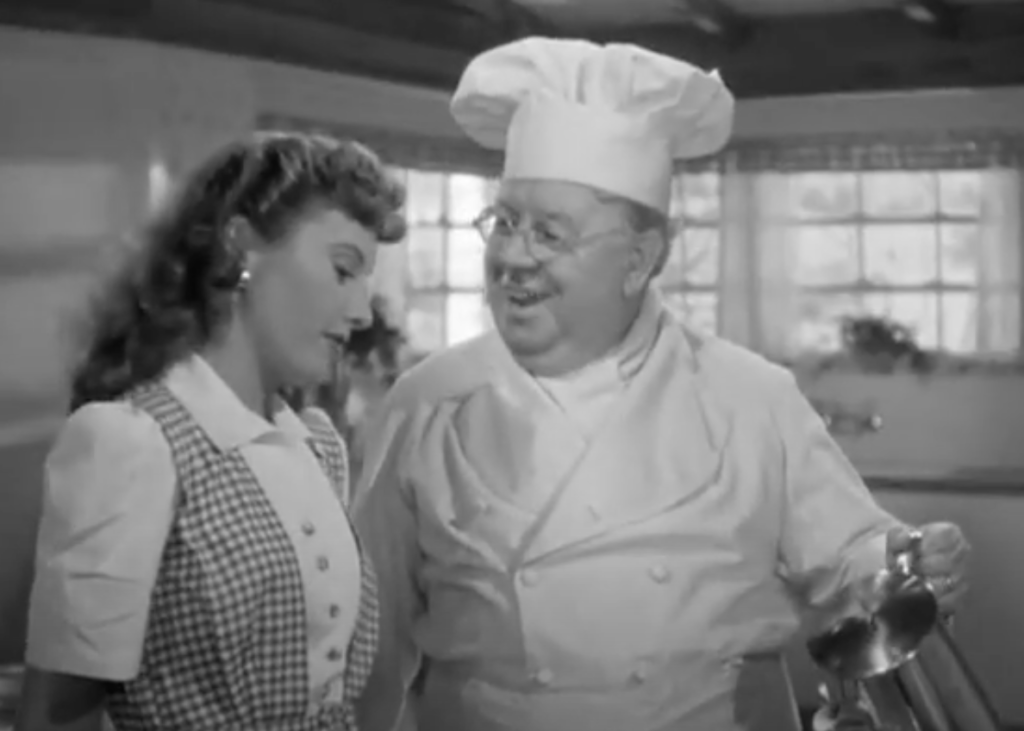
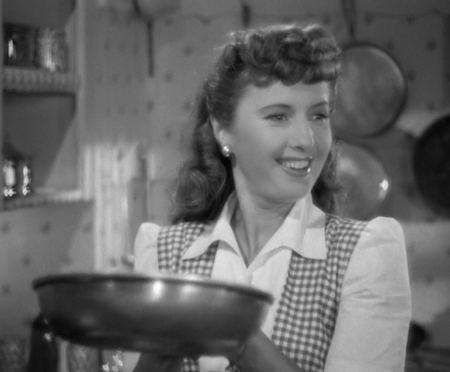
Reason 4: Watching Barbara Stanwyck flipping pancakes. The scene when Uncle Felix (S. Z. Sakall) is trying to teach Elizabeth to prepare pancakes is hilarious.

That pleased look when she unexpectedly succeeds at flipping her flapjack later on is so beloved that you’ll see it in almost any Stanwyck documentary.

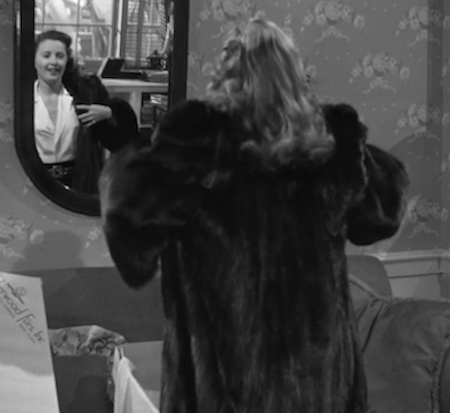
Reason 3: Elizabeth buying a fur coat for herself. Sure, I wish it weren’t fur, but her decision to buy a luxurious present for herself and not wait for a man to do so is the top reason this movie is well loved by my aunt, and I can see her point. Elizabeth is an accomplished writer and has earned the right to show off her successes, without waiting for anyone else to give her her due.

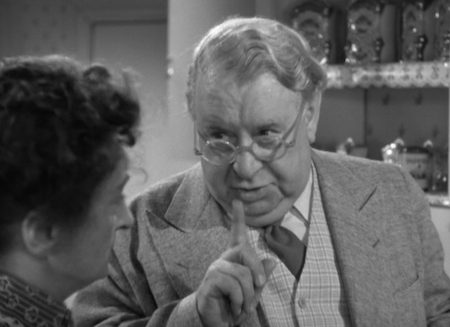
Reason 2: Uncle Felix, as played by Sakall (better known as Cuddles). I could listen to him say “catastrophe” all day long. What a joy this man is to watch, in every film. (I just wish I could track down his autobiography–still trying to get ahold of it!)

Reason 1: Barbara Stanwyck. Classic movie fans are obsessed with Stanwyck, but she’s often forgotten in the wider community–with the exception of this film. Since I think she was among the, if not the, most gifted film actresses ever, I’m so glad that at least one performance keeps her on people’s radar—even if they never realize her comic timing, charm, and talent are what make them want to keep watching this film again and again and again.

I hope you’ll watch this great film this Christmas—or for the first time if you haven’t yet. Just forget about the “rom” of the rom-com, and you’ll love it.

This is part of the Happy Holidays Blogathon! Check out the great entries here.

Share
Posted in: 1940s films, Blogathons, Childfree, Romantic Comedies (film), Uncategorized Tagged: Barbara Stanwyck, best Christmas films, best classic xmas movies, Cuddles, pancake scene

New Mae West Documentary!

05/29/2020 by leah@carygrantwonteatyou.com 4 Comments

PBS produced a new documentary on my favorite movie wordsmith and feminist rebel, Mae West. Dirty Blonde is coming. Check out the preview to see the subjects talking about her (some welcome surprises), and to hear some of your favorite Mae West quips.

Mae West Documentary and Trailer

I can’t wait! Check it out on June 16 at 8/7c on PBS and on their site.

Share
Posted in: 1930s films, 1940s films, 1970s films, Childfree, Feminism, Humor, Mae West Moments, Uncategorized Tagged: Mae West documentaries

Mae West as the Outlaw: My Little Chickadee

11/17/2018 by leah@carygrantwonteatyou.com 11 Comments


When asked what outlaw I wanted to feature for the Classic Movie Blog Association’s Outlaws blogathon, I immediately thought of Mae West’s character in My LIttle Chickadee. I know Mae West’s siren ways and bumpy pairing with W.C. Fields are more frequently associated with the film, but it’s hard to miss how West’s Flower Bell Lee flouts the law–not to mention convention–in this 1940s flick. And of course, being co-written by West, the film includes plenty of hilarious one liners and shimmying.

The story begins with Flower Bell (West) traveling by stagecoach to visit (and presumably settle with) her aunt and uncle in a Western town. She’s buffing her nails as the male passengers gawk and an accompanying woman, Mrs. Gideon (played by Margaret Hamilton, of witchy Wizard of Oz Fame), looks on disapprovingly.
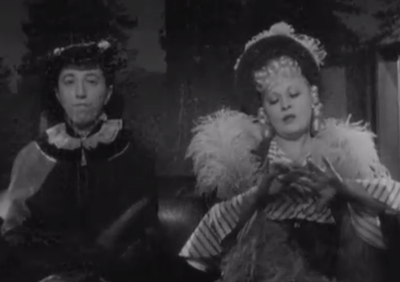

Suddenly, a masked robber stops the coach to rob it of its gold. The rest of the passengers race out of the coach with their arms up. Flower Bell just sits there, sure it has nothing to do with her, and more interested in her nails.
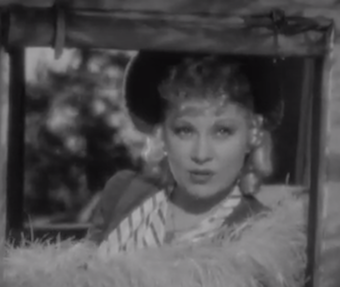

The “Masked Bandit” (as he’ll later be called) threatens to kill the others if she doesn’t budge, so she reluctantly does. She doesn’t mind being “held up” she informs the masked bandit, but doesn’t like to be inconvenienced. And thus the delightful double entendres begin.

Of course the bandit notices Flower Bell’s beauty and abducts her. He returns her to her new town outskirts soon after, but clearly, she enjoyed her time away. He comes to visit her in her room at night, Romeo style, and kisses her while still hiding his identity. Unfortunately, her former stagecoach companion, Mrs. Gideon, spies the two in Flower Bell’s bedroom, and informs the town. Flower Bell is forced to defend her actions in court and identify the marauder. She refuses to tell anyone a thing, and gets kicked out of her new town, told she has to stay away till she’s married and respectable. The inflamed Mrs. Gideon also spreads the word to the ladies of the nearby town where Flower Bell is going, Greasewood City, saying Flower Bell won’t even be allowed to get off the train. But Flower Bell doesn’t care, as she makes clear with her parting words to the judge, when he asks if she’s trying to show contempt for his court: “I was doin’ my best to hide it.”

Since this is West, we audience members know she will not only get off the train, but have all of the townsmen in her thrall as well. And that happens. But first she has to fight off Indians attacking the train. Again, she’s buffing her nails, and when arrows almost hit her, she slowly pulls them out of the side of the rail car, rolling her eyes as she does so. Why must these pesky outlaws get in the way of her manicure?
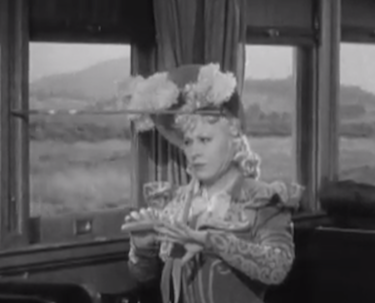

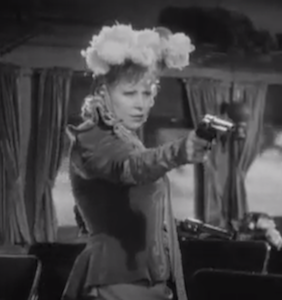
But when a fellow passenger dies, she takes up his two guns, shoots a bunch of Indians with obvious relish, saying she’s dispensed them in a “shower of feathers.” She’s angry because they’ve dared to “intimidate” her (sounds like a typical outlaw response, huh?) Flower Bell’s nonchalance and bravery are hilarious to witness in this strange scene. Even as we viewers flinch at the Indian stereotyping, we know that Flower Bell doesn’t care about race (more on that later). She just doesn’t like any bother, and agrees to be a hero–but only if she must.
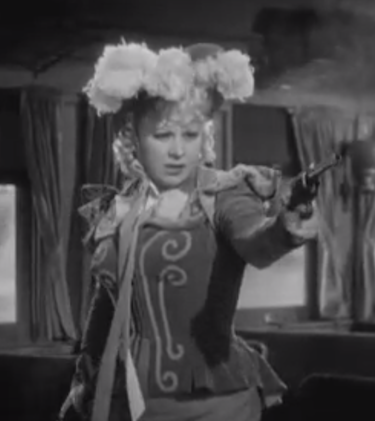

Meanwhile, a flirtatious passenger, Twillie (W.C. Fields), has been cozying up to her, and since she sees he has a bag of money, she doesn’t mind, and flirts right back.
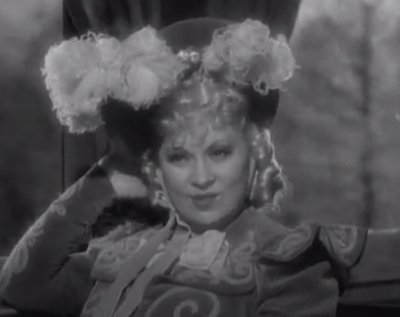

He too plays his part in fending off the Indians, but mainly that part is yelling at them for assaulting a private car and bumbling in Fields’s typical physical-comedy way. Twillie has no problem with Indians; his best friend/servant/gambling partner is one (their strange interaction, and the film’s odd combination of racist terms and stereotypes and yet ahead-of-its-time treatment deserves a post of its own).

But even though Twillie doesn’t mind Indians attacking OTHER trains, he does object to being annoyed, much like Flower Bell, though he’s far less accomplished than she in fighting back. Once the danger has passed, the two get closer, as his marriage proposal gives Flower Bell a way to exit the train in peace. She soon ropes another gambling friend on the train into acting as minister. That friend uneasily performs the marital vows. Flower Bell has no intention of sleeping with Twillie, only using him to get a free room and the blameless rep she needs to keep seeing her outlaw and whomever else she pleases. Even Mrs. Gideon, again a fellow passenger, smiles her approval.

Once in Greasewood’s best shady saloon/hotel, a number of antics ensue as Flower Bell keeps Twillie out of her room while helping him with his gambling and lies. When he brags that he saved the train, she lets him take the credit. The town makes him the sheriff, but as the last few have died within months, this honor has more to do with Badger (Joe Calleia), the unscrupulous bar/hotel owner, wanting Flower Bell widowed than any conviction that Twillie has guts. Flower Bell then proceeds to flirt with the muckraking local reporter, even acting as a teacher to help him out in a classic West scene.

Flower Bell enjoys the reporter’s idealism and Badger’s dangerousness, and it’s very unclear which man (if either) will get her in the end. Meanwhile, the Masked Bandit continues his courting, and Twillie, finding out his “wife” likes a man in costume, pretends he’s the bandit himself. Naturally, she discovers the fraud, but can’t save him from the town posse, who is now convinced he’s the villain. Well, she can’t save him at first. Just as she defended him when he lied and cheated gambling, Flower Bell comes to his aid again. She claims he’s no bandit, and after getting put in jail for defending him and her own shady associations, she busts out and saves the day, without giving away her lover.

Of course, we find out who the bandit is, and there are no surprises there. The fact that the bandit’s accent makes it clear he’s Latino (even if the actor isn’t) doesn’t bother West’s Flower Bell. She may be portraying a woman from the last century, but West doesn’t even bother to defend interracial romance in the film, which clearly condones it. The fact that Flower Bell repeatedly breaks the law—in harboring the bandit, in escaping from jail, etc.–never gives the heroine (or her creator) a moment’s worry. In fact, Flower Bell takes the bandit’s gold with pleasure as a reward for her kisses, and encourages the town (when he leaves a bundle of goodies for them) to do the same.

But the transgressive nature of this film goes so much further. The female lead is the hero, the brave town leader and both defender against and abettor of outlaws. W.C. Fields at points seems to be in his own movie (and from what we know of how little the two got along, and how much they wrote their own parts, he basically was). But in all of their interactions, she bests him with no more effort than pushing back a cuticle. Her character’s name highlights her extreme femininity, which clearly doesn’t stop her from having mad skills with guns or enough bravery to face TWO towns full of people eager to attack her. Flower Bell does everything without a trace of fear; in fact, she performs dangerous acts with BOREDOM, proving, lest any males doubt it, that Mae West will always be the biggest, baddest outlaw of them all.

Check out all the fun outlaw entries at the Classic Movie Blog Association’s site.
Share
Posted in: 1940s films, Childfree, Comedies (film), Feminism, Mae West Moments, Romantic Comedies (film) Tagged: feminist films, Mae West, My Little Chickadee (1940), W.C. Fields

Recent Posts

  • 100 Years Later, Still Scary: Dr. Caligari
  • Escaping Out of the Past (1947)
  • A Weeper for Those Who Love Jerks
  • Thank You, Academy, for Not Infuriating Me
  • Challengers (2024) Is a Bad Movie

Subscribe to Blog via Email

Enter your email address to subscribe to this blog and receive notifications of new posts by email.

Categories

  • 1920s films
  • 1930s films
  • 1940s films
  • 1950s films
  • 1960s films
  • 1970s films
  • 1980s films
  • 1990-current films
  • 2020s films
  • Action & Sports Films
  • Anti-Romance films
  • Blogathons
  • Childfree
  • Comedies (film)
  • Drama (film)
  • Feminism
  • Femme fatales
  • Film Noir/Crime/Thriller & Mystery
  • Gloriously Silly Scenes
  • Horror
  • Humor
  • Mae West Moments
  • Musicals and dancing films
  • Oscars
  • Random
  • Romance (films)
  • Romantic Comedies (film)
  • The Moment I Fell for
  • Turn My Sister into Classic Movie Fan
  • TV & Pop Culture
  • Uncategorized
Share
Classic Movie Blog Hub Member

Recent Comments

  • leah@carygrantwonteatyou.com on Meg Ryan’s Fate Foretold in Joe Versus the Volcano
  • Ryan on Meg Ryan’s Fate Foretold in Joe Versus the Volcano
  • leah@carygrantwonteatyou.com on 100 Years Later, Still Scary: Dr. Caligari
  • The Classic Movie Muse on 100 Years Later, Still Scary: Dr. Caligari
  • leah@carygrantwonteatyou.com on 100 Years Later, Still Scary: Dr. Caligari

Archives

  • November 2025
  • September 2025
  • May 2025
  • March 2025
  • January 2025
  • November 2024
  • August 2024
  • July 2024
  • May 2024
  • March 2024
  • February 2024
  • December 2023
  • November 2023
  • October 2023
  • September 2023
  • August 2023
  • July 2023
  • May 2023
  • April 2023
  • March 2023
  • January 2023
  • December 2022
  • November 2022
  • September 2022
  • July 2022
  • May 2022
  • April 2022
  • March 2022
  • February 2022
  • October 2021
  • September 2021
  • April 2021
  • March 2021
  • February 2021
  • December 2020
  • October 2020
  • September 2020
  • July 2020
  • May 2020
  • April 2020
  • March 2020
  • February 2020
  • December 2019
  • October 2019
  • September 2019
  • June 2019
  • May 2019
  • April 2019
  • February 2019
  • January 2019
  • November 2018
  • September 2018
  • July 2018
  • June 2018
  • May 2018
  • April 2018
  • March 2018
  • February 2018
  • January 2018
  • November 2017
  • September 2017
  • August 2017
  • July 2017
  • June 2017
  • May 2017
  • April 2017
  • March 2017
  • February 2017
  • January 2017
  • December 2016
  • November 2016
  • October 2016
  • August 2016
  • July 2016
  • June 2016
  • May 2016
  • April 2016
  • March 2016
  • February 2016
  • January 2016
  • December 2015
  • November 2015
  • October 2015
  • September 2015
  • August 2015
  • July 2015
  • June 2015
  • May 2015
  • April 2015
  • March 2015
  • February 2015
  • January 2015
  • December 2014
  • November 2014
  • October 2014
  • September 2014
  • August 2014
  • July 2014
  • June 2014
  • May 2014
  • April 2014
  • March 2014
  • February 2014
  • January 2014

Meta

  • Log in
  • Entries feed
  • Comments feed
  • WordPress.org

Copyright © 2025 Cary Grant Won't Eat You.

Church WordPress Theme by themehall.com