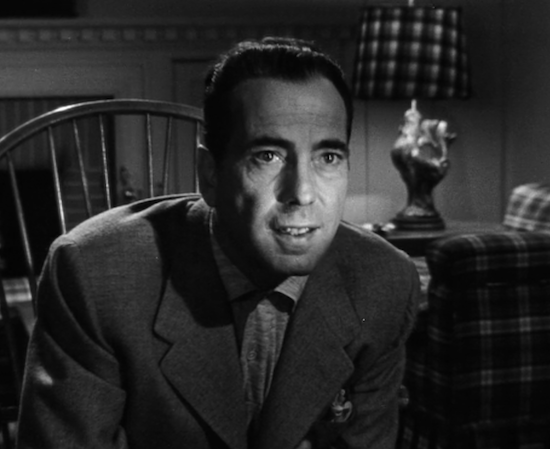
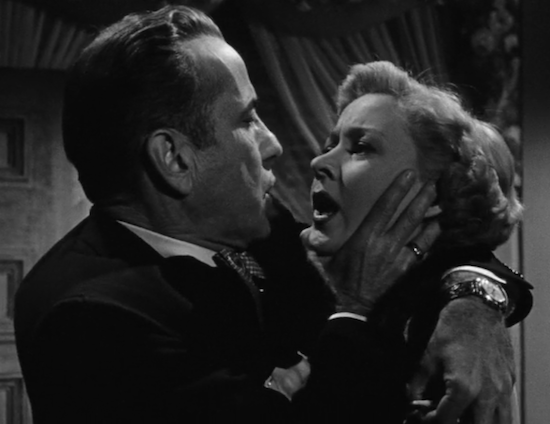
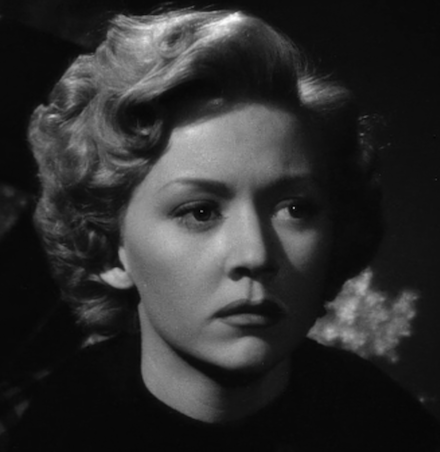
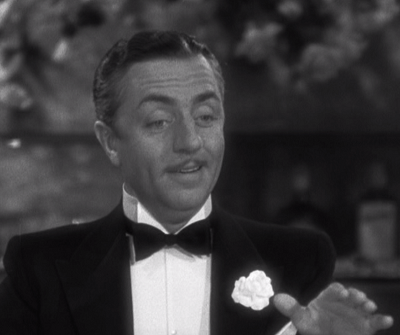
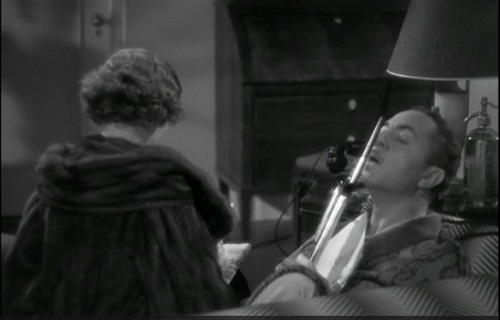
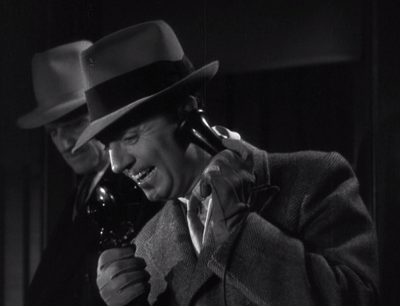
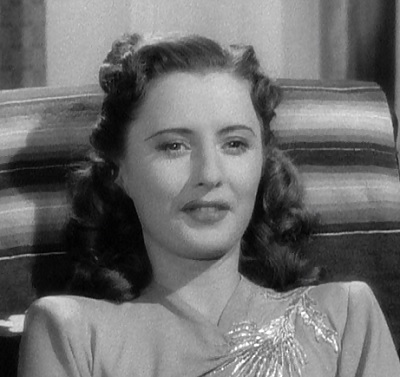
I can’t be bothered to root for a romance between anyone and Dennis Morgan, the heartthrob of Christmas in Connecticut. He always strikes me as smug, and his acting is pretty basic. His character in this famous xmas film doesn’t help: As Jefferson Jones, he’s entitled, dishonest, and smarmy—from promising an engagement to get steak, to seducing a married woman.
Not that Elizabeth Lane (Barbara Stanwyck) is a pinnacle of honesty. And she’s tempting Jefferson every step of the way. But were it for the romance, I would have ignored this perennial Christmas choice in favor of other films, especially for the far sweeter relationship between Stanwyck and Fred MacMurray in Remember the Night.
But this film gets serious props for all of its non-romantic elements, and that’s what keeps me coming back to it, year after year. In order of increasing importance, here’s why I love this film:
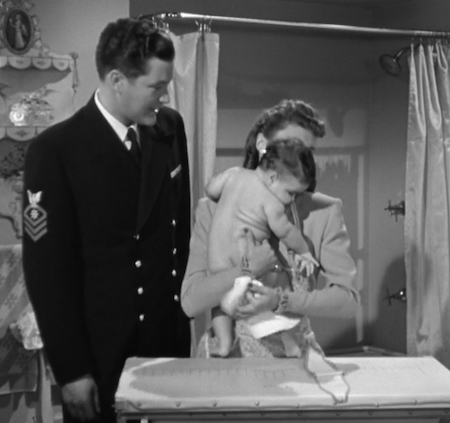
Reason 5: Elizabeth Lane’s (Barbara Stanwyck’s) hilarious ignorance about and disinterest in children. From not being able to remember the gender of her baby (calling the baby “it”), to her surprise that swallowing a big watch could be fatal, this woman takes on the men’s typical role when it comes to baby knowledge in romcoms—and it’s rare to see that even today.
I particularly love when she just throws the diaper after she puts it on wrong.
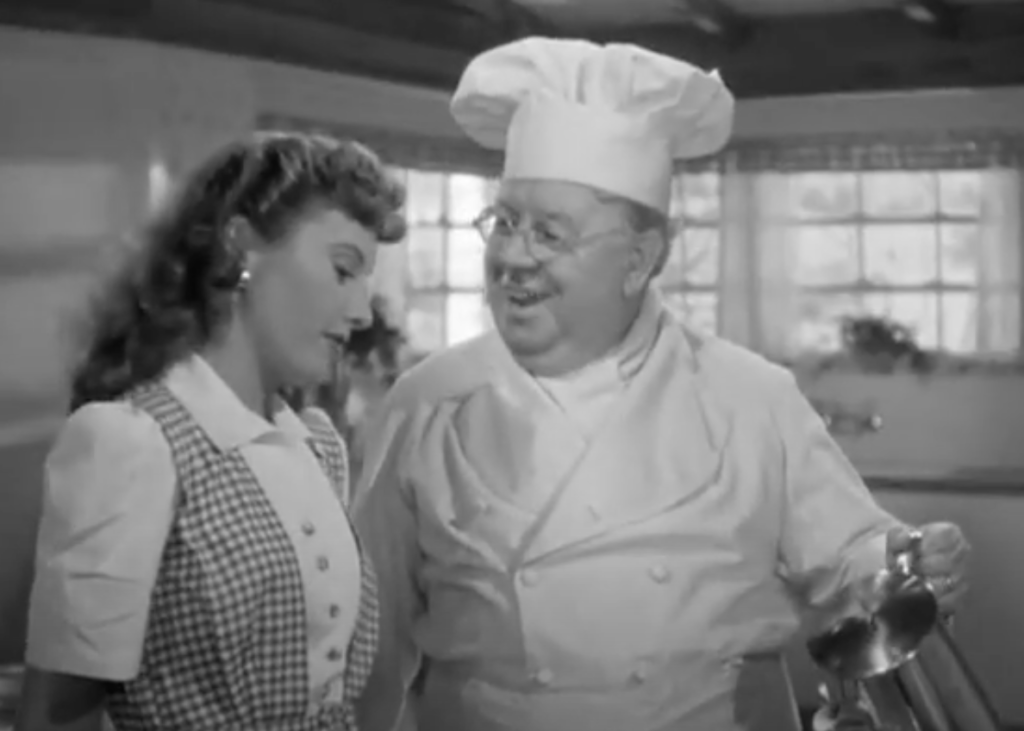
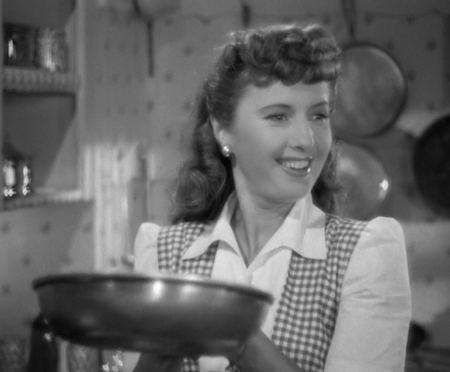
Reason 4: Watching Barbara Stanwyck flipping pancakes. The scene when Uncle Felix (S. Z. Sakall) is trying to teach Elizabeth to prepare pancakes is hilarious.
That pleased look when she unexpectedly succeeds at flipping her flapjack later on is so beloved that you’ll see it in almost any Stanwyck documentary.
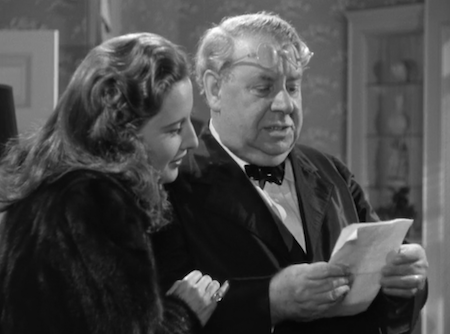
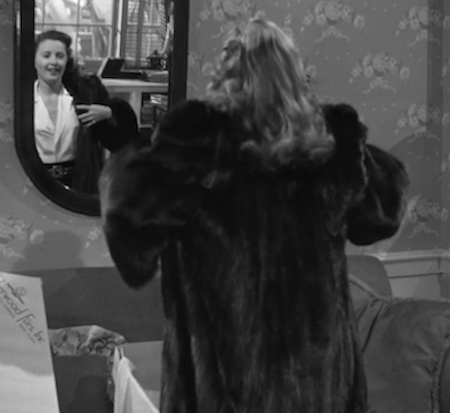
Reason 3: Elizabeth buying a fur coat for herself. Sure, I wish it weren’t fur, but her decision to buy a luxurious present for herself and not wait for a man to do so is the top reason this movie is well loved by my aunt, and I can see her point. Elizabeth is an accomplished writer and has earned the right to show off her successes, without waiting for anyone else to give her her due.
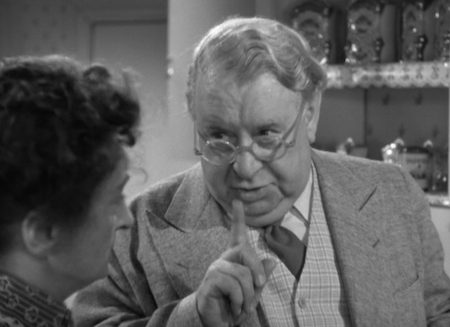
Reason 2: Uncle Felix, as played by Sakall (better known as Cuddles). I could listen to him say “catastrophe” all day long. What a joy this man is to watch, in every film. (I just wish I could track down his autobiography–still trying to get ahold of it!)
Reason 1: Barbara Stanwyck. Classic movie fans are obsessed with Stanwyck, but she’s often forgotten in the wider community–with the exception of this film. Since I think she was among the, if not the, most gifted film actresses ever, I’m so glad that at least one performance keeps her on people’s radar—even if they never realize her comic timing, charm, and talent are what make them want to keep watching this film again and again and again.
I hope you’ll watch this great film this Christmas—or for the first time if you haven’t yet. Just forget about the “rom” of the rom-com, and you’ll love it.
This is part of the Happy Holidays Blogathon! Check out the great entries here.
As the pandemic length has grown and your patience has seeped away, what spells a “comfort” movie to you may have changed. If you’re single and alone, the rom-com, usually a fallback, may make you cringe about the horror of dating dangers post-opening (as if dating usually weren’t bad enough!) If you’re huddled inside with TOO MANY PEOPLE, you may find yourself enjoying dull footage of peaceful lakes.
But for all of us in times of stress, the truly, deeply silly movie remains a staple, and so in the long-delayed follow-up to my earlier post, “Classic Feel-Good Movies for Shut-Ins,” I’m going full-on silly with my next set of suggestions. I’m joining my peers at the Classic Movie Blog Association, who are sponsoring a great blogathon event on comfy favorites. So here are five comfy classic films, chosen for silliness and enjoyment–and listed in no particular order. (You will note that I’ve rated the silliness level, so not all here are full madcap in style. BUT I’m thinking that a list of films with silliness at level eleven, and eleven only, may be my next project.)
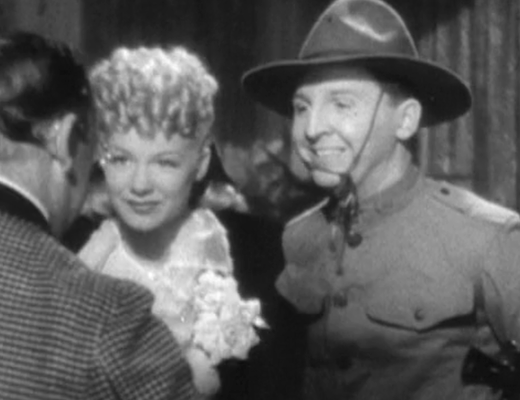
5. TheMiracle of Morgan’s Creek(1943/4). Silliness Quotient–11 out of 10.
I could have easily chosen ANY Preston Sturges flick obviously, but I recently discovered this on my library’s Kanopy streaming service, and just seeing the listing made me grin. For those of you who DON’T know writer/director Sturges, he was a big Coen brothers influence, thus the name of their film, O Brother, Where Art Thou?, a reference to Sturges’ classic, Sullivan’s Travels. (In fact, the Coens’ film title ONLY makes sense if you have see the Sturges flick.) This early writer/director’s delirious combination of madcap physical comedy, witty banter, and sheer improbability in his plotting make Sturges a favorite of any Coen brothers’ diehards (which I definitely am).
The Miracle of Morgan’s Creek actually thrives on denying information to its audience, who know that a scandal/miracle is about to erupt in Morgan’s Creek, and many stratagems are in play to contain it. Betty Hutton is adorable as the center of the scandal, and Eddie Bracken plays her lovesick friend/maybe-more (think Ducky in Pretty in Pink). Basically, it all begins when Hutton has too good of a night with liquor and a bunch of soldiers and sleeps with one of them. The thing is, she can’t remember his name. Yes, you read that right. It gets much more complicated as it goes. Bracken has the silliest role, and he captures his character’s constant befuddlement to the hilt—and just escapes going too far. Since the writing is in Sturges’ hands, it’s brilliant, of course (I have a set of his scripts on my bookshelf, trying to see how he does it).
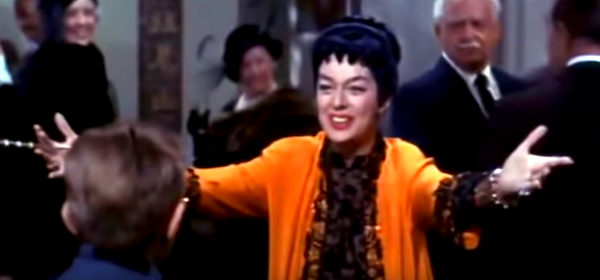
4. Auntie Mame(1958).Silliness Quotient–7 /10.
I haven’t yet done a full post on Auntie Mame, but that’s because I love it too much, not too little. An unconventional, fun-loving aunt in the city (Rosalind Russell) takes in her dead brother’s prim child, and many hilarious scenes ensue. If you don’t end the film wishing Auntie Mame were your aunt, I don’t know what’s wrong with you. Rosalind Russell’s acerbic edge keeps the film from ever treading into maudlin territory, and she so fully embodies Mame’s significant lust for life that it’s very confusing to find Russell cowed and sad in other films (Picnic, for example).
A favorite scene in the film is when Mame takes a sales job after the market crash. She only knows how to do COD (cash on delivery), and therefore is urging everyone to pay that way. Her dismay when they don’t is ALL OF US in every job when we’re out of our depth. COD isn’t really a thing you hear much anymore, but any time I do hear it, I think, “Oh, Mame.”
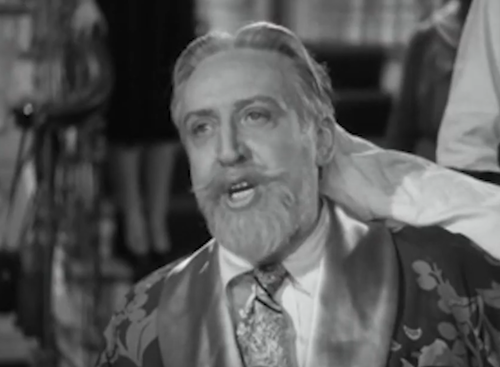
3. The Man Who Came to Dinner (1942).Silliness Quotient–7/10.
“Guests, like fish,” penned Ben Franklin, “begin to smell after three days.” No movie has ever captured that sentiment better than The Man Who Came to Dinner, and no actor has ever improved on Monty Woolley’s commanding performance of entitlement personified. He’s playing radio star/personality Sheridan Whiteside on a lecture tour, and the unlucky family once so proud of his appearance at their dinner table learns to rue the day they agreed to it. A little accident on their stoop, and they’re stuck waiting hand and foot on Whiteside’s prodigious ego.
George S. Kaufman and Moss Hart created the witty script, and Billie Burke plays the unwilling hostess to Whiteside. (Bette Davis may have helped the film get made, but her role here is one of her most flavorless. You know it’s not a Davis vehicle when Ann Sheridan outshines her.) Watch the film for the script and for brilliant Woolley, who must have been something to see on the stage (where he originated the role). Unfortunately, I have delayed writing about this film because it seems to be always unavailable for streaming on Amazon, but the DVD is available. If you know a good source for streaming it, please mention that in the comments!
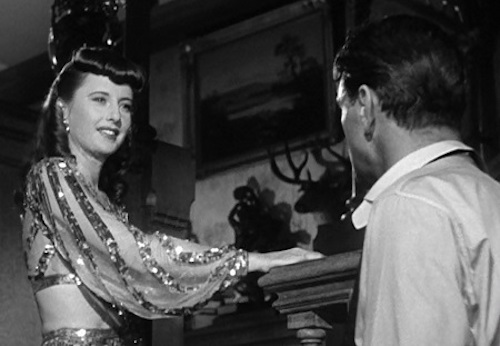
2. Ball of Fire (1941).Silliness Quotient–7/10.
No list of silly movies would be complete without my favorite classic comedy, with Barbara Stanywck as the moll and Gary Cooper as the hapless encyclopedia writer who falls for her. And then there are the “dwarves”–the older encyclopedia writers who ALSO fall for her. I see that the film’s available on the Criterion Channel, which I’m shocked I don’t belong to yet. (No worries for me–I own two DVDs of this movie–the 2nd for when mine inevitably breaks from overviewing.)
With the dizzyingly talented combination of Howard Hawks as director and Charles Brackett and Billy Wilder as writers, this film’s dialogue can be almost as breathtaking as His Girl Friday‘s (also Hawks), but the writing/directing team leaves room for endearingly slow sequences as well. You actually watch Cooper’s character studying how to box in a book before his big fight scene, showing how goofy this story is. And for extra fun, you get favorites Dana Andrews, Dan Duryea, and S.Z. Sakall simultaneously embracing and mocking their typical roles.
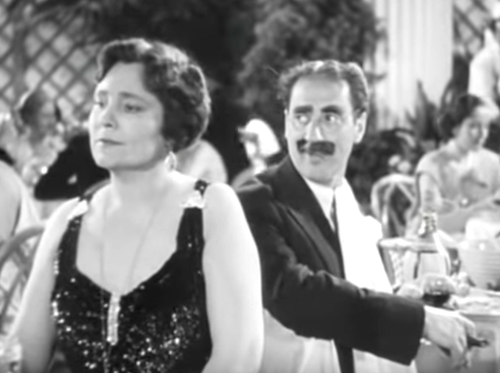
1. A Night at the Opera (1935).Silliness Quotient–11/10.
Did you honestly think you’d get through this list without a Marx brothers appearance? I didn’t think so. (As with The Man Who Came to Dinner, the screenplay is co-written by Pulitzer-Prize-winning Kaufman.)
Here are just a few quick early bites: We get Otis B. Driftwood (Groucho) yelling at his driver for not traveling slowly enough to miss the whole opera they’ve driven to see. We have Fiorello (Chico) and Otis tearing apart the bits of a contract they don’t understand (i.e., all of it). We have Tomasso (Harpo) interrupting a typical movie romance trope (one lover onshore, the other on the ship, crooning about her love) by attack-kissing strangers for no reason. That’s just a small sampling of the joys you get before the glorious comedy of the ocean voyage, which includes such a monstrously over-the-top buffet that I wondered just how old the joke about gaining weight on cruises was….
During a strange but enchanting musical sequence starring Chico and Harpo, the two entertain a crowd of children with a deft combo of lunacy and calm, making me think, “Doesn’t every parent stuck at home with children for weeks want these two as babysitters right now?”
So there you have it–five wonderful, comforting films to get you through this trying time. NOTE: You may notice that neither Mae West nor Cary Grant has appeared on this list. That’s because 1. I already discussed Mae in my previous comfort list, and 2. I figured you’d already thought of Cary–and if you haven’t, why not?
Bonus: Kedi (2016).
I know–it’s not a classic film. It’s a recent documentary about the cats of Istanbul. But I have literally recommended it to every cat lover I know, and when I found it streaming on my library’s Kanopy service, played it on repeat for a day. The film focuses on several stray cats, telling their stories (the hunter, the crazy one, the player, etc.). The cats are certainly endearing, but surprisingly, the shopkeepers, artists, and others who love and care for them are just as likeable. And the cinematography of Istanbul is often gasp worthy, especially when you see those cats on some tall balconies and rooftops! My friend described the film as human catnip. How right she is. Next time you experience one of those anger/grief/anxiety spirals that all of us are prone to during this pandemic, play Kedi. Trust me. It’s healing.
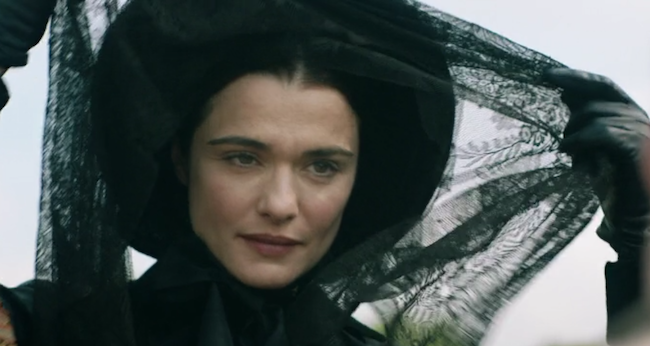
I had hopes for My Cousin Rachel (2017). I don’t know why. I’d already discovered–despite my enjoyment of the 50s version–that the book wouldn’t translate well to film without a big overhaul. I guess I hoped a director smart enough to cast Rachel Weisz in the key role would know to make such changes. (She had added complexity to Definitely, Maybe for crying out loud. Who better to take on the mysterious, unreadable Rachel?) But within minutes, it was evident this director of slight rom-coms lacked the imagination to even equal the previous film’s quality. The 2017 take is incomprehensible, just short of laughably bad. I had flashbacks of Season 3 of Bloodline. What the ksljfkjslkfj! is even going on?
***Mild spoilers–I won’t give away the end. Here’s the plot: a sheltered young man, Philip, is taught to hate women by his cousin/foster father Ambrose. He discovers his cousin has fallen in love with and married a woman while abroad in Italy. Philip’s jealous, angry, anxious. Then he receives strange letters indicating Ambrose is afraid of his wife and quite ill. On arriving in Italy to save his beloved cousin, Philip discovers him dead, with shady characters delivering the news.
Back home in England, he vows revenge on the widow, just on time for her arrival for a visit. The story takes off from there, as Philip falls for the widow and acts completely besotted right away.
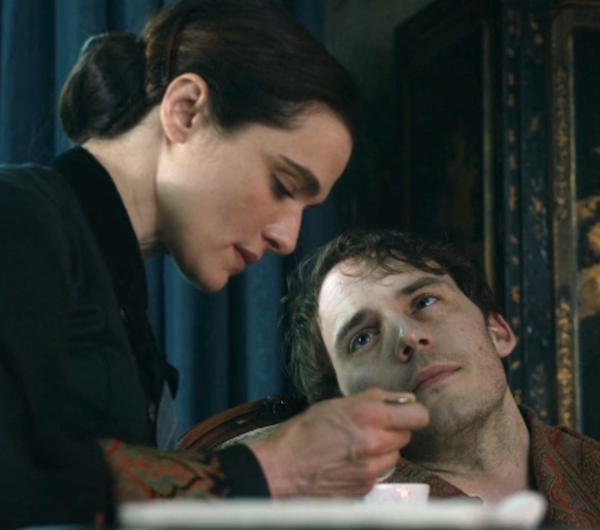
Unfortunately, he can’t determine whether Ambrose died of a brain tumor (making his suspicions delusions) or by his wife’s hand. Is the widow just mercenary in this visit, trying to get her late husband’s estate by wooing Philip? Or is she an independent woman who means well but is reluctant to yoke herself to a silly boy who can’t distinguish between sex and marriage? And regardless of which she is, is that dreaded tea she’s making poisonous? And when he’s ill, will she help Philip get well, or attempt to slowly kill him off?
The lure of the book is the constant back and forth of the reader’s (and Philip’s) suspicions about whether she’s a killer. The did-she, didn’t she is brilliantly developed by Du Maurier. Philip, the narrator, is, by any definition, a dupe. Suspecting Rachel as he does, offering her all of his worldly possessions because she smiles at him isn’t exactly a bright move. What redeems the narrator for the reader is that he’s telling this story AFTER THE FACT, and we understand he’s not quite so foolhardy now. We also get inside his head, understanding why he trusts when he does. We also know more of the sheltered background that explains (as it turns out) his dangerous lack of experience with women. How else could we understand his dogged pursuit of a woman who is not attracted to him?
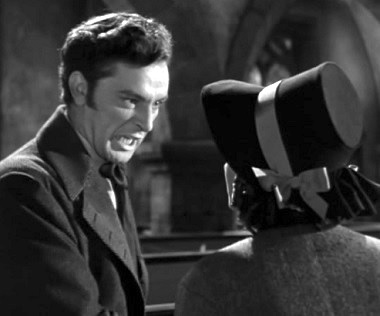
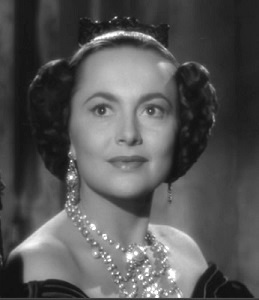
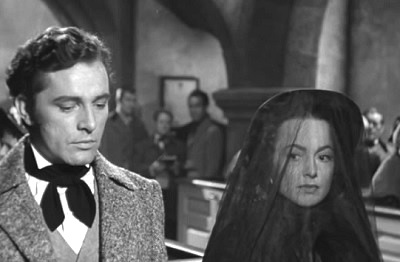
Without this context, the narrator comes across on film as not only unlikable, but unhinged. In the 1952 version, he acts like a dangerous stalker after Rachel stops allowing his seductions.
Luckily, the role is played with such relish by Richard Burton that you enjoy it even as you know the book’s intent has been completely overthrown. (Philip HAS to be the enemy, with behavior like this.) In the 2017 version, far less ably played by Sam Claflin, Philip is so pathological in his pursuit of Rachel that you see her possible poisoning of him as an act of self-defense. How else can she ensure he won’t kill her, he’s so obsessed? That attack on her throat is just the beginning!
With this upending of villain roles, the did-she, didn’t-she becomes, “Who cares what you did, lady. RUN!!” I don’t have a problem with changing a book’s focus, but as it turns out, that uncertainty about Rachel was also the narrative’s greatest appeal. Without it, we’re stuck watching an unlikable dupe turn into a psycho, which isn’t interesting viewing. I also don’t think voiceover from Philip would have worked; the story needs more nuance and he’s not intelligent enough to provide it.
As I see it, the only way of salvaging the story on film was to change the lead. What about his godfather’s daughter, who likes Philip for some unaccountable reason? We’d see Rachel’s behavior more clearly from her eyes; she may be biased, but she’s perceptive. Again, no need for voiceover, but she’d notice different details, like Rachel’s manipulative ways. (Though let’s stop the anachronisms, please, 2017 version; I can’t see this young lady frankly talking about homosexuality with Philip.) Or what about the godfather as the lead? He’s protective and smart.
Or you could go full-tilt into unreliable narrator mode, and make Rachel–the most interesting character–the lead. She could be like the riveting James Cain narrator in The Cocktail Waitress. With Rachel, I wouldn’t even mind a bit of voiceover.
It’s funny that the 2017 version completely dropped the notion that Rachel was foreign in her ways—and yet that foreignness helps explain her greater independence, her unknowability to Philip, and her tenuous status in the community (who, like Philip, are a bit entrenched in their xenophobia and rigid biases).
And it also helps show her confusion. She’s lived a cosmopolitan life in Italy, and Philip’s (and his community’s) rigid morals about sexuality don’t make sense to her. With more of her character unfiltered through Philip’s perspective, we viewers might come to understand her better.
As it is, the 1952 version is entertaining at least. The 2017 version, alas, is not, with Claflin making even histrionics dull to watch. Only some pretty cinematography redeems it at all. The 2017 version adds a dumb ending and strips away much of the questioning of Rachel’s motives. Rachel seems delicate rather than arch at all times and her character is so terribly underdeveloped that Weisz–for once–is tedious to watch. View the 1952 version for Burton’s high drama and Olivia de Havilland’s riveting confidence as Rachel. But if you love the book, be prepared for disappointment: your beloved psychological thriller is now a crush-gone-bad procedural.
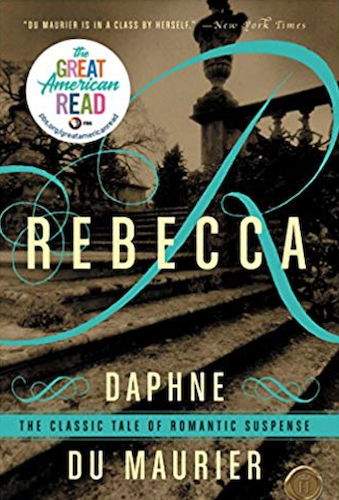
Of all the femme fatales on film and in print, Rebecca may top them all. The woman isn’t even alive at the start of the book or the Hitchcock film that resulted from it, yet the narrator of the story is so haunted by her husband’s previous wife (and Du Maurier is so skilled at freaking readers out) that Rebecca’s reputation as the evil femme fatale endures.
But when we look at Rebecca’s life a little closer, it’s hard to ignore just how much of our impressions of this woman are based on her former husband’s hatred and his second wife’s jealousy. Although I was totally with the narrator in fearing and loathing Rebecca on my first reading of Daphne Du Maurier’s classic gothic novel/thriller/mystery, my opinion of Rebecca has radically shifted in time, and the blame moved from her to the much more questionable Max de Winter.
Since the film sanitizes the hero due to the Production Code, I’m sticking with the book as I ask all of you Du Maurier lovers this question: Who is worse, Rebecca or her husband Max?
Let’s count it down trait by trait, shall we?
Behavior toward Friends & Acquaintances. Rebecca. Tries to suit others’ moods and appeal to their interests—this according to her detractor, Max. Everyone loves her, Maxim admits, including all of her employees. He claims she is fake, a backstabber. It’s easy to discount the tales of her insincerity altogether, given those blunt admissions to Max at the start of their marriage and his own dubious motives in smearing her. But we do hear Ben describing her cruelty toward him, a serious count against her.
Max: Rude to and arrogant toward: his sister, his brother-in-law, attorneys, party guests, servants, Mrs. Van Hopper, his second wife. He does seem to usually treat Frank well, and perhaps the dog. He expects to be thought above the law despite his suspicious actions and has no compunction about the boat maker’s profit losses thanks to his lies. Why? Presumably his class and status.
Personality Points: Rebecca 1; Max 0 Villain Points: Max 1; Rebecca 1
Social Skills. Max is the very definition of prim, spending his days abstaining from most people and food (while strangely expecting an untouched feast on a daily basis). And, there’s that slight issue with his temper and moods. Good company? I think not.
Rebecca’s style intimidates the narrator; she has garnered Manderley fame with her exquisite taste and the elegance, creativity, and humor she exhibits as a hostess. Even the “R” of her name is written with panache.
Personality Points: Rebecca: 1; Max: 0
Treatment of Spouse. Let’s admit from the start that these two are hardly an altruistic pair. A tight race! Max:Wife 1. Marries Rebecca without loving her but planning to be faithful. Keeps the secret of her affairs, but for his own pride. Does tolerate her behavior within limits. (It was a different age.) Seemingly polite to her in public but based on his general actions (see above), I’m guessing she needed to find affection elsewhere. Wife 2. Marries the narrator because she’s chaste and has no relatives (Mrs. Van Hopper isn’t far wrong there). Shows little passion for her, most of that passion being extended to his house. Treats her like a daughter/servant/enemy, depending on the day. Marries her knowing that his limelight-averse spouse will be destroyed if his crime is revealed and the scandal rags come a-knocking while her protector is in jail. Exposes her to Mrs. Danvers, the suicide pusher.
Rebecca: Marries Max for his money and status, planning to cheat on him from the start and admitting as much. Seemingly has multiple affairs. Apparently enjoys some “unspeakable” behavior (though given prim Max’s ways, I’m guessing we’re not talking Roman orgies). May, if the love of Mrs. Danvers is any indication, indulge in affairs with women as well as men, which in this time period would have harmed her husband’s reputation. Shaming her husband with alcohol and drug consumption? Perhaps in private. Meanwhile, spends her days being delightful to all and making his treasured house the talk of the country.
I’m going to leave out Max’s crime for this one, as it deserves its own category. But in terms of behavior up to their final night together, Rebecca’s is worse since Max’s biggest fear is public shame, and she doesn’t seem to care much that he’s a bore and has no fidelity impulses/regard for his pride whatsoever. However, his behavior to his second wife is appalling.
Villain Points: Rebecca 1; Max 1
The Murder. Max shot his wife because she suggested she might be pregnant with another man’s baby. Max demonizes her, calling her not even “human,” to (a) justify his action, (b) keep his wife’s love, and (c) be considered a civilized member of society. The narrator, so pleased he didn’t ever love Rebecca, actually goes along with his version of events, even though he’s not exactly trustworthy because he’s a killer who murdered his last wife, idiot. RUN!!!!
Rebecca. Enjoys her husband’s distress at her infidelity and taunts him. He now says she wanted him to kill her (given her health). Kinda convenient, right?
Personality Points: Rebecca, 1—some considerable moxie revealed in this last fight; Max, 0. Villain Points: Max, a gazillion; Rebecca, 0.
And the Verdict Is…. Personality Points: Rebecca 3; Max 0 Villain Points: Max, a gazillion and 2; Rebecca, 1.
Like I said, Rebecca might not be an angel,
but a femme fatale? Not so much. And is Max, the cold-blooded murderer and
awful husband a homme fatale? You better believe it.
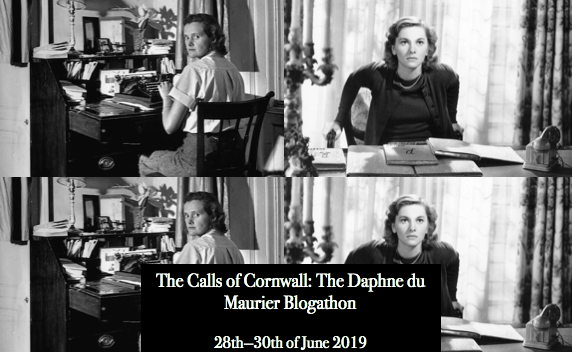
This post is part of the Calls of Cornwall blogathon by Pale Writer on Du Maurier’s work. Check out the other entries!
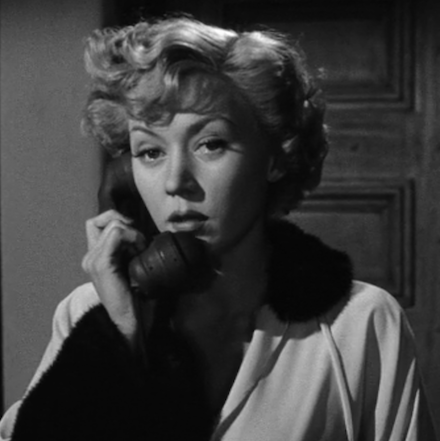
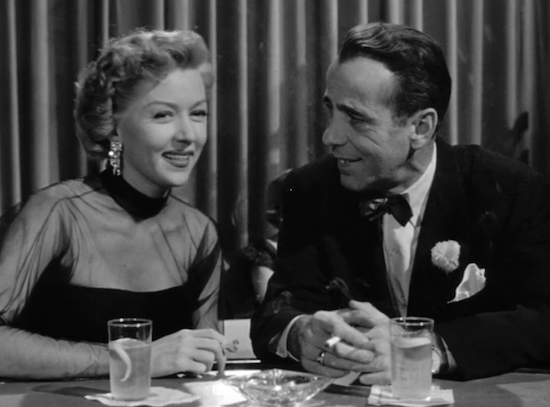
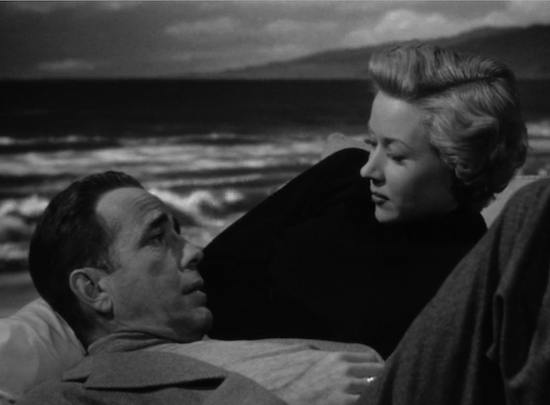
I was wowed by Nicholas Ray’s In a Lonely Place. The film, it seemed to me, was ahead of its time in its powerful portrayal of domestic abuse. On the surface, the film explores whether the hero, Dix (Humphrey Bogart), murdered an innocent woman. His girlfriend, Laurel (Gloria Grahame), begins their relationship in romantic euphoria.
But, as in Suspicion, Laurel begins to suspect he might have done it.
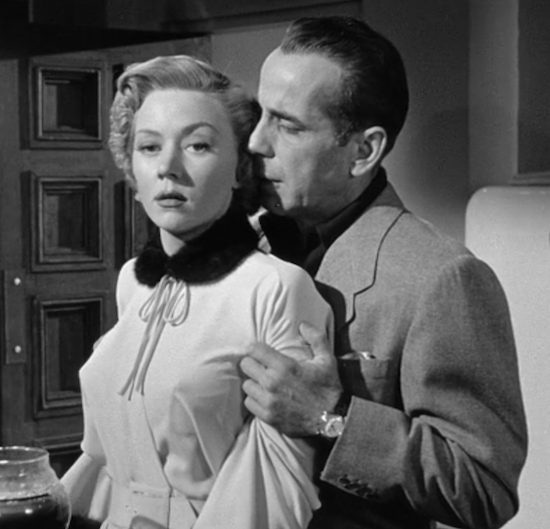
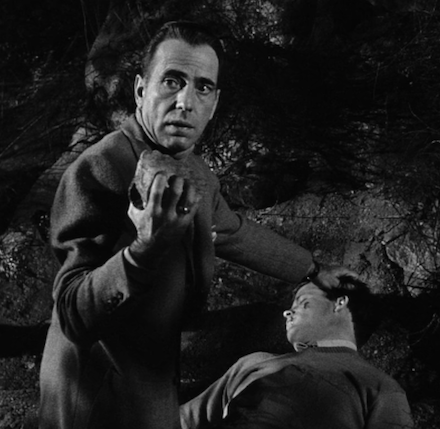
The did-he, didn’t-he soon becomes a “Don’t worry which, Lady. Run.” After all, Dix likes to act out murder scenarios and then mimics the same movements when smoking with Laurel. He won’t allow her to receive a phone call or prescription he doesn’t monitor. He keeps her economically dependent on him. He justifies beating people up and actually considers bashing heads in with rocks.
And just in case she has any doubts about how this is all going to end for her, his former girlfriend reported Dix for breaking her bones.
The story is cast from Laurel’s (Gloria Grahame’s) point of view, and haunts the viewer because Dix can be charming, can be loving, can be apologetic. He does come back with “armloads of gifts” after his scary behavior, not just for her, but for victims of his violence. He is sweet to an alcoholic ex-actor, shows more compassion for him than anyone else. The film sympathizes rather than judges Laurel for staying, reminding audiences that an abuser can be contrite and thus leave the woman who loves him off-balance, uncertain whether to trust he’s changed. And though Laurel’s friend cautions her against him, his friends urge her to stay, to understand, to give him a chance. Meanwhile, we get glimpses of his mind: he can only see unquestioning faith in him–which would be difficult, given his actions–as acceptable. After a near-homicide, he coins a line for a screenplay describing his love for Laurel: “I was born when she kissed me, I died when she left me, I lived a few weeks while she loved me.”
Personally, I found this line chilling. Yet the director, Nicholas Ray–who was experiencing stresses in his marriage to Grahame at the time–gives a romantic packaging to not just that line, but to the final scenes of the film. He seems to imply–even after Dix strangles Laurel and nearly kills her–that this all would have turned out well had there not been that whole did-he-murder-the-woman doubts. And more disturbing yet, both current and contemporary reviewers frequently characterize this toxic relationship movie as a “tragic love story,” and certainly many scenes in the movie would seem to back up that assumption.
I turned to the source material to understand the confusion in tone, and was in for a shocker. Dorothy Hughes wrote In a Lonely Place as a kind of The Killer Inside Me of its time; we know from day 1 that Dix hates women, that he kills them regularly, that he thinks he’s justified because after he came back from the war, women saw through his hustling ways; they didn’t fall all over him, as they had when he was in uniform. His former Air Force friend is now a cop and has married a woman, Sylvia (Jeff Donnell), whom Dix distrusts and (we soon learn) underestimates.
She quickly sees through Dix’s veneer of humanity.
Dix hates her for it in the novel, and plots her death. Think of Dana Andrews in The Best Years of Our Lives, if on encountering his wife’s disappointment in him, he decided to go on a murderous vendetta against anyone who shared her gender.
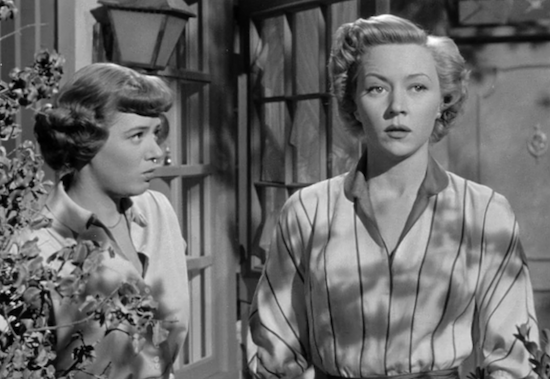
The best scenes in Ray’s film are moments that capture the stark feminism in the book, in which only the women see Dix for who he is, and only they can succeed in stopping him. In a sharply rendered scene in the film, Laurel and Sylvia are honest with one another: Laurel in her doubts about Dix’s character, Sylvia, in confirming (reluctantly) that Laurel should have them.
In the book, Dix’s demeaning treatment of women–especially Laurel–is accompanied by a conviction that Laurel is taunting him, trying to make him jealous, when she’s simply putting the brakes on a relationship that he’s taken too seriously, too quickly. As writer Megan Abbott so brilliantly put it: “After reading In a Lonely Place, you find yourself looking, with a newly gimlet eye, at every purported femme fatale, every claim of female malignancy and the burning need of noir heroes to snuff that malignancy out.”
In Dix’s eyes in the book and film, Laurel is a femme fatale. She gave her love, then she took it away–all because she didn’t trust him enough. But in our eyes, she’s just fallen for the wrong guy; calling a man you love a “madman” doesn’t usually suggest a relationship is headed for sunshine and rainbows. Whether Dix killed a woman or not, Laurel isn’t wrong to ask, “There is something strange about Dix, isn’t there?” after he bloodies a fellow driver to a pulp or “What can I say to him–I love you but I’m afraid of you?” when he looks at her in the scary fashion Bogart had mastered since The Petrified Forest.
At some point you gotta ask, Is any guy you’re relieved and surprised didn’t kill someone worth sticking around for?
I admire both the book and film because they make me look back at so many of the noir novels and movies I’ve admired, and ask that question Abbott challenges me to consider: Was this woman a femme fatale? Or was she just an independent woman who didn’t say yes?
This is part of the Classic Movie Blog Association’s Femme/Homme Fatales of Film Noir blogathon. Check out so many great entries here.
When asked to pick a swoon-worthy character for the Reel Infatuation blogathon, I assumed Nick Charles would already be taken. But this year, my fellow bloggers, you were too slow on the uptake. He’s all mine. How do I love thee, Nick? Let me count the ways. You are….
Quick with a quip.
The perfect mixture of man and kid.
A generous host, especially to strange characters and party crashers.
An excellent judge of canines.
Averse to pretensions.
Able to explain martini mixing via dance moves.
Smarter than everyone, but without ever taking yourself seriously,
Easygoing and relaxed when exposed to danger or annoying relatives.
Supportive of the weaker types around you.
Owner of a confident swagger and sexy voice.
Appreciative of Nora’s charms, even enough to tolerate late-night breakfast requests.
Entertaining–on every occasion, in every place, in every decade.
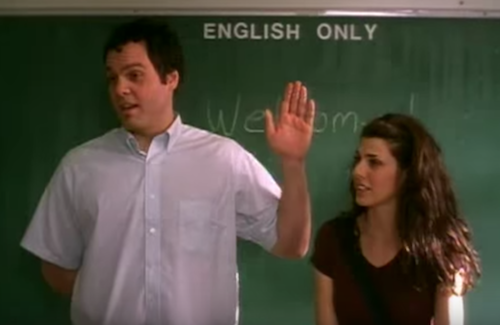
Few rom-coms actually manage to be both romantic AND funny. For some movies, the romance wins, but the laughs are tepid; for others, you’re laughing so hard, but not feeling any chemistry. Happy Accidents (2000) is that rare film that manages both, maybe because, like most great romances, it’s not strictly about these two people at all. It asks larger questions we heterosexual women ask of ourselves every day: Is it possible to change where we’re headed? Can we trust a man’s words when we can’t verify them? And is it worth staying with a great guy if he runs from miniature dogs and claims he’s from a future version of Dubuque, Iowa?
The film keeps us guessing whether the great guy, Sam (Vincent D’Onofrio), really IS from the future, or just hiding his mental illness and/or compulsive lying. The comedy mainly comes from Ruby’s (Marisa Tomei’s) efforts to wish away/rationalize all of his (seemingly) nonsensical statements and actions. Her past relationships make her desperate to hold onto the nicest guy she’s ever been with, someone even her parents like. Her past is summed up beautifully when Sam asks if she likes music, and Ruby answers with despairing resignation, “You’re not a drummer, are you?”
Tomei’s delivery here and throughout is so on point that you may wonder why we have so few comedies of hers to savor. I have always thought the critical consensus that she was unjustifiably given an Oscar for My Cousin Vinny (an opinion I don’t share) has tainted all of her work since. How easily she could have had Julia Roberts’s or Meg Ryan’s career otherwise! She is adorable and hilarious in this film. And D’Onofrio, who irritates me in Law and Order: Criminal Intent, reminds me in this movie of why I used to like him: he’s awkward, charming, and (seemingly) achingly sincere.
The two have a meet-cute and rush headlong into moving in together, a development that worries Ruby’s therapist, who reminds Ruby she’s falling into her usual destructive romantic pattern. That the therapist is played by this woman ensures that you’ll wish each of their sessions longer:
Sam tells Ruby various stories of why he’s here, why his backstory is so flimsy, and why the worry should be not about him, but her. It seems he’s here to protect her, though he’s cagey about why. Maybe he’s playing a funny romantic game, as her friend suggests. Maybe he really believes his stories, but is otherwise sane. Maybe he’s blocking/compensating for his sister’s death (whenever it occurred). And maybe, just maybe, he’s telling the truth.
I won’t reveal where the story goes, as you (unlike he, perhaps) cannot go back and erase the memory of my spoilers. But trust me: it’s worth it to spend some time with Sam and Ruby. Watch him calmly explaining to bystanders that he didn’t need a college education due to information being inserted into his brain as the strained Ruby tries not to hear it. Relish his attempts to seduce her with polka music. And watch Ruby’s growing love for him, and his infatuation with her. Like Ruby, you’ll start to wonder, “How bad can a fantasy about being a time traveler be anyway?”
**
This post is part of The Time Travel Blogathon, co-hosted by Ruth of Silver Screenings and Rich of Wide Screen World. Check out all the fun travels here.
To celebrate National Classic Movie Day, I’m joining Rick’s Five Stars blogathon by sharing some of my favorite classic movie stars. And though I can’t quite say they’re my favorites ALL of the time (of course, that shifts), they are always on my list. Since my favorite character actors deserve their own post, I’m focusing on those who frequently star in their vehicles. Here we go. In no particular order:
1: Barbara Stanwyck
Because her acting was superlative and ageless. Because she got her scenes in one take, her emotions so visceral you always feel immersed in her characters’ lives. Because her crews loved her. Because she could be funny, dramatic, or both at once. She was marvelous.
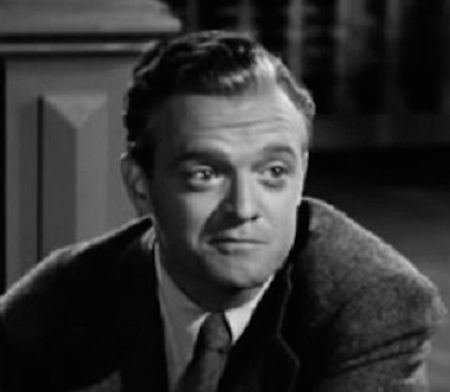
2: Van Heflin
Because his acting was so natural. Because he didn’t demand attention or the starring role, but the authenticity of his acting and his easy confidence made him riveting anyway. Because he singlehandedly changed my mind about westerns with his understated performance in 3:10 to Yuma. Because he never got the credit he deserved, which somehow makes me love him more.
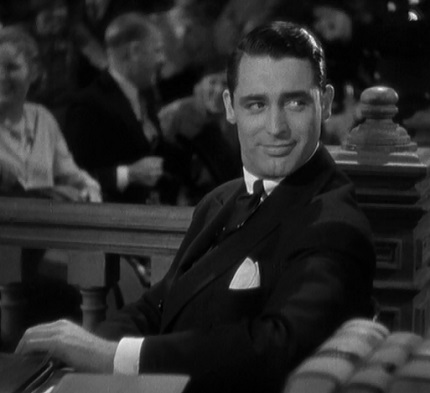
3: Cary Grant
Because he had the all-time best smirk. Because he could be sexy or goofy, usually both at once. Because his acrobatics were truly impressive. Because in spite of his unfailing glamour, his characters were always real. Because he knew how to share the screen with a canine. Because he was adept at self-creation. Because he gave me a name for my blog.
4: William Powell
Because I wouldn’t typically consider his looks attractive, but his personality onscreen was so assured and wonderful and silly that I find him sexy just the same. Because I want to befriend most of his characters, and am sad I can’t. Because I could listen to that voice all day. Because I’ll watch anything he’s in, just to fall for him again.
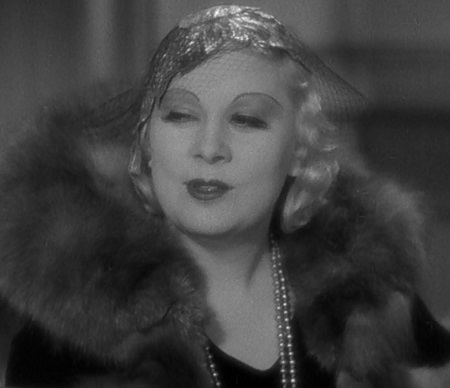
5: Mae West
Because she wrote her own lines and dictated her own role–onscreen and off. Because those lines were so well written that people know them almost 100 years later, without knowing where they’re from or who she was. Because she was combustible onscreen, and always hilarious. Because she was a feminist, whether she admitted it or not. Because she had impeccable timing. Because of that walk. Because her movies are utter joy. Because there will never be another like her.
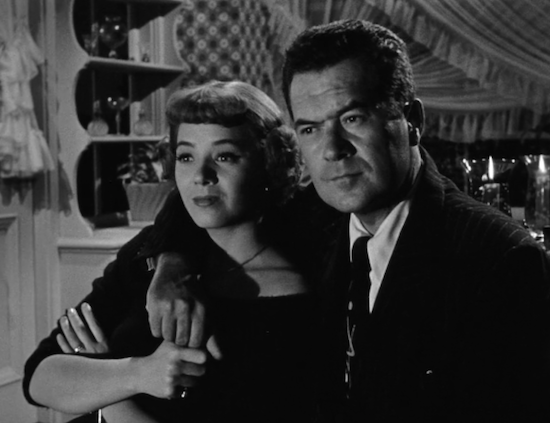
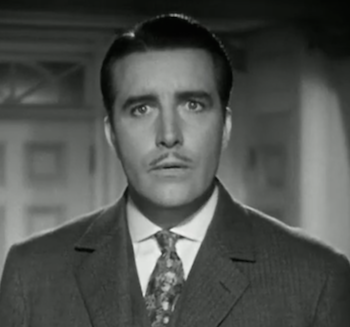
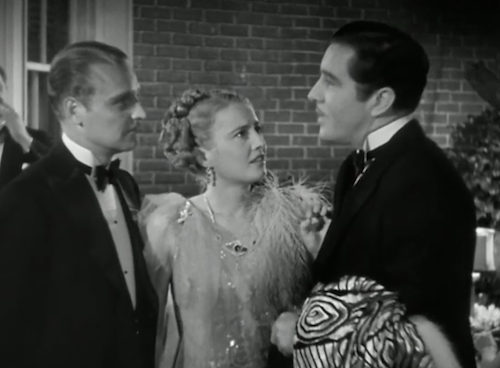
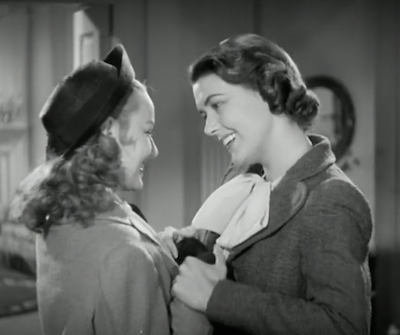
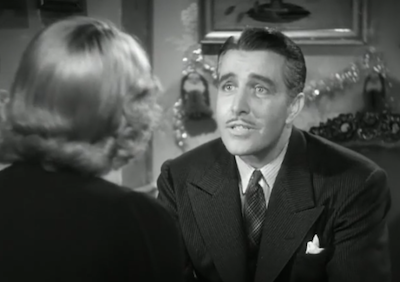
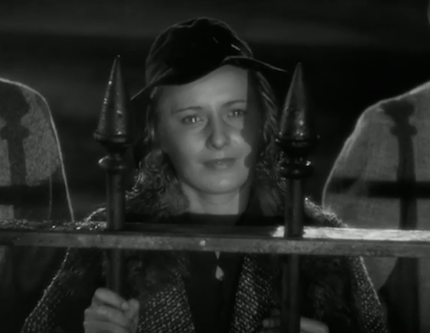
When most people think of villains, they’re envisioning cloven hoofs and murderous intents. Stephen Dallas (John Boles), the husband of self-sacrificial mother, Stella Dallas (1937), would be unlikely to appear on any list of classic villains. Some might even consider him a nice guy—if they weren’t paying attention.
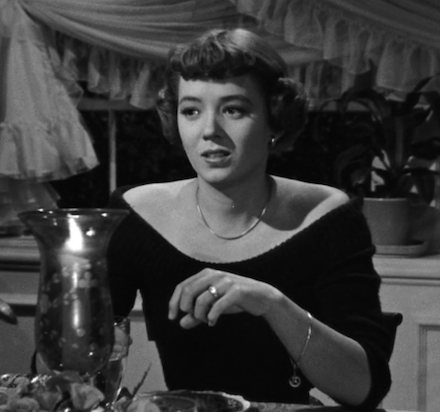
But on my latest viewing of the tearjerker, I wasn’t struck, as I usually am, by Stella’s modernity and her society’s desire to punish her for it. No, this time I kept observing just how completely AWFUL this man is, and how with a less monstrous husband, Stella (Barbara Stanywck) would have spent her middle age in daughter Laurel’s (Anne Shirley’s) sweet company, instead of off on her lonely, destitute own. Let’s review just how villainous this creep is:
Ummm, Child Support?
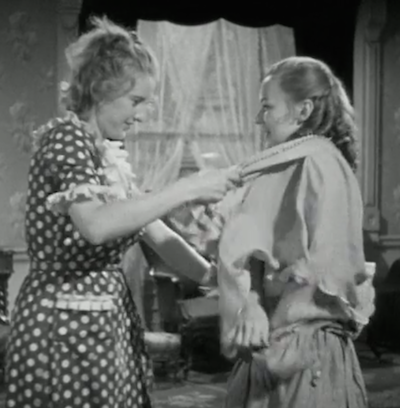
Sure, Stephen splurges on his daughter, but only when she’s with him. When Stella and Laurel are on their own, their homespun clothing and Stella’s frequent repairs to it make evident they’re just scrimping by on the arrears of his salary, despite the fact that Stella and he never divorced.
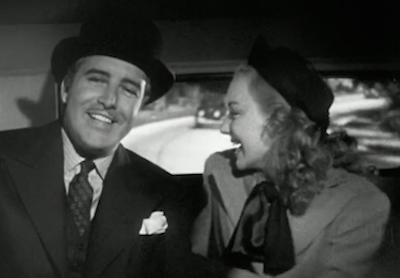
Meanwhile, he’s living it up in fine clothes with his wealthy girlfriend in New York, with his daughter only looking smart when she’s with him.
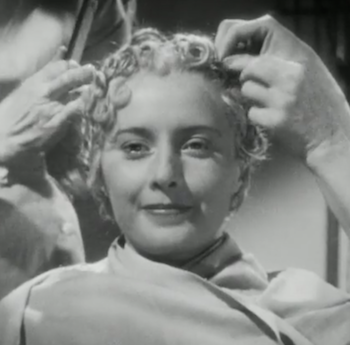
When Stella decides to experience the high life for a weekend, it’s not just her daughter’s embarrassment at her gauche behavior that’s crushing. It’s that she doesn’t get to enjoy the one time she gets something from her still-married-to-her husband. Watch her satisfaction as she takes care of herself after years of only spending money on her daughter:
And it’s all going to end with her shame, and her loss.
He Wants to Change His Wife’s Character, But Thinks His Own Stuffy Self Perfect
Maybe going dancing right after childbirth was pushing it, but Stella’s efforts to enjoy herself afterward stem from her love for company and music and fun. Stephen; acting disgusted by the lack of refinement of others, but really stung with jealousy; can’t keep himself from looking down on those who entertain his wife.
The fact that he makes zero effort to amuse her himself doesn’t seem to cross his mind; apparently, his tedious business acquaintances are the only company he’ll allow his wife. Instead, he wants to correct her manners, her clothes, her wording. “I’ll take my usual lecture,” she says when she returns from the brief dance he allows her. As she rightly points out, he could use some correction himself. Surely, everyday kindness is good etiquette, right spoilsport? As she points out after he starts condescending to her (saying she needs to correct herself, “adapt” in order to be someone), apparently treatment she’s been enduring since their marriage: “How would it be for you to do a little adapting for a change? I don’t see you giving up anything.”
He Invites His Daughter to Stay with Him & His Mistress
Dressed up in finery and wealth or not, Helen Morrison (Barbara O’Neil) is romancing a married man. Her little boys being around may be intended to make her overtures to adulterer Stephen more palatable, but I found it creepy. And how about the surprise of springing the mistress on his daughter, saying where they were going was a secret, but this place (her home) was “the most beautiful place in the world,” and letting his daughter just take the invitation as a nice time with a nice lady?
Laurel’s utter obliviousness to the inappropriateness of the arrangement just makes her seem naïve, and her gushing about it to her mother afterward unbelievably (if unintentionally) cruel. I’ll admit to some puzzlement here; I don’t know what Stephen and Stella’s arrangement was, and of course I know straying husbands didn’t suffer the societal wrath a woman’s betrayal would cause. But why exactly are we to believe the surrounding society is cool with Helen’s actions, thinks her refined and classy? It’s a mystery to me. Even if her wealth is enough to make her survive the gossip, gossip there surely would be–much more than for Stella after some itching powder jokes! Are Stella and Stephen officially separated? Stella doesn’t seem to act as if they are. Regardless, springing a girlfriend and her kids on a visiting daughter is sketchy at best.
He Steals His Daughter away at Christmas
Stephen shows up for a surprise Christmas visit to lure his daughter away with an hour’s notice, leaving Stella alone. He has a second of compassion for his wife, even admits he’s selfish.
But then his nemesis Ed (Alan Hale) shows up, and he’s too pissed to be kind anymore, assuming Stella is hooking up with him. Cause Stephen isn’t, I dunno, living with his mistress or anything himself, which is where he’s taking his daughter for the holidays, as he unashamedly admits to his wife. Wow.
He Doesn’t Dissuade Stella from Giving Up Her Daughter
Laurel may be more refined in dress and manners than her mother, but she’s got a beating heart, unlike her lizard father. And sooner or later, the smugness of this beyond boring classy family she’s marrying into (and seriously, is it possible for these people to be more clichéd and dull?) is going to get to someone who was reared in a very different way. She’ll need her mom then to rip on their airs, and where will that mom be? Gone. Because Stella’s husband has so crushed his wife’s self-esteem over the years, evaluating her for her lack of fashion knowledge and proper deportment rather than for the more important qualities of love and empathy. (Her decision not to move to NYC with this jerk is the only thing that enabled her to retain her self-worth.)
The fact that only his new woman even gets Stella’s stupid lie to conceal her self-sacrificial motives says so much about his small-minded soul. I think psychologists would agree abandonment ain’t exactly for the good of a kid, even an adult one, and Stephen ought to know Laurel well enough to recognize how well Stella’s raised her. But why would we expect that? Or that he’d care? He’s got a pretty daughter on his arm. Why should he bother figuring out what makes her happy, much less spare an once of sympathy for his long-suffering ex-wife?
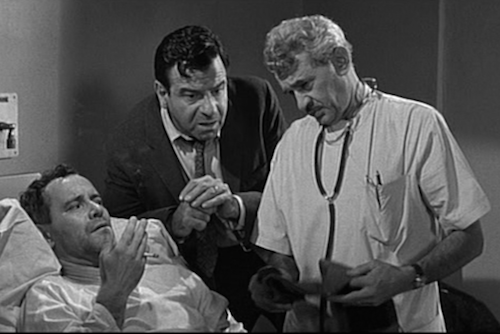
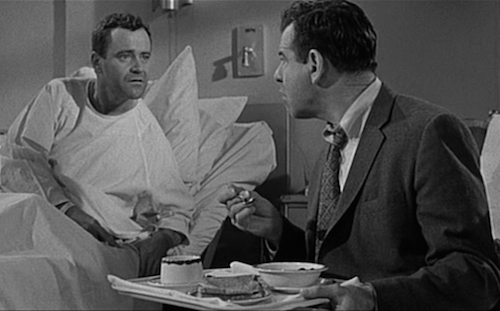
Of course I’ve been dying to see The Fortune Cookie (1966). Who wouldn’t want to view the first pairing of Jack Lemmon and Walter Matthau, the two whose seamless chemistry led to almost 30 years of hilarious cinematic repartee?
Matthau won his only (!) Oscar for the role of Willie Gingrich, an ambulance chaser who capitalizes when his brother-in-law, sports cameraman Harry Hinkle (Lemmon), gets injured by a football star running a play. Look at the people Gingrich can sue! The TV station! the Cleveland Browns! Of course, Hinkle was barely hurt, but an old injury might appear new, and thus enriching. If only Gingrich can get his brother-in-law to go along, he’ll be a millionaire! Of course, there are obstacles: his brother-in-law’s stupid scruples, for example, are holding up the path to gold.
Luckily, Gingrich has an ace up his sleeve: Hinkle never got over his ex-wife, Sandy (Judi West), and she’s an anxious for the dough as Gingrich is.
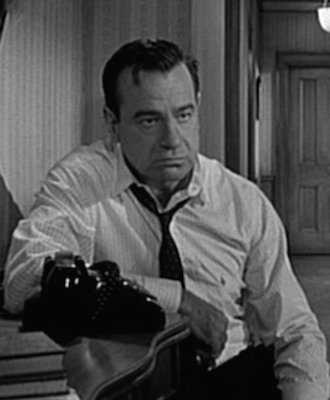
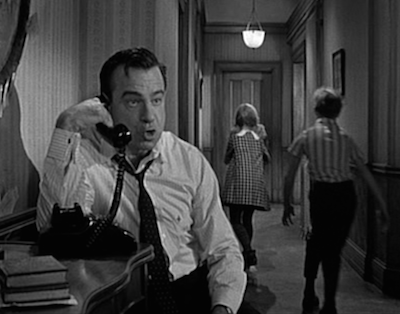
Gingrich is a magical character, a monstrous anti-hero whose avarice is fascinating to witness. He’s Saul Goodman with an even darker sense of humor. I particularly love when he calls Sandy, saying he’s glad to have her as part of the “organization” conning the Browns (not to mention fooling her ex with fake affection). His children interrupt the call, prompting Gingrich to yell out (with a straight face), “Why don’t you kids go play on the freeway?”
Gingrich’s reaction to love getting in the way of profit is typical of him:
His hope to avoid his kids is displayed from the start of the film; his face dims when they’re present, but glows when opportunity arises. He’s only animated when they skate away:
With Gingrich on the screen, you can’t look away, and he’s in nearly every scene. Why he was considered “supporting” and Lemmon the star is one of those mysteries of Oscar nominations no one outside of the industry ever understands.
In terms of plot, not much else happens. Hinkle agrees to fake a grave injury to win back his wife, who pretends better motives for her return in order to get at the money. ‘Boom Boom’ Jackson (Ron Rich), the player who hit Hinkle, slowly falls to pieces about what he thinks he’s done, to Gingrich’s delight (verisimilitude!) and Hinkle’s growing horror. What happens by the end of the movie, most viewers could predict, but given that Billy Wilder is the director and cowriter (with I.A.L. Diamond), there are wonderful twists along the way.
What’s notable about Lemmon’s performance is its generosity. Lemmon can play, often did play, a ham. His first Oscar, over a decade before, was for his scene-stealing, exuberant character in Mister Roberts. Yet here he is, ceding every scene to Matthau, and letting the latter’s role glitter just enough for his supporting Oscar. A less confident, thoughtful, or serious actor would have made Hinkle showier. But not Lemmon. When Hinkle finally stands up to Gingrich, we do see the dam of the character’s (and Lemmon’s) restraint burst, but only briefly, and even then, the goofiness pales in comparison to Matthau’s darkly funny turn as Gingrich. And as we all know, Lemmon only pales when he feels like it. Hinkle’s character is a subdued, passive one, and Lemmon never forgets it.
When I decided to join the Lemmon blogathon hosted by Crítica Retrô and Wide Screen World, I wondered which Lemmon I would see in The Fortune Cookie: the desperate and dark type he captures in Glenglarry Glen Ross, but this time played for humor? The sarcasm he spins in The Out of Towners? The nearly shrill silliness of his role in Some Like It Hot? How many actors has Lemmon been, just as a comedian?
Given how fun his banter typically is with Matthau, I expected to see the two out-goofing one another here. But I find it charming to discover something else: a realism to their dynamic, a sort of half-tolerant contempt that rings true for two characters joined by a marriage rather than by love or blood. A willingness (in real life) for one artist to help out another—in this case, Lemmon aiding Matthau with his one and only Oscar win. Their dynamic is definitely less fun than at the height of their powers in the wonderful Grumpy Old Men. Yet there’s something sublimely sweet about where it all started, and–though I didn’t think it possible–that makes me love Lemmon all the more.