Cary Grant Won't Eat You

Classic movies for phobics

  • About
  • eBooks
  • Previous Blogathons
Classic movies for phobics

Action & Sports Films

An Unabashedly Romantic Pirate Tale: Frenchman’s Creek (1944)

11/07/2015 by leah@carygrantwonteatyou.com 16 Comments

FrenchmansCreek-top

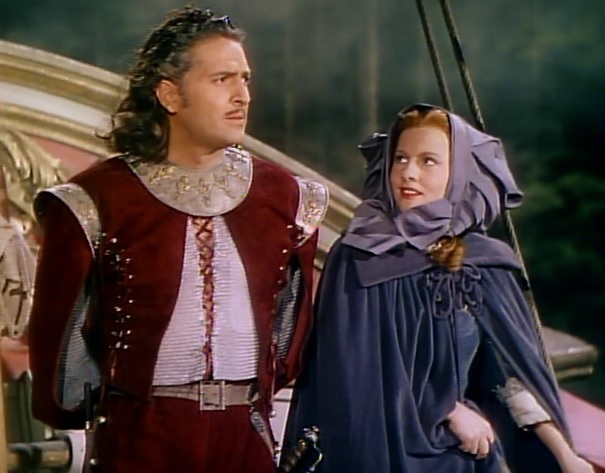
Daphne Du Maurier’s Frenchman’s Creek was my favorite romance as a kid, and when I found a copy of it in a bookstore in my twenties, became enthralled with it all over again. Du Maurier excelled at atmospheric suspense, and what girl wouldn’t love a period drama featuring a heroine running away from London society (and her dumb husband) with her kids to luxuriate in freedom and nature in Cornwall, and falling for a pirate as independent and daring as she? I hoped the movie would capture much, if not all, of the book’s magic–and it really does.

FrenchmansCreek-Arturo de CórdovaJoanFontaine
I know the story sounds like the clichést of clichés, an overimaginative girl’s fantasy. And of course, it is.

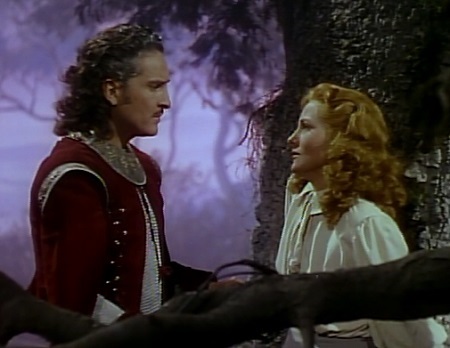
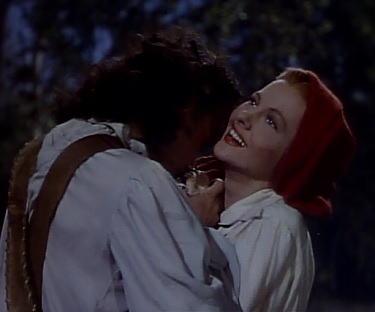
FrenchmansCreekFontaineinlove
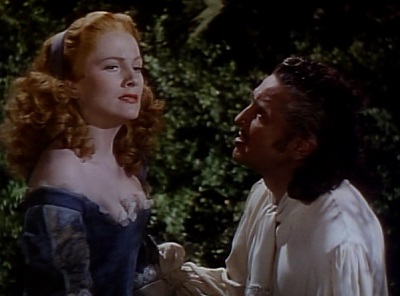
But it’s more than that. A biographer claimed the story was based on the novelist’s own romance, and I always believed there was truth to it. There’s something authentic in the chemistry between the two characters, in their vulnerability with and to each other, and in both their passion for each other and acknowledgement that theirs shouldn’t be anything but a temporary affair. I feared the movie would follow the outlines but miss that authenticity, but it didn’t, largely because large portions of the dialogue are lifted straight from the book. The actors have some chemistry, too, which helps sell the romance.

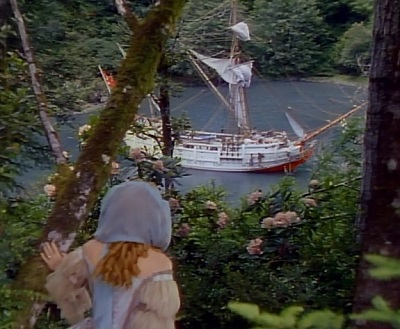
Even the beginning of the story is absorbing: The heroine’s flight from London, her discovery of a pirate’s ship as she ventures in the woods near her manor…

Frenchman's Creekboatspotted
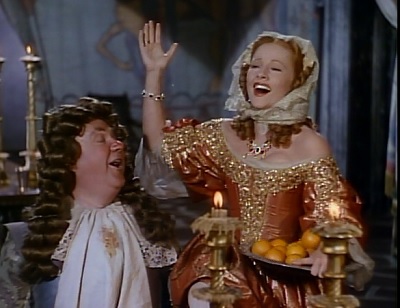
The story picks up speed and romance with her awkward midnight feast with the pirate, her joining into his theft of a countryman’s ship, her husband’s arrival, and her efforts to foil the hanging plot against her now-lover by attempting to flirt with her guests just long enough for the ship to escape.

FrenchmansCreek-flirting
Some of the suggestive lines do make it into the film, as when Jean, the pirate, notices the spread at dinner, but looks straight at his beautiful hostess as he says, “Is it wise of you to place all this temptation before a pirate?”

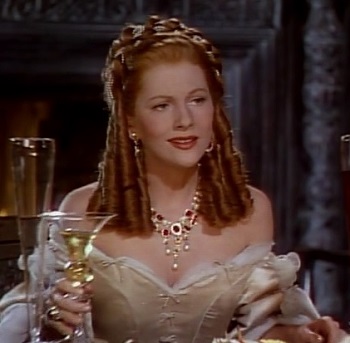
Joan Fontaine captures Dona; the spirited, smart heroine; even managing her voice.

FrenchmansCreek-JoanFontaine
All she really gets wrong is a tendency to pose now and then, and a lack of attention to Dona’s wit; Fontaine can be arch, but she misses the irritability with Cornish high society that was one of the character’s greatest charms. Fontaine plays Dona as a little too sweet, a little too filtered. The heroine is less interesting without her shocking double entendres, or the comic timing Fontaine never attempts (of course, this absence is partially the censors’ fault). But this is a book lover’s quibble; I doubt a viewer unacquainted with the novel would find fault with her character, as she’s still brash, proud, romantic, adventurous, intelligent–all the qualities we would hope for in a pirate-loving gal.

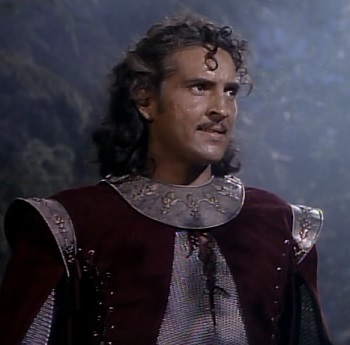
Arturo de Córdova’s ethnicity might make him a peculiar choice in a strictly French-versus-the-English tale. (Don’t you love that about Hollywood? Need a French dude? Any guy with an accent will do.)

FrenchmansCreekArturo de Córdova
Overall, de Córdova manages the role with only slight piratey exaggeration. He catches the hero’s sense of humor, and an independence so extreme he hesitates to make any decisions for his love–probably a quality unique in pirate characterizations, but one that has always made him seem real to me. If not a pirate, surely this man would have been an obsessive in some political movement or another, unwilling to compromise his ideals.

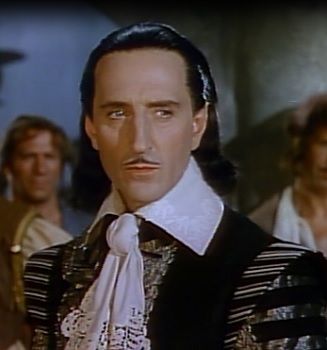
Cecil Kellaway as William, the matchmaking servant, is delightful, and Basil Rathbone as Lord Rockingham, Dona’s nemesis, is perfection.

FrenchmansCreekBasilRathbone
Any fan of Du Maurier’s work will enjoy time in her world again; lovers of romance will root for these two. Swordplay aficionados might crave more fencing time, but they’ll enjoy the devilry of Jean, his resemblance to their Errol Flynn favorites. Women can relish a strong-minded heroine who weighs her obligations against her passions, her annoyance with society, against her safety within it. (The lighting of the film accentuates her power of choice: he is shadowed, and she lit.)

Frenchman's Creekdilemna
Costume drama fans can drool over Fontaine’s lovely gowns. And any fans of a good yarn will wonder just how they missed this one before.

This post is part of Movies Silently’s wonderful Swashaton. Click here for more pirating adventures!

Share
Posted in: 1940s films, Action & Sports Films, Drama (film), Feminism, Romance (films) Tagged: classic, Daphne du Maurier, Frenchman's Creek, Joan Fontaine, pirate movies, Pirates of the Caribbean

The Spirit of St. Louis (1957): Enthralling & Infuriating

10/23/2015 by leah@carygrantwonteatyou.com 10 Comments

Lindberghtakeofffilm2
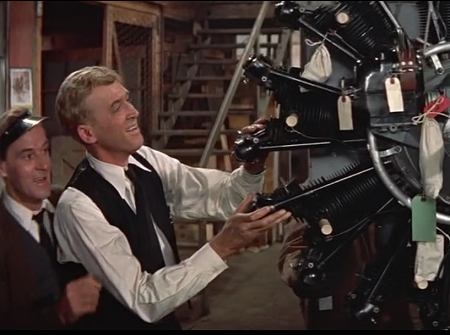
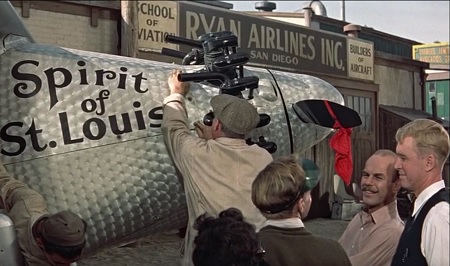
The first half of The Spirit of St. Louis, Billy Wilder’s ode to Charles Lindbergh, is engrossing. It’s even that rarest of traits in a biopic: fairly accurate. The scenes of his airmail days capture the impossible bravery of America’s early pilots and the primitive conditions under which they flew. Wilder conveys each stage of Lindbergh’s struggle beautifully: The search for funding and a plane for the epic NY-Paris flight, the near-universal doubts about his fitness for the attempt, the rush of finally finding a team to build that plane, as eager to prove themselves as he was.

RyanAirlines4
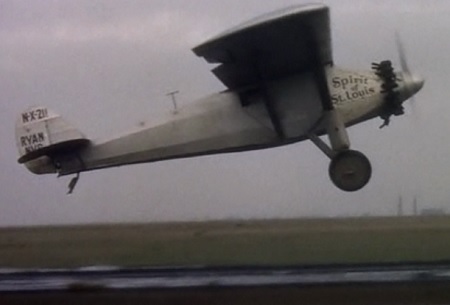
Until just after that terrifying take-off, I couldn’t believe the film hadn’t earned more praise than it had.

SpiritofStLouis6
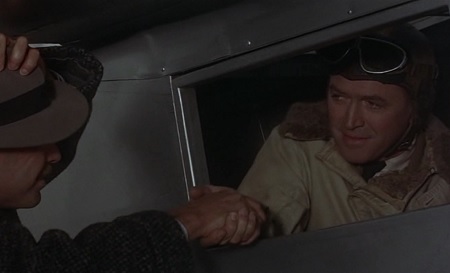
That’s why the clunky transition into the flight–Lindbergh (Jimmy Stewart) gabbing with a fly–shocked me enough to stop the film, ponder what had gone wrong.

Lindbergh-anttalkfilm2
It wasn’t the cheesiness of the fly talk; after all, Raymond Chandler had managed to make a similar conversation in The Little Sister downright poetic. It was that everything about the first twenty minutes of the famous flight confirmed my fears: Wilder would definitely fail to make 30+ hours of sleep deprivation interesting, and his attempts to do so would not only grossly misrepresent his subject’s character, but Lindbergh’s whole purpose for making the journey.

Given, Wilder had quite an obstacle: How do you convey hours of reflection without awkward voiceovers? How do you enlighten viewers about the brilliant, reserved, limelight-averse, notoriously elusive Lindy with so little narrative space? That’s why Stewart was chosen, I thought. Wilder must have hoped the actor’s folksy geniality would while away the minutes, make us forget that the star was twice Lindy’s age, and about 100 times as charming. (If you doubt this comparison, check out Bill Bryson’s hilarious depiction of Lindbergh’s social awkwardness in One Summer: America, 1927.) The autobiography on which the film was based illuminates just how much Wilder miscalculated, and just how his still very worth viewing first half could have been redeemed in the second.

The Flashbacks

SpirtofStLouisflashbacks
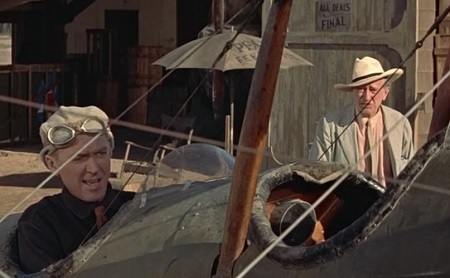
The Pulitzer Prize-winning book moves from flight to memory throughout, as the film does, but the latter’s flashbacks have a homespun, aw-shucks feel to them, with Lindbergh as a kind of lovable oaf who survives only due to luck. In one flashback, he buys a plane he can’t fly, utterly unconcerned about his lack of skill. The scene plays for comic relief, but painfully reinforces everything that Lindbergh stood against: recklessness.

Lindbergh was daring, yes, but cautious and calculating. When the flashbacks begin to appear in the book, he uses them not to illustrate character or give the reader a lovable feeling toward him. No, they explain his success. Here’s a moment of danger, and here’s the experience that prepared him for it: earlier escapes, his training as an instructor, his previous discoveries of flaws with his planes. His whole mission was to disprove that air travel was suicidal daredevilry because otherwise why pave runways? Why install lights for landings? Why allot money for research and development?

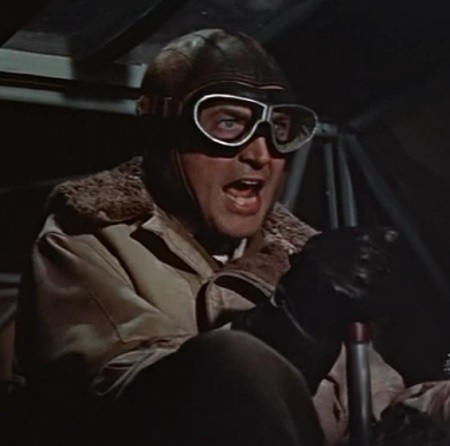
When Stewart actually pored half the canteen of water on his face—twice! —I nearly shouted at the screen. The real man was apportioning his own water in dribbles. Had anyone involved with the writing of the film read the book? “Lucky” Lindy put more thought into one move above or below the clouds than the writers did into his entire characterization. (Wendell Mayes co-wrote the screenplay with Wilder, and Charles Lederer was given adapting credit.)

Was Lindbergh lucky? Of course. But that isn’t the primary reason he succeeded. His competitors for the NY-Paris flight–those few who survived–were hundreds of miles off course, with safety features and luxuries he lacked. Lindbergh landed on his intended airfield early based on dead reckoning—no radio, no sextant, no help. How disappointing that the filmmakers would buy the “Lucky Lindy” headlines, and miss the far more interesting man.

The Moments of Danger

JimmyStewartLindberghscared
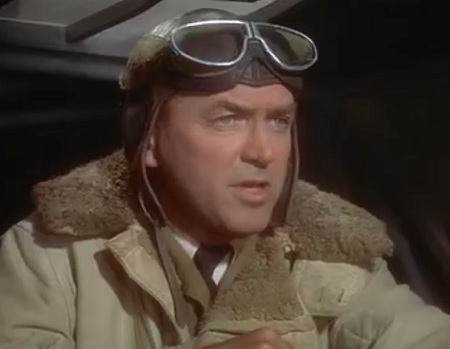
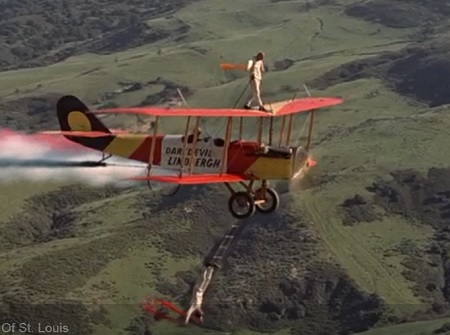
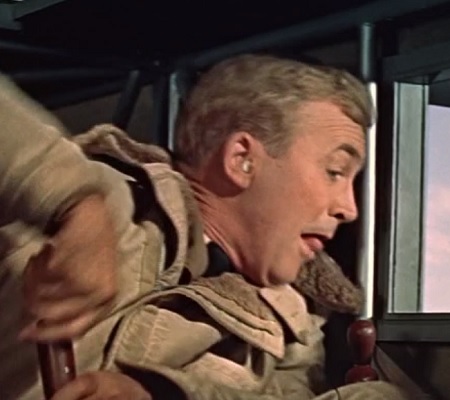
Lindbergh almost died innumerable times on that flight across the ocean, but Jimmy Stewart’s wide-eyed panic in no way captures Lindbergh’s icy calm. Interestingly, the pilot forced himself to calculate how to handle various frightening scenarios not out of panic, but to stay awake. He discovered that pleasant thoughts soothed, and thus led him to sleep. Plans to land on Arctic waters kept him alert—and alive. If Lindbergh really were as shot through with anxiety as the film implies, how could he have been a professional parachuter, as he was at the start of his career? A wing walker? (Tellingly, Lindbergh even dismisses the dangers of this part of his history, analyzing how safe both jobs could be with the right team.)

Lindberghaswingwalker

Oh, Jimmy…
I love Jimmy Stewart. Maybe if it were just the age, or the accent, or the personality. But it was everything: The talking aloud. The boisterous shouts. There’s a deafening, tone-deaf, overacting feel to nearly every word in the second half of the film.

JimmyStewartoveractingLindbergh
Lindbergh was not Jefferson Smith or George Bailey. Effusiveness, goofiness—how widely these traits miss the quiet, introspective, highly scientific man that Lindbergh apparently was. I suspect this hamming was under protest: Stewart’s own distinguished flying record in WWII suggests he was far too acquainted with pilots to misstep this badly without directorial intervention.

Perhaps I wouldn’t have been so disappointed in the depiction of the flight, had the film not been so brilliant in the first half. But I kept thinking about what could have been: What if the film had ended at takeoff? Why try to put onscreen so much of a reflective book? Like The Great Gatsby, another notoriously hard to film text, the ideas are paramount here: Lindbergh’s meditations about God, about power, about nature and loss and risk.

Michael Powell and Emeric Pressburger could have attempted an arty take on Lindbergh’s thinking. But Wilder, the storytelling genius, should have stuck to action, and let us end with that lovely image that he conveyed so perfectly: of Lindbergh weighing the current against forecasted weather, his chance to beat the competitors versus his sleeplessness, the muddiness of the airfield versus its length, and then deciding to go, and with a few laconic words to the panicked faces around him, pushing off into the sky.

SpiritofStLouisTakeoff-film
This post is part of the Classic Movie Blog Association’s fall blogathon. Go here for fantastic entries on films highlighting planes, trains, and automobiles. You can also find an eBook version of the blogathon with many of the group’s entries, including mine, at Smashwords (for free) or Amazon for. 99. All funds for the latter go to the National Film Preservation Foundation.

Share
Posted in: 1950s films, Action & Sports Films, Blogathons, Drama (film) Tagged: Billy Wilder, Charles Lindbergh, Film, Jimmy Stewart, Ryan Airlines, Spirit of St. Louis

A Legacy of Self-Amusement: Drew & John Barrymore

08/13/2015 by leah@carygrantwonteatyou.com 19 Comments

DrewBarrymoreCharliesAngels-main
Charlie’s Angels
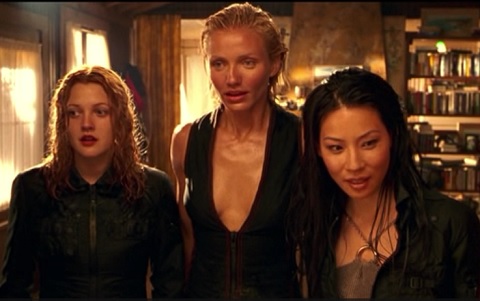
(2000) is the epitome of how seriously Drew Barrymore takes herself: the hair flips, the silly punk rock past of her character, action sequences so absurdly, self-consciously over-the-top that they make you smile.

Playfulness seems to be Barrymore ‘s signature, what distinguishes her from her lesser rom-com peers. So it wasn’t surprising that this was a film she chose to produce, an ode to a dumb TV show celebrating sexism/female empowerment/both (depending on your point of view).

The show (1976-81)– for those younger folks out there–featured a wealthy but reserved guy (Charlie), who hired three beautiful detectives (the angels) for his agency. All we ever got of Charlie was his voice, as he never appeared in person and let all arrangements be managed by his assistant, Bosley. The term ‘angel,’ use of possessive, Charlie’s condescending voice, the quick rotations of actresses for the roles (suggesting they were interchangeable)—any of the four could make a feminist cringe. But the women were tough and smart, using their looks to blindside unwary men, much as Columbo used his folksiness.

The film is both a parody and tribute, using the TV show’s theme music, graphics, and basic concept, but mocking the silliness of it too. Cameron Diaz plays the supposed airhead (Natalie) to perfection. Lucy Liu takes on the kind of tough role she always plays, even imitating a dominatrix/efficiency expert in one ploy as detective Alex. As Dylan, Barrymore mocks the over-the-top femininity of her predecessors by embracing a badass, punk rock aesthetic. The strange connection the women have to Charlie is brought to the forefront when their client (Sam Rockwell) suggests that Dylan has daddy issues.

Thinking they get to meet Charlie in person...

Hopeful to meet Charlie in person…

Whatever part she’s in, Barrymore always seems to be playing herself, and part of what keeps us watching her is just how likeable she is, this woman who went through a painful past of abandonment and substance abuse as a kid, and emerged as a woman with empathy for those who contributed to the conditions that put her there. She is both the most tender of the three actresses onscreen—Barrymore always captures vulnerability effectively—and the most sarcastic. Perhaps hers is an earned playfulness, but Barrymore wears it lightly. (How else could you repeatedly perform with Adam Sandler, and more bafflingly, not only star with, but marry Tom Green? Tom Green!) While her acting never wows me, she does.

In Drew’s performances, I don’t see much of her forebears, that famous acting dynasty whose members mesmerize audiences still today. Only in her youthful roles did I ever see traces of the Barrymore family’s skill with drama. I would argue that Irreconcilable Differences (1984); an underrated film about a girl who wants to separate from her narcissistic, divorced parents (in an eerie foreshadowing of Barrymore’s own decision years later); was her strongest dramatic role. Perhaps it just was a part she knew really, really well.

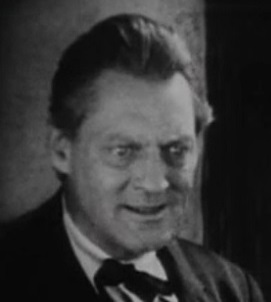
But usually, the actress just prefers, and does better, at comedies. Certainly, Drew lacks the intimidation or gravitas of her great-uncle Lionel…

LionelBarrymore
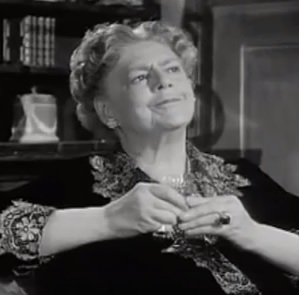
the nuance of her great-aunt Ethel…

EthelBarrymore
or the presence of her grandfather John…

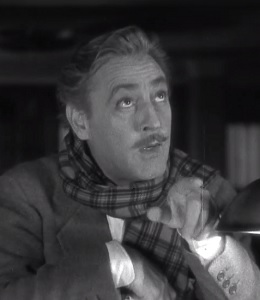
JohnBarrymore
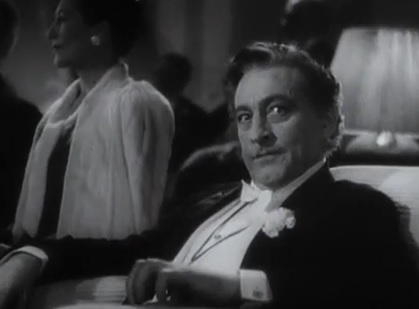
Of course, her troubled past brings to mind her grandfather’s. But it’s in her self-deprecating goofiness that I see the clearest link to the Barrymore dynasty. While it’s certainly not present in all of the Barrymores’ roles, I see it in John’s charming turn in Grand Hotel, and, of course, in his hilarious supporting character in the glorious Midnight (1939). There’s such a lightheartedness to his approach to the role of Georges Flammarion, and though he was already at the cue card stage of his decline, his humor, at least, had not reached the self-parody stage.

John Barrymore in Midnight

John Barrymore in Midnight

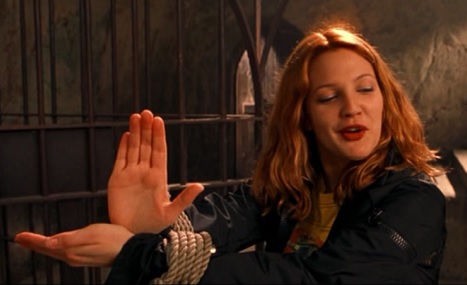
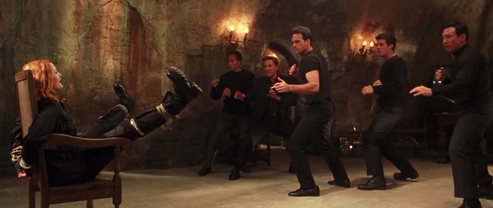
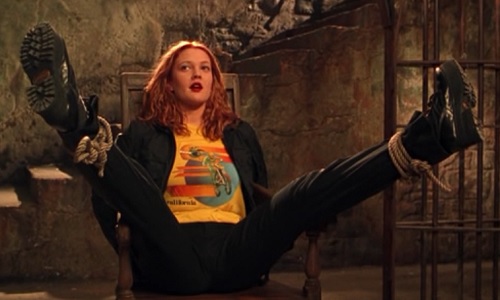
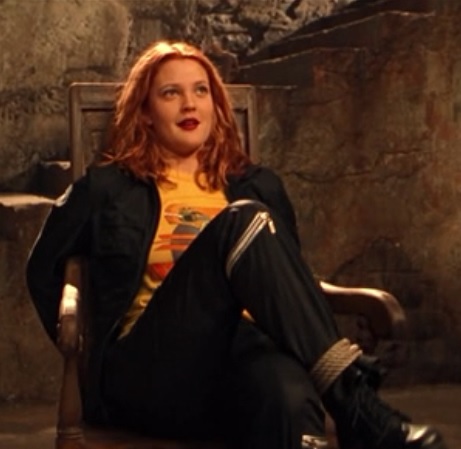
Such lightheartedness is key to Dylan’s (Drew Barrymore’s) character, even when she’s in the direst straights. In the best action sequence in Charlie’s Angels, Dylan has been tied up by her sleazy client, Eric Knox (Sam Rockwell), who has betrayed her after sleeping with her, and tried to kill her already. Knox departs to perform his nefarious schemes, leaving her to his five henchmen. After managing to get her lighter back, she spells out what she will do to escape, buying time but also revealing her confidence.

DylanCharliesAngels
As she sits in her chair, she calmly explains, smiling at her adversaries all the while, “By the time this is over, every one of you is gonna be face down on the floor, and I’m gonna moonwalk out of here.”

DrewBarrymoreCharliesAngels
As they rush toward her, she interrupts, looking at each man in turn, “You’re not listening to me. See first, you’re gonna help me out of my chair, and then I’m gonna leapfrog over you, before I break his nose…I’m gonna do all of this with my hands tied behind my back.”

DrewBarrymoreCharliesAngels2
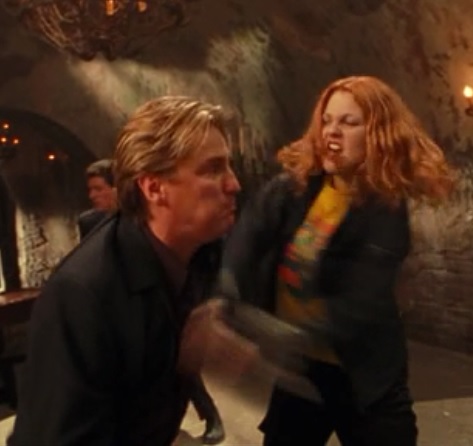
She does exactly what she says:

DrewBarrymorefighting
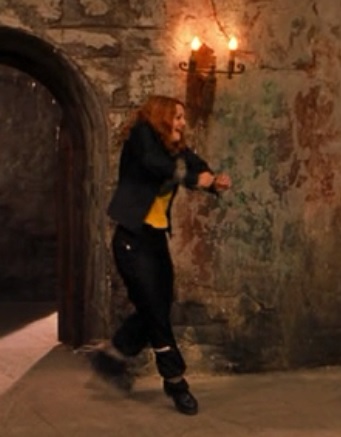
And her moonwalk is a joy:

DrewBarrymoremoonwalking
You can see the full clip here.

Any actress could have had fun with such a sequence, but there’s so much self-amusement in Drew Barrymore’s portrayal that I kept thinking of her grandfather in Midnight. Sure, he had much more range and talent than she does, but in self-amusement, the two are matched.

This post is part of the Barrymore Trilogy blogathon, hosted by Crystal of In the Good Old Days of Classic Hollywood. See the fantastic entries here!

Share
Posted in: 1980s films, 1990-current films, Action & Sports Films, Blogathons, Comedies (film), Film Noir/Crime/Thriller & Mystery, Humor, TV & Pop Culture Tagged: Charlie's Angels, Drew Barrymore, John Barrymore, Midnight (1939), movie, satire, spoof

A Showcase for Garfield, Neal, and Hernandez: The Breaking Point (1950)

01/07/2015 by leah@carygrantwonteatyou.com Leave a Comment

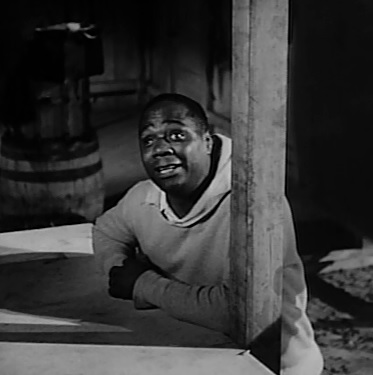
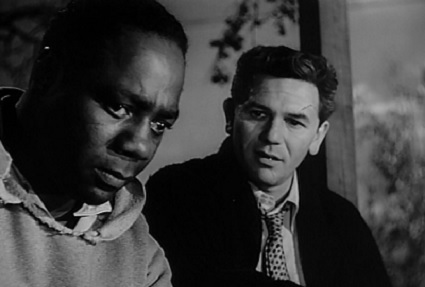
Juano HernandezJohnGarfield
The Breaking Point
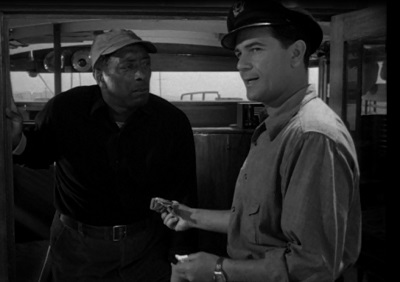
is tense from its first scene, with fishing boat captain Harry (John Garfield) arriving on dock to find that his credit is no longer good enough for the gas he needs for his next trip. Money troubles mean he can’t feed his wife and kids, can’t pay his partner, Wesley (Juano Hernandez), can’t keep his boat, and likely can’t avoid a humble future of working for his father-in-law.

Unfortunately, that’s the peak of Harry’s fortune. After a couple sails to Mexico with him, the man skips out on his romantic partner and the fare. The woman he’s left behind, Leona (Patricia Neal), asks Harry for a ride home, causing the captain to snap, “Who’s going back? I need 100 bucks to clear the port and I got 80 cents toward it. If I can’t scrabble up some dough, we all better learn Spanish.”

Harry agrees to smuggle Chinese men into America with the help of fixer Duncan, a slimy attorney (Wallace Ford) whose mantra is “Relax, let it happen.” Harry tries to steer Leona and Wesley ashore and away from his criminal acts, but the former is too flippant and the latter too loyal to listen. As might be expected, Harry’s moral compass and prospects unhinge from then on out.

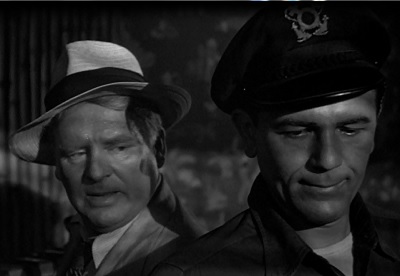
According to the Self-Styled Siren, Hernandez’s role was greater than it would have been thanks to Garfield’s intercession. Once you watch the film, you know how right Garfield was.

TheBreakingPoint-HernandezGarfield
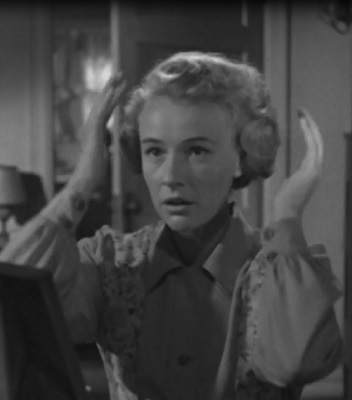
The heart of the film is in the relationship between these two men struggling to make it. Honestly, I cared little for Harry’s every-wife, the long-suffering Lucy (Phyllis Thaxter). She’s sympathetic in theory, yes, but she’s so devoid of individuality I felt no connection to her, except in a brief moment she dyes her hair to look as sexy as Leona, paining her guilty husband and embarrassing her kids.

Thaxter-TheBreakingPoint
One of the issues with the film is the disconnect between the director’s choices and the caliber of the acting. Much time is spent showing that Harry is hovering closer and closer to the title’s breaking point. But with a man as expressive as Garfield, why spend so long establishing it? Why not instead put more energy into the exciting smuggling scene, into his intriguing relationship with temptress Leona (Patricia Neal), and into developing the chemistry between these partners? It’s amazing that even with so few scenes, the pathos of Wesley’s situation comes through so much more clearly and vividly than that of Harry’s whole family, who get so much more screen time. I suspect that’s because Hernandez’s acting is just that good, and because the family really only serve to explain Harry’s stress and motivation.

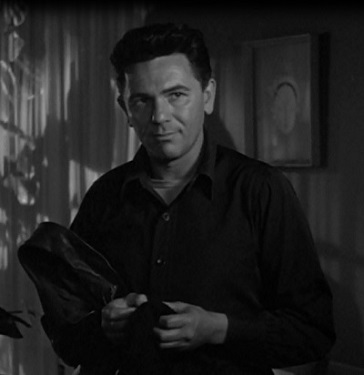
Of course, the film thankfully gives a lot of screen time to Garfield, who plays the stubborn, ex-war hero to perfection, and makes us root for him even as we see him putting his pride over ethics and loyalty to others.

JohnGarfield
As always, Garfield’s understated style is fascinating to watch, as in a moody scene between him and the lawyer who has helped him ruin his life. Duncan has realized he’s too embroiled in the crimes of the gangsters Harry’s about to provide transport for to play the distant—but safe—role he’s accustomed to in his sketchy dealings.

WallaceFordandGarfield
“We’re in it. Let’s hope we get out of it,” Harry replies to Duncan’s worries, and then, recalling the number of times the glib lawyer has told him to take it easy, he snarls, “Roll with it. Relax, let it happen.”

Although lured by Leona’s attractions, Harry doesn’t hesitate to turn his temper on her either, especially when she mocks his earlier admission, when he fell into the usual routine of “I-love-my-wife-but….”

“You women,” he returns. “You remember everything a guy says and then you hit him with it.”

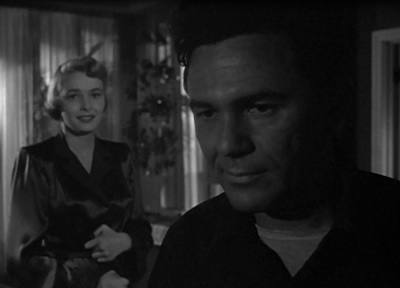
PatriciaNealJohnGarfield
Leona’s (Patricia Neal’s) party-girl attitude and unfailing good mood make her fun to watch in spite of her clichéd role as a siren. Neal’s superior performance and cool presence make the audience feel torn: we want Harry to stay with his beloved wife, but we find Leona as alluring as Harry does. She is so real and alive, and so attracted to the guts, recklessness, and sex appeal that are becoming Harry’s most noticeable traits. In a surprisingly modern take on love, she explains how she looks at her casual romances: “You don’t let it mean anything, it won’t mean anything.” But we don’t ever see the degree of temptation we could have between the two, even if he never did succumb.

This film ultimately seems like it’s about a man’s battle with his own courage, to the exclusion of others’ worries, as Harry admits shortly before the climactic sail, “All I got left to peddle is guts. I’m not sure I got any. I have to find out.”

The Breaking Point, with a shift of emphasis, could have explored the full tragedy of these three flawed characters. But in spite of these defects, it’s impossible not to be caught up in our anxiety for them all, and the film has one of those ending shots so full of understated tragedy I couldn’t get it out of my head. The film’s not easy to get access to (I had to use interlibrary loan), but it’s worth the effort.

*I will post again this weekend due to my holiday-driven lapse last week.*

Share
Posted in: 1950s films, Action & Sports Films, Drama (film), Film Noir/Crime/Thriller & Mystery Tagged: John Garfield, Juano Hernandez, noir, Patricia Neal, The Breaking Point, To Have and Have Not adaptations

Turning My Sister into a Classic Movie Fan, Bout 1: Rachel 1, Me 0

12/28/2014 by leah@carygrantwonteatyou.com 8 Comments

GarfieldBodyandSoul
Christmas night I made my sister watch Body and Soul (1947), her first viewing in fulfillment of our bet (if she watches 10 classic films, I will watch Breaking Bad). During the movie, she alternately complained about the music, stared blankly, and dozed off. Afterward, she said, “Well the acting wasn’t good,” and when I asked that she at least subtract my beloved John Garfield from that assessment, said, “He was fine. But it’s not like he’s Robert De Niro. You don’t actually think he’s that good, do you?”

Deflated. It’s a good word, isn’t it? Maybe I should have considered Rachel’s crankiness first: it was late, and she had just lost at Scene It; my sister does not take movie trivia loss well.

You might ask why I care that my sister won’t give classic movies a chance. I have, after all, plenty of others to convince. But Rachel and I otherwise share a movie brain, at least with dramas. I text Rachel right after I leave a theater with my commentary, and will go see almost every film she recommends, which is why she occasionally messes with me, sending me to a movie she knows is lousy so that she can call and say, “Yeah, awful, right? Thought you’d agree.”

I hadn’t viewed Body and Soul first (a risky move), but it came highly recommended, it was a sports movie, it was Garfield, and it was good—not as neatly edited or as intriguing as The Set-Up, but with similar themes and a dark mood she couldn’t dismiss as cheesy. I had hoped it would chisel a bit into her seemingly implacable beliefs about classic film: acting is better now, production quality is better now, any sequel would therefore be better than the originals, so why bother?

The film had no effect on her whatsoever, though she was intrigued by Garfield’s blacklisting. But in the interest of others who haven’t seen it, I’ll share a few things about the film, which my sister should have appreciated:

Good Supporting Characters
The story revolves around Charley’s (John Garfield’s) treatment of friends and family, and how that echoes his own deeper entanglement into the shady underworld of boxing.
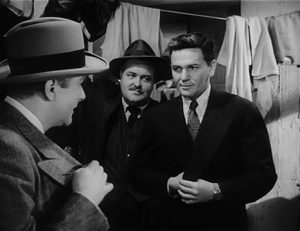
CharlieandCrooks-BodyandSoul
He gets into the sport at the urging of his quick-talking friend, Shorty (Joseph Pevney). Disappointed he won’t pursue an education instead, his mother reassures herself he’s at least honest and has good taste in women, preferring a sweet artist, Peg (Lilli Palmer), to a bombshell (Hazel Brooks). Of course, he quickly succumbs to the temptations that have already sunk his one-time-rival, now trainer, Ben (Canada Lee).

I agree with Rachel that most of the women didn’t add much to the film; neither Palmer’s nor Brooks’s acting was notable, but neither subtracted from the film, and Peg’s independent spirit made her character a surprising one. How many boxers do we see—in any generation—courting an aspiring painter? She’s far more interesting than this supporting player in another boxing film Rachel likes better:
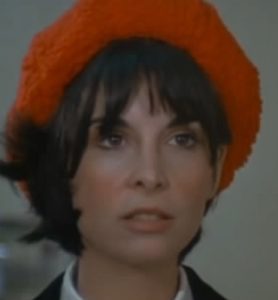
TaliaShire-Rocky
And while the other two actresses were solid, but not deserving of any accolades, no one can beat Anne Revere (another blacklist victim) when expressing disappointment in a son.
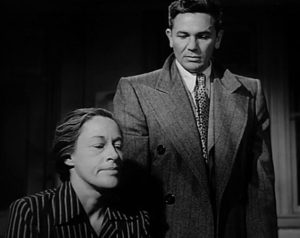
BlacklistedActors-GarfieldandRevere
Even Rachel praised Shorty (Pevney), the friend who helps broker the deal to get Charley into the business, and then comes to regret it due to Charley’s dealings with the immoral Roberts (Lloyd Gough). Shorty’s lively presence added much-needed humor to the proceedings, and his later absence from the film definitely hurt it.

An Intriguing Sparring Partner
But far more interesting than any of these other relationships is Charley’s with his rival, the champ, Ben (Canada Lee), who has a medical issue Charley isn’t told about before their first bout. Ben later befriends the newcomer, and starts to train Charley instead of fighting himself.
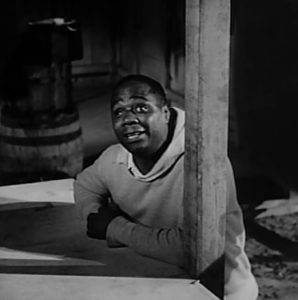
Ben comforting Charlie before a fight

Ben comforting Charlie before a fight

This made me wonder, as I’m not in on the usual trends of the boxing world. Is this, we-fight-to-the-death, now we train together a thing?
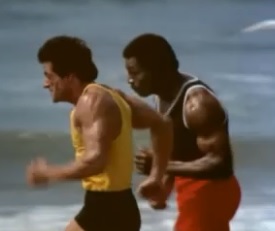
StalloneWeathersRocky
Interestingly, Charley seems to be unfazed by Roberts’ treatment of others, but his boss’s continued harshness toward Ben (racism? or just his usual cold-bloodedness?) begins to finally erode his nonchalance about his own complicity in the corruption, especially after Roberts asks him to be in on a fix.
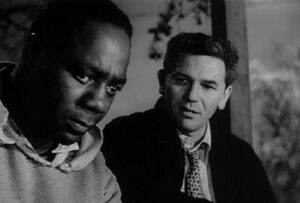
BodyandSoul-GarfieldandCanadaLee
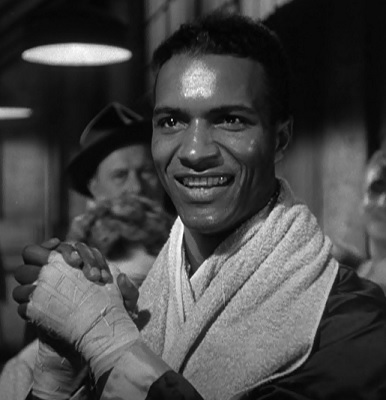
Lee’s part in the film should have been greater, as the movie’s start makes it clear just how important he is to Charley. But even what we get is interesting, and Lee captures both the pathetic nature of an older fighter, and his impressive inner strength; Ben is the representative of the soul that Charley has been abandoning in the pursuit of the perfect body, and foreshadows Charley’s likely future.

The Fights
There should have been more to the fights, which is my usual complaint. (Don’t even get me started on the lack of boxing scenes in the dreadful Million Dollar Baby). But I like how Body and Soul, which can go overboard with sentimental music, suddenly becomes silent in the last bout, enabling viewers to more fully take in the brutality.
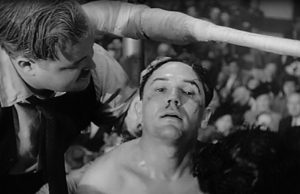
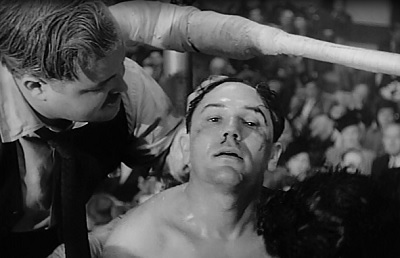
BodyandSoulBoxing
As I watched, I kept hearing Rocky’s soundtrack, and realized the music in that later film had in many ways numbed me to the violence, counteracted it in some way by suggesting a possible victory. But here, I could feel the impact on the skin, the muscles, the bones.

In Conclusion….
I can hear my sister asking me—which she actually didn’t—do you actually think this is better than Rocky? I didn’t. But I don’t think that’s the point. The film had something else to say, and I liked how it said it, and found Garfield as riveting as I usually do.

“I can’t decide,” Rachel said at one point, “if he’s good looking.”

“He’s attractive,” I answered, “not really handsome.” Her comment made me smile because you can’t stop asking yourself that when you watch him; you can’t keep your eyes off the guy. So something, at least, sank in.

As for our bet, I fear that at best my sister will regard any of the 10 movies she likes as exceptions to her classic-movies-suck rule, rather than as proof she’s wrong about them. But it’ll make her see some just the same, which is good in itself.

There was one moment of consolation, as I watched my sister’s disappointing response to Body and Soul. I’d shared a Miranda Lambert song with my mom earlier that week, and to my horror, heard her playing Rachel the video, urging her to like it too. My sister is a Beatles fanatic and has performed rock music since the age of five or so. She has ALWAYS despised country. My sister’s outraged response to my mom was as comic as I would have anticipated, and far more animated than her objections to my film choice. I could hear her spitting “twang” and “seriously?” and “that loser Blake Shelton” from the other side of the house.

So at least I’m not trying to convince her into country.

Bout 1: Rachel 1, Me 0, Country Music -1
Share
Posted in: 1940s films, Action & Sports Films, Drama (film), Turn My Sister into Classic Movie Fan Tagged: Anne Revere, blacklisting, Body and Soul, Boxing movies, John Garfield

Three Reasons to Watch The Uninvited (1944) This Halloween

10/16/2014 by leah@carygrantwonteatyou.com 8 Comments

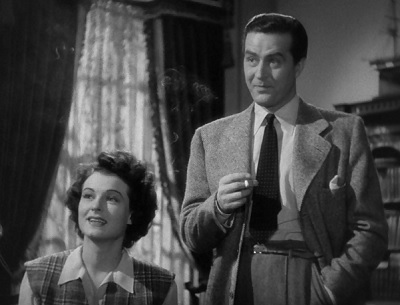
The Uninvited begins simply: Siblings Rick and Pamela (Ray Milland and Ruth Hussey) come upon a lovely oceanfront house on their vacation and buy it to escape the demands of London life. It even has a charming name, Windward, and a quaint touch: no electricity. Of course, things go awry from there, slowly but surely: a dog that won’t climb the stairs, strange weeping sounds, a room that depresses anyone who enters. This film is an eerie, perfect choice for Halloween, not just because of its pleasures as a ghost story, but because it has these three added delights:

1. Candy—the Visual Kind
You spend most of the film gazing at these attractive siblings:

Ray Milland and Ruth Hussey as the Fitzgeralds

Ray Milland and Ruth Hussey as the Fitzgeralds

One would think that pleasure would be enough to satisfy your sweet tooth, but this is Halloween, and it’s all about gorging. No worries. The Uninvited delivers: just wait till this knockout fills the screen:

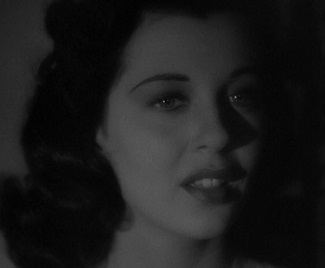
Gail Russell as Stella

Gail Russell

The beauty, Stella (Gail Russell), is the granddaughter of the owner; she disapproves of the home purchase since she believes her mother, who died in a cliff fall, haunts it. But she warms to the couple, especially to Rick, who quickly sets about flirting with her. (Who wouldn’t?)

2. Genuinely Likeable Characters
Most scary stories feature interchangeable victims. If we know their names—Sarah, Dan, Rob, Susan—we don’t know them for long, and the characters quickly become The Screaming Guy or The Girl Pushed Down the Stairs or the Cheerleader Covered in Blood. While we may not wish them ill, we certainly don’t know them well enough to worry when Casper turns out to be a not-so-friendly ghost.

Rick and Pamela, in contrast to these stick-figure characters, are laid back, witty, fun. They are a gutsy pair, unlikely to fall prey to fears or believe in haunted happenings. After being told former tenants complained of “disturbances,” Rick quips, “What was the trouble…Ladies carrying their heads under their arms?”

The two like to tease each other, like most siblings. To convince her brother they should take the house, Pamela points out that if they live there instead of the city, he could work on his composing. He protests, of course, “My poor lunatic sister. I happen to have a job.” She replies in equally supportive sibling fashion: “Yes, and what a job. Going to concerts and telling your readers how bad the music was….Chuck it…It isn’t as if you’re even a good music critic.”

3. A Human Conspirator: A Haunted House with an Ally?
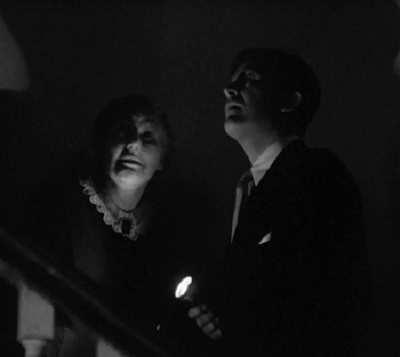
It’s clear the ghostly house has it in for Stella, and much of the film portrays the siblings’ efforts to discover the story behind the hauntings, the reason for all the eerie sounds, dying flowers, dog phobias, temperature shifts, and occasional apparitions (the special effects are surprisingly good). Once they understand the story, the siblings believe they can save the girl from the increasingly hostile house—and, of course, make it a bit more hospitable for themselves. (After all, it’s putting a great dent in their parties, making it highly unlikely they’ll be the popular pair they were back home.)

A ghostly party crasher

A ghostly party crasher

Soon the siblings suspect there may be a live human abetting the house’s murderous impulses, and among all the shifty possibilities, the person who begins to emerge as the frontrunner seems disturbingly sane—except for his/her desire to help the house kill Stella, of course.

If you’re not yet convinced by my reasons, read the excellent review that led me to buy the film in the first place. The author, the blogger Self-Styled Siren, even draws a cool parallel between the film’s apparitions and the terrifying ones in Raiders of the Lost Ark. What could be a better recommendation?

Share
Posted in: 1940s films, Action & Sports Films, Drama (film), Film Noir/Crime/Thriller & Mystery Tagged: Best Halloween Films, Gail Russell, Ray Milland, Ruth Hussey, The Uninvited movie 1944

From Poem to Boxing Ring: The Set-Up

09/13/2014 by leah@carygrantwonteatyou.com 8 Comments

An enthusiastic Rocky fan, I was curious how the classic films on boxing would measure up. The Set-Up sounded intriguing because it was about the underworld attached to the sport, and shockingly, was based on a poem.

TheSetup-intr
Let’s sit here and think about that for moment. A poem. Say it to yourself. Boxing. Poem. Can you put the two together? I sure couldn’t. But once I viewed the film, I did see a kind of poetry in it, and thought I’d say a few words about why this film is so moving and—yes, poetic. The Set-Up is about weighing choices, each of which shapes the film. The fact that the movie plays in the exact running time of the prep for and fight itself emphasizes the crucial timing of each decision…

Should a Manager Tell His Boxer He’s Fixed a Fight?
Manager Tiny (George Tobias) believes boxer Stoker Thompson will blow his match, satisfying mobster Little Boy (Alan Baxter), who has paid Tiny to fix the fight between Stoker and his favorite, Tiger Nelson (Hal Baylor). After all, Stoker is past his prime, and hasn’t been on a winning streak in quite some time.

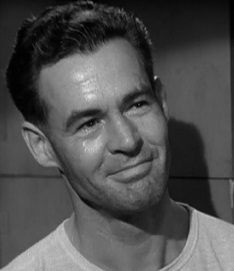
If Tiny informs Stoker (Robert Ryan) about the fix, he will lose some of his cut. On the other hand, if Stoker doesn’t perform as expected, Tiny is in trouble with a mobster. Certain of his boxer’s ineptitude, Tiny considers neither the justice of his action, nor the danger it poses to Stoker. Only when his boxer shows spirit during the fight does Tiny begin to sweat—for himself.

ManagerandfixerTheSetup
Should An Aging Boxer Give Up The Sport To Please His Wife?
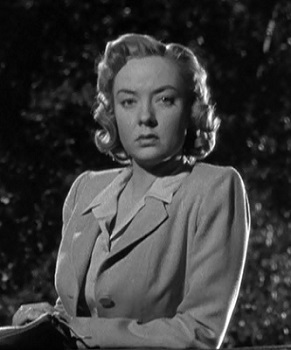
Stoker’s wife, Julie (Audrey Totter), proclaims her resolution to stop attending her husband’s fights. She wants him to quit. Stoker tries to convince her he’s almost done with the sport, but urges her to wait longer, until he can make a greater success. At the start of the movie, he keeps looking to her window and the chair he’s reserved for her at the fight; she wanders around the city trying to decide whether to go.

Totter-TheSetUp
Clearly, Julie hates watching her husband get hurt, and worries about his survival. His love for her is painful to watch, as is hers for him. The problem is, all ambitions notwithstanding, Stoker also loves to fight. He enjoys the company of his fellow boxers, who thrive on hope, and rejuvenate his (comparatively) aging body and more resigned disposition with their energy and dreams.

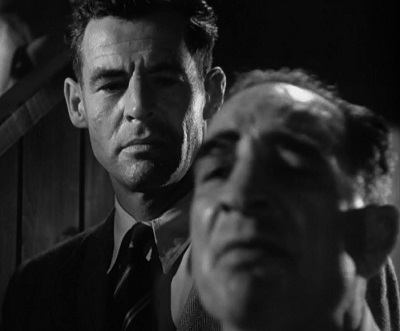
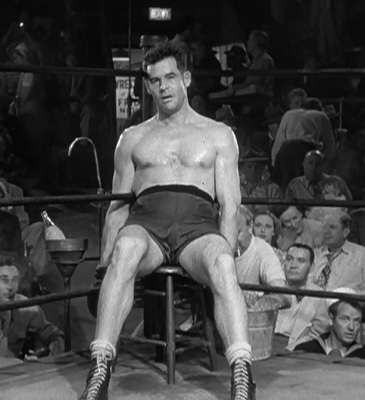
Ryan-TheSetUp
Julie has put up with a lot to support him in this profession. How long should he ask it of her? Will she leave him if he doesn’t let it go?

How Long Should a Fighter Wait Before Abandoning that One Chance to Make It Big?
In the locker room, Stoker acts as a kind of patriarch to his peers, easing their nerves and encouraging their bravado. When a first-time boxer vomits before his first round, a trainer asks Stoker to admit it happens to everyone.

Yes, Stoker agrees aloud, recalling his own first bout, when he did the same: Trenton, NJ, 20 years before. Stoker’s face is poignant at the memory, back when he was as jubilant as the young men around him.

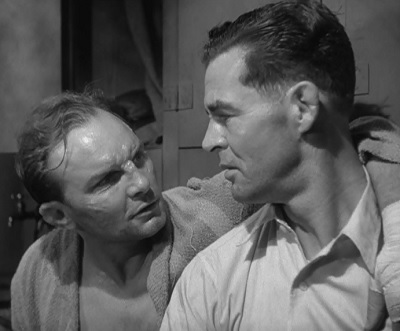
Among the many wonderful moments in the locker room, the best is perhaps the encounter between Gunboat and Stoker. Both aging fighters, both still trying to maintain ambition. Gunboat is inspired by a former middleweight champion who was beat 21 times before winning, a statistic he repeats to all who will listen, hoping his own record will soon resemble it.
“Can’t you see me, Stoke,” says Gunboat. “First I win the title, and then the exhibition tour, that’s where the easy dough is. I’ll be in the movie, Stokes, with a line of dames waiting for me a block long…”

boxers-The Setup
When Gunboat returns from his fight unconscious, the camera pans over each fighter and trainer in turn, the fear and pain in all of their faces perfectly capturing the guts it takes to move from this moment, as several must do, to their own matches. And, of course, it presents Stoker with the inevitable question: Has he waited too long to quit?

What Spells the Difference Between Enjoying a Dangerous Sport, and Craving the Carnage?
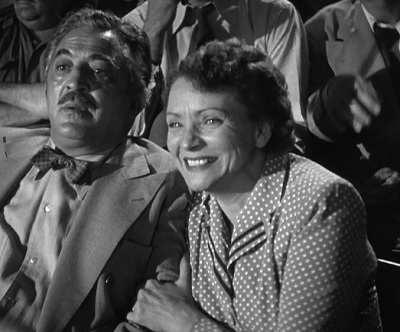
The movie focuses in on just a few spectators the whole film, letting us see the fight between Stoker and Nelson through their often disturbing reactions. There’s the woman in the crowd who claims to hate matches, but reacts with glee when the fighting is most brutal, and grumbles when it’s not….

Spectator-BloodthirstyTheSetup
There’s the blind man relying on his friend for the play-by-play. “Nelson (Hal Baylor) opened up his left eye. He’s bleeding!” says the friend.

“Good,” his companion answers, and later yells at Nelson for not going for the eye again.

Spectator-happyTheSetUp
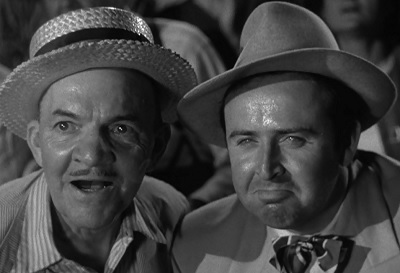
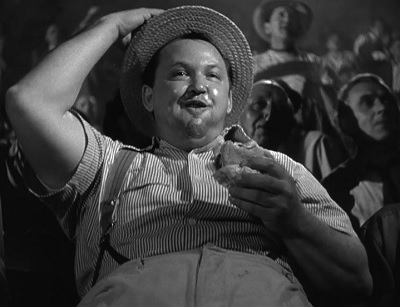
Then there’s the man who eats everything in the place, his appetite undisturbed by the blood, pain, or cries around him.

spectator-TheSetUp
No wonder Julie doesn’t want to come. No wonder Stoker flinches before his fight at a spectator’s cries: “Kill ’im!”

Reaction toCrowd-theSetup
What Should a Man Do When He Discovers Betrayal, But Payback Could Be Fatal?

boxeralone-TheSetUp
Stoker begins to suspect foul play when his manager keeps trying to convince him to ease up once he begins to win. The bout itself is riveting, moving from the match to those few members of the crowd we’re tracking.

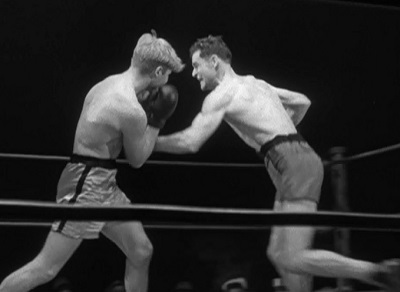
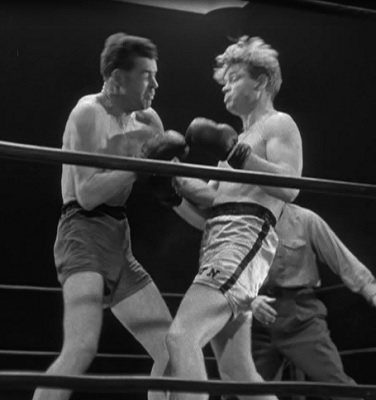
Boxing-TheSetUp
Ryan boxed in college, which explains why his moves are so convincing onscreen, unlike those of many actors in boxing films since. The confusion, anger, betrayal, and uncertainty of how to handle this fix play on this talented actor’s face. Given his pride, his conflict over Julie, and his disillusionment, we aren’t sure just what Stoker will do….

How Faithful Should Filmmakers Be to the Source Material?
The Set-Up has been criticized for changing the race of the poem’s hero from black to white, and among the harshest detractors were the poem’s author, Joseph Moncure March. It’s easy to dismiss the director’s claim that this change was because RKO didn’t have an African-American star then. The date alone (1949) suggests less elevated motives, and the black fighter in the movie, Luther, is played by James Edwards, who starred in the award-winning Home of the Brave that very same year.

Luther-TheSetUp
Luther is portrayed sympathetically, which suggests the same could have happened with a black leading man, and the kind of treatment Tiny doles out to his boxer would have darkened and deepened the meaning of the movie had they not shared the same race (not to mention more faithfully reflecting the boxing world at the time).

However, the poem’s author, Joseph Moncure March, according to scholar Jefferson Hunter, “attacks an injustice without fully understanding his own involvement in it” and “is more a denizen of his time and place than he knows.” That is, March referred to his hero as a “jungle jinx” and saddled him with bigamy and a prison record. Therefore, some changes needed to be made to the story, and given its audience’s likely prejudices, perhaps some might even have been a good idea. But what a film it would have been with a morally questionable fighter, and an exploration of race politics in the ring….

Share
Posted in: 1940s films, Action & Sports Films, Drama (film), Film Noir/Crime/Thriller & Mystery Tagged: Audrey Totter, boxing, Robert Ryan, Rocky, The Set-Up

Ruined by Romance: Drive (2011) and The Hustler (1961)

08/07/2014 by leah@carygrantwonteatyou.com 4 Comments

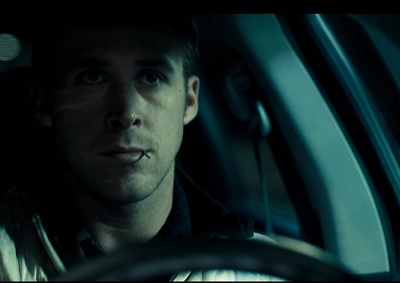
I was excited when Drive came out: finally, I thought, a new Bourne. An action flick with intelligence and fine acting, starring a man who had bypassed romantic leads after The Notebook to refine his skills in indies. And the promo! It looked exciting and moody, with the kind of premise that meant my car enthusiast husband and I would be carrying the popcorn to our seats with equal enthusiasm.

GoslinginDrive
Of course I had neglected to consider the amazing skills of this woman, who would later manage to portray one of the most self-centered characters in American fiction as a victim:

Mulligan as a vulnerable waif—again

Mulligan as a vulnerable waif—again

So instead of racing cars, instead of truly exploring the depths of his character’s moral confusion and darkness, Ryan Gosling gets to spend most of the film destroying his life for a mother (Carey Mulligan) who is (a) hopelessly fragile (b) already married and (c) unutterably dull.

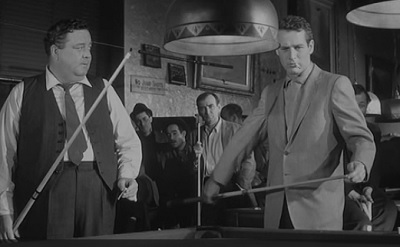
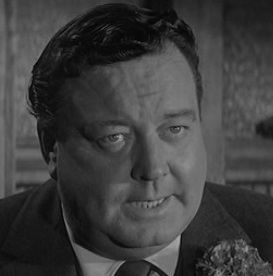
I wouldn’t say that The Hustler (1961) was ruined as completely as Drive was by a bad romance, but I was more appalled by its mistakes. Because this is a film I’d thought to be a classic, with George C. Scott as the money man and the brilliant Jackie Gleason playing Minnesota Fats, the reigning master of pool.

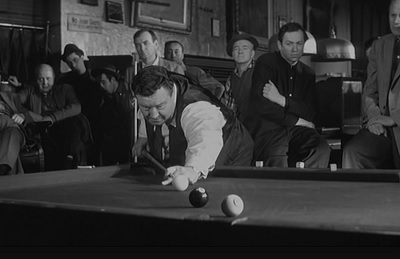
FatsinActionTheHustler
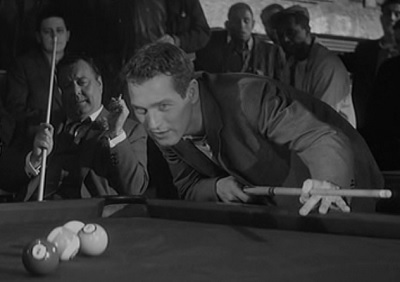
The master’s challenger is cocky young upstart Fast Eddie (Paul Newman), who struggles with confidence in spite of his successes hustling on the road. (Yes, the same character from The Color of Money).

FastEddieTheHustler
Imagine my surprise then to find that after the wonderful battle between Fats and Eddie ends with the latter deflated and broke, pool disappears for a long stretch of the film, to be replaced by a romance as inadvisable as it is boring to watch.

EddieandSarahTheHustler
Sarah (Piper Laurie) is a more interesting character than Mulligan’s Irene. She is depressed, moody, and drunk most of the time, but she is also compassionate and prickly with pride, and though I might have asked for more range and nuance from Laurie, others disagreed; she received an Oscar nomination for the role.

But whatever you think of Laurie’s performance, the romance itself is based on co-dependence. The two drink and have sex, and that’s about it; she even starts to write a story about their supposed depravity. When money-man Bert (Scott) accuses Newman of being a talented loser, the audience has to agree. It’s understandable that Eddie would align himself with Bert to lift up his career, even that he’d bring Sarah with him on the road since she can’t handle being left alone for a week (or more likely, doesn’t trust him to return). Sure, we know Bert is a bad guy, but Eddie isn’t exactly full of either options or patience.

Sarah losing her way at the Derby

Sarah with Bert (Scott), her nemesis

But to link Newman’s increased character and confidence to his remorse at his treatment of Sarah? Really? Eddie didn’t seem to mind leaving his long-time buddy and manager, Charlie (Myron McCormick), in the lurch.

Charlie (Myron McCormick) trying to win Eddie back

Charlie (McCormick) appealing to Eddie

His treatment of Charlie is far worse than his neglect of Sarah. The problem isn’t what Eddie did during his travels with Sarah and Bert; the problem is whom he chose to do it to: you don’t get involved with someone this fragile unless you’re in it for good, especially with a predator like Bert in your company. What Eddie should have done is drive the poor woman straight to rehab, not to the Derby.

Are you bored yet? Yeah, me too. I didn’t sign up for a movie about a doomed love affair—and if I had, I could have found a far better one than this. Here’s what I wanted to see, and finally did at the end of the film:

EddieandFats
Note the vulnerability on Fats’ face as Eddie begins a streak:

EddieonstreakTheHustler
Or his insistence that Eddie stop getting distracted and focus on the game, the defeat on his face clearly showing that he’s sold himself to Bert too:

FatsadviceTheHustler
Watch Bert’s celebration of his power over both men:

BerttauntingTheHustler
And most of all, witness the beautiful pool shots throughout–while you can get them. For a film called The Hustler, I didn’t get to see much hustling. Luckily, I did get to see this: Fats dressing up to rejuvenate himself during a losing streak:

GleasondressedupasFats
I could watch the pool passages in the film again and again and again.

Why do Hollywood films always use romance as a replacement for self-struggle? I haven’t read Walter Tevis’s novel, which may have managed the matter better, but the best films I know about competition don’t rely on gimmicky stand-ins as substitutes for the practice scenes (with pool!) they should have included. Even if a love affair is involved, it’s one that forces the hero/heroine to confront weaknesses. And it’s Bert—not Sarah—who tells Eddie the truth in The Hustler. If anything, I would think remorse would lead Eddie right back to the aimless life he and Sarah had been leading.

Did I enjoy the film? Yes. Would I fast forward through the Laurie-Newman scenes next time? Oh yes. Do I think at the end of the day The Cutting Edge was more convincing? Absolutely.

Share
Posted in: 1960s films, 1990-current films, Action & Sports Films, Femme fatales, Romance (films) Tagged: Carey Mulligan, Drive, Jackie Gleason, Paul Newman, Piper Laurie, Ryan Gosling, The Hustler

A Strange Mess: Mister Roberts

07/10/2014 by leah@carygrantwonteatyou.com 15 Comments

This is a contribution to the John Ford blogathon sponsored by Christianne Benedict at Krell Laboratories and Bemused and Nonplussed. Check out all the marvelous entries!

Punching his leading man. Drinking on the set. Quitting the production after being hospitalized. The tales of John Ford’s behavior on Mister Roberts aren’t pretty, and neither is the film. While some of its flaws can be blamed on its having multiple directors, the failures of Mister Roberts are largely a result of Ford’s decisions. The film is a bizarre mishmash of styles, moods, and genres, full of pointless shots and ludicrous acting. The fact that it was a success rather than a flop is likely due to the stellar performances of three of its stars, Henry Fonda, William Powell, and Jack Lemmon; if you love these three actors, as I do, watch the movie. The scenes between the three of them are compelling. If you don’t, avoid it, for the film is not quite bad enough to be camp, but comes awfully close.

Robertsandcrew
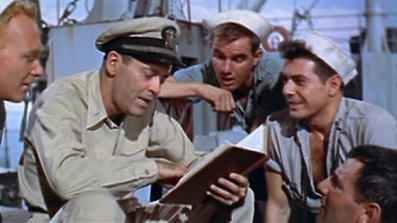
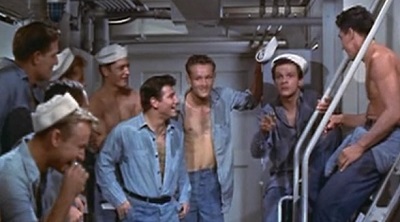
The film is about Roberts’ (Henry Fonda’s) efforts to get into combat in WWII, efforts that are squashed by his cargo ship captain, played by James Cagney. The crew love Roberts for his rebelliousness and his sympathy for their needs. The story is meant to be both moving and comic, but succeeds at neither thanks to Ford’s odd direction. Had I not known that this legend was at the helm, I would have guessed a newbie was having trouble distinguishing between stage and screen. Yes, Mister Roberts was a play, but that doesn’t explain why the crew in the film are practically shouting, or why their hamming reaches such preposterous levels that you have the feeling they’re always gathering to sing a song.

crew2
When they don’t, you feel vaguely uncomfortable, like when a stand-up comedian’s punchline falls flat. What’s even more puzzling is that you can almost see “exit left” printed on the screen because when figures leave the group, the others act as if they’re no longer in earshot. The transitions throughout the film feel forced, with odd shots of ocean and ship that neither advance the narrative, nor contribute to the mood, and the score seems slightly off the entire time.

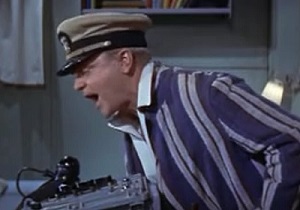
The choice to have James Cagney, who plays the villain of the film, act as if he’s starring in a camp masterpiece was also ill advised. Look, I love my camp. Brainsmasher: A Love Story is one of my favorite movies. But a film doesn’t work when half your cast is taking themselves seriously, and the other acting as if they’re auditioning for a Mystery Science Theater special. Cagney has talent, but you wouldn’t know it from this film. I kept wishing he’d disappear from the screen so that I could stop being embarrassed for him. A character can be ludicrous but still menacing, but Cagney’s bluster in Mister Roberts is merely a caricature of his earlier, meatier roles.

James Cagney as the cruel captain

James Cagney as the cruel captain

And try to forget the depiction of the islanders as soon as you see it. For a moment when I watched them approach the cargo ship in canoes, I thought, Battle!!!

Fordsislanders
I have the feeling that’s what Ford thought too, as it’s one of the few shots that worked in spite of its genre confusion and absurdity. Unfortunately, he moves from there to regular stereotypes:

islanderscloseupFord
Unfortunately, these scenes didn’t have the charms of camp portrayals, such as one of my favorites, the underappreciated parody Joe vs. the Volcano, in which the islanders are all obsessed with orange soda.

Joevsvolcano
But when Fonda is on the screen, you forget how bad Mister Roberts is. Ford made many mistakes, but his stubbornness in demanding Fonda over the studio’s preferences, Marlon Brando and William Holden, almost outweighs all of his poor choices. In a better movie, this performance could have won Fonda the Oscar, just as he won the Tony for it on the stage.

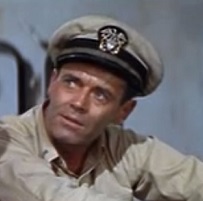
Fonda
He plays Roberts with such understated dignity, humor, and pathos. Watch his easy leadership of the crew, his posture demonstrating how naturally he takes charge. Witness his subtle deflation once he sacrifices his own ambitions for the sake of that crew. I have never seen Fonda so good in anything. How hard it must have been for him, to have the role that meant so much to him undermined by his own director.

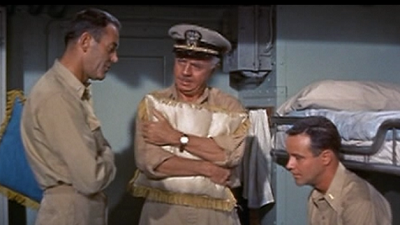
Luckily, there are multiple scenes with Fonda, Lemmon, and Powell.

Henry Fonda, William Powell, and Jack Lemmon

A perfect combination: Henry Fonda, William Powell, and Jack Lemmon

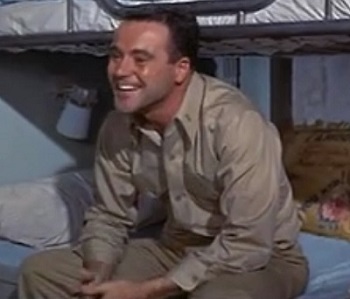
With the crew absent and only a room as background, the three show you what a film this could have been. Lemmon’s performance won him the Oscar. He’s riveting as a cowardly, lazy, sex-crazed ensign who has the potential to be so much more.

Lemmon
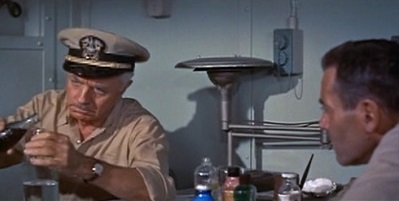
And how do you beat the joy of watching Powell create fake whiskey with utter seriousness, or recount the fake injuries of his crew when they’re avoiding work?

powellandfondawhiskey
As Doc, Powell plays the wise older man with utter perfection. While the film might not have deserved him, it’s truly a wonderful last Hollywood role, and the three have amazing chemistry.

To what extent Ford is to blame for the film’s flaws and not his co-director, Mervyn LeRoy (who was also assisted by Joshua Logan, the play’s cowriter and director), is impossible to exactly determine. But unless he ONLY directed the scenes with Powell, Lemmon, and Fonda, Ford was right to be embarrassed by it.

It’s a good thing he followed it up with one of his masterpieces.

Don’t forget to check out the other John Ford entries in the blogathon!  

Share
Posted in: 1950s films, Action & Sports Films, Blogathons, Comedies (film), Drama (film) Tagged: Henry Fonda, Jack Lemmon, Joe vs. the Volcano, John Ford, Mister Roberts, William Powell

Beating the March Madness Blues with Knute

03/26/2014 by leah@carygrantwonteatyou.com 4 Comments

Little Mercer defeating the Big Bad Duke. That stunning Laettner shot you prayed wouldn’t go in. Davidson paying for busloads of its students to attend the Elite Eight. If you were born near corn and have since transplanted to either coast, I don’t care how thin your grasp of the finer rules (a pick and roll?) or how few Big 10 games you’ve managed to catch on your TV. Come March, homesickness arrives in the form of a basketball hitting a gym floor. So you fill out two brackets (one with viable predictions, another with your 13-seed team triumphing), frantically text childhood friends, and download a NCAA app, hoping to recapture some of the thrill that is watching the Madness in the Midwest.

In my case, the outsized crankiness ushered in with Selection Sunday, as I rambled to all in ear range about the cruelties of New England living: hockey on the big screens and game commentary drowned out by 80s tunes in sports bars, radio stations blaring Spring Training garbage. Why hadn’t I flown to watch the games in Chicago again, as my two sisters and friend once had? So I decided in breaks between shouting over Cinderella beauties alone in my living room (with an occasional pity join-in by my uninterested spouse), I would console myself with a sports film. Since I already have viewed my favorites (Hoosiers & Hoop Dreams) many times, and classic basketball flicks are scarce, I chose the movie starring our former president and the much-loved other Midwestern sport, Knute Rockne-All American (1940).

Pat O'Brien and Ronald Reagan in Knute Rockne-All American

Pat O’Brien and Ronald Reagan in Knute Rockne-All American

It’s hard to believe now that Notre Dame was ever an underdog, but if you’ve been to South Bend, you understand: a sleepy town you wouldn’t know was there but for the golden dome, breathtaking church, and lovely campus buildings. Of course, once Rockne (Pat O’Brien) started making a name for himself and the school, he was lured by the big-name programs, but like many loyal coaches who followed him (I’m looking at you, Shaka Smart), he stayed put.

Of course, the whole beginning of the bio-flick, I was waiting for George Gipp (Ronald Reagan), the stunning athlete who would set off Rockne’s career in his four seasons of play (1916-1920). Though I expected it, I was startled to see the ex-president so young, handsome, and fit.

Gipper was an intriguing person, hardworking in games, but nonchalant about practice, and more committed to baseball than football. Particularly surprising was his habit of shying from the limelight: He was known for dodging reporters. The film doesn’t explore another interesting trait: he liked to gamble, fooling out-of-towners who suspected he was just a naïve hick. And then he quietly would give much of the money to those in need.

Reagan delivering Gipp's famous speech

Reagan delivering Gipp’s famous speech

His famous sickbed speech was thankfully muted in the film, without crass Hollywood dramatization, and Reagan delivered the lines well: “Rock, some day when the team is up against it, when breaks are beating the boys, ask them to go in there with all they’ve got, win just one for the Gipper. I don’t know where I’ll be then. But I’ll know about it, and I’ll be happy.”

The rest of the movie is, as you would guess by its title, about Rockne rather than his illustrious player: the coach’s dedication to his team, the success of his program, and the sacrifices he made for his athletes. Rockne was renowned not only for popularizing the forward pass, but for his commitment to teamwork over individual talent. Sound familiar, NCAA basketball fans? In a funny scene, Rockne watches chorus girls and takes notes on their performance that will become the famous shift he teaches first his wife, and then his Four Horsemen (the gifted group who led the Fighting Irish to 28 wins and only 2 losses). How like a coach to appreciate the coordination of dancers. We always think of basketball in balletic terms too: seamless passes, graceful turns and fakes, fluid jumps to the rim.

The Four Horsemen mid-shift

The Four Horsemen mid-shift

What I enjoyed most about Knute Rockne-All American was the man himself, especially his unusual, clipped patterns of speech and motion, which Pat O’Brien captures perfectly without ever slipping into parody. (See footage of the real man here.) Rockne’s intelligence is established early on, when a famous chemist in his department tries to turn him into one. But it’s his enthusiasm for his boys that gets you, even when his wife has to go without vacation for 17 years as a result (probably true since his widow was involved with the film and unlikely to forget such a betrayal). When Rockne disappoints his team with a bad decision, the devastation of this loyal coach is painful to watch.

The most celebrated moment in the film is when Rockne repeats Gipp’s words to his players in the locker room during a losing game. The scene is surprisingly understated, even for its time: No close-ups to show tears in the eyes of athletes. No uplifting music except for the muffled marching band in the background. No shouting. It feels less like a moment to rile up the team than the coach’s need to honor a promise. Affected as I was by the speech, I couldn’t refrain my dismay at the ways that modest athlete’s name has been abused since. Reagan—or his PR machine—used the line for political gain repeated times; our most camera-happy chief of state is now referred to as “The Gipper.”

Rockne (O'Brien) delivering Gipp's words

Rockne (O’Brien) delivering Gipp’s words

Late in the film, college football is accused of the usual: passing failing students, subsidizing players, subverting the intentions of an education, etc., so Rockne goes to New York to defend his team and football as a whole to a committee of educators investigating the charges. How disturbingly prescient the claims were. But Rockne’s defense is powerful, as when he’s asked whether he changes his athletes’ grades:

“Any player who flunks in his class is no good to his coach, nor to the school he attends. And any coach who goes around trying to fix it for his athletes to become eligible scholastically when mentally they’re not is just a plain everyday fool.”

Shortly afterward, a professor on the committee expresses his skepticism about sports: “Where do these elaborate spectacles of sport fit into the scheme of education?” he says. “How would you grade an average athlete’s contribution to the national intelligence?”

Rockne has spent his life answering this question, and does so now with spirit:
“…To limit a college education to books, classrooms, and laboratories is to give to education too narrow a meaning for modern times….We’ve tried to build courage and initiative and tolerance and persistence, without which the most educated brain of man is not worth very much….Now I don’t know, I don’t know how you grade a boy for learning these things, professor…But wouldn’t it be a good idea not to grade anybody’s contribution to the national intelligence, until all the results are in, maybe five or ten years after graduation, when his record and character are not hung on the wall like a diploma, but inside the man himself?”

Rockne (O'Brien) defending football

Rockne (O’Brien) defending football

I nearly cheered. I wonder if everyone could listen to Rockne’s words with as little cynicism as I did. But year after year, college athletes are among my hardest-working students, and former high school players write that their teams made them less selfish, more mature, stronger leaders, better people. And maybe that explains my bafflement that the New Englanders around me fail to embrace March Madness as I do, maybe thinking of it as only another gambling opportunity, another set of games, just brackets whole or broken. Perhaps they are too disgusted by the power and dollar signs we now associate with the NCAA to watch its most famous tournament, or think because appearances by most of their own teams are rare that it isn’t worth their time.

But I found in Knute Rockne-All American a perfect supplement to my March Madness optimism, which, despite my blues at being away from home, returned with the first upset. There are so few reliable forms of inspiration in our lives, and even fewer that we can experience collectively. But for a short span of weeks, even just a night, we can witness heart and teamwork triumphing over power and ability; we can experience a little school we’ve never heard of and players we’ve never seen get on that floor and ignore the hoopla and the lights and what big money has wrought—and just play. We watch these games expecting to be inspired. And like Rockne’s once-underdog team, with every play, with every goal, whether they win or lose, they deliver.


Share
Posted in: 1940s films, Action & Sports Films, Drama (film) Tagged: college basketball, Film, humor, Knute Rockne, March Madness, NCAA, The Gipper
« Previous 1 2 3 Next »

Recent Posts

  • 100 Years Later, Still Scary: Dr. Caligari
  • Escaping Out of the Past (1947)
  • A Weeper for Those Who Love Jerks
  • Thank You, Academy, for Not Infuriating Me
  • Challengers (2024) Is a Bad Movie

Subscribe to Blog via Email

Enter your email address to subscribe to this blog and receive notifications of new posts by email.

Categories

  • 1920s films
  • 1930s films
  • 1940s films
  • 1950s films
  • 1960s films
  • 1970s films
  • 1980s films
  • 1990-current films
  • 2020s films
  • Action & Sports Films
  • Anti-Romance films
  • Blogathons
  • Childfree
  • Comedies (film)
  • Drama (film)
  • Feminism
  • Femme fatales
  • Film Noir/Crime/Thriller & Mystery
  • Gloriously Silly Scenes
  • Horror
  • Humor
  • Mae West Moments
  • Musicals and dancing films
  • Oscars
  • Random
  • Romance (films)
  • Romantic Comedies (film)
  • The Moment I Fell for
  • Turn My Sister into Classic Movie Fan
  • TV & Pop Culture
  • Uncategorized
Share
Classic Movie Blog Hub Member

Recent Comments

  • leah@carygrantwonteatyou.com on Meg Ryan’s Fate Foretold in Joe Versus the Volcano
  • Ryan on Meg Ryan’s Fate Foretold in Joe Versus the Volcano
  • leah@carygrantwonteatyou.com on 100 Years Later, Still Scary: Dr. Caligari
  • The Classic Movie Muse on 100 Years Later, Still Scary: Dr. Caligari
  • leah@carygrantwonteatyou.com on 100 Years Later, Still Scary: Dr. Caligari

Archives

  • November 2025
  • September 2025
  • May 2025
  • March 2025
  • January 2025
  • November 2024
  • August 2024
  • July 2024
  • May 2024
  • March 2024
  • February 2024
  • December 2023
  • November 2023
  • October 2023
  • September 2023
  • August 2023
  • July 2023
  • May 2023
  • April 2023
  • March 2023
  • January 2023
  • December 2022
  • November 2022
  • September 2022
  • July 2022
  • May 2022
  • April 2022
  • March 2022
  • February 2022
  • October 2021
  • September 2021
  • April 2021
  • March 2021
  • February 2021
  • December 2020
  • October 2020
  • September 2020
  • July 2020
  • May 2020
  • April 2020
  • March 2020
  • February 2020
  • December 2019
  • October 2019
  • September 2019
  • June 2019
  • May 2019
  • April 2019
  • February 2019
  • January 2019
  • November 2018
  • September 2018
  • July 2018
  • June 2018
  • May 2018
  • April 2018
  • March 2018
  • February 2018
  • January 2018
  • November 2017
  • September 2017
  • August 2017
  • July 2017
  • June 2017
  • May 2017
  • April 2017
  • March 2017
  • February 2017
  • January 2017
  • December 2016
  • November 2016
  • October 2016
  • August 2016
  • July 2016
  • June 2016
  • May 2016
  • April 2016
  • March 2016
  • February 2016
  • January 2016
  • December 2015
  • November 2015
  • October 2015
  • September 2015
  • August 2015
  • July 2015
  • June 2015
  • May 2015
  • April 2015
  • March 2015
  • February 2015
  • January 2015
  • December 2014
  • November 2014
  • October 2014
  • September 2014
  • August 2014
  • July 2014
  • June 2014
  • May 2014
  • April 2014
  • March 2014
  • February 2014
  • January 2014

Meta

  • Log in
  • Entries feed
  • Comments feed
  • WordPress.org

Copyright © 2025 Cary Grant Won't Eat You.

Church WordPress Theme by themehall.com