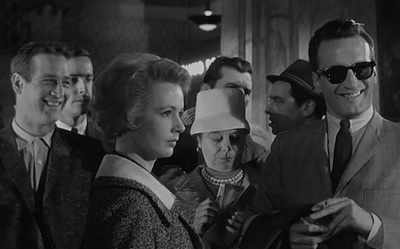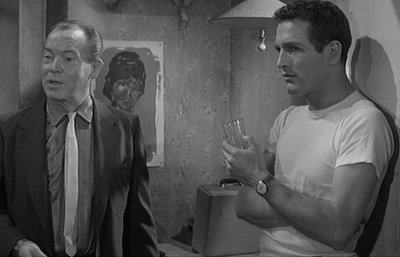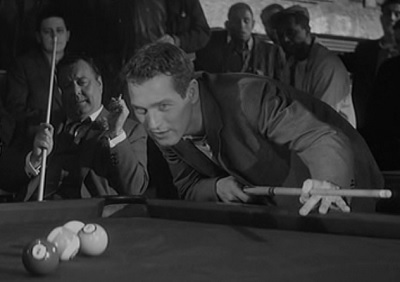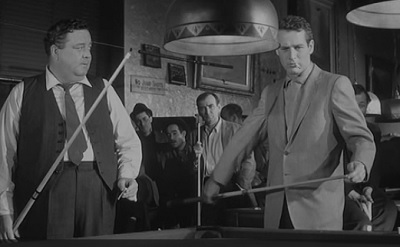
Cary Grant Won't Eat You

Classic movies for phobics

  • About
  • eBooks
  • Previous Blogathons
Classic movies for phobics

1990-current films

The Oscar Snub No One Is Talking about: Ralph Fiennes in The Grand Budapest Hotel

01/22/2015 by leah@carygrantwonteatyou.com 4 Comments

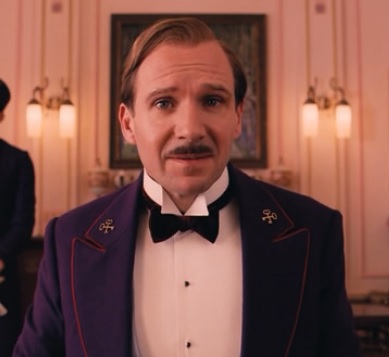
MGustave-GrandBudapest-Fiennes
I know everyone is busy discussing the Selma Oscar snubs and Jennifer Aniston’s supposed one. The former film I haven’t seen yet, and Cake I won’t. Only when I scrolled through long lists of snubs would I find Ralph Fiennes, as if the omission of his name were insignificant, perhaps expected. Sigh. Of course it was. He’s in a comedy.

Ralph Fiennes is best known for his dramas; he was nominated for The English Patient and Schindler’s List. Harry Potter fans know him as Lord Voldemort. He can alternate between a terrifying serial killer (The Red Dragon, Schindler’s List, In Bruges), and a fragile intellectual (Quiz Show). That’s just the beginning of his impressive range. And in The Grand Budapest Hotel, he proves that he can be hilarious.

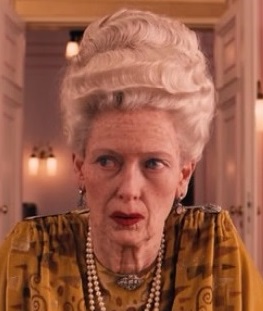
Well-respected comedic actors are honored by the Academy when they turn to drama: Bill Murray, Bette Midler, Cary Grant. But with few exceptions (Tommy Lee Jones in The Fugitive, for example), the process doesn’t go the other way. Where are Christopher Walken’s nominations for becoming one of the funniest men in film? How is it possible Gene Hackman didn’t get a nod for The Royal Tenenbaums? And if the Academy is considering nominating actresses merely for being willing to appear unattractive, what of Tilda Swinton’s hysterical showing in The Grand Budapest Hotel, surely the least vain performance I’ve seen in years?

TildaSwintonGrandBudapest
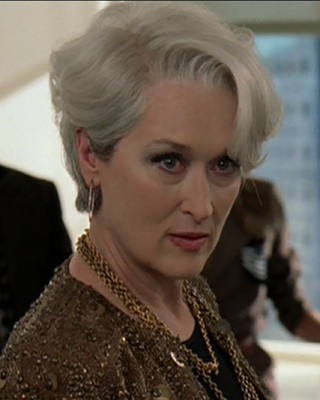
If it were so easy to switch from drama to comedy, I doubt one of—if not the—finest actresses of her generation, Meryl Streep (19 Oscar nominations and counting), would have struggled so much with it. Everyone may now recall when she had mastered comedy in The Devil Wears Prada, but it took her years.

The Devil Wears Prada

The Devil Wears Prada

Anyone remember She-Devil? Death Becomes Her? In Postcards from the Edge Streep was so bad I couldn’t even make it through the film. Her bravery is one of the things I value most about her: she let herself stink up the screen in order to improve her craft, not something many women with her dramatic chops would have braved. I suspect she pairs those two devil movies in her mind, appreciating how far she’s come.

She-Devil

She-Devil

And yet I’m to think Fiennes’s laugh-out-loud funny performance was easy?

Fiennes was getting early buzz for The Grand Budapest Hotel. Back in the spring, I thought he was a lock for a nomination. He could have been considered for Best Supporting Actor, given his role; technically, he wasn’t the star. Ethan Hawke was nominated; Ralph Fiennes wasn’t. Repeat that to yourself without laughing—or crying.

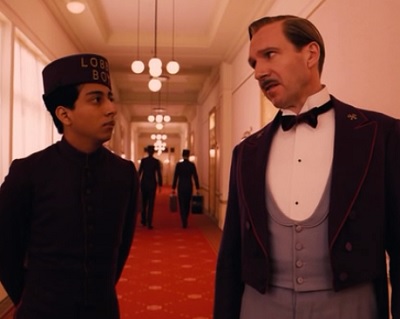
TheGrandBudapest-GustaveandZero
I admit that this is a tough year in the Best Actor category, but The Grand Budapest Hotel is tied for Birdman with nine nominations, and Fiennes carried his film from start to finish. Could I imagine another star in the others I’ve seen so far (4/8)? Yes. In The Grand Budapest Hotel? Absolutely not.

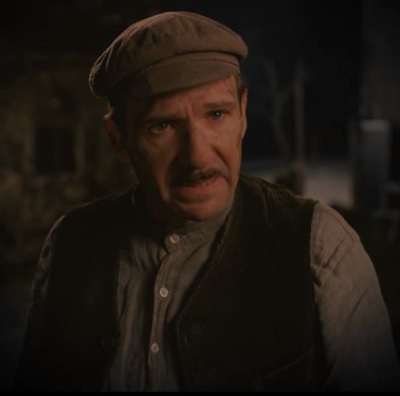
As M. Gustave, Fiennes is funny, original, moving. I have seen no other film this year that drew me in like this one, no other actor or actress who affected me more. Watch Fiennes’s quick transitions from elegance to crassness and see if you can stop yourself from laughing. Observe those nuances in his gestures, voice, and expressions that make Gustave’s mood changes from rage to tenderness convincing—and all in mere seconds (that’s all you get in a Wes Anderson film). When else have you seen a character simultaneously this funny and this heartbreaking, thanks to the actor playing him?

MGustave-GrandBudapest-Fiennes-1
If you haven’t watched the movie yet, do yourself a favor and rent it now. And if The Grand Budapest Hotel wins, tell me, in a movie riddled with big names, which actor helped the gifted Wes Anderson finally pull it off.

Share
Posted in: 1990-current films, Comedies (film), Oscars Tagged: Christopher Walken, Gene Hackman, Oscar snubs, Ralph Fiennes, The Grand Budapest Hotel, Wes Anderson

Disney’s Tangled: Better as a Silent Film?

11/11/2014 by leah@carygrantwonteatyou.com 8 Comments

MotherKnowsBest-Tangled
This post is part of the The Fairy Tale Blogathon hosted by Movies Silently. Check out the other entries!

I was hesitant to give Tangled a chance. I’ve always been bored by Rapunzel, who had little to recommend her but strong hair. Sure, she had beauty—yawn—and a pretty voice (What heroine doesn’t?) But she always seemed so idiotic to me. She had two tasks in her life—let down her hair, and conceal the prince’s visits, and she botched one of them, setting her love up for the witch’s wrath. And however her looks might have grown in all that tower time, isolation surely didn’t do much for the fair one’s people skills.

Disney’s 2010 version was much more entertaining than I thought it would be. Rapunzel is savvier and spunkier than in the original tale. And Tangled has some amusing theories on what she did all day, and how her upbringing by a witch might have affected her. Some wonderful side characters add to the energy, and the witch is a hoot. But there are some disappointments too.

First, the improvements on the fairy tale:

A Heroine Who Isn’t a Snooze
I’ve always pictured Rapunzel as a less interesting version of Lady Bertram, napping until the prince arrived and slowly making her way to the window, yawning as she helped him climb. Disney’s version (voiced by Mandy Moore) is full of projects: reading, painting murals, baking, doing papier-mâché and otherwise trying to fill the hours. She is obsessed with the lights unleashed on her birthday, actually lanterns from the queen and king to call her (their daughter) back from the witch, who stole Rapunzel to retain the Fountain-of-Youth properties of her magical long hair.

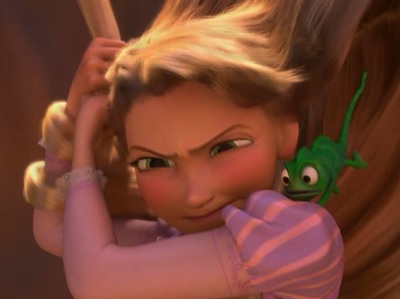
The unbelievable strength of Rapunzel’s hair in the fairy tale always puzzled me, so I was relieved to find the hair was magical, and Disney made it much more fun by turning it into an all-in-one lever-rope-weapon.

Rapunzel-Tangled
Rapunzel is also pretty handy with a frying pan, which she wields to defend herself against the thief (a prince replacement) who escapes into her tower. She bribes him to help her to the lighting ceremony, after which she plans to return meekly to her mother (aka, the witch). (I was concerned about the amount of head-pan contact though, convinced she’d kill/maim him sooner or later; the pan surely must have been made of weaker stuff than my iron skillet.)

An Equal Partnership
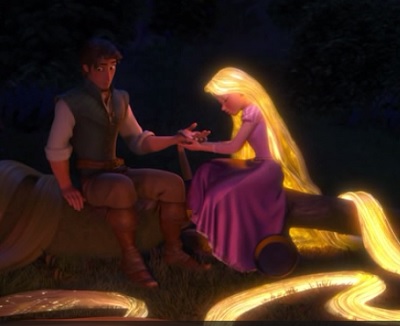
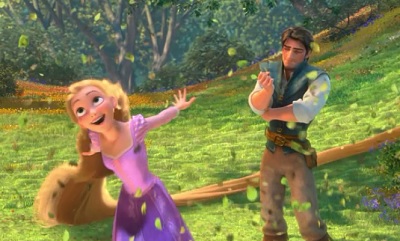
In most ways, the thief (Flynn Rider, voiced by Zachary Levi) is an everyday Disney hero, handsome and arrogant, proud of his “smolder” look. His backstory—an orphan craving riches—explains both his law-breaking ways and duplicitous behavior toward his partners. While he will obviously be reformed by the love of such a sweet, naïve girl, à la Lady and the Tramp, she will pick up his daring and inventiveness, needed qualities for a girl who is dangerously set in her ways thanks to eighteen years in a tower. Of course, she does have one advantage over him, with that magic, glowing hair.

FlynnandRapunzel-hair
I can’t say I was terribly interested, moved by, or invested in their union, but thought his altruism near the end was a nice touch. But no worries—I didn’t have to care much about them. Not with the mama witch to keep me interested.

A Worthy Villain
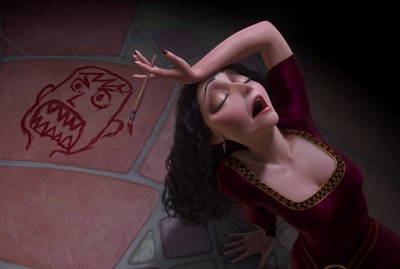
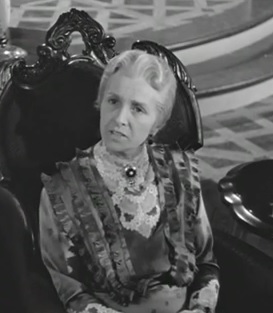
Now, I’m not going to claim this witch is as fearsome or powerful as Cruella de Vil. But it’s fascinating to watch Mother Gothel, perfectly voiced by Donna Murphy, manipulate her supposed daughter Rapunzel. This mother has Bette Davis flair as she pronounces the evils outside that Rapunzel must avoid. My favorite of the dangers she lists: men with pointy teeth.
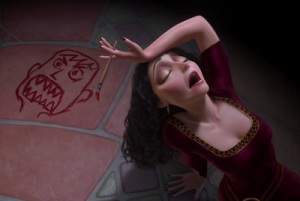
MenwithPointyTeeth-MotherGothel
“Skip the drama,” she advises in song. “Stay with Mama.” Murphy’s performance is simultaneously disturbing and hilarious.

Mother Gothel transitions from worldly dangers to a litany of Rapunzel’s weaknesses: her clumsiness, her naïveté, etc., which will supposedly make her easily fall prey to others.

Of course, Mother Gothel pretends love, not fear of loss, is what prompts her tower hiding of Rapunzel.

LoveYou-MotherGothelandRapunzel
(And, of course, she does love her obsessively—at least, that magical hair.)

In terms of models, Mother Gothel is a twin of the monstrous parents in Like Water for Chocolate and Now, Voyager, mothers who think a daughter should exist solely to serve, and enjoy doing so.
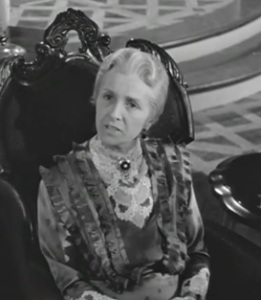
NowVoyager-GladysCooper
Mother Gothel likes to point out her maternal virtues, such as providing such great paints and soup!

I’d always considered the father of the original tale weak for giving his child to the witch’s care (to avoid paying for stealing food for his pregnant wife with his life). But I’d never reflected on just how cruel it was to leave his child in such hands. The ill effects are briefly seen when Rapunzel escapes, as she veers between bursts of joy and energy…

Joyous-Tangled

…and periods of debilitating guilt:

Miserable-Tangled
While this back-and-forth moodiness is funny to watch due to Disney’s deft portrayal, I kept thinking of Davis’s twitchy, insecurity-infused performance in Now, Voyager, and just how much therapy it would cost Rapunzel before she attained the exuberance and lightheartedness she displayed in the very next scene. Truly, a witch who just threatens physical harm would be sweet by comparison.

Amazing Allies
I used to like the sidekicks in Disney flicks, but after one too many Sebastian types (of The Little Mermaid fame), I was relieved to find the most prominent sidekicks largely silent, including an Owl-like chameleon, Pascal, whose expressions and gestures provide sage advice (in tribute to his name, of course).

PascalTangled
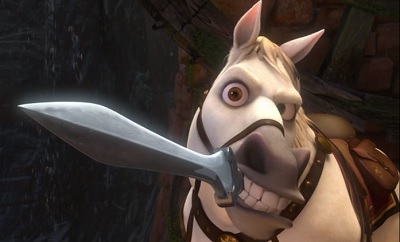
And there’s the glorious Maximus, a horse with amazing hunting skills and loyalty, who provides 90 percent of the comic relief of the film. As part of the royal guard, he tracks Flynn with Inspector Javert-like persistence after Flynn steals a crown from the palace.
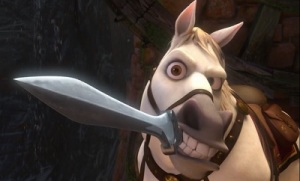
Maximus-Tangled

Maximus falls for Rapunzel and reluctantly aids her beau, a reluctance that’s a joy to witness.

In fact, I was so enthralled by these animated allies that I found myself wishing the whole movie were silent, not just because these allies were the primary reward of watching the movie, but for the following additional reasons:

Utterly Forgettable Songs
Murphy (Mother Gothel) gets one good tune, and she’s a talented enough actress and singer to almost make the other songs worth hearing—almost. But with bland song after bland song, and the highly generic focus on dreams (seriously?), I was ready to return to the silent antics of Maximus. (If you can’t beat Kermit piping the lovely “Rainbow Connection” or the 1001 less compelling dreaming songs since, lay off of ’em.)

Scenery More Interesting than the Plot
A girl spends a lifetime in a tower, much of it reading, and the height of her ambition on escaping is to……see some lights. Umm, what? Couldn’t Disney have made her an artist—a writer or a painter (the murals!)? Or maybe an intellectual even? Surely Mother Gothel would have loved to provide the kinds of books that would turn Rapunzel into a scholar, as those might make her content to live a life of the mind, happy with her retreat. Turn the tower ivory, Mother Gothel! Come on! I’m not exactly talking about creativity here; I’m pronouncing the biggest cliché about towers ever. I know I’m supposed to believe Rapunzel has some spiritual connection with the lights, somehow understanding they’re for her, but if that’s the case, why didn’t Mother Gothel change the date of her birthday? The woman seems far too intelligent to have made such a dumb mistake.

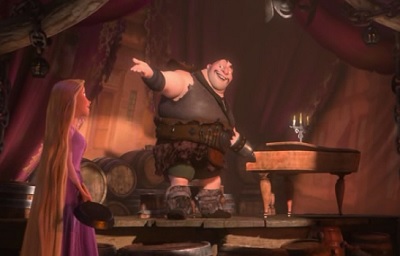
The first big moment after Rapunzel’s re-entry to the world involves turning a bunch of thugs to her side because she asks if they have dreams, and they proceed to share them.

DreamingThugs-Tangled
If I’d been in the theater, I’d have been tempted to throw popcorn at the screen. Even if this is a strange alternate universe where dreams aren’t discussed ad nauseam, neither this character, nor her own ambition, is at all inspiring. To see lights is not exactly the kind of dream to get criminals past their reluctance to open up. If the movie had played off her dream as comically stupid, what someone dozing in a tower would come up with, I’d have been all for it. But sigh. They played it as motivating.

In contrast to such clichéd scenes, all the details of the landscape sucked me in, especially the flood. In trying to get boys to watch the film, Disney really succeeded with the action shots.


Flood-TangledActionShot-Tangled
How interesting it would have been, in contrast to that silly song about grass when the heroine hits the ground and the unnecessary (if occasionally amusing) scene with the tough types, to just witness Rapunzel quietly taking in the wonders around her, jumping at everyday noises, stumbling a bit at the unaccustomed exercise. What humor and pathos would have been possible! Disney gets this for a second, as Rapunzel is paralyzed after her tower retreat, unable to make the 12-inch drop to the ground.

FootfromGround2-Tangled
That moment was worth the next hour.

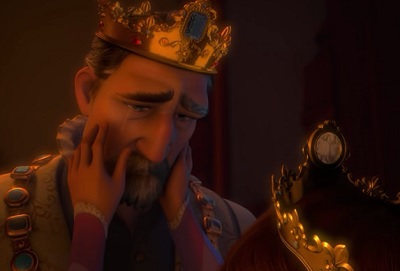
In fact, the only truly moving scene in the film is the silent clip of the king and queen, hesitant to practice this lantern ritual yet again, to allow themselves to still hope.
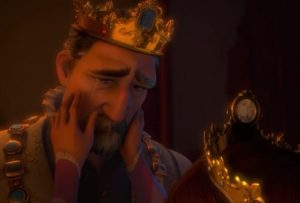
KingandQueen-Tangled
I wish that Disney hadn’t been so cowed by Pixar successes into such a conventional retreat from what’s compelling about this movie. They give Rapunzel a Barbie-sized waist. They back off from the interesting mother-daughter dynamic.

MotherGothelandRapunzel-insecurity
They don’t realize Maximus is the star. They have this supposedly feminist heroine spend her time on indisputably female-associated crafts instead of developing some kind of true ambition. And at the end of the movie she’s—surprise! A bride.

Disney had the potential for some Fantasia creativity, with silence used to beautiful effect, and the glimpses of the story’s potential still make this a fun movie. But how great it could have been.

Don’t forget to check out the other entries in the blogathon!
Share
Posted in: 1920s films, 1990-current films, Blogathons, Comedies (film), Drama (film) Tagged: animated movies, Disney, Now Voyager, overbearing mothers, Rapunzel, Tangled

For Gone Girl Fans, A Fascinating She-Did, She-Didn’t Thriller

10/06/2014 by leah@carygrantwonteatyou.com 2 Comments

I’ve been wanting to see Gone Girl, but the laryngitis-respiratory infection cocktail I’ve got right now means that I would be an object of fear and distraction to fellow film goers, so I had to settle for an alternative. What film, I wondered, might employ a similar ambiguity about whether or not a spouse is a murderer? What other film might tell a tale of an unhealthy romance that might or might not have sinister roots or results? The answer: Daphne Du Maurier’s My Cousin Rachel. The film, starring Olivia de Havilland and a very young Richard Burton, never reached the fame of The Birds or Rebecca, but has a similar eerie draw, and (for me at least) lingers longer than either.

Young Philip has been raised by his cousin, Ambrose (John Sutton), and the two are comfortable together in their picturesque Cornish town until Ambrose’s illness leads to their first separation—a trip to Italy. There, Ambrose discovers and falls for their distant cousin, Rachel. Before Philip can adjust to this change in his life, a more somber situation develops: Ambrose is nearing death, and blames his wife for it, claiming she’s trying to do him in. Is his condition the result of a brain tumor, or is it poison?

Femme fatale, yes, but is she a murderer?

Femme fatale, yes, but is she a murderer?

A heartbroken Philip (Burton) travels to Italy to uncover the mystery after his cousin’s death. Since all of the estate goes to him, not the wife, Philip might assume things are as innocent as those in Italy suggest, but the circumstances seem shady, and he’s ready to turn Rachel over to the hangman—that is, until he meets her.

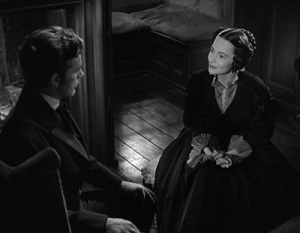
IntroMyCousinRachel
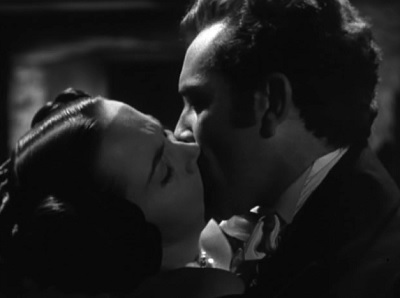
Of course, she’s charming, affectionate, worldly, and experienced, and within no time, is hosting gatherings at Philip’s place and then, well, what repressed English boy could resist this cougar?

KissingMyCousinRachel
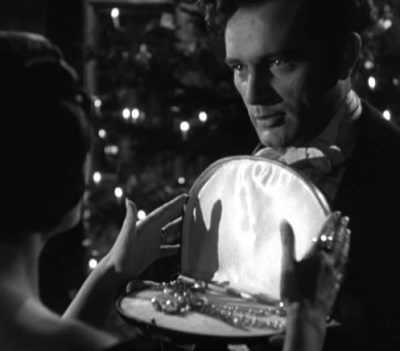
Before long, Philip’s giving her the family jewels from the vault—which aren’t his yet, as he doesn’t get the estate till he’s 25, his guardian reminds him.

GiftsMyCousinRachel
Also, a generous allowance he’s given Rachel? Yes, she’s overdrawing it—by a lot. Philip doesn’t worry. He’s in love! She deserves everything that’s his. He’ll just give his whole estate to her, announcing it Romeo-style on his birthday.
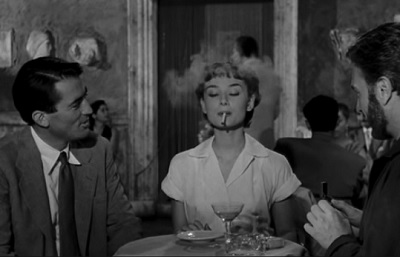
BalconyMyCousinRachel
She, in thanks, gives him more than kisses. In Philip’s world, this means she’s going to be his wife. In Rachel’s? Not so much. Philip, whose stupidity and naiveté know no bounds, doesn’t take this well, even starts strangling her. She ends their romance, whether because of his actions, or because with the money, she has no motive to seduce him any longer.

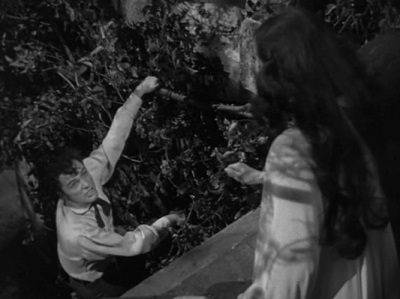
Soon after, Philip falls dangerously ill and finds some seeds that may have been the cause of his brother’s illness—and his.

What happens next I won’t reveal, but let’s just say that the evidence for and against Rachel’s guilt about even out, leaving the viewer to wonder the whole film (and book).

This was my first viewing of the film, and it stays quite true to what I remember of the novel. But viewing it as an adult, I noticed some details I’d missed before. Yes, she may be a murderer, or she may not be, but even if she didn’t try to kill either lover, exactly how wrong and/or inadvisable is Rachel’s behavior? I have some advice for Rachel, which, of course, comes a tad bit late:

Some spoilers ahead—though not the ending.

Never Seduce Crazy
It’s not hard to miss just how big of a dolt this Philip is, so even if she weren’t after his money, seriously, is this someone you seduce? I mean, he’s cute and all, but he’s obsessive. This is a textbook case of a stalker-in-the-making if ever I saw one. Surely a woman as confident and assured as this one knows a case of insane puppy love when she sees it. I’ll alter one of my favorite Arrested Development lines– “Never promise crazy a baby”—to Never seduce crazy. I kept wanting to warn Rachel away: Don’t kiss this fool. He’ll be sending out your wedding invitations next.

Remember: Virginal Boys Don’t Understand Samantha Jones Ways
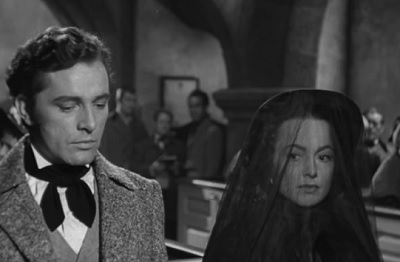
If Rachel just kinda forgot that those in repressed English villages don’t act like her cosmopolitan friends, shouldn’t that church moment when she arrived late have given her a clue?

ChurchRepressionMyCousinRachel
She’s so shocked Philip thinks they’re going to marry after they have sex, but would anyone in this community think otherwise? Remember when Samantha Jones hooked up with the inexperienced college boy on Sex and the City who shared her name?

Didn’t turn out so well, right? Filled up her answering machine with love-yous. Arrived at her door screaming through the peep-hole.

OtherSamJonesSexandCity
That’s Philip for you.

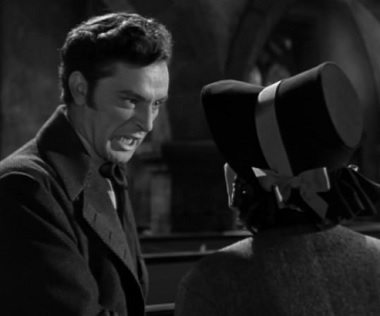
Don’t Marry the Guy Whose Regular Expression Looks Like This:

RichardBurtonfreakingout
Whatever her motives or knowledge, Rachel is absolutely right not to marry this dude. I can just see it: She tries to hang out with her friends, and he’s there, watching. She leaves the house and he’s hiring private detectives. This woman has lived on her own, experienced an unusual degree of freedom for a woman of her time, and he doesn’t even want her to return to Italy—ever. She may make some dumb mistakes, but Rachel is not that foolish.

Don’t Live with the Stalker after You Ditch Him
Why does Rachel remain in the house? Yes, I can understand for appearance’s sake, she might stay a little after the inheritance is given to her. But this is one angry guy. And, of course, dangerous as he fears she is, he’s the one going for the throat when he doesn’t get his way.

Strangling-MyCousinRachel
But….

Did she do it? Did she poison her husband?

She has suspicious ways. Rachel’s spendthrift tendencies, of course, are undeniable. This woman loves the money. Whether it’s to help her pal-maybe-lover back in Italy or not, she takes whatever anyone will give her with no regrets. It’s not hard to believe her gold-digger impulses brought her to England in the first place, and those motives seem sinister enough that she may have just killed for them.

Of course, it’s possible that she did love Ambrose, and wanted to meet his cousin. I’m not sure I buy that the one precludes the other. I don’t have to admire her greed, but I don’t have to believe that’s all there is to her either.

It’s the ambiguity I love about the film. Hopefully, Gone Girl is just as good (no spoilers on that, please!)

Share
Posted in: 1950s films, 1990-current films, Anti-Romance films, Femme fatales, Film Noir/Crime/Thriller & Mystery, TV & Pop Culture Tagged: Daphne du Maurier, Gone Girl, My Cousin Rachel, Olivia de Havilland, Richard Burton, Samantha Jones

Being a Princess Would Suck: Roman Holiday

09/18/2014 by leah@carygrantwonteatyou.com 6 Comments

Like most girls, I was born wanting to be a princess, though I preferred Belinda from The Practical Princess to helpless Cinderella. Unlike for many of my peers, this desire ended quite early for me. The wedding of Princess Di lasted far too long for my attention span, and what was up with that poofy dress and that decidedly not Barbie-like haircut?

Even had Diana worn the kind of clothes I preferred at six, I knew her kind of life wasn’t for me. For a shy kid who dodged from view, that much limelight looked terrifying and—even worse—dull.

linesAudrey
It’s hard to ignore the tedium of official duties when you’re the daughter of a principal. “Are we going to be last AGAIN?” I used to whisper to my sisters at the high school concert’s or play’s conclusion as I shuttled between the mothers talking kids and fathers spinning funny stories and finally glared at that last soul who hadn’t noticed that my family and he had been the only ones there for the past hour.

Perhaps that’s why whenever Kate Middleton is shot in another gorgeous dress or chic hat, I always look past it to the caption, to see what tiresome event she wore it for. I like viewing the pretty dresses in princess films still today, but I’m far more interested in the conflicts the heroine has to endure.

Audreydancing
In The Prince and Me, when Paige, Julia Stiles’s character, balks at the many rules of royalty, the queen claims jewels are compensations, and the camera rests on a feast of diamond and emerald. “Yeah,” I remember thinking when I saw it, “maybe for the first twenty minutes.” Because after enduring the 200th ribbon-cutting ceremony in honor of something I’d never heard of; choking through fussy, elaborate dinners while wearing Spanx; watching yet another stream of dull important people approaching me I’d have to pretend were interesting, like some sick replay of my worst date; I’d be handing that tiara to the gal next to me and high-tailing it to Vegas.

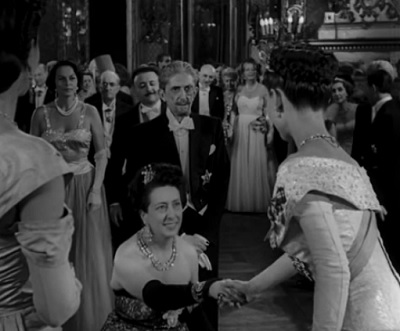
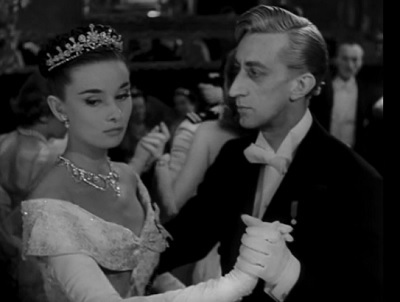
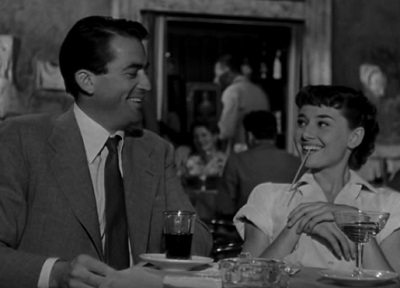
Perhaps that’s why Roman Holiday is my favorite of all princess films, a story about the glamour of everyday joys rather than balls, the excitement of the release from royalty. The film begins with Princess Ann (Audrey Hepburn) trying not to yawn through yet another official ceremony on her goodwill tour, and scandalously kicking off her tight heel, which her retinue quickly finds a way to conceal.

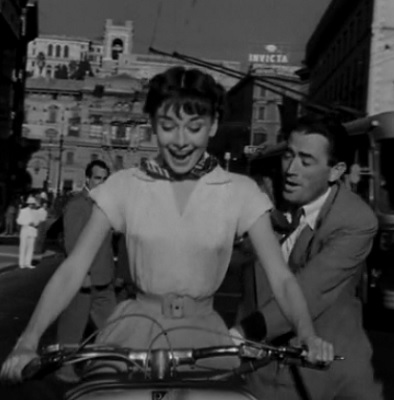
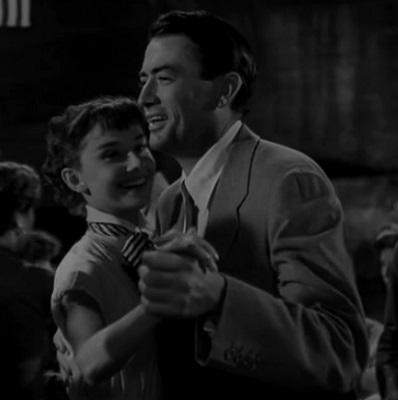
In response to her schedule for the next day, Ann rehearses her answers, her boredom coming through in every line: “Thank you, no thank you.” And which speech she’ll have to give, such as one of her regulars, “Youth and Progress.” Her frustration with all the routine soon leads to a nervous attack, a sedative, and her escape to play hooky in Rome, sans her identity or attendants. She meets handsome reporter Joe Bradley (Gregory Peck) as she wanders. He soon discovers her identity and plans for a scoop on the princess’s “holiday.” Oblivious to his discovery, she simply enjoys herself, and he, of course (this is Audrey Hepburn, after all) does too.

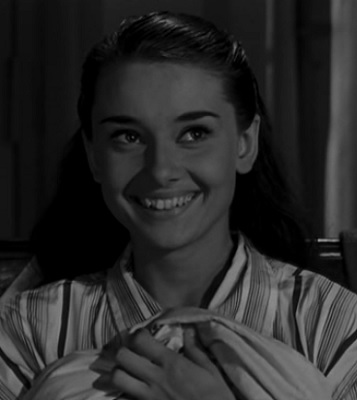
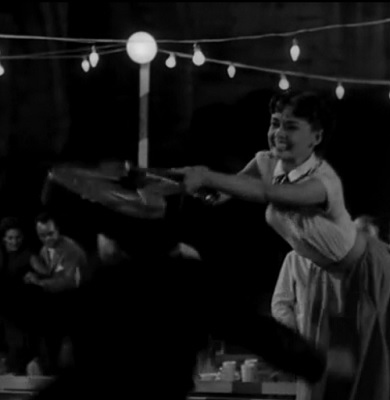
Everyday joys soon elevate the princess’s spirits from frustration to exuberance. Just look at that smile as she goes about the city…

Meeting a guy in nonofficial capacity...in PJs

Meeting a guy while in PJs

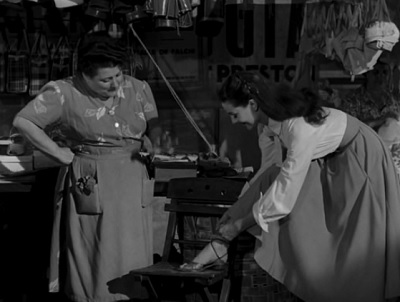
Shopping for sandals

Shopping for sandals

Getting a haircut

Getting a haircut

Drinking champaign for breakfast (Hepburn with Peck)

Drinking champaign for breakfast (Hepburn with Peck)

Trying what's forbidden... (with Peck and Eddie Albert as the adorable photographer)

Trying what’s forbidden (with Peck and Eddie Albert as the photographer)

Driving around....

Driving around….

Falling for a regular guy (if you can call Peck that)

Falling for a regular guy (if you can call Peck that)

Causing a ruckus

Causing a ruckus

Compared to such pleasures, what are designer gowns and crown jewels?

Share
Posted in: 1950s films, 1990-current films, Humor, Romantic Comedies (film), TV & Pop Culture Tagged: Audrey Hepburn, Gregory Peck, Kate Middleton, princess films, Roman Holiday, The Prince and Me

Ruined by Romance: Drive (2011) and The Hustler (1961)

08/07/2014 by leah@carygrantwonteatyou.com 4 Comments

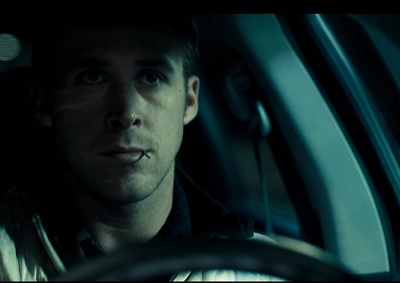
I was excited when Drive came out: finally, I thought, a new Bourne. An action flick with intelligence and fine acting, starring a man who had bypassed romantic leads after The Notebook to refine his skills in indies. And the promo! It looked exciting and moody, with the kind of premise that meant my car enthusiast husband and I would be carrying the popcorn to our seats with equal enthusiasm.

GoslinginDrive
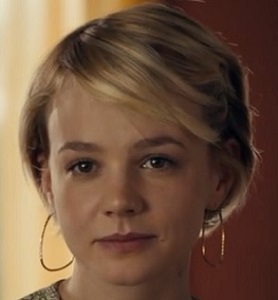
Of course I had neglected to consider the amazing skills of this woman, who would later manage to portray one of the most self-centered characters in American fiction as a victim:

Mulligan as a vulnerable waif—again

Mulligan as a vulnerable waif—again

So instead of racing cars, instead of truly exploring the depths of his character’s moral confusion and darkness, Ryan Gosling gets to spend most of the film destroying his life for a mother (Carey Mulligan) who is (a) hopelessly fragile (b) already married and (c) unutterably dull.

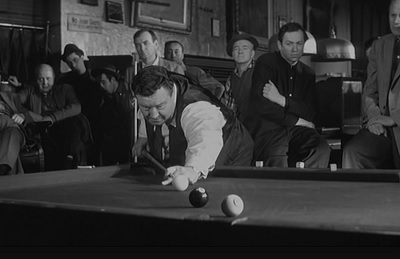
I wouldn’t say that The Hustler (1961) was ruined as completely as Drive was by a bad romance, but I was more appalled by its mistakes. Because this is a film I’d thought to be a classic, with George C. Scott as the money man and the brilliant Jackie Gleason playing Minnesota Fats, the reigning master of pool.

FatsinActionTheHustler
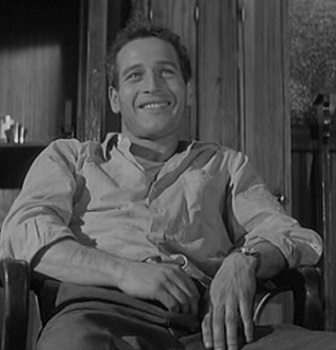
The master’s challenger is cocky young upstart Fast Eddie (Paul Newman), who struggles with confidence in spite of his successes hustling on the road. (Yes, the same character from The Color of Money).

FastEddieTheHustler
Imagine my surprise then to find that after the wonderful battle between Fats and Eddie ends with the latter deflated and broke, pool disappears for a long stretch of the film, to be replaced by a romance as inadvisable as it is boring to watch.

EddieandSarahTheHustler
Sarah (Piper Laurie) is a more interesting character than Mulligan’s Irene. She is depressed, moody, and drunk most of the time, but she is also compassionate and prickly with pride, and though I might have asked for more range and nuance from Laurie, others disagreed; she received an Oscar nomination for the role.

But whatever you think of Laurie’s performance, the romance itself is based on co-dependence. The two drink and have sex, and that’s about it; she even starts to write a story about their supposed depravity. When money-man Bert (Scott) accuses Newman of being a talented loser, the audience has to agree. It’s understandable that Eddie would align himself with Bert to lift up his career, even that he’d bring Sarah with him on the road since she can’t handle being left alone for a week (or more likely, doesn’t trust him to return). Sure, we know Bert is a bad guy, but Eddie isn’t exactly full of either options or patience.

Sarah losing her way at the Derby

Sarah with Bert (Scott), her nemesis

But to link Newman’s increased character and confidence to his remorse at his treatment of Sarah? Really? Eddie didn’t seem to mind leaving his long-time buddy and manager, Charlie (Myron McCormick), in the lurch.

Charlie (Myron McCormick) trying to win Eddie back

Charlie (McCormick) appealing to Eddie

His treatment of Charlie is far worse than his neglect of Sarah. The problem isn’t what Eddie did during his travels with Sarah and Bert; the problem is whom he chose to do it to: you don’t get involved with someone this fragile unless you’re in it for good, especially with a predator like Bert in your company. What Eddie should have done is drive the poor woman straight to rehab, not to the Derby.

Are you bored yet? Yeah, me too. I didn’t sign up for a movie about a doomed love affair—and if I had, I could have found a far better one than this. Here’s what I wanted to see, and finally did at the end of the film:

EddieandFats
Note the vulnerability on Fats’ face as Eddie begins a streak:

EddieonstreakTheHustler
Or his insistence that Eddie stop getting distracted and focus on the game, the defeat on his face clearly showing that he’s sold himself to Bert too:

FatsadviceTheHustler
Watch Bert’s celebration of his power over both men:

BerttauntingTheHustler
And most of all, witness the beautiful pool shots throughout–while you can get them. For a film called The Hustler, I didn’t get to see much hustling. Luckily, I did get to see this: Fats dressing up to rejuvenate himself during a losing streak:

GleasondressedupasFats
I could watch the pool passages in the film again and again and again.

Why do Hollywood films always use romance as a replacement for self-struggle? I haven’t read Walter Tevis’s novel, which may have managed the matter better, but the best films I know about competition don’t rely on gimmicky stand-ins as substitutes for the practice scenes (with pool!) they should have included. Even if a love affair is involved, it’s one that forces the hero/heroine to confront weaknesses. And it’s Bert—not Sarah—who tells Eddie the truth in The Hustler. If anything, I would think remorse would lead Eddie right back to the aimless life he and Sarah had been leading.

Did I enjoy the film? Yes. Would I fast forward through the Laurie-Newman scenes next time? Oh yes. Do I think at the end of the day The Cutting Edge was more convincing? Absolutely.

Share
Posted in: 1960s films, 1990-current films, Action & Sports Films, Femme fatales, Romance (films) Tagged: Carey Mulligan, Drive, Jackie Gleason, Paul Newman, Piper Laurie, Ryan Gosling, The Hustler

The Amnesia Romance Before Vows and Notebooks: Random Harvest (1942)

06/26/2014 by leah@carygrantwonteatyou.com 2 Comments
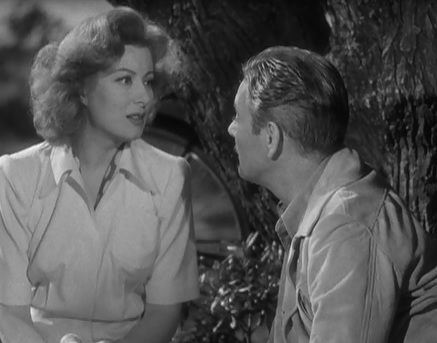
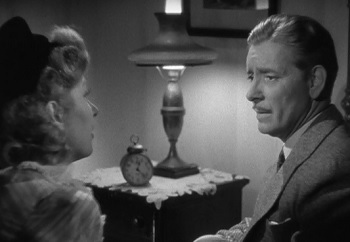
Greer Garson and Ronald Colman in Random Harvest

Greer Garson and Ronald Colman in Random Harvest

I wouldn’t usually confess to liking a romance—not the pure, unabashed kind, with brooding heroes; loyal, plucky heroines; and never-ending love. This is not, mind you, that I never watch or like them—it’s just rare for me to admit it. Did I swallow up every minute of North and South (2004 Gaskell version)? Oh yes I did. Did I, in fact, neglect to try out for cross country in high school because I was watching a bad period romance instead? Ummm. Maybe. (I’m luckily a little hazy on the details, even if my best friend claims she isn’t.)

I’m not sure then what it is about Random Harvest that makes me wiling to fess up to loving it. On the surface, this film is every bit as sentimental as the ones I supposedly (and sometimes actually) despise: I mean, it centers on AMNESIA. AMNESIA!! (Even Downton Abbey, which is about as soapy as it gets, knew to nix that Patrick Gordon/Crawley storyline.) But suspend your disbelief just briefly as I explain….

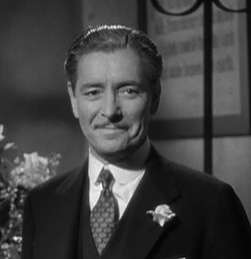
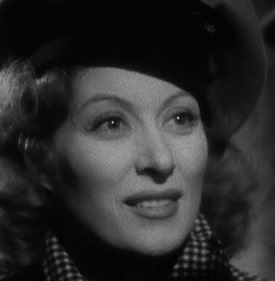
Charles Rainier (Ronald Colman), shell-shocked and without his memory after WWI, escapes from the asylum where he’s recovering when peace is declared. He happens into music hall performer Paula (Greer Garson), who pities and then falls for this man she dubs Smithy. She steals him away from his pursuers, giving up her job to help him.

Smithy at the thought of losing Paula

Smithy at the thought of losing Paula

They have years of a happy marriage together, but an accident brings back his long-term memory, while knocking out the time with Paula. All he has is a memory of a strong love that prevents him from moving on romantically.

Smithy catching sight of his bride

Smithy catching sight of his bride

Are you rolling your eyes yet? I know how it sounds, as cheesy and manipulative as romances often are. But somehow, it’s not. The film is sentimental. But it takes a good forty minutes even for these two to admit to loving one another, and along the way, Colman’s heartbreaking performance captures so well his fragility as this lost man striving for dignity, and Greer’s warmth and exuberance and naiveté make her such a good foil for him, that you’ve begun to root for them before you realize you’re in their thrall. Of course, you’re terribly frustrated by his inability to see this charmer in front of him as the love he’s been mourning, even as you admire the loyalty he doesn’t know is to her.

Paula

Paula

Given Smithy’s/Charles’ continued memory loss, you want Paula to move on, know she should, and yet….There’s something so simple and right about the relationship they shared, about the generosity of spirit that made her help him, and about his wholehearted affection for her. After all, their love has nothing to do with anything but chemistry and affection, a bond with no social trappings of any kind.

If you’re a romantic, obviously, this film is right in line with The Notebook and The Vow and other similar films about love surviving great odds. I would argue this is a much finer film than either, and its seven Oscar nominations back me up. But I have to admit that the Academy isn’t much kinder to romances than it is to comedies, and a so-called “women’s picture” like this one, focused on loyalty to one’s man, would be unlikely to do as well now as it did then in the rush of patriotism that would give Greer her Oscar for Mrs. Miniver (also 1942).

Still, it would take a film this whimsical, this sweet to make me admit—in public!—just how much a romance took me in.


Share
Posted in: 1940s films, 1990-current films, Romance (films) Tagged: amnesia, Greer Garson, Random Harvest, Ronald Colman, The Notebook, The Vow

She Got It Wrong: How Jennifer Jason Leigh Almost Ruined The Hudsucker Proxy

05/28/2014 by leah@carygrantwonteatyou.com 2 Comments

As a fan of classic 30s and 40s films, I delight in the movies that pay tribute to them, and no directors have been more glowing in their homages than the Coen brothers, with their nods to predecessors Preston Sturges, Howard Hawks, Frank Capra, and even Stuart Heisler. Their gloriously fun The Hudsucker Proxy was attacked for lacking “heart,” for being no more than a stylish imitation of favorite classic films.

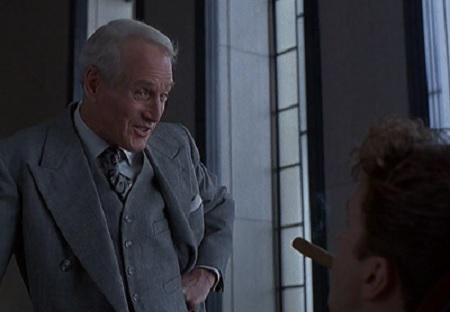
Sidney Mussburger conning Barnes (Robbins)

Sidney Mussburger (Paul Newman) conning Barnes (Robbins)

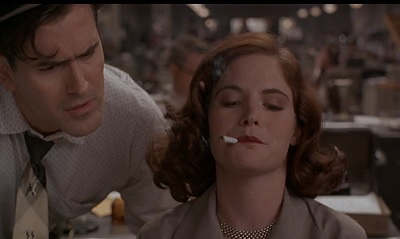
But critics praised Jennifer Jason Leigh’s performance as the typical classic film reporter, noting, as did Todd McCarthy in Variety, that she plays the role “with a Katharine Hepburn accent, Rosalind Russell’s rat-a-tat-tat speed in ‘His Girl Friday’ and Stanwyck attitude….” Occasionally, reviewers admitted that Leigh’s character, Amy Archer, wasn’t “quite right,” as McCarthy did, but they never attributed the film’s failure to the actress.

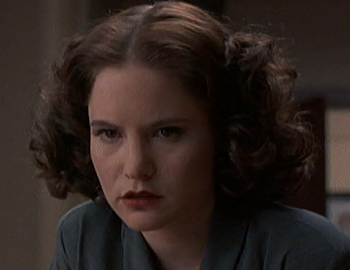
Leigh in full-on caricature mode

Leigh in full-on caricature mode

Yet to me, Leigh’s performance is the one thing that takes away from my enjoyment of this exuberant movie. Paul Newman is marvelous as the bad guy (Sidney Mussburger). Tim Robbins is terrific as the naïve Hoosier (Norville Barnes) who comes to work in the big city. His supposed stupidity makes those trying to lower Hudsucker’s stock prices quickly usher him into the presidency, yet his creativity manages to foil their plot. Archer (Leigh) plans to expose him as an idiot, much like Saunders (Jean Arthur) before her in Mr. Smith Goes to Washington.

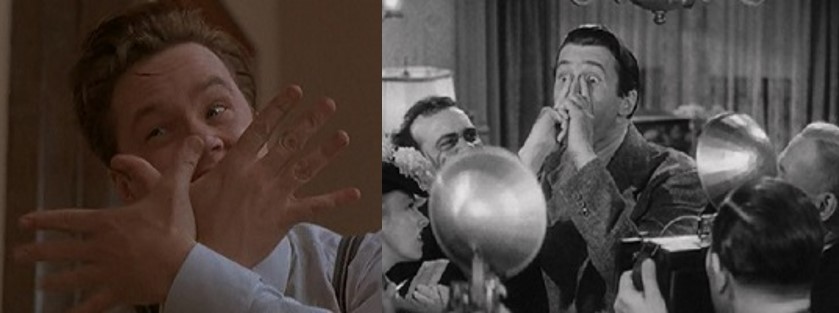
Barnes singing school song; Stewart showing a bird call

Barnes’ school song; Smith’s (Jimmy Stewart’s) bird call

But Archer’s later guilt at this character assassination and developing feelings for Barnes are utterly unconvincing, largely because her whole performance is.

One gets the feeling that Leigh only watched the films in which Stanwyck, Hepburn, and Russell were speaking at that “rat-a-tat-tat” clip and therefore missed the obvious: these actresses didn’t talk at such speeds in most of their films. They simply imagined themselves the kind of women who would be thrilled by breaking stories. Their words nearly run together not just due to the scripts, but because their characters are excited.

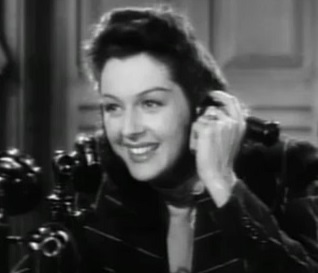
Russell sharing a great lead with editor and ex Walter Burns (Cary Grant)

Russell sharing a great lead

Leigh takes on the inflections and even some of the gestures of these actresses, but she becomes a mimicry of them rather than a believable character because the passion that infused the others’ performances is entirely absent in Leigh’s.

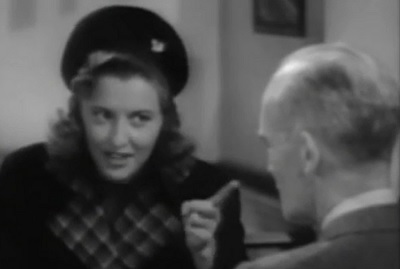
Stanwyck mid pitch

Stanwyck mid pitch

Hepburn, Russell, and Stanwyck come across as born reporters; their confidence makes them thrilling to watch: Hepburn’s assurance in mixing with dignitaries in Woman of the Year, Stanwyck’s daring plan to manipulate her employer in Meet John Doe, Russell’s masterful interview in His Girl Friday.

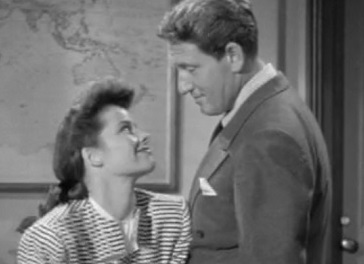
Hepburn flirting in her office after her male secretary ushers in her crush (Spencer Tracy)

Hepburn in control in her office

Archer, in contrast, is clearly aping rather than feeling confidence, and because Leigh plays her as shrewish rather than cynical, her quick transition into affection for Barnes merely looks like bad acting, which is surprising given the caliber of most of her work.

Archer falling for Barnes

Archer falling for Barnes

Admittedly, the Coens made Archer terribly insecure, a woman whose sole joy is one upping others with her Pulitzer. This was a serious mistake. How could the Coens, Hawks enthusiasts, have missed that the overlapping dialogue they’ve borrowed from His Girl Friday was not meant to be an affectation, as Archer’s is, but a reflection of the characters’ energy and enthusiasm? The film centers around Cary Grant’s excitement about being a newspaperman, and his various ploys to prevent Russell from leaving the business stem from his knowledge that she can’t resist it any more than he can.

The two films, in fact, have much in common: they’re all about the joy of the con—Barnes, in convincing the company he’s a fool (unwittingly), Walter Burns (Grant), in keeping others so occupied they miss his hilarious ruses. Both movies are a blast to watch. But The Hudsucker Proxy bombed at the box office, and I can’t help but blame Leigh, whose Archer is a drag to watch, and whose union with Barnes I rooted against. What does it matter if an actress nails the shell, if she loses the soul?

Share
Posted in: 1940s films, 1990-current films, Comedies (film), Romantic Comedies (film) Tagged: Barbara Stanwyck, Coen brothers, His Girl Friday, Jennifer Jason Leigh, Katharine Hepburn, Rosalind Russell, The Hudsucker Proxy

The Death of the Marital Rom-Com: Where Have All the Toppers Gone?

03/10/2014 by leah@carygrantwonteatyou.com 6 Comments

When is the last time you watched a rom-com about a married couple? Aside from the occasional indie and rare mainstream flick, Hollywood seems to have retired this subject matter, despite the success of TV shows such as Mad about You, Everybody Loves Raymond, and The King of Queens.

Yet I came up with this list of famous 30s and 40s rom-coms about married couples in just two minutes:

Married: Topper, Mr. Blandings Builds His Dream House, My Favorite Wife, and I Was a Male War Bride
Separated/Divorced: The Awful Truth, The Philadelphia Story, and His Girl Friday.

Those familiar with these titles might notice that these are just some of the marital rom-coms starring Cary Grant. In comparison, I came up with three mainstream marital rom-coms in the past three decades altogether—with help.

Even if married couples in 2014 are more likely to attend animated flicks with their kids, as my husband theorized, that doesn’t explain what Hollywood is producing for those without kids. And I’m not buying that we’re all boring enough to only like films about ourselves. We don’t all cook meth in our basements or fight to the death in dystopian universes. We don’t watch The Walking Dead or Game of Thrones because they remind us of barbeques with our buddies. I discovered most of my favorite marital rom-coms when single. Is it possible that Hollywood thinks singles’ imaginations fertile enough to envision shooting webs out of their wrists or being born in Middle Earth, but not to conceive of being married?

Whatever the reasoning for the endangerment of the marital rom-com, the result is unfortunate: there’s a sameness to romantic comedies now that simply didn’t exist in the 30s or 40s. While there are only so many ways we can meet and fall in love, there is an infinite variety of methods for teasing, imitating, and torturing those we know well.

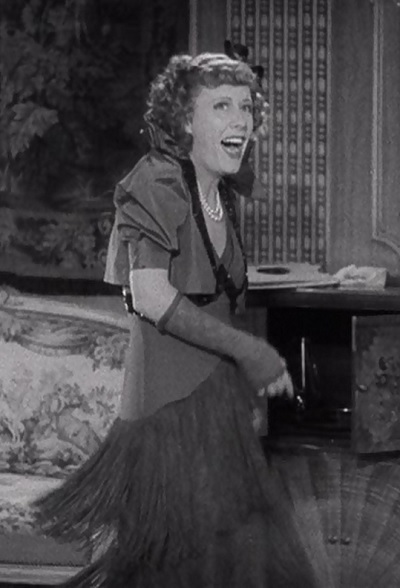
One of Cary Grant’s best marital rom-coms is The Awful Truth (1937), a film my friend Tonya introduced me to many years ago that I’ve been recommending ever since.  Grant’s and costar Irene Dunne’s impeccable timing and believable performances make this one of the funniest screwball comedies I’ve ever seen.

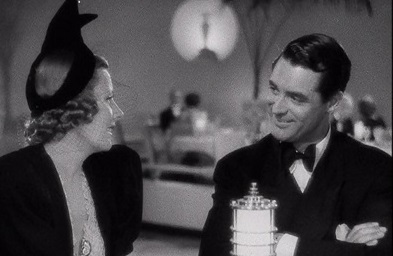
Dunne and Grant dazzling in The Awful Truth

Dunne and Grant dazzling in The Awful Truth

In the film, Jerry (Grant) and Lucy (Dunne) suspect one another of infidelity. Lucy decides to trust Jerry, anticipating Elvis’s famous song about suspicion in explaining her reasoning. Jerry, however, can’t trust her, and the two divorce. But since they’re both still in love, they can’t help sabotaging one another’s new relationships.

I have so many favorite moments from this film. One is when Jerry plays a song for his dog (during his custodial pet visit) to annoy Lucy as she’s meeting her new fiancé’s mom. In another Jerry pays the orchestra conductor to re-play a song just to watch his wife trip as her fiancé tries to lead her in a rambunctious dance.

Jerry appreciating the dance moves of Lucy's fiancé

Jerry appreciating the dance moves of Lucy’s fiancé

And there’s the scene when Lucy, aware of Jerry’s pride, shows up at his fiancée’s house pretending to be his wasted sister.

Lucy humiliating Jerry

Lucy humiliating Jerry

She begins the visit by demanding a drink and ends by performing a Marilyn Monroe-over-grate move for Jerry’s soon-to-be in-laws (years before that famous siren’s).

But perhaps the scene I enjoy most is when Jerry gushes about how much his hard-partying wife will appreciate Oklahoma, where her fiancé lives:

“Lucy, you lucky girl,” Jerry says. “No more running around the night spots. No more prowling around in New York shops. I shall think of you every time a new show opens and say to myself, she’s well out of it….”

“I know I’ll enjoy Oklahoma City,” Lucy replies stiffly.

“But of course,” he answers, “and if it should get dull, you can always go over to Tulsa for the weekend.”

Contrast these scenes with those in 1997 rom-com My Best Friend’s Wedding, technically a film of the single-gal variety, but adopting some situations from the marital rom-com. Yes, Rupert Everett is glorious in it, and Cameron Diaz and Julia Roberts are effective rivals.

Diaz confronting Roberts in My Best Friend's Wedding

Diaz confronting Roberts in My Best Friend’s Wedding

But the message is appalling: you’ll lose the guy if you’re dedicated to your profession and unwilling to ditch your education/career for his. No matter, therefore, how funny some of Roberts’ antics seem, I can’t laugh at the antiquated, offensive cliché of the desperate single woman, as the film asks me to do. But I do laugh at the partners in The Awful Truth, both so anxious to get each other back that they’re willing to forgo pride to do so. Due to his unreasonable suspicions, Jerry looks like more of a buffoon than Lucy, but neither comes out of the experience unscathed. (Of course, since Lucy trusts Jerry, we don’t know whether he just likes his space, or has cheated and the filmmakers have given him a pass for sexist reasons.)

The Awful Truth is just one of many delightful 30s marital rom-coms. There are so many more. Until current Hollywood producers come to their senses and resuscitate the subgenre, you’ll be stuck with the half-attempts at marital rom-coms like My Best Friend’s Wedding, in which the humor is only at the woman’s expense. (Forget viewing films about long-term relationships between unmarried couples–an even rarer subgenre.) So give some classic marital comedies a try. You’ll be glad you did.

Incidentally, next Sunday and Monday (March 16 and 17th), I’ll be participating in a classic detective blogathon hosted by Movies Silently. Please check out my entry in this Sleuthathon at my blog next week. I’ll be reviewing The Mad Miss Manton (1938), featuring Barbara Stanwyck as a Sherlock Holmes-Paris Hilton hybrid. And be sure to view the entries of my much more knowledgeable blogging peers!

detective-blogathon-thin-man-small

Share
Posted in: 1930s films, 1990-current films, Comedies (film), Humor, Romantic Comedies (film) Tagged: Cary Grant, Irene Dunne, Julia Roberts, My Best Friend's Wedding

Three Hypocritical Oscar Moments

03/05/2014 by leah@carygrantwonteatyou.com Leave a Comment

1. Ellen Insulting Her Wife’s Arrested Development Costar
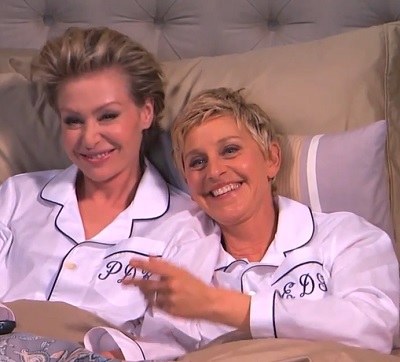
I don’t know about you, but if my wife had been flayed in the press for her plastic surgery, I would avoid digs like the one Ellen gave Liza Minnelli at Sunday’s Oscars.

Perhaps pre-spat?

Kimmel’s Spoof Oscars Night: Perhaps Pre-Spat?

While Portia de Rossi didn’t seem offended, it’s hard to believe a woman who has written a book about the suffering she endured to look perfect would approve. I would have expected this kind of behavior from Seth MacFarlane, not from the usually affable Ellen. Talk about marital insensitivity.

2. Oscar Commentators Praising “Not Looking Old” and “Growing Old Gracefully” Simultaneously
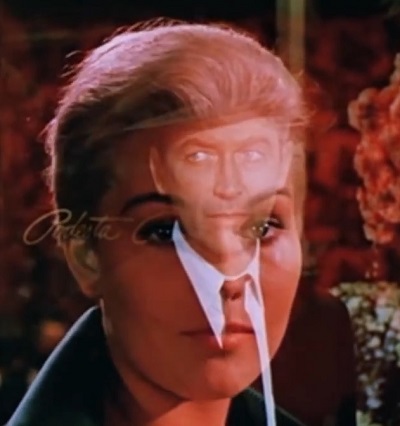
The online attacks on Vertigo (1958) star and Oscar presenter Kim Novak for her looks were appalling, especially since this is a woman who left Hollywood at the peak of her fame and lived privately for decades because she couldn’t take the objectification she experienced as a bombshell in Tinseltown. She’s been lured back into the limelight in her eighties, and look how she’s treated. Because for what would we judge a woman who starred in the film now ranked best of all time but her looks?

Vertigo

Vertigo

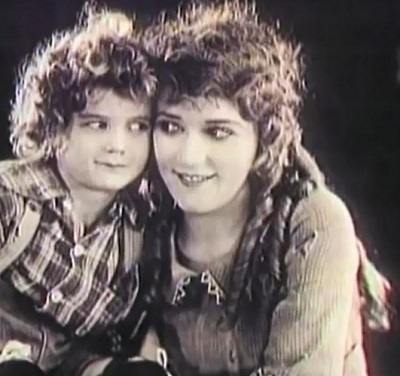
Chicago columnist Mike Royko wrote that 1976 Oscar viewers were outraged about seeing silent film star Mary Pickford (who had “grown old gracefully”) on their screens because they wanted to remember her cute and pretty, like this:

Mary Pickford (right)

Mary Pickford (right)

Royko didn’t understand why people preferred “facial skin stretched out like a drumhead.” “They cheer the illusion of Zsa Zsa,” he wrote, “but they flinch at the reality of Mary Pickford.” In 2014 an elderly woman can’t get away with natural aging or plastic surgery unless her surgeon is some kind of Houdini. Novak had the right idea originally—just get out.

3. Bestowing Honor by Awarding on the DL
Do you feel honored for a lifetime of achievement if the Academy deems the moment you’re given the statue not exciting enough for the big night? I was reminded of host Chris Rock’s reaction in 2005 when the technical awards were given in the aisle and sometimes en masse instead of individually onstage: “Next they’re gonna give the Oscars in the parking lot. It’ll be like a drive-through Oscar lane. You get an Oscar and a McFlurry and keep on moving.”

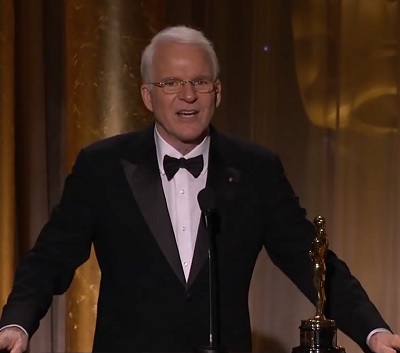
I found the choice to separate the honorary and competitive awards especially disturbing given that the former are so often given to those the Academy considers unworthy of notice for years and belatedly realizes they unjustifiably snubbed; such as one of this year’s honorees, Steve Martin, and Cary Grant (yes, the only classic film star many people can name).

Steve Martin, honored at separate event

Steve Martin, honored at separate event

Unsurprisingly, honorary Oscars are frequently awarded to those who mainly appear in/write/direct comedies, so I thought Jim Carrey’s jokes and Bill Murray’s shout-out to Harold Ramis were timely reminders that comedians receive no credit unless they appear in dramas—and usually not then—until the Academy’s honoree-may-be-near-death-oops awards, honors that now aren’t even bestowed on the night itself. Classy.

What bothered you most about this year’s Oscars?

Share
Posted in: 1990-current films, Humor, Oscars, Uncategorized Tagged: Ellen, Honorary Oscars, Kim Novak, Liza Minnelli, Mike Royko, Oscars, Portia de Rossi, Steve Martin, Vertigo

No Oscar Love for Harold Ramis: The Academy, as Humorless as Ever

02/27/2014 by leah@carygrantwonteatyou.com 6 Comments

Harold Ramis, whom President Obama labeled “one of America’s greatest satirists,” died this week shortly before this Sunday’s Oscars. His list of co-writing credits is astonishing: Animal House, Stripes, Caddyshack, Ghostbusters, Groundhog Day. He also directed the latter, Caddyshack, and Vacation. I’m sure the Academy will clap enthusiastically this weekend when his face appears in the “In Memoriam” tribute, but they won’t express what they should: regret. Ramis never won an Oscar; in fact, he was never even nominated.

Harold Ramis: won A BAFTA, but no Oscar

Harold Ramis: won A BAFTA, but no Oscar

In the years the Academy snubbed Ramis, comedies did make appearances in the original screenplay category, including Private Benjamin, Splash, Beverly Hills Cop, Sleepless in Seattle, and Dave.  But many of the nominations were of grim films you didn’t know then, much less now. The following were the original screenplay winners the years Ramis could have been nominated:

Coming Home (Animal House), Melvin and Howard (Caddyshack), Places in the Heart (Ghostbusters), and The Piano (Groundhog Day).

Most Oscar nominees for original screenplay are not bad movies; the Academy saves their embarrassing choices for the best film category (Crash, anyone?) But have these screenplay winners stood the test of time? Have they influenced you—or anyone you know—in any way?

Here’s a test for you:

  • Can you quote from it?

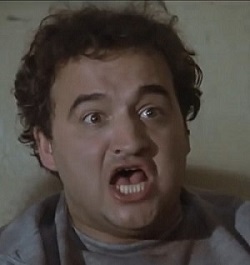
Belushitoga

  • Do you adopt cultural affectations from it (perhaps Roman)?
  • Have you sung along with it?
  • Does it give you more understanding for the weak kid or the outsider, perhaps make you feel more comfortable challenging authority? (See this great Ramis bio.)

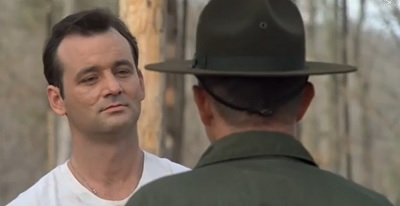
Stripes

  • Does it bring back childhood memories that make you grin, maybe your best Halloween costume ever?

Ghostbusters

  • Have you lost count of how many times you’ve seen it?
  • Do you (be honest) feel tempted to dance with a certain character’s nemesis during the closing scene?

gopherCaddyshack

Of course, the Academy—and critics in general—have long shown more appreciation for drama than comedy, failing to see in it the far subtler, and often more trenchant and artful cultural critique it can provide. In 1941, Preston Sturges, a writer/director who, like Ramis, was fond of what’s often dismissed as “adolescent” humor, wrote an entire film addressing the greater appreciation given to drama, Sullivan’s Travels. But unlike with the usual Oscar winners, this time, the case for comedies is much more persuasive.

It begins with a scene between a director (Sullivan, played by Joel McCrea) and his bosses (Mr. LeBrand and Mr. Hadrian). Sullivan has decided to write a serious film, which his bosses fear will be less profitable than his usual comedies. Why not do a sequel to your Ants in Your Plants of 1939 instead? they ask him. His movies are inspiring, they tell him. They don’t, as Hadrian puts it, “stink with messages.”

Sullivan (Joel McCrea in the middle) with his bosses

Mr. LeBland, Sullivan (Joel McCrea) and Mr. Hadrian

Sullivan tries to argue them into supporting his new effort, showing them a scene from his O Brother, Where Art Thou? (yes, Coen fans, that’s where they got it)

Sullivan: “You see the symbolism of it?….It teaches a lesson, a moral lesson, it has social significance.”

Hadrian: “Who wants to see that kind of stuff? It gives me the creeps.”

….

Sullivan:  “I want this picture to be a commentary on modern conditions, stark realism, the problems that confront the average man.”

LeBrand: “But with a little sex.”

….

Hadrian: “How about a nice musical?”

Sullivan: “How can you talk about musicals in a time like this, with the world committing suicide, with corpses piling up in the streets?…..”

Hadrian: “Maybe they’d like to forget that.”

After Hadrian convinces Sullivan he’s too inexperienced with suffering to direct movies about it, the latter decides to go on a quest to learn about poverty firsthand. A despondent LeBrand barks at his assistant, “Get me a copy of that O Brother, Where Art Thou? I guess I’ll have to read it now. Make that two copies.  Why should I suffer alone?”

By the end of the movie, Sullivan agrees with his bosses that he should keep directing comedies. He discovers that his movies, silly as they may be, have something to offer that dramas never will: “There’s a lot to be said for making people laugh. Did you know that’s all some people have?”

In fact, Sturges begins the movie with a dedication that could have been written for Ramis: “To the memory of those who made us laugh….in all times and in all nations, whose efforts have lightened our burden a little….” Not a bad epitaph, from one comedic genius to another.

Incidentally, Sullivan’s Travels (1941) ranked on the AFI’s top 100. But you guessed it: Not a single Oscar nomination.

Share
Posted in: 1980s films, 1990-current films, Comedies (film), Humor, Oscars, Romantic Comedies (film), TV & Pop Culture Tagged: Academy Awards, Animal House, Bill Murray, Caddyshack, Ghostbusters, Groundhog Day, Harold Ramis, Preston Sturges, Sullivan's Travels, The Oscars
« Previous 1 2 3 4 5 6 7 8 Next »

Recent Posts

  • 100 Years Later, Still Scary: Dr. Caligari
  • Escaping Out of the Past (1947)
  • A Weeper for Those Who Love Jerks
  • Thank You, Academy, for Not Infuriating Me
  • Challengers (2024) Is a Bad Movie

Subscribe to Blog via Email

Enter your email address to subscribe to this blog and receive notifications of new posts by email.

Categories

  • 1920s films
  • 1930s films
  • 1940s films
  • 1950s films
  • 1960s films
  • 1970s films
  • 1980s films
  • 1990-current films
  • 2020s films
  • Action & Sports Films
  • Anti-Romance films
  • Blogathons
  • Childfree
  • Comedies (film)
  • Drama (film)
  • Feminism
  • Femme fatales
  • Film Noir/Crime/Thriller & Mystery
  • Gloriously Silly Scenes
  • Horror
  • Humor
  • Mae West Moments
  • Musicals and dancing films
  • Oscars
  • Random
  • Romance (films)
  • Romantic Comedies (film)
  • The Moment I Fell for
  • Turn My Sister into Classic Movie Fan
  • TV & Pop Culture
  • Uncategorized
Share
Classic Movie Blog Hub Member

Recent Comments

  • leah@carygrantwonteatyou.com on Meg Ryan’s Fate Foretold in Joe Versus the Volcano
  • Ryan on Meg Ryan’s Fate Foretold in Joe Versus the Volcano
  • leah@carygrantwonteatyou.com on 100 Years Later, Still Scary: Dr. Caligari
  • The Classic Movie Muse on 100 Years Later, Still Scary: Dr. Caligari
  • leah@carygrantwonteatyou.com on 100 Years Later, Still Scary: Dr. Caligari

Archives

  • November 2025
  • September 2025
  • May 2025
  • March 2025
  • January 2025
  • November 2024
  • August 2024
  • July 2024
  • May 2024
  • March 2024
  • February 2024
  • December 2023
  • November 2023
  • October 2023
  • September 2023
  • August 2023
  • July 2023
  • May 2023
  • April 2023
  • March 2023
  • January 2023
  • December 2022
  • November 2022
  • September 2022
  • July 2022
  • May 2022
  • April 2022
  • March 2022
  • February 2022
  • October 2021
  • September 2021
  • April 2021
  • March 2021
  • February 2021
  • December 2020
  • October 2020
  • September 2020
  • July 2020
  • May 2020
  • April 2020
  • March 2020
  • February 2020
  • December 2019
  • October 2019
  • September 2019
  • June 2019
  • May 2019
  • April 2019
  • February 2019
  • January 2019
  • November 2018
  • September 2018
  • July 2018
  • June 2018
  • May 2018
  • April 2018
  • March 2018
  • February 2018
  • January 2018
  • November 2017
  • September 2017
  • August 2017
  • July 2017
  • June 2017
  • May 2017
  • April 2017
  • March 2017
  • February 2017
  • January 2017
  • December 2016
  • November 2016
  • October 2016
  • August 2016
  • July 2016
  • June 2016
  • May 2016
  • April 2016
  • March 2016
  • February 2016
  • January 2016
  • December 2015
  • November 2015
  • October 2015
  • September 2015
  • August 2015
  • July 2015
  • June 2015
  • May 2015
  • April 2015
  • March 2015
  • February 2015
  • January 2015
  • December 2014
  • November 2014
  • October 2014
  • September 2014
  • August 2014
  • July 2014
  • June 2014
  • May 2014
  • April 2014
  • March 2014
  • February 2014
  • January 2014

Meta

  • Log in
  • Entries feed
  • Comments feed
  • WordPress.org

Copyright © 2025 Cary Grant Won't Eat You.

Church WordPress Theme by themehall.com