Cary Grant Won't Eat You

Classic movies for phobics

  • About
  • eBooks
  • Previous Blogathons
Classic movies for phobics

1990-current films

Meg Ryan’s Fate Foretold in Joe Versus the Volcano
10/01/2016 by leah@carygrantwonteatyou.com 17 Comments

megryanjoevsvolcano
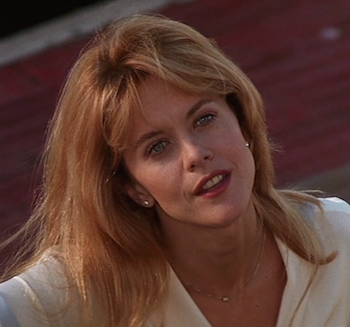
Meg Ryan has had a peculiar career: America’s darling after When Harry Met Sally (1989), she has struggled to avoid typecasting as the perky cute girl ever since, and largely failed, settling for a saccharine portrayal in Sleepless in Seattle (1993), and veering into downright parody of her persona in the remakes You’ve Got Mail (1998) and The Women (2008), with brief moments of authenticity (When a Man Loves a Woman) in between. While some of the blame must rest with Ryan, it’s clear that Hollywood producers failed to recognize (or thought audiences would) the depth in When Harry Met Sally, instead plying the poor actress with cane sugar ever since. That’s why it’s so fascinating to peer earlier into Ryan’s career, when the exploration of character was (at least partially) her own to make. Joe Versus the Volcano (1990) is particularly fascinating since she plays three roles, which curiously foretell her fate.

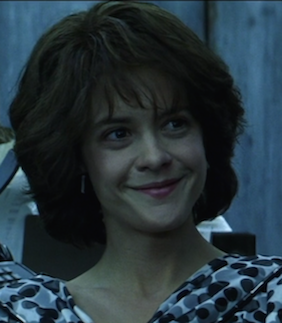
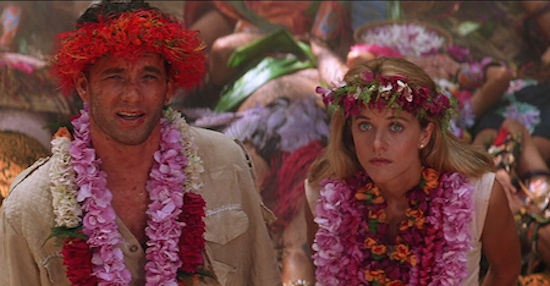
The plot is strange, so I’ll just begin with the basics: Joe’s (Tom Hanks’) fears–especially for his health–keep him mired in a dreadful job, until a dire prognosis unexpectedly snaps him out of depression and leads him on a journey to an island where an odd fate awaits him. He goes on a date with coworker DeDe (Ryan) before he departs, then meets half-sisters Angelica (Ryan) and Patricia (Ryan) on his journey. Attracted to all three (he keeps saying they look familiar), Hanks falls for only one, Patricia, who captains the boat to his destination, and plays a part in what awaits him there.

In DeDe, Ryan channels Easy Living‘s (1937) Mary Smith (Jean Arthur). Naïve and sweet and just a little lost, DeDe disperses–at least a little–the heavy gloom of the office, where she and Joe suffocate under fluorescent lighting and the repetitive yelling of their boss (Dan Hedaya, in a darkly funny turn).
megryan-dede-joevsvolcano
When Joe quits the job and asks DeDe out, it’s an act of salvation, and you can’t help but laugh at her startled, perky response to finding the dead weight in her office come to vivid life. Like Arthur, Ryan performs this role with relish and charm, with a chirpy voice that doesn’t quite grate in the small time we’re listening to it. Much more time spent with this character would start to wear audiences thin (as Arthur does for me–uncharacteristically–in Easy Living).

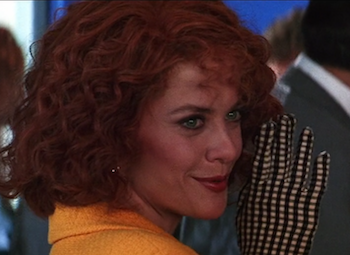
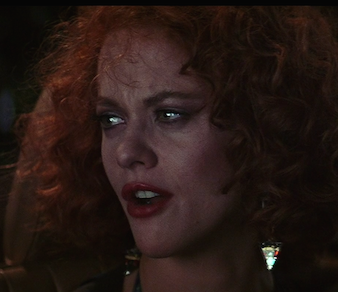
Next Joe encounters oddball Angelica (Ryan), who calls herself a flibbertigibbet.
megryanangelica-joevsvolcano
We viewers soon question her characterization, realizing that this woman has no idea who she is. She’s donned a pretentious, flat delivery and tired expressions culled from movies in her LA home. Her clothes likewise seem costumish, as does her carefully stylish smoking. She’s a combination of affectations she’s adopted, none of which can delay for long the depression and fragility just beyond her careful poise. If DeDe recalls the cute head bobbing and springy step Ryan deployed too consciously by the point of You’ve Got Mail, Angelica conveys her pain at the impersonation, her relief at capturing her fuller self in movies such as When a Man Loves a Woman.
megryanangelicajoevsvolcano-crying
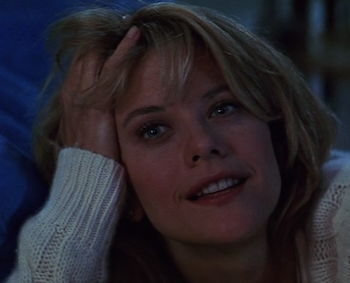
And of course, in Patricia, Joe’s last Ryan encounter, we find our heroine. Healthy besides being “soul sick” for taking her father’s money, Patricia is smart and strong and brave, our Jean (Barbara Stanwyck) of The Lady Eve (1941). Like Jean, she’s an “adventuress on the high seas” and wise enough to guide Joe on the final steps of his self-discovery.
megryan-patricia-joevsvolcano
This is the Ryan we love: cute, yes, but only in moments of glee; she’s bold and womanly and fun, yet vulnerable and flawed. It’s the type of role Ryan excelled at. While the two other parts feel like conscious acts (and should be, as the roles are archetypes rather than fully sketched-out characters), this last she fully embodies. And we see the Stanwyck type of performer she could have consistently been, had When Harry not doomed her to full-on cuteness.

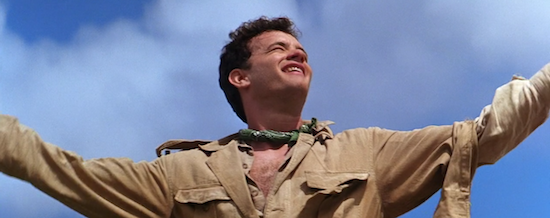
As for the film itself, what to say? It’s about redemption and faith, journeys physical and spiritual, but is most remembered for orange soda and hypochondria jokes.
tomhanksjoevsvolcano
The fact is, Joe versus the Volcano (1990) is an odd duck of a film. Its uneven tone and quirky storytelling won it both mockery and box office failure, and a trail of cult devotees ever since. Frank Capra and Preston Sturges fans will adore it, especially those who admire those directors’ darker-tinged fare, Sullivan’s Travels (1941) and Meet John Doe (1941) and The Miracle Woman (1931). But snooty film types will scoff (tellingly, Roger Ebert loved it); they’ll say it’s silly. And they’re right–it is silly. Fundamentally so.
joevsvolcanoisland
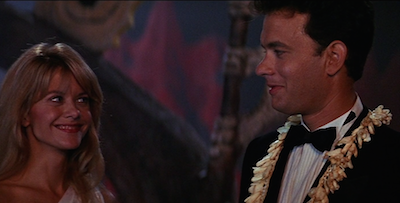
But, as one devotee pointed out, you need to remember that the writer/director is John Patrick Shanley, who also helmed and wrote Doubt (2008) and penned Moonstruck (1987); this guy may be consumed with issues of faith and hope, but he also loves distracting diatribes about fake hands voiced by Nicholas Cage. If you’re not open to that kind of genre blending, you’ll hate the movie. But if you agree with me that Shanley’s work has a peculiar beauty and insight, you’ll find yourself riveted and laughing, admiring Tom Hanks’ finest performance, and one of the funniest portrayals of both fashion (thanks to Ossie Davis) and workplace culture in any medium. It’s even romantic, with the two leads’ chemistry revealing what a better script and direction could have made of You’ve Got Mail.
megryantomhanksjoevsvolcano|
And the soundtrack is so unbelievably fun and fitting that you won’t ever hear one of those songs again without picturing the story.

For me, this movie was life altering. I watched it first in the theater, and couldn’t stop laughing at the opening scene of work drudgery. But no one else was laughing. Surprised, I turned to my buddy, Carrie, and saw that she was enjoying it too. We called our sicknesses after that “brain clouds” (you have to see the film), and the movie represented for me that wonderful thing between friends: a joke you get that others don’t, a bond you share that others don’t understand. Something that in snobby moments makes you feel special, and in more enlightened ones makes you appreciative. I was in high school then, still finding my way, and it was lovely to find through Joe a compatriot in Carrie, to realize that quirkiness need not be isolating, that it can be, in fact, a source of joy. My loud laughter in silent theaters has been a constant ever since.

I’ve been watching the film again today for my entry in the wonderful Dual Roles blogathon, hosted by Christina Wehner and Silver Screenings. (Check out great entries here!) And as I view the movie, I find myself hoping, like Joe: I hope Ryan stops stalling on DeDe and Angelica, and instead gets her Patricia back, gives us in future performances that authenticity that was so wholly hers at the start. She should watch the film again, remember that Joe, like her, lost his way for years, and found it again. Maybe if she watches it she’ll rediscover that energy and spirit and realness that charmed us all, and are still hers to reclaim.
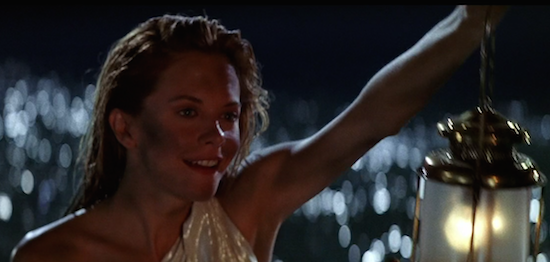
megryan-wonderfuljoevsvolcano

Share
Posted in: 1980s films, 1990-current films, Blogathons, Comedies (film), Feminism, Romantic Comedies (film) Tagged: America's sweetheart, Film, flops, Hollywood typecasting, Joe versus the Volcano, Meg Ryan, roles

Gary Cole’s Brilliant Lumbergh

05/15/2016 by leah@carygrantwonteatyou.com 12 Comments

It says something about me–the fact that I have a red Swingline stapler. I was a proselytizer where Office Space (1999) was concerned: My rec of the film was one of the ways I earned credibility with roommates and dates (the stapler itself was a parting gift from a convert). I even held viewing parties of the movie in grad school to remind peers that life could be worse: we could be in cubicles writing TPS reports.

So when asked to pick a favorite bad guy for this year’s villainathon, Gary Cole’s Bill Lumbergh seemed an obvious choice. The only surprise is that I needed someone (in this case, my sister, whose coworker gave her suspenders covered in flair) to remind me.

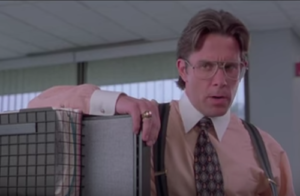
GaryCole-BillLumbergh
What I find so compelling about Cole’s performance is that he uses his attractiveness to add to the sleazy quality of his character. That sexy bedroom voice; that graceful, lounging pose are hilarious when employed to deliver directives rather than pick-up lines. Note how his arm rests on Peter’s cubicle, his slow, almost sensual movements with the coffee. Cole knows he’s sexy, and just how to use that sensuality to make us laugh.

Of course, Cole has always been a comedic gem, as Veep fans can attest. I fell for him in The Brady Bunch Movie (1995) and A Very Brady Sequel (1996), but others have been following him much longer. Despite the longevity and versatility of his career, he has little name recognition. Yet I would guess most comedy fans out there know the name Bill Lumbergh. Of what could have been a throwaway villainous role, Cole created THE example of corporate villainy–obsessed with minutiae, valuing bottom line above all, utterly impervious to human responses to his actions. When watching him, you have the feeling that the feds could be busting down the office doors in a raid, and Lumbergh would still calmly walk over to his employees’ desks, and ask about memos.

Consider his approach to Peter (Ron Livingston) at the start of the film. Lumbergh (Cole) greets him by asking what’s happening, with so little affect that Cole illustrates in two words how little management cares. His slow drawl of “yeah” is one of the most memorable lines in a quotable movie, largely because it means nothing at all. It’s simply a transition into the corporate speak he’s about to utter. (It is also such a favorite word of his that he even says it before “hi” on answering machine messages.) What I find hysterical about Lumbergh is the distance between the exaggerated words he uses (“special,” “terrific,” “great”) and Cole’s flat delivery. Even in Peter’s nightmares about Lumbergh sleeping with his girlfriend, his arch enemy is still uttering his favorite banalities in a near-monotone (“mmmkay?” is another favorite).

Lumbergh’s facial expressions are as funny as his words. Observe his gaze at the birthday cake prepared for him, as if he can’t wait for this attempt at office civility to end. His thanks, especially how “special” this celebration for him is, demonstrates the degree of his insincerity.

Cole relishes exaggerating just how awful this man is. (I think he particularly enjoyed that line about pesticide to Milton.) But why I find Lumbergh such a compelling villain is just how real he is, how perfectly he embodies the ugly side of American capitalism. Other villains are more theatrical, exciting, but they don’t scare me; they are so clearly fictional. But as we viewers watch Lumbergh, we think, I know this guy. He’s someone we’ve met. He’s someone we’ve worked with (but hopefully not under). He represents, as Peter claims, “all that is soulless and wrong.” And he’s not going away anytime soon.

This post is part of the Great Villain blogathon sponsored by Speakeasy, Shadows and Satin, and Silver Screenings. Go see some brilliant entries here.

Share
Posted in: 1990-current films, Blogathons, Comedies (film), TV & Pop Culture Tagged: Bill Lumbergh, Gary Cole, Office Space

Top 4 Lazy Evening Films on Netflix

05/01/2016 by leah@carygrantwonteatyou.com 2 Comments

So you feel like doing nothing tonight, just want a film to make you smile? Here are four movies now on Netflix that I dare you to watch without grinning.

4. Bowfinger (1999)
Steve Martin, a conniving producer/con man down on his luck, forces paranoid action megastar Kit Ramsey (Eddie Murphy) into his film by stalking him and shooting his scenes without his knowledge. You in yet? Written by Steve Martin. Now?:)

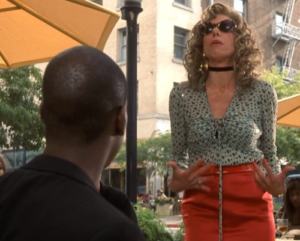
Favorite moment: Carol (the amazing Christine Baranksi), who doesn’t know Kit is being manipulated, begins her scene with him by ambushing him at a restaurant, ranting about soybeans and aliens.

BaranskiMurphy-Bowfinger
Bowfinger is not a comedy classic, but it’s a pointed satire on Hollywood—so silly and so fun.

3. Charade (1963)

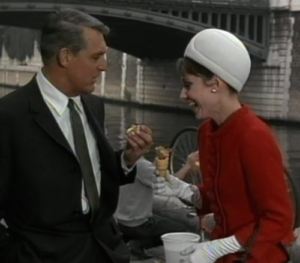
HepburnGrant-Charade
Cary Grant, Audrey Hepburn, and Walter Matthau (1963) star in this lighthearted romance/thriller. Basically, you feel no worry for Regina (Hepburn), despite the danger she’s in, and will give only cursory attention to the mystery itself, despite its fascinating twists and turns. Instead, you’ll just enjoy the cleverness of the script and watching Hepburn and Grant having a blast together.

2. Money Pit (1986)

MoneyPit-HanksLong
This updated version of Mr. Blandings Builds His Dream House (1948) is hilarious whether or not you’ve ever been foolish enough to build a house. With Tom Hanks at his broadest, comedic best, and Shelley Long before her ego got too big for her. I know everyone else will claim the original better (Loy, the paint scene!), but Philip Bosco and Maureen Stapleton are so funny in it, and Hanks in hysterics makes me giggle every single time.

1. Begin Again (2013)

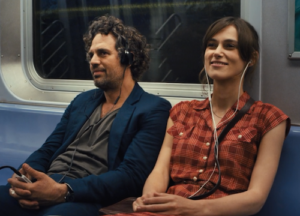
BeginAgain-RuffaloKnightley
Not as brilliant as Once, but writer/director John Carney manages again to craft a story that’s moving and sweet and joyful without ever veering into sentimentality–or even romance. A celebration of music and collaboration as cures for what ails us, with charming performances by Keira Knightley and Mark Ruffalo. Quick warning: If you don’t want the fragile, soulful tunes in your head for the rest of the week, don’t watch.

Share
Posted in: 1960s films, 1990-current films, Comedies (film), Romantic Comedies (film), TV & Pop Culture Tagged: Begin Again, Bowfinger, Charade, Money Pit

Remaking Hitchcock

04/23/2016 by leah@carygrantwonteatyou.com 4 Comments

This week I’ve been lucky enough to convince author Michael Gutierrez into guest posting. Check out his wonderful book, The Trench Angel (which deserves cinematic treatment of its own).

Back in the early 90s, during a time when there were a spate of remakes of classic films, my grandfather posited: “Why don’t they just redo shitty movies?”

He was right, in a sense. Remaking the greats because you think they’ll appeal to a modern audience is usually a lost cause. His Girl Friday will always be better than Switching Channels, even if you add modern stars like Burt Reynolds (the 80s loved a good mustache). But “shitty movies” are often shitty for several fundamental, inalterable reasons, be it bad acting, poor production values, or, most likely, a terrible story idea. These are films that can’t be saved. Take Showgirls: you can blame star Elizabeth Berkley’s humorless performance or director Paul Verhoeven’s lack of visual dexterity, but the film would probably still blow even if you gave the camera to Scorsese and put Meryl Streep in pasties.

Yet, there’s a middle ground: remake mediocre films, movies that just missed being great for one or two specific, easily discernible reasons. It’s been done before, most recently with Ocean’s Eleven. The original Rat pack vehicle was poorly paced and weighed down by a lazy script, bad jokes, and half-in-the-bag performances. Enter George Clooney and Steven Soderbergh and you’ve got a remake that trumps the original.

Case in point is Alfred Hitchcock, a man who made plenty of just-misses. For every Rear Window or North by Northwest, you’ve got a handful of Suspicions. Hitchcock, himself, had no issue with remakes, re-doing The Man Who Knew Too Much twenty years after his original version. While many of his lesser films should be left alone (I’m looking at you Stage Fright), a few of his other movies were nearly great, but suffered under the weight of one or two specific flaws.

Here are three that Hollywood should re-do and I’ll even give them a hand by telling them how to do it.

Foreign Correspondent (1940)
The Story: American reporter Huntley Haverstock (Joel McCrea) is sent to Europe to dig up a story on the continent’s impeding war. While there, he finds himself caught up in a sinister international conspiracy, falls in love with the chief villain’s daughter (Laraine Day), while palling around in the Netherlands with fellow reporter Scott ffolliett (George Sanders).

The Good: There’s a great cat and mouse chase through a field of Dutch windmills and some fantastic Sanders scenes where he binge-eats the scenery.

The Problem: The romance between McCrea and Day has all the sexual charisma of an arranged marriage. In addition, Sanders steals the film. Even Hitchcock seems to realize he cast the wrong star, and pretty much turns over the last third of the film to the charming Englishman. Finally, the end transforms into a piece of pro-war propaganda, trying to convince America to join the fight against the Nazis. It made sense at the time, but now it dates the film.

The Solution: Cast Ryan Gosling and Marion Cotillard. Besides being capable performers, they’re both so pretty to look at. Plus, you could actually shoot the film in Amsterdam. Why aren’t there more films in Amsterdam?

The Lady Vanishes (1938)
The Story: Young European Iris Henderson (Margaret Lockwood) is travelling home via railway to get married. On the trip she befriends Miss Froy (Dame May Whitty), who suddenly disappears in transit, though the train has made no stops. Henderson and fellow passenger Gilbert Redman (Michael Redgrave) investigate, only to find themselves caught up in a sinister international conspiracy.

The Good: It’s a great set-up with some tense scenes, red herrings, and a bouncy tone. Plus, you’re on a train and trains are awesome.

The Problem: Lockwood doesn’t come across as someone willing to challenge a waiter, let alone a cabal of killers. It should have been Myrna Loy or Katharine Hepburn. Redgrave’s fine, but Cary Grant would have been better. There are also some really hokey special effects where the train looks like a child’s model set and Hitchcock spends too much time setting up the story and gives away the villain too quickly.

The Solution: I know they re-did this film with Jodie Foster as Flightplan, and I’ve heard it isn’t bad, but I can’t watch movies set on airplanes without a heavy, accompanying dose of Xanax, so let’s keep it on the train because trains are, as you know, awesome and put in Reese Witherspoon and Ethan Hawke. Give the characters some age and gravitas. Or if they won’t do it, Cotillard and Gosling will do.

The 39 Steps (1935)
The Story: Robert Hannay (Robert Donat) finds himself caught up in a sinister international conspiracy. There’s a lot of running through fake Scottish moors, an evil dude with half a finger missing, and Madeleine Carroll going full Stockholm Syndrome on Donat after he kidnaps her.

The Good: It sounds bad, but it isn’t. Seriously. It’s just not great. Even if the moor scenes were filmed on a sound stage, the running is fun and the scene at the end in the Palladium when Mr. Memory reveals the secrets of the 39 Steps organization is brilliant.

The Problem: How many memorable movies have you seen with Donat or Carroll? There’s a reason. Hitchcock once famously referred to actors as “cattle” and he must have gotten these two off the slaughterhouse floor. At times, you’re rooting for 39 Steps to kill Donat, while Carroll’s quick turn from kidnap victim to doting lover is super uncomfortable.

The Solution: Keep the missing finger, film on real Scottish moors, and bring in Charlize Theron and Tom Hardy. A Mad Max reunion. Unlike Donat, Hardy looks like he could actually land a punch and Theron seems like she’d take a little more convincing to fall in love with her kidnapper than a charming smile. Or, hell, just cast Gosling and Cotillard. That should work.

by Michael Gutierrez

Share
Posted in: 1930s films, 1940s films, 1990-current films, Femme fatales, Film Noir/Crime/Thriller & Mystery, Random Tagged: Alfred Hitchcock, remakes

Surreal Reproduction: When Bette Met Mae (2014)

04/17/2016 by leah@carygrantwonteatyou.com Leave a Comment

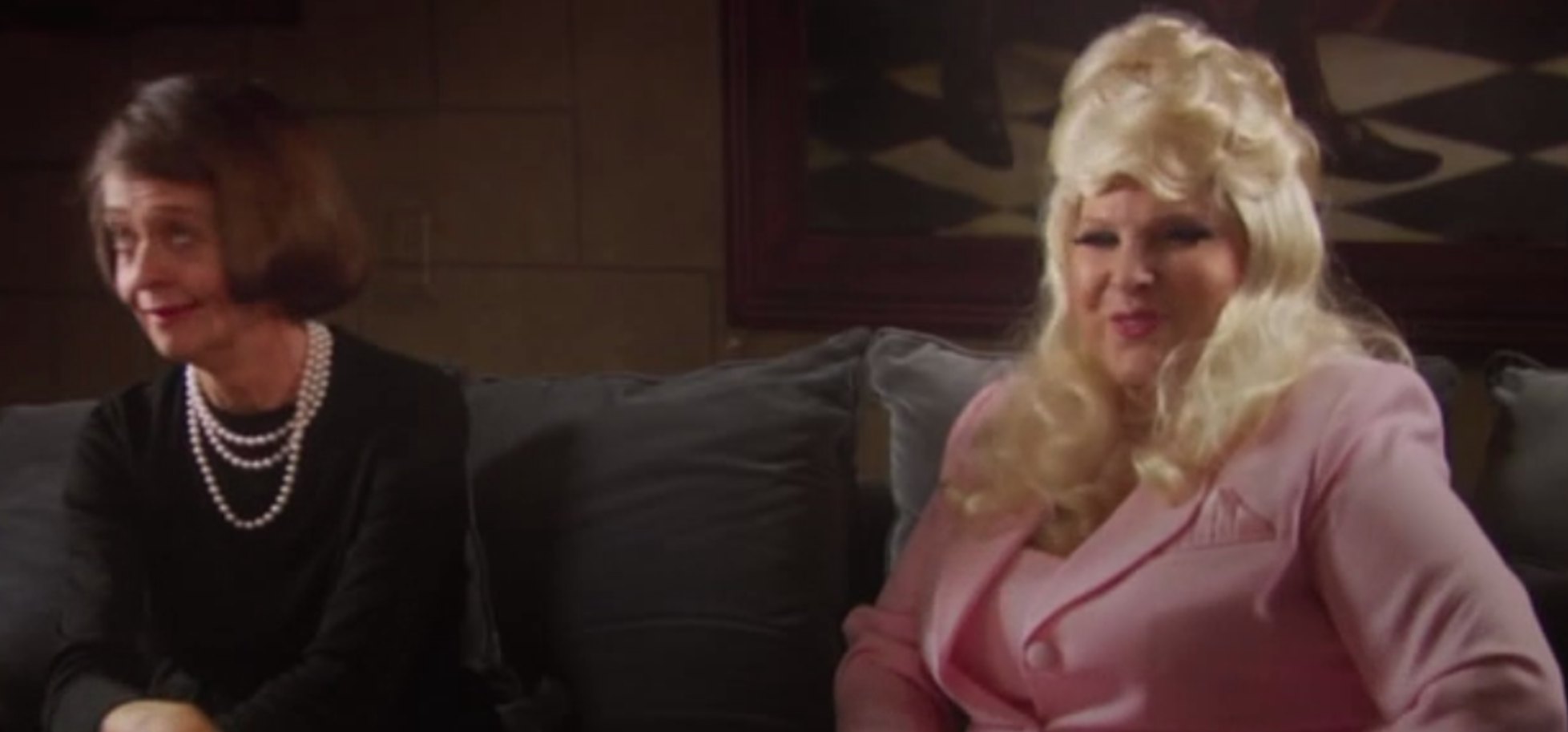
WhenBetteMetMaeOn November 13, 1973 Wes Wheadon was the bartender for a party that joined  superstars Mae West (Victoria Mills) and Bette Davis (Karen Teliha) for the first time. He captured their encounter on audio tape, and then reenacted the event with lip-syncing actors, producing it more than 40 years later.
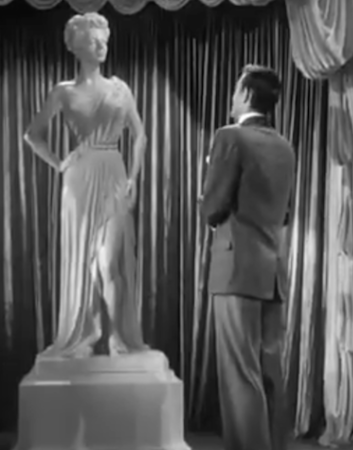
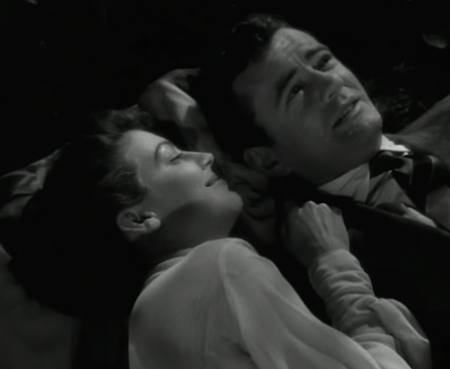
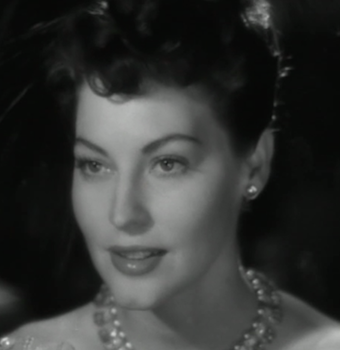
On the one hand, the film is fascinating–capturing the mutual admiration between these two strong female icons, particularly Davis’s for her hilarious predecessor. On the other, the poor quality of the audio gives me a skeezy feeling, like this recorder was hidden in a drawer and the actresses unaware, or the whole thing was faked or improperly edited for effect (not hard with such easily imitated voices). I know that the time period and recorder quality are likely responsible for the seeming sketchiness, but since both women are long dead and the event likely forgotten, it’s hard not to question even as you’re enjoying the interplay between these heroines of the screen.

I was fascinated by Davis’s descriptions of her battles for control and for actors’ rights, as with her recounting of Ronald Reagan’s tenure as SAG president. She suggests he sold out his fellow actors for the sake of his own future political gain.

Such blunt talk from Davis (who is drinking vodka and OJ throughout) is typical of the film. Her lines throughout are funny, and often outrageous:

“My enthusiasm is exhausting.”

“I tried to turn for years (into a lesbian). I thought it’d be so simple.”

(on the idea of marrying another man) “You kidding? End up supporting them?”

And some of West’s lines are equally fabulous, as in response to Davis’s question of whether she’d marry now (at 80):

“Well, I’d wanna see him first.”

But what I like best are West’s descriptions of the making of I’m No Angel, and her reflection that she’d always wanted to be a lion tamer (because of course she did). And her thoughts about her writing, as when she admits it could take her a day to come up with a great line. The studios besides Paramount, she claims, “were kicking against me too” during the Production Code years. She explains one of her methods to preserve her material. Originally, she says, the films would be shot and screened, and then the censors would shout out what they wanted eliminated. Instead, she had censors read and cut lines from her screenplays before they were filmed. She would add material before sharing the script that she knew they’d eliminate (“I start putting in stuff that I myself wouldn’t do”), hopefully preserving more of her actual lines in the process.

And, of course, one of the pleasures of the movie is when both women express their reactions to the male impersonators who’ve loved them so much over the years….

I can’t exactly recommend the film, as Wheadon’s narration is cheesy, and much of the interview is hard to hear, making its accuracy difficult to trust. But it IS a fun, remarkable conversation (true as experienced/not), and if you have Amazon Prime, it’s free.

This post is part of my monthly series on West.

Share
Posted in: 1990-current films, Feminism, Humor, Mae West Moments, Random Tagged: Bette Davis, Mae West, review, When Bette Met Mae (2014)

Schoolboy Fantasies: The Mannequin in Film

03/26/2016 by leah@carygrantwonteatyou.com 2 Comments

Pygmalionfilms-WalkerGardner
One Touch of Venus
(1948) is a combination of myth and the classic Pygmalion tale: What if a window dresser kissed a statue of the love goddess, and instead of getting institutionalized, became an object of the suddenly warm-bodied immortal’s affection?

RobertWalkerAvaGardner
The execution of the film is as silly as the premise; the movie (a musical in its previous version) can’t decide what it wants to be, and a rom-com with a few singing interludes doesn’t quite cut it, nor can its star (Ava Gardner) figure out what form her acting should take (statue-like? goddess-like? human like?) (I suspect this is the film Beckinsale watched before The Aviator.)

But in spite of its unevenness, there’s something strangely fascinating about the film, something very meta in its casting, for example. Just a few years later Gardner would pose for a strikingly similar statue by a different artist in The Barefoot Contessa (1954), as if to confirm just how otherworldly her beauty was.

AvaGardner-Venus
Her gorgeousness is contrasted to Eddie’s (Robert Walker’s) awkwardness. His character (unlike the versatile actor himself) has very little charisma, wit, wealth, or personality to recommend him.

RobertWalker-Venus
She’s attainable,
boys, the casting director might as well have called out. Even this geeky window dresser can get her.

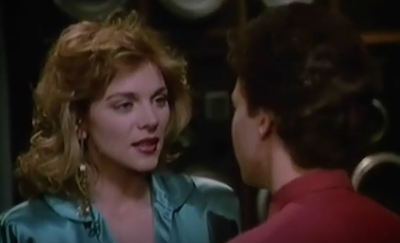
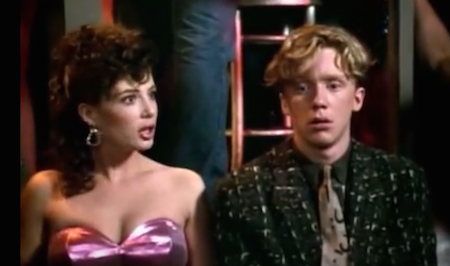
What’s odd is how frequently this statue story gets played out in film, and how similar the casting is in each case. The closest versions in terms of character dynamics came out in the 80s, Mannequin (1987) and Weird Science (1985). In each version, the unattainable beauty is not only attracted to an awkward, boyish goof, but pursues him: Venus chases Eddie when he flees, just as the mannequin-come-to-life Emmy (Kim Cattrall) seduces awkward store employee Andrew McCarthy in Mannequin (1987).

Cattrall-McCarthy-Mannequin
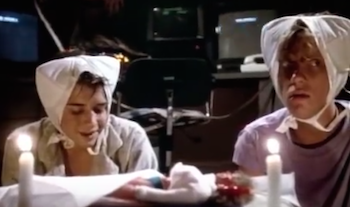
Lisa (supermodel Kelly LeBrock) pouts at the abandonment of her creators, socially awkward Gary (Anthony Michael Hall) and Wyatt (Ilan Mitchell-Smith), in Weird Science (1985). 

Beauty & the geek

Beauty & the geek

Sex objects?

Sex objects?

It is, in other words, a very transparent stick-it-to-the-cheerleader-who-snubbed-me schoolboy fantasy, and its pervasiveness in film culture is a testament to the power of denial.

What elevates One Touch of Venus beyond unintentional camp is the presence of Eve Arden as the smart-talking secretary of the store owner (Tom Conway) who bought the statue. Her responses to the absurdity of Venus’s (and by extension, Gardner’s) beauty are hilarious: her reaction to the siren’s tiny shoes, to the impact of her presence on the male body, to the inevitable comparisons a gal must draw to her own form after encountering the goddess’s.

ArdenandConway
I also enjoyed the occasional winks to the audience, as when Eddie tries to make sense of Venus’s presence, and Gardner coos, “Now don’t ask a lot of questions, you’ll only get confused.” Or when he asks about former lovers Venus has converted to animal or inanimate form, then decides he doesn’t care: “You can turn me into a fire hydrant or a mountain goat if you want to, it’s worth it.” Such moments point to the funny parody this film could have been, with just a touch more consistency of style–and a lot less romance.

Share
Posted in: 1940s films, 1990-current films, Comedies (film), Romantic Comedies (film), TV & Pop Culture Tagged: Anthony Michael Hall, Ava Gardner, Film, Kelly LeBrock, Kim Cattrall, Mannequin, One Touch of Venus, Pygmalion, Robert Walker, sex object, teenage fantasy, Weird Science

Kate Beckinsale: A Lousy Ava Gardner

03/19/2016 by leah@carygrantwonteatyou.com 6 Comments

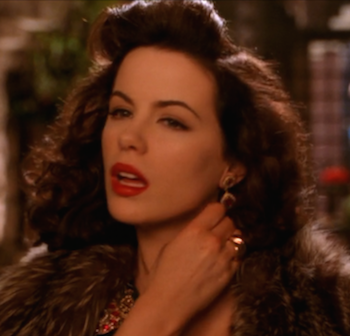
KateBeckinsale-Ava-TheAviator
Thanks to the stunning turns of Leonard DiCaprio, Alec Baldwin, Cate Blanchett, and Alan Alda, The Aviator (2004) was nominated for a SAG award, Outstanding Performance by a Cast in a Motion Picture. Unfortunately, this meant Razzie-nominated Kate Beckinsale was included in the honor for portraying Ava Gardner in the biopic. Unfortunately because I’ve seen better acting from beauty contestants in Toddlers and Tiaras. Watch the film on Netflix this month, and see if you can disagree.

Embarrassing Poses Do Not Equal Sensuality
Let’s try to forget that this lean actress only resembles the curvaceous screen siren in terms of hair coloring. But any frustration at the lack of resemblance is soon lost in concern over Beckinsale’s acting. Have you ever seen a little girl posing as a sexy movie star for the camera? Yeah? Does it look kind of like this?

KateBeckinsale-terribleAva
Perhaps Beckinsale prepared for her performance by watching Showgirls’ Elizabeth Berkley, who also mistook exaggerated gestures for seduction. Look, I understand that it’s intimidating to play one of the sexiest women of all time. How do you live up to a woman with that form?

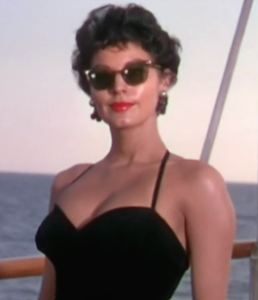
AvaGardnerbathingBarefootContessa
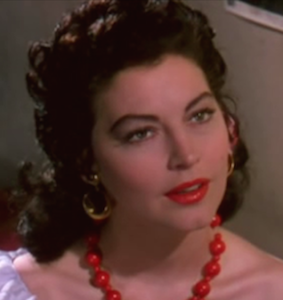
And that face?

AvaGardnerbeauty
And how do you convey her magnetism, especially when your biggest role is in Underworld and your only good performances are as a no-nonsense matchmaker in Cold Comfort Farm and a scheming wannabe in The Last Days of Disco?

Beckinsale’s challenge was a big one, I admit. But her solution was so embarrassing. Could anyone find the self-conscious poses the actress adopts in The Aviator alluring? Past the age of 11, I mean, when tweens believe their primping a match for that of Britney Spears or Beyoncé or Margot Robbie or the current siren of the month?

Whatever Beckinsale was thinking, the result for viewers is painful; there’s such a jarring contrast between Leonardo DiCaprio’s honest, Oscar-worthy portrayal and her amateurism. Gardner might not have been a great actress, but she was riveting onscreen, with the kind of sensuality that simply can’t be faked. Was it really so hard for Martin Scorsese to find a sexually exciting, competent actress—in Hollywood?

Marilyn Monroe’s Purr + WHAT?
No one who has actually listened to Ava Gardner’s deep tones could mistake them for Marilyn Monroe’s kittenish simpering. But Beckinsale does–for a few minutes. Then she suddenly drops this girly inflection–for no apparent reason–and takes on a Southern drawl for a word or two. She then moves on to a highly affected faux-voice that has only been heard in bad screen tests. I’m not sure if Beckinsale’s ability to drop her British accent only takes her so far, or if she actually thinks this is how people talked in the old days. Most alarmingly, she apparently did listen to Gardner’s real voice, so perhaps her hearing should have been checked.

Does Gardner’s voice occasionally seem affected onscreen? Oh yes. Gardner herself admitted she could come across as unconvincing (though never close to as wretched as her 21st century imitator). But this is supposed to be Beckinsale playing Gardner in her real life. The fun-loving, broad, frank, boozing, matador-seducing Gardner was reckless in love, and careless with her career. But she was–if nothing else–authentic and funny and bawdy, not stilted and fake.

You might ask why I still care 12 years after the film’s premiere. Maybe because it’s difficult to witness such a bad misstep in an otherwise impressive film. Maybe because I’ve always admired Ava Gardner for her spirit, for a brand of feminism and bold living that wasn’t easy to sustain in the sexist age in which she lived. Maybe because in her rawest roles, as in The Night of the Iguana, there’s something breathtakingly real and honest about Gardner onscreen that seems to echo the kind of life she lived. Maybe because Scorsese himself, an appreciator of the classics, should have known better than to portray one of its legends so poorly. But I think my biggest irritation is this: Beckinsale’s tepid, false performance may mean that moviegoers first exposed to Gardner in this movie had no desire to look further. And that is something worth griping about.

Share
Posted in: 1990-current films, Drama (film), Feminism, Random Tagged: Ava Gardner, bad performances, Kate Beckinsale, The Aviator

Big Fish: A Kettle of Oscar Snubs

02/13/2016 by leah@carygrantwonteatyou.com 4 Comments

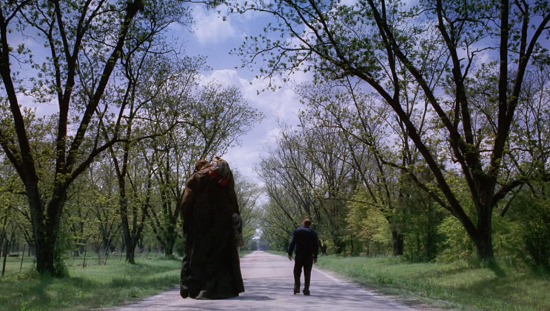
EdwardandgiantBigFish
Director Tim Burton’s beautiful Big Fish was shut out of all Oscar nominations in 2004 but for original score (which it didn’t win). The director’s work is often dismissed as creative, but too weird, or lovely, but lacking in feeling. The same critiques, by the way, the Coen brothers and Wes Anderson hear often. Yet in Big Fish, Burton vividly renders the elusive, big-hearted whimsy of Daniel Wallace’s book, telling a father-son story that is sad, wise, and funny all at once.

Let’s discuss the many nominations it should have received, starting with the most egregious omission:

Best Actor in a Supporting Role

AlbertFinneyBigFish
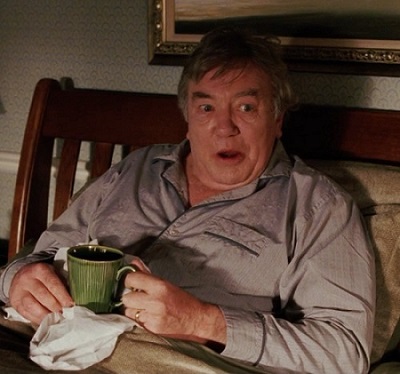
Billy Crudup, not Albert Finney, is the star of the film. Will (Crudup) resents his father, Edward (Finney), for always traveling away from home while he was a kid, even suspects he had a second family. The yarn-telling skills that endear others to Edward annoy his son, who considers his father a liar. “You’re like Santa Claus and the Easter bunny combined,” Will says, “just as charming and just as fake.” The two haven’t spoken in several years, until Edward’s final illness draws his son home to resolve their issues. Edward prickles at his son’s anger: “I’ve been nothing but myself since the day I was born, and if you can’t see that, it’s your failing, not mine.”

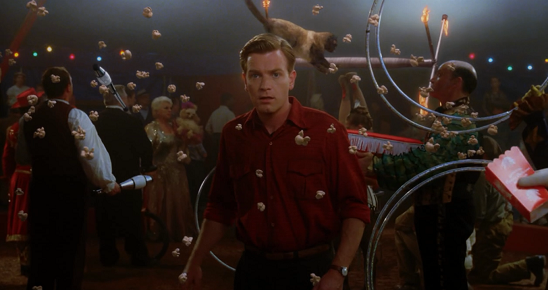
Finney’s performance is magical. There’s no other word for it. How much personality and spirit he’s able to convey, even though he spends most of the film in bed! And Ewan McGregor exudes his usual charm, as he captures Edward as a youth, full of outsized ambition and enthusiasm. Burton lets us see Edward’s young adulthood not through the actual events, but through the imaginative way he recounts them: the boy spits out of his mother’s body like a cannonball when born, he sees his death in a witch’s eye, saves his town from a giant. When Edward leaves home and travels down a forsaken road, he spots a sign: Warning: Jumping Spiders. Edward’s description of this obstacle illustrates both the amusing cadence of his language, and his indomitable spirit: “Now there comes a point when a reasonable man will swallow his pride and admit that he’s made a terrible mistake,” narrates McGregor. “The truth is, I was never a reasonable man.”

In 2004’s Academy Awards, the supporting actors were Benicio Del Toro (21 Grams), Alec Baldwin (The Cooler), Djimon Hounsou (In America), Ken Watanabe (The Last Samurai), and Tim Robbins (Mystic River). I admire all of these actors, and have seen all but 21 Grams. I’d put Finney over them all, and Ewan McGregor (also supporting) over most. Baldwin was very good, but it’s not his most nuanced performance. Hounsou played a very one-dimensional role (as he typically does despite his skills), and I barely recall either Ken Watanabe’s or Tim Robbins’ performances.

But Finney’s? I’ve never been able to get it out of my head. As Edward, he is haunting and lovable, resentful and stubborn and inexpressibly sweet.

Had he been mistakenly chosen for a Best Actor nomination, Finney still should have been in the list, which included Sean Penn (Mystic River), Jude Law (Cold Mountain), Ben Kingsley (House of Sand and Fog), Bill Murray (Lost in Translation), and Johnny Depp (Pirates of the Caribbean). I would have been torn between him and Murray as deserving of the win.

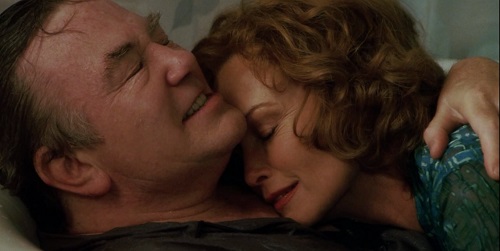
By the way, Jessica Lange plays Edward’s wife. She wasn’t in the film enough to earn a nomination, I suspect, but what an impact she makes in her few lovely moments, capturing the endurance of the love affair that is at the root of 90 percent of his stories. (No wonder she doesn’t share her son’s anger.) Here are the sweethearts in a tub together, fully clothed:

LangeandFinney

Best Director, Best Picture
Nominees, Best Picture: The Lord of the Rings: The Return of the King (winner), Lost in Translation, Master and Commander: The Far Side of the World, Mystic River, and Seabiscuit.

Nominees, Best Director: Winner Peter Jackson (The Lord of the Rings: The Return of the King), Fernando Meirelles (City of God), Sofia Coppola (Lost in Translation), Peter Weir (Master and Commander), and Clint Eastwood (Mystic River)

Jackson and his film probably deserved the win among those nominees, as the weight of translating Tolkien to film was so daunting that the man deserved a medal simply for attempting it, much less succeeding. And Meirelles created one of the most riveting and best edited films I’ve ever seen. It must be the foreign language that knocked it out of best-pic contention, to the Academy’s shame (as it definitely deserved the win).

But I do quibble with the other best picture and director nominees. Lost in Translation was a creative film, but without Bill Murray at the helm, would have been forgettable. The unspeakably dull Master and Commander proved to me once and for all that male voters dominate the Academy. If “chick flicks” can’t be nominated, why do I have to put up with something that’s one step up from a video game? Seabiscuit was a winning story, but a bit too saccharine, and Mystic River, like everything Eastwood does, was overwrought and completely lacking in subtlety.

It’s hard to imagine many of the voters bothered to watch Big Fish, as surely it outranks Seabiscuit in sentiment, and manages to say something meaningful about the power of story, its capacity to help us not only overcome obstacles, but survive loss. Surely storytellers—i.e., those involved in film—would have gravitated to such a theme?

Best Writing, Adapted Screenplay
Nominees: The Lord of the Rings: The Return of the King (Fran Walsh, Philippa Boyens, Peter Jackson, winners), American Splendor (Shari Springer Berman, Robert Pulcini), City of God (Bráulio Mantovani), Mystic River (Brian Helgeland), and Seabiscuit (Gary Ross)

This category was tough in 2004, but it’s clear that few voters read the novel, understood the challenge of translating it to film. Unlike Seabiscuit, for example, this was not a traditional narrative. It’s a recursive, poetic recounting of moments. It’s even divided into fragments rather than chapters. The book intentionally circles, the author explaining in interviews that myth does as well. And in truth, so do our lives: so many moments in our existence recall others. Our bodies may decline in a chronological fashion, but our minds, our experiences, don’t work that way at all. As the film’s script explains, “Fate has a way of circling back on a man, and taking him by surprise.”

The scene of Edward’s death, for example, is repeated multiple times throughout the book, each version telling readers something different. John August distilled the story, threaded enough of the moments together to form a comprehensible narrative, and yet retained the recursive, fanciful spirit of the original. His achievement, quite simply, is a triumph. And though I would leave those first three films on the list, I think Mystic River or Seabiscuit should have been bumped to include August’s work.

Best Art Direction-Set Decoration; Best Cinematography
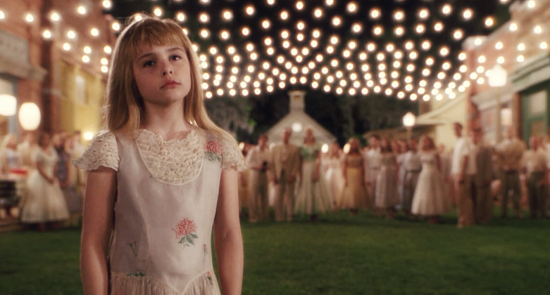
I’ll confess that I feel in deepest water when I discuss the visuals of a film. I don’t think, however, that many would dispute that the enchantment of Big Fish is largely a result of its execution of Burton’s vision; it’s rare that I am so enthralled by what I see that I long to take a snapshot of every moment. I’m curious why this film wasn’t considered worthy of awards based on artistic merit, if nothing else for the images’ perfect cohesiveness with the storytelling. Edward complains that his son doesn’t tell stories well, that he gives “all of the facts, none of the flavor.” That certainly cannot be said of the art direction of this film. In parting, I’ll just leave you with a few of my favorite visuals:

JennycrushBigFish

Timestandingstill-BigFish

carintreeBigFish

daffodilsBigFish
This post is part of The 31 Days of Oscar blogathon, hosted by Aurora of Once Upon a Screen (@CitizenScreen), Kellee (@IrishJayHawk66) of Outspoken & Freckled, and Paula (@Paula_Guthat) of Paula’s Cinema Club. Visit their sites for all of the wonderful entries. Kellee is hosting the snubs.

Share
Posted in: 1990-current films, Blogathons, Comedies (film), Drama (film), Humor, Oscars, Romance (films), Romantic Comedies (film) Tagged: Albert Finney, Big Fish, Daniel Wallace, Ewan McGregor, John August, Oscar snubs, Tim Burton

Hitchcock Fans, Watch The Gift (2015)

12/13/2015 by leah@carygrantwonteatyou.com 2 Comments

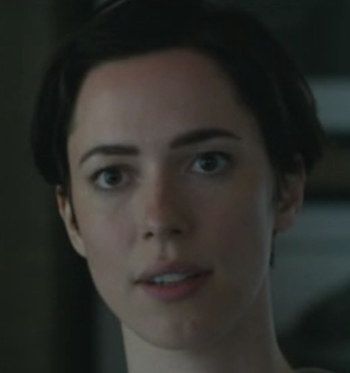
The beauty of watching The Gift (2015) is how often our own reactions to the film are reflected in Rebecca Hall’s expressive face: compassion, fear, doubt, suspicion.

RebeccaHall-TheGift
Her character, Robyn, is in a vulnerable state when she and husband Simon (Jason Bateman) move to a new town: She’s given up her job; she’s lost a child. Perhaps that’s why when Simon’s high school acquaintance, Gordo (Joel Edgerton), stops by frequently, Robyn considers him merely sweet and socially awkward, and her husband wants to cut all ties, avoid encouraging the creep.

Gordo’s weird to assume such intimacy, her husband suggests. In fact, he’s always been weird. She shouldn’t encourage Gordo, Simon warns; the creep must have a crush on her. As viewers, we tend to agree with Simon’s instincts, and yet….Simon’s behavior to Gordo verges on cruelty. And so much hostility seems to suggest he’s lying about their past. When Gordo pens a letter in response to the end of their friendship, he writes that he was willing to let bygones be bygones. But not now…

JoelEdgerton-TheGift
When seemingly vengeful acts start occurring, Robyn is unsure: Is it Gordo? Or is her susceptible state making her paranoid? More troubling than her fears are her observations of her husband. He seems to be undermining her confidence at work and dinner parties. There’s a hint of ruthlessness about him she clearly didn’t notice before. And she starts to catch him in lies. Whom exactly has she married? And what has he done?

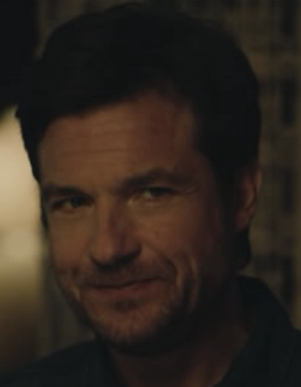
JasonBateman-TheGift
All three performances are stellar, with ambiguity in every shot of their faces, every word they speak. Edgerton seems sketchy from the start, but also kind and sensitive. He does triple duty as the costar, writer, and director of the film.

As Simon, Bateman appears loving toward and protective of his wife, but also condescending, and casually inconsiderate of others. Usually such a great everyman, Bateman plays this ambitious, morally questionable businessman with ease.

Robyn doesn’t know whether to trust herself at all, and so Hall’s gestures and smile are hesitant throughout. Hers is a winning, understated performance. As viewers, all we know for sure is that Robyn is far too nice, and we like her too much to be comfortable with her exposure–especially with all of those inadvisable, big glass windows in her home.

Women’s fears about the men in their lives are convincingly captured by Edgerton’s script. Others have written gorgeous pieces about Hitchcock’s similar insights. I can’t reach these authors’ eloquence, but I now always observe those traits in the latter’s films. As in Hitchcock’s Suspicion (or George Cukor’s Gaslight), The Gift is essentially about a marriage. While Edgerton has been praised for his building of suspense in the film, I like his subtle characterizations more, as when Robyn’s disgust at her husband’s callousness is echoed in the face of a neighbor, Lucy (Allison Tolman). I soon became less interested in the Should I be afraid? question, and more intrigued by another, much harder one: If my spouse treats another human being in a certain way, can I still like him? Is a momentary past cruelty just that, in the past? Or does it reflect who he is?

Joan Fontaine’s character always troubled me in Hitchcock’s film because she was too wrapped up in her own vulnerability to and love for her Johnnie (Cary Grant) to judge him as harshly as she should have for his immorality toward others. Robyn, despite her fragility, speaks up even for maybe-dangerous Gordo, and as a result never loses our investment in her–and that, Edgerton knows, is what keeps us hooked. If this is his first effort as a writer/director, I can’t wait to see what his next attempt will be.

Share
Posted in: 1930s films, 1940s films, 1990-current films, Film Noir/Crime/Thriller & Mystery Tagged: Alfred Hitchcock, Jason Bateman, Joel Edgerton, Rebecca Hall, The Gift

5 Holiday Meal Planning Fears on Film (aka, It Could Be Much Worse)

11/26/2015 by leah@carygrantwonteatyou.com Leave a Comment

5. The Meal Scars Your Company: Better Off Dead (1985)
Take comfort in the quality of your cooking after watching (a) Lane’s (John Cusack’s) mother boil bacon just days before her holiday feast and (b) Lane accidentally passing a guest primer instead of liquor.

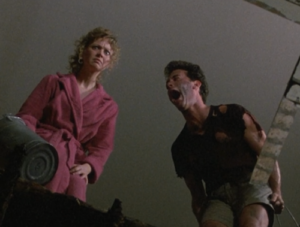
BetterOffDead
4. Your Guests Never Show: Dinner at 8 (1933)

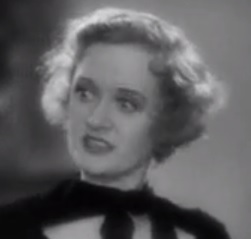
Your guests will never be as distracted as those invited to Millicent’s (Billie Burke’s) pretentious dinner party. Watching their disastrous lives unfold the day of the event makes you question (a) why she’d want to see them and (b) what could make all this stress worthwhile. It’s not a holiday film, but Burke’s nervous fluttering and what-was-I-thinking speech reminded me of all the times I unwisely agreed to plan a social event.

Hostess Flipping Out

3. The Oven/Power Goes Out: Pieces of April (2003)
I live in New England, where power is never a certainty, so watching April (Katie Holmes) improvise when her oven fails her is inspiring in this sweet, funny, and frequently heartbreaking film with Holmes as a sweet daughter who can never satisfy her mom (Patricia Clarkson).

KatieHolmesPiecesofApril
(In fact, my power went out yesterday, and last year at Thanksgiving too, in a cruel joke against my neighbors with stacked fridges and visitors en route.)

2. Old Family Wounds Fester: Home for the Holidays (1995)

HomeforHolidays
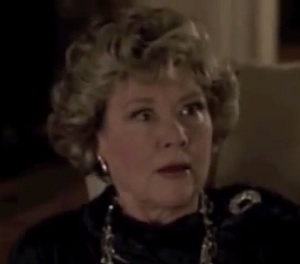
Three siblings squabble in this hilarious Thanksgiving delight. Holly Hunter is charming; Robert Downey, Jr. hilarious, moving, and annoying in equal measures; and Cynthia Stevenson both cruel and empathetic in her disconnection to her more lighthearted siblings. Add Anne Bancroft as the mother and Henry Larson as the father, and you’ll wonder how you missed this howlingly funny, yet poignant tribute to family.

1. The Mother from Hell Arrives: The Ref (1994)
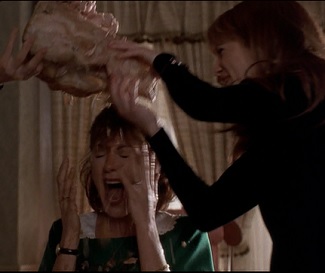
In my favorite holiday movie, thief Denis Leary runs interference with a divorce-bound couple, played by Judy Davis and Kevin Spacey, in performances that rival those in War of the Roses (1989). You will think no two people can be more comically cruel to one another, until Spacey’s mother (Glynis Johns) arrives.

Glynis Johns-TheRef
There you have it: Cinematic proof that no matter how awful your Thanksgiving turns out, it could have been much, much worse.

Share
Posted in: 1930s films, 1980s films, 1990-current films, Comedies (film), Drama (film), Humor Tagged: disastrous dinners, family squabbling, Film, holiday dinners, Thanksgiving fears
« Previous 1 2 3 4 5 6 7 8 Next »

Recent Posts

  • 100 Years Later, Still Scary: Dr. Caligari
  • Escaping Out of the Past (1947)
  • A Weeper for Those Who Love Jerks
  • Thank You, Academy, for Not Infuriating Me
  • Challengers (2024) Is a Bad Movie

Subscribe to Blog via Email

Enter your email address to subscribe to this blog and receive notifications of new posts by email.

Categories

  • 1920s films
  • 1930s films
  • 1940s films
  • 1950s films
  • 1960s films
  • 1970s films
  • 1980s films
  • 1990-current films
  • 2020s films
  • Action & Sports Films
  • Anti-Romance films
  • Blogathons
  • Childfree
  • Comedies (film)
  • Drama (film)
  • Feminism
  • Femme fatales
  • Film Noir/Crime/Thriller & Mystery
  • Gloriously Silly Scenes
  • Horror
  • Humor
  • Mae West Moments
  • Musicals and dancing films
  • Oscars
  • Random
  • Romance (films)
  • Romantic Comedies (film)
  • The Moment I Fell for
  • Turn My Sister into Classic Movie Fan
  • TV & Pop Culture
  • Uncategorized
Share
Classic Movie Blog Hub Member

Recent Comments

  • leah@carygrantwonteatyou.com on Meg Ryan’s Fate Foretold in Joe Versus the Volcano
  • Ryan on Meg Ryan’s Fate Foretold in Joe Versus the Volcano
  • leah@carygrantwonteatyou.com on 100 Years Later, Still Scary: Dr. Caligari
  • The Classic Movie Muse on 100 Years Later, Still Scary: Dr. Caligari
  • leah@carygrantwonteatyou.com on 100 Years Later, Still Scary: Dr. Caligari

Archives

  • November 2025
  • September 2025
  • May 2025
  • March 2025
  • January 2025
  • November 2024
  • August 2024
  • July 2024
  • May 2024
  • March 2024
  • February 2024
  • December 2023
  • November 2023
  • October 2023
  • September 2023
  • August 2023
  • July 2023
  • May 2023
  • April 2023
  • March 2023
  • January 2023
  • December 2022
  • November 2022
  • September 2022
  • July 2022
  • May 2022
  • April 2022
  • March 2022
  • February 2022
  • October 2021
  • September 2021
  • April 2021
  • March 2021
  • February 2021
  • December 2020
  • October 2020
  • September 2020
  • July 2020
  • May 2020
  • April 2020
  • March 2020
  • February 2020
  • December 2019
  • October 2019
  • September 2019
  • June 2019
  • May 2019
  • April 2019
  • February 2019
  • January 2019
  • November 2018
  • September 2018
  • July 2018
  • June 2018
  • May 2018
  • April 2018
  • March 2018
  • February 2018
  • January 2018
  • November 2017
  • September 2017
  • August 2017
  • July 2017
  • June 2017
  • May 2017
  • April 2017
  • March 2017
  • February 2017
  • January 2017
  • December 2016
  • November 2016
  • October 2016
  • August 2016
  • July 2016
  • June 2016
  • May 2016
  • April 2016
  • March 2016
  • February 2016
  • January 2016
  • December 2015
  • November 2015
  • October 2015
  • September 2015
  • August 2015
  • July 2015
  • June 2015
  • May 2015
  • April 2015
  • March 2015
  • February 2015
  • January 2015
  • December 2014
  • November 2014
  • October 2014
  • September 2014
  • August 2014
  • July 2014
  • June 2014
  • May 2014
  • April 2014
  • March 2014
  • February 2014
  • January 2014

Meta

  • Log in
  • Entries feed
  • Comments feed
  • WordPress.org

Copyright © 2025 Cary Grant Won't Eat You.

Church WordPress Theme by themehall.com