Cary Grant Won't Eat You

Classic movies for phobics

  • About
  • eBooks
  • Previous Blogathons
Classic movies for phobics

1980s films

Meg Ryan’s Fate Foretold in Joe Versus the Volcano

10/01/2016 by leah@carygrantwonteatyou.com 17 Comments

megryanjoevsvolcano
Meg Ryan has had a peculiar career: America’s darling after When Harry Met Sally (1989), she has struggled to avoid typecasting as the perky cute girl ever since, and largely failed, settling for a saccharine portrayal in Sleepless in Seattle (1993), and veering into downright parody of her persona in the remakes You’ve Got Mail (1998) and The Women (2008), with brief moments of authenticity (When a Man Loves a Woman) in between. While some of the blame must rest with Ryan, it’s clear that Hollywood producers failed to recognize (or thought audiences would) the depth in When Harry Met Sally, instead plying the poor actress with cane sugar ever since. That’s why it’s so fascinating to peer earlier into Ryan’s career, when the exploration of character was (at least partially) her own to make. Joe Versus the Volcano (1990) is particularly fascinating since she plays three roles, which curiously foretell her fate.

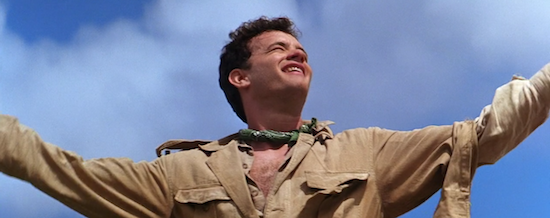
The plot is strange, so I’ll just begin with the basics: Joe’s (Tom Hanks’) fears–especially for his health–keep him mired in a dreadful job, until a dire prognosis unexpectedly snaps him out of depression and leads him on a journey to an island where an odd fate awaits him. He goes on a date with coworker DeDe (Ryan) before he departs, then meets half-sisters Angelica (Ryan) and Patricia (Ryan) on his journey. Attracted to all three (he keeps saying they look familiar), Hanks falls for only one, Patricia, who captains the boat to his destination, and plays a part in what awaits him there.

In DeDe, Ryan channels Easy Living‘s (1937) Mary Smith (Jean Arthur). Naïve and sweet and just a little lost, DeDe disperses–at least a little–the heavy gloom of the office, where she and Joe suffocate under fluorescent lighting and the repetitive yelling of their boss (Dan Hedaya, in a darkly funny turn).

megryan-dede-joevsvolcano
When Joe quits the job and asks DeDe out, it’s an act of salvation, and you can’t help but laugh at her startled, perky response to finding the dead weight in her office come to vivid life. Like Arthur, Ryan performs this role with relish and charm, with a chirpy voice that doesn’t quite grate in the small time we’re listening to it. Much more time spent with this character would start to wear audiences thin (as Arthur does for me–uncharacteristically–in Easy Living).

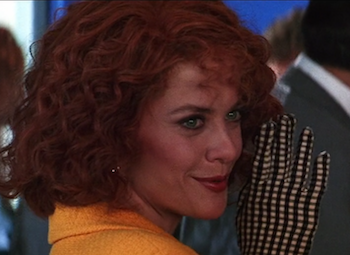
Next Joe encounters oddball Angelica (Ryan), who calls herself a flibbertigibbet.

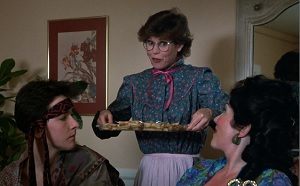
megryanangelica-joevsvolcano
We viewers soon question her characterization, realizing that this woman has no idea who she is. She’s donned a pretentious, flat delivery and tired expressions culled from movies in her LA home. Her clothes likewise seem costumish, as does her carefully stylish smoking. She’s a combination of affectations she’s adopted, none of which can delay for long the depression and fragility just beyond her careful poise. If DeDe recalls the cute head bobbing and springy step Ryan deployed too consciously by the point of You’ve Got Mail, Angelica conveys her pain at the impersonation, her relief at capturing her fuller self in movies such as When a Man Loves a Woman.

megryanangelicajoevsvolcano-crying
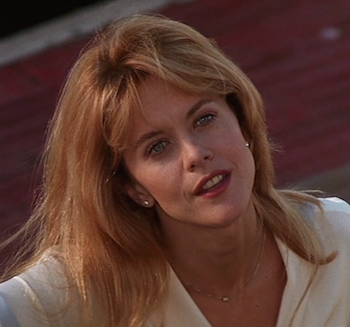
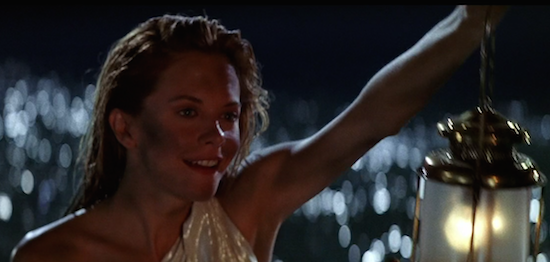
And of course, in Patricia, Joe’s last Ryan encounter, we find our heroine. Healthy besides being “soul sick” for taking her father’s money, Patricia is smart and strong and brave, our Jean (Barbara Stanwyck) of The Lady Eve (1941). Like Jean, she’s an “adventuress on the high seas” and wise enough to guide Joe on the final steps of his self-discovery.

megryan-patricia-joevsvolcano
This is the Ryan we love: cute, yes, but only in moments of glee; she’s bold and womanly and fun, yet vulnerable and flawed. It’s the type of role Ryan excelled at. While the two other parts feel like conscious acts (and should be, as the roles are archetypes rather than fully sketched-out characters), this last she fully embodies. And we see the Stanwyck type of performer she could have consistently been, had When Harry not doomed her to full-on cuteness.

As for the film itself, what to say? It’s about redemption and faith, journeys physical and spiritual, but is most remembered for orange soda and hypochondria jokes.

tomhanksjoevsvolcano
The fact is, Joe versus the Volcano (1990) is an odd duck of a film. Its uneven tone and quirky storytelling won it both mockery and box office failure, and a trail of cult devotees ever since. Frank Capra and Preston Sturges fans will adore it, especially those who admire those directors’ darker-tinged fare, Sullivan’s Travels (1941) and Meet John Doe (1941) and The Miracle Woman (1931). But snooty film types will scoff (tellingly, Roger Ebert loved it); they’ll say it’s silly. And they’re right–it is silly. Fundamentally so.

joevsvolcanoisland
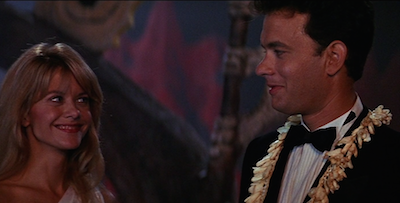
But, as one devotee pointed out, you need to remember that the writer/director is John Patrick Shanley, who also helmed and wrote Doubt (2008) and penned Moonstruck (1987); this guy may be consumed with issues of faith and hope, but he also loves distracting diatribes about fake hands voiced by Nicholas Cage. If you’re not open to that kind of genre blending, you’ll hate the movie. But if you agree with me that Shanley’s work has a peculiar beauty and insight, you’ll find yourself riveted and laughing, admiring Tom Hanks’ finest performance, and one of the funniest portrayals of both fashion (thanks to Ossie Davis) and workplace culture in any medium. It’s even romantic, with the two leads’ chemistry revealing what a better script and direction could have made of You’ve Got Mail.

megryantomhanksjoevsvolcano|
And the soundtrack is so unbelievably fun and fitting that you won’t ever hear one of those songs again without picturing the story.

For me, this movie was life altering. I watched it first in the theater, and couldn’t stop laughing at the opening scene of work drudgery. But no one else was laughing. Surprised, I turned to my buddy, Carrie, and saw that she was enjoying it too. We called our sicknesses after that “brain clouds” (you have to see the film), and the movie represented for me that wonderful thing between friends: a joke you get that others don’t, a bond you share that others don’t understand. Something that in snobby moments makes you feel special, and in more enlightened ones makes you appreciative. I was in high school then, still finding my way, and it was lovely to find through Joe a compatriot in Carrie, to realize that quirkiness need not be isolating, that it can be, in fact, a source of joy. My loud laughter in silent theaters has been a constant ever since.

I’ve been watching the film again today for my entry in the wonderful Dual Roles blogathon, hosted by Christina Wehner and Silver Screenings. (Check out great entries here!) And as I view the movie, I find myself hoping, like Joe: I hope Ryan stops stalling on DeDe and Angelica, and instead gets her Patricia back, gives us in future performances that authenticity that was so wholly hers at the start. She should watch the film again, remember that Joe, like her, lost his way for years, and found it again. Maybe if she watches it she’ll rediscover that energy and spirit and realness that charmed us all, and are still hers to reclaim.

megryan-wonderfuljoevsvolcano

Share
Posted in: 1980s films, 1990-current films, Blogathons, Comedies (film), Feminism, Romantic Comedies (film) Tagged: America's sweetheart, Film, flops, Hollywood typecasting, Joe versus the Volcano, Meg Ryan, roles

5 Holiday Meal Planning Fears on Film (aka, It Could Be Much Worse)

11/26/2015 by leah@carygrantwonteatyou.com Leave a Comment

5. The Meal Scars Your Company: Better Off Dead (1985)
Take comfort in the quality of your cooking after watching (a) Lane’s (John Cusack’s) mother boil bacon just days before her holiday feast and (b) Lane accidentally passing a guest primer instead of liquor.

BetterOffDead
4. Your Guests Never Show: Dinner at 8 (1933)

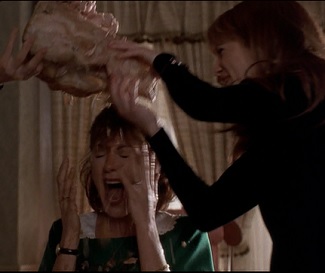
Your guests will never be as distracted as those invited to Millicent’s (Billie Burke’s) pretentious dinner party. Watching their disastrous lives unfold the day of the event makes you question (a) why she’d want to see them and (b) what could make all this stress worthwhile. It’s not a holiday film, but Burke’s nervous fluttering and what-was-I-thinking speech reminded me of all the times I unwisely agreed to plan a social event.

Hostess Flipping Out

3. The Oven/Power Goes Out: Pieces of April (2003)
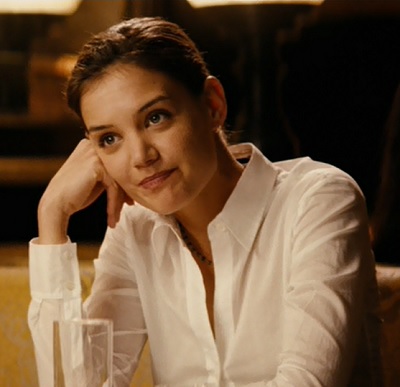
I live in New England, where power is never a certainty, so watching April (Katie Holmes) improvise when her oven fails her is inspiring in this sweet, funny, and frequently heartbreaking film with Holmes as a sweet daughter who can never satisfy her mom (Patricia Clarkson).

KatieHolmesPiecesofApril
(In fact, my power went out yesterday, and last year at Thanksgiving too, in a cruel joke against my neighbors with stacked fridges and visitors en route.)

2. Old Family Wounds Fester: Home for the Holidays (1995)

HomeforHolidays
Three siblings squabble in this hilarious Thanksgiving delight. Holly Hunter is charming; Robert Downey, Jr. hilarious, moving, and annoying in equal measures; and Cynthia Stevenson both cruel and empathetic in her disconnection to her more lighthearted siblings. Add Anne Bancroft as the mother and Henry Larson as the father, and you’ll wonder how you missed this howlingly funny, yet poignant tribute to family.

1. The Mother from Hell Arrives: The Ref (1994)
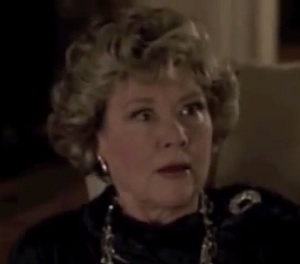
In my favorite holiday movie, thief Denis Leary runs interference with a divorce-bound couple, played by Judy Davis and Kevin Spacey, in performances that rival those in War of the Roses (1989). You will think no two people can be more comically cruel to one another, until Spacey’s mother (Glynis Johns) arrives.

Glynis Johns-TheRef
There you have it: Cinematic proof that no matter how awful your Thanksgiving turns out, it could have been much, much worse.

Share
Posted in: 1930s films, 1980s films, 1990-current films, Comedies (film), Drama (film), Humor Tagged: disastrous dinners, family squabbling, Film, holiday dinners, Thanksgiving fears

Top 10 Characters in Teaching Films & Shows

08/20/2015 by leah@carygrantwonteatyou.com 2 Comments

As the school year begins, I’ll be returning again to my favorite educational films–some inspiring, some hilarious. Here are the characters and performances I consider award worthy.

THE TEACHERS: 5 BEST CHARACTERS

5. Mr. Shoop in Summer School (1987)

HarmonSummerSchool
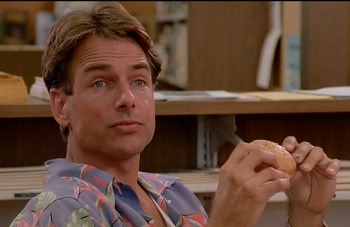
Gym teacher Mr. Shoop (Mark Harmon) plans to vacation in Hawaii with his girlfriend for the summer, but when the English teacher wins the lottery and immediately quits, Shoop’s forced to teach remedial English. He is the most likable of the teachers I’ve chosen, easygoing and even tempered, good natured even when tried. Ultimately, his slacker ways convert into effort in the classroom, and because he relates to and has no illusions about his students’ disinterest, he’s able to reach them. Most importantly, he has rational expectations of them, and celebrates progress rather than any specific target, as any good teacher should (and would be able to, would the system allow it). Plus, the film is hilarious, and Harmon is so attractive in it.

4. Elizabeth Halsey in Bad Teacher (2011)

Halsey-Diaz-BadTeacher
Cameron Diaz doesn’t always reach her comic potential, but when she does, as with Elizabeth Halsey (Cameron Diaz) in Bad Teacher, she’s something to watch. The montage of her avoidance of crying students and celebrating teachers makes me laugh every time, as does her unabashedly sexy school car wash and cruel honesty in speaking with her class and grading their work. She is a terrible teacher, but her narcissism and bluntness make her a very, very funny one.

3. Teachers in Ferris Bueller’s Day Off (1986) & Peanuts

BenSteinFerrisBueller
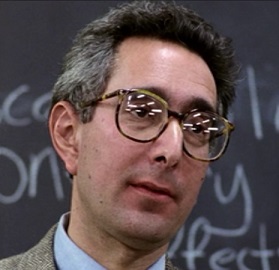
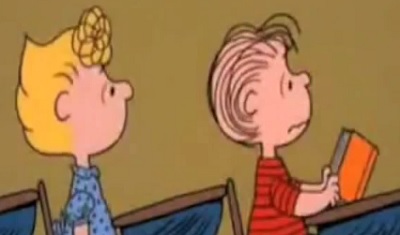
If pressed, I’d prefer Peanuts‘ gibberish teacher to Ben Stein’s gloriously boring one, but the two are closely tied. Obviously, both types are accurate portrayals of how instructors come across to students. I love how Stein has given upon class participation, simply saying, “anyone, anyone?” then answering himself. But Peanuts’ teacher may get the edge because I have this same reaction ANY time I encounter something I don’t understand. My car is being fixed, I’m listening to explanations of the U.S. debt, and I hear that waa-waa-waa of Peanuts’ comically confusing instructor.

2. Prez in The Wire (2006)

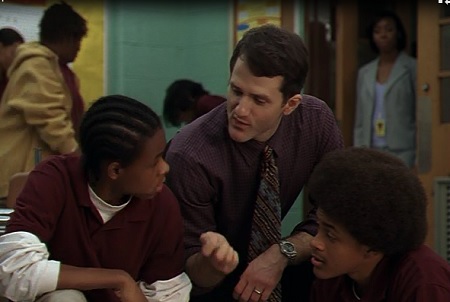
PrezandStudentsTheWire
Season 4 of The Wire features the Baltimore school system, with former cop Roland Pryzbylewski, known as Prez (Jim True-Frost), teaching the students from neighborhoods he formerly policed. As a result, he knows what his students are up against, though he isn’t prepared for the challenge of teaching them. I’ve never seen a more accurate depiction of teaching in a difficult district. Prez’s use of gambling odds as an example to finally reach some of his students in the episode “Unto Others” is remarkably telling about their priorities–and squandered potential. We can only wish that those who had more influence in the system were as wise and compassionate as Prez.

1. Sir in To Sir, with Love (1967)

SidneyPoitierToSirwithLove
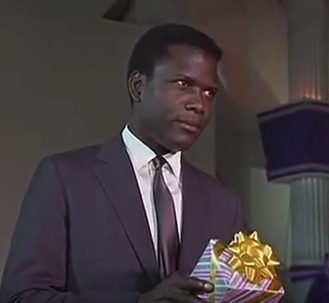
Sir’s (Sidney Poitier) school district in England is characterized as very challenging, even if it looks less so to us in 2015. We see him constantly thwarted, and frequently angry. His race becomes one more thing students have against him. His decision to throw out the lesson plan and begin anew is what any good teacher would do if it were allowed–the problem, of course, is that you only want good teachers doing so.

What I love about Sir is that he’s a reluctant instructor, only there because he can’t get a job in his field, and slowly, these rebellious kids win him over. He is a very flawed character, even socially awkward, and thus very real. Poitier deserved an Oscar for the performance. The theme song makes me tear up every time. And the film has such a lovely, perfect, subtle ending. The movie is inspiring without ever losing track of reality (as most teacher-centric films do).

THE STUDENTS: TOP 5 PORTRAYALS

5. Spicoli in Fast Times at Ridgemont High (1982)

Spicoli
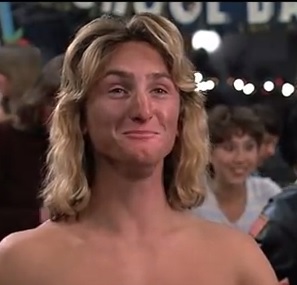
Spicoli (Sean Penn), the ultimate surfer dude. I don’t think this character requires any explanation (most would expect to see him as #1). While there is a shadow of this stoner in Amy Heckerling’s Clueless (1995), it’s in her earlier film, Fast Times, that she captured an iconic form of the type, mainly due to Cameron Crowe’s script. Spicoli’s (Sean Penn’s) battles with his teacher, Mr. Hand (who deserves an honorable mention in the list above), are perfect.

Bagel tucked in jeans, shirtless, Spicoli makes us laugh before he says a word. Penn gives him an awkward gait; a spacey expression; long, wordless pauses; and an inability to detect sarcasm. As a result, he is as lovable as he is annoying. Penn turned the surfer dude into comedy gold, and actors have been imitating him ever since.

4. The Frustrated/Bored of Ferris Bueller’s Day Off & Peanuts

There’s really no need to pinpoint an individual in the mass of disinterested students who are ignoring Ben Stein’s flat delivery of “Bueller?” as he calls the roll. The Peanuts characters’ confusion at their instructors’ seeming gibberish are similarly funny, though Charlie Brown’s panic is particularly funny. What’s unavoidably true is just how typical both the boredom and confusion are in any classroom, though hopefully with occasional relief! Beautifully rendered in both cases through the facial expressions of the students as the teacher drones on.

Peanutsstudents

Buellerstudent1

Buellerstudent2

Buellerstudent3

3. The Intellectuals of Better Off Dead (1985)

BetterOffDeadClass
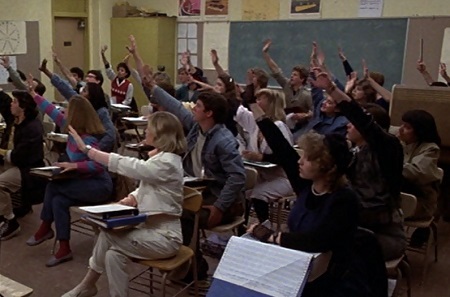
Most films portray the majority of students as inattentive and uninterested. This film subverts our expectations, with a class enthralled by comically difficult subject matter. They’re so enthusiastic that they groan when they have to leave the classroom, comforted only when their math teacher reassures them: “I’ll see you all tomorrow. Just remember to memorize pages 39 to 110 for tomorrow’s lesson.” It’s so obviously a teacher’s dream of what students would be like after watching too many inspiring education films that it always cracks me up. Lane (John Cusack), in contrast with his peers’ binders of work, takes out one sheet of paper with “Do homework” stuck together with gum. In this case, the slacker is the unpopular one. It’s a mistake not to watch the whole film, but at least catch this scene.

2. The Kids of The Wire, Season 4
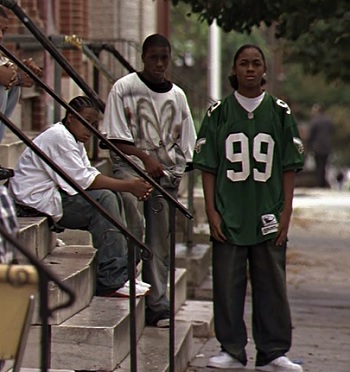
I find it hard to write about the students in this season, as they’re far too real: Dukie (Jermaine Crawford), Randy (Maestro Harrell), Namond (Julito McCullum) and Michael (Tristan Wilds) struggle with the lure of selling drugs on the corner in Baltimore, with authority figures often encouraging or passively accepting their abandonment of education.

Watching Michael's confrontation with a drug dealer.

Watching Michael’s confrontation with a drug dealer.

It’s the most vivid and compelling portrayal I’ve ever seen of the weight so many students bear with them when they enter the classroom. The Wire, unlike 90 percent of cinematic portrayals of teaching, sees that the wider culture and systemic problems of the educational system are far greater forces than one teacher with a great idea (which Prez does have) can combat. Haunting.

1. Chainsaw & Dave of Summer School

ChainsawDave-SummerSchool
All the students in Mr. Shoop’s (Harmon’s) class are distinctive. Their plan–to exchange bribes for trying in school–is diabolical and hilarious in itself. And with characters like these–the awful driver Mr. Shoop has to train, the kid who spent the summer in the bathroom, etc.–who can stop laughing? The most memorable students are obviously Dave (Gary Riley) and Chainsaw (Dean Cameron), the wannabee special-effects guys. Who comes up with such unique characters for a silly film like this one? The tension breaker of and “I don’t know anything” dream of Chainsaw’s before the big test are my favorite depictions of academic stress in any film, book, or story. (I should, though, give an honorable mention to John Travolta’s Barbarino in Welcome Back, Kotter.) Inspired by Chainsaw, I used to suggest to friends a university-wide tension breaker when I was an undergrad.

As the school year begins, I’ll be returning to these favorites to combat moments of frustration and refresh my love for teaching. I hope some of you will do the same.

Share
Posted in: 1960s films, 1980s films, 1990-current films, Comedies (film), Drama (film), TV & Pop Culture Tagged: Bad Teacher, best, Better Off Dead, Cameron Diaz, Ferris Bueller, Mark Harmon early films, Mr. Hand, Sidney Poitier, Summer School, Teaching films, The Wire, To Sir with Love

A Legacy of Self-Amusement: Drew & John Barrymore

08/13/2015 by leah@carygrantwonteatyou.com 19 Comments

DrewBarrymoreCharliesAngels-main
Charlie’s Angels
(2000) is the epitome of how seriously Drew Barrymore takes herself: the hair flips, the silly punk rock past of her character, action sequences so absurdly, self-consciously over-the-top that they make you smile.

Playfulness seems to be Barrymore ‘s signature, what distinguishes her from her lesser rom-com peers. So it wasn’t surprising that this was a film she chose to produce, an ode to a dumb TV show celebrating sexism/female empowerment/both (depending on your point of view).

The show (1976-81)– for those younger folks out there–featured a wealthy but reserved guy (Charlie), who hired three beautiful detectives (the angels) for his agency. All we ever got of Charlie was his voice, as he never appeared in person and let all arrangements be managed by his assistant, Bosley. The term ‘angel,’ use of possessive, Charlie’s condescending voice, the quick rotations of actresses for the roles (suggesting they were interchangeable)—any of the four could make a feminist cringe. But the women were tough and smart, using their looks to blindside unwary men, much as Columbo used his folksiness.

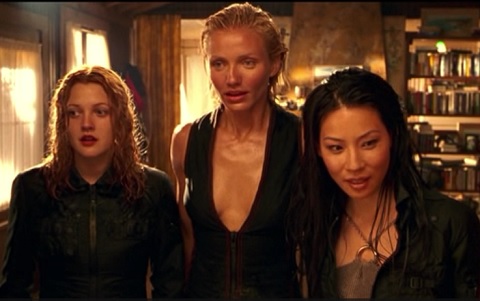
The film is both a parody and tribute, using the TV show’s theme music, graphics, and basic concept, but mocking the silliness of it too. Cameron Diaz plays the supposed airhead (Natalie) to perfection. Lucy Liu takes on the kind of tough role she always plays, even imitating a dominatrix/efficiency expert in one ploy as detective Alex. As Dylan, Barrymore mocks the over-the-top femininity of her predecessors by embracing a badass, punk rock aesthetic. The strange connection the women have to Charlie is brought to the forefront when their client (Sam Rockwell) suggests that Dylan has daddy issues.

Thinking they get to meet Charlie in person...

Hopeful to meet Charlie in person…

Whatever part she’s in, Barrymore always seems to be playing herself, and part of what keeps us watching her is just how likeable she is, this woman who went through a painful past of abandonment and substance abuse as a kid, and emerged as a woman with empathy for those who contributed to the conditions that put her there. She is both the most tender of the three actresses onscreen—Barrymore always captures vulnerability effectively—and the most sarcastic. Perhaps hers is an earned playfulness, but Barrymore wears it lightly. (How else could you repeatedly perform with Adam Sandler, and more bafflingly, not only star with, but marry Tom Green? Tom Green!) While her acting never wows me, she does.

In Drew’s performances, I don’t see much of her forebears, that famous acting dynasty whose members mesmerize audiences still today. Only in her youthful roles did I ever see traces of the Barrymore family’s skill with drama. I would argue that Irreconcilable Differences (1984); an underrated film about a girl who wants to separate from her narcissistic, divorced parents (in an eerie foreshadowing of Barrymore’s own decision years later); was her strongest dramatic role. Perhaps it just was a part she knew really, really well.

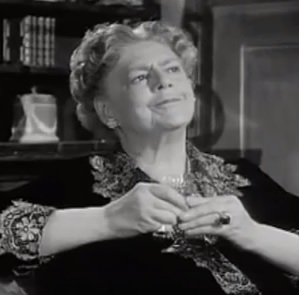
But usually, the actress just prefers, and does better, at comedies. Certainly, Drew lacks the intimidation or gravitas of her great-uncle Lionel…

LionelBarrymore
the nuance of her great-aunt Ethel…

EthelBarrymore
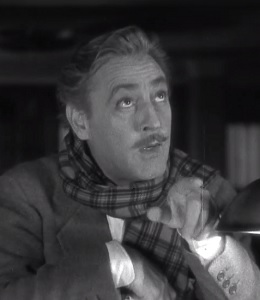
or the presence of her grandfather John…

JohnBarrymore
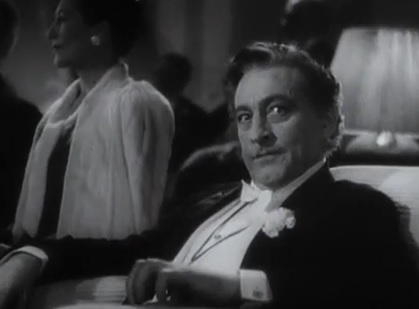
Of course, her troubled past brings to mind her grandfather’s. But it’s in her self-deprecating goofiness that I see the clearest link to the Barrymore dynasty. While it’s certainly not present in all of the Barrymores’ roles, I see it in John’s charming turn in Grand Hotel, and, of course, in his hilarious supporting character in the glorious Midnight (1939). There’s such a lightheartedness to his approach to the role of Georges Flammarion, and though he was already at the cue card stage of his decline, his humor, at least, had not reached the self-parody stage.

John Barrymore in Midnight

John Barrymore in Midnight

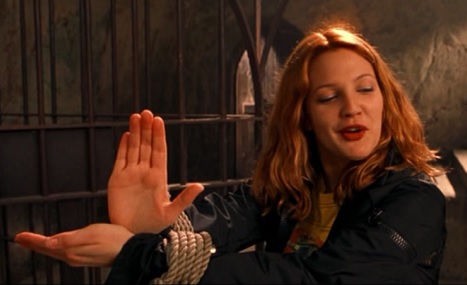
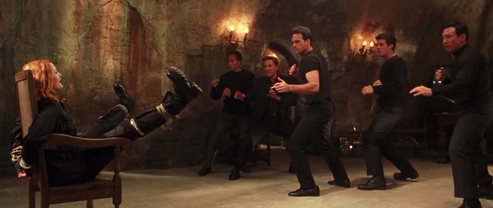
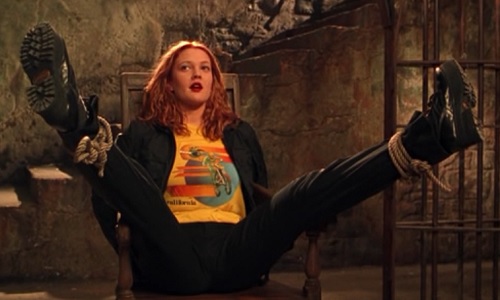
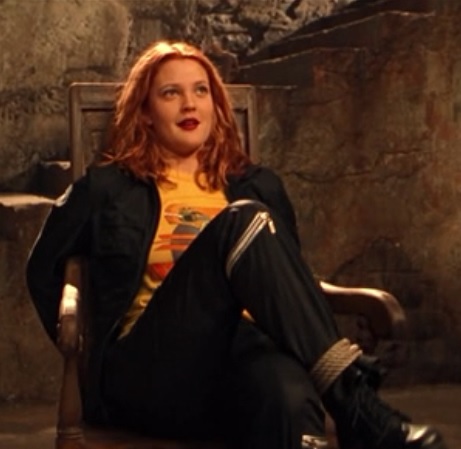
Such lightheartedness is key to Dylan’s (Drew Barrymore’s) character, even when she’s in the direst straights. In the best action sequence in Charlie’s Angels, Dylan has been tied up by her sleazy client, Eric Knox (Sam Rockwell), who has betrayed her after sleeping with her, and tried to kill her already. Knox departs to perform his nefarious schemes, leaving her to his five henchmen. After managing to get her lighter back, she spells out what she will do to escape, buying time but also revealing her confidence.

DylanCharliesAngels
As she sits in her chair, she calmly explains, smiling at her adversaries all the while, “By the time this is over, every one of you is gonna be face down on the floor, and I’m gonna moonwalk out of here.”

DrewBarrymoreCharliesAngels
As they rush toward her, she interrupts, looking at each man in turn, “You’re not listening to me. See first, you’re gonna help me out of my chair, and then I’m gonna leapfrog over you, before I break his nose…I’m gonna do all of this with my hands tied behind my back.”

DrewBarrymoreCharliesAngels2
She does exactly what she says:

DrewBarrymorefighting
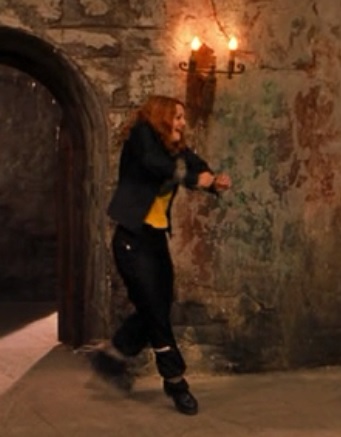
And her moonwalk is a joy:

DrewBarrymoremoonwalking
You can see the full clip here.

Any actress could have had fun with such a sequence, but there’s so much self-amusement in Drew Barrymore’s portrayal that I kept thinking of her grandfather in Midnight. Sure, he had much more range and talent than she does, but in self-amusement, the two are matched.

This post is part of the Barrymore Trilogy blogathon, hosted by Crystal of In the Good Old Days of Classic Hollywood. See the fantastic entries here!

Share
Posted in: 1980s films, 1990-current films, Action & Sports Films, Blogathons, Comedies (film), Film Noir/Crime/Thriller & Mystery, Humor, TV & Pop Culture Tagged: Charlie's Angels, Drew Barrymore, John Barrymore, Midnight (1939), movie, satire, spoof

A Beauty After All: Katharine Hepburn

05/10/2015 by leah@carygrantwonteatyou.com 17 Comments

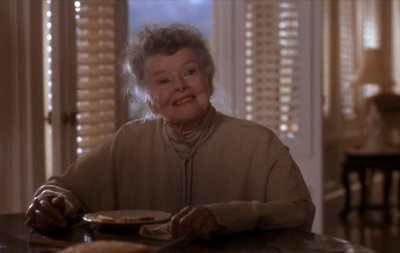
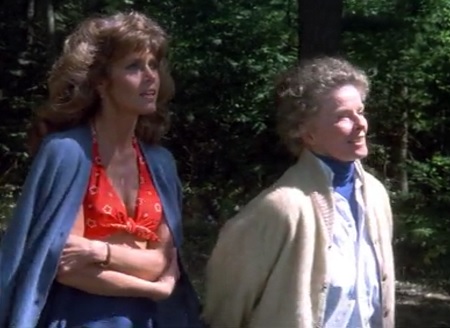
KatharineHepburn-beautyGoldenPond
This is an entry in the Great Katharine Hepburn blogathon. Check out the marvelous posts on her work.

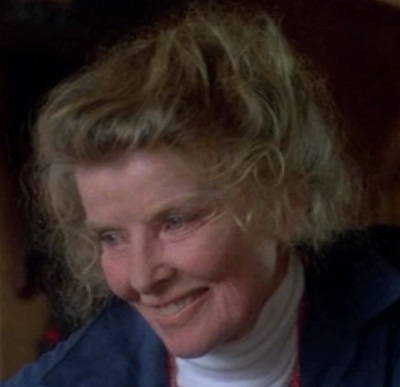
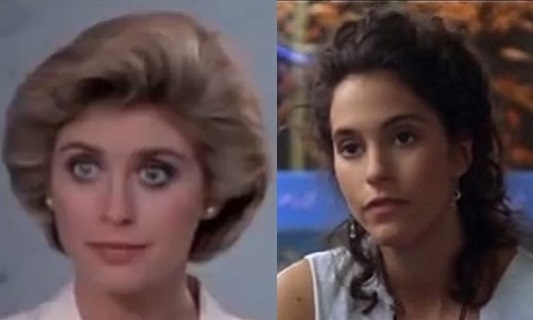
“I’d rather look like Katharine Hepburn at 80,” Aunt Betty said, looking at the screen, “than myself at 30.” I looked at the old lady on the TV, then back at my aunt, confused. Maybe Betty was ripping on her own looks, as she often did. She couldn’t possibly be serious. As a fourteen-year-old who longed to resemble Helen Slater or Jamie Gertz, I found wanting to look thirty incomprehensible. Eighty?

My teenage definition of beauty

My teenage definition of beauty

My aunt smiled at my bafflement. “Just look at that bone structure,” she explained, pointing at Hepburn. “She’s beautiful.”

Bone structure? That wasn’t on my list of attractive characteristics. I examined Hepburn’s face closely to discover what my aunt saw in it, but those wrinkles distracted me. I felt uneasy, as I always did when adults said something I couldn’t understand. I changed the subject.

I didn’t forget it though. Every time I saw Hepburn, the comment returned. She had always looked old to me. Having seen her first in Guess Who’s Coming to Dinner? I could never view her earlier films without seeing the imprint of her older self. Besides, Hepburn was angular, not soft and feminine, like Helen Slater or my earlier womanly ideal, Lynda Carter.

I wasn’t alone, of course, in devaluing Hepburn’s looks. Her employer David O. Selznick had been famous for it. Others, of course, appreciated that bone structure, hence that line about her cheekbones: “The greatest calcium deposits since the White Cliffs of Dover.”

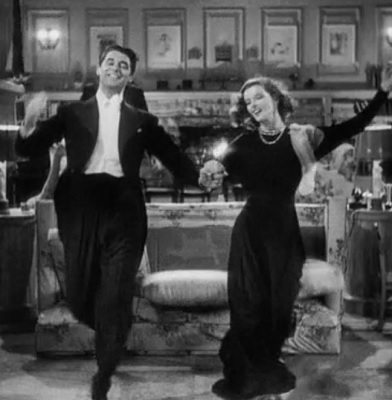
I think I was past thirty myself before I started to understand Betty’s words. Of course, my definition of beauty had expanded by then, but my changing assessment of the actress’s looks was always more complicated than answering pretty or not? First, I noticed Hepburn’s breathless confidence of movement.

GrantandHepburn-Holiday-a
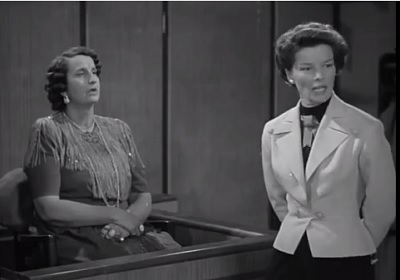
Then there were the clothes that suited her, rather than following any passing fashions. And the parts she chose, roles that could inspire women like me, and like my aunt: athletes, business leaders, pioneers, advocates for women.

HepburnAdamsRib
She always imbued these characters with vulnerability as well as strength, helping viewers see powerful females as fully rounded human beings.

Hepburn’s real-life actions demonstrated the same moxie she expressed in film: fighting back after the box office poison label, establishing her own terms with The Philadelphia Story, and then using her new power to ensure good salaries for her Woman of the Year screenwriters.

In her private life, Hepburn managed to say what she wanted, avoid whom she wished, have a long-time affair with a married man without compromising her career. With her spirit, it’s not surprising that she continued to star as a romantic lead even in her forties.

Now I see in that erect posture of hers in her final years, those fierce expressions, her pride in a life well lived.

KatharineHepburn-LoveAffair
How many of us can follow our own standards consistently, passionately, for as many years as she did? No wonder my aunt found Katharine Hepburn so breathtaking at 80. I look at her later performances now, and see the same. Imprinted on Katharine’s Hepburn’s face, her carriage, and even her voice is the caliber of life she lived.

Look at her. Isn’t she beautiful?

KatharineHepburn-posturewFonda

Share
Posted in: 1930s films, 1940s films, 1950s films, 1980s films, Blogathons, Feminism, Humor, TV & Pop Culture Tagged: beautiful actresses, Katharine Hepburn, spirit

The Nicholas Cage Syndrome: Is Taste More Crucial than Talent?

04/24/2015 by leah@carygrantwonteatyou.com 6 Comments

KeiraKnightleyADangerous
I was outraged by the choice of Keira Knightley to play Elizabeth Bennett in Pride and Prejudice. “That woman,” I complained to my sister Rachel, “is known for her toned midriff, not her acting talent.” Although Knightley did a passable job in a decent film adaptation, I considered her subsequent Oscar nod an affront.

Rachel agreed with my assessment of the actress’s mediocrity, even if I couldn’t follow through with my plan to avoid her films. The problem was, Knightley kept selecting intriguing feminist roles, not the cheesy romantic leads her looks surely could have garnered her. The groundbreaking historical women she brought to life on the screen in The Duchess and A Dangerous Method led me to hours of fascinating research.

And then this year, an Oscar nod again, this time for an interesting biopic, The Imitation Game. When I grumbled about her second nomination, my sister disagreed. “I’ve changed my mind about her. Watch Begin Again. Two great films in one year. She has such good taste.”

And there it was, the trait so often ignored when we talk about acting: taste. Sometimes; as with Meryl Streep, Philip Seymour Hoffman, and Cary Grant; we get both: good films and incredible talent. But so often, we can’t select a movie based on the cast and assume we’ll enjoy it. Why? Because so many skilled performers have Nicholas Cage judgment.

Cage Syndrome: Good actor who stars only in trash

The Cage Syndrome: A good actor who repeatedly stars in trash.

Recall Halle Berry, still gilded from her Oscar win, choosing a bad Bond flick and Catwoman to cement her legacy. Or the previously reliable Morgan Freeman. His films since The Shawshank Redemption make me feel like a comet has crashed into my brain.

Is it possible that taste is more important than talent? I’m not saying that judgment trumps skill if the acting is bad enough to spoil the film. (I’m looking at you, Andie MacDowell.) But if the actor or actress is decent, might good taste matter more?

Let’s take another example: an actress even less versatile and skilled than Keira Knightley (who is admittedly rising in my estimation). Katie Holmes is better known for being the ex of Tom Cruise than for her acting. Her performances are largely forgettable, but her films are not. Even during her Dawson’s Creek years, Holmes displayed remarkable discrimination in her choices. The following are my favorites of her credits (the first and fifth I rewatch often):

  • Thank You for Smoking
  • Batman Begins
  • Pieces of April
  • The Gift
  • Wonder Boys
  • Go

KatieHolmes-ThankYouSmoking
By rarely starring and choosing movies that feature fine performers, Holmes has ensured I don’t need to rely on her skill to enjoy her films. Her mere presence in Woman in Gold is making me reconsider it despite lukewarm reviews. I trust her taste to impress as much as I trust Cage’s to disappoint. (I vowed during Snake Eyes never to watch his films again. Alas, I caved, remembering Raising Arizona, and even let my husband bring home Drive Angry, which did, in fact, make me angry.)

Of course, it’s hard to place the same kind of trust in the taste of classic film performers. Since studios held such tight reign over their stars, performers’ ability to select was limited. But now and then, you can, as in the interesting case of Norma Shearer.

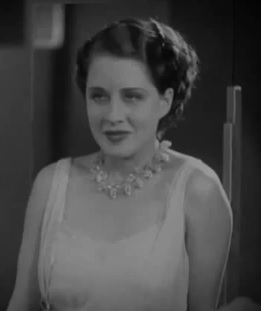
NormaShearerDivorcee1
She (conveniently) married the production head of MGM, therefore ensuring her pick of roles (to the envy of Joan Crawford, who must have enjoyed taking her husband away in The Women).

I’m not a big fan of Shearer’s acting, which I usually find too theatrical. That said, I always enjoy her films, even staid period dramas such as Marie Antoinette and antifeminist flicks such as The Women. But it’s her fight to play liberated women in the pre-Code era that makes me trust her judgment. A woman who would go to a photographer for sexy shots just so she’d be considered for parts like that of Jerry in The Divorcee? That’s an actress I can trust. And in pre-Code films, she relaxes the affectations and easy tears that occasionally mar her pictures. Shearer is never on my list of favorite film actresses, but just writing these words has made me long to see The Divorcee again.

Are there stars whose films you go to see in spite of the mediocrity of their acting? Which talented stars’ movies do you avoid due to the Cage syndrome? And what is up with Sandra Bullock’s love for Razzie-caliber roles?

Share
Posted in: 1980s films, 1990-current films, Comedies (film), Drama (film), Feminism, Humor, TV & Pop Culture Tagged: bad acting, good taste, Katie Holmes, Keira Knightley, Nicholas Cage, Norma Shearer, Sandra Bullock, syndrome

The Epitome Of Teen Queen Cruelty: The Heathers Of Heathers (1989)*

04/16/2015 by leah@carygrantwonteatyou.com 23 Comments

This post is part of the second annual Great Villain Blogathon, sponsored by Ruth of Silver Screenings, Karen of Shadows & Satin and Kristina of Speakeasy. Click here to read about other fascinating villains!
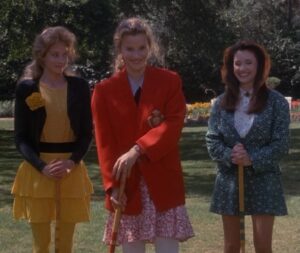
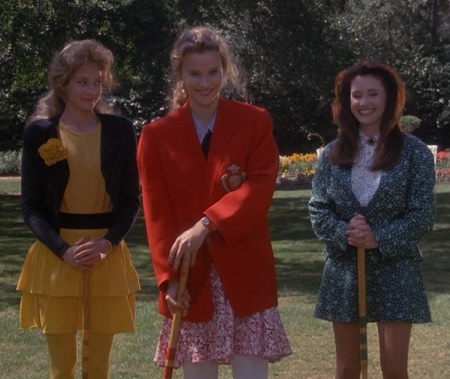
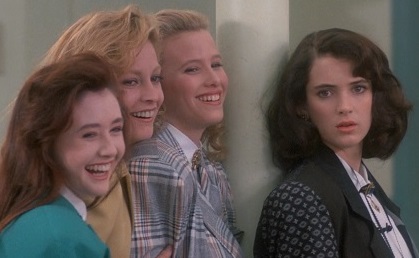
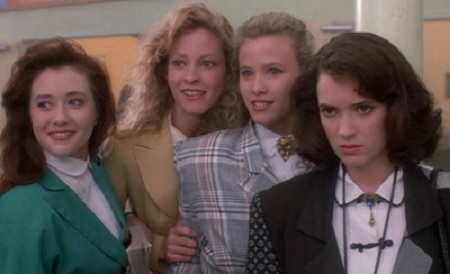
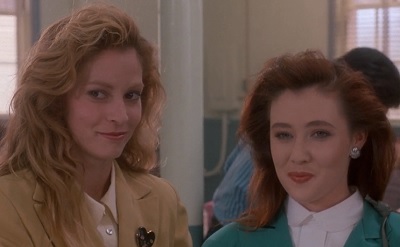
The Three Heathers: McNamara, Chandler (queen), and Duke

The Three Heathers: McNamara, Chandler (queen), and Duke

Before there were Mean Girls, there were Heathers, the heroines of the late-80s teen flick. If you haven’t seen it since high school, watch it again immediately on Netflix. It’s so much funnier than you remember, one of the sharpest satires about group behavior you will ever see. Mean Girls (2004), entertaining though it may be, is just a pale copy of it.

There are multiple villains in this black comedy, but the wicked trio are my favorites, a group of snotty popular girls, all named Heather. One outsider, Veronica (Winona Ryder), is allowed to share their company. She narrates their cruelty (and her own) in angsty teen fashion until J.D., a new crush (Christian Slater), urges her into revenge.

Heathers-movie2
Cliché as this group might be, the Heathers are so extreme in their behavior that they’re mesmerizing, with their lead, Heather Chandler (Kim Walker), the most interesting of the bunch.

HeatherChandler-1
To capture her fascination, I’m categorizing the queen Heather’s words, preferences, and actions below.

(Note: Some of the best lines are so profanity laced that I decided not to include them; the line ending in Mother Theresa is a favorite.)

Power Accessory
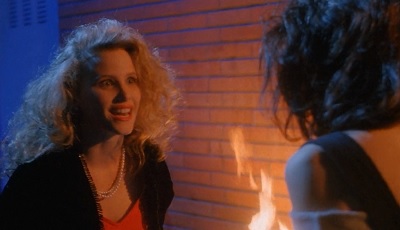
Heather’s red scrunchie is clearly one of the symbols of her dominance. It’s the first thing we see in the film.

RedScrunchie-Heathers

Her School Armor
These shoulder pads speak for themselves:

ShoulderPads-Heathers

Lunch-Time Polls & Other Bits of Wisdom

Lunchtimepoll-Heathers
Heather creates a regular poll** for her fellow popular kids. One of Veronica’s pathetic minor rebellions is to insist they seek answers from those Heather considers “the scum of the school” as well, those who in the queen’s estimation won’t help them brush up on their “conversational skills” before a college party.

Representative Poll: “Now check this out. You win five million dollars from Publisher’s Sweepstakes, and the same day that that big Ed guy gives you the check, aliens land on the earth and say they’re going to blow up the world in two days. What do you do?”

I just love the level of importance attached to this idiocy in the movie.

Signature Aphorism: “Real life sucks losers dry.”

Idea of Fun—and Urgency
The two Heather minions (Duke and McNamara) tell Veronica she’s needed right away in the café. When she arrives, their queen huffs, “Veronica, finally…I need you to forge a hot and horny, but realistically low-key note in Kurt’s handwriting and slip it onto Martha Dumptruck’s (Carrie Lynn’s) lunch tray.”

When Veronica protests that she doesn’t have anything against the poor target, Heather responds, “You don’t have anything for her either,” then suggests (with typical color) that this will give the girl fantasy material for when she’s alone. The Heathers’ excitement in anticipating the results of this cruel plot is evident:

Anticipating the results of their cruelty

Sense of Furniture
“Veronica needs something to write on. Heather (Duke), bend over.”

DohertyasDesk
Favorite Game
There’s really nothing like croquet for sociopaths; Heather Chandler has a loving ritual with her ball.

CroquetKissHeathers
Just after it, she hits Veronica’s head with it in a dream sequence.

Rydersheadcroquet
Her real-life game isn’t much more cordial. When her red ball knocks into Heather Duke’s green one, the latter asks, “So what are you going to do, Heather? Take the two shots or send me out?”

“Did you have a brain tumor for breakfast?” the queen snaps. “First, you ask if you can be red, knowing that I’m always red.” She then proceeds to knock the ball out of play.

After Heather Duke miraculously manages to rebound, Heather Chandler gets a chance to ruin her chances again, and does.

“Why?” says Heather Duke.

“Why not?” her frenemy responds.

Self-Reflection
“Does it bother you,” Veronica asks Heather #1, “that everyone thinks you’re a piranha?”

The queen scoffs in response that of course she doesn’t, desired as she is. “I’m worshipped at Westerburg,” she explains, “and I’m only a junior.”

“You wanted to be a member of the most powerful clique in school,” Heather reminds Veronica when the latter protests bullying. “If I wasn’t already the head of it, I’d want the same thing. Come on, Veronica. You used to have a sense of humor.”

Insults & Threats

HeatherChandler
Her entire demeanor belittles those around her, but Heather Chandler really has some classic lines. Here are a few examples of this sweetheart’s empathy at work:

“Grow up, Heather (Duke),” she says as her friend is puking. “Bulimia is so ’87.”

“You blow it tonight, girl,” Heather warns Veronica before their party at Remington University, “and it’s keggers with kids all next year.”

“What’s your damage?” (when Veronica refuses to sleep with an annoying college guy)

TheHeathers-brushoff
“You were nothing before you met me,” Heather snaps after Veronica embarrasses her by not putting out and getting sick at the university party. “You were playing Barbies with Betty Finn. You were a Bluebird. You were a Brownie. You were a Girl Scout cookie. I got you into a Remington party. What’s my thanks? It’s on the hallway carpet. I got paid in puke…Transfer to Washington. Transfer to Jefferson. No one at Westerburg’s going to let you play their reindeer games.”

“Is this turnout weak or what?” (response to a friend’s funeral in a dream appearance)

Other Heathers’ Honorable Mentions
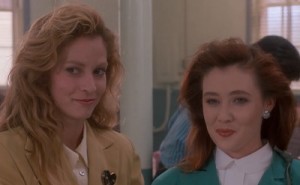
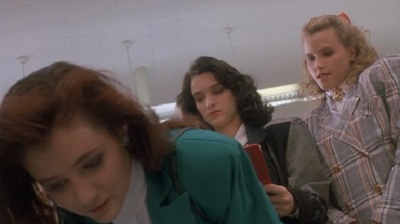
TheHeathers-Minions
**Spoilers ahead***

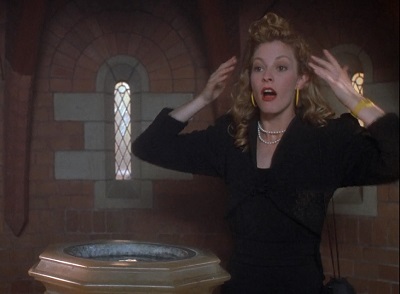
The minions have their moments as well. Here’s Heather McNamara (Lisanne Falk), fixing her hair with holy water after her friend’s funeral:
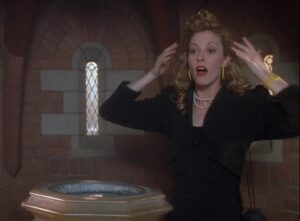
Heathers-funeralhairdo
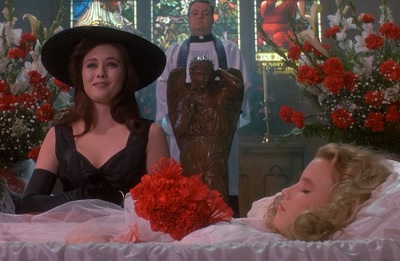
And Heather Duke (Shannen Doherty), celebrating Heather Chandler’s death:
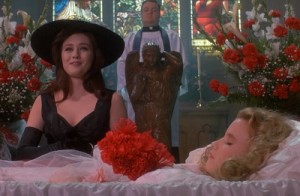
Heathers-funeralofHeathers
If you’ve seen the movie, you’ll remember that Veronica accidentally kills the queen, which leads to the latter becoming a martyr in the school, more popular than ever. Afterward, J.D. exploits the school’s fever for suicide, killing two football players and passing the deaths off as self-inflicted with Veronica’s unwilling assistance. And that’s just the beginning.

Much of the humor of the story comes from others’ reactions to the bloodshed, including Heather Duke’s. She dons her predecessor’s queenly mantle, even wearing her power scrunchie. Here’s her response after hearing her clique’s bullying victim attempted to kill herself: “I mean, Heather and Kurt were a shock, but Martha Dumptruck? Get crucial. She dialed suicide hotlines in her diapers.”

Why, Veronica asks, must Heather Duke be such a jerk?

The replacement queen smirks, “Because I can be.”

The film suggests with the interchangeability of the Heathers that the death of a clique queen just leads to another who may be worse. As Veronica says of her friend’s newly acquired status, “I’ve cut off Heather Chandler’s head, and Heather Duke’s head is sprouting back in its place….”

In terms of filmmaking, this movie spawned creatures such as Mean Girls’ Regina George, queen of the Plastics. We might no longer call the teens in them “Swatch dogs and Diet Coke heads,” but clique comedies are alive and well in the Heathers’ wake, which will probably be true as long as high schools continue breeding ugly class structures. As J.D. says about geography, but could just as easily apply to time, “Seven schools in seven states, and the only thing different is my locker combination.”

*1988 international release
**Mean Girls
gave a nod to the film with a poll of its own. Did you catch it?
Share
Posted in: 1980s films, Blogathons, Comedies (film), Film Noir/Crime/Thriller & Mystery, TV & Pop Culture, Uncategorized Tagged: 80s, black comedy, Heathers, Mean Girls, Regina George, satire, Winona Ryder

Why the John Goodman Oscar Snubs?

02/09/2015 by leah@carygrantwonteatyou.com 16 Comments

BigLebowski-Walter-Goodman
This post is part of the 31 Days of Oscar blogathon. I’m taking part in the Oscar Snubs segment, hosted by Once Upon a Screen! There are so many amazing posts. Check them out here. Also see Paula’s Cinema Club & Outspoken & Freckled for the other great Oscar topics.

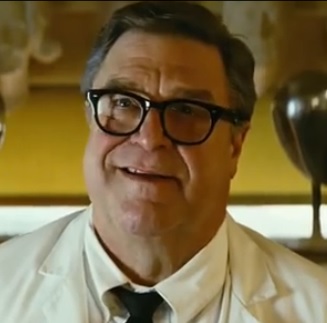
I’m rarely puzzled by an actor failing to win an Oscar. The competition is steep, the Academy biases evident, and the campaigning too embarrassing for some well-respected professionals to attempt. But for an actor not to be nominated when he regularly appears in critically acclaimed movies (and presumably played a role in their success) is surprising. With over two decades of fine performances to his name, John Goodman has yet to receive a single Oscar nod.

He is a regular in Coen brothers’ films, and thus would presumably take on the shimmer of those critical darlings. How’s this for a partial list of acting credits?: Inside Llewyn Davis (2013), O Brother, Where Art Thou? (2000), The Big Lebowski (1998), The Hudsucker Proxy (1994) (voice only), Barton Fink (1991), and Raising Arizona (1987).

For two years in a row, Goodman acted in the Oscar-winning film: Argo (2012) and The Artist (2011). In 2011, in fact, he performed in two Oscar-nominated films, playing the doorman in Extremely Loud & Incredibly Close as well as the executive in The Artist. While his roles in the other two might not have been significant enough for Academy Award consideration, his performance in Argo certainly was.

John Goodman-Argo
Goodman won a Golden Globe for playing Dan Conner on Roseanne (1988-97) and an Emmy for his guest performance in Studio 60 on the Sunset Strip. He’s won other honors, including, of course, for comedy, but the most prestigious have been ensemble awards. His only Golden Globe-nominated film performance was for Barton Fink.

I have to ask: Why?

Is His Acting Not Good Enough?
The easiest answer is that he’s simply not skilled enough to win. I guess that’s possible, even though I find it tough to believe any other actor could have so memorably captured Walter Sobchak in The Big Lebowski, or the oddest hotel guest ever in Barton Fink. Even in small roles his impact is felt. I can’t stop laughing when I think about his performance as an escaped convict in Raising Arizona, especially when he gets into his never-leave-a-man-behind diatribe.

RaisingArizona-Goodman-1
And with all of Hollywood to choose from, why would the gifted Coen brothers continue to cast Goodman if they didn’t find him talented? While the directing duo features the same actors in many of their films, I think only Joel Coen’s wife makes more showings than Goodman. (John Turturro, also beloved by the brothers, has been in four of their movies to Goodman’s six.)

Are His Roles Not Sufficiently Challenging?
Goodman fits well into a number of stereotypical roles, especially the kind of good ol’ boy he plays in Alpha House. He clearly plays these with ease. But he enjoys eccentric characters too, as so many of his Coen brothers movies prove. The Academy seems to love larger-than-life characters. Anthony Hopkins and Daniel Day-Lewis have been honored for roles that bear no resemblance to actual human beings. Does anyone believe there was ever a man like those Day-Lewis played in Gangs of New York or There Will Be Blood? In what world is Hannibal Lecter anything but a caricature?

Lecter
Goodman’s oddball and sometimes sinister characters, in contrast, are typically very believable, especially Walter in The Big Lebowski. Is it easy to make a person who is comically bizarre come off as realistic?

RaisingArizona
I don’t think it is, nor do I believe the much-loved Day-Lewis has pulled off this feat nearly as often as Goodman has (admittedly, the latter’s role in O Brother also never gets beyond myth).

In terms of understated performances, which I typically think more deserving of honors, Goodman isn’t always given enough play time for the kind of nuanced and subtle acting we saw in Roseanne, and he doesn’t seem to demand meatier roles when he could. I’d like to see him attempt these types of parts more than he does. If only such understated roles were honored, Goodman being bypassed by the Academy would make sense given the number of his quirky parts. But that’s not the case. Oscars would otherwise never have been given to Day-Lewis for There Will Be Blood or Hopkins for The Silence of the Lambs.

Is It the Usual Reason—No Love for Comedians?
Those of you who’ve read my blog for a while know that I regularly take the Academy to task for their lack of appreciation for comedic performances and scripts (Harold Ramis, Steve Martin, Ralph Fiennes). While Goodman has often starred in dramas, even his more serious roles are usually punctuated with humor. And with a face as expressive as this one, why would he neglect the opportunity to make us laugh?

BartonFink-Goodman
The Academy’s dismissal of comedy could explain how often Goodman is never even discussed—much less chosen—when it comes to nominations.

Could It Be the TV Curse?
In the new golden age of TV, actors can move from big screen to television and back again without losing their star status—as long as that show is on cable. Network television still retains its low status. (Doubt me? Check out which shows win most Emmys for drama.) Whatever his other accomplishments, Goodman will always be known as Roseanne’s Dan Conner. He starred too long on a hit show—and performed too well—for it to be otherwise. While we see the rare exception—J.K. Simmons’s Oscar nomination this year, for example—most network television stars never get much credit once they turn to film. I can’t explain this trend nearly as fluently as Jack Donaghy (Alec Baldwin) does in 30 Rock.

Jackexplains30Rock
Jack is advising Tracy Jordan (Tracy Morgan) on how to tank his acting career. In the NBC TV show’s typical self-referential fashion, Baldwin is actually describing his own life:

“Do TV. No one will ever take you seriously again. Doesn’t matter how big a movie star you are, even if you have the kind of career where you walked away from a blockbuster franchise or worked with Meryl Streep or Anthony Hopkins. Made important movies about things like civil rights or Pearl Harbor. Stole films with supporting roles and then turned around and blew them away on Broadway. None of that will matter once you do television. You can win every award in sight, be the biggest thing on the small screen, and you’ll still get laughed out of the Vanity Fair Oscar party by Greg Kinnear….You wanted to hit rock bottom again? Go on network television.”

Could this trend explain Goodman’s snubs?

Is He Discounted Due to His Choices—and Costars?
Perhaps no number of outstanding performances can make the Academy forget this role:

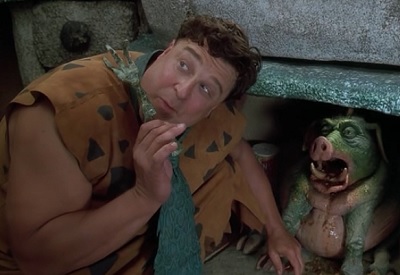
JohnGoodman-Flintstones
Or the fact that he starred with Roseanne Barr, who never has gained any traction outside of TV and unfortunately earned even a presidential slam thanks to this performance:

RoseanneBarr
That the show they shared was remarkably ahead of its time, wise and real in a way few sitcoms then or since have been, doesn’t seem to make any difference.

Of course, there’s no way to know for sure why the Academy passes on this lovable character actor. My belief? The omission maybe has a bit to do with the TV curse or his former costar. But mainly, he’s ignored for the same reason Jeff Bridges was for The Big Lebowski and for many other roles that preceded it: Goodman simply makes it look too easy.

Please check out the other 31 Days of Oscar entries! (I will, by the way, return to classic movie fare on Thursday:))

Share
Posted in: 1980s films, 1990-current films, Blogathons, Comedies (film), Drama (film), Oscars, TV & Pop Culture, Uncategorized Tagged: Argo, John Goodman, Oscars, Roseanne, snubs, The BIg Lebowski

My Favorite Canadian: Michael J. Fox

10/09/2014 by leah@carygrantwonteatyou.com 16 Comments

This post is part of the O Canada Blogathon hosted by Ruth of Silver Screenings and Kristina of Speakeasy.

I remember being vaguely horrified when I discovered Michael J. Fox was Canadian. He was OURS. How could he possibly be anything other than American? His role as Alex P. Keaton was so iconic: the conservative, hippie-parent-horrifying, greed-is-good believing teen who embodied and parodied Reagan-era culture.  Although I’d rather hang out with his sister Mallory (Justine Bateman), I knew Family Ties revolved around Fox’s pitch-perfect, Emmy-winning performance as Alex.

Keaton (Fox) explaining the horror of taxes to preschoolers

Alex P. (Fox) explaining the horror of taxes to preschoolers

I was such a huge fan of Family Ties that when Fox followed the show with big-screen stardom in Back to the Future, what I felt was pride.

BacktotheFuture
No wonder then that in those years before I’d ever been out of my own country or met any Canadians, I felt so disappointed to lose any hold on him. I mean, I’d gone to see Doc Hollywood–in the theater. I’d suffered through The Secret of My Success for him. It wasn’t really a crush with me.  (Even if I ever had one, I think those suspenders in Back to the Future would have ruined it.)  I just admired him so much.  His gestures, expressions, movements–always so true, so uniquely his, and so damn funny. And oh, the lines. No one can deliver a line more effectively than Michael J. Fox. I could listen to him ask, “Are you telling me that you built a time machine… out of a DeLorean?” on repeat. No wonder the guy can’t seem to walk in front of a camera without being nominated for an award.

When Parkinson’s forced Fox to leave Spin City, his costars couldn’t stop crying long enough to finish his final episode. They didn’t know yet that he’d find a second career in his illness as a guest star, even as the headliner of his own show. And most of all, as the representative for the disease that had claimed him. They didn’t know he’d write a memoir. Call it Lucky Man. Tell other actors on Inside the Actor’s Studio suffering from the same afflictions that he had it easy, with his advantages, that they were those who had courage and guts; they were the ones he admired. That he’d remain tireless and fearless in his pursuit of a cure, and keep on wowing his countless fans.

It took a while, but I finally lost my dismay at Fox’s being Canadian. Instead, I now feel gratitude toward his homeland: for sharing this fine of an actor, this caliber of a human being with the rest of us. And now if you’ll excuse me, I need to re-watch Alex P. recommending amoral business principles to children.

Be sure to check out the other entries in the blogathon! And I promise to return to classic film next week. I just couldn’t resist celebrating Fox.

Share
Posted in: 1980s films, Blogathons, Humor, TV & Pop Culture Tagged: Alex P. Keaton, Back to the Future, Canadian, Family Ties, Michael J. Fox, Spin City

Say Anything Fan? Holiday (1938) Is the Classic Film for You

09/06/2014 by leah@carygrantwonteatyou.com 2 Comments

A hero who reveals his vulnerability, yet retains his pride; the kind of man devoted enough to lift a jukebox above his head blaring Peter Gabriel’s “In Your Eyes” to woo the girl who dumped him, yet still grounded enough to enjoy relaxing with his friends; a boy with few prospects who is seeking a “dare-to-be-great” situation.

Lloyd-Cusack
There’s a reason Say Anything (1989) and its hero, Lloyd Dobler (John Cusack), were nearly universally worshipped by every middle and high school girl I knew. Cusack quickly became the heartthrob of my generation, just as Cary Grant was to his. In Holiday, Grant played a role much like Cusack’s in Say Anything. That’s why if you’re a diehard lover of Lloyd Dobler, I think you should check out this 1938 film and see for yourself the many similarities:

Lightheartedness
Those accustomed to seeing Grant’s suave persona on display in clips and photos might not realize how fun it is to witness him being the opposite—silly, playful, with that same uneasily expressed, coltish confidence in himself that makes Lloyd Dobler so appealing. In Holiday, Johnny (Grant) likes to do flips to cheer himself out of tough times or worries, just as Lloyd chides his sister for not being able to pull out of hers.

SolutiontoWorry-CaryGrant
Romancing the Daddy’s Girl—and Daddy Ain’t So Great
Both films feature heroines who are too close to fathers who don’t deserve such adulation. In Say Anything, Diane’s dad (John Mahoney) winds up being a crook; in Holiday, Julia’s (Henry Kolker) is so obsessed with money and status that he verges on caricature.

Johnny's fiancée and her father

Johnny’s fiancée and her father

Much of Holiday focuses on Johnny’s discovery that Julia (Doris Nolan) is much closer to her father’s character than he realized, just as Say Anything shows Diane (Ione Skye) slowly recognizing that her father is not the moral center of her universe. Luckily, we have both of Julia’s siblings, Linda (Katharine Hepburn) and Ned (Lew Ayres), mocking their dad the whole time in Holiday, which is way funnier than the whole Diane-Dad snooze fest.

Unconventional Ambitions
Both heroes have unpopular dreams. Lloyd’s is beautifully expressed when Diane’s dad opens the door and he tries to sell himself as a trustworthy date: “I’m an athlete, so I rarely drink. You heard of kickboxing, sport of the future?”*

DoblerSportoftheFuture
Lloyd responds to a question about his career plans with “Spend as much time as possible with Diane before she leaves” and proceeds to give an amusing description of his hopes: “Considering what’s waiting out there for me, I don’t want to sell anything, buy anything, or process anything as a career….So what I’ve been doing lately is kickboxing….”

Grant’s plan, captured in the film’s title, is to take a vacation from employment. He’s worked since the age of ten, and isn’t sure what he’s doing it for: “I want to know how I stand, where I fit in the picture, what it’s all gonna mean to me. I can’t find that out sitting behind some desk in an office, so as soon as I get enough money together, I’m going to knock off for a while….I want to save part of my life for myself….You know, retire young, work old, come back and work when I know what I’m working for, does that make sense to you?”

Johnny, like Lloyd, makes fun of the idea of needing familial or professional connections: “When I find myself in a position like this, I ask myself what would General Motors do? And then I do the opposite.”

And like Lloyd, Johnny thinks his love should be enough for Julia’s father: After offering a character reference, he adds, “I’m quite decent and fairly civilized. I love your daughter very much, which isn’t a bit hard. She seems to like me a lot too. And uh, well, that’s about all that can be said for me, except that I think we have a grand chance of being awfully happy.”

A Marvelous Support Network
Both men are backed by funny friends who provide much of the comic relief of their films. Edward Everett Horton plays a professor and Jean Dixon his wife, Susan; they are friends of Johnny’s who gravitate toward Linda rather than Johnny’s fiancée. When they arrive at the fussy engagement party for the couple, Susan says, “Don’t tell anyone, but I’ve got a run in my stocking.” “Good heavens, we’re ruined,” answers her husband. “Not a word of this to a soul,” he warns the butler.

GrantandHorton
Among Lloyd’s many entertaining friends, Corey (Lili Taylor) is the obvious standout, with her 63 songs about her ex and classic line in response to Lloyd’s “…I’m a guy. I have pride”: “You’re not a guy…The world is full of guys. Be a man.”

LiliTaylor
In Johnny’s case, Julia proves to be remarkably dull, and soon is outshone by her supportive sister, Linda (Hepburn). Linda can be quite amusing, though at times she’s a bit melodramatic about the family woes.

GrantandHepburn-Holiday
In Say Anything, we’re stuck with Ione Skye as the romantic interest the whole film, with that terrible acting doing nothing for any of us. When Diane dumps Cusack, all the viewers may protest, but it was a relief not to hear Skye talk for a bit and listen to Lloyd’s friends instead.

Rising Above…
Both Johnny and Lloyd display a remarkable level of emotional maturity—Lloyd, in his continued efforts to unite Diane and her father once they become estranged in spite of the latter’s hostility toward him.

CusackandMahoney
And Johnny, in his attention to his fiancée’s needs and sensitivity to her family despite her father’s rudeness toward him.

GrantandKolker
After asking many not-so-subtle questions about Johnny’s connections, Julia’s father expresses zero interest in her suitor’s obvious resourcefulness, the loss of his mother, and his pride in who he is. Johnny freely discusses his background: his dad’s grocery ownership and debts, an alcoholic uncle, and his own work as a steel mill worker, garbage truck driver, and laundry worker while earning his degree at Harvard. While he isn’t exactly trying to provoke the father’s snobbery, he clearly is amused by it.

“Admirable,” the father says after hearing Johnny’s answers about his life, with no sincerity whatsoever.

“Anything else, sir?” Johnny finally asks.

“I beg your pardon?” the father replies.

“I should think you would,” snaps Linda.

Luckily, fun-loving Linda is the one Johnny will eventually be falling for. If my description doesn’t win you, hopefully this image of the former acrobat (Grant) in action will.

acrobatCaryGrantKatharineHepburn
*When I mentioned this quote on kickboxing, my husband pointed out that Lloyd was one prescient guy given the success of UFC….

Share
Posted in: 1930s films, 1980s films, Comedies (film), Romantic Comedies (film), TV & Pop Culture Tagged: Cary Grant, Holiday, John Cusack, Lloyd Dobler, Say Anything
« Previous 1 2 3 Next »

Recent Posts

  • 100 Years Later, Still Scary: Dr. Caligari
  • Escaping Out of the Past (1947)
  • A Weeper for Those Who Love Jerks
  • Thank You, Academy, for Not Infuriating Me
  • Challengers (2024) Is a Bad Movie

Subscribe to Blog via Email

Enter your email address to subscribe to this blog and receive notifications of new posts by email.

Categories

  • 1920s films
  • 1930s films
  • 1940s films
  • 1950s films
  • 1960s films
  • 1970s films
  • 1980s films
  • 1990-current films
  • 2020s films
  • Action & Sports Films
  • Anti-Romance films
  • Blogathons
  • Childfree
  • Comedies (film)
  • Drama (film)
  • Feminism
  • Femme fatales
  • Film Noir/Crime/Thriller & Mystery
  • Gloriously Silly Scenes
  • Horror
  • Humor
  • Mae West Moments
  • Musicals and dancing films
  • Oscars
  • Random
  • Romance (films)
  • Romantic Comedies (film)
  • The Moment I Fell for
  • Turn My Sister into Classic Movie Fan
  • TV & Pop Culture
  • Uncategorized
Share
Classic Movie Blog Hub Member

Recent Comments

  • leah@carygrantwonteatyou.com on Meg Ryan’s Fate Foretold in Joe Versus the Volcano
  • Ryan on Meg Ryan’s Fate Foretold in Joe Versus the Volcano
  • leah@carygrantwonteatyou.com on 100 Years Later, Still Scary: Dr. Caligari
  • The Classic Movie Muse on 100 Years Later, Still Scary: Dr. Caligari
  • leah@carygrantwonteatyou.com on 100 Years Later, Still Scary: Dr. Caligari

Archives

  • November 2025
  • September 2025
  • May 2025
  • March 2025
  • January 2025
  • November 2024
  • August 2024
  • July 2024
  • May 2024
  • March 2024
  • February 2024
  • December 2023
  • November 2023
  • October 2023
  • September 2023
  • August 2023
  • July 2023
  • May 2023
  • April 2023
  • March 2023
  • January 2023
  • December 2022
  • November 2022
  • September 2022
  • July 2022
  • May 2022
  • April 2022
  • March 2022
  • February 2022
  • October 2021
  • September 2021
  • April 2021
  • March 2021
  • February 2021
  • December 2020
  • October 2020
  • September 2020
  • July 2020
  • May 2020
  • April 2020
  • March 2020
  • February 2020
  • December 2019
  • October 2019
  • September 2019
  • June 2019
  • May 2019
  • April 2019
  • February 2019
  • January 2019
  • November 2018
  • September 2018
  • July 2018
  • June 2018
  • May 2018
  • April 2018
  • March 2018
  • February 2018
  • January 2018
  • November 2017
  • September 2017
  • August 2017
  • July 2017
  • June 2017
  • May 2017
  • April 2017
  • March 2017
  • February 2017
  • January 2017
  • December 2016
  • November 2016
  • October 2016
  • August 2016
  • July 2016
  • June 2016
  • May 2016
  • April 2016
  • March 2016
  • February 2016
  • January 2016
  • December 2015
  • November 2015
  • October 2015
  • September 2015
  • August 2015
  • July 2015
  • June 2015
  • May 2015
  • April 2015
  • March 2015
  • February 2015
  • January 2015
  • December 2014
  • November 2014
  • October 2014
  • September 2014
  • August 2014
  • July 2014
  • June 2014
  • May 2014
  • April 2014
  • March 2014
  • February 2014
  • January 2014

Meta

  • Log in
  • Entries feed
  • Comments feed
  • WordPress.org

Copyright © 2025 Cary Grant Won't Eat You.

Church WordPress Theme by themehall.com