Cary Grant Won't Eat You

Classic movies for phobics

  • About
  • eBooks
  • Previous Blogathons
Classic movies for phobics

1980s films

Glenn Close’s Most Stunning Role

07/25/2024 by leah@carygrantwonteatyou.com Leave a Comment


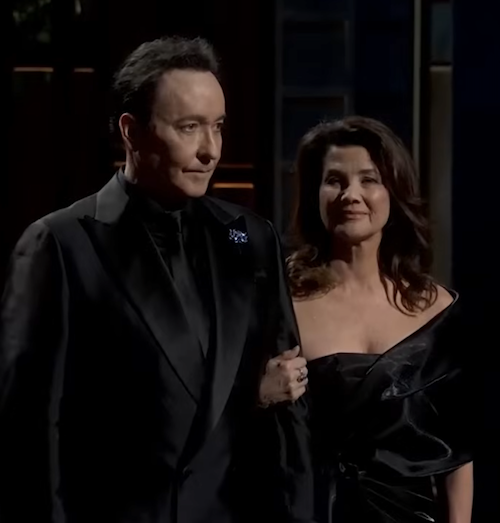
Episode 2 of the femme fatales season of Nobody Knows Anything is up!! Dangerous Liaisons, a film that pits the dueling wits of Glenn Close and John Malkovitch against each other in a fight over love and power . . . . and also, Keanu Reeves is there, being strangely perfect in eighteenth-century dress. We ask this critical question: Can the femme fatale ever win? (Just why Close didn’t get the Oscar for this is a big mystery.)

See the link in the image above!

Share
Posted in: 1980s films, Anti-Romance films, Drama (film), Feminism, Femme fatales, Film Noir/Crime/Thriller & Mystery, Humor, Romance (films), Romantic Comedies (film) Tagged: Dangerous Liaisons, Glenn Close, Glenn Close's best roles, great leading roles for women, John Malkovitch, Keanu Reeves, Michelle Pfeiffer, Oscar snubs

The 10 Funniest Xmas Movies

12/22/2023 by leah@carygrantwonteatyou.com 4 Comments

In no particular order except for #1, my favorite to rewatch:


1. The Ref (1994). The non-sentimental xmas movie I love most. The real question is who is the funniest here: Denis Leary, who has taken a family hostage? Judy Davis and Kevin Spacey, as The War-of-the-Roses-worthy combatants who make us feel sorry for the criminal? Christine Baranski as the outrageously funny sister-in-law? Or Glynis Johns, the mother-in-law from hell?


2. A Christmas Story (1983). It’s brilliant. It’s beloved. And it’s a great translation of a witty author’s style (Jean Shepherd) with excellent performances all round.


3. The Man Who Came to Dinner (1942). A grumpy, hilarious, ba-humbug house guest (Monty Woolley) treating his host family like serfs. Shenanigans with Ann Sheridan. Bette Davis playing a normal woman and still enjoying herself. Get this set of writers: Julius and Philip Epstein (yes, of Casablanca fame) adapting a play by George Kaufman and Moss Hart. What’s not to love?


4. National Lampoon’s Christmas Vacation (1989). I’m a huge fan of the Griswalds. Clark’s (Chevy Chase’s) xmas lights alone keep me in stitches.


5. Bad Santa (2003). Because Billy Bob Thornton does surly so very well.


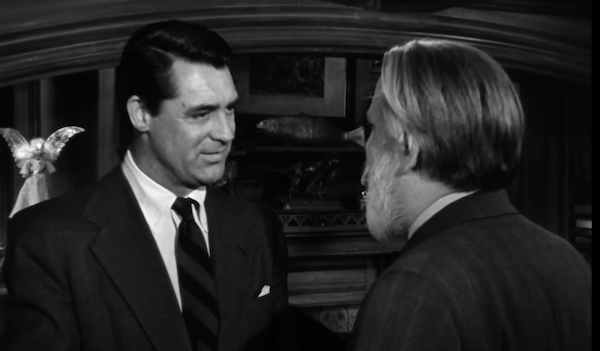
6. The Bishop’s Wife (1947). Cary Grant plays an angel as well as Thornton plays a grump. The angel’s methods are so charming and funny. My favorite scenes include watching everyone (realistically) falling over themselves in Grant’s presence, and his magic liquor-filling skills with Monty Woolley.


7. Christmas in Connecticut (1945). We have a double-charm offensive in Barbara Stanwyck and S. Z. Sakall (aka Cuddles). And Sydney Greenstreet adds some nice bluster. I could lose the smarmy love interest (Dennis Morgan), but who cares? Give me Stanwyck tossing pancakes with her eyes shut every time.

8. Die Hard (1988). As a Gen Xer, I couldn’t leave this out. Also, I adore Bruce Willis’s humor.


9. It’s a Wonderful Life (1946). Nearly a perfect film. As many heartrending as comedic scenes, but funny all the same.


10. Remember the Night (1940). Another dramedy with an empathetic heart that doesn’t sell out. Plus, Preston Sturges’s writing and dynamic duo Barbara Stanwyck and Fred MacMurray without a corpse.

Almost Made the Cut: Elf (2003). Cute, but not an annual viewing for me.
Bonus: Home for the Holidays (1995). A Christmas-vibey Thanksgiving movie, so it counts. Hilarious and true family dynamics, and Holly Hunter at her most adorable.

Share
Posted in: 1940s films, 1980s films, 1990-current films, Comedies (film), Humor Tagged: A Christmas Story, Bad Santa, best xmas movies, Christmas in Connecticut, Die Hard, funniest xmas movies, Home for the Holidays, It's a Wonderful Life, National Lampoon's Christmas Vacation, Remember the Night, The Bishop's Wife, The Man Who Came to Dinner, The Ref

In Praise of USA Up All Night

04/12/2022 by leah@carygrantwonteatyou.com 10 Comments

Today I felt a pang on hearing about Gilbert Gottfried’s death. Of course I found him annoying, but I also loved him. He–and Rhonda Shear–gave me USA Up All Night just when I needed it, a show that taught me valuable lessons that have stayed with me ever since. Here’s what I learned from that weekend stalwart, which, for the uninitiated, basically consisted of terrible, terrible movies playing from 11 pm /12 am till the wee hours on Fridays and Saturdays, with interludes of jokes, skits, and commentaries from the hosts.

  1. You Can Find Amusement in So Many Things. Camp was always appreciated in my family: my Uncle Ed’s running commentary on Slugs was a family reunion highlight. But in between those beloved family visits, I had Gottfried and Rhonda, poking fun of absurdly terrible B movies that no other channel would even play. Even Rhonda’s ridiculously perky enunciation of UP could make me laugh. To this day, I find enjoyment in so much pop culture that others don’t, and that’s partly thanks to USA Up All Night.
  2. Don’t Take Your Job Too Seriously. True, it’s hard to not laugh about your job when you’re commenting on Cheerleaders Beach Party. But Gottfried’s constant amusement (you could definitely see “This is my job?” in his expression) reminded me that every job doesn’t have to be a forever-career or vocation. Sometimes, you pay the bills doing something silly, and that’s OK. (And most of us do have absurd tasks even in the most serious of jobs.)
  3. Binging Movies Is Fun. Oh, you poor souls who didn’t learn this fact until Netflix. Gottfried and Rhonda (and the earlier host I never watched, Caroline Schlitt) taught us Gen Xers this back in the early 90s. Think of all the years of joy you missed!
  4. Embrace Your Awkward Self. Gottfried and Rhonda were never cool. They were goofy and absurd and nerdy and silly. But because they clearly didn’t care WHAT they were, they reminded me, an awkward teenage girl, that I didn’t have to be cool to have fun.
  5. Make Solitary Friday Nights an Occasion. In my twenties and early thirties, I moved states several times, each time alone. I was always either single or dating someone long distance, so Friday nights were rough on me. I hated the time it took to be moved from new friends’ weekday to their weekend rituals. To stave off the loneliness, I’d splurge on Fridays: wine, chocolate, good bread, and cheese. Maybe even takeout. I’d grab that remote and begin my movies, and all was right with the world. Sometimes, my preparations led to unhelpful comments by store clerks. (“Oooh-hoooh, honey, you’re having a romantic night tonight, huh?”) But in time, these Fridays became so peaceful and cathartic that I missed them when I had plans. (A bit of a foretaste of middle age, huh?) Would I have known to make an occasion of movie binging each Friday, without Gottfried and Rhonda’s example?
  6. You Never Know What Your Impact Will Be. I don’t think Gottfried could have anticipated that he’d be celebrated by a writer for USA Up All Night when he died thirty years later, do you? You just never know.

Share
Posted in: 1970s films, 1980s films, 1990-current films, Comedies (film), Humor, Random, TV & Pop Culture, Uncategorized Tagged: camp movies, Gilbert Gottfried, in memoriam, Rhonda Shear, USA Up All Night

5 Awful Romances We’re Supposed to Like

02/13/2022 by leah@carygrantwonteatyou.com 4 Comments
  1. Romeo & Juliet. This guy was in love with another gal last week. This is not a romance for the ages; this is a guy who can’t handle being without a girlfriend. Juliet, why didn’t you hold out for something better?
  2. The Teens of Say Anything. Diane (Ione Skye), I’m sure you’re going to have a great time on your British adventure while your boyfriend, Lloyd Dobler (John Cusack), is hanging out in your apartment watching kickboxing videos all day. I know your daddy, the embezzler, set the bar for men low, but come on.

  3. The Cheaters of Something Borrowed. Hollywood has such a low opinion of us really. We’re asked to get behind Rachel (Ginnifer Goodwin), who had sex with her best friend’s fiancé, Dex (Colin Egglesfield). We’re supposed to root for the cheaters’ love to prevail because the betrayed friend, Darcy (Kate Hudson), is vain, and Dex used to like Rachel. Ummm, what??
  4. Heathcliff & Catherine of Wuthering Heights. Ahhh, the sociopath and the narcissist. Now that’s a coupling that we all want to see, right?
  5. The Unnamed Heroine & Maxim de Winter of Rebecca. So, when you find out your husband killed his ex in a rage, the proper reaction is NOT to feel better (because now you know he didn’t love her). That makes you almost as creepy as he is. I’ve never rooted so hard for a (dead) villain of a story.

Those are five of the least ideal couples that novels, plays, and movies would have us celebrate. I can come up with ten more without trying. Which couples do you find the most laughably awful?

Share
Posted in: 1980s films, 1990-current films, Anti-Romance films, Comedies (film), Drama (film), Romance (films), Romantic Comedies (film) Tagged: bad couples, Lloyd Dobler, overrated couples, Rebecca, Romeo and Juliet, Say Anything, Something Borrowed, Wuthering Heights

They Live: Best Conspiracy Film?

03/31/2021 by leah@carygrantwonteatyou.com Leave a Comment

Join my friends’ and my new podcast! Tomorrow we feature the gum-chewing, sunglass-wearing Roddy Piper as he breaks through all the conventions of conspiracy films we’ve discussed so far. Don’t miss it.

Share
Posted in: 1980s films, Action & Sports Films, Anti-Romance films, Comedies (film), Drama (film), Humor, Random Tagged: best conspiracy films, John Carpenter, Nobody Knows Anything, podcast, Roddy Piper, They Live

New Podcast on Conspiracy Films!

03/18/2021 by leah@carygrantwonteatyou.com Leave a Comment

Join my friends and me as we talk about conspiracy films in this conspiracy-laden moment in history! It’s such fun talking film with my witty partners, Michael Keenan Gutierrez and Brian Wilkins. And I think you’ll enjoy our strange journey–from an early Hitchcock to the present moment. The 39 Steps and Dr. Strangelove start us off. Check out our podcast, Nobody Knows Anything, or go directly to Spotify or Apple Podcasts to find us. We’ll be posting more in the coming days on our Twitter and Instagram accounts. We begin by thinking about the important things, like how attractive you have to be in order to seduce an international spy with haddock. (Answer: Robert-Donat-with-a-mustache attractive.) For excerpts from our conversation, click below!

Here’s a clip of our 39 Steps talk!
And here’s a clip of our Dr. Strangelove chat.
Share
Posted in: 1930s films, 1960s films, 1970s films, 1980s films, 1990-current films, Uncategorized Tagged: Bourne Identity, Captain America: The Winter Soldier, conspiracy movies, Dr. Strangelove, film reviews, films, podcast, The 39 Steps, They Live, Three Days of the Condor

Guilty Pleasure: Somewhere in Time

02/29/2020 by leah@carygrantwonteatyou.com 21 Comments

Do I watch this film in front of others? No.
Do I recommend it to others? No.
Do I praise it anywhere public? No.
Have I watched it many times? Oh yes.

There’s something to be said for that first love story that gets you as a kid. I was quite young when I first saw Somewhere in Time on TV–I have a faint memory of my mother recommending it, but whether I watched it with her, I don’t know. What I do know is that at whatever single-digit age I was when I first viewed this film, it became the MOST ROMANTIC STORY EVER for me.

A man traveling through time for a woman? A woman giving up big stardom for a man? Both of them finding their longer lives without each other worthless in comparison with the time they had together? I mean, what kid wouldn’t swoon? But now, as an adult far more comfortable expressing sarcasm than sentiment, I have to confess: I like it still.

I feel reluctant to share the plot, as anyone reading this probably already knows it, but here it goes: An elderly woman approaches playwright Richard Collier (Christopher Reeve) after a party celebrating his first college production. She gives him a pocket watch, saying, “Come back to me,” goes back home, and smiling, dies. In the meantime, Collier moves to Chicago to work on his plays. Eight years later, experiencing writer’s block, he books a room in the Grand Hotel on Mackinac Island for a night away. The island is near his former college, and its rules forbidding cars give the place an otherworldly quality.

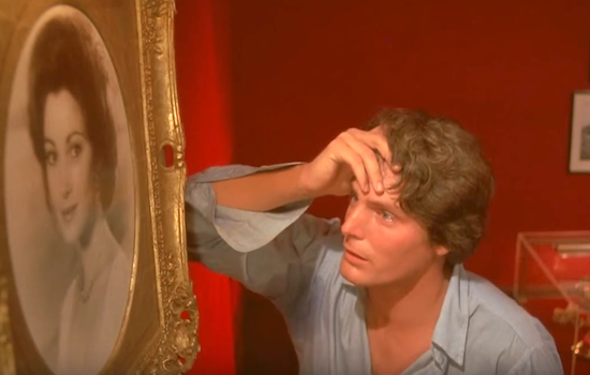
Waiting for the hotel’s restaurant to open, he wanders into one of those little museum nooks in the hotel, documenting the history of the hotel. On the wall is a photo of a breathtaking woman.

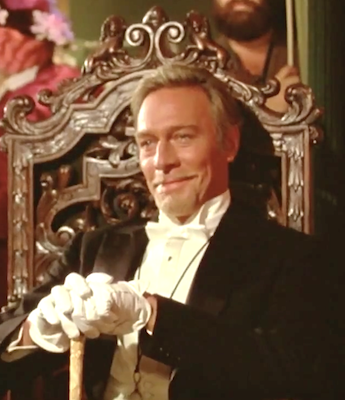
Collier, intrigued and quickly becoming obsessed, asks Arthur (Bill Erwin), an elderly hotel employee who spent his youth at the hotel, about her. Collier learns that she was Elise McKenna, a stage star who put on a play in 1912 at the hotel theater. Collier goes to the library to discover more about McKenna and learns she became the old lady who gave him the pocket watch at his play. Through a visit to McKenna’s old caregiver (played by Teresa Wright!!), Collier discovers that the stage actress pored over a book about time travel written by his professor in college. Naturally, Collier hunts him down and discovers the professor once tried self-hypnosis into another time. The professor believes if you have no modern trappings around you, it’s possible to go back, however briefly. Collier, with an early 1900s suit and old coins, begins his attempt. Eventually, he’ll succeed, woo his love, be chased away by her oppressive manager, William Fawcett Robinson (Christopher Plummer), and finally get to be with her in time for her to take the photo that inspired his journey. What happens next, I won’t spoil, but trust me, it doesn’t get any less sentimental.

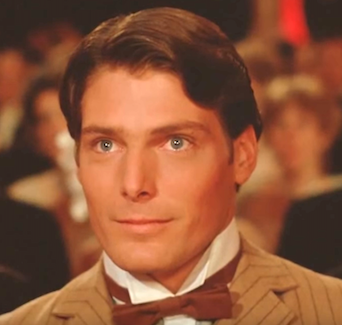
I found Christopher Reeve’s Richard Collier (what a name!) adorably awkward and smitten. I particularly enjoyed his affectionate treatment of the young version of hotel employee Arthur (Sean Hayden), and his refusal to be embarrassed even though he’s wearing a suit that (in McKenna’s day) is completely out of fashion. He also doesn’t seem to mind that he keeps sleeping in and dirtying up this suit, which must be disgusting by the time he unites with McKenna. But it’s that oblivious, single-minded attention to his lover that is so attractive in the film (though in real life, it would be alarming).

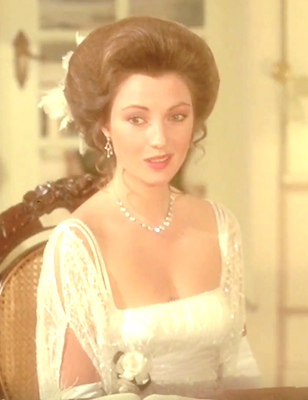
Jane Seymour’s Elise McKenna is stunning. The woman Seymour played was the person I wanted to be as a kid: an artist, accomplished, passionate. I wanted her hair, her clothes, her allure. For years afterward, Jane Seymour was my vision of unattainable beauty, and while my other 80s standards faded with time and/or growing sense and taste, that one didn’t. Because seriously? How ridiculously beautiful is that woman now, much less then?
And Christopher Reeve was so handsome, two years after Superman fame. Just check him out in his period duds:

If fact, it took this most recent viewing of the film for me to even note Christopher Plummer’s shockingly good looks, so distracted was I by the others.

Of course, the best parts of the film are the perfect music choices, just lovely enough to elevate the film: John Barry’s haunting score, and the The 18th variation of Sergei Rachmaninoff’s Rhapsody on a Theme of Paganini.

I became intrigued about the novel on which the film was based, and learned the early stage actress Maude Adams and her manager/producer, Charles Frohman, were the loose inspiration for McKenna and her manager. Best known now for putting Peter Pan (with Adams in the lead) on the stage, the pair were tremendously successful. She never married. Frohman’s personality is captured sympathetically by Dustin Hoffman in Finding Neverland. The producer comes across as charming, friendly, and well loved in true accounts as well, not as the lonely, bitter figure Plummer portrays in the film; clearly, the cruel figure fit the film’s plot better (though I found myself sympathetic to his annoyance–if not his responses to–Collier’s puppyish behavior this time). I found the real producer’s final brave hours and words on the doomed Lusitania moving.
In more lighthearted research, I learned that the hotel in the film STILL has Somewhere in Time celebration weekends, that its fan club has a playful quiz on the film. For someone abashed about loving such a sentimental film, I admire this group’s openness. My embarrassment at liking it, however, does make sense too: there’s too much use of slow-mo, some stilted dialogue, and a disturbing approval of the lengths the couple goes to for love at the end of the film.
But Seymour’s sincerity in the role and Reeve’s earnestness and good humor made me love the movie again, despite my reservations. I decided, as before, to dispense with judgment and just live in this world a while. (As with Crouching Tiger, Hidden Dragon, when I just accepted the flying as a given.) There is some wistful magic to the couple’s commitment to one another; there is charm in the ease of Collier’s time travel, suggesting their love was destined. The narrative seems to borrow heavily from the film Laura (also with captivatingly sweet music, also with a picture of the heroine that haunts a man) and from Portrait of Jennie, which likewise gets longing right. The actors’ chemistry is perfect; they truly seem in love. Just check out these expressions as they look at one another.


It’s not surprising that the two remained lifelong friends.

And you know, this kind of nostalgic story is never going to lose its appeal. Witness the book and TV series Outlander, winning new audiences into enchantment at the idea of time-crossed lovers as I write.

This blog post is part of The Leap Day blogathon, hosted by Taking Up Room. I love this idea of celebrating February 29th by reflecting on time-confused/unexpected films. Check out the other entries here!

Share
Posted in: 1980s films, Romance (films) Tagged: guilty pleasure movies, Jane Seymour, Somewhere in Time

Spielberg Needs a Better Editor–or These Classic Films

01/14/2018 by leah@carygrantwonteatyou.com 16 Comments


I just watched The Post, and as usual with a Steven Spielberg film, I was thoroughly enjoying it, hoping, “Maybe he’s avoided it this time!” And then WHAM! There it is: The schmaltzy, on-the-nose scenes and/or musical selections that undo the magic he has so skillfully woven. And so again, I must wonder, Why?

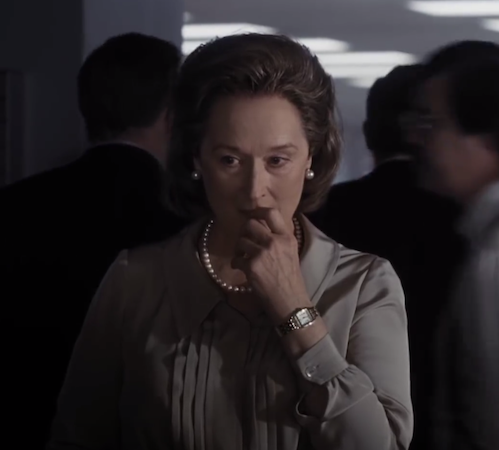
All creators have worst instincts: tendencies to overdramatize, to underdramatize, to love terrible actresses only because they’re icy blondes. If they’re wise, they find a collaborator or editor to curb their worst impulses. If they’re not, they double down, find others who encourage or exaggerate those impulses. Spielberg clearly thinks his work needs no counter-voice (like his similar editing-averse peer, Martin Scorsese), and as a result, we get scenes in The Post like Meryl Streep walking down the stairs with young women gazing at her in admiration, and a Supreme Court judgment read aloud dramatically. And then Spielberg gets folks like me, a lowly blog reviewer in a $7 matinee, grumbling to herself, “Come on, Steven. This is not Lifetime. Cut it out.” Which is not to say that I disliked The Post. That’s the problem. I love Spielberg’s work. I just wish he’d stop ruining it.

Here’s what I wish Spielberg would watch for inspiration:

The “Win One for the Gipper” Speech from Knute Rockne All American


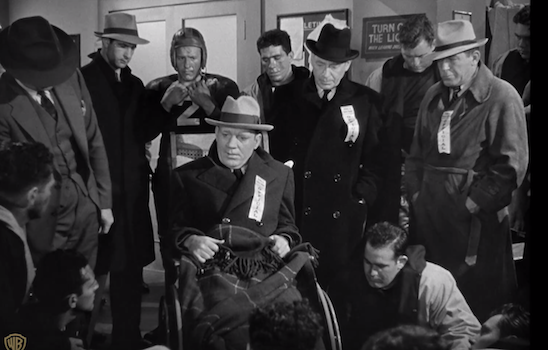
Rockne’s invocation of a previous player’s (George Gipp’s) dying wish to rev up his team would seem, on the surface, hopelessly manipulative. Onscreen at least, it’s anything but. Because it’s a highly charged moment, I was expecting some annoying inspirational music (I’m looking at you, Steven. Amistad’s ruined-by-treacle potential still haunts me.) Instead, the scene is quiet, with only background noise from the game. Pat O’Brien delivers the deathbed wish (that a losing Notre Dame team will go against the odds and pull out a win) as an obligation. He’s fulfilling a promise, nothing more. His voice is quiet; his face reserved, somber. As a result, the moment seems authentic. He’s delivered his sad charge, and it’s up to the players to make what they will of it, to win or not. The scene is, as a result of these decisions, deeply moving. And inspirational.

It’s an elementary writing practice: heightened moments require understatement. Why then must we viewers be subjected to John Williams overplaying the score in every dramatic Spielberg scene? (I don’t doubt Williams’s talent, but he too likes melodrama, doubling the bad impulse.*) Why show us a row of young women fawning over Graham instead of a single smile of a single person? I don’t get it. Nor should Steven.

Meet John Doe & Mr. Smith Goes to Washington
Critics often reference Spielberg’s emulations of/similarities to Frank Capra. I see what they mean. There’s an optimism to Capra’s work, a hope in government and humanity, that is echoed in Spielberg’s films. And in the Capra movie I dislike most, You Can’t Take It With You, I see the same lack of subtlety and complexity Spielberg is sometimes prone to. But there’s a darkness and cynicism to Capra’s work that enriches and tempers his idealism, which is beautifully rendered in Meet John Doe and even in It’s a Wonderful Life. In Capra’s best work, the hero/heroine is compromised.

Take the newspaper story, Meet John Doe. Ann Mitchell (Barbara Stanwyck) fabricates a story about a disillusioned everyman, John Doe, and then leads the campaign to lionize a man who agrees to play the part (Gary Cooper). She plies the man to give speeches repeating her father’s wholesome maxims about humanity. Her idealism–and desire to influence her society with it–blind her to how little control she’ll have over the outcome of this experiment, and the life she’s risking with her carelessness. Note that Joe, the innocent here, is NOT the hero. Why? Because he’s not as interesting to watch or as human a character as Ann.

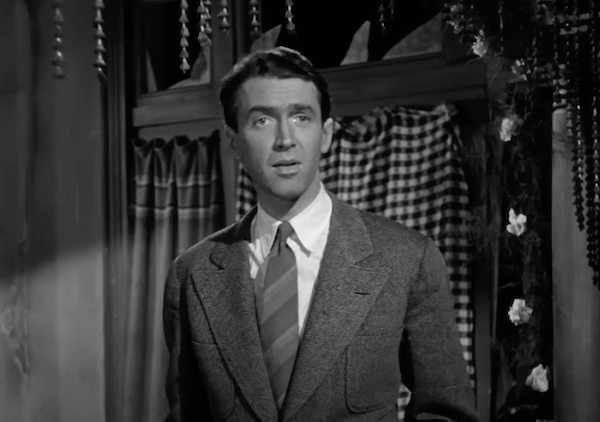
Consider Mr. Smith Goes to Washington. Jefferson Smith (Jimmy Stewart) may be the focus of the film, but Saunders (Jean Arthur); the wised up, cynical DC staffer; is our lens on the story, a woman who is complicit in a culture that destroys naive idealists like Jefferson.


Spotlight understood this necessity for compromised heroes. It derived its energy from the guilt The Boston Globe reporters felt about the coverup of priests’ sexual crimes. Obviously, the paper was not responsible for the child abuse, but they felt they fell short in their watchdog duties by not connecting the dots/seeing the extent of the issue earlier. Without this guilt, the movie would just be bad priests versus noble reporters, the kind of simplistic storytelling we expect out of Superman, not Oscar winners.

Unfortunately, The Post includes no such complexity. While we see that Katherine Graham (Meryl Streep) worries about losing her paper and betraying a friend should she publish the Pentagon Papers, we don’t care about her kids/her family’s legacy/the other stories that might never get told without her paper if it folds. Nixon and his White House are portrayed in comically bad terms, which obviously resonates with those of us who feel the White House is in similar peril now. But we’re talking film making. And while in life there are clear right-versus-wrong conflicts, they don’t make for good cinema. If we at least got what it cost her just to carry on with that paper in the face of her husband’s loss, we’d understand more of Graham’s potential sacrifice. But Spielberg relies on Meryl Streep to deliver too much of this import, and a few throwaway lines don’t cut it.

Perhaps there IS no way to tell this specific story without it appearing so black and white, or at least it seems so in 2018. But I think the key was to let us see more of Graham’s history or even guilt–even if that guilt was considering NOT publishing, however briefly. By acting as if all of her concerns weigh on her equally (the revenue of the publication, her friendship with McNamara, her family’s legacy, soldiers in Vietnam dying), Spielberg may play up the drama of the decision, but he cheapens her thought process, doesn’t allow us to see the struggle against self-interest and rationalization. We therefore see her as more of cypher, and her decision as waffling and random.

That said, it’s a tribute to Spielberg that he still makes the film–and her–so fun to watch. But with a little more Capra viewing, maybe he’d make his heroes and heroines just a little less glowing, just a little more like the rest of us: rusty people, with great potential for more.

The Ending of Casablanca
Typically, Spielberg has a beautiful ending about a half hour before the actual conclusion of his movies, and instead of stopping there, he just keeps going. The peak excitement in The Post is in the decision to print, not in the aftermath, so why does the film continue? A few lines on the screen would have worked better. (Although the VERY end of The Post is too on point, I do appreciate the humor.)

I wish Spielberg would rewatch Casablanca: The hero says his final words; the heroine expresses hers.


The heroine gets on the plane, it takes off, and the hero gets a funny final line. Done. Bows are unnecessary.

Why can’t Spielberg trust his viewers to get it, as director Michael Curtiz did? Why must Spielberg underline, add exclamation points? I don’t need extreme subtlety, but I don’t need words across the sky either.

The Post is still so good–fascinating, rousing, entertaining, a great history lesson, beautifully acted. I loved both Tom Hanks and Meryl Streep in it. I wanted to dwell longer in this world, wanted more time with Ben Bradlee (Hanks) in particular. I loved the mechanics of the press, the feel of the newsroom. The film is a pleasure to watch, and so meaningful in its message. Yes, it’s good. But with Spielberg at the helm, with a harsher red pen, it could have been so much more.

The Color Purple
Before I conclude, there is one final film I’d like Spielberg to view, if I got my wish.


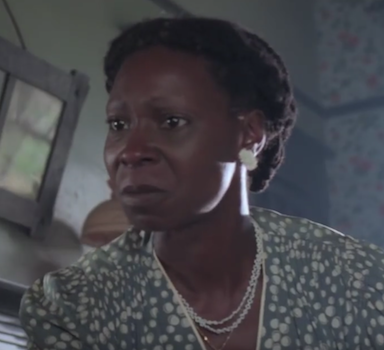
The Color Purple is perfect. No false notes. All complexity (even the bad guy has some heart, and redemption). No extra half hour of cheesiness. (And talk about #MeToo!) Please, Steven. Watch it. See what you got right when you directed it. Replicate.

*I should say that The Post is an unusually restrained film for Spielberg music-wise, for which I’m grateful.

Share
Posted in: 1930s films, 1940s films, 1980s films, 1990-current films, Drama (film), Oscars Tagged: Casablanca, Knute Rockne: All American, Meet John Doe, Meryl Streep, Mr. Smith Goes to Washington, newspaper movies, potential Oscar nominees, The Post, Tom Hanks

Movies to Combat Moving Blues

09/16/2017 by leah@carygrantwonteatyou.com 11 Comments


**Some spoilers, but then again, this is a comedy.***

I’ve been remiss in my blogging lately, due to my second move in a year. The last apartment resounded with construction noises next door, loud and consistent and close enough to drive me to repacking. So again I’ve been drowning in UHaul boxes, unsticking packing tape from my shoes, figuring out just how little I can get away with repurchasing, and wondering how few calls I can make changing my rental address.

Films about renting typically revolve around roommates, so to find characters to commiserate with (and limit the number of real-life sufferers from my complaints), I’ve turned to stories about much bigger headaches than mine: Walter’s (Tom Hanks) and Anna’s (Shelley Long) alternately endearing and hilarious breakdowns after they buy the lemon in The Money PIt (1986). The lovable Blandings (Cary Grant and Myrna Loy) as they sink their cash into first destroying one house, then building another in its place in Mr. Blandings Builds His Dream House (1948).

I like both films so much, but today, I’m going to discuss the original: Tired of fighting over mirrors and closets and other ills of close apartment living with a spouse and two kids, Jim Blandings (Grant) convinces his wife, Muriel (Loy), to move to Connecticut with him, to a big shambling old relic that’s just about to crumble. Comedy ensues, especially when Jim’s jealousy over his lawyer (who once dated Muriel) surfaces while he’s trying to tackle falling parts and failed wells and bad bathroom locks. Of course, Jim and Muriel soon find the costs building up and the issues with first the old, then the replacement house mounting. So much to love about this film. Let’s begin with:

The Realistic Depiction of Marriage
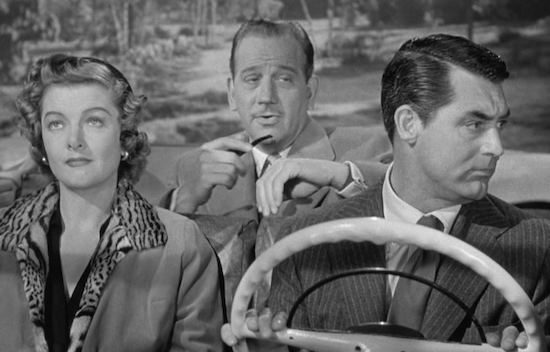
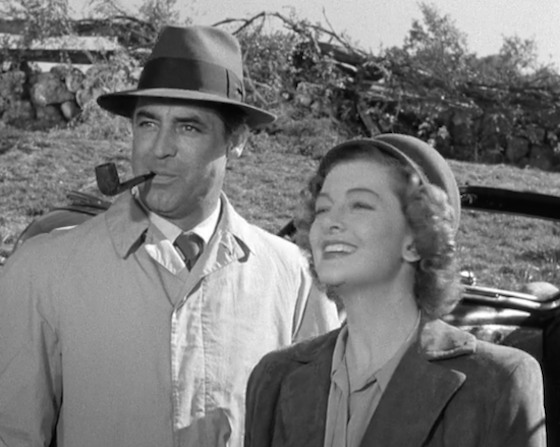
The Blandings frequently squabble about everyday annoyances, but my favorite moments are those that display patience with one another’s faults, as when Jim refuses to believe Muriel knows the directions to their new place, and she patiently waits out his acknowledgment of her correctness through multiple wrong turns, a quiet smile and gaze toward the sky revealing her amusement at how it’s all going to turn out:


Unlike most films that depict a husband jealous of his wife’s affections, Mr. Blandings Builds His Dream House does a subtle job conveying quietly brewing suspicions. While Jim’s jealous of his lawyer, Bill (Melyvn Douglas), throughout the film, the sentiment is understated, only boiling over when his stress level does, and therefore never failing to feel authentic. Weaker comedies play such weaknesses broadly instead; the sophisticated version of jealousy here matches that in so many more marriages, and therefore is funnier.

The (Meta) Supporting Actor Casting
The actor playing Grant’s object of jealousy is Melvyn Douglas, often viewed as a second-rate replacement for Grant in romantic comedies. He’s debonair and can be charming, but he’s no Grant.


But Douglas is always better as a supporting actor than as a hero, and does great work as the foil in this film. And some may say he did get the last laugh: he, unlike Grant, his romantic lead rival, would win not one, but two Oscars later in his career.

The Inspired Acting (and Chemistry) of Grant & Loy
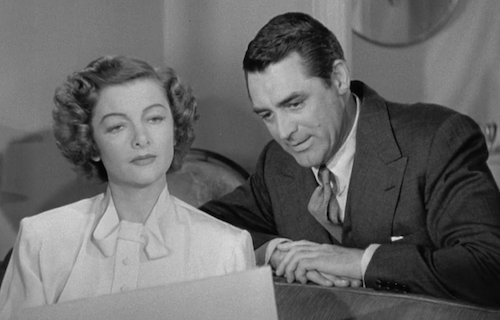
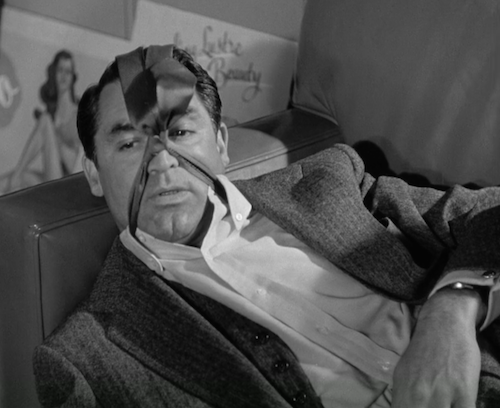
Every frame of the film conveys the joy of home ownership and the stress of building and moving so well, thanks to the stellar performances. Honestly, as mobile as these two stars’ faces are, this film could have easily been a silent. Just take these shots of Grant in smirk and self-embarrassment mode, respectively.


Or Loy’s face as she expresses love, mockery, and shocked anger in turn:


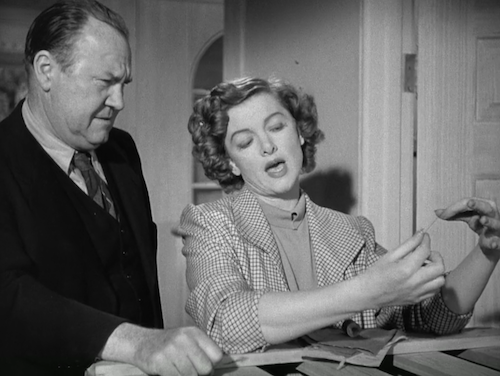
The actors’ best scene is after Jim expresses jealousy over his wife’s past relationship with Bill. His expressions–one part suspicion, one part hope, one part shame–are so nuanced and real.

When he pouts, asking why she married him, she fires back in a brilliantly worded (thanks to the script) rebuttal:

“I’m beginning to wonder….” she says. “Maybe I knew you were going to bring me out to this $38,000 icebox, with a dried-up trout stream and no windows…Or maybe I just happened to fall in love with you, but for heaven’s sake, don’t ask me why.”

The scene is pitch-perfect Loy. Only she could be so angry and endearing simultaneously.

Quibbles
Luckily, the voiceover narration, which is occasionally grating, is in short supply. It is used to great effect in the opening, which depicts decidedly unidyllic city living.

I’m not a big fan of the scene in the film most love, when Muriel gives a comic level of detail about the wall colors she wants, and the painters reduce her requirements to red, yellow, etc. as soon as she turns her back. It’s just so sexist, so “oh that silly woman” in its approach. In contrast, her sink mistake, which is also depicted as foolhardy, is treated as if it’s on the same level as Jim’s errors. But Loy is fabulous in the painting scene, sure she’ll be taken seriously and oblivious to the painters’ condescension.


While Jim’s work stress during the building is a little undercooked plotwise, there are comic gems, as when Grant’s creative process is depicted:


But the joy of these brief work scenes is undermined by the portrayal of Gussy (Louise Beavers), the housekeeper, who will later be featured, Aunt Jemima style, in Jim’s ad about some Spam-like product. He does offer her a $10 raise for coming up with the ad idea that saves his job, and she doesn’t come across as stereotypically as some black actresses at the time did (Gussy does, after all, originate the ad). But it sure would be cool to see more for Beavers (and Gussy), especially given how progressive Loy was, and given Beavers’s earlier star-making turn in Imitation of Life.

Of course, the film’s legacy, despite these weaknesses, comes down to….

Its Comic Writing & Pacing
Wry humor sparkles throughout, especially when Grant has a breakdown near the film’s close. When the couple is first purchasing the old house, others observe that it’s junk, as when Bill looks at the Blandings and observes, “It’s a good thing there are two of you. One to love it, and one to hold it up,” or when Jim asks for a structural engineer’s analysis of the house, and the man succinctly replies, “Tear it down,” a caution two other engineers repeat, word for word.

The film is so efficiently edited, so quickly paced, that there’s little time to dwell on one change before another is brewing, accurately echoing the hectic pace of changing a home.

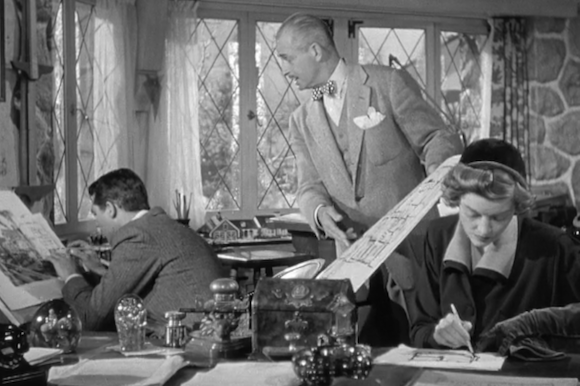
I love that so much goes wrong in the film that the move itself is briefly canvassed in order to get on to the bigger problems. Jim’s jealousy is also neatly addressed, without sidelining the story of the house. Unlike its indirect remake, Money Pit, the film doesn’t address the number of people swindling or lying to the Blandings (besides the house cost) so much, instead relying on ignorant decisions and accidents of nature. I love when the Blandings, with no knowledge of architecture, settle down to each add all their own cool features to the blueprints, as the architect looks on in dismay:


And yet, as unrealistic and financially reckless as the two prove to be, you also see why it’s worth it, to find the home they want, to set aside the troubles it took to get there. And in the moments they enjoy it, you’re proud of this idealistic couple. Proud that in spite of all their foolishness, they stubbornly hold on, and get what they wanted. It may not always be true, or even often be true, but sometimes, it’s just worth it to try for that dream home.

Share
Posted in: 1940s films, 1980s films, Comedies (film), Romantic Comedies (film) Tagged: Cary Grant and Myrna Loy, classic movie review, homebuilding movies, If you like Money Pit, moving movies, Shelley Long, Tom Hanks

Airplane!: The Joy of Recognizing Classic Movie References

03/11/2017 by leah@carygrantwonteatyou.com 2 Comments

**Spoilers about George Gipp ahead**

The other day I was watching Airplane! with some friends. For the first time, I caught that the film includes a hilarious spoof of Knute Rockne’s “Win One for the Gipper” speech, that speech leaders of underdogs everywhere like to imitate. Popularized by Knute Rockne-All American (1940), the speech was given by the famous Notre Dame football coach when his team was losing against Army in 1928. In the speech he references his former player, George Gipp, the National Football Hall of Famer who died tragically in his mid-twenties. Pat O’Brien plays Rockne beautifully in the movie, capturing some of the cadence of his words, and using understated sadness where another would have gone for drama. Eight years after his famous player’s death, Rockne discusses Gipp’s last words with his losing team (in real life, and in the film):

“I’m going to tell you something I’ve kept to myself for years,” says Rockne (O’Brien). “None of you ever knew George Gipp (Ronald Reagan). It was long before your time. But you know what a tradition he is at Notre Dame… And the last thing he said to me: ‘Rock,’ he said ‘sometime, when the team is up against it — and the breaks are beating the boys — tell them to go out there with all they got and win just one for the Gipper…’ I don’t know where I’ll be then, Rock,’ he said – ‘but I’ll know about it – and I’ll be happy.'”

Of course, the team wins, and history is made.

Ronald Reagan’s deathbed scene in the film, of course, meant he was associated with the name George Gipp, as different as they were. Gipp, phenomenally talented as a football player, was very modest about his accomplishments. He was an interesting man, too: actually preferred another sport, spent time gambling with out-of-towners who thought South Bend hicks could never beat them (afterward secretly giving his winnings to charity). Always, Gipp displayed an allergy to limelight.

Once I learned Gipp’s true story, I became horrified that Reagan’s presidency had turned Gipp’s legacy into a promotion campaign. Of course, Airplane! (1980) would capitalize on the humor of this discrepancy. The movie came out before Ronald Reagan’s first White House term, but the politician had made two runs for the Republican nomination before getting it in 1980; there are digs on his acting in the film. And then the perfect parody: In a moment when Ted Striker (Robert Hays) is despairing about his poor chances of landing the plane, with death certain for all if he doesn’t, in comes Dr. Rumack-Don’t-Call-Me-Shirley (Leslie Nielsen) to give Striker a hilarious pep talk. Almost word for word, it’s Rockne’s speech. Nielsen even captures the coach’s understated style. To give a football speech in such a moment is very tacky–in even more ways that most viewers might suspect: Rockne died in a plane crash. Screenwriters Jim Abrahams, David Zucker, and Jerry Zucker capture inappropriate uses of Gipp’s name and of his coach’s tribute by using both inappropriately in their own film.

But I wasn’t thinking of any of those details as I watched. What I felt was a thrill, that delightful shock of recognition every classic film fan feels when she sees or hears a reference to an old favorite. And I didn’t think it was possible, but Airplane! is even funnier than I thought. How marvelous.

Share
Posted in: 1940s films, 1980s films, Action & Sports Films, Comedies (film), Drama (film), Humor, TV & Pop Culture Tagged: Airplane!, Film, George Gipp, Knute Rockne, Knute Rockne: All American, Leslie Nielsen, review, Ronald Reagan, Win One for the Gipper
1 2 3 Next »

Recent Posts

  • 100 Years Later, Still Scary: Dr. Caligari
  • Escaping Out of the Past (1947)
  • A Weeper for Those Who Love Jerks
  • Thank You, Academy, for Not Infuriating Me
  • Challengers (2024) Is a Bad Movie

Subscribe to Blog via Email

Enter your email address to subscribe to this blog and receive notifications of new posts by email.

Categories

  • 1920s films
  • 1930s films
  • 1940s films
  • 1950s films
  • 1960s films
  • 1970s films
  • 1980s films
  • 1990-current films
  • 2020s films
  • Action & Sports Films
  • Anti-Romance films
  • Blogathons
  • Childfree
  • Comedies (film)
  • Drama (film)
  • Feminism
  • Femme fatales
  • Film Noir/Crime/Thriller & Mystery
  • Gloriously Silly Scenes
  • Horror
  • Humor
  • Mae West Moments
  • Musicals and dancing films
  • Oscars
  • Random
  • Romance (films)
  • Romantic Comedies (film)
  • The Moment I Fell for
  • Turn My Sister into Classic Movie Fan
  • TV & Pop Culture
  • Uncategorized
Share
Classic Movie Blog Hub Member

Recent Comments

  • leah@carygrantwonteatyou.com on Meg Ryan’s Fate Foretold in Joe Versus the Volcano
  • Ryan on Meg Ryan’s Fate Foretold in Joe Versus the Volcano
  • leah@carygrantwonteatyou.com on 100 Years Later, Still Scary: Dr. Caligari
  • The Classic Movie Muse on 100 Years Later, Still Scary: Dr. Caligari
  • leah@carygrantwonteatyou.com on 100 Years Later, Still Scary: Dr. Caligari

Archives

  • November 2025
  • September 2025
  • May 2025
  • March 2025
  • January 2025
  • November 2024
  • August 2024
  • July 2024
  • May 2024
  • March 2024
  • February 2024
  • December 2023
  • November 2023
  • October 2023
  • September 2023
  • August 2023
  • July 2023
  • May 2023
  • April 2023
  • March 2023
  • January 2023
  • December 2022
  • November 2022
  • September 2022
  • July 2022
  • May 2022
  • April 2022
  • March 2022
  • February 2022
  • October 2021
  • September 2021
  • April 2021
  • March 2021
  • February 2021
  • December 2020
  • October 2020
  • September 2020
  • July 2020
  • May 2020
  • April 2020
  • March 2020
  • February 2020
  • December 2019
  • October 2019
  • September 2019
  • June 2019
  • May 2019
  • April 2019
  • February 2019
  • January 2019
  • November 2018
  • September 2018
  • July 2018
  • June 2018
  • May 2018
  • April 2018
  • March 2018
  • February 2018
  • January 2018
  • November 2017
  • September 2017
  • August 2017
  • July 2017
  • June 2017
  • May 2017
  • April 2017
  • March 2017
  • February 2017
  • January 2017
  • December 2016
  • November 2016
  • October 2016
  • August 2016
  • July 2016
  • June 2016
  • May 2016
  • April 2016
  • March 2016
  • February 2016
  • January 2016
  • December 2015
  • November 2015
  • October 2015
  • September 2015
  • August 2015
  • July 2015
  • June 2015
  • May 2015
  • April 2015
  • March 2015
  • February 2015
  • January 2015
  • December 2014
  • November 2014
  • October 2014
  • September 2014
  • August 2014
  • July 2014
  • June 2014
  • May 2014
  • April 2014
  • March 2014
  • February 2014
  • January 2014

Meta

  • Log in
  • Entries feed
  • Comments feed
  • WordPress.org

Copyright © 2025 Cary Grant Won't Eat You.

Church WordPress Theme by themehall.com