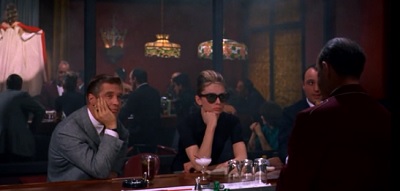
Cary Grant Won't Eat You

Classic movies for phobics

  • About
  • eBooks
  • Previous Blogathons
Classic movies for phobics

1960s films

Top 10 Characters in Teaching Films & Shows

08/20/2015 by leah@carygrantwonteatyou.com 2 Comments

As the school year begins, I’ll be returning again to my favorite educational films–some inspiring, some hilarious. Here are the characters and performances I consider award worthy.

THE TEACHERS: 5 BEST CHARACTERS

5. Mr. Shoop in Summer School (1987)
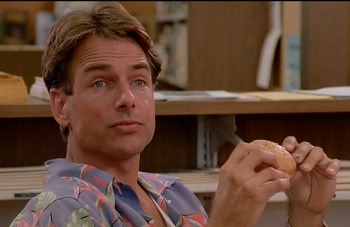
HarmonSummerSchool
Gym teacher Mr. Shoop (Mark Harmon) plans to vacation in Hawaii with his girlfriend for the summer, but when the English teacher wins the lottery and immediately quits, Shoop’s forced to teach remedial English. He is the most likable of the teachers I’ve chosen, easygoing and even tempered, good natured even when tried. Ultimately, his slacker ways convert into effort in the classroom, and because he relates to and has no illusions about his students’ disinterest, he’s able to reach them. Most importantly, he has rational expectations of them, and celebrates progress rather than any specific target, as any good teacher should (and would be able to, would the system allow it). Plus, the film is hilarious, and Harmon is so attractive in it.

4. Elizabeth Halsey in Bad Teacher (2011)

Halsey-Diaz-BadTeacher
Cameron Diaz doesn’t always reach her comic potential, but when she does, as with Elizabeth Halsey (Cameron Diaz) in Bad Teacher, she’s something to watch. The montage of her avoidance of crying students and celebrating teachers makes me laugh every time, as does her unabashedly sexy school car wash and cruel honesty in speaking with her class and grading their work. She is a terrible teacher, but her narcissism and bluntness make her a very, very funny one.

3. Teachers in Ferris Bueller’s Day Off (1986) & Peanuts
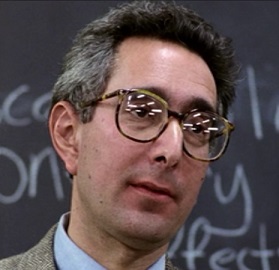
BenSteinFerrisBueller
If pressed, I’d prefer Peanuts‘ gibberish teacher to Ben Stein’s gloriously boring one, but the two are closely tied. Obviously, both types are accurate portrayals of how instructors come across to students. I love how Stein has given upon class participation, simply saying, “anyone, anyone?” then answering himself. But Peanuts’ teacher may get the edge because I have this same reaction ANY time I encounter something I don’t understand. My car is being fixed, I’m listening to explanations of the U.S. debt, and I hear that waa-waa-waa of Peanuts’ comically confusing instructor.

2. Prez in The Wire (2006)
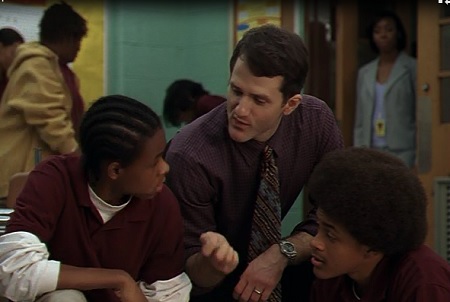
PrezandStudentsTheWire
Season 4 of The Wire features the Baltimore school system, with former cop Roland Pryzbylewski, known as Prez (Jim True-Frost), teaching the students from neighborhoods he formerly policed. As a result, he knows what his students are up against, though he isn’t prepared for the challenge of teaching them. I’ve never seen a more accurate depiction of teaching in a difficult district. Prez’s use of gambling odds as an example to finally reach some of his students in the episode “Unto Others” is remarkably telling about their priorities–and squandered potential. We can only wish that those who had more influence in the system were as wise and compassionate as Prez.

1. Sir in To Sir, with Love (1967)
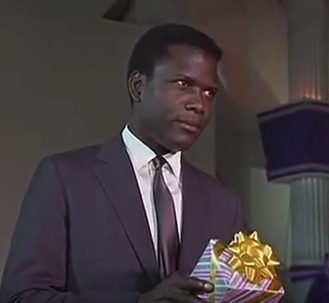
SidneyPoitierToSirwithLove
Sir’s (Sidney Poitier) school district in England is characterized as very challenging, even if it looks less so to us in 2015. We see him constantly thwarted, and frequently angry. His race becomes one more thing students have against him. His decision to throw out the lesson plan and begin anew is what any good teacher would do if it were allowed–the problem, of course, is that you only want good teachers doing so.

What I love about Sir is that he’s a reluctant instructor, only there because he can’t get a job in his field, and slowly, these rebellious kids win him over. He is a very flawed character, even socially awkward, and thus very real. Poitier deserved an Oscar for the performance. The theme song makes me tear up every time. And the film has such a lovely, perfect, subtle ending. The movie is inspiring without ever losing track of reality (as most teacher-centric films do).

THE STUDENTS: TOP 5 PORTRAYALS

5. Spicoli in Fast Times at Ridgemont High (1982)
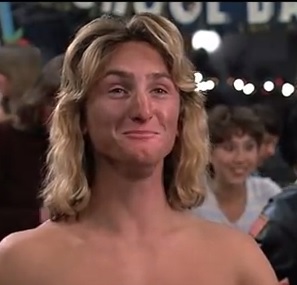
Spicoli
Spicoli (Sean Penn), the ultimate surfer dude. I don’t think this character requires any explanation (most would expect to see him as #1). While there is a shadow of this stoner in Amy Heckerling’s Clueless (1995), it’s in her earlier film, Fast Times, that she captured an iconic form of the type, mainly due to Cameron Crowe’s script. Spicoli’s (Sean Penn’s) battles with his teacher, Mr. Hand (who deserves an honorable mention in the list above), are perfect.

Bagel tucked in jeans, shirtless, Spicoli makes us laugh before he says a word. Penn gives him an awkward gait; a spacey expression; long, wordless pauses; and an inability to detect sarcasm. As a result, he is as lovable as he is annoying. Penn turned the surfer dude into comedy gold, and actors have been imitating him ever since.

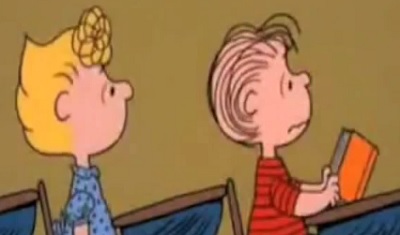
4. The Frustrated/Bored of Ferris Bueller’s Day Off & Peanuts

There’s really no need to pinpoint an individual in the mass of disinterested students who are ignoring Ben Stein’s flat delivery of “Bueller?” as he calls the roll. The Peanuts characters’ confusion at their instructors’ seeming gibberish are similarly funny, though Charlie Brown’s panic is particularly funny. What’s unavoidably true is just how typical both the boredom and confusion are in any classroom, though hopefully with occasional relief! Beautifully rendered in both cases through the facial expressions of the students as the teacher drones on.

Peanutsstudents

Buellerstudent1

Buellerstudent2

Buellerstudent3

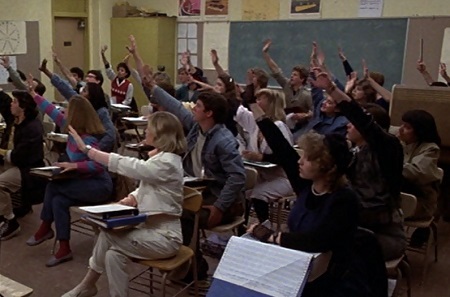
3. The Intellectuals of Better Off Dead (1985)
BetterOffDeadClass
Most films portray the majority of students as inattentive and uninterested. This film subverts our expectations, with a class enthralled by comically difficult subject matter. They’re so enthusiastic that they groan when they have to leave the classroom, comforted only when their math teacher reassures them: “I’ll see you all tomorrow. Just remember to memorize pages 39 to 110 for tomorrow’s lesson.” It’s so obviously a teacher’s dream of what students would be like after watching too many inspiring education films that it always cracks me up. Lane (John Cusack), in contrast with his peers’ binders of work, takes out one sheet of paper with “Do homework” stuck together with gum. In this case, the slacker is the unpopular one. It’s a mistake not to watch the whole film, but at least catch this scene.

2. The Kids of The Wire, Season 4
I find it hard to write about the students in this season, as they’re far too real: Dukie (Jermaine Crawford), Randy (Maestro Harrell), Namond (Julito McCullum) and Michael (Tristan Wilds) struggle with the lure of selling drugs on the corner in Baltimore, with authority figures often encouraging or passively accepting their abandonment of education.
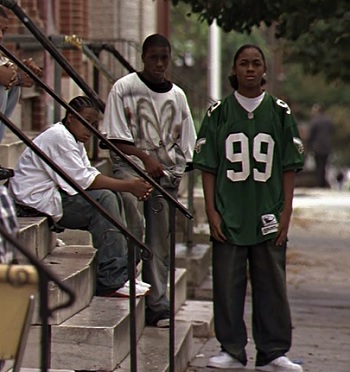
Watching Michael's confrontation with a drug dealer.

Watching Michael’s confrontation with a drug dealer.

It’s the most vivid and compelling portrayal I’ve ever seen of the weight so many students bear with them when they enter the classroom. The Wire, unlike 90 percent of cinematic portrayals of teaching, sees that the wider culture and systemic problems of the educational system are far greater forces than one teacher with a great idea (which Prez does have) can combat. Haunting.

1. Chainsaw & Dave of Summer School

ChainsawDave-SummerSchool
All the students in Mr. Shoop’s (Harmon’s) class are distinctive. Their plan–to exchange bribes for trying in school–is diabolical and hilarious in itself. And with characters like these–the awful driver Mr. Shoop has to train, the kid who spent the summer in the bathroom, etc.–who can stop laughing? The most memorable students are obviously Dave (Gary Riley) and Chainsaw (Dean Cameron), the wannabee special-effects guys. Who comes up with such unique characters for a silly film like this one? The tension breaker of and “I don’t know anything” dream of Chainsaw’s before the big test are my favorite depictions of academic stress in any film, book, or story. (I should, though, give an honorable mention to John Travolta’s Barbarino in Welcome Back, Kotter.) Inspired by Chainsaw, I used to suggest to friends a university-wide tension breaker when I was an undergrad.

As the school year begins, I’ll be returning to these favorites to combat moments of frustration and refresh my love for teaching. I hope some of you will do the same.

Share
Posted in: 1960s films, 1980s films, 1990-current films, Comedies (film), Drama (film), TV & Pop Culture Tagged: Bad Teacher, best, Better Off Dead, Cameron Diaz, Ferris Bueller, Mark Harmon early films, Mr. Hand, Sidney Poitier, Summer School, Teaching films, The Wire, To Sir with Love

The Anti-Disney Marital Treatment: Funny Girl

07/12/2015 by leah@carygrantwonteatyou.com 2 Comments

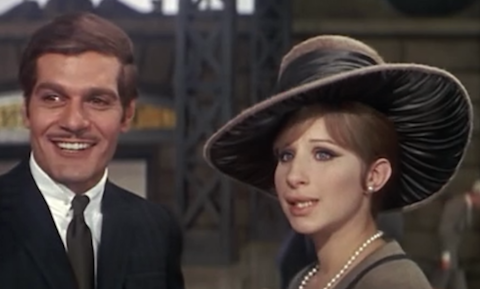
StreisandandSharif
“Oh he was SO handsome,” said my mother-in-law when I mentioned Omar Sharif’s death. My mother did the same when she introduced him to me: his eyes, his style, his tall-dark-handsome persona.

Despite his undeniable looks, that wasn’t the impression he left on me, not exactly. He was handsome, yes. He was charismatic, yes. But the word I’d use if thinking of him was disquieting. Why?  Because of his performance of Nick Arnstein in Funny Girl, a performance so suave, so  heartbreaking, and so believable I could never fully imagine him apart from that role afterward.

Up to then, I think I must have seen only Disney marriages onscreen: You love each other; therefore, happily ever after is guaranteed, as long as you’re not a fool enough to fall for a jerk. But here was a marriage torn apart by pride, by a man’s reluctance to see his wife out-earn him, by a love for a profession–gambling–which wasn’t exactly reputable, but was all he had to bolster his confidence. (Part of Sharif’s believability might have resulted from his well-known skill at it.) Could a woman’s success poison her relationships? Could separate passions so totally separate such an affectionate couple?

My reason and sympathy might have been with Fanny Brice (Barbra Streisand), but I had an uneasy feeling that marriage wasn’t quite as simple as I’d been led to believe. That this story, in spite of the Hollywood gloss on real events, was saying something I wasn’t old enough to accept about what it took for a union to make it, whether romantic or platonic. I comforted myself that it wasn’t EXACTLY true, but there was an authenticity to the portrayal I couldn’t deny.

I’ve thought of Sharif’s role in the years since, when I witnessed in so many friendships and unwise romances* how much charm can mask incompatibility, and selfishness too. Perhaps the film should be required viewing for women on the cusp of adulthood: It might not be the kind of heartwarming story you want to watch before you curl off to sleep, but you might pass fewer sleepless nights if you do.

*luckily for me, few of my own

Share
Posted in: 1960s films, Anti-Romance films, Feminism, Romance (films) Tagged: Barbra Streisand, Fanny Brice, Funny Girl, Omar Sharif

Breakfast at Tiffany’s: Why the Movie Blew It

10/23/2014 by leah@carygrantwonteatyou.com 2 Comments

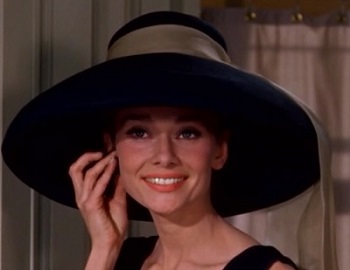
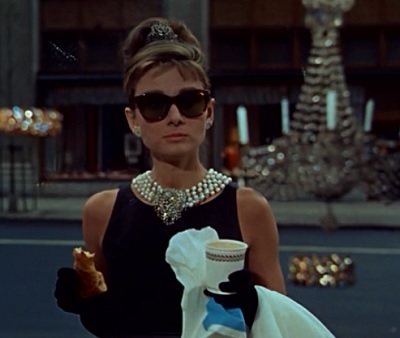
Let me be clear: Nothing is wrong with Audrey Hepburn’s sparkling portrayal of Holly Golightly. It’s the only reason to watch Breakfast at Tiffany’s, witnessing this character’s charms (besides the obvious joys of the fashion). And though certainly a tamer version than the book’s Holly, she is every bit as interesting.

AudreyasHollyGolightly
That said, fans of Truman Capote’s book have many pains in store as well as pleasures. It is truly a masochistic act to watch what becomes of favorite novels on the big screen, much like our drive-bys of houses where we once lived, when we go to see what they’ve DONE to them: a purple paint job, a favorite Oak felled.

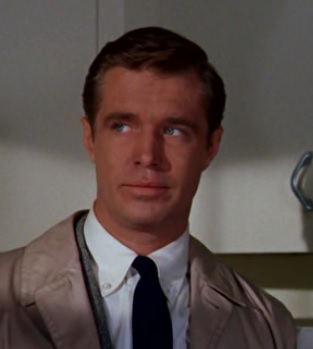
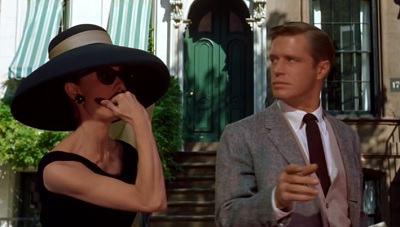
In the case of Breakfast at Tiffany’s, it isn’t the racist cameo that most strikes me, painful as it is. It’s the way the film took the sensitive, interesting, platonic-toward-Holly narrator, and chose this to portray him:

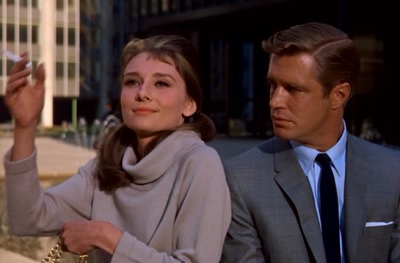
GeorgePeppard
Now, I enjoyed Col. John “Hannibal” Smith and his band of A-Teamers as much as the next 10-year old. But in terms of personality, it’s difficult to imagine a bigger dud than George Peppard as Paul/Fred in Breakfast at Tiffany’s. I’m supposed to like this smug kept man who has memorized his book reviews and barks about his talent? To see in him the sensitive narrator from the novella, who is torn up by Holly’s critique of his writing? The man who is proud of the little apartment he’s obviously scraped together to afford?

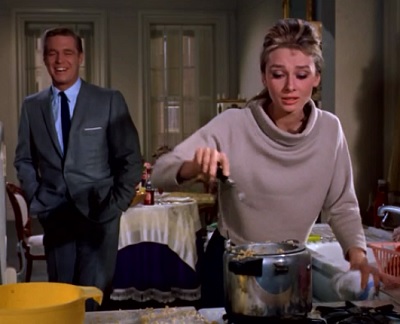
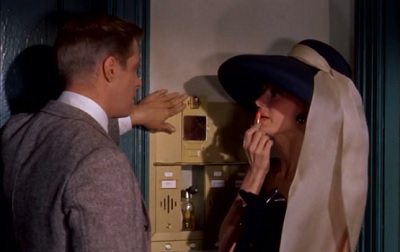
I shiver to think of Holly’s twinkling self reduced to trying to prepare this dud the right flavor of chicken wings. As I watch him interact with her, I imagine William H. Macy screaming, “Where’s my dinner?!” in Pleasantville and wonder why Hollywood thinks I should root for them as a couple, why I should somehow imagine this union as right for her, as I’m clearly intended to do. That flat voice and judgmental attitude would squash her spirit within six months. True, he does laugh when she screws up a dinner for him:

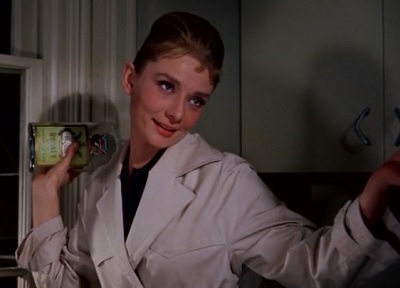
MealHollyGolightly
But it’s still courting time, and Holly knows him well enough to be concerned about her mistake. Paul/Fred is only likeable when he’s acting as a friend to her and others, not as a would-be lover. Romantically, he’s far too conventional to suit her.

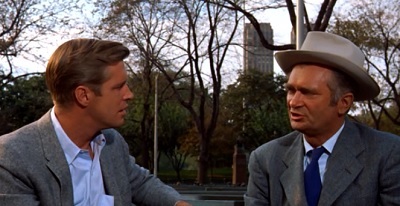
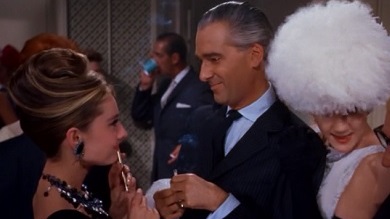
Paul/Fred, aka Col. Smith, assists Doc, aka, the Man Named Jed

Paul/Fred, aka Col. Smith, assists Doc, aka, the Man Named Jed 

I know I shouldn’t be surprised at this dreadful botching of the story. Hollywood loves a romantic comedy (as long as it’s between young, single, heterosexual characters), and, just as now, they don’t trust us to storm the theaters to watch a friendship. Yet when people recall this film, it’s Holly at the window of Tiffany’s they remember.

Breakfast-Holly
Why? Because this story was never meant to be about love—or really even friendship. It’s about the charms a big city represents to those of us from less thrilling hometowns, and how an insider—in this case, Holly—can show us how to make the most of the place, to be a part of it, to belong.

Here’s a favorite passage from the book: “Once a visiting relative took me to ’21,’ and there, at a superior table…was Miss Golightly, idly, publicly combing her hair; and her expression, an unrealized yawn, put, by example, a dampener on the excitement I felt over dining at so swanky a place.”

Holly has already arrived, while Paul/Fred is always seeking social acceptance. In the film, she upstages him from the start, with a powerful whistle for a cab, the kind he never could master.

UpstagingPaul-Holly
Near the start of the book, the narrator (Paul/Fred) spots Holly dancing in front of a saloon in a “happy group of whisky-eyed Australian army officers baritoning, ‘Waltzing Matilda.’ As they sang they took turns spin-dancing a girl over the cobbles under the El; and the girl, Miss Golightly, to be sure, floated round in their arms light as a scarf.”

What I felt reading both of these passages was recognition: that first heady gush of love that comes to so many of us even walking down the streets of a city we (unbelievably) can call home. For me that city was San Francisco; even the sad little shops of junk, the catcalling loafers, the dirty steps of the subway could give me a rush of joy. I actually lived here. I was sometimes even asked directions. I remember admiring those girls who had the city figured out: who knew the quickest subway routes, the quirky former-salon bars, the mystery to achieving urban-chic. Those girls who hosted and were invited to the best parties, gatherings held in wineries and with themes….Oh, what magical girls they were.

A city-ready girl: mailbox tricked up with a mirror and perfume…

A city-ready girl: mailbox tricked up with a mirror

For Holly, of course, the thrill of the city is represented by a beautiful jewelry shop. But for Paul/Fred—and for so many of the rest of us—it’s captured in Holly herself. She is that woman who actually does all the impulsive, New-Yorky things, who represents life in the city for the rest of us (much as Carrie Bradshaw still does for tourists today).

Hollysparty

Breakfast-Hollyinbar

MasksBreakfastatTiffanys
And by being initially an outsider herself, she gives everyone hope that they too could be like Holly one day. In the beginning of the book, she’s disappeared from the narrator’s life, but been maybe spotted by others, and to me, that opening, the desire to see her again (or maybe the time in his life she recalls), captures the allure of passing friendships.

An older, more mature Holly couldn’t possibly have the same impact. She’s charming in part because all of her affectations are intact, because she’s young enough to believe that tri-colored hair and a lack of furniture make her special, interesting. And those beliefs—not her traits or behaviors themselves—make her so.

StylishHollyGolightly
She’s as much of an ideal creation as Gatsby ever was, and lovely, like him, because, as her former agent says, “She isn’t a phony because she’s a real phony. She believes all this crap she believes. You can’t talk her out of it.” If Paul/Fred married her or otherwise knew her for the rest of his life, many of those beautiful illusions would disappear, and everyday humdrum qualities and cynicism would surface. But he doesn’t (in the novella), so they don’t, and so forever Holly will represent to him—and to us—being young in the city.

Which is why you should skip over the first twenty-five minutes of the film to get to the party, and right when it’s starting to look like these two might actually get together, shut it off. It’s like Carrie Bradshaw moving to Connecticut and complaining to her husband about the kids’ laundry piling up. We don’t need it. We don’t want it. Let us keep remembering Holly taking in the city, as she knows so well how to do…

Hollytakingincity-Breakfast
And, of course, eating breakfast at Tiffany’s….

Share
Posted in: 1960s films, Romantic Comedies (film) Tagged: A-Team, Audrey Hepburn, Beverly Hillbillies, Breakfast at Tiffany's, Carrie Bradshaw, George Peppard, Truman Capote

Ruined by Romance: Drive (2011) and The Hustler (1961)

08/07/2014 by leah@carygrantwonteatyou.com 4 Comments

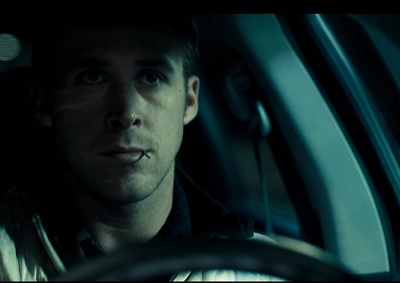
I was excited when Drive came out: finally, I thought, a new Bourne. An action flick with intelligence and fine acting, starring a man who had bypassed romantic leads after The Notebook to refine his skills in indies. And the promo! It looked exciting and moody, with the kind of premise that meant my car enthusiast husband and I would be carrying the popcorn to our seats with equal enthusiasm.

GoslinginDrive
Of course I had neglected to consider the amazing skills of this woman, who would later manage to portray one of the most self-centered characters in American fiction as a victim:

Mulligan as a vulnerable waif—again

Mulligan as a vulnerable waif—again

So instead of racing cars, instead of truly exploring the depths of his character’s moral confusion and darkness, Ryan Gosling gets to spend most of the film destroying his life for a mother (Carey Mulligan) who is (a) hopelessly fragile (b) already married and (c) unutterably dull.

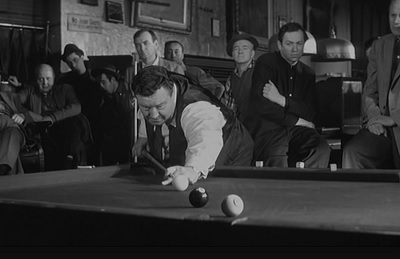
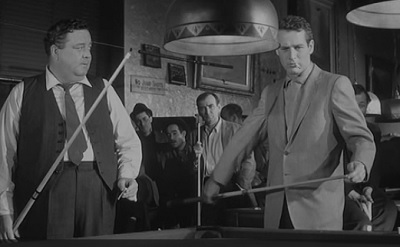
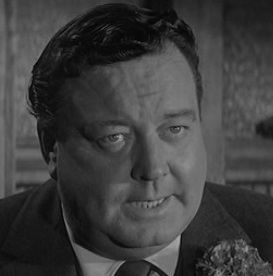
I wouldn’t say that The Hustler (1961) was ruined as completely as Drive was by a bad romance, but I was more appalled by its mistakes. Because this is a film I’d thought to be a classic, with George C. Scott as the money man and the brilliant Jackie Gleason playing Minnesota Fats, the reigning master of pool.

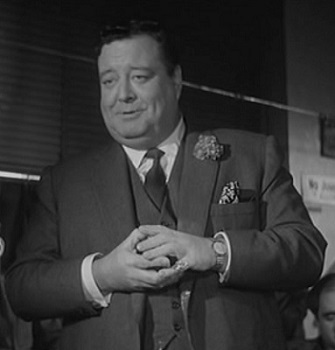
FatsinActionTheHustler
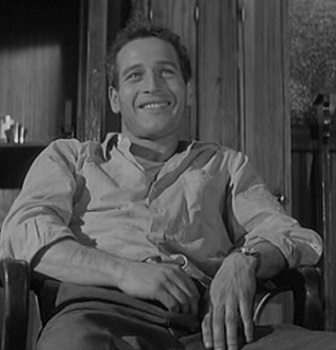
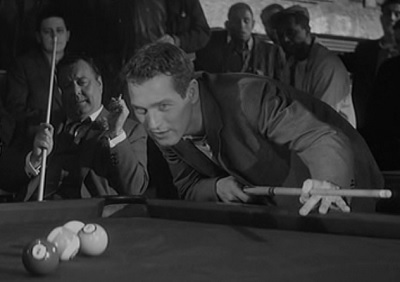
The master’s challenger is cocky young upstart Fast Eddie (Paul Newman), who struggles with confidence in spite of his successes hustling on the road. (Yes, the same character from The Color of Money).

FastEddieTheHustler
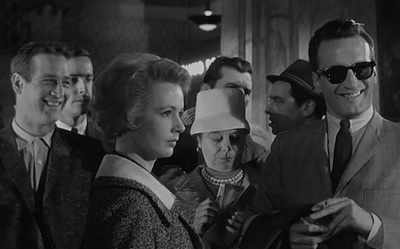
Imagine my surprise then to find that after the wonderful battle between Fats and Eddie ends with the latter deflated and broke, pool disappears for a long stretch of the film, to be replaced by a romance as inadvisable as it is boring to watch.

EddieandSarahTheHustler
Sarah (Piper Laurie) is a more interesting character than Mulligan’s Irene. She is depressed, moody, and drunk most of the time, but she is also compassionate and prickly with pride, and though I might have asked for more range and nuance from Laurie, others disagreed; she received an Oscar nomination for the role.

But whatever you think of Laurie’s performance, the romance itself is based on co-dependence. The two drink and have sex, and that’s about it; she even starts to write a story about their supposed depravity. When money-man Bert (Scott) accuses Newman of being a talented loser, the audience has to agree. It’s understandable that Eddie would align himself with Bert to lift up his career, even that he’d bring Sarah with him on the road since she can’t handle being left alone for a week (or more likely, doesn’t trust him to return). Sure, we know Bert is a bad guy, but Eddie isn’t exactly full of either options or patience.

Sarah losing her way at the Derby

Sarah with Bert (Scott), her nemesis

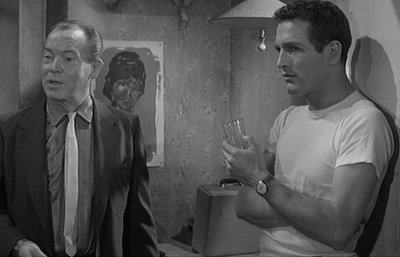
But to link Newman’s increased character and confidence to his remorse at his treatment of Sarah? Really? Eddie didn’t seem to mind leaving his long-time buddy and manager, Charlie (Myron McCormick), in the lurch.

Charlie (Myron McCormick) trying to win Eddie back

Charlie (McCormick) appealing to Eddie

His treatment of Charlie is far worse than his neglect of Sarah. The problem isn’t what Eddie did during his travels with Sarah and Bert; the problem is whom he chose to do it to: you don’t get involved with someone this fragile unless you’re in it for good, especially with a predator like Bert in your company. What Eddie should have done is drive the poor woman straight to rehab, not to the Derby.

Are you bored yet? Yeah, me too. I didn’t sign up for a movie about a doomed love affair—and if I had, I could have found a far better one than this. Here’s what I wanted to see, and finally did at the end of the film:

EddieandFats
Note the vulnerability on Fats’ face as Eddie begins a streak:

EddieonstreakTheHustler
Or his insistence that Eddie stop getting distracted and focus on the game, the defeat on his face clearly showing that he’s sold himself to Bert too:

FatsadviceTheHustler
Watch Bert’s celebration of his power over both men:

BerttauntingTheHustler
And most of all, witness the beautiful pool shots throughout–while you can get them. For a film called The Hustler, I didn’t get to see much hustling. Luckily, I did get to see this: Fats dressing up to rejuvenate himself during a losing streak:

GleasondressedupasFats
I could watch the pool passages in the film again and again and again.

Why do Hollywood films always use romance as a replacement for self-struggle? I haven’t read Walter Tevis’s novel, which may have managed the matter better, but the best films I know about competition don’t rely on gimmicky stand-ins as substitutes for the practice scenes (with pool!) they should have included. Even if a love affair is involved, it’s one that forces the hero/heroine to confront weaknesses. And it’s Bert—not Sarah—who tells Eddie the truth in The Hustler. If anything, I would think remorse would lead Eddie right back to the aimless life he and Sarah had been leading.

Did I enjoy the film? Yes. Would I fast forward through the Laurie-Newman scenes next time? Oh yes. Do I think at the end of the day The Cutting Edge was more convincing? Absolutely.

Share
Posted in: 1960s films, 1990-current films, Action & Sports Films, Femme fatales, Romance (films) Tagged: Carey Mulligan, Drive, Jackie Gleason, Paul Newman, Piper Laurie, Ryan Gosling, The Hustler

Cool Hand Luke: Newman’s Double?

06/21/2014 by leah@carygrantwonteatyou.com 18 Comments

This post is part of Silver Screenings‘ and The Rosebud Cinema’s 1967 in Film Blogathon. Check out the other entries on their sites!

roadnewman
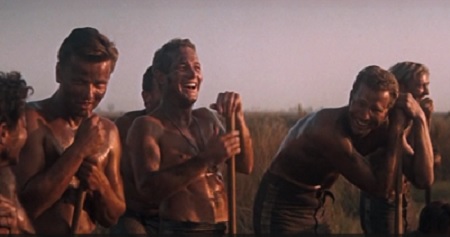
It’s not surprising, given the film’s condemnation of authority and celebration of rebellion, that Cool Hand Luke came out in 1967 in the midst of Vietnam War protests. Its depiction of the man “without eyes” and his fellow sadists is truly terrifying, as are the ominous parallels between the “failure to communicate” line the film popularized, and our muddy status in the war. The threat that the hero’s (seemingly) unflappable spirit poses to the guards’ squashing of the prisoners is evident to them—and us—from the start of the film. This guy (Paul Newman as Luke) makes prison fun instead of soul killing; clearly, the authorities will be seeking a way to destroy him.

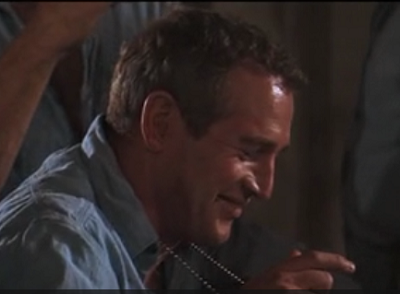
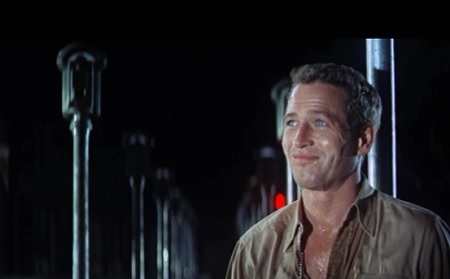
What strikes me most about the movie is not its strong writing, or Newman’s compelling acting, or even George Kennedy’s perfect performance as Luke’s fan. It’s just how iconic of a Newman film it is. First, there’s that playfulness of Luke’s—from the speeding up of the road crew work, to bluffing at poker, to eating 50 eggs on a dare. Sounds like a Newman role, right? Like Butch Cassidy, like Henry Gondorff in The Sting…And like the actor himself, who was known for pranks. See this hysterical comparison of his and George Clooney’s.

Newmanlaughing
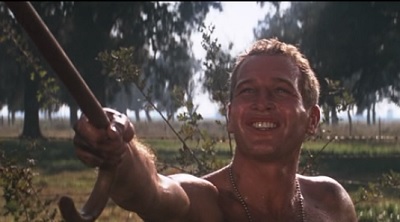
Then there’s that complicated reaction to popularity. On the one hand, Luke relishes the attention; he likes to lead, rebel. He wants to inspire the men out of their lethargy, to make them fight for themselves. He’s found a way to introduce  joy into prison life, and he wants that influence to spread.

Newmannoeyes
But Luke’s resistance to idolization increases as his situation worsens. The more he’s thrown in the hold and beaten for being a “hard case,” the more he resists the simple hero worship of his companions, lashing out at the amount of pressure they’ve put on him: “Oh, come on! Stop beatin’ it. Get out there yourselves. Stop feeding on me!”

NewmanasLuke
In other words, inspiration he’ll provide. But if they’re content with just the stories about him and his cool demeanor, well, that’s something else entirely. How can he make a difference, if he’s the only ornery one who resists?

Again, the story makes me think of Newman the man, of the fame he used to spread the news about his philanthropies, including the moving Hole in the Wall Gang Camp. And, of course, there’s that healthy food that’s become—for some—more influential than his films.

I know Cool Hand Luke was just a part, that I should not conflate the man and the role. But it seems to me the two shared some traits, including a kind of impatience with the slow progress of the rest of us, our hesitation to do the right thing (I always thought this impatience was the reason for his flippant comment about his marital fidelity: “Why fool around with hamburger when you have steak at home?”)

Sure, model me, Newman might say. Watch me if you must. (And doesn’t it always seem as if this stunningly handsome man resists our gaze, takes it as suffering he has to endure for his art? How compelling is a  star who seems too cool to notice his own looks?) Ask for my photograph if you feel like it, get my signature.

But get out there and do something yourself.

Newmanandmeters

Share
Posted in: 1960s films, Blogathons, Drama (film) Tagged: Cool Hand Luke, Paul Newman
« Previous 1 2

Recent Posts

  • 100 Years Later, Still Scary: Dr. Caligari
  • Escaping Out of the Past (1947)
  • A Weeper for Those Who Love Jerks
  • Thank You, Academy, for Not Infuriating Me
  • Challengers (2024) Is a Bad Movie

Subscribe to Blog via Email

Enter your email address to subscribe to this blog and receive notifications of new posts by email.

Categories

  • 1920s films
  • 1930s films
  • 1940s films
  • 1950s films
  • 1960s films
  • 1970s films
  • 1980s films
  • 1990-current films
  • 2020s films
  • Action & Sports Films
  • Anti-Romance films
  • Blogathons
  • Childfree
  • Comedies (film)
  • Drama (film)
  • Feminism
  • Femme fatales
  • Film Noir/Crime/Thriller & Mystery
  • Gloriously Silly Scenes
  • Horror
  • Humor
  • Mae West Moments
  • Musicals and dancing films
  • Oscars
  • Random
  • Romance (films)
  • Romantic Comedies (film)
  • The Moment I Fell for
  • Turn My Sister into Classic Movie Fan
  • TV & Pop Culture
  • Uncategorized
Share
Classic Movie Blog Hub Member

Recent Comments

  • leah@carygrantwonteatyou.com on Meg Ryan’s Fate Foretold in Joe Versus the Volcano
  • Ryan on Meg Ryan’s Fate Foretold in Joe Versus the Volcano
  • leah@carygrantwonteatyou.com on 100 Years Later, Still Scary: Dr. Caligari
  • The Classic Movie Muse on 100 Years Later, Still Scary: Dr. Caligari
  • leah@carygrantwonteatyou.com on 100 Years Later, Still Scary: Dr. Caligari

Archives

  • November 2025
  • September 2025
  • May 2025
  • March 2025
  • January 2025
  • November 2024
  • August 2024
  • July 2024
  • May 2024
  • March 2024
  • February 2024
  • December 2023
  • November 2023
  • October 2023
  • September 2023
  • August 2023
  • July 2023
  • May 2023
  • April 2023
  • March 2023
  • January 2023
  • December 2022
  • November 2022
  • September 2022
  • July 2022
  • May 2022
  • April 2022
  • March 2022
  • February 2022
  • October 2021
  • September 2021
  • April 2021
  • March 2021
  • February 2021
  • December 2020
  • October 2020
  • September 2020
  • July 2020
  • May 2020
  • April 2020
  • March 2020
  • February 2020
  • December 2019
  • October 2019
  • September 2019
  • June 2019
  • May 2019
  • April 2019
  • February 2019
  • January 2019
  • November 2018
  • September 2018
  • July 2018
  • June 2018
  • May 2018
  • April 2018
  • March 2018
  • February 2018
  • January 2018
  • November 2017
  • September 2017
  • August 2017
  • July 2017
  • June 2017
  • May 2017
  • April 2017
  • March 2017
  • February 2017
  • January 2017
  • December 2016
  • November 2016
  • October 2016
  • August 2016
  • July 2016
  • June 2016
  • May 2016
  • April 2016
  • March 2016
  • February 2016
  • January 2016
  • December 2015
  • November 2015
  • October 2015
  • September 2015
  • August 2015
  • July 2015
  • June 2015
  • May 2015
  • April 2015
  • March 2015
  • February 2015
  • January 2015
  • December 2014
  • November 2014
  • October 2014
  • September 2014
  • August 2014
  • July 2014
  • June 2014
  • May 2014
  • April 2014
  • March 2014
  • February 2014
  • January 2014

Meta

  • Log in
  • Entries feed
  • Comments feed
  • WordPress.org

Copyright © 2025 Cary Grant Won't Eat You.

Church WordPress Theme by themehall.com