Cary Grant Won't Eat You

Classic movies for phobics

  • About
  • eBooks
  • Previous Blogathons
Classic movies for phobics

1960s films

Better as a Remake? The Thomas Crown Affair

04/06/2023 by leah@carygrantwonteatyou.com 14 Comments

For those of you who love both versions of The Thomas Crown Affair (and why wouldn’t you?), it can be tough to determine which of these slick, funny, seductive films is superior. But today I’ll make an attempt. I’d love to hear your opinions in the comments–1999, or 1968?

The crime. This may be an unfair one, as there have been too many good bank robbery movies between 1968 and 1999 for me to give 1968’s crime its due. Still, I preferred the 1999 one–the heaters were such a nifty trick. But both films’ clever capers hold up.

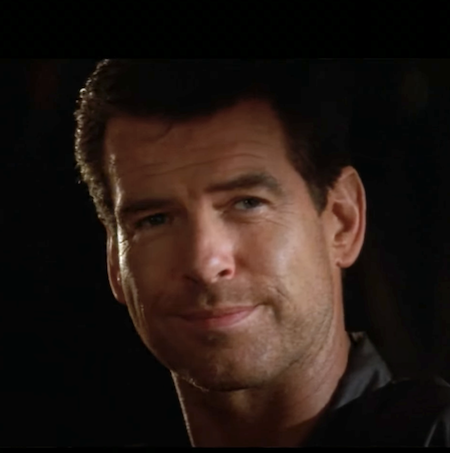
Male leads: Pierce Brosnan is not as attractive as Steve McQueen (who is?). But Brosnan is more convincing as a rich dude who pulls a crime because he’s bored. Also, McQueen’s lack of affect starts to grate after a while. Brosnan oozes charm. That said, McQueen’s laugh when he pulls off his caper is phenomenal.

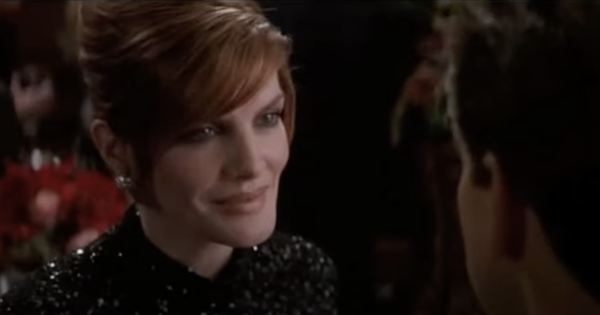
Female leads: I am a lukewarm Dunaway fan. I like her style, confidence, charisma. I found her mesmerizing in Network and Bonnie and Clyde. I loved her in Columbo. But I disliked her performance in Three Days of the Condor and thought her histrionics in Mommy Dearest insufferable. She fits this role, but Rene Russo just owns her film, and her range is fantastic in it. Russo is also really, really funny. Dunaway has a hard time pulling off humor that isn’t smug.

Music? Love “The Windmills of your Mind” song In both. 10/10.

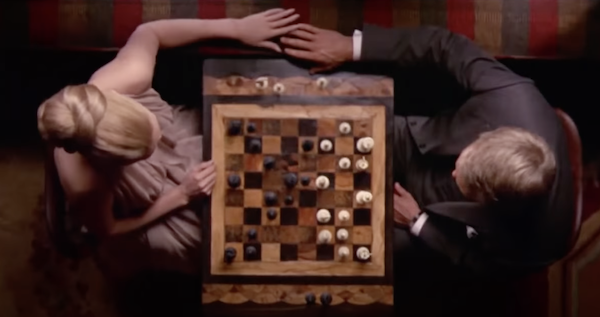
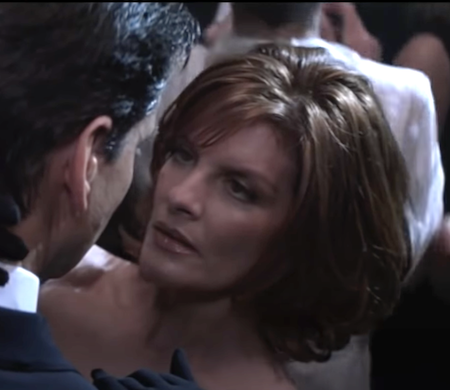
Sexiest scene: Dance scene (1999) vs. chess scene (1968).

It’s a close one. Generally, I think Russo is sexier than Dunaway–plus thrilling music–and that dress!

That said, I’m not exactly on solid ground saying Russo is sexier in hers.

In terms of male leads, though, I know I’m right: McQueen out-cools Brosnan in every way, and is smoking hot in every scene.

However, I would still argue it’s Brosnan’s sexiest performance.

All told, I have to give it to 1968’s version for sexiest scene. First, because it deserves extra points for making chess seductive. Second, because Brosnan’s delivery of “Do you wanna dance, or do you wanna dance?” hurts me.

Other Characters. No one in the 1968 version is as fun as Dennis Leary or Frankie Faison. But Jack Weston is great at playing a sap.

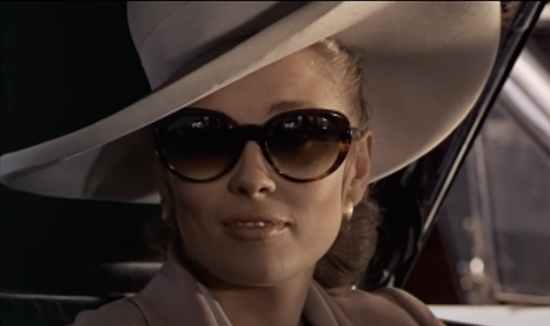
The Fashion. A tie, I’d say. I prefer Russo’s impossibly luxe wardrobe and killer sunglasses.

I’m not a fan of fur, but that leather outfit in her break-in scene kills me.

Dunaway’s fashion is fantastic in The Thomas Crown Affair too, and those hats are amazing. Plus, the actress always looks like she was born in whatever she wears.

The Script. The writing is better in the 1999 film–though I will admit that many of the best lines are pulled straight from the original. But the characters are more likable and nuanced in the 1999 version. The inclusion of the sailboat crash scene nails Crown’s excesses. The 1999 film is funnier (which I prefer). And Russo’s Catherine is a more powerful feminist (with her smarts and savvy and outplaying everyone) than Dunaway’s Vicki is, though I think they make Catherine too vulnerable in the end.

Editing. I love the clever transitions and cuts in the 1999 remake, but the 1968 version is more streamlined. The 1999 one could use some trimming in the second half.

In-Jokes. Loved Dunaway as the snarky psychiatrist for Brosnan’s Crown. We assume her commentary on porcupines to be from her own experience (from her 1968 caper), right? That’s SUCH a fun twist.

The Ending. 1968 does it for me. It’s poignant, and far more probable than 1999’s.

Because of the script and Russo’s performance, I’d give it to 1999, but it’s a tight one! How about you?

Share
Posted in: 1960s films, 1990-current films, Film Noir/Crime/Thriller & Mystery, Romance (films) Tagged: The Thomas Crown Affair (1968); The Thomas Crown Affair (1999); Rene Russo; Pierce Brosnan; Faye Dunaway; Steve McQueen; good remakes

New Podcast on Conspiracy Films!

03/18/2021 by leah@carygrantwonteatyou.com Leave a Comment

Join my friends and me as we talk about conspiracy films in this conspiracy-laden moment in history! It’s such fun talking film with my witty partners, Michael Keenan Gutierrez and Brian Wilkins. And I think you’ll enjoy our strange journey–from an early Hitchcock to the present moment. The 39 Steps and Dr. Strangelove start us off. Check out our podcast, Nobody Knows Anything, or go directly to Spotify or Apple Podcasts to find us. We’ll be posting more in the coming days on our Twitter and Instagram accounts. We begin by thinking about the important things, like how attractive you have to be in order to seduce an international spy with haddock. (Answer: Robert-Donat-with-a-mustache attractive.) For excerpts from our conversation, click below!

Here’s a clip of our 39 Steps talk!
And here’s a clip of our Dr. Strangelove chat.
Share
Posted in: 1930s films, 1960s films, 1970s films, 1980s films, 1990-current films, Uncategorized Tagged: Bourne Identity, Captain America: The Winter Soldier, conspiracy movies, Dr. Strangelove, film reviews, films, podcast, The 39 Steps, They Live, Three Days of the Condor

Beyond Melanie: Olivia de Havilland

07/27/2020 by leah@carygrantwonteatyou.com 6 Comments
Olivia de Havilland in My Cousin Rachel

It’s always bothered me that Olivia de Havilland; the passionate, strong-minded, long-lived Hollywood star; is best known for a meek maternal role.

Did she perform it well? Oh yes. She imbued Melanie with incredible strength, empathy, and grit. But to be best known for Gone with the Wind in your obituary isn’t exactly a selling point in 2020. The mawkishness of the role has always annoyed me, especially because Olivia de Havilland is most riveting when she’s hard boiled. (She would have been great in noir.)

This was, after all, not a meek woman, convincingly as she nailed that famous steel magnolia part. This is the actress who sued her studio for extending her contract—and won. (A stupefying victory, given the long list of actresses whose studio fights got them nowhere and killed their careers.) And so I’d like to highlight a few of my favorite roles, which bear no resemblance to Melanie.

The Heiress (1949). I’m not alone here. This film won her an Oscar, an award she richly deserved. She plays a shy, undervalued, vulnerable “spinster” wooed by a handsome man (Montgomery Clift) who is likely after her wealth. Her growing strength as she begins to suspect him and question her father is something to see. Wow.

My Cousin Rachel (1952). A sexually and socially confident, cosmopolitan widow (de Havilland) meets the naïve young cousin/heir (Richard Burton) of her dead husband. At first, he suspects her of murdering her husband, then he falls for her, and then he suspects her again. Did she, or didn’t she? The book version leaves the answer open, the movies less so. The 1952 film itself is a mixed bag, but when it comes to embodying a fascinating heroine, de Havilland knows what she’s doing. (You know I think so when I say Rachel Weisz, whom I love in everything, couldn’t hold a candle to her in the remake.)

Hush … Hush, Sweet Charlotte (1964). I love some bonkers Bette Davis-de Havilland banter. Is it as fun as Whatever Happened to Baby Jane? No, what could be? But it’s still a blast to watch, thanks in large part to de Havilland’s scheming character.

The Adventures of Robinhood (1938). OK, this is a bit of a sentimental choice, but de Havilland doesn’t play a weakling version of Maid Marian. She’s got some serious spirit, especially for the time this film was made. de Havilland’s stunning beauty in it explains the string of hearts she left in her Hollywood wake. And Errol Flynn’s and her dazzling chemistry, not to mention their ridiculously good looks, reveal why they were paired together so frequently. Plus, the film is just a hoot, with the cast clearly having Ocean’s 11-level fun on the set.

There’s much more to say about de Havilland. This list alone shows her incredible range as an actress. I don’t have the expertise to discuss her recent lawsuit, sister feud, or any of the myriad other topics that make her a compelling subject. I strongly recommend you check out some of my peers’ posts on The Classic Movie Blog Association’s blog roll (see right column). de Havilland has never been one of the stars I follow. Frankly, I find her a bit scary. Intimidating. Hard to know. (About as far from Melanie as it’s possible to be.) But you can’t ever discount her. And when she’s on the screen, you don’t want to watch anyone else.

Share
Posted in: 1930s films, 1940s films, 1950s films, 1960s films, Drama (film), Feminism, Romance (films), Romantic Comedies (film) Tagged: Olivia de Havilland, roles beyond Melanie, strong female roles, The Heiress, tribute

The Gender Gap in Film

02/05/2020 by leah@carygrantwonteatyou.com Leave a Comment

Check out these two articles, both of which show the gap between awards for women and men in the Oscars over time in visual format.

“The Oscars’ 92-year gender gap, visualised”

“Maybe Those Are Just the Best Movies This Year”: #WhiteMan’s Oscar in Context.”

The Guardian‘s statistic about the lack of awards for female cinematographers was particularly illuminating.

In addition to showing what female-driven films could have been honored but weren’t over the years, Relatively Entertaining covers the diversity of voices in film, how we’ve regressed since a high point in the 40s in honoring women’s stories–even if told by men. The post also highlights how seldom black actresses are repeatedly honored for their work: “For that matter, it’s a strange quirk of Oscar that of the 35 times a black woman has received acting Oscar nomination, only three (Whoopi Goldberg, Viola Davis and Octavia Spencer) have been nominated more than once, and only Spencer has been nominated after winning her award.”

I wonder how long Academy voters could sustain the fiction that women’s films just haven’t been good enough yet to get awards after viewing the articles’ startling graphics. I wonder if the lack of repeat nominations for women (and women of color in particular) will finally bring home just how much has to change.

Share
Posted in: 1920s films, 1930s films, 1940s films, 1950s films, 1960s films, 1970s films, Feminism, Oscars, Uncategorized Tagged: black women and the Oscars, gender gap, representation in film

Getting Nosy about Mae & Cary

06/06/2019 by leah@carygrantwonteatyou.com Leave a Comment

Grace Collins of True Stories of Tinseltown and I chat about two stars who created the personas that made them stars, and never let those personas slip. We’re not nosy about ALL Hollywood stars’ lives, but that kind of inventive commitment is worth talking about! As usual, the two of us had a lot of fun, and Grace is a great host. (I might get a bit too enthusiastic, but in my defense, I was then reading Goodness Had Nothing to Do with It.)

Check out the podcast here or here or here.

Enjoy Grace’s other wonderful posts and podcasts on her sites or check out her Facebook page for more.

Share
Posted in: 1930s films, 1940s films, 1950s films, 1960s films, 1970s films, Mae West Moments, Uncategorized Tagged: bios, Cary Grant, fan tributes, life stories, Mae West

Two Critics Pan Hitchcock’s Torn Curtain

07/06/2018 by leah@carygrantwonteatyou.com 16 Comments


Friends and fellow film buffs: Brian Wilkins and Mike Gutierrez have written wonderful guest posts here at Cary Grant Won’t Eat You—Brian, on fighting in Sword and Sandals films, and Mike, on his ideal casting for Hitchcock remakes. Today they’re joining the second annual Alfred Hitchcock blogathon to consider what the famous director could have been thinking with Torn Curtain (1966).

B: This all started because I had a memory of a movie where a drunken Paul Newman, at the Nobel Ceremony in Stockholm, chats up beautiful blondes and a physicist who may or may not be trying to defect to East Germany. So when Torn Curtain was still available, I texted Mike and said we should grab it.

There’s only one problem.

Torn Curtain is a Paul Newman and Julie Andrews vehicle, about a conference in Copenhagen that ends in a physicist possibly defecting to East Germany. And it’s not the movie I remembered. That movie is The Prize directed by Mark Robson. This was Torn Curtain, and as Mike put it…

M: Torn Curtain is a deeply stupid movie.

And it shouldn’t be.

It’s 1966.  Newman and Andrews are two of the biggest stars in the world. It’s true that Hitchcock was winding down by then, but he’d only done The Birds three years earlier. The three of them coming together for some Cold War intrigue sounds like a sure-fire hit, or at least a fun two hours. But that’s not what happened. And, frankly, I’m not sure what happened during the film.

Newman is “defecting,” but no one believes that for a minute. Andrews is his doting girlfriend who follows him to East Germany and decides to stay with him–betraying her country for a guy who has been lying to her. The East German secret police announce themselves as the “secret police,” which doesn’t seem like something the secret police should do. It’s not clear if Newman is working with the US government or is going completely rogue, but somehow he has ties to the resistance even though he’s just a scientist.

I could keep going–the plot is inane, the characters inconsistent, and Newman and Andrews seemed to have lost their charms on the flight to Berlin–but you get the point. So, Brian, what do you see as the reason this movie went off the rails?

B: They squeezed all the fun out of the movie. In every single case where you could find a joke or a bit of dash, they threw a lead blanket on it. I’m mostly blaming the writer.

But here’s the thing: I didn’t think it was humanly possible to have zero chemistry with Paul Newman. I’m pretty sure even inanimate objects have chemistry with Paul Newman. Even his crutch in Cat on a Hot Tin Roof looks into being leaned on. Julie Andrews looks like he started every take by mansplaining parliamentary procedure.

M: Do you think they took out the fun or had no intention of making a fun movie? I’m thinking the writer considered this his grand epic about a deadly serious topic and wanted to make a bold statement about love and patriotism and the threat of the Soviets; that he believed it was high art, Oscar-bait.

And tonally, it keeps shifting from a romance to faux-intrigue to, well, we should probably talk about how Paul Newman and some farmer’s wife re-imagined Sylvia Plath’s death on the Stasi officer. That scene manages the incredible trick of being both disturbing and boring.

B: Let me do some research <looks at Wikipedia for 2 minutes>…oh, shit, this was a hot mess. Hitchcock shopped the idea to Nabokov, who turned it down (genius) then gave the script to Brian Moore (shortlisted 3 three times for the Booker prize) who really should have known better. Moore complained Hitch had no sense of characters. Hitchcock complained Moore wasn’t funny. So Hitchcock thought he was making North by Northwest and Moore thought he was writing…a boring version of The Spy Who Came in From the Cold?

But to the murder. Listen, I hate to get all professional about this, but there are a million things to murder someone with in a kitchen other than a gas stove. It’s almost like the house frau in question was like, “Do you know how hard it is to get Stasi brains out of a cast iron pan? I just seasoned it!”

M: I just spent five minutes re-imagining this film as if Nabokov wrote it. Then I started imagining if he’d written The Sound of Music. “No, you cannot sing the Nazi’s away, Julie Andrews. No.” I digress.

B: Rolling pin. Cleaning chemicals. Towel garrote. Meat hammer. Fork.

M: Ice pick?

B: Only if he’s a real Communist (yes, that’s a Trotsky joke, David Ives fans).

M: This was one of the big set pieces, the one that shows us that Newman isn’t just a dainty scientist but a badass with a Ph.D. Now, you’re married to a scientist–who I’m certain would have used a paring knife—

B: Correct. Or poison.

M: …and you’ve met scores of scientists in your life: is there anything about Newman’s character that seems the least bit authentic? Or, a better question, what do you think Newman thought he was supposed to be? He’s never been so charmless. He has that great, knowing smirk in everything he does. What movie did he think he was in?

B:  I think Newman read the character as a boring CIA agent the whole time. His character “starts in Washington” and ends with a “teaching position.” He’s just a physicist who couldn’t actually cut it, but as a bureaucrat briefing real spies on what to steal, he’s sort of useful. And I think Paul Newman would hate that man intensely. I’m guessing he needed to fund some sort of charity for kids with horrific cancer. Seriously, that man is a sexy, sexy saint.

M: I’m not sure the first Mrs. Paul Newman would agree. There is a voodoo doll of Joanne Woodward out there floating in the aether.

B: I started wondering if Joanne Woodward would be better casting than Julie Andrews, but, honestly, I don’t think anyone could have chewing gum and twined a performance from this script. Is there any trace of Hitchcock at all with the escape scene?

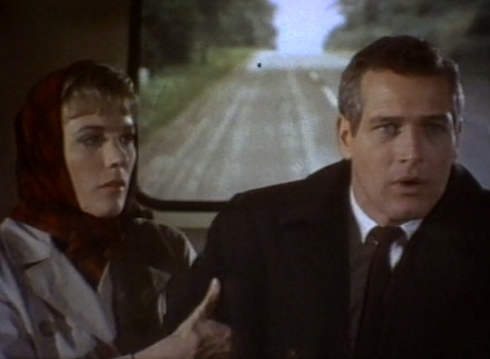
M: Sure. It’s an elaborate set piece–a bus chase before sneaking onto a ship–that’s supposed to be Hitchcock’s version of how he’d escape past the Berlin Wall. But it feels like a knock-off version of a Hitchcock climax, sort of like how 2 Days in the Valley ripped off Tarantino. The problem is that Andrews and Newman are passive characters in the escape. They’re sitting on a bus driven by someone else, and then shuffled onto a boat where they are shoved into baskets to sit in their own filth for days (weeks?) while someone else pilots the ship. Passive. It’s like Hitchcock forgot what made for great Hitchcock.

B: I never even thought of how this would be Hitchcock’s personal fantasy of how to get away: “Well, I’m certainly not going to run. And riding a motorcycle sounds sweaty. Perhaps I could just drift peacefully into freedom?”

M: Here’s the thing: Cary Grant kills a dude and saves the girl in North by Northwest.

Paul Newman sits in the back of the bus and hopes no one hurts him.

B: I think this film needs more dynamite, there, Butch. I tried to think of something I liked about this film but I’m coming up as empty as a housefrau looking for a murder weapon in a gun closet.

M: Yeah, I’ve got nothing. In the end, I found myself rooting for the Stasi.

B: Well, thank you for your patience, kind readers. I hope you’ve enjoyed being warned off what has to be in my top 5 worst movies of all time. See The Prize instead for all your Paul Newman Cold War-related hijinks. And …oh! Bear Island with Julie Andrews. It’s got the UN, it’s set off the coast of Norway, and there’s a possibly gold-filled U-Boat.

M: That sounds awesome. I’ve never seen it. Let me do some research <looks at Wikipedia for 2 minutes>…. You did it again: You got Julie Andrews confused with Vanessa Redgrave.

B: That’s more telling about my fantasy life than I would like. MEA CULPA!

Check out the other posts in Maddy Loves Her Classic Film‘s The Second Annual Alfred Hitchcock Blogathon, including her post on Rebecca!

Share
Posted in: 1960s films, Drama (film), Film Noir/Crime/Thriller & Mystery, Humor Tagged: Alfred Hitchcock, Paul Newman and Julie Andrews, Torn Curtain, What was he thinking films, worst films by good directors

Jack Lemmon & Restraint

03/31/2017 by leah@carygrantwonteatyou.com 8 Comments


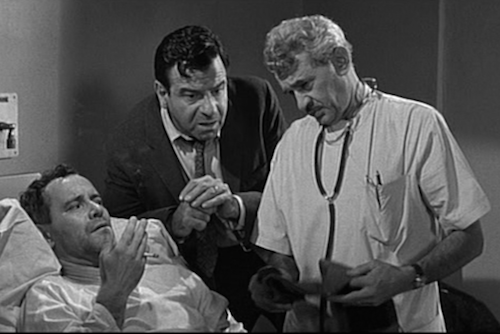
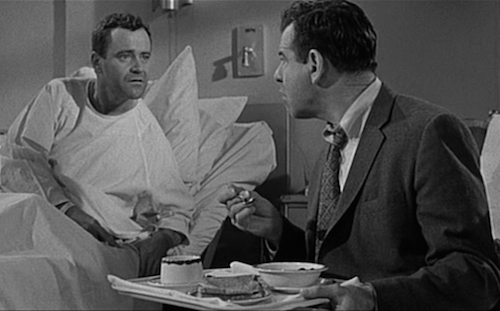
Of course I’ve been dying to see The Fortune Cookie (1966). Who wouldn’t want to view the first pairing of Jack Lemmon and Walter Matthau, the two whose seamless chemistry led to almost 30 years of hilarious cinematic repartee?

Matthau won his only (!) Oscar for the role of Willie Gingrich, an ambulance chaser who capitalizes when his brother-in-law, sports cameraman Harry Hinkle (Lemmon), gets injured by a football star running a play. Look at the people Gingrich can sue! The TV station! the Cleveland Browns! Of course, Hinkle was barely hurt, but an old injury might appear new, and thus enriching. If only Gingrich can get his brother-in-law to go along, he’ll be a millionaire! Of course, there are obstacles: his brother-in-law’s stupid scruples, for example, are holding up the path to gold.


Luckily, Gingrich has an ace up his sleeve: Hinkle never got over his ex-wife, Sandy (Judi West), and she’s an anxious for the dough as Gingrich is.

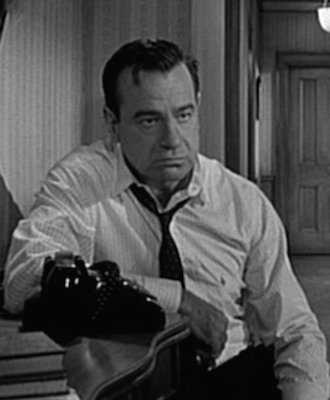
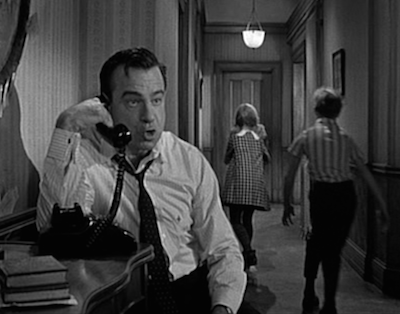
Gingrich is a magical character, a monstrous anti-hero whose avarice is fascinating to witness. He’s Saul Goodman with an even darker sense of humor. I particularly love when he calls Sandy, saying he’s glad to have her as part of the “organization” conning the Browns (not to mention fooling her ex with fake affection). His children interrupt the call, prompting Gingrich to yell out (with a straight face), “Why don’t you kids go play on the freeway?”

Gingrich’s reaction to love getting in the way of profit is typical of him:


His hope to avoid his kids is displayed from the start of the film; his face dims when they’re present, but glows when opportunity arises. He’s only animated when they skate away:


With Gingrich on the screen, you can’t look away, and he’s in nearly every scene. Why he was considered “supporting” and Lemmon the star is one of those mysteries of Oscar nominations no one outside of the industry ever understands.

In terms of plot, not much else happens. Hinkle agrees to fake a grave injury to win back his wife, who pretends better motives for her return in order to get at the money. ‘Boom Boom’ Jackson (Ron Rich), the player who hit Hinkle, slowly falls to pieces about what he thinks he’s done, to Gingrich’s delight (verisimilitude!) and Hinkle’s growing horror. What happens by the end of the movie, most viewers could predict, but given that Billy Wilder is the director and cowriter (with I.A.L. Diamond), there are wonderful twists along the way.

What’s notable about Lemmon’s performance is its generosity. Lemmon can play, often did play, a ham. His first Oscar, over a decade before, was for his scene-stealing, exuberant character in Mister Roberts. Yet here he is, ceding every scene to Matthau, and letting the latter’s role glitter just enough for his supporting Oscar. A less confident, thoughtful, or serious actor would have made Hinkle showier. But not Lemmon. When Hinkle finally stands up to Gingrich, we do see the dam of the character’s (and Lemmon’s) restraint burst, but only briefly, and even then, the goofiness pales in comparison to Matthau’s darkly funny turn as Gingrich. And as we all know, Lemmon only pales when he feels like it. Hinkle’s character is a subdued, passive one, and Lemmon never forgets it.

When I decided to join the Lemmon blogathon hosted by Crítica Retrô and Wide Screen World, I wondered which Lemmon I would see in The Fortune Cookie: the desperate and dark type he captures in Glenglarry Glen Ross, but this time played for humor? The sarcasm he spins in The Out of Towners? The nearly shrill silliness of his role in Some Like It Hot? How many actors has Lemmon been, just as a comedian?

Given how fun his banter typically is with Matthau, I expected to see the two out-goofing one another here. But I find it charming to discover something else: a realism to their dynamic, a sort of half-tolerant contempt that rings true for two characters joined by a marriage rather than by love or blood. A willingness (in real life) for one artist to help out another—in this case, Lemmon aiding Matthau with his one and only Oscar win. Their dynamic is definitely less fun than at the height of their powers in the wonderful Grumpy Old Men. Yet there’s something sublimely sweet about where it all started, and–though I didn’t think it possible–that makes me love Lemmon all the more.

For wonderful tributes and analyses of Lemmon’s work, check out the Jack Lemmon blogathon hosted by Le at Crítica Retrô and Rich of Wide Screen World.

Share
Posted in: 1960s films, Blogathons, Comedies (film) Tagged: ambulance chaser movie, Billy Wilder, characters like Saul Goodman, first film with Matthau and Lemmon, Jack Lemmon, review, The Fortune Cookie (1966), Walter Matthau

The Good Stuff: What’s to Love about Fights in Film

07/08/2016 by leah@carygrantwonteatyou.com 9 Comments

Spartacus-fightscene
Talented poet and screenwriter, martial artist, and classics enthusiast Brian Wilkins agreed to guest post for me as part of The Sword and Sandal blogathon, hosted by Moon in Gemini. Check out his wonderful tribute to fight scenes below.

Sometime in 1998, I sit on the floor in my living room watching John “Kickboxing is the sport of the future” Cusack eject Benny “the Jet” Urquidez into a wall of lockers. He then proceeds to tattoo those locker numbers into Benny’s back several times with his foot. After some athletic grappling, the two fumble at each other’s skinny ties and Cusack jams his pen into Benny’s throat. I am overjoyed: Grosse Pointe Blank is everything a boy could wish for.

“Mom,” I say to the horrified woman behind me folding laundry who thought “light action comedy” would be a great choice for family movie night, “I think I want to do that. “

“I would pray you out of it,” she snaps. Mothers in the south can definitely snap and mention prayer in the same breath.

“What? Why?”

“You tell me you want to be an assassin because of a movie and you think…”

“Not an assassin, Mom! Geez. A fight choreographer.”

This comeback mollifies — but not much: “As long as you finish college.”

***
I finished a lot of college and never became a choreographer for anything beyond amateur productions of Shakespeare, but it’s hard to say who I would be without fight scenes in movies. I fenced because of The Princess Bride. I fell in love with Karate after watching Daniel-san wade through a series of talented black belts who inexplicably led with their faces. I even tried to land a crane kick at a tournament: once. I studied epic poetry in grad school because of 13th Warrior.

So when my friend Leah asked me if I’d like to contribute something for this blogathon, I jumped at the chance to look at the fights in gladiator movies. And not just any fights, but material from before Bruce Lee one inch punched his way into America’s heart and everybody was kung fu fighting. What did fighting look like in classic sword and sandal flicks?

Awful. It looks awful. It looks like America (except for James Cagney) couldn’t take a cardboard cutout prior to 1968. Honestly, watching films like The 300 Spartans must have given comfort to our enemies. I don’t know why the Russians didn’t invade.

And while I think even Alexander the Great couldn’t drink Spartans into being entertaining, it actually provides a solid rubric for what makes a good fight scene. It just doesn’t know that’s what it’s doing. Seriously, folks, I don’t think the director had ever heard the word phalanx. The best fight scene in the movie is when Diane Baker judo flips an overly amorous Greek shepherd.

***
Early in Spartans, Persian King Xerxes (David Farrar) argues with traitorous Spartan king Demaratus (Ivan Triesault) over Spartan valor. When Demaratus defends it, Xerxes suggests a fight to the death between Demaratus and a Persian swordsman. I suppose this is because Demaratus is so tiresome Xerxes would rather have him killed and be lost in Greece than listen to him flap his cheeks anymore about Spartan values. I felt that way. The two champions draw their blades in what seems an interminable fight with bowie knives. Xerxes demands, along with the audience, that they hurry it up. Quickly, death comes for the Persian, and Xerxes concedes, much to his boredom, that Spartans can fight.

Let me check my notes for this scene…oh, I just wrote, “WHAT?” about 15 times.

Two guys in tunics rolling around on dinner tables with plus-size steak knives isn’t an epic scene. There’s nothing to distinguish their fighting styles from each other, no real costuming, nothing resembling martial talent — if a fight scene looks like your kindergartner was filming themselves after raiding your closet for costumes, something has gone awry.

Don’t get me wrong: I’m not advocating for historical accuracy, but just the exotic fantasy of history. I don’t care, nerds, that Russell Crowe stepped into a stirrup in Gladiator, so long as his wolf skin cloak looks really fabulous while he does it.

But just as important to style, there must be stakes for the viewer. Demaratus is a cowardly traitor: why do we care if he dies? Even this dude’s Spartan mother would spit on his corpse rather than shed a tear over not hearing more of his mind numbing dialog. Nameless Persian Thug #1 is no better. If I can’t feel passion or fear or even a soupcon of lust, why am I watching?

The plot must motivate the action as well. We have to learn something about character in this scene and the logic of the movie must give impetus to the conflict. It’s a bit like a song in a musical: the truth that can’t be said must be expressed and it must change the world we’re seeing. The correct ending in this fight scene was to have the Persian kill Demaratus. Instead, we’re now convinced the Spartans are being underestimated by Xerxes and that they’re nearly invincible. I found myself rooting for the Persians, underdogs that they were.

***
Demetrius and the Gladiators (1954) is like all of the strange pseudo-christian elements of Ben Hur wrapped up in one hell of a bogged down film.

This sequel to The Robe continues in that proud tradition, peppering in a few action scenes with Victor Mature to prod the viewer awake. It made the studios a lot of money, but I can only hope that was due to a paucity of action films…what’s that? Seven Samurai came out the same year? Well, screw it, 1950s America just loves misogynistic Christianity. Shame on you, 1950s. Shame.

Still there are elements in the fights in Demetrius that have potential. Take this clip, where Victor Mature’s Demetrius is throwing away his Christian values to avenge his girlfriend who was accidentally killed (but not really, there’s a magic robe that brings people back to life) by knuckle dragging gladiators at a party. Now that those “turn the other cheek” gloves are off, we can get some real fighting! Good thing her (apparent) death paved the way for some real entertainment! Or something like that.

You may have noticed that Mature uses his shield like a kid with a trash can lid storming the kitchen. I put that down to the vices of the choreographer, Jean Heremans, a fencing champ most noted for choreographing Scaramouche (not just a line from Bohemian Rhapsody, folks). His refined modern fencing style makes perfect sense in that 18th century setting, but it fails the style of the sword and sandal motif. Treating fighting as if it is fencing is the real dereliction of this period of choreography. I can only assume it comes from the same instinct that yearned to put a steak dinner into a pill: progress knows best.

Notice also the curious way of holding the sword with the palm down and the sword to the side, almost a foil fencer’s seconde parry. It feels out of place as a guard with short stabbing weapon and will likely get it smacked out of your hand — just in case you have to fight someone with a trident who knows what they’re doing. Despite a nice moment of dual wielding, the style doesn’t offer much excitement or novelty.

However, in terms of stakes and spirit this fight actually picks up the pace a bit. While I would have preferred any other reason for Demetrius to throw away his values and dig into fighting, his existential crisis adds a tangy zip to the clashing shields. This fight will change his destiny as a character, adding a thrill to what we’re watching. Revenge giving permission to the viewer to sanction violence, while also showing a character’s descent after the fact, and redeeming the character with a deus ex machina (almost literally) reeks of cliché, but that doesn’t mean it’s toothless. And when Demetrius actually gets clobbering a guy like Ty Cobb on opening day, we feel relief because the action initiates the structure of the story. And we like it because the choreography matches the moment and the weapons a bit more: freer and more direct.

But if you’re looking for a more nuanced examination of violence, watch Seven Samurai. Actually, if there’s one lesson you should take from this review, it should be “watch Seven Samurai.”

***
For a taste of a film that lets style guide the way, there’s always Jason and the Argonauts (1963). Ray Harryhausen’s special effects are legendary, precisely for their ability to create a world that, despite having a giant bronze statue really need a hair pin, feels real. In fact, unlike much modern CGI, it’s the actors that feel less real than the animations: a testament to the quality of both.

This clip is so iconic it really needs no introduction.

There are a lot of things to love about this scene, but there are certain moments that stand out for me.

  • The war cry the skeletons give just before charging after Jason and his compatriots: it immediately moves the bony little bastards out of the realm of slouching zombie and into something else entirely.
  • The skeletons get into fighting stances and even seem to relish stabbing the heroes. Their stances are better than anyone else on screen: hunched, menacing, preparing to do ill to the enemy. Jason looks like he just discovered swords over breakfast.
  • The skeletons seem to know how to use their shields. One even hooks a shield into the sea.

But most of all, this scene understands the equipment being used. You can’t stab a skeleton risen from the sown teeth of a hydra! Everyone knows that! Except Jason, who tries it at 3:36 in the clip. And that’s the core of why this scene is great: the heroes have to improvise and start using dodges, feints, throws, and even clubbing the skeletons with the shields (although why no one can seem to stab and block simultaneously is beyond me. I guess we’ll have to wait for Troy).

Though we learn little about the spirit of the characters beyond the fact that Jason is quite content to flee and let his friends die, the stakes in this scene feel high. Perhaps it’s just that as humans we must root for those of us still covered in skin. Perhaps it’s that this idea was fished out from the Hieronymous Bosch corner of the unconscious. But either way, Ray Harryhausen was a genius I wouldn’t have wanted to fight in any place with a sandy floor.

***
There’s no mystery in my mind about the best of the sword and sandal genre. It’s Spartacus, hands down. Ignoring the politics, history, and its place in film for a moment, though, it’s a damn fine fight film. It even has a great training montage! Look, a spinning practice dummy with a mace on it! And there, a spinning blade of death machine! Even face painting!

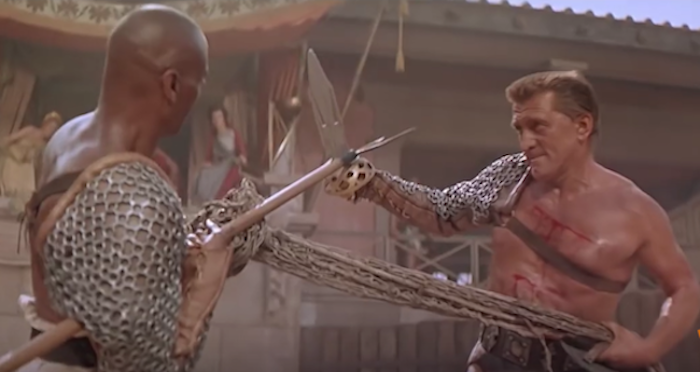
To set up the scene: Spartacus (Kirk Douglas) has been paired with the more experienced gladiator Draba (Woody Strode), to fight to the death for the amusement of visiting nobles, particularly Crassus (Laurence Olivier).

Good movies work as fractals: little gems of the overall message replayed again and again to make one larger, faceted meaning. This fight tells you all you need to know about the movie, and the tragic but worthwhile attempt of compassion and brotherhood to fight back against a rigged system. It teaches you to ask who the enemy really is. This is a fight between Drapa and Crassus, first and foremost. And the mild annoyance with which Olivier kills Strode, with his distaste for the blood spatter rather than the action of murdering a human being, drives the nature of that character home.

But that moment is preceded and earned by some rather decent fighting. Strode was far too athletic to not take advantage of his size and is a perfect pairing with the trident. Douglas is a little too lightly armored, actually. He should have at least a helmet. The lack here is better than just artistic license and wanting to see the actor’s face: it shows even more how dangerous this fight is for Spartacus, making the act of compassion even greater.

Though he does hold his own. He’s always driving forward, trying to cover the distance and his lack of technique with enthusiasm. And while it ends with a rather spectacular boot to the ribs, Spartacus fights with just enough skill to lose well, which helps momentarily suspend our belief that just because the movie is called, “Spartacus”, he’s unlikely to die at the first real fight.

Though you could wonder if the Romans care at all. The audience talks over the two men fighting to the death at first, allowing us to condemn the Romans for being that annoying couple at the movies who explain the plot as the movie progresses. The inclusion of the audience into the scene makes the points of the movie so well, and asks us to question our own participation. It calls us to act with mercy and courage.

***
The complaint you’ll hear most often about these fight scenes is that they aren’t realistic, by which most people mean gritty or brutal. Fights in real life aren’t as spectacular, they argue, or as technical, and they don’t tell us much about the nobler parts of our role to play as humans. This lack of realism somehow damages the truth a fight may offer. Sometimes they’re right: the samurai master is killed by a punk with a knife at dinner, people windmill at each other over bar stool rights, and most fights are just attacks by predators or drunks.

But that’s why we come to the screen in the first place: to dream our better selves into being. A fight, even a silly one against skeletons, can show us how to be brave, to stand against impossible odds. When asked to surrender by the Nazis during the Battle of the Bulge, Gen. Anthony McAuliffe sent back a telegram with a one word reply: “Nuts!” You can’t write better dialog than that. And that’s what I say to folks who can’t see the beauty in the ringing steel, the athletic achievement, and most importantly, the spirit of laying it all on the line. Except I want to add “you,” and “are.”

by Brian Wilkins

This post is part of the Sword and Sandal blogathon. Check out the other entries here.
Share
Posted in: 1950s films, 1960s films, Action & Sports Films, Blogathons, Humor Tagged: classic fight scenes, Demetrius, fencing, Film, Jason and the Argonauts, martial arts films, movie, Spartacus, sword fighting

Top 4 Lazy Evening Films on Netflix

05/01/2016 by leah@carygrantwonteatyou.com 2 Comments

So you feel like doing nothing tonight, just want a film to make you smile? Here are four movies now on Netflix that I dare you to watch without grinning.

4. Bowfinger (1999)
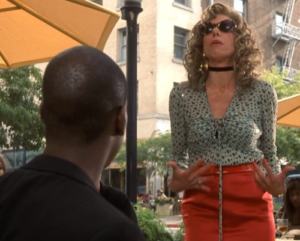
Steve Martin, a conniving producer/con man down on his luck, forces paranoid action megastar Kit Ramsey (Eddie Murphy) into his film by stalking him and shooting his scenes without his knowledge. You in yet? Written by Steve Martin. Now?:)

Favorite moment: Carol (the amazing Christine Baranksi), who doesn’t know Kit is being manipulated, begins her scene with him by ambushing him at a restaurant, ranting about soybeans and aliens.

BaranskiMurphy-Bowfinger
Bowfinger is not a comedy classic, but it’s a pointed satire on Hollywood—so silly and so fun.

3. Charade (1963)

HepburnGrant-Charade
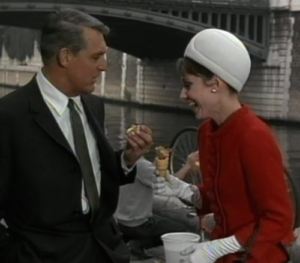
Cary Grant, Audrey Hepburn, and Walter Matthau (1963) star in this lighthearted romance/thriller. Basically, you feel no worry for Regina (Hepburn), despite the danger she’s in, and will give only cursory attention to the mystery itself, despite its fascinating twists and turns. Instead, you’ll just enjoy the cleverness of the script and watching Hepburn and Grant having a blast together.

2. Money Pit (1986)

MoneyPit-HanksLong
This updated version of Mr. Blandings Builds His Dream House (1948) is hilarious whether or not you’ve ever been foolish enough to build a house. With Tom Hanks at his broadest, comedic best, and Shelley Long before her ego got too big for her. I know everyone else will claim the original better (Loy, the paint scene!), but Philip Bosco and Maureen Stapleton are so funny in it, and Hanks in hysterics makes me giggle every single time.

1. Begin Again (2013)

BeginAgain-RuffaloKnightley
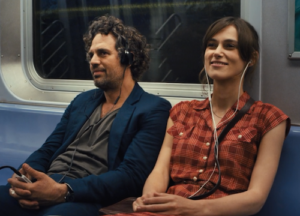
Not as brilliant as Once, but writer/director John Carney manages again to craft a story that’s moving and sweet and joyful without ever veering into sentimentality–or even romance. A celebration of music and collaboration as cures for what ails us, with charming performances by Keira Knightley and Mark Ruffalo. Quick warning: If you don’t want the fragile, soulful tunes in your head for the rest of the week, don’t watch.

Share
Posted in: 1960s films, 1990-current films, Comedies (film), Romantic Comedies (film), TV & Pop Culture Tagged: Begin Again, Bowfinger, Charade, Money Pit

To Kill a Mockingbird–the Film that Spread the Word

02/20/2016 by leah@carygrantwonteatyou.com Leave a Comment

“In surveys asking what one book every civilized person should read, Mockingbird routinely finishes second to the Bible, and in one (if I may go a bit Maycomb on you here) it up and finished first.”  —Charles Leerhsen, Smithsonian

ToKillaMockingbird-Peck
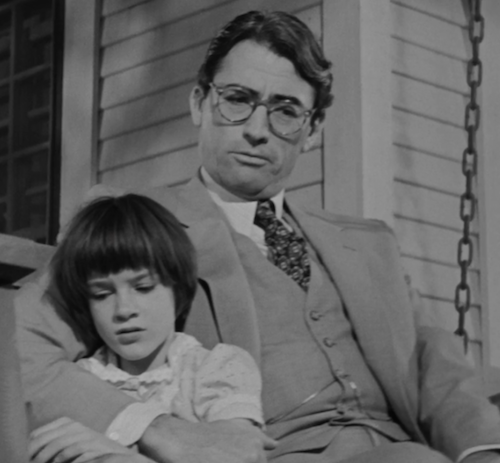
I don’t know how to put into words how thankful I feel to Harper Lee, the day after learning of her death. I doubt many of us can. But I want to express my quieter gratitude for the film. When I first saw it, I was disappointed it didn’t capture as much of the novel as I’d hoped. But I’ve grown increasingly impressed with it in time; not just because it is, indeed, a very good movie; but because it popularized a novel most of us agree “every civilized person should read.” Three Oscars, a mostly faithful rendering of the moving story and a beautifully understated turn by Gregory Peck can do that.

I recognize that the price for the book’s popularity (in part due to that film) was the shy Harper Lee’s withering under our gaze (I once read she compared herself to Boo, rather than Scout). And it’s hard to believe, given the timing of her newest novel’s emergence, right after her sister-protector’s death, that she wanted what was an early draft printed–or the subsequent attention it aroused.

No, Lee wasn’t ready for the degree of our attention, 54 years ago, or today. But she approved the movie anyway, helping so many more of us learn of and then be haunted and changed by her novel. Lee was delighted with Peck’s performance, according to his biographer, even made sure he met her father. So in the beginning of expressing my gratitude to Lee, let me just thank her for approving the film, for putting us all before her own needs, and helping make possible the saving of many other mockingbirds, just as fragile, but likely far less brave than she.

Share
Posted in: 1960s films, Drama (film) Tagged: Boo Radley, Gregory Peck, Harper Lee, Scout, To Kill a Mockingbird
1 2 Next »

Recent Posts

  • 100 Years Later, Still Scary: Dr. Caligari
  • Escaping Out of the Past (1947)
  • A Weeper for Those Who Love Jerks
  • Thank You, Academy, for Not Infuriating Me
  • Challengers (2024) Is a Bad Movie

Subscribe to Blog via Email

Enter your email address to subscribe to this blog and receive notifications of new posts by email.

Categories

  • 1920s films
  • 1930s films
  • 1940s films
  • 1950s films
  • 1960s films
  • 1970s films
  • 1980s films
  • 1990-current films
  • 2020s films
  • Action & Sports Films
  • Anti-Romance films
  • Blogathons
  • Childfree
  • Comedies (film)
  • Drama (film)
  • Feminism
  • Femme fatales
  • Film Noir/Crime/Thriller & Mystery
  • Gloriously Silly Scenes
  • Horror
  • Humor
  • Mae West Moments
  • Musicals and dancing films
  • Oscars
  • Random
  • Romance (films)
  • Romantic Comedies (film)
  • The Moment I Fell for
  • Turn My Sister into Classic Movie Fan
  • TV & Pop Culture
  • Uncategorized
Share
Classic Movie Blog Hub Member

Recent Comments

  • leah@carygrantwonteatyou.com on Meg Ryan’s Fate Foretold in Joe Versus the Volcano
  • Ryan on Meg Ryan’s Fate Foretold in Joe Versus the Volcano
  • leah@carygrantwonteatyou.com on 100 Years Later, Still Scary: Dr. Caligari
  • The Classic Movie Muse on 100 Years Later, Still Scary: Dr. Caligari
  • leah@carygrantwonteatyou.com on 100 Years Later, Still Scary: Dr. Caligari

Archives

  • November 2025
  • September 2025
  • May 2025
  • March 2025
  • January 2025
  • November 2024
  • August 2024
  • July 2024
  • May 2024
  • March 2024
  • February 2024
  • December 2023
  • November 2023
  • October 2023
  • September 2023
  • August 2023
  • July 2023
  • May 2023
  • April 2023
  • March 2023
  • January 2023
  • December 2022
  • November 2022
  • September 2022
  • July 2022
  • May 2022
  • April 2022
  • March 2022
  • February 2022
  • October 2021
  • September 2021
  • April 2021
  • March 2021
  • February 2021
  • December 2020
  • October 2020
  • September 2020
  • July 2020
  • May 2020
  • April 2020
  • March 2020
  • February 2020
  • December 2019
  • October 2019
  • September 2019
  • June 2019
  • May 2019
  • April 2019
  • February 2019
  • January 2019
  • November 2018
  • September 2018
  • July 2018
  • June 2018
  • May 2018
  • April 2018
  • March 2018
  • February 2018
  • January 2018
  • November 2017
  • September 2017
  • August 2017
  • July 2017
  • June 2017
  • May 2017
  • April 2017
  • March 2017
  • February 2017
  • January 2017
  • December 2016
  • November 2016
  • October 2016
  • August 2016
  • July 2016
  • June 2016
  • May 2016
  • April 2016
  • March 2016
  • February 2016
  • January 2016
  • December 2015
  • November 2015
  • October 2015
  • September 2015
  • August 2015
  • July 2015
  • June 2015
  • May 2015
  • April 2015
  • March 2015
  • February 2015
  • January 2015
  • December 2014
  • November 2014
  • October 2014
  • September 2014
  • August 2014
  • July 2014
  • June 2014
  • May 2014
  • April 2014
  • March 2014
  • February 2014
  • January 2014

Meta

  • Log in
  • Entries feed
  • Comments feed
  • WordPress.org

Copyright © 2025 Cary Grant Won't Eat You.

Church WordPress Theme by themehall.com