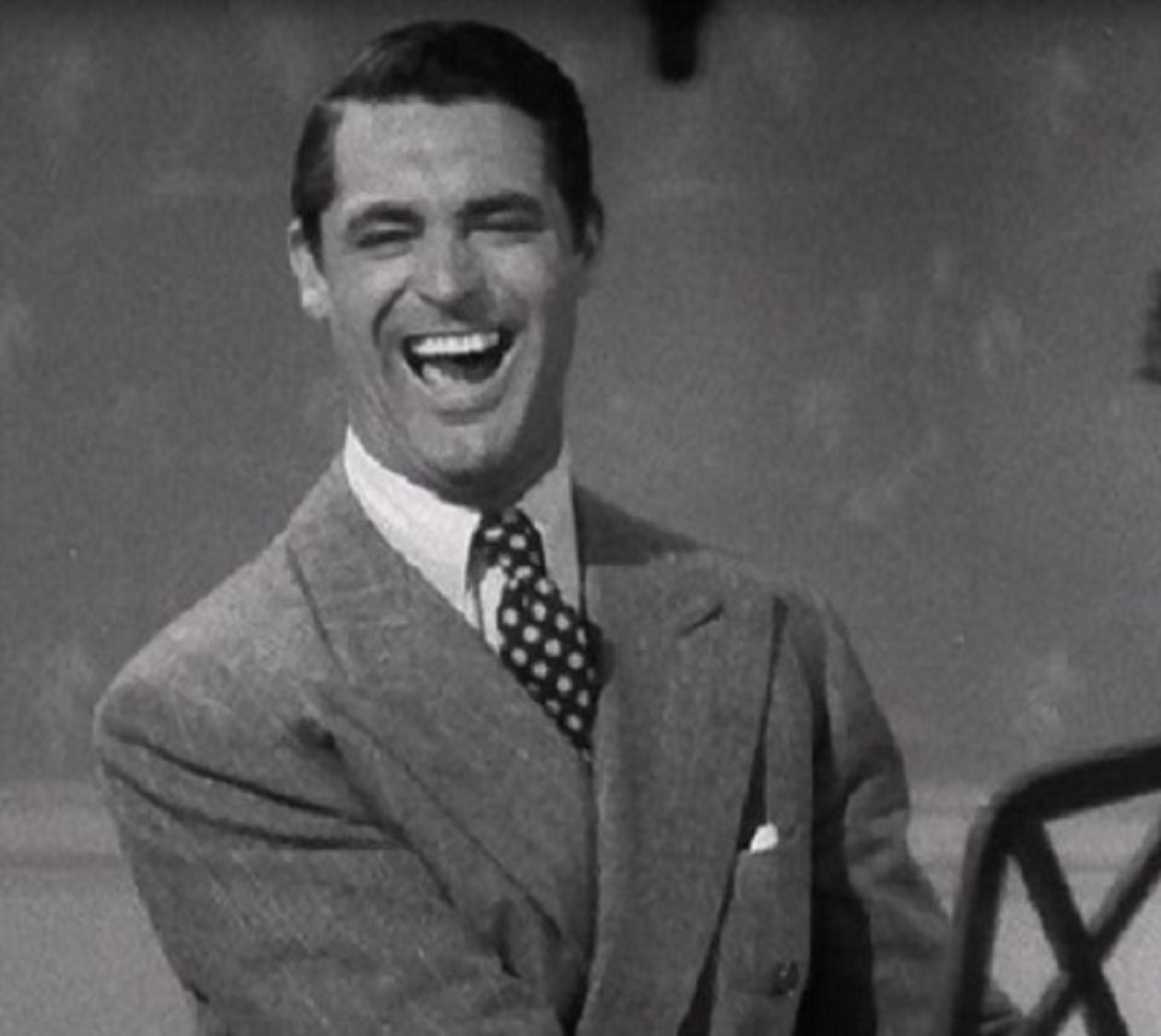
Cary Grant Won't Eat You

Classic movies for phobics

  • About
  • eBooks
  • Previous Blogathons
Classic movies for phobics

1940s films

Three Reasons to Watch The Uninvited (1944) This Halloween

10/16/2014 by leah@carygrantwonteatyou.com 8 Comments

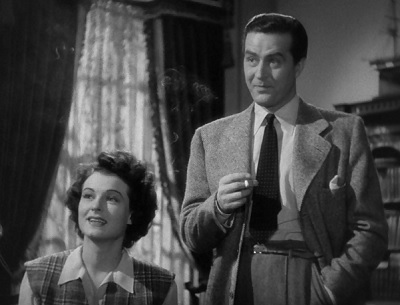
The Uninvited begins simply: Siblings Rick and Pamela (Ray Milland and Ruth Hussey) come upon a lovely oceanfront house on their vacation and buy it to escape the demands of London life. It even has a charming name, Windward, and a quaint touch: no electricity. Of course, things go awry from there, slowly but surely: a dog that won’t climb the stairs, strange weeping sounds, a room that depresses anyone who enters. This film is an eerie, perfect choice for Halloween, not just because of its pleasures as a ghost story, but because it has these three added delights:

1. Candy—the Visual Kind
You spend most of the film gazing at these attractive siblings:

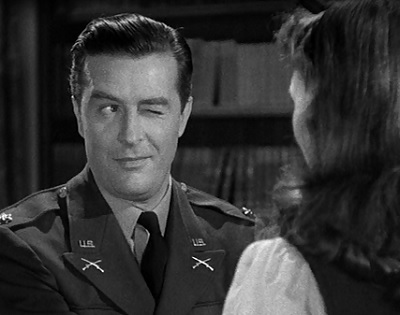
Ray Milland and Ruth Hussey as the Fitzgeralds

Ray Milland and Ruth Hussey as the Fitzgeralds

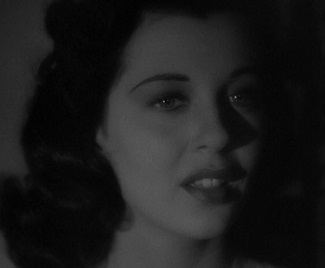
One would think that pleasure would be enough to satisfy your sweet tooth, but this is Halloween, and it’s all about gorging. No worries. The Uninvited delivers: just wait till this knockout fills the screen:

Gail Russell as Stella

Gail Russell

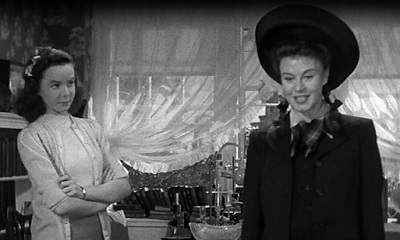
The beauty, Stella (Gail Russell), is the granddaughter of the owner; she disapproves of the home purchase since she believes her mother, who died in a cliff fall, haunts it. But she warms to the couple, especially to Rick, who quickly sets about flirting with her. (Who wouldn’t?)

2. Genuinely Likeable Characters
Most scary stories feature interchangeable victims. If we know their names—Sarah, Dan, Rob, Susan—we don’t know them for long, and the characters quickly become The Screaming Guy or The Girl Pushed Down the Stairs or the Cheerleader Covered in Blood. While we may not wish them ill, we certainly don’t know them well enough to worry when Casper turns out to be a not-so-friendly ghost.

Rick and Pamela, in contrast to these stick-figure characters, are laid back, witty, fun. They are a gutsy pair, unlikely to fall prey to fears or believe in haunted happenings. After being told former tenants complained of “disturbances,” Rick quips, “What was the trouble…Ladies carrying their heads under their arms?”

The two like to tease each other, like most siblings. To convince her brother they should take the house, Pamela points out that if they live there instead of the city, he could work on his composing. He protests, of course, “My poor lunatic sister. I happen to have a job.” She replies in equally supportive sibling fashion: “Yes, and what a job. Going to concerts and telling your readers how bad the music was….Chuck it…It isn’t as if you’re even a good music critic.”

3. A Human Conspirator: A Haunted House with an Ally?
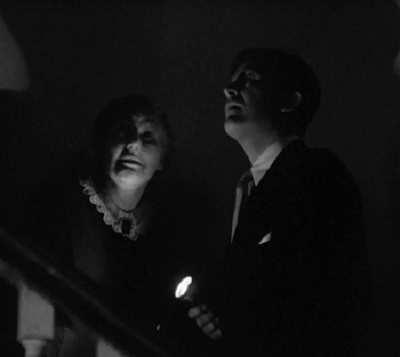
It’s clear the ghostly house has it in for Stella, and much of the film portrays the siblings’ efforts to discover the story behind the hauntings, the reason for all the eerie sounds, dying flowers, dog phobias, temperature shifts, and occasional apparitions (the special effects are surprisingly good). Once they understand the story, the siblings believe they can save the girl from the increasingly hostile house—and, of course, make it a bit more hospitable for themselves. (After all, it’s putting a great dent in their parties, making it highly unlikely they’ll be the popular pair they were back home.)

A ghostly party crasher

A ghostly party crasher

Soon the siblings suspect there may be a live human abetting the house’s murderous impulses, and among all the shifty possibilities, the person who begins to emerge as the frontrunner seems disturbingly sane—except for his/her desire to help the house kill Stella, of course.

If you’re not yet convinced by my reasons, read the excellent review that led me to buy the film in the first place. The author, the blogger Self-Styled Siren, even draws a cool parallel between the film’s apparitions and the terrifying ones in Raiders of the Lost Ark. What could be a better recommendation?

Share
Posted in: 1940s films, Action & Sports Films, Drama (film), Film Noir/Crime/Thriller & Mystery Tagged: Best Halloween Films, Gail Russell, Ray Milland, Ruth Hussey, The Uninvited movie 1944

The Moment I Fell for Van Heflin

09/23/2014 by leah@carygrantwonteatyou.com 13 Comments

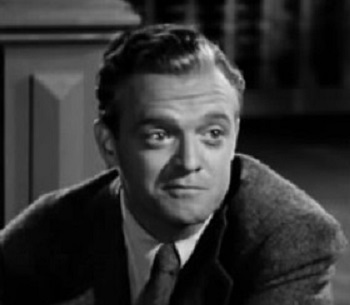
Heflincurious
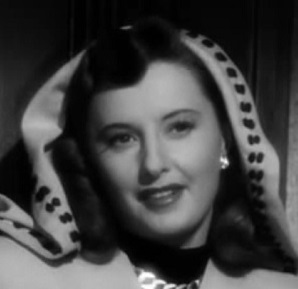
I didn’t know a thing about Van Heflin when I saw The Strange Love of Martha Ivers (1946). I picked the movie because of my love for Barbara Stanwyck, whom I assumed from the title would be the star of the film; I didn’t realize she wouldn’t appear until half an hour into it.

Stanwyck, the versatile actress

Stanwyck in The Strange Love of Martha Ivers

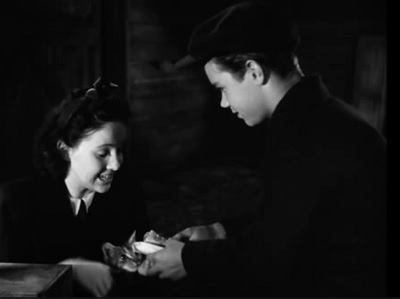
The story begins in 1928. Young Sam Masterson (Darryl Hickman) is trying to convince his crush, Martha Ivers (Janis Wilson), to run off to the circus with him. Sam is always evading the police thanks to Martha’s aunt (Judith Anderson), Mrs. Ivers, the wealthy woman who owns the town. Only if they run away can they be together. Unfortunately, their initial efforts are foiled by tattletale Walter, who likes Martha too.

YoungSamandMartha
Sam does run away, but just before Martha flees to join him, Mrs. Ivers beats her beloved cat to death, and Martha retaliates by striking her aunt with the same cane. We see Sam riding a train just as his crush is concealing the murder with the aid of her greedy tutor and Walter, his son.

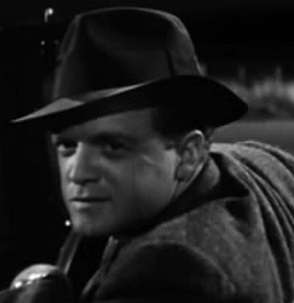
The film jumps to 1946. Sam has grown up to become an easygoing professional gambler (Van Heflin). In his car with a hitchhiking sailor, Sam catches sight of a “Welcome to Iverstown” sign.

“Well, whaddya know?” he says. “….Leave a place when you’re a kid, maybe seventeen, eighteen years ago, and you forget all about it, and all of a sudden you’re driving along and smacko, your own hometown up and hits you right in the face.”

He’s so surprised that he turns around to see the sign again and crashes his car.

Heflin-driving
Laughing at himself, he explains to his befuddled companion, “The road curved, but I didn’t.”

“Welcome to Iverstown,” he says to himself as he heads there for repairs. “Well, maybe this time, they mean it.”

I had expected to be disappointed by Stanwyck’s costar, as I usually am. Even actors good in other films come across as flat or artificial next to an actress this natural, and as downright stilted if unskilled to begin with (i.e., Herbert Marshall).

Captivated by the self-deprecation of Heflin’s character and his unexpectedly casual responses to conflicts, I soon forgot Stanwyck was even in the movie. I think I’d fallen for Van Heflin before he got out of the car.

Discovering that “scared little boy” Walter is now a DA

Discovering that “scared little boy,” Walter, is now a DA

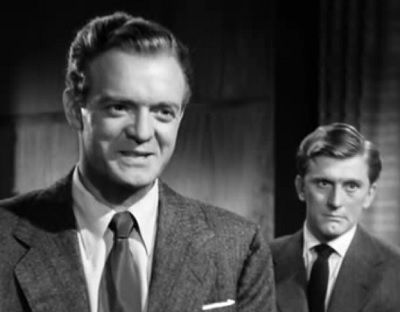
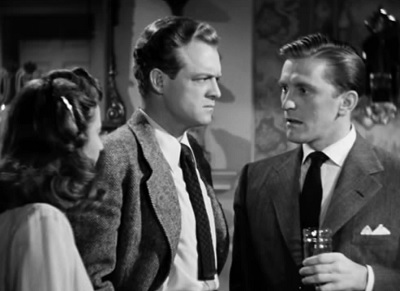
Heflin is an excellent foil for the scheming adult Martha (Stanwyck) and her alcoholic, tortured husband, Walter (Kirk Douglas). Sam’s relaxed, freewheeling persona acts as a kind of tonic to his tightly wound former love and a poison to her jealous and fearful husband, who assumes this childhood friend is back to blackmail them. Like Mrs. Ivers before him, Walter tries to drive Sam away. But Sam is no longer as powerless as he once was.

Heflin is every bit as comfortable in his role as Stanwyck is in hers, and the naturalness I would soon discover to be a hallmark of his acting works perfectly here, contrasting with the duplicitous couple’s double dealing. What makes Heflin so attractive as an actor is that same ease of movement Stanwyck possesses; it wasn’t surprising to discover this man spent much of his life as a sailor. Clearly, he finds his sea legs in every part quickly, and that comfort in his skin and in his environment is seductive to watch. By the time he meets Martha again, even the usually compelling Kirk Douglas is hopeless against him (Douglas plays an atypical part here, and is wonderful in it).

Seeing Martha again

Seeing Martha again

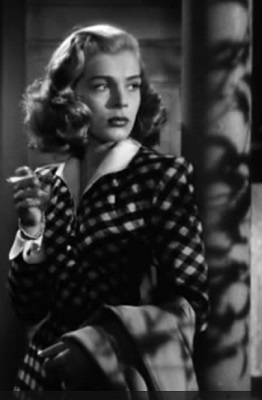
Heflin was not a traditionally attractive man, and famously remarked that “Louis B. Mayer once looked at me and said, ‘You will never get the girl at the end.’ So I worked on my acting.” Whatever he did worked: He’s so riveting to watch that I never questioned any woman Heflin won, even one as jaw-droppingly sexy as parolee Tony (Lizabeth Scott), who falls for Sam as he’s wandering around Iverstown.

Gorgeous Scott as Tony

Gorgeous Scott as Tony

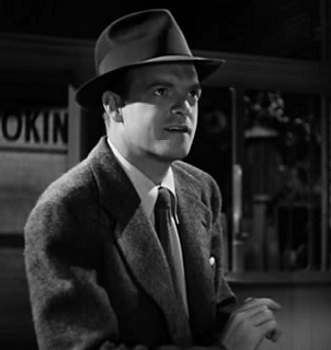
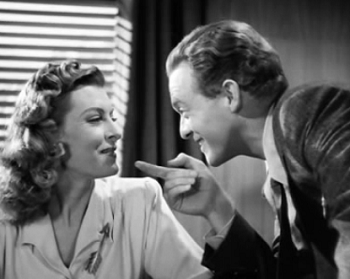
Flirting with Walter's secretary to get an appointment

Flirting with Walter’s secretary

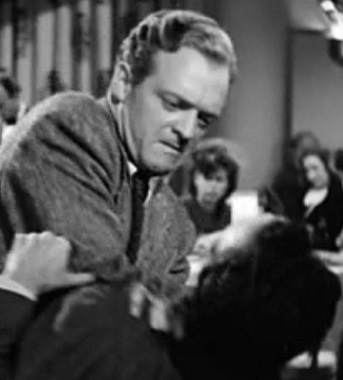
In fact, I’m more likely to question when Heflin doesn’t get the girl, as when Jean Arthur starts to fall for pretty-boy Alan Ladd in Shane over her tough husband (Heflin), or when Lana Turner prefers boring Richard Hart in Green Dolphin Street (to be fair, the character’s choices were just as baffling in the book). Even when Heflin plays a less courageous part than he usually does, as in 3:10 to Yuma, he’s always got some kind of hard, immovable core of strength to him. In The Strange Love of Martha Ivers, where I saw it first, this mental and physical strength appears when Walter starts to mess with him—and worse, with Tony.

Fighting the detectives who stooge for Walter

Fighting Walter’s detectives

Yet Heflin is just as adept at playing kindness as brawn, as when Tony (Scott) betrays Sam out of weakness and then asks him to hit her because of it. Of course, he refuses to hurt her, but he does more than that: he shows compassion for her behavior. “The only thing you got coming, kid, is a break,” Sam says, the simplicity of his delivery conveying his conviction.

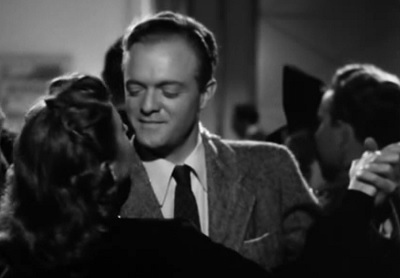
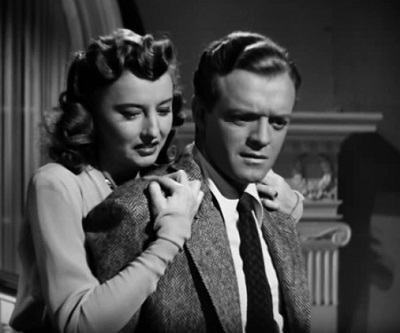
And it is a joy to see Heflin in scenes with Stanwyck. Sam suspects he’s in love with Martha, and even though the audience knows he should steer clear, it’s hard not to root for them, since it means more scenes with these two brilliant actors, and fewer with the less talented Scott.

HeflinandStanwyckdance
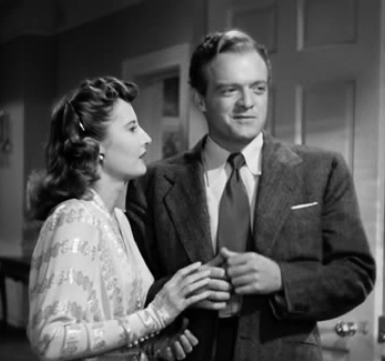
The chemistry between the two is strong. It’s wonderful to witness Stanwyck unable to dominate an actor, to see in him an equal.

HeflinandStanwycktogether
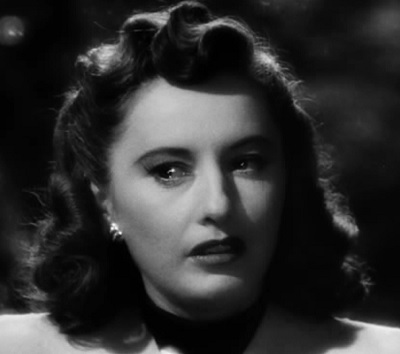
Aware that she can’t manipulate Sam, Martha panics after she reveals her secret to him. Of course, Stanwyck conveys that fear in one look, as only she can:

MarthascaredStanwyck
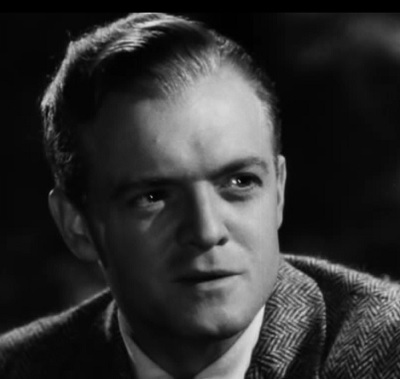
And Heflin’s understated response portrays his excitement about her honesty, his understanding of her distress, and his disgust at what’s happened:

Heflin-discovery
Before long, of course, Sam must confront Walter about his feelings for Martha:

Three-HeflinDouglasStanwyck
And Martha must stop characterizing herself as a victim, instead seducing Sam with money, power, and lust:

HeflinandStanwyck
The role of Sam Masterson requires that Van Heflin have a great deal of range—that he express assurance, wonder, sympathy, violence, love, anger, fear, revulsion. Heflin’s performance carries the film, and he plays each emotion so perfectly that you feel like you know this man, and wish him far away from his destructive former playmates. I won’t spoil what happens, as the movie is well worth viewing, with excellent acting, an intriguing story, and a great script. But be warned: Heflin’ll get to you, just as he did to me.

This is the fourth in a monthly series of The Moment I Fell for posts…Hope you’ll share some of the moments that drew you to your favorite actors and actresses….

Share
Posted in: 1940s films, Drama (film), Femme fatales, Film Noir/Crime/Thriller & Mystery, The Moment I Fell for Tagged: Barbara Stanwyck, The Strange Love of Martha Ivers, Van Heflin

From Poem to Boxing Ring: The Set-Up

09/13/2014 by leah@carygrantwonteatyou.com 8 Comments

An enthusiastic Rocky fan, I was curious how the classic films on boxing would measure up. The Set-Up sounded intriguing because it was about the underworld attached to the sport, and shockingly, was based on a poem.

TheSetup-intr
Let’s sit here and think about that for moment. A poem. Say it to yourself. Boxing. Poem. Can you put the two together? I sure couldn’t. But once I viewed the film, I did see a kind of poetry in it, and thought I’d say a few words about why this film is so moving and—yes, poetic. The Set-Up is about weighing choices, each of which shapes the film. The fact that the movie plays in the exact running time of the prep for and fight itself emphasizes the crucial timing of each decision…

Should a Manager Tell His Boxer He’s Fixed a Fight?
Manager Tiny (George Tobias) believes boxer Stoker Thompson will blow his match, satisfying mobster Little Boy (Alan Baxter), who has paid Tiny to fix the fight between Stoker and his favorite, Tiger Nelson (Hal Baylor). After all, Stoker is past his prime, and hasn’t been on a winning streak in quite some time.

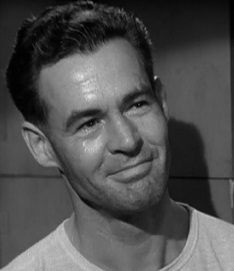
If Tiny informs Stoker (Robert Ryan) about the fix, he will lose some of his cut. On the other hand, if Stoker doesn’t perform as expected, Tiny is in trouble with a mobster. Certain of his boxer’s ineptitude, Tiny considers neither the justice of his action, nor the danger it poses to Stoker. Only when his boxer shows spirit during the fight does Tiny begin to sweat—for himself.

ManagerandfixerTheSetup
Should An Aging Boxer Give Up The Sport To Please His Wife?
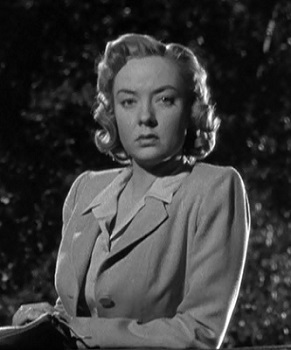
Stoker’s wife, Julie (Audrey Totter), proclaims her resolution to stop attending her husband’s fights. She wants him to quit. Stoker tries to convince her he’s almost done with the sport, but urges her to wait longer, until he can make a greater success. At the start of the movie, he keeps looking to her window and the chair he’s reserved for her at the fight; she wanders around the city trying to decide whether to go.

Totter-TheSetUp
Clearly, Julie hates watching her husband get hurt, and worries about his survival. His love for her is painful to watch, as is hers for him. The problem is, all ambitions notwithstanding, Stoker also loves to fight. He enjoys the company of his fellow boxers, who thrive on hope, and rejuvenate his (comparatively) aging body and more resigned disposition with their energy and dreams.

Ryan-TheSetUp
Julie has put up with a lot to support him in this profession. How long should he ask it of her? Will she leave him if he doesn’t let it go?

How Long Should a Fighter Wait Before Abandoning that One Chance to Make It Big?
In the locker room, Stoker acts as a kind of patriarch to his peers, easing their nerves and encouraging their bravado. When a first-time boxer vomits before his first round, a trainer asks Stoker to admit it happens to everyone.

Yes, Stoker agrees aloud, recalling his own first bout, when he did the same: Trenton, NJ, 20 years before. Stoker’s face is poignant at the memory, back when he was as jubilant as the young men around him.

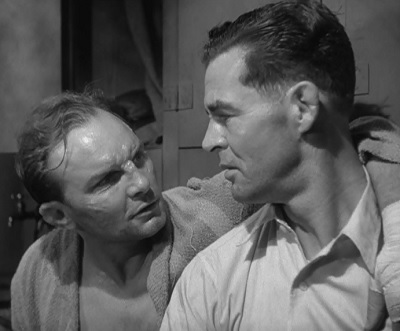
Among the many wonderful moments in the locker room, the best is perhaps the encounter between Gunboat and Stoker. Both aging fighters, both still trying to maintain ambition. Gunboat is inspired by a former middleweight champion who was beat 21 times before winning, a statistic he repeats to all who will listen, hoping his own record will soon resemble it.

“Can’t you see me, Stoke,” says Gunboat. “First I win the title, and then the exhibition tour, that’s where the easy dough is. I’ll be in the movie, Stokes, with a line of dames waiting for me a block long…”

boxers-The Setup
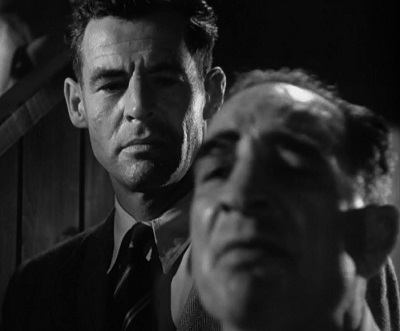
When Gunboat returns from his fight unconscious, the camera pans over each fighter and trainer in turn, the fear and pain in all of their faces perfectly capturing the guts it takes to move from this moment, as several must do, to their own matches. And, of course, it presents Stoker with the inevitable question: Has he waited too long to quit?

What Spells the Difference Between Enjoying a Dangerous Sport, and Craving the Carnage?
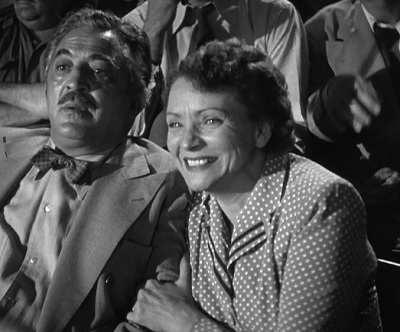
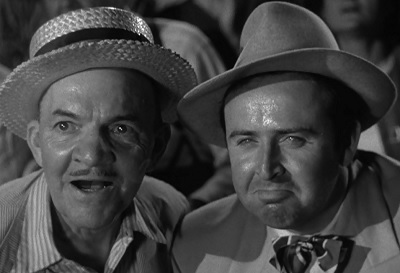
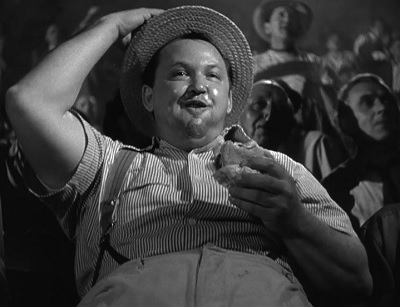
The movie focuses in on just a few spectators the whole film, letting us see the fight between Stoker and Nelson through their often disturbing reactions. There’s the woman in the crowd who claims to hate matches, but reacts with glee when the fighting is most brutal, and grumbles when it’s not….

Spectator-BloodthirstyTheSetup
There’s the blind man relying on his friend for the play-by-play. “Nelson (Hal Baylor) opened up his left eye. He’s bleeding!” says the friend.

“Good,” his companion answers, and later yells at Nelson for not going for the eye again.

Spectator-happyTheSetUp
Then there’s the man who eats everything in the place, his appetite undisturbed by the blood, pain, or cries around him.

spectator-TheSetUp
No wonder Julie doesn’t want to come. No wonder Stoker flinches before his fight at a spectator’s cries: “Kill ’im!”

Reaction toCrowd-theSetup
What Should a Man Do When He Discovers Betrayal, But Payback Could Be Fatal?

boxeralone-TheSetUp
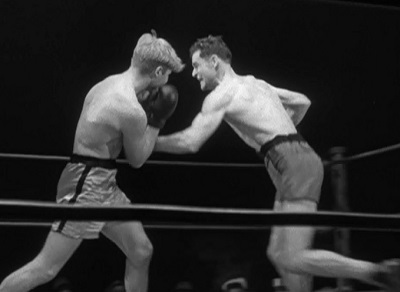
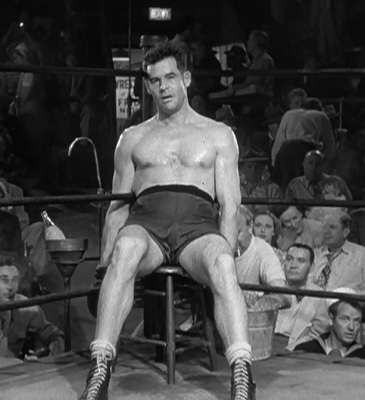
Stoker begins to suspect foul play when his manager keeps trying to convince him to ease up once he begins to win. The bout itself is riveting, moving from the match to those few members of the crowd we’re tracking.

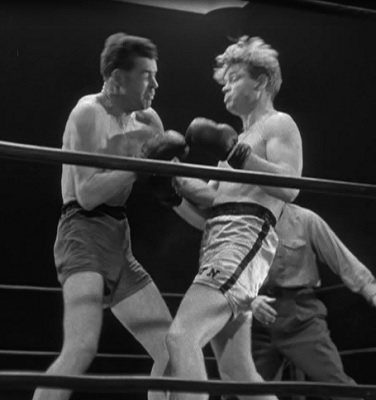
Boxing-TheSetUp
Ryan boxed in college, which explains why his moves are so convincing onscreen, unlike those of many actors in boxing films since. The confusion, anger, betrayal, and uncertainty of how to handle this fix play on this talented actor’s face. Given his pride, his conflict over Julie, and his disillusionment, we aren’t sure just what Stoker will do….

How Faithful Should Filmmakers Be to the Source Material?
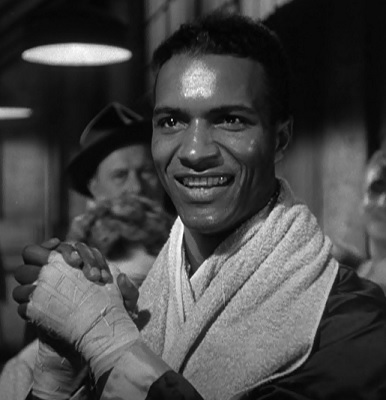
The Set-Up has been criticized for changing the race of the poem’s hero from black to white, and among the harshest detractors were the poem’s author, Joseph Moncure March. It’s easy to dismiss the director’s claim that this change was because RKO didn’t have an African-American star then. The date alone (1949) suggests less elevated motives, and the black fighter in the movie, Luther, is played by James Edwards, who starred in the award-winning Home of the Brave that very same year.

Luther-TheSetUp
Luther is portrayed sympathetically, which suggests the same could have happened with a black leading man, and the kind of treatment Tiny doles out to his boxer would have darkened and deepened the meaning of the movie had they not shared the same race (not to mention more faithfully reflecting the boxing world at the time).

However, the poem’s author, Joseph Moncure March, according to scholar Jefferson Hunter, “attacks an injustice without fully understanding his own involvement in it” and “is more a denizen of his time and place than he knows.” That is, March referred to his hero as a “jungle jinx” and saddled him with bigamy and a prison record. Therefore, some changes needed to be made to the story, and given its audience’s likely prejudices, perhaps some might even have been a good idea. But what a film it would have been with a morally questionable fighter, and an exploration of race politics in the ring….

Share
Posted in: 1940s films, Action & Sports Films, Drama (film), Film Noir/Crime/Thriller & Mystery Tagged: Audrey Totter, boxing, Robert Ryan, Rocky, The Set-Up

The Novels? No. But Still Worth Viewing: Outlander (2014) and Portrait of Jennie (1948)

08/13/2014 by leah@carygrantwonteatyou.com 1 Comment

I’ve always been a sucker for time-travel narratives, from Somewhere in Time and Back to the Future to 2012’s Looper and Safety Not Guaranteed. Not surprisingly, I quickly devoured Diana Gabaldon’s first four Outlander novels, and was excited to hear that Starz had picked up the series. One episode into the network’s translation of the books may be too early to compare the series to its source. But given how few of us subscribe to Starz, the question must be an early one: is the TV show playing it close enough to Diana Gabaldon’s beloved novels to be worth the investment?

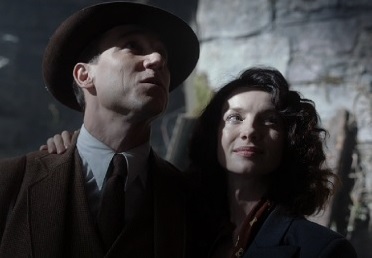
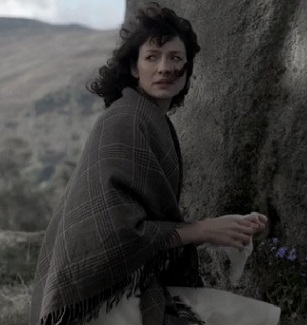
For those who haven’t read it, the first Outlander book’s premise is this: Swept from the 1940s to the 1740s through a magical stone circle, nurse Claire Randall keeps attempting to return to her husband Frank.

FrankandClaire
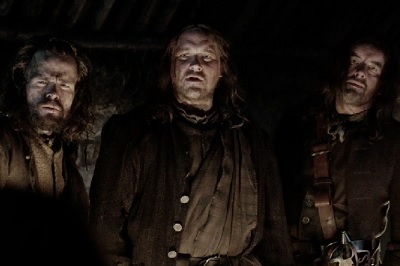
As she plots her homecoming, Claire becomes increasingly caught up in the lives of the MacKenzie clan.

ClairemeetsScots
The book is an impressive amalgam of sci-fi, fantasy, romance, and Scottish historical and medical history, with Claire’s role as a healer contributing to her being mistaken for a witch and a spy by Scots and Brits alike. Unfortunately, Claire soon forms an enemy she can’t harm, Frank’s ancestor.

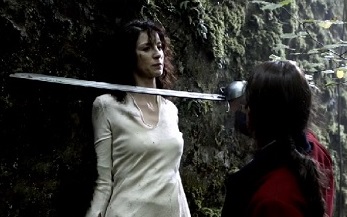
ClaireandJackRandall
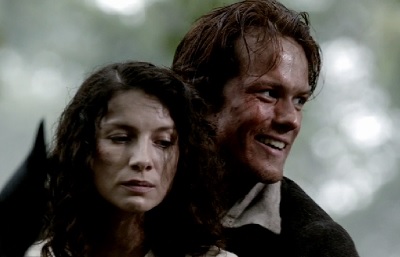
And she runs into a complication she can’t resolve, an increasing attraction and debt to protector Jamie Fraser.

JamieandClaire
Like any reader, I watched the pilot of Outlander expecting to be disappointed by the casting. But Starz has done an astonishingly good job with its selections, particularly of lead Jamie (Sam Heughan). I still remain skeptical about actress Caitriona Balfe as Claire, but my doubts may be the result of the exposition she was forced to relay in voiceover, probably a necessity due to the complicated plot.

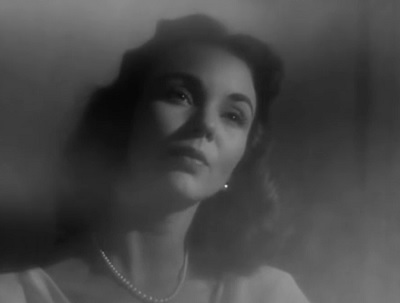
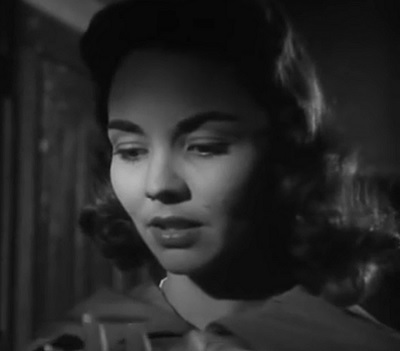
What surprised me is how nostalgic the pilot made me for a movie from my childhood, Portrait of Jennie (1948), and how much my concerns about Claire’s casting echoed my irritation with the choice of Jennifer Jones (the future wife of its producer, David O. Selznick) for its heroine.

JenniferJones-asJennie
To compare the complex story of Outlander to this simple romance might be a stretch, but hear me out. Both productions began with well-regarded novels. (Admittedly, Gabaldon has a substantial following, while enough time has passed since Robert Nathan’s glory days that his 1940 book now sits in that Kindle-Nook limbo, with new paperbacks less easy to come by.)

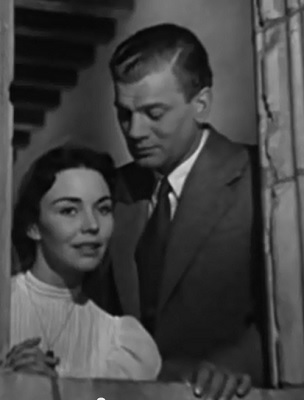
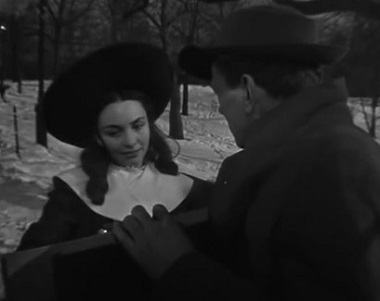
Nathan’s bittersweet fantasy is fairly simple, and the film follows it somewhat closely: Struggling painter Eben Adams (Joseph Cotten) runs into a girl in the park. She is dressed in old-fashioned clothes and has a timeless quality about her. He doesn’t know yet that she’s from the past.

JennieasChild-JenniferJones
Only when she continues to visit him, having aged considerably each time, does he discover that her time is out of joint with his. Mysteriously (we never learn how), she’s able to slowly catch up with his age, hopeful that if she does, they can be together.

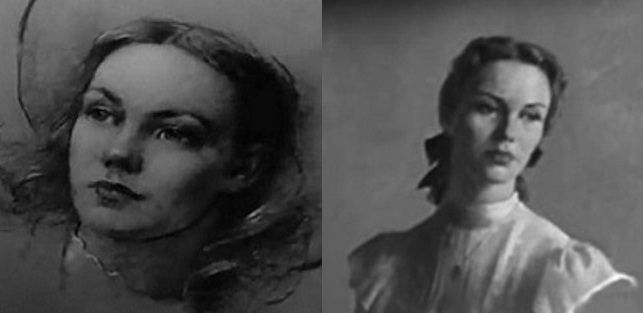
In the meantime, Eben begins to sketch Jennie, and his portrait of her soon leads him to the success his landscapes never afforded him.

A sketch and a later portrait of Jennie (the latter by artist Robert Brackman)

A sketch and a later portrait of Jennie (the latter by artist Robert Brackman)

Eben’s professional life is on the rise, but his future with Jennie is uncertain: will she be able to make it to and stay in his future, or will time/the elements pull these lovers apart?

JonesandCotten
The book is so whimsical, yet so straightforwardly written, that it has a charm and mystery about it that the less subtle film never manages to master. My bias against Jones, which had its root in having only seen her as a saint, may have tainted my first evaluation of the movie (as did my childhood skepticism about classic film). But I think it didn’t help that, as in The Major and the Minor, the film tried to pass off an adult woman as a girl instead of hiring a child who resembled Jones.

While I may nitpick about details still, I neglected to consider as a kid just how much the camera work DID capture the lovely, haunting mood of the book; how perfectly Ethel Barrymore (grand-aunt to Drew) portrays Eben’s patron; and how beautifully Jones expresses the terror and pathos of this young woman, who has lost her family in a tragic accident, and longs for a man she may never attain. It may be true, as one could easily charge, that Selznick was too enamored with his love (Jones) to judge the film clearly, but after all, she was his muse in the same way Jennie was Eben’s, and the soft focus on Jones’ features does convey the level of obsession and love Eben feels for this timeslipping girl. I find myself liking it more every time I see it. (Warning: Do not read about it online before viewing it; spoilers abound.)

JenniferJones
The fear Jennie faces is what The Outlander pilot gets so right about Claire. The show will inevitably have to reduce and simplify some of that book’s (and its sequels’) rich complexity, and will lose much in the process. But it will gain in shots of the landscape, in period details the reader can’t quite imagine, and most of all, in helping us experience the terror of being lost in time, and not sure, as with Jennie, of ever getting to the moment where we feel we belong.

Claire

Share
Posted in: 1940s films, Drama (film), Romance (films), TV & Pop Culture Tagged: Caitriona Balfe, Claire Randall, Diana Gabaldon, Jamie Fraser, Jennifer Jones, Portrait of Jennie, Sam Heughan, The Outlander

The Red Shoes, Pied Piper to Aspiring Ballerinas

08/03/2014 by leah@carygrantwonteatyou.com 14 Comments

This post is part of A Shroud of Thoughts’ The British Invaders Blogathon. Check out all the great entries! 
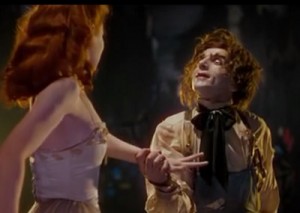
Vickyandshoemaker
Why did this film about the terrible choices a woman must make for her art inspire generations of ballerinas? Every little girl raised on Hans Christian Anderson knows that Karen, the red shoe-shod girl, doesn’t fare well: as punishment for her vanity in choosing red shoes for her confirmation (and similar sins), Karen can’t stop the shoes from dancing, can’t take them off, can’t go to church, can’t even prevent her detached legs from dancing when they’re cut off and replaced with wooden ones. Only when she truly feels remorse does she find peace—in death.

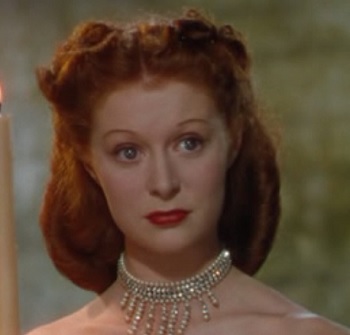
Surely then, a film about these shoes won’t bode well for the heroine, Vicky Page (Moira Shearer), as indeed, proves to be the case. The aspiring ballerina’s fierce impresario, Boris Lermontov (Anton Walbrook), expects unwavering commitment to dance. Vicky arrests his attention and is allowed into his troupe mainly because she seems to possess it:

“Why do you want to dance?” Lermontov asks when he meets her.
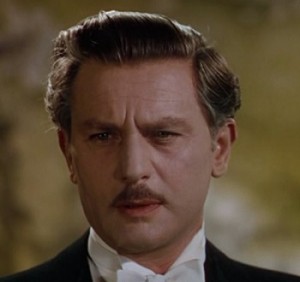
WhyDanceLermontov
“Why do you want to live?” Vicky answers.
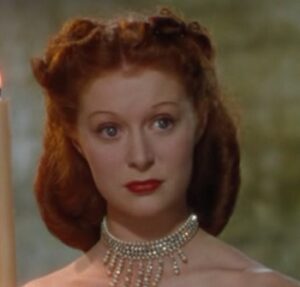
VickyWhyDance
“I don’t know exactly why, but I must,” he admits.

“That’s my answer too,” Vicky answers.

His prima ballerina’s nuptials lead the fiery director to boot her out, and usher Vicky in. He’s not interested in any dancer “imbecile enough to get married.” “You cannot have it both ways,” he explains to his choreographer. “A dancer who relies upon the doubtful comforts of human love will never be a great dancer, never.” Vicky is soon in training for Lermontov’s new ballet, which is based on the Hans Christian Anderson tale, with a company skeptical about her abilities and self-doubt growing under everyone’s exacting standards.

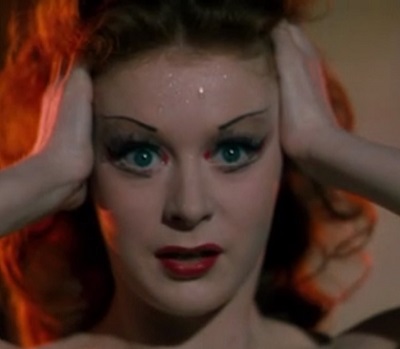
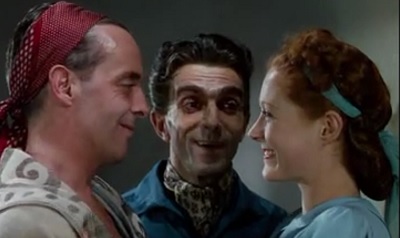
She relaxes when The Red Shoes becomes a spectacular smash, but conflict soon arises in the form of the ballet’s young composer, Julian Craster (Marius Goring), who has fallen for Vicky, and she for him. At this point, we viewers are still happy: she’s gotten her role, as has Julian, whom we’re also rooting for; she’s a hit, as is he; they’re in love, and have earned the respect and affection of the rest of the troupe. But then Lermontov finds out, and she has to choose: greatness with him, or mediocrity with Julian (only minor roles, minor ballets for her). And like every woman before her, this choice between love and ambition will not be an easy one, and she will be tortured either way.
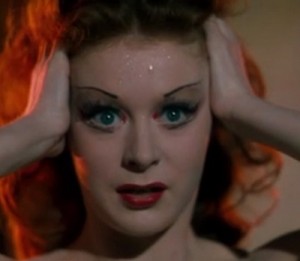
VickytorturedRedShoes
Why then, did this tragic film result in so many enthusiastic young ballerinas? I have a few theories on that, having been in ballet from ages 5-12 myself, and seen this movie when I was gobbling up Noel Streatfeild’s Ballet Shoes series.

For Young Girls, It Wouldn’t Have Been a Tough Choice
Julian is a likeable guy (for most of the film). He’s ambitious, cocky, devoted to his art, smart. He stands up for himself when he’s cheated; he’s supportive, sweet, and appreciative of Vicky as an artist, as he demonstrates during their loveliest moment together, when he envisions a time when a child will ask him as an old man where he was most happy, and he’ll answer this moment with Vicky: “‘What?’ [the girl] will say. ‘Do you mean the famous dancer?’ I will nod. ‘Yes, my dear, I do….We were, I remember, very much in love.’”

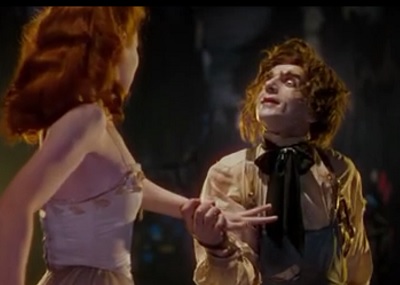
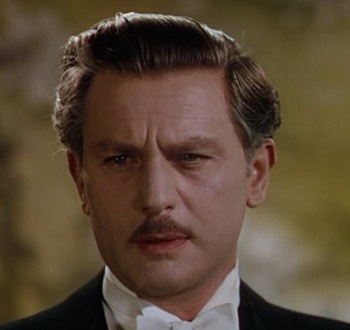
But let’s be frank here: Aside from the romantic streak, these are the types of traits women long on the dating scene may appreciate, but are not the type to win over pre-pubescent girls. This is not the kind of face girls’ dreams are made of:

JulianTheRedShoes
Without the conflict, no tragedy. And after all, even those girls who dream of perfect love and great achievement know a ballerina’s career is short. Their gossiping friends in the dance company will tell them so (if they’ve made it that far). And if they’re still beginning, well, they will learn as much after a day with some dance flicks: The Turning Point, Center Stage. Is it so impossible for the young dreamer to think she’ll simply fall in love later, as the actress (Moira Shearer) herself did in her mid-twenties after her greatest dancing successes?

The Caliber of the Dancing
The pet peeve of dancing enthusiasts is when films substitute allegedly good actors for good dancers—because Jennifer Beals, my friends, sure did have acting chops. Perhaps I would understand this choice if any of the actors and actresses selected were talented.

Take, for example, Center Stage (2000), which played it both ways, inserting a few actors among real-life ballet dancers to elevate the film’s quality. While the result is good dancing, but an array of poor acting performances, the worst among the bunch are Zoe Saldana and Susan May Pratt, who were chosen for their supposed dramatic skills; the latter can’t even manage graceful walking. People, no dancer has ever regretted watching a Fred Astaire film, and the man was at best a passable actor. No dancer says, “I would have enjoyed that movie if he could act,” even if an occasional person among the general audience does.

The Red Shoes, like the Rogers-Astaire films before it, did something more than highlight amateur beginners. It featured world-renowned ballet dancers and choreographers. Léonide Massine, who plays the choreographer (Ljubov) in the film, was a choreographer of nearly the status as George Balanchine. He created and acted the part of the shoemaker in the ballet. The replaced prima ballerina, Boronskaja (Ludmilla Tcherina), was in real life a prima ballerina in France.

And Moira Shearer? She danced for both Balanchine and Massine as a principal in the Sadler’s Wells (later the Royal Ballet), along with, you guessed it, that little-known ballerina Margot Fonteyn, whose costar in the company choreographed and played the male lead in the ballet within the film, Robert Helpmann.
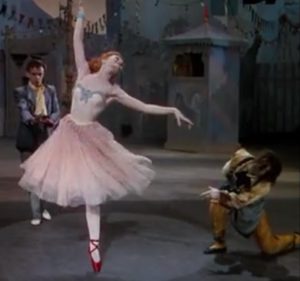
Helpmann, Shearer, and Massine.

Helpmann, Shearer, and Massine

Choosing such ballet luminaries didn’t hurt directors/writers Emeric Pressburger and Michael Powell’s movie; they were even lucky enough to find in these stars acting skills as well (which we rather expect in our greatest ballet dancers).

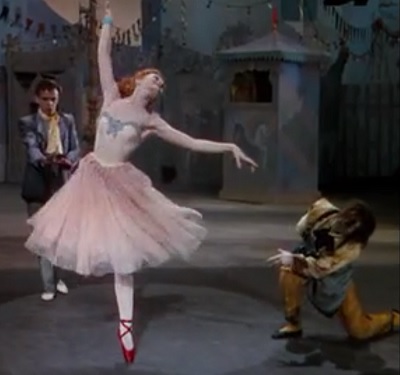
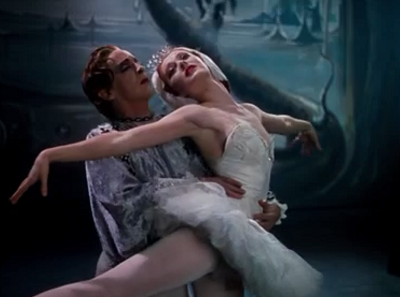
The Red Shoes’ most famous ballet itself is stunning, surreal, inventive and truly impossible to put into words, capturing the darkness of the fairy tale and all of its creepy, moralistic, vaguely misogynistic undertones, and giving Shearer the chance to demonstrate just why she was considered by some to be Fonteyn’s equal. It probably didn’t hurt that the film was scored by the Royal Philharmonic Orchestra.

The Realism
The movie is known for its surreal use of color and special effects and for a riveting performance by Walbrook as Lermontov.

surrealTheRedShoes
It’s recognized now as ridiculously ahead of its time; one shivers to think what an American studio would have done with the same material in 1948: the starlets they would have chosen, the bizarre beauty they would have stamped out.

But by any standards, this film captures ballet as it is lived as well: the punishing practices, the demand for perfection, the colorful personalities, the scary choreographers and directors. I didn’t even make it into the company in my school, but I was terrified of the man who was our head. I’ll never forget his sharp eyes on me when I missed a move in The Nutcracker, nor his poise, which was every bit as still and intimidating as Lermontov’s. And this was a director of a small company in a minor city.
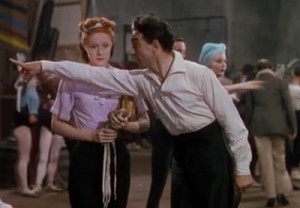
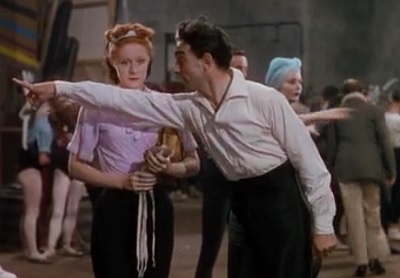
Vicky (Shearer) rebuffed by Ljubov (Massine), Vicky's (Shearer's) movie and real-life choreographer.

Vicky (Shearer) rebuffed by Ljubov (Massine)

The film, however, captures more than the tribulations of a dancer’s life. It conveys too the joy of the right move, of building toward something creative together, of earning not just the admiration of a crowd, but of those whose judgment you know to value.
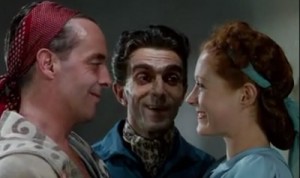
Vicky (Shearer) with her fellow lead (Helpmann) and choreographer (Massine); all three were involved with Sadler's Wells ballets.

Colleagues in film and on the stage: Helpmann, Massine, and Shearer

And it portrays the thrill of those impossibly lovely gestures, pirouettes, and leaps too, which no other experience can quite replicate.

Shearer believed the film injured her classical dance career because critics assumed she was riding on her fame from it rather than technical talent. If that’s true, I want to thank her for the sacrifice (admittedly too late). For it meant many young aspiring ballerinas like me, who would never go very far in dance, would understand in watching and re-watching The Red Shoes just what had made those hours in the studio worth it for us. Yes, it was literally a pain to practice (I feel a cramp in the arch of my foot just remembering those pointe shoes). And it hurt even more when it was time to let ballet go. But look! Just watch Vicky.
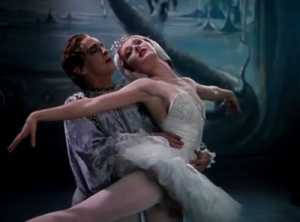
VickydancingTheRedShoes
Why wouldn’t you want to be a part of that, even for a little while?
Share
Posted in: 1940s films, Blogathons, Drama (film), Musicals and dancing films, Romance (films) Tagged: ballet, dancing, Moira Shearer, The Red Shoes, tragedy

The Film I Re-Watched Despite Missing a Quarter of It: The Major and the Minor (1942)

07/03/2014 by leah@carygrantwonteatyou.com Leave a Comment

MillandRogers
Those born in the age of streaming will never know the excitement of catching a favorite film on TV, running to get a tape on time to record it, and succeeding. With adept timing skills, one could even cut out the commercials. There were a few films I loved so much that I was willing to record them even if I had missed a significant portion of the start; What about Bob? was one of them. (40 minutes of a Bill Murray flick is still 40 minutes of Bill Murray.) But my favorite of those I only partially caught was Billy Wilder’s Hollywood directorial debut, The Major and the Minor. After a decade of watching the film from 25 minutes in due to a tardy discovery of it on TCM, and even tardier taping effort, I finally viewed the whole movie, and discovered it was even more charming than I’d thought.

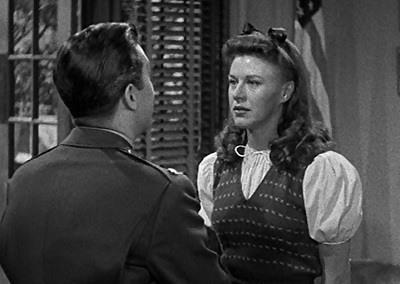
The film begins when Susan Applegate (Ginger Rogers), fed up with New York, tries to head home to Iowa, only to find the train fare back has increased and she can’t afford it. Faced with the prospect of more skirt chasing and job changing, Susan pretends she’s a kid to get the half-price fare instead.

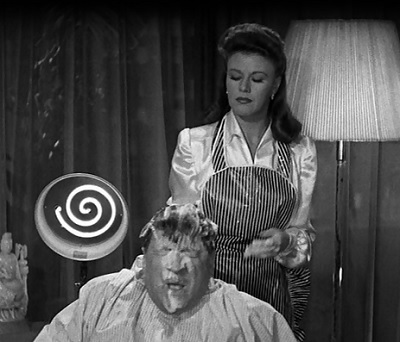
Susan's reaction to client harassment (a part I missed!)

Susan’s reaction to client harassment (a part I missed!)

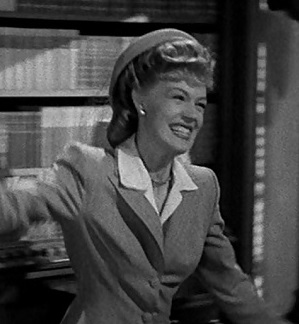
Since this is a Wilder film, you know her ruse will lead to trouble. The train conductors, suspicious of her maturity, keep trying to catch Susan—asking her birthdate, spying on her reading material, looking her up and down. Finally, they spot her during an inadvisable smoking break. She escapes being thrown off by running into the berth of Major Kirby (Ray Milland), an instructor for a military academy. Kirby believes her kid routine and lets her stay in his other bed, but when the train stops due to bridge trouble, his fiancé, Pamela (Rita Johnson), drives up to see him and catches Susan. More clear-sighted than her husband-to-be, Pamela assumes Susan an adult and heads back to the school to get him fired.

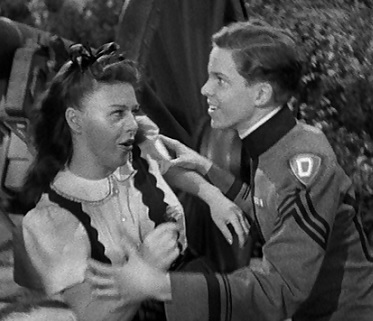
Of course, Kirby beseeches Susan to visit his academy (as Sue Sue, her alter ego) while the train is delayed to prove his innocence, and Susan, moved by his sweetness and guilty at what she’s caused, agrees. So now there’s a woman pretending to be a child at a military school full of boys who might question her age, but have no doubts whatsoever about her attractiveness. You can imagine the kind of scenarios that ensue.

Gingerandtheboys
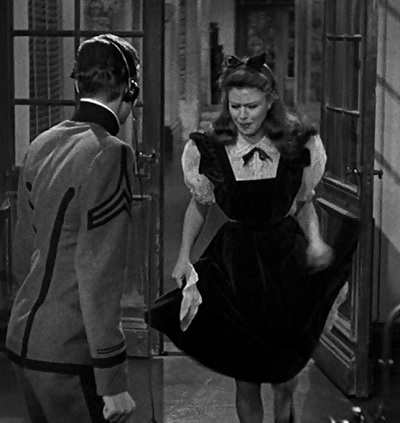
In my favorite moment, Rogers uses her dancing skill to lure a cadet off the phone long enough to assist Kirby’s efforts to get back into active military service, plans Pamela has secretly been trying to derail.

Rogersflirting
Of course, there are some questions here. Already in her thirties, Rogers looks about as likely to pass for 12 as I would for a toddler. Her childish voice does indeed sound like “Baby Snookums,” as she later admits, making you wonder whether Susan has ever encountered an actual twelve-year-old; that voice has to be a good seven years off. At first, I just considered the choice of Rogers bad casting; a frailer woman with a delicate voice might have pulled off a more convincing pre-adolescent than an actress with such a deep timbre and womanly shape.

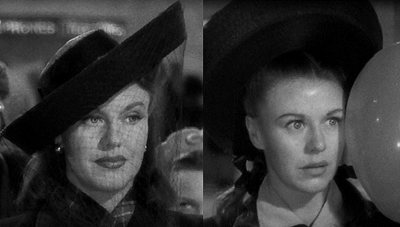
Susan (Rogers) at the left; Sue Sue, her 12-year-old attempt, at right

Susan (Rogers) at the left; Sue Sue, her 12-year-old attempt, at right

But like Barbara Stanwyck’s appalling British accent in The Lady Eve, you begin to view Rogers’ very implausibility as part of the humor.

Despite the audience’s likely doubts about this community being so taken in by a woman who does not look or talk like a twelve-year-old, the depiction of their wholesomeness is so consistent throughout the movie that you soon forget your skepticism. This is a community, after all, in which the school administration and Kirby’s fiancée plot to fire him for sleeping in the same berth with a full-grown woman, but react this way to finding out Susan is a child:

Pamelajoyous
Throughout the movie, writers Charles Brackett and Wilder sidestep the scarier possibilities suggested by an older man-kid relationship by making those possibilities beyond the imaginations of people at this school. Therefore, in spite of Milland’s attention to Sue Sue, he never comes across as threatening or creepy, as heroes in other films with similar stories have, such as 1999’s Never Been Kissed. In fact, Milland plays the part of an avuncular type so well that it took about four films more of his work for me to actually recognize that he was attractive at all (this in spite of the great range of his roles, including his Oscar-winning performance as an alcoholic on a binge, Wilder’s The Lost Weekend.)

Predictably, the only one to discover the truth about the imposter’s age is the same age herself: Pamela’s sister, Lucy (Diana Lynn). Lucy is a great character, a budding scientist whose knowledge of human maturation would have made her perceive Sue Sue’s act even if her clothing hadn’t given it away. The two quickly become allies in separating Kirby from the unlikable Pamela.

SueSueandLucy
Once over the shock of Rogers playing a child, you start to realize just how marvelous she is in the role. She’s so convincingly jaded by her New York disappointments, a cynicism that comes out in an impeccable delivery of the screenwriters’ marvelous lines. Her dawning love for Kirby is equally convincing. Just as Rogers is said to have persuaded all of America that Fred Astaire was a sexy catch, so here she persuades us all that there is nothing more lovable than a guy who is trying to help a kid adjust to the pangs of early adolescence.

Kirby and his "bum eye" beginning to see something of Susan, not Sue Sue

Kirby and his “bum eye” beginning to see something of Susan, not Sue Sue

I definitely missed a little of the plot by re-watching my taped version of this movie for so many years, but I wasn’t wrong about the film’s quality. Whether watching five minutes or a 100, you’ll enjoy it too.

Share
Posted in: 1940s films, Romantic Comedies (film) Tagged: Ginger Rogers, Never Been Kissed, Ray Milland, The Major and the Minor

The Amnesia Romance Before Vows and Notebooks: Random Harvest (1942)

06/26/2014 by leah@carygrantwonteatyou.com 2 Comments
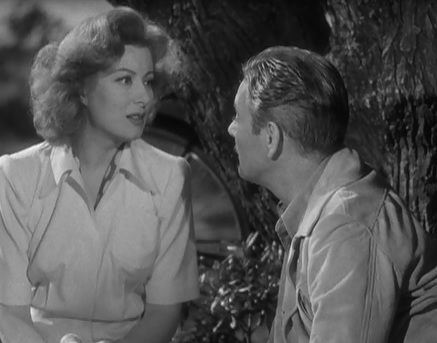
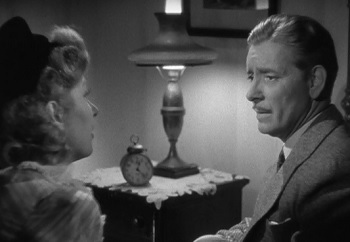
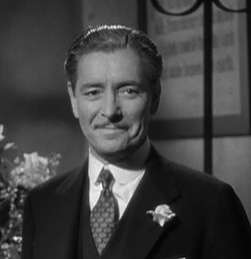
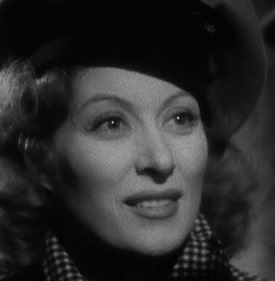
Greer Garson and Ronald Colman in Random Harvest

Greer Garson and Ronald Colman in Random Harvest

I wouldn’t usually confess to liking a romance—not the pure, unabashed kind, with brooding heroes; loyal, plucky heroines; and never-ending love. This is not, mind you, that I never watch or like them—it’s just rare for me to admit it. Did I swallow up every minute of North and South (2004 Gaskell version)? Oh yes I did. Did I, in fact, neglect to try out for cross country in high school because I was watching a bad period romance instead? Ummm. Maybe. (I’m luckily a little hazy on the details, even if my best friend claims she isn’t.)

I’m not sure then what it is about Random Harvest that makes me wiling to fess up to loving it. On the surface, this film is every bit as sentimental as the ones I supposedly (and sometimes actually) despise: I mean, it centers on AMNESIA. AMNESIA!! (Even Downton Abbey, which is about as soapy as it gets, knew to nix that Patrick Gordon/Crawley storyline.) But suspend your disbelief just briefly as I explain….

Charles Rainier (Ronald Colman), shell-shocked and without his memory after WWI, escapes from the asylum where he’s recovering when peace is declared. He happens into music hall performer Paula (Greer Garson), who pities and then falls for this man she dubs Smithy. She steals him away from his pursuers, giving up her job to help him.

Smithy at the thought of losing Paula

Smithy at the thought of losing Paula

They have years of a happy marriage together, but an accident brings back his long-term memory, while knocking out the time with Paula. All he has is a memory of a strong love that prevents him from moving on romantically.

Smithy catching sight of his bride

Smithy catching sight of his bride

Are you rolling your eyes yet? I know how it sounds, as cheesy and manipulative as romances often are. But somehow, it’s not. The film is sentimental. But it takes a good forty minutes even for these two to admit to loving one another, and along the way, Colman’s heartbreaking performance captures so well his fragility as this lost man striving for dignity, and Greer’s warmth and exuberance and naiveté make her such a good foil for him, that you’ve begun to root for them before you realize you’re in their thrall. Of course, you’re terribly frustrated by his inability to see this charmer in front of him as the love he’s been mourning, even as you admire the loyalty he doesn’t know is to her.

Paula

Paula

Given Smithy’s/Charles’ continued memory loss, you want Paula to move on, know she should, and yet….There’s something so simple and right about the relationship they shared, about the generosity of spirit that made her help him, and about his wholehearted affection for her. After all, their love has nothing to do with anything but chemistry and affection, a bond with no social trappings of any kind.

If you’re a romantic, obviously, this film is right in line with The Notebook and The Vow and other similar films about love surviving great odds. I would argue this is a much finer film than either, and its seven Oscar nominations back me up. But I have to admit that the Academy isn’t much kinder to romances than it is to comedies, and a so-called “women’s picture” like this one, focused on loyalty to one’s man, would be unlikely to do as well now as it did then in the rush of patriotism that would give Greer her Oscar for Mrs. Miniver (also 1942).

Still, it would take a film this whimsical, this sweet to make me admit—in public!—just how much a romance took me in.


Share
Posted in: 1940s films, 1990-current films, Romance (films) Tagged: amnesia, Greer Garson, Random Harvest, Ronald Colman, The Notebook, The Vow

She Got It Wrong: How Jennifer Jason Leigh Almost Ruined The Hudsucker Proxy

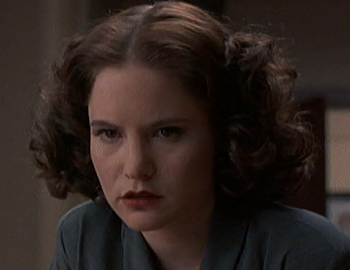
05/28/2014 by leah@carygrantwonteatyou.com 2 Comments

As a fan of classic 30s and 40s films, I delight in the movies that pay tribute to them, and no directors have been more glowing in their homages than the Coen brothers, with their nods to predecessors Preston Sturges, Howard Hawks, Frank Capra, and even Stuart Heisler. Their gloriously fun The Hudsucker Proxy was attacked for lacking “heart,” for being no more than a stylish imitation of favorite classic films.

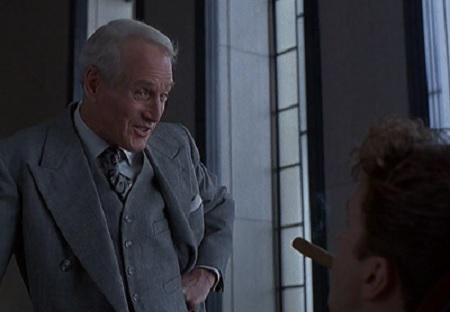
Sidney Mussburger conning Barnes (Robbins)

Sidney Mussburger (Paul Newman) conning Barnes (Robbins)

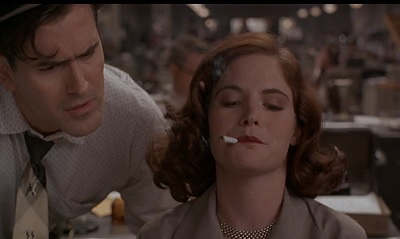
But critics praised Jennifer Jason Leigh’s performance as the typical classic film reporter, noting, as did Todd McCarthy in Variety, that she plays the role “with a Katharine Hepburn accent, Rosalind Russell’s rat-a-tat-tat speed in ‘His Girl Friday’ and Stanwyck attitude….” Occasionally, reviewers admitted that Leigh’s character, Amy Archer, wasn’t “quite right,” as McCarthy did, but they never attributed the film’s failure to the actress.

Leigh in full-on caricature mode

Leigh in full-on caricature mode

Yet to me, Leigh’s performance is the one thing that takes away from my enjoyment of this exuberant movie. Paul Newman is marvelous as the bad guy (Sidney Mussburger). Tim Robbins is terrific as the naïve Hoosier (Norville Barnes) who comes to work in the big city. His supposed stupidity makes those trying to lower Hudsucker’s stock prices quickly usher him into the presidency, yet his creativity manages to foil their plot. Archer (Leigh) plans to expose him as an idiot, much like Saunders (Jean Arthur) before her in Mr. Smith Goes to Washington.

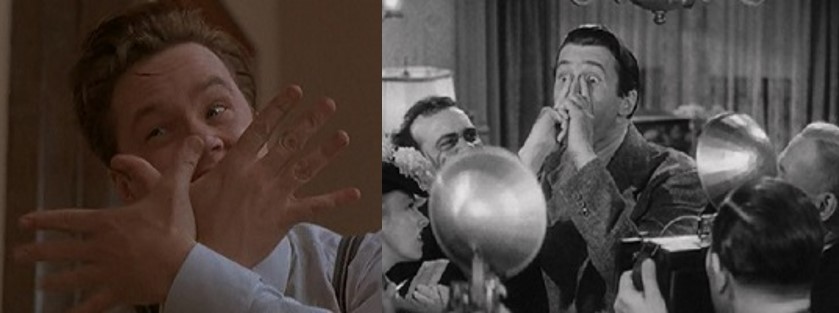
Barnes singing school song; Stewart showing a bird call

Barnes’ school song; Smith’s (Jimmy Stewart’s) bird call

But Archer’s later guilt at this character assassination and developing feelings for Barnes are utterly unconvincing, largely because her whole performance is.

One gets the feeling that Leigh only watched the films in which Stanwyck, Hepburn, and Russell were speaking at that “rat-a-tat-tat” clip and therefore missed the obvious: these actresses didn’t talk at such speeds in most of their films. They simply imagined themselves the kind of women who would be thrilled by breaking stories. Their words nearly run together not just due to the scripts, but because their characters are excited.

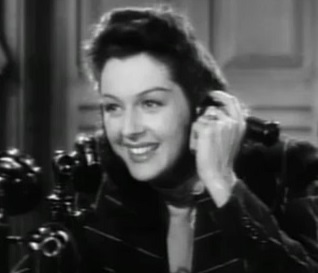
Russell sharing a great lead with editor and ex Walter Burns (Cary Grant)

Russell sharing a great lead

Leigh takes on the inflections and even some of the gestures of these actresses, but she becomes a mimicry of them rather than a believable character because the passion that infused the others’ performances is entirely absent in Leigh’s.

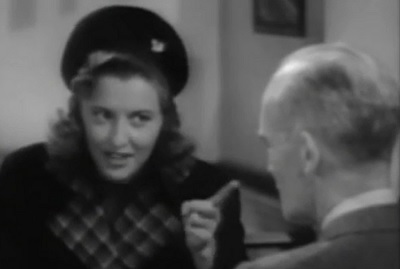
Stanwyck mid pitch

Stanwyck mid pitch

Hepburn, Russell, and Stanwyck come across as born reporters; their confidence makes them thrilling to watch: Hepburn’s assurance in mixing with dignitaries in Woman of the Year, Stanwyck’s daring plan to manipulate her employer in Meet John Doe, Russell’s masterful interview in His Girl Friday.

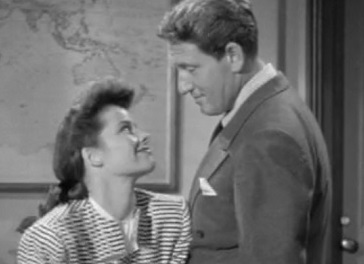
Hepburn flirting in her office after her male secretary ushers in her crush (Spencer Tracy)

Hepburn in control in her office

Archer, in contrast, is clearly aping rather than feeling confidence, and because Leigh plays her as shrewish rather than cynical, her quick transition into affection for Barnes merely looks like bad acting, which is surprising given the caliber of most of her work.

Archer falling for Barnes

Archer falling for Barnes

Admittedly, the Coens made Archer terribly insecure, a woman whose sole joy is one upping others with her Pulitzer. This was a serious mistake. How could the Coens, Hawks enthusiasts, have missed that the overlapping dialogue they’ve borrowed from His Girl Friday was not meant to be an affectation, as Archer’s is, but a reflection of the characters’ energy and enthusiasm? The film centers around Cary Grant’s excitement about being a newspaperman, and his various ploys to prevent Russell from leaving the business stem from his knowledge that she can’t resist it any more than he can.

The two films, in fact, have much in common: they’re all about the joy of the con—Barnes, in convincing the company he’s a fool (unwittingly), Walter Burns (Grant), in keeping others so occupied they miss his hilarious ruses. Both movies are a blast to watch. But The Hudsucker Proxy bombed at the box office, and I can’t help but blame Leigh, whose Archer is a drag to watch, and whose union with Barnes I rooted against. What does it matter if an actress nails the shell, if she loses the soul?

Share
Posted in: 1940s films, 1990-current films, Comedies (film), Romantic Comedies (film) Tagged: Barbara Stanwyck, Coen brothers, His Girl Friday, Jennifer Jason Leigh, Katharine Hepburn, Rosalind Russell, The Hudsucker Proxy

Face It: We’d All Be Lousy Detectives

05/21/2014 by leah@carygrantwonteatyou.com Leave a Comment

When I was a kid, I thought the word “amateur” meant talented. Nancy Drew was an “amateur detective,” and she outsmarted everyone around her, so what else could the word mean? Shows like Murder, She Wrote confirmed this impression: the everyday woman could outwit private detectives, criminals, the police. To be a hero like Nancy, I just needed observation skills. And a little knowledge picked up from mysteries. Then my latent brilliance would appear, dazzling all in my orbit.

Pamela Sue Martin as Nancy Drew

Pamela Sue Martin as Nancy Drew

I read every one of Carolyn Keene’s books until I had four Nancy Drews left, then picked one of the last up, tried to read it, and couldn’t. A few novels shy of my completion goal, I had finally realized that my favorite detective was, well, not terribly gifted. All the bad guys in the stories were mean, all the innocent characters nice. Of course Nancy could solve the mysteries. So could an eleven-year-old girl who didn’t know the meaning of amateur.

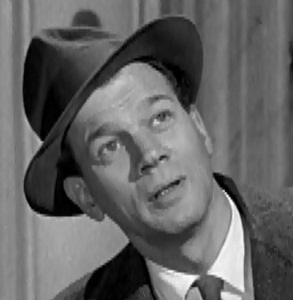
And yet these types of stories persist in Hollywood: the novice saves the day, while the jaded/stupid authorities look the wrong direction. It’s an alluring premise that allows us to imagine ourselves in the novice’s place, an undiscovered genius beating professionals. Yet reason would tell us that we newbies would be about as useless at being detectives as we are in our first days at any job—that what an amateur sleuth would likely do is exactly what those supposedly wrong-headed authorities predict: bungle everything up and possibly get him/herself and/or others killed. Perhaps that’s why The Third Man is so unexpected and so appealing: it features one of the worst amateur detectives ever to appear on film, Holly Martins (Joseph Cotten).

Martins (Cotten) after arriving in Vienna

Martins (Cotten)

Martins travels to post-war Vienna because he’s been promised a job by his buddy, Harry Lime (Orson Welles). He’s soon told that Lime has been killed in a car accident, but the details sound fishy, and Martins, like the cowboys he writes about, decides to find the truth. Others have written about Martins’ role as an ugly American, and it’s true that his behavior toward those around him reveals an appalling sense of cultural superiority. But what strikes me most about Martins’ whole campaign for justice is just how dangerous a naïve sleuth can be. Martins knows nothing about the country he’s in, how desperate its citizens are just to survive. To them, Lime’s death is one of so very many, and if solving the mystery will endanger them, well, they’ll just get back to their black market schemes and leave the foolish interloper to his own devices, thank you very much.

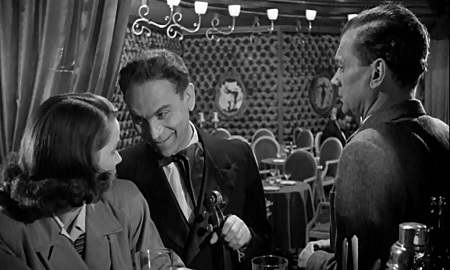
Martins (far right) and Lime's lover and friend

Martins (far right) and Lime’s friends

I always begin the film by siding with Martins against the supposedly sinister locals. I am amused by the hero’s blunt ways in a terrain that’s murky in every sense of the word. The city shots, the architecture, the crazy camera angles, and the shifty looks of the neighbors all suggest that Martins should be suspicious, and far more frightened than he is.

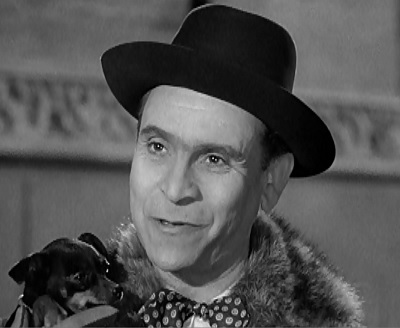
Ernst Deutsch as Lime’s shady friend, Kurtz

Ernst Deutsch as Lime’s shady associate

But as this hero continues to march into the bee farm, slamming his bat against the hives, I begin to think, Uh, Martins? Maybe you should step a bit more gingerly, huh? And if you must blunder about, perhaps let everyone else get inside first? There’s a reason why this movie always makes best-of thrillers lists: Picture Nancy Drew in the midst of The Usual Suspects, frustrated not to find Keyser Söze wearing a Hello My Name Is sticker and casually asking everyone in sight to identify him. Forget Lime’s possible murderers: the people of Vienna need to watch out with Martins on the loose.

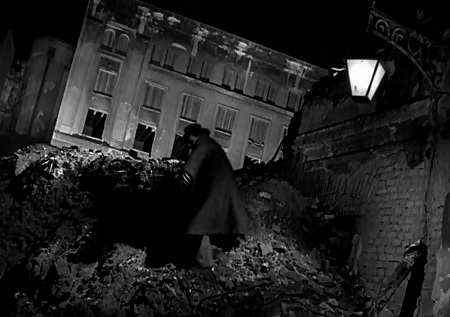
Martins on the run

Martins, the public’s enemy, on the run

I can’t describe much more without revealing some of the mystery—and it’s too good for me to do that. So just watch The Third Man. It’s menacing mood, its striking soundtrack, its lack of moral foundations all would make it fascinating even if it didn’t revolve around an intriguing mystery. And the next time you imagine yourself solving crimes, you’ll remember Holly Martins. And you’ll know just why such dreams are best left to eleven-year-olds.

Share
Posted in: 1940s films, Film Noir/Crime/Thriller & Mystery, Humor Tagged: Bad detectives, Joseph Cotten, Keyser Söze, Nancy Drew, Orson Welles, The Third Man

The Moment I Fell for Humphrey Bogart

05/14/2014 by leah@carygrantwonteatyou.com 6 Comments

I was contemplating that moment in a film when an actor wows me, when I realize I need to see all of his/her work and possibly start decorating my rooms in fan posters à la a kid with a Teen Beat subscription. And the first actor to come to mind was Humphrey Bogart.

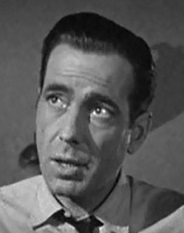
Bogart in Maltese Falcon

Bogart in The Maltese Falcon

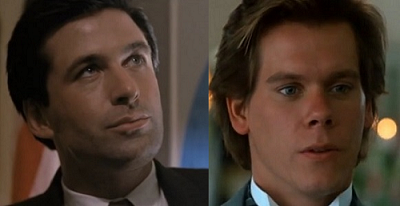
I was unmoved initially by Casablanca, arguably Bogart’s most famous film. A friend and I had decided we needed to acquire some culture and had learned in When Harry Met Sally that this was a love story for the ages. We were confused as we watched. What was all of this stuff about war? Where the hell was Casablanca? Why waste time with all of these confusing minor characters, especially that weird dude (Peter Lorre), when we could be watching Wings or Dr. Quinn, Medicine Woman? Was I seriously supposed to think this Rick guy was attractive? He looked nothing like my high school crushes, Alec Baldwin and Kevin Bacon.
Teenage heartthrobs

My teenage heartthrobs

Due to this uninspiring beginning, it was years before I watched another Bogie flick, this time The Maltese Falcon, the mystery about a private detective, Sam Spade (Bogart), investigating the murder of his partner. I was enthralled. The script was breathtaking: “My guess might be excellent or it might be crummy, but Mrs. Spade didn’t raise any children dippy enough to make guesses in front of a district attorney, an assistant district attorney, and a stenographer.”

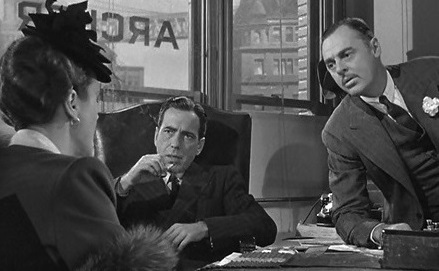
Spade, his partner, and his client

Spade, his partner, and the mysterious client

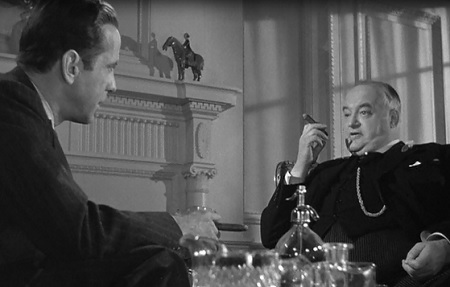
My favorite moment (the moment) occurs shortly after Spade meets Kasper Gutman (Sydney Greenstreet), the ringleader behind the crimes in the film. Spade has found him by confronting his gunsel (Elisha Cook Jr.), the lackey who has been trailing him. Spade asks about the “black bird” that has caused a killing spree, with his partner among the victims. “You know what it is,” he tells Gutman. “I know where it is, that’s why I’m here.”

Gutman assessing Spade

Gutman assessing Spade

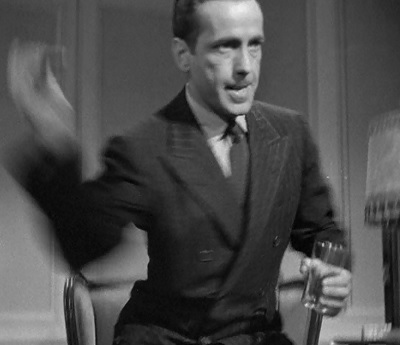
Gutman’s wordy style contrasts with Spade’s brevity. Right away, the former admits he’s a chatterbox: “I’m a man who likes talking to a man who likes to talk.” He stalls when Spade tries to make a deal for the bird, causing Spade to hurl the cigar and glass he’s holding and shout at Gutman: “What are you wasting my time for? I can get along without you. And another thing. Keep that gunsel out of my way while you’re making up your mind. I’ll kill ’im if you don’t, I’ll kill ’im.”
Spade throwing his cigar

Spade throwing his cigar

Spade’s passion shocks the viewer. Since he’s remained so calm the entire film, the burst of violence alerts the audience to a fact that should have been obvious all along: the hero is fully as dangerous as his foes. I have always been in awe of the kind of efficiency of movement Bogart displays in this scene, something I admire in the dancing of Fred Astaire and brutal fights of Daniel Craig as 007 and Matt Damon as Jason Bourne.

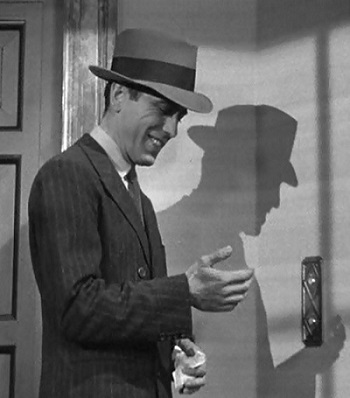
But as the camera follows Spade charging out of the room, yelling about a 5:00 deadline, we witness his anger swiftly transform into an engaging grin.

Spade's trick

Spade’s trick

That’s what did it for me—that quick, convincing rage, followed by a satisfied smile that reveals his action to be a ploy. In a moment, Bogart had excited me, fooled me, made me laugh. He had drawn me in with that seductive confidence, and thus sold me on his role as a leading man and sex symbol. I soon gobbled up The Big Sleep and so many of his other brilliant films. (Casablanca on a second viewing appeared to be a masterpiece.)

Bogart’s skill with The Maltese Falcon’s dialogue also steered me toward the beautifully written detective fiction of the 1930s-50s, to Dashiell Hammett’s dialogue, Raymond Chandler’s metaphors, and Ross Macdonald’s character development. And, of course, it led me to the amazing world of film noir.

So many thrilling performances. So much good writing. So much wonderful viewing. And all thanks to that 15-second shot of Humphrey Bogart’s grin.

I’m planning to do a The Moment I Fell for…blog once a month, with Thelma Ritter up next. I’d love to hear some of yours…..

Share
Posted in: 1940s films, Film Noir/Crime/Thriller & Mystery, The Moment I Fell for, TV & Pop Culture Tagged: Bogie, Fan, heartthrob, Humphrey Bogart
« Previous 1 2 3 4 5 6 7 8 9 10 Next »

Recent Posts

  • 100 Years Later, Still Scary: Dr. Caligari
  • Escaping Out of the Past (1947)
  • A Weeper for Those Who Love Jerks
  • Thank You, Academy, for Not Infuriating Me
  • Challengers (2024) Is a Bad Movie

Subscribe to Blog via Email

Enter your email address to subscribe to this blog and receive notifications of new posts by email.

Categories

  • 1920s films
  • 1930s films
  • 1940s films
  • 1950s films
  • 1960s films
  • 1970s films
  • 1980s films
  • 1990-current films
  • 2020s films
  • Action & Sports Films
  • Anti-Romance films
  • Blogathons
  • Childfree
  • Comedies (film)
  • Drama (film)
  • Feminism
  • Femme fatales
  • Film Noir/Crime/Thriller & Mystery
  • Gloriously Silly Scenes
  • Horror
  • Humor
  • Mae West Moments
  • Musicals and dancing films
  • Oscars
  • Random
  • Romance (films)
  • Romantic Comedies (film)
  • The Moment I Fell for
  • Turn My Sister into Classic Movie Fan
  • TV & Pop Culture
  • Uncategorized
Share
Classic Movie Blog Hub Member

Recent Comments

  • leah@carygrantwonteatyou.com on Meg Ryan’s Fate Foretold in Joe Versus the Volcano
  • Ryan on Meg Ryan’s Fate Foretold in Joe Versus the Volcano
  • leah@carygrantwonteatyou.com on 100 Years Later, Still Scary: Dr. Caligari
  • The Classic Movie Muse on 100 Years Later, Still Scary: Dr. Caligari
  • leah@carygrantwonteatyou.com on 100 Years Later, Still Scary: Dr. Caligari

Archives

  • November 2025
  • September 2025
  • May 2025
  • March 2025
  • January 2025
  • November 2024
  • August 2024
  • July 2024
  • May 2024
  • March 2024
  • February 2024
  • December 2023
  • November 2023
  • October 2023
  • September 2023
  • August 2023
  • July 2023
  • May 2023
  • April 2023
  • March 2023
  • January 2023
  • December 2022
  • November 2022
  • September 2022
  • July 2022
  • May 2022
  • April 2022
  • March 2022
  • February 2022
  • October 2021
  • September 2021
  • April 2021
  • March 2021
  • February 2021
  • December 2020
  • October 2020
  • September 2020
  • July 2020
  • May 2020
  • April 2020
  • March 2020
  • February 2020
  • December 2019
  • October 2019
  • September 2019
  • June 2019
  • May 2019
  • April 2019
  • February 2019
  • January 2019
  • November 2018
  • September 2018
  • July 2018
  • June 2018
  • May 2018
  • April 2018
  • March 2018
  • February 2018
  • January 2018
  • November 2017
  • September 2017
  • August 2017
  • July 2017
  • June 2017
  • May 2017
  • April 2017
  • March 2017
  • February 2017
  • January 2017
  • December 2016
  • November 2016
  • October 2016
  • August 2016
  • July 2016
  • June 2016
  • May 2016
  • April 2016
  • March 2016
  • February 2016
  • January 2016
  • December 2015
  • November 2015
  • October 2015
  • September 2015
  • August 2015
  • July 2015
  • June 2015
  • May 2015
  • April 2015
  • March 2015
  • February 2015
  • January 2015
  • December 2014
  • November 2014
  • October 2014
  • September 2014
  • August 2014
  • July 2014
  • June 2014
  • May 2014
  • April 2014
  • March 2014
  • February 2014
  • January 2014

Meta

  • Log in
  • Entries feed
  • Comments feed
  • WordPress.org

Copyright © 2025 Cary Grant Won't Eat You.

Church WordPress Theme by themehall.com