Cary Grant Won't Eat You

Classic movies for phobics

  • About
  • eBooks
  • Previous Blogathons
Classic movies for phobics

1940s films

The Gender Gap in Film

02/05/2020 by leah@carygrantwonteatyou.com Leave a Comment

Check out these two articles, both of which show the gap between awards for women and men in the Oscars over time in visual format.

“The Oscars’ 92-year gender gap, visualised”

“Maybe Those Are Just the Best Movies This Year”: #WhiteMan’s Oscar in Context.”

The Guardian‘s statistic about the lack of awards for female cinematographers was particularly illuminating.

In addition to showing what female-driven films could have been honored but weren’t over the years, Relatively Entertaining covers the diversity of voices in film, how we’ve regressed since a high point in the 40s in honoring women’s stories–even if told by men. The post also highlights how seldom black actresses are repeatedly honored for their work: “For that matter, it’s a strange quirk of Oscar that of the 35 times a black woman has received acting Oscar nomination, only three (Whoopi Goldberg, Viola Davis and Octavia Spencer) have been nominated more than once, and only Spencer has been nominated after winning her award.”

I wonder how long Academy voters could sustain the fiction that women’s films just haven’t been good enough yet to get awards after viewing the articles’ startling graphics. I wonder if the lack of repeat nominations for women (and women of color in particular) will finally bring home just how much has to change.

Share
Posted in: 1920s films, 1930s films, 1940s films, 1950s films, 1960s films, 1970s films, Feminism, Oscars, Uncategorized Tagged: black women and the Oscars, gender gap, representation in film

Classic Film’s Damsels in Distress

10/28/2019 by leah@carygrantwonteatyou.com Leave a Comment

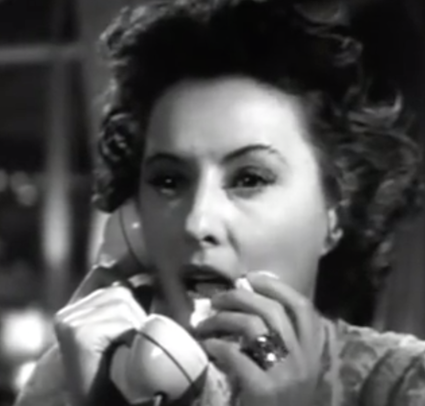
My friend Grace Collins of True Stories of Tinseltown and I chat about women in peril in classic films, including the riveting thriller Gaslight; the Barbara Stanwyck showcase Sorry, Wrong Number; and the tonally inconsistent, oddball Nazi-hunter film, The Stranger. And of course, the weeper, Waterloo Bridge. We had so much fun talking about heroines who are having no fun at all–especially Mary (Loretta Young in The Stranger), whose affection for her mate is truly baffling.

Check out the podcast on her site and on podbean.

Enjoy Grace’s other wonderful posts and podcasts on her sites or check out her Facebook page for more. Her summer series on famous blondes in film is fabulous, especially the one on Mae West.

Share
Posted in: 1930s films, 1940s films, Film Noir/Crime/Thriller & Mystery, Humor, Uncategorized Tagged: Waterloo Bridge; Sorry, Wrong Number; Gaslight; The Stranger

Rebecca Got a Bad Rep

06/29/2019 by leah@carygrantwonteatyou.com 8 Comments

**Spoilers abound**

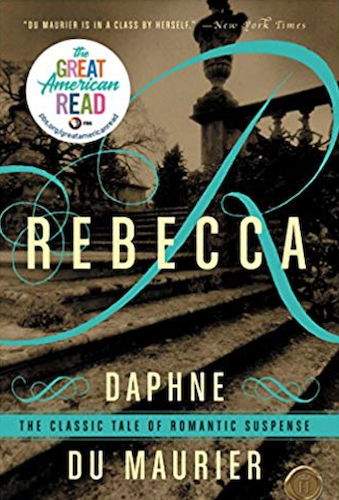
Of all the femme fatales on film and in print, Rebecca may top them all. The woman isn’t even alive at the start of the book or the Hitchcock film that resulted from it, yet the narrator of the story is so haunted by her husband’s previous wife (and Du Maurier is so skilled at freaking readers out) that Rebecca’s reputation as the evil femme fatale endures.

But when we look at Rebecca’s life a little closer, it’s hard to ignore just how much of our impressions of this woman are based on her former husband’s hatred and his second wife’s jealousy. Although I was totally with the narrator in fearing and loathing Rebecca on my first reading of Daphne Du Maurier’s classic gothic novel/thriller/mystery, my opinion of Rebecca has radically shifted in time, and the blame moved from her to the much more questionable Max de Winter.

Since the film sanitizes the hero due to the Production Code, I’m sticking with the book as I ask all of you Du Maurier lovers this question: Who is worse, Rebecca or her husband Max?

Let’s count it down trait by trait, shall we?

Behavior toward Friends & Acquaintances. Rebecca. Tries to suit others’ moods and appeal to their interests—this according to her detractor, Max. Everyone loves her, Maxim admits, including all of her employees. He claims she is fake, a backstabber. It’s easy to discount the tales of her insincerity altogether, given those blunt admissions to Max at the start of their marriage and his own dubious motives in smearing her. But we do hear Ben describing her cruelty toward him, a serious count against her.

Max: Rude to and arrogant toward: his sister, his brother-in-law, attorneys, party guests, servants, Mrs. Van Hopper, his second wife. He does seem to usually treat Frank well, and perhaps the dog. He expects to be thought above the law despite his suspicious actions and has no compunction about the boat maker’s profit losses thanks to his lies. Why? Presumably his class and status.

Personality Points: Rebecca 1; Max 0
Villain Points: Max 1; Rebecca 1

Social Skills. Max is the very definition of prim, spending his days abstaining from most people and food (while strangely expecting an untouched feast on a daily basis). And, there’s that slight issue with his temper and moods. Good company? I think not.

Rebecca’s style intimidates the narrator; she has garnered Manderley fame with her exquisite taste and the elegance, creativity, and humor she exhibits as a hostess. Even the “R” of her name is written with panache.

Personality Points: Rebecca: 1; Max: 0

Treatment of Spouse. Let’s admit from the start that these two are hardly an altruistic pair. A tight race!
Max: Wife 1. Marries Rebecca without loving her but planning to be faithful. Keeps the secret of her affairs, but for his own pride. Does tolerate her behavior within limits. (It was a different age.) Seemingly polite to her in public but based on his general actions (see above), I’m guessing she needed to find affection elsewhere. Wife 2. Marries the narrator because she’s chaste and has no relatives (Mrs. Van Hopper isn’t far wrong there). Shows little passion for her, most of that passion being extended to his house. Treats her like a daughter/servant/enemy, depending on the day. Marries her knowing that his limelight-averse spouse will be destroyed if his crime is revealed and the scandal rags come a-knocking while her protector is in jail. Exposes her to Mrs. Danvers, the suicide pusher.

Rebecca: Marries Max for his money and status, planning to cheat on him from the start and admitting as much. Seemingly has multiple affairs. Apparently enjoys some “unspeakable” behavior (though given prim Max’s ways, I’m guessing we’re not talking Roman orgies). May, if the love of Mrs. Danvers is any indication, indulge in affairs with women as well as men, which in this time period would have harmed her husband’s reputation. Shaming her husband with alcohol and drug consumption? Perhaps in private. Meanwhile, spends her days being delightful to all and making his treasured house the talk of the country.

I’m going to leave out Max’s crime for this one, as it deserves its own category. But in terms of behavior up to their final night together, Rebecca’s is worse since Max’s biggest fear is public shame, and she doesn’t seem to care much that he’s a bore and has no fidelity impulses/regard for his pride whatsoever. However, his behavior to his second wife is appalling.

Villain Points: Rebecca 1; Max 1

The Murder. Max shot his wife because she suggested she might be pregnant with another man’s baby. Max demonizes her, calling her not even “human,” to (a) justify his action, (b) keep his wife’s love, and (c) be considered a civilized member of society. The narrator, so pleased he didn’t ever love Rebecca, actually goes along with his version of events, even though he’s not exactly trustworthy because he’s a killer who murdered his last wife, idiot. RUN!!!!

Rebecca. Enjoys her husband’s distress at her infidelity and taunts him. He now says she wanted him to kill her (given her health). Kinda convenient, right?

Personality Points: Rebecca, 1—some considerable moxie revealed in this last fight; Max, 0. Villain Points: Max, a gazillion; Rebecca, 0.

And the Verdict Is….
Personality Points: Rebecca 3; Max 0
Villain Points: Max, a gazillion and 2; Rebecca, 1.

Like I said, Rebecca might not be an angel, but a femme fatale? Not so much. And is Max, the cold-blooded murderer and awful husband a homme fatale? You better believe it.

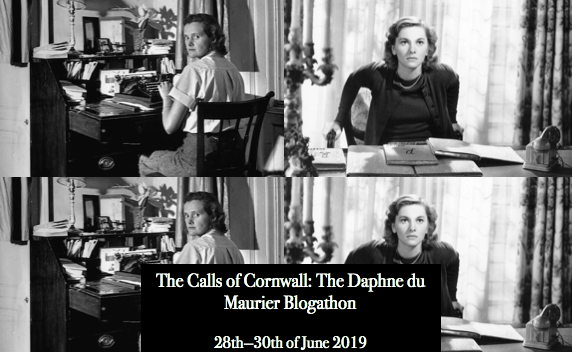
This post is part of the Calls of Cornwall blogathon by Pale Writer on Du Maurier’s work. Check out the other entries!

Share
Posted in: 1940s films, Blogathons, Feminism, Femme fatales, Film Noir/Crime/Thriller & Mystery, Humor, Romance (films), Uncategorized Tagged: Daphne du Maurier, femme fatales, Max de Winter, Rebecca, romances, thrillers, unfair reputation, unnamed narrator

Getting Nosy about Mae & Cary

06/06/2019 by leah@carygrantwonteatyou.com Leave a Comment

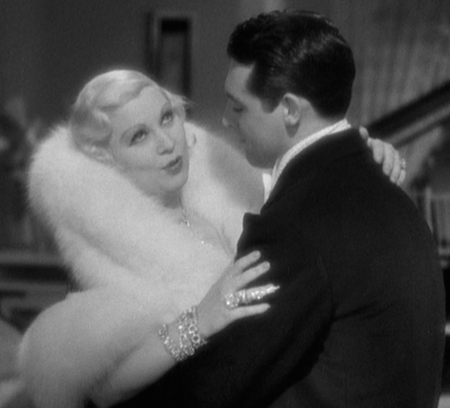
Grace Collins of True Stories of Tinseltown and I chat about two stars who created the personas that made them stars, and never let those personas slip. We’re not nosy about ALL Hollywood stars’ lives, but that kind of inventive commitment is worth talking about! As usual, the two of us had a lot of fun, and Grace is a great host. (I might get a bit too enthusiastic, but in my defense, I was then reading Goodness Had Nothing to Do with It.)

Check out the podcast here or here or here.

Enjoy Grace’s other wonderful posts and podcasts on her sites or check out her Facebook page for more.

Share
Posted in: 1930s films, 1940s films, 1950s films, 1960s films, 1970s films, Mae West Moments, Uncategorized Tagged: bios, Cary Grant, fan tributes, life stories, Mae West

ILL, How Do I Love Thee?: A Classic Movie Fan’s Tribute

02/23/2019 by leah@carygrantwonteatyou.com 4 Comments

For years I’ve been grumbling, waiting for streaming access to classics I hear about from other blogs: Letter from an Unknown Woman, The Great Lie, A Foreign Affair. Without a Netflix DVD cache or TCM, the classic movie fan is left with few options, and my brief affair with the Warner Archive had given me little love. Then it occurred to me, like a (clichéd) beacon of light in the night: YOU HAVE ACCESS TO INTERLIBRARY LOAN.

How do I love thee, ILL? Let me count the ways.

  1. You don’t tarry. Within a week, all three films were at my library’s front desk. The student helping me didn’t notice my bated breath or strong desire to do the worm in celebration. Used to her fellow students’ desperate and grumpy research requests, she was unaware of the yummy chocolate cake she was handing over to me. Her loss.
  2. You have so much to offer. Greedy after receiving all three films, I thought I’d dare for my elusive, longed-for white whale of a book. I’d just emailed Grace Collins of True Stories of Tinseltown about our upcoming podcast chat on Mae West and Cary Grant when my long-stamped-out desire resurfaced: Goodness Had Nothing to Do with It. I needed it–obviously–for research. Amazon was charging boatloads of cash for Mae’s autobiography, but was it possible I could get my hands on it for free? YES!!!
  3. You give me so MANY moments to savor. Here is one of hundreds of funny interchanges from Mae’s bio: She’s just put on opening night for her first play in New London, CT in 1926. The house manager is grumbling about the ticket purchases: “The title’s scaring them away. Nobody in this town will buy tickets for a show with the title SEX….We don’t talk about sex hereabouts, and we don’t put it on signs.” Only 85 people show for the first performance, and Mae is feeling blue that the first play she wrote and starred in looks like a bomb. But at the next day’s matinee, she sees lines of men from the naval base “two and three deep,” and the manager is scrambling for extra seats for his theater. “And you said it was a bad title,” observes Mae. And he replies, “I forgot about the sailors.”
  4. You let me savor each moment. On Monday morning, I’d been reading my usual dose of terrifying headlines on CNN. I was feeling blue, and knew I had to banish that mood if I had any chance of cheering my 9 am students, who had been staring at me for days with a peculiar type of hostility they’d developed from years of New England winters—the “how-dare-you-deny-me-another-snow-day, woman” look I knew so well. Naturally, I looked to Mae for mood elevation, and found her defense against the newspaper baron, William Randolph Hearst, who–in the midst of delivering his own era’s brand of terrifying headlines–had written this, “Is it not time Congress did something about Mae West?” Thanks to my generous love, ILL, I got to read Mae’s response: “All I have ever wanted to do is entertain people, make them laugh so hard they forget they’d like to cry.” Such an important reminder to me about the need for humor, dear Mae; you bolstered me the rest of the week. And by Friday? I was enjoying Jean Arthur’s and Marlene Dietrich’s charismatic performances in The Foreign Affair. Oh ILL, how I love thee…..

Share
Posted in: 1930s films, 1940s films, Comedies (film), Drama (film), Humor, Mae West Moments Tagged: A Foreign Affair, classic film, Goodness Had Nothing to Do with It, ILL, Letter from an Unknown Woman, libraries, Mae West, The Great Lie

New Year’s Aspirations, Inspired by Classic Stars

01/08/2019 by leah@carygrantwonteatyou.com 6 Comments

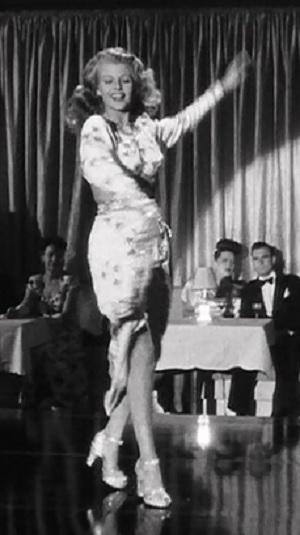
This year, I want to dance with even half the joy of Rita Hayworth…

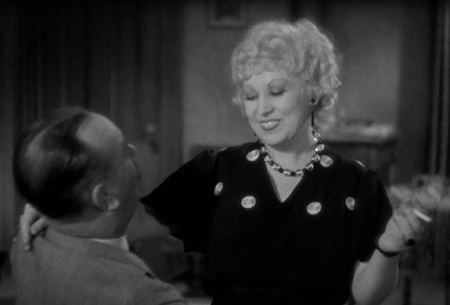
act a hundredth as boldly as Mae West on her weakest day…

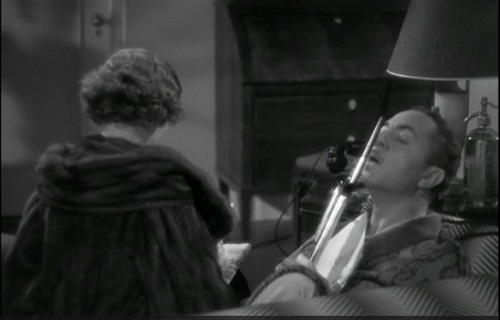
enjoy foolishness as much as William Powell…

and live with the intensity of Barbara Stanwyck.

What a fabulous year it will be if I do.

Share
Posted in: 1930s films, 1940s films, Humor, Mae West Moments Tagged: Classic Movie Stars, New Year's Resolutions

Men Who Love Too Much in Classic Film

11/18/2018 by leah@carygrantwonteatyou.com Leave a Comment

Continuing our theme on characters who love too much, Grace Collins of True Stories of Tinseltown and I turned our attention from women to men, especially Edward G. Robinson’s sad sap Chris in Scarlet Street, Claude Rains’s hoodwinked Alexander in Notorious and bad con artist Johnny of Suspicion (whose love runs to money rather than females). Of course, we took some detours too, commenting on the newest A Star Is Born and how much we’d suck as spies.

Check out the podcast here, here, or here.

And definitely enjoy Grace’s other wonderful posts and other podcasts:

www.facebook.com/truestoriesoftinseltown/?ref=br_rs
www.inyourfacewithdonnieandgrace.com/news
www.truestoriesoftinseltown

Share
Posted in: 1940s films, Film Noir/Crime/Thriller & Mystery, Humor Tagged: Cary Grant, Claude Rains, Edward G. Robinson, film review, Grace Collins, men who love too much in film, Notorious, Scarlett Street, Suspicion, True Stories of Tinseltown podcast

Mae West as the Outlaw: My Little Chickadee

11/17/2018 by leah@carygrantwonteatyou.com 11 Comments


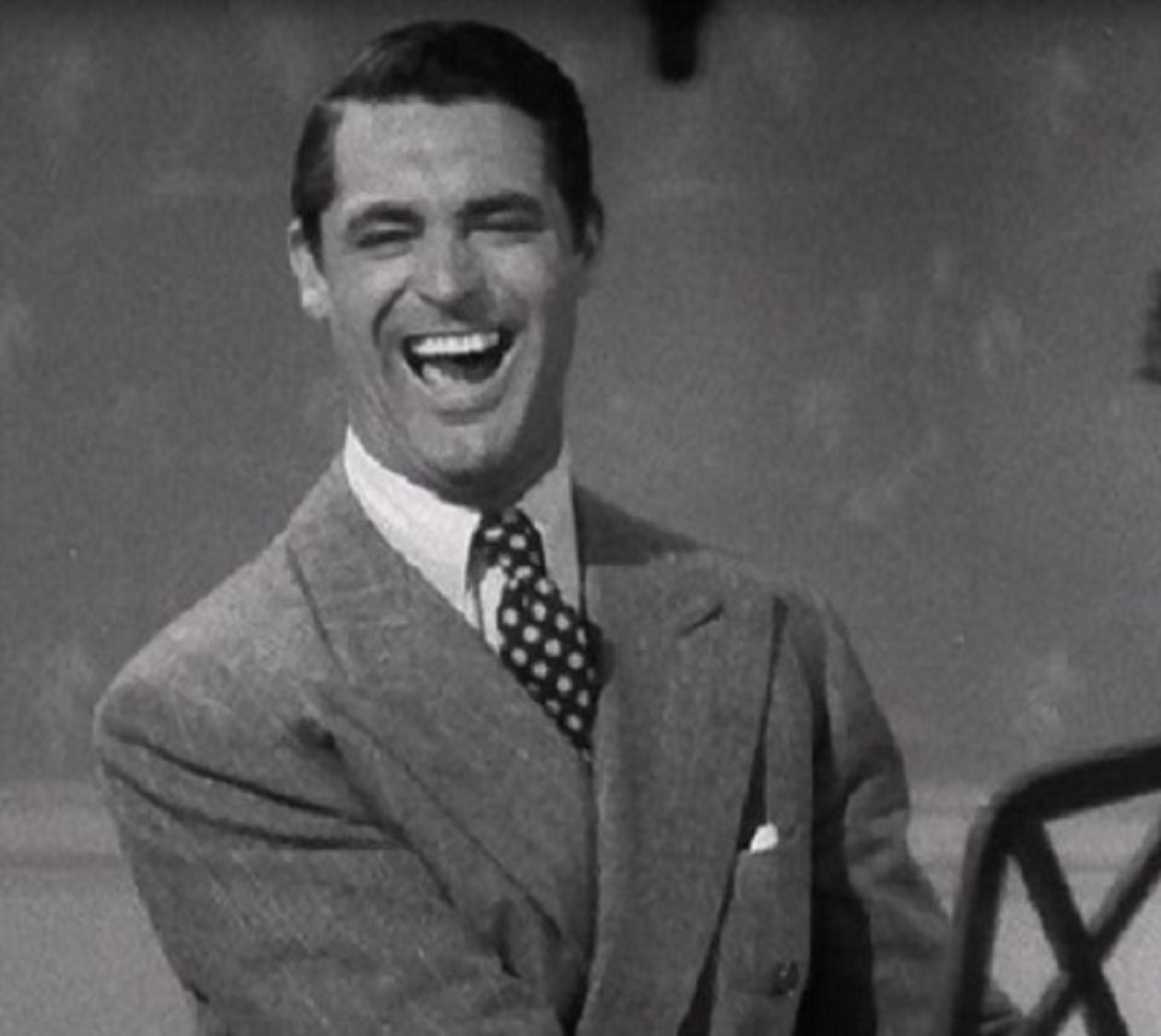
When asked what outlaw I wanted to feature for the Classic Movie Blog Association’s Outlaws blogathon, I immediately thought of Mae West’s character in My LIttle Chickadee. I know Mae West’s siren ways and bumpy pairing with W.C. Fields are more frequently associated with the film, but it’s hard to miss how West’s Flower Bell Lee flouts the law–not to mention convention–in this 1940s flick. And of course, being co-written by West, the film includes plenty of hilarious one liners and shimmying.

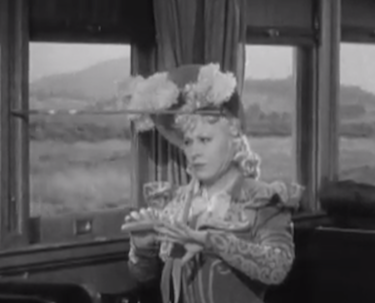
The story begins with Flower Bell (West) traveling by stagecoach to visit (and presumably settle with) her aunt and uncle in a Western town. She’s buffing her nails as the male passengers gawk and an accompanying woman, Mrs. Gideon (played by Margaret Hamilton, of witchy Wizard of Oz Fame), looks on disapprovingly.
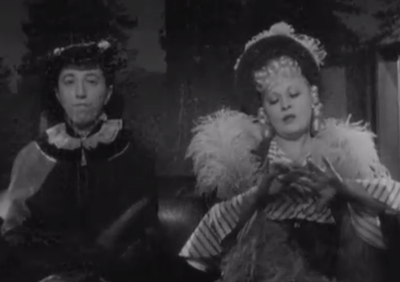

Suddenly, a masked robber stops the coach to rob it of its gold. The rest of the passengers race out of the coach with their arms up. Flower Bell just sits there, sure it has nothing to do with her, and more interested in her nails.
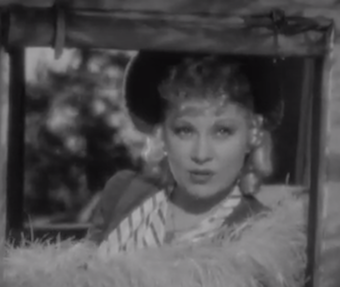

The “Masked Bandit” (as he’ll later be called) threatens to kill the others if she doesn’t budge, so she reluctantly does. She doesn’t mind being “held up” she informs the masked bandit, but doesn’t like to be inconvenienced. And thus the delightful double entendres begin.

Of course the bandit notices Flower Bell’s beauty and abducts her. He returns her to her new town outskirts soon after, but clearly, she enjoyed her time away. He comes to visit her in her room at night, Romeo style, and kisses her while still hiding his identity. Unfortunately, her former stagecoach companion, Mrs. Gideon, spies the two in Flower Bell’s bedroom, and informs the town. Flower Bell is forced to defend her actions in court and identify the marauder. She refuses to tell anyone a thing, and gets kicked out of her new town, told she has to stay away till she’s married and respectable. The inflamed Mrs. Gideon also spreads the word to the ladies of the nearby town where Flower Bell is going, Greasewood City, saying Flower Bell won’t even be allowed to get off the train. But Flower Bell doesn’t care, as she makes clear with her parting words to the judge, when he asks if she’s trying to show contempt for his court: “I was doin’ my best to hide it.”

Since this is West, we audience members know she will not only get off the train, but have all of the townsmen in her thrall as well. And that happens. But first she has to fight off Indians attacking the train. Again, she’s buffing her nails, and when arrows almost hit her, she slowly pulls them out of the side of the rail car, rolling her eyes as she does so. Why must these pesky outlaws get in the way of her manicure?

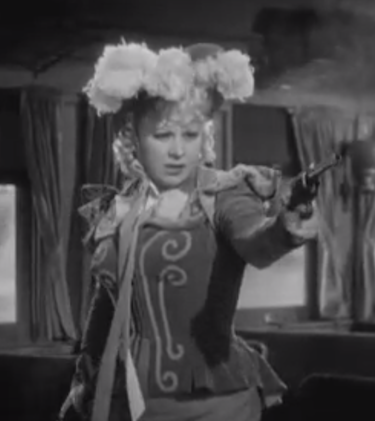
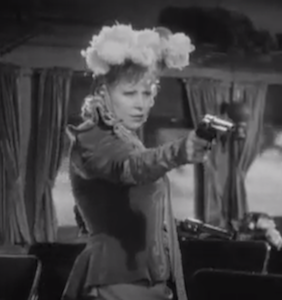
But when a fellow passenger dies, she takes up his two guns, shoots a bunch of Indians with obvious relish, saying she’s dispensed them in a “shower of feathers.” She’s angry because they’ve dared to “intimidate” her (sounds like a typical outlaw response, huh?) Flower Bell’s nonchalance and bravery are hilarious to witness in this strange scene. Even as we viewers flinch at the Indian stereotyping, we know that Flower Bell doesn’t care about race (more on that later). She just doesn’t like any bother, and agrees to be a hero–but only if she must.

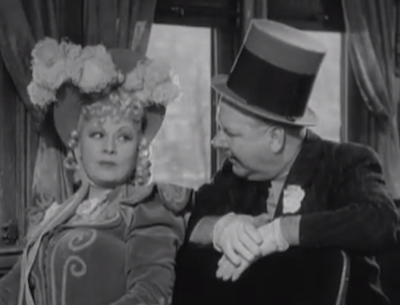
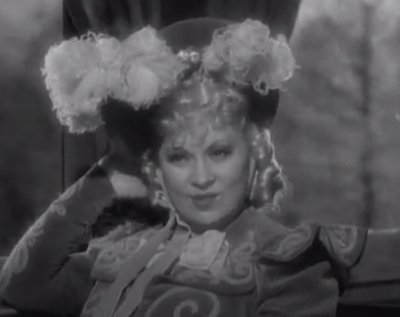
Meanwhile, a flirtatious passenger, Twillie (W.C. Fields), has been cozying up to her, and since she sees he has a bag of money, she doesn’t mind, and flirts right back.

He too plays his part in fending off the Indians, but mainly that part is yelling at them for assaulting a private car and bumbling in Fields’s typical physical-comedy way. Twillie has no problem with Indians; his best friend/servant/gambling partner is one (their strange interaction, and the film’s odd combination of racist terms and stereotypes and yet ahead-of-its-time treatment deserves a post of its own).

But even though Twillie doesn’t mind Indians attacking OTHER trains, he does object to being annoyed, much like Flower Bell, though he’s far less accomplished than she in fighting back. Once the danger has passed, the two get closer, as his marriage proposal gives Flower Bell a way to exit the train in peace. She soon ropes another gambling friend on the train into acting as minister. That friend uneasily performs the marital vows. Flower Bell has no intention of sleeping with Twillie, only using him to get a free room and the blameless rep she needs to keep seeing her outlaw and whomever else she pleases. Even Mrs. Gideon, again a fellow passenger, smiles her approval.

Once in Greasewood’s best shady saloon/hotel, a number of antics ensue as Flower Bell keeps Twillie out of her room while helping him with his gambling and lies. When he brags that he saved the train, she lets him take the credit. The town makes him the sheriff, but as the last few have died within months, this honor has more to do with Badger (Joe Calleia), the unscrupulous bar/hotel owner, wanting Flower Bell widowed than any conviction that Twillie has guts. Flower Bell then proceeds to flirt with the muckraking local reporter, even acting as a teacher to help him out in a classic West scene.

Flower Bell enjoys the reporter’s idealism and Badger’s dangerousness, and it’s very unclear which man (if either) will get her in the end. Meanwhile, the Masked Bandit continues his courting, and Twillie, finding out his “wife” likes a man in costume, pretends he’s the bandit himself. Naturally, she discovers the fraud, but can’t save him from the town posse, who is now convinced he’s the villain. Well, she can’t save him at first. Just as she defended him when he lied and cheated gambling, Flower Bell comes to his aid again. She claims he’s no bandit, and after getting put in jail for defending him and her own shady associations, she busts out and saves the day, without giving away her lover.

Of course, we find out who the bandit is, and there are no surprises there. The fact that the bandit’s accent makes it clear he’s Latino (even if the actor isn’t) doesn’t bother West’s Flower Bell. She may be portraying a woman from the last century, but West doesn’t even bother to defend interracial romance in the film, which clearly condones it. The fact that Flower Bell repeatedly breaks the law—in harboring the bandit, in escaping from jail, etc.–never gives the heroine (or her creator) a moment’s worry. In fact, Flower Bell takes the bandit’s gold with pleasure as a reward for her kisses, and encourages the town (when he leaves a bundle of goodies for them) to do the same.

But the transgressive nature of this film goes so much further. The female lead is the hero, the brave town leader and both defender against and abettor of outlaws. W.C. Fields at points seems to be in his own movie (and from what we know of how little the two got along, and how much they wrote their own parts, he basically was). But in all of their interactions, she bests him with no more effort than pushing back a cuticle. Her character’s name highlights her extreme femininity, which clearly doesn’t stop her from having mad skills with guns or enough bravery to face TWO towns full of people eager to attack her. Flower Bell does everything without a trace of fear; in fact, she performs dangerous acts with BOREDOM, proving, lest any males doubt it, that Mae West will always be the biggest, baddest outlaw of them all.

Check out all the fun outlaw entries at the Classic Movie Blog Association’s site.
Share
Posted in: 1940s films, Childfree, Comedies (film), Feminism, Mae West Moments, Romantic Comedies (film) Tagged: feminist films, Mae West, My Little Chickadee (1940), W.C. Fields

Comic Relief: A Simple Favor & Can You Ever Forgive Me?

09/29/2018 by leah@carygrantwonteatyou.com Leave a Comment

Need comic respite? I’m happy to report that two new dramedies featuring strong women are even better than you’ve heard.

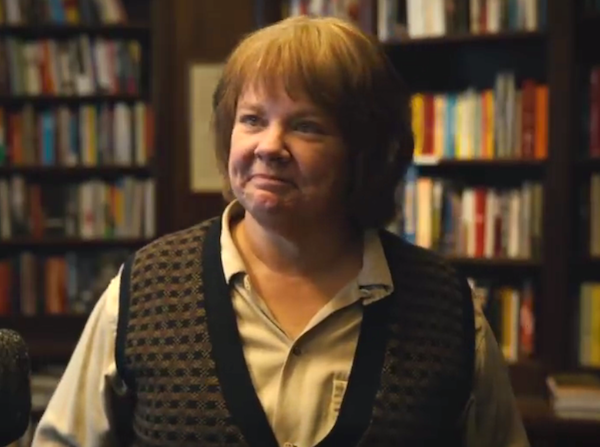
Can You Ever Forgive Me?, starring national treasure Melissa McCarthy, is based on the memoir of real-life writer Lee Israel, who became a con artist to pay the vet bills (out in wide release on Oct. 19th). Unable to get anyone to care about the subject of her new biography, Fanny Brice, much less her dwindling finances, Israel turns to stealing letters of famous movie stars and writers, and soon begins penning fake ones herself. Classic movie lovers and bibliophiles will sympathize with her alienation from those who don’t spend their days reading Noël Coward and Dorothy Parker. (And you’ll enjoy a line about Louise Brooks, a nod to classic movie fans.)
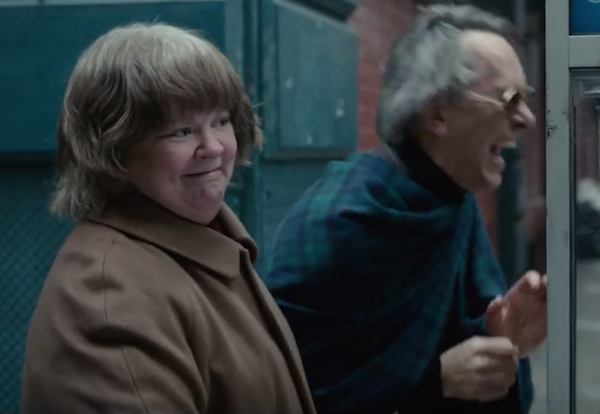

Appreciators of one-liners will ask themselves why they haven’t bought Israel’s memoir yet: this woman could WRITE. There’s a reason she was successful at mimicking Parker and Coward. Brought to caustic life by Melissa McCarthy, Israel is sympathetic even at her darkest and lowest. Despite the depth of her despair and loneliness, she is relentlessly funny in the film. Israel and her similarly lost companion (and later conspirator), Jack Hock (Richard Grant), engage in so much snarky, on-point banter that you wish the two could have had an Algonquin Round Table of their own.


These two boozy companions are simply joyful company for anyone who doesn’t mind a bit of darkness in their humor. And McCarthy deserves the awards buzz she’s getting for a riveting performance.

McCarthy’s frequent director Paul Feig has a film of his own out this month. Feig, who has a George Cukor flair for creating great vehicles for female stars, is at it again. The only question is whether Blake Lively or Anna Kendrick gets a meatier, more complex part in A Simple Favor, a story that is tonally closer to the light cynicism of Young Adult (2011) or the campiness of Serial Mom (1994) than to the darkness of Gillian Flynn’s Gone Girl (2014), to which it’s being compared. I’m hearing references to Double Indemnity from classic movie fans due to the film’s humor. Beat the Devil (1953) is more like it. Though A Simple Favor is a bit more controlled than that messy Truman Capote delight, there’s a bit of Mrs. Gwendolen Chelm (Jennifer Jones) in both of these heroines.

Feig; the director of Bridesmaids, The Heat, Spy, and Ghostbusters (the reboot); is so open about preferring female leads and so appreciative of their comedic skills that it’s unsurprising to see both stars so funny and magnetic in his film. Their profane banter is hilarious, and the casual cruelty, self-interest, and denial of these particular frenemies are a blast to watch. I won’t spoil the surprise of what becomes of Emily (Lively), whose disappearance spurs mommy blogger Stephanie (Kendrick) into amateur detective/life-stalker mode.
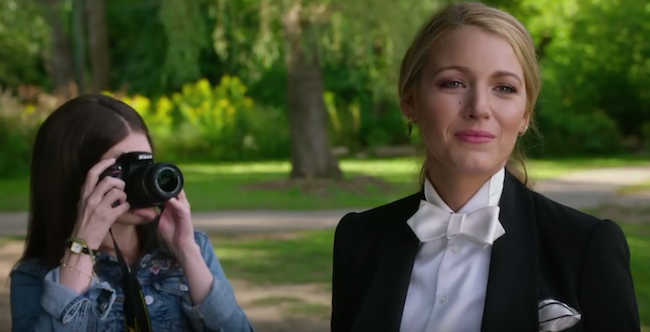
There are some seriously batty plot developments that seem more like old-school soap operas than big screen fare (again, like Beat the Devil). But anyone paying attention knows plausibility is not the point. Just sit back and enjoy this dark comedy fun. (And don’t miss the recent titles and commentary on Stephanie’s bizarrely eclectic blog.) Those of us who have been following Feig since his brilliant creation, Freaks and Geeks, will be glad to see his first female lead, Linda Cardellini, in a scene-chewing, funny bit part. Let’s hope the films to follow these two this fall are half as fun.

Share
Posted in: 1940s films, 1950s films, 1990-current films, Anti-Romance films, Drama (film), Film Noir/Crime/Thriller & Mystery, Humor Tagged: A Simple Favor, Anna Kendrick, Blake Lively, Can You Ever Forgive Me?, film review, for Beat the Devil fans, George Cukor, Louise Brooks, Melissa McCarthy, noir, Paul Feig, strong female leads

My Podcast Talk on True Stories Of Tinseltown

07/05/2018 by leah@carygrantwonteatyou.com Leave a Comment

It was a riot talking with Grace Collins of True Stories of Tinseltown about Stella Dallas, William Powell, The Blue Gardenia, and Brief Encounter. We had fun comparing loves and gripes about classic films, particularly our united dislike for the husband in Stella Dallas and the supposedly romantic male lead of Brief Encounter. You can find the podcast here. I hope you will also check out her other podcasts. The one on Mary Astor’s diary is especially brilliant! Thanks to Grace for being such a great host and for taking the time to listen to me rant:)

Share
Posted in: 1930s films, 1940s films, 1950s films, Anti-Romance films, Mae West Moments Tagged: Barbara Stanwyck, Blue Gardenia, Brief Encounter, John Boles, Stella Dallas, terrible husbands in film, terrible lovers in film, William Powell
« Previous 1 2 3 4 5 6 7 8 9 10 Next »

Recent Posts

  • 100 Years Later, Still Scary: Dr. Caligari
  • Escaping Out of the Past (1947)
  • A Weeper for Those Who Love Jerks
  • Thank You, Academy, for Not Infuriating Me
  • Challengers (2024) Is a Bad Movie

Subscribe to Blog via Email

Enter your email address to subscribe to this blog and receive notifications of new posts by email.

Categories

  • 1920s films
  • 1930s films
  • 1940s films
  • 1950s films
  • 1960s films
  • 1970s films
  • 1980s films
  • 1990-current films
  • 2020s films
  • Action & Sports Films
  • Anti-Romance films
  • Blogathons
  • Childfree
  • Comedies (film)
  • Drama (film)
  • Feminism
  • Femme fatales
  • Film Noir/Crime/Thriller & Mystery
  • Gloriously Silly Scenes
  • Horror
  • Humor
  • Mae West Moments
  • Musicals and dancing films
  • Oscars
  • Random
  • Romance (films)
  • Romantic Comedies (film)
  • The Moment I Fell for
  • Turn My Sister into Classic Movie Fan
  • TV & Pop Culture
  • Uncategorized
Share
Classic Movie Blog Hub Member

Recent Comments

  • leah@carygrantwonteatyou.com on Meg Ryan’s Fate Foretold in Joe Versus the Volcano
  • Ryan on Meg Ryan’s Fate Foretold in Joe Versus the Volcano
  • leah@carygrantwonteatyou.com on 100 Years Later, Still Scary: Dr. Caligari
  • The Classic Movie Muse on 100 Years Later, Still Scary: Dr. Caligari
  • leah@carygrantwonteatyou.com on 100 Years Later, Still Scary: Dr. Caligari

Archives

  • November 2025
  • September 2025
  • May 2025
  • March 2025
  • January 2025
  • November 2024
  • August 2024
  • July 2024
  • May 2024
  • March 2024
  • February 2024
  • December 2023
  • November 2023
  • October 2023
  • September 2023
  • August 2023
  • July 2023
  • May 2023
  • April 2023
  • March 2023
  • January 2023
  • December 2022
  • November 2022
  • September 2022
  • July 2022
  • May 2022
  • April 2022
  • March 2022
  • February 2022
  • October 2021
  • September 2021
  • April 2021
  • March 2021
  • February 2021
  • December 2020
  • October 2020
  • September 2020
  • July 2020
  • May 2020
  • April 2020
  • March 2020
  • February 2020
  • December 2019
  • October 2019
  • September 2019
  • June 2019
  • May 2019
  • April 2019
  • February 2019
  • January 2019
  • November 2018
  • September 2018
  • July 2018
  • June 2018
  • May 2018
  • April 2018
  • March 2018
  • February 2018
  • January 2018
  • November 2017
  • September 2017
  • August 2017
  • July 2017
  • June 2017
  • May 2017
  • April 2017
  • March 2017
  • February 2017
  • January 2017
  • December 2016
  • November 2016
  • October 2016
  • August 2016
  • July 2016
  • June 2016
  • May 2016
  • April 2016
  • March 2016
  • February 2016
  • January 2016
  • December 2015
  • November 2015
  • October 2015
  • September 2015
  • August 2015
  • July 2015
  • June 2015
  • May 2015
  • April 2015
  • March 2015
  • February 2015
  • January 2015
  • December 2014
  • November 2014
  • October 2014
  • September 2014
  • August 2014
  • July 2014
  • June 2014
  • May 2014
  • April 2014
  • March 2014
  • February 2014
  • January 2014

Meta

  • Log in
  • Entries feed
  • Comments feed
  • WordPress.org

Copyright © 2025 Cary Grant Won't Eat You.

Church WordPress Theme by themehall.com