Cary Grant Won't Eat You

Classic movies for phobics

  • About
  • eBooks
  • Previous Blogathons
Classic movies for phobics

1920s films

100 Years Later, Still Scary: Dr. Caligari

11/11/2025 by leah@carygrantwonteatyou.com 18 Comments


A friend and I both have this habit of picking up other people’s stray books, starting to read, and then forgetting where we are. One day, that friend picked up mine, Don DeLillo’s White Noise. I waited for her reaction, wondering if she’d be as overcome by it as I had been. After a pause in reading, she looked up at me and said, “This is literature.”

I always think of that moment when I’m reading or watching something and am stunned by its brilliance. That stirring of excitement is what I felt just a few minutes into The Cabinet of Dr. Caligari (1920).   

I wasn’t even sure beforehand I’d like the movie. Horror is not my usual. I’d heard of the film and was curious. But I will admit to some fear that whatever special effects it managed in 1920s terms would be too silly for the story to frighten a 2020s audience.

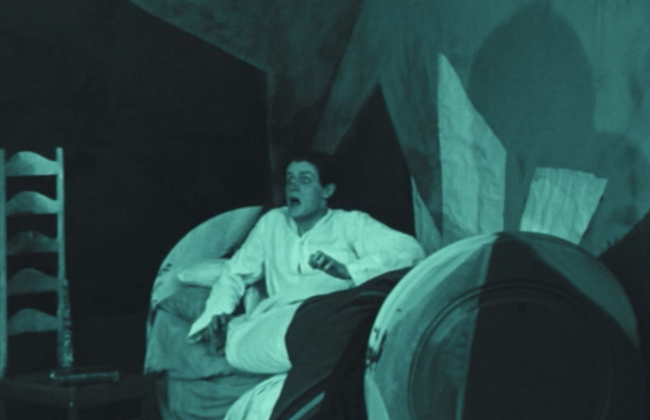
What I didn’t count on, of course, were the joys of German Expressionism. I didn’t even know the intriguing Nosferatu was part of the same movement. The exaggerated, fanciful staging, set design, lighting, camera angles, use of shadows and makeup of The Cabinet of Dr. Caligari take the film into the world of fairy tale. Because there is no attempt to make anything look “real,” the film quickly joins the terrain of nightmare. (One hundred years don’t really make a difference when it comes to nightmares.) Most say the film is either influenced by or a direct commentary on WWII, which explains much of the plot and the traumatized state of its leads.

I’ll share just the basics so that I don’t spoil its considerable suspense. (Side note: What is that AMAZING font on the title cards throughout? I want to use it for everything!!)

The acting begins with an older man sharing his ghostly encounters with a young man, Franzis (Friedrich Feher), who says he and his fiancée (Jane Olsen). have their own terrifying tale to tell. She walks by trancelike in white, like she’s straight of casting for Ophelia.

Franzis then brings up a mysterious “him” from his past, who appears in his own little shot, looking extremely creepy (with his hair dyed black and white on top, skunk style). This “him” navigates a gorgeous setting of crooked street drawings. Him, of course, is Dr. Caligari (Werner Krauss).

The frame quickly dissolves into a scene of a new character, whom we’ll soon learn is Alan (Hans Heinrich von Twardowski), overjoyed about his town’s fair. He goes to Franzis’s place to convince him to join. Franzis is clearly a pre-traumatized, lighter, and happier version of the man we met in the opening scene. Meanwhile, Dr. Caligari is trying to get a permit for the same event.

We soon discover Dr. Caligari’s act will involve a somnambulist named Cesare (Conrad Veidt). As Act II begins, we learn there’s been a murder in the town. I won’t share any more of the plot.

The film is beautiful. Whether the story is using a painted set or a constructed one — and this film uses both — each set is a haunting piece of artwork. The framing of every shot is striking. (I wouldn’t recommend anyone experiencing vertigo watch this film. The oddly angled everything can make you feel a bit off even on the most balanced of days.) Surely, every haunted house created in every town since owes a debt to this film.

Dr. Caligari makes you wonder what you’re seeing and not, explores the nature of sanity and authority and otherwise makes you feel ill at ease and worried for its characters. It also keeps you reflecting on its messaging and incredible artistry long afterward. I enjoyed the acting, especially Veidt’s as Cesare and, of course, Krauss, who just owns this role. But EVERYTHING is good about this film. Never with any other scary movie have I wanted to freeze every frame, just to examine how each touch builds toward this symphony of mood building.

If you haven’t seen it yet, I envy your first encounter.

Explore a host of haunting films by visiting the entries of my talented peers in the Classic Movie Blog Association’s Early Shadows & Pre-Code Horror blogathon.

Share
Posted in: 1920s films, Blogathons, Film Noir/Crime/Thriller & Mystery, Horror Tagged: CMBA, Conrad Veidt, films that stand the test of time, German Expressionism, horror, The Cabinet of Dr. Caligari, Werner Krauss

Pandora’s Box (1929): Trailblazer

05/16/2020 by leah@carygrantwonteatyou.com 6 Comments

Its not surprising that the actress who made her mark as a partially nude Ziegfeld Follies girl would star in one of the most seductive films of the 20s.

That the great German director G. W. Pabst would find it worthwhile to draw this star from American isn’t surprising either. The heroine of his 1929 Pandora’s Box had to be sexy enough to lure everyone around her, and heedless enough to rebel against the powerful without considering consequences….and that was kind of Louise Brooks’s forte.

The Kansas-born actress would make a point of ticking people off, refusing to conform to Hollywood expectations of her—or follow the directions of her bosses. In terms of roles, she didn’t really make a big splash, with few starring roles and many bit ones. But that didn’t stop her from demanding her rights. She expected more of her parts. She asked for promotions. She wasn’t much for punctuality. Most damagingly, she refused to do retakes of The Canary Murder Case (1929) to convert it from a silent to a talkie. She DID enjoy Hollywood social life–she was a regular at William Randolph Hearst’s and Marion Davies’s San Simeon, even romancing the latter’s niece, Pepi Lederer.

Her independent spirit ensured Louise Brooks didn’t make it far in Hollywood, but it’s also why we know her name still today. We like that she was who she was, and she didn’t apologize. Louise Brooks’s authenticity comes through in everything she did, especially in her acting. Her naturalistic performances might not have impressed all viewers back in 1929, but today they make her acting accessible to modern viewers–much more so than her contemporaries who followed the day’s more stylized acting trend.

And don’t we all love her rebellious soul? That flapper haircut, the partying all night after days on the set, the love affairs with men and some women that cut short her success. (Who turns down The Public Enemy to be with a guy?) And without that rebellion, we wouldn’t have her tripping off to Germany to make Pandora’s Box or Diary of a Lost Girl with a man who turned out to be one of the most impressive German directors of his time, whose films are still powerful enough to survive on best-of lists while those silents that had far higher box office draw are forgotten.

Of course, her legacy might still have disappeared, but Louise Brooks, as it happened, wasn’t just a good actress; she was talented at telling her own stories as well. The witty book of her movie reviews/Hollywood history in later life, Lulu in Hollywood, gave her a second burst of fame–and ensured that fame would endure. For many of us, she and Clara Bow are the face of the flapper.

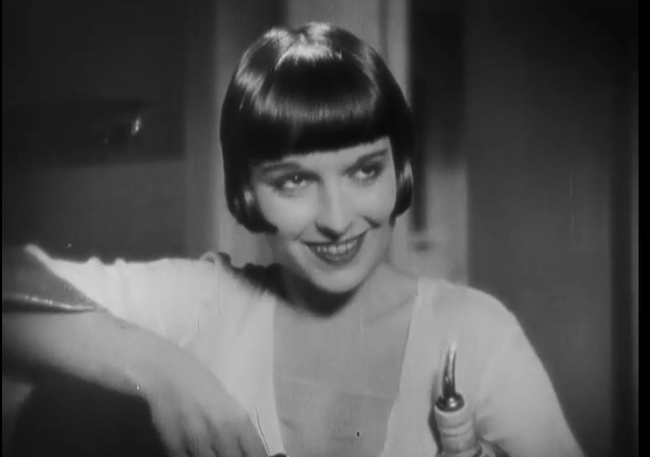
I found myself instantly mesmerized by her in Pandora’s Box. Not since Angelina Jolie in Mr. and Mrs. Smith and Marilyn Monroe in Niagara have I seen an actress in such full command of her sexuality.

The way Brooks moves from archness to innocence, from manipulation to fun as the character Lulu is a thrill to view. She seduces EVERYONE in Pandora’s Box. I mean, is this how you act with your lover’s son?

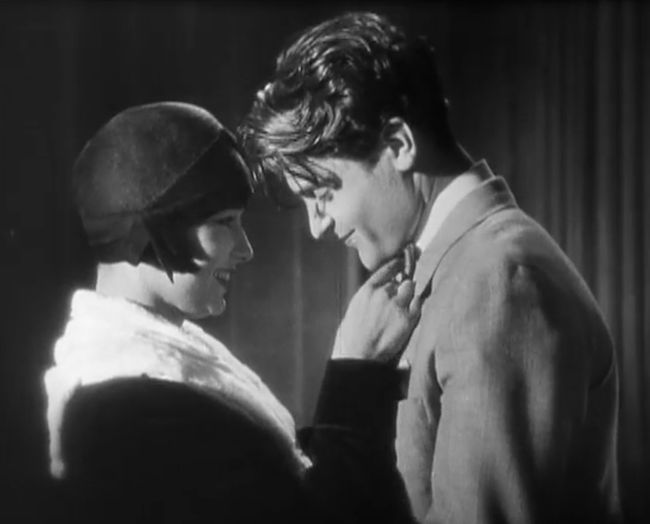
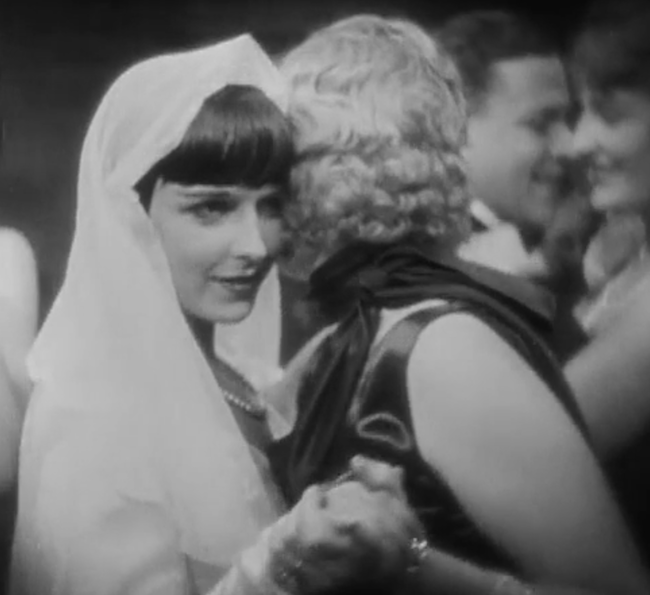
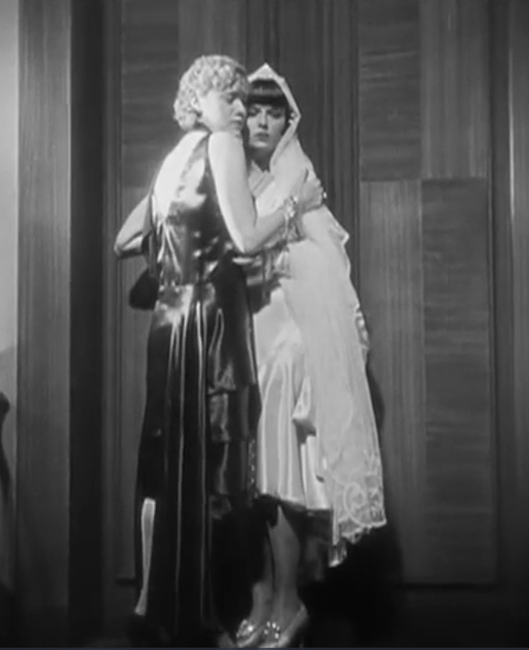
But the son, Alwa (Franz Lederer), is not alone. Every delivery person, businessman, and lawyer gets Lulu’s seductive treatment—most thrillingly, given the time period, Countess Anna Geschwitz (Alice Roberts), a rich lesbian friend, gets Lulu’s full-press sexy attack. Watch as Anna stares at Lulu with stark hunger….

….and dances with her in a sensual sequence….

and expresses her longing to do more at Lulu’s bedroom door….

Wow! I kept checking the date. Was this film really made in 1929? (Of course, the censors butchered it after its initial release, erasing this maybe-maybe-not consummated love affair entirely.)

I’m avoiding all but minor & very vague spoilers, so the plot summary that follows will not be precise, especially after the first acts.

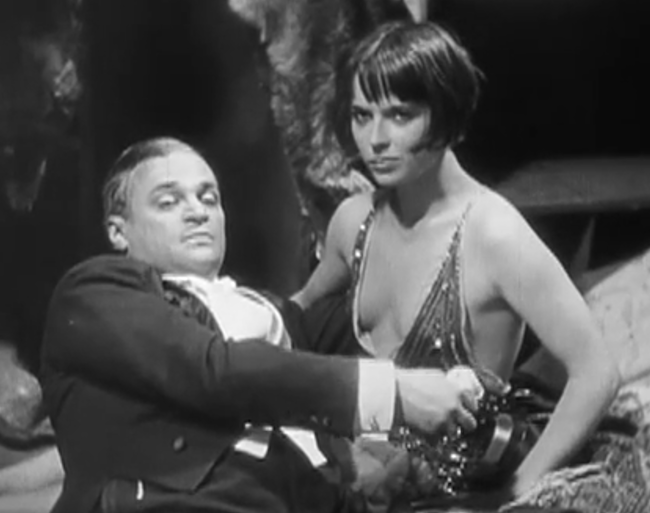
The untampered-with version of the film begins with Lulu hanging out at the apartment where her lover, Dr. Ludwig Schön (Fritz Kortner), is putting her up. She’s flirting and drinking with a deliveryman/mailman when a friend arrives. Lulu calls the new arrival, Schigolch (Carl Goetz), her “patron,” but it will be unclear from later events whether he is her first john, pimp, or father. Whatever he is to her, Schigolch is clearly an unsavory type, so Lulu hides him on her balcony when Ludgwig comes home unexpectedly. Ludwig has bad news for Lulu: he has to marry a respectable girl, not her. Lulu comforts her despondent lover on her bed.

Of course, Ludwig discovers Schön on the balcony and takes off, but Lulu doesn’t seem concerned for long. Nevermind that her lover/income source has now disappeared. Schigolch has another offer for her, a chance to return to the stage. And after all, this woman will have NO issues getting a new lover. Just look at these typical reactions to a Lulu encounter:

Whether Lulu’s flirty nature is mainly a result of calculation, high spirits, or just innocent fun is always unclear. What IS clear is that she always must have everyone in her thrall. Her supposed nonchalance at Ludwig’s loss doesn’t keep her from getting him back when she gets the chance (and what a great scene it is when she does).

After she reunites with her lover, things will go horribly wrong for everyone in the story, justifying one prognosticator’s claim that Lulu is Pandora, the mythical character who unleashed society’s ills into the world. Of course, this pronouncement about her Pandora nature annoys a modern woman to no end, as it’s clear that the man who says so assumes the jealousy Lulu inspires and whatever results from it are all her fault. Forget that the men who surround her are (a) weak, (b) dark/controlling/abusive, (c) silly alcoholics, and/or (d) con men. Forget too that any man who spends five minutes with her knows that fidelity probably isn’t Lulu’s strong suit.

Of course, Lulu isn’t exactly an innocent. The way she repeatedly uses and betrays her lesbian friend is disturbing, and it doesn’t seem the result of any bigotry–just desperation and selfishness. Lulu’s lack of compassion about others’ suffering as she casually checks out magazine fashions is chilling. I like that we’re not merely asked to condemn her actions, but what we ARE to make of her isn’t entirely clear.

The production itself is sophisticated and effective, way ahead of its time. Her clothes are a joy to view. But the script is…odd. The first five acts are memorable, well-written, funny, and exciting, with clear plot development. But after the first five acts, I thought, “this is probably where the film ends.” And then another act would follow and I’d assume it was ending again, and another, and another. The story soon feels like a series of set pieces/vignettes pulled together rather than a coherent story, which is particularly evident in the last act. I guess I would have been OK with this if the story had been framed as a series of Lulu adventures, but there’s a morality play bent to it that just doesn’t work—because you can’t help but enjoy rather than judge Lulu thanks to her considerable charisma, and because you can’t really find a morality play effective without a clearer narrative arc/characterization.

For example, I think we’re meant to pity Ludgwig’s man-boy son, Alwa, for his hopeless passion for Lulu, but his actions throughout the narrative are weak, disloyal, and despicable, so I’m not sure why I’m meant to root for him. I mean, sure, he’s obsessed with Lulu, and Lulu, though she calls him her best friend, isn’t exactly empathetic toward him. But then again, she cheerfully puts up with his dour, leech-like company, and clearly could find a more congenial and ambitious companion. There has to be some strain of kindness and loyalty in Lulu to make her tolerance for him possible. (Think about the suitor she chooses over him/to help him late in the film, and you will see just how bad of company she considers Alwa.)

I also find it hard to understand why this woman, with such a magnetic personality and such great beauty, couldn’t find another well-heeled protector who would conceal her shady past AND help her support her two hangers-on. Her poverty late in the film–given her earlier adeptness with reinvention—isn’t well explained.

This film is often called a masterpiece, and in its first few acts, I think it is. After that, I’d argue that the film falls apart, though I know MANY would disagree with me.

But here’s the thing: It doesn’t matter. The first few acts have already seared into your memory. Your impression of Louise Brooks is already powerful given her electric performance and unforgettable beauty. And your admiration for Pabst’s technical proficiency and daring have already been won. What does it matter if the logic and narrative thread and even Lulu’s character are all a bit of a mystery to you in the end?

This film can be hard to track down at times, but luckily, it’s streaming on Kanopy, which is available for free to most library patrons. (Even if you don’t have a card, some temporary ones are being given during this pandemic.) You may not end up watching the whole thing, but don’t miss Acts 1-5! The court scene alone is worth the viewing.

This post is part of a Ziegfeld blogathon. Click here for fun-to-read entries in the Great Ziegfeld Blogathon, hosted by Hollywood Genes.

Share
Posted in: 1920s films, Anti-Romance films, Drama (film), Feminism Tagged: early lesbian portrayals on film, G. W. Pabst, Louise Brooks, sex symbols

The Gender Gap in Film

02/05/2020 by leah@carygrantwonteatyou.com Leave a Comment

Check out these two articles, both of which show the gap between awards for women and men in the Oscars over time in visual format.

“The Oscars’ 92-year gender gap, visualised”

“Maybe Those Are Just the Best Movies This Year”: #WhiteMan’s Oscar in Context.”

The Guardian‘s statistic about the lack of awards for female cinematographers was particularly illuminating.

In addition to showing what female-driven films could have been honored but weren’t over the years, Relatively Entertaining covers the diversity of voices in film, how we’ve regressed since a high point in the 40s in honoring women’s stories–even if told by men. The post also highlights how seldom black actresses are repeatedly honored for their work: “For that matter, it’s a strange quirk of Oscar that of the 35 times a black woman has received acting Oscar nomination, only three (Whoopi Goldberg, Viola Davis and Octavia Spencer) have been nominated more than once, and only Spencer has been nominated after winning her award.”

I wonder how long Academy voters could sustain the fiction that women’s films just haven’t been good enough yet to get awards after viewing the articles’ startling graphics. I wonder if the lack of repeat nominations for women (and women of color in particular) will finally bring home just how much has to change.

Share
Posted in: 1920s films, 1930s films, 1940s films, 1950s films, 1960s films, 1970s films, Feminism, Oscars, Uncategorized Tagged: black women and the Oscars, gender gap, representation in film

One Liberal’s 2018 Distraction Guide

01/04/2018 by leah@carygrantwonteatyou.com 6 Comments


I assume those of you horrified by 2017 headlines have been fighting back with the help of political action sites. But sometimes what you need is to reset your equilibrium just so that you can get through the day, and if that’s what you’re looking for, here are my current (admittedly often silly) survival routines. (Note: I don’t expect my suggestions to be yours, but maybe your disagreement about mine will lead to suggestions of your own, which I’d love to hear.) Here are mine:

Enjoy a Little Snark
Tom and Lorenzo are this fashion police duo who are hilariously harsh. As someone who hasn’t been knowledgeable about fashion since middle school, and never any good at it, I’m not sure why I find fashion critiques so funny. My shoes alone would give them years of fodder. But I love them anyway, and their TV reviews, which originally brought me to their site (Mad Men and Downton Abbey tributes/slams in particular), are always on point.

When I can’t find the sarcasm I need, I head over to someecards or bad reviews on Metacritic. Go to the most negative reviews, and try not to laugh, such as those giving 0% ratings for Collateral Beauty. How about this from the usually affable Peter Travers?: “The unholy mess that director David Frankel and screenwriter Allan Loeb have unleashed for the holidays strands an all-star cast…on a sinking ship that churns the waters from absurd to zombified with frequent stops at pretentious.”

Ask Friends/Family for a Cute Photo of the Day—Over Email
On terrible news days, I now demand, “Cute photos needed!” of my sister with young toddlers, and presto! They arrive. Seriously, what parents will say no to sharing how adorable their children are? On Facebook or Instagram, you need to wade through other things you should avoid, so stick with Old School, my friends: Email. If you’re not a fan of children, you will find friends and family equally willing to share cute pet snapshots. Get to it.

Celebrate a Pal for No Reason
My friend Kerry once stopped by my door with a package and a smile, and announced, “It’s Leah Appreciation Day!” I burst out laughing, as she knew I would. I can remember few times I was so amused and touched, and I made a mental note at the time: This is a fabulous idea. I can’t say I do it enough, or with the aplomb Kerry—a master of silly joy—has mastered, but it’s surprisingly recuperative on a day you’ve watched too much news to buy a dumb card or film for a pal, and announce how much you appreciate him/her with over-the-top fanfare. Birthdays you may feel pressure to get it right. Random days? It’s just fun.

Break Out Some Silly TV
I thought the Psych movie was a remarkably timely gift, but now Amazon has put all the episodes on Prime! Score!

Other light favorites (given Netflix’s recent trends of show ditching, these are only true as of Jan 2018):

Netflix:

  • Arrested Development
  • Schitt’s Creek
  • The Good Place
  • Master of None
  • The IT Crowd
  • Sirens
  • The Office (British & American)

Hulu:

  • 30 Rock
  • Parks and Recreation
  • Party Down

Amazon Prime:

  • Leverage (Prime, Season 1)
  • Head Case (with Alexandra Wentworth; pay only)
  • Psych, of course! (Prime)

Invest in Some Cinematic Feminism
It’s easy to just cry at the #MeToo movement; instead, seek inspiration. Check out some awesome blogathons to discover feminist icons of film. Check out the The Anti-Damsel Blogathon from 2015, as just one example. Commit to discovering the work of female filmmakers, as did Girls Do Film two years ago for her New Year’s resolution.

And if you haven’t yet encountered some of the fantastic feminist TV series out there, do so now. Here are a few from Netflix (The Handmaid’s Tale is obviously next for me):

  • Jessica Jones (a superhero who survived rape and combats her rapist and those he’s harming)
  • Miss Fisher’s Murder Mysteries (a woman in her 40s in 1920s Australia who is portrayed as both sexy and empowered)
  • Alias Grace (an intriguing fictionalization of a true-life 1840s murder, and the male treatment that may have contributed to it)
  • Crazy Ex-Girlfriend (a musical comedy that breaks boundaries in its portrayal of romance, feminism, and mental illness)

Tune out Everything But Your Pets
Guess who doesn’t know what’s going on out there? Guess who isn’t too blame? Too often I am watching TV or my computer while petting my cat, but when I give my high-spirited feline my full attention, there’s no low-grade stress accompanying my actions, and he’s more likely to cuddle and comfort. Also, he’s less angry.

View Silly YouTube Clips
My favorite clips are Key and Peele’s, and if you’ve experienced the brilliance of Get Out! or found yourself falling for Obama’s Anger Translator, Luther, during that White House Correspondents Dinner, you’ll know why I love this amazing comic duo. My personal favorite is the substitute teacher episode, but there are so many.

If you’re a fan of Issa Rae and her HBO hit, Insecure, you’ll love her earlier webisodes, The Misadventures of Awkward Black Girl. “The Hallway” (fewer than 6 minutes) may be my favorite illustration of social awkwardness ever. If all else fails, you’ve got cat videos.

Dust off Those Stamps
Lately, I’ve been getting cards and books in the mail, with thoughtful notes from friends and family. Maybe we’re just so Internet and texting crazy that we forget how wonderful it is to see something that’s NOT a bill or junk in that mailbox. For a while, I’ll forget this need, and stop sending anything, and when I do again, I remember, I love mail. So does everyone else. I believe this need is one of the unspoken reasons for the rise of Amazon. Too lazy for cards? Grumpy Cat postcards. 5 minutes.

Reread Favorite Books and Discover New Comic Ones
Jane Austen is restorative for me; in fact, she knows I’m stressed before I do. Usually, she’s my canary in a coal mine; when I have a strong desire to read her, I know I need to consider some serious downtime or therapy or re-examination of my existence. Lately, she’s just a news recovery mechanism, as have been my favorite mysteries. Walter Mosley’s insightful detective, Easy Rawlins, is on my bedside table now, right next to some new (not depressing) memoirs I can’t wait to read: Lindy West’s, Adrian Shirk’s, and Amy Tan’s.

Put that Phone Down at Night
You know you shouldn’t read news before you go to sleep. Put that phone far enough from your hands that you can’t access it if you’re sleepless. You can read the headlines and delve into those depressing articles in the morning, when work will soon take you away. Not at night, when you’ll dwell and toss and turn. There are even studies on how that glare keeps you up. Move the phone.

Go to a Ridiculous Festival/Museum/Parade
There’s a museum down the street from me that is just full of things hoarders have offloaded. Last time I visited, there was a room full of dolls. It was vaguely horrifying, with old Troll dolls and Cabbage Patches. Yeah, I was freaked out, but it was also magic. See a poutine or bacon festival in your area? Sure, it’s about as healthy as mainlining Crisco, but it’s one day: Go.

Set a New Friend/Family Ritual—and Keep to It
A weekly karaoke night? A Stranger Things viewing party? A regular football watching ritual at the bar? It doesn’t matter. We need company right now. Make sure you have it.

Listen to Awesome Podcasts
If you’re a classic movie fan and haven’t been listening to Karina Longworth’s You Must Remember This (Podcast), what are you waiting for? Her series on the blacklist alone is enough to enthrall, and there’s so much more. The Atlantic includes a long list of awesome podcasts for those with any and all interests.

Watch Depression-Era Comedies
This is a movie blog after all, and I’ve found both eerily prescient warnings and relief from stress in classic favorites. I know some of you classic movie doubters think we’ve evolved so much that there’s no way those almost a 100 years ago were like you. But during the Depression, people were watching some decadently clothed folks doing silly things, just like you are now. Fred Astaire and Ginger Rogers were wowing with their fancy footwork and quick barbs, and then easing their fans into a little romance. Mae West, pioneering screenwriter and star, was sashaying her way across the stage and then the screen, seducing men almost half her age with lines so funny we’re quoting them now. I highly recommend these two options as regular fare, and you can search through this site for much more, but if you’re smart, you’ll find the work of my peers at the Classic Movie Blog Association and discover new favorite film recs from those much more knowledgeable than I. It’s no accident that film comedies from the 30s are among the best ever made: They were needed.

Share
What strategies are helping you get through the news? Post here, or share with others. Let’s get by, as the Beatles have told us in my least favorite of their songs (but a wise one nonetheless), with a little help from one another.

Share
Posted in: 1920s films, 1930s films, Comedies (film), Humor, Random, TV & Pop Culture Tagged: #MeToo, distractions from politics, feminist films, liberal distraction guide, lightening your mood, silly classic films

Could Silent Films Woo Non-Classic Movie Fans?

05/22/2015 by leah@carygrantwonteatyou.com 6 Comments

ClaraBow-It
I recently caught It at a theater with live music, and am still buzzing from it. I liked the film before. With live music, it was a revelation. The talented composer, Jeff Rapsis, used the term “moving picture” rather than film to discuss silents. This term and my exposure to multimedia this year have me thinking: Could silents reach otherwise classic movie-averse folks like my sister?

Could Silents Silence Typical Classic Film Objections?
Resistance to classic film, especially black and whites, comes in the form of comparison: The production values are better now. The acting is better now. Directors have learned from their predecessors, so why go back? We classic film enthusiasts may scoff at these claims, offering as Exhibit A Michael Bay, but the fact remains that the films of the 30s-50s and today are considered similar enough to be directly compared. Yet silent film is a different art form than the movies we know, with different restrictions, different demands. We can no more compare the two than we could stage and television productions.

My mother has been studying art, and keeps referring to the departure from representational art once photography advanced. Movies took the opposite route: moving from figurative (silent) to representational (today). There are exceptions, of course–Terrence Malick comes to mind. But just as we can’t compare Vermeer to Picasso, we can’t go point for point with Metropolis and Star Wars. Avoiding comparisons is crucial since we’re all guilty of using the worst example from the opponent’s camp (i.e., Bay), and the best from our own. With no comparisons, with fewer best-of lists, perhaps there can be less quickness to judgment.

Could Instagram Pave the Way to Silents?
For a culture obsessed with Instagram, silents seem a natural. Incredible concision? Check. A story delivered with visuals rather than sound/many words? Check. Silent film directors didn’t have the luxury of lengthy speeches; they had to distill emotion to a few gestures, drama to a few actions. What could be more compelling to our tweet-obsessed, quick-pic world? And as for our love for cat videos, also sans words, could a Buster Keaton action shot resemble a cat video more? The silliness, the athleticism, the grace–all without special effects? His DNA was clearly more feline than human.

Will Our Media-Savvy Youth Prove Less Resistant to Classics?
This year my students produced radio and visual essays for a creative nonfiction class. They were nervous about unfamiliar technology, just as we older folks are. But they were never resistant to other art forms, as we can be. When I showed them silent film sequences, they didn’t complain. They took ideas from them. When a guest speaker demonstrated his digital memoir, which included silent film clips, they expressed admiration. One student started adding black and white footage to his profile. Another used images of classic film stars primping and mooning to illustrate her preparations for a date. And lest you think they were budding film directors, I should point out that most were science majors.

Perhaps this flexibility bodes well for classic movie fans. When I entered the theater to watch It, I noticed an older audience, as expected. But back in the corner was a line of twenty-somethings, looking vaguely hipsterish and far too serious. Afterward, they were grinning, just like I was. Is it silly of me, to find this hopeful?

Of course, anyone watching a silent with live music would more fully appreciate the art form as it was meant to be experienced. (For those of you with sisters like mine, who rant about classic film sucking, see if you can find a silent with a composer. My husband, who dragged me to Transformers 2, agreed to a romantic comedy once he heard the details.)

But even in a room, on the computer screen, perhaps a silent can reach our resistant friends if a 30s or 40s masterpiece does not. It’s worth a try.

*For anyone interested, my bet with Rachel is ongoing. She’s using her new job, home, and move as excuses for the delay in her fulfillment of the deal. I will keep you posted on developments.

Share
Posted in: 1920s films, Turn My Sister into Classic Movie Fan, Uncategorized Tagged: Buster Keaton, cat, classic film haters, Instagram, silent films live

3 Characters I’d Like to Celebrate St. Patrick’s with

03/12/2015 by leah@carygrantwonteatyou.com 2 Comments

The Hero of The Adventures of Robin Hood (1938)

ErrolFlynn-RobinHood
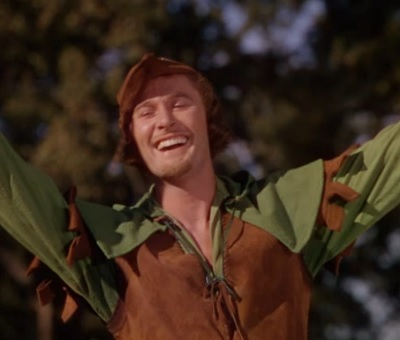
While watching Errol Flynn play Robin Hood, you get the feeling he knows how ridiculous he looks in those green tights. But instead of embarrassing, his outfit energizes him. You can almost hear him thinking, “Well, the manliness contest is lost. Let’s party!” The whole cast seems to share his giddiness, making this one of the most entertaining movies I’ve seen in some time. Who wouldn’t want to spend the green holiday with someone this easygoing and gorgeous?

(It’s easy to trace the film’s influence on an early favorite of mine, The Princess Bride, not to mention the parody Robin Hood: Men in Tights. Neither movie captures Flynn’s delirious enthusiasm, but that same sly humor is on full display in both, with Cary Elwes a worthy heir to his predecessor’s effortless style.)

The Heroine of Sadie Thompson (1928)

SadieThompson-Swansongroup
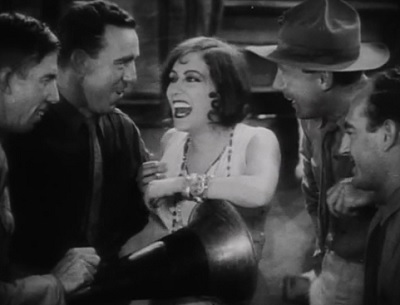
Sadie (Gloria Swanson) likes to pull pranks, tell dirty jokes, sing, dance, and most of all, laugh. The rarity of female attention partially explains the marines’ enthusiasm for her company in the story, but that’s not the only reason she attracts them. This woman is just so much fun. Like many supposedly “fallen women” in film, she has an easy camaraderie with others, is just as good a pal as a lover. And her confidence (until it’s shaken by the film’s villain) is breathtaking.

Nick & Nora Charles

NickandNoraCharles-Partying
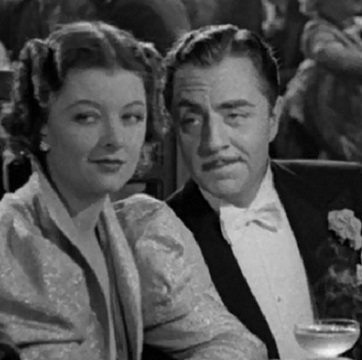
Nick Charles (William Powell) of The Thin Man series is the life of the party, without making any effort to be so.  He is cool, debonair, sarcastic, with just the right smidgen of childish to never take anything seriously but his partying. His wife Nora (Myrna Loy) is the perfect hostess. Obnoxious visitors entertain rather than annoy her. Party crashers are welcome. She calls room service to deliver “a flock of sandwiches” for her intoxicated guests, hands newcomers a drink before they’ve even gotten into the room. When asked if Nick is working a case, Nora responds, “Yes…A case of scotch. Pitch in and help him.”  Could any line sound more like St. Paddy’s Day than that?

Share
Posted in: 1920s films, 1930s films, 1940s films, Comedies (film), Drama (film), Humor, TV & Pop Culture Tagged: Carl Elwes, Errol Flynn, Nora Charles, Robin Hood, Sadie Thompson, St. Patrick's Day movies

The Artist at Play: Man with a Movie Camera (1929)

03/09/2015 by leah@carygrantwonteatyou.com 14 Comments

This post is part of the blogathon hosted by Movies Silently and sponsored by Flicker Alley. Thanks to both for such a great event! Click here to see the wonderful entries of the other participants:

Camera-Man2
Wizardry. It’s the word that jumps at you while viewing Man with a Movie Camera, the celebrated documentary depicting 24 hours in a Russian city. Unlike the famous magician of Oz, director Dziga Vertov invites his viewers to experience all that his camera—and by extension, all that film—can do. Announcing at the start of his movie that there will be no scenarios, intertitles, or actors, Vertov set out to separate the genre from its roots in theater. The result could have been a movie so meta it became unwatchable to any but film scholars; after all, the director even demonstrates how he obtains shots, even exhibits the film editing process. But this masterpiece is not only revolutionary; it’s also engrossing. Here are just a few reasons why:

It’s a Bird…It’s a Plane…It’s Vertov Behind the Camera
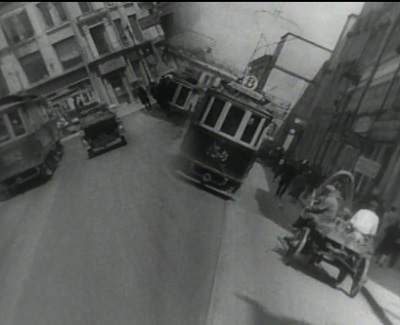
There’s a dizzying speed to the film, images flashing by at such a clip that some contemporary viewers and critics protested. Predictably, some of this speed captures industry, as when the director hurries an assembly line production to Tasmanian Devil haste to capture its unremitting flow. The director thrills at images of transportation, with clips of trains, buses, motorcycles, often with himself in dangerous positions to capture the motion. The thrilling score—I watched the Alloy version—underscores the frantic mood.

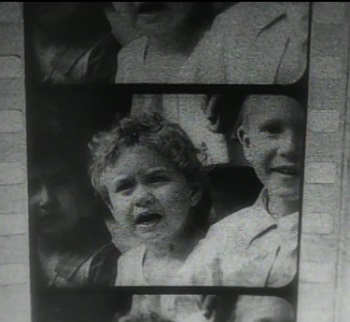
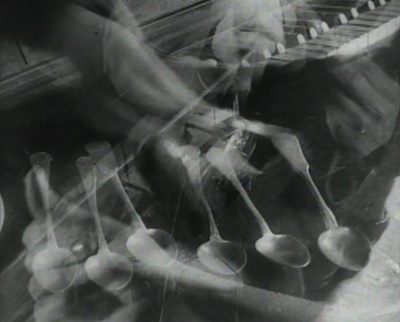
Vertov occasionally slows his pace, even stopping to profile still shots, the film editing process, and those same shots in action in a particularly lovely tribute to the power of moving images.

StillShots
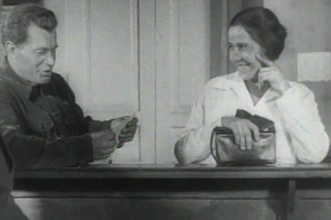
But it’s in rapidity that Vertov reveals his mastery of form and meaning. He even underscores the brevity of life in a short sequence. We see a couple getting a marriage license.

MarriageCertificate
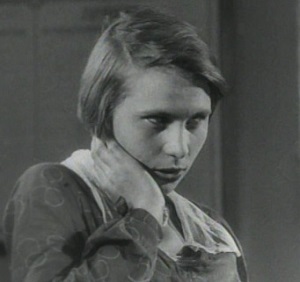
Directly after, another couple is signing divorce papers; the director zooms in on the estranged wife’s grim expression.

Divorce
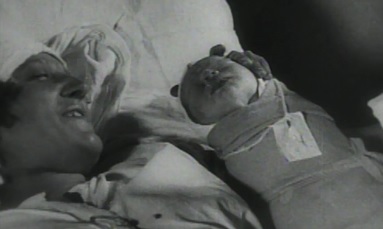
A mourner appears in a cemetery. A funeral passes our eyes. A baby is being born.

Baby
The director moves back and forth between the scenes to reinforce the connections. This circle of life takes a total of three minutes.

Loss
Realism…with Mannequins

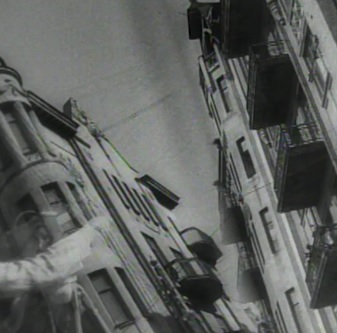
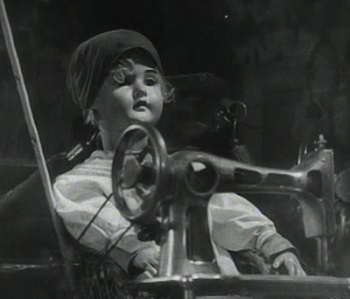
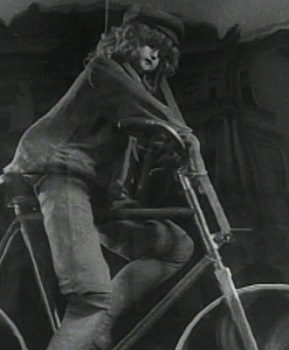
The film begins in a movie theater, priming the audience for a show. We see a Russian city, morning beginning. A woman sleeps in her room; a child does the same on a bench where he’s spent the night. There are scenes you expect next: the bustle of a city beginning, the drudgery of work. And some of those scenes, you get, and each is powerful, particularly portrayals of the mines. But it’s the surprises that keep you watching. Why does the director dwell on creepy shots like this one?

CreepyMannequin2
What’s the obsession with washing scenes? (What number of shaving, tooth brushing, and hair cleansing rituals were shot over the years he made this movie to end up with so many in the final product?)

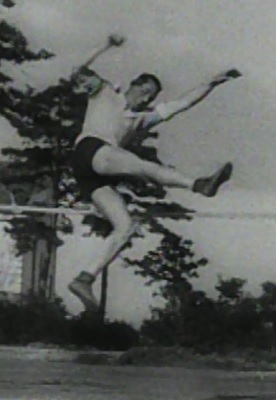
Documentaries can be gloomy, and for a director who attacked fiction and took so seriously his aims to capture truth, Vertov has a surprisingly light touch. You’re struck by the artist’s obsession with grace, revealed through a montage of pole vaulters, high jumpers, dancers, and basketball players.

HighJumper
He revels in a kid’s magic show, in women’s bodies at the beach. He attempted an international art form through his completely novel take on a documentary, achieving the realeast of real. And he delivers: You can’t help but feel fascinated by similarities evident between Russian culture and ours, between 1929 and today.

But like this pioneer’s artistic descendants, practitioners of cinéma vérité and literary journalism, Vertov believed revealing subjectivity was part of delivering truth. He not only affects his subjects by the intrusion of his camera, but our perception of them by which shots he includes, and which he doesn’t. As essayist Joan Didion would explain many decades later, “However dutifully we record what we see around us, the common denominator of all we see is always, transparently, shamelessly, the implacable ‘I.’”

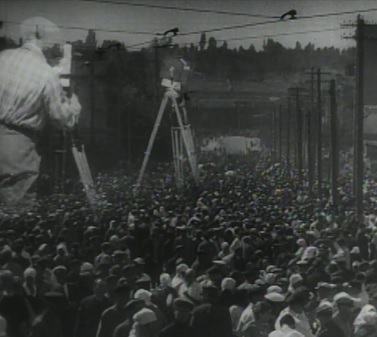
CameraManAbove
Part of the delight of Man with a Movie Camera is watching subjects’ reactions to his (then novel) camera: the woman who blocks her face with a purse to avoid it, the tiny girl who can’t keep her eyes away.

But the director’s vision is so unique and his quirkiness so evident throughout that you never forget that another artist would have chosen other faces, other moments, would have startled his subjects in other ways, and for other reasons.

Look, Mom! No Hands!
The highly touted innovations with camera work in the film are remarkable in and of themselves. (Who knew so many of these techniques were used so early?) They also serve a purpose, not only illustrating Vertov’s sense of time dissolving, but recapturing for modern audiences the thrill of being at the beginning of a new art form.

Camera-Man
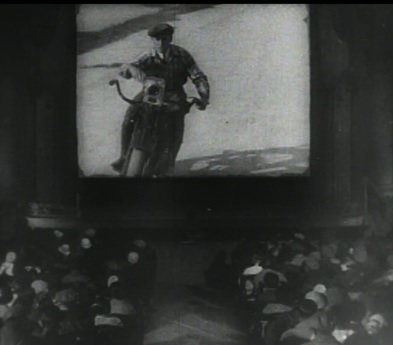
They made me think of the Impressionists, freed from the tyranny of having to capture exactly what they saw. The scenes featuring the filmmaker at work are so amusing. Here’s the photographer riding on a moving car! Watch him risk his life to portray that train! I kept thinking of a little kid showing off on his bike, holding his hands aloft for the first time. And just as I thought it, I saw this image:

Motorcycle
Because the director’s having fun, so are we.

CreepyMannequin
Because the action is exhilarating, we are giddy. Who but a kid-like grown up could have come up with an animated movie camera in action, or with this delightfully silly image?

Camera-Man4
Surely, Vertov would be leading the creative team at Pixar today.

Sight and Sound rated this movie eighth, and gave it the honor of best documentary of all time. I am not surprised by either ranking given the vision and experimentation of this film. But that’s not why I’m glad that I’ve seen it. What an experience, to witness so much of life covered, in so little time, and so beautifully. What a joy it is, to a witness the work of a genius with a sense of fun.

Thanks to Kimberly Bastin at Flicker Alley for a screener of the film!

Share
Posted in: 1920s films, Blogathons, Comedies (film), Drama (film), Uncategorized Tagged: Man with a Movie Camera, Sight and Sound bests, silent film, Vertov

4 Movies Downton Abbey’s Lady Mary Would Watch

03/01/2015 by leah@carygrantwonteatyou.com Leave a Comment

LadyMaryandCharlesBlake
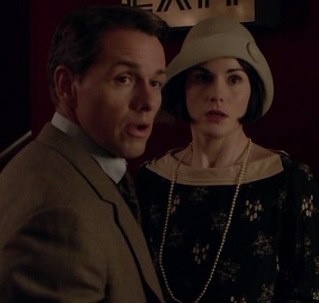
It’s 1924 at Downton Abbey. We’ve just seen Lady Mary (Michelle Dockery) canoodling with one guy in a London theater (Charles Blake) to ward off another (Lord Gillingham) who had mistaken intimacy for love. Mary barely protested when forced to leave Beau Brummel early to disenchant Gillingham. But here are four films out that year that might have distracted the vixen from her flirtations, at least temporarily…

The Marriage Circle

The MarriageCircle
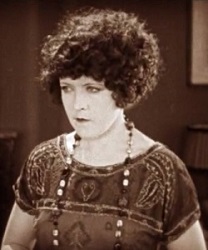
Mizzi (Marie Prevost), a dissatisfied wife, plots to seduce her friend’s husband. And that’s just the beginning of the marital and extramarital scheming in Ernst Lubitsch’s classic comedy of manners. Mizzi could give Lady Mary tips on undermining her frenemy Mabel Lane Fox’s attractions. (The daring Lubitsch would obviously become Mary’s favorite director; two of my four are his films.)

Her Night of Romance

HerNightofRomance
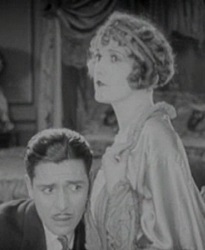
Dorothy (Constance Talmadge) winds up with a guy she barely knows (Ronald Colman) in her bedroom, and goes to extreme measures to protect her reputation. Sound familiar, Lady Mary?

Monsieur Beaucaire
Mary likes the pretty boys, and she couldn’t have missed heartthrob Rudolph Valentino starring in The Sheik three years before.

RudolphValentino-TheSheik
With Valentino featured AND a character named Lady Mary, Monsieur Beaucaire would lure the Downton heroine to the theater, even though her namesake in the film has too much pride to hold onto the guy (I have no illusions Mary would recognize the similarities).

Forbidden Paradise
Lady Mary has been subjected to Russian refugees she doesn’t care to meet, but a powerful czarina in full control of her posse of lovers? That could give Mary some interest in international politics.

Pola Negri, in her best Lady Mary pose

Pola Negri, in a Lady Mary pose

Maybe the film would even grant Mary some insight into her grandma’s (the Dowager Countess’s) almost-fling. Here’s hoping.

There you have it. Four films with enough skin, calculation, and female triumph to please the headstrong Lady Mary, maybe even give her some ideas for next season…

Share
Posted in: 1920s films, Drama (film), Feminism, Humor, Romance (films), Romantic Comedies (film), TV & Pop Culture Tagged: 1924 films, Charles Blake kiss, Downton Abbey, Downton Season 6, Film, finale, Kemal Pamuk, Lady Mary

The Debt Actresses Owe William Somerset Maugham: from Gloria Swanson to Annette Bening

02/19/2015 by leah@carygrantwonteatyou.com 8 Comments

SomersetMaughamActresses
I’ve read many glowing tributes to the stars of The Letter, Being Julia, Of Human Bondage, and Sadie Thompson over the years. While I’ve never questioned the talents of these actresses, I have always credited much of their brilliance in these parts to William Somerset Maugham. Their strengths are on display largely because of the characters he created in his stories, plays, and novels: women so complex, morally conflicted, modern, and real that 130 years after his birth, Annette Bening was Oscar nominated for playing one of them.

And she’s not alone. Before I get into the reasons, let’s start with the data. Here’s a list of Oscar nods to women in his films; if I’ve missed any, please let me know. It’s quite possible. The number of his film credits, and of stars listed in those movies, is astonishing. Here we go:

Academy Award Nominations for Actress in a Leading Role:

  • Gloria Swanson: Sadie Thompson (1928), based on the short story, “Rain”
  • Jeanne Eagels (first posthumous nomination), The Letter (1929), based on the short story and play. (She also made her name in the play version of “Rain.”)
  • Bette Davis, two nods: Of Human Bondage (1934; by write-in vote), based on the novel, and The Letter (1940)
  • Annette Bening, Being Julia (2004), based on the novel Theatre.

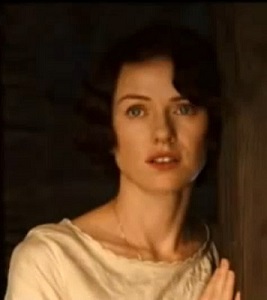
Other notable female roles include Gene Tierney’s in the Oscar-nominated The Razor’s Edge (a novel), Greta Garbo’s and Naomi Watts’s in The Painted Veil (a novel), and Madeleine Carroll’s in Alfred Hitchcock’s Secret Agent, based on Ashenden, a collection of stories.

Even fine actresses need a vehicle, and in the last fifteen years, one of the few amazing leading roles I’ve seen for a woman over the age of 30—Bening’s—was written by Maugham in 1937. I wasn’t surprised. He specialized in complex characters making immoral decisions: They cheat on and leave spouses and children, prostitute themselves, admit to irreligious or cruel behavior without guilt, contribute to or directly cause the death of others. Since Maugham resists moral judgments, his women are free to react to the traumas they’ve created rather than simply being punished for them. No wonder they’re so fascinating to watch on the screen.

In fact, Maugham is as likely to admire as condemn. As his (seemingly autobiographical) narrator in The Razor’s Edge explains, “My dear, I’m a very immoral person….When I’m really fond of anyone, though I deplore his wrongdoing it doesn’t make me less fond of him.” Thus the attention given to selfish characters such as Mildred in Of Human Bondage. Certainly, her character would have been less nuanced—giving Davis less to work with—had Maugham not empathized with Mildred and therefore made her traits and actions so interesting and believable.

DavisOfHumanBondage
Davis is Davis, but it took a number of roles before she reached this breakout one.

Maugham frequently explored the contrasts between how men and women seek to appear and who they are. While he may be gentle on others’ immoral actions, he can be scathing about their hypocritical ones. Sadie Thompson is a prostitute, but it’s the reformer trying to condemn her, unwilling to admit his own sexual appetite, whom we are led to despise. Sadie, gradually moved by the reformer, ultimately learns to appreciate her own values over his—an unexpected ending for the type of character who is usually just a one-note in a film. Swanson, not surprisingly, captures the flair, passion, and contradictions of this woman.

SwansonSadieThomson
In Being Julia, we root for the heroine in spite of (or even because of) her extramarital affair with a younger man because we enjoy her confidence. Despite her vanity and delusions, she owns and even enjoys most of her flaws. The surprises in her behavior are quite funny, and Bening takes full advantage of the humor.

Bening-BeingJulia
How wonderful is it, how gloriously human, that in the midst of her midlife crisis, Julia is obsessed with breaking her diet? How much do we love that she wants to savor her victory over a younger wannabe actress in solitude, since it’s a private triumph? What a feminist scene it is when she does, and how interesting that a man created it so very long ago. Curious to see how much the film differed from the source material, I reread Theatre, only to find it was even closer to the movie than I’d remembered: the dialogue, the focus, the character, the morality, even the final scene—all the same.

And Leslie in The Letter? Most authors would have focused on the murder and the passion leading up to it. It would have been a fairly typical noir, with an unremarkable femme fatale. But Maugham again proved to have a deeper interest in human nature than his peers, wondering not just about the crime itself, but Leslie’s efforts to conceal it, to retain that image she wants to present to the world. She is an interesting character because of her willingness to reside in her own lies, a trait that Maugham, with his typical regard for truth, seems to find more blameworthy than the murder. Thanks to his interest in motives, Davis and Eagels were granted a woman of enormous complexity to work with, which contributed to each’s stunning performance.

Eagels-TheLetter

Davis-TheLetter
Of his roles that have yet to win actresses Oscar nods, I find Kitty in The Painted Veil the most intriguing. Kitty’s husband Walter catches her cheating, and forces her to travel with him to a cholera-infested region of China as punishment. He offers her an out if her lover will marry her, knowing it won’t happen. Rejected by the man she loves and facing a death sentence from the one she doesn’t, Kitty spends much of her time alone, reflecting on her actions as Walter heals patients—quite a departure from her youth as a superficial beauty. She learns to admire Walter’s generosity, even as she pities the love for her that has turned to hatred. She wants to forgive him, and for him to do the same for her, but she can’t bring herself to love him.

Watts-PaintedVeil
What did Hollywood do with this story (Garbo’s and Watts’s versions)? Turned it into a love story. We’re meant to root for a reconciliation between the two, whether they both survive cholera or not. I don’t know about you, but once a guy tried to kill me via a deadly epidemic, I can’t imagine thinking, “Yeah, but I cheated on him; we’re cool now.” These plot alterations might have helped with commercial viability, but the result was to diminish realism and a powerful female part.

Kitty’s disappointment in herself for continuing to desire her vain, worthless lover is an essential part of the story. In the book we see enough of her life beyond the epidemic to discover that her enhanced self-awareness doesn’t lead to moral behavior. The self-deprecation and compassion she develops as a result of her failures are intriguing to witness. While Watts captured Kitty’s vulnerability beautifully, I suspect had the screenwriter more faithfully rendered the character’s complexity, he would have netted Watts the Oscar nomination, as with so many women in Maugham’s roles before her.

Maugham’s skill with character development is often attributed to his history: he stuttered in his childhood and struggled with his homosexuality. Did feeling like an outsider and being morally out of favor in his time contribute to his empathy for others? Probably. He gives another possibility, crediting his early medical training for giving him access to “life in the raw,” saying the work enabled him to see “pretty well every emotion of which man is capable.” While I suspect both of these reasons are relevant, I’ve always preferred to take as autobiographical his narrator’s confession in The Moon and Sixpence: “the fear of not being able to carry it through effectively has always made me shy of assuming the moral attitude.” Ultimately, perhaps in spite of himself, Maugham is amused by human behavior, in all of its foolish and ugly iterations, and therefore captivated by it. No wonder, with an author who claims he is “more likely to shrug his shoulders than to condemn,” that four of the women in his films have been nominated for Oscars, one twice. Let’s hope other gifted actresses take note, and give his excellent stories another run.

Share
Posted in: 1920s films, 1930s films, 1940s films, 1990-current films, Comedies (film), Drama (film), Feminism, Oscars Tagged: Being Julia, Bette Davis, great roles for women, Oscar nods, Sadie Thompson, The Letter, The Painted Veil, William Somerset Maugham

Disney’s Tangled: Better as a Silent Film?

11/11/2014 by leah@carygrantwonteatyou.com 8 Comments

MotherKnowsBest-Tangled
This post is part of the The Fairy Tale Blogathon hosted by Movies Silently. Check out the other entries!

I was hesitant to give Tangled a chance. I’ve always been bored by Rapunzel, who had little to recommend her but strong hair. Sure, she had beauty—yawn—and a pretty voice (What heroine doesn’t?) But she always seemed so idiotic to me. She had two tasks in her life—let down her hair, and conceal the prince’s visits, and she botched one of them, setting her love up for the witch’s wrath. And however her looks might have grown in all that tower time, isolation surely didn’t do much for the fair one’s people skills.

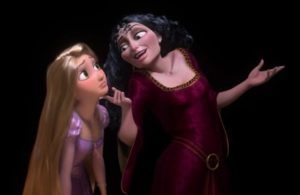
Disney’s 2010 version was much more entertaining than I thought it would be. Rapunzel is savvier and spunkier than in the original tale. And Tangled has some amusing theories on what she did all day, and how her upbringing by a witch might have affected her. Some wonderful side characters add to the energy, and the witch is a hoot. But there are some disappointments too.

First, the improvements on the fairy tale:

A Heroine Who Isn’t a Snooze
I’ve always pictured Rapunzel as a less interesting version of Lady Bertram, napping until the prince arrived and slowly making her way to the window, yawning as she helped him climb. Disney’s version (voiced by Mandy Moore) is full of projects: reading, painting murals, baking, doing papier-mâché and otherwise trying to fill the hours. She is obsessed with the lights unleashed on her birthday, actually lanterns from the queen and king to call her (their daughter) back from the witch, who stole Rapunzel to retain the Fountain-of-Youth properties of her magical long hair.

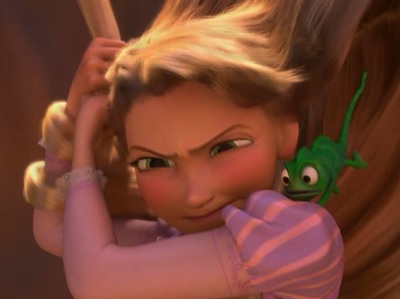
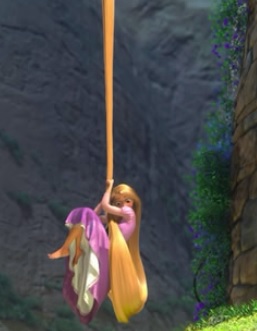
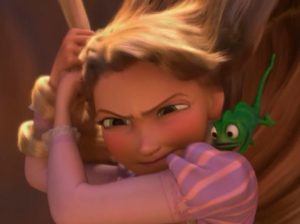
The unbelievable strength of Rapunzel’s hair in the fairy tale always puzzled me, so I was relieved to find the hair was magical, and Disney made it much more fun by turning it into an all-in-one lever-rope-weapon.
Rapunzel-Tangled
Rapunzel is also pretty handy with a frying pan, which she wields to defend herself against the thief (a prince replacement) who escapes into her tower. She bribes him to help her to the lighting ceremony, after which she plans to return meekly to her mother (aka, the witch). (I was concerned about the amount of head-pan contact though, convinced she’d kill/maim him sooner or later; the pan surely must have been made of weaker stuff than my iron skillet.)

An Equal Partnership
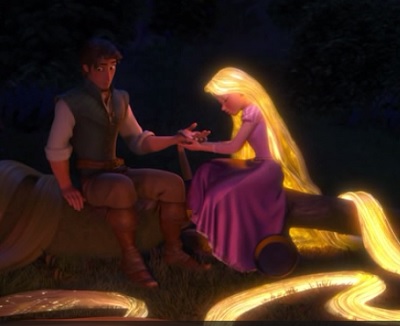
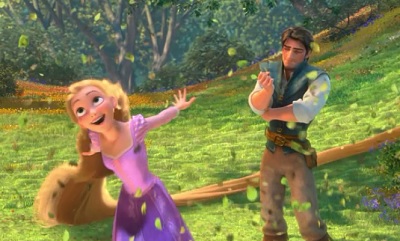
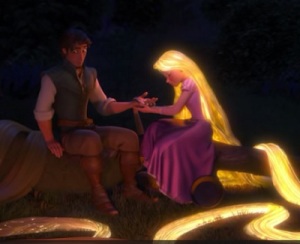
In most ways, the thief (Flynn Rider, voiced by Zachary Levi) is an everyday Disney hero, handsome and arrogant, proud of his “smolder” look. His backstory—an orphan craving riches—explains both his law-breaking ways and duplicitous behavior toward his partners. While he will obviously be reformed by the love of such a sweet, naïve girl, à la Lady and the Tramp, she will pick up his daring and inventiveness, needed qualities for a girl who is dangerously set in her ways thanks to eighteen years in a tower. Of course, she does have one advantage over him, with that magic, glowing hair.
FlynnandRapunzel-hair
I can’t say I was terribly interested, moved by, or invested in their union, but thought his altruism near the end was a nice touch. But no worries—I didn’t have to care much about them. Not with the mama witch to keep me interested.

A Worthy Villain
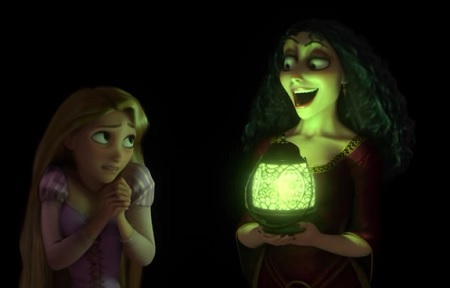
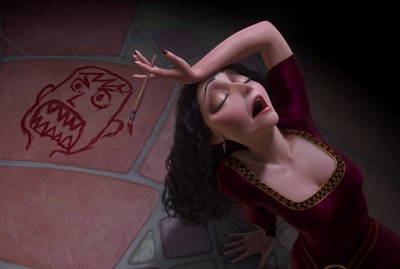
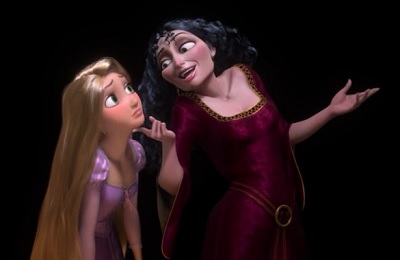
Now, I’m not going to claim this witch is as fearsome or powerful as Cruella de Vil. But it’s fascinating to watch Mother Gothel, perfectly voiced by Donna Murphy, manipulate her supposed daughter Rapunzel. This mother has Bette Davis flair as she pronounces the evils outside that Rapunzel must avoid. My favorite of the dangers she lists: men with pointy teeth.
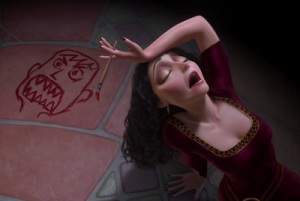
MenwithPointyTeeth-MotherGothel
“Skip the drama,” she advises in song. “Stay with Mama.” Murphy’s performance is simultaneously disturbing and hilarious.

Mother Gothel transitions from worldly dangers to a litany of Rapunzel’s weaknesses: her clumsiness, her naïveté, etc., which will supposedly make her easily fall prey to others.

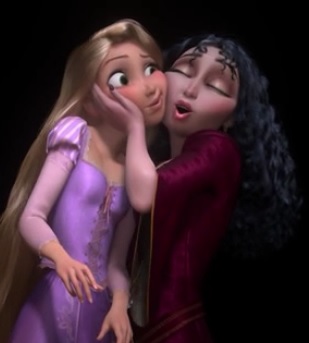
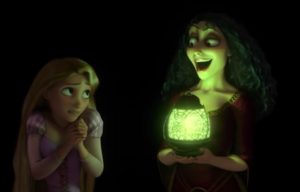
Of course, Mother Gothel pretends love, not fear of loss, is what prompts her tower hiding of Rapunzel.
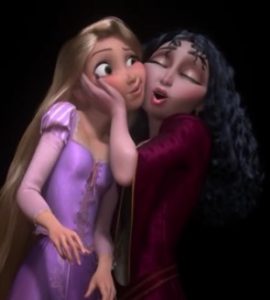
LoveYou-MotherGothelandRapunzel
(And, of course, she does love her obsessively—at least, that magical hair.)

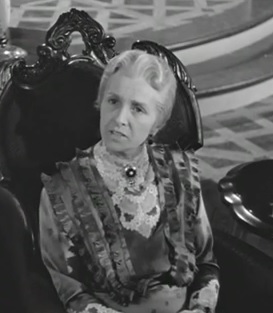
In terms of models, Mother Gothel is a twin of the monstrous parents in Like Water for Chocolate and Now, Voyager, mothers who think a daughter should exist solely to serve, and enjoy doing so.
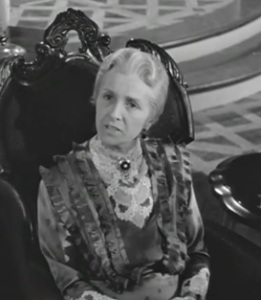
NowVoyager-GladysCooper
Mother Gothel likes to point out her maternal virtues, such as providing such great paints and soup!

I’d always considered the father of the original tale weak for giving his child to the witch’s care (to avoid paying for stealing food for his pregnant wife with his life). But I’d never reflected on just how cruel it was to leave his child in such hands. The ill effects are briefly seen when Rapunzel escapes, as she veers between bursts of joy and energy…
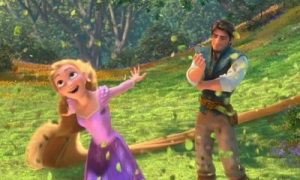
Joyous-Tangled

…and periods of debilitating guilt:

Miserable-Tangled
While this back-and-forth moodiness is funny to watch due to Disney’s deft portrayal, I kept thinking of Davis’s twitchy, insecurity-infused performance in Now, Voyager, and just how much therapy it would cost Rapunzel before she attained the exuberance and lightheartedness she displayed in the very next scene. Truly, a witch who just threatens physical harm would be sweet by comparison.

Amazing Allies
I used to like the sidekicks in Disney flicks, but after one too many Sebastian types (of The Little Mermaid fame), I was relieved to find the most prominent sidekicks largely silent, including an Owl-like chameleon, Pascal, whose expressions and gestures provide sage advice (in tribute to his name, of course).

PascalTangled
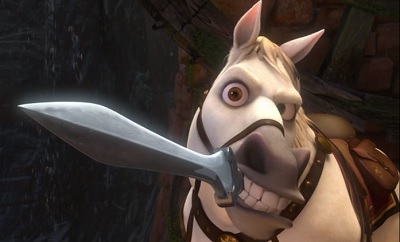
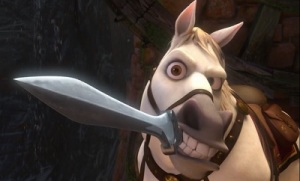
And there’s the glorious Maximus, a horse with amazing hunting skills and loyalty, who provides 90 percent of the comic relief of the film. As part of the royal guard, he tracks Flynn with Inspector Javert-like persistence after Flynn steals a crown from the palace.
Maximus-Tangled

Maximus falls for Rapunzel and reluctantly aids her beau, a reluctance that’s a joy to witness.

In fact, I was so enthralled by these animated allies that I found myself wishing the whole movie were silent, not just because these allies were the primary reward of watching the movie, but for the following additional reasons:

Utterly Forgettable Songs
Murphy (Mother Gothel) gets one good tune, and she’s a talented enough actress and singer to almost make the other songs worth hearing—almost. But with bland song after bland song, and the highly generic focus on dreams (seriously?), I was ready to return to the silent antics of Maximus. (If you can’t beat Kermit piping the lovely “Rainbow Connection” or the 1001 less compelling dreaming songs since, lay off of ’em.)

Scenery More Interesting than the Plot
A girl spends a lifetime in a tower, much of it reading, and the height of her ambition on escaping is to……see some lights. Umm, what? Couldn’t Disney have made her an artist—a writer or a painter (the murals!)? Or maybe an intellectual even? Surely Mother Gothel would have loved to provide the kinds of books that would turn Rapunzel into a scholar, as those might make her content to live a life of the mind, happy with her retreat. Turn the tower ivory, Mother Gothel! Come on! I’m not exactly talking about creativity here; I’m pronouncing the biggest cliché about towers ever. I know I’m supposed to believe Rapunzel has some spiritual connection with the lights, somehow understanding they’re for her, but if that’s the case, why didn’t Mother Gothel change the date of her birthday? The woman seems far too intelligent to have made such a dumb mistake.

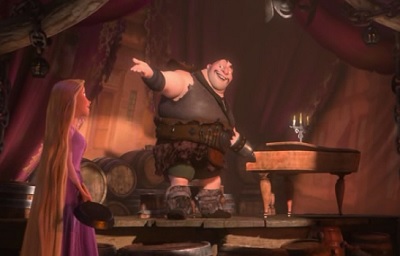
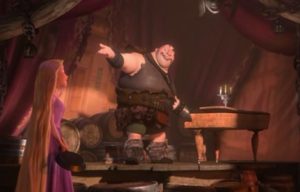
The first big moment after Rapunzel’s re-entry to the world involves turning a bunch of thugs to her side because she asks if they have dreams, and they proceed to share them.
DreamingThugs-Tangled
If I’d been in the theater, I’d have been tempted to throw popcorn at the screen. Even if this is a strange alternate universe where dreams aren’t discussed ad nauseam, neither this character, nor her own ambition, is at all inspiring. To see lights is not exactly the kind of dream to get criminals past their reluctance to open up. If the movie had played off her dream as comically stupid, what someone dozing in a tower would come up with, I’d have been all for it. But sigh. They played it as motivating.

In contrast to such clichéd scenes, all the details of the landscape sucked me in, especially the flood. In trying to get boys to watch the film, Disney really succeeded with the action shots.


Flood-TangledActionShot-Tangled
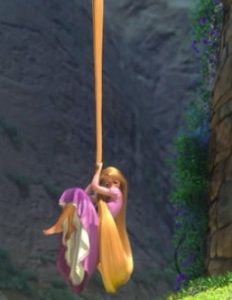
How interesting it would have been, in contrast to that silly song about grass when the heroine hits the ground and the unnecessary (if occasionally amusing) scene with the tough types, to just witness Rapunzel quietly taking in the wonders around her, jumping at everyday noises, stumbling a bit at the unaccustomed exercise. What humor and pathos would have been possible! Disney gets this for a second, as Rapunzel is paralyzed after her tower retreat, unable to make the 12-inch drop to the ground.
FootfromGround2-Tangled
That moment was worth the next hour.

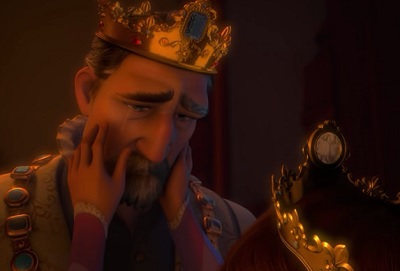
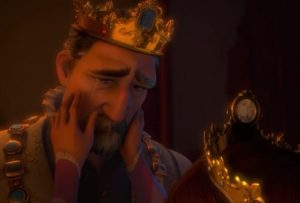
In fact, the only truly moving scene in the film is the silent clip of the king and queen, hesitant to practice this lantern ritual yet again, to allow themselves to still hope.
KingandQueen-Tangled
I wish that Disney hadn’t been so cowed by Pixar successes into such a conventional retreat from what’s compelling about this movie. They give Rapunzel a Barbie-sized waist. They back off from the interesting mother-daughter dynamic.
MotherGothelandRapunzel-insecurity
They don’t realize Maximus is the star. They have this supposedly feminist heroine spend her time on indisputably female-associated crafts instead of developing some kind of true ambition. And at the end of the movie she’s—surprise! A bride.

Disney had the potential for some Fantasia creativity, with silence used to beautiful effect, and the glimpses of the story’s potential still make this a fun movie. But how great it could have been.

Don’t forget to check out the other entries in the blogathon!
Share
Posted in: 1920s films, 1990-current films, Blogathons, Comedies (film), Drama (film) Tagged: animated movies, Disney, Now Voyager, overbearing mothers, Rapunzel, Tangled

Recent Posts

  • 100 Years Later, Still Scary: Dr. Caligari
  • Escaping Out of the Past (1947)
  • A Weeper for Those Who Love Jerks
  • Thank You, Academy, for Not Infuriating Me
  • Challengers (2024) Is a Bad Movie

Subscribe to Blog via Email

Enter your email address to subscribe to this blog and receive notifications of new posts by email.

Categories

  • 1920s films
  • 1930s films
  • 1940s films
  • 1950s films
  • 1960s films
  • 1970s films
  • 1980s films
  • 1990-current films
  • 2020s films
  • Action & Sports Films
  • Anti-Romance films
  • Blogathons
  • Childfree
  • Comedies (film)
  • Drama (film)
  • Feminism
  • Femme fatales
  • Film Noir/Crime/Thriller & Mystery
  • Gloriously Silly Scenes
  • Horror
  • Humor
  • Mae West Moments
  • Musicals and dancing films
  • Oscars
  • Random
  • Romance (films)
  • Romantic Comedies (film)
  • The Moment I Fell for
  • Turn My Sister into Classic Movie Fan
  • TV & Pop Culture
  • Uncategorized
Share
Classic Movie Blog Hub Member

Recent Comments

  • leah@carygrantwonteatyou.com on Meg Ryan’s Fate Foretold in Joe Versus the Volcano
  • Ryan on Meg Ryan’s Fate Foretold in Joe Versus the Volcano
  • leah@carygrantwonteatyou.com on 100 Years Later, Still Scary: Dr. Caligari
  • The Classic Movie Muse on 100 Years Later, Still Scary: Dr. Caligari
  • leah@carygrantwonteatyou.com on 100 Years Later, Still Scary: Dr. Caligari

Archives

  • November 2025
  • September 2025
  • May 2025
  • March 2025
  • January 2025
  • November 2024
  • August 2024
  • July 2024
  • May 2024
  • March 2024
  • February 2024
  • December 2023
  • November 2023
  • October 2023
  • September 2023
  • August 2023
  • July 2023
  • May 2023
  • April 2023
  • March 2023
  • January 2023
  • December 2022
  • November 2022
  • September 2022
  • July 2022
  • May 2022
  • April 2022
  • March 2022
  • February 2022
  • October 2021
  • September 2021
  • April 2021
  • March 2021
  • February 2021
  • December 2020
  • October 2020
  • September 2020
  • July 2020
  • May 2020
  • April 2020
  • March 2020
  • February 2020
  • December 2019
  • October 2019
  • September 2019
  • June 2019
  • May 2019
  • April 2019
  • February 2019
  • January 2019
  • November 2018
  • September 2018
  • July 2018
  • June 2018
  • May 2018
  • April 2018
  • March 2018
  • February 2018
  • January 2018
  • November 2017
  • September 2017
  • August 2017
  • July 2017
  • June 2017
  • May 2017
  • April 2017
  • March 2017
  • February 2017
  • January 2017
  • December 2016
  • November 2016
  • October 2016
  • August 2016
  • July 2016
  • June 2016
  • May 2016
  • April 2016
  • March 2016
  • February 2016
  • January 2016
  • December 2015
  • November 2015
  • October 2015
  • September 2015
  • August 2015
  • July 2015
  • June 2015
  • May 2015
  • April 2015
  • March 2015
  • February 2015
  • January 2015
  • December 2014
  • November 2014
  • October 2014
  • September 2014
  • August 2014
  • July 2014
  • June 2014
  • May 2014
  • April 2014
  • March 2014
  • February 2014
  • January 2014

Meta

  • Log in
  • Entries feed
  • Comments feed
  • WordPress.org

Copyright © 2025 Cary Grant Won't Eat You.

Church WordPress Theme by themehall.com