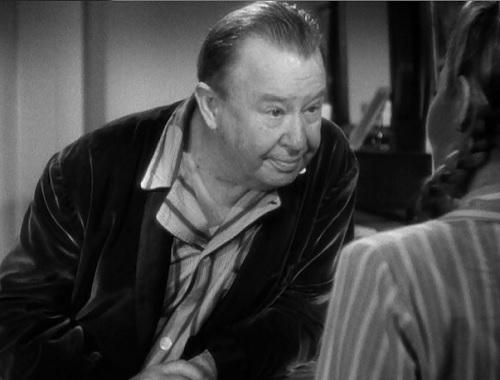
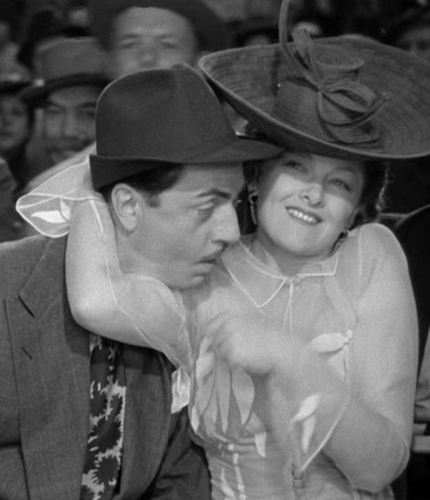
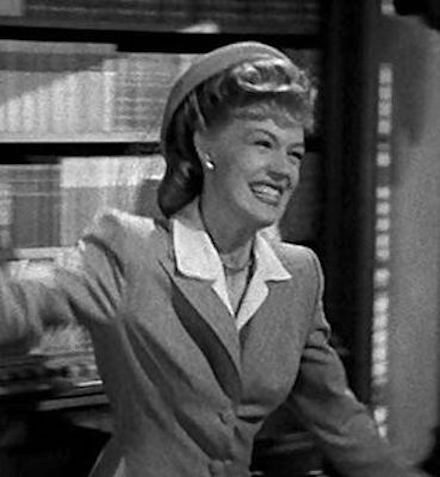
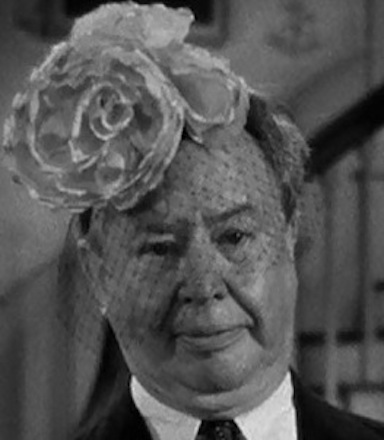
Yes, this movie is a mess: confusing dialogue, incomprehensible character development, choppy plot development, and some truly unfortunate music choices. But there are three good reasons to still watch Jean Renoir’s curious noir, my choice for the Classic Movie Blog Association Fun in the Sun! blogathon
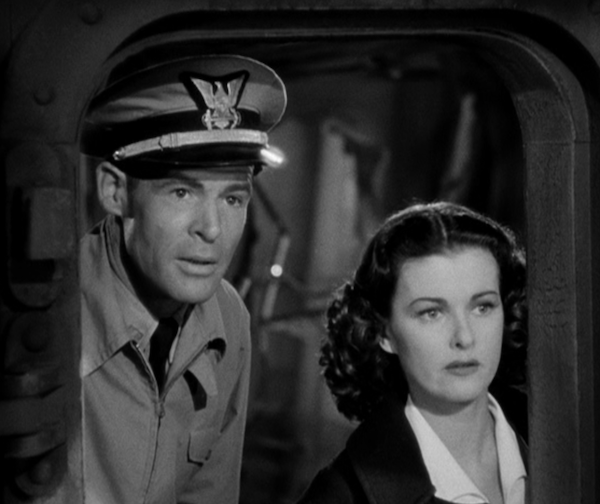
Robert Ryan’s performance as Scott. Can any man in noir perform intensity as well as Robert Ryan? I never feel any attraction or liking for Ryan’s characters in any film, but he certainly gets under my skin. Who better to play a Coast Guardsman with PTSD than Ryan? Scott is also impulsive, erratic, and passionate—and fully realized thanks to Ryan.
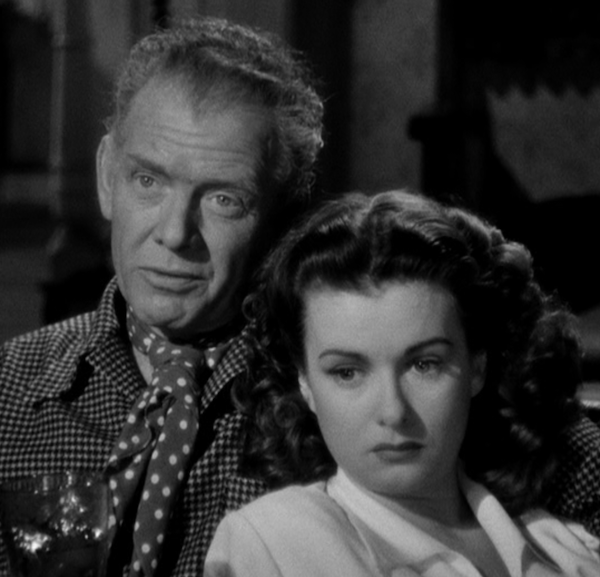
The complexity–and unpredictability–of the “love” triangle. Scott falls for Peggy (Joan Bennett), a woman collecting firewood next to an old shipwreck, because she’s haunted, like he is. It doesn’t hurt that Peggy looks like Joan Bennett. Unfortunately for Scott, Peggy is married to an artist, Tod (Charles Bickford), who is, if possible, even more intense than Scott. We learn soon that Peggy accidentally blinded Tod in a drunken squabble. Her husband is so awful–abusive and violent and creepy–that we understand her fling with Scott and desire to escape with him. But things aren’t quite what they seem. There is something still between Peggy and Tod, mysterious as that connection might be to viewers. It’s not exactly love; it’s not exactly hate. It may just be toxicity–but there’s something there all the same. How will it all turn out? The film keeps us guessing.
Jean Renoir. It’s odd to watch a film by such a famed director that is such an odd misfire. The story is that an advance viewing was a disaster for Renoir, and he was forced to make cuts and edits that didn’t serve the story. While that butchering IS clear, his original goal isn’t. But that’s what makes the film so intriguing. What did he want to say about these three tortured people, especially the original couple? What are we to make of how it starts, and how it ends? Why did he feel traditional noir tropes wouldn’t serve him, and yet set out to write (with Frank Davis) a noir anyway? And why choose this story to adapt? It’s hard to say, but the guesswork will keep you watching.
This review is part of the blogathon held by the Classic Movie Blog association, Fun in the Sun! Check out the excellent entries there, which are also mainly much happier viewings than this grim tale!
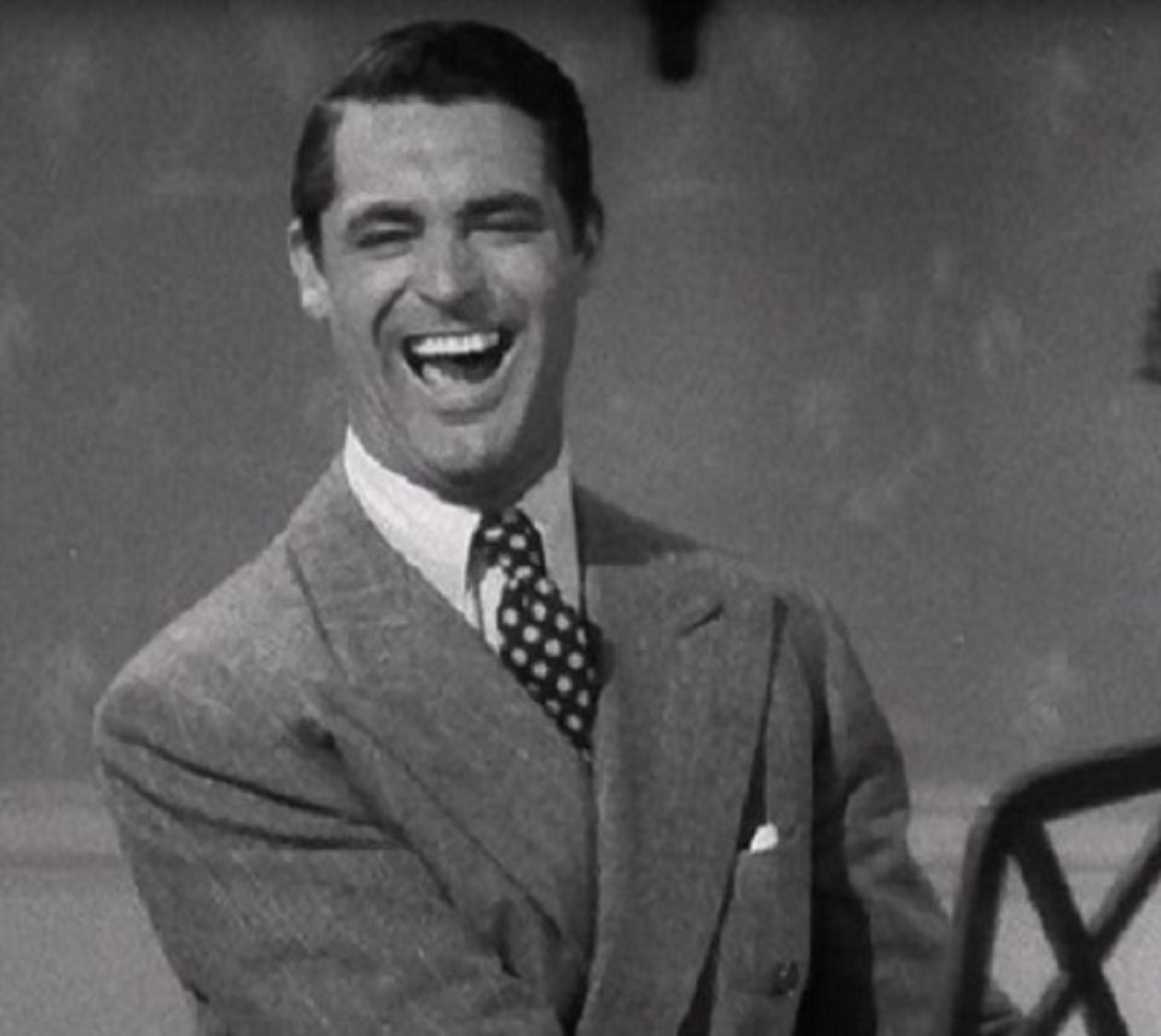
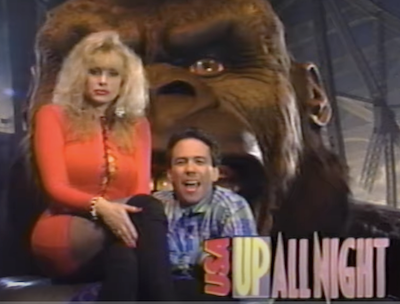
Today I felt a pang on hearing about Gilbert Gottfried’s death. Of course I found him annoying, but I also loved him. He–and Rhonda Shear–gave me USA Up All Night just when I needed it, a show that taught me valuable lessons that have stayed with me ever since. Here’s what I learned from that weekend stalwart, which, for the uninitiated, basically consisted of terrible, terrible movies playing from 11 pm /12 am till the wee hours on Fridays and Saturdays, with interludes of jokes, skits, and commentaries from the hosts.
You Can Find Amusement in So Many Things. Camp was always appreciated in my family: my Uncle Ed’s running commentary on Slugs was a family reunion highlight. But in between those beloved family visits, I had Gottfried and Rhonda, poking fun of absurdly terrible B movies that no other channel would even play. Even Rhonda’s ridiculously perky enunciation of UP could make me laugh. To this day, I find enjoyment in so much pop culture that others don’t, and that’s partly thanks to USA Up All Night.
Don’t Take Your Job Too Seriously. True, it’s hard to not laugh about your job when you’re commenting on Cheerleaders Beach Party. But Gottfried’s constant amusement (you could definitely see “This is my job?” in his expression) reminded me that every job doesn’t have to be a forever-career or vocation. Sometimes, you pay the bills doing something silly, and that’s OK. (And most of us do have absurd tasks even in the most serious of jobs.)
Binging Movies Is Fun. Oh, you poor souls who didn’t learn this fact until Netflix. Gottfried and Rhonda (and the earlier host I never watched, Caroline Schlitt) taught us Gen Xers this back in the early 90s. Think of all the years of joy you missed!
Embrace Your Awkward Self. Gottfried and Rhonda were never cool. They were goofy and absurd and nerdy and silly. But because they clearly didn’t care WHAT they were, they reminded me, an awkward teenage girl, that I didn’t have to be cool to have fun.
Make Solitary Friday Nights an Occasion. In my twenties and early thirties, I moved states several times, each time alone. I was always either single or dating someone long distance, so Friday nights were rough on me. I hated the time it took to be moved from new friends’ weekday to their weekend rituals. To stave off the loneliness, I’d splurge on Fridays: wine, chocolate, good bread, and cheese. Maybe even takeout. I’d grab that remote and begin my movies, and all was right with the world. Sometimes, my preparations led to unhelpful comments by store clerks. (“Oooh-hoooh, honey, you’re having a romantic night tonight, huh?”) But in time, these Fridays became so peaceful and cathartic that I missed them when I had plans. (A bit of a foretaste of middle age, huh?) Would I have known to make an occasion of movie binging each Friday, without Gottfried and Rhonda’s example?
You Never Know What Your Impact Will Be. I don’t think Gottfried could have anticipated that he’d be celebrated by a writer for USA Up All Night when he died thirty years later, do you? You just never know.
As a new blogger, you often feel as if you’re just sending content into the ether, content no one will ever see or remark upon.
Why do I do it? you ask yourself. After all, you get no comments. You can see from your stats that only bots have viewed your posts. Why bother? you ask yourself. I should just give this up.
Until suddenly someone begins to post comments—and that someone isn’t your mom or English teacher. That someone is a stranger.
And she comes back—again and again. And her comments are wise and funny and generous and thought provoking, and they mean something to you not just because she’s a stranger, but because she’s GOOD. A great writer. Far more knowledgeable about the subject matter than you are. A frequent blog award winner.
And she still thinks YOU have something to say.
So you gain confidence. And you post more. Until you get the hang of it, get into the routine. Of course, it’s inevitable that you’ll slip. For months you won’t post. But when you do, there she is, as if to remind you, I care. I really do. Keep writing. And she makes you believe that there are others out there, not as confident as she perhaps, who are reading too.
And as you participate in blogathons, you notice that she’s doing this for others—many others. That her comments accompany so many posts, and that they’re never generic comments. They’re always specific, always thoughtful. How you smile to see her name! And you know that you should do the same, help others keep going. But you never manage to set the bar as high as she does.
That’s who Paddy of Caftan Woman was to me. I just learned of her death, and like many people who’d never met her, I mourned. I’ll never get to read any new posts from her—her funny, insightful, interesting pieces that taught me so much about classic films and film history. I’ll never get to see her name in my comments again, or experience her sympathy for my struggles in trying to convince my classic-movie-intolerant siblings. And neither will all the others she supported.
So I want to say thank you belatedly to Paddy, and to the virtual supporters like her who help writers keep going when we want to give up, when we wonder what the point is, when we feel like no one cares.
Today I’d like to post some images from classic film that remind me of Paddy and what she meant to me—and to so many others.
This is how I imagine Paddy wrangling me to keep writing:
Here’s the joy I felt when I saw her name in my comments:
And most of all, I think of this character when I envision Paddy: the wise one who knows how to be silly, to balance warmth and honesty with wit, to say just what’s needed, and to do what will always make you smile.
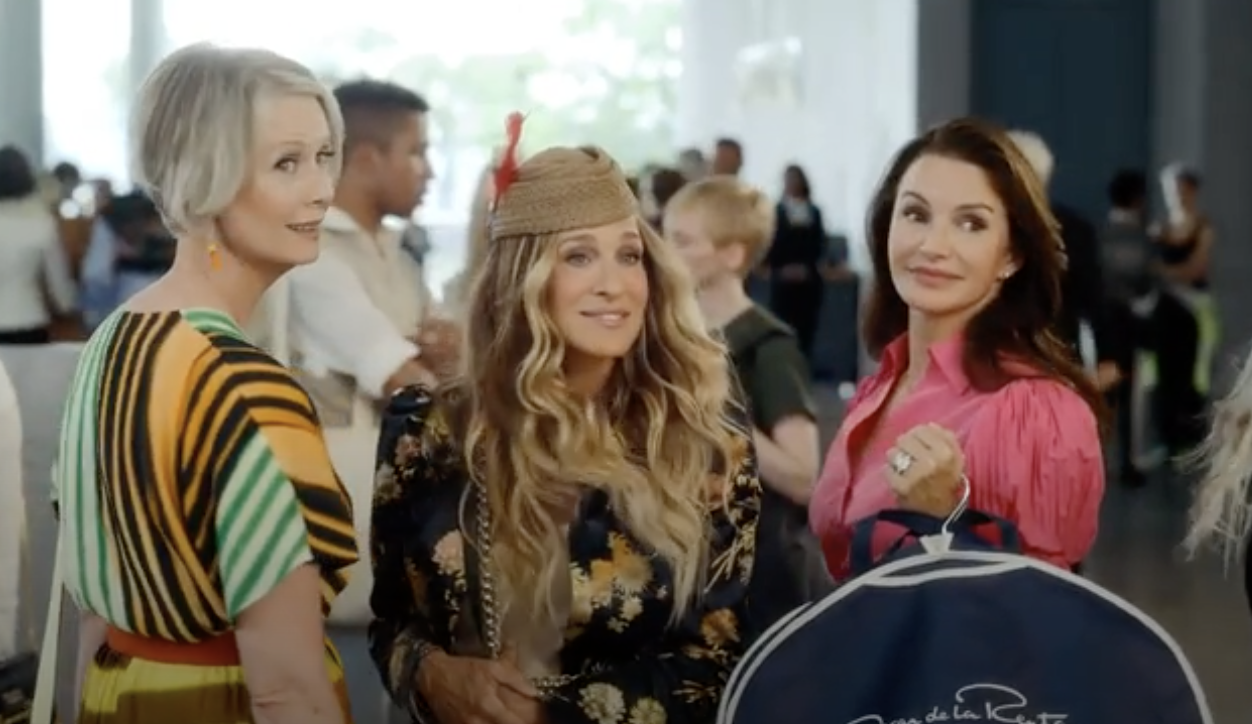
Sex and the City had this odd way of pretending its heroines were parentless. Sure, there was a reference or two, and that lovely episode about Miranda dealing with her mother’s death. But overall, the show just pretended the women had no moms or dads. For six seasons and two movies, the lack of parents enabled the show to stick with sunnier, lighter fare, favoring romance over family drama.
And then the reboot came, presenting the show’s writers with a conundrum: how do you talk about women in their fifties—especially childfree ones—without dealing with aging parents?
Unfortunately, the writers’ solution was to conflate the fifties and eighties, giving the ladies hip replacements and their husbands hearing issues and farmers’-market-forgetfulness. Even the elderly parents of the new characters are pressuring their kids to get married or use their time differently—in other words, things parents of 30-year-olds do.
And how grim these writers make aging seem! Look how much more measured—and funny—Grace and Frankie is in tackling the same ground—and for much older women.
What Carrie, Miranda, and Charlotte would really be doing if they were in their fifties is worrying about their parents’ minds, limbs, and ailments. And for those of us who have been living with the slow-burn terror that our parents will catch COVID—or grieving the loss of those who died of it—the fear of parental aging is what’s keeping us up (not partying neighbors or mysterious dinging sounds). That’s why the erasure of our worry from the experience of 50-year-old women is infuriating in a franchise that used to get us.
What important things this show could have covered about what single, childfree women face in their fifties! What if Carrie’s married siblings with children had expected her to move home to take care of their sick mother or father? How would she have dealt with that as a single woman whom they assumed had time they didn’t?
The parentless state of our heroines also killed so many avenues for humor, like mothers’ attempts to comfort their daughters’ PMS worsening with age by saying, “Don’t worry. You don’t have long to worry about that.” (Just my mom? OK, the cheese stands alone.) Or dads bluffly cheering daughters after bad Bumble dates by saying, “Aren’t you about ready for Our Time? That’s much better.”
Of course, those weren’t the only humorous avenues And Just Like That neglected. Exactly how much did your frugal friend invest in wrinkle cream once she spotted Zoom’s skill for highlighting neck skin sagging? What collection of ring lights has your single buddy amassed to ensure she looks young for those selfies of her breasts for Hinge dates?
And the thing is, your friends in their 50s will confess these acts openly to strangers. That’s one of the beauties of aging: you don’t care what others think. We are ALL Samantha now. I remember the joy of canceling plans for the first time because I didn’t feel like taking a shower. Or the admission that yes, I was watching Lifetime reruns on a Saturday night, or organizing my earrings instead of going to a party. How much I would have loved Carrie dropping by Miranda’s because the latter couldn’t tear herself away from a marathon binging of Tiger King! (An update on the rabbit episode. LOL.) Remember when Carrie struggled to get her friends together? Now THAT’s a struggle for your 50s.
A podcast for Carrie never made much sense to me either—not for a woman who loves being seen (especially not a 90s-era radio show masquerading as a podcast). What does our former sex columnist think of Love Is Blind? Or 90-Day Fiancé? What if she hosted some cheesy reality dating show, like Love Island? That could have been so funny, unlike Che’s humorless standup.
And what silly notions about being woke these AJLT writers have! Is this an after-school special from 1985? What women in their fifties are suddenly realizing they have no non-white friends? I know these characters aren’t as reflective as they could be, but I do believe they have eyes.
What would these women be facing? Well, these characters might be worrying about terminology they use when it comes to race, ethnicity, and gender. Miranda would not have blundered as much as she did in class. But I could see her using a term from five years ago. Or Charlotte, Carrie, or Miranda could be chided by BIPOC friends for a clueless privilege moment. If AJLT wanted to address race in a more organic way, why not have Lily recovering from the trauma of the racism she dealt with during COVID, or Charlotte appalled by other parents fighting critical race theory?
(About midway through the series, I began to wonder whether Michael Patrick King was paying us all back for calling Carrie an unlikeable narcissist by making Charlotte and Miranda so much worse. Why else reinvent history, and make Carrie suddenly the most tolerant and understanding of the bunch? You think Miranda should have been the star? he might have said. I’ll show you…..)
I was, of course, happy to see Miranda, who is played by a public-school advocate, re-inventing her life to do something she found meaningful. That’s what women in their 50s do: Try to find new purpose in their lives. But AJLT had her dump that idealism to play fangirl to a bad comic (how like Carrie that decision was). Che was a missed opportunity, of course. I would have liked Carrie recognizing in Che’s struggles some similarities between what she had dealt with in feeling isolated as a single woman. Their experiences would never be quite the same. But empathy is born of comparison. Carrie didn’t have to fully get it. But she could have begun….
I didn’t expect much of the reboot, I admit, despite my love for Sex and the City. The movies, after all, had already done damage. Samantha’s absence, I knew, would do more. Still, I didn’t expect to be this disappointed. I’m younger than these women, but they always echoed some measure of my experience—and some measure of my future.
Until now.
Parents couldn’t have saved And Just Like That entirely. But it would have been a start.
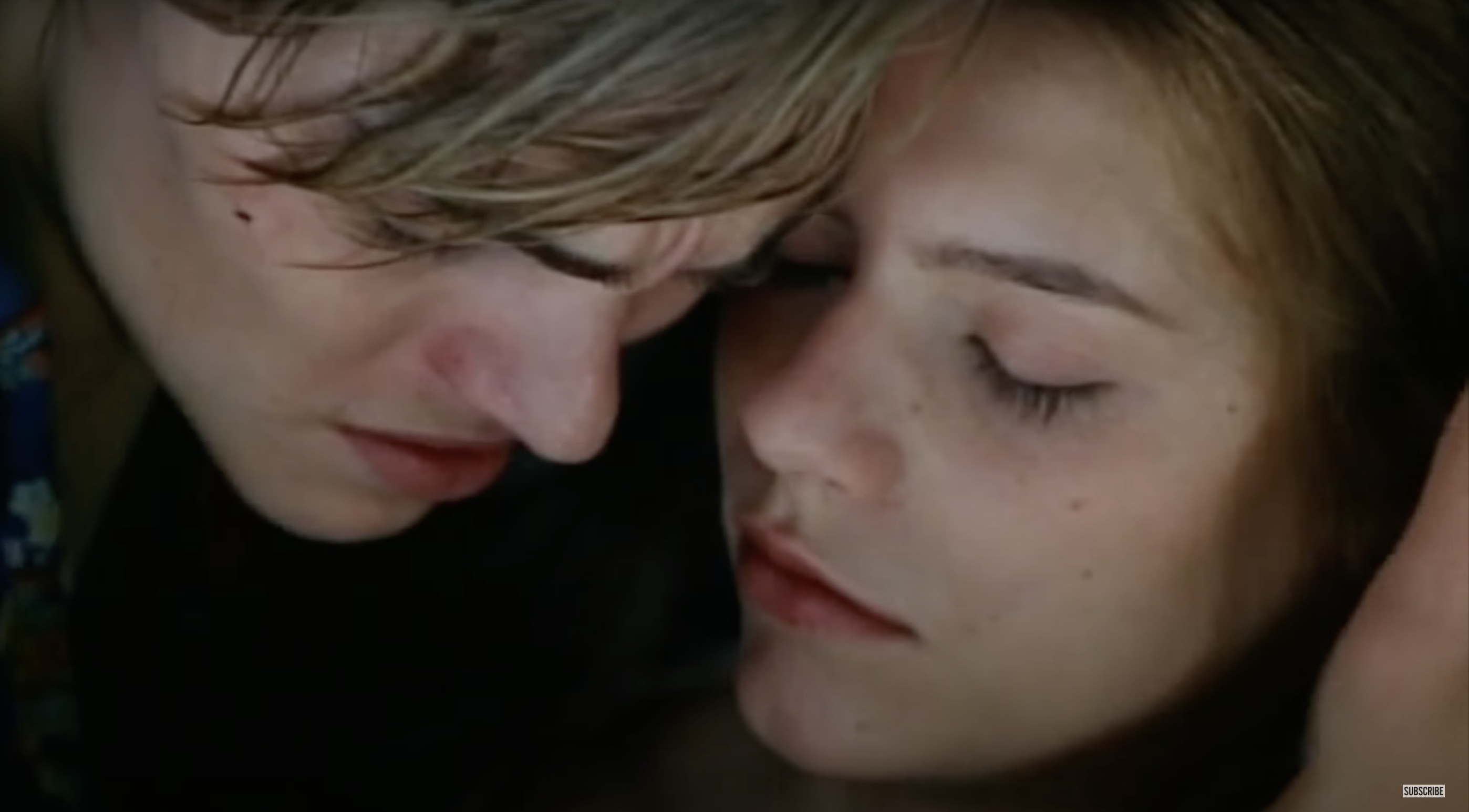
Romeo & Juliet. This guy was in love with another gal last week. This is not a romance for the ages; this is a guy who can’t handle being without a girlfriend. Juliet, why didn’t you hold out for something better?
The Teens of Say Anything. Diane (Ione Skye), I’m sure you’re going to have a great time on your British adventure while your boyfriend, Lloyd Dobler (John Cusack), is hanging out in your apartment watching kickboxing videos all day. I know your daddy, the embezzler, set the bar for men low, but come on.
The Cheaters of Something Borrowed. Hollywood has such a low opinion of us really. We’re asked to get behind Rachel (Ginnifer Goodwin), who had sex with her best friend’s fiancé, Dex (Colin Egglesfield). We’re supposed to root for the cheaters’ love to prevail because the betrayed friend, Darcy (Kate Hudson), is vain, and Dex used to like Rachel. Ummm, what??
Heathcliff & Catherine of Wuthering Heights. Ahhh, the sociopath and the narcissist. Now that’s a coupling that we all want to see, right?
TheUnnamed Heroine & Maxim de Winter of Rebecca. So, when you find out your husband killed his ex in a rage, the proper reaction is NOT to feel better (because now you know he didn’t love her). That makes you almost as creepy as he is. I’ve never rooted so hard for a (dead) villain of a story.
Those are five of the least ideal couples that novels, plays, and movies would have us celebrate. I can come up with ten more without trying. Which couples do you find the most laughably awful?
I grew up resenting a lot of the rom-com fare on television and film. Always, it felt, the woman had to change to find love. Sandy in Grease was just the start: Learn to strut. Show that cleavage. Pull your hair out of the bun! Relax! Be feminine! Learn to bake or something.
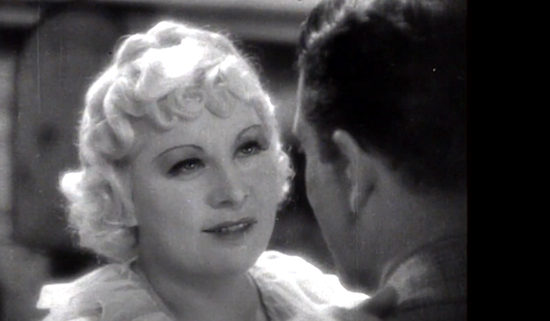
Maybe that’s why I love Mae West so much: In her films, she’s the only one who never has to change. Anyone who doesn’t get her? They better start, if they want Mae’s company. (And they ALWAYS want Mae’s company.)
Mae’s unrepentant, very human, hilarious heroines are perfect, just as they are. Cleo from Goin’ to Town (1935) is just one example.
Cleo decides she wants a particular upper-crust guy. After her (literal) lassoing of him doesn’t win him, she decides to change herself over into a classy lady. Which pretty much means she convinces everyone she already is one.
**Some spoilers**
Oh sure, Cleo picks up some new hobbies: horse betting, husband collecting, and opera performances. But Cleo is Cleo. When she plots her rise, we all know she’s going to get there.
Favorite Moments
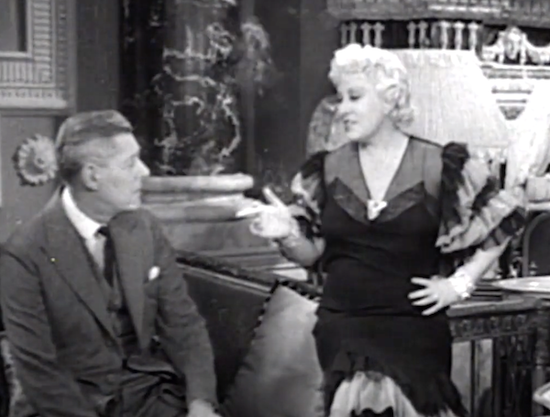
The fashionable ladies visit her after her fashionable marriage. Trying to insult her, they press her about her lineage:
Socialite: “Speaking of relatives, Mrs. Colton, have your ancestors ever been traced?”
Cleo: “Well, yes, but they were too smart, they couldn’t catch ’em.”
She says this, mind you, while intent on cracking nuts.
And, of course, who can forget the scene when Cleo plays Delilah? (Her description of Delilah is “one lady barber who made good.”)
While she sings in a high register (therefore, I assume, proving she has the pedigree to pull off opera), she does her va-voom hip shimmies between notes, proving that she’ll always be a dance hall girl.
And in a Mae West movie? There’s nothing better to be.
I’ve written before about how Mae can always pull me out of a bad mood. That’s why I chose to re-watch one of her films for the Classic Movie Blog Association’s fall blogathon, Laughter Is the Best Medicine. Don’t miss the other entries from my talented peers!
Have you ever wondered why Winona Ryder’s character in Reality Bites has friends? Or why Julia Delpy doesn’t have legions of men following her off the train in Before Sunrise? Or why every person in customer service doesn’t watch Clerks? So have we. Join my friends’ and me for our second series on our podcast, Nobody Knows Anything.
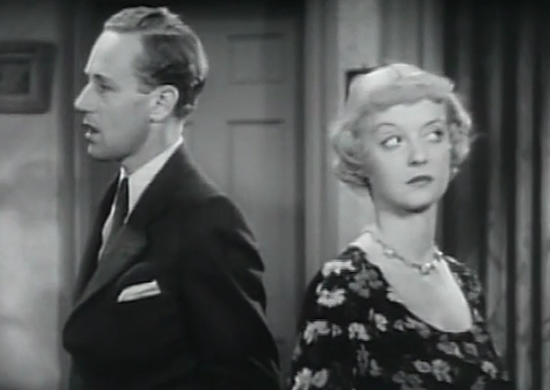
I read Of Human Bondage as a preteen/teen and was moved by the story of a would-be artist who eventually discovered that a simpler life of helping others was his route to happiness. As a wannabe artist myself, Philip’s journey was meaningful, even enlightening. His time practicing medicine for a poor community won the respect of his patients and his gruff superior—even crushed the snootiness that had marred the rest of his life. While Philip’s extreme sensitivity (related to his club foot) was what drew me as an angsty young girl, it wasn’t his only trait. He was funny, self-aware, compassionate—a fully rounded character.
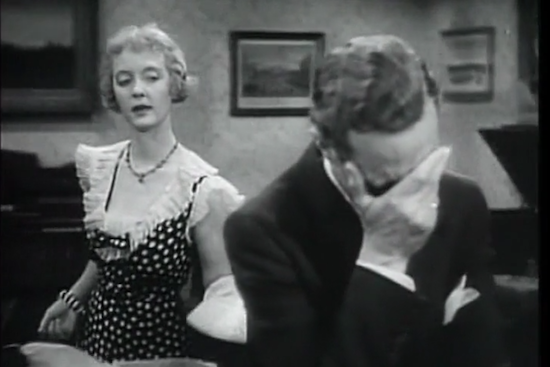
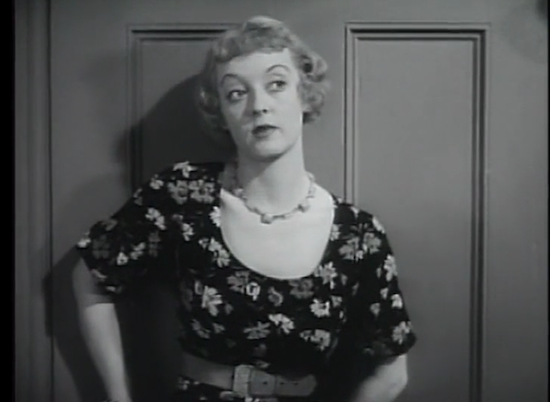
What Hollywood would do to William Somerset Maugham’s reflective character I had a right to fear, especially since the 1934 version was known as Bette Davis’s breakout role. She played the extremely unlikable Mildred, a mean-spirited waitress who detours Philip on his journey. Mildred traps him in his lust for her, but never pretends to like or be faithful to him. She sucks away his time, energy, and money, and he’s too weak to resist.
She is, in short, one of Maugham’s complex female characters: fascinating, headstrong, real—the kind of role actresses are craving now, almost a hundred years later. And with an ambitious young Davis at the helm, sick of her milksop roles and ready for something meaty, what chance did Leslie Howard have for any attention (his starring role notwithstanding)?
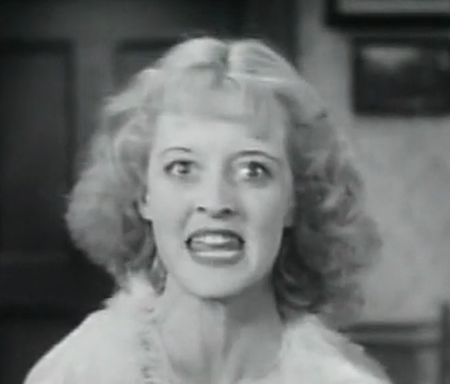
No one can stand up to Davis in full chewing-the-scenery mode.
She doesn’t nail the accent, but Davis does fully personify this selfish woman, particularly her flirtatious nature and prickly pride. She shows how Mildred’s self-interest–her primary trait–can’t stand up to her destructive passions. Except for her trademark burning magnetism, Davis is nearly unrecognizable in the role: she BECOMES Mildred.
She famously only got a write-in nomination that year, but won the Oscar the next, most say in compensation for the MIldred loss. Bette’s (Cockney?) accent is regrettable, but everything else about her characterization is perfect.
I’m not sure if writer Lester Cohen decided the movie would be the Philip-Mildred show, given that part of the book’s high drama, or if director John Cromwell saw what he had in Davis and switched it accordingly. But poor Philip’s spiritual journey is reduced to a few scenes, with conversations with Mildred and his later love Sally (Frances Dee) meant to explain his transformation.
Basically, fans of the book can enjoy the fine sensitivity of Philip on screen, which Howard carries off. But Philip’s growing devotion to his career is off the screen. Somerset Maugham was a genius at empathy, and his semi-autobiographical masterpiece shows how Philip’s extreme sensitivity, such a burden as a child, led to his success and happiness as a humble doctor (just as Maugham’s sensitivity to his stutter may have made him a great writer). That theme is totally lost in the don’t-date-women-like-Mildred messaging of the film.
So as far as capturing the book, this film fails. But the movie does nail William Somerset Maugham’s trend of giving female characters their due. I’ve written before about how frequently actresses in his stories are nominated for (and often win) Oscars once his films are screened—including Annette Bening, who should have won for Being Julia.
Look at Davis: wins her Oscar for Dangerous because of her performance as Mildred, then gets nominated for The Letter, another of Maugham’s most famous stories, just six years later.
If that isn’t an advertisement for the continual reading of William Somerset Maugham’s body of work, I don’t know what is. And that–in my eyes–is what makes for a successful film adaptation.