Cary Grant Won't Eat You

Classic movies for phobics

  • About
  • eBooks
  • Previous Blogathons
Classic movies for phobics

Author: leah@carygrantwonteatyou.com

Actors Too Pretty for Their Parts

11/21/2014 by leah@carygrantwonteatyou.com 4 Comments

I would like to say that an actor’s performance always trumps any preconceptions of mine about a character from a book I’ve read, that I can set aside my firm conviction that a character was blonde or tall or curvy. But the truth is, sometimes my assumptions ruin a performance for me, no matter how adept and nuanced the acting, no matter how much that performer captured, even enhanced the essence of a character. And for some reason, I am most frustrated when an average-looking book character suddenly becomes a knockout in the movie.

Sometimes, I know this reaction is foolish. But in other cases, the character’s looks were essential to the character/story. Hollywood often mistakes delicacy for sex appeal, or assumes we’re all afraid to see someone onscreen who isn’t dazzling. Here’s my list of the most annoying casting choices in terms of beauty, from least to most irritating:

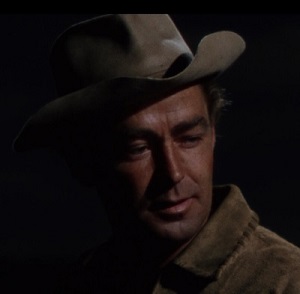
Fourth Runner Up: Alan Ladd as Shane (1953)
LaddCowboy-Shane
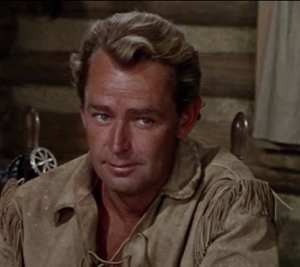
Shane is meant to be dark and mysterious. Alan Ladd could be a disturbing, haunted character, and he nails the cowboy’s reticence, humility, reserve. But I couldn’t see in him the forbidding man who managed to overcome my eighth-grade reluctance to read a western. When the teacher showed the film in class, I remember my fury: Come on. We’re not casting for New Kids on the Block here! (i.e., One Direction for you youngsters). Admittedly, the hairstyle and clothing designers didn’t help:
LaddasShane
In the battle between him and the bad guy, played by Jack Palance, I am so distracted by that pretty face that I’m sure the gunman would be too.

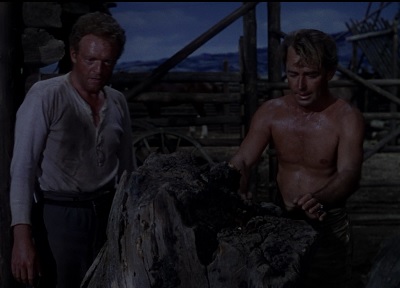
This casting decision also tainted the almost-romance between him and Marian (Jean Arthur). In the book, she is so drawn by his strength of character that she can’t help developing feelings for him. But in this film, it was hard not to believe Marian just found him hotter than her husband, Joe (Van Heflin).
HeflinandLadd-Shane

Third Runner Up: Lawrence Olivier as Darcy in Pride and Prejudice (1940)
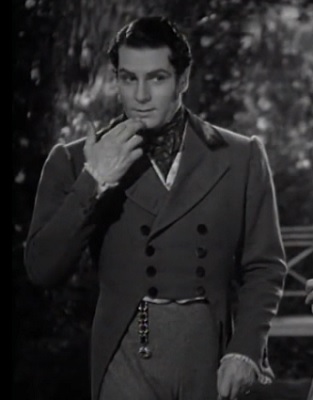
OlivierasDarcy
Lawrence Olivier is a good Maxim de Winter in Rebecca. The character is described as aristocratic and cold, like a painting of a fourteenth-century nobleman: “His face was arresting, sensitive, medieval in some strange explicable way….Could one but rob him of his English tweeds, and put him in black, with lace at his throat and wrists, he would stare down at us in our new world from a long distant past…” Olivier fits this description perfectly; in fact, he always seems most at home in period dramas.
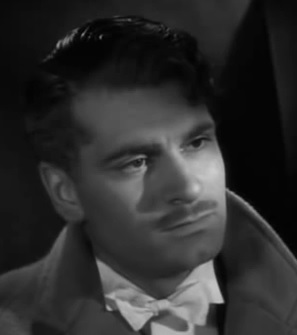
OlivierRebecca
But when it comes to bringing to life the imposing Fitzwilliam Darcy, this short Englishman looks too much like a toy soldier to me. I don’t see him as gathering all eyes due to his “fine, tall person, handsome features, noble mien.” There needs to be some rugged in Darcy’s handsome, and delicate Olivier doesn’t cut it. I see this actor as the snob cutting down a girl for wearing thrift store clothes, not a man whose very presence could intimidate a woman as sassy as Elizabeth Bennett.

 Second and First Runners Up: Joan Fontaine as Mrs. de Winter in Rebecca (1940) and Jane Eyre (1943)
Given, the narrator in Rebecca is a very humble sort, unlikely to recognize her own charms. And Fontaine’s looks are less sexy than those of the striking Anjelica Huston type I always imagined Rebecca to be. But she certainly doesn’t appear to be the mousy, flat-haired woman she’s described as in the book:
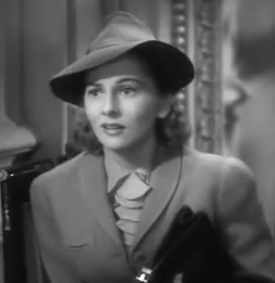
FontaineinRebecca
A girl this lovely surely would have gotten more attention from Mrs. Van Hopper’s friends. For the story to work, she needs to have been belittled and underestimated throughout her life, and I’m just not buying it. Does Fontaine capture the hesitancy and insecurity of the wife? Absolutely. Did the filmmakers try to tone down her considerable looks through makeup and hair style? Yes. Did I ever forget those looks enough to believe her as Mrs. de Winter? Not at all.

While the choice of Fontaine for Rebecca was a poor one, the decision to make her Jane Eyre was far worse. There’s no way a woman this ravishing would ever utter these famous lines to her love (bolding mine): “Do you think, because I am poor, obscure, plain and little, I am soulless and heartless? You think wrong! – I have as much soul as you, – and full as much heart! And if God had gifted me with some beauty and much wealth, I should have made it as hard for you to leave me, as it is now for me to leave you!”

Yeah, this woman looks plain:
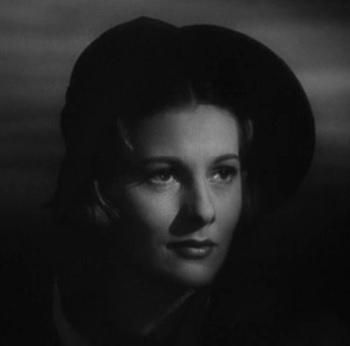
FontaineJaneEyre
All of us less-than-beautiful little readers out there were thrilled to discover in Jane a heroine who wasn’t gorgeous but was strong-willed, proud, passionate. Too bad Hollywood doesn’t get that ordinary girls like their heroines to look like they do…..

Winner: Lana Turner as Marianne in Green Dolphin Street
Of all the silly selections I’ve listed, the most ludicrous by far is this one, especially since the film’s preview made a bold claim that it had not altered the source material:
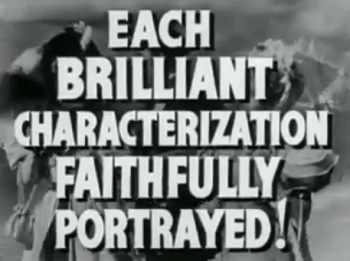
TitleSlideGreenDolphin
Let’s see if you agree with MGM’s statement. In the novel, two sisters, Marianne and Marguerite, fall for the same guy, William (Richard Hart). He adores Marguerite, the sweet, gentle beauty (Donna Reed).
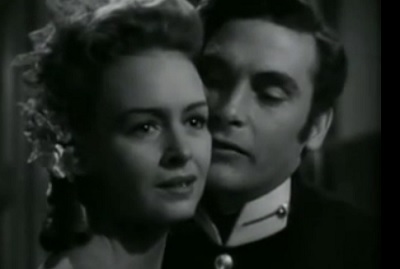
DonnaReedandRichardHart
After moving to New Zealand, he sends for the sister he wants for his bride, but instead of writing the name of his girlfriend, Marguerite, in his proposal letter, he writes Marianne instead because he’s drunk and kind of an idiot. To his shock and dismay, he’s stuck with marrying his love’s prickly, smart, unattractive sibling, portrayed by this actress:
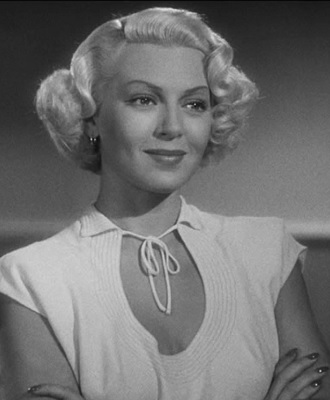
LanaTurnerinPostman2
’Cause when I’m trying to come up with the gal all the boys choose girls-next-door over, Lana Turner is first on my list. Of course, the movie changed the plot a bit to make this casting choice look a bit less ridiculous. But since the reader likes Marianne in part because she’s so much more than she seems to outsiders, this va-va-voom choice doesn’t exactly convey novelist Elizabeth Goudge’s meaning.

And there you have it. My choices for actors and actresses far too pretty for their roles. What are yours?

Share
Posted in: 1940s films, 1950s films, Drama (film), Humor Tagged: Alan Ladd, Green Dolphin Street, Jane Eyre, Joan Fontaine, Lana Turner, Lawrence Olivier, Rebecca, Shane

Disney’s Tangled: Better as a Silent Film?

11/11/2014 by leah@carygrantwonteatyou.com 8 Comments

MotherKnowsBest-Tangled
This post is part of the The Fairy Tale Blogathon hosted by Movies Silently. Check out the other entries!

I was hesitant to give Tangled a chance. I’ve always been bored by Rapunzel, who had little to recommend her but strong hair. Sure, she had beauty—yawn—and a pretty voice (What heroine doesn’t?) But she always seemed so idiotic to me. She had two tasks in her life—let down her hair, and conceal the prince’s visits, and she botched one of them, setting her love up for the witch’s wrath. And however her looks might have grown in all that tower time, isolation surely didn’t do much for the fair one’s people skills.

Disney’s 2010 version was much more entertaining than I thought it would be. Rapunzel is savvier and spunkier than in the original tale. And Tangled has some amusing theories on what she did all day, and how her upbringing by a witch might have affected her. Some wonderful side characters add to the energy, and the witch is a hoot. But there are some disappointments too.

First, the improvements on the fairy tale:

A Heroine Who Isn’t a Snooze
I’ve always pictured Rapunzel as a less interesting version of Lady Bertram, napping until the prince arrived and slowly making her way to the window, yawning as she helped him climb. Disney’s version (voiced by Mandy Moore) is full of projects: reading, painting murals, baking, doing papier-mâché and otherwise trying to fill the hours. She is obsessed with the lights unleashed on her birthday, actually lanterns from the queen and king to call her (their daughter) back from the witch, who stole Rapunzel to retain the Fountain-of-Youth properties of her magical long hair.

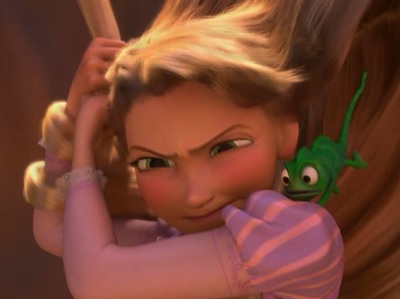
The unbelievable strength of Rapunzel’s hair in the fairy tale always puzzled me, so I was relieved to find the hair was magical, and Disney made it much more fun by turning it into an all-in-one lever-rope-weapon.

Rapunzel-Tangled
Rapunzel is also pretty handy with a frying pan, which she wields to defend herself against the thief (a prince replacement) who escapes into her tower. She bribes him to help her to the lighting ceremony, after which she plans to return meekly to her mother (aka, the witch). (I was concerned about the amount of head-pan contact though, convinced she’d kill/maim him sooner or later; the pan surely must have been made of weaker stuff than my iron skillet.)

An Equal Partnership
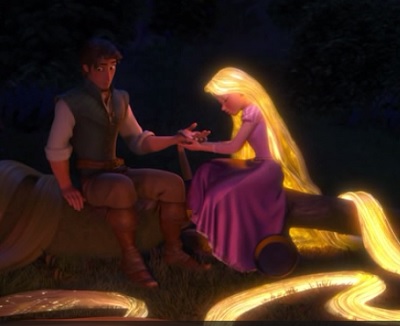
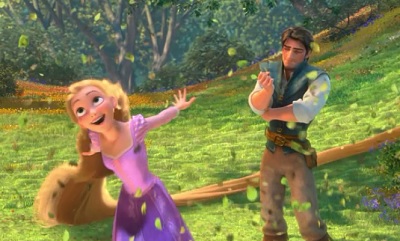
In most ways, the thief (Flynn Rider, voiced by Zachary Levi) is an everyday Disney hero, handsome and arrogant, proud of his “smolder” look. His backstory—an orphan craving riches—explains both his law-breaking ways and duplicitous behavior toward his partners. While he will obviously be reformed by the love of such a sweet, naïve girl, à la Lady and the Tramp, she will pick up his daring and inventiveness, needed qualities for a girl who is dangerously set in her ways thanks to eighteen years in a tower. Of course, she does have one advantage over him, with that magic, glowing hair.

FlynnandRapunzel-hair
I can’t say I was terribly interested, moved by, or invested in their union, but thought his altruism near the end was a nice touch. But no worries—I didn’t have to care much about them. Not with the mama witch to keep me interested.

A Worthy Villain
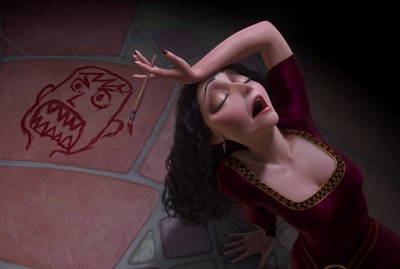
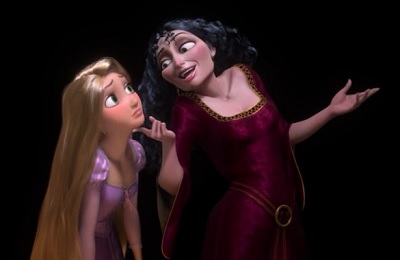
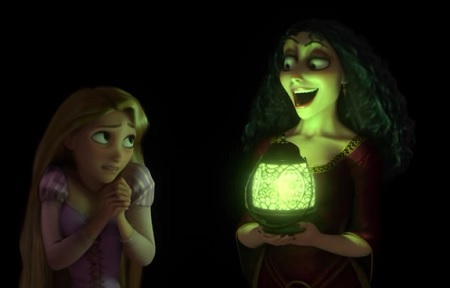
Now, I’m not going to claim this witch is as fearsome or powerful as Cruella de Vil. But it’s fascinating to watch Mother Gothel, perfectly voiced by Donna Murphy, manipulate her supposed daughter Rapunzel. This mother has Bette Davis flair as she pronounces the evils outside that Rapunzel must avoid. My favorite of the dangers she lists: men with pointy teeth.

MenwithPointyTeeth-MotherGothel
“Skip the drama,” she advises in song. “Stay with Mama.” Murphy’s performance is simultaneously disturbing and hilarious.

Mother Gothel transitions from worldly dangers to a litany of Rapunzel’s weaknesses: her clumsiness, her naïveté, etc., which will supposedly make her easily fall prey to others.

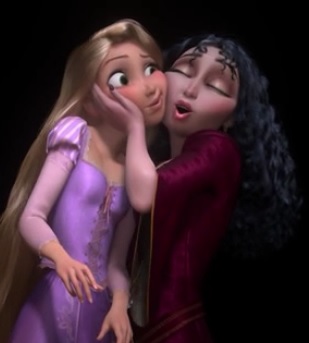
Of course, Mother Gothel pretends love, not fear of loss, is what prompts her tower hiding of Rapunzel.

LoveYou-MotherGothelandRapunzel
(And, of course, she does love her obsessively—at least, that magical hair.)

In terms of models, Mother Gothel is a twin of the monstrous parents in Like Water for Chocolate and Now, Voyager, mothers who think a daughter should exist solely to serve, and enjoy doing so.

NowVoyager-GladysCooper
Mother Gothel likes to point out her maternal virtues, such as providing such great paints and soup!

I’d always considered the father of the original tale weak for giving his child to the witch’s care (to avoid paying for stealing food for his pregnant wife with his life). But I’d never reflected on just how cruel it was to leave his child in such hands. The ill effects are briefly seen when Rapunzel escapes, as she veers between bursts of joy and energy…

Joyous-Tangled

…and periods of debilitating guilt:

Miserable-Tangled
While this back-and-forth moodiness is funny to watch due to Disney’s deft portrayal, I kept thinking of Davis’s twitchy, insecurity-infused performance in Now, Voyager, and just how much therapy it would cost Rapunzel before she attained the exuberance and lightheartedness she displayed in the very next scene. Truly, a witch who just threatens physical harm would be sweet by comparison.

Amazing Allies
I used to like the sidekicks in Disney flicks, but after one too many Sebastian types (of The Little Mermaid fame), I was relieved to find the most prominent sidekicks largely silent, including an Owl-like chameleon, Pascal, whose expressions and gestures provide sage advice (in tribute to his name, of course).

PascalTangled
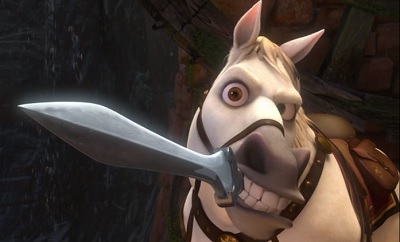
And there’s the glorious Maximus, a horse with amazing hunting skills and loyalty, who provides 90 percent of the comic relief of the film. As part of the royal guard, he tracks Flynn with Inspector Javert-like persistence after Flynn steals a crown from the palace.

Maximus-Tangled

Maximus falls for Rapunzel and reluctantly aids her beau, a reluctance that’s a joy to witness.

In fact, I was so enthralled by these animated allies that I found myself wishing the whole movie were silent, not just because these allies were the primary reward of watching the movie, but for the following additional reasons:

Utterly Forgettable Songs
Murphy (Mother Gothel) gets one good tune, and she’s a talented enough actress and singer to almost make the other songs worth hearing—almost. But with bland song after bland song, and the highly generic focus on dreams (seriously?), I was ready to return to the silent antics of Maximus. (If you can’t beat Kermit piping the lovely “Rainbow Connection” or the 1001 less compelling dreaming songs since, lay off of ’em.)

Scenery More Interesting than the Plot
A girl spends a lifetime in a tower, much of it reading, and the height of her ambition on escaping is to……see some lights. Umm, what? Couldn’t Disney have made her an artist—a writer or a painter (the murals!)? Or maybe an intellectual even? Surely Mother Gothel would have loved to provide the kinds of books that would turn Rapunzel into a scholar, as those might make her content to live a life of the mind, happy with her retreat. Turn the tower ivory, Mother Gothel! Come on! I’m not exactly talking about creativity here; I’m pronouncing the biggest cliché about towers ever. I know I’m supposed to believe Rapunzel has some spiritual connection with the lights, somehow understanding they’re for her, but if that’s the case, why didn’t Mother Gothel change the date of her birthday? The woman seems far too intelligent to have made such a dumb mistake.

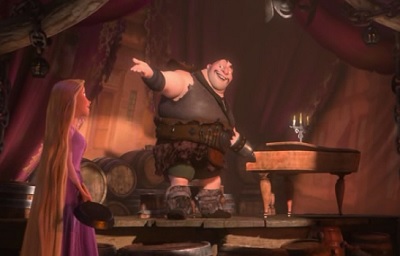
The first big moment after Rapunzel’s re-entry to the world involves turning a bunch of thugs to her side because she asks if they have dreams, and they proceed to share them.

DreamingThugs-Tangled
If I’d been in the theater, I’d have been tempted to throw popcorn at the screen. Even if this is a strange alternate universe where dreams aren’t discussed ad nauseam, neither this character, nor her own ambition, is at all inspiring. To see lights is not exactly the kind of dream to get criminals past their reluctance to open up. If the movie had played off her dream as comically stupid, what someone dozing in a tower would come up with, I’d have been all for it. But sigh. They played it as motivating.

In contrast to such clichéd scenes, all the details of the landscape sucked me in, especially the flood. In trying to get boys to watch the film, Disney really succeeded with the action shots.

Flood-TangledActionShot-Tangled
How interesting it would have been, in contrast to that silly song about grass when the heroine hits the ground and the unnecessary (if occasionally amusing) scene with the tough types, to just witness Rapunzel quietly taking in the wonders around her, jumping at everyday noises, stumbling a bit at the unaccustomed exercise. What humor and pathos would have been possible! Disney gets this for a second, as Rapunzel is paralyzed after her tower retreat, unable to make the 12-inch drop to the ground.

FootfromGround2-Tangled
That moment was worth the next hour.

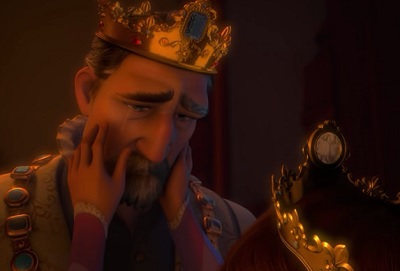
In fact, the only truly moving scene in the film is the silent clip of the king and queen, hesitant to practice this lantern ritual yet again, to allow themselves to still hope.

KingandQueen-Tangled
I wish that Disney hadn’t been so cowed by Pixar successes into such a conventional retreat from what’s compelling about this movie. They give Rapunzel a Barbie-sized waist. They back off from the interesting mother-daughter dynamic.

MotherGothelandRapunzel-insecurity
They don’t realize Maximus is the star. They have this supposedly feminist heroine spend her time on indisputably female-associated crafts instead of developing some kind of true ambition. And at the end of the movie she’s—surprise! A bride.

Disney had the potential for some Fantasia creativity, with silence used to beautiful effect, and the glimpses of the story’s potential still make this a fun movie. But how great it could have been.

Don’t forget to check out the other entries in the blogathon!

Share
Posted in: 1920s films, 1990-current films, Blogathons, Comedies (film), Drama (film) Tagged: animated movies, Disney, Now Voyager, overbearing mothers, Rapunzel, Tangled

Confession: Four Great Movies I’ve Never Seen, with Excuses

11/07/2014 by leah@carygrantwonteatyou.com 8 Comments

I am unashamed of my pathetic store of musical knowledge. I actually listen to—and like–the radio. And not the satellite kind. Frankly, if I can’t sing or dance to a song, I’m not interested. Riffs, jamming, orchestras, Bonnaroo—not for me. A Pat Benatar singalong? Sign me up.

It’s also rare for me to confess any embarrassment about novels I haven’t read, probably because I’m enough of a bookworm that gaps in my education are just opportunities for more fun, not sources of embarrassment.

But movies? I feel squeamish when I’ve missed the greats, and tend to dodge discovery. I’m not sure why.

Today, therefore, I’m going to be brave and confess to four very big omissions from my film education. I may turn red as I write, but you won’t have to see it. Here we go….

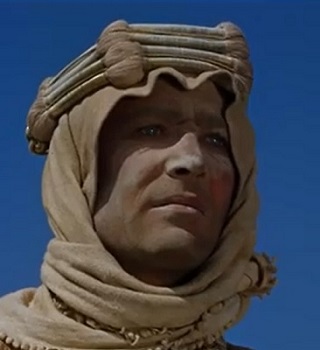
Lawrence of Arabia (1962)

LawrenceofArabia-
My excuse is the obvious one—too long. Over 3 ½ hours? Who has the time?
Umm, I do. I managed to watch a season of The Wire in a weekend, all episodes of the new Arrested Development in a day. The BBC Pride and Prejudice miniseries I practically have memorized, and it’s almost 100 minutes longer than this apparent masterpiece. I even own the film in VHS format (still in cellophane). That’s how long I’ve been peddling this rationalization to myself.

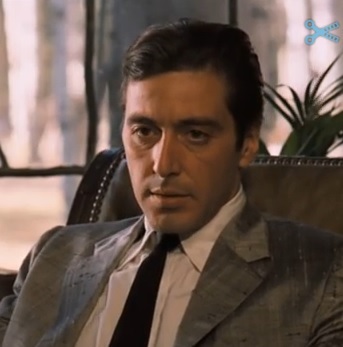
The Godfather: Part II (1974)

TheGodfatherPartII
I saw The Godfather at a movie party many years ago. It was in my early days at a new job, and I remember being embarrassed that I was the only one there watching it for the first time. I left before the second movie, shy about my older peers’ superior knowledge and my general lack of proficiency at small talk of any kind. (It really sucks sometimes to be twenty-three.) I kept feeling afterward like I’d somehow missed the window for seeing this movie, much as I still do about reading Jack Kerouac’s On the Road (who wants to read about youthful angst and self-importance past their early twenties?)

The Treasure of the Sierra Madre (1948)

Treasure-Bogart
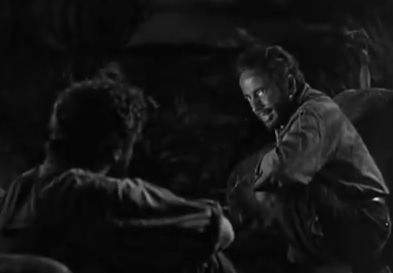
I love Humphrey Bogart. I’m intrigued by gold mining, have read numerous novels about the Gold Rush. Films and novels about breakdowns due to avarice fascinate me. I have put this film into my VCR multiple times, and then not played it. Why? I guess it’s mood. I never seem to think to myself, “Yes, today, let’s watch a movie about people turning into monsters for money.”

Duck Soup (1933)

DuckSoup
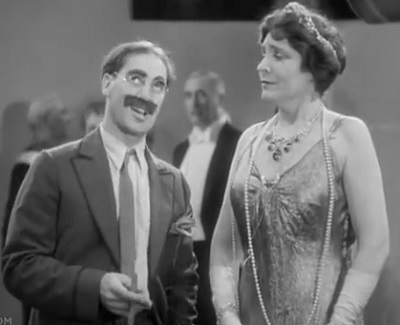
I taught a humor class last semester. I have read Irving Brecher’s account of writing for the Marx brothers in And Here’s the Kicker. I’ve seen—and liked—clips of these siblings in action. I have spotted this movie on Netflix streaming. Yet I have never hit play. My only explanation is that I’m saving it; it’s a big source of relief I’m anxious about spending prematurely. I am reserving the film for a particularly grim day, the day I screw up at work, wreck my car, and make my husband, friends, and family cry. Then, then I’ll need some Marx brothers. Why just waste the film on a day it’s raining?

Perhaps now that I’ve made my confession, I’ll finally view three of these films, but I think I will save the Marx brothers. A present like that shouldn’t be squandered, right?

Share
Posted in: Comedies (film), Drama (film), Random Tagged: Confession, Movies I've missed

The Moment I Fell For: Alice Brady

10/31/2014 by leah@carygrantwonteatyou.com 14 Comments

This is part of the Classic Movie Blog Association’s Forgotten Stars blogathon. Check out the other entries!

AliceBrady-top
When you type Alice Brady into a Google search, a flood of entries appear—but not for the talented actress who won over My Man Godfrey audiences in her role as the flighty head of the Bullock clan. Instead, the character of Alice (Ann B. Davis) from the Brady Bunch pops up. I enjoy my 70s kitsch as much as the next gal, but I find it troubling that the lasting fame of Brady, an actress who already was granted too few years (she died at 46), should be shortchanged as a result of everyone’s favorite cheesy housekeeper. Here are a few reasons why Alice Brady needs to be remembered:

She Could Outdazzle Ginger Rogers
In The Gay Divorcee Aunt Hortense (Alice Brady) hires her former fiancé Egbert (Edward Everett Horton) to help her niece (Ginger Rogers) attain a divorce. While I am amused by Mimi’s (Rogers’s) attempts to divorce her husband and her suitor’s (Fred Astaire) confusion over the hijinks that ensue, their romance is completely outdone by the duo of Horton and Brady, who vie each other for who can be the most foolish. Hortense interprets any of Egbert’s idiotic actions—agreeing with her that geometrists are synonymous with geologists, wearing a finger puppet while conducting business—as signs of his continued love for her. When leaving his office, Hortense becomes weepy, saying, “You know, divorces make me so sentimental. Don’t you wish it was ours?”

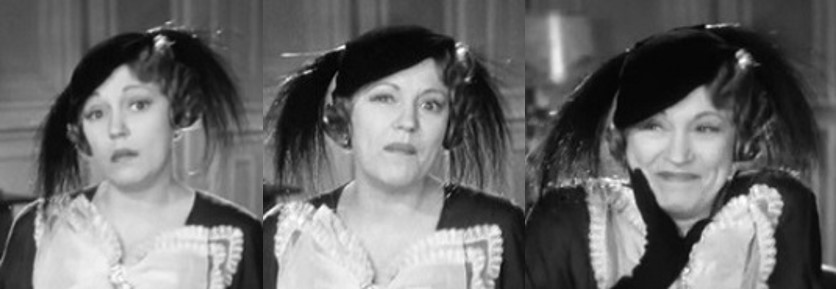
This exchange would have been funny with almost any actress. But this is Alice Brady. A few images should give you the idea of just how fun this moment—and their whole romance—is, and just why from that moment forward, I sought out Brady films. Just check out how expressive she can be in one short scene, and this without the delightfully funny trill of her amazing voice:

AliceBradyGayDivorceecom
As a fervent Astaire-Rogers fan, I’m usually annoyed by the subplots that take away from dance number time. But in this case, I was eager to see Hortense again, even becoming impatient with the dancing. Who wouldn’t smile to see the amazing Horton and Brady together?

Egbert andhortense-BradyandHorton
She Could Do Everything—Drama, Comedy; Film, Stage
Despite her producer dad’s strong objections, Brady, born in 1892, followed the family business by becoming a Broadway actress, and spent her youth alternating between screen and stage, mainly in dramatic roles, including as Lavinia in the first performance of Mourning Becomes Electra.

While I’ve only tracked down one of her many silents, Betsy Ross (1917), its absurd, overdramatic plot is worth viewing if only for this great line: “Thee is too spicy for a Quakeress, Betsy! I fear for thee.” Does any word suit this wonderful actress more?

Brady as Ross

Brady as Ross

Brady left the screen for a decade, focusing on the stage as Hollywood revolutionized its production. She returned in the sound era with perfect comic timing and delivery, no doubt honed in Broadway roles in such comedies as The Pirates of Penzance.

AliceBradyIndignant
In typical Oscar fashion, the Academy nominated her for the romantic comedy My Man Godfrey, but only granted her the award when she starred in a drama. She played an Irish mother (Molly O’Leary, owner of the famous arsonist cow) beset by her children’s squabbles in In Old Chicago. What’s fascinating about the film is how understated her performance is, even for the stereotypical tough Irish mom she’s playing. For a woman who verged toward the theatrical in her comic roles, it’s interesting to find her often going for a quiet harrumph rather than a shout.

She Could Spar with William Powell
She’s good in the O’Leary role, but it pales in comparison to her comic gems. I’m not even a fan of My Man Godfrey, which feels a bit preachy to me and relies on too many sets of Carole Lombard hysterics. But I could watch her hangover scene with William Powell all day long.

PowellandBrady
Her near-comatose presence is so funny given her later zaniness, as is her conviction that pixies are haunting her. When her new butler (Powell) tells her the tomato juice he’s serving is pixie remover, her flat delivery is priceless:

“Oh, then you see them too,” she drones.

“They’re old friends,” he responds.

“Yes, but you mustn’t step on them,” she explains calmly. “I don’t like them. But I don’t like to see them stepped on.”

She may not be remembered as much as she should be, but we classic film buffs would be the poorer without this “spicy” actress.

AliceBradyGoldDiggers
Random Facts:
A man claimed her Oscar at the Academy Awards when she was too sick to be present; apparently, no one ever had a clue who he was, including Brady.

Brady tried to get massages as a deduction on her income tax, claiming looks essential to her role as an actress, but, as her New York Times obituary writer wryly noted, “The government remained unmoved.”

Share
Posted in: 1930s films, Blogathons, Comedies (film), The Moment I Fell for Tagged: Alice Brady, Classic Film Blog Association, In Old Chicago, My Man Godfrey, The Gay Divorcee

Breakfast at Tiffany’s: Why the Movie Blew It

10/23/2014 by leah@carygrantwonteatyou.com 2 Comments

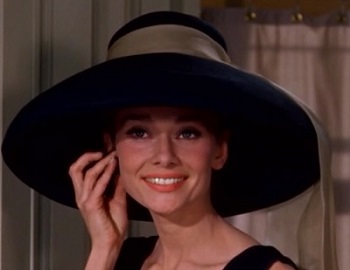
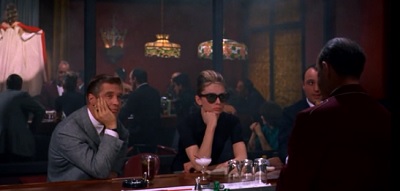
Let me be clear: Nothing is wrong with Audrey Hepburn’s sparkling portrayal of Holly Golightly. It’s the only reason to watch Breakfast at Tiffany’s, witnessing this character’s charms (besides the obvious joys of the fashion). And though certainly a tamer version than the book’s Holly, she is every bit as interesting.

AudreyasHollyGolightly
That said, fans of Truman Capote’s book have many pains in store as well as pleasures. It is truly a masochistic act to watch what becomes of favorite novels on the big screen, much like our drive-bys of houses where we once lived, when we go to see what they’ve DONE to them: a purple paint job, a favorite Oak felled.

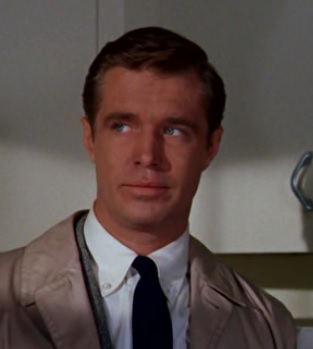
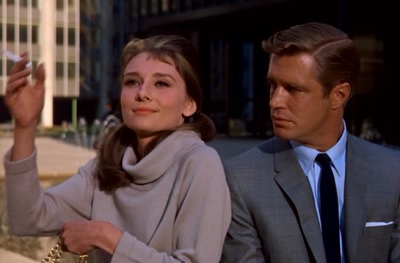
In the case of Breakfast at Tiffany’s, it isn’t the racist cameo that most strikes me, painful as it is. It’s the way the film took the sensitive, interesting, platonic-toward-Holly narrator, and chose this to portray him:

GeorgePeppard
Now, I enjoyed Col. John “Hannibal” Smith and his band of A-Teamers as much as the next 10-year old. But in terms of personality, it’s difficult to imagine a bigger dud than George Peppard as Paul/Fred in Breakfast at Tiffany’s. I’m supposed to like this smug kept man who has memorized his book reviews and barks about his talent? To see in him the sensitive narrator from the novella, who is torn up by Holly’s critique of his writing? The man who is proud of the little apartment he’s obviously scraped together to afford?

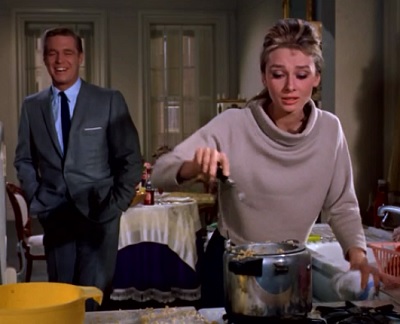
I shiver to think of Holly’s twinkling self reduced to trying to prepare this dud the right flavor of chicken wings. As I watch him interact with her, I imagine William H. Macy screaming, “Where’s my dinner?!” in Pleasantville and wonder why Hollywood thinks I should root for them as a couple, why I should somehow imagine this union as right for her, as I’m clearly intended to do. That flat voice and judgmental attitude would squash her spirit within six months. True, he does laugh when she screws up a dinner for him:

MealHollyGolightly
But it’s still courting time, and Holly knows him well enough to be concerned about her mistake. Paul/Fred is only likeable when he’s acting as a friend to her and others, not as a would-be lover. Romantically, he’s far too conventional to suit her.

Paul/Fred, aka Col. Smith, assists Doc, aka, the Man Named Jed

Paul/Fred, aka Col. Smith, assists Doc, aka, the Man Named Jed 

I know I shouldn’t be surprised at this dreadful botching of the story. Hollywood loves a romantic comedy (as long as it’s between young, single, heterosexual characters), and, just as now, they don’t trust us to storm the theaters to watch a friendship. Yet when people recall this film, it’s Holly at the window of Tiffany’s they remember.

Breakfast-Holly
Why? Because this story was never meant to be about love—or really even friendship. It’s about the charms a big city represents to those of us from less thrilling hometowns, and how an insider—in this case, Holly—can show us how to make the most of the place, to be a part of it, to belong.

Here’s a favorite passage from the book: “Once a visiting relative took me to ’21,’ and there, at a superior table…was Miss Golightly, idly, publicly combing her hair; and her expression, an unrealized yawn, put, by example, a dampener on the excitement I felt over dining at so swanky a place.”

Holly has already arrived, while Paul/Fred is always seeking social acceptance. In the film, she upstages him from the start, with a powerful whistle for a cab, the kind he never could master.

UpstagingPaul-Holly
Near the start of the book, the narrator (Paul/Fred) spots Holly dancing in front of a saloon in a “happy group of whisky-eyed Australian army officers baritoning, ‘Waltzing Matilda.’ As they sang they took turns spin-dancing a girl over the cobbles under the El; and the girl, Miss Golightly, to be sure, floated round in their arms light as a scarf.”

What I felt reading both of these passages was recognition: that first heady gush of love that comes to so many of us even walking down the streets of a city we (unbelievably) can call home. For me that city was San Francisco; even the sad little shops of junk, the catcalling loafers, the dirty steps of the subway could give me a rush of joy. I actually lived here. I was sometimes even asked directions. I remember admiring those girls who had the city figured out: who knew the quickest subway routes, the quirky former-salon bars, the mystery to achieving urban-chic. Those girls who hosted and were invited to the best parties, gatherings held in wineries and with themes….Oh, what magical girls they were.

A city-ready girl: mailbox tricked up with a mirror and perfume…

A city-ready girl: mailbox tricked up with a mirror

For Holly, of course, the thrill of the city is represented by a beautiful jewelry shop. But for Paul/Fred—and for so many of the rest of us—it’s captured in Holly herself. She is that woman who actually does all the impulsive, New-Yorky things, who represents life in the city for the rest of us (much as Carrie Bradshaw still does for tourists today).

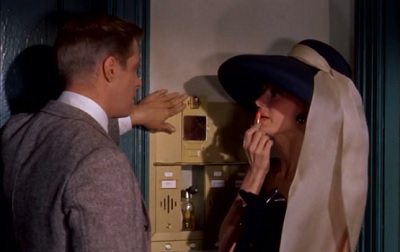
Hollysparty

Breakfast-Hollyinbar

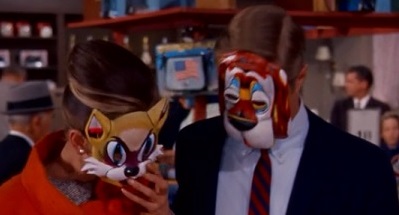
MasksBreakfastatTiffanys
And by being initially an outsider herself, she gives everyone hope that they too could be like Holly one day. In the beginning of the book, she’s disappeared from the narrator’s life, but been maybe spotted by others, and to me, that opening, the desire to see her again (or maybe the time in his life she recalls), captures the allure of passing friendships.

An older, more mature Holly couldn’t possibly have the same impact. She’s charming in part because all of her affectations are intact, because she’s young enough to believe that tri-colored hair and a lack of furniture make her special, interesting. And those beliefs—not her traits or behaviors themselves—make her so.

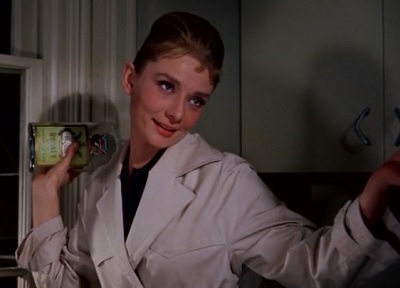
StylishHollyGolightly
She’s as much of an ideal creation as Gatsby ever was, and lovely, like him, because, as her former agent says, “She isn’t a phony because she’s a real phony. She believes all this crap she believes. You can’t talk her out of it.” If Paul/Fred married her or otherwise knew her for the rest of his life, many of those beautiful illusions would disappear, and everyday humdrum qualities and cynicism would surface. But he doesn’t (in the novella), so they don’t, and so forever Holly will represent to him—and to us—being young in the city.

Which is why you should skip over the first twenty-five minutes of the film to get to the party, and right when it’s starting to look like these two might actually get together, shut it off. It’s like Carrie Bradshaw moving to Connecticut and complaining to her husband about the kids’ laundry piling up. We don’t need it. We don’t want it. Let us keep remembering Holly taking in the city, as she knows so well how to do…

Hollytakingincity-Breakfast
And, of course, eating breakfast at Tiffany’s….

Share
Posted in: 1960s films, Romantic Comedies (film) Tagged: A-Team, Audrey Hepburn, Beverly Hillbillies, Breakfast at Tiffany's, Carrie Bradshaw, George Peppard, Truman Capote

Three Reasons to Watch The Uninvited (1944) This Halloween

10/16/2014 by leah@carygrantwonteatyou.com 8 Comments

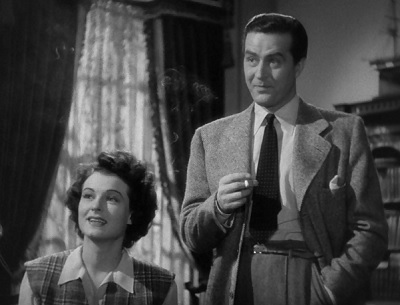
The Uninvited begins simply: Siblings Rick and Pamela (Ray Milland and Ruth Hussey) come upon a lovely oceanfront house on their vacation and buy it to escape the demands of London life. It even has a charming name, Windward, and a quaint touch: no electricity. Of course, things go awry from there, slowly but surely: a dog that won’t climb the stairs, strange weeping sounds, a room that depresses anyone who enters. This film is an eerie, perfect choice for Halloween, not just because of its pleasures as a ghost story, but because it has these three added delights:

1. Candy—the Visual Kind
You spend most of the film gazing at these attractive siblings:

Ray Milland and Ruth Hussey as the Fitzgeralds

Ray Milland and Ruth Hussey as the Fitzgeralds

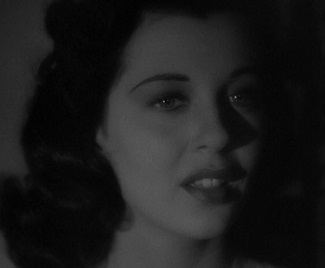
One would think that pleasure would be enough to satisfy your sweet tooth, but this is Halloween, and it’s all about gorging. No worries. The Uninvited delivers: just wait till this knockout fills the screen:

Gail Russell as Stella

Gail Russell

The beauty, Stella (Gail Russell), is the granddaughter of the owner; she disapproves of the home purchase since she believes her mother, who died in a cliff fall, haunts it. But she warms to the couple, especially to Rick, who quickly sets about flirting with her. (Who wouldn’t?)

2. Genuinely Likeable Characters
Most scary stories feature interchangeable victims. If we know their names—Sarah, Dan, Rob, Susan—we don’t know them for long, and the characters quickly become The Screaming Guy or The Girl Pushed Down the Stairs or the Cheerleader Covered in Blood. While we may not wish them ill, we certainly don’t know them well enough to worry when Casper turns out to be a not-so-friendly ghost.

Rick and Pamela, in contrast to these stick-figure characters, are laid back, witty, fun. They are a gutsy pair, unlikely to fall prey to fears or believe in haunted happenings. After being told former tenants complained of “disturbances,” Rick quips, “What was the trouble…Ladies carrying their heads under their arms?”

The two like to tease each other, like most siblings. To convince her brother they should take the house, Pamela points out that if they live there instead of the city, he could work on his composing. He protests, of course, “My poor lunatic sister. I happen to have a job.” She replies in equally supportive sibling fashion: “Yes, and what a job. Going to concerts and telling your readers how bad the music was….Chuck it…It isn’t as if you’re even a good music critic.”

3. A Human Conspirator: A Haunted House with an Ally?
It’s clear the ghostly house has it in for Stella, and much of the film portrays the siblings’ efforts to discover the story behind the hauntings, the reason for all the eerie sounds, dying flowers, dog phobias, temperature shifts, and occasional apparitions (the special effects are surprisingly good). Once they understand the story, the siblings believe they can save the girl from the increasingly hostile house—and, of course, make it a bit more hospitable for themselves. (After all, it’s putting a great dent in their parties, making it highly unlikely they’ll be the popular pair they were back home.)

A ghostly party crasher

A ghostly party crasher

Soon the siblings suspect there may be a live human abetting the house’s murderous impulses, and among all the shifty possibilities, the person who begins to emerge as the frontrunner seems disturbingly sane—except for his/her desire to help the house kill Stella, of course.

If you’re not yet convinced by my reasons, read the excellent review that led me to buy the film in the first place. The author, the blogger Self-Styled Siren, even draws a cool parallel between the film’s apparitions and the terrifying ones in Raiders of the Lost Ark. What could be a better recommendation?

Share
Posted in: 1940s films, Action & Sports Films, Drama (film), Film Noir/Crime/Thriller & Mystery Tagged: Best Halloween Films, Gail Russell, Ray Milland, Ruth Hussey, The Uninvited movie 1944

My Favorite Canadian: Michael J. Fox

10/09/2014 by leah@carygrantwonteatyou.com 16 Comments

This post is part of the O Canada Blogathon hosted by Ruth of Silver Screenings and Kristina of Speakeasy.

I remember being vaguely horrified when I discovered Michael J. Fox was Canadian. He was OURS. How could he possibly be anything other than American? His role as Alex P. Keaton was so iconic: the conservative, hippie-parent-horrifying, greed-is-good believing teen who embodied and parodied Reagan-era culture.  Although I’d rather hang out with his sister Mallory (Justine Bateman), I knew Family Ties revolved around Fox’s pitch-perfect, Emmy-winning performance as Alex.

Keaton (Fox) explaining the horror of taxes to preschoolers

Alex P. (Fox) explaining the horror of taxes to preschoolers

I was such a huge fan of Family Ties that when Fox followed the show with big-screen stardom in Back to the Future, what I felt was pride.

BacktotheFuture
No wonder then that in those years before I’d ever been out of my own country or met any Canadians, I felt so disappointed to lose any hold on him. I mean, I’d gone to see Doc Hollywood–in the theater. I’d suffered through The Secret of My Success for him. It wasn’t really a crush with me.  (Even if I ever had one, I think those suspenders in Back to the Future would have ruined it.)  I just admired him so much.  His gestures, expressions, movements–always so true, so uniquely his, and so damn funny. And oh, the lines. No one can deliver a line more effectively than Michael J. Fox. I could listen to him ask, “Are you telling me that you built a time machine… out of a DeLorean?” on repeat. No wonder the guy can’t seem to walk in front of a camera without being nominated for an award.

When Parkinson’s forced Fox to leave Spin City, his costars couldn’t stop crying long enough to finish his final episode. They didn’t know yet that he’d find a second career in his illness as a guest star, even as the headliner of his own show. And most of all, as the representative for the disease that had claimed him. They didn’t know he’d write a memoir. Call it Lucky Man. Tell other actors on Inside the Actor’s Studio suffering from the same afflictions that he had it easy, with his advantages, that they were those who had courage and guts; they were the ones he admired. That he’d remain tireless and fearless in his pursuit of a cure, and keep on wowing his countless fans.

It took a while, but I finally lost my dismay at Fox’s being Canadian. Instead, I now feel gratitude toward his homeland: for sharing this fine of an actor, this caliber of a human being with the rest of us. And now if you’ll excuse me, I need to re-watch Alex P. recommending amoral business principles to children.

Be sure to check out the other entries in the blogathon! And I promise to return to classic film next week. I just couldn’t resist celebrating Fox.

Share
Posted in: 1980s films, Blogathons, Humor, TV & Pop Culture Tagged: Alex P. Keaton, Back to the Future, Canadian, Family Ties, Michael J. Fox, Spin City

For Gone Girl Fans, A Fascinating She-Did, She-Didn’t Thriller

10/06/2014 by leah@carygrantwonteatyou.com 2 Comments

I’ve been wanting to see Gone Girl, but the laryngitis-respiratory infection cocktail I’ve got right now means that I would be an object of fear and distraction to fellow film goers, so I had to settle for an alternative. What film, I wondered, might employ a similar ambiguity about whether or not a spouse is a murderer? What other film might tell a tale of an unhealthy romance that might or might not have sinister roots or results? The answer: Daphne Du Maurier’s My Cousin Rachel. The film, starring Olivia de Havilland and a very young Richard Burton, never reached the fame of The Birds or Rebecca, but has a similar eerie draw, and (for me at least) lingers longer than either.
Young Philip has been raised by his cousin, Ambrose (John Sutton), and the two are comfortable together in their picturesque Cornish town until Ambrose’s illness leads to their first separation—a trip to Italy. There, Ambrose discovers and falls for their distant cousin, Rachel. Before Philip can adjust to this change in his life, a more somber situation develops: Ambrose is nearing death, and blames his wife for it, claiming she’s trying to do him in. Is his condition the result of a brain tumor, or is it poison?
Femme fatale, yes, but is she a murderer?

Femme fatale, yes, but is she a murderer?

A heartbroken Philip (Burton) travels to Italy to uncover the mystery after his cousin’s death. Since all of the estate goes to him, not the wife, Philip might assume things are as innocent as those in Italy suggest, but the circumstances seem shady, and he’s ready to turn Rachel over to the hangman—that is, until he meets her.

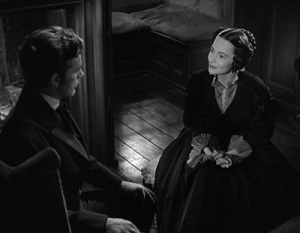
IntroMyCousinRachel
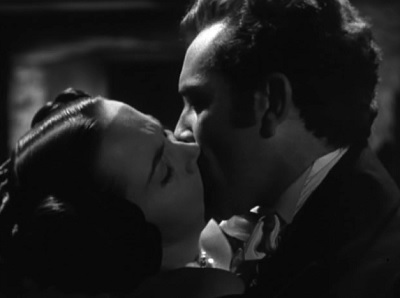
Of course, she’s charming, affectionate, worldly, and experienced, and within no time, is hosting gatherings at Philip’s place and then, well, what repressed English boy could resist this cougar?

KissingMyCousinRachel
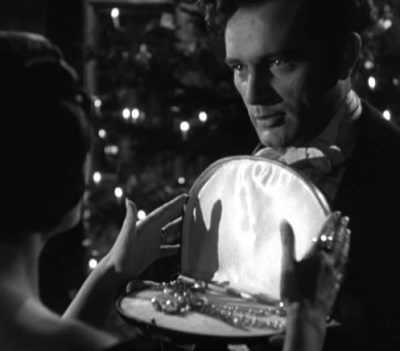
Before long, Philip’s giving her the family jewels from the vault—which aren’t his yet, as he doesn’t get the estate till he’s 25, his guardian reminds him.

GiftsMyCousinRachel
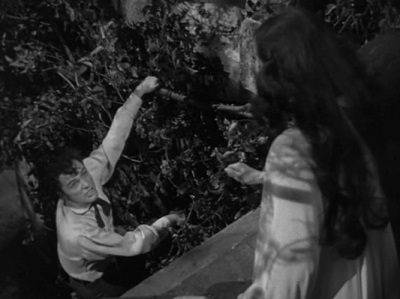
Also, a generous allowance he’s given Rachel? Yes, she’s overdrawing it—by a lot. Philip doesn’t worry. He’s in love! She deserves everything that’s his. He’ll just give his whole estate to her, announcing it Romeo-style on his birthday.

BalconyMyCousinRachel
She, in thanks, gives him more than kisses. In Philip’s world, this means she’s going to be his wife. In Rachel’s? Not so much. Philip, whose stupidity and naiveté know no bounds, doesn’t take this well, even starts strangling her. She ends their romance, whether because of his actions, or because with the money, she has no motive to seduce him any longer.

Soon after, Philip falls dangerously ill and finds some seeds that may have been the cause of his brother’s illness—and his.

What happens next I won’t reveal, but let’s just say that the evidence for and against Rachel’s guilt about even out, leaving the viewer to wonder the whole film (and book).

This was my first viewing of the film, and it stays quite true to what I remember of the novel. But viewing it as an adult, I noticed some details I’d missed before. Yes, she may be a murderer, or she may not be, but even if she didn’t try to kill either lover, exactly how wrong and/or inadvisable is Rachel’s behavior? I have some advice for Rachel, which, of course, comes a tad bit late:

Some spoilers ahead—though not the ending.

Never Seduce Crazy
It’s not hard to miss just how big of a dolt this Philip is, so even if she weren’t after his money, seriously, is this someone you seduce? I mean, he’s cute and all, but he’s obsessive. This is a textbook case of a stalker-in-the-making if ever I saw one. Surely a woman as confident and assured as this one knows a case of insane puppy love when she sees it. I’ll alter one of my favorite Arrested Development lines– “Never promise crazy a baby”—to Never seduce crazy. I kept wanting to warn Rachel away: Don’t kiss this fool. He’ll be sending out your wedding invitations next.

Remember: Virginal Boys Don’t Understand Samantha Jones Ways
If Rachel just kinda forgot that those in repressed English villages don’t act like her cosmopolitan friends, shouldn’t that church moment when she arrived late have given her a clue?

ChurchRepressionMyCousinRachel
She’s so shocked Philip thinks they’re going to marry after they have sex, but would anyone in this community think otherwise? Remember when Samantha Jones hooked up with the inexperienced college boy on Sex and the City who shared her name?

Didn’t turn out so well, right? Filled up her answering machine with love-yous. Arrived at her door screaming through the peep-hole.

OtherSamJonesSexandCity
That’s Philip for you.

Don’t Marry the Guy Whose Regular Expression Looks Like This:

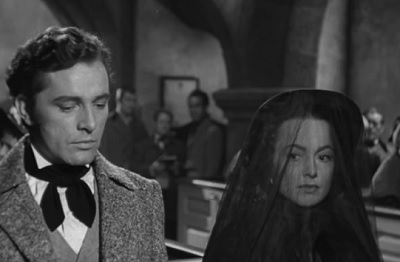
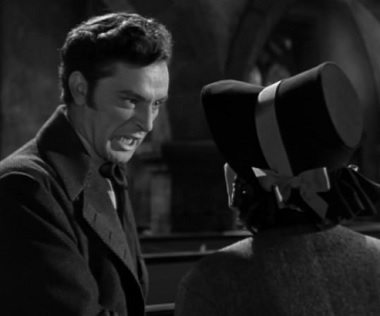
RichardBurtonfreakingout
Whatever her motives or knowledge, Rachel is absolutely right not to marry this dude. I can just see it: She tries to hang out with her friends, and he’s there, watching. She leaves the house and he’s hiring private detectives. This woman has lived on her own, experienced an unusual degree of freedom for a woman of her time, and he doesn’t even want her to return to Italy—ever. She may make some dumb mistakes, but Rachel is not that foolish.

Don’t Live with the Stalker after You Ditch Him
Why does Rachel remain in the house? Yes, I can understand for appearance’s sake, she might stay a little after the inheritance is given to her. But this is one angry guy. And, of course, dangerous as he fears she is, he’s the one going for the throat when he doesn’t get his way.

Strangling-MyCousinRachel
But….

Did she do it? Did she poison her husband?

She has suspicious ways. Rachel’s spendthrift tendencies, of course, are undeniable. This woman loves the money. Whether it’s to help her pal-maybe-lover back in Italy or not, she takes whatever anyone will give her with no regrets. It’s not hard to believe her gold-digger impulses brought her to England in the first place, and those motives seem sinister enough that she may have just killed for them.

Of course, it’s possible that she did love Ambrose, and wanted to meet his cousin. I’m not sure I buy that the one precludes the other. I don’t have to admire her greed, but I don’t have to believe that’s all there is to her either.

It’s the ambiguity I love about the film. Hopefully, Gone Girl is just as good (no spoilers on that, please!)

Share
Posted in: 1950s films, 1990-current films, Anti-Romance films, Femme fatales, Film Noir/Crime/Thriller & Mystery, TV & Pop Culture Tagged: Daphne du Maurier, Gone Girl, My Cousin Rachel, Olivia de Havilland, Richard Burton, Samantha Jones

The Moment I Fell for Van Heflin

09/23/2014 by leah@carygrantwonteatyou.com 13 Comments

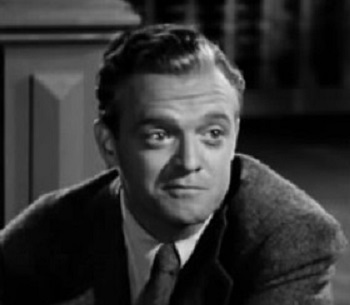
Heflincurious
I didn’t know a thing about Van Heflin when I saw The Strange Love of Martha Ivers (1946). I picked the movie because of my love for Barbara Stanwyck, whom I assumed from the title would be the star of the film; I didn’t realize she wouldn’t appear until half an hour into it.

Stanwyck, the versatile actress

Stanwyck in The Strange Love of Martha Ivers

The story begins in 1928. Young Sam Masterson (Darryl Hickman) is trying to convince his crush, Martha Ivers (Janis Wilson), to run off to the circus with him. Sam is always evading the police thanks to Martha’s aunt (Judith Anderson), Mrs. Ivers, the wealthy woman who owns the town. Only if they run away can they be together. Unfortunately, their initial efforts are foiled by tattletale Walter, who likes Martha too.

YoungSamandMartha
Sam does run away, but just before Martha flees to join him, Mrs. Ivers beats her beloved cat to death, and Martha retaliates by striking her aunt with the same cane. We see Sam riding a train just as his crush is concealing the murder with the aid of her greedy tutor and Walter, his son.

The film jumps to 1946. Sam has grown up to become an easygoing professional gambler (Van Heflin). In his car with a hitchhiking sailor, Sam catches sight of a “Welcome to Iverstown” sign.

“Well, whaddya know?” he says. “….Leave a place when you’re a kid, maybe seventeen, eighteen years ago, and you forget all about it, and all of a sudden you’re driving along and smacko, your own hometown up and hits you right in the face.”

He’s so surprised that he turns around to see the sign again and crashes his car.

Heflin-driving
Laughing at himself, he explains to his befuddled companion, “The road curved, but I didn’t.”

“Welcome to Iverstown,” he says to himself as he heads there for repairs. “Well, maybe this time, they mean it.”

I had expected to be disappointed by Stanwyck’s costar, as I usually am. Even actors good in other films come across as flat or artificial next to an actress this natural, and as downright stilted if unskilled to begin with (i.e., Herbert Marshall).

Captivated by the self-deprecation of Heflin’s character and his unexpectedly casual responses to conflicts, I soon forgot Stanwyck was even in the movie. I think I’d fallen for Van Heflin before he got out of the car.

Discovering that “scared little boy” Walter is now a DA

Discovering that “scared little boy,” Walter, is now a DA

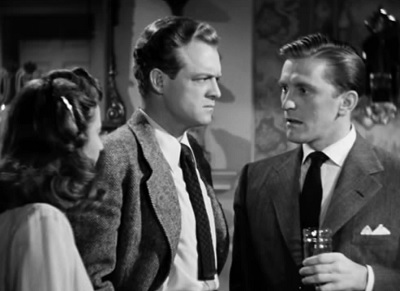
Heflin is an excellent foil for the scheming adult Martha (Stanwyck) and her alcoholic, tortured husband, Walter (Kirk Douglas). Sam’s relaxed, freewheeling persona acts as a kind of tonic to his tightly wound former love and a poison to her jealous and fearful husband, who assumes this childhood friend is back to blackmail them. Like Mrs. Ivers before him, Walter tries to drive Sam away. But Sam is no longer as powerless as he once was.

Heflin is every bit as comfortable in his role as Stanwyck is in hers, and the naturalness I would soon discover to be a hallmark of his acting works perfectly here, contrasting with the duplicitous couple’s double dealing. What makes Heflin so attractive as an actor is that same ease of movement Stanwyck possesses; it wasn’t surprising to discover this man spent much of his life as a sailor. Clearly, he finds his sea legs in every part quickly, and that comfort in his skin and in his environment is seductive to watch. By the time he meets Martha again, even the usually compelling Kirk Douglas is hopeless against him (Douglas plays an atypical part here, and is wonderful in it).

Seeing Martha again

Seeing Martha again

Heflin was not a traditionally attractive man, and famously remarked that “Louis B. Mayer once looked at me and said, ‘You will never get the girl at the end.’ So I worked on my acting.” Whatever he did worked: He’s so riveting to watch that I never questioned any woman Heflin won, even one as jaw-droppingly sexy as parolee Tony (Lizabeth Scott), who falls for Sam as he’s wandering around Iverstown.

Gorgeous Scott as Tony

Gorgeous Scott as Tony

Flirting with Walter's secretary to get an appointment

Flirting with Walter’s secretary

In fact, I’m more likely to question when Heflin doesn’t get the girl, as when Jean Arthur starts to fall for pretty-boy Alan Ladd in Shane over her tough husband (Heflin), or when Lana Turner prefers boring Richard Hart in Green Dolphin Street (to be fair, the character’s choices were just as baffling in the book). Even when Heflin plays a less courageous part than he usually does, as in 3:10 to Yuma, he’s always got some kind of hard, immovable core of strength to him. In The Strange Love of Martha Ivers, where I saw it first, this mental and physical strength appears when Walter starts to mess with him—and worse, with Tony.

Fighting the detectives who stooge for Walter

Fighting Walter’s detectives

Yet Heflin is just as adept at playing kindness as brawn, as when Tony (Scott) betrays Sam out of weakness and then asks him to hit her because of it. Of course, he refuses to hurt her, but he does more than that: he shows compassion for her behavior. “The only thing you got coming, kid, is a break,” Sam says, the simplicity of his delivery conveying his conviction.

And it is a joy to see Heflin in scenes with Stanwyck. Sam suspects he’s in love with Martha, and even though the audience knows he should steer clear, it’s hard not to root for them, since it means more scenes with these two brilliant actors, and fewer with the less talented Scott.

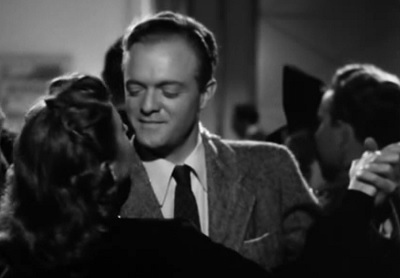
HeflinandStanwyckdance
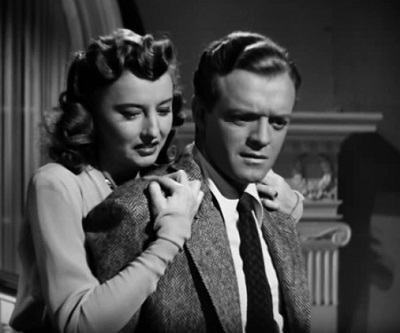
The chemistry between the two is strong. It’s wonderful to witness Stanwyck unable to dominate an actor, to see in him an equal.

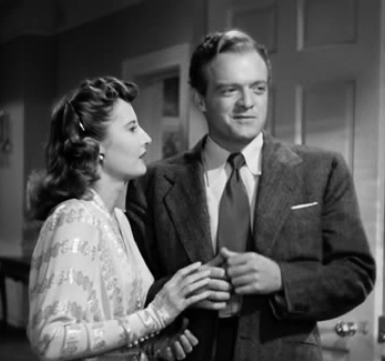
HeflinandStanwycktogether
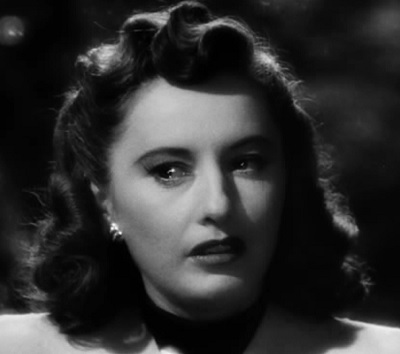
Aware that she can’t manipulate Sam, Martha panics after she reveals her secret to him. Of course, Stanwyck conveys that fear in one look, as only she can:

MarthascaredStanwyck
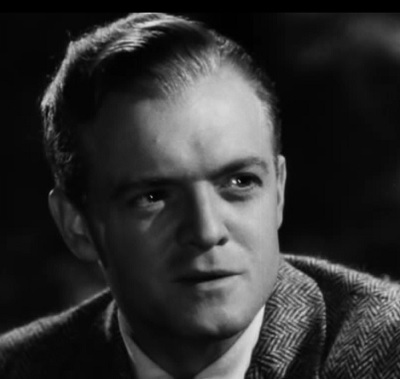
And Heflin’s understated response portrays his excitement about her honesty, his understanding of her distress, and his disgust at what’s happened:

Heflin-discovery
Before long, of course, Sam must confront Walter about his feelings for Martha:

Three-HeflinDouglasStanwyck
And Martha must stop characterizing herself as a victim, instead seducing Sam with money, power, and lust:

HeflinandStanwyck
The role of Sam Masterson requires that Van Heflin have a great deal of range—that he express assurance, wonder, sympathy, violence, love, anger, fear, revulsion. Heflin’s performance carries the film, and he plays each emotion so perfectly that you feel like you know this man, and wish him far away from his destructive former playmates. I won’t spoil what happens, as the movie is well worth viewing, with excellent acting, an intriguing story, and a great script. But be warned: Heflin’ll get to you, just as he did to me.

This is the fourth in a monthly series of The Moment I Fell for posts…Hope you’ll share some of the moments that drew you to your favorite actors and actresses….

Share
Posted in: 1940s films, Drama (film), Femme fatales, Film Noir/Crime/Thriller & Mystery, The Moment I Fell for Tagged: Barbara Stanwyck, The Strange Love of Martha Ivers, Van Heflin

Being a Princess Would Suck: Roman Holiday

09/18/2014 by leah@carygrantwonteatyou.com 6 Comments

Like most girls, I was born wanting to be a princess, though I preferred Belinda from The Practical Princess to helpless Cinderella. Unlike for many of my peers, this desire ended quite early for me. The wedding of Princess Di lasted far too long for my attention span, and what was up with that poofy dress and that decidedly not Barbie-like haircut?

Even had Diana worn the kind of clothes I preferred at six, I knew her kind of life wasn’t for me. For a shy kid who dodged from view, that much limelight looked terrifying and—even worse—dull.

linesAudrey
It’s hard to ignore the tedium of official duties when you’re the daughter of a principal. “Are we going to be last AGAIN?” I used to whisper to my sisters at the high school concert’s or play’s conclusion as I shuttled between the mothers talking kids and fathers spinning funny stories and finally glared at that last soul who hadn’t noticed that my family and he had been the only ones there for the past hour.

Perhaps that’s why whenever Kate Middleton is shot in another gorgeous dress or chic hat, I always look past it to the caption, to see what tiresome event she wore it for. I like viewing the pretty dresses in princess films still today, but I’m far more interested in the conflicts the heroine has to endure.

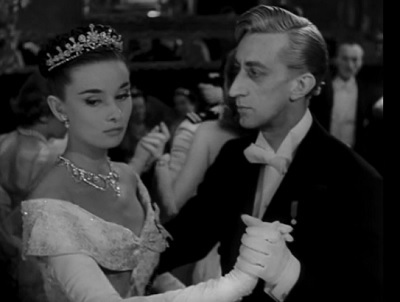
Audreydancing
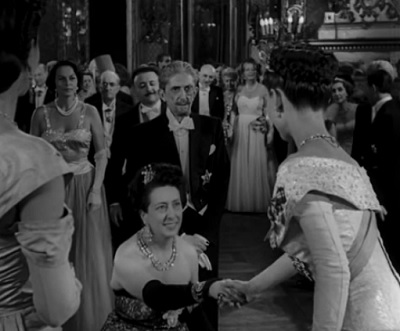
In The Prince and Me, when Paige, Julia Stiles’s character, balks at the many rules of royalty, the queen claims jewels are compensations, and the camera rests on a feast of diamond and emerald. “Yeah,” I remember thinking when I saw it, “maybe for the first twenty minutes.” Because after enduring the 200th ribbon-cutting ceremony in honor of something I’d never heard of; choking through fussy, elaborate dinners while wearing Spanx; watching yet another stream of dull important people approaching me I’d have to pretend were interesting, like some sick replay of my worst date; I’d be handing that tiara to the gal next to me and high-tailing it to Vegas.

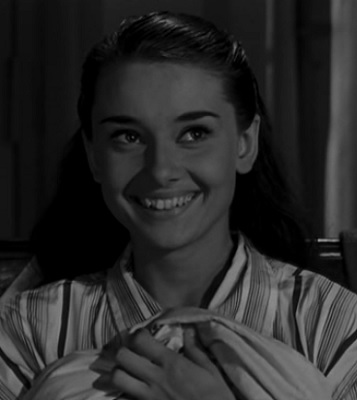
Perhaps that’s why Roman Holiday is my favorite of all princess films, a story about the glamour of everyday joys rather than balls, the excitement of the release from royalty. The film begins with Princess Ann (Audrey Hepburn) trying not to yawn through yet another official ceremony on her goodwill tour, and scandalously kicking off her tight heel, which her retinue quickly finds a way to conceal.

In response to her schedule for the next day, Ann rehearses her answers, her boredom coming through in every line: “Thank you, no thank you.” And which speech she’ll have to give, such as one of her regulars, “Youth and Progress.” Her frustration with all the routine soon leads to a nervous attack, a sedative, and her escape to play hooky in Rome, sans her identity or attendants. She meets handsome reporter Joe Bradley (Gregory Peck) as she wanders. He soon discovers her identity and plans for a scoop on the princess’s “holiday.” Oblivious to his discovery, she simply enjoys herself, and he, of course (this is Audrey Hepburn, after all) does too.

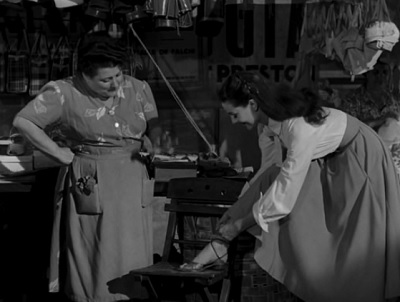
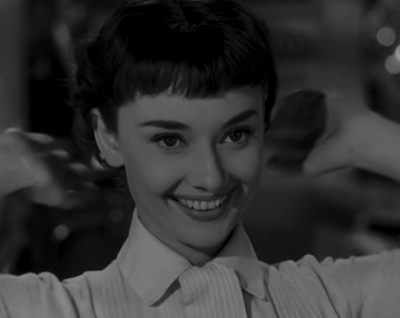
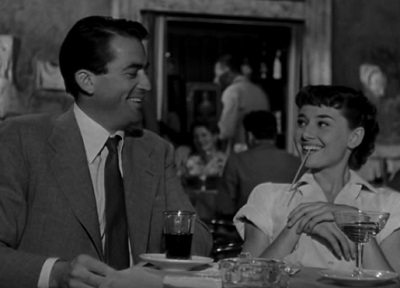
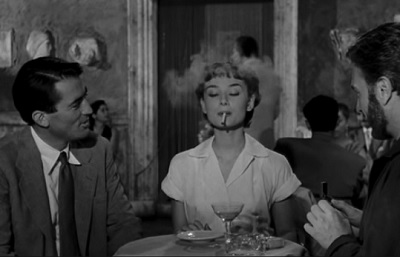
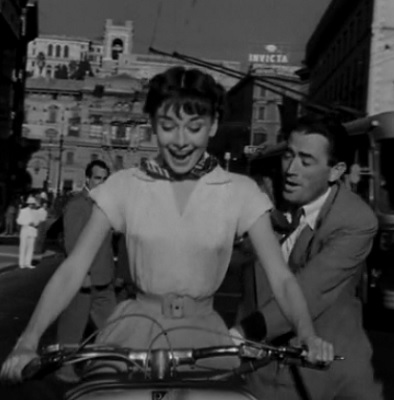
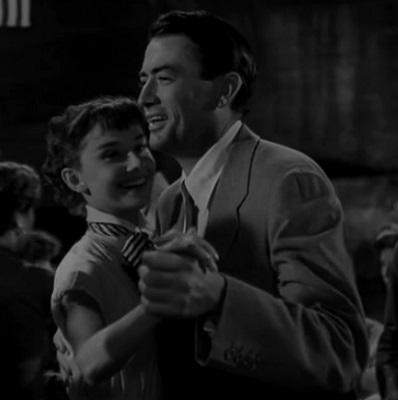
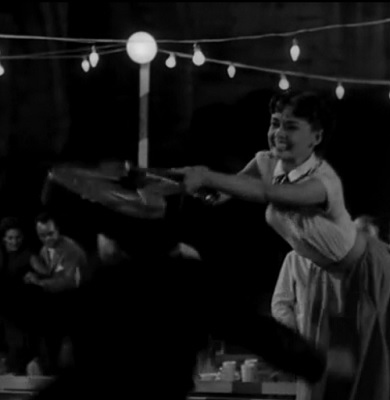
Everyday joys soon elevate the princess’s spirits from frustration to exuberance. Just look at that smile as she goes about the city…

Meeting a guy in nonofficial capacity...in PJs

Meeting a guy while in PJs

Shopping for sandals

Shopping for sandals

Getting a haircut

Getting a haircut

Drinking champaign for breakfast (Hepburn with Peck)

Drinking champaign for breakfast (Hepburn with Peck)

Trying what's forbidden... (with Peck and Eddie Albert as the adorable photographer)

Trying what’s forbidden (with Peck and Eddie Albert as the photographer)

Driving around....

Driving around….

Falling for a regular guy (if you can call Peck that)

Falling for a regular guy (if you can call Peck that)

Causing a ruckus

Causing a ruckus

Compared to such pleasures, what are designer gowns and crown jewels?

Share
Posted in: 1950s films, 1990-current films, Humor, Romantic Comedies (film), TV & Pop Culture Tagged: Audrey Hepburn, Gregory Peck, Kate Middleton, princess films, Roman Holiday, The Prince and Me
« Previous 1 2 3 4 5 … 19 20 21 22 23 24 25 26 27 28 Next »

Recent Posts

  • Say Anything Is The Sure Thing’s Lame Younger Brother
  • Wallace Got an Oscar
  • Oscar Noms 2025: Gems & Duds
  • 100 Years Later, Still Scary: Dr. Caligari
  • Escaping Out of the Past (1947)

Subscribe to Blog via Email

Enter your email address to subscribe to this blog and receive notifications of new posts by email.

Categories

  • 1920s films
  • 1930s films
  • 1940s films
  • 1950s films
  • 1960s films
  • 1970s films
  • 1980s films
  • 1990-current films
  • 2020s films
  • Action & Sports Films
  • Anti-Romance films
  • Blogathons
  • Childfree
  • Comedies (film)
  • Drama (film)
  • Feminism
  • Femme fatales
  • Film Noir/Crime/Thriller & Mystery
  • Gloriously Silly Scenes
  • Horror
  • Humor
  • Mae West Moments
  • Musicals and dancing films
  • Oscars
  • Random
  • Romance (films)
  • Romantic Comedies (film)
  • The Moment I Fell for
  • Turn My Sister into Classic Movie Fan
  • TV & Pop Culture
  • Uncategorized
Share
Classic Movie Blog Hub Member

Recent Comments

  • leah@carygrantwonteatyou.com on Say Anything Is The Sure Thing’s Lame Younger Brother
  • Dominique Revue on Say Anything Is The Sure Thing’s Lame Younger Brother
  • leah@carygrantwonteatyou.com on Oscar Noms 2025: Gems & Duds
  • leah@carygrantwonteatyou.com on Oscar Noms 2025: Gems & Duds
  • willkaiser on Oscar Noms 2025: Gems & Duds

Archives

  • March 2026
  • November 2025
  • September 2025
  • May 2025
  • March 2025
  • January 2025
  • November 2024
  • August 2024
  • July 2024
  • May 2024
  • March 2024
  • February 2024
  • December 2023
  • November 2023
  • October 2023
  • September 2023
  • August 2023
  • July 2023
  • May 2023
  • April 2023
  • March 2023
  • January 2023
  • December 2022
  • November 2022
  • September 2022
  • July 2022
  • May 2022
  • April 2022
  • March 2022
  • February 2022
  • October 2021
  • September 2021
  • April 2021
  • March 2021
  • February 2021
  • December 2020
  • October 2020
  • September 2020
  • July 2020
  • May 2020
  • April 2020
  • March 2020
  • February 2020
  • December 2019
  • October 2019
  • September 2019
  • June 2019
  • May 2019
  • April 2019
  • February 2019
  • January 2019
  • November 2018
  • September 2018
  • July 2018
  • June 2018
  • May 2018
  • April 2018
  • March 2018
  • February 2018
  • January 2018
  • November 2017
  • September 2017
  • August 2017
  • July 2017
  • June 2017
  • May 2017
  • April 2017
  • March 2017
  • February 2017
  • January 2017
  • December 2016
  • November 2016
  • October 2016
  • August 2016
  • July 2016
  • June 2016
  • May 2016
  • April 2016
  • March 2016
  • February 2016
  • January 2016
  • December 2015
  • November 2015
  • October 2015
  • September 2015
  • August 2015
  • July 2015
  • June 2015
  • May 2015
  • April 2015
  • March 2015
  • February 2015
  • January 2015
  • December 2014
  • November 2014
  • October 2014
  • September 2014
  • August 2014
  • July 2014
  • June 2014
  • May 2014
  • April 2014
  • March 2014
  • February 2014
  • January 2014

Meta

  • Log in
  • Entries feed
  • Comments feed
  • WordPress.org

Copyright © 2026 Cary Grant Won't Eat You.

Church WordPress Theme by themehall.com