Cary Grant Won't Eat You

Classic movies for phobics

  • About
  • eBooks
  • Previous Blogathons
Classic movies for phobics

Month: February 2020

Guilty Pleasure: Somewhere in Time
02/29/2020 by leah@carygrantwonteatyou.com 21 Comments

Do I watch this film in front of others? No.
Do I recommend it to others? No.
Do I praise it anywhere public? No.
Have I watched it many times? Oh yes.

There’s something to be said for that first love story that gets you as a kid. I was quite young when I first saw Somewhere in Time on TV–I have a faint memory of my mother recommending it, but whether I watched it with her, I don’t know. What I do know is that at whatever single-digit age I was when I first viewed this film, it became the MOST ROMANTIC STORY EVER for me.

A man traveling through time for a woman? A woman giving up big stardom for a man? Both of them finding their longer lives without each other worthless in comparison with the time they had together? I mean, what kid wouldn’t swoon? But now, as an adult far more comfortable expressing sarcasm than sentiment, I have to confess: I like it still.

I feel reluctant to share the plot, as anyone reading this probably already knows it, but here it goes: An elderly woman approaches playwright Richard Collier (Christopher Reeve) after a party celebrating his first college production. She gives him a pocket watch, saying, “Come back to me,” goes back home, and smiling, dies. In the meantime, Collier moves to Chicago to work on his plays. Eight years later, experiencing writer’s block, he books a room in the Grand Hotel on Mackinac Island for a night away. The island is near his former college, and its rules forbidding cars give the place an otherworldly quality.

Waiting for the hotel’s restaurant to open, he wanders into one of those little museum nooks in the hotel, documenting the history of the hotel. On the wall is a photo of a breathtaking woman.
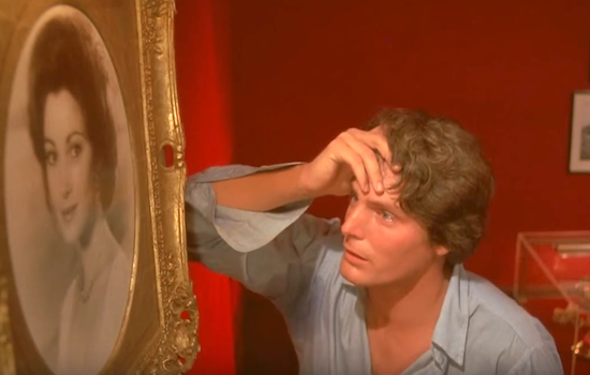
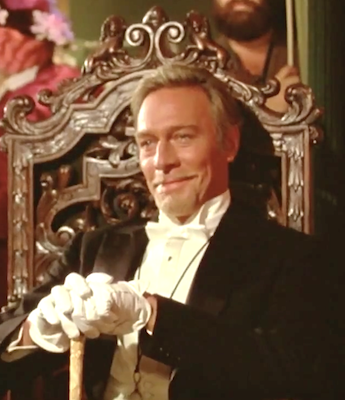
Collier, intrigued and quickly becoming obsessed, asks Arthur (Bill Erwin), an elderly hotel employee who spent his youth at the hotel, about her. Collier learns that she was Elise McKenna, a stage star who put on a play in 1912 at the hotel theater. Collier goes to the library to discover more about McKenna and learns she became the old lady who gave him the pocket watch at his play. Through a visit to McKenna’s old caregiver (played by Teresa Wright!!), Collier discovers that the stage actress pored over a book about time travel written by his professor in college. Naturally, Collier hunts him down and discovers the professor once tried self-hypnosis into another time. The professor believes if you have no modern trappings around you, it’s possible to go back, however briefly. Collier, with an early 1900s suit and old coins, begins his attempt. Eventually, he’ll succeed, woo his love, be chased away by her oppressive manager, William Fawcett Robinson (Christopher Plummer), and finally get to be with her in time for her to take the photo that inspired his journey. What happens next, I won’t spoil, but trust me, it doesn’t get any less sentimental.

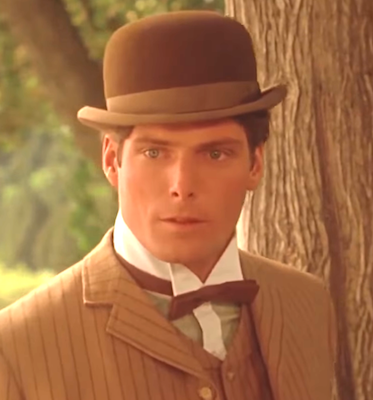
I found Christopher Reeve’s Richard Collier (what a name!) adorably awkward and smitten. I particularly enjoyed his affectionate treatment of the young version of hotel employee Arthur (Sean Hayden), and his refusal to be embarrassed even though he’s wearing a suit that (in McKenna’s day) is completely out of fashion. He also doesn’t seem to mind that he keeps sleeping in and dirtying up this suit, which must be disgusting by the time he unites with McKenna. But it’s that oblivious, single-minded attention to his lover that is so attractive in the film (though in real life, it would be alarming).

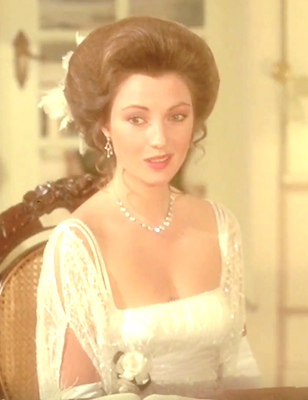
Jane Seymour’s Elise McKenna is stunning. The woman Seymour played was the person I wanted to be as a kid: an artist, accomplished, passionate. I wanted her hair, her clothes, her allure. For years afterward, Jane Seymour was my vision of unattainable beauty, and while my other 80s standards faded with time and/or growing sense and taste, that one didn’t. Because seriously? How ridiculously beautiful is that woman now, much less then?
And Christopher Reeve was so handsome, two years after Superman fame. Just check him out in his period duds:
If fact, it took this most recent viewing of the film for me to even note Christopher Plummer’s shockingly good looks, so distracted was I by the others.
Of course, the best parts of the film are the perfect music choices, just lovely enough to elevate the film: John Barry’s haunting score, and the The 18th variation of Sergei Rachmaninoff’s Rhapsody on a Theme of Paganini.

I became intrigued about the novel on which the film was based, and learned the early stage actress Maude Adams and her manager/producer, Charles Frohman, were the loose inspiration for McKenna and her manager. Best known now for putting Peter Pan (with Adams in the lead) on the stage, the pair were tremendously successful. She never married. Frohman’s personality is captured sympathetically by Dustin Hoffman in Finding Neverland. The producer comes across as charming, friendly, and well loved in true accounts as well, not as the lonely, bitter figure Plummer portrays in the film; clearly, the cruel figure fit the film’s plot better (though I found myself sympathetic to his annoyance–if not his responses to–Collier’s puppyish behavior this time). I found the real producer’s final brave hours and words on the doomed Lusitania moving.

In more lighthearted research, I learned that the hotel in the film STILL has Somewhere in Time celebration weekends, that its fan club has a playful quiz on the film. For someone abashed about loving such a sentimental film, I admire this group’s openness. My embarrassment at liking it, however, does make sense too: there’s too much use of slow-mo, some stilted dialogue, and a disturbing approval of the lengths the couple goes to for love at the end of the film.

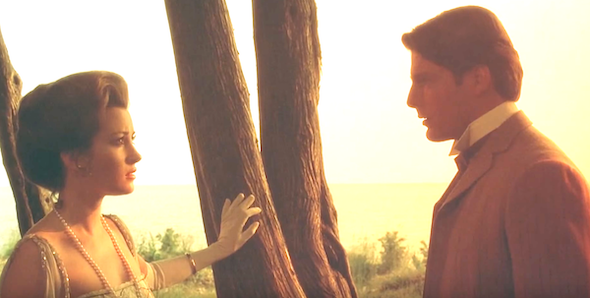
But Seymour’s sincerity in the role and Reeve’s earnestness and good humor made me love the movie again, despite my reservations. I decided, as before, to dispense with judgment and just live in this world a while. (As with Crouching Tiger, Hidden Dragon, when I just accepted the flying as a given.) There is some wistful magic to the couple’s commitment to one another; there is charm in the ease of Collier’s time travel, suggesting their love was destined. The narrative seems to borrow heavily from the film Laura (also with captivatingly sweet music, also with a picture of the heroine that haunts a man) and from Portrait of Jennie, which likewise gets longing right. The actors’ chemistry is perfect; they truly seem in love. Just check out these expressions as they look at one another.
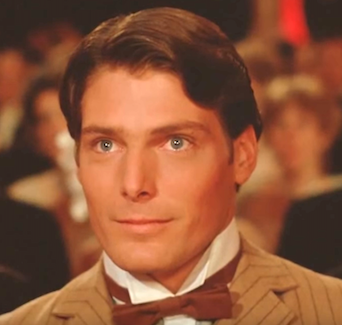
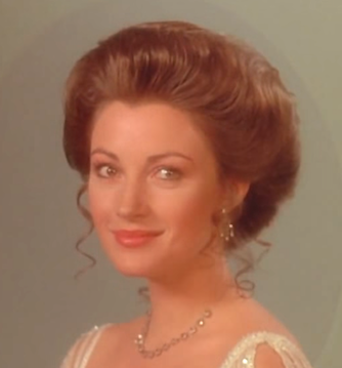
It’s not surprising that the two remained lifelong friends.

And you know, this kind of nostalgic story is never going to lose its appeal. Witness the book and TV series Outlander, winning new audiences into enchantment at the idea of time-crossed lovers as I write.

This blog post is part of The Leap Day blogathon, hosted by Taking Up Room. I love this idea of celebrating February 29th by reflecting on time-confused/unexpected films. Check out the other entries here!

Share
Posted in: 1980s films, Romance (films) Tagged: guilty pleasure movies, Jane Seymour, Somewhere in Time

Top 3 Kirk Douglas Performances

02/05/2020 by leah@carygrantwonteatyou.com 6 Comments

Kirk Douglas lived a very long life, but it’s still shocking to learn of his death. He was so incredibly alive onscreen. There are few performers in Hollywood history as charismatic as Douglas. Since his effect on his viewers was physical in its impact, I want to focus on the three performances that shocked me with their force.

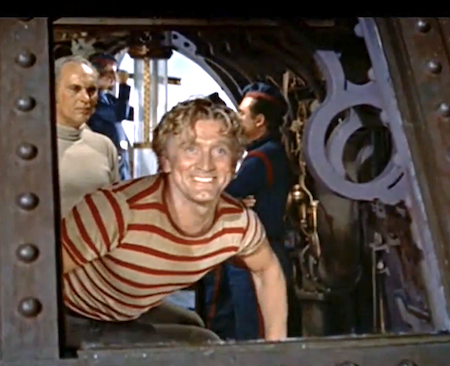
3. 20,000 Leagues Under the Sea. For some reason, I watched this in class as an adolescent. (What exactly was the purpose of that unit?) I wasn’t into classic films then, and was skeptical about the movie’s cheesy premise. But in the center of this silly, over-dramatic film leapt Kirk Douglas. Who IS this guy? I thought, shocked by the actor’s joyous energy, cockiness, and sheer confidence. It’s probably also the first time I realized a classic film star could be very sexy. It obviously wasn’t the last.

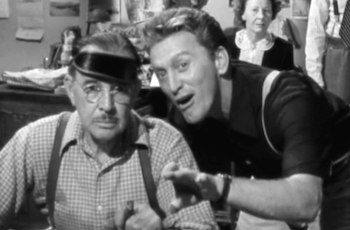
2. The Bad and the Beautiful. What a perfect casting decision, to have Douglas play the sadistic, yet gifted producer who lures others to bad fates because he cares more about his art than treating his cast humanely.

Observe the way his three victims lean in to hear his new film idea, despite his previous treatment of them.

Of course they would, with Douglas’s talent and magnetism at full wattage in the role. Even the nicest characters Douglas ever played had an edge, but in this part, Douglas revealed his skill in capturing the cruelty of a ruthless man.

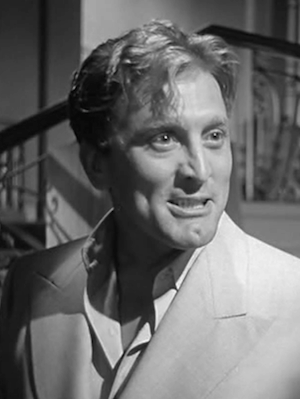
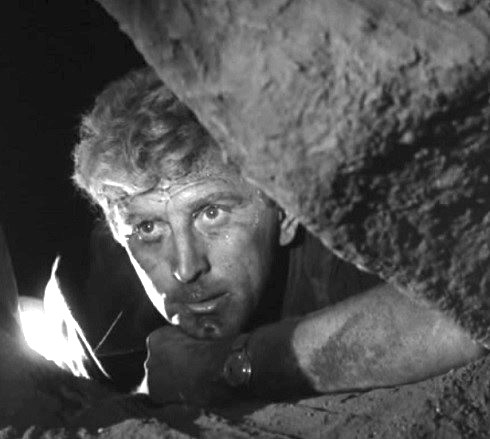
1. Ace in the Hole. What a brilliant performance as the reporter who risks a man’s life to get a big story! After watching Douglas in action, it was hard to get behind any other actor playing an ambitious reporter. Who else could show that flashing excitement about a story, that single-minded intent? And what other actor could be convincing enough to make audiences believe that one unscrupulous man could persuade a community of sensible people to make such a dangerous mistake?

Douglas owns this film. Thanks to his perfect performance, he gives Billy Wilder’s dark satire the resonance it deserved. The film is one of the greatest of its era, and is so eerily prescient it can be difficult to watch. It wouldn’t have had nearly the power it does with a different actor.

I know others would argue for Spartacus, another of his momentous roles, and certainly one that showcased Douglas’s impressive physicality. But these three were the roles that fixed me to the screen, unable to turn away.

I know there’s much more to say about the actor, particularly his part in ending the blacklist. But today I just want to say how grateful I am for his powerhouse presence onscreen. I always felt if I would just reach forward, he’d jump out to join me in my living room, that sexiest and most riveting of classic actors. No wonder it’s so hard to let him go.

Share
Posted in: 1950s films, Uncategorized Tagged: Ace in the Hole, best classic actors, Kirk Douglas, magnetic actors, The Bad and the Beautiful

The Gender Gap in Film

02/05/2020 by leah@carygrantwonteatyou.com Leave a Comment

Check out these two articles, both of which show the gap between awards for women and men in the Oscars over time in visual format.

“The Oscars’ 92-year gender gap, visualised”

“Maybe Those Are Just the Best Movies This Year”: #WhiteMan’s Oscar in Context.”

The Guardian‘s statistic about the lack of awards for female cinematographers was particularly illuminating.

In addition to showing what female-driven films could have been honored but weren’t over the years, Relatively Entertaining covers the diversity of voices in film, how we’ve regressed since a high point in the 40s in honoring women’s stories–even if told by men. The post also highlights how seldom black actresses are repeatedly honored for their work: “For that matter, it’s a strange quirk of Oscar that of the 35 times a black woman has received acting Oscar nomination, only three (Whoopi Goldberg, Viola Davis and Octavia Spencer) have been nominated more than once, and only Spencer has been nominated after winning her award.”

I wonder how long Academy voters could sustain the fiction that women’s films just haven’t been good enough yet to get awards after viewing the articles’ startling graphics. I wonder if the lack of repeat nominations for women (and women of color in particular) will finally bring home just how much has to change.

Share
Posted in: 1920s films, 1930s films, 1940s films, 1950s films, 1960s films, 1970s films, Feminism, Oscars, Uncategorized Tagged: black women and the Oscars, gender gap, representation in film

The Academy Loves Directors Who Play It Safe

02/03/2020 by leah@carygrantwonteatyou.com 2 Comments

I watched Marriage Story with excitement. I’ve been following Noah Baumbach’s career since Kicking and Screaming (1995), a hilarious movie about East Coast college men’s arrested development and how their romantic immaturity interferes with their happiness.

The déjà vu happened immediately: This new, supposedly innovative film was about a New Yorker’s arrested development and how his romantic immaturity interferes with his happiness.

Sigh.

Had I seen growth in the treatment of this subject matter, I wouldn’t have been so troubled, but the earlier film, though rough around the edges, was twice as entertaining and unique as Marriage Story, which felt like a weak combination of Baumbach’s old themes and Kramer versus Kramer. Yet the Academy awarded Baumbach for this water treading with a Best Picture nod. They then gave a Supporting Actress nom to Laura Dern for the worst caricature of a woman I’ve seen outside of an action flick in years, a Rush Limbaugh characterization of a female divorce lawyer if ever I saw one. That nod alone says a lot about Academy voters.

This worrying backward movement extended to The Irishman as well. Academy voters rewarded Martin Scorsese for returning to mob territory, even though he made no attempt to switch the perspective away from the mobsters, or to include one female character whose personality existed outside of men’s treatment of her. True, there are some changes—he replaced the flashy narrator of Goodfellas with a quiet, suffering cog, who supposedly played a pivotal role in Hoffa’s death in real life as well as in the film. Only he didn’t: his involvement in Hoffa’s death was a fabrication, which was the most interesting thing about him. What would cause a man to lie about such a thing, knowing his family would condemn him for it? THAT’s a topic for a movie! Instead the film presents his lie as true; the plot focuses on how the hero has gotten himself caught up in this miserable mob life, which is a story line expressed in a much more interesting way in Goodfellas.

Now let’s turn to Quentin Tarantino. His material is always imaginative, violent, unique. His films are exciting to watch, but typically, he treats his characters as paper dolls rather than humans. In Jackie Brown, he turned down his jets and humanized his middle-aged hero and heroine. He gave them regrets and nostalgia, which imbued that film with insight as well as style. For the adolescent Tarantino, that’s some serious growth. So why is anyone impressed with his depiction of Sharon Tate as a wide-eyed viewer of her own movies, a woman who loves nothing more than sexy dancing at the Playboy Mansion, who throws her hair flowing behind her before riding in an open-topped car?* Why, in a film about opportunity cut short, pretend that Tate’s real opportunity loss was that of continuing to be a schoolboy’s fantasy, and not a mature mother? Do we honestly find it good storytelling to continue to pretend that the sexual playground of the 60s was so very fun for the women who didn’t have the biological option of being so carefree?

I don’t know how we can expect male directors (let alone female, who have so few opportunities) to be innovative, to embrace perspectives beyond their own, when they’re rewarded with nominations for circling and re-circling the same tired subject matter and stereotyped characterizations while their finer, fresher films go unnoticed.

This year Clint Eastwood was the director with a real breakthrough. His career was founded on celebrating renegade men with authority. To have him suddenly turn the tables on that legacy in Richard Jewell was groundbreaking. What happens, he asks in the film, if the man who grew up revering lawmen as heroes is suddenly victimized by them? In other words, Jewell could have been, probably was, a fan of Dirty Harry—and that very love destroyed his life. For all this talk of the Oscars and male rage, the real-life Richard Jewell EARNED his rage, and yet his film, the most interesting exploration of white male anger this year, was left out of the running.

Usually, I dislike Eastwood’s films, finding his sexist heroes annoying and his overwrought storytelling verging on silly. But in Richard Jewell, Eastwood even toned down his considerable love for melodrama and sky-high messaging. The result is a brilliant, affecting, subtle film. (One scene—Kathy Bates sadly rubbing her Tupperware after a police warrant destroys it—is more affecting than almost every moment in the Oscar-nominated films; the diner scene beats them all.) This is what great filmmakers do: they surprise us with what they have to say about life, with technical and storytelling techniques that have some kind of direction or point beyond divorce sucks or mobsters’ lives are bad.

I enjoyed all of the Oscar-nominated films I’ve seen, but I’ve been disappointed in most of them as well. With this kind of talent, why play it so safe? Why not fully humanize Tate, as Tarantino did the fictional Jackie Brown? Greta Gerwig didn’t play it safe; she tampered with a beloved story and came up with something truer to Louisa May Alcott’s vision and intent than any previous cinematic version of Little Women. (If you don’t think that’s risky, you haven’t met any fans of classic novels.)

What if Scorsese had called into question his own legacy of celebrating violent men, as Eastwood did with lawmen? What a brilliant film The Irishman could have been!

Unfortunately, there’s an answer to why these directors didn’t make their films more innovative, nuanced, surprising—especially Scorsese. He knew his Academy too well. He anticipated what would happen to Gerwig, to Eastwood. (Only directors the Academy doesn’t know are allowed to take those types of chances.) So he put his head down and gave the voters what they wanted of him, same-old, same-old. And he got his nomination.

*I think we all know from Bridget Jones how well that turns out, but not in Tarantino’s world, where all sexy women can throw their hair back without any falling into their eyes.

Share
Posted in: 1990-current films, Oscars, Uncategorized Tagged: #whitemalerage, Clint Eastwood, Greta Gerwig, Martin Scorsese, Noah Baumbach, Oscars for playing it safe, Quentin Tarantino

Recent Posts

  • 100 Years Later, Still Scary: Dr. Caligari
  • Escaping Out of the Past (1947)
  • A Weeper for Those Who Love Jerks
  • Thank You, Academy, for Not Infuriating Me
  • Challengers (2024) Is a Bad Movie

Subscribe to Blog via Email

Enter your email address to subscribe to this blog and receive notifications of new posts by email.

Categories

  • 1920s films
  • 1930s films
  • 1940s films
  • 1950s films
  • 1960s films
  • 1970s films
  • 1980s films
  • 1990-current films
  • 2020s films
  • Action & Sports Films
  • Anti-Romance films
  • Blogathons
  • Childfree
  • Comedies (film)
  • Drama (film)
  • Feminism
  • Femme fatales
  • Film Noir/Crime/Thriller & Mystery
  • Gloriously Silly Scenes
  • Horror
  • Humor
  • Mae West Moments
  • Musicals and dancing films
  • Oscars
  • Random
  • Romance (films)
  • Romantic Comedies (film)
  • The Moment I Fell for
  • Turn My Sister into Classic Movie Fan
  • TV & Pop Culture
  • Uncategorized
Share
Classic Movie Blog Hub Member

Recent Comments

  • leah@carygrantwonteatyou.com on Meg Ryan’s Fate Foretold in Joe Versus the Volcano
  • Ryan on Meg Ryan’s Fate Foretold in Joe Versus the Volcano
  • leah@carygrantwonteatyou.com on 100 Years Later, Still Scary: Dr. Caligari
  • The Classic Movie Muse on 100 Years Later, Still Scary: Dr. Caligari
  • leah@carygrantwonteatyou.com on 100 Years Later, Still Scary: Dr. Caligari

Archives

  • November 2025
  • September 2025
  • May 2025
  • March 2025
  • January 2025
  • November 2024
  • August 2024
  • July 2024
  • May 2024
  • March 2024
  • February 2024
  • December 2023
  • November 2023
  • October 2023
  • September 2023
  • August 2023
  • July 2023
  • May 2023
  • April 2023
  • March 2023
  • January 2023
  • December 2022
  • November 2022
  • September 2022
  • July 2022
  • May 2022
  • April 2022
  • March 2022
  • February 2022
  • October 2021
  • September 2021
  • April 2021
  • March 2021
  • February 2021
  • December 2020
  • October 2020
  • September 2020
  • July 2020
  • May 2020
  • April 2020
  • March 2020
  • February 2020
  • December 2019
  • October 2019
  • September 2019
  • June 2019
  • May 2019
  • April 2019
  • February 2019
  • January 2019
  • November 2018
  • September 2018
  • July 2018
  • June 2018
  • May 2018
  • April 2018
  • March 2018
  • February 2018
  • January 2018
  • November 2017
  • September 2017
  • August 2017
  • July 2017
  • June 2017
  • May 2017
  • April 2017
  • March 2017
  • February 2017
  • January 2017
  • December 2016
  • November 2016
  • October 2016
  • August 2016
  • July 2016
  • June 2016
  • May 2016
  • April 2016
  • March 2016
  • February 2016
  • January 2016
  • December 2015
  • November 2015
  • October 2015
  • September 2015
  • August 2015
  • July 2015
  • June 2015
  • May 2015
  • April 2015
  • March 2015
  • February 2015
  • January 2015
  • December 2014
  • November 2014
  • October 2014
  • September 2014
  • August 2014
  • July 2014
  • June 2014
  • May 2014
  • April 2014
  • March 2014
  • February 2014
  • January 2014

Meta

  • Log in
  • Entries feed
  • Comments feed
  • WordPress.org

Copyright © 2025 Cary Grant Won't Eat You.

Church WordPress Theme by themehall.com