Cary Grant Won't Eat You

Classic movies for phobics

  • About
  • eBooks
  • Previous Blogathons
Classic movies for phobics

Month: August 2015

Female’s Heroine: 1933’s Amy (of Trainwreck), Samantha Jones, or Don Draper?

08/27/2015 by leah@carygrantwonteatyou.com 4 Comments

RuthChattertonFemalefilm
Given its plot synopsis, I expected Female to be shocking: a promiscuous executive casually sleeps with men until she finds the right guy. But I didn’t expect to gasp at its daring. A few of the heroine’s typical comments:

Falling in love: “To me, a woman in love is a pathetic spectacle. She’s either so miserable that she wants to die, or she’s so happy you want to die.”

Marriage: “No thanks, not me. You know a long time ago I decided to travel the same open road that men travel, so I treat men exactly the way they’ve always treated women.”

Husbands: “Of course, I know for some women, men are a household necessity. Myself, I’d rather have a canary.”

Then there’s a typical night. She…

1. Spots a handsome employee, feigns interest in his ideas, and asks him to come over to her house that night to discuss them.

2. Discourages business talk with flirtation, as when she says, “Are you naturally enthusiastic?” to a new hire, throwing a pillow onto a plush rug with a suggestive look.

RuthChattertonflirting2
3. Orders vodka from her butler, who informs the rest of the staff of the Catherine the Great custom: serving it to soldiers “to fortify their courage.”

4. Exercises with vigor the next morning, clearly energized by the tryst, and comes up with new ideas for the business.

5. Rejects the romantic overtures of her one-night stand, annoyed by his flowers, then offers him a bonus as a kiss-off. She doesn’t want to deal with the moodiness of emotional men at work. (Women, how many times have films suggested this about us?)

At first, I thought the movie would be like Trainwreck, as Alison (Ruth Chatterton) certainly displays the same level of disinterest in building a romance with her one-night stands and blows off a guy after he calls her “ethereal” and otherwise indicates their lack of sexual heat:
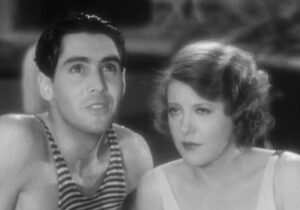
Annoyed by his flowery (nonsexual) language
Amy and Alison have an impressive list of conquests, and not only express disinterest in matrimony and kids for themselves, but for others, as when Alison can’t be bothered to remember her friend’s husband’s name, or how many kids she has–much like Amy’s (Amy Schumer’s) scene at her sister’s shower. Both heroines are funny and mostly likable, as when Alison worries about her chauffeur, who has taken a punch in her honor: “Now listen, Puggy, things people say about me don’t bother me,” she says with a lovely smile. “Thanks just the same.”

But in terms of power–and what they do with it–there’s no comparison. After one-night stands fueled by liquor, Amy, hungover, struggles to get through the day.

AmySchumerTrainwreck
Alison, in contrast, looks alert, pretty, and pleased with herself, and does a brilliant job at work afterward. The word “trainwreck” is about as far from Alison Drake as a term can be.

Like her more direct heir, Samantha Jones, Alison practically bristles with authority and confidence, but unlike Samantha, she has a whole auto factory full of employees.
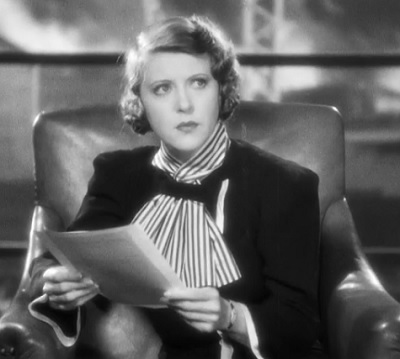
RuthChatterton-businessFemale
One criticism of Sex & the City was that it never took the work as seriously as the characters’ personal lives, which made it less feminist than it could have been. Here, the heroine has no chance for tight friendships, but finds her work thrilling: “Oh, but I love it: the battling, the excitement; I don’t think I could do without it now.” I soon found myself as interested in the business–such as her decision to go with automatic transmission–as in the flings, not something I expected to experience with a romantic comedy.

Like Samantha, Alison wants to sleeps with her hot employees–only in Alison’s case, she does. (Samantha waits to fires hers first).

SamanthaJonesandrudeassistant
In fact, Alison has sex with so many of them that there are a flood of bonuses on the company payroll, like some kind of stud fee. Her leer at a new designer is as hilarious to witness as Samantha’s undressing looks. And as with Samantha, her vulnerabilities are evident–in her case, a fear that men are angling for her money rather than her personality or body (either would be fine).

While it’s easy to admire Alison’s moxie, she’s guilty of sexual harassment throughout the story, as when her secretary shows her too much affection after their affair, and she transfers him to Montreal. Promptly afterward, this lovesick conquest watches the latest one-night stand leave her office and calls, “I’ll see you in Montreal.” When Alison falls for Jim (George Brent), mainly because he’s hard to get, his anger at her regular nightly ploy earns our admiration; he won’t sleep with her to keep his job, he retorts.
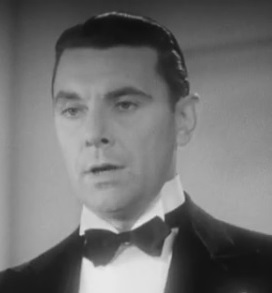
GeorgeBrentFemale
While she initially decides to fire Jim’s secretary, assuming the two are involved, and then plans to overload her with work, she quickly reconsiders, deciding not to be petty. While she’s still in murky moral territory due to her liaisons with subordinates, she doesn’t reach full anti-villain status, since she won’t fire someone for turning her down or stealing her guy. Still, it’s hard to forget that shady transfer…and how much she reminds us of Don Draper with his secretaries on Mad Men.

I stopped the film multiple times as the end neared, fearful about whatever sexist cliché it was headed for. This character was simply too complex, and Chatterton too wonderful in the role, for me to watch some reductive conclusion.

RuthChattertoninFemale
I was right to be scared (though I feared it would be worse). Oddly, Jim, till then annoying in spite of his rebellion, demonstrated unexpected feminist leanings near the close. Too bad the screenwriters and director chickened out and tacked on totally unbelievable concluding lines.

Despite its shock value and fascinating lead, the film hasn’t reached the popularity or accessibility today it deserves. I could only locate it in DVD form on Netflix, and went for the free month trial of streaming with Warner Archive instead. Go to the effort; it’s worth it.


Share
Posted in: 1930s films, 1990-current films, Anti-Romance films, Comedies (film), Feminism, Romantic Comedies (film), TV & Pop Culture Tagged: ahead of its time, Amy Schumer, Female (1933), Mad Men sexism, promiscuous women, Ruth Chatterton, Samantha Jones, Trainwreck

Top 10 Characters in Teaching Films & Shows

08/20/2015 by leah@carygrantwonteatyou.com 2 Comments

As the school year begins, I’ll be returning again to my favorite educational films–some inspiring, some hilarious. Here are the characters and performances I consider award worthy.

THE TEACHERS: 5 BEST CHARACTERS

5. Mr. Shoop in Summer School (1987)

HarmonSummerSchool
Gym teacher Mr. Shoop (Mark Harmon) plans to vacation in Hawaii with his girlfriend for the summer, but when the English teacher wins the lottery and immediately quits, Shoop’s forced to teach remedial English. He is the most likable of the teachers I’ve chosen, easygoing and even tempered, good natured even when tried. Ultimately, his slacker ways convert into effort in the classroom, and because he relates to and has no illusions about his students’ disinterest, he’s able to reach them. Most importantly, he has rational expectations of them, and celebrates progress rather than any specific target, as any good teacher should (and would be able to, would the system allow it). Plus, the film is hilarious, and Harmon is so attractive in it.

4. Elizabeth Halsey in Bad Teacher (2011)

Halsey-Diaz-BadTeacher
Cameron Diaz doesn’t always reach her comic potential, but when she does, as with Elizabeth Halsey (Cameron Diaz) in Bad Teacher, she’s something to watch. The montage of her avoidance of crying students and celebrating teachers makes me laugh every time, as does her unabashedly sexy school car wash and cruel honesty in speaking with her class and grading their work. She is a terrible teacher, but her narcissism and bluntness make her a very, very funny one.

3. Teachers in Ferris Bueller’s Day Off (1986) & Peanuts

BenSteinFerrisBueller
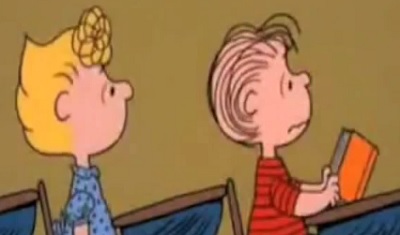
If pressed, I’d prefer Peanuts‘ gibberish teacher to Ben Stein’s gloriously boring one, but the two are closely tied. Obviously, both types are accurate portrayals of how instructors come across to students. I love how Stein has given upon class participation, simply saying, “anyone, anyone?” then answering himself. But Peanuts’ teacher may get the edge because I have this same reaction ANY time I encounter something I don’t understand. My car is being fixed, I’m listening to explanations of the U.S. debt, and I hear that waa-waa-waa of Peanuts’ comically confusing instructor.

2. Prez in The Wire (2006)

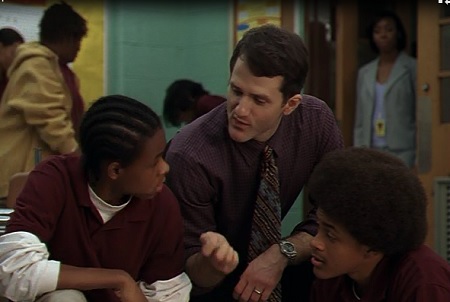
PrezandStudentsTheWire
Season 4 of The Wire features the Baltimore school system, with former cop Roland Pryzbylewski, known as Prez (Jim True-Frost), teaching the students from neighborhoods he formerly policed. As a result, he knows what his students are up against, though he isn’t prepared for the challenge of teaching them. I’ve never seen a more accurate depiction of teaching in a difficult district. Prez’s use of gambling odds as an example to finally reach some of his students in the episode “Unto Others” is remarkably telling about their priorities–and squandered potential. We can only wish that those who had more influence in the system were as wise and compassionate as Prez.

1. Sir in To Sir, with Love (1967)

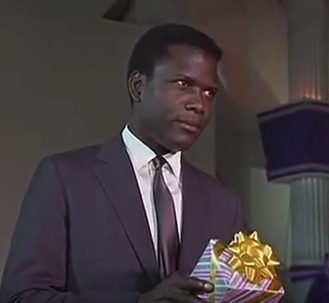
SidneyPoitierToSirwithLove
Sir’s (Sidney Poitier) school district in England is characterized as very challenging, even if it looks less so to us in 2015. We see him constantly thwarted, and frequently angry. His race becomes one more thing students have against him. His decision to throw out the lesson plan and begin anew is what any good teacher would do if it were allowed–the problem, of course, is that you only want good teachers doing so.

What I love about Sir is that he’s a reluctant instructor, only there because he can’t get a job in his field, and slowly, these rebellious kids win him over. He is a very flawed character, even socially awkward, and thus very real. Poitier deserved an Oscar for the performance. The theme song makes me tear up every time. And the film has such a lovely, perfect, subtle ending. The movie is inspiring without ever losing track of reality (as most teacher-centric films do).

THE STUDENTS: TOP 5 PORTRAYALS

5. Spicoli in Fast Times at Ridgemont High (1982)

Spicoli
Spicoli (Sean Penn), the ultimate surfer dude. I don’t think this character requires any explanation (most would expect to see him as #1). While there is a shadow of this stoner in Amy Heckerling’s Clueless (1995), it’s in her earlier film, Fast Times, that she captured an iconic form of the type, mainly due to Cameron Crowe’s script. Spicoli’s (Sean Penn’s) battles with his teacher, Mr. Hand (who deserves an honorable mention in the list above), are perfect.

Bagel tucked in jeans, shirtless, Spicoli makes us laugh before he says a word. Penn gives him an awkward gait; a spacey expression; long, wordless pauses; and an inability to detect sarcasm. As a result, he is as lovable as he is annoying. Penn turned the surfer dude into comedy gold, and actors have been imitating him ever since.

4. The Frustrated/Bored of Ferris Bueller’s Day Off & Peanuts

There’s really no need to pinpoint an individual in the mass of disinterested students who are ignoring Ben Stein’s flat delivery of “Bueller?” as he calls the roll. The Peanuts characters’ confusion at their instructors’ seeming gibberish are similarly funny, though Charlie Brown’s panic is particularly funny. What’s unavoidably true is just how typical both the boredom and confusion are in any classroom, though hopefully with occasional relief! Beautifully rendered in both cases through the facial expressions of the students as the teacher drones on.

Peanutsstudents

Buellerstudent1

Buellerstudent2

Buellerstudent3

3. The Intellectuals of Better Off Dead (1985)

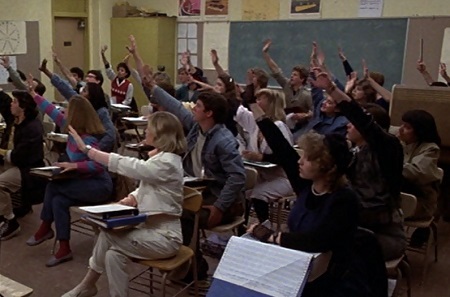
BetterOffDeadClass
Most films portray the majority of students as inattentive and uninterested. This film subverts our expectations, with a class enthralled by comically difficult subject matter. They’re so enthusiastic that they groan when they have to leave the classroom, comforted only when their math teacher reassures them: “I’ll see you all tomorrow. Just remember to memorize pages 39 to 110 for tomorrow’s lesson.” It’s so obviously a teacher’s dream of what students would be like after watching too many inspiring education films that it always cracks me up. Lane (John Cusack), in contrast with his peers’ binders of work, takes out one sheet of paper with “Do homework” stuck together with gum. In this case, the slacker is the unpopular one. It’s a mistake not to watch the whole film, but at least catch this scene.

2. The Kids of The Wire, Season 4
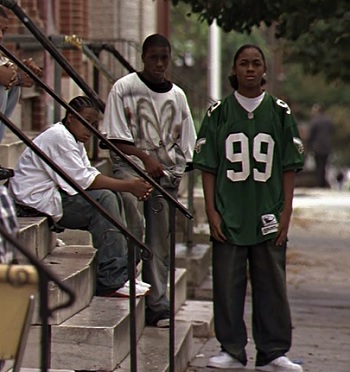
I find it hard to write about the students in this season, as they’re far too real: Dukie (Jermaine Crawford), Randy (Maestro Harrell), Namond (Julito McCullum) and Michael (Tristan Wilds) struggle with the lure of selling drugs on the corner in Baltimore, with authority figures often encouraging or passively accepting their abandonment of education.

Watching Michael's confrontation with a drug dealer.

Watching Michael’s confrontation with a drug dealer.

It’s the most vivid and compelling portrayal I’ve ever seen of the weight so many students bear with them when they enter the classroom. The Wire, unlike 90 percent of cinematic portrayals of teaching, sees that the wider culture and systemic problems of the educational system are far greater forces than one teacher with a great idea (which Prez does have) can combat. Haunting.

1. Chainsaw & Dave of Summer School

ChainsawDave-SummerSchool
All the students in Mr. Shoop’s (Harmon’s) class are distinctive. Their plan–to exchange bribes for trying in school–is diabolical and hilarious in itself. And with characters like these–the awful driver Mr. Shoop has to train, the kid who spent the summer in the bathroom, etc.–who can stop laughing? The most memorable students are obviously Dave (Gary Riley) and Chainsaw (Dean Cameron), the wannabee special-effects guys. Who comes up with such unique characters for a silly film like this one? The tension breaker of and “I don’t know anything” dream of Chainsaw’s before the big test are my favorite depictions of academic stress in any film, book, or story. (I should, though, give an honorable mention to John Travolta’s Barbarino in Welcome Back, Kotter.) Inspired by Chainsaw, I used to suggest to friends a university-wide tension breaker when I was an undergrad.

As the school year begins, I’ll be returning to these favorites to combat moments of frustration and refresh my love for teaching. I hope some of you will do the same.

Share
Posted in: 1960s films, 1980s films, 1990-current films, Comedies (film), Drama (film), TV & Pop Culture Tagged: Bad Teacher, best, Better Off Dead, Cameron Diaz, Ferris Bueller, Mark Harmon early films, Mr. Hand, Sidney Poitier, Summer School, Teaching films, The Wire, To Sir with Love

A Legacy of Self-Amusement: Drew & John Barrymore

08/13/2015 by leah@carygrantwonteatyou.com 19 Comments

DrewBarrymoreCharliesAngels-main
Charlie’s Angels
(2000) is the epitome of how seriously Drew Barrymore takes herself: the hair flips, the silly punk rock past of her character, action sequences so absurdly, self-consciously over-the-top that they make you smile.

Playfulness seems to be Barrymore ‘s signature, what distinguishes her from her lesser rom-com peers. So it wasn’t surprising that this was a film she chose to produce, an ode to a dumb TV show celebrating sexism/female empowerment/both (depending on your point of view).

The show (1976-81)– for those younger folks out there–featured a wealthy but reserved guy (Charlie), who hired three beautiful detectives (the angels) for his agency. All we ever got of Charlie was his voice, as he never appeared in person and let all arrangements be managed by his assistant, Bosley. The term ‘angel,’ use of possessive, Charlie’s condescending voice, the quick rotations of actresses for the roles (suggesting they were interchangeable)—any of the four could make a feminist cringe. But the women were tough and smart, using their looks to blindside unwary men, much as Columbo used his folksiness.

The film is both a parody and tribute, using the TV show’s theme music, graphics, and basic concept, but mocking the silliness of it too. Cameron Diaz plays the supposed airhead (Natalie) to perfection. Lucy Liu takes on the kind of tough role she always plays, even imitating a dominatrix/efficiency expert in one ploy as detective Alex. As Dylan, Barrymore mocks the over-the-top femininity of her predecessors by embracing a badass, punk rock aesthetic. The strange connection the women have to Charlie is brought to the forefront when their client (Sam Rockwell) suggests that Dylan has daddy issues.

Thinking they get to meet Charlie in person...

Hopeful to meet Charlie in person…

Whatever part she’s in, Barrymore always seems to be playing herself, and part of what keeps us watching her is just how likeable she is, this woman who went through a painful past of abandonment and substance abuse as a kid, and emerged as a woman with empathy for those who contributed to the conditions that put her there. She is both the most tender of the three actresses onscreen—Barrymore always captures vulnerability effectively—and the most sarcastic. Perhaps hers is an earned playfulness, but Barrymore wears it lightly. (How else could you repeatedly perform with Adam Sandler, and more bafflingly, not only star with, but marry Tom Green? Tom Green!) While her acting never wows me, she does.

In Drew’s performances, I don’t see much of her forebears, that famous acting dynasty whose members mesmerize audiences still today. Only in her youthful roles did I ever see traces of the Barrymore family’s skill with drama. I would argue that Irreconcilable Differences (1984); an underrated film about a girl who wants to separate from her narcissistic, divorced parents (in an eerie foreshadowing of Barrymore’s own decision years later); was her strongest dramatic role. Perhaps it just was a part she knew really, really well.

But usually, the actress just prefers, and does better, at comedies. Certainly, Drew lacks the intimidation or gravitas of her great-uncle Lionel…

LionelBarrymore
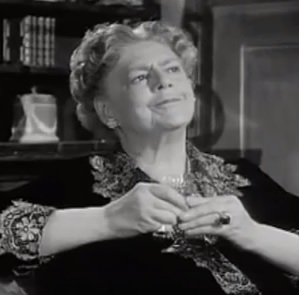
the nuance of her great-aunt Ethel…

EthelBarrymore
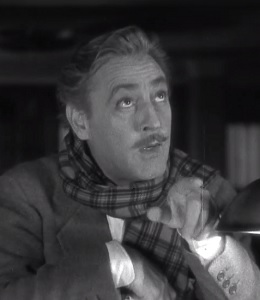
or the presence of her grandfather John…

JohnBarrymore
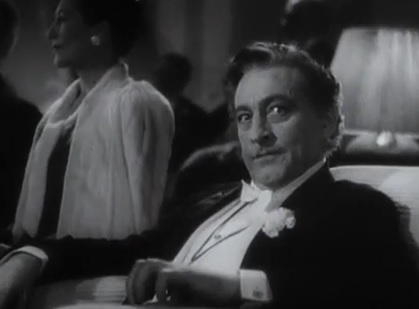
Of course, her troubled past brings to mind her grandfather’s. But it’s in her self-deprecating goofiness that I see the clearest link to the Barrymore dynasty. While it’s certainly not present in all of the Barrymores’ roles, I see it in John’s charming turn in Grand Hotel, and, of course, in his hilarious supporting character in the glorious Midnight (1939). There’s such a lightheartedness to his approach to the role of Georges Flammarion, and though he was already at the cue card stage of his decline, his humor, at least, had not reached the self-parody stage.

John Barrymore in Midnight

John Barrymore in Midnight

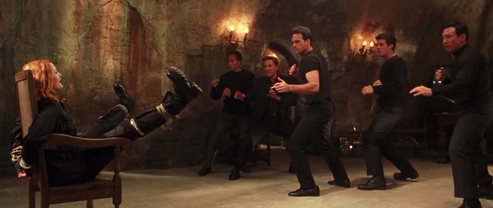
Such lightheartedness is key to Dylan’s (Drew Barrymore’s) character, even when she’s in the direst straights. In the best action sequence in Charlie’s Angels, Dylan has been tied up by her sleazy client, Eric Knox (Sam Rockwell), who has betrayed her after sleeping with her, and tried to kill her already. Knox departs to perform his nefarious schemes, leaving her to his five henchmen. After managing to get her lighter back, she spells out what she will do to escape, buying time but also revealing her confidence.

DylanCharliesAngels
As she sits in her chair, she calmly explains, smiling at her adversaries all the while, “By the time this is over, every one of you is gonna be face down on the floor, and I’m gonna moonwalk out of here.”

DrewBarrymoreCharliesAngels
As they rush toward her, she interrupts, looking at each man in turn, “You’re not listening to me. See first, you’re gonna help me out of my chair, and then I’m gonna leapfrog over you, before I break his nose…I’m gonna do all of this with my hands tied behind my back.”

DrewBarrymoreCharliesAngels2
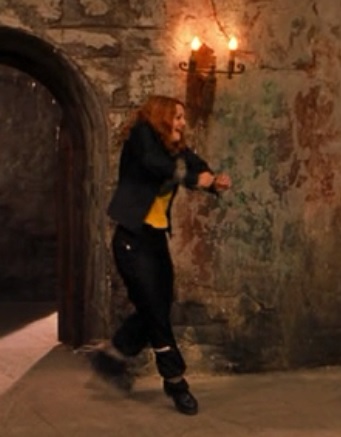
She does exactly what she says:

DrewBarrymorefighting
And her moonwalk is a joy:

DrewBarrymoremoonwalking
You can see the full clip here.

Any actress could have had fun with such a sequence, but there’s so much self-amusement in Drew Barrymore’s portrayal that I kept thinking of her grandfather in Midnight. Sure, he had much more range and talent than she does, but in self-amusement, the two are matched.

This post is part of the Barrymore Trilogy blogathon, hosted by Crystal of In the Good Old Days of Classic Hollywood. See the fantastic entries here!

Share
Posted in: 1980s films, 1990-current films, Action & Sports Films, Blogathons, Comedies (film), Film Noir/Crime/Thriller & Mystery, Humor, TV & Pop Culture Tagged: Charlie's Angels, Drew Barrymore, John Barrymore, Midnight (1939), movie, satire, spoof

They Live by Night: The Romeo & Juliet of Noir

08/09/2015 by leah@carygrantwonteatyou.com Leave a Comment

TheyLiveByNight-romance
When I see a movie described as Bonnie and Clyde-like, I’m expecting an adrenaline-junkie couple, exciting escapes, violence. Imagine then my surprise to find They Live by Night is a surprisingly sweet tale of young newlyweds who long to–wait for it–go out to dinner together.

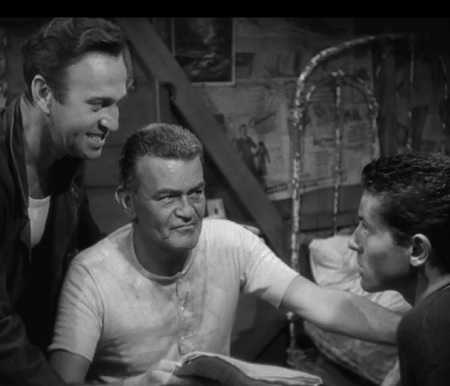
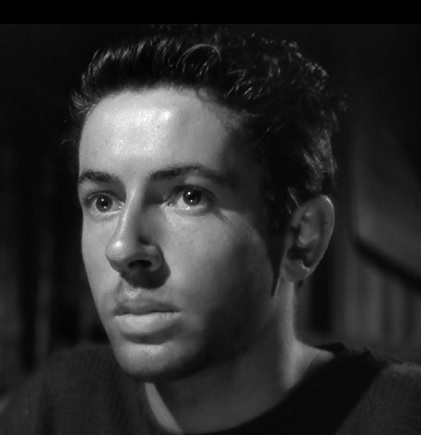
It’s true that initially, this film seems a typical noir. Bowie (Farley Granger) is an escaped convict, sprung by fellow criminals Chickamaw (Howard Da Silva) and T-Dub (Jay Flippen) so that he’ll be the getaway driver for their bank robberies.

DaSilvaGrangerFlippen
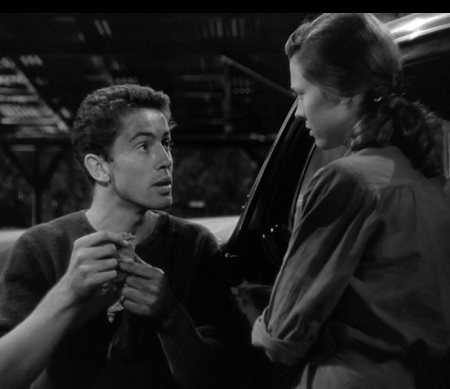
Jailed seven years for a murder he didn’t commit, Bowie goes along with their plans, thinking the loot will help him pay for a lawyer to prove his innocence. (Yes, that’s how naïve he is.) This supposedly scary criminal looks like this when he’s afraid a girl will disapprove of him:

Bowie, looking like a scared Ralph Macchio.

Resembling a scared Ralph Macchio….

But innocence is the theme of this movie–and not the corrupting of that innocence (as a noir might lead us to expect). While he does commit robberies, Bowie doesn’t seem very interested in them. He’s loyal to his partners, but ready to quit at any time. In fact, we see very little of his robberies in the film, and very much of his quiet time with his love. What makes it a noir is simple: he’s trapped by his past actions, and escape isn’t looking likely. His hopes for getting out of the mess he’s caused are sad to hear, even if they do endear him to Keechie (Cathy O’Donnell).

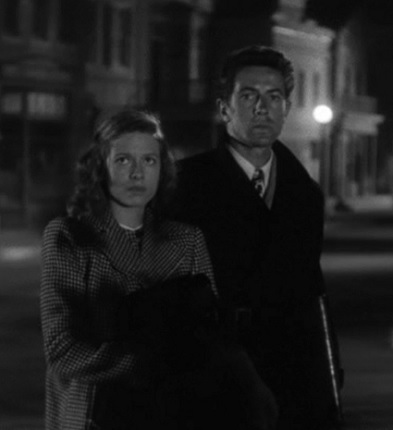
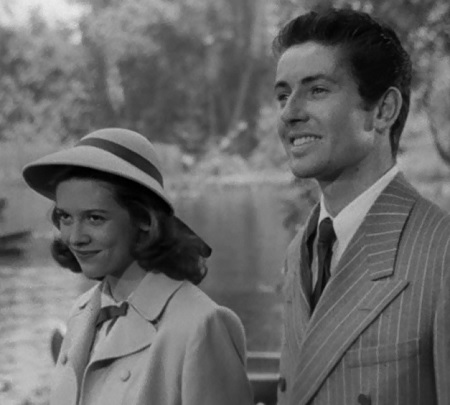
GrangerO'Donnell
Keechie, whose drunken father hides the escapees, falls for  Bowie after his fumbling attempt to talk to her (she seems to be the first girl he’s met). When they spend time together after an injury and his partner Chickamaw’s bloody response to it given Bowie an undeserved reputation for villainy, the two become even closer. Their impulse decision to marry after she runs away with him shows them fearful, hesitant as they approach the altar–like the kids they are.

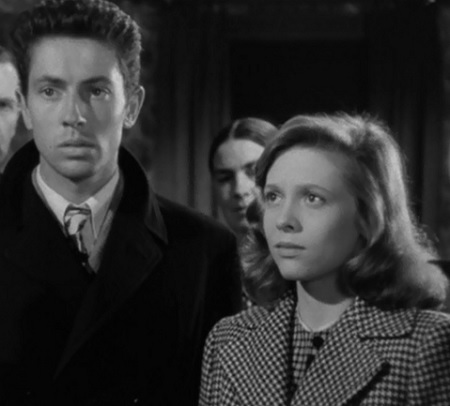
KeechieandBowieTheyLiveByNight

TerrifiedofMarriageBowieKeechie
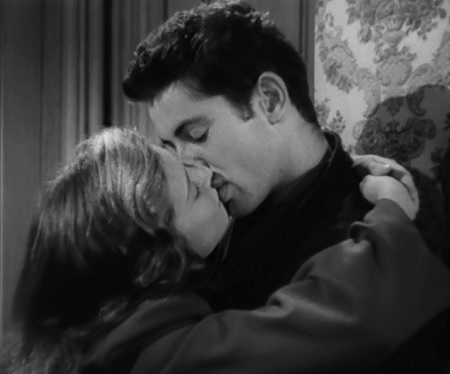
These two are so innocent I kept wondering if they were even going to kiss.

At points, there’s so much giddiness when they smile at each other it’s easy to forget that these dark shadows on the screen portend something, that their romance probably isn’t headed anywhere better than Shakespeare’s famed lovers.’

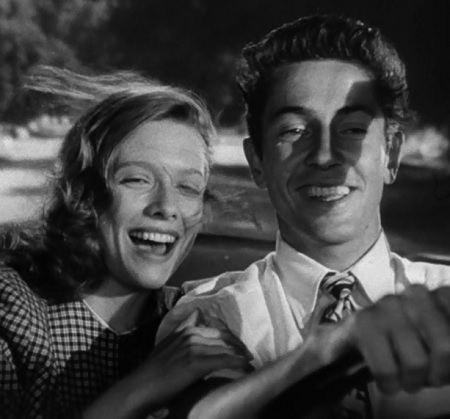
BowieKeechieTheyLivebyNight
(I should mention, by the way, that I’ve never found Rome & Juliet romantic; I regard it as the tragedy of teenage-think-gone-wrong, when a new crush means forever-love, and a life without him/her is THE END. It’s difficult for me to fathom that others find fickle Romeo–who was in love with Rosaline the day before–romantic.)

While there’s no feud between the couple’s families in They Live by Night, Keechie’s father helps the police catch Bowie, and the latter’s partners refuse to let him go straight, giving us a bit of that lovely, narcissistic Capulet-Montague spirit.

Despite the odds, Keechie and Bowie do manage to escape the patent absurdity of their names and the triteness of their situation, making us root against others hunting them. O’Donnell plays that same almost-too-sugary supporter as she did when portraying Wilma in The Best Years of Our Lives, but with enough toughness and grit to make us like her. Granger perfectly captures the blustering young lover trying to do the right thing, but kind of clueless about how to pull it off.

While the criminal partners of Bowie’s are fairly stereotypical, others the couple meet are not; the strange, quirky hotel proprietors and marriage officiants seem to promise sympathy and add interest to the story–though no one deserves as much trust as these two are willing to shell out. You just keep wondering how this kid could survive 7 years in prison and STILL be this childlike, or a girl could have a corrupt, alcoholic father; a criminal for an uncle; and remain such an optimist. And yet, they come across as real on the screen, and the freshness they bring to their experiences is enchanting, as with this scene of them ecstatic about going out for dinner.

TheyLiveByNight-smalljoysmarriage
I won’t reveal how it ends, but the film is suspenseful enough in spite of many slow interludes, and the characters compelling enough, to keep you watching, and hoping….

Share
Posted in: 1940s films, Film Noir/Crime/Thriller & Mystery, Romance (films) Tagged: Cathy O'Donnell, Farley Granger, film noir, Romance, Romeo and Juliet, They Live By Night

Pretending to Be Contagious: 2 Comic Scenes

08/02/2015 by leah@carygrantwonteatyou.com Leave a Comment

In one of my favorite scenes from The Thin Man series, Nick Charles pretends his wife is contagious for laughs. It made me think of outbreaks, and how they’ve been used to panic audiences—or amuse them. Somehow funny scenes so often result from mocking our greatest fears. So on the lovely actress’s birthday, here’s that scene—and another like it from many decades later—when the characters mess with the crowds around them for very different reasons.

Eliminating Suitors: Nora in Another Thin Man (1939)
Nora’s (Myrna Loy’s) considerable sex appeal is a joke in many of The Thin Man movies. Ex-cons can’t believe someone so desirable could be Nick’s wife instead of his mistress. Men follow her and hit on her constantly. Just look at her.

MyrnaLoy-AnotherThinMan
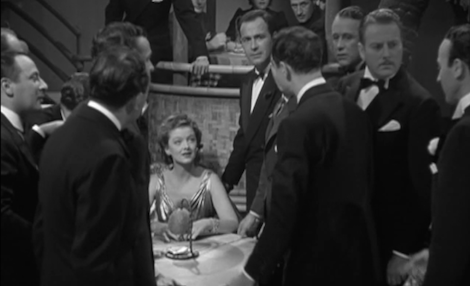
Who wouldn’t? When Nick (William Powell) seeks his wife in Another Thin Man, he finds a crowd of men vying for her attention.

NoraCharlesCrowd
To clear them away quickly, he begins, “Now Mommy, you know better than to come to a place like this your first day out of bed. What if the health officers find out? They’ll put you right back in quarantine.”

At first, her expression suggests she may be annoyed by his ploy. But her response tells us otherwise: “I won’t stay in quarantine. I don’t care who catches it.”

The two are instantly alone. Whether this routine is a regular gag with them (it seems so practiced) or just a function of their quick-wittedness, the couple delivers it—as they do everything—beautifully.

Cracking Themselves Up: Sam & Carl in Ghost (1990)
We witness a smirk from Sam (Patrick Swayze) as soon as he and his friend Carl (Tony Goldwyn) enter the elevator of their business in Ghost. We know therefore whatever follows is a gag of some kind. Clearly, there’s some level of improvisation to their conversation, with each trying to outwit each other, and out-gross-out their unlucky audience.

Swayze-GhostElevatorScene
Carl starts coughing.

Sam: “How you feeling? What did the doctor say?”

Carl: “He ummm said that it was contagious. That it was really—”

Sam: “No.”

Yeah. “Yeah. He said that I shouldn’t even be coming in today.”

Sam: “What about the rash?”

Carl: “The rash?”

Sam: “Mmhm.”

Carl: “The rash is ummm also incredibly contagious. He said that…will…spreading.”

Of course, it gets even grosser from there…and the two act like 10-year-old boys instead of grown men in enjoying their little joke.

I  think I enjoy silly scenes like these because I know I would be far more likely to be the one decamping than the one making the joke. I would be the butt of the ploy, and can’t help but smile at how easily these characters would play me.

Share
Posted in: 1930s films, 1990-current films, Romantic Comedies (film) Tagged: contagious, Ghost, movies outbreaks, Myrna Loy, Nick and Nora Charles, Patrick Swayze, The Thin Man

Recent Posts

  • 100 Years Later, Still Scary: Dr. Caligari
  • Escaping Out of the Past (1947)
  • A Weeper for Those Who Love Jerks
  • Thank You, Academy, for Not Infuriating Me
  • Challengers (2024) Is a Bad Movie

Subscribe to Blog via Email

Enter your email address to subscribe to this blog and receive notifications of new posts by email.

Categories

  • 1920s films
  • 1930s films
  • 1940s films
  • 1950s films
  • 1960s films
  • 1970s films
  • 1980s films
  • 1990-current films
  • 2020s films
  • Action & Sports Films
  • Anti-Romance films
  • Blogathons
  • Childfree
  • Comedies (film)
  • Drama (film)
  • Feminism
  • Femme fatales
  • Film Noir/Crime/Thriller & Mystery
  • Gloriously Silly Scenes
  • Horror
  • Humor
  • Mae West Moments
  • Musicals and dancing films
  • Oscars
  • Random
  • Romance (films)
  • Romantic Comedies (film)
  • The Moment I Fell for
  • Turn My Sister into Classic Movie Fan
  • TV & Pop Culture
  • Uncategorized
Share
Classic Movie Blog Hub Member

Recent Comments

  • leah@carygrantwonteatyou.com on Meg Ryan’s Fate Foretold in Joe Versus the Volcano
  • Ryan on Meg Ryan’s Fate Foretold in Joe Versus the Volcano
  • leah@carygrantwonteatyou.com on 100 Years Later, Still Scary: Dr. Caligari
  • The Classic Movie Muse on 100 Years Later, Still Scary: Dr. Caligari
  • leah@carygrantwonteatyou.com on 100 Years Later, Still Scary: Dr. Caligari

Archives

  • November 2025
  • September 2025
  • May 2025
  • March 2025
  • January 2025
  • November 2024
  • August 2024
  • July 2024
  • May 2024
  • March 2024
  • February 2024
  • December 2023
  • November 2023
  • October 2023
  • September 2023
  • August 2023
  • July 2023
  • May 2023
  • April 2023
  • March 2023
  • January 2023
  • December 2022
  • November 2022
  • September 2022
  • July 2022
  • May 2022
  • April 2022
  • March 2022
  • February 2022
  • October 2021
  • September 2021
  • April 2021
  • March 2021
  • February 2021
  • December 2020
  • October 2020
  • September 2020
  • July 2020
  • May 2020
  • April 2020
  • March 2020
  • February 2020
  • December 2019
  • October 2019
  • September 2019
  • June 2019
  • May 2019
  • April 2019
  • February 2019
  • January 2019
  • November 2018
  • September 2018
  • July 2018
  • June 2018
  • May 2018
  • April 2018
  • March 2018
  • February 2018
  • January 2018
  • November 2017
  • September 2017
  • August 2017
  • July 2017
  • June 2017
  • May 2017
  • April 2017
  • March 2017
  • February 2017
  • January 2017
  • December 2016
  • November 2016
  • October 2016
  • August 2016
  • July 2016
  • June 2016
  • May 2016
  • April 2016
  • March 2016
  • February 2016
  • January 2016
  • December 2015
  • November 2015
  • October 2015
  • September 2015
  • August 2015
  • July 2015
  • June 2015
  • May 2015
  • April 2015
  • March 2015
  • February 2015
  • January 2015
  • December 2014
  • November 2014
  • October 2014
  • September 2014
  • August 2014
  • July 2014
  • June 2014
  • May 2014
  • April 2014
  • March 2014
  • February 2014
  • January 2014

Meta

  • Log in
  • Entries feed
  • Comments feed
  • WordPress.org

Copyright © 2025 Cary Grant Won't Eat You.

Church WordPress Theme by themehall.com