Cary Grant Won't Eat You

Classic movies for phobics

  • About
  • eBooks
  • Previous Blogathons
Classic movies for phobics

Month: March 2015

Parenting Advice from Heaven Can Wait (1943)

03/26/2015 by leah@carygrantwonteatyou.com 2 Comments

Ernst Lubitsch was known for his sexual farces. Heaven Can Wait is just one of his many movies spoofing marriage, and in the process illustrating a number of truths about what it means to say “I do.” But I was primarily engaged by the supporting characters in this film. Perhaps that’s why the parenting lessons Lubitsch liberally supplied struck me so much more this time than his marital wisdom. Here are a few lessons from the cynical director:

Expose Your Child to the Opposite Sex Early
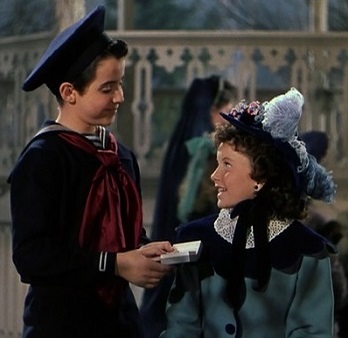
A boy who falls for the ladies in his pre-teens will learn ambition early. He’ll discover, according to Lubitsch and screenwriter Samson Raphaelson, that gifts earn him affection, and the greater the number of gifts, the greater the love. This early training will motivate him to make a name for himself—and, of course, earn the big bucks.
BeetlesHeavenCanWait
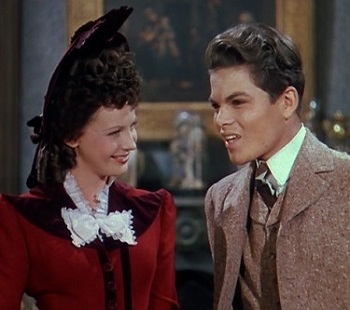
You can build on this valuable training by hiring a comely French tutor to teach him more than one new language when he reaches his teens.
frenchtutorHeavenCanWait
This hire will solidify his conviction that life is but a long seduction.

Spoil Your Child
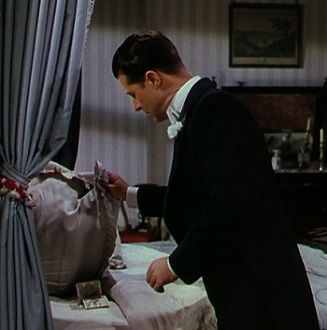
You might fear giving your kid endless funds and no responsibilities. You might assume that he will become a hopeless waster, lying around and expecting others to cater to him. But if you’ve given him ambition via the ladies, you don’t need to fear. Indulge away.
DonAmeche-spoiled
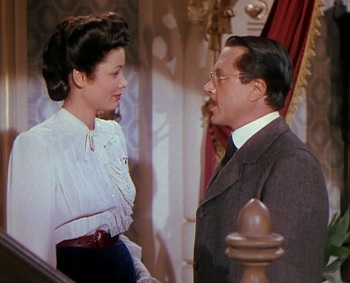
If you instead raise him with rules and standards, he’ll grow up to become such a prudish dullard that he’ll actually compare himself to a suit, admitting, as cousin Albert does, that he’s not “flashy” or of a “stylish cut” but “sewed together carefully.” In Ernst Lubitsch’s world, a man like Albert (Allyn Joslyn), who brags that his “lining is good,” is never going to win the affections of a woman as vivacious and beautiful as Martha (Gene Tierney). He’ll get this bored response to his heartfelt wooing instead:
SuitDescription-HeavenCanWait
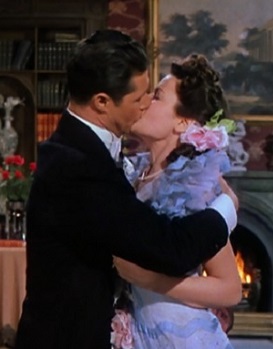
And the wooing by his spoiled cousin? Yeah, that’s a bit more successful:
TierneyandAmeche
Do Not Outcast Your Kid—Unless You Like Your Spouse
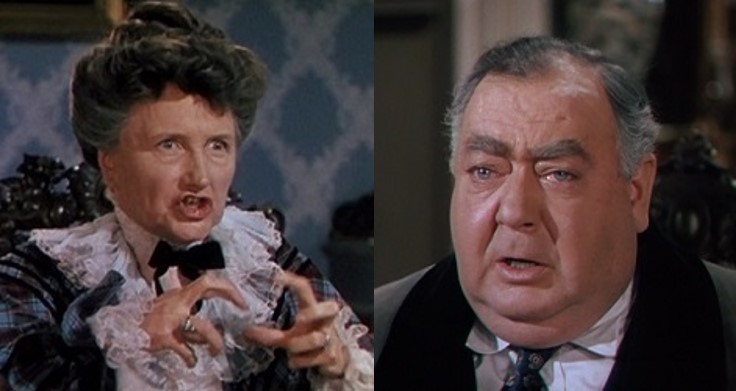
In her day, Martha’s elopement may have led to quite a scandal, innocent as it may appear now. But her parents’ decision to boot her out for life means they spend their days fighting over who gets the comics first. You know your life has reached a sad pitch when you can become this inflamed over the plight of the Katzenjammer Kids:
PalletteandMain
Spare yourself the misery of too much alone time with your spouse. Forgive your kid.

Keep Your Own Dad Around; He’ll Be Needed
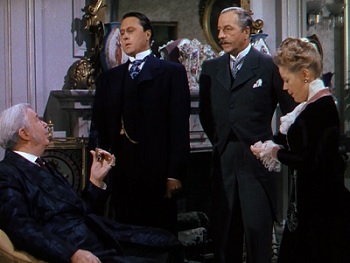
If you were raised in a more structured household, you may be a little innocent about the facts of life, such as what your son has been up to with the French tutor you hired. At 43, you may need your father to enlighten you that your son is both drunk and debauched.
Coburnandfamily-HeavenCanWait
And when that son makes a wreck of his life after one too many dalliances, you may not be able to save his marriage for him (if you’re still around). But his wiser grandpa might just pull it off, especially if he’s hilarious and savvy and anything like Charles Coburn (who supplies at least 50 percent of the film’s best lines).
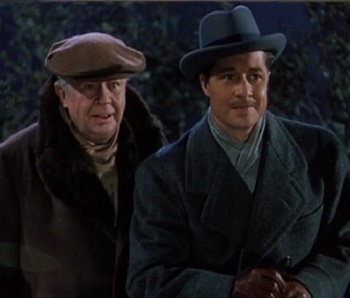
CharlesCoburnwithDonAmeche
And there you have it. Valuable advice for the worldly parent, courtesy of Lubitsch. I hope you were reading carefully. You may need it one day.

Share
Posted in: 1940s films, Humor, Romantic Comedies (film) Tagged: Charles Coburn, Don Ameche, Ernst Lubitsch, Eugene Pallette, Gene Tierney, Heaven Can Wait, Marjorie Main

Edward G. Robinson and My Cat

03/19/2015 by leah@carygrantwonteatyou.com Leave a Comment

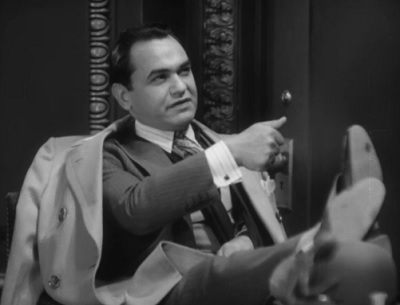
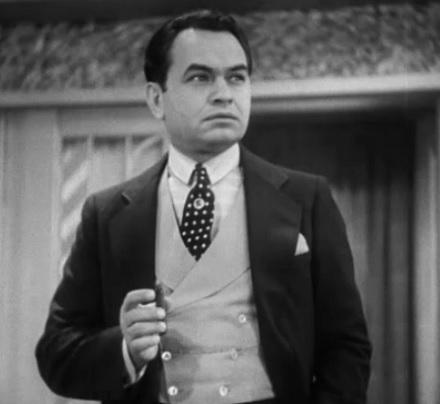
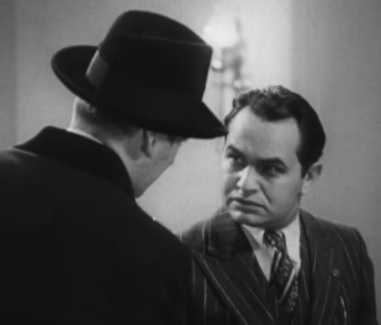
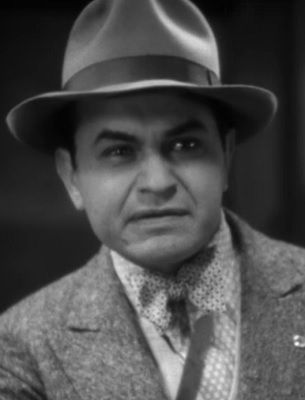
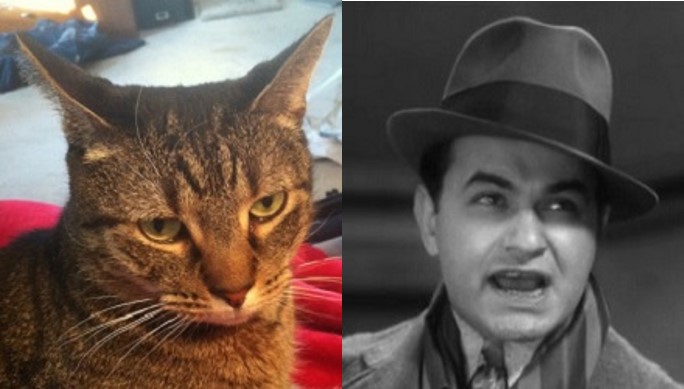
RicoandEdwardGRobinson
“Suave,” the receptionist at my vet’s office said the other day, reacting to my cat’s name. “Sorry,” she added quickly. “I couldn’t resist.” I laughed, having forgotten that Gerardo’s infamous 1990 song is the first association most people have with the name Rico. My cat does share some traits with the character described by that one-hit wonder, but “suave?” Not so much.

My husband and I had seen Little Caesar a few months before adopting our cat. We’d wavered over a name, and then started noticing some familiar traits. Like our cat’s ego, which seemed to be vastly disproportionate to his size.

A head so big they'd need a "special sized noose" for him.

Cops say they’ll need a “special noose” to fit his “swelled head.”

We discovered that our newcomer wasn’t exactly sane, and that he felt entitled to what wasn’t his. He wanted our food as well as his own, and jumped up on the counter to paw some while we were eating it. That’s when we realized his actions reminded us of something, and that something was Edward G. Robinson’s breakout role.

CoolCaesar-EdwardGRobinson
Increasing acquaintance with my cat’s past and behavior has proven that those traits are just the beginning of his resemblance to Edward G. Robinson’s antihero. He was returned once to the shelter because he couldn’t handle associating with other dominant male cats. Sound familiar, Edward G. Robinson fans?

LittleCaesarangry
And then there’s his survival instinct. My cat is scrappy. He was discovered outside a dumpster in a New England winter he somehow survived. As if to prove his history, he has knocked over the trash can so many times seeking leftovers that we’re considering the metal tamper-proof kind others purchase to keep out collies and labs. And if a jalapeno potato chip, a piece of broccoli is dropped, he devours it before we can retrieve it. Rico never takes anything for granted, assumes he has to fight for everything he gets. Just like Little Caesar.

And like Robinson’s character, my cat is always voracious (despite a now hefty belly). Little Caesar hungered to be part of the “big time.” He begins the film envying Diamond Pete Montana, a successful gangster, not a nobody like himself, ripping off gas stations. “Money’s alright,” he says to his partner, who admits he’d quit crime if he had enough, “but it ain’t everything. Yeah, be somebody. Look hard at a bunch of guys and know that they’ll do anything you tell them.” He even expresses his longing with a butter knife.

LittleCaesar
As Little Caesar begins to rise, he can’t help eying others’ pins, diamond rings…

Of course when you think of Robinson, you can’t forget that voice, and how much he liked to use it. My cat too has a great desire for self-expression, and sees no reason to ever cease meowing. Maybe that’s why my husband and I started referring to him as “the Rico,” recalling Robinson’s famous line when he talks of himself in third person: “Is this the end of Rico?”

I think one of the reasons Robinson’s role made his career is because in spite of all of his criminal acts in the film, in spite of his arrogance, there’s something haunting and sympathetic about Little Caesar’s need to prove himself, to be envied.

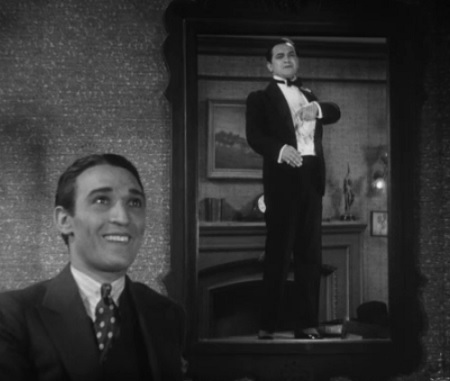
RobinsoninmirrorLittleCaesar
He is in so many ways the embodiment of the American Dream filtered through a shaky understanding. He’s hardly the first—in fiction or real life—to be destroyed by his belief in it. Because he’s played by Edward G. Robinson, we are enthralled by Rico even as we condemn his actions. And in spite of everything, his loyalty to his best pal is always there, even when he most wants to lose it.

Perhaps Little Caesar’s real tragedy is that he was born into the wrong species. In feline form, the ambition, ego, hunger would all be endearing. We’d smile, hug, and pet him for those characteristics, and acknowledge his superiority without any need for proof. After all, it was the thirst for that recognition that inspired Little Caesar’s crimes. Poor man. He should have been a cat.

RecliningRico

Share
Posted in: 1930s films, 1940s films, Drama (film), Film Noir/Crime/Thriller & Mystery, Humor, Uncategorized Tagged: cat, Edward G. Robinson, Little Caesar, movies, Rico

3 Characters I’d Like to Celebrate St. Patrick’s with

03/12/2015 by leah@carygrantwonteatyou.com 2 Comments

The Hero of The Adventures of Robin Hood (1938)

ErrolFlynn-RobinHood
While watching Errol Flynn play Robin Hood, you get the feeling he knows how ridiculous he looks in those green tights. But instead of embarrassing, his outfit energizes him. You can almost hear him thinking, “Well, the manliness contest is lost. Let’s party!” The whole cast seems to share his giddiness, making this one of the most entertaining movies I’ve seen in some time. Who wouldn’t want to spend the green holiday with someone this easygoing and gorgeous?

(It’s easy to trace the film’s influence on an early favorite of mine, The Princess Bride, not to mention the parody Robin Hood: Men in Tights. Neither movie captures Flynn’s delirious enthusiasm, but that same sly humor is on full display in both, with Cary Elwes a worthy heir to his predecessor’s effortless style.)

The Heroine of Sadie Thompson (1928)

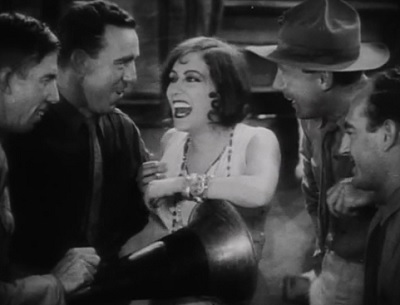
SadieThompson-Swansongroup
Sadie (Gloria Swanson) likes to pull pranks, tell dirty jokes, sing, dance, and most of all, laugh. The rarity of female attention partially explains the marines’ enthusiasm for her company in the story, but that’s not the only reason she attracts them. This woman is just so much fun. Like many supposedly “fallen women” in film, she has an easy camaraderie with others, is just as good a pal as a lover. And her confidence (until it’s shaken by the film’s villain) is breathtaking.

Nick & Nora Charles

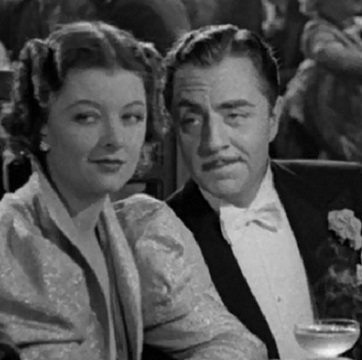
NickandNoraCharles-Partying
Nick Charles (William Powell) of The Thin Man series is the life of the party, without making any effort to be so.  He is cool, debonair, sarcastic, with just the right smidgen of childish to never take anything seriously but his partying. His wife Nora (Myrna Loy) is the perfect hostess. Obnoxious visitors entertain rather than annoy her. Party crashers are welcome. She calls room service to deliver “a flock of sandwiches” for her intoxicated guests, hands newcomers a drink before they’ve even gotten into the room. When asked if Nick is working a case, Nora responds, “Yes…A case of scotch. Pitch in and help him.”  Could any line sound more like St. Paddy’s Day than that?

Share
Posted in: 1920s films, 1930s films, 1940s films, Comedies (film), Drama (film), Humor, TV & Pop Culture Tagged: Carl Elwes, Errol Flynn, Nora Charles, Robin Hood, Sadie Thompson, St. Patrick's Day movies

The Artist at Play: Man with a Movie Camera (1929)

03/09/2015 by leah@carygrantwonteatyou.com 14 Comments

This post is part of the blogathon hosted by Movies Silently and sponsored by Flicker Alley. Thanks to both for such a great event! Click here to see the wonderful entries of the other participants:

Camera-Man2
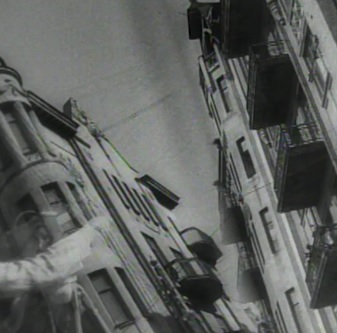
Wizardry. It’s the word that jumps at you while viewing Man with a Movie Camera, the celebrated documentary depicting 24 hours in a Russian city. Unlike the famous magician of Oz, director Dziga Vertov invites his viewers to experience all that his camera—and by extension, all that film—can do. Announcing at the start of his movie that there will be no scenarios, intertitles, or actors, Vertov set out to separate the genre from its roots in theater. The result could have been a movie so meta it became unwatchable to any but film scholars; after all, the director even demonstrates how he obtains shots, even exhibits the film editing process. But this masterpiece is not only revolutionary; it’s also engrossing. Here are just a few reasons why:

It’s a Bird…It’s a Plane…It’s Vertov Behind the Camera
There’s a dizzying speed to the film, images flashing by at such a clip that some contemporary viewers and critics protested. Predictably, some of this speed captures industry, as when the director hurries an assembly line production to Tasmanian Devil haste to capture its unremitting flow. The director thrills at images of transportation, with clips of trains, buses, motorcycles, often with himself in dangerous positions to capture the motion. The thrilling score—I watched the Alloy version—underscores the frantic mood.

Vertov occasionally slows his pace, even stopping to profile still shots, the film editing process, and those same shots in action in a particularly lovely tribute to the power of moving images.

StillShots
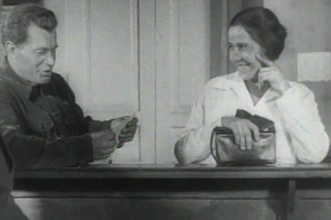
But it’s in rapidity that Vertov reveals his mastery of form and meaning. He even underscores the brevity of life in a short sequence. We see a couple getting a marriage license.

MarriageCertificate
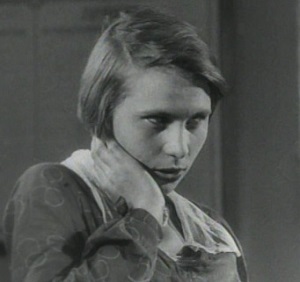
Directly after, another couple is signing divorce papers; the director zooms in on the estranged wife’s grim expression.

Divorce
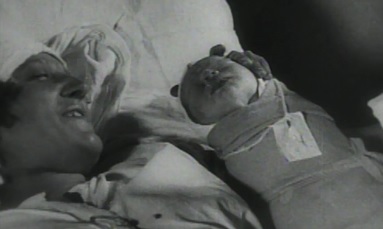
A mourner appears in a cemetery. A funeral passes our eyes. A baby is being born.

Baby
The director moves back and forth between the scenes to reinforce the connections. This circle of life takes a total of three minutes.

Loss
Realism…with Mannequins

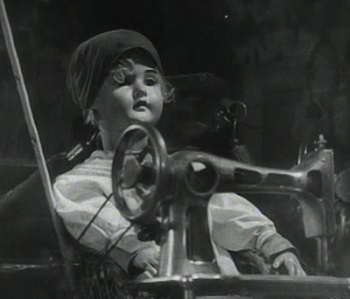
The film begins in a movie theater, priming the audience for a show. We see a Russian city, morning beginning. A woman sleeps in her room; a child does the same on a bench where he’s spent the night. There are scenes you expect next: the bustle of a city beginning, the drudgery of work. And some of those scenes, you get, and each is powerful, particularly portrayals of the mines. But it’s the surprises that keep you watching. Why does the director dwell on creepy shots like this one?

CreepyMannequin2
What’s the obsession with washing scenes? (What number of shaving, tooth brushing, and hair cleansing rituals were shot over the years he made this movie to end up with so many in the final product?)

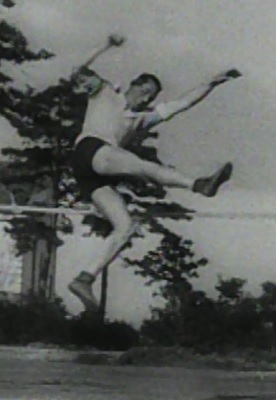
Documentaries can be gloomy, and for a director who attacked fiction and took so seriously his aims to capture truth, Vertov has a surprisingly light touch. You’re struck by the artist’s obsession with grace, revealed through a montage of pole vaulters, high jumpers, dancers, and basketball players.

HighJumper
He revels in a kid’s magic show, in women’s bodies at the beach. He attempted an international art form through his completely novel take on a documentary, achieving the realeast of real. And he delivers: You can’t help but feel fascinated by similarities evident between Russian culture and ours, between 1929 and today.

But like this pioneer’s artistic descendants, practitioners of cinéma vérité and literary journalism, Vertov believed revealing subjectivity was part of delivering truth. He not only affects his subjects by the intrusion of his camera, but our perception of them by which shots he includes, and which he doesn’t. As essayist Joan Didion would explain many decades later, “However dutifully we record what we see around us, the common denominator of all we see is always, transparently, shamelessly, the implacable ‘I.’”

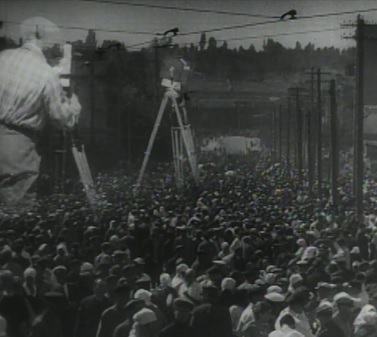
CameraManAbove
Part of the delight of Man with a Movie Camera is watching subjects’ reactions to his (then novel) camera: the woman who blocks her face with a purse to avoid it, the tiny girl who can’t keep her eyes away.

But the director’s vision is so unique and his quirkiness so evident throughout that you never forget that another artist would have chosen other faces, other moments, would have startled his subjects in other ways, and for other reasons.

Look, Mom! No Hands!
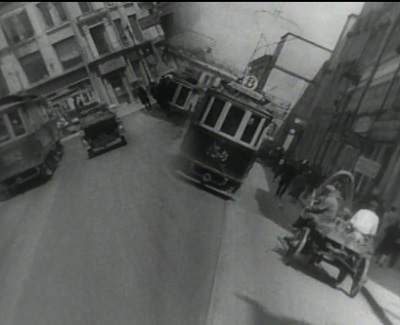
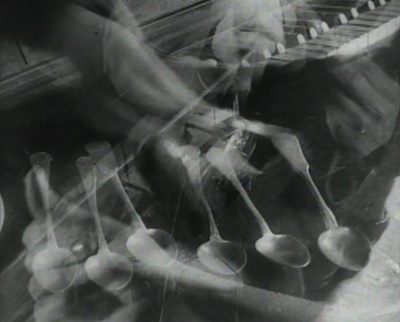
The highly touted innovations with camera work in the film are remarkable in and of themselves. (Who knew so many of these techniques were used so early?) They also serve a purpose, not only illustrating Vertov’s sense of time dissolving, but recapturing for modern audiences the thrill of being at the beginning of a new art form.

Camera-Man
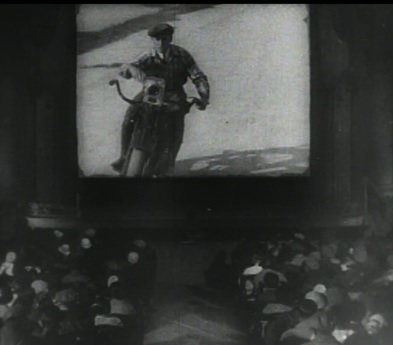
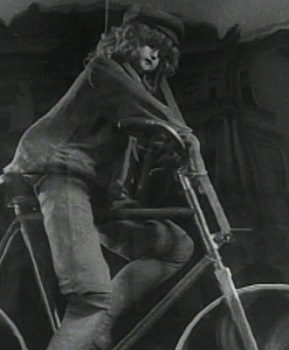
They made me think of the Impressionists, freed from the tyranny of having to capture exactly what they saw. The scenes featuring the filmmaker at work are so amusing. Here’s the photographer riding on a moving car! Watch him risk his life to portray that train! I kept thinking of a little kid showing off on his bike, holding his hands aloft for the first time. And just as I thought it, I saw this image:

Motorcycle
Because the director’s having fun, so are we.

CreepyMannequin
Because the action is exhilarating, we are giddy. Who but a kid-like grown up could have come up with an animated movie camera in action, or with this delightfully silly image?

Camera-Man4
Surely, Vertov would be leading the creative team at Pixar today.

Sight and Sound rated this movie eighth, and gave it the honor of best documentary of all time. I am not surprised by either ranking given the vision and experimentation of this film. But that’s not why I’m glad that I’ve seen it. What an experience, to witness so much of life covered, in so little time, and so beautifully. What a joy it is, to a witness the work of a genius with a sense of fun.

Thanks to Kimberly Bastin at Flicker Alley for a screener of the film!

Share
Posted in: 1920s films, Blogathons, Comedies (film), Drama (film), Uncategorized Tagged: Man with a Movie Camera, Sight and Sound bests, silent film, Vertov

4 Movies Downton Abbey’s Lady Mary Would Watch

03/01/2015 by leah@carygrantwonteatyou.com Leave a Comment

LadyMaryandCharlesBlake
It’s 1924 at Downton Abbey. We’ve just seen Lady Mary (Michelle Dockery) canoodling with one guy in a London theater (Charles Blake) to ward off another (Lord Gillingham) who had mistaken intimacy for love. Mary barely protested when forced to leave Beau Brummel early to disenchant Gillingham. But here are four films out that year that might have distracted the vixen from her flirtations, at least temporarily…

The Marriage Circle

The MarriageCircle
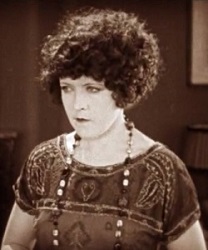
Mizzi (Marie Prevost), a dissatisfied wife, plots to seduce her friend’s husband. And that’s just the beginning of the marital and extramarital scheming in Ernst Lubitsch’s classic comedy of manners. Mizzi could give Lady Mary tips on undermining her frenemy Mabel Lane Fox’s attractions. (The daring Lubitsch would obviously become Mary’s favorite director; two of my four are his films.)

Her Night of Romance

HerNightofRomance
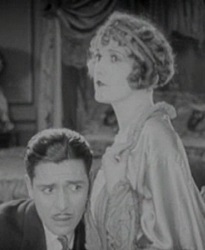
Dorothy (Constance Talmadge) winds up with a guy she barely knows (Ronald Colman) in her bedroom, and goes to extreme measures to protect her reputation. Sound familiar, Lady Mary?

Monsieur Beaucaire
Mary likes the pretty boys, and she couldn’t have missed heartthrob Rudolph Valentino starring in The Sheik three years before.

RudolphValentino-TheSheik
With Valentino featured AND a character named Lady Mary, Monsieur Beaucaire would lure the Downton heroine to the theater, even though her namesake in the film has too much pride to hold onto the guy (I have no illusions Mary would recognize the similarities).

Forbidden Paradise
Lady Mary has been subjected to Russian refugees she doesn’t care to meet, but a powerful czarina in full control of her posse of lovers? That could give Mary some interest in international politics.

Pola Negri, in her best Lady Mary pose

Pola Negri, in a Lady Mary pose

Maybe the film would even grant Mary some insight into her grandma’s (the Dowager Countess’s) almost-fling. Here’s hoping.

There you have it. Four films with enough skin, calculation, and female triumph to please the headstrong Lady Mary, maybe even give her some ideas for next season…

Share
Posted in: 1920s films, Drama (film), Feminism, Humor, Romance (films), Romantic Comedies (film), TV & Pop Culture Tagged: 1924 films, Charles Blake kiss, Downton Abbey, Downton Season 6, Film, finale, Kemal Pamuk, Lady Mary

Recent Posts

  • 100 Years Later, Still Scary: Dr. Caligari
  • Escaping Out of the Past (1947)
  • A Weeper for Those Who Love Jerks
  • Thank You, Academy, for Not Infuriating Me
  • Challengers (2024) Is a Bad Movie

Subscribe to Blog via Email

Enter your email address to subscribe to this blog and receive notifications of new posts by email.

Categories

  • 1920s films
  • 1930s films
  • 1940s films
  • 1950s films
  • 1960s films
  • 1970s films
  • 1980s films
  • 1990-current films
  • 2020s films
  • Action & Sports Films
  • Anti-Romance films
  • Blogathons
  • Childfree
  • Comedies (film)
  • Drama (film)
  • Feminism
  • Femme fatales
  • Film Noir/Crime/Thriller & Mystery
  • Gloriously Silly Scenes
  • Horror
  • Humor
  • Mae West Moments
  • Musicals and dancing films
  • Oscars
  • Random
  • Romance (films)
  • Romantic Comedies (film)
  • The Moment I Fell for
  • Turn My Sister into Classic Movie Fan
  • TV & Pop Culture
  • Uncategorized
Share
Classic Movie Blog Hub Member

Recent Comments

  • leah@carygrantwonteatyou.com on Meg Ryan’s Fate Foretold in Joe Versus the Volcano
  • Ryan on Meg Ryan’s Fate Foretold in Joe Versus the Volcano
  • leah@carygrantwonteatyou.com on 100 Years Later, Still Scary: Dr. Caligari
  • The Classic Movie Muse on 100 Years Later, Still Scary: Dr. Caligari
  • leah@carygrantwonteatyou.com on 100 Years Later, Still Scary: Dr. Caligari

Archives

  • November 2025
  • September 2025
  • May 2025
  • March 2025
  • January 2025
  • November 2024
  • August 2024
  • July 2024
  • May 2024
  • March 2024
  • February 2024
  • December 2023
  • November 2023
  • October 2023
  • September 2023
  • August 2023
  • July 2023
  • May 2023
  • April 2023
  • March 2023
  • January 2023
  • December 2022
  • November 2022
  • September 2022
  • July 2022
  • May 2022
  • April 2022
  • March 2022
  • February 2022
  • October 2021
  • September 2021
  • April 2021
  • March 2021
  • February 2021
  • December 2020
  • October 2020
  • September 2020
  • July 2020
  • May 2020
  • April 2020
  • March 2020
  • February 2020
  • December 2019
  • October 2019
  • September 2019
  • June 2019
  • May 2019
  • April 2019
  • February 2019
  • January 2019
  • November 2018
  • September 2018
  • July 2018
  • June 2018
  • May 2018
  • April 2018
  • March 2018
  • February 2018
  • January 2018
  • November 2017
  • September 2017
  • August 2017
  • July 2017
  • June 2017
  • May 2017
  • April 2017
  • March 2017
  • February 2017
  • January 2017
  • December 2016
  • November 2016
  • October 2016
  • August 2016
  • July 2016
  • June 2016
  • May 2016
  • April 2016
  • March 2016
  • February 2016
  • January 2016
  • December 2015
  • November 2015
  • October 2015
  • September 2015
  • August 2015
  • July 2015
  • June 2015
  • May 2015
  • April 2015
  • March 2015
  • February 2015
  • January 2015
  • December 2014
  • November 2014
  • October 2014
  • September 2014
  • August 2014
  • July 2014
  • June 2014
  • May 2014
  • April 2014
  • March 2014
  • February 2014
  • January 2014

Meta

  • Log in
  • Entries feed
  • Comments feed
  • WordPress.org

Copyright © 2025 Cary Grant Won't Eat You.

Church WordPress Theme by themehall.com