Cary Grant Won't Eat You

Classic movies for phobics

  • About
  • eBooks
  • Previous Blogathons
Classic movies for phobics

Month: August 2014

M: A Serial Killer’s Story about Us
08/27/2014 by leah@carygrantwonteatyou.com 2 Comments

PeterLorre-M
I’ve always been puzzled by The Silence of the Lambs becoming more successful than Manhunter. The latter’s subtlety, especially Brian Cox’s portrayal of Hannibal Lecter, was far more alarming to me than the campy style of Anthony Hopkins. The former I could mistake for a normal human being, making his monstrosity all the more terrifying. Yes, I might jump out of my seat during The Silence of the Lambs, but Manhunter is the stuff of lasting nightmares.

The story is better too, as the deeper fear is not of the serial killer, but of being like him. Mann (and novelist Thomas Harris) question whether investigator Will Graham’s (William Petersen’s) uncanny understanding of psychopaths’ minds means that he has the same dark passions. And of course, that leads to us: Does it make us somehow sick to be interested in a killer’s psychology or his/her capture, to read the stories and watch the films? And if that doesn’t mean we share his/her pursuits, what form does our sickness take?

Perhaps that’s why I think Michael Mann fans would be drawn to M, the 1931 film that begins with a frightening depiction of a child killer, but ends by questioning the wider society that is hunting him. Like Mann, director Fritz Lang did not employ every bell and whistle at his disposal, did not play melodramatic music in the background or make us witness gore or the frightened faces or cries of children. Instead, this director in his first talkie displayed a restrained artistry: an image here, a sound there—just enough, and never more. The result is a haunting film that lingers long after its conclusion.

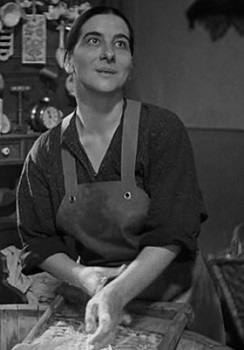
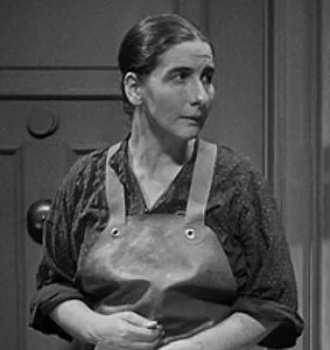
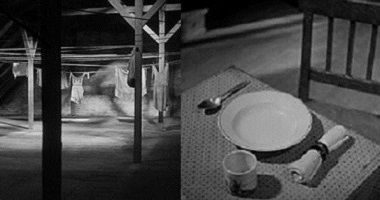
M begins simply, with a disturbing children’s game about a murderer. A woman tries to shush the kids because what’s going on in Berlin is too similar to their words: a child killer is at large in the city. The camera then narrows in on mother Frau Beckmann (Ellen Widmann), who displays her love for her child, Elsie, through her loving arrangements for the child’s return from school: washing the clothes, preparing a meal with care, peering up at the time with a smile.
Mother-M
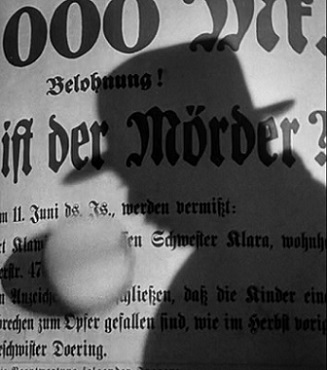
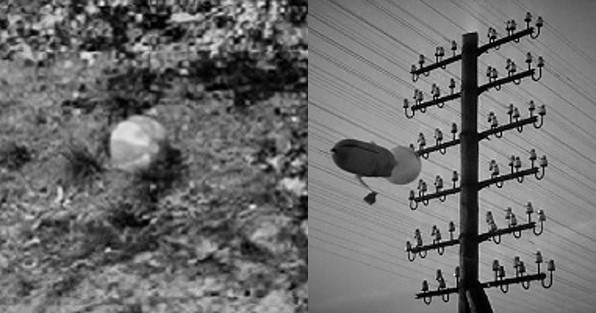
The film cuts to Elsie (Inge Landgut), the only sound her ball hitting the pavement. The almost complete silence of these scenes is paralytic to the viewer. We don’t see the killer, just a posting about children’s disappearances obscured by the girl’s ball and a man’s shadow. The man praises the ball; he asks Elsie her name.
SignMurdererM
As the time passes when Elsie should have arrived, Frau Beckmann looks at the clock. She asks returning kids whether Elsie was with them. They say no.

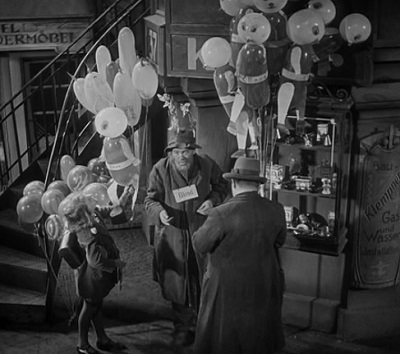
We see the murderer buy Elsie a balloon from a blind man (Georg John). We hear very little but Elsie’s thanks as the killer whistles Edvard Grieg’s “In the Hall of the Mountain King,” which will later have us jumping, like we did in hearing the arrival of Jaws.
BalloonPurchase-M
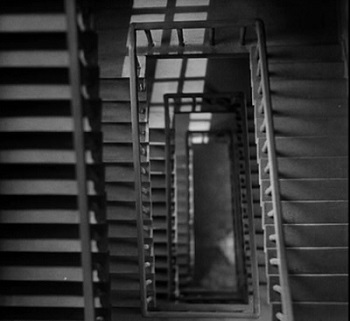
Meanwhile, the mother smiles when a salesmen stops by her door, thinking him Elsie, and can barely attend to his words before she questions him about her daughter. She calls down the stairs to her.
LookingDownStairs-M
Now overcome with worry, she opens the window.
Motherworrying-M
As she calls, “Elsie!!” the first of several silent shots tells viewers that Elsie will not be coming home.
The quiet street; the untouched place setting for Elsie

The quiet street; Elsie’s place setting
Elsie’s ball coming to rest; her balloon stuck in the wires

Elsie’s ball; her balloon caught in the wires

The images are harrowing; the viewer feels horror: at the child’s death, and the mother’s loss. The ethics are simple: the killer is evil, the mom and child good. The spare use of sound and imagery contribute to this clear-cut moral universe, which Lang is about to disrupt, for this film, we soon discover, is not about the murderer: it’s about the citizens, criminals, and police who pursue him.

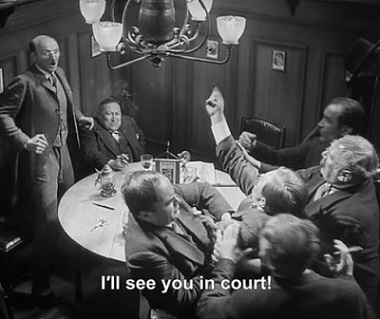
Next, we hear a newspaper hawker talking about the crimes, as the murderer (Hans Beckert, played by Peter Lorre) whistles his tune and writes a letter to the paper explaining that his spree is not finished. As friends around a table discuss the murders, they are soon viewing each other with suspicion, one even accusing another of being the man in question.
fighting-M
A mob mistakes an innocent elderly man for the predator, simply because he answered a young girl’s question.
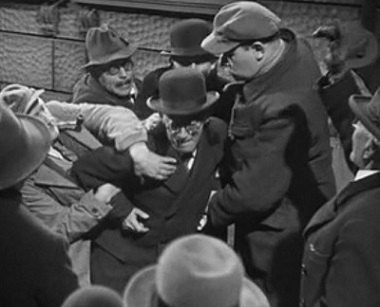
MobInnocent-M
The shouts of the crowd are then cut short, as the words of the murderer’s letter appear on the screen in absolute silence. When the commissioner begins to discuss his investigation on the phone, we see the police in action: tracing the fingerprints on that letter, investigating the handwriting, scanning the crime scene, interviewing confectioners due to a wrapper that’s been found.
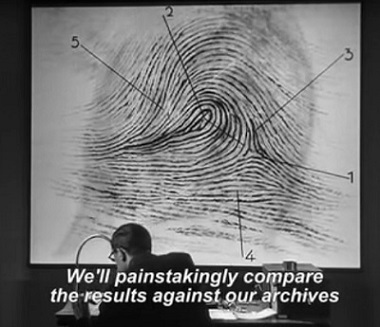
fingerprint-M
As the killer’s pathology is explained, we see him closely for the first time; he makes faces in the mirror, as if trying to see himself as others do. The film’s writers, Lang and spouse Thea von Harbou, achieve a high level of verisimilitude that makes the film resemble today’s police procedurals. (Some say, despite Lang’s denials, that this was due to their attention to the extensive media coverage of serial killer Peter Kürten.)

But all of the police’s efforts prove fruitless. Desperate, they soon resort to frequent raids to catch the child murderer. Lang covers these raids beautifully, beginning with a silent scene of a prostitute soliciting, and segueing into the police marching down the streets en route to the bars to demand papers. The sound finally returns in the form of a whistle to warn customers the police are arriving, after which we hear the uproar of the crowd’s dismay as they try to escape.
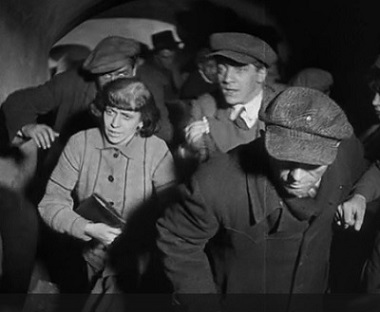
Raid-M
A bar owner explains that this treatment of customers is unfair to them and to her, and unlikely to result in an arrest.
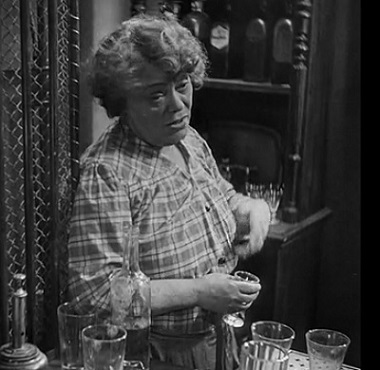
BarOwner
“I know a lot of toughs who get all teary-eyed just seein’ the little ones at play,” she explains to a police sergeant, warning, “If they ever get their hands on that monster, they’ll make toothpicks out of him.”

This Cassandra leads us to the next scene: Upset with the disruption to their business, the criminal underworld, led by Safecracker (Gustaf Gründgens), decides they’ve had enough. They’ll find the killer themselves. These mob leaders have a conference to plan their strategy, much like in The Godfather.
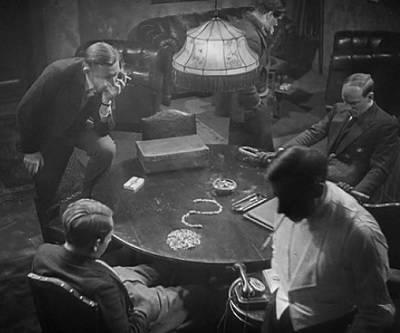
criminalsconference-M
Lang cuts back and forth between this conference and a similar one the police are holding about the case, causing the viewer to confuse the two, and then start to wonder whether there is any difference between them.
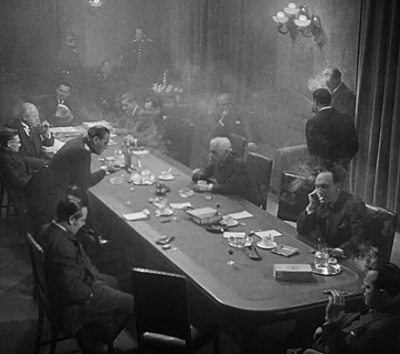
policeconference-M
The police decide that they’ll go the mental health route, finding patients who’ve been dismissed as harmless but have suspicious tendencies. The criminals decide they’ll organize a league of beggars, who, as unnoticed observers of their surroundings, can spot the predator without scaring him. Both groups succeed in narrowing in on Hans Beckert through these means, even as the latter follows a new girl, his silent contemplation of her soon erupting into his signature whistle.

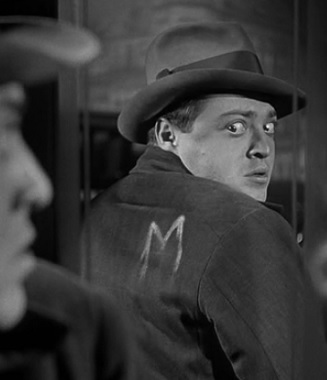
Among the beggars is the blind balloon seller, who, upon recognizing the whistle, sets the alarm, leading to the killer being chased into an office building, a chalked M mark from a beggar having pegged him as the one to follow. The longer the hunt continues, the more the viewers’ allegiance shifts. We don’t want Beckert to go free, but there’s something sadistic about this manhunt, perfectly captured in the large eyes of the predator who has suddenly become prey.
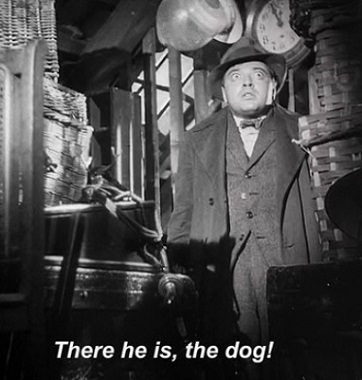
M-terrified
We know now that these criminals are no longer just out to save their business; something more primitive is at play. What happens next is too fascinating for me to give away. But I will say that the film’s treatment of the child killer is surprising; he’s even given a chance to explain his affliction: “Can I do anything about it? Don’t I have this cursed thing inside me? This fire, this voice, this agony?”

Nazi leader Joseph Goebbels, who later offered Lang a job, obviously interpreted the film as less complex in its sympathies than I have. Certainly, there is room for dispute about what Lang was trying to say. But with the Third Reich imminent, Lang (who had Jewish heritage) was about to skip town, job offers notwithstanding. It’s hard not to see in the film’s conflation of police and criminal, citizen and predator, an indictment of the authoritarian regime, especially since Lang’s next film more explicitly attacked it (though, interestingly, facts apparently don’t bear out Lang’s account of his own precipitous escape).

Regardless of his initial motives, by giving the murderer voice at all, Lang questions whether this man might be more than the “rapid dog” he is accused of being, might be in need of a doctor’s care, not a hangman’s noose, as a reluctant defender in the film claims. And since we know the killer is not the subject of this story, we viewers soon turn to the crowd condemning him. Just as there is within this man, Lang seems to imply, there’s a sickness within society. After all, normal German citizens will come to support the Nazi party, including his wife and cowriter. Who is to say any culture isn’t vulnerable to the same manipulation, the same results, given the right fears to make them operate? Whether or not that sickness and those who’ve let it spread are capable of redemption or not, he leaves it to his audience to determine.
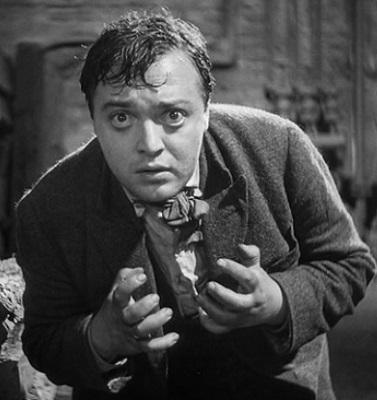
Mexplains-PeterLorre

Share
Posted in: 1930s films, Drama (film), Film Noir/Crime/Thriller & Mystery Tagged: Fritz Lang, Hannibal Lecter, M, Manhunter, Michael Mann, Nazis, Peter Lorre, serial killer, The Silence of the Lambs

The Moment I Fell for Robin Williams

08/20/2014 by leah@carygrantwonteatyou.com 4 Comments

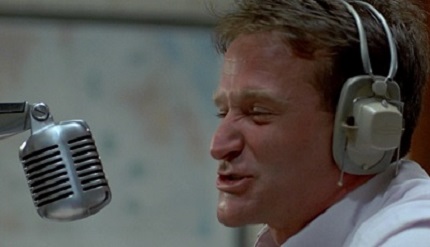
Last week, while I was seeking Lauren Bacall tributes online, I avoided my TV because I didn’t want to see any Robin Williams ones. The loss was simply too raw, too big for me to watch some summary of a man who slipped through any easy definitions. After all, it was this breathtaking versatility; best demonstrated in Good Morning, Vietnam; that I couldn’t face losing.

GoodMorningVietnam-RobinWilliams
While I’m usually quick to attack the Academy for their humorlessness, I agreed with them that dramas displayed Williams’s most remarkable work. Who else could be so manic in humor, and then so quiet in pathos? So riveting in his energy, and even more so (perhaps because of it) in his stillness?

The actor’s sad scenes were the more so because you could feel the good humor bubbling beneath, the fact that this man was capable of very great joy. The first word that comes to mind with Williams is not funny, but empathetic. This man understood human nature like no comic I’ve ever witnessed, and any humor writer will tell you that truth is at the root of all good comedy.

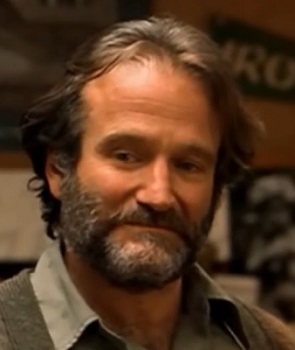
RobinWilliams-GoodWillHunting
The surprise of finally seeing the actor win an Oscar for Good Will Hunting was not at the Academy having snored through Good Morning, Vietnam (how else to explain Michael Douglas winning instead for his one-dimensional performance in Wall Street?). The shock was in recognizing that this guy should have been playing therapists all along.

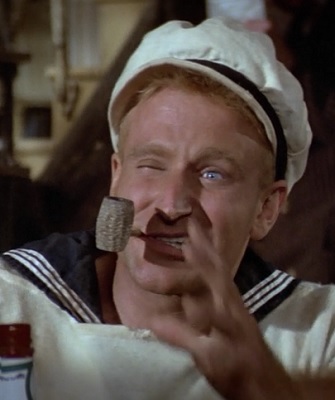
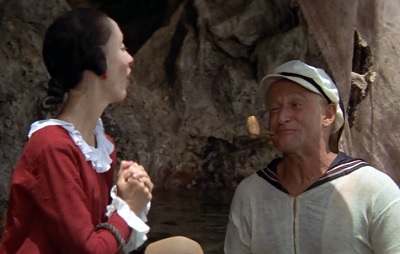
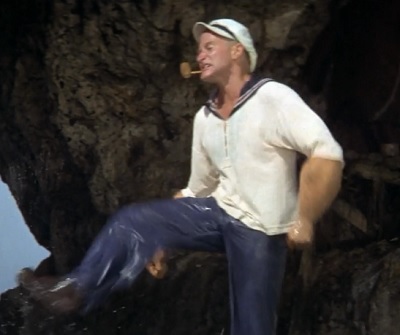
My favorite Williams performance was probably in Awakenings. But I fell for him much, much earlier. It wasn’t in Mork & Mindy, in which his fevered  acting was exhausting to watch, even for a little kid. I couldn’t take the show very often, even though I always did laugh. No. I fell for Williams in Popeye, the first film he starred in.

Popeye-Williams
Now hear me out. I am not going to argue that this flop is a good film, that it’s under-appreciated or even tolerable. Oh no. It’s so much worse than you remember.

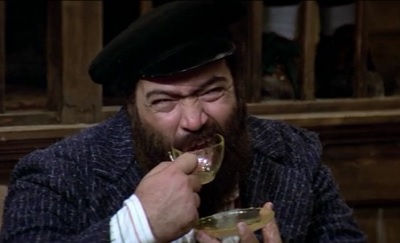
Paul L. Smith as villain Bluto

Paul L. Smith as villain Bluto

Williams is not very good in it either. But I fell hard for him for agreeing to take the role at all, and for having so much fun with it once he did. This spinach-eating cartoon character was always my favorite, and though I’ll admit to a vague horror on first hearing a human would be playing it, and in a musical, I was impressed with how completely Williams embraced the role. Such an unsuccessful campy movie I could easily dismiss, but for Williams as Popeye, even in a shaky performance, I felt a kind of awe.

Olive Oyl (Shelley Duvall) with Popeye

Olive Oyl (Shelley Duvall) with Popeye

One could argue that the actor was just beginning, that this was a role he could get. But that wouldn’t explain all of Williams’s baffling choices over the years, that sense that he sometimes took parts simply to avoid taking his career, or himself, too seriously. How else can anyone explain Hook? And as I mourn Williams, I don’t want to see his best work; it’s too easy to imagine in his depiction of every emotion the darkness that would take him from us. So instead, I’m gonna stick with his silliness for a while. I’ll rewatch The World according to Garp, perhaps The Birdcage, maybe even the batshit-crazy Shakes the Clown. And yes, I’m going to spend some time with the ever-mumbling, ever-smiling, greens-loving sailor man.

Popeye-kicking-RobinWilliams

Share
Posted in: 1980s films, Comedies (film), Drama (film), Humor, The Moment I Fell for Tagged: Popeye, Robin Williams

The Novels? No. But Still Worth Viewing: Outlander (2014) and Portrait of Jennie (1948)

08/13/2014 by leah@carygrantwonteatyou.com 1 Comment

I’ve always been a sucker for time-travel narratives, from Somewhere in Time and Back to the Future to 2012’s Looper and Safety Not Guaranteed. Not surprisingly, I quickly devoured Diana Gabaldon’s first four Outlander novels, and was excited to hear that Starz had picked up the series. One episode into the network’s translation of the books may be too early to compare the series to its source. But given how few of us subscribe to Starz, the question must be an early one: is the TV show playing it close enough to Diana Gabaldon’s beloved novels to be worth the investment?

For those who haven’t read it, the first Outlander book’s premise is this: Swept from the 1940s to the 1740s through a magical stone circle, nurse Claire Randall keeps attempting to return to her husband Frank.

FrankandClaire
As she plots her homecoming, Claire becomes increasingly caught up in the lives of the MacKenzie clan.

ClairemeetsScots
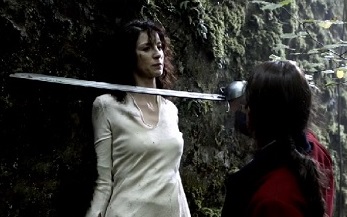
The book is an impressive amalgam of sci-fi, fantasy, romance, and Scottish historical and medical history, with Claire’s role as a healer contributing to her being mistaken for a witch and a spy by Scots and Brits alike. Unfortunately, Claire soon forms an enemy she can’t harm, Frank’s ancestor.

ClaireandJackRandall
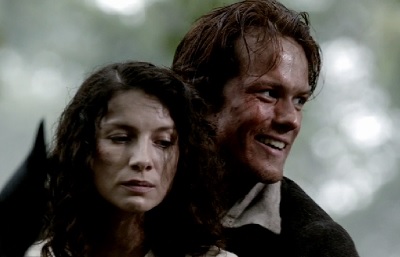
And she runs into a complication she can’t resolve, an increasing attraction and debt to protector Jamie Fraser.

JamieandClaire
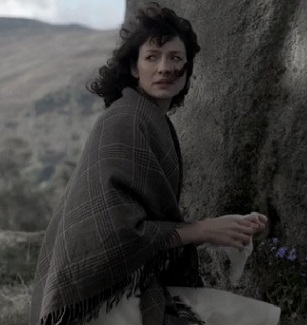
Like any reader, I watched the pilot of Outlander expecting to be disappointed by the casting. But Starz has done an astonishingly good job with its selections, particularly of lead Jamie (Sam Heughan). I still remain skeptical about actress Caitriona Balfe as Claire, but my doubts may be the result of the exposition she was forced to relay in voiceover, probably a necessity due to the complicated plot.

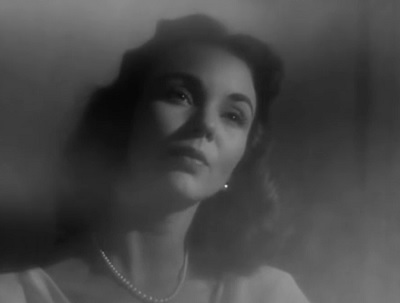
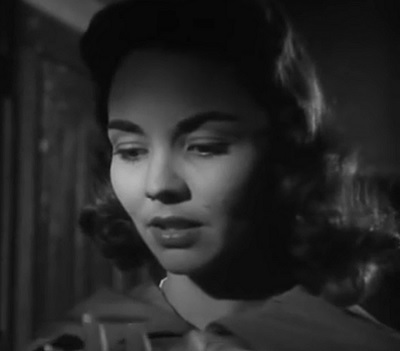
What surprised me is how nostalgic the pilot made me for a movie from my childhood, Portrait of Jennie (1948), and how much my concerns about Claire’s casting echoed my irritation with the choice of Jennifer Jones (the future wife of its producer, David O. Selznick) for its heroine.
JenniferJones-asJennie
To compare the complex story of Outlander to this simple romance might be a stretch, but hear me out. Both productions began with well-regarded novels. (Admittedly, Gabaldon has a substantial following, while enough time has passed since Robert Nathan’s glory days that his 1940 book now sits in that Kindle-Nook limbo, with new paperbacks less easy to come by.)

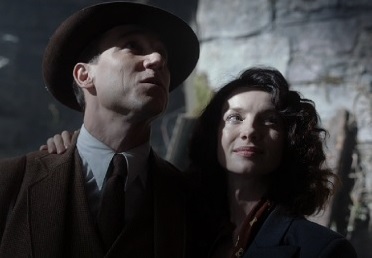
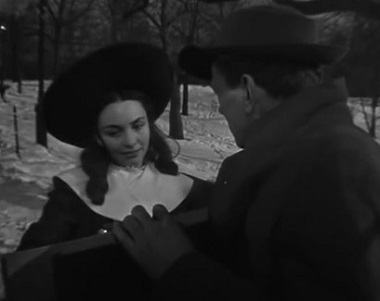
Nathan’s bittersweet fantasy is fairly simple, and the film follows it somewhat closely: Struggling painter Eben Adams (Joseph Cotten) runs into a girl in the park. She is dressed in old-fashioned clothes and has a timeless quality about her. He doesn’t know yet that she’s from the past.

JennieasChild-JenniferJones
Only when she continues to visit him, having aged considerably each time, does he discover that her time is out of joint with his. Mysteriously (we never learn how), she’s able to slowly catch up with his age, hopeful that if she does, they can be together.

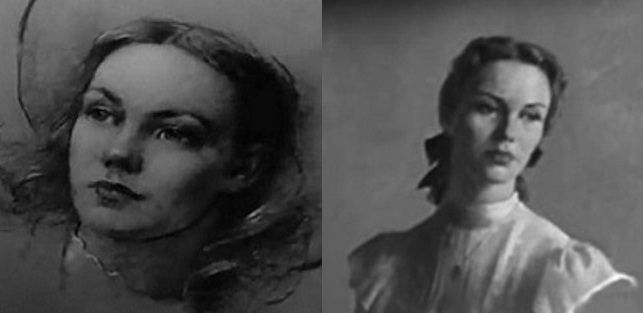
In the meantime, Eben begins to sketch Jennie, and his portrait of her soon leads him to the success his landscapes never afforded him.

A sketch and a later portrait of Jennie (the latter by artist Robert Brackman)

A sketch and a later portrait of Jennie (the latter by artist Robert Brackman)

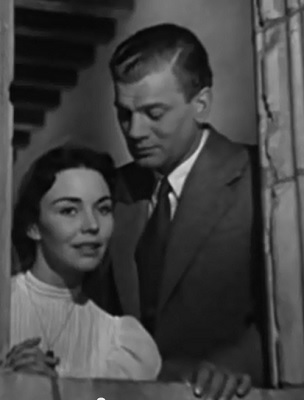
Eben’s professional life is on the rise, but his future with Jennie is uncertain: will she be able to make it to and stay in his future, or will time/the elements pull these lovers apart?

JonesandCotten
The book is so whimsical, yet so straightforwardly written, that it has a charm and mystery about it that the less subtle film never manages to master. My bias against Jones, which had its root in having only seen her as a saint, may have tainted my first evaluation of the movie (as did my childhood skepticism about classic film). But I think it didn’t help that, as in The Major and the Minor, the film tried to pass off an adult woman as a girl instead of hiring a child who resembled Jones.

While I may nitpick about details still, I neglected to consider as a kid just how much the camera work DID capture the lovely, haunting mood of the book; how perfectly Ethel Barrymore (grand-aunt to Drew) portrays Eben’s patron; and how beautifully Jones expresses the terror and pathos of this young woman, who has lost her family in a tragic accident, and longs for a man she may never attain. It may be true, as one could easily charge, that Selznick was too enamored with his love (Jones) to judge the film clearly, but after all, she was his muse in the same way Jennie was Eben’s, and the soft focus on Jones’ features does convey the level of obsession and love Eben feels for this timeslipping girl. I find myself liking it more every time I see it. (Warning: Do not read about it online before viewing it; spoilers abound.)

JenniferJones
The fear Jennie faces is what The Outlander pilot gets so right about Claire. The show will inevitably have to reduce and simplify some of that book’s (and its sequels’) rich complexity, and will lose much in the process. But it will gain in shots of the landscape, in period details the reader can’t quite imagine, and most of all, in helping us experience the terror of being lost in time, and not sure, as with Jennie, of ever getting to the moment where we feel we belong.

Claire

Share
Posted in: 1940s films, Drama (film), Romance (films), TV & Pop Culture Tagged: Caitriona Balfe, Claire Randall, Diana Gabaldon, Jamie Fraser, Jennifer Jones, Portrait of Jennie, Sam Heughan, The Outlander

Ruined by Romance: Drive (2011) and The Hustler (1961)

08/07/2014 by leah@carygrantwonteatyou.com 4 Comments

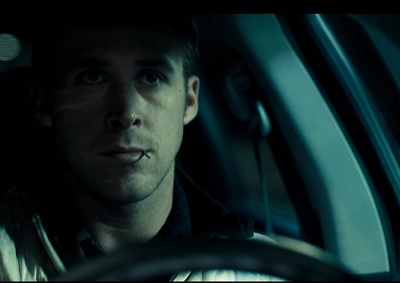
I was excited when Drive came out: finally, I thought, a new Bourne. An action flick with intelligence and fine acting, starring a man who had bypassed romantic leads after The Notebook to refine his skills in indies. And the promo! It looked exciting and moody, with the kind of premise that meant my car enthusiast husband and I would be carrying the popcorn to our seats with equal enthusiasm.
GoslinginDrive
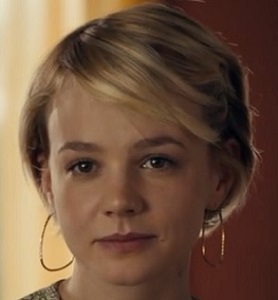
Of course I had neglected to consider the amazing skills of this woman, who would later manage to portray one of the most self-centered characters in American fiction as a victim:

Mulligan as a vulnerable waif—again

Mulligan as a vulnerable waif—again

So instead of racing cars, instead of truly exploring the depths of his character’s moral confusion and darkness, Ryan Gosling gets to spend most of the film destroying his life for a mother (Carey Mulligan) who is (a) hopelessly fragile (b) already married and (c) unutterably dull.

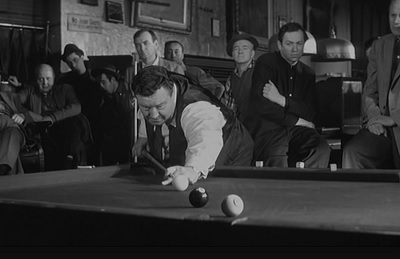
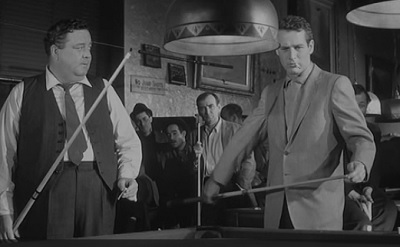
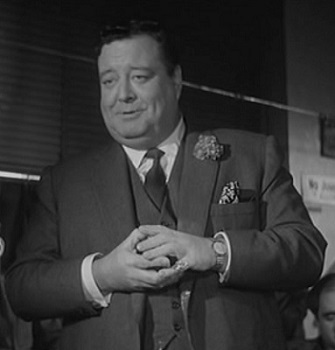
I wouldn’t say that The Hustler (1961) was ruined as completely as Drive was by a bad romance, but I was more appalled by its mistakes. Because this is a film I’d thought to be a classic, with George C. Scott as the money man and the brilliant Jackie Gleason playing Minnesota Fats, the reigning master of pool.

FatsinActionTheHustler
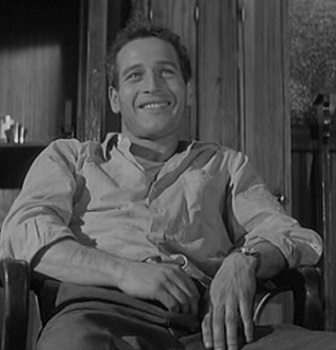
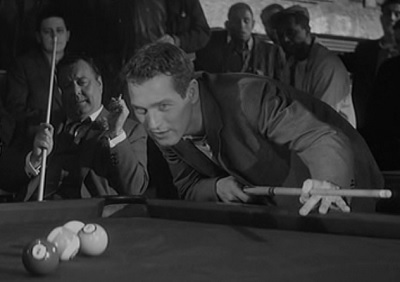
The master’s challenger is cocky young upstart Fast Eddie (Paul Newman), who struggles with confidence in spite of his successes hustling on the road. (Yes, the same character from The Color of Money).

FastEddieTheHustler
Imagine my surprise then to find that after the wonderful battle between Fats and Eddie ends with the latter deflated and broke, pool disappears for a long stretch of the film, to be replaced by a romance as inadvisable as it is boring to watch.

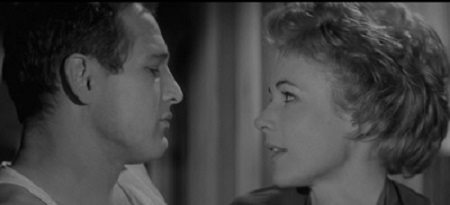
EddieandSarahTheHustler
Sarah (Piper Laurie) is a more interesting character than Mulligan’s Irene. She is depressed, moody, and drunk most of the time, but she is also compassionate and prickly with pride, and though I might have asked for more range and nuance from Laurie, others disagreed; she received an Oscar nomination for the role.
But whatever you think of Laurie’s performance, the romance itself is based on co-dependence. The two drink and have sex, and that’s about it; she even starts to write a story about their supposed depravity. When money-man Bert (Scott) accuses Newman of being a talented loser, the audience has to agree. It’s understandable that Eddie would align himself with Bert to lift up his career, even that he’d bring Sarah with him on the road since she can’t handle being left alone for a week (or more likely, doesn’t trust him to return). Sure, we know Bert is a bad guy, but Eddie isn’t exactly full of either options or patience.

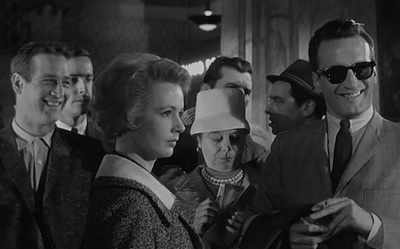
Sarah losing her way at the Derby

Sarah with Bert (Scott), her nemesis

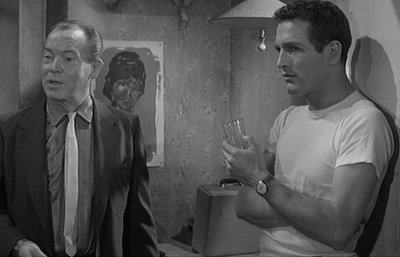
But to link Newman’s increased character and confidence to his remorse at his treatment of Sarah? Really? Eddie didn’t seem to mind leaving his long-time buddy and manager, Charlie (Myron McCormick), in the lurch.

Charlie (Myron McCormick) trying to win Eddie back

Charlie (McCormick) appealing to Eddie

His treatment of Charlie is far worse than his neglect of Sarah. The problem isn’t what Eddie did during his travels with Sarah and Bert; the problem is whom he chose to do it to: you don’t get involved with someone this fragile unless you’re in it for good, especially with a predator like Bert in your company. What Eddie should have done is drive the poor woman straight to rehab, not to the Derby.

Are you bored yet? Yeah, me too. I didn’t sign up for a movie about a doomed love affair—and if I had, I could have found a far better one than this. Here’s what I wanted to see, and finally did at the end of the film:

EddieandFats
Note the vulnerability on Fats’ face as Eddie begins a streak:

EddieonstreakTheHustler
Or his insistence that Eddie stop getting distracted and focus on the game, the defeat on his face clearly showing that he’s sold himself to Bert too:

FatsadviceTheHustler
Watch Bert’s celebration of his power over both men:

BerttauntingTheHustler
And most of all, witness the beautiful pool shots throughout–while you can get them. For a film called The Hustler, I didn’t get to see much hustling. Luckily, I did get to see this: Fats dressing up to rejuvenate himself during a losing streak:

GleasondressedupasFats
I could watch the pool passages in the film again and again and again.

Why do Hollywood films always use romance as a replacement for self-struggle? I haven’t read Walter Tevis’s novel, which may have managed the matter better, but the best films I know about competition don’t rely on gimmicky stand-ins as substitutes for the practice scenes (with pool!) they should have included. Even if a love affair is involved, it’s one that forces the hero/heroine to confront weaknesses. And it’s Bert—not Sarah—who tells Eddie the truth in The Hustler. If anything, I would think remorse would lead Eddie right back to the aimless life he and Sarah had been leading.

Did I enjoy the film? Yes. Would I fast forward through the Laurie-Newman scenes next time? Oh yes. Do I think at the end of the day The Cutting Edge was more convincing? Absolutely.

Share
Posted in: 1960s films, 1990-current films, Action & Sports Films, Femme fatales, Romance (films) Tagged: Carey Mulligan, Drive, Jackie Gleason, Paul Newman, Piper Laurie, Ryan Gosling, The Hustler

The Red Shoes, Pied Piper to Aspiring Ballerinas

08/03/2014 by leah@carygrantwonteatyou.com 14 Comments

This post is part of A Shroud of Thoughts’ The British Invaders Blogathon. Check out all the great entries! 

Vickyandshoemaker
Why did this film about the terrible choices a woman must make for her art inspire generations of ballerinas? Every little girl raised on Hans Christian Anderson knows that Karen, the red shoe-shod girl, doesn’t fare well: as punishment for her vanity in choosing red shoes for her confirmation (and similar sins), Karen can’t stop the shoes from dancing, can’t take them off, can’t go to church, can’t even prevent her detached legs from dancing when they’re cut off and replaced with wooden ones. Only when she truly feels remorse does she find peace—in death.

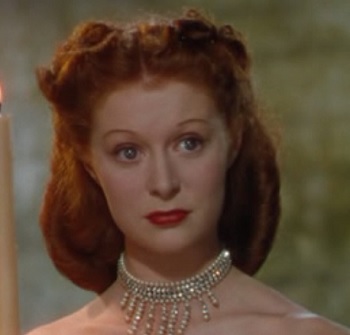
Surely then, a film about these shoes won’t bode well for the heroine, Vicky Page (Moira Shearer), as indeed, proves to be the case. The aspiring ballerina’s fierce impresario, Boris Lermontov (Anton Walbrook), expects unwavering commitment to dance. Vicky arrests his attention and is allowed into his troupe mainly because she seems to possess it:

“Why do you want to dance?” Lermontov asks when he meets her.

WhyDanceLermontov
“Why do you want to live?” Vicky answers.

VickyWhyDance
“I don’t know exactly why, but I must,” he admits.

“That’s my answer too,” Vicky answers.

His prima ballerina’s nuptials lead the fiery director to boot her out, and usher Vicky in. He’s not interested in any dancer “imbecile enough to get married.” “You cannot have it both ways,” he explains to his choreographer. “A dancer who relies upon the doubtful comforts of human love will never be a great dancer, never.” Vicky is soon in training for Lermontov’s new ballet, which is based on the Hans Christian Anderson tale, with a company skeptical about her abilities and self-doubt growing under everyone’s exacting standards.

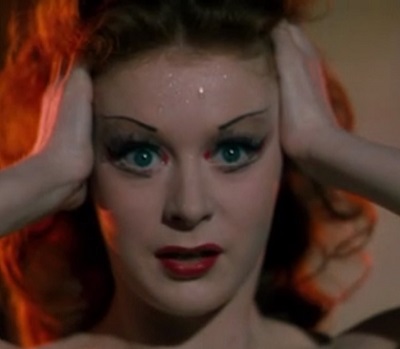
She relaxes when The Red Shoes becomes a spectacular smash, but conflict soon arises in the form of the ballet’s young composer, Julian Craster (Marius Goring), who has fallen for Vicky, and she for him. At this point, we viewers are still happy: she’s gotten her role, as has Julian, whom we’re also rooting for; she’s a hit, as is he; they’re in love, and have earned the respect and affection of the rest of the troupe. But then Lermontov finds out, and she has to choose: greatness with him, or mediocrity with Julian (only minor roles, minor ballets for her). And like every woman before her, this choice between love and ambition will not be an easy one, and she will be tortured either way.

VickytorturedRedShoes
Why then, did this tragic film result in so many enthusiastic young ballerinas? I have a few theories on that, having been in ballet from ages 5-12 myself, and seen this movie when I was gobbling up Noel Streatfeild’s Ballet Shoes series.

For Young Girls, It Wouldn’t Have Been a Tough Choice
Julian is a likeable guy (for most of the film). He’s ambitious, cocky, devoted to his art, smart. He stands up for himself when he’s cheated; he’s supportive, sweet, and appreciative of Vicky as an artist, as he demonstrates during their loveliest moment together, when he envisions a time when a child will ask him as an old man where he was most happy, and he’ll answer this moment with Vicky: “‘What?’ [the girl] will say. ‘Do you mean the famous dancer?’ I will nod. ‘Yes, my dear, I do….We were, I remember, very much in love.’”

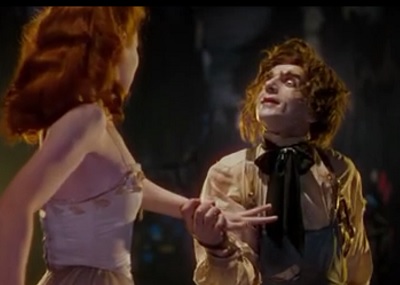
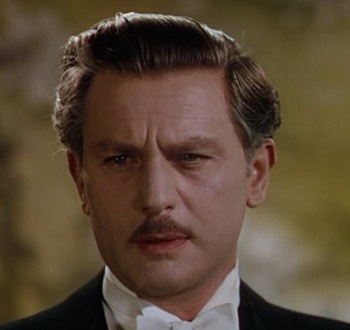
But let’s be frank here: Aside from the romantic streak, these are the types of traits women long on the dating scene may appreciate, but are not the type to win over pre-pubescent girls. This is not the kind of face girls’ dreams are made of:

JulianTheRedShoes
Without the conflict, no tragedy. And after all, even those girls who dream of perfect love and great achievement know a ballerina’s career is short. Their gossiping friends in the dance company will tell them so (if they’ve made it that far). And if they’re still beginning, well, they will learn as much after a day with some dance flicks: The Turning Point, Center Stage. Is it so impossible for the young dreamer to think she’ll simply fall in love later, as the actress (Moira Shearer) herself did in her mid-twenties after her greatest dancing successes?

The Caliber of the Dancing
The pet peeve of dancing enthusiasts is when films substitute allegedly good actors for good dancers—because Jennifer Beals, my friends, sure did have acting chops. Perhaps I would understand this choice if any of the actors and actresses selected were talented.

Take, for example, Center Stage (2000), which played it both ways, inserting a few actors among real-life ballet dancers to elevate the film’s quality. While the result is good dancing, but an array of poor acting performances, the worst among the bunch are Zoe Saldana and Susan May Pratt, who were chosen for their supposed dramatic skills; the latter can’t even manage graceful walking. People, no dancer has ever regretted watching a Fred Astaire film, and the man was at best a passable actor. No dancer says, “I would have enjoyed that movie if he could act,” even if an occasional person among the general audience does.

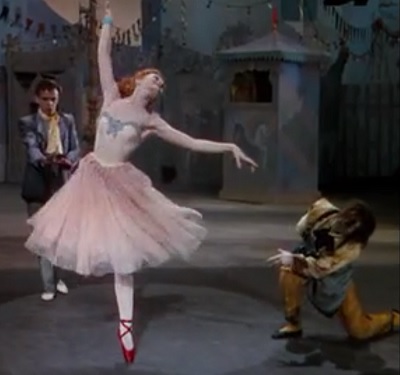
The Red Shoes, like the Rogers-Astaire films before it, did something more than highlight amateur beginners. It featured world-renowned ballet dancers and choreographers. Léonide Massine, who plays the choreographer (Ljubov) in the film, was a choreographer of nearly the status as George Balanchine. He created and acted the part of the shoemaker in the ballet. The replaced prima ballerina, Boronskaja (Ludmilla Tcherina), was in real life a prima ballerina in France.

And Moira Shearer? She danced for both Balanchine and Massine as a principal in the Sadler’s Wells (later the Royal Ballet), along with, you guessed it, that little-known ballerina Margot Fonteyn, whose costar in the company choreographed and played the male lead in the ballet within the film, Robert Helpmann.

Helpmann, Shearer, and Massine.

Helpmann, Shearer, and Massine

Choosing such ballet luminaries didn’t hurt directors/writers Emeric Pressburger and Michael Powell’s movie; they were even lucky enough to find in these stars acting skills as well (which we rather expect in our greatest ballet dancers).

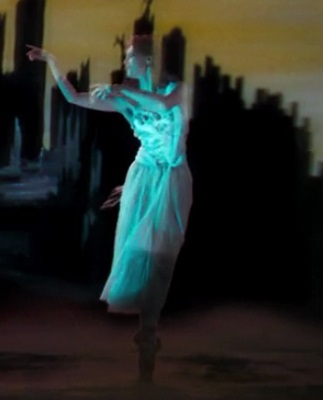
The Red Shoes’ most famous ballet itself is stunning, surreal, inventive and truly impossible to put into words, capturing the darkness of the fairy tale and all of its creepy, moralistic, vaguely misogynistic undertones, and giving Shearer the chance to demonstrate just why she was considered by some to be Fonteyn’s equal. It probably didn’t hurt that the film was scored by the Royal Philharmonic Orchestra.

The Realism
The movie is known for its surreal use of color and special effects and for a riveting performance by Walbrook as Lermontov.

surrealTheRedShoes
It’s recognized now as ridiculously ahead of its time; one shivers to think what an American studio would have done with the same material in 1948: the starlets they would have chosen, the bizarre beauty they would have stamped out.

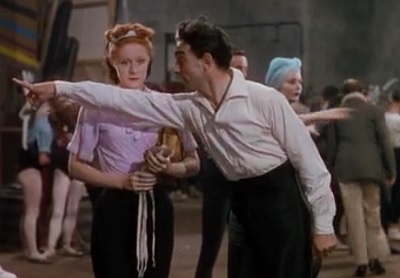
But by any standards, this film captures ballet as it is lived as well: the punishing practices, the demand for perfection, the colorful personalities, the scary choreographers and directors. I didn’t even make it into the company in my school, but I was terrified of the man who was our head. I’ll never forget his sharp eyes on me when I missed a move in The Nutcracker, nor his poise, which was every bit as still and intimidating as Lermontov’s. And this was a director of a small company in a minor city.

Vicky (Shearer) rebuffed by Ljubov (Massine), Vicky's (Shearer's) movie and real-life choreographer.

Vicky (Shearer) rebuffed by Ljubov (Massine)

The film, however, captures more than the tribulations of a dancer’s life. It conveys too the joy of the right move, of building toward something creative together, of earning not just the admiration of a crowd, but of those whose judgment you know to value.

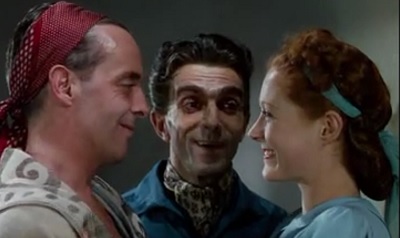
Vicky (Shearer) with her fellow lead (Helpmann) and choreographer (Massine); all three were involved with Sadler's Wells ballets.

Colleagues in film and on the stage: Helpmann, Massine, and Shearer

And it portrays the thrill of those impossibly lovely gestures, pirouettes, and leaps too, which no other experience can quite replicate.

Shearer believed the film injured her classical dance career because critics assumed she was riding on her fame from it rather than technical talent. If that’s true, I want to thank her for the sacrifice (admittedly too late). For it meant many young aspiring ballerinas like me, who would never go very far in dance, would understand in watching and re-watching The Red Shoes just what had made those hours in the studio worth it for us. Yes, it was literally a pain to practice (I feel a cramp in the arch of my foot just remembering those pointe shoes). And it hurt even more when it was time to let ballet go. But look! Just watch Vicky.

VickydancingTheRedShoes
Why wouldn’t you want to be a part of that, even for a little while?

Share
Posted in: 1940s films, Blogathons, Drama (film), Musicals and dancing films, Romance (films) Tagged: ballet, dancing, Moira Shearer, The Red Shoes, tragedy

Recent Posts

  • 100 Years Later, Still Scary: Dr. Caligari
  • Escaping Out of the Past (1947)
  • A Weeper for Those Who Love Jerks
  • Thank You, Academy, for Not Infuriating Me
  • Challengers (2024) Is a Bad Movie

Subscribe to Blog via Email

Enter your email address to subscribe to this blog and receive notifications of new posts by email.

Categories

  • 1920s films
  • 1930s films
  • 1940s films
  • 1950s films
  • 1960s films
  • 1970s films
  • 1980s films
  • 1990-current films
  • 2020s films
  • Action & Sports Films
  • Anti-Romance films
  • Blogathons
  • Childfree
  • Comedies (film)
  • Drama (film)
  • Feminism
  • Femme fatales
  • Film Noir/Crime/Thriller & Mystery
  • Gloriously Silly Scenes
  • Horror
  • Humor
  • Mae West Moments
  • Musicals and dancing films
  • Oscars
  • Random
  • Romance (films)
  • Romantic Comedies (film)
  • The Moment I Fell for
  • Turn My Sister into Classic Movie Fan
  • TV & Pop Culture
  • Uncategorized
Share
Classic Movie Blog Hub Member

Recent Comments

  • leah@carygrantwonteatyou.com on Meg Ryan’s Fate Foretold in Joe Versus the Volcano
  • Ryan on Meg Ryan’s Fate Foretold in Joe Versus the Volcano
  • leah@carygrantwonteatyou.com on 100 Years Later, Still Scary: Dr. Caligari
  • The Classic Movie Muse on 100 Years Later, Still Scary: Dr. Caligari
  • leah@carygrantwonteatyou.com on 100 Years Later, Still Scary: Dr. Caligari

Archives

  • November 2025
  • September 2025
  • May 2025
  • March 2025
  • January 2025
  • November 2024
  • August 2024
  • July 2024
  • May 2024
  • March 2024
  • February 2024
  • December 2023
  • November 2023
  • October 2023
  • September 2023
  • August 2023
  • July 2023
  • May 2023
  • April 2023
  • March 2023
  • January 2023
  • December 2022
  • November 2022
  • September 2022
  • July 2022
  • May 2022
  • April 2022
  • March 2022
  • February 2022
  • October 2021
  • September 2021
  • April 2021
  • March 2021
  • February 2021
  • December 2020
  • October 2020
  • September 2020
  • July 2020
  • May 2020
  • April 2020
  • March 2020
  • February 2020
  • December 2019
  • October 2019
  • September 2019
  • June 2019
  • May 2019
  • April 2019
  • February 2019
  • January 2019
  • November 2018
  • September 2018
  • July 2018
  • June 2018
  • May 2018
  • April 2018
  • March 2018
  • February 2018
  • January 2018
  • November 2017
  • September 2017
  • August 2017
  • July 2017
  • June 2017
  • May 2017
  • April 2017
  • March 2017
  • February 2017
  • January 2017
  • December 2016
  • November 2016
  • October 2016
  • August 2016
  • July 2016
  • June 2016
  • May 2016
  • April 2016
  • March 2016
  • February 2016
  • January 2016
  • December 2015
  • November 2015
  • October 2015
  • September 2015
  • August 2015
  • July 2015
  • June 2015
  • May 2015
  • April 2015
  • March 2015
  • February 2015
  • January 2015
  • December 2014
  • November 2014
  • October 2014
  • September 2014
  • August 2014
  • July 2014
  • June 2014
  • May 2014
  • April 2014
  • March 2014
  • February 2014
  • January 2014

Meta

  • Log in
  • Entries feed
  • Comments feed
  • WordPress.org

Copyright © 2025 Cary Grant Won't Eat You.

Church WordPress Theme by themehall.com