Cary Grant Won't Eat You

Classic movies for phobics

  • About
  • eBooks
  • Previous Blogathons
Classic movies for phobics

Month: June 2014

The Amnesia Romance Before Vows and Notebooks: Random Harvest (1942)
06/26/2014 by leah@carygrantwonteatyou.com 2 Comments
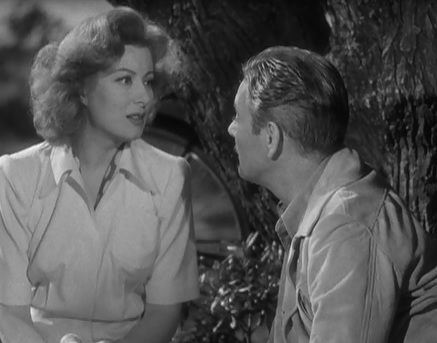
Greer Garson and Ronald Colman in Random Harvest

Greer Garson and Ronald Colman in Random Harvest

I wouldn’t usually confess to liking a romance—not the pure, unabashed kind, with brooding heroes; loyal, plucky heroines; and never-ending love. This is not, mind you, that I never watch or like them—it’s just rare for me to admit it. Did I swallow up every minute of North and South (2004 Gaskell version)? Oh yes I did. Did I, in fact, neglect to try out for cross country in high school because I was watching a bad period romance instead? Ummm. Maybe. (I’m luckily a little hazy on the details, even if my best friend claims she isn’t.)

I’m not sure then what it is about Random Harvest that makes me wiling to fess up to loving it. On the surface, this film is every bit as sentimental as the ones I supposedly (and sometimes actually) despise: I mean, it centers on AMNESIA. AMNESIA!! (Even Downton Abbey, which is about as soapy as it gets, knew to nix that Patrick Gordon/Crawley storyline.) But suspend your disbelief just briefly as I explain….

Charles Rainier (Ronald Colman), shell-shocked and without his memory after WWI, escapes from the asylum where he’s recovering when peace is declared. He happens into music hall performer Paula (Greer Garson), who pities and then falls for this man she dubs Smithy. She steals him away from his pursuers, giving up her job to help him.
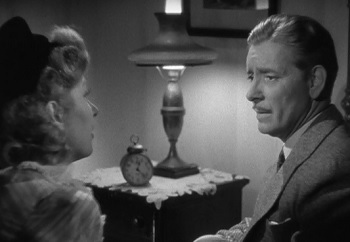
Smithy at the thought of losing Paula

Smithy at the thought of losing Paula

They have years of a happy marriage together, but an accident brings back his long-term memory, while knocking out the time with Paula. All he has is a memory of a strong love that prevents him from moving on romantically.
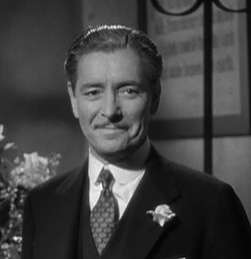
Smithy catching sight of his bride

Smithy catching sight of his bride

Are you rolling your eyes yet? I know how it sounds, as cheesy and manipulative as romances often are. But somehow, it’s not. The film is sentimental. But it takes a good forty minutes even for these two to admit to loving one another, and along the way, Colman’s heartbreaking performance captures so well his fragility as this lost man striving for dignity, and Greer’s warmth and exuberance and naiveté make her such a good foil for him, that you’ve begun to root for them before you realize you’re in their thrall. Of course, you’re terribly frustrated by his inability to see this charmer in front of him as the love he’s been mourning, even as you admire the loyalty he doesn’t know is to her.
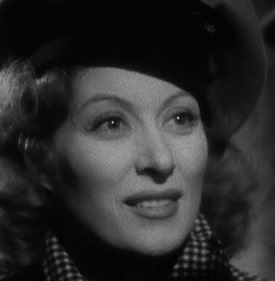
Paula

Paula

Given Smithy’s/Charles’ continued memory loss, you want Paula to move on, know she should, and yet….There’s something so simple and right about the relationship they shared, about the generosity of spirit that made her help him, and about his wholehearted affection for her. After all, their love has nothing to do with anything but chemistry and affection, a bond with no social trappings of any kind.

If you’re a romantic, obviously, this film is right in line with The Notebook and The Vow and other similar films about love surviving great odds. I would argue this is a much finer film than either, and its seven Oscar nominations back me up. But I have to admit that the Academy isn’t much kinder to romances than it is to comedies, and a so-called “women’s picture” like this one, focused on loyalty to one’s man, would be unlikely to do as well now as it did then in the rush of patriotism that would give Greer her Oscar for Mrs. Miniver (also 1942).

Still, it would take a film this whimsical, this sweet to make me admit—in public!—just how much a romance took me in.

 

Share
Posted in: 1940s films, 1990-current films, Romance (films) Tagged: amnesia, Greer Garson, Random Harvest, Ronald Colman, The Notebook, The Vow

Cool Hand Luke: Newman’s Double?

06/21/2014 by leah@carygrantwonteatyou.com 18 Comments

This post is part of Silver Screenings‘ and The Rosebud Cinema’s 1967 in Film Blogathon. Check out the other entries on their sites!

roadnewman
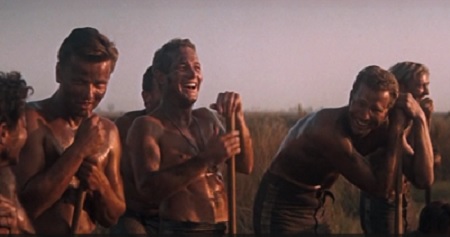
It’s not surprising, given the film’s condemnation of authority and celebration of rebellion, that Cool Hand Luke came out in 1967 in the midst of Vietnam War protests. Its depiction of the man “without eyes” and his fellow sadists is truly terrifying, as are the ominous parallels between the “failure to communicate” line the film popularized, and our muddy status in the war. The threat that the hero’s (seemingly) unflappable spirit poses to the guards’ squashing of the prisoners is evident to them—and us—from the start of the film. This guy (Paul Newman as Luke) makes prison fun instead of soul killing; clearly, the authorities will be seeking a way to destroy him.

What strikes me most about the movie is not its strong writing, or Newman’s compelling acting, or even George Kennedy’s perfect performance as Luke’s fan. It’s just how iconic of a Newman film it is. First, there’s that playfulness of Luke’s—from the speeding up of the road crew work, to bluffing at poker, to eating 50 eggs on a dare. Sounds like a Newman role, right? Like Butch Cassidy, like Henry Gondorff in The Sting…And like the actor himself, who was known for pranks. See this hysterical comparison of his and George Clooney’s.

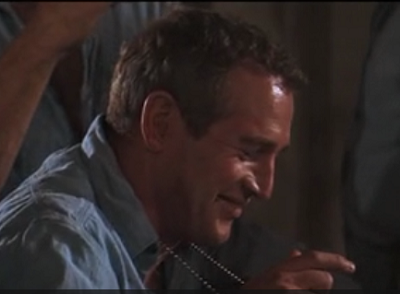
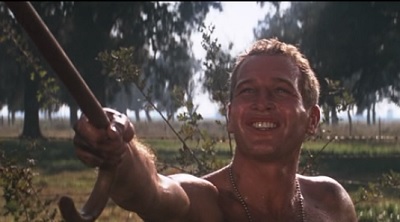
Newmanlaughing
Then there’s that complicated reaction to popularity. On the one hand, Luke relishes the attention; he likes to lead, rebel. He wants to inspire the men out of their lethargy, to make them fight for themselves. He’s found a way to introduce  joy into prison life, and he wants that influence to spread.

Newmannoeyes
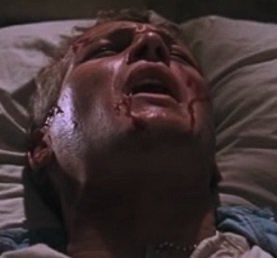
But Luke’s resistance to idolization increases as his situation worsens. The more he’s thrown in the hold and beaten for being a “hard case,” the more he resists the simple hero worship of his companions, lashing out at the amount of pressure they’ve put on him: “Oh, come on! Stop beatin’ it. Get out there yourselves. Stop feeding on me!”

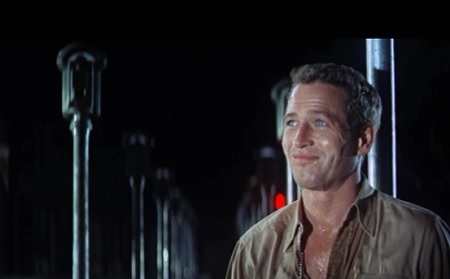
NewmanasLuke
In other words, inspiration he’ll provide. But if they’re content with just the stories about him and his cool demeanor, well, that’s something else entirely. How can he make a difference, if he’s the only ornery one who resists?

Again, the story makes me think of Newman the man, of the fame he used to spread the news about his philanthropies, including the moving Hole in the Wall Gang Camp. And, of course, there’s that healthy food that’s become—for some—more influential than his films.

I know Cool Hand Luke was just a part, that I should not conflate the man and the role. But it seems to me the two shared some traits, including a kind of impatience with the slow progress of the rest of us, our hesitation to do the right thing (I always thought this impatience was the reason for his flippant comment about his marital fidelity: “Why fool around with hamburger when you have steak at home?”)

Sure, model me, Newman might say. Watch me if you must. (And doesn’t it always seem as if this stunningly handsome man resists our gaze, takes it as suffering he has to endure for his art? How compelling is a  star who seems too cool to notice his own looks?) Ask for my photograph if you feel like it, get my signature.

But get out there and do something yourself.

Newmanandmeters

Share
Posted in: 1960s films, Blogathons, Drama (film) Tagged: Cool Hand Luke, Paul Newman

The 39 Steps (1935): The Charming Film You’ve Already Seen

06/19/2014 by leah@carygrantwonteatyou.com Leave a Comment
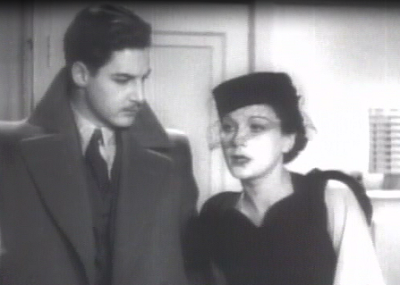
Hannay (Robert Donat) and the spy

Hannay (Robert Donat) and the spy

Like most of us, I’m not fond of clichés, of dark and stormy nights and ladies in distress, of hearts described as broken, or stomachs filled with butterflies. But when watching classic films, I sometimes find that what was then original has today become commonplace. The 39 Steps includes many of the types of plots and characters I’ve read/viewed too many times before: the mysterious spy, the man on the run from the authorities, state secrets, even a villain with a missing digit (six-fingered man, any of you Princess Bride fans?) By all logic, the sheer thought of the film should start me napping. But this is Hitchcock, and as always, he manages to lure me in. Just how does he do it?

Deflation of the Cliché
The general rule of cliché use is confession: if you must use it, at least admit to it instead of pretending you came up with “happy as a clam” on your own. The hero of the film, Richard Hannay (Robert Donat), dismisses the warnings of a lovely secret agent as just one of those spy novel clichés—much as we do. And then, even better, he offers this melodramatic oddball who has asked him for shelter some haddock. (Could there be a less glamorous response to a tale of secret agents?) When the agent is suddenly killed and Hannay is forced to flee to avoid being framed and to save England from a terrible plot, the passengers on the train where he hides talk about the murder, but cannot long be waylaid from their lingerie sales pitches. How brilliant is this? To use the cliché, and simultaneously make fun of it?

Vivid Characters
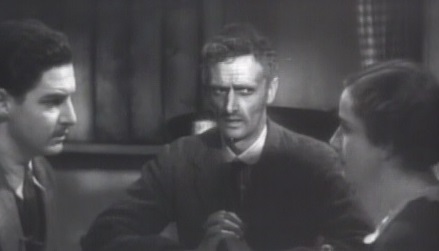
I can tolerate stock situations and phrases much more than generic personalities—the clown, the ditz, etc. Hitchcock and his writers infuse more life into minor characters than many filmmakers do their main players. Take just one brief interaction with a couple during Hannay’s flight. Early in the movie, the hero has escaped to a crofter’s (John Laurie’s) house. There, he charms the man’s wife (Peggy Ashcroft) with his cultured ways and solicits her help when she discovers his identify. Although the crofter is rough and stern, speaking of sin with an eye toward his wife, it’s hard not to pity as well as judge him: What kind of hope does this guy have of retaining his much younger spouse’s affections, with this charmer in his home? Or even when the handsome interloper departs?

Donatandcrofter
We flinch when the crofter slaps his wife for giving the fugitive his coat. But we know that while his action was unjustified, his anger was earned. We know that she would have done far more than that for and with Hannay, given the chance.

Suspense
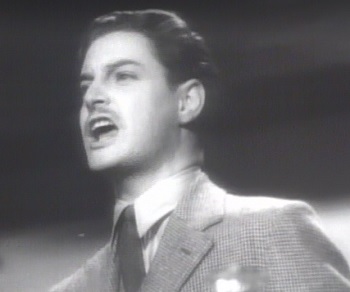
The dark lighting, the creepy villain, and the barren Scottish setting all contribute to our fright at Hannay’s situation. But there’s more to it. Mary Stewart once wrote that the “chief and terrible miracle” of the novel the film is based upon is “the unceasing and intelligence vigilance of every member of the population.” And it’s true. Everyone seems to be aware there’s a killer on the loose, and everyone seems eager to assist the police in capturing him. Therefore, we viewers doubt Hannay’s ability to escape. One very brief respite from the threat of strangers is when he is mistaken for a speaker at a political rally and (as in Fletch) gives a rousing talk. His subject is the “idle rich.” The eyes watching him, his recognition that he’s going to have to make something up, his forgetfulness about the handcuffs he’s wearing—all of it is terribly funny.

Donatspeech2
Here, as elsewhere, we’re with the crofter’s wife. This hero is just so compelling. How could everyone not trust him?

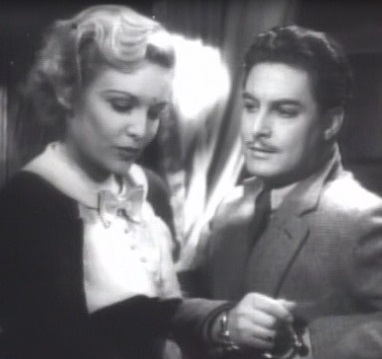
There’s so much more to enjoy: an adult version of Encyclopedia Brown, a strategic use of a train whistle, sheep blocking Hannay’s captor’s car, the creepy uncovering of a villain, and an attractive stranger (Madeleine Carroll) bent on delivering Hannay to the police, with whom he shares an amusing night in handcuffs.

DonatandCarroll
And above all, there’s Hannay’s significant moxie in dealing with the obstacles in his way.

Have we seen this film before? Yes. Have we witnessed heroes like this one? Oh yes. (Richard Kimble, John McClane, Nick Charles—this list goes on.) Will these factors stop anyone from enjoying the film?

Not a bit.

Share
Posted in: 1930s films, Film Noir/Crime/Thriller & Mystery, Romance (films) Tagged: 39 Steps, Hitchcock, Robert Donat

The Moment I Fell for Thelma Ritter

06/12/2014 by leah@carygrantwonteatyou.com 6 Comments

I feel comfortable with those who are generous with sarcasm. My dad is a smartass, my sisters, my aunts, my best friend, my husband. Not surprisingly, most of my favorite female performers share this trait in their films, including flawless character actress Thelma Ritter.

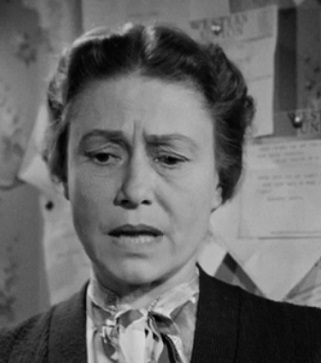
ThelmaRitter-Eve
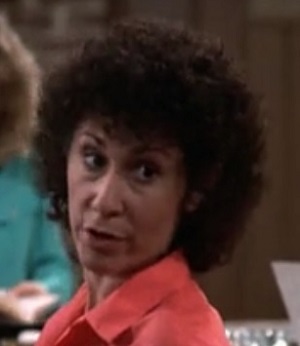
Ritter was nominated for six supporting actress Oscars, four of which were in succession; she elevated the quality of any film she was in with her seemingly effortless realism and deadpan humor. She reminds me, in fact, of an old favorite of mine, Rhea Perlman, aka Carla in Cheers, who shares Ritter’s understated style and tendency of deflating the egos and pretensions of the characters around her.

Perlman as Carla

Perlman as Carla

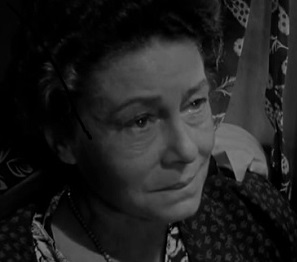
Once I fell for Ritter, I picked out films just because she was in them, including Pickup on South Street, in which she plays the finest of the roles I’ve managed to catch: a haunting turn as lovable police informant Moe Williams.

Moe Williams (Ritter)

Moe Williams (Ritter)

But it’s Ritter’s more lighthearted role as Birdie in All about Eve that first captivated me. Stage star Margo Channing (Bette Davis) has just met her biggest fan, Eve Harrington (Anne Baxter). Asked to share her story, Eve gives a litany of sad, intimate details about her life. Baxter’s delivery is stagey, and I find myself flinching every time I see the scene. The actress’s melodramatic style throughout the film is what my sisters always accuse classic film stars of practicing, and while theatrics make sense for her character, that doesn’t mean they’re easy to witness.

But it’s not just Baxter’s acting that makes me uncomfortable. While I know not everyone would find Eve’s hard-luck tale emotionally manipulative, I tend to believe one’s biggest traumas should not be shared on first acquaintance. (Don’t believe me? How much did you enjoy that oversharer on your first date with him/her?)

The usually cynical Margo (Davis) feels differently. She’s moved in spite of herself by Eve’s narrative, and pulls out a handkerchief to wipe tears away. Her assistant, Birdie (Ritter) looks pensive, seemingly ready to utter sympathy as well. “What a story,” she says. “Everything but the bloodhounds snapping at her rear end.”

ThelmaRiver-hounds
Ritter draws out the line rather than expressing it as a quick rejoinder, as other comedians/comediennes would have. The result is that Birdie seems to be thinking through her slam as she says it. Hysterical. This unexpected but natural delivery is typical of every performance of Ritter’s I’ve seen.

Her character’s no-nonsense approach to life in the film makes viewers suspect that her instincts are the ones to trust. Everyone else loves Eve. Everyone else trusts Eve. But we audience members have already seen that the other characters are taken in by flattery, and thus are more gullible than they initially seem.

But Birdie? Birdie we can trust.

And that’s how I feel about Ritter, why I fell so hard for her after this line delivery, and in every movie I’ve seen her in since. I don’t know in advance how other actors/actresses will perform in films with her. I can’t be certain whether they’ll impress or disappoint. But Ritter’s is the kind of excellence I can always expect.

(This is part of my series on moments that led me to fall for a performer. I hope you’ll share some of yours!)

Share
Posted in: 1950s films, Comedies (film), Drama (film), The Moment I Fell for, TV & Pop Culture Tagged: All about Eve, Carla, Cheers, sarcasm, Thelma Ritter

Versatile Blogger Award!

06/09/2014 by leah@carygrantwonteatyou.com 9 Comments

Thank you, Kristina at Speakeasy, for honoring me with the Versatile Blogger Award nomination!! (What wonderful things happen when you’re out of town!:))

versatileblogger113
Check out Kristina’s blog—the post on the award alone proves just how funny and talented she is.

Those nominated for the Versatile Blogger Award simply thank their nominator and link to his/her blog, choose 15 blogs to nominate, and tell the nominator seven things about themselves.

I can’t possibly list all of the blogs that have inspired me, but here are some I enjoy quite a bit:

For their classic film coverage, which is witty, wise, and informative:

  • Girls Do Film
  • The Blonde at the Film
  • Margaret Perry.org
  • Backlots
  • Sister Celluloid
  • Cinematically Insane
  • Ramblings of a Cinephile
  • Outspoken and Freckled
  • Mildred’s Fatburgers
  • GlamAmor

Because I love her desserts: Chocolate-Covered Katie

I’m not stylish enough to get all of her outfits, but love her writing style: My Edit

For her much-appreciated assistance with #2 below: Putting Me Together

Because they make me laugh:

  • It Keeps Me Wondering
  • Girl on the Contrary

Seven Things about Me:

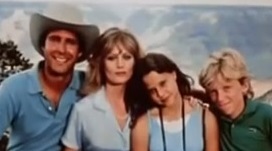
1-Festivals and museums devoted to peculiar subjects make me happy, probably because my extended family resembles this one:

Vacation
Don’t miss the Spam Museum.

2-I am hopelessly fashion challenged. My taste was formed in this decade:

DesperatelySeekingSusan
Once I woke up to the horror of what I was wearing, it took years to convince me into trusting color again. (The fashion blogs I mention above are helping with my affliction.)

3-My cat loves BBQ. And oatmeal, and potato chips, and pretty much anything he once found in the dumpster where he was discovered. Still today, he trash dives, like a dog.

Rico
He is named Rico after the anti-hero of this film due to his similar over-the-top personality, large ego, and shaky grasp on sanity.

4-I own two copies of Brainsmasher…a Love Story (the second was a gift, in case my original became too worn down).

BrainsmasheraLoveStory
5-When I’m gloomy, I go to someecards.com to cheer up. I don’t need to anymore, since my sister outdid herself on my last birthday with this t-shirt, which makes me laugh every time I see it:

dogyears
6-My favorite quote is from Pride and Prejudice. The heroine, Elizabeth, is at an awkward gathering, and no one knows what to say until the food arrives: “There was now employment for the whole party—for though they could not all talk, they could all eat….” This line perfectly describes why I station myself at the buffet table at every party I attend.

7-I own a Jane Austen action figure and a Dude bobble head. They stare at each other in my office, and are equally inspiring.


Share
Posted in: Uncategorized Tagged: blogging award, Kristina, Speakeasy

The Delightful Raunchiness of Mae West

06/05/2014 by leah@carygrantwonteatyou.com Leave a Comment

MaeWestwveil
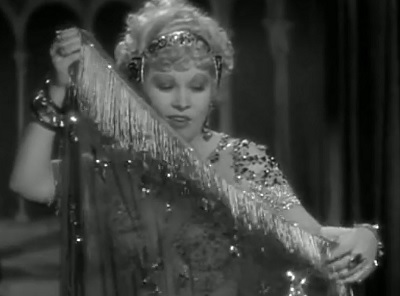
I knew from Complicated Women, TCM’s documentary on films before the production code, that early movies challenged men’s ownership of women’s bodies, minds, and souls. Many of these pre-code movies (1929-34) were so shockingly liberal in content that they make today’s look prudish by comparison (nudity in a Tarzan movie, anyone?) After the code, of course, sexuality and feminist portrayals of women were both toned down to please potential censors. But Mae West, who wrote and starred in her films, managed to sidestep this “sanitation” to an extent because she was so gifted at double entendres.

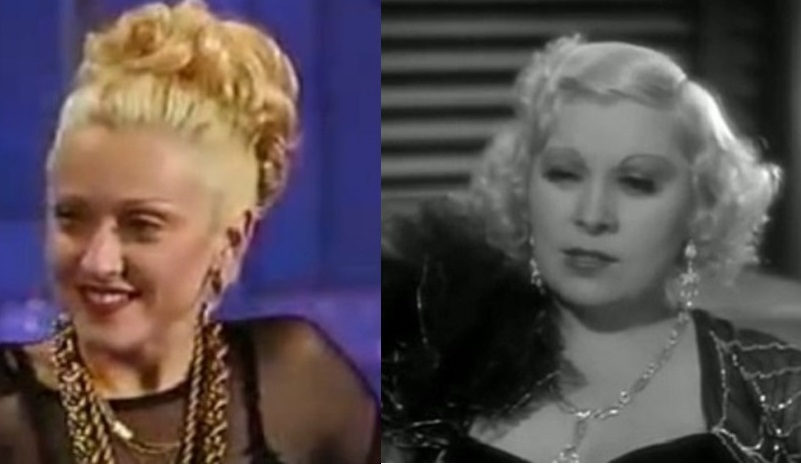
I’d heard of West, of course, knew a couple famous sayings, thought of her vaguely as ahead of her time. But to know of West and to watch her? Not the same. Mae West’s pre- and post-code films were in their own plane, and not only because of her undeniable sensuality and eagerness to express it. And “ahead of her time” is a gross understatement in West’s case. The play she wrote that got her thrown in jail on morals charges in 1927? Titled Sex. Madonna would be attacked for giving a book that title almost seventy years later.

Pioneers Madonna (in ‘92) and Mae West

Pioneers Madonna (in ‘92) and Mae West

And West’s next play? Drag (as in queen), which the vice folks managed to squash entirely. Luckily, we can still watch West on screen. Here are just four reasons why you will embrace this voluptuous rebel:

1. Half of the suggestive one liners you know originated with her.

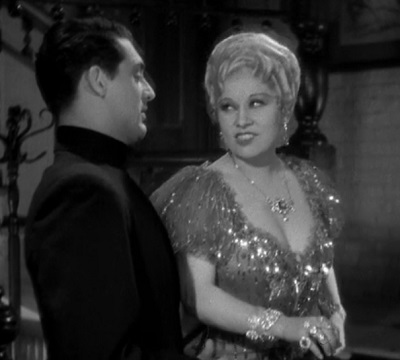
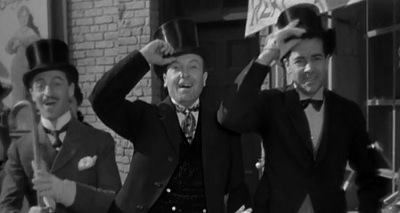
Her famous “Why don’t you come up sometime, see me?” seduction. (Note how overwhelmed Grant looks!)

Her famous “Why don’t you come up sometime, see me?” seduction. (Note how overwhelmed Cary Grant looks!)

This is just a small sampling of lines written and delivered by West (mostly from her films):

  • “When I’m good, I’m very good, but when I’m bad, I’m better.”
  • “It takes two to get one in trouble.”
  • “Is that a pistol in your pocket, or are you just happy to see me?”
  • “A hard man is good to find.”
  • “When I’m caught between two evils, I generally like to take the one I never tried.”
  • “When women go wrong, men go right after them.”

It’s not just the cleverness of West’s expressions that make her movies so entertaining; it’s the sheer number of them she manages to squeeze in. She Done Him Wrong (1933), which is just over an hour,has more funny lines in a few minutes than most current rom-coms in their bloated two-hour running times.

2. You need to see a woman born in the 1890s shimmying like West does.

West in I'm No Angel

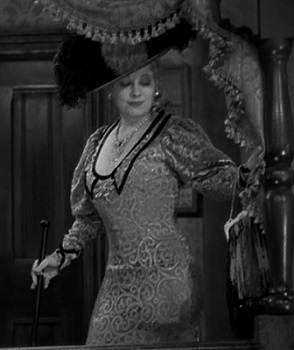
West in I’m No Angel

She’s dancing, she’s walking—it doesn’t matter. You have never seen a woman strut like this one.

3. 1930s Hollywood actually portrayed young men smitten—in droves—by a 40ish woman

Mae West’s films are irrefutable proof that everything does not improve with time, including Hollywood’s treatment of women past the age of 30. Today we are delighted to see the occasional rom-com with a 40-year-old woman; that’s when West got started. And being who she was, West was never content with just one man in her thrall.

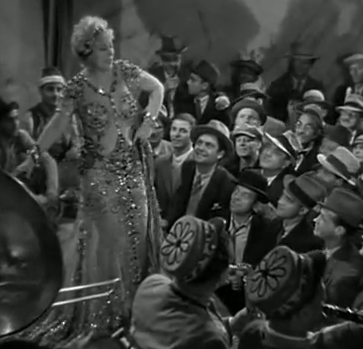
Men who've caught sight of Lou (West) in She Done Him Wrong

Men who’ve caught sight of Lou (West) in She Done Him Wrong

3Lou (West) eyeing a conquest, whom she refers to as “And you, Mr. Mmhmmm?”

Lou (West) eyeing a conquest, whom she refers to as “And you, Mr. Mmhmmm?”

4. Her films are wonderfully ludicrous.
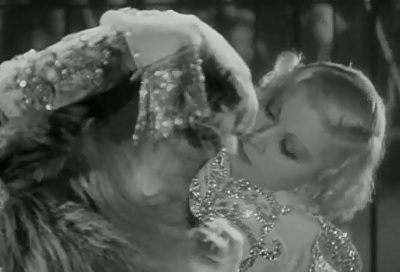
My favorite plot: A woman makes a living as a lion tamer, which men find so attractive they start sending her diamonds (I’m No Angel). The court scene near the close of the film is even more breathtaking. West annihilates the lawyers and slays the judge and jury with her smarts and that amazing walk. Is this whole film absurd? Absolutely. Is it hilarious? Oh yes.

The lion’s-mouth seduction

The lion’s-mouth seduction

Luckily, you can find a plot almost as ridiculous (and funny) in She Done Him Wrong, which is on Netflix streaming right now. What are you waiting for?

Share
Posted in: Feminism, Humor, Mae West Moments, Romantic Comedies (film) Tagged: Cary Grant, Madonna, Mae West, Pre-code films, sexuality

Recent Posts

  • 100 Years Later, Still Scary: Dr. Caligari
  • Escaping Out of the Past (1947)
  • A Weeper for Those Who Love Jerks
  • Thank You, Academy, for Not Infuriating Me
  • Challengers (2024) Is a Bad Movie

Subscribe to Blog via Email

Enter your email address to subscribe to this blog and receive notifications of new posts by email.

Categories

  • 1920s films
  • 1930s films
  • 1940s films
  • 1950s films
  • 1960s films
  • 1970s films
  • 1980s films
  • 1990-current films
  • 2020s films
  • Action & Sports Films
  • Anti-Romance films
  • Blogathons
  • Childfree
  • Comedies (film)
  • Drama (film)
  • Feminism
  • Femme fatales
  • Film Noir/Crime/Thriller & Mystery
  • Gloriously Silly Scenes
  • Horror
  • Humor
  • Mae West Moments
  • Musicals and dancing films
  • Oscars
  • Random
  • Romance (films)
  • Romantic Comedies (film)
  • The Moment I Fell for
  • Turn My Sister into Classic Movie Fan
  • TV & Pop Culture
  • Uncategorized
Share
Classic Movie Blog Hub Member

Recent Comments

  • leah@carygrantwonteatyou.com on Meg Ryan’s Fate Foretold in Joe Versus the Volcano
  • Ryan on Meg Ryan’s Fate Foretold in Joe Versus the Volcano
  • leah@carygrantwonteatyou.com on 100 Years Later, Still Scary: Dr. Caligari
  • The Classic Movie Muse on 100 Years Later, Still Scary: Dr. Caligari
  • leah@carygrantwonteatyou.com on 100 Years Later, Still Scary: Dr. Caligari

Archives

  • November 2025
  • September 2025
  • May 2025
  • March 2025
  • January 2025
  • November 2024
  • August 2024
  • July 2024
  • May 2024
  • March 2024
  • February 2024
  • December 2023
  • November 2023
  • October 2023
  • September 2023
  • August 2023
  • July 2023
  • May 2023
  • April 2023
  • March 2023
  • January 2023
  • December 2022
  • November 2022
  • September 2022
  • July 2022
  • May 2022
  • April 2022
  • March 2022
  • February 2022
  • October 2021
  • September 2021
  • April 2021
  • March 2021
  • February 2021
  • December 2020
  • October 2020
  • September 2020
  • July 2020
  • May 2020
  • April 2020
  • March 2020
  • February 2020
  • December 2019
  • October 2019
  • September 2019
  • June 2019
  • May 2019
  • April 2019
  • February 2019
  • January 2019
  • November 2018
  • September 2018
  • July 2018
  • June 2018
  • May 2018
  • April 2018
  • March 2018
  • February 2018
  • January 2018
  • November 2017
  • September 2017
  • August 2017
  • July 2017
  • June 2017
  • May 2017
  • April 2017
  • March 2017
  • February 2017
  • January 2017
  • December 2016
  • November 2016
  • October 2016
  • August 2016
  • July 2016
  • June 2016
  • May 2016
  • April 2016
  • March 2016
  • February 2016
  • January 2016
  • December 2015
  • November 2015
  • October 2015
  • September 2015
  • August 2015
  • July 2015
  • June 2015
  • May 2015
  • April 2015
  • March 2015
  • February 2015
  • January 2015
  • December 2014
  • November 2014
  • October 2014
  • September 2014
  • August 2014
  • July 2014
  • June 2014
  • May 2014
  • April 2014
  • March 2014
  • February 2014
  • January 2014

Meta

  • Log in
  • Entries feed
  • Comments feed
  • WordPress.org

Copyright © 2025 Cary Grant Won't Eat You.

Church WordPress Theme by themehall.com