Cary Grant Won't Eat You

Classic movies for phobics

  • About
  • eBooks
  • Previous Blogathons
Classic movies for phobics

Month: May 2014

She Got It Wrong: How Jennifer Jason Leigh Almost Ruined The Hudsucker Proxy

05/28/2014 by leah@carygrantwonteatyou.com 2 Comments

As a fan of classic 30s and 40s films, I delight in the movies that pay tribute to them, and no directors have been more glowing in their homages than the Coen brothers, with their nods to predecessors Preston Sturges, Howard Hawks, Frank Capra, and even Stuart Heisler. Their gloriously fun The Hudsucker Proxy was attacked for lacking “heart,” for being no more than a stylish imitation of favorite classic films.
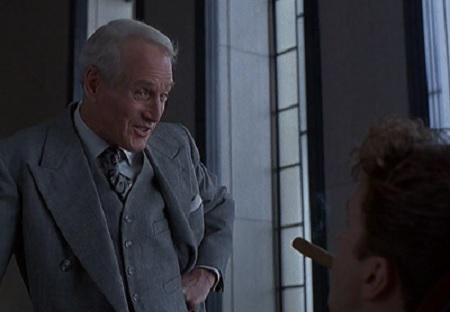
Sidney Mussburger conning Barnes (Robbins)

Sidney Mussburger (Paul Newman) conning Barnes (Robbins)

But critics praised Jennifer Jason Leigh’s performance as the typical classic film reporter, noting, as did Todd McCarthy in Variety, that she plays the role “with a Katharine Hepburn accent, Rosalind Russell’s rat-a-tat-tat speed in ‘His Girl Friday’ and Stanwyck attitude….” Occasionally, reviewers admitted that Leigh’s character, Amy Archer, wasn’t “quite right,” as McCarthy did, but they never attributed the film’s failure to the actress.
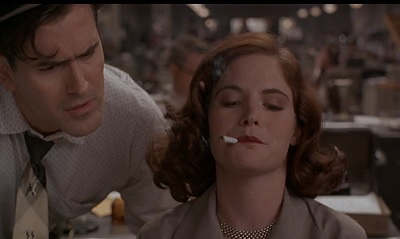
Leigh in full-on caricature mode

Leigh in full-on caricature mode

Yet to me, Leigh’s performance is the one thing that takes away from my enjoyment of this exuberant movie. Paul Newman is marvelous as the bad guy (Sidney Mussburger). Tim Robbins is terrific as the naïve Hoosier (Norville Barnes) who comes to work in the big city. His supposed stupidity makes those trying to lower Hudsucker’s stock prices quickly usher him into the presidency, yet his creativity manages to foil their plot. Archer (Leigh) plans to expose him as an idiot, much like Saunders (Jean Arthur) before her in Mr. Smith Goes to Washington.
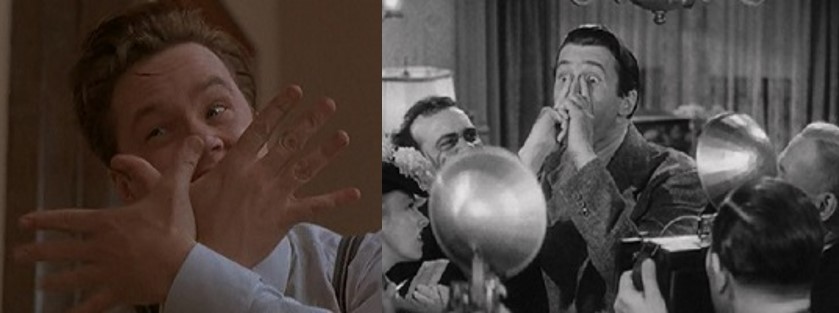
Barnes singing school song; Stewart showing a bird call

Barnes’ school song; Smith’s (Jimmy Stewart’s) bird call

But Archer’s later guilt at this character assassination and developing feelings for Barnes are utterly unconvincing, largely because her whole performance is.

One gets the feeling that Leigh only watched the films in which Stanwyck, Hepburn, and Russell were speaking at that “rat-a-tat-tat” clip and therefore missed the obvious: these actresses didn’t talk at such speeds in most of their films. They simply imagined themselves the kind of women who would be thrilled by breaking stories. Their words nearly run together not just due to the scripts, but because their characters are excited.
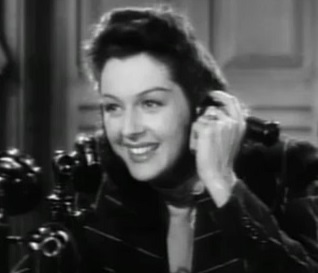
Russell sharing a great lead with editor and ex Walter Burns (Cary Grant)

Russell sharing a great lead

Leigh takes on the inflections and even some of the gestures of these actresses, but she becomes a mimicry of them rather than a believable character because the passion that infused the others’ performances is entirely absent in Leigh’s.
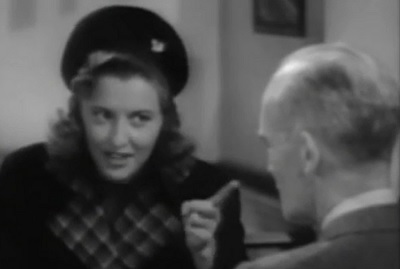
Stanwyck mid pitch

Stanwyck mid pitch

Hepburn, Russell, and Stanwyck come across as born reporters; their confidence makes them thrilling to watch: Hepburn’s assurance in mixing with dignitaries in Woman of the Year, Stanwyck’s daring plan to manipulate her employer in Meet John Doe, Russell’s masterful interview in His Girl Friday.
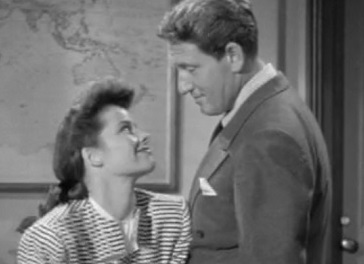
Hepburn flirting in her office after her male secretary ushers in her crush (Spencer Tracy)

Hepburn in control in her office

Archer, in contrast, is clearly aping rather than feeling confidence, and because Leigh plays her as shrewish rather than cynical, her quick transition into affection for Barnes merely looks like bad acting, which is surprising given the caliber of most of her work.
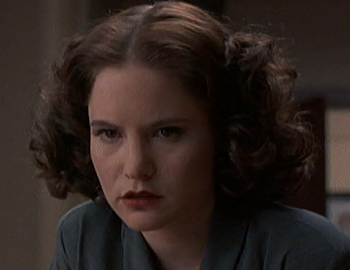
Archer falling for Barnes

Archer falling for Barnes

Admittedly, the Coens made Archer terribly insecure, a woman whose sole joy is one upping others with her Pulitzer. This was a serious mistake. How could the Coens, Hawks enthusiasts, have missed that the overlapping dialogue they’ve borrowed from His Girl Friday was not meant to be an affectation, as Archer’s is, but a reflection of the characters’ energy and enthusiasm? The film centers around Cary Grant’s excitement about being a newspaperman, and his various ploys to prevent Russell from leaving the business stem from his knowledge that she can’t resist it any more than he can.

The two films, in fact, have much in common: they’re all about the joy of the con—Barnes, in convincing the company he’s a fool (unwittingly), Walter Burns (Grant), in keeping others so occupied they miss his hilarious ruses. Both movies are a blast to watch. But The Hudsucker Proxy bombed at the box office, and I can’t help but blame Leigh, whose Archer is a drag to watch, and whose union with Barnes I rooted against. What does it matter if an actress nails the shell, if she loses the soul?

Share
Posted in: 1940s films, 1990-current films, Comedies (film), Romantic Comedies (film) Tagged: Barbara Stanwyck, Coen brothers, His Girl Friday, Jennifer Jason Leigh, Katharine Hepburn, Rosalind Russell, The Hudsucker Proxy

Face It: We’d All Be Lousy Detectives

05/21/2014 by leah@carygrantwonteatyou.com Leave a Comment

When I was a kid, I thought the word “amateur” meant talented. Nancy Drew was an “amateur detective,” and she outsmarted everyone around her, so what else could the word mean? Shows like Murder, She Wrote confirmed this impression: the everyday woman could outwit private detectives, criminals, the police. To be a hero like Nancy, I just needed observation skills. And a little knowledge picked up from mysteries. Then my latent brilliance would appear, dazzling all in my orbit.

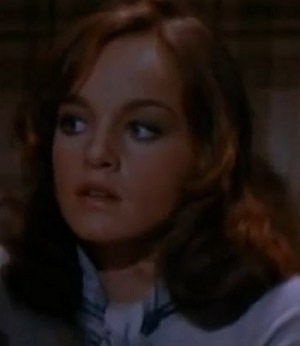
Pamela Sue Martin as Nancy Drew

Pamela Sue Martin as Nancy Drew

I read every one of Carolyn Keene’s books until I had four Nancy Drews left, then picked one of the last up, tried to read it, and couldn’t. A few novels shy of my completion goal, I had finally realized that my favorite detective was, well, not terribly gifted. All the bad guys in the stories were mean, all the innocent characters nice. Of course Nancy could solve the mysteries. So could an eleven-year-old girl who didn’t know the meaning of amateur.

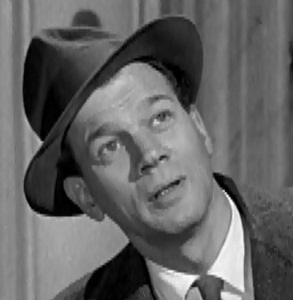
And yet these types of stories persist in Hollywood: the novice saves the day, while the jaded/stupid authorities look the wrong direction. It’s an alluring premise that allows us to imagine ourselves in the novice’s place, an undiscovered genius beating professionals. Yet reason would tell us that we newbies would be about as useless at being detectives as we are in our first days at any job—that what an amateur sleuth would likely do is exactly what those supposedly wrong-headed authorities predict: bungle everything up and possibly get him/herself and/or others killed. Perhaps that’s why The Third Man is so unexpected and so appealing: it features one of the worst amateur detectives ever to appear on film, Holly Martins (Joseph Cotten).

Martins (Cotten) after arriving in Vienna

Martins (Cotten)

Martins travels to post-war Vienna because he’s been promised a job by his buddy, Harry Lime (Orson Welles). He’s soon told that Lime has been killed in a car accident, but the details sound fishy, and Martins, like the cowboys he writes about, decides to find the truth. Others have written about Martins’ role as an ugly American, and it’s true that his behavior toward those around him reveals an appalling sense of cultural superiority. But what strikes me most about Martins’ whole campaign for justice is just how dangerous a naïve sleuth can be. Martins knows nothing about the country he’s in, how desperate its citizens are just to survive. To them, Lime’s death is one of so very many, and if solving the mystery will endanger them, well, they’ll just get back to their black market schemes and leave the foolish interloper to his own devices, thank you very much.

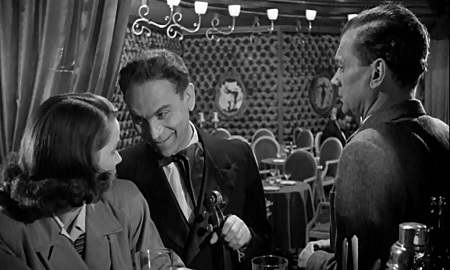
Martins (far right) and Lime's lover and friend

Martins (far right) and Lime’s friends

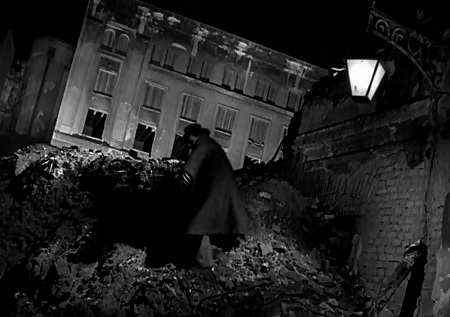
I always begin the film by siding with Martins against the supposedly sinister locals. I am amused by the hero’s blunt ways in a terrain that’s murky in every sense of the word. The city shots, the architecture, the crazy camera angles, and the shifty looks of the neighbors all suggest that Martins should be suspicious, and far more frightened than he is.

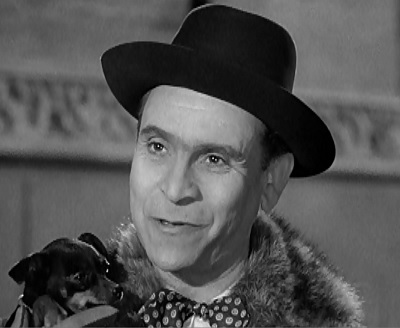
Ernst Deutsch as Lime’s shady friend, Kurtz

Ernst Deutsch as Lime’s shady associate

But as this hero continues to march into the bee farm, slamming his bat against the hives, I begin to think, Uh, Martins? Maybe you should step a bit more gingerly, huh? And if you must blunder about, perhaps let everyone else get inside first? There’s a reason why this movie always makes best-of thrillers lists: Picture Nancy Drew in the midst of The Usual Suspects, frustrated not to find Keyser Söze wearing a Hello My Name Is sticker and casually asking everyone in sight to identify him. Forget Lime’s possible murderers: the people of Vienna need to watch out with Martins on the loose.

Martins on the run

Martins, the public’s enemy, on the run

I can’t describe much more without revealing some of the mystery—and it’s too good for me to do that. So just watch The Third Man. It’s menacing mood, its striking soundtrack, its lack of moral foundations all would make it fascinating even if it didn’t revolve around an intriguing mystery. And the next time you imagine yourself solving crimes, you’ll remember Holly Martins. And you’ll know just why such dreams are best left to eleven-year-olds.

Share
Posted in: 1940s films, Film Noir/Crime/Thriller & Mystery, Humor Tagged: Bad detectives, Joseph Cotten, Keyser Söze, Nancy Drew, Orson Welles, The Third Man

The Moment I Fell for Humphrey Bogart

05/14/2014 by leah@carygrantwonteatyou.com 6 Comments

I was contemplating that moment in a film when an actor wows me, when I realize I need to see all of his/her work and possibly start decorating my rooms in fan posters à la a kid with a Teen Beat subscription. And the first actor to come to mind was Humphrey Bogart.

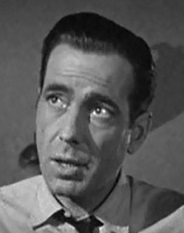
Bogart in Maltese Falcon

Bogart in The Maltese Falcon

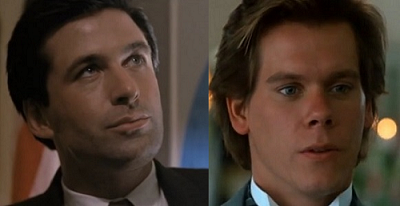
I was unmoved initially by Casablanca, arguably Bogart’s most famous film. A friend and I had decided we needed to acquire some culture and had learned in When Harry Met Sally that this was a love story for the ages. We were confused as we watched. What was all of this stuff about war? Where the hell was Casablanca? Why waste time with all of these confusing minor characters, especially that weird dude (Peter Lorre), when we could be watching Wings or Dr. Quinn, Medicine Woman? Was I seriously supposed to think this Rick guy was attractive? He looked nothing like my high school crushes, Alec Baldwin and Kevin Bacon.

Teenage heartthrobs

My teenage heartthrobs

Due to this uninspiring beginning, it was years before I watched another Bogie flick, this time The Maltese Falcon, the mystery about a private detective, Sam Spade (Bogart), investigating the murder of his partner. I was enthralled. The script was breathtaking: “My guess might be excellent or it might be crummy, but Mrs. Spade didn’t raise any children dippy enough to make guesses in front of a district attorney, an assistant district attorney, and a stenographer.”

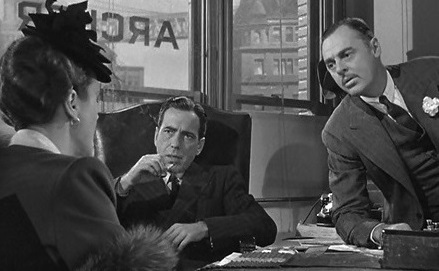
Spade, his partner, and his client

Spade, his partner, and the mysterious client

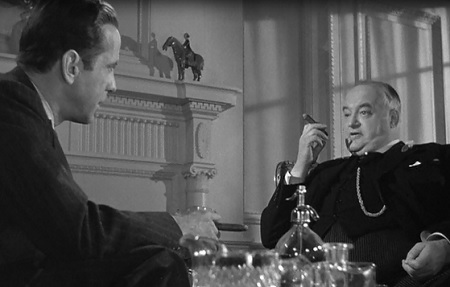
My favorite moment (the moment) occurs shortly after Spade meets Kasper Gutman (Sydney Greenstreet), the ringleader behind the crimes in the film. Spade has found him by confronting his gunsel (Elisha Cook Jr.), the lackey who has been trailing him. Spade asks about the “black bird” that has caused a killing spree, with his partner among the victims. “You know what it is,” he tells Gutman. “I know where it is, that’s why I’m here.”

Gutman assessing Spade

Gutman assessing Spade

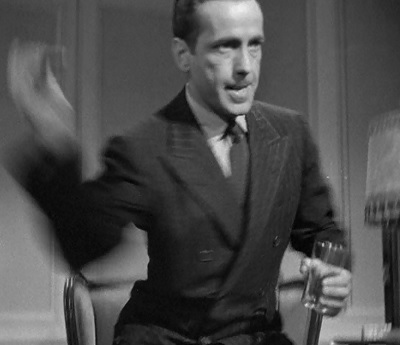
Gutman’s wordy style contrasts with Spade’s brevity. Right away, the former admits he’s a chatterbox: “I’m a man who likes talking to a man who likes to talk.” He stalls when Spade tries to make a deal for the bird, causing Spade to hurl the cigar and glass he’s holding and shout at Gutman: “What are you wasting my time for? I can get along without you. And another thing. Keep that gunsel out of my way while you’re making up your mind. I’ll kill ’im if you don’t, I’ll kill ’im.”

Spade throwing his cigar

Spade throwing his cigar

Spade’s passion shocks the viewer. Since he’s remained so calm the entire film, the burst of violence alerts the audience to a fact that should have been obvious all along: the hero is fully as dangerous as his foes. I have always been in awe of the kind of efficiency of movement Bogart displays in this scene, something I admire in the dancing of Fred Astaire and brutal fights of Daniel Craig as 007 and Matt Damon as Jason Bourne.

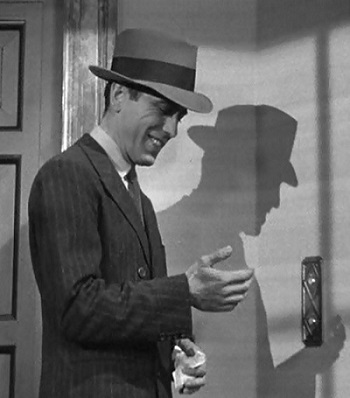
But as the camera follows Spade charging out of the room, yelling about a 5:00 deadline, we witness his anger swiftly transform into an engaging grin.

Spade's trick

Spade’s trick

That’s what did it for me—that quick, convincing rage, followed by a satisfied smile that reveals his action to be a ploy. In a moment, Bogart had excited me, fooled me, made me laugh. He had drawn me in with that seductive confidence, and thus sold me on his role as a leading man and sex symbol. I soon gobbled up The Big Sleep and so many of his other brilliant films. (Casablanca on a second viewing appeared to be a masterpiece.)

Bogart’s skill with The Maltese Falcon’s dialogue also steered me toward the beautifully written detective fiction of the 1930s-50s, to Dashiell Hammett’s dialogue, Raymond Chandler’s metaphors, and Ross Macdonald’s character development. And, of course, it led me to the amazing world of film noir.

So many thrilling performances. So much good writing. So much wonderful viewing. And all thanks to that 15-second shot of Humphrey Bogart’s grin.

I’m planning to do a The Moment I Fell for…blog once a month, with Thelma Ritter up next. I’d love to hear some of yours…..

Share
Posted in: 1940s films, Film Noir/Crime/Thriller & Mystery, The Moment I Fell for, TV & Pop Culture Tagged: Bogie, Fan, heartthrob, Humphrey Bogart

State of the Union: the Wish Fulfillment Edition

05/12/2014 by leah@carygrantwonteatyou.com 11 Comments

This post is part of The Great Katharine Hepburn blogathon. Be sure to check out the other entries!

The political satire in 1948’s State of the Union feels disturbingly fresh. Replace a phrase or two, and presidential nominee Grant Matthews’ (Spencer Tracy’s) speeches on the “working man” could fit into the Occupy Wall Street movement.

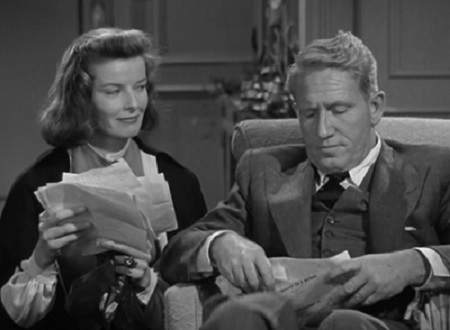
The film’s title, however, refers to not only what’s rotten in the state of the nation, but in the marriage between Grant (Tracy) and Mary Matthews (Katharine Hepburn).

Mary and Grant Matthews

Mary and Grant Matthews

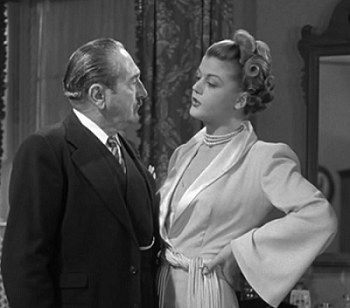
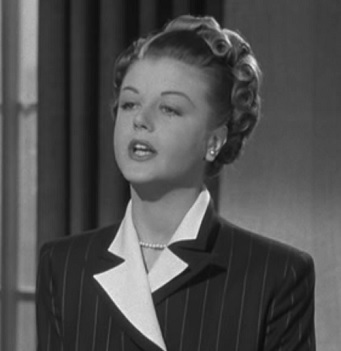
Sexy newspaper publisher Kay Thorndyke (Angela Lansbury) has seduced Grant with the aim of pitting him against her dead father’s political rivals.

Kay and fellow schemer (Menjou)

Kay and fellow schemer (Adolphe Menjou)

Mary (Hepburn) agrees to pretend her marriage is strong for the sake of the campaign, as she believes her husband a “great man,” which, if he ever were, he ceases to be by the film’s close. The movie traces his idealism crumbling under the necessity of playing the political game, thanks, in no small part, to Kay’s machinations.

The dialogue is as sharp and cynical as you would expect in a Frank Capra film. My favorite comment is when Mary snaps that the slimy politician under Kay’s supervision (Adolphe Menjou) should be happy about what’s left of her own naiveté: “You politicians have remained professionals only because the voters have remained amateurs.”

The central problem of the film is how unsympathetic her husband Grant is. A self-made man with his “little guy” days far behind him, he pompously lectures businessmen and union leaders about how that little guy should be treated. Capra treats him as if he’s one of his innocents among the corrupt, like Mr. Deeds or Jefferson Smith, and it doesn’t work–Grant begins as a heel, and ends as a worse one.

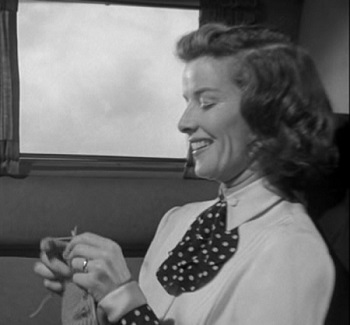
And it’s hard to forget he’s betrayed a wife so cool she calmly knits while he’s doing acrobatics with his plane, handing campaign manager (Van Johnson) her bag to puke in.

Mary during dangerous aerial acrobatics

Mary during dangerous aerial acrobatics

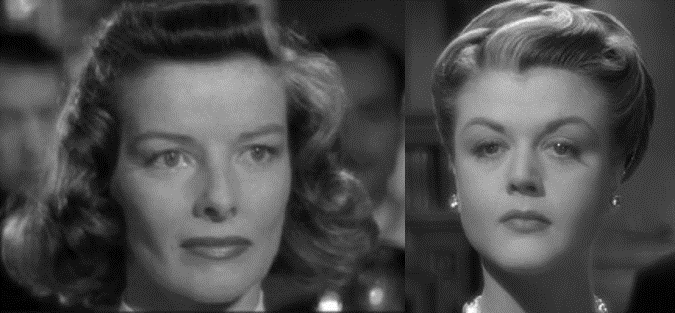
Luckily, we can ignore Grant and his speechifying and pay attention to the true delight of the film: Mary and Kay facing off against one another—Mary because she loves her husband, and Kay because she fears Grant will be swayed by his wife’s morals and thus lose the election.

The two real stars

The two real stars

Just listen to how they talk about each other:

Kay: “That woman’s got to [Grant]. She’s been feeding him that to-thine-own-self-be-true diet.”

Mary: “If this weren’t my house, I could tell her someplace she has to go to…” or “…I think Kay’d be more comfortable in a kennel.”

When Mary has to invite Kay to her house to cover up the affair, she tries to avoid doing what she apparently did once before: getting plastered and throwing Kay out. This is the moment in the film when I wanted to shake Capra. That’s the scene you left out???

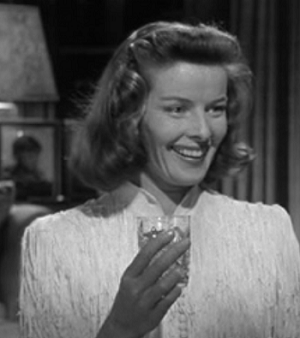
We do get treated to seeing Mary drunk in defiance of orders from Kay and crew.

Mary rebeling

Mary rebelling

But I kept wishing for a The Women-style face off; the heroines are so powerful and interesting that in comparison, the men in the film (with the exception of Johnson and Mary’s butler) seem a waste of screen time. Luckily, the women are so fun to watch that they revive and redeem the film.

At one point Grant’s barber shares his wife’s conviction that a woman should be president. “That’s silly,” responds Mary. “No woman could ever run for president. She’d have to admit she was over 35.”

Though the quip is funny, no line coming out of Hepburn’s mouth was ever less convincing. Those who know anything about Hepburn realize she had confidence to spare, felt comfortable aging in front of the camera, and would have run for any office if she’d felt like it. Mary clearly has Hepburn’s spunk, and after all, a woman had run for president more than 70 years before this film, another woman with considerable moxie.

Would Mary have won? Of course not. But what speeches she would have written!

And for Capra not to give Kay more time in the film is criminal. Watch her command her editors to publish filth about all of the Republican candidates so that their united hatred for one another will make them choose her man (Grant) at the convention. That icy stare you recognize from The Manchurian Candidate (1962)? Yeah, this is a woman who could make it to the White House today for sure. She’s a predatory villain as thrilling to watch as Claire Underwood (Robin Wright) in House of Cards.

Kay commanding the troops

Kay commanding the troops

It’s probably enough that a film in 1948 starred such strong actresses playing powerful roles. I shouldn’t wish for what could have been, these two really facing off against each other, maybe even running against each other for office.

But what a film that would have been.

Share
Posted in: 1940s films, Blogathons, Drama (film), Feminism Tagged: Angela Lansbury, feminists, Katharine Hepburn, political satire, Spencer Tracy

Veep & Together Again: Hollywood & Female Leadership

05/08/2014 by leah@carygrantwonteatyou.com 10 Comments

Sometimes the stars align, and you can convert hours of procrastination into productivity. At least, that’s what I’m telling myself about this week’s blog post, which is the result of a Veep marathon and viewing of two Irene Dunne films in a row. Call it a stretch or serendipity, but I keep observing similarities between the Julia Louis-Dreyfus-helmed TV show about a vice president and Together Again (1944), a film about a small-town mayor. Both keep returning to some of the same themes for humor, and both succeed.

Fairy Tale Romance? Not for Them
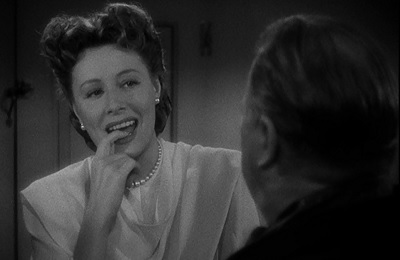
In Together Again, Irene Dunne (as Anne Crandall) plays a widow who takes over as mayor after her husband dies. The film begins with a shot of a statue created in her husband Jonathan’s honor. The unlikely Cupid of the film, Crandall’s father-in-law (Charles Coburn), is disgusted by this hero worship, which he considers against his son’s wishes. He tries to convince his daughter-in-law to find a man.

I can’t decide what’s more delightful: Crandall’s response, or her amusement in expressing it: “You can’t bear to see a woman living alone and liking it. No man can. Instinctively, it terrifies them. You’re a vanishing race and you know it. And the minute you lose your hold over us emotionally, wow. So naturally, your platform must be husbands are necessary. And they’re not really.”

Crandall mocking her father-in-law

His rebuttal, refreshingly, is not that singlehood is wrong; he just believes the state is not for her: “You talk like a free soul, but you’re the most manacled creature I’ve ever seen…Everything you do, everything you say, everything you breathe is the way Jonathan did it, said it, and breathed it. Why don’t you stop living his life and live your own?”

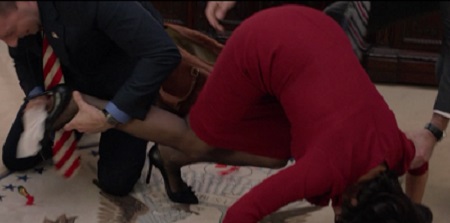
Veep’s heroine too is annoyed by others’ desire to fit her into a typical female role–in her case, as a happy wife and mother. At the start of Season 2, Julia Louis-Dreyfus attacks her former strategist (Gary Cole) for trying to force an image of the perfect family on her, which led to an uncomfortable river rafting trip with her daughter, her estranged husband, and his mistress. Their spat takes place in the Oval Office, and hilarity ensues when her lipstick marks up the sacred carpet.

Lipstick stain recovery effort

The Nonsense of Politics
Since Together Again is a romantic comedy, its primary interest, unlike Veep‘s, is not politics, but it has its moments, as in this great exchange between Randall and Mr. Witherspoon, who is in charge of the town’s sanitation and keeps leaving the south side blanketed in “a lot of old potato peelings.” His sorry excuses echo those that flood Veep:

Mr. Witherspoon: “It’s the manpower, your honor.”

Crandall: “Manpower, my eye. Use womanpower then.”

Mr. Witherspoon: “Women? To collect garbage?”

Crandall: “Why not? Women see more garbage in their lives than men do, don’t they? They might as well get paid for it.”

The scene highlights Randall’s power in the town. The joy of Veep, in contrast, is witnessing Meyer’s pathetic attempts to muster up the illusion of power she doesn’t have. And since we’re talking about D.C., the whole city is doing the same. After watching the jockeying for position among staffers, Congress members, and the administration, one wonders whether anything but ego is at stake for them. My favorite moment in the first season may be when the president’s lackey forbids the VP to adopt a dog because it’ll distract from the White House’s new pup: “Ma’am, you need to kill the dog. Not literally, but yeah, if it comes to it, yeah literally.”

Female Power: Is It All about the Hat?
Much of the plot of Together Again hinges on Crandall’s choice of a flirtatious hat over her usual professional attire when she goes to meet Corday (Charles Boyer), a sculptor in New York. The hat acts as a stand-in for the sexuality she’s been repressing as a widow. She’s bought it upon her father-in-law’s recommendation; he advised her when she departed their town to replace her functional one.

“When women starting wearing hats that look like hats,” he says, “they’re on the way out. At your age, you ought to be on the way in.”

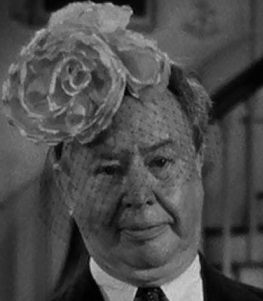
When Corday sees her in it, he assumes her a model rather than the mayor. Of course, no powerful woman could wear something so becoming, right? She hides the hat—and the nightclub raid she later gets involved in because of it—as soon as she returns home. But the hat keeps turning up again. My favorite moment is when her father-in-law walks in wearing it.

The father-in-law steals the show

Written seven decades later, HBO’s Veep focuses on a woman who is next in line to the president; it seems, on television at least, women have come a long way. But have they? Yes, the mayor of a tiny town is a far cry from the vice president of the United States, but perhaps not as far of a cry as we might wish. When Meyer asks why her presidential bid failed, her press secretary, Mike (Matt Walsh), responds, “You looked tired a lot and the hat….The hat hurt us. Your head looked weird in the hat; that’s all I’m gonna say.”

Convictions? What Convictions?
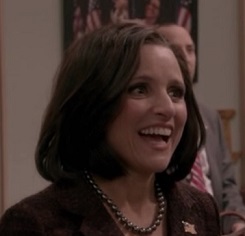
In Veep, it’s clear where Meyer’s convictions lie: she doesn’t have any. She puts an oil lobbyist on her clean jobs task force without hesitation. She tries to repress delight when a shipyard accident takes away her bad press. “Well, I think that worked out pretty good,” she says to her staff with a big smile.

Meyer-repressingjoy
(Of course, she tries to take it back when she discovers there were fatalities.) Self-interest trumps her idealism every time, which makes her a blast to watch.

**Spoiler ahead**

While Crandall’s political beliefs are only briefly sketched, her devotion to her dead husband and to the town he once led clearly dictates her behavior. She seems to be a very moral woman, bound by duty. Curiously, though, she seems content to leave the town she’s worked so hard to serve in the hands of her unscrupulous rival once she decides (as we know she will) to go after Corday.

The More, the Merrier
It’s refreshing to find in Veep a female led-show so entirely unconcerned with romance. But while her romantic interludes are brief and mildly funny, Meyer’s interactions with her staffers are fantastic. As a long-time Arrested Development fan, I was pleased to see Tony Hale (aka Buster) in another meaty role, treating Meyer’s various failures with compliments and tea and going to ridiculous lengths to satisfy her needs, as when he draws her chief of staff from her father’s bedside: “Something has happened to the vice president. I know your dad is dying and I’m really, really sorry, Amy, but I think Dana took Selina’s lipstick. It’s the one thing Selina asked for, and I don’t have it, and it’s ruining her night.”

I’ve left out much of the plot of Together Again in this review. The romance is fine, and Boyer a convincing lead. But it’s the Coburn-Dunne chemistry that kept me watching, especially when late in the film the two start riffing on youths’ views of aging. Coburn makes such a perfect Cupid that I can’t wait to see him play it in The More the Merrier.

Of course, there are other films and shows that tackle this same political ground. Parks and Recreation takes on the small-town concerns Crandall struggles with and makes them fresh and hilarious. But I could see little of Leslie Knope in Crandall or Meyer. Knope worships her town; Crandall belittles hers. And Meyer looks like a Knope foe: world-weary, cynical, and always out for herself.

Crandall and Meyer are alike, even if Meyer is looser ethically than her predecessor: both are hyper-aware of their public images and frustrated with the bureaucracy politics brings, but nevertheless, they manage to survive politics’ worst ravages, and in Crandall’s case, even find love along the way. And neither can resist a good hat.

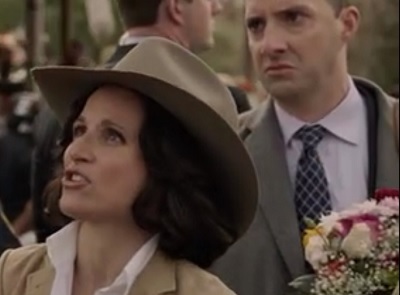
Meyer and her assistant (played by Tony Hale)


Share
Posted in: 1940s films, Comedies (film), Feminism, Romantic Comedies (film), TV & Pop Culture Tagged: Charles Coburn, female leaders, female vice president, Irene Dunne, Julia Louis-Dreyfus, Veep

5 Reasons Why English Majors Will Love Ball of Fire

05/01/2014 by leah@carygrantwonteatyou.com 27 Comments

This entry is part of the Romantic Comedy blogathon cohosted by Backlots and Carole and Co.

In trying to get friends to give old movies a chance, I often start with Ball of Fire, mainly because I know many English majors/graduate students, few of whom predict what delights are waiting for them in this 1941 classic. Here are just five of the reasons why everyone who waxes poetic about Shakespeare or Austen needs to spend a little time with Gary Cooper and Barbara Stanwyck:

1. The Plot: A Mobster/Moll Romantic Comedy about Language

Professor Bertram Potts (Cooper), on the hunt for colorful subjects to aid him with his encyclopedia entry on slang, enlists a sexy torch singer, Sugarpuss O’Shea (Stanwyck).

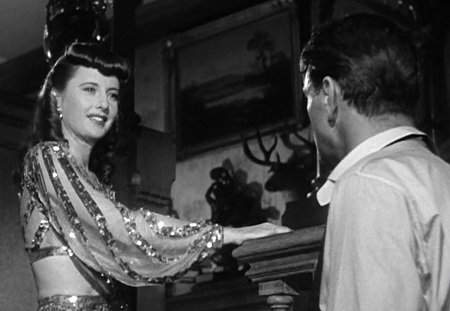
O'Shea (Stanwyck) flirting with the professors

O’Shea (Stanwyck) flirting with Potts

Sound ridiculous? It is, wonderfully so.

In the “meet cute” moment, O’Shea has just learned that her mobster boyfriend (Dana Andrews) is in trouble with the law. Fearing the knock on her dressing room door is the DA with a subpoena, she’s hostile to Potts, and when she discovers his mission to study her, dismisses him:

O’Shea: “Shove in your clutch.”

Potts: “Exactly the kind of thing I want”….

O’Shea: “OK, scrow, scram, scraw.”

Potts: “A complete conjugation!”

The opening sequence of Potts’ investigation, in which we learn the sources of such terms as “slap happy” and discover just how old the term “jerk” must be, is equally amusing to those of us who delight in wordplay, as is the nerdy professor’s ignorance of such words as “boogie.”

And that’s just the first half hour.

2. A Clever Take on Snow White and the Seven Dwarves

Fables, folk tales, fairy tales. We English majors love to read them, interpret them, reinvent them. (Angela Carter’s dark The Bloody Chamber traumatized me in an introductory lit course.) Famed writing team Charles Brackett and Billy Wilder turn the tale on its head, making Snow White a seductress and the dwarves a team of innocent professors (six bachelors and a widower) who are writing an encyclopedia together, with Prince Potts acting as the eighth member.

O’Shea seeks shelter from the police at their house, claiming she needs to stay to help with Potts’ research. The proper Potts doesn’t understand why she needs a sleepover, but his elderly companions, used to only the “singularly uninspiring underpinnings” of their housekeeper, outweigh his objections. They have fallen for O’Shea, and their charming antics to gain her attention—wearing new outfits, making sure their pants get ironed, having her teach them the conga—make you wonder just how unfair it is that the prince is the one who wins Snow White’s affection.

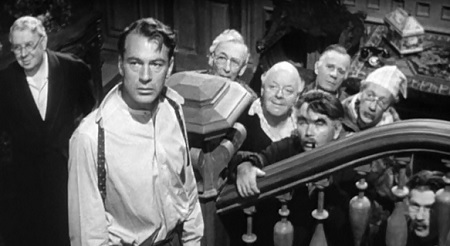
Potts (Cooper) and the dwarves reacting to O'Shea's flirtation

Potts (Cooper) and the dwarves reacting to O’Shea

O’Shea has no plans to seduce Potts, but when things get “hotter” for her boyfriend and she’s told “to stay in the icebox like a good little salad,” she gives the impressionable Potts a kiss. And, as in the fairy tale, things escalate from there.

3. The Witty Dialogue/One Liners

What English major isn’t a sucker for good dialogue? With Wilder & Brackett as writers and Howard Hawks as the director, witty banter and frequent double entendres are a matter of course.

Early in the film, Miss Bragg, the housekeeper, badgers Professor Oddly for gobbling up the strawberry jam after writing an encyclopedia entry on strawberries. She then expresses horror at Professor Magenbruch’s studies.

“I’m just starting my article on sex, Miss Bragg,” he answers. “Any objections?”

“No,” she concedes. “I trust you have more control of yourself than Professor Oddly.”

And the one liners! Some favorites:

O’Shea: “Say, who decorated this place, the mug that shot Lincoln?”

Potts: “Make no mistake, I shall regret the absence of your keen mind; unfortunately, it is inseparable from an extremely disturbing body.”

O’Shea (describing her throat): “It’s as red as The Daily Worker and just as sore.”

Miss Bragg (speaking of O’Shea): “That is the kind of woman that makes whole civilizations topple!”

I always wonder why so many Gilmore Girls and Aaron Sorkin fans won’t give 30s and 40s comedies a try. Ball of Fire not only employs the banter they love so well, but avoids the trap of making EVERY character eloquent (a Sorkin flaw). The contrast between O’Shea’s wisecracking and Potts’ slow earnestness is one of the delights of the film, and given that Cooper typically played a Clint Eastwood type, his professorial wordiness is particularly amusing. As the Self-Styled Siren put it, “Who besides Billy Wilder would look at Gary Cooper, the most laconic speaker in Hollywood, and think, ‘Linguistics!’”

4. Wonderful Characters (and Performances)

With eight professors, a nightclub singer, a mobster and his minions, the DA and his team, and Potts’ other research subjects, a viewer would be unreasonable to expect much character development in any but the main players. Romantic comedies rarely get beyond stereotypes anyway. But most of the characters in Ball of Fire are unique and memorable, from the prim widower with the sexless interpretation of romance, to the genial Professor Magenbruch, who can’t stop thinking about his need to research for the sex entry. Even Joe Lilac’s two minions are funny in their villainy. And at the center of the film, we have Sugarpuss O’Shea, played by Stanwyck in an Oscar-nominated performance.

Stanwyck’s job as Snow White is to charm, and she takes to it naturally. She’s laid back and confident, and as cool as her companions are geeky. (I kept thinking of an Elizabeth Bennett landing in the middle of The Big Bang Theory.) Most of all, O’Shea’s a great deal of fun, whether leading her band in a quiet version of “Boogie” at the start of the story, or teaching the professors to conga. She doesn’t want to harm any of the professors with her deception, but she is so used to looking out for herself that their brand of vulnerability is foreign to her.

O’Shea too is soon smitten, so unfamiliar with sincerity that it floors her even as her comfort with her sexuality undoes her companions. Her guilt at duping such lovable men is palpable.

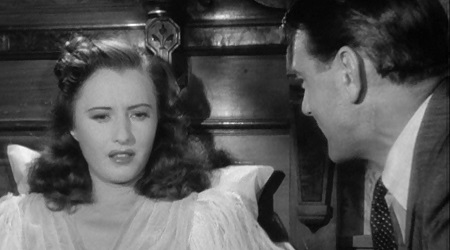
O'Shea, discovering Potts' love for her

O’Shea, discovering Potts’ love for her

Stanwyck lost the Oscar to Joan Fontaine in Suspicion that year. Fontaine’s was a strong performance, but I think Stanwyck’s dazzling turn should have guaranteed her win. Though some of the credit for her fully rounded performance definitely goes to the writers, Stanwyck is so believable in the midst of this crazy plot that she grounds the film. A once reluctant watcher of black and white flicks, I became a classic movie enthusiast and lifelong Stanwyck fan after watching this movie. I suspect I’m not the only one.

5. The Grammarian Winning the Girl?

English majors—especially males—don’t get a lot of cred in the romantic lead department, especially when up against mobsters like Joe Lilac.

Dana Andrews playing the suave Joe Lilac

Suave Lilac (Dana Andrews), Potts’ rival

At least women can get the “sexy librarian” rep. Occasionally, poets can win some attention in film (and I know such gifts helped my friends on Valentine’s Day). But grammarians? Teachers of the comma splice? Among an unglamorous profession, grammar professors are the nadir when it comes to sexy reps, right down there with nuclear physicists.

Potts, trying to box based on a book's lessons

Potts, trying to box based on a book’s lessons

“You see, this is the first time anybody moved in on my brain,” says O’Shea after entering Potts’ home, and you know when she later glows at the possibility of becoming “Mrs. Lilac” just how unlikely the brain is to triumph.

But slowly, Potts makes inroads. O’Shea even reads a grammar book in her spare time, and there’s a whole discussion about the repetitiveness of her phrase “on account of because” in the midst of a romantic interlude. Only Wilder and Brackett could not only make this scene romantic, but convincing. Due to the caliber of their writing and Stanwyck’s performance, we trust that this cynical nightclub singer really does get so flushed in company with “corny” Potts that she needs to take the movie’s equivalent of a cold shower (a towel to the neck).

And this triumph, my English major friends, is a rare treat to witness. Good luck finding a modern film so generous in its treatment of grammarians. When you find one, be sure to let me know. In the meantime, I’ll take another serving of Ball of Fire.

Check out the other romantic comedy entries in the blogathon!

Share
Posted in: 1940s films, Blogathons, Humor, Romantic Comedies (film) Tagged: Ball of Fire, Barbara Stanwyck, Dana Andrews, English majors, Gary Cooper

Recent Posts

  • 100 Years Later, Still Scary: Dr. Caligari
  • Escaping Out of the Past (1947)
  • A Weeper for Those Who Love Jerks
  • Thank You, Academy, for Not Infuriating Me
  • Challengers (2024) Is a Bad Movie

Subscribe to Blog via Email

Enter your email address to subscribe to this blog and receive notifications of new posts by email.

Categories

  • 1920s films
  • 1930s films
  • 1940s films
  • 1950s films
  • 1960s films
  • 1970s films
  • 1980s films
  • 1990-current films
  • 2020s films
  • Action & Sports Films
  • Anti-Romance films
  • Blogathons
  • Childfree
  • Comedies (film)
  • Drama (film)
  • Feminism
  • Femme fatales
  • Film Noir/Crime/Thriller & Mystery
  • Gloriously Silly Scenes
  • Horror
  • Humor
  • Mae West Moments
  • Musicals and dancing films
  • Oscars
  • Random
  • Romance (films)
  • Romantic Comedies (film)
  • The Moment I Fell for
  • Turn My Sister into Classic Movie Fan
  • TV & Pop Culture
  • Uncategorized
Share
Classic Movie Blog Hub Member

Recent Comments

  • leah@carygrantwonteatyou.com on Meg Ryan’s Fate Foretold in Joe Versus the Volcano
  • Ryan on Meg Ryan’s Fate Foretold in Joe Versus the Volcano
  • leah@carygrantwonteatyou.com on 100 Years Later, Still Scary: Dr. Caligari
  • The Classic Movie Muse on 100 Years Later, Still Scary: Dr. Caligari
  • leah@carygrantwonteatyou.com on 100 Years Later, Still Scary: Dr. Caligari

Archives

  • November 2025
  • September 2025
  • May 2025
  • March 2025
  • January 2025
  • November 2024
  • August 2024
  • July 2024
  • May 2024
  • March 2024
  • February 2024
  • December 2023
  • November 2023
  • October 2023
  • September 2023
  • August 2023
  • July 2023
  • May 2023
  • April 2023
  • March 2023
  • January 2023
  • December 2022
  • November 2022
  • September 2022
  • July 2022
  • May 2022
  • April 2022
  • March 2022
  • February 2022
  • October 2021
  • September 2021
  • April 2021
  • March 2021
  • February 2021
  • December 2020
  • October 2020
  • September 2020
  • July 2020
  • May 2020
  • April 2020
  • March 2020
  • February 2020
  • December 2019
  • October 2019
  • September 2019
  • June 2019
  • May 2019
  • April 2019
  • February 2019
  • January 2019
  • November 2018
  • September 2018
  • July 2018
  • June 2018
  • May 2018
  • April 2018
  • March 2018
  • February 2018
  • January 2018
  • November 2017
  • September 2017
  • August 2017
  • July 2017
  • June 2017
  • May 2017
  • April 2017
  • March 2017
  • February 2017
  • January 2017
  • December 2016
  • November 2016
  • October 2016
  • August 2016
  • July 2016
  • June 2016
  • May 2016
  • April 2016
  • March 2016
  • February 2016
  • January 2016
  • December 2015
  • November 2015
  • October 2015
  • September 2015
  • August 2015
  • July 2015
  • June 2015
  • May 2015
  • April 2015
  • March 2015
  • February 2015
  • January 2015
  • December 2014
  • November 2014
  • October 2014
  • September 2014
  • August 2014
  • July 2014
  • June 2014
  • May 2014
  • April 2014
  • March 2014
  • February 2014
  • January 2014

Meta

  • Log in
  • Entries feed
  • Comments feed
  • WordPress.org

Copyright © 2025 Cary Grant Won't Eat You.

Church WordPress Theme by themehall.com