Cary Grant Won't Eat You

Classic movies for phobics

  • About
  • eBooks
  • Previous Blogathons
Classic movies for phobics

Month: April 2014

The Sadistic Spouse: Charles Boyer in Gaslight

04/23/2014 by leah@carygrantwonteatyou.com 22 Comments

This post is part of the Great Villain Blogathon cohosted by Speakeasy, Shadows and Satin, and Silver Screenings. Check out other entries on one of their sites!

When it comes to villains, Gregory Anton in Gaslight lacks the theatricality of The Joker or Lecter. He wants the presence of Harry Lime or the narcissism of Ellen Harland. He doesn’t chill the viewer as do Maleficent and Mrs. Danvers. On the surface, therefore, Gregory might not seem a villain worthy of comment. As played by Charles Boyer, the role is so two-dimensional as to approach camp. You can almost hear Boyer saying to himself, “Time for the faux-loving face—wait, too long on that one, stern face time.”

Boyer's stern face

Boyer’s stern face

Yes, Gregory seems as commonplace a villain as his name would suggest. But in terms of his effect on his victim, Gregory is a master among villains. Having convinced his new wife, Paula (Ingrid Bergman), to move back to the house where her aunt was murdered, he creates a series of sounds and sights he pretends not to notice. He expresses concern at Paula’s supposedly imaginary observations; he chides her for forgetfulness when items disappear (due to his own actions). She believes him because she loves him. The term “gaslighting,” which originated with this story, refers to Gregory’s sinister brand of psychological abuse: trying to convince his wife she’s going insane. While the motives of his actions are not immediately apparent, he clearly feels no remorse for his cruelty.
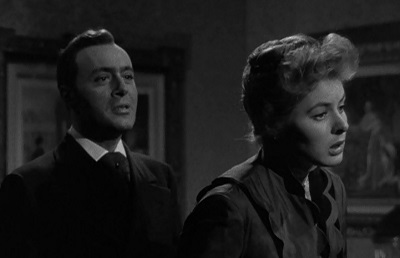
Convincing his wife she's crazy

Gregory, celebrating his victory over his wife

So often, we side with the criminal in a plot like this one: with a wife this gullible, it’s easy to go for the laugh rather than the shiver. It would be common too to dismiss Paula as stupid, to fail to sympathize due to her blindness and fragility. But the nineteenth-century timeline of the story counters our usual impulses, making us uneasy and fearful from the start. (Just what were those stories about men committing their wives to asylums on questionable grounds again?) And Paula is not just any victim: She is a victim played by Ingrid Bergman.

Bergman beautifully illustrates the extent of her heroine’s downfall at Gregory’s hands. She is incandescent as a woman in love before his plot takes off.
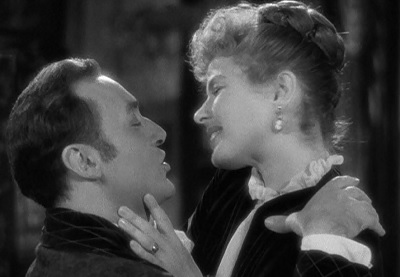
Gregory's pretense of love

Paula in love

Her fears about her sanity, which first dim, and then blot out any semblance of happiness or reason, are terrifying to watch. Just when she thinks she can trust in his love for her and have faith in herself again, Gregory cuts off her giddiness with a chilling expression, claims she’s unwell, forgetful, unworthy, childish. Her jealousy of a cruel maid (Angela Lansbury) he flirts with in her own home is nothing, he suggests, but a sign of her sickness.
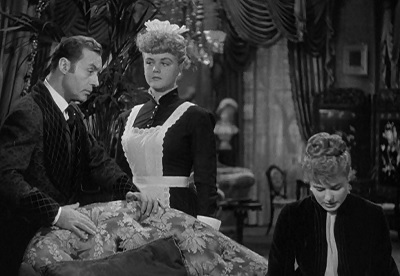
Using the maid to torture his wife

Using the maid to torture his wife

Think of Betty Draper in the first season of Mad Men, then quadruple the vulnerability, make Don evil rather than sick, take away his love, and remove any right Betty has to defend herself against his duplicity, and you have poor Paula in Gaslight.
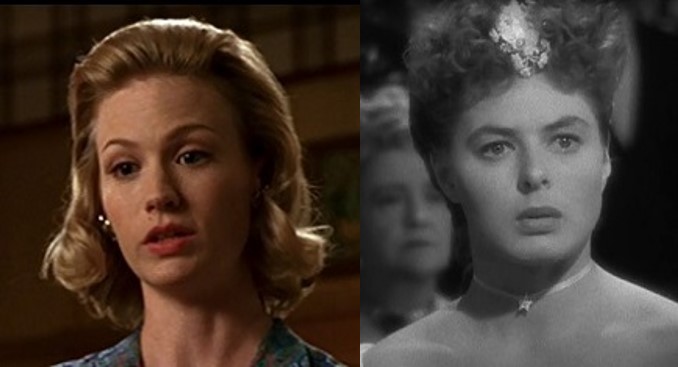
Season 1 Betty Draper a powerhouse compared to Paula

Season 1 Betty Draper a powerhouse compared to Paula

Paula’s weakness is her love for her husband; without it to prey upon, Gregory would have no chance of winning this psychological battle against her. And it’s just this level of cruelty she can’t accept. Of course she finds her own forgetfulness more believable. Not content with the damage he’s done, Gregory shuts her away from others, guaranteeing she spends most of her time obsessing over whether she’s mad–hardly a healthy pastime. How long, we wonder, CAN Paula stay sane, trapped in a loveless marriage, a frightening house, and fears she can no longer control? While there’s hope in the form of a suspicious detective (Joseph Cotten), even if Paula escapes, can anyone recover from this kind of treatment?

Despite a largely passive performance, Bergman is stunning to watch in Gaslight. I can think of no actress but Meryl Streep who could accomplish so much with just expressions, who could deliver enough pain and fear to carry the film and beat out Barbara Stanwyck, Bette Davis, Claudette Colbert, and Greer Garson for the Oscar.

Bergman as situation worsens

Paula as her situation worsens

Just a few years after Gaslight, Bergman would fall for Roberto Rossellini and become involved in an affair with him so scandalous Congress and many of her American fans would condemn her. But she would make a Hollywood comeback less than a decade later, and her union with the famous director would result in a daughter, Isabella, who, in a curious twist, would make a splash of her own as a victim in another famous film, Blue Velvet. Who could forget torch singer Dorothy Vallens, the target of creepy villain Frank Booth (Dennis Hopper)?

Like mother, like daughter

Like mother, like daughter

 Be sure to check out the other villains in the blogathon!

Share
Posted in: 1940s films, Anti-Romance films, Blogathons, Drama (film), Film Noir/Crime/Thriller & Mystery, TV & Pop Culture Tagged: Betty Draper, Charles Boyer, Gaslight, Ingrid Bergman, Mad Men, marriage, villain

Nazis and Humor: The Shock of Lubitsch’s To Be or Not to Be (1942)

04/17/2014 by leah@carygrantwonteatyou.com 2 Comments

ToBeorNot2
Wrap your head around this fact: Two decades before Quentin Tarantino was born, Ernst Lubitsch directed a comedy about Nazis. Unlike Tarantino, whose own Nazi film was typically bloodthirsty, Lubitsch was best known for light fare, especially sophisticated sex farces so insightful and lacking in prudery that they remain startlingly modern and funny still today. Not surprisingly, Wes Anderson recently cited To Be or Not to Be, Lubitsch’s anti-Nazi comedy, as influential. Lubitsch and Anderson share a joy in puncturing human vanity and hypocrisy, a gift for efficiency in their visual symbolism, and an appreciation for moments of pathos within otherwise humorous films. They also are in love with silliness, and this film is full of it.

To Be or Not to Be is almost as frantic in pace as Anderson’s The Grand Budapest Hotel, so I’ll just explain the basics: An acting troupe in Warsaw pretends to be Nazis to undermine a plot against the Resistance. The troupe is led by Joseph Tura (Jack Benny), a man arrogant about his acting but insecure about his wife Maria’s (Carole Lombard’s) fidelity—and rightly so: She invites an aviator (a very young Robert Stack of Unsolved Mysteries fame) to her dressing room every time her husband begins the famous speech in Hamlet that gives the movie its name. (Joseph’s not initially aware of her flirtation, though he becomes obsessed with the flier’s rudeness in leaving during his soliloquy.)

Who knew Robert Stack could be funny?

Who knew Robert Stack could be funny?

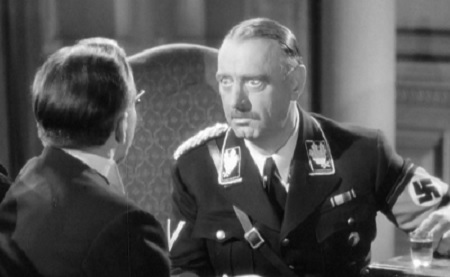
Like Joseph, the Nazis in the film are obsessed with the reactions of others to their words. When they joke about their leader’s vegetarianism or reputation, they fear their peers’ reprisals, and quickly state “Heil Hitler” to appear patriotic. The implication throughout the film is that the Nazis are much like the actors imitating them: full of insecurity and quick to express pronouncements they utter rather than feel.

The movie begins with an actor from the troupe who is playing Hitler in a play that’s about to fold. He’s anxious to prove his plausibility in the role due to a blistering attack by his director. “I don’t know. It’s not convincing,” the director says, looking at the clothes and makeup meant to imitate the Führer. “To me, he’s just a man with a little mustache.”

“But so is Hitler,” the actor responds defensively.

An actor (Tom Dugan) saying "Heil myself" as Hitler in a doomed production.

An actor (Tom Dugan) saying “Heil myself” as Hitler in a doomed production.

As in most of Lubitsch’s films, the marital sexual farce is highly entertaining. In a typical moment, Maria’s assistant quips, “What a husband doesn’t know won’t hurt his wife.” But this farce goes beyond the main couple. The Nazis are not only fooled by these actors’ poor performances as Gestapo, but are also easily convinced that the beautiful Maria will be captivated by their power. They repeat “Heil Hitler” not only as a defense or conversation filler, but as a pickup line. Clearly, Lubitsch feels these Nazis are using their lethal reputation as a substitute for manhood. “And before the evening is over,” a Nazi spy says suggestively to Maria, “I’m sure you’ll say ‘Heil, Hitler.’” (I gasped when I heard this—Did I just hear a racy use of Hitler?) Sure enough, after he kisses her, Maria replies, “Heil Hitler” in a loaded, sexy tone in imitation of the man she’s duping.

Maria (Lombard) feigning attraction to a Nazi spy.

Maria (Lombard) feigning attraction to a Nazi spy.

Maria’s faux seduction mimics her earlier comforting of her needy spouse, though this time it’s for a worthier cause. But just as with Joseph, Maria’s cooing words mean little. She proves that it’s a man of action, not the Nazis or her narcissistic husband, who will likely win her bed in the end. When the RAF flier (Stack) gushes about the thrill of meeting an actress, Maria breathily replies, “Lieutenant, this is the first time I’ve ever met a man who could drop three tons of dynamite in two minutes.”

As for the Nazis, the actors do occasionally falter against them, mainly due to their inability to get over their egos. But there’s something gallant about these blundering Warsaw patriots, and one in particular, just as with M. Gustave of The Grand Budapest Hotel. This troupe of actors is goofy and flawed and outrageously vain. But as Lubitsch implies in the film, what act isn’t noble, against such enemies as these?

Share
Posted in: 1940s films, Comedies (film), Humor Tagged: Carole Lombard, Lubitsch, Nazis, satire, Wes Anderson

The Gatsbys of Wes Anderson Films: Climbing above Archie Leach

04/10/2014 by leah@carygrantwonteatyou.com Leave a Comment

M. Gustave (Ralph Fiennes); the impeccable, refined, and deeply sketchy hero of The Grand Budapest Hotel; is the kind of character who made me fall for Wes Anderson films: men with a flair for self-creation so extreme that I can’t help rooting for them because my own imagination, by comparison, seems embryonic.

In my favorite of Anderson’s films, Bottle Rocket, the hero is Dignan (Owen Wilson), whose first steps in a 50-year plan of becoming a criminal mastermind involve stealing from friends’ houses for practice, moving on to a bookstore heist wearing nose tape, and then promptly going on the lam. No unimportant detail escapes Dignan’s dedication to this persona: note the binoculars he uses when springing his friend Anthony (Luke Wilson) from a voluntary stay at a mental health facility.

Owen Wilson

“Look how excited he is,” says Anthony when his doctor protests the sheets hanging from the window. “I gotta do it this way…I have to climb out. It’s so important to him.” Dignan’s enthusiasm is so contagious that Anthony continues to go along with his buddy’s increasingly ill-conceived plans just because he can’t bear to deflate him. And when you hear Dignan’s prattle and see that grin, you can’t blame him. (Admittedly, I think Owen Wilson, who co-wrote the film, largely responsible for the success of this character; his considerable charm made even the overrated Midnight in Paris palatable.)

And, of course, there’s Max Fischer (Jason Schwartzman) in Rushmore, who puts more energy into his school activities than the rest of the student body combined. As Anthony Lane put it, “To say [Max] attends Rushmore is like saying the Holy Father hangs out at the Vatican: Rushmore could exist without Max, but there would be no point to the place.”

Rushmore

In the newest Anderson installment, M. Gustave’s considers the care of his establishment, guests, and the new bell boy of paramount importance. He is the platonic version of a hotel concierge, a fussy perfectionist so accommodating he knows guests’ wishes in advance, and he’ll go to absurd (and disturbing) lengths to satisfy them. But unlike with most of Anderson’s heroes, M. Gustave’s refined veneer slips regularly in The Grand Budapest Hotel. In difficult situations, coarse language breaks through the stylized version of himself he’s created, and these curious, funny instances cause viewers to wonder just who this guy is.

Fiennes

That’s probably why the film reminded me of Cary Grant’s classic comment about the style and sophistication that became synonymous with his name: “Everyone wants to be Cary Grant. Even I want to be Cary Grant.” Because of course, he wasn’t. Born Archibald Leach in Bristol, England, Cary Grant was poor, largely abandoned by his family, and making a living as a juggler/acrobat by his early teens. Not exactly the pedigree we all might expect given his dashing presence on the screen.

I think what I love so much about Anderson’s heroes—his Gustaves, Maxes, and Dignans—is also what I admire most about Grant: not only do these heroes envision an impossibly large, glorious version of themselves, but they also manage, despite the many obstacles Anderson—and life—stacks up against them, to pull it off.

Share
Posted in: Comedies (film), Humor Tagged: Cary Grant, Gatsby, Owen Wilson, The Grand Budapest Hotel, Wes Anderson

How to Crash a Party, Claudette Colbert Style

04/03/2014 by leah@carygrantwonteatyou.com 4 Comments

Want to crash a party, but not sure how? Mimic Eve Peabody (Claudette Colbert) in Midnight.

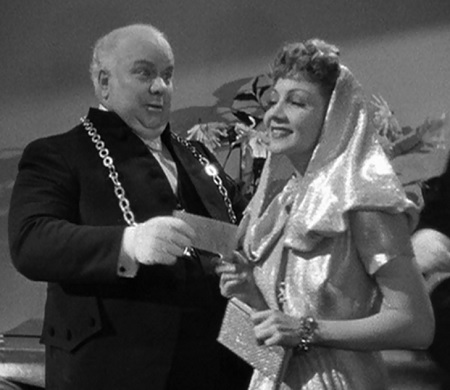
Enter with Attitude
You don’t have an invite? So what. A pawn ticket will do. Who looks at a piece of paper when a woman is sufficiently glamorous?

ClaudetteColbertcrashing
Draw Attention to Yourself
You might think you’d be safer slipping into the background, but who will question your presence if you’re as much fun as this guy?

VaughnWeddingCrashers
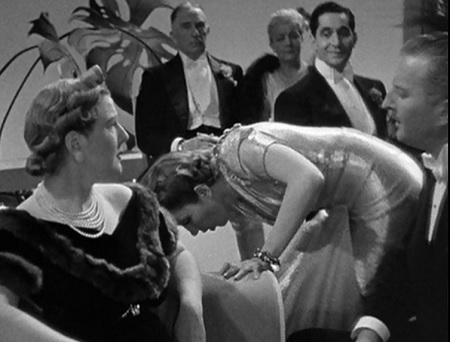
And who will kick you out if, Jennifer Lawrence-style, you make not one, but two ungraceful attempts to find seating, ensuring that other guests will not be the sole klutzes and/or drunken fools of the evening?

trippingClaudetteColbert
Relax
You’re in the door, so let the nerves go. After all, what’s to fear? Being caught could be amusing. Settle into some cushions, smile, kick off those high-heeled shoes.

shoes
Be a Generous Guest
Make sure you’re the kind of guest the host/hostess wants back. Buy gifts for the couples whose receptions you crash, like a guy from my high school did. Lead the chicken dance, cut the cake, make balloon animals. (In other words, channel Vince Vaughn in Wedding Crashers.) Join the bridge game when a mysterious man asks you, especially if he has a good line, as he does when meeting Eve: “You look charming, you look bored, you look as though you wouldn’t trump your partner’s ace.”

cardsClaudette
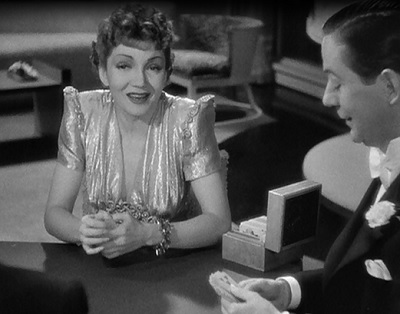
Play it right, and you could end the night like this:

Colbertcharming

Share
Posted in: 1930s films, Humor, Romantic Comedies (film) Tagged: Claudette Colbert, how to, party crashing, Vince Vaughn

Recent Posts

  • 100 Years Later, Still Scary: Dr. Caligari
  • Escaping Out of the Past (1947)
  • A Weeper for Those Who Love Jerks
  • Thank You, Academy, for Not Infuriating Me
  • Challengers (2024) Is a Bad Movie

Subscribe to Blog via Email

Enter your email address to subscribe to this blog and receive notifications of new posts by email.

Categories

  • 1920s films
  • 1930s films
  • 1940s films
  • 1950s films
  • 1960s films
  • 1970s films
  • 1980s films
  • 1990-current films
  • 2020s films
  • Action & Sports Films
  • Anti-Romance films
  • Blogathons
  • Childfree
  • Comedies (film)
  • Drama (film)
  • Feminism
  • Femme fatales
  • Film Noir/Crime/Thriller & Mystery
  • Gloriously Silly Scenes
  • Horror
  • Humor
  • Mae West Moments
  • Musicals and dancing films
  • Oscars
  • Random
  • Romance (films)
  • Romantic Comedies (film)
  • The Moment I Fell for
  • Turn My Sister into Classic Movie Fan
  • TV & Pop Culture
  • Uncategorized
Share
Classic Movie Blog Hub Member

Recent Comments

  • leah@carygrantwonteatyou.com on Meg Ryan’s Fate Foretold in Joe Versus the Volcano
  • Ryan on Meg Ryan’s Fate Foretold in Joe Versus the Volcano
  • leah@carygrantwonteatyou.com on 100 Years Later, Still Scary: Dr. Caligari
  • The Classic Movie Muse on 100 Years Later, Still Scary: Dr. Caligari
  • leah@carygrantwonteatyou.com on 100 Years Later, Still Scary: Dr. Caligari

Archives

  • November 2025
  • September 2025
  • May 2025
  • March 2025
  • January 2025
  • November 2024
  • August 2024
  • July 2024
  • May 2024
  • March 2024
  • February 2024
  • December 2023
  • November 2023
  • October 2023
  • September 2023
  • August 2023
  • July 2023
  • May 2023
  • April 2023
  • March 2023
  • January 2023
  • December 2022
  • November 2022
  • September 2022
  • July 2022
  • May 2022
  • April 2022
  • March 2022
  • February 2022
  • October 2021
  • September 2021
  • April 2021
  • March 2021
  • February 2021
  • December 2020
  • October 2020
  • September 2020
  • July 2020
  • May 2020
  • April 2020
  • March 2020
  • February 2020
  • December 2019
  • October 2019
  • September 2019
  • June 2019
  • May 2019
  • April 2019
  • February 2019
  • January 2019
  • November 2018
  • September 2018
  • July 2018
  • June 2018
  • May 2018
  • April 2018
  • March 2018
  • February 2018
  • January 2018
  • November 2017
  • September 2017
  • August 2017
  • July 2017
  • June 2017
  • May 2017
  • April 2017
  • March 2017
  • February 2017
  • January 2017
  • December 2016
  • November 2016
  • October 2016
  • August 2016
  • July 2016
  • June 2016
  • May 2016
  • April 2016
  • March 2016
  • February 2016
  • January 2016
  • December 2015
  • November 2015
  • October 2015
  • September 2015
  • August 2015
  • July 2015
  • June 2015
  • May 2015
  • April 2015
  • March 2015
  • February 2015
  • January 2015
  • December 2014
  • November 2014
  • October 2014
  • September 2014
  • August 2014
  • July 2014
  • June 2014
  • May 2014
  • April 2014
  • March 2014
  • February 2014
  • January 2014

Meta

  • Log in
  • Entries feed
  • Comments feed
  • WordPress.org

Copyright © 2025 Cary Grant Won't Eat You.

Church WordPress Theme by themehall.com