Cary Grant Won't Eat You

Classic movies for phobics

  • About
  • eBooks
  • Previous Blogathons
Classic movies for phobics

Month: March 2014

Beating the March Madness Blues with Knute

03/26/2014 by leah@carygrantwonteatyou.com 4 Comments

Little Mercer defeating the Big Bad Duke. That stunning Laettner shot you prayed wouldn’t go in. Davidson paying for busloads of its students to attend the Elite Eight. If you were born near corn and have since transplanted to either coast, I don’t care how thin your grasp of the finer rules (a pick and roll?) or how few Big 10 games you’ve managed to catch on your TV. Come March, homesickness arrives in the form of a basketball hitting a gym floor. So you fill out two brackets (one with viable predictions, another with your 13-seed team triumphing), frantically text childhood friends, and download a NCAA app, hoping to recapture some of the thrill that is watching the Madness in the Midwest.

In my case, the outsized crankiness ushered in with Selection Sunday, as I rambled to all in ear range about the cruelties of New England living: hockey on the big screens and game commentary drowned out by 80s tunes in sports bars, radio stations blaring Spring Training garbage. Why hadn’t I flown to watch the games in Chicago again, as my two sisters and friend once had? So I decided in breaks between shouting over Cinderella beauties alone in my living room (with an occasional pity join-in by my uninterested spouse), I would console myself with a sports film. Since I already have viewed my favorites (Hoosiers & Hoop Dreams) many times, and classic basketball flicks are scarce, I chose the movie starring our former president and the much-loved other Midwestern sport, Knute Rockne-All American (1940).
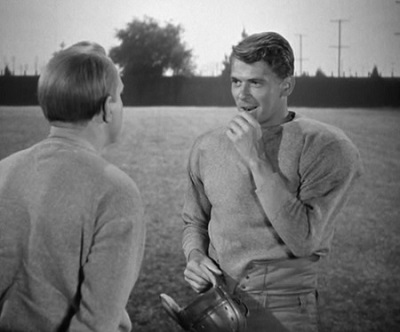
Pat O'Brien and Ronald Reagan in Knute Rockne-All American

Pat O’Brien and Ronald Reagan in Knute Rockne-All American

It’s hard to believe now that Notre Dame was ever an underdog, but if you’ve been to South Bend, you understand: a sleepy town you wouldn’t know was there but for the golden dome, breathtaking church, and lovely campus buildings. Of course, once Rockne (Pat O’Brien) started making a name for himself and the school, he was lured by the big-name programs, but like many loyal coaches who followed him (I’m looking at you, Shaka Smart), he stayed put.

Of course, the whole beginning of the bio-flick, I was waiting for George Gipp (Ronald Reagan), the stunning athlete who would set off Rockne’s career in his four seasons of play (1916-1920). Though I expected it, I was startled to see the ex-president so young, handsome, and fit.

Gipper was an intriguing person, hardworking in games, but nonchalant about practice, and more committed to baseball than football. Particularly surprising was his habit of shying from the limelight: He was known for dodging reporters. The film doesn’t explore another interesting trait: he liked to gamble, fooling out-of-towners who suspected he was just a naïve hick. And then he quietly would give much of the money to those in need.
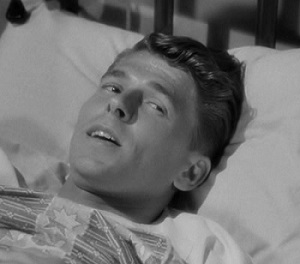
Reagan delivering Gipp's famous speech

Reagan delivering Gipp’s famous speech

His famous sickbed speech was thankfully muted in the film, without crass Hollywood dramatization, and Reagan delivered the lines well: “Rock, some day when the team is up against it, when breaks are beating the boys, ask them to go in there with all they’ve got, win just one for the Gipper. I don’t know where I’ll be then. But I’ll know about it, and I’ll be happy.”

The rest of the movie is, as you would guess by its title, about Rockne rather than his illustrious player: the coach’s dedication to his team, the success of his program, and the sacrifices he made for his athletes. Rockne was renowned not only for popularizing the forward pass, but for his commitment to teamwork over individual talent. Sound familiar, NCAA basketball fans? In a funny scene, Rockne watches chorus girls and takes notes on their performance that will become the famous shift he teaches first his wife, and then his Four Horsemen (the gifted group who led the Fighting Irish to 28 wins and only 2 losses). How like a coach to appreciate the coordination of dancers. We always think of basketball in balletic terms too: seamless passes, graceful turns and fakes, fluid jumps to the rim.
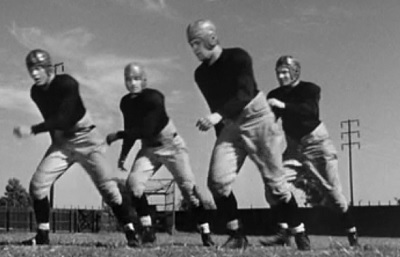
The Four Horsemen mid-shift

The Four Horsemen mid-shift

What I enjoyed most about Knute Rockne-All American was the man himself, especially his unusual, clipped patterns of speech and motion, which Pat O’Brien captures perfectly without ever slipping into parody. (See footage of the real man here.) Rockne’s intelligence is established early on, when a famous chemist in his department tries to turn him into one. But it’s his enthusiasm for his boys that gets you, even when his wife has to go without vacation for 17 years as a result (probably true since his widow was involved with the film and unlikely to forget such a betrayal). When Rockne disappoints his team with a bad decision, the devastation of this loyal coach is painful to watch.

The most celebrated moment in the film is when Rockne repeats Gipp’s words to his players in the locker room during a losing game. The scene is surprisingly understated, even for its time: No close-ups to show tears in the eyes of athletes. No uplifting music except for the muffled marching band in the background. No shouting. It feels less like a moment to rile up the team than the coach’s need to honor a promise. Affected as I was by the speech, I couldn’t refrain my dismay at the ways that modest athlete’s name has been abused since. Reagan—or his PR machine—used the line for political gain repeated times; our most camera-happy chief of state is now referred to as “The Gipper.”
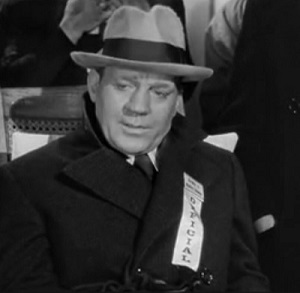
Rockne (O'Brien) delivering Gipp's words

Rockne (O’Brien) delivering Gipp’s words

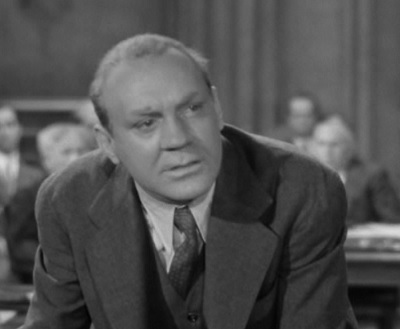
Late in the film, college football is accused of the usual: passing failing students, subsidizing players, subverting the intentions of an education, etc., so Rockne goes to New York to defend his team and football as a whole to a committee of educators investigating the charges. How disturbingly prescient the claims were. But Rockne’s defense is powerful, as when he’s asked whether he changes his athletes’ grades:

“Any player who flunks in his class is no good to his coach, nor to the school he attends. And any coach who goes around trying to fix it for his athletes to become eligible scholastically when mentally they’re not is just a plain everyday fool.”

Shortly afterward, a professor on the committee expresses his skepticism about sports: “Where do these elaborate spectacles of sport fit into the scheme of education?” he says. “How would you grade an average athlete’s contribution to the national intelligence?”

Rockne has spent his life answering this question, and does so now with spirit:
“…To limit a college education to books, classrooms, and laboratories is to give to education too narrow a meaning for modern times….We’ve tried to build courage and initiative and tolerance and persistence, without which the most educated brain of man is not worth very much….Now I don’t know, I don’t know how you grade a boy for learning these things, professor…But wouldn’t it be a good idea not to grade anybody’s contribution to the national intelligence, until all the results are in, maybe five or ten years after graduation, when his record and character are not hung on the wall like a diploma, but inside the man himself?”
Rockne (O'Brien) defending football

Rockne (O’Brien) defending football

I nearly cheered. I wonder if everyone could listen to Rockne’s words with as little cynicism as I did. But year after year, college athletes are among my hardest-working students, and former high school players write that their teams made them less selfish, more mature, stronger leaders, better people. And maybe that explains my bafflement that the New Englanders around me fail to embrace March Madness as I do, maybe thinking of it as only another gambling opportunity, another set of games, just brackets whole or broken. Perhaps they are too disgusted by the power and dollar signs we now associate with the NCAA to watch its most famous tournament, or think because appearances by most of their own teams are rare that it isn’t worth their time.

But I found in Knute Rockne-All American a perfect supplement to my March Madness optimism, which, despite my blues at being away from home, returned with the first upset. There are so few reliable forms of inspiration in our lives, and even fewer that we can experience collectively. But for a short span of weeks, even just a night, we can witness heart and teamwork triumphing over power and ability; we can experience a little school we’ve never heard of and players we’ve never seen get on that floor and ignore the hoopla and the lights and what big money has wrought—and just play. We watch these games expecting to be inspired. And like Rockne’s once-underdog team, with every play, with every goal, whether they win or lose, they deliver.


 

Share
Posted in: 1940s films, Action & Sports Films, Drama (film) Tagged: college basketball, Film, humor, Knute Rockne, March Madness, NCAA, The Gipper

Like Liz Lemon’s Sugarbaker Meltdown? See Bette Davis in All about Eve

03/20/2014 by leah@carygrantwonteatyou.com Leave a Comment

I always love a comedic meltdown, and 30 Rock‘s Liz Lemon (Tina Fey) is brilliant at them. In one of my favorite episodes, The C Word (Season 1, Episode 14), Lemon tries to earn a reputation as a nice boss by spoiling her staff. Of course, her subordinates quickly exploit her kindness, resulting in an all-nighter to finish their work and one of my favorite breakdowns of all time: Lemon forces her employees to watch a Designing Women episode she taped at 5:30 a.m., hoping to channel Julia Sugarbaker’s (Dixie Carter’s)  strong-willed feminism, but succeeding only in destroying the tape and breaking into hysterics.

LizLemonenraged

Like in a later episode’s meltdown (Season 1, Episode 17), when Jack Donaghy (Alec Baldwin) says Lemon has “gone chicken killer” on him, Fey plays the moment perfectly. I am a Designing Women fan as well, but if Lemon really wanted to see histrionics for the ages, she should have put All about Eve into her VCR instead.

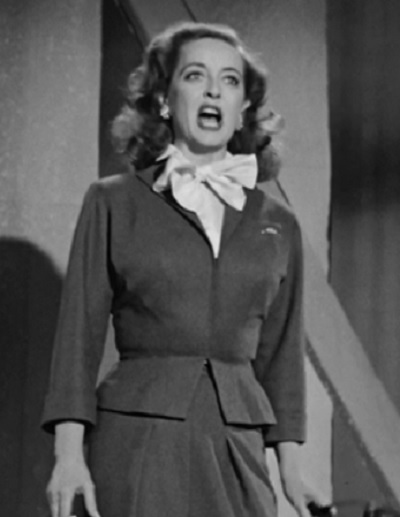
In the film, theater star Margo Channing (Davis) has been generous to her one-time fan, now employee, Eve (Anne Baxter), whom she finds destitute at the start of the story. But slowly, Margo begins to question Eve’s loyalty. Once she suspects Eve of flirting with her boyfriend, Bill (Gary Merrill), Margo begins insulting everyone, essentially sabotaging her own party for him, and it’s hilarious to watch. Early in the night, her friend (the gifted Thelma Ritter) asks, “And there’s a message from the bartender. Does Miss Channing know that she ordered domestic gin by mistake?”

“The only thing I ordered by mistake is the guests,” answers Margo.

And the party’s just the beginning.

BetteDavisenraged

If you want to see rage done right, you can’t do better than Bette Davis, and with a script this perfect, there’s no holding her back. As Addison DeWitt (George Sanders), the drama critic, says about Margo’s increasingly bad behavior as the party progresses, but could just as easily have characterized Davis’s entire performance in the film, “You’re maudlin and full of self-pity. You’re magnificent!”

Share
Posted in: 1950s films, Comedies (film), TV & Pop Culture Tagged: 30 Rock, Bette Davis, humor, Liz Lemon, Tina Fey

Sherlock Holmes Meets Paris Hilton: The Mad Miss Manton (1938)

03/16/2014 by leah@carygrantwonteatyou.com 12 Comments

This post is part of Movies Silently’s Sleuthathon. Check out other entries on her site!

Imagine pitching this story idea: a Paris Hilton type with a pack of tiny dogs solves a crime New York cops can’t. It sounds like a Beyond Balderdash card, doesn’t it? That couldn’t possibly be a real movie plot. Luckily for us, it is. The Mad Miss Manton stars Henry Fonda and Barbara Stanwyck, but as you might guess, it’s not of the same caliber as their later pairing.  The mystery is ridiculous, the plot convoluted, and the character development all over the place. But who cares? Just let the film be what it wants to be: crazy fun.

The Mad Miss Manton

The Mad Miss Manton

Melsa Manton is a society girl known for “pranks” she claims are in the name of charity. She and her bevy of like-minded friends are suspected of constant mischief, and when Manton finds a body that disappears before help arrives, the police and newspaper editor Peter Ames (Henry Fonda) cry foul. Manton sets out to solve the crime to redeem the reputation of her crew, and along the way, Ames falls in love with her. As you might expect, this loopy story leads to some sticky problems for the filmmakers, but never fear: Philip Epstein is the primary writer, so some of those problems end up being hysterical to watch, including….

The Heroine with the Vanishing Trait—and Pets
Barbara Stanwyck is my favorite actress. She can portray a character who is terrified (Sorry, Wrong Number), sinister (The Strange Love of Martha Ivers), funny (Ball of Fire), or heartbroken (Stella Dallas). But there’s one thing this tough Brooklyn-born actress could not do, and that’s act like a flake. The problem is, without that trait, the beginning of the film is incomprehensible, even in screwball land. You simply can’t buy this woman with a bunch of precious dogs, prancing around the city on pranks or building mansions for her pooches, as Paris Hilton did.

To make the “madness” of Manton plausible, you would need an actress who could play naïve, who could be as trusting as Carole Lombard’s character in My Man Godfrey or Goldie Hawn’s in Seems Like Old Times. Only an actress like that could have pulled off a heroine who is not lacking in intelligence, but is lacking in cynicism. At first, therefore, I thought Stanwyck miscast.

Clearly, I underestimated the audacity of Epstein and his uncredited cowriters as they developed Wilson Collison’s story. Fewer than 10 minutes into the film, Epstein conveniently erases the airhead tendencies that he created in the opening scenes. Now, it seems, Manton is simply misunderstood (forget the film’s title). From the moment she’s on the case, Stanwyck is in familiar territory, fast-acting and thinking, with the assurance she’ll bring to her reporters in Meet John Doe and Christmas in Connecticut.  To illustrate this change in Manton’s character, the screenwriters eliminate all of her dogs. Poof! No Fifis in her apartment. No Fidos tracking her along her crime-solving path.

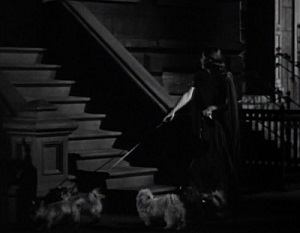
The dogs in one of their last appearances

The dogs in one of their last appearances

I think I fell for this movie when they vanished. It reminded me of the kind of bravado later soap opera writers would emulate in developing their narratives, with conveniently erased back stories and children growing up at Chia Pet speed.

A Bewildering Plot
The Mad Miss Manton is only 80 minutes long, yet I could have sworn it ended twice before it actually did. I felt a little like I used to reading Agatha Christie novels, when she conveniently left out information I needed to solve the crime myself. Who are all these suspects? Why do some of them appear on the screen for a few minutes, then reappear twenty minutes later, without my understanding anything new about them? There are multiple crime scenes, attempts on Manton’s life, ranting scenes by the police lieutenant, a hospital visit, an effort to lure in the killer, and much clue following. And, of course, multiple clips of the suspects that are meant to be illuminating/mysterious. But every time the chaos begins to overwhelm viewers, Manton’s friends rush in and save the film, which brings me to….

An Amazing Crew
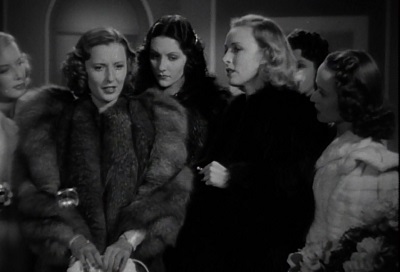
I love the “Park Avenue pranksters,” the group of women whose help Manton enlists to solve the crime. My favorite is Pat (Whitney Bourne), who keeps stopping to snack at the crime scenes, à la Shawn Spencer.

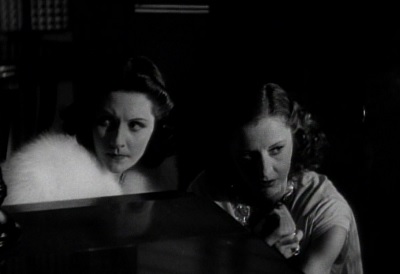
Who can beat a troop of friends, armed with flashlights and ermine, creeping through the window of a house the cops have inconveniently locked?

“I found a blood stain,” says one woman, perching on the floor.

“Oh, how can it be blood? It’s blue,” replies Manton.

“Maybe they shot Mrs. Astor,” retorts her friend.

Manton and her "pranksters"

Manton and her “pranksters”

Most of these accomplices are clever, and all are fun and fabulous company. They seem to live an endless string of parties and sleepovers. Unlike Blair Waldorf’s Gossip Girl minions, however, these women are sweet-natured without sacrificing their blistering wit, as when they mock their ringleader for starting to like Ames:

“You know psychiatrists say hate’s just a step away from love,” says one.

“Yeah, but it’s the lull in between that drives you crazy,” replies another.

The film suffers every time the crew leaves the screen.

Distracting Minor Characters
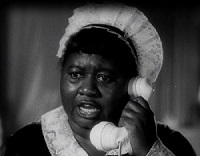
I did not feel the same delight in encountering Manton’s maid, Hilda (Hattie McDaniel). While her sassy replies to her employer are sometimes amusing, it’s difficult to view McDaniel in a maid costume without picturing Mammy from Gone with the Wind, the part she’d win an Oscar for a year later. While this is not the type of servile performance the actress would later be asked to defend, the role is not as progressive (and therefore her part less funny) than we might have hoped.

Hilda (Hattie McDaniel)

Hilda (Hattie McDaniel)

The police lieutenant (Sam Levene) sometimes distracts from the story as well. Like one of the suspects (Penny Singleton), Levene is stolen straight from After the Thin Man (which tells you how seriously the director, Leigh Jason, and his writers take the crime itself).

Unfortunately, Levene can’t turn off the beleaguered, badgering tone he used in the earlier film. While his attitude toward Manton initially adds to the humor, his grumbling soon becomes tiresome. Nick Charles could be just as withholding with clues as Manton, but never was treated with such disrespect. Wouldn’t the lieutenant’s opinion of her alter when he discovered her sleuthing skills, even with their class and gender differences?

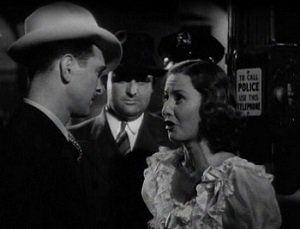
The lieutenant (Levene) dismissing Manton

The lieutenant (Levene) dismissing Manton

Henry Fonda in Screwball Mode
The only actor who surprised me in this film was Henry Fonda. I’ll admit that I’ve never been a fan; I’d usually rather see someone else in his place: John Garfield in The Grapes of Wrath, Joel McCrea in The Lady Eve.  But Fonda is exuberant in The Mad Miss Manton, so at home with the one liners and silly antics that I kept checking the credits to make sure it was the same man. (Interestingly, Fonda himself disliked the part.) He’s surprisingly confident and attractive as Peter Ames, the editor in love with Manton, and it’s hilarious to watch him trying to romance her, while admitting that he’s enough of a pragmatist to appreciate that she’s rolling in it.

Manton (Stanwyck) and Ames (Fonda)

Ames (Fonda) and Manton (Stanwyck)

The relationship begins in hostility. He’s written an editorial dismissing Manton’s supposedly nonexistent body discovery as one of her group’s “escapades.” She slaps him with her hand and a libel suit on their first meeting. Of course, they start to fall in love from there.

The two take turns outwitting one another in His Girl Friday style (though at a less frantic pace). After Manton agrees to pretend they’re engaged to dupe a suspect, Ames comes to her apartment with champagne to celebrate. “Well, if I want to marry a fortune hunter,” she answers, “I can go to Europe and marry a professional one.”

“I’m determined to make you happy if I have to drag your name through the breach-of-promise courts to do it,” he answers.

It’s startling how suggestive the film is. The two are in her bedroom as she smokes in her nightgown and he gets flustered. She ties him up regularly, and once she even takes off his pants. The love/hate battle between them is exhilarating, and while much of the credit goes to Stanwyck, for once she has an equal sparring partner in Fonda.

As you can tell from my review, this is a far from perfect film. But I would encourage you to embrace it just the same: the disappearing dogs, the ever-changing heroine, the unlikely romance, the bizarre crew, even the occasional joke about communism.  It’s a bit “mad,” but it’s a lot of fun.

Share
Posted in: 1930s films, Blogathons, Film Noir/Crime/Thriller & Mystery, Romantic Comedies (film) Tagged: Barbara Stanwyck, blogathon, Henry Fonda, Paris Hilton, screwball comedy, The Madd Miss Manton

The Death of the Marital Rom-Com: Where Have All the Toppers Gone?

03/10/2014 by leah@carygrantwonteatyou.com 6 Comments

When is the last time you watched a rom-com about a married couple? Aside from the occasional indie and rare mainstream flick, Hollywood seems to have retired this subject matter, despite the success of TV shows such as Mad about You, Everybody Loves Raymond, and The King of Queens.

Yet I came up with this list of famous 30s and 40s rom-coms about married couples in just two minutes:

Married: Topper, Mr. Blandings Builds His Dream House, My Favorite Wife, and I Was a Male War Bride
Separated/Divorced: The Awful Truth, The Philadelphia Story, and His Girl Friday.

Those familiar with these titles might notice that these are just some of the marital rom-coms starring Cary Grant. In comparison, I came up with three mainstream marital rom-coms in the past three decades altogether—with help.

Even if married couples in 2014 are more likely to attend animated flicks with their kids, as my husband theorized, that doesn’t explain what Hollywood is producing for those without kids. And I’m not buying that we’re all boring enough to only like films about ourselves. We don’t all cook meth in our basements or fight to the death in dystopian universes. We don’t watch The Walking Dead or Game of Thrones because they remind us of barbeques with our buddies. I discovered most of my favorite marital rom-coms when single. Is it possible that Hollywood thinks singles’ imaginations fertile enough to envision shooting webs out of their wrists or being born in Middle Earth, but not to conceive of being married?

Whatever the reasoning for the endangerment of the marital rom-com, the result is unfortunate: there’s a sameness to romantic comedies now that simply didn’t exist in the 30s or 40s. While there are only so many ways we can meet and fall in love, there is an infinite variety of methods for teasing, imitating, and torturing those we know well.

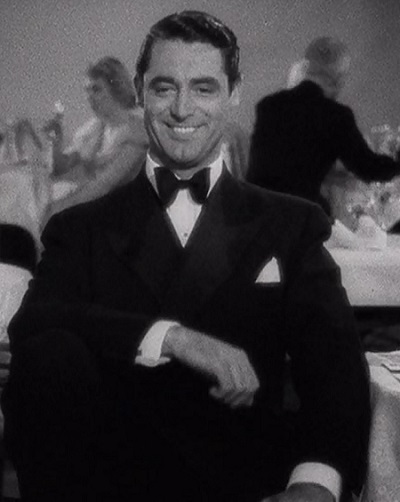
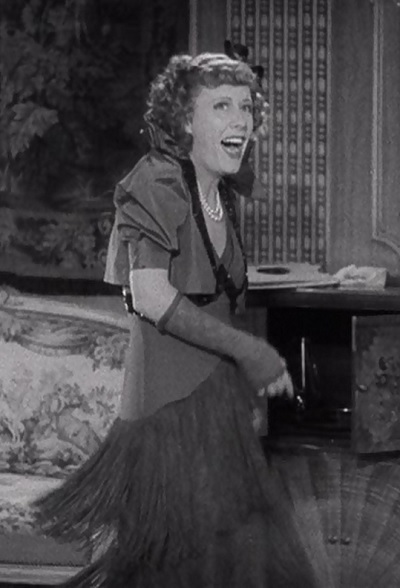
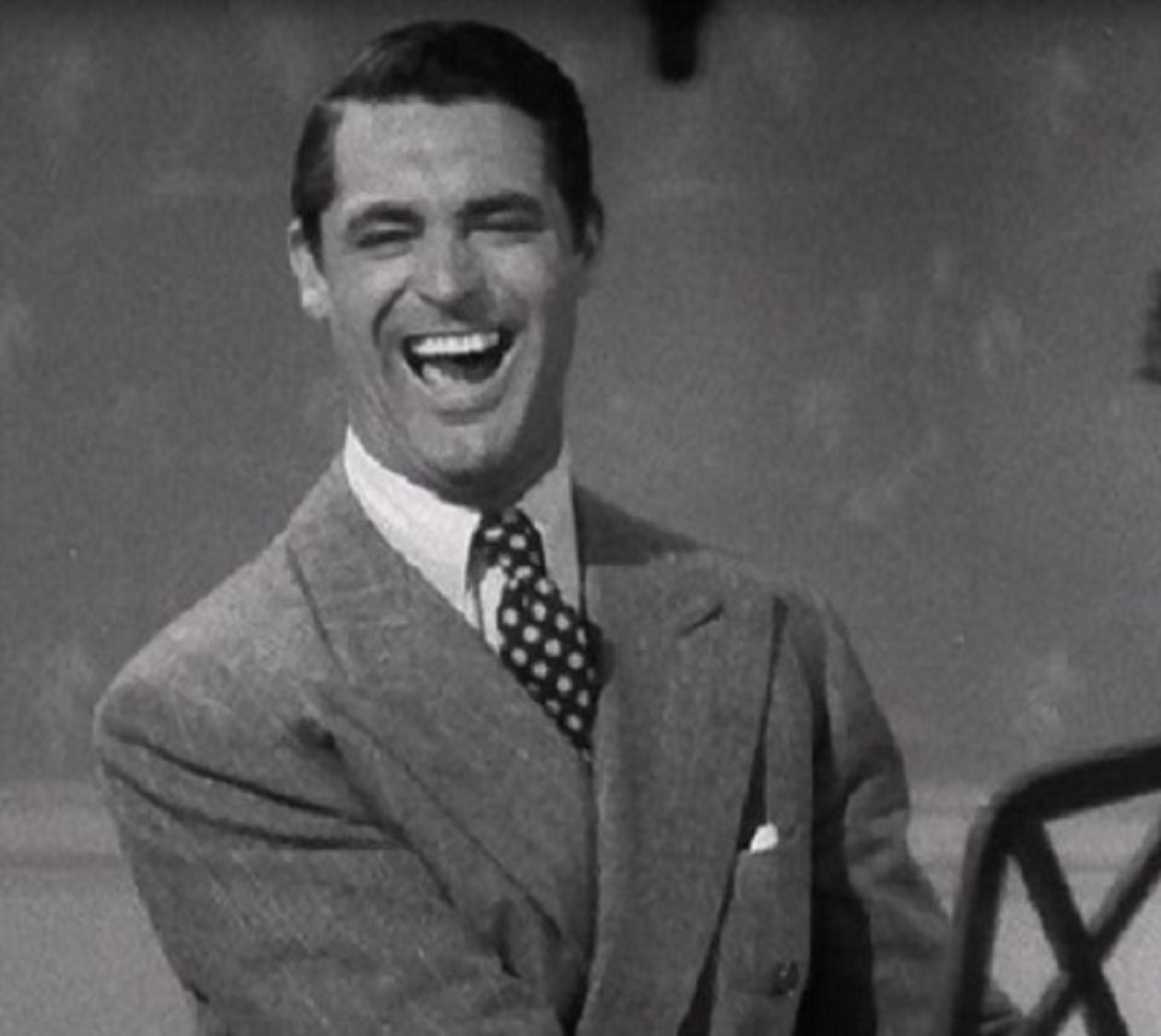
One of Cary Grant’s best marital rom-coms is The Awful Truth (1937), a film my friend Tonya introduced me to many years ago that I’ve been recommending ever since.  Grant’s and costar Irene Dunne’s impeccable timing and believable performances make this one of the funniest screwball comedies I’ve ever seen.

Dunne and Grant dazzling in The Awful Truth

Dunne and Grant dazzling in The Awful Truth

In the film, Jerry (Grant) and Lucy (Dunne) suspect one another of infidelity. Lucy decides to trust Jerry, anticipating Elvis’s famous song about suspicion in explaining her reasoning. Jerry, however, can’t trust her, and the two divorce. But since they’re both still in love, they can’t help sabotaging one another’s new relationships.

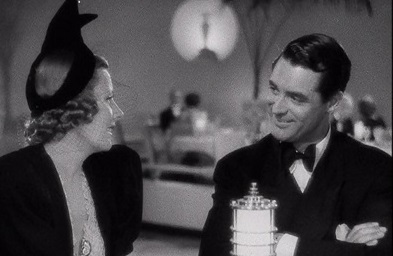
I have so many favorite moments from this film. One is when Jerry plays a song for his dog (during his custodial pet visit) to annoy Lucy as she’s meeting her new fiancé’s mom. In another Jerry pays the orchestra conductor to re-play a song just to watch his wife trip as her fiancé tries to lead her in a rambunctious dance.

Jerry appreciating the dance moves of Lucy's fiancé

Jerry appreciating the dance moves of Lucy’s fiancé

And there’s the scene when Lucy, aware of Jerry’s pride, shows up at his fiancée’s house pretending to be his wasted sister.

Lucy humiliating Jerry

Lucy humiliating Jerry

She begins the visit by demanding a drink and ends by performing a Marilyn Monroe-over-grate move for Jerry’s soon-to-be in-laws (years before that famous siren’s).

But perhaps the scene I enjoy most is when Jerry gushes about how much his hard-partying wife will appreciate Oklahoma, where her fiancé lives:

“Lucy, you lucky girl,” Jerry says. “No more running around the night spots. No more prowling around in New York shops. I shall think of you every time a new show opens and say to myself, she’s well out of it….”

“I know I’ll enjoy Oklahoma City,” Lucy replies stiffly.

“But of course,” he answers, “and if it should get dull, you can always go over to Tulsa for the weekend.”

Contrast these scenes with those in 1997 rom-com My Best Friend’s Wedding, technically a film of the single-gal variety, but adopting some situations from the marital rom-com. Yes, Rupert Everett is glorious in it, and Cameron Diaz and Julia Roberts are effective rivals.

Diaz confronting Roberts in My Best Friend's Wedding

Diaz confronting Roberts in My Best Friend’s Wedding

But the message is appalling: you’ll lose the guy if you’re dedicated to your profession and unwilling to ditch your education/career for his. No matter, therefore, how funny some of Roberts’ antics seem, I can’t laugh at the antiquated, offensive cliché of the desperate single woman, as the film asks me to do. But I do laugh at the partners in The Awful Truth, both so anxious to get each other back that they’re willing to forgo pride to do so. Due to his unreasonable suspicions, Jerry looks like more of a buffoon than Lucy, but neither comes out of the experience unscathed. (Of course, since Lucy trusts Jerry, we don’t know whether he just likes his space, or has cheated and the filmmakers have given him a pass for sexist reasons.)

The Awful Truth is just one of many delightful 30s marital rom-coms. There are so many more. Until current Hollywood producers come to their senses and resuscitate the subgenre, you’ll be stuck with the half-attempts at marital rom-coms like My Best Friend’s Wedding, in which the humor is only at the woman’s expense. (Forget viewing films about long-term relationships between unmarried couples–an even rarer subgenre.) So give some classic marital comedies a try. You’ll be glad you did.

Incidentally, next Sunday and Monday (March 16 and 17th), I’ll be participating in a classic detective blogathon hosted by Movies Silently. Please check out my entry in this Sleuthathon at my blog next week. I’ll be reviewing The Mad Miss Manton (1938), featuring Barbara Stanwyck as a Sherlock Holmes-Paris Hilton hybrid. And be sure to view the entries of my much more knowledgeable blogging peers!

detective-blogathon-thin-man-small

Share
Posted in: 1930s films, 1990-current films, Comedies (film), Humor, Romantic Comedies (film) Tagged: Cary Grant, Irene Dunne, Julia Roberts, My Best Friend's Wedding

Three Hypocritical Oscar Moments

03/05/2014 by leah@carygrantwonteatyou.com Leave a Comment

1. Ellen Insulting Her Wife’s Arrested Development Costar
I don’t know about you, but if my wife had been flayed in the press for her plastic surgery, I would avoid digs like the one Ellen gave Liza Minnelli at Sunday’s Oscars.

Perhaps pre-spat?

Kimmel’s Spoof Oscars Night: Perhaps Pre-Spat?

While Portia de Rossi didn’t seem offended, it’s hard to believe a woman who has written a book about the suffering she endured to look perfect would approve. I would have expected this kind of behavior from Seth MacFarlane, not from the usually affable Ellen. Talk about marital insensitivity.

2. Oscar Commentators Praising “Not Looking Old” and “Growing Old Gracefully” Simultaneously
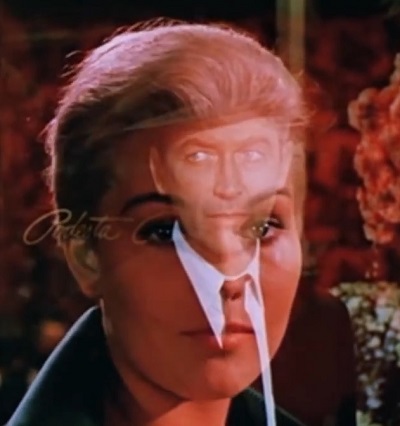
The online attacks on Vertigo (1958) star and Oscar presenter Kim Novak for her looks were appalling, especially since this is a woman who left Hollywood at the peak of her fame and lived privately for decades because she couldn’t take the objectification she experienced as a bombshell in Tinseltown. She’s been lured back into the limelight in her eighties, and look how she’s treated. Because for what would we judge a woman who starred in the film now ranked best of all time but her looks?

Vertigo

Vertigo

Chicago columnist Mike Royko wrote that 1976 Oscar viewers were outraged about seeing silent film star Mary Pickford (who had “grown old gracefully”) on their screens because they wanted to remember her cute and pretty, like this:

Mary Pickford (right)

Mary Pickford (right)

Royko didn’t understand why people preferred “facial skin stretched out like a drumhead.” “They cheer the illusion of Zsa Zsa,” he wrote, “but they flinch at the reality of Mary Pickford.” In 2014 an elderly woman can’t get away with natural aging or plastic surgery unless her surgeon is some kind of Houdini. Novak had the right idea originally—just get out.

3. Bestowing Honor by Awarding on the DL
Do you feel honored for a lifetime of achievement if the Academy deems the moment you’re given the statue not exciting enough for the big night? I was reminded of host Chris Rock’s reaction in 2005 when the technical awards were given in the aisle and sometimes en masse instead of individually onstage: “Next they’re gonna give the Oscars in the parking lot. It’ll be like a drive-through Oscar lane. You get an Oscar and a McFlurry and keep on moving.”

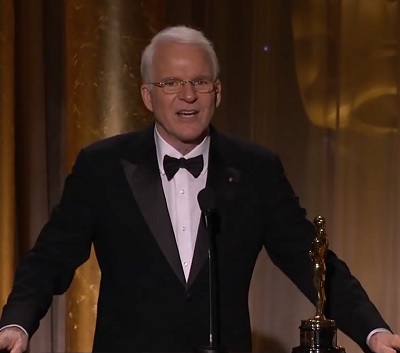
I found the choice to separate the honorary and competitive awards especially disturbing given that the former are so often given to those the Academy considers unworthy of notice for years and belatedly realizes they unjustifiably snubbed; such as one of this year’s honorees, Steve Martin, and Cary Grant (yes, the only classic film star many people can name).

Steve Martin, honored at separate event

Steve Martin, honored at separate event

Unsurprisingly, honorary Oscars are frequently awarded to those who mainly appear in/write/direct comedies, so I thought Jim Carrey’s jokes and Bill Murray’s shout-out to Harold Ramis were timely reminders that comedians receive no credit unless they appear in dramas—and usually not then—until the Academy’s honoree-may-be-near-death-oops awards, honors that now aren’t even bestowed on the night itself. Classy.

What bothered you most about this year’s Oscars?

Share
Posted in: 1990-current films, Humor, Oscars, Uncategorized Tagged: Ellen, Honorary Oscars, Kim Novak, Liza Minnelli, Mike Royko, Oscars, Portia de Rossi, Steve Martin, Vertigo

Recent Posts

  • 100 Years Later, Still Scary: Dr. Caligari
  • Escaping Out of the Past (1947)
  • A Weeper for Those Who Love Jerks
  • Thank You, Academy, for Not Infuriating Me
  • Challengers (2024) Is a Bad Movie

Subscribe to Blog via Email

Enter your email address to subscribe to this blog and receive notifications of new posts by email.

Categories

  • 1920s films
  • 1930s films
  • 1940s films
  • 1950s films
  • 1960s films
  • 1970s films
  • 1980s films
  • 1990-current films
  • 2020s films
  • Action & Sports Films
  • Anti-Romance films
  • Blogathons
  • Childfree
  • Comedies (film)
  • Drama (film)
  • Feminism
  • Femme fatales
  • Film Noir/Crime/Thriller & Mystery
  • Gloriously Silly Scenes
  • Horror
  • Humor
  • Mae West Moments
  • Musicals and dancing films
  • Oscars
  • Random
  • Romance (films)
  • Romantic Comedies (film)
  • The Moment I Fell for
  • Turn My Sister into Classic Movie Fan
  • TV & Pop Culture
  • Uncategorized
Share
Classic Movie Blog Hub Member

Recent Comments

  • leah@carygrantwonteatyou.com on Meg Ryan’s Fate Foretold in Joe Versus the Volcano
  • Ryan on Meg Ryan’s Fate Foretold in Joe Versus the Volcano
  • leah@carygrantwonteatyou.com on 100 Years Later, Still Scary: Dr. Caligari
  • The Classic Movie Muse on 100 Years Later, Still Scary: Dr. Caligari
  • leah@carygrantwonteatyou.com on 100 Years Later, Still Scary: Dr. Caligari

Archives

  • November 2025
  • September 2025
  • May 2025
  • March 2025
  • January 2025
  • November 2024
  • August 2024
  • July 2024
  • May 2024
  • March 2024
  • February 2024
  • December 2023
  • November 2023
  • October 2023
  • September 2023
  • August 2023
  • July 2023
  • May 2023
  • April 2023
  • March 2023
  • January 2023
  • December 2022
  • November 2022
  • September 2022
  • July 2022
  • May 2022
  • April 2022
  • March 2022
  • February 2022
  • October 2021
  • September 2021
  • April 2021
  • March 2021
  • February 2021
  • December 2020
  • October 2020
  • September 2020
  • July 2020
  • May 2020
  • April 2020
  • March 2020
  • February 2020
  • December 2019
  • October 2019
  • September 2019
  • June 2019
  • May 2019
  • April 2019
  • February 2019
  • January 2019
  • November 2018
  • September 2018
  • July 2018
  • June 2018
  • May 2018
  • April 2018
  • March 2018
  • February 2018
  • January 2018
  • November 2017
  • September 2017
  • August 2017
  • July 2017
  • June 2017
  • May 2017
  • April 2017
  • March 2017
  • February 2017
  • January 2017
  • December 2016
  • November 2016
  • October 2016
  • August 2016
  • July 2016
  • June 2016
  • May 2016
  • April 2016
  • March 2016
  • February 2016
  • January 2016
  • December 2015
  • November 2015
  • October 2015
  • September 2015
  • August 2015
  • July 2015
  • June 2015
  • May 2015
  • April 2015
  • March 2015
  • February 2015
  • January 2015
  • December 2014
  • November 2014
  • October 2014
  • September 2014
  • August 2014
  • July 2014
  • June 2014
  • May 2014
  • April 2014
  • March 2014
  • February 2014
  • January 2014

Meta

  • Log in
  • Entries feed
  • Comments feed
  • WordPress.org

Copyright © 2025 Cary Grant Won't Eat You.

Church WordPress Theme by themehall.com