Cary Grant Won't Eat You

Classic movies for phobics

  • About
  • eBooks
  • Previous Blogathons
Classic movies for phobics

Month: February 2014

No Oscar Love for Harold Ramis: The Academy, as Humorless as Ever

02/27/2014 by leah@carygrantwonteatyou.com 6 Comments

Harold Ramis, whom President Obama labeled “one of America’s greatest satirists,” died this week shortly before this Sunday’s Oscars. His list of co-writing credits is astonishing: Animal House, Stripes, Caddyshack, Ghostbusters, Groundhog Day. He also directed the latter, Caddyshack, and Vacation. I’m sure the Academy will clap enthusiastically this weekend when his face appears in the “In Memoriam” tribute, but they won’t express what they should: regret. Ramis never won an Oscar; in fact, he was never even nominated.

Harold Ramis: won A BAFTA, but no Oscar

Harold Ramis: won A BAFTA, but no Oscar

In the years the Academy snubbed Ramis, comedies did make appearances in the original screenplay category, including Private Benjamin, Splash, Beverly Hills Cop, Sleepless in Seattle, and Dave.  But many of the nominations were of grim films you didn’t know then, much less now. The following were the original screenplay winners the years Ramis could have been nominated:

Coming Home (Animal House), Melvin and Howard (Caddyshack), Places in the Heart (Ghostbusters), and The Piano (Groundhog Day).

Most Oscar nominees for original screenplay are not bad movies; the Academy saves their embarrassing choices for the best film category (Crash, anyone?) But have these screenplay winners stood the test of time? Have they influenced you—or anyone you know—in any way?

Here’s a test for you:

  • Can you quote from it?

Belushitoga

  • Do you adopt cultural affectations from it (perhaps Roman)?
  • Have you sung along with it?
  • Does it give you more understanding for the weak kid or the outsider, perhaps make you feel more comfortable challenging authority? (See this great Ramis bio.)
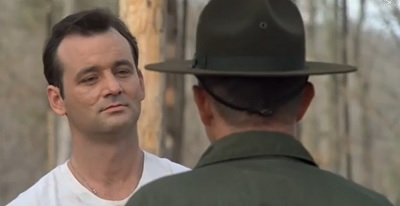
Stripes

  • Does it bring back childhood memories that make you grin, maybe your best Halloween costume ever?

Ghostbusters

  • Have you lost count of how many times you’ve seen it?
  • Do you (be honest) feel tempted to dance with a certain character’s nemesis during the closing scene?

gopherCaddyshack

Of course, the Academy—and critics in general—have long shown more appreciation for drama than comedy, failing to see in it the far subtler, and often more trenchant and artful cultural critique it can provide. In 1941, Preston Sturges, a writer/director who, like Ramis, was fond of what’s often dismissed as “adolescent” humor, wrote an entire film addressing the greater appreciation given to drama, Sullivan’s Travels. But unlike with the usual Oscar winners, this time, the case for comedies is much more persuasive.

It begins with a scene between a director (Sullivan, played by Joel McCrea) and his bosses (Mr. LeBrand and Mr. Hadrian). Sullivan has decided to write a serious film, which his bosses fear will be less profitable than his usual comedies. Why not do a sequel to your Ants in Your Plants of 1939 instead? they ask him. His movies are inspiring, they tell him. They don’t, as Hadrian puts it, “stink with messages.”
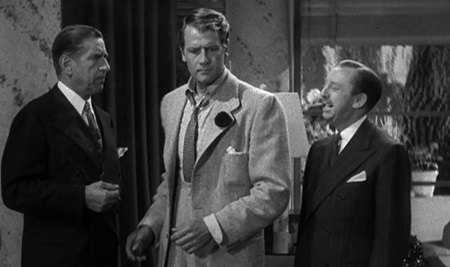
Sullivan (Joel McCrea in the middle) with his bosses

Mr. LeBland, Sullivan (Joel McCrea) and Mr. Hadrian

Sullivan tries to argue them into supporting his new effort, showing them a scene from his O Brother, Where Art Thou? (yes, Coen fans, that’s where they got it)

Sullivan: “You see the symbolism of it?….It teaches a lesson, a moral lesson, it has social significance.”

Hadrian: “Who wants to see that kind of stuff? It gives me the creeps.”

….

Sullivan:  “I want this picture to be a commentary on modern conditions, stark realism, the problems that confront the average man.”

LeBrand: “But with a little sex.”

….

Hadrian: “How about a nice musical?”

Sullivan: “How can you talk about musicals in a time like this, with the world committing suicide, with corpses piling up in the streets?…..”

Hadrian: “Maybe they’d like to forget that.”

After Hadrian convinces Sullivan he’s too inexperienced with suffering to direct movies about it, the latter decides to go on a quest to learn about poverty firsthand. A despondent LeBrand barks at his assistant, “Get me a copy of that O Brother, Where Art Thou? I guess I’ll have to read it now. Make that two copies.  Why should I suffer alone?”

By the end of the movie, Sullivan agrees with his bosses that he should keep directing comedies. He discovers that his movies, silly as they may be, have something to offer that dramas never will: “There’s a lot to be said for making people laugh. Did you know that’s all some people have?”

In fact, Sturges begins the movie with a dedication that could have been written for Ramis: “To the memory of those who made us laugh….in all times and in all nations, whose efforts have lightened our burden a little….” Not a bad epitaph, from one comedic genius to another.

Incidentally, Sullivan’s Travels (1941) ranked on the AFI’s top 100. But you guessed it: Not a single Oscar nomination.

Share
Posted in: 1980s films, 1990-current films, Comedies (film), Humor, Oscars, Romantic Comedies (film), TV & Pop Culture Tagged: Academy Awards, Animal House, Bill Murray, Caddyshack, Ghostbusters, Groundhog Day, Harold Ramis, Preston Sturges, Sullivan's Travels, The Oscars

The Anti-House of Cards: Mr. Smith Goes to Washington

02/20/2014 by leah@carygrantwonteatyou.com 1 Comment

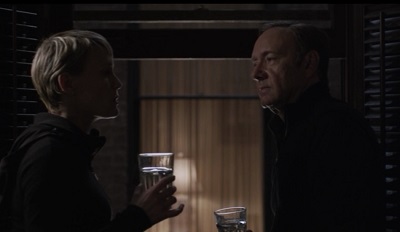
I had been looking forward to the return of House of Cards for months. Frank Underwood’s (Kevin Spacey’s) skewering of his opponents is almost as fascinating to watch as his wife Claire’s (Robin Wright’s) icy machinations.

Frank and Claire Underwood, the creepy power couple

The Underwoods, DC’s creepiest power couple

But something about the nonstop snow, ice, and wind this winter has made me too blue to compound my already too cynical view of Congress. In months like these, I need to let some spring-tasting idealism in the room. In other words, I’m craving some Capra.

Many have seen It’s a Wonderful Life, and if so, they already have a feel for director Frank Capra’s conviction that the little guy/gal can make a difference. Capra clearly relished films that breathed hope, like those optimists who would follow him, Ron Howard and Steven Spielberg.

When I stared at a pile of snow two feet high today and knew my shovel was buried somewhere within it, a dose of hope was required, and few films can refresh mine as thoroughly as Capra’s brilliant Mr. Smith Goes to Washington (1939).

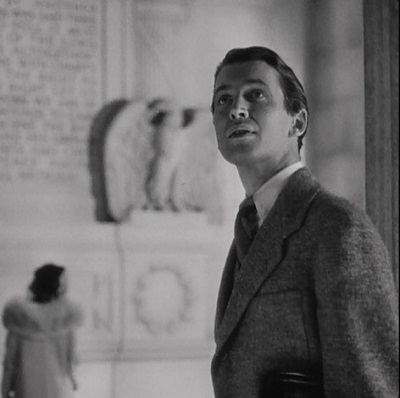
Smith (Stewart) inspired by the Lincoln Memorial

Smith inspired by the Lincoln Memorial

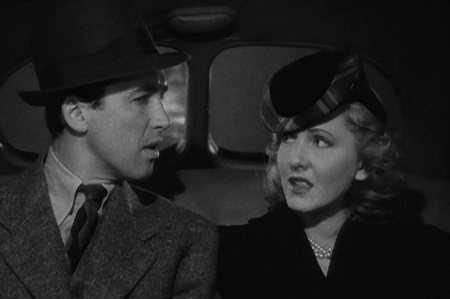
The beauty of the movie is that it lets us see the world—and its hero—through the eyes of world-weary Saunders (Jean Arthur). Tasked to assist Jefferson Smith (Jimmy Stewart), she can’t decide if he’s full of it or dim-witted. This guy insists on going to see the Lincoln Memorial when he arrives for his senatorial post, for crying out loud. He claims his primary goal is creating a boys’ camp for his state. Could anything be more suspicious to a DC insider?

Saunders' reaction to Smith's tourist plans.

Saunders’ reaction to Smith’s tourist plans.

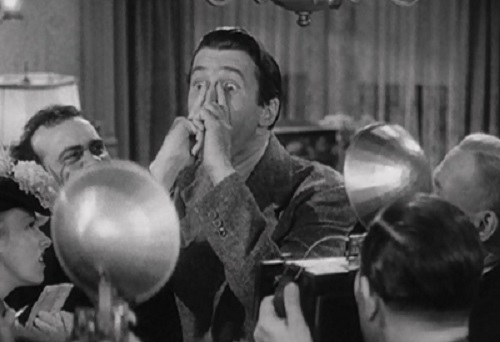
Saunders begins by undermining him, inviting a bunch of photographers to capture him at his most foolish.

Smith inadvisedly demonstrating a bird call

Smith inadvisedly demonstrating a bird call for the press

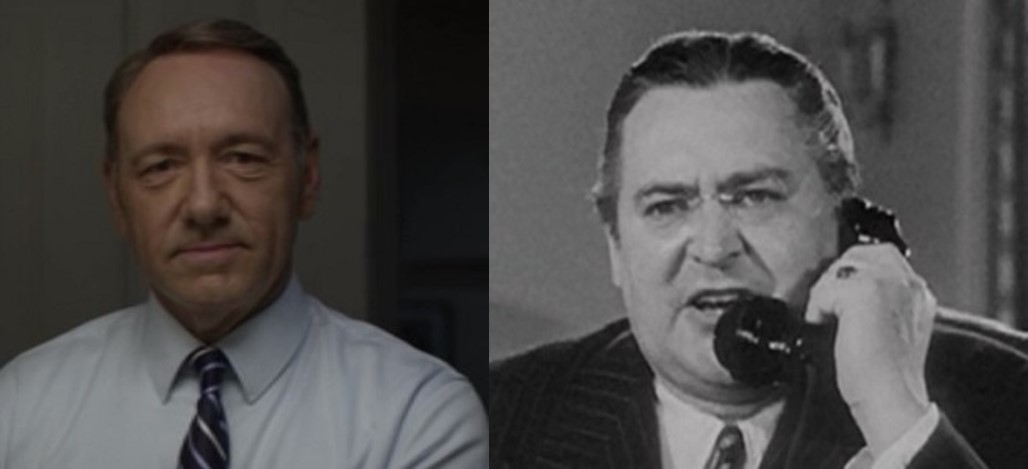
But as she slowly begins to reassess him, we find ourselves losing our cynicism about his dogged honesty and downhome goodness along with her. Of course, poor Smith encounters his share of Frank Underwoods, especially crafty Jim Taylor (Edward Arnold), who calls him a “drooling infant.” Interactions with Taylor and his cronies will lead Smith to lose a lot of his innocence but help him develop some much-needed spunk.

Underwood (Spacey) and Taylor (Arnold)

Underwood (Spacey) and Taylor (Arnold)

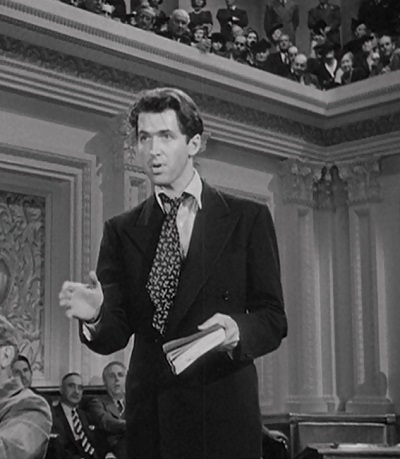
The powerful filibuster scene at the center of the movie is so moving that reporters still reference it today as justification for allowing that congressional maneuver. The film came up as recently as the Affordable Care Act battle last September, when writers claimed Ted Cruz’s was a “faux filibuster,” and last summer, when Wendy Davis pulled the famous Jimmy Stewart move at the Texas state house for eleven hours straight.

Smith (Stewart) in the midst of his filibuster

Smith (Stewart) in the midst of his filibuster

Most days, the news convinces me that idealists like Smith will always be crushed by the powerful jaws of the Frank Underwoods among us. But somehow, I don’t feel that way today: I’ve been watching Capra.

Share
Posted in: 1930s films, Drama (film), TV & Pop Culture Tagged: filibuster, Frank Underwood, House of Cards, Jean Arthur, Jimmy Stewart, Mr. Smith Goes to Washington

3 Classic Anti-Valentine’s Films for Sex and the City Fans

02/13/2014 by leah@carygrantwonteatyou.com 6 Comments

Single or attached, I’ve always loathed Valentine’s Day. When single, I’ve wondered why our couples-obsessed culture needs a day devoted to twosomes. When attached, I’ve pondered why I should celebrate en masse what’s supposed to be intimate. Therefore, my three recs today are for those who share my distaste for the day:

Female Bonding: Stage Door
For those who’d rather split a few bottles of wine with pals than brave pink-and-red-bedecked nightclubs this Friday, I recommend Stage Door, a film centered on women who live in an all-female boarding house as they try to make their big breaks on the stage.

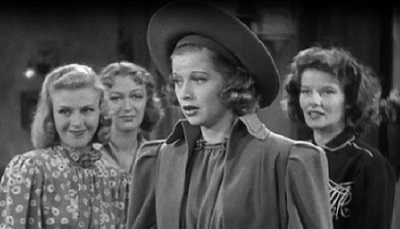
The heroines’ choice to remain single (and have casual boyfriends only) is celebrated rather than reviled by the film. If anything, the film mocks marriage. But don’t just view Stage Door (1937) for its politics; watch it to see the phenomenal cast interact: Ginger Rogers, Katharine Hepburn, Lucille Ball, Eve Arden. (The latter you may recognize as the principal in Grease; in her youth, she was always the smart-talking sidekick.)

Rogers, Arden, Ball, and Hepburn

Rogers, Arden, Ball, and Hepburn

The dialogue is so slick and cynical and quick that you’ll have a hard time keeping up with the one-liners, as when wealthy Terry’s (Katharine Hepburn’s) haughty tone annoys her impoverished fellow residents. Jean (Ginger Rogers) is not one to let an insult slide. When Terry snootily states, “Unfortunately, I learned to speak English correctly,” Jean fires back, “That won’t be of much use to you here. We all talk pig Latin.”

While the more famous classic movie about female friendships, The Women (1939), favors marriage with unfaithful partners over relationships with backbiting friends, this feminist flick celebrates the humor and loyalty between single women. In fact, I would argue that Stage Door’s women are in some ways more liberated than those in Sex and the City. Watch and see if you agree.

More of a feminist: Jean Maitland or Carrie Bradshaw? (Ginger Rogers & Sarah Jessica Parker)

More of a feminist: Jean or Carrie?


Revenge as Art:  Gilda
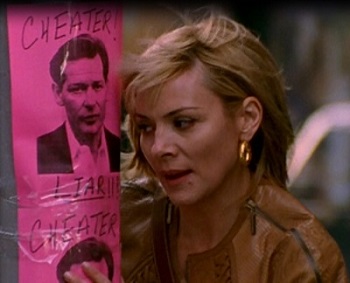
I enjoyed Samantha Jones’s (Kim Cattrall’s) revenge on boyfriend Richard Wright for his infidelity in Sex and the City: the dirty martini in his face, the papering of the city with posters describing his behavior.

Samantha in revenge mode

Samantha in revenge mode

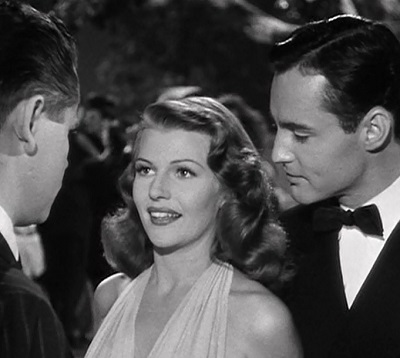
But this kind of takedown is kitten play compared to the work of Rita Hayworth in Gilda.

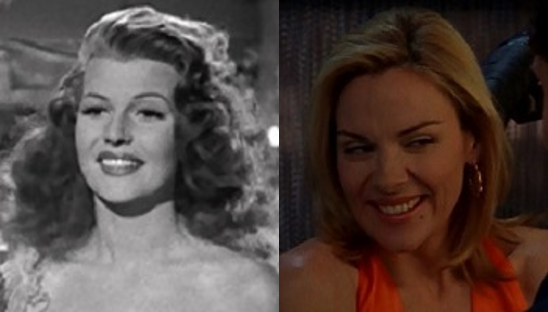
Gilda, who calls herself the "Bar Nothing," and her spiritual descendant, Samantha Jones

Gilda, the “Bar Nothing,” and her spiritual descendant, Sam

Like Samantha, Gilda (Hayworth) is in full command of her sexuality; it’s not difficult to discover why this WW II pinup was dubbed “The Love Goddess.” But her treatment of her ex, Johnny, is far more ruthless than her modern counterpart’s. First, she marries Johnny’s boss; then, she flaunts her affairs with other men to torment him further.

Gilda (Hayworth) torturing her ex

Gilda (Hayworth) torturing her ex

Gilda is so skillful a manipulator that you root for her to get what she wants, even if the ex she desires is no prize (and no mean manipulator himself).

Here’s an anti-Valentine’s Day conversation if ever there were one:

Gilda: “Would it interest you to know how much I hate you, Johnny?”
Johnny: “Very much.”
Gilda: “I hate you so much I would destroy myself to take you down with me.”

I think Samantha would be impressed.

Exploiting Men: Baby Face
In an early episode of Sex and the City, “The Power of Female Sex,” Carrie’s fling has left a tip on her bedside table and she’s feeling ill at ease with the implications. The four friends discuss whether it’s ever acceptable to use your sexuality to get ahead. Barbara Stanwyck’s character in Baby Face (1933) has no such qualms: She leaves her hometown for NYC with the aim of doing just that.

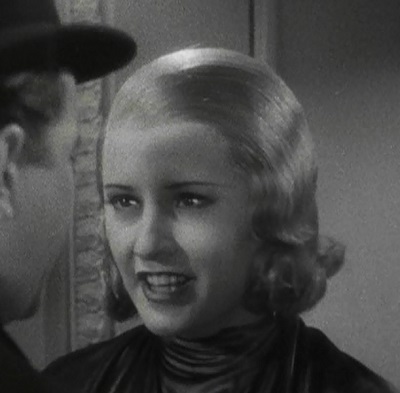
The shocks accumulate quickly as you watch Baby Face: Lily’s (Stanwyck’s) father has been prostituting her since she was fourteen. A grandfatherly figure in her dad’s speakeasy recommends she leave home to sexually exploit men for personal gain, quoting Nietzsche to back his case.  Once in New York, Lily takes quick steps to follow his advice, seducing the HR assistant in a bank to get a job, and then sleeping her way floor by floor to the top. (The camera helpfully pans up to highlight each floor as she ascends.)

Lily (Stanwyck) on the make

Lily (Stanwyck) on the make

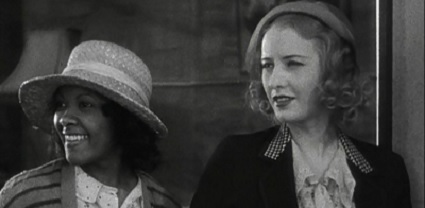
You might expect the movie to make the heroine suffer for her behavior, given the date of this film, but she is unmoved by the heartbreak and eventual tragedy she leaves in her wake (among her victims is a smitten John Wayne). Men have used her all her life. Lily figures it’s her turn, and the film clearly sympathizes with her reasoning. She calmly goes about her business of seducing men, accumulating jewels and bonds, and sharing her successes with her best friend, Chico (Theresa Harris).

Chico and Lily admiring another woman’s wealth before Lily starts to advance

Chico and Lily scheming

Here’s a typical exchange with a discarded lover who stops by Lily’s apartment:

Ex-Lover: “It’s been brutal not seeing you.”
Lily: “Yeah, well you better get used to it.”

When he returns and offers marriage, Lily answers, “So you want to marry me, huh? Isn’t that beautiful. Get out of here….”

Lily's reaction to a marriage proposal from a discarded lover

Lily’s reaction to a marriage proposal from a discarded lover

This is a strange film with a number of flaws, but you won’t care; it’s too much fun to watch this predator in action. (Be sure to watch the pre-release version; it’s much better.)

What are your favorite anti-Valentine’s films?

Share
Posted in: 1930s films, 1940s films, Anti-Romance films, Comedies (film), Drama (film), Feminism, Film Noir/Crime/Thriller & Mystery, Humor, TV & Pop Culture Tagged: Carrie Bradshaw, Gilda, Samantha Jones, Sarah Jessica Parker, Sex and the City, Stage Door

Unhealthy Obsessions: Laura and Her

02/06/2014 by leah@carygrantwonteatyou.com 6 Comments

Her (2013) starts with an unoriginal premise: guy falls for an inappropriate thing, his society doesn’t judge him for it, and the audience is left to (a) reconsider their understanding of relationships and/or (b) fear a future in which falling for an operating system is acceptable.  (Substitute an android or doll for the operating system and you’ll find you’ve seen this film before.)

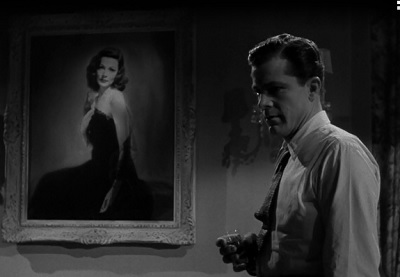
Her asks that you support this odd love, but the only time that has worked for me is with Laura (1944), in which detective Mark McPherson (Dana Andrews) becomes so enamored by others’ descriptions of and a portrait of a murder victim that he can barely function. The trick of the film is that it seduces the audience so completely that we cease to find this love creepy at all, something that never happened to me in the 126 minutes of Her.

Both Her and Laura benefit from the wise casting of their heroines. Scarlett Johansson’s voice is so sexy and Gene Tierney’s face so perfect that the audience’s first reaction is Of course! Who wouldn’t fall for her?

LauraTierney

It’s in the development of the hero that Laura succeeds and Her stumbles. There’s nothing wrong with Joaquin Phoenix’s open, touching performance. But the level of Theodore’s (Phoenix’s) romanticism is so extreme (he actually FEELS every word of the cheesy cards he writes for a living) and his enjoyment of his world so intense that you can’t help thinking this guy would fall for a Milk Dud.  We might like Theodore, but how could we possibly relate to him?

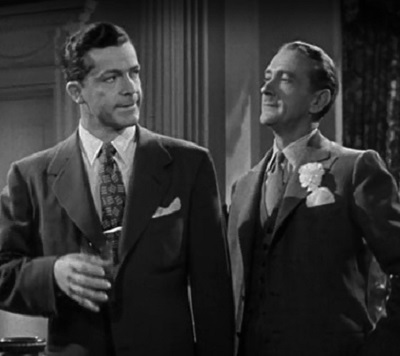
McPherson, on the other hand, is guarded in Laura, a much more common condition for those who’ve been burned by past relationships, as Her’s Theodore has been. When asked whether he’s ever been in love, McPherson quips, “A doll in Washington Heights once got a fox fur outta me.” As his passion for the murder victim, Laura (Tierney), increases, McPherson resists and denies it, trying to keep his professionalism intact. The audience can therefore empathize with his struggle, especially since some types of police work can demand obsession (mystery writer James Ellroy once claimed Laura was a favorite film of cops he knew).

DanaAndrews

Almost as problematic as the characterization of Her’s Theodore are the impressionistic scenes critics are applauding. Are they beautiful? Yes. But their lengthiness gave me too much time to think: Why would someone so outgoing primarily socialize with video games? Am I meant to believe people like those awful cards he writes? WHO SMILES THIS MUCH? Laura, at 88 minutes total, fits in the detective’s love AND the solution to the whodunit. It speeds along with such rapidity that the audience forgets that McPherson’s love is just as, if not more, disturbing than the affections of Laura’s former admirers.

It’s in depicting these former admirers/suspects that Laura really excels, especially with cynical Waldo Lydecker (Clifton Webb), whose one-liners keep the audience alternately laughing and cringing, often at the hero’s expense: “You’d better watch out, McPherson, or you’ll end up in a psychiatric ward. I don’t think they’ve ever had a patient who fell in love with a corpse.” Jonze’s film desperately needs a Lydecker, as its cloying mood soon becomes monotonous, and Amy Adams does nothing but bolster her friend’s feelings for the operating system. (Does Spike Jonze require screenwriter Charles Kaufman to avoid taking himself too seriously? Where is the light touch of Being John Malkovich?)

AndrewsandWebb

As it drifts along in its dreamy way, Her demands that you continue to contemplate its hero’s unhealthy love. Laura simply expects you to accept its. As a result, I felt drained by Her and intrigued by Laura. Unless you want sugar shock, I suggest you stick with the older film too.

Random thoughts:

The high-waisted pants on men have pained me in Laura and other 40s films. Could future fashion designers be so cruel as to bring back such an unflattering style and combine it with melon shades, as we see in Her? And if not, why did Jonze make me suffer through it? It takes a lot to make this man look unattractive:

JoaquinPhoenixJ

But Jonze certainly succeeded.

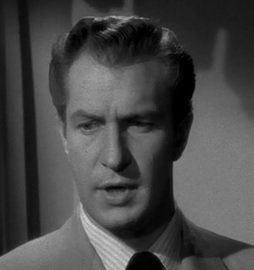
Vincent Price (the murder victim’s former fiancé) is such a wimp in Laura that it’s shocking to realize he scared whole generations of moviegoers and Michael Jackson fans.

VincentPrice

Apparently, fans of Philip Seymour Hoffman, Phoenix’s costar in The Master, also noticed Her’s dire need for sarcasm and did a fake promo for the film with Hoffman’s voice instead of Johansson’s. Listening to it was one of the few joys possible after hearing about Hoffman’s death (not PG rated, for you parents out there).

What are your thoughts on Laura and Her? (Please avoid bringing up anything in the second half of Laura, as I’d like to avoid spoilers.)

Share
Posted in: 1940s films, Drama (film), Femme fatales, Film Noir/Crime/Thriller & Mystery, Romance (films) Tagged: Gene Tierney, Her, Joaquin Phoenix, Laura, Vincent Price, Waldo Lydecker

Recent Posts

  • 100 Years Later, Still Scary: Dr. Caligari
  • Escaping Out of the Past (1947)
  • A Weeper for Those Who Love Jerks
  • Thank You, Academy, for Not Infuriating Me
  • Challengers (2024) Is a Bad Movie

Subscribe to Blog via Email

Enter your email address to subscribe to this blog and receive notifications of new posts by email.

Categories

  • 1920s films
  • 1930s films
  • 1940s films
  • 1950s films
  • 1960s films
  • 1970s films
  • 1980s films
  • 1990-current films
  • 2020s films
  • Action & Sports Films
  • Anti-Romance films
  • Blogathons
  • Childfree
  • Comedies (film)
  • Drama (film)
  • Feminism
  • Femme fatales
  • Film Noir/Crime/Thriller & Mystery
  • Gloriously Silly Scenes
  • Horror
  • Humor
  • Mae West Moments
  • Musicals and dancing films
  • Oscars
  • Random
  • Romance (films)
  • Romantic Comedies (film)
  • The Moment I Fell for
  • Turn My Sister into Classic Movie Fan
  • TV & Pop Culture
  • Uncategorized
Share
Classic Movie Blog Hub Member

Recent Comments

  • leah@carygrantwonteatyou.com on Meg Ryan’s Fate Foretold in Joe Versus the Volcano
  • Ryan on Meg Ryan’s Fate Foretold in Joe Versus the Volcano
  • leah@carygrantwonteatyou.com on 100 Years Later, Still Scary: Dr. Caligari
  • The Classic Movie Muse on 100 Years Later, Still Scary: Dr. Caligari
  • leah@carygrantwonteatyou.com on 100 Years Later, Still Scary: Dr. Caligari

Archives

  • November 2025
  • September 2025
  • May 2025
  • March 2025
  • January 2025
  • November 2024
  • August 2024
  • July 2024
  • May 2024
  • March 2024
  • February 2024
  • December 2023
  • November 2023
  • October 2023
  • September 2023
  • August 2023
  • July 2023
  • May 2023
  • April 2023
  • March 2023
  • January 2023
  • December 2022
  • November 2022
  • September 2022
  • July 2022
  • May 2022
  • April 2022
  • March 2022
  • February 2022
  • October 2021
  • September 2021
  • April 2021
  • March 2021
  • February 2021
  • December 2020
  • October 2020
  • September 2020
  • July 2020
  • May 2020
  • April 2020
  • March 2020
  • February 2020
  • December 2019
  • October 2019
  • September 2019
  • June 2019
  • May 2019
  • April 2019
  • February 2019
  • January 2019
  • November 2018
  • September 2018
  • July 2018
  • June 2018
  • May 2018
  • April 2018
  • March 2018
  • February 2018
  • January 2018
  • November 2017
  • September 2017
  • August 2017
  • July 2017
  • June 2017
  • May 2017
  • April 2017
  • March 2017
  • February 2017
  • January 2017
  • December 2016
  • November 2016
  • October 2016
  • August 2016
  • July 2016
  • June 2016
  • May 2016
  • April 2016
  • March 2016
  • February 2016
  • January 2016
  • December 2015
  • November 2015
  • October 2015
  • September 2015
  • August 2015
  • July 2015
  • June 2015
  • May 2015
  • April 2015
  • March 2015
  • February 2015
  • January 2015
  • December 2014
  • November 2014
  • October 2014
  • September 2014
  • August 2014
  • July 2014
  • June 2014
  • May 2014
  • April 2014
  • March 2014
  • February 2014
  • January 2014

Meta

  • Log in
  • Entries feed
  • Comments feed
  • WordPress.org

Copyright © 2025 Cary Grant Won't Eat You.

Church WordPress Theme by themehall.com