Cary Grant Won't Eat You

Classic movies for phobics

  • About
  • eBooks
  • Previous Blogathons
Classic movies for phobics

The Grand Budapest Hotel

Worth Watching Before the Oscars or Not? Quick Reviews of Six Nominees

02/04/2015 by leah@carygrantwonteatyou.com 14 Comments

With little more than two weeks left before the Oscars, is it worth it to view all eight? Even for those of us who think this was a great year for movies, eight by Feb. 22nd may be pushing it. To help you decide, I’m including short reviews for the nominees I’ve seen so far (two left to go).

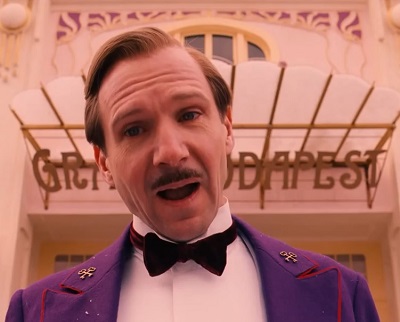
The Grand Budapest Hotel
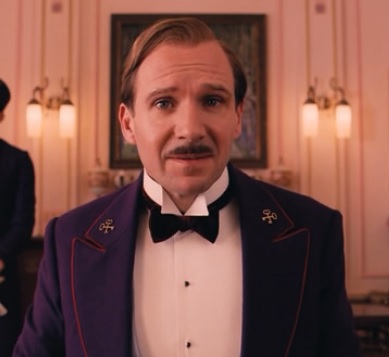
Ralph FiennesGBudapest
Review:
Loved it. Funny, charming, even moving. Wes Anderson draws you into his impeccably created world. My vote for the Oscar of those I’ve viewed.

Pros: Originality, great acting, artistry, entertainment

Cons: Can be too quirky for some; everyone won’t find it funny.

Boyhood

Boyhood
Review:
Hated it. Watched it during a blizzard and preferred scraping off my car.

Pros: Ambition; you have to hand it to Richard Linklater for trying on something of this scale.

Cons: Gimmicky choices, mediocre acting, dull script. Very long, with supposedly subtle insights that are generic rather than thought provoking. I’m Dazed and Confused about why most of the scenes were worth depicting, and why the film is garnering so much praise given its lack of character development.

Birdman or (The Unexpected Virtue of Ignorance)
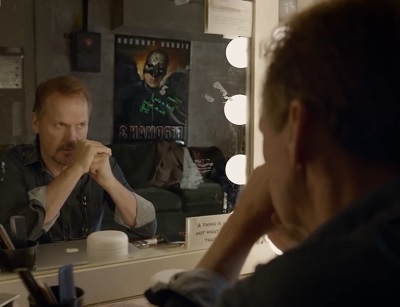
Birdman
Review:
Clever, whimsical, with impressive editing. I was engaged the whole time, and never knew what would happen next.

Pros: Strong acting, convincing portrayal of theater life, originality, wonderful transitions

Cons: The touches of magical realism can be off-putting to some. May require an interest in theater, especially backstage drama.

Whiplash
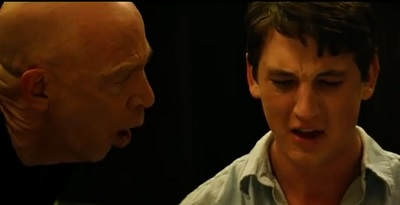
SimmonsTeller-Whiplash
Review:
Riveting. Intense. Captures the high stakes of a competitive music program and asks interesting questions about how far a teacher can push a talented kid. (Obviously, few to none would support how far this teacher goes, but the question is still an intriguing and relevant one.)

Pros: Acting: J.K. Simmons is brilliant, and newcomer Miles Teller gives an effective, understated performance. A beautifully paced, streamlined film.

Cons: Stressful to watch. Possibly limited in terms of whom it reaches; may require an interest in the arts, teaching.

American Sniper
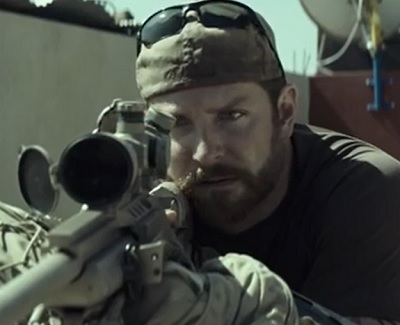
AmericanSniper
Review:
Intense, with an impressive performance by Bradley Cooper. I have some issues with the film’s accuracy and politics. I typically dislike Clint Eastwood films, but thought this a fitting choice for him (close to a Western in its values, characterization). Overall, I thought it a good film despite all of my reservations about its message.

Pros: Much stronger than most biopics, with poignant, subtle depictions of Chris Kyle’s suffering—and by extension, that of other veterans. Draws viewers into the conflict zones, causing us to experience fear, stress, and moral confusion.

Cons: Some repetitiveness in the portrayal of his tours. A lack of nuance in many respects: Some demonization of the Iraqis (carefully chosen bad guys—even a long-term sniper rival). A one-note development of his family. Careful avoidance of the rationale for American presence there. Not a single portrayal of a wrong target hit (unbelievable with all of those kills). Glorification of a controversial figure. Why didn’t Eastwood, given the issue with Kyle’s fabrications in the memoir this film is based on, not to mention the director’s own inventions, just loosely base the movie on Kyle’s story? The tribute to veterans is heartfelt and moving, but the glamorization of this particular Navy Seal and lack of doubt about the justice of our involvement are concerning. War is never as clear-cut as Eastwood would like it to be.

The Imitation Game
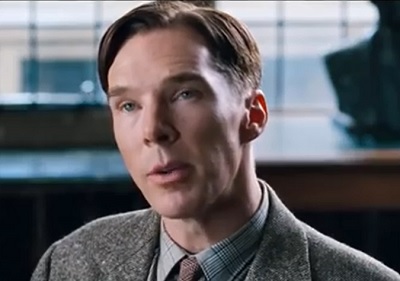
ImitationGameCumberbatch
Review:
Fascinating story. Surprisingly quick paced given the subject matter. Poignant portrayal of the loneliness of a genius (Alan Turing) in a time period in which his homosexuality and socially awkward nature were poorly understood. The kind of biopic that makes you Internet research as soon as you get home.

Pros: Fine acting from Benedict Cumberbatch—so far, I’d give the Oscar to him or Cooper. Just a good movie altogether. The one I would recommend to the broadest audience; I can imagine few who would dislike it. There have been some objections to the film’s biographical accuracy, but unlike in American Sniper, the complexity of the portrayal makes it clear that Turing was not easily pinned down, that all of this story has not been told.

Cons: The story of Turing stuck to me afterward, but the movie hasn’t as much as I thought it would. I would have changed the proportions a bit, as Turing’s suffering due to his sexuality is given emphasis but not fully developed until near the end of the film.

There you have it! My highly opinionated reviews….Feel free to disagree with me.

Share
Posted in: 1990-current films, Drama (film), Humor, Oscars Tagged: American Sniper, Birdman, Boyhood, deserves Oscar, The Grand Budapest Hotel, The Imitation Game, Whiplash

The Oscar Snub No One Is Talking about: Ralph Fiennes in The Grand Budapest Hotel

01/22/2015 by leah@carygrantwonteatyou.com 4 Comments

MGustave-GrandBudapest-Fiennes
I know everyone is busy discussing the Selma Oscar snubs and Jennifer Aniston’s supposed one. The former film I haven’t seen yet, and Cake I won’t. Only when I scrolled through long lists of snubs would I find Ralph Fiennes, as if the omission of his name were insignificant, perhaps expected. Sigh. Of course it was. He’s in a comedy.

Ralph Fiennes is best known for his dramas; he was nominated for The English Patient and Schindler’s List. Harry Potter fans know him as Lord Voldemort. He can alternate between a terrifying serial killer (The Red Dragon, Schindler’s List, In Bruges), and a fragile intellectual (Quiz Show). That’s just the beginning of his impressive range. And in The Grand Budapest Hotel, he proves that he can be hilarious.

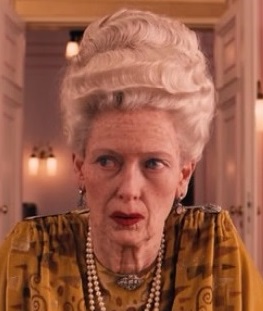
Well-respected comedic actors are honored by the Academy when they turn to drama: Bill Murray, Bette Midler, Cary Grant. But with few exceptions (Tommy Lee Jones in The Fugitive, for example), the process doesn’t go the other way. Where are Christopher Walken’s nominations for becoming one of the funniest men in film? How is it possible Gene Hackman didn’t get a nod for The Royal Tenenbaums? And if the Academy is considering nominating actresses merely for being willing to appear unattractive, what of Tilda Swinton’s hysterical showing in The Grand Budapest Hotel, surely the least vain performance I’ve seen in years?

TildaSwintonGrandBudapest
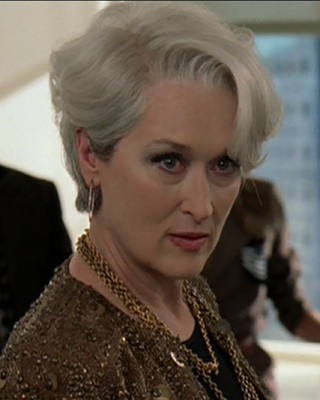
If it were so easy to switch from drama to comedy, I doubt one of—if not the—finest actresses of her generation, Meryl Streep (19 Oscar nominations and counting), would have struggled so much with it. Everyone may now recall when she had mastered comedy in The Devil Wears Prada, but it took her years.

The Devil Wears Prada

The Devil Wears Prada

Anyone remember She-Devil? Death Becomes Her? In Postcards from the Edge Streep was so bad I couldn’t even make it through the film. Her bravery is one of the things I value most about her: she let herself stink up the screen in order to improve her craft, not something many women with her dramatic chops would have braved. I suspect she pairs those two devil movies in her mind, appreciating how far she’s come.

She-Devil

She-Devil

And yet I’m to think Fiennes’s laugh-out-loud funny performance was easy?

Fiennes was getting early buzz for The Grand Budapest Hotel. Back in the spring, I thought he was a lock for a nomination. He could have been considered for Best Supporting Actor, given his role; technically, he wasn’t the star. Ethan Hawke was nominated; Ralph Fiennes wasn’t. Repeat that to yourself without laughing—or crying.

TheGrandBudapest-GustaveandZero
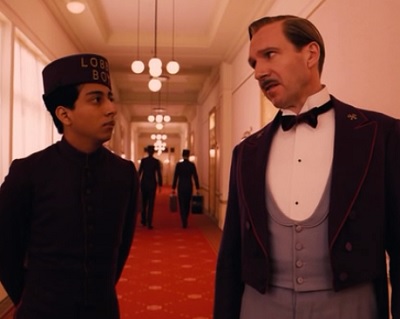
I admit that this is a tough year in the Best Actor category, but The Grand Budapest Hotel is tied for Birdman with nine nominations, and Fiennes carried his film from start to finish. Could I imagine another star in the others I’ve seen so far (4/8)? Yes. In The Grand Budapest Hotel? Absolutely not.

As M. Gustave, Fiennes is funny, original, moving. I have seen no other film this year that drew me in like this one, no other actor or actress who affected me more. Watch Fiennes’s quick transitions from elegance to crassness and see if you can stop yourself from laughing. Observe those nuances in his gestures, voice, and expressions that make Gustave’s mood changes from rage to tenderness convincing—and all in mere seconds (that’s all you get in a Wes Anderson film). When else have you seen a character simultaneously this funny and this heartbreaking, thanks to the actor playing him?

MGustave-GrandBudapest-Fiennes-1
If you haven’t watched the movie yet, do yourself a favor and rent it now. And if The Grand Budapest Hotel wins, tell me, in a movie riddled with big names, which actor helped the gifted Wes Anderson finally pull it off.

Share
Posted in: 1990-current films, Comedies (film), Oscars Tagged: Christopher Walken, Gene Hackman, Oscar snubs, Ralph Fiennes, The Grand Budapest Hotel, Wes Anderson

The Gatsbys of Wes Anderson Films: Climbing above Archie Leach

04/10/2014 by leah@carygrantwonteatyou.com Leave a Comment

M. Gustave (Ralph Fiennes); the impeccable, refined, and deeply sketchy hero of The Grand Budapest Hotel; is the kind of character who made me fall for Wes Anderson films: men with a flair for self-creation so extreme that I can’t help rooting for them because my own imagination, by comparison, seems embryonic.

In my favorite of Anderson’s films, Bottle Rocket, the hero is Dignan (Owen Wilson), whose first steps in a 50-year plan of becoming a criminal mastermind involve stealing from friends’ houses for practice, moving on to a bookstore heist wearing nose tape, and then promptly going on the lam. No unimportant detail escapes Dignan’s dedication to this persona: note the binoculars he uses when springing his friend Anthony (Luke Wilson) from a voluntary stay at a mental health facility.

Owen Wilson

“Look how excited he is,” says Anthony when his doctor protests the sheets hanging from the window. “I gotta do it this way…I have to climb out. It’s so important to him.” Dignan’s enthusiasm is so contagious that Anthony continues to go along with his buddy’s increasingly ill-conceived plans just because he can’t bear to deflate him. And when you hear Dignan’s prattle and see that grin, you can’t blame him. (Admittedly, I think Owen Wilson, who co-wrote the film, largely responsible for the success of this character; his considerable charm made even the overrated Midnight in Paris palatable.)

And, of course, there’s Max Fischer (Jason Schwartzman) in Rushmore, who puts more energy into his school activities than the rest of the student body combined. As Anthony Lane put it, “To say [Max] attends Rushmore is like saying the Holy Father hangs out at the Vatican: Rushmore could exist without Max, but there would be no point to the place.”

Rushmore

In the newest Anderson installment, M. Gustave’s considers the care of his establishment, guests, and the new bell boy of paramount importance. He is the platonic version of a hotel concierge, a fussy perfectionist so accommodating he knows guests’ wishes in advance, and he’ll go to absurd (and disturbing) lengths to satisfy them. But unlike with most of Anderson’s heroes, M. Gustave’s refined veneer slips regularly in The Grand Budapest Hotel. In difficult situations, coarse language breaks through the stylized version of himself he’s created, and these curious, funny instances cause viewers to wonder just who this guy is.

Fiennes

That’s probably why the film reminded me of Cary Grant’s classic comment about the style and sophistication that became synonymous with his name: “Everyone wants to be Cary Grant. Even I want to be Cary Grant.” Because of course, he wasn’t. Born Archibald Leach in Bristol, England, Cary Grant was poor, largely abandoned by his family, and making a living as a juggler/acrobat by his early teens. Not exactly the pedigree we all might expect given his dashing presence on the screen.

I think what I love so much about Anderson’s heroes—his Gustaves, Maxes, and Dignans—is also what I admire most about Grant: not only do these heroes envision an impossibly large, glorious version of themselves, but they also manage, despite the many obstacles Anderson—and life—stacks up against them, to pull it off.

Share
Posted in: Comedies (film), Humor Tagged: Cary Grant, Gatsby, Owen Wilson, The Grand Budapest Hotel, Wes Anderson

Recent Posts

  • 100 Years Later, Still Scary: Dr. Caligari
  • Escaping Out of the Past (1947)
  • A Weeper for Those Who Love Jerks
  • Thank You, Academy, for Not Infuriating Me
  • Challengers (2024) Is a Bad Movie

Subscribe to Blog via Email

Enter your email address to subscribe to this blog and receive notifications of new posts by email.

Categories

  • 1920s films
  • 1930s films
  • 1940s films
  • 1950s films
  • 1960s films
  • 1970s films
  • 1980s films
  • 1990-current films
  • 2020s films
  • Action & Sports Films
  • Anti-Romance films
  • Blogathons
  • Childfree
  • Comedies (film)
  • Drama (film)
  • Feminism
  • Femme fatales
  • Film Noir/Crime/Thriller & Mystery
  • Gloriously Silly Scenes
  • Horror
  • Humor
  • Mae West Moments
  • Musicals and dancing films
  • Oscars
  • Random
  • Romance (films)
  • Romantic Comedies (film)
  • The Moment I Fell for
  • Turn My Sister into Classic Movie Fan
  • TV & Pop Culture
  • Uncategorized
Share
Classic Movie Blog Hub Member

Recent Comments

  • leah@carygrantwonteatyou.com on Meg Ryan’s Fate Foretold in Joe Versus the Volcano
  • Ryan on Meg Ryan’s Fate Foretold in Joe Versus the Volcano
  • leah@carygrantwonteatyou.com on 100 Years Later, Still Scary: Dr. Caligari
  • The Classic Movie Muse on 100 Years Later, Still Scary: Dr. Caligari
  • leah@carygrantwonteatyou.com on 100 Years Later, Still Scary: Dr. Caligari

Archives

  • November 2025
  • September 2025
  • May 2025
  • March 2025
  • January 2025
  • November 2024
  • August 2024
  • July 2024
  • May 2024
  • March 2024
  • February 2024
  • December 2023
  • November 2023
  • October 2023
  • September 2023
  • August 2023
  • July 2023
  • May 2023
  • April 2023
  • March 2023
  • January 2023
  • December 2022
  • November 2022
  • September 2022
  • July 2022
  • May 2022
  • April 2022
  • March 2022
  • February 2022
  • October 2021
  • September 2021
  • April 2021
  • March 2021
  • February 2021
  • December 2020
  • October 2020
  • September 2020
  • July 2020
  • May 2020
  • April 2020
  • March 2020
  • February 2020
  • December 2019
  • October 2019
  • September 2019
  • June 2019
  • May 2019
  • April 2019
  • February 2019
  • January 2019
  • November 2018
  • September 2018
  • July 2018
  • June 2018
  • May 2018
  • April 2018
  • March 2018
  • February 2018
  • January 2018
  • November 2017
  • September 2017
  • August 2017
  • July 2017
  • June 2017
  • May 2017
  • April 2017
  • March 2017
  • February 2017
  • January 2017
  • December 2016
  • November 2016
  • October 2016
  • August 2016
  • July 2016
  • June 2016
  • May 2016
  • April 2016
  • March 2016
  • February 2016
  • January 2016
  • December 2015
  • November 2015
  • October 2015
  • September 2015
  • August 2015
  • July 2015
  • June 2015
  • May 2015
  • April 2015
  • March 2015
  • February 2015
  • January 2015
  • December 2014
  • November 2014
  • October 2014
  • September 2014
  • August 2014
  • July 2014
  • June 2014
  • May 2014
  • April 2014
  • March 2014
  • February 2014
  • January 2014

Meta

  • Log in
  • Entries feed
  • Comments feed
  • WordPress.org

Copyright © 2025 Cary Grant Won't Eat You.

Church WordPress Theme by themehall.com